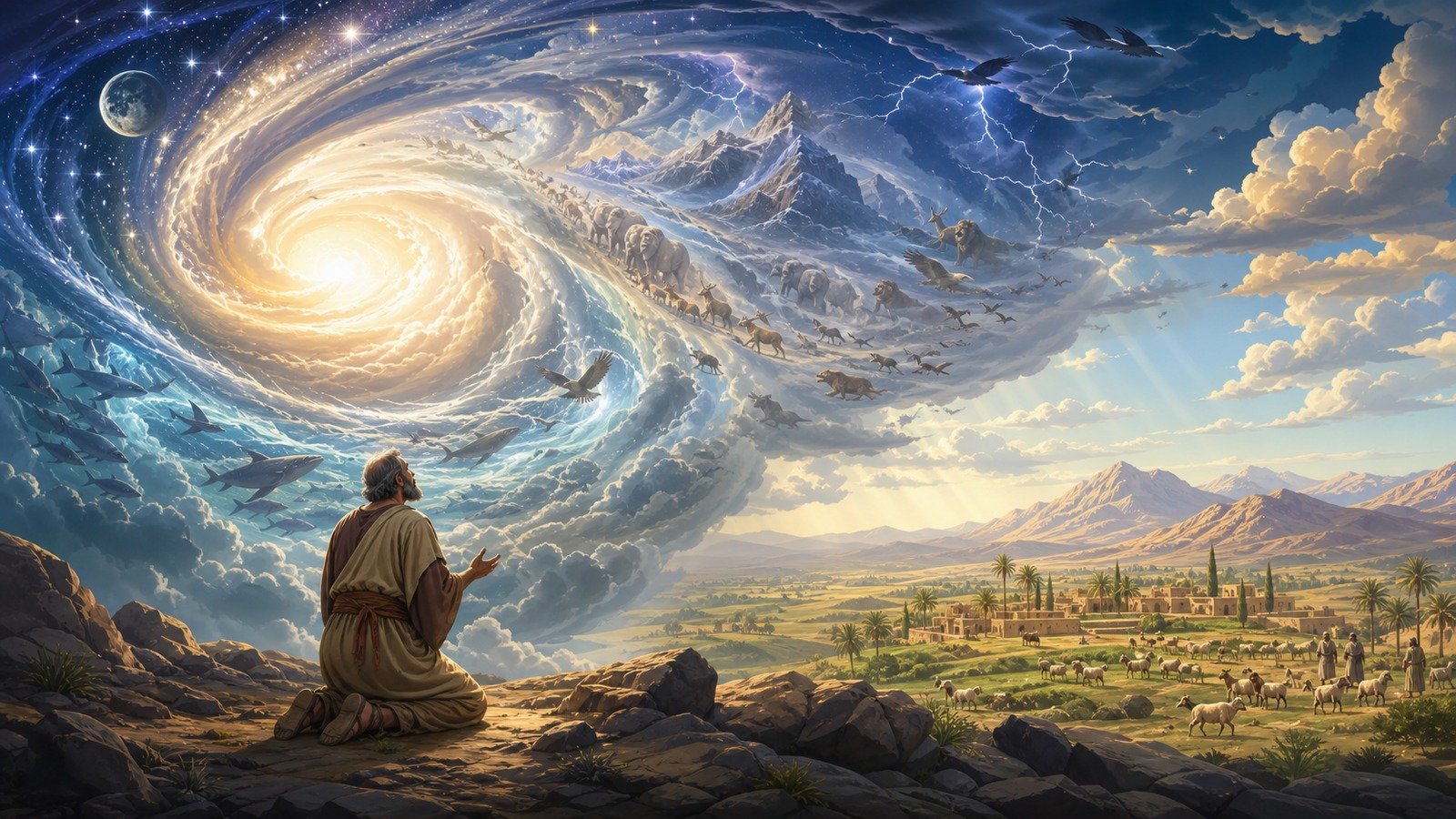
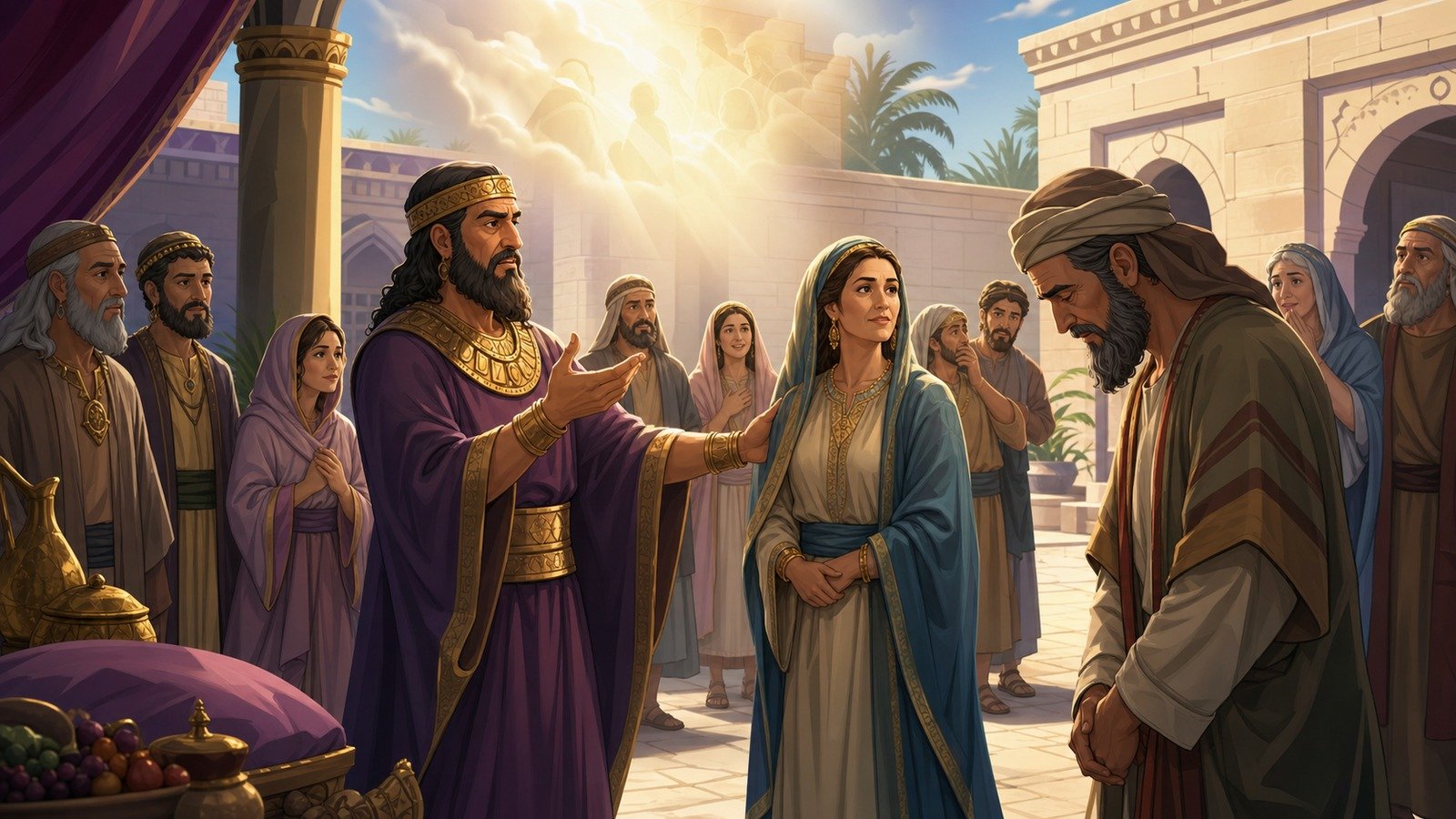
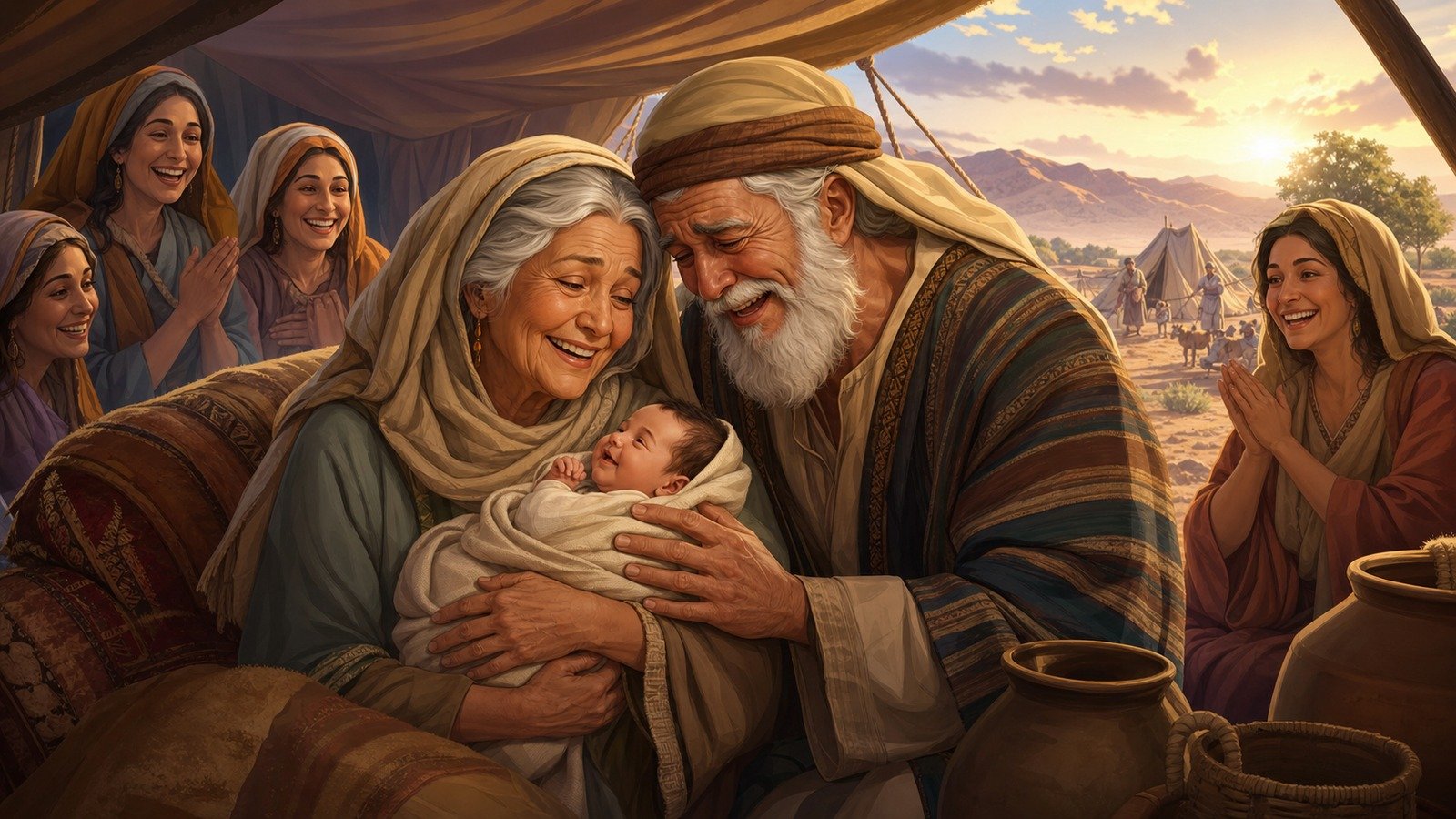
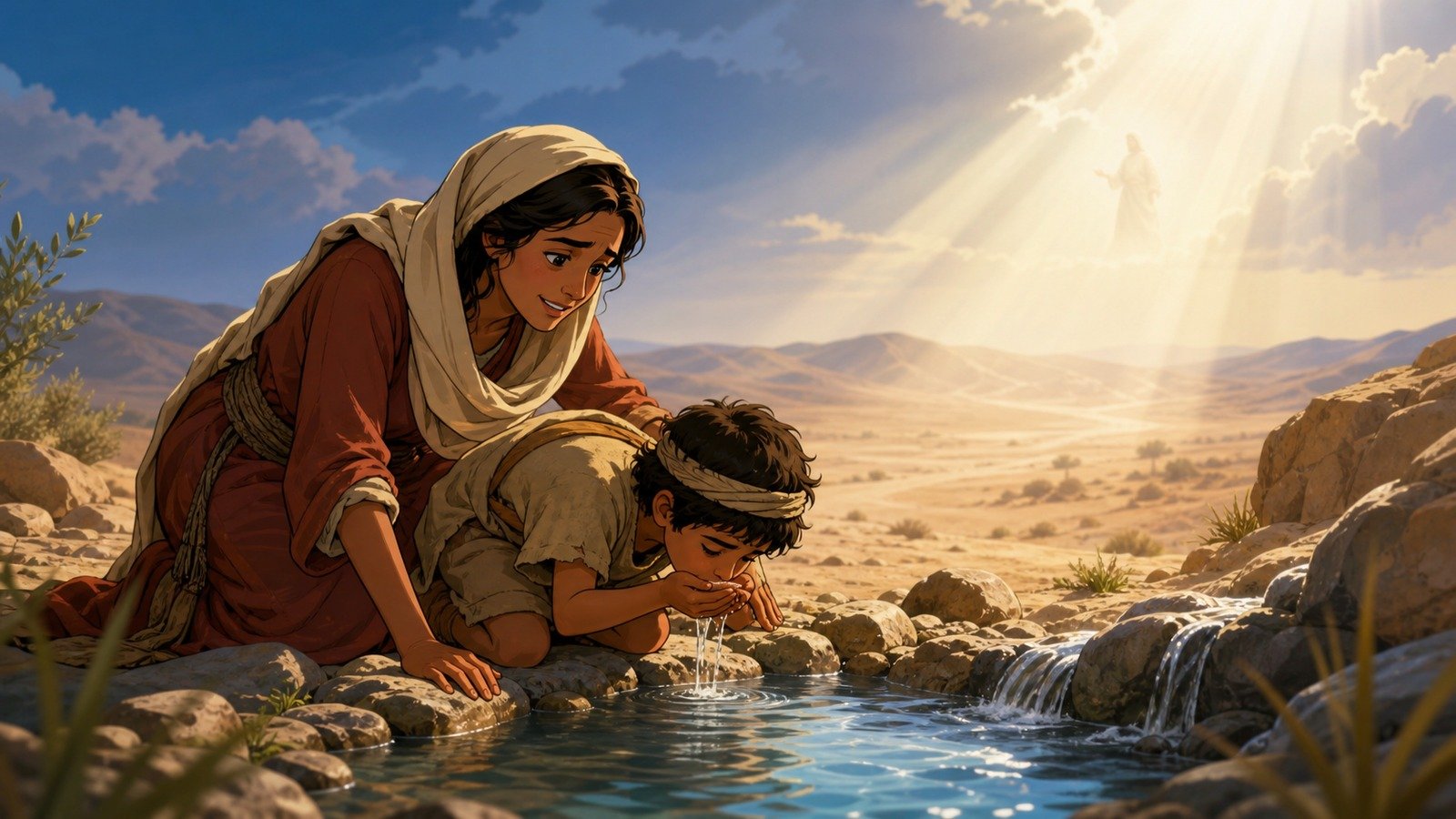
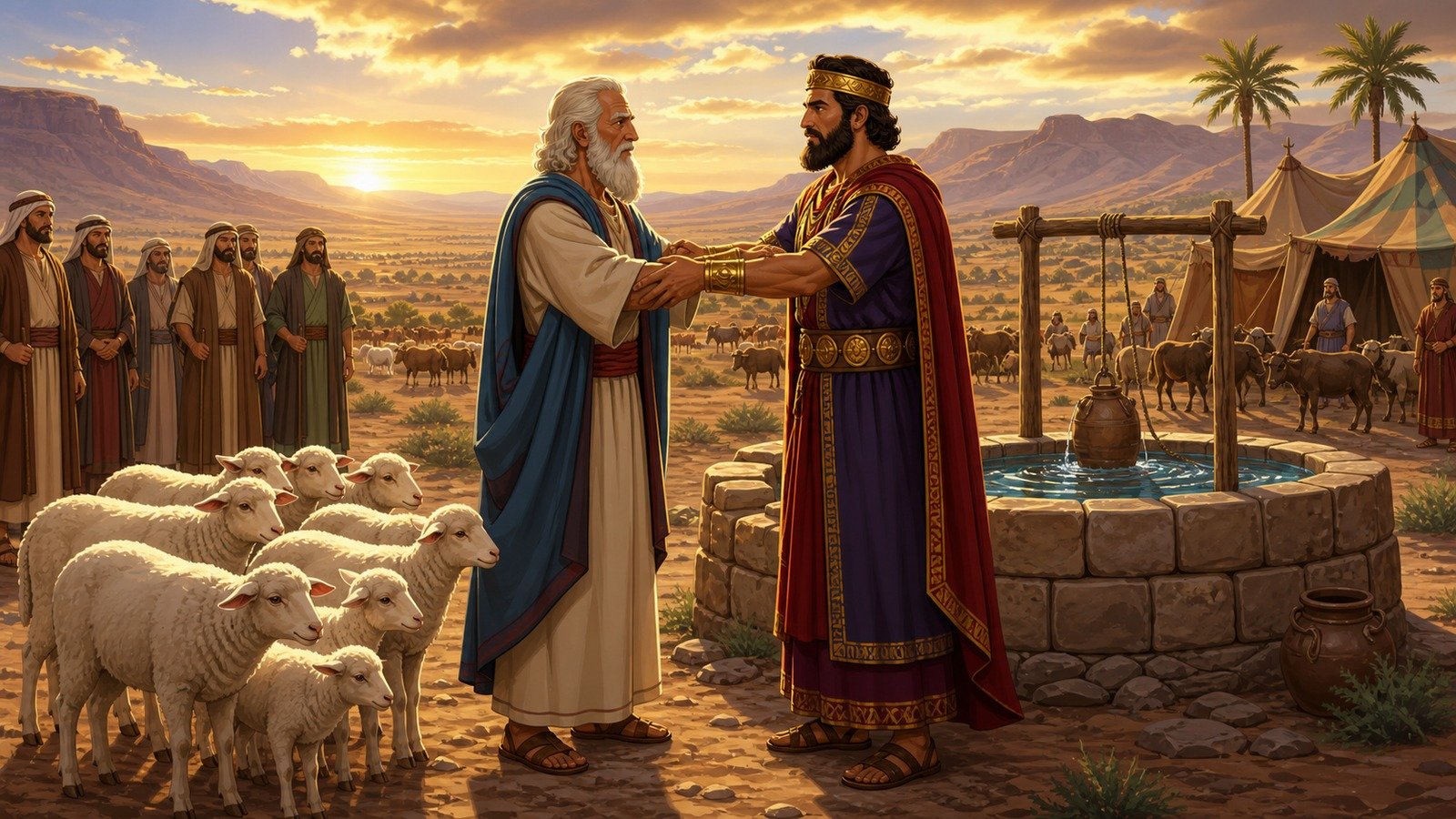
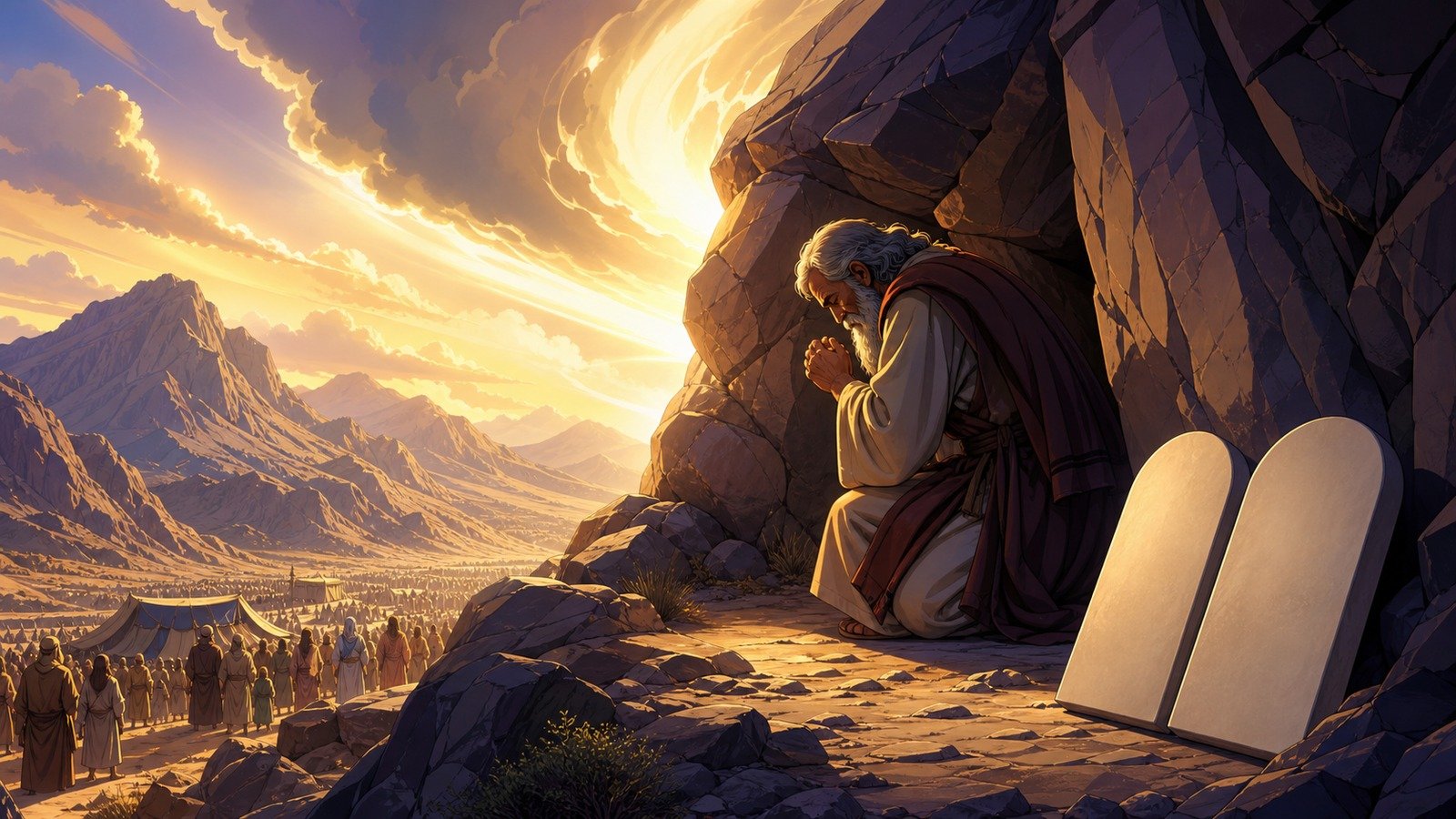
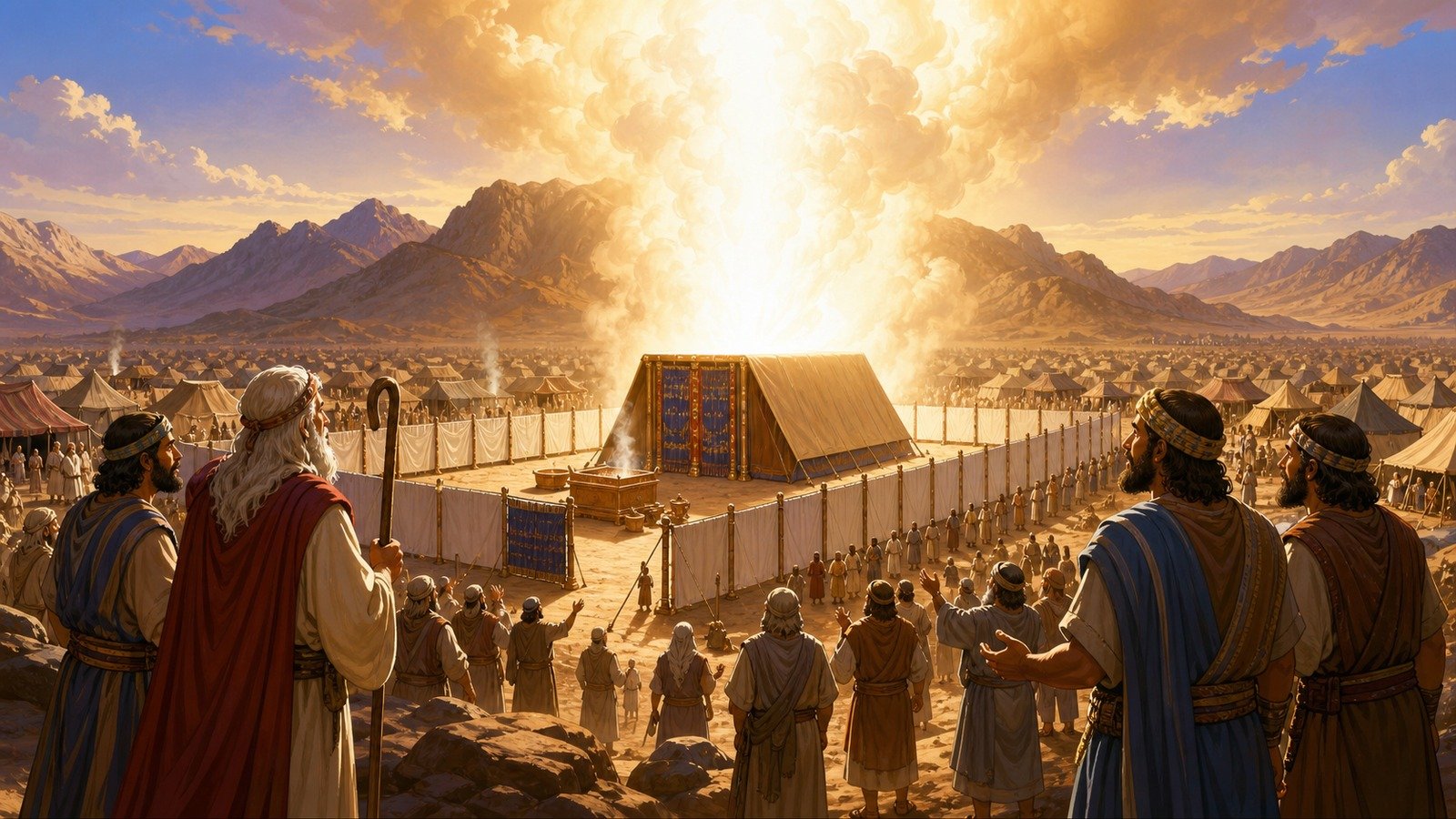
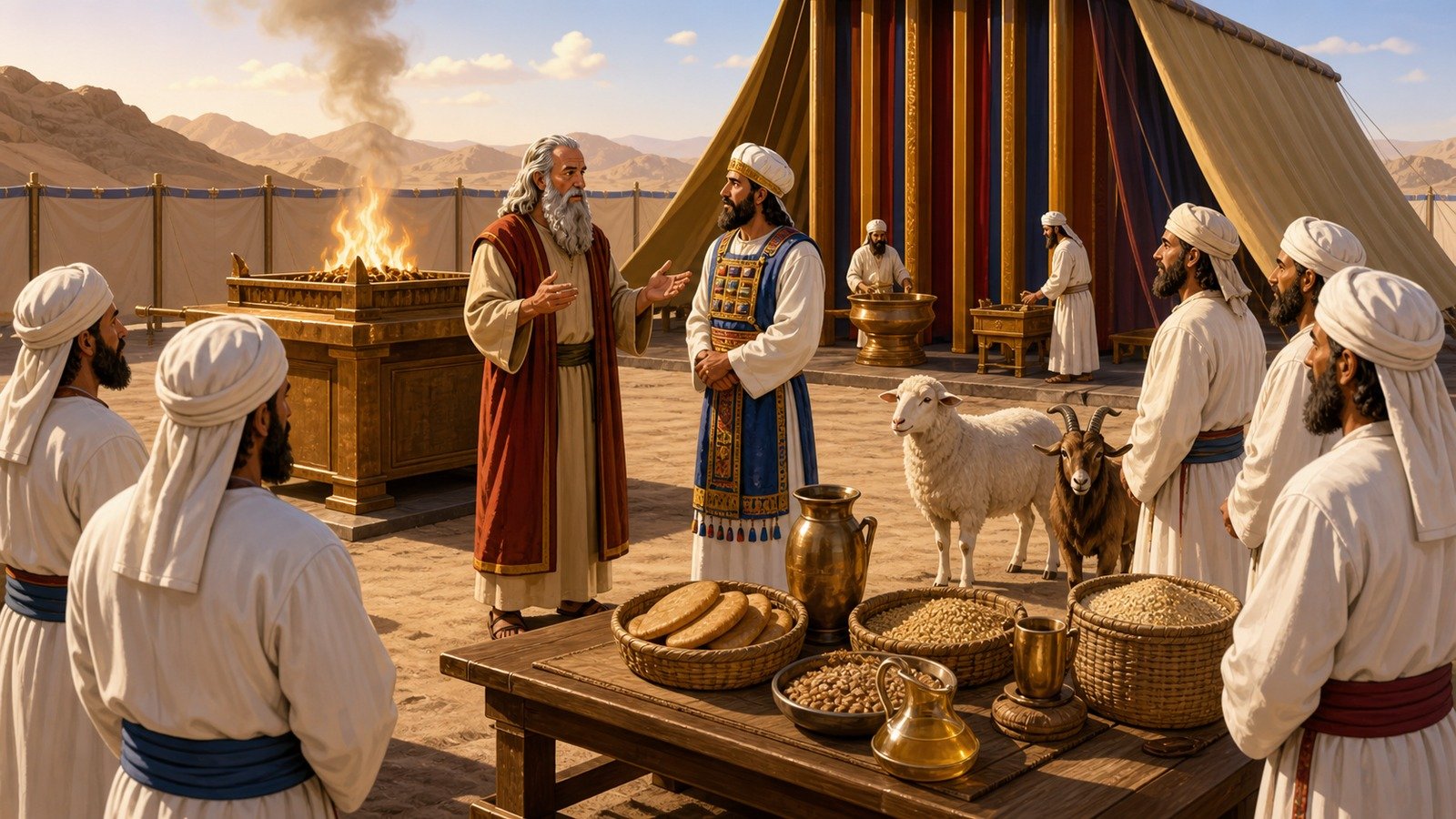
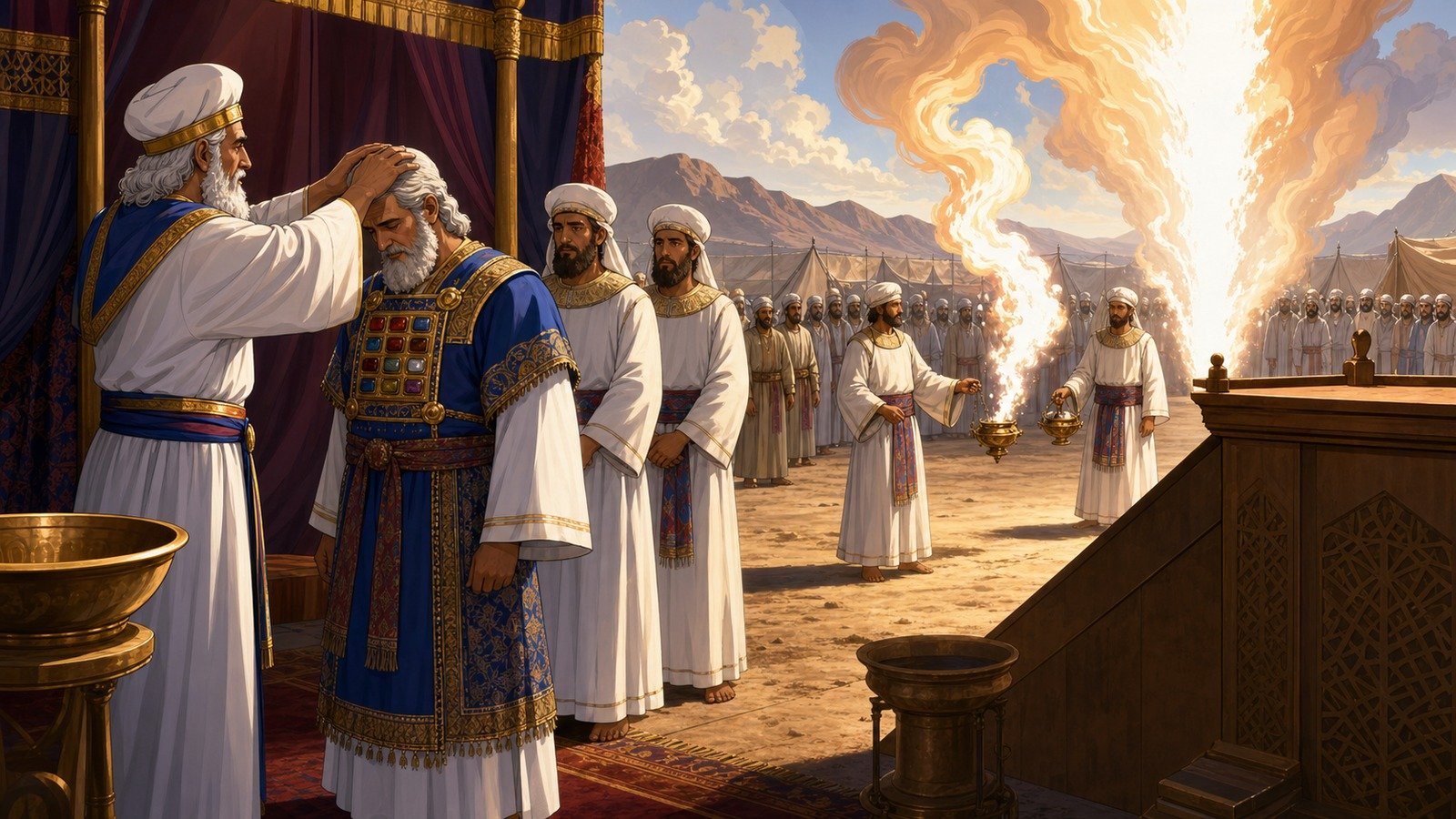
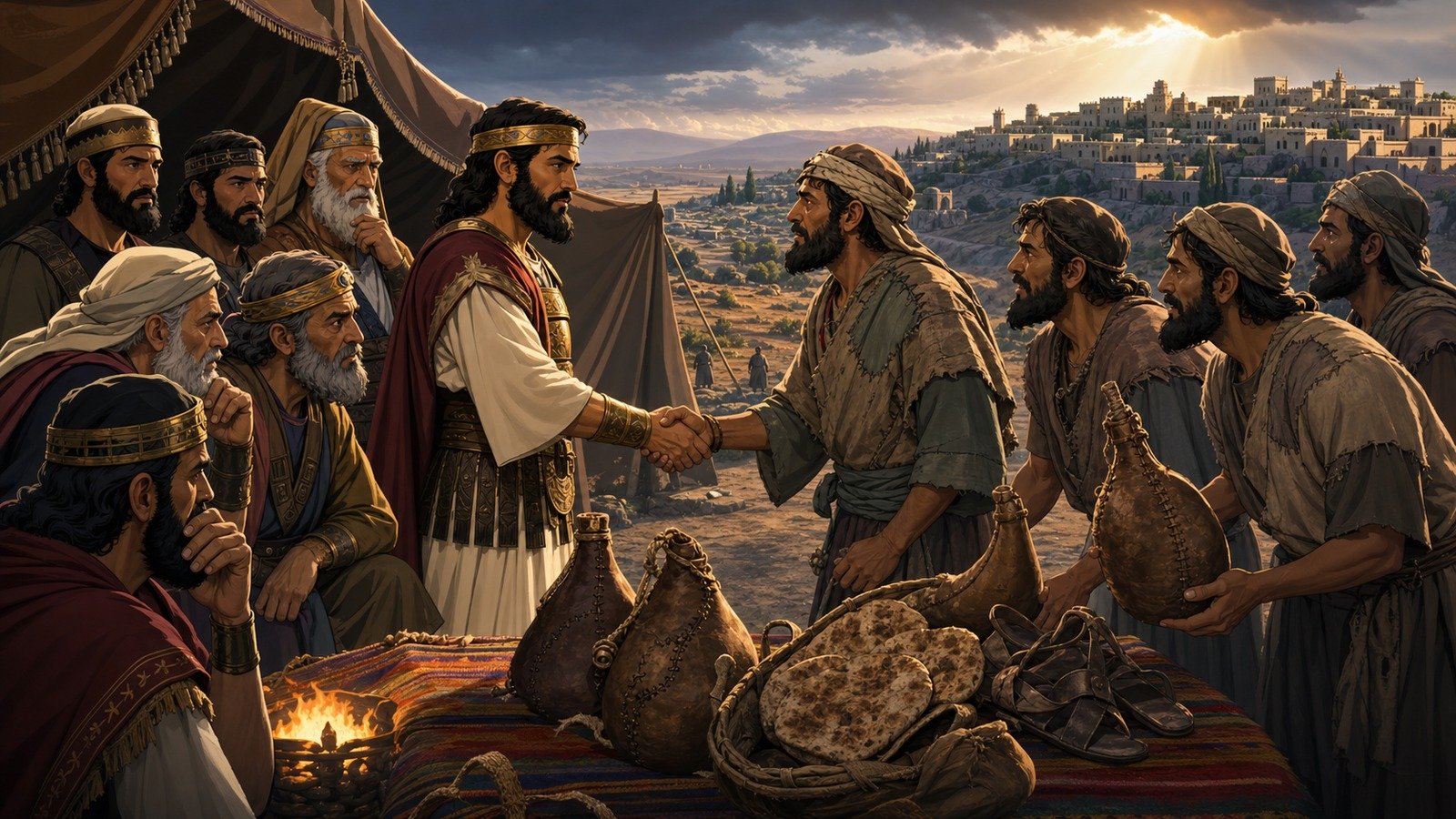
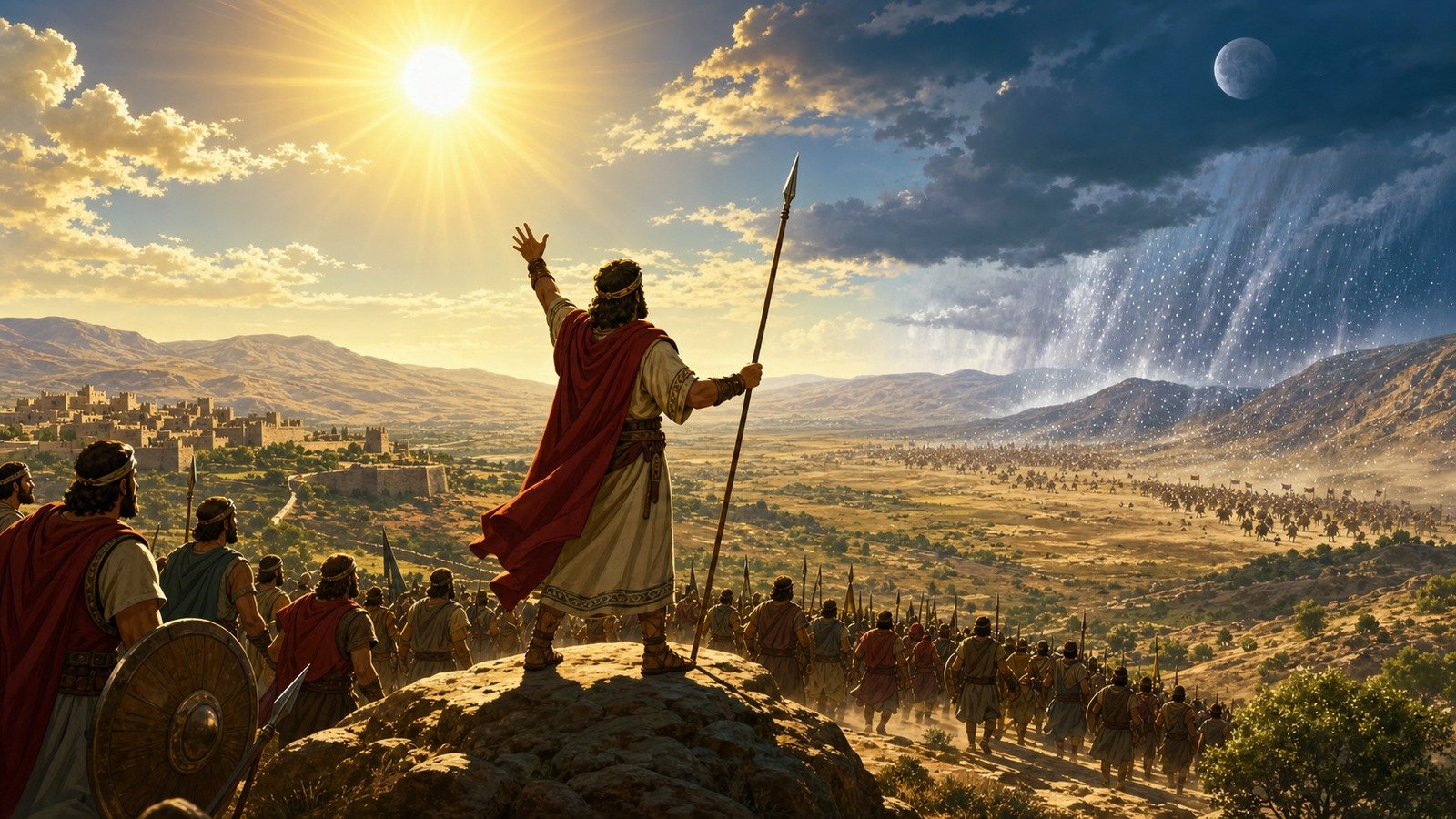
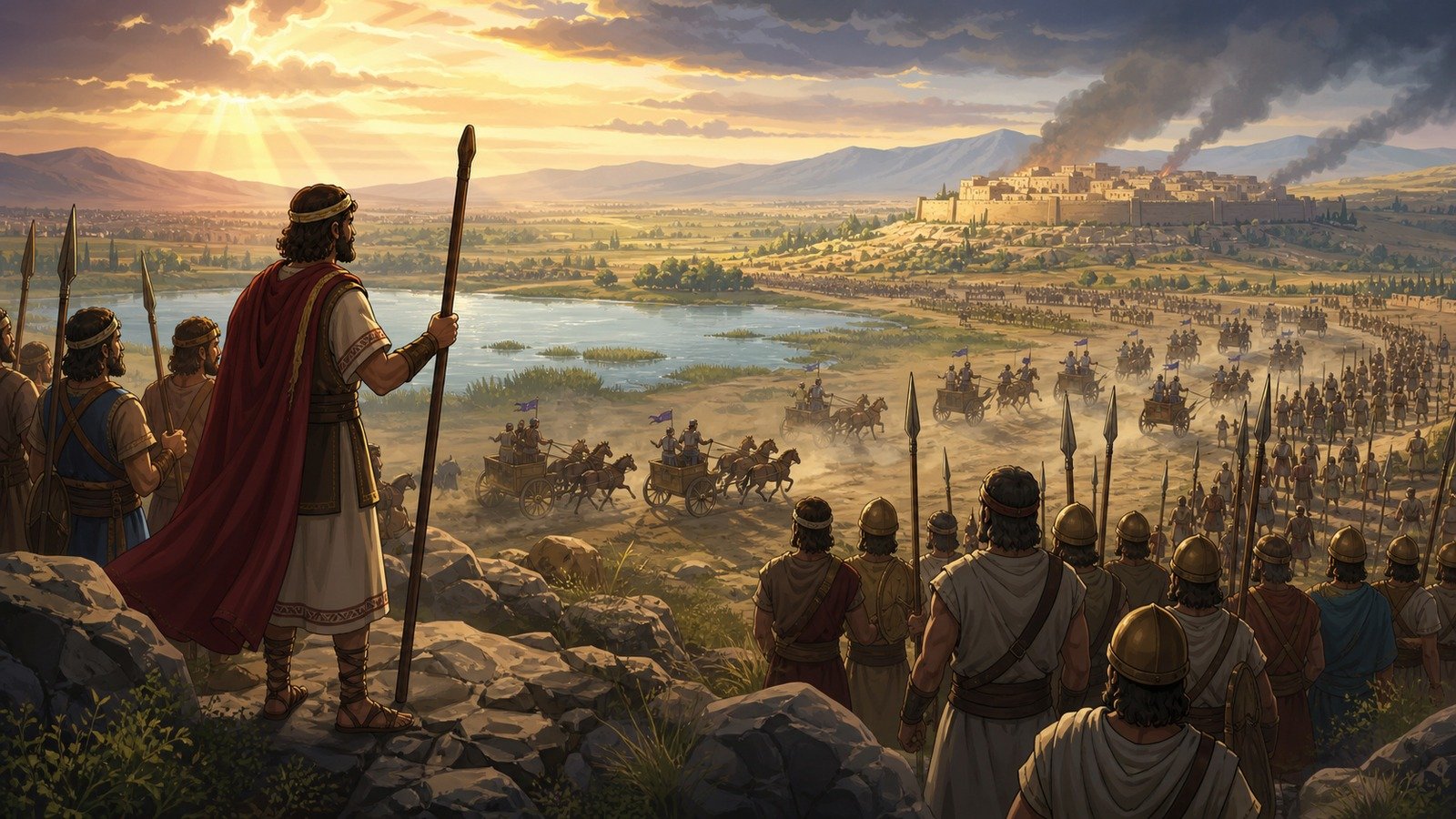
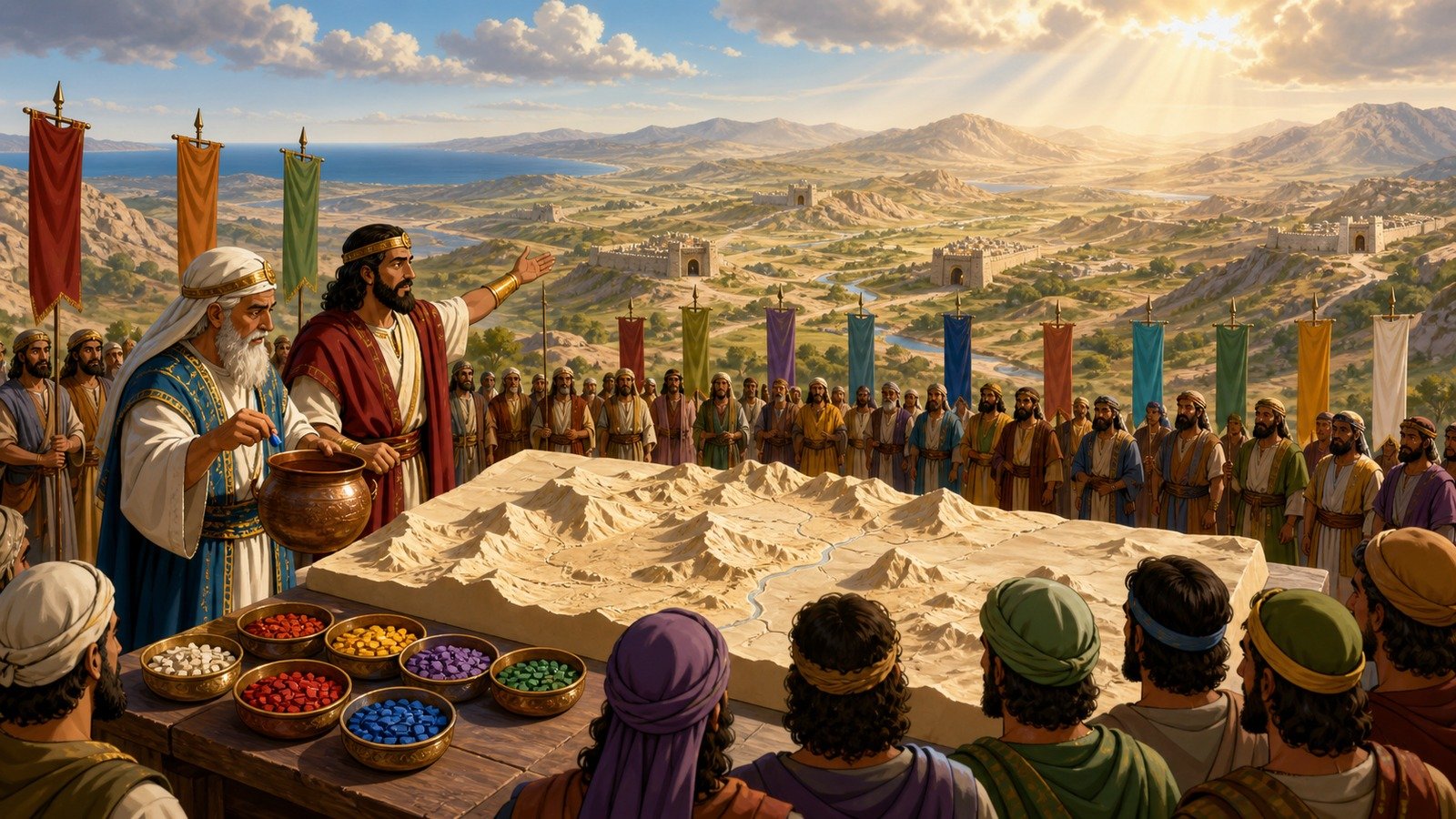
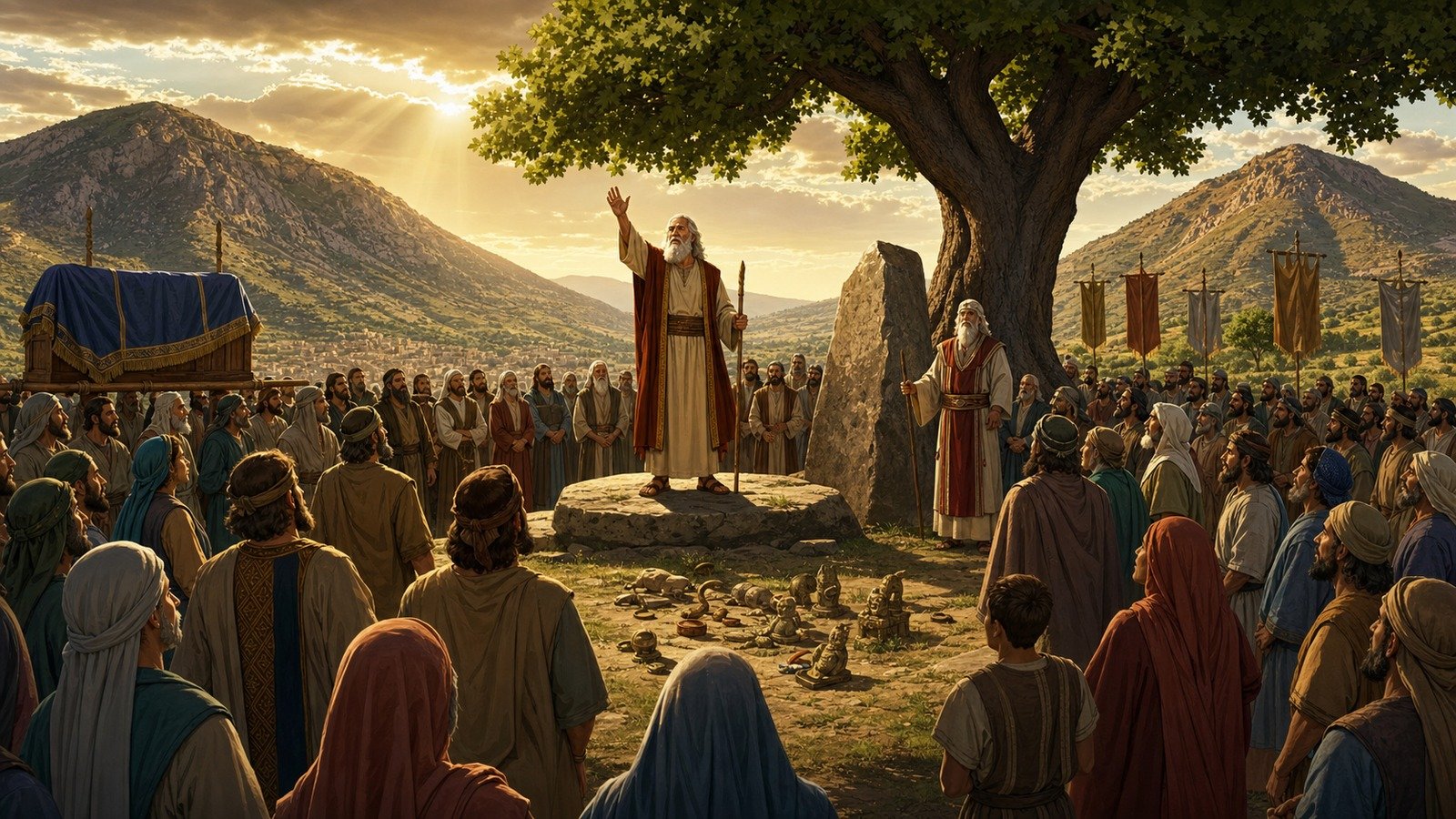
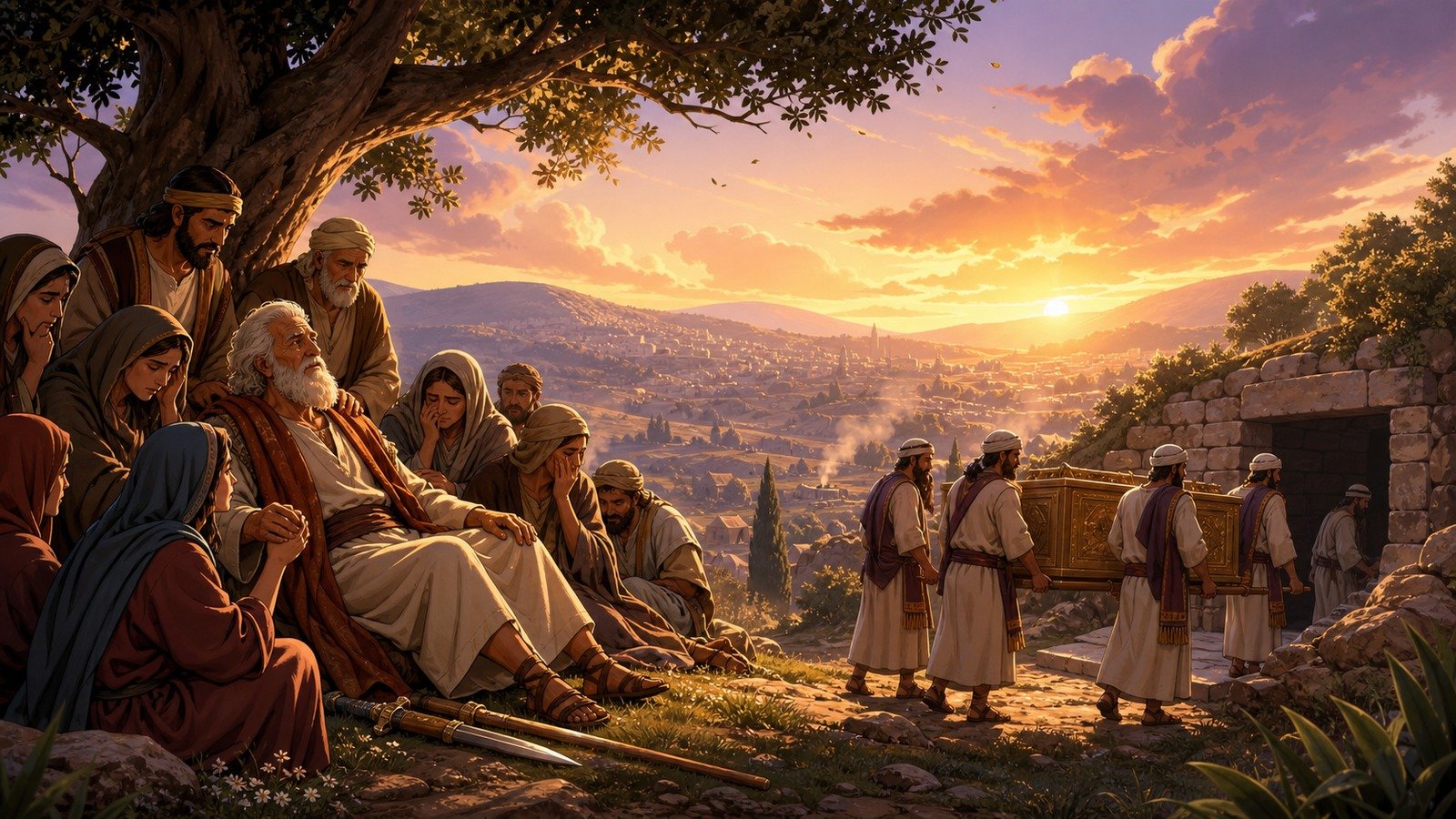
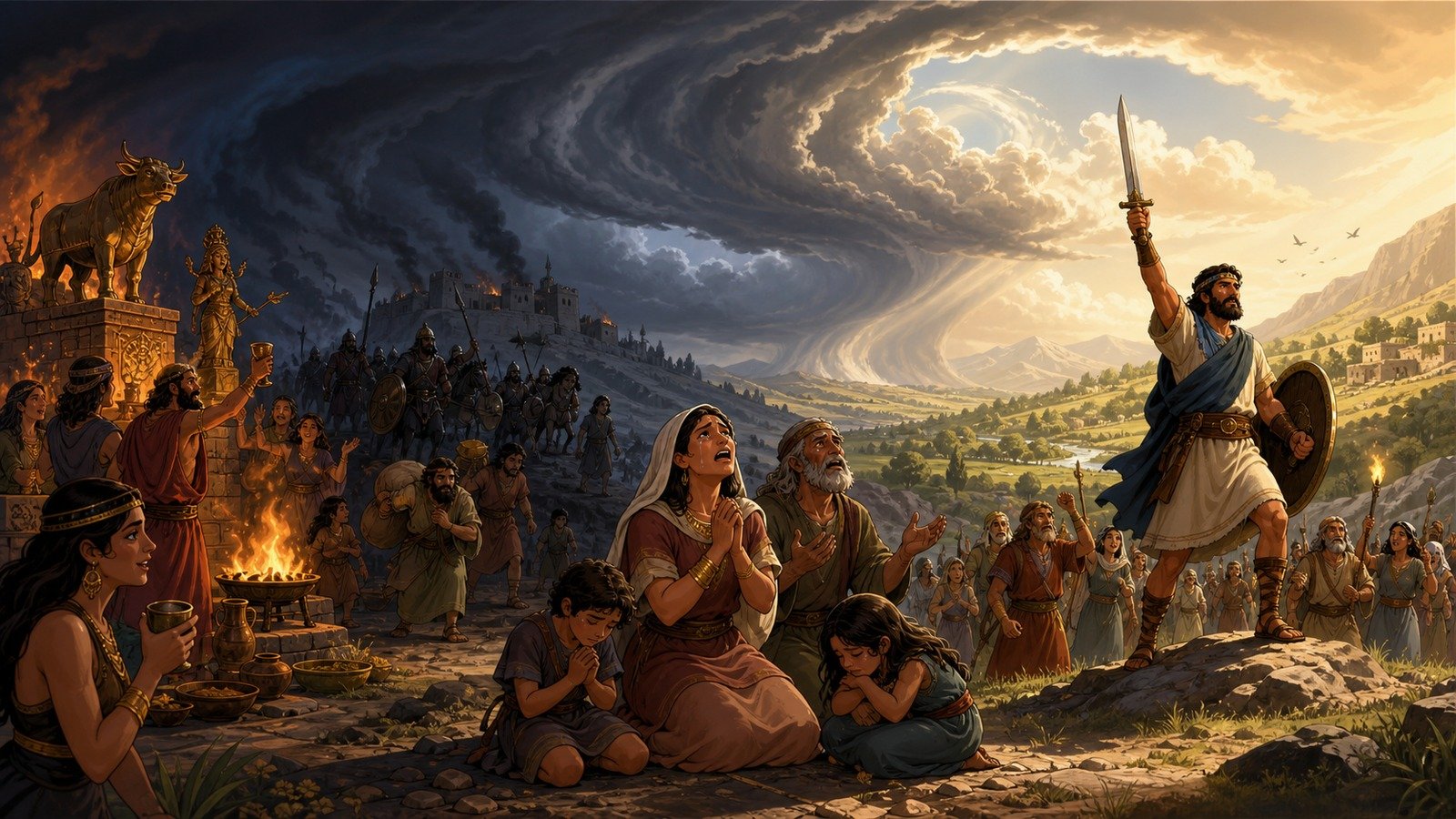
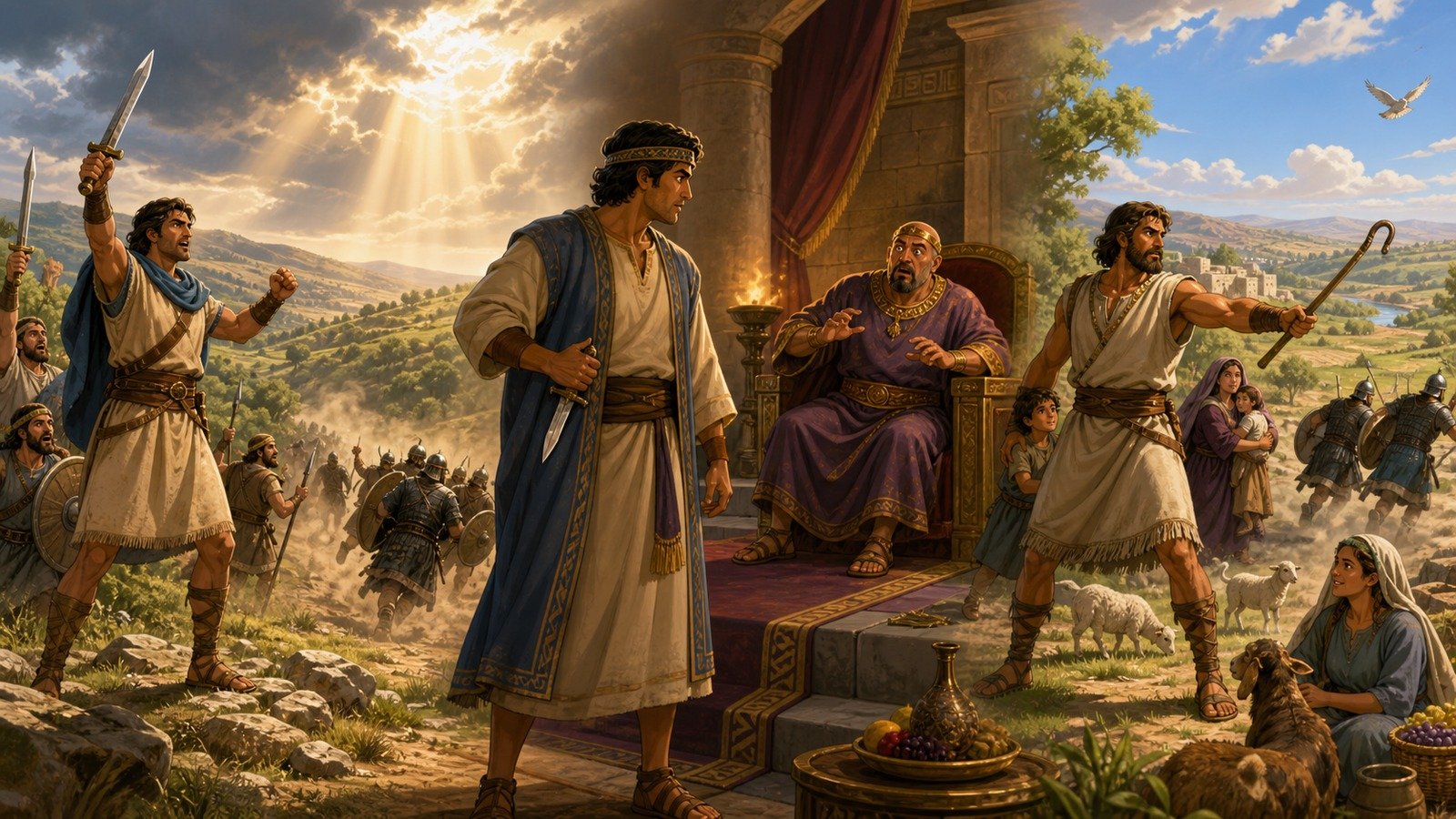
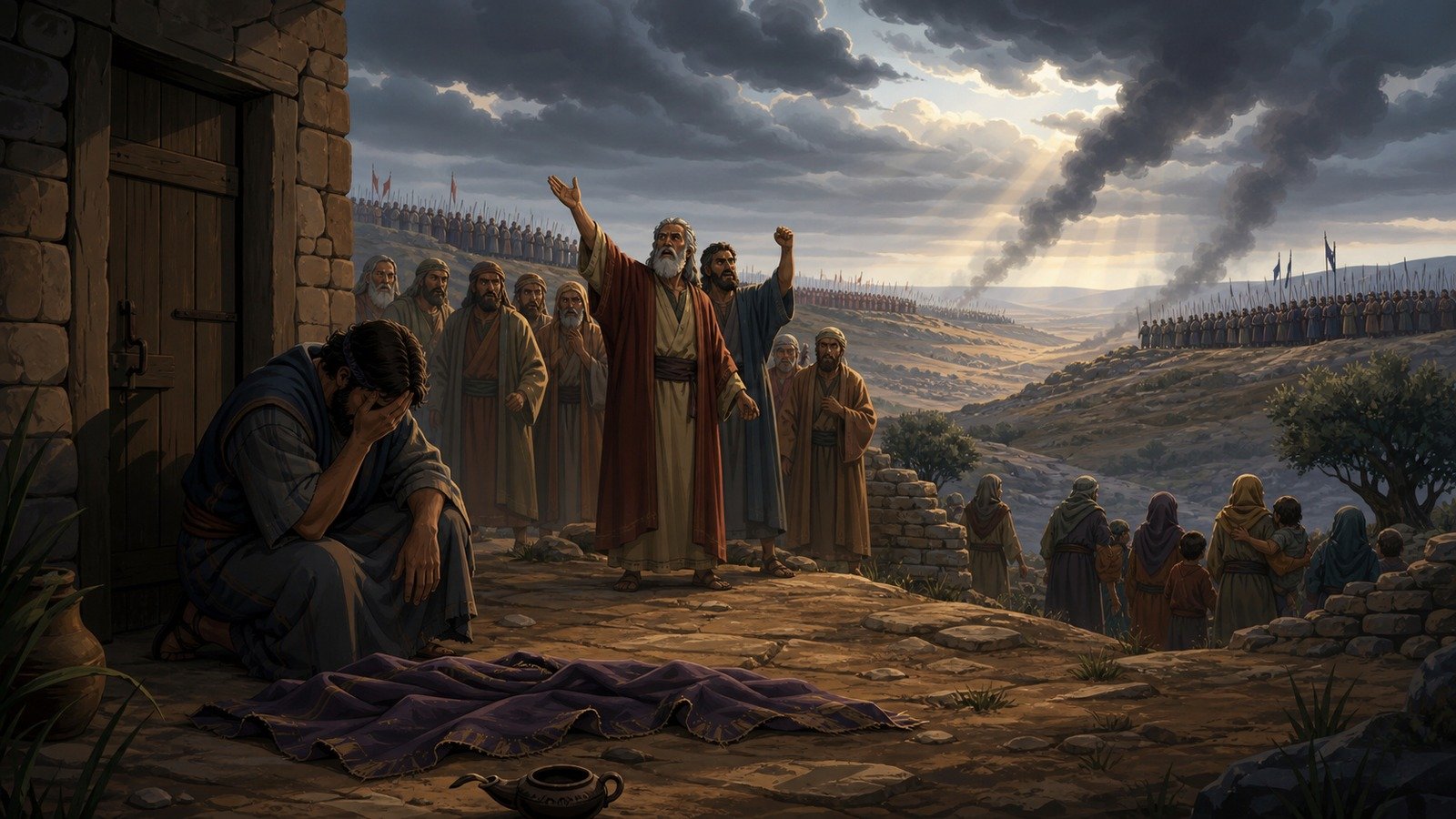
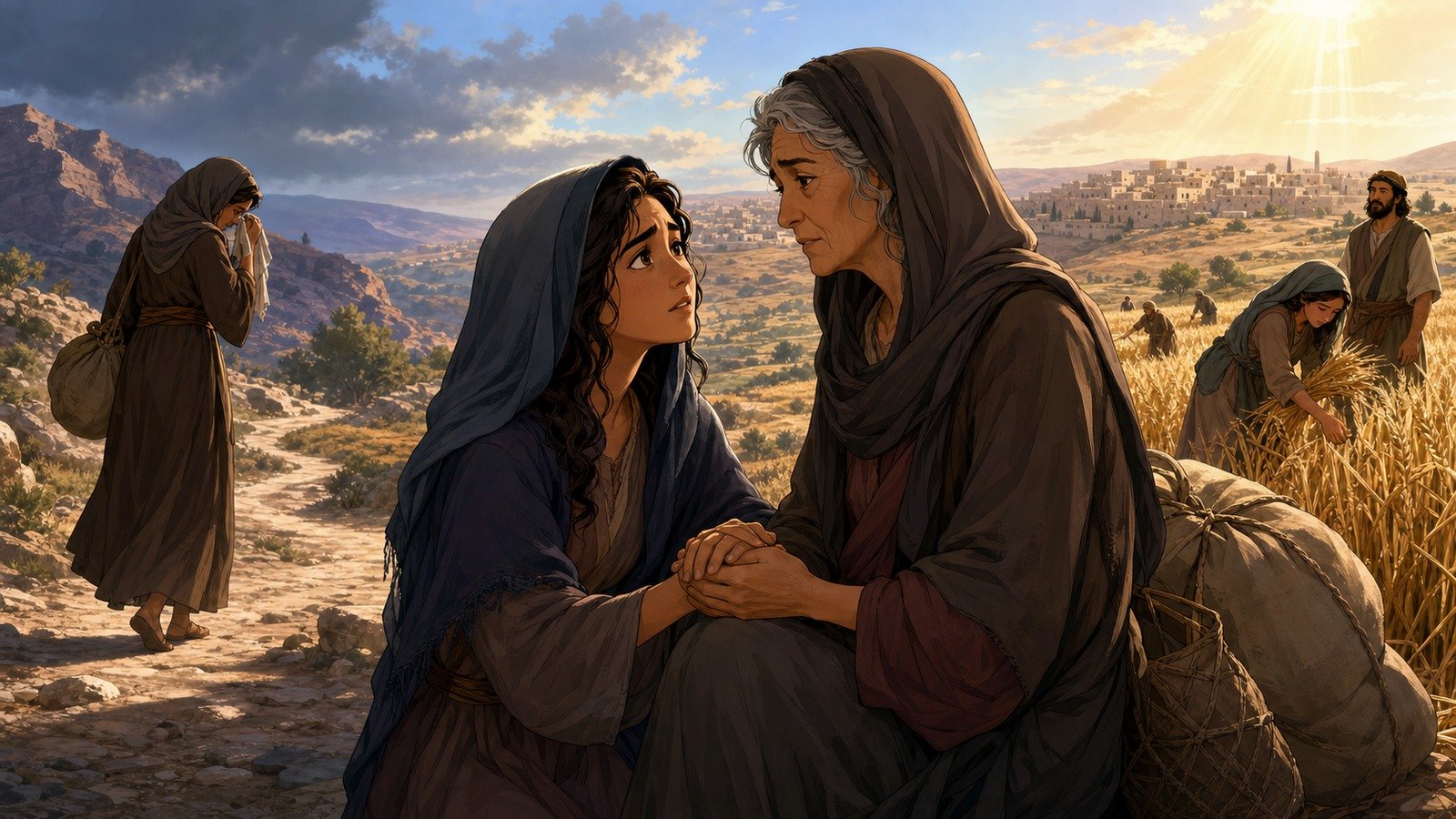
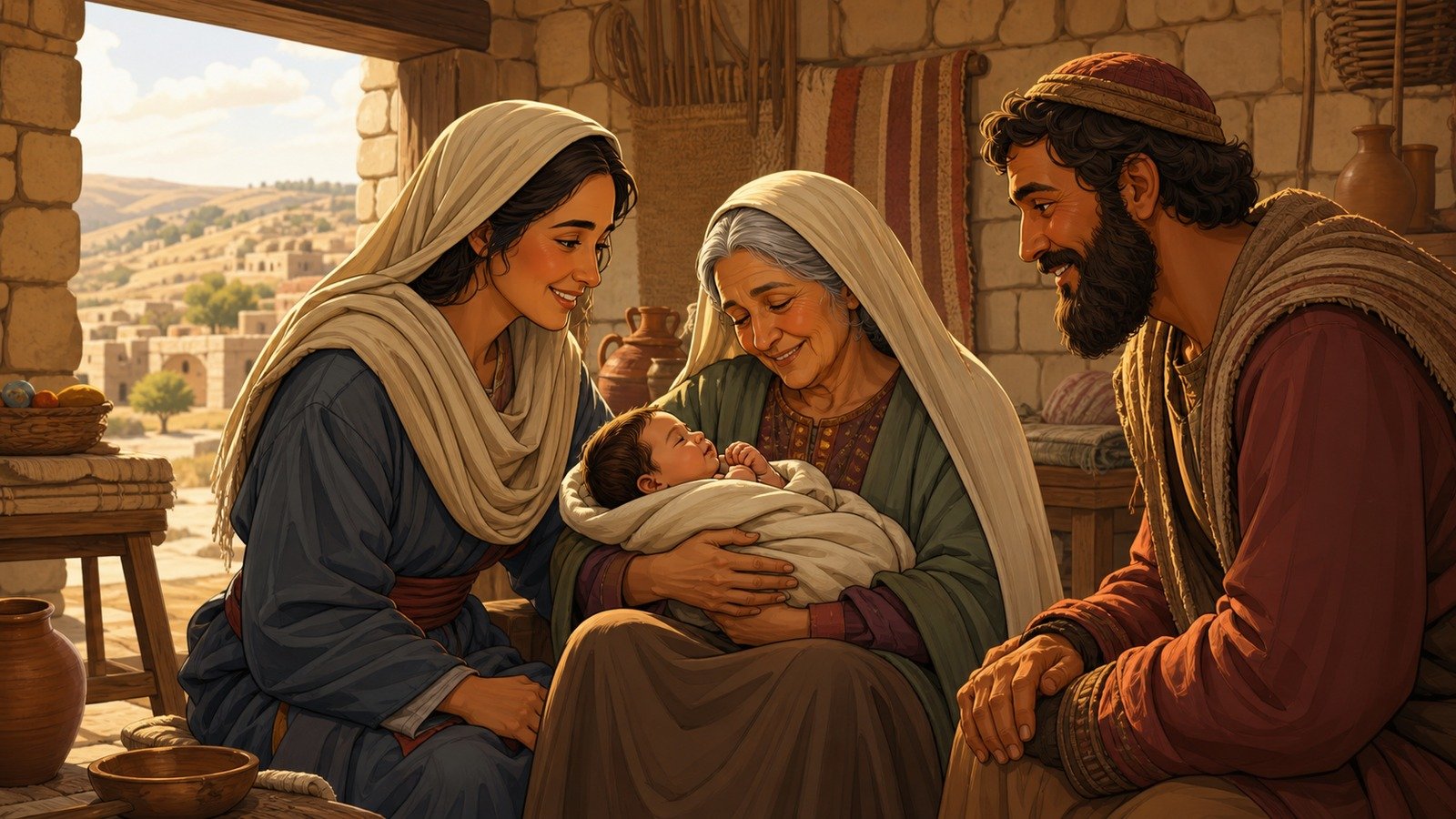
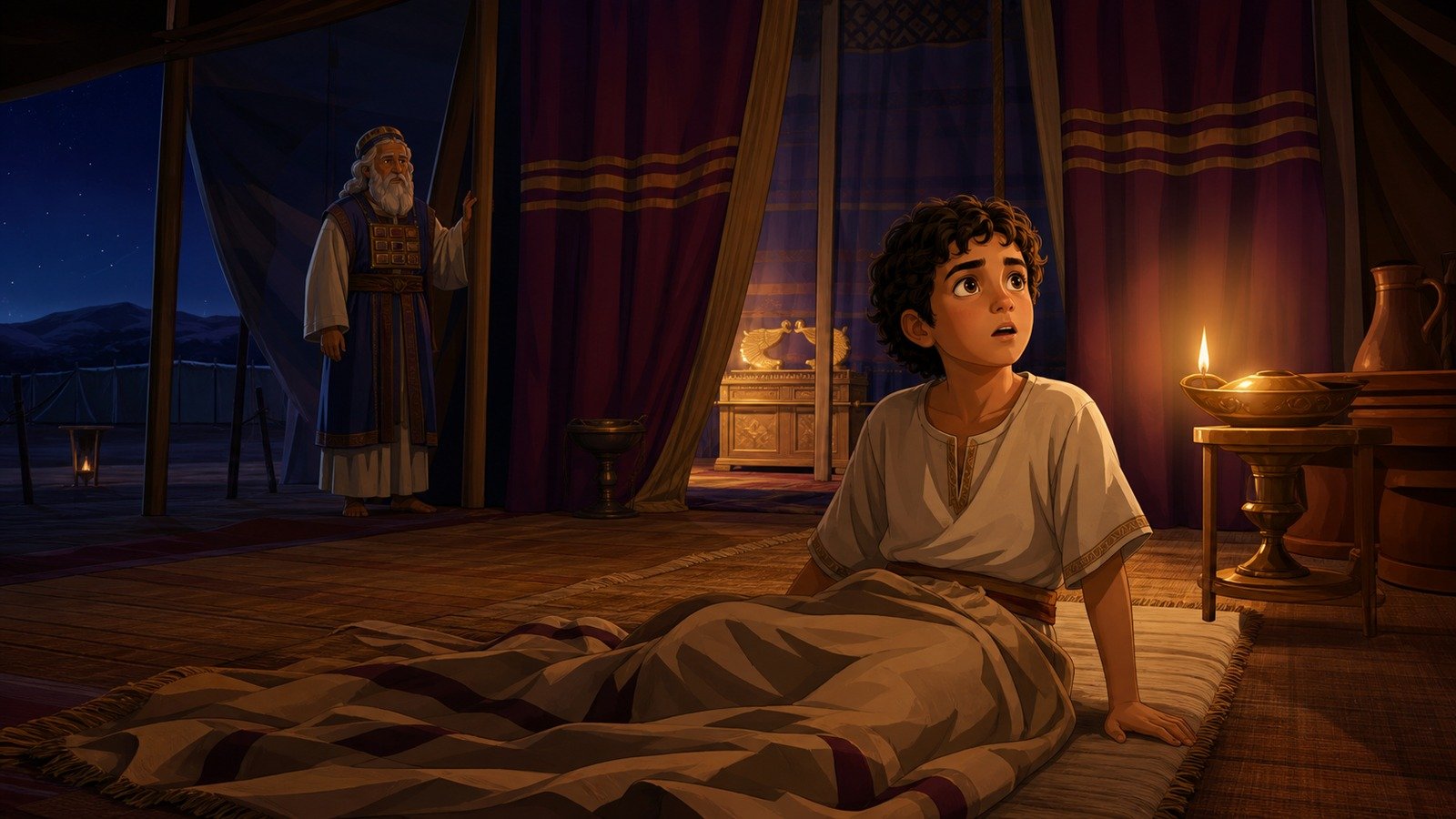
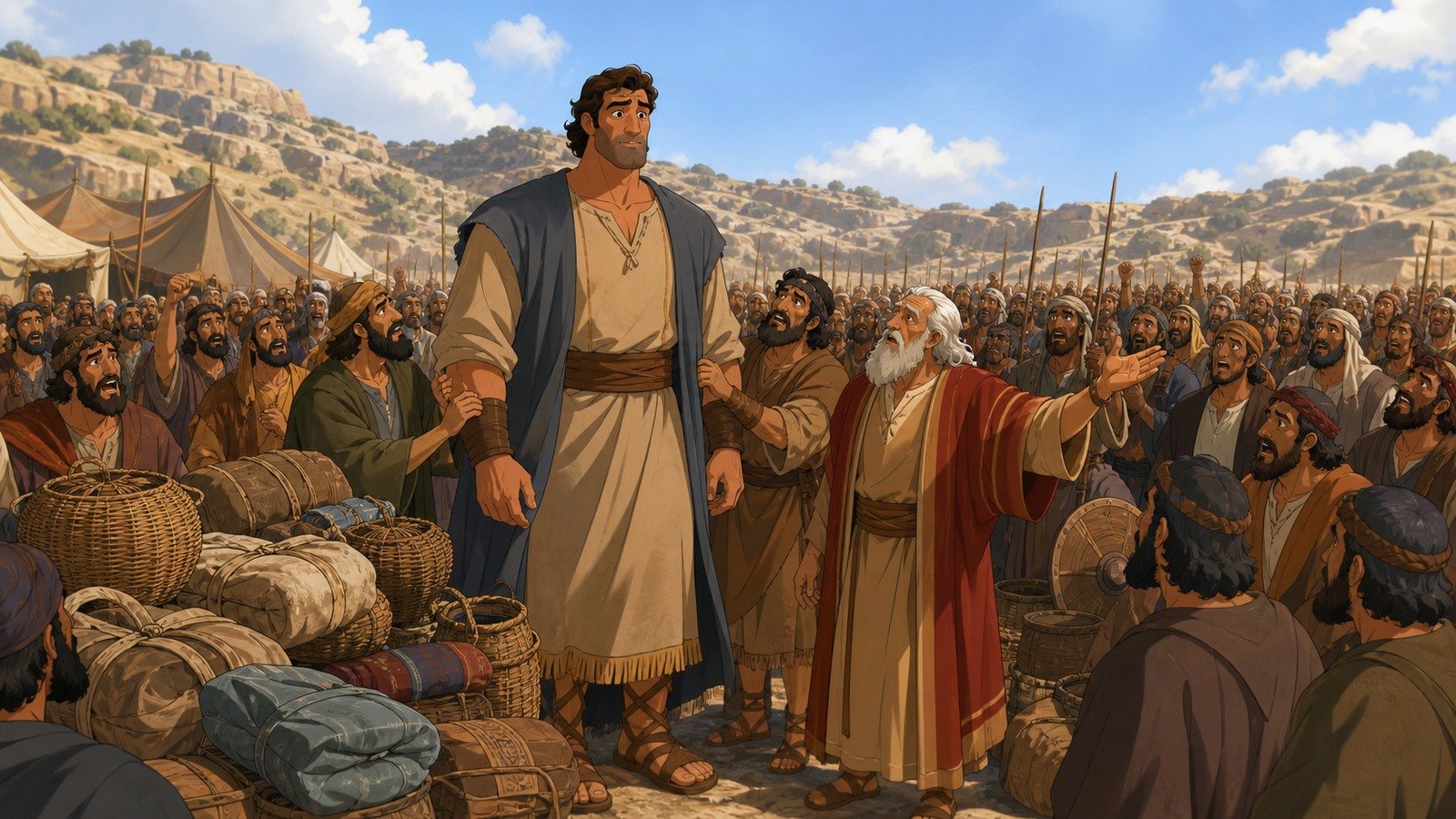
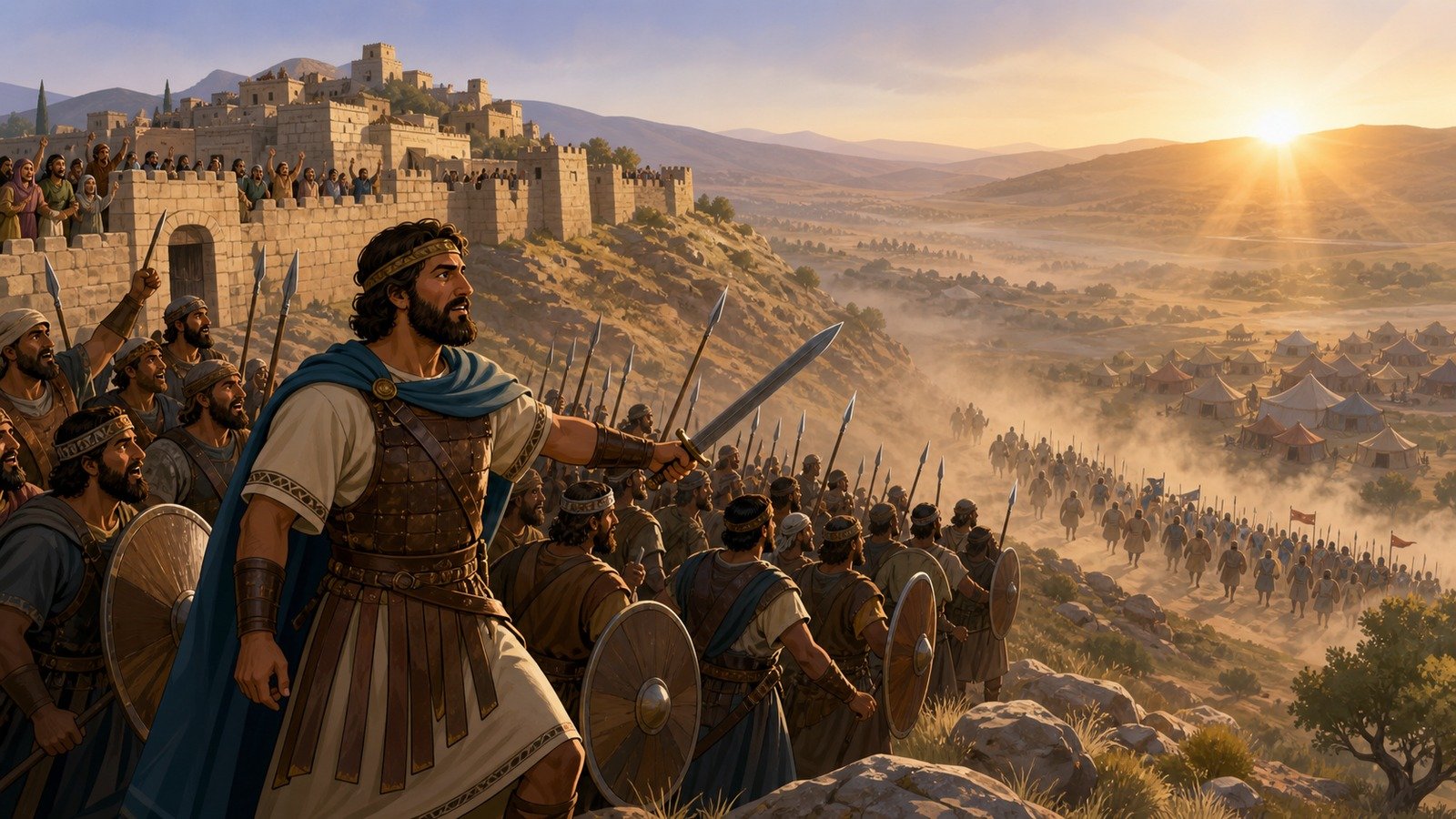
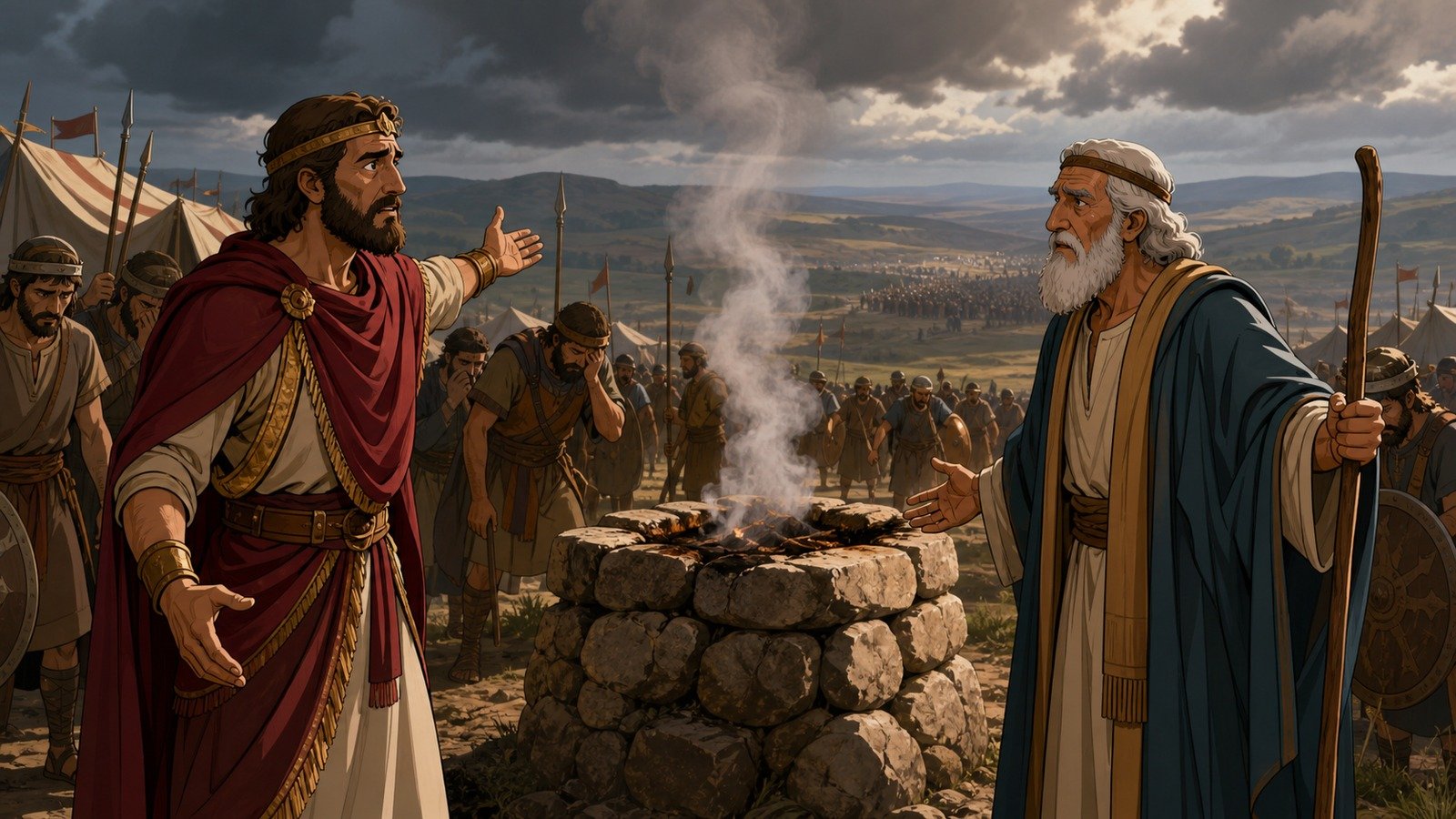
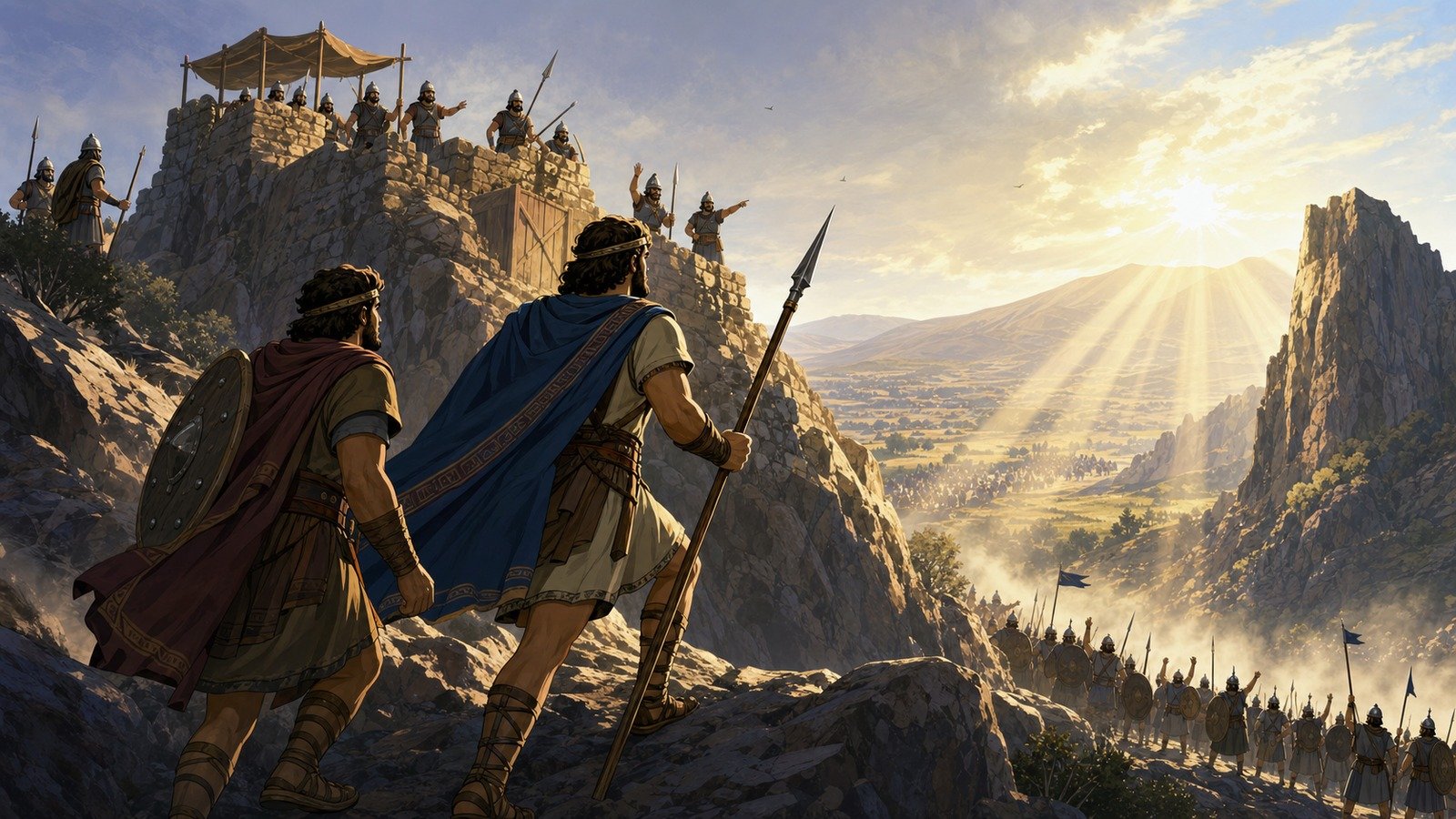
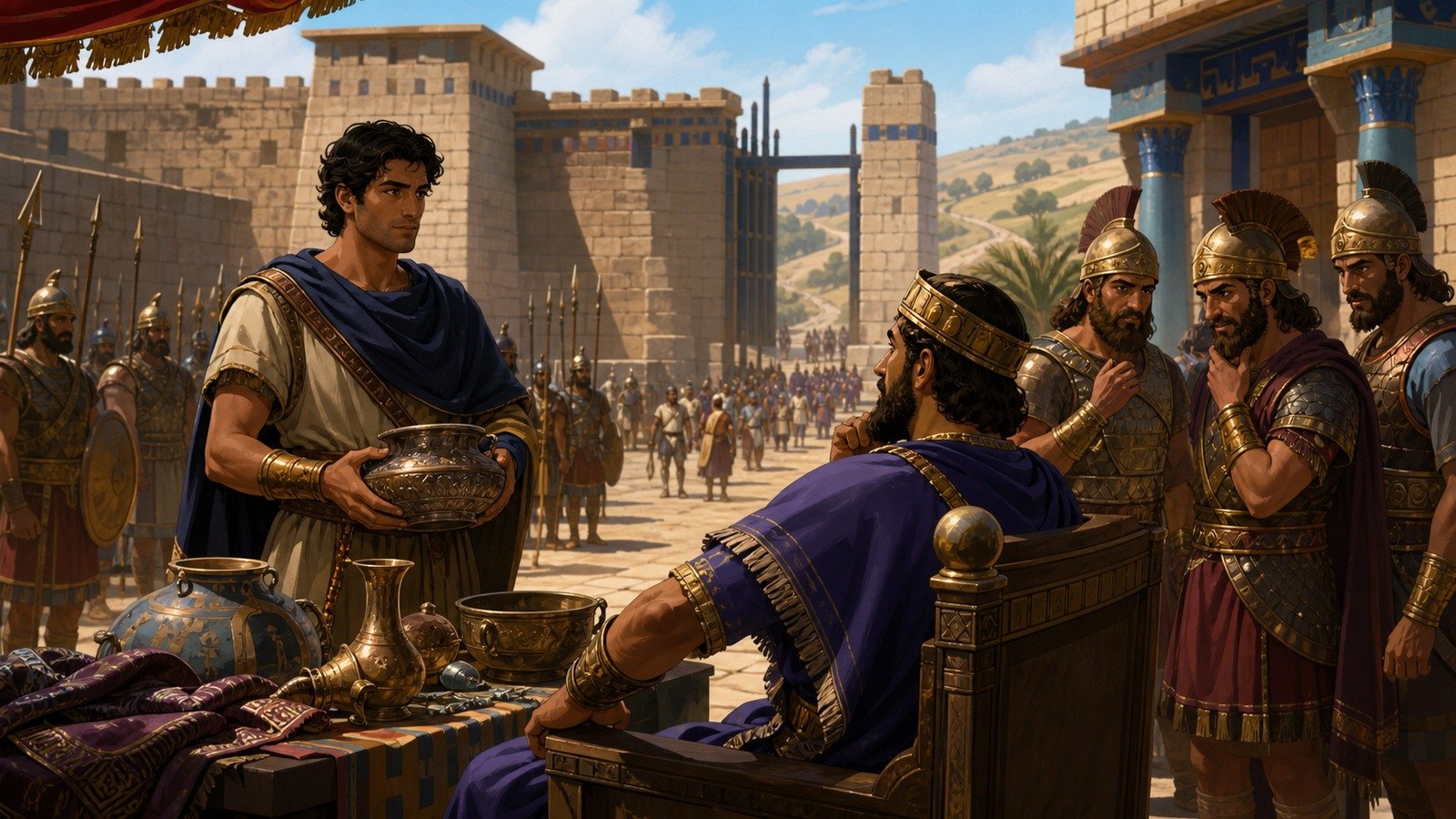
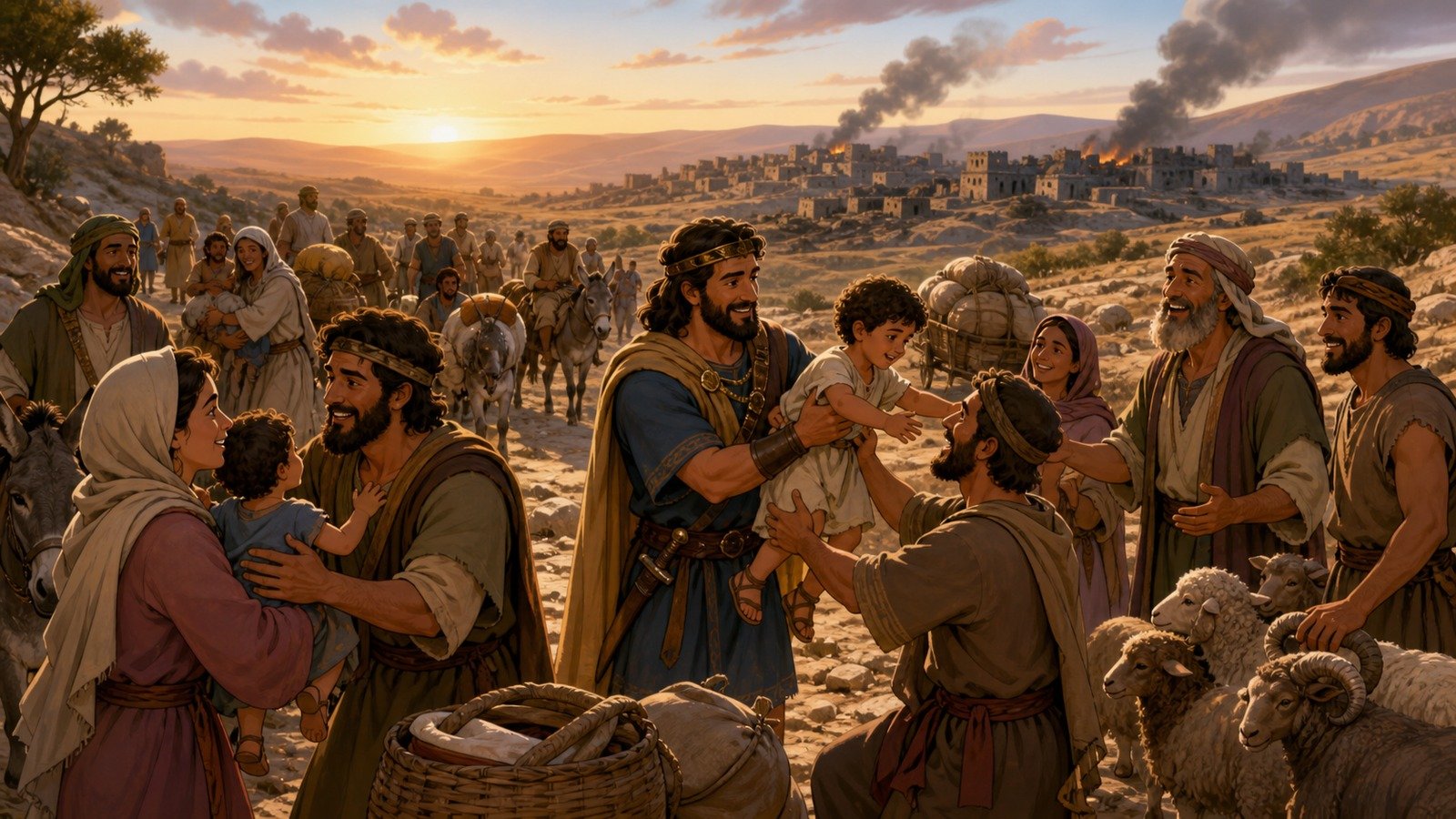
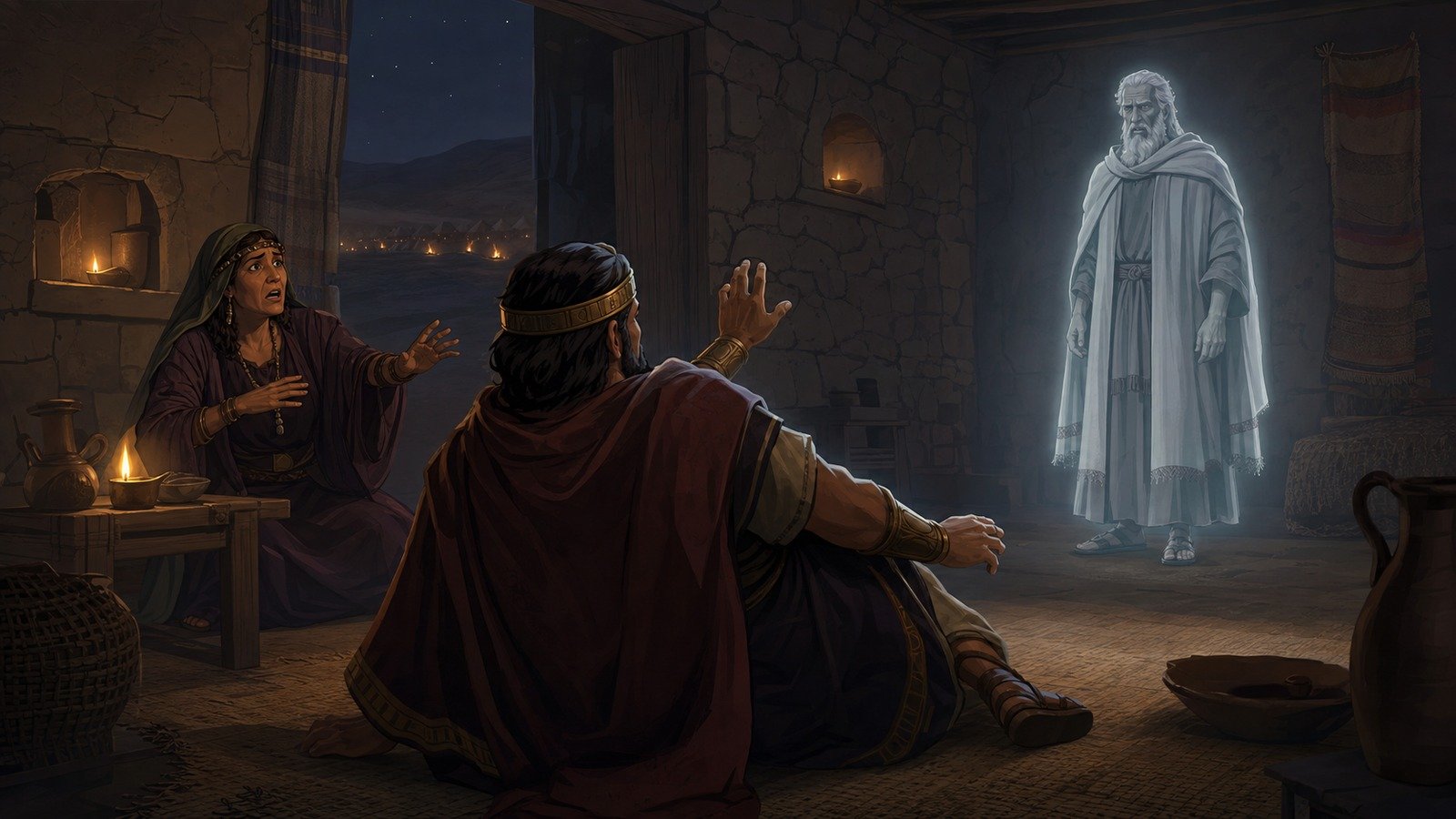
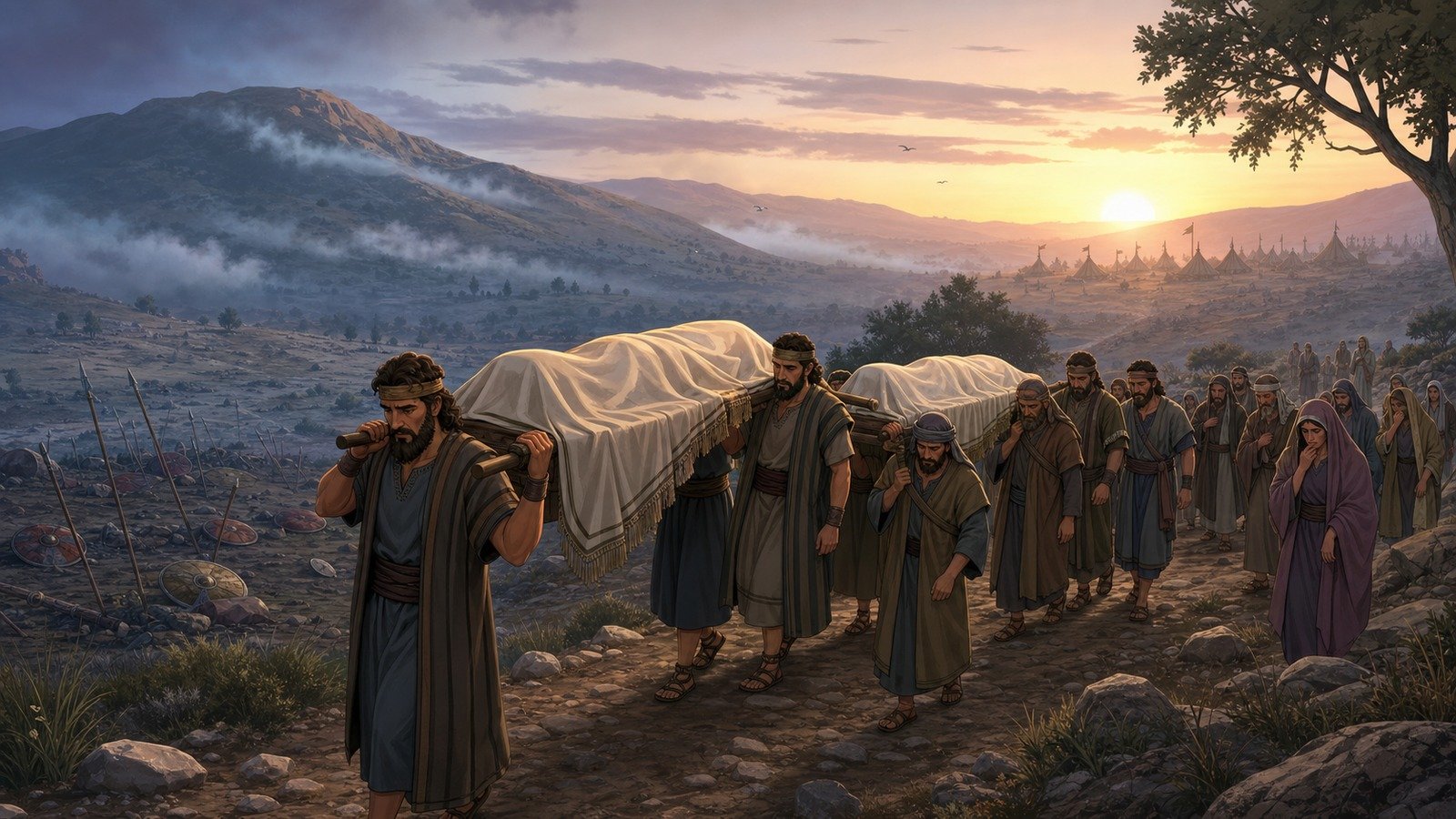
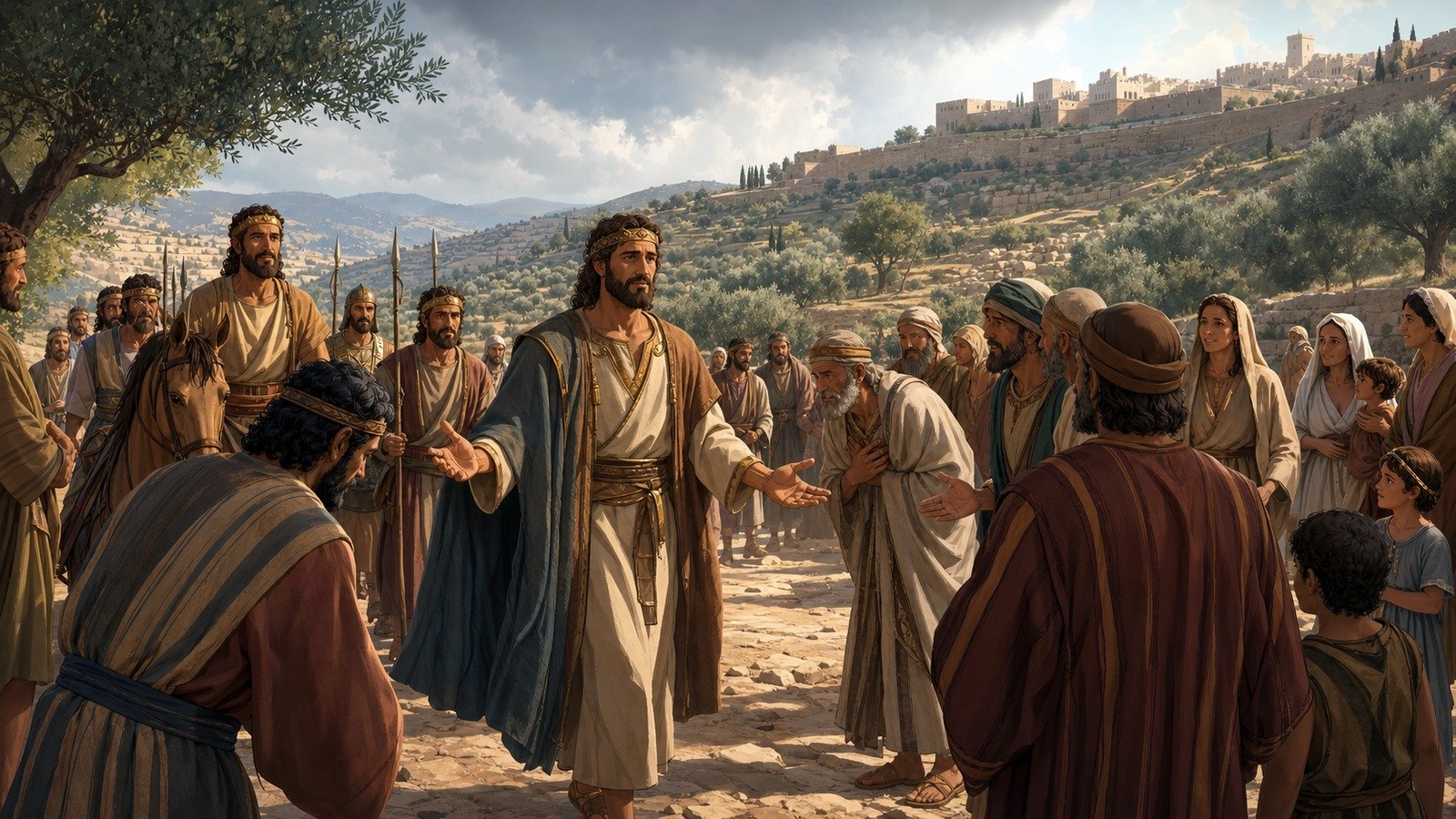
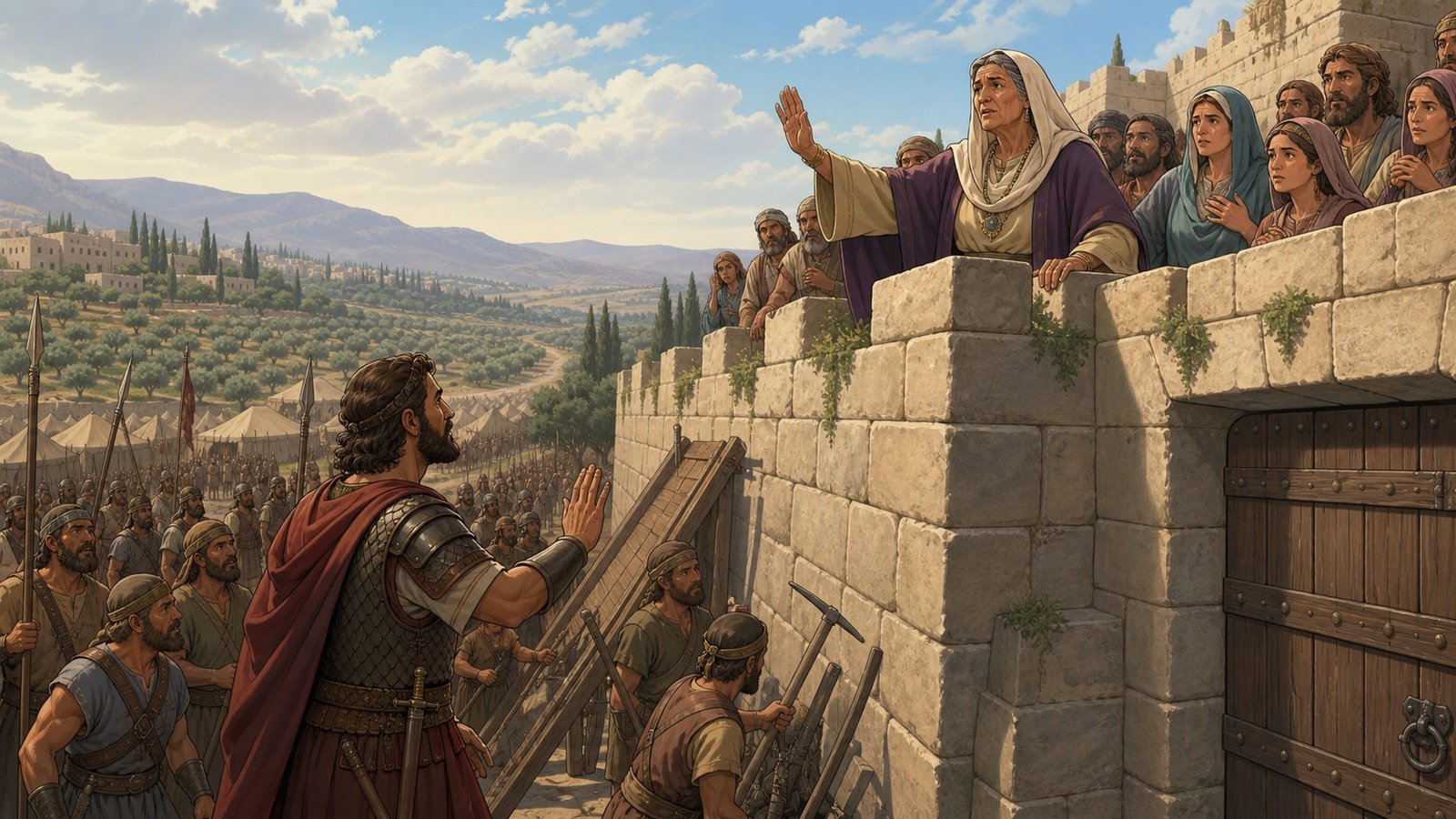
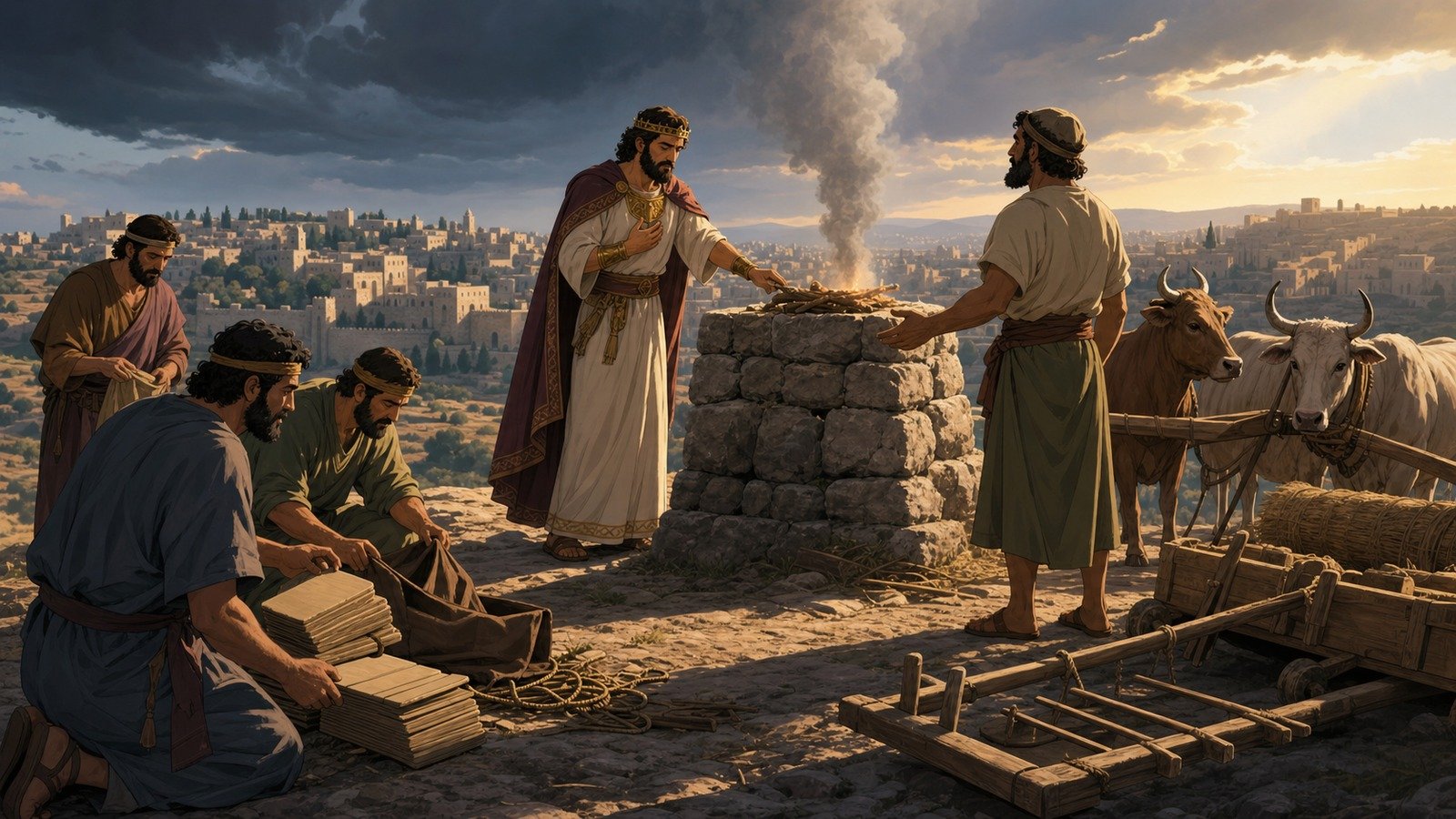
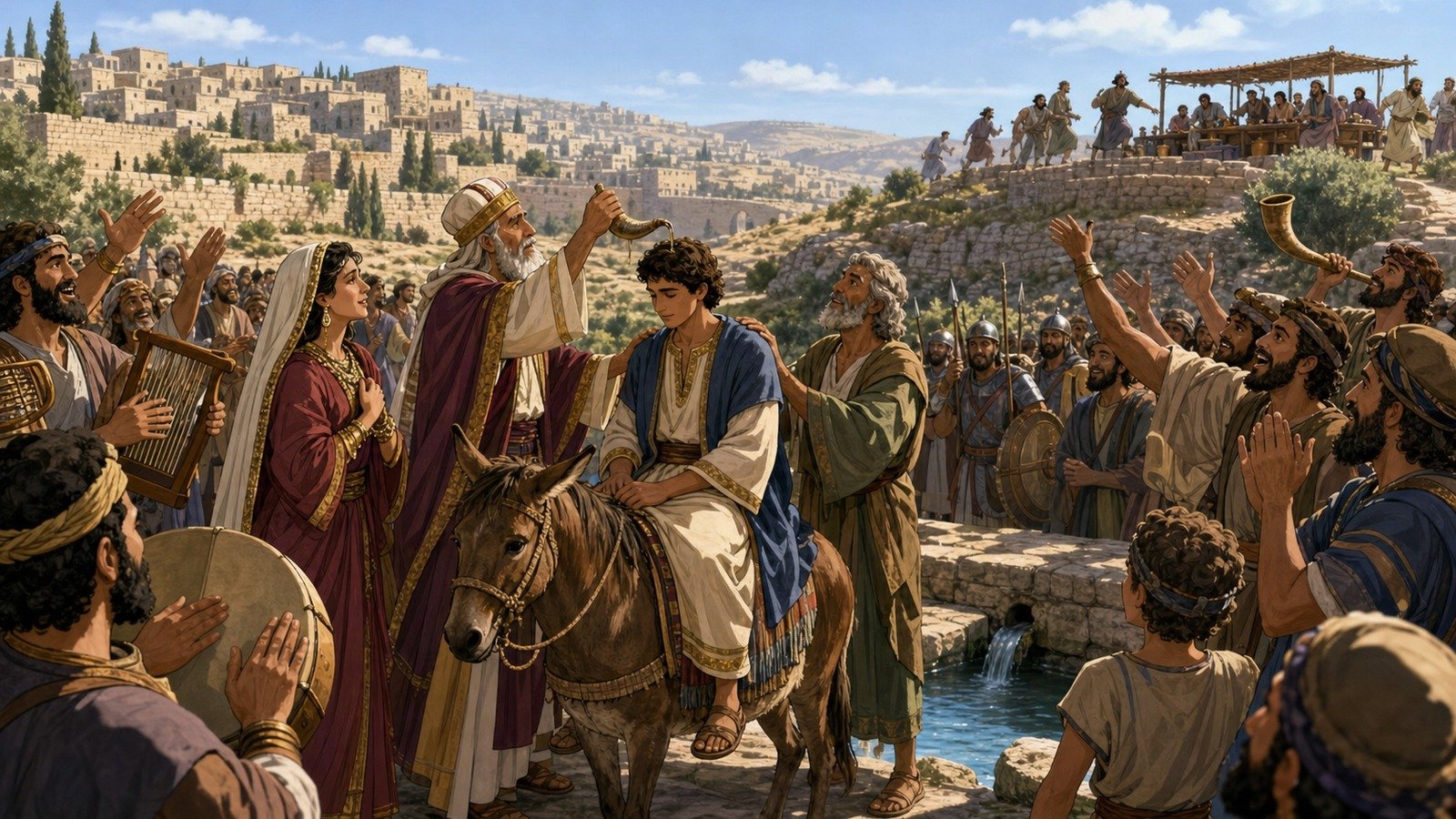
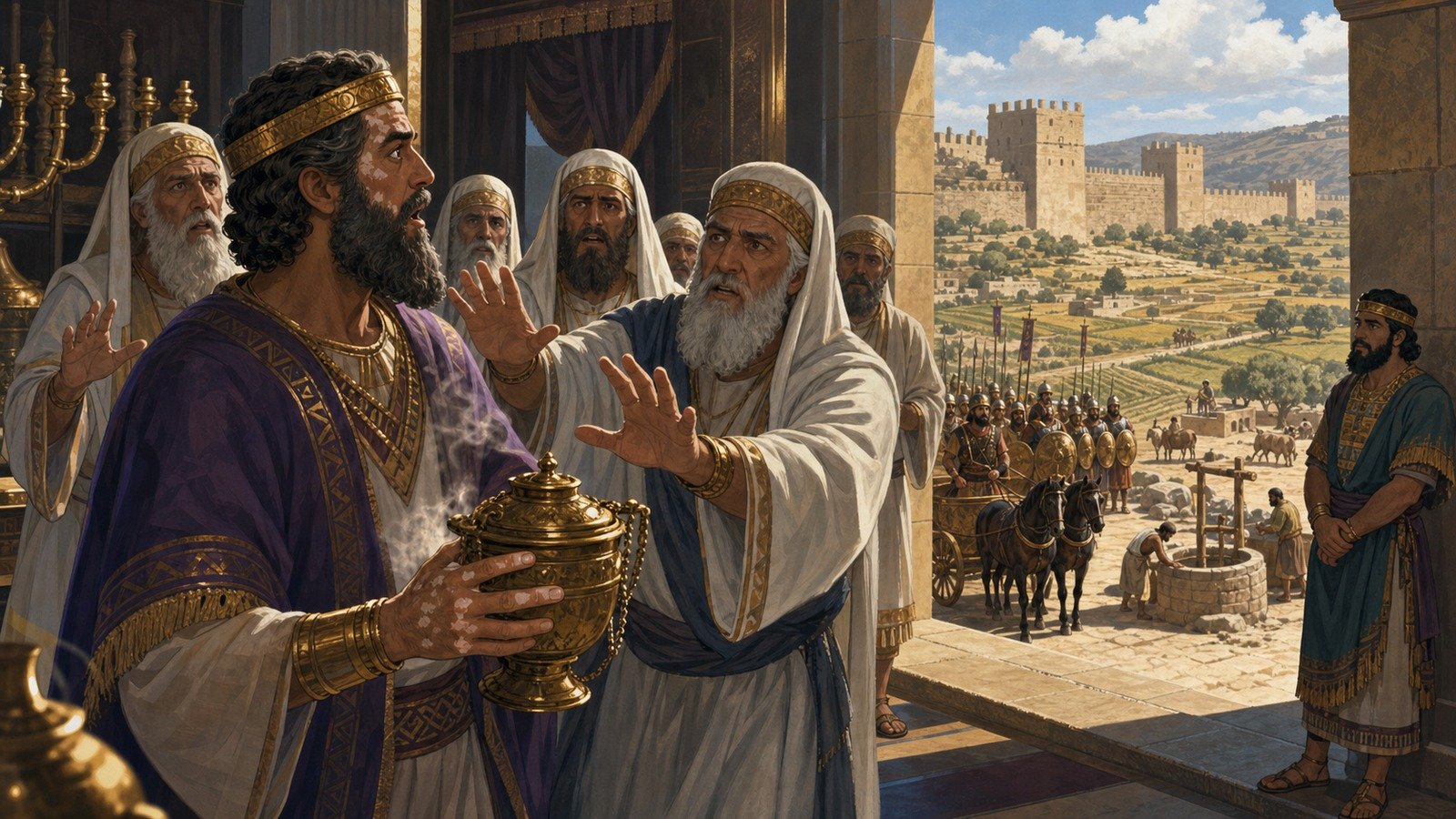
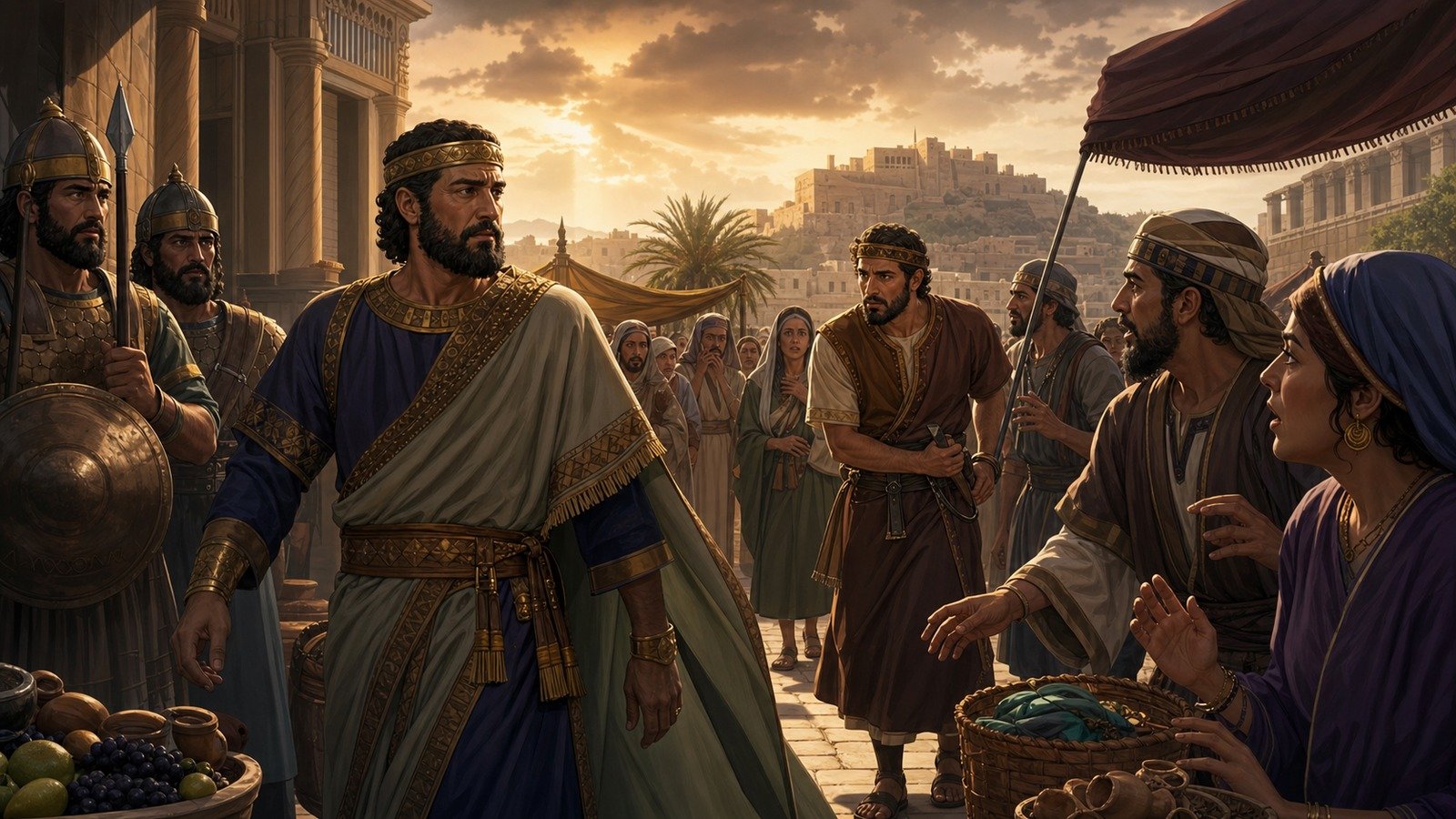
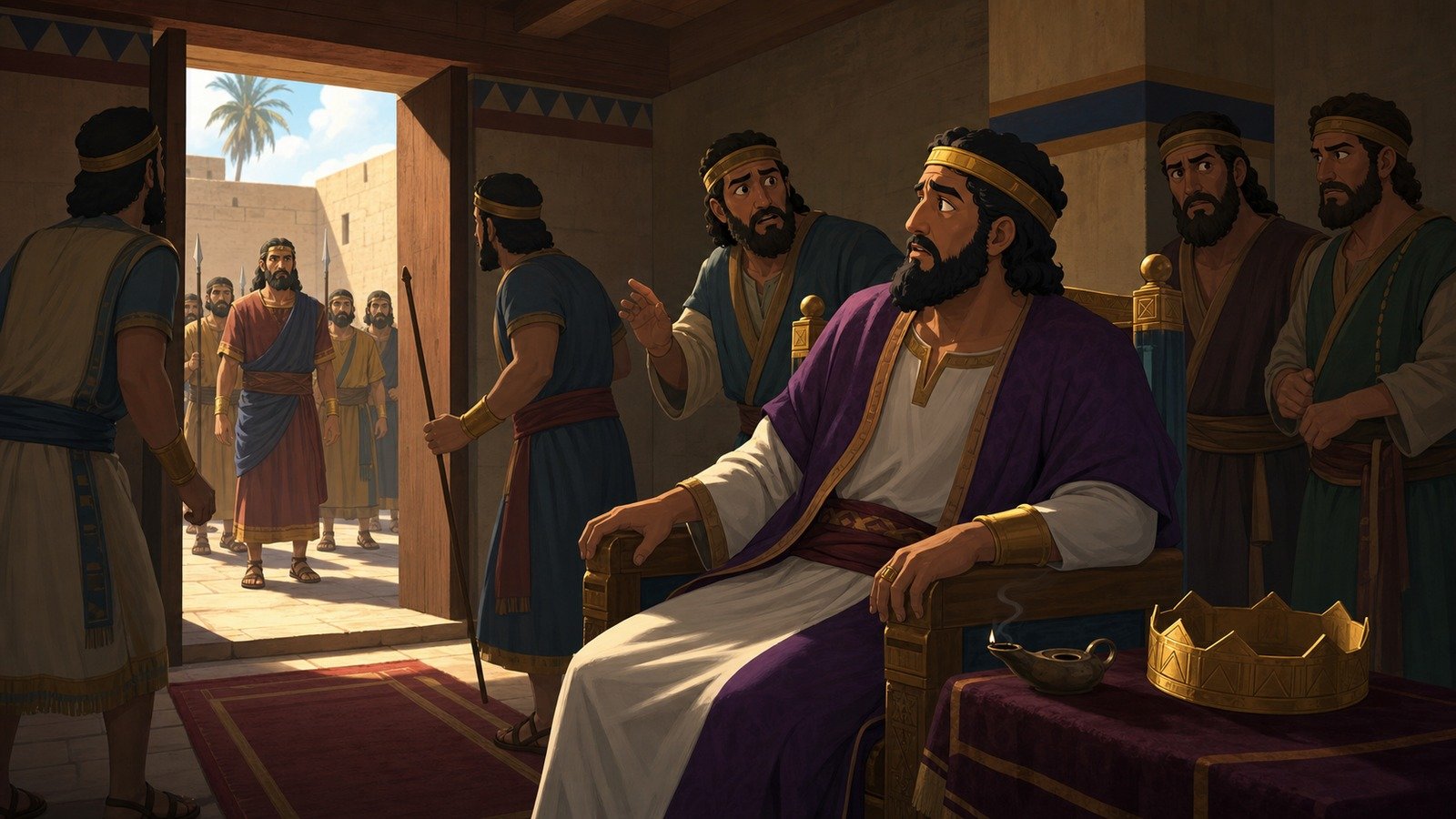
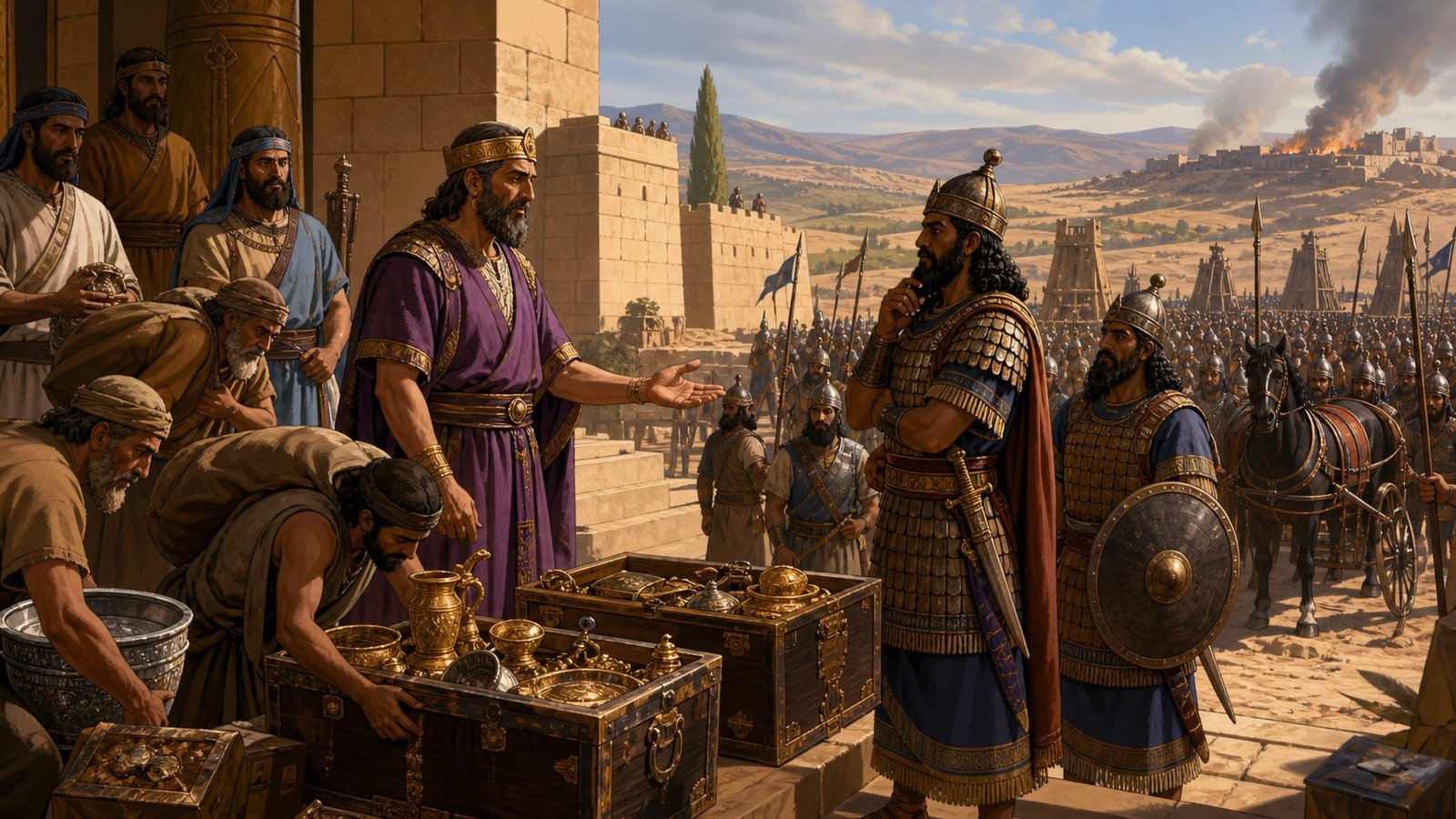
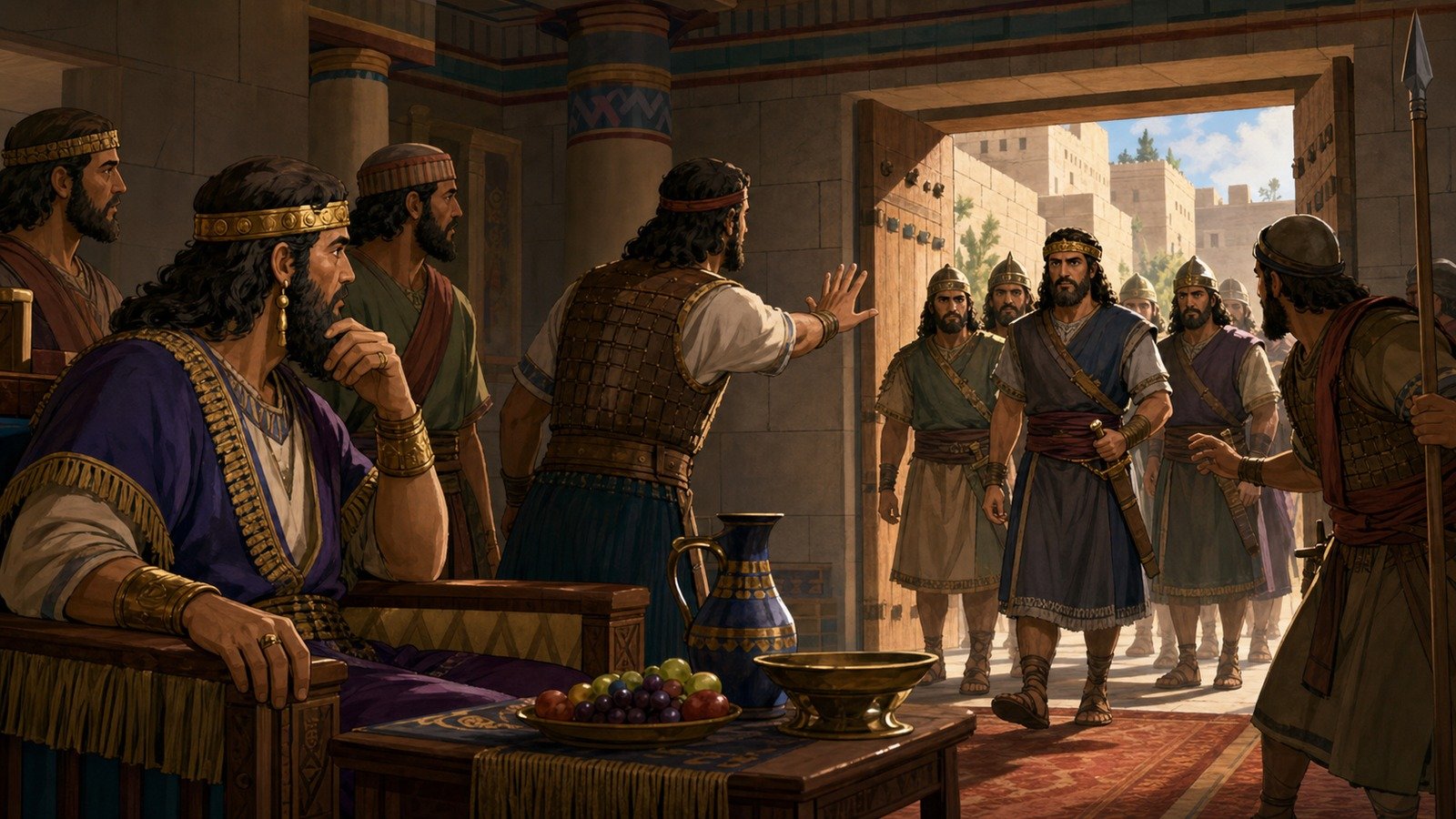
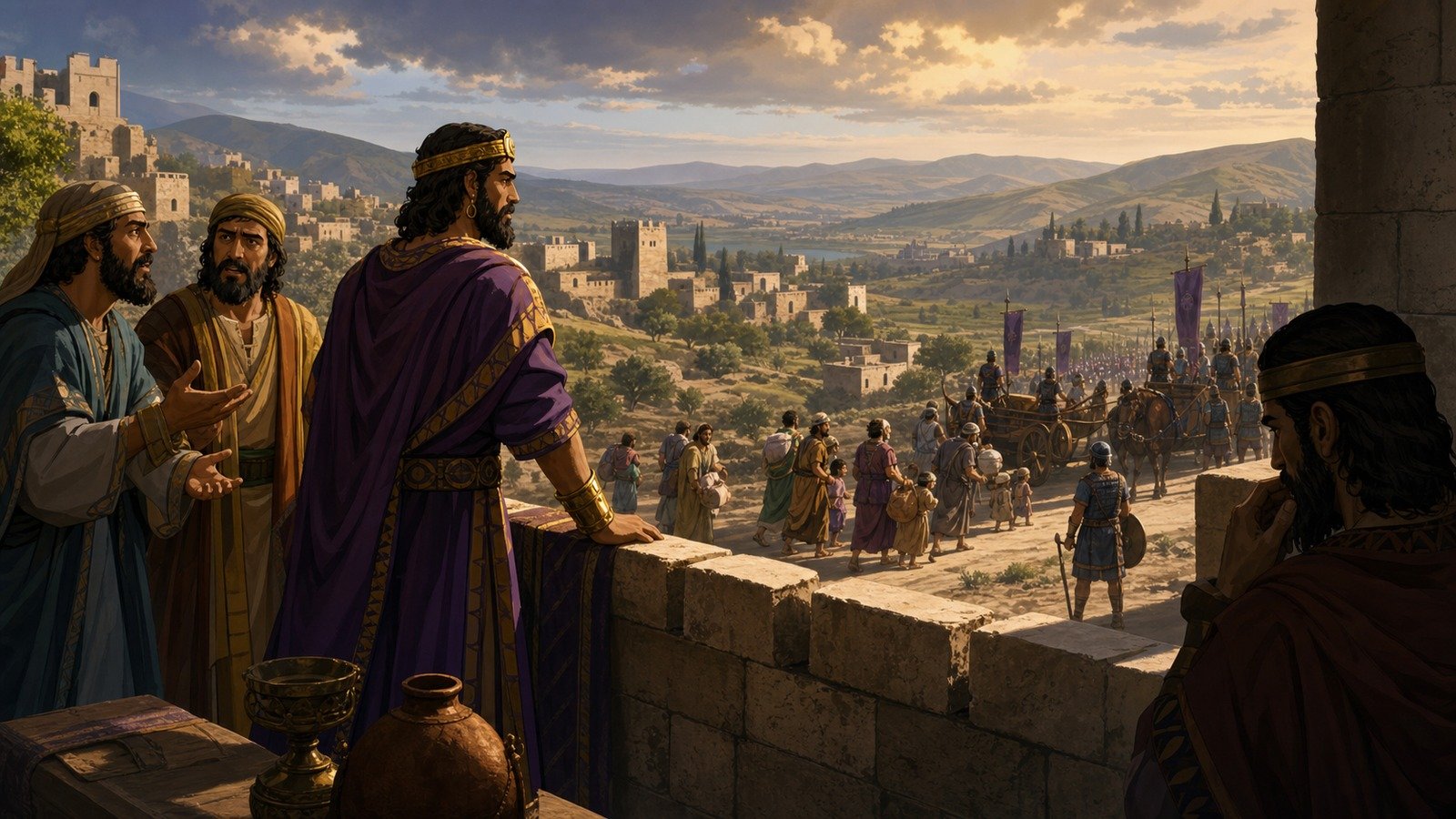
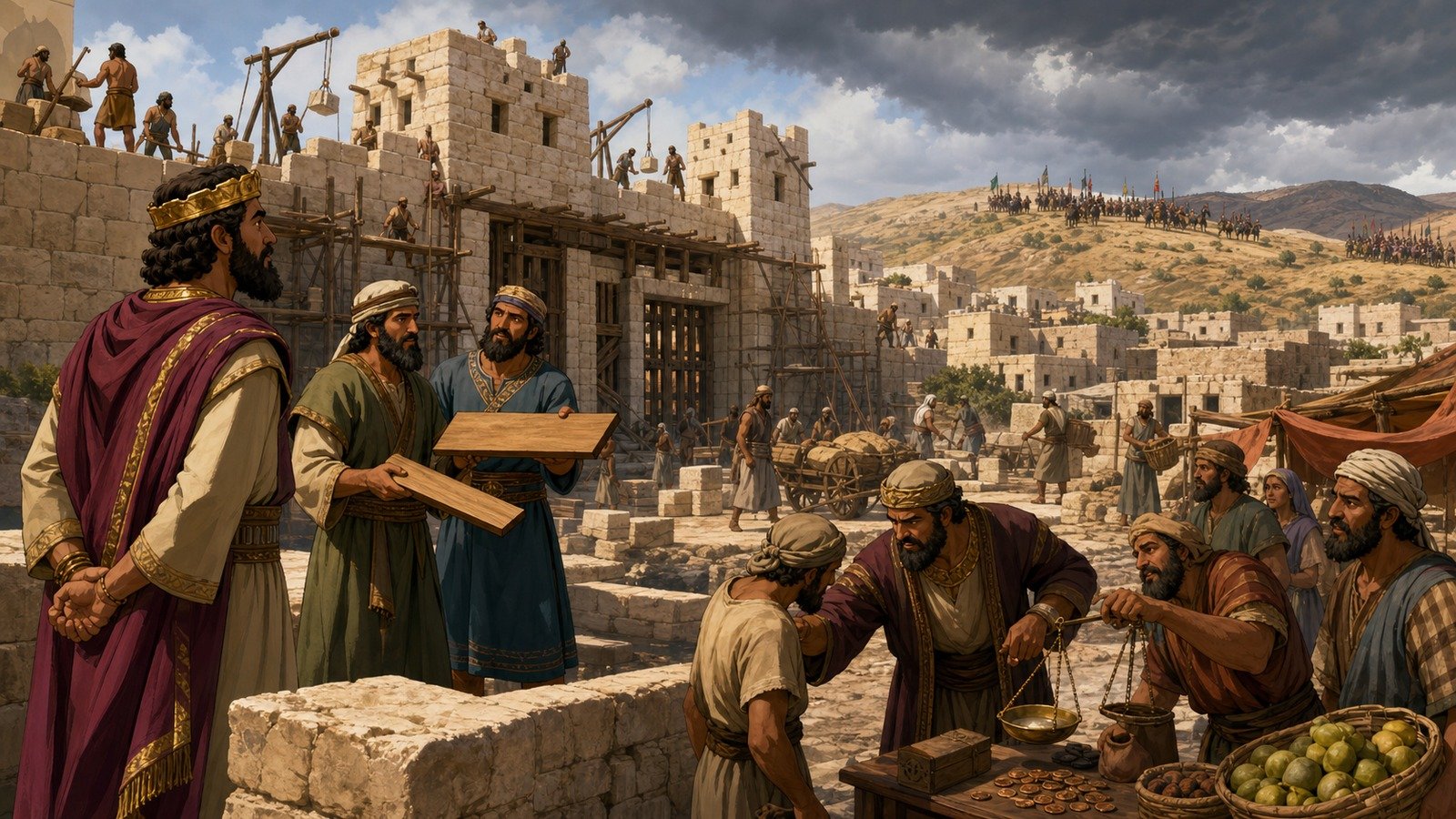
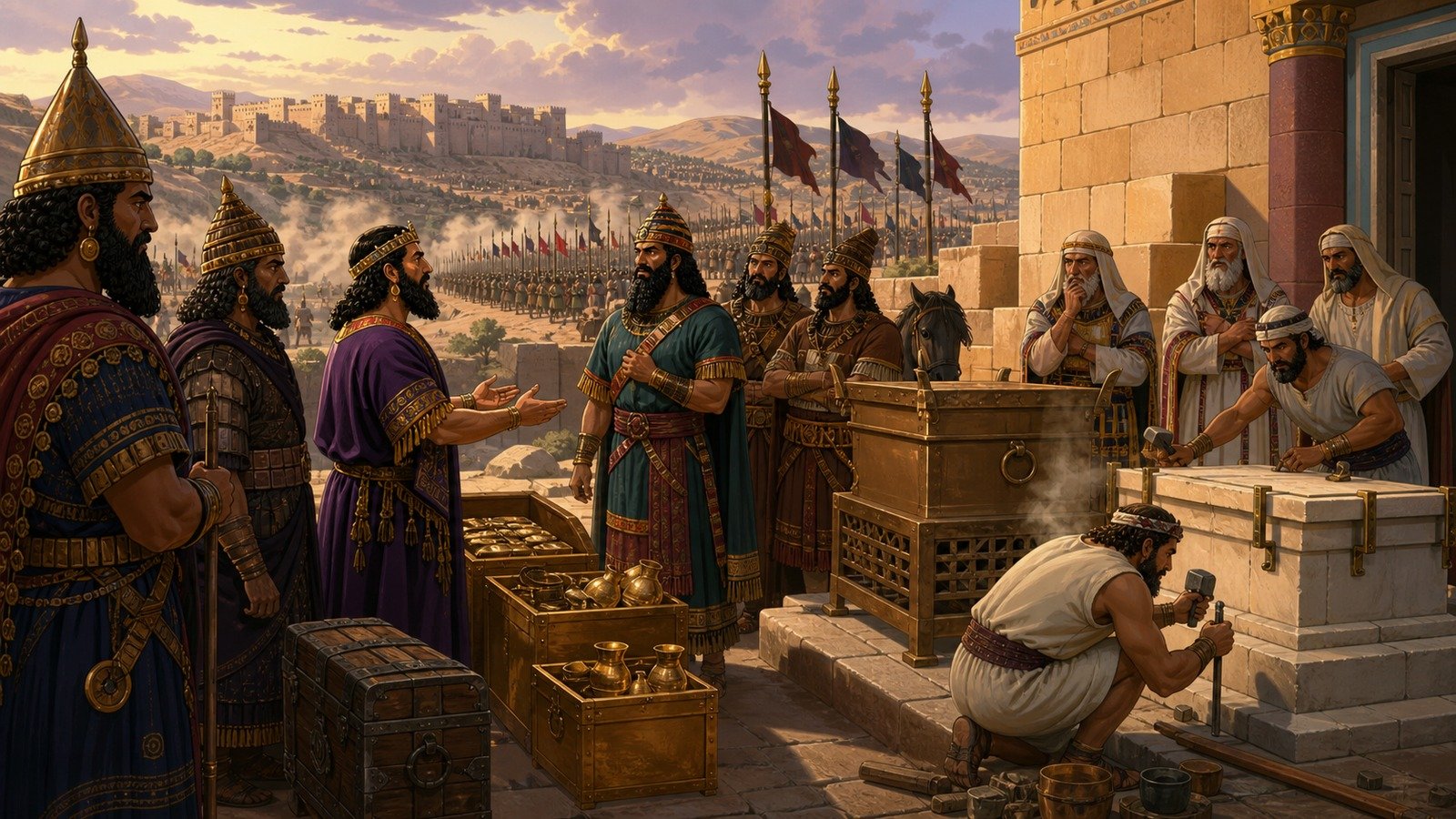
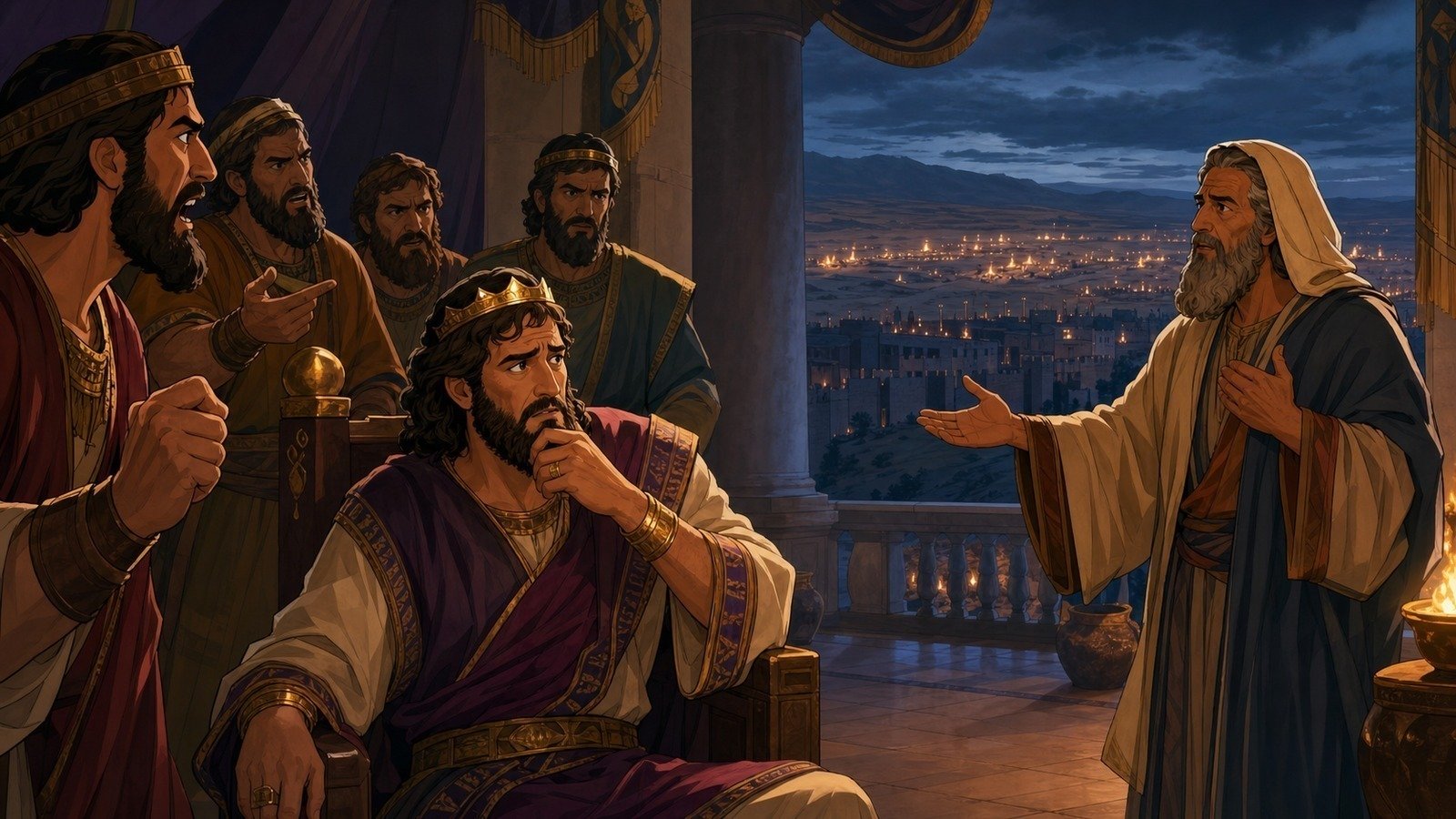
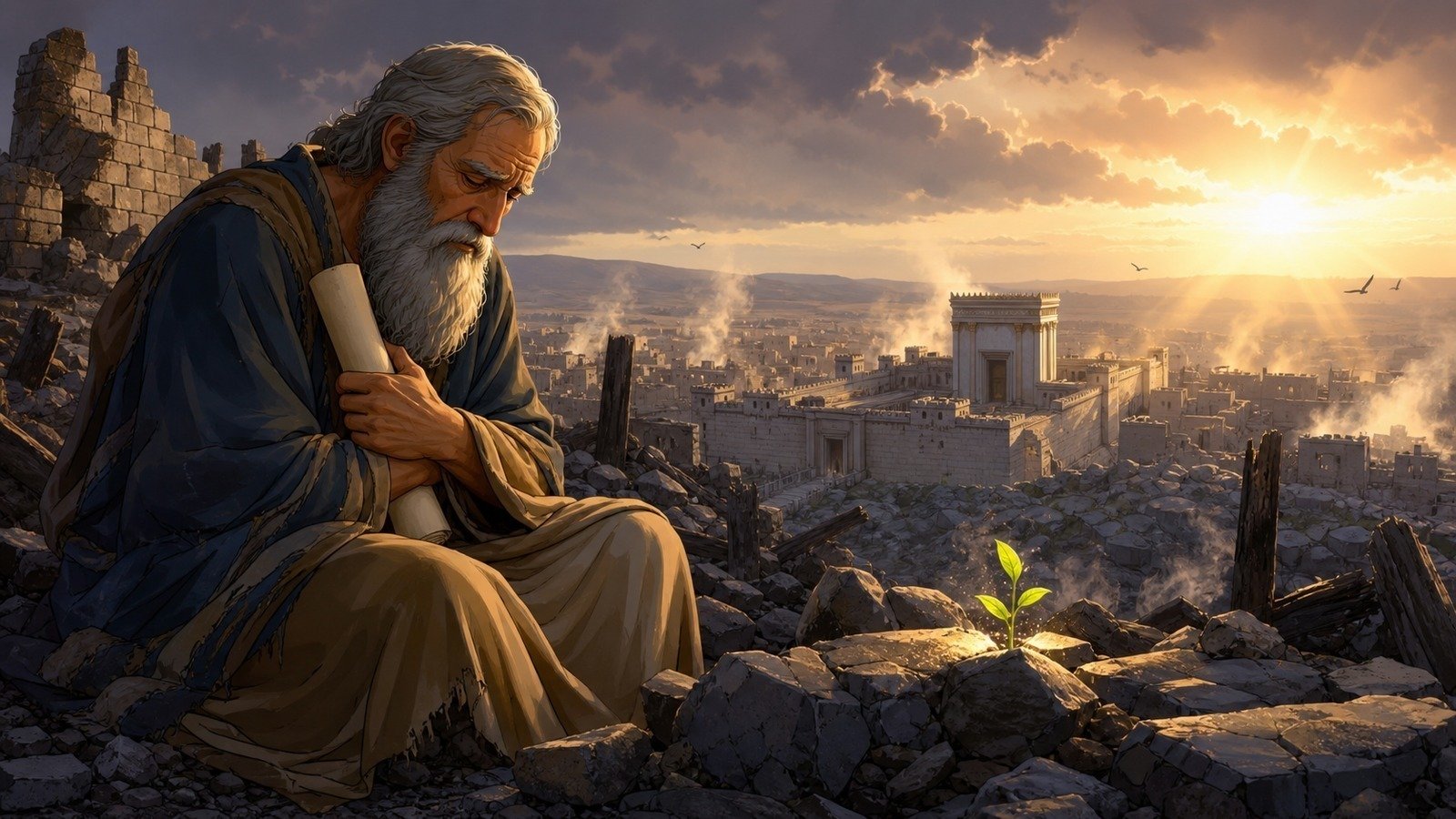
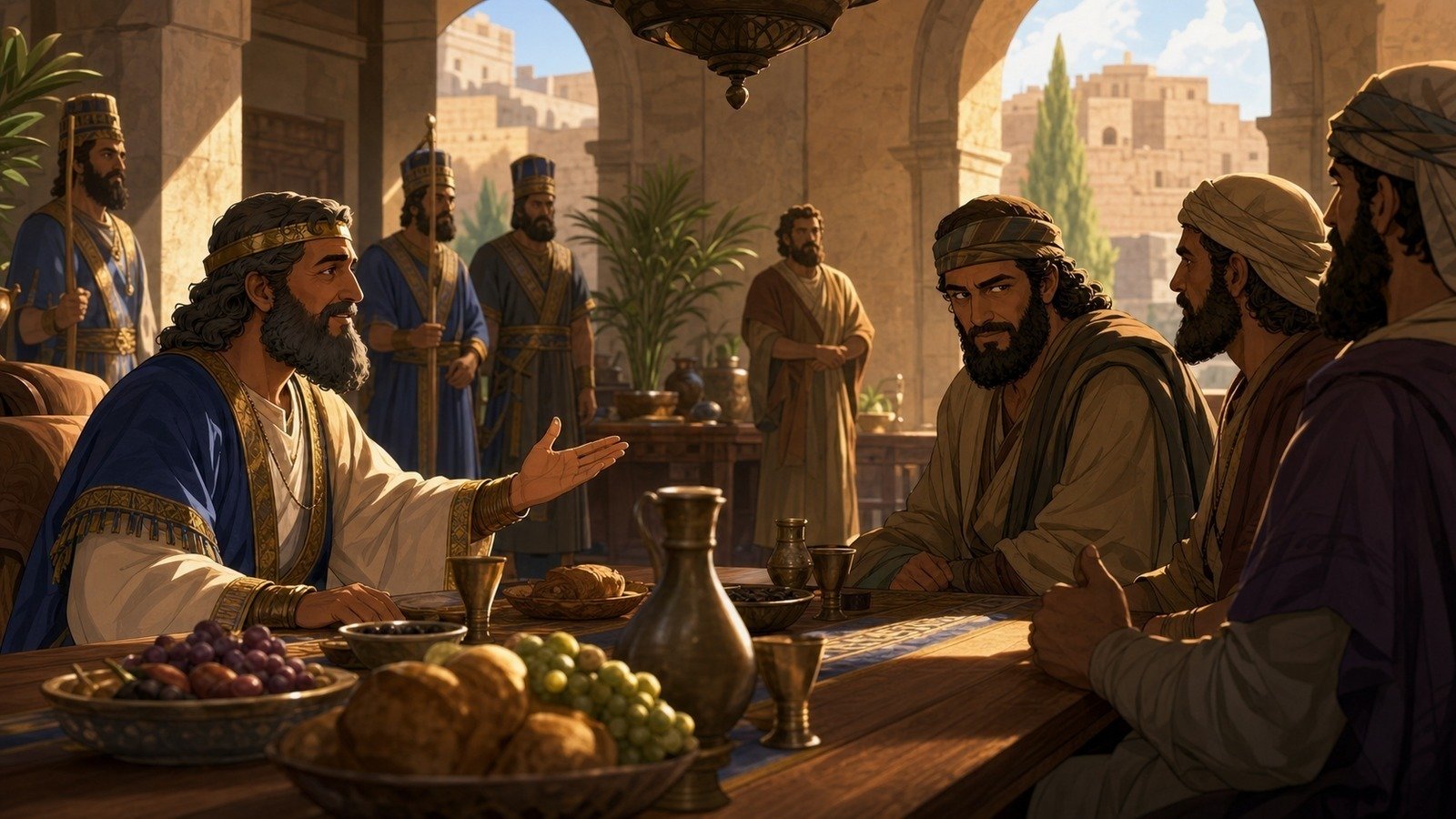
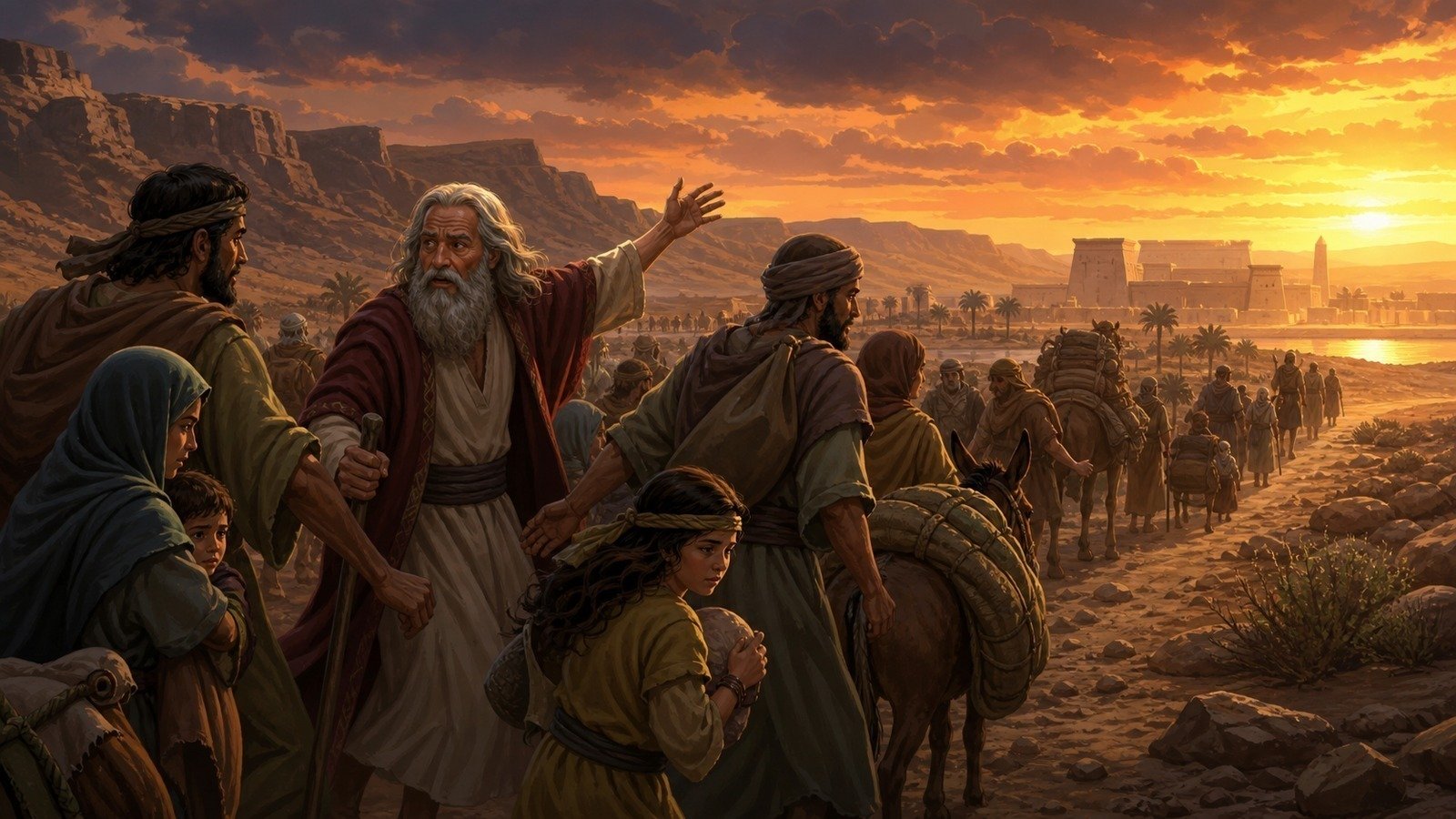
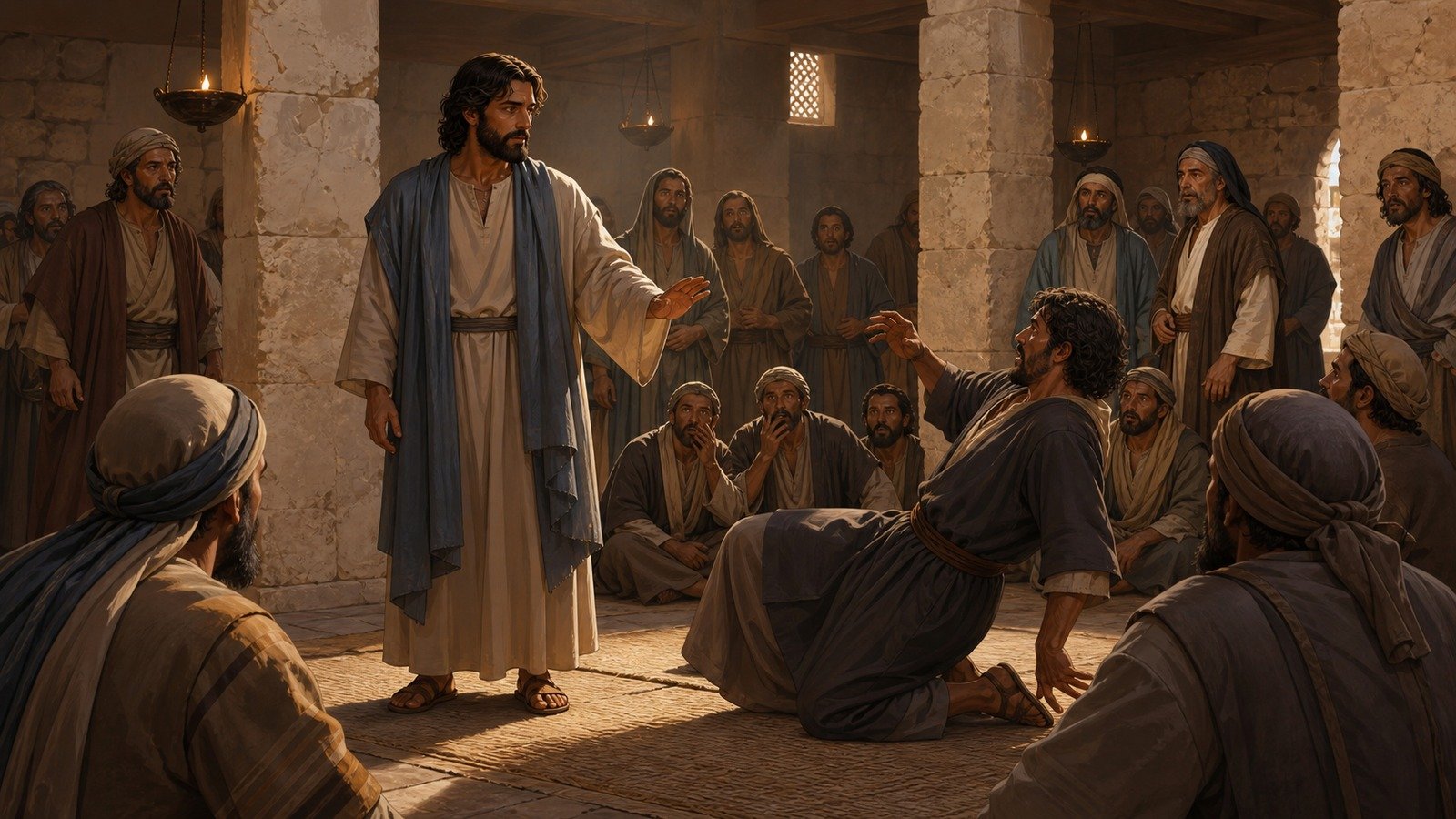
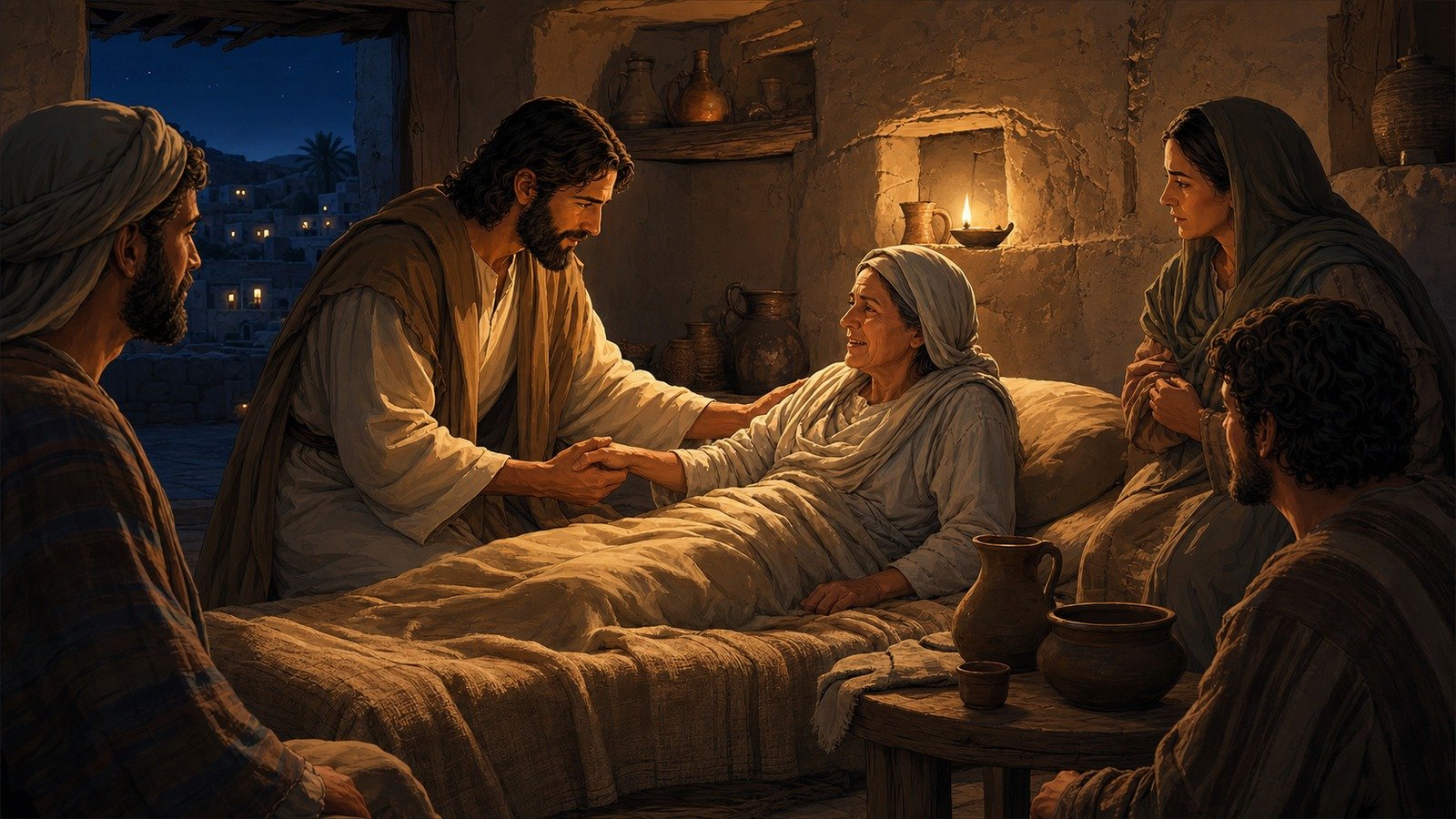
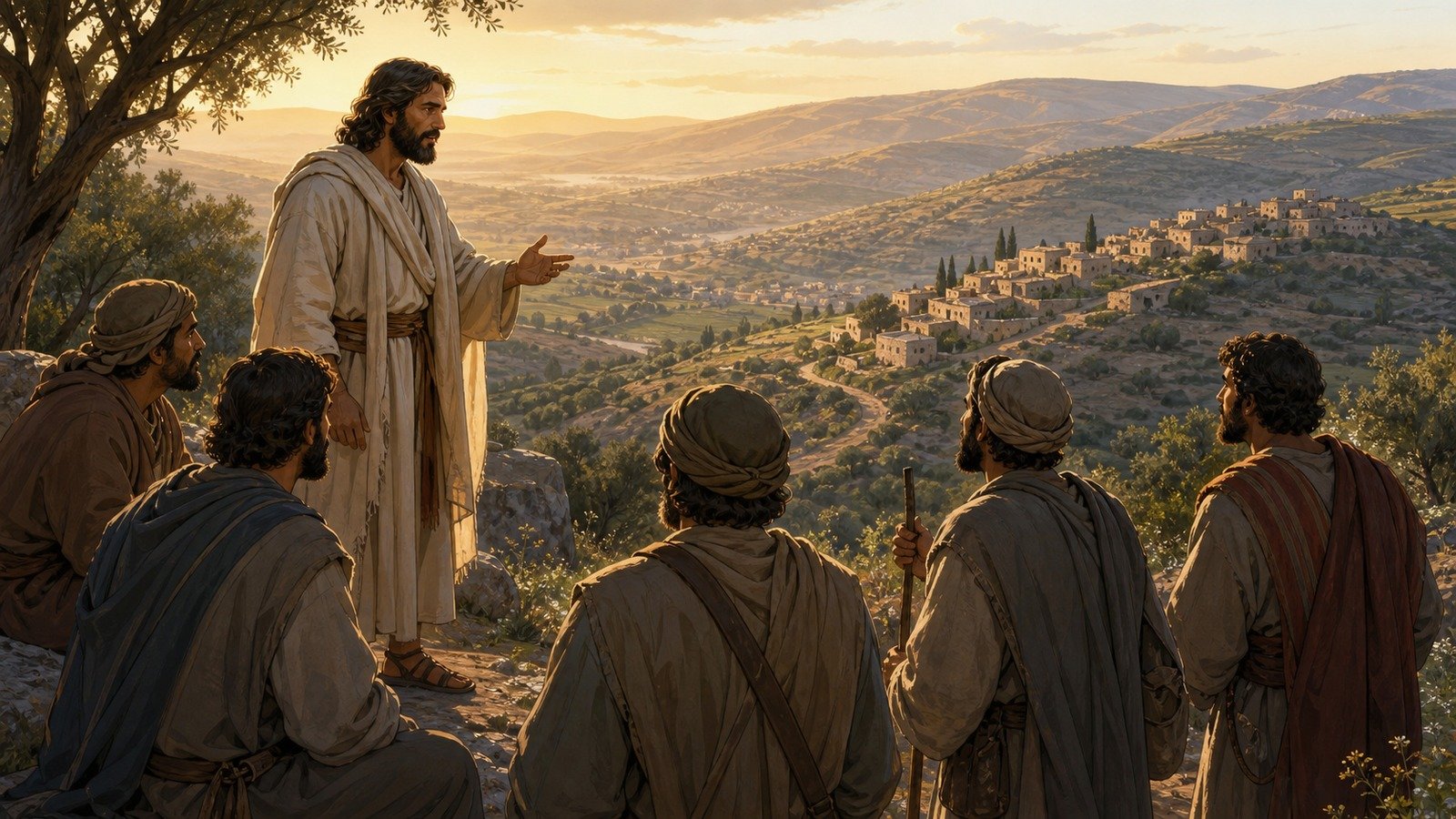
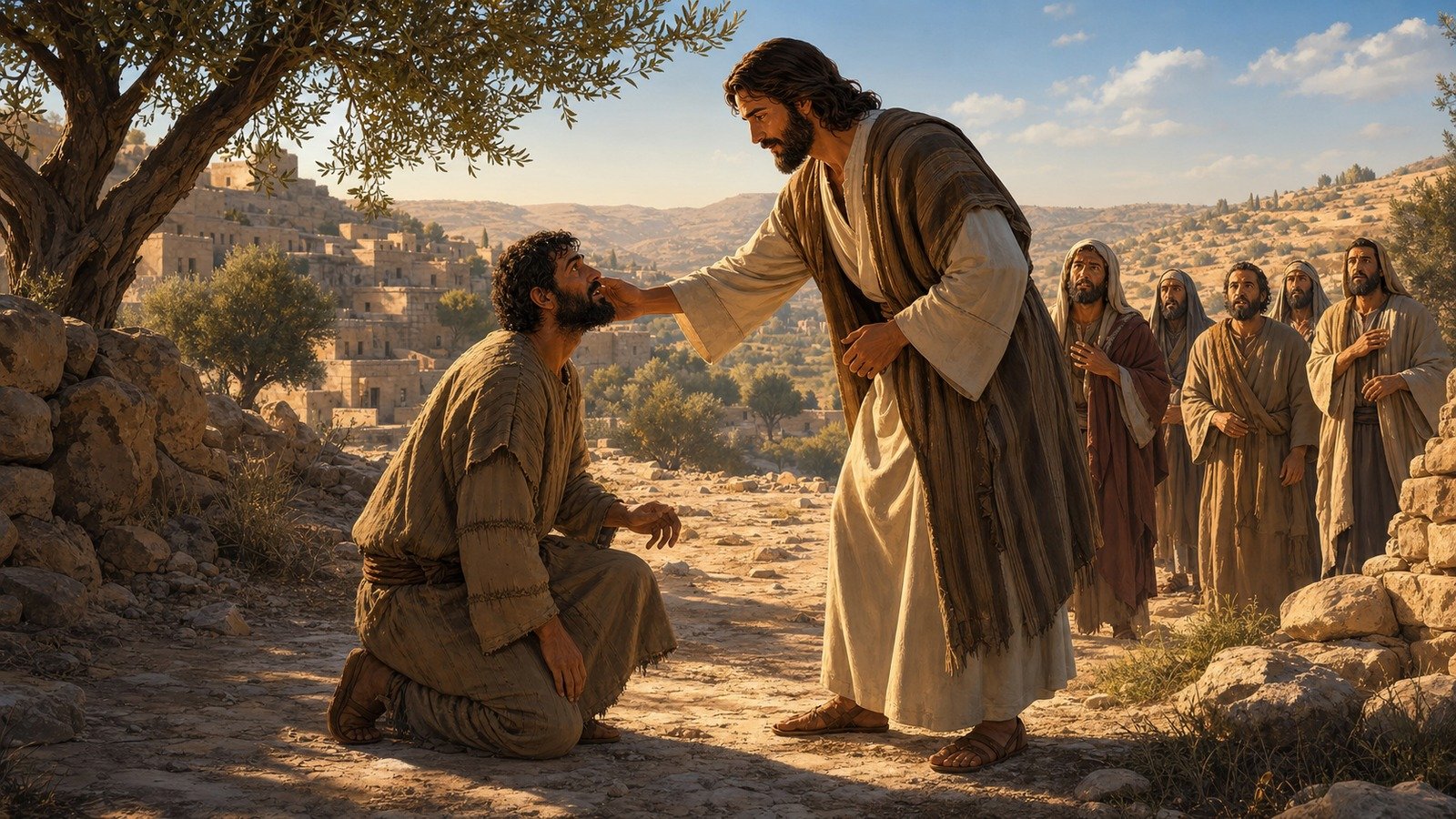
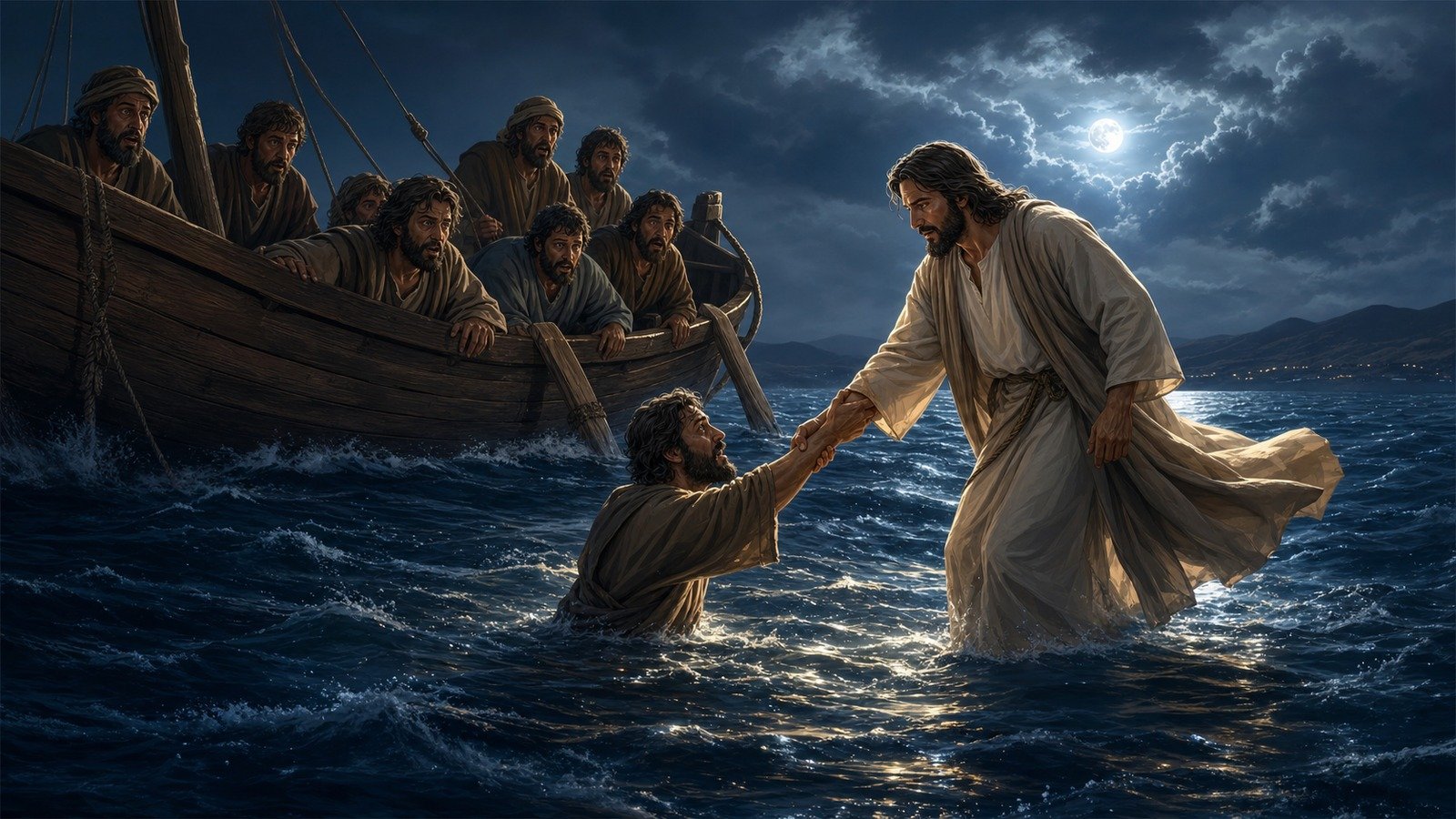
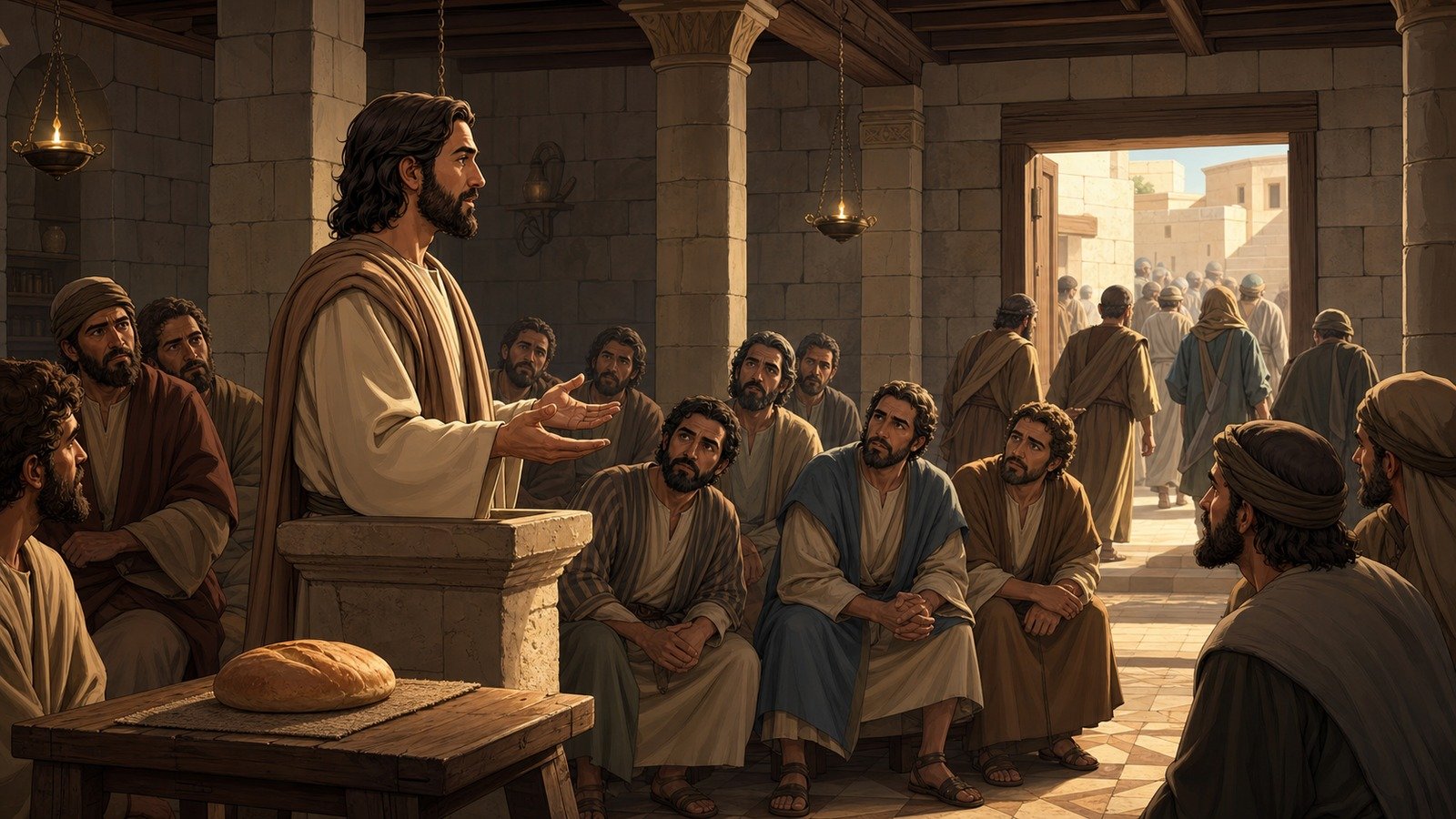
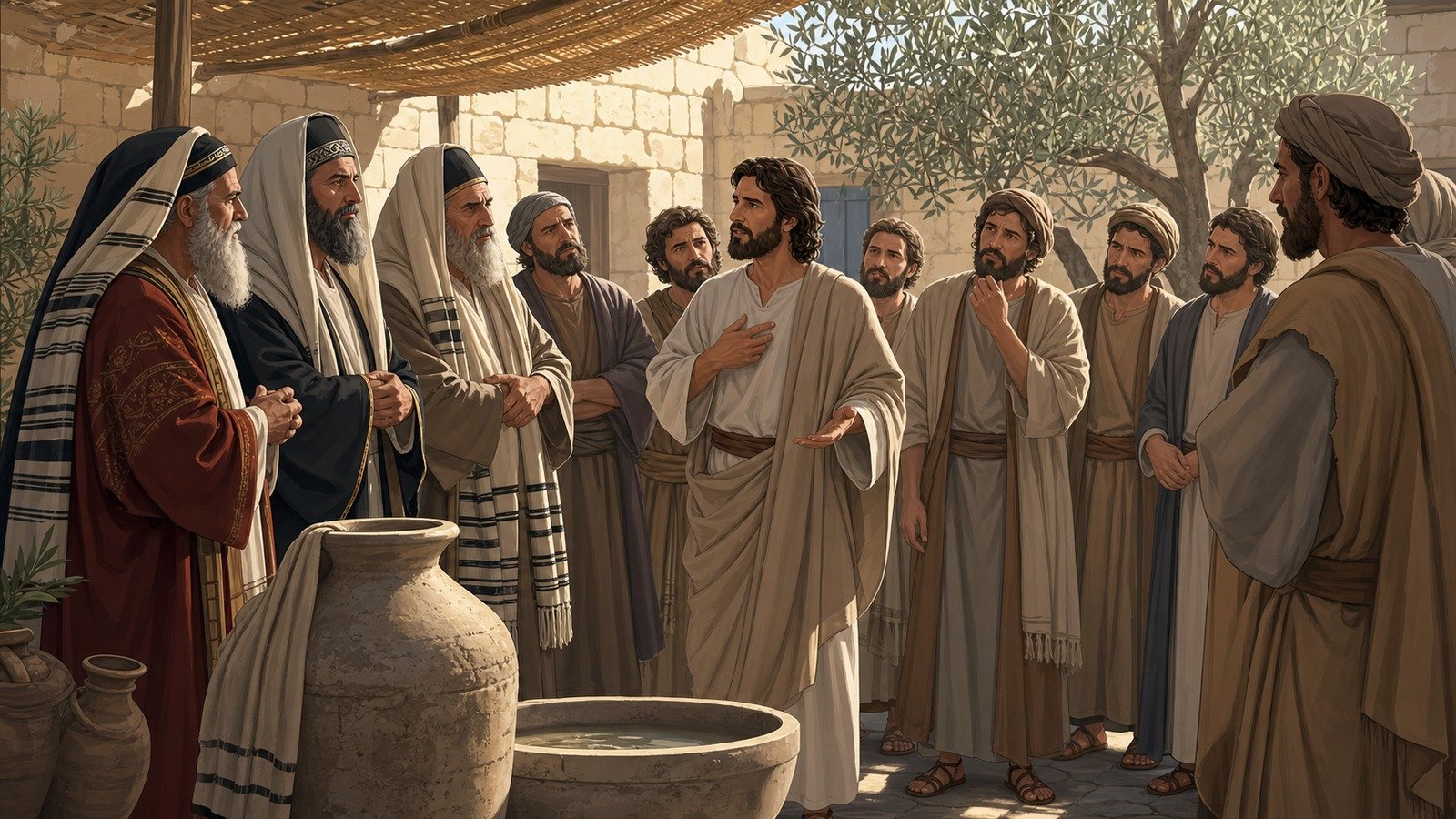
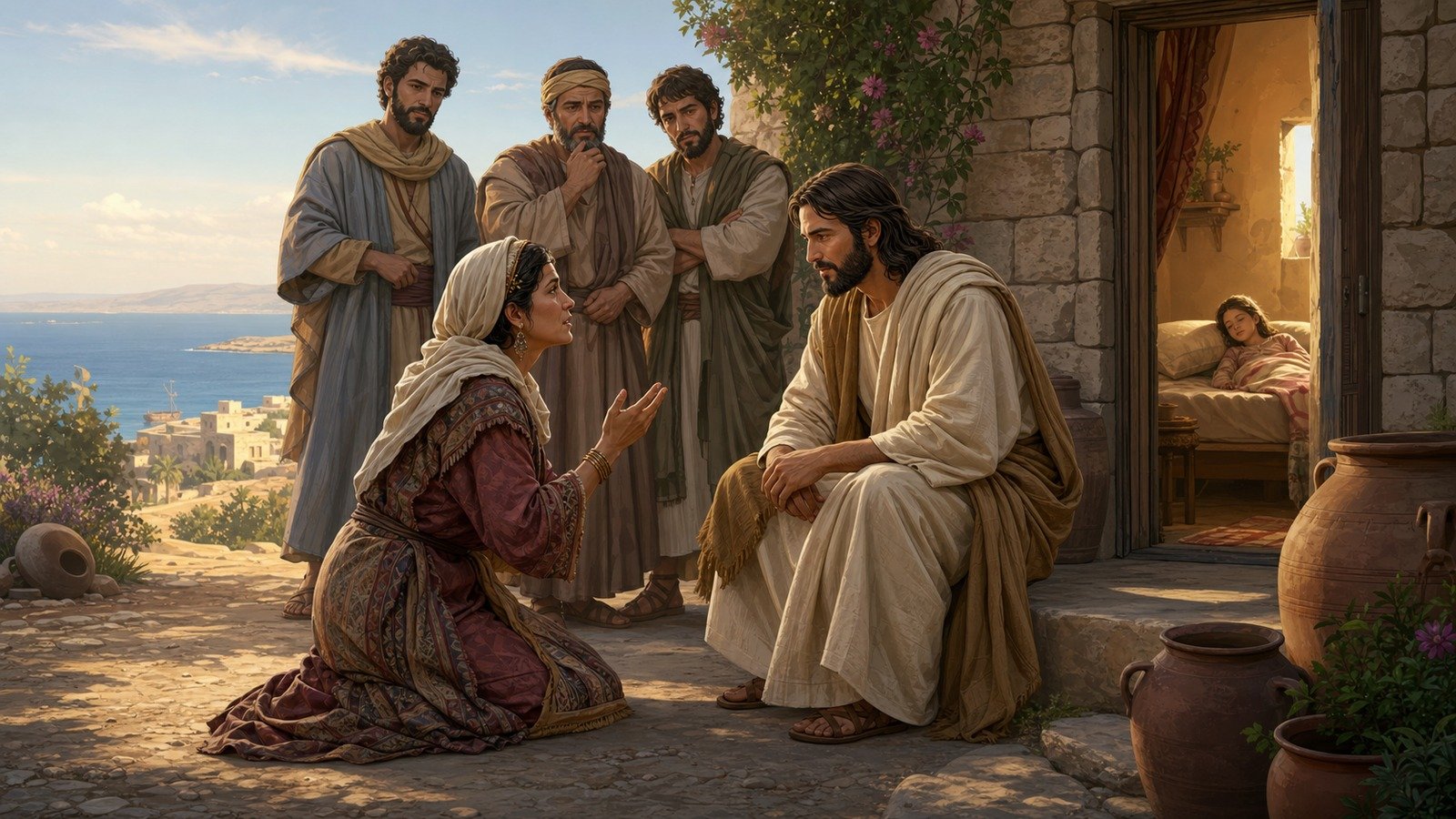
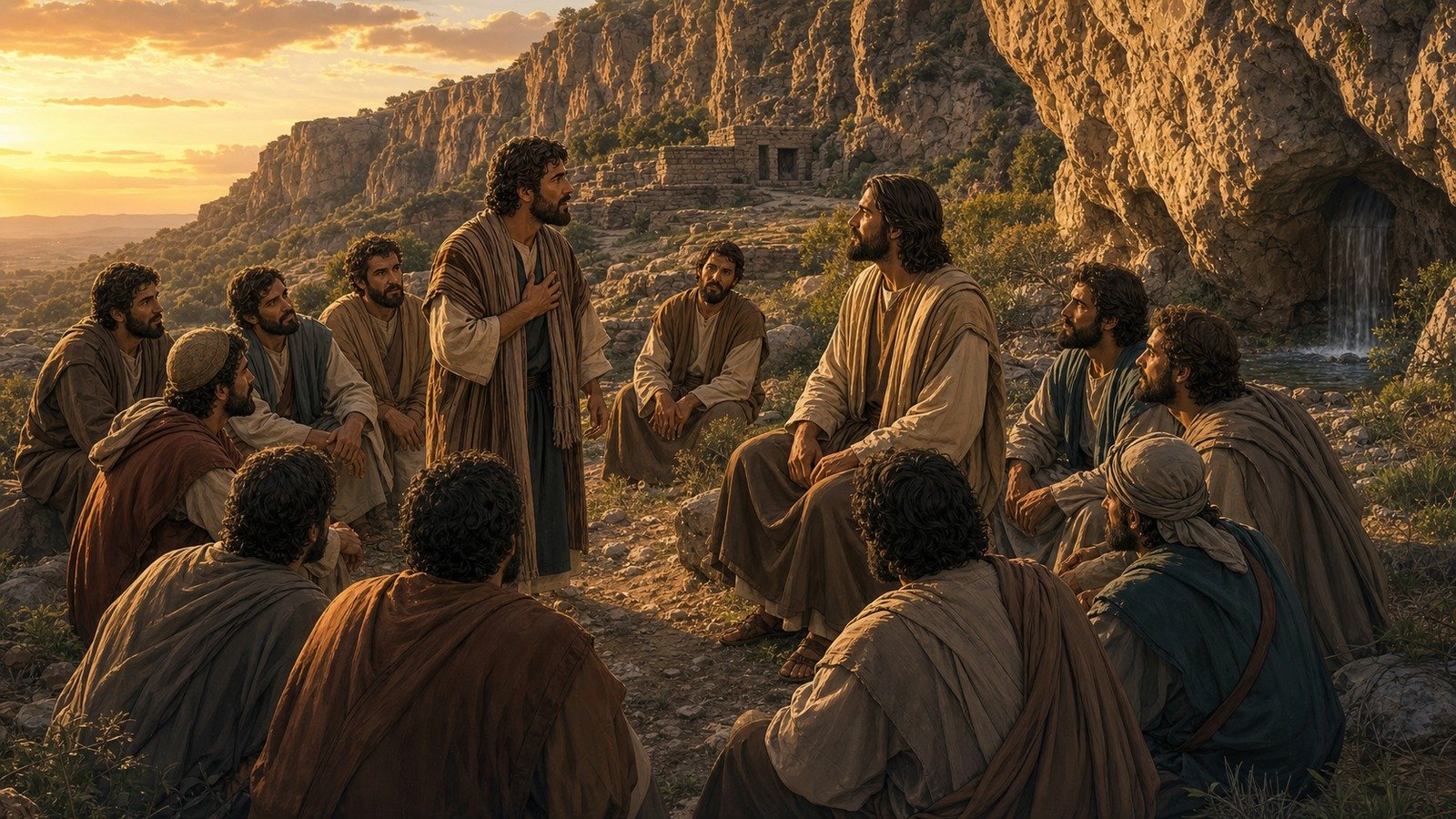
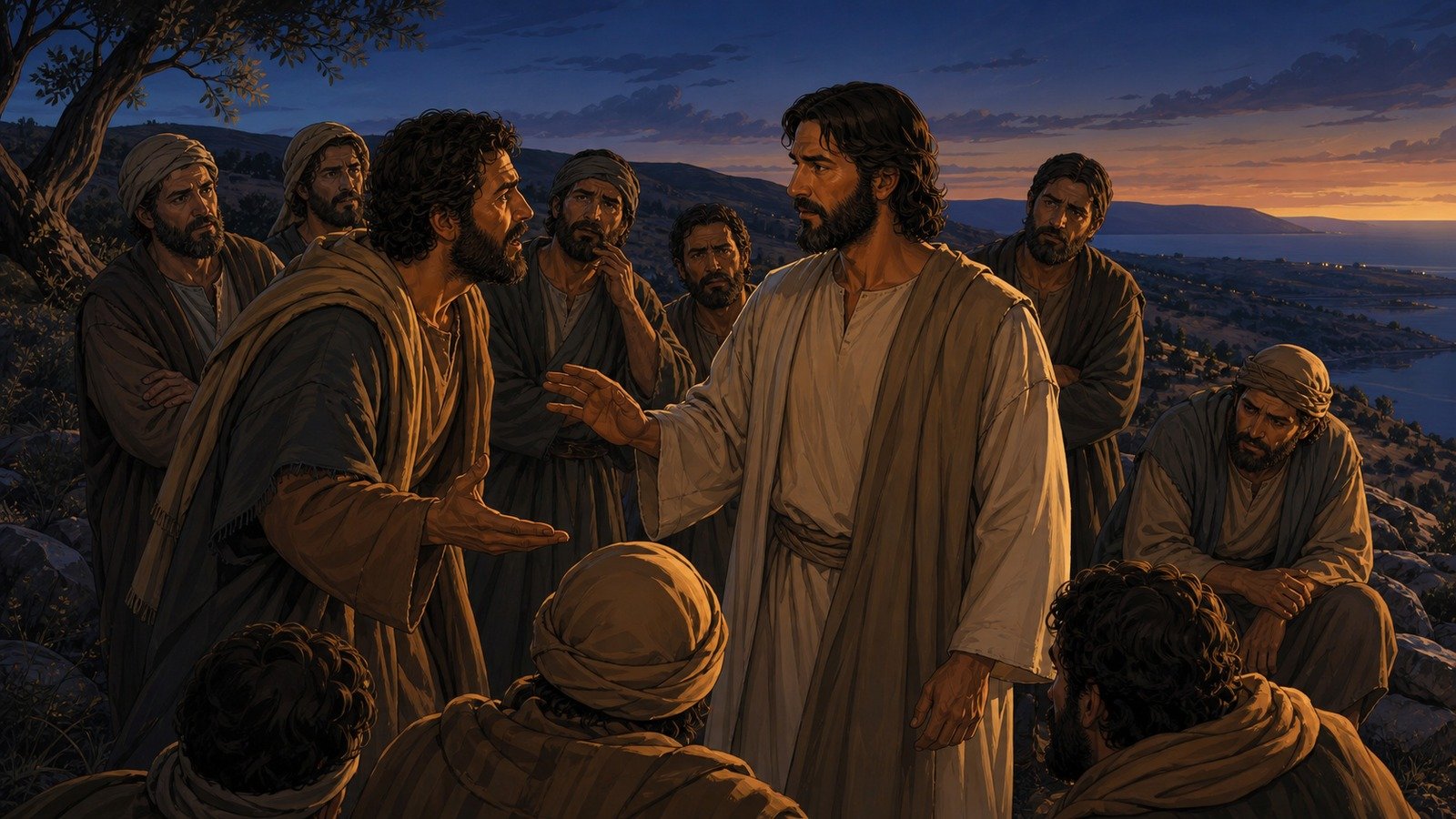
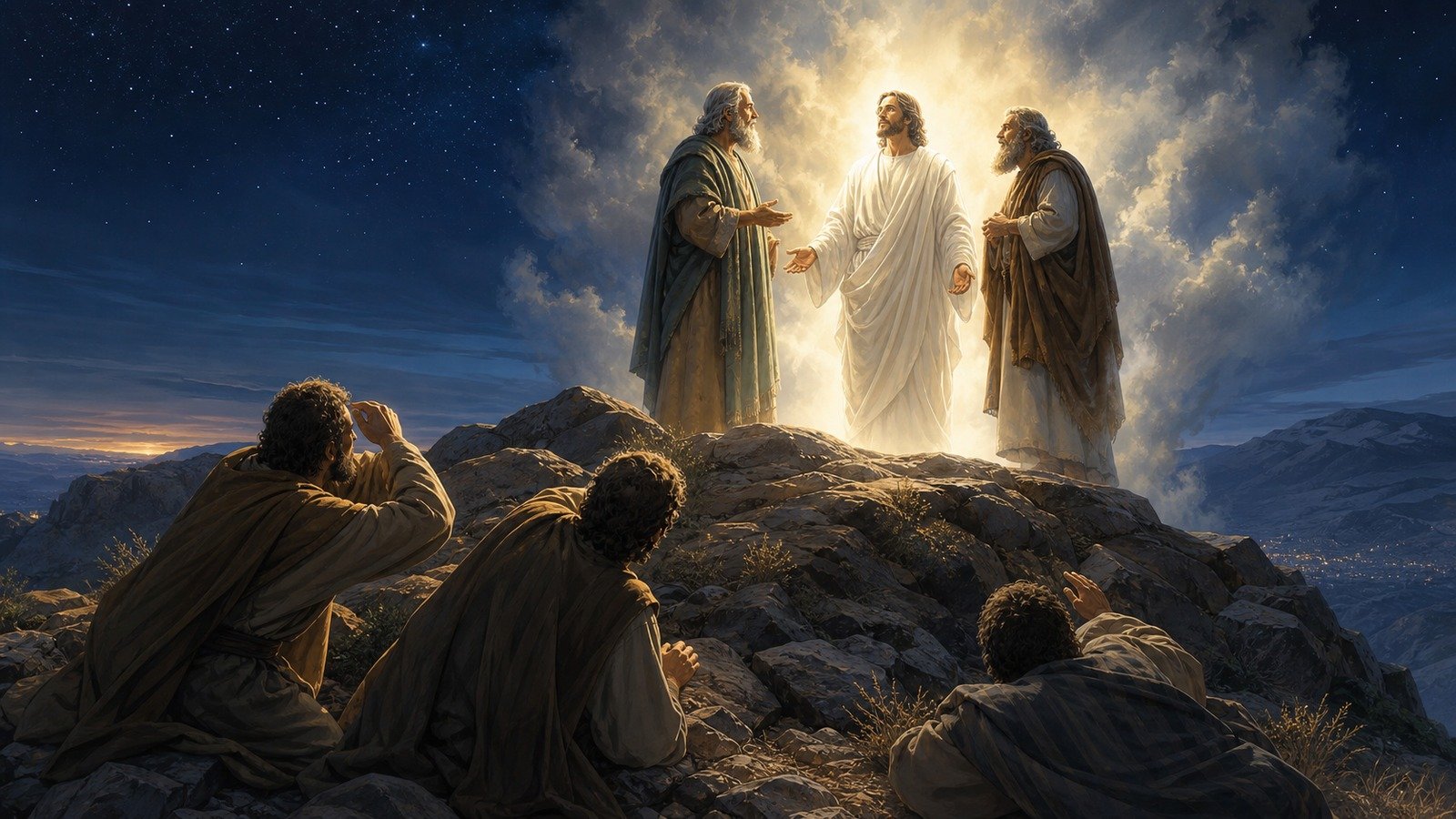
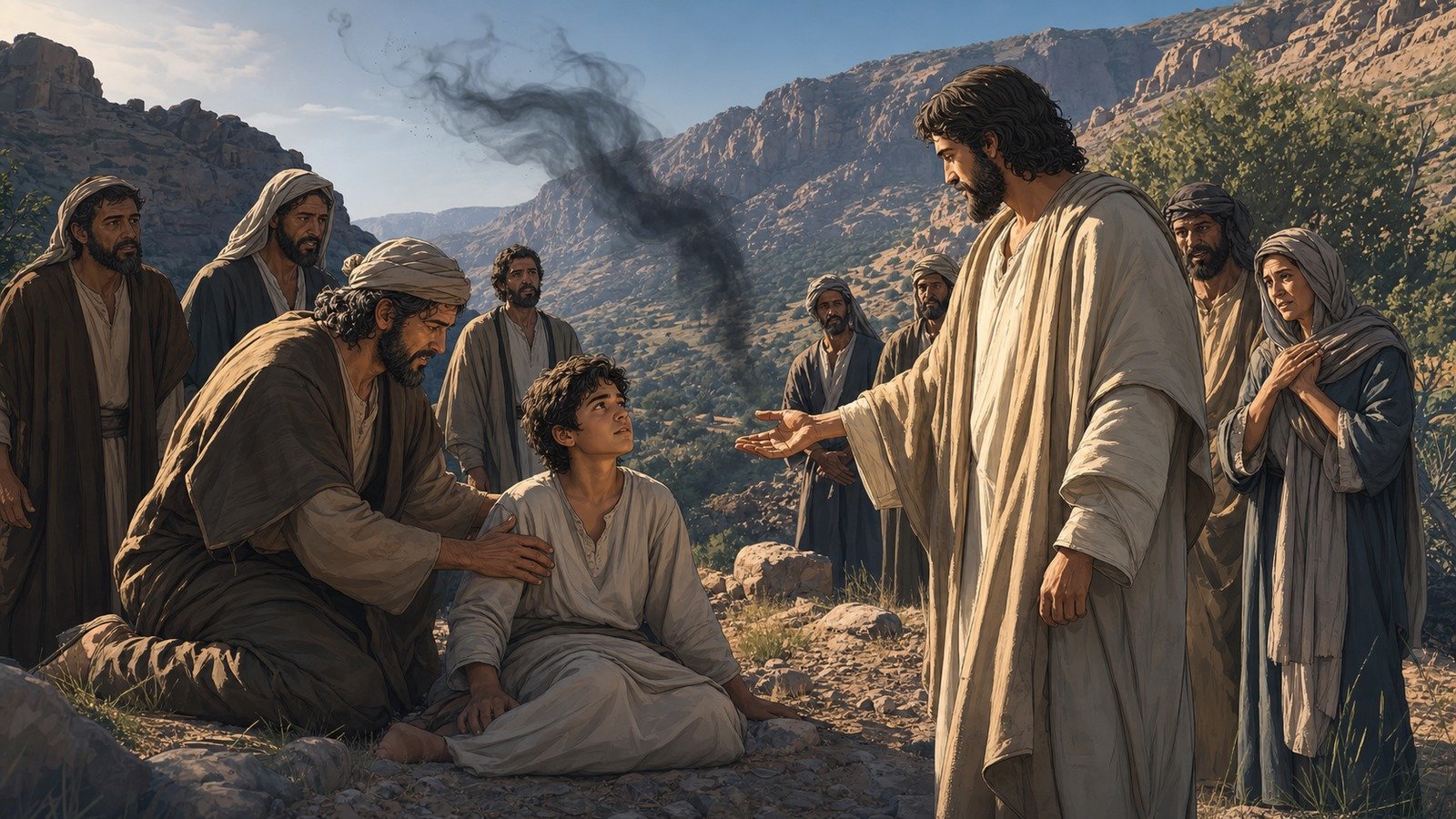
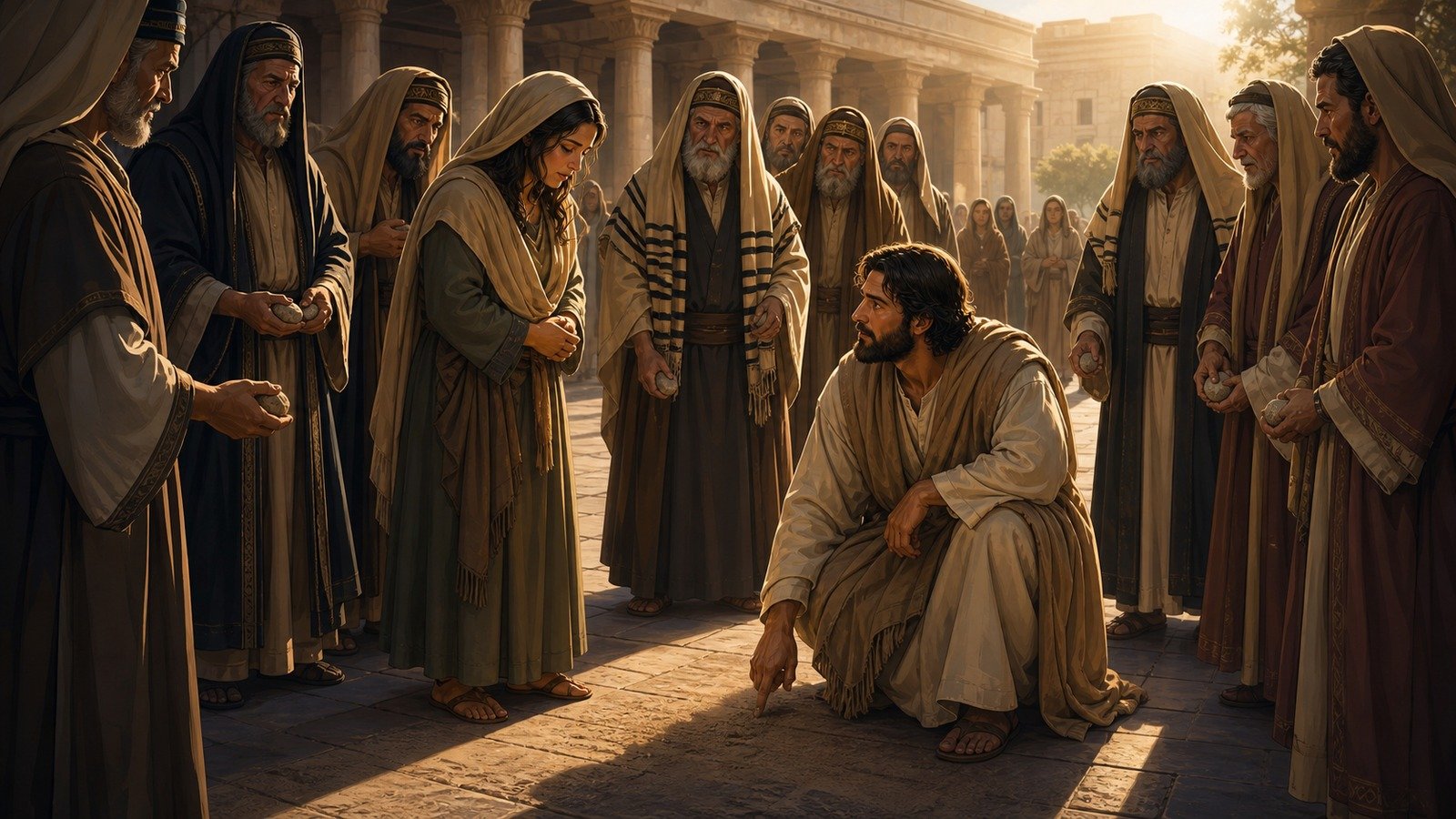
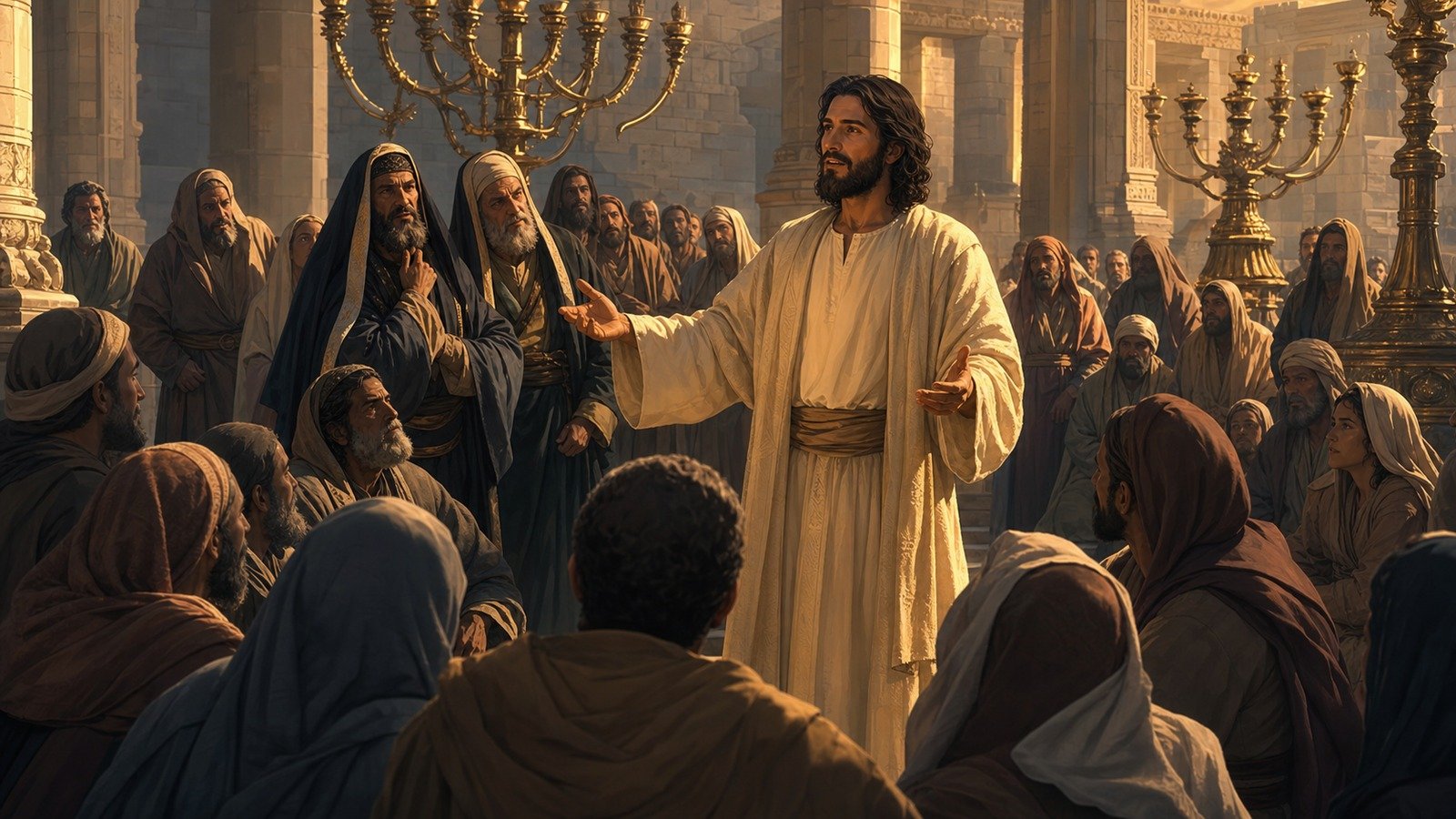
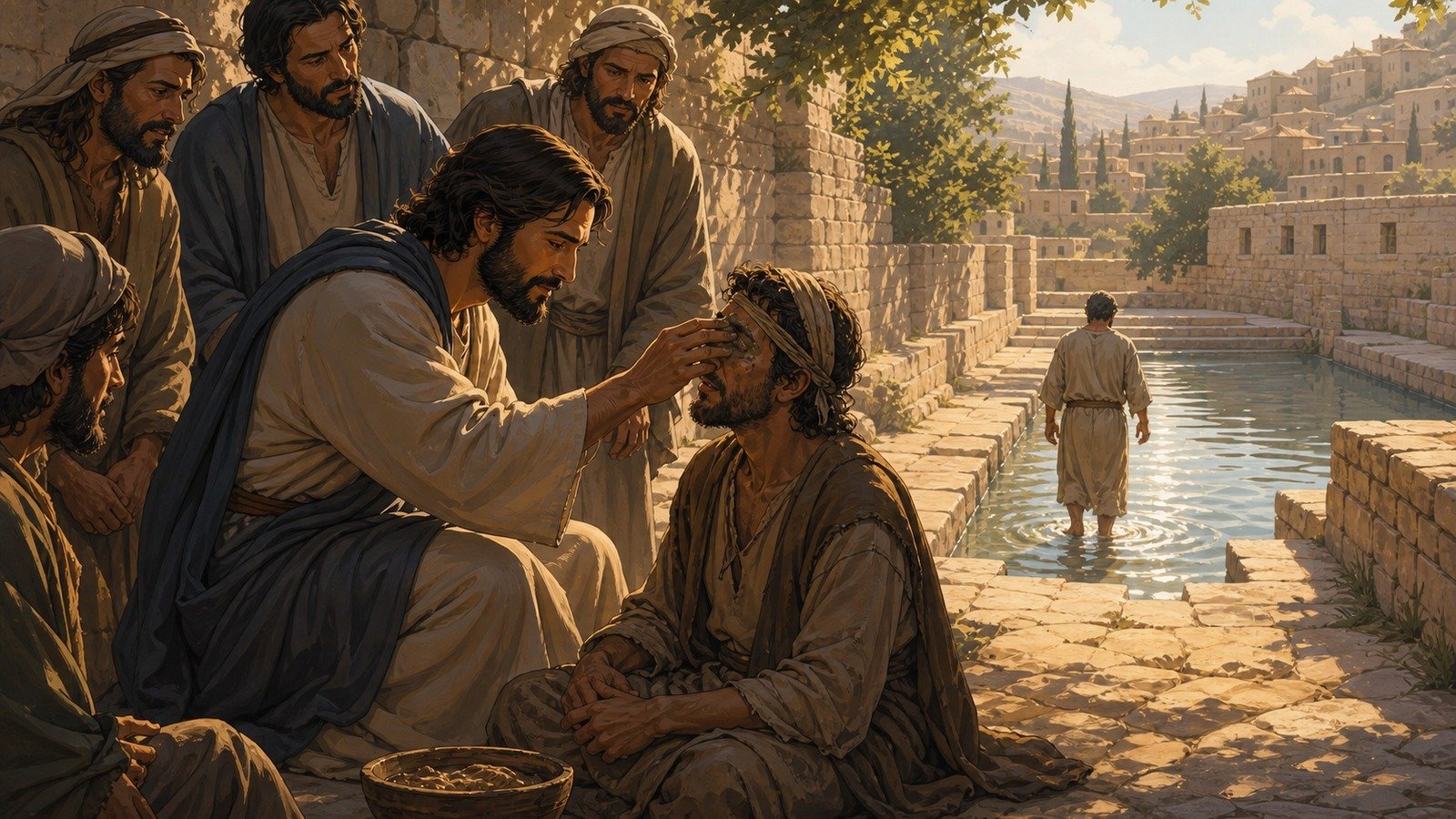
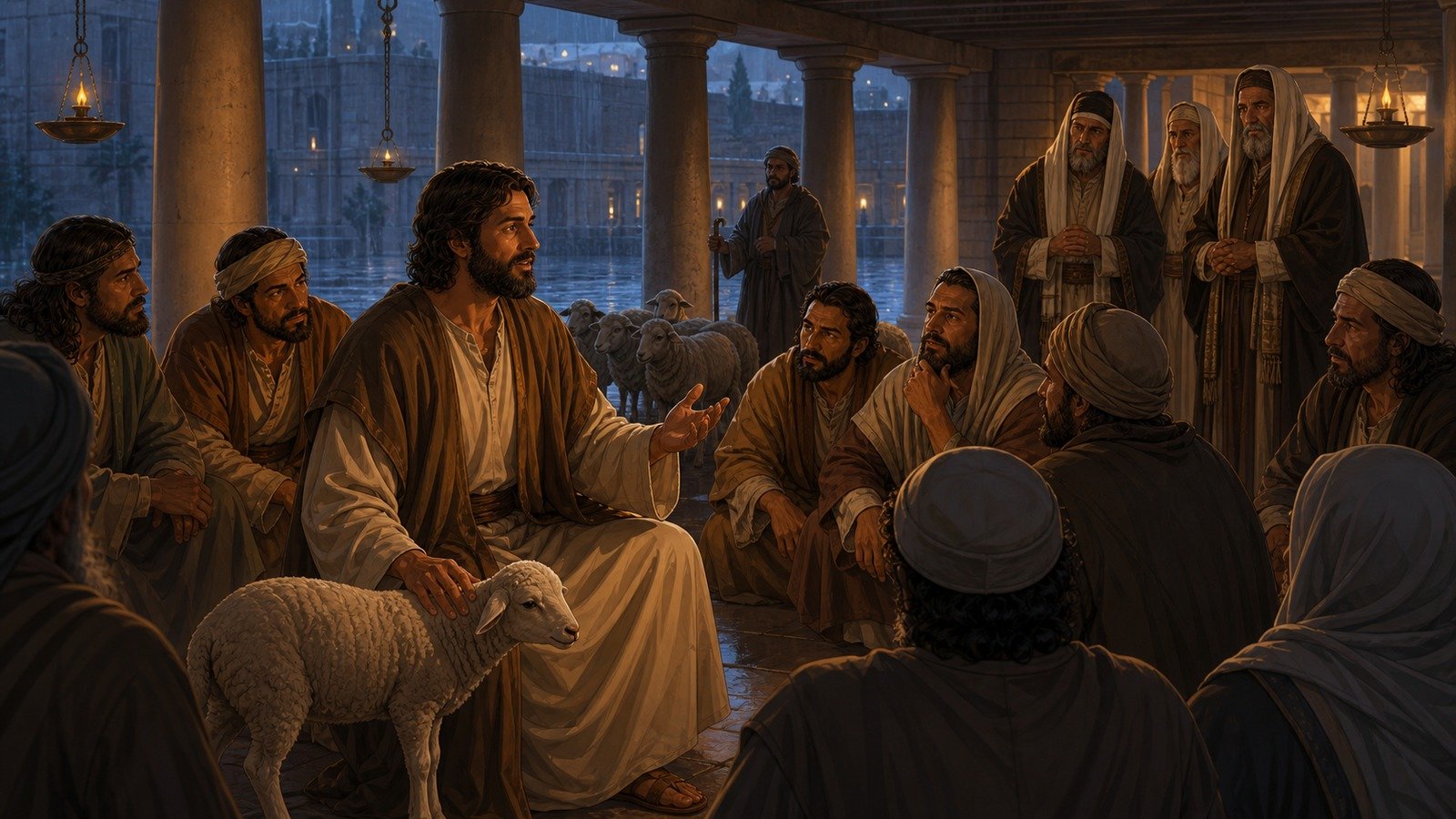
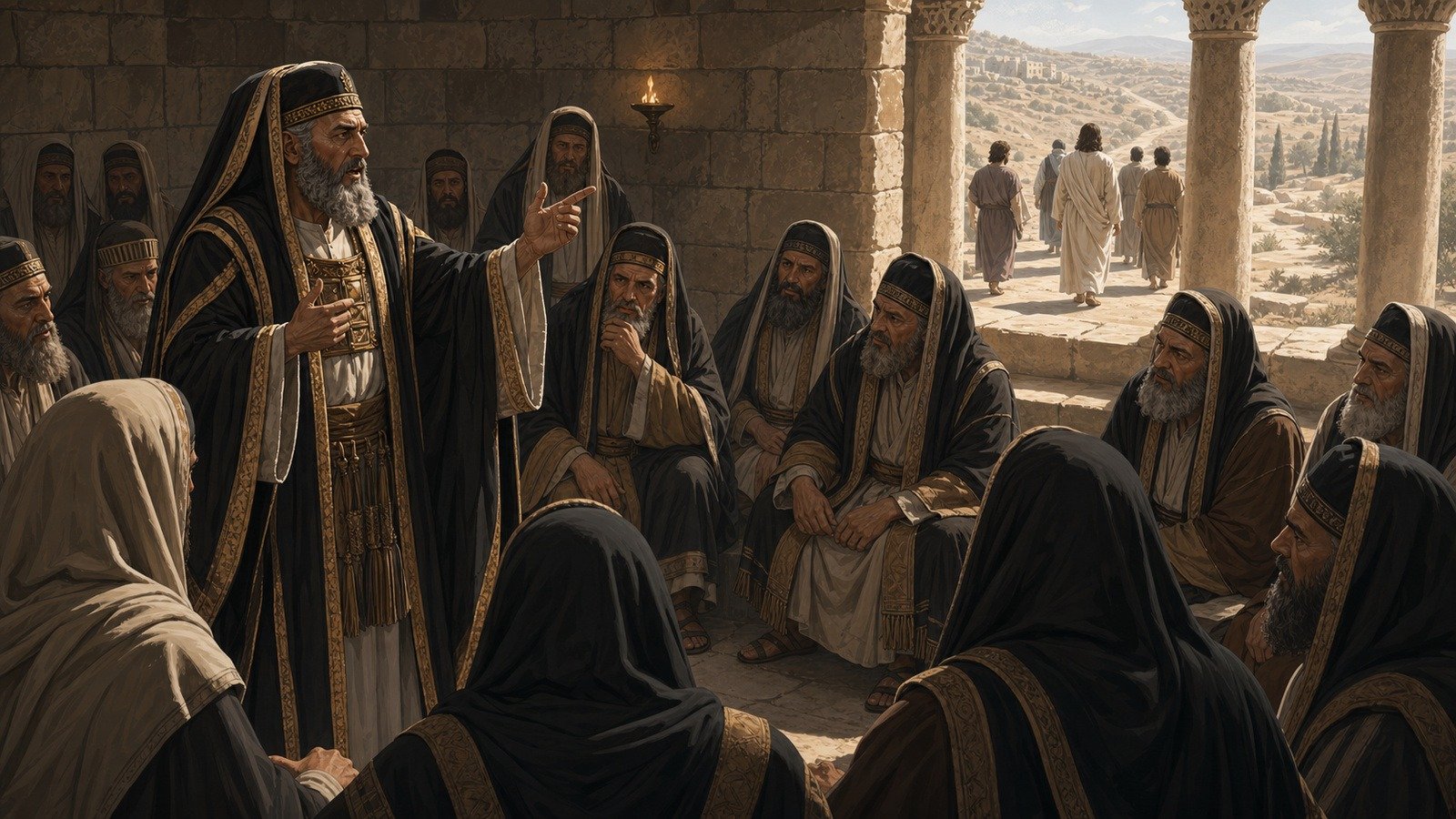
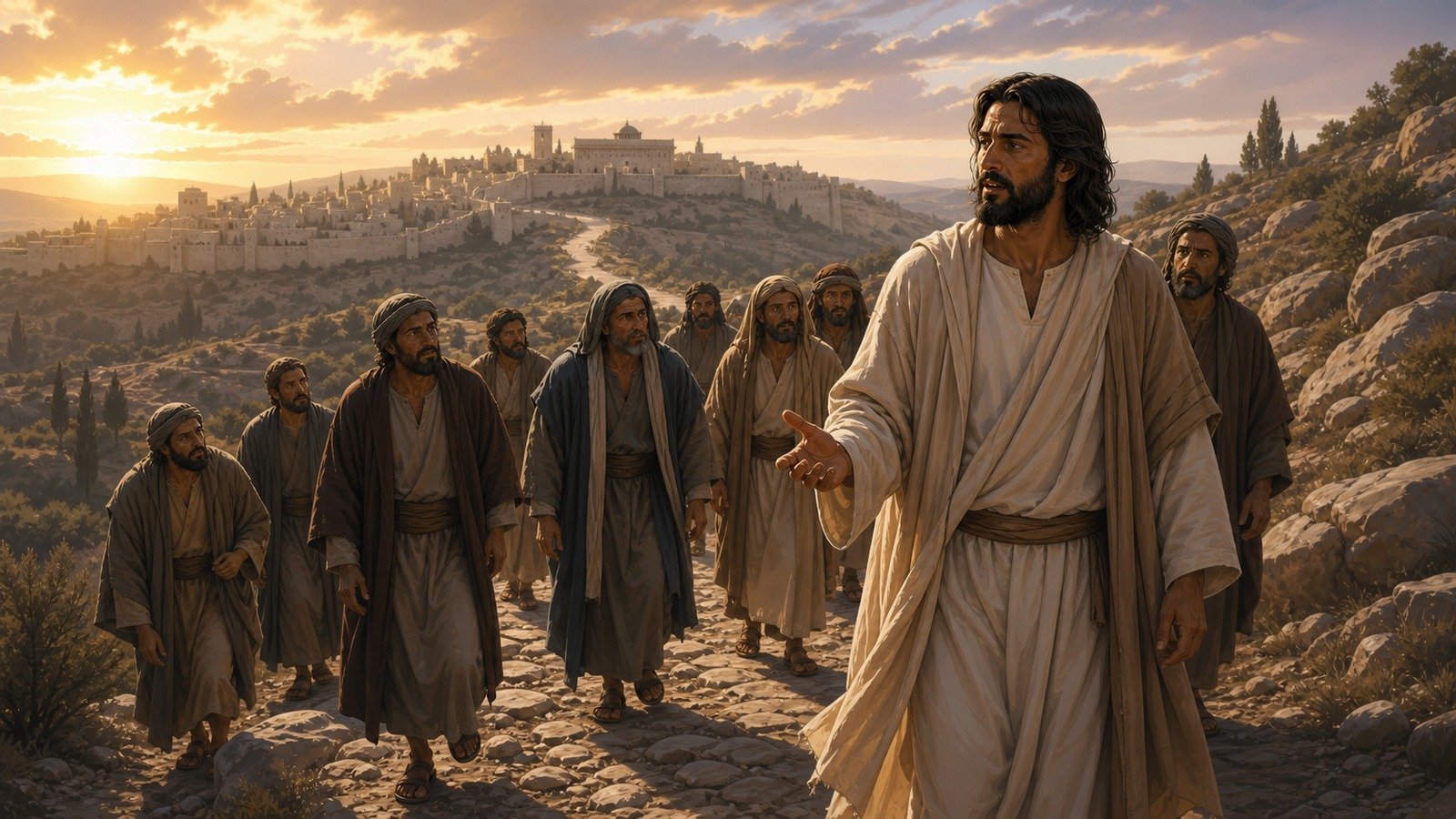
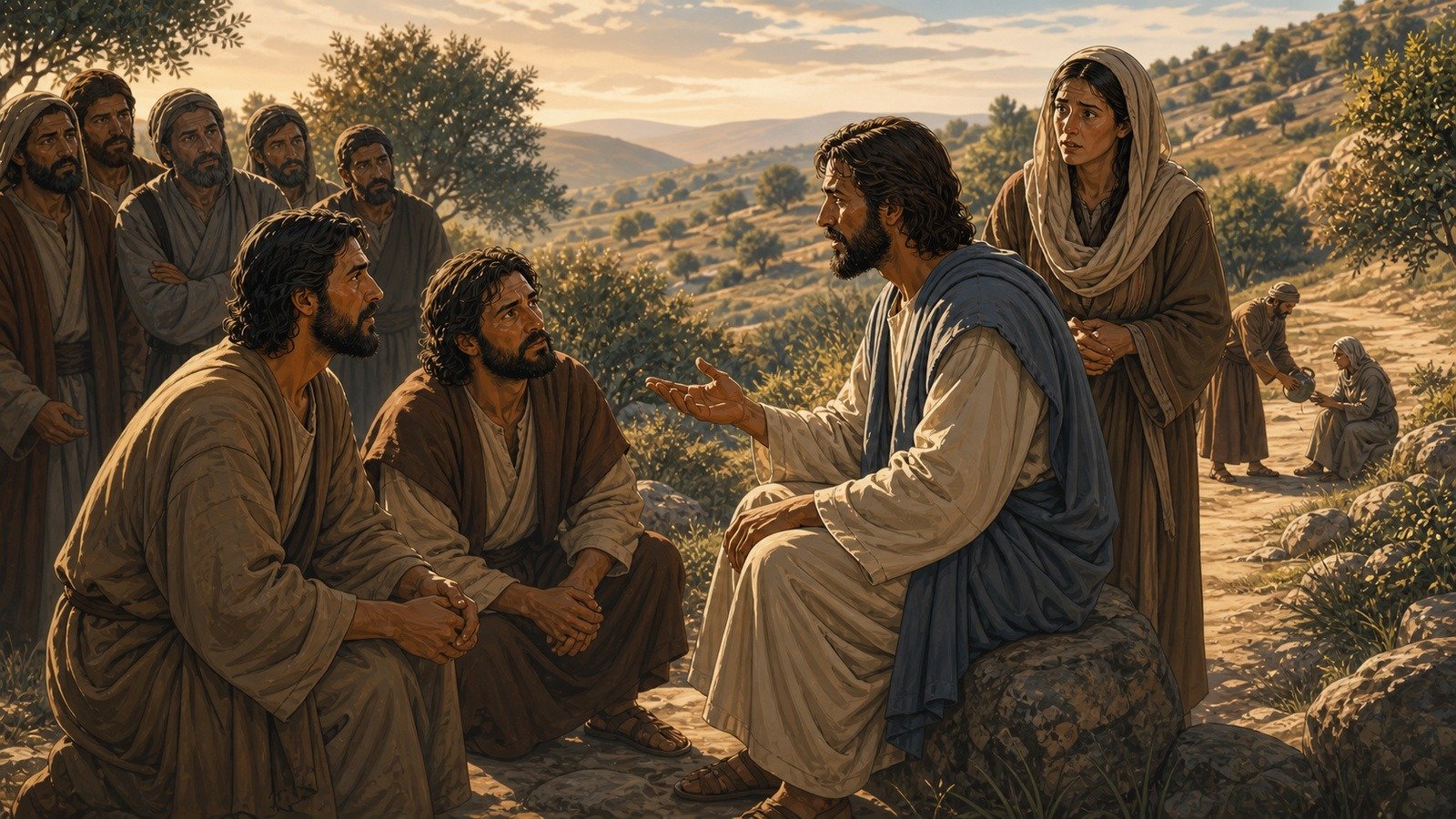
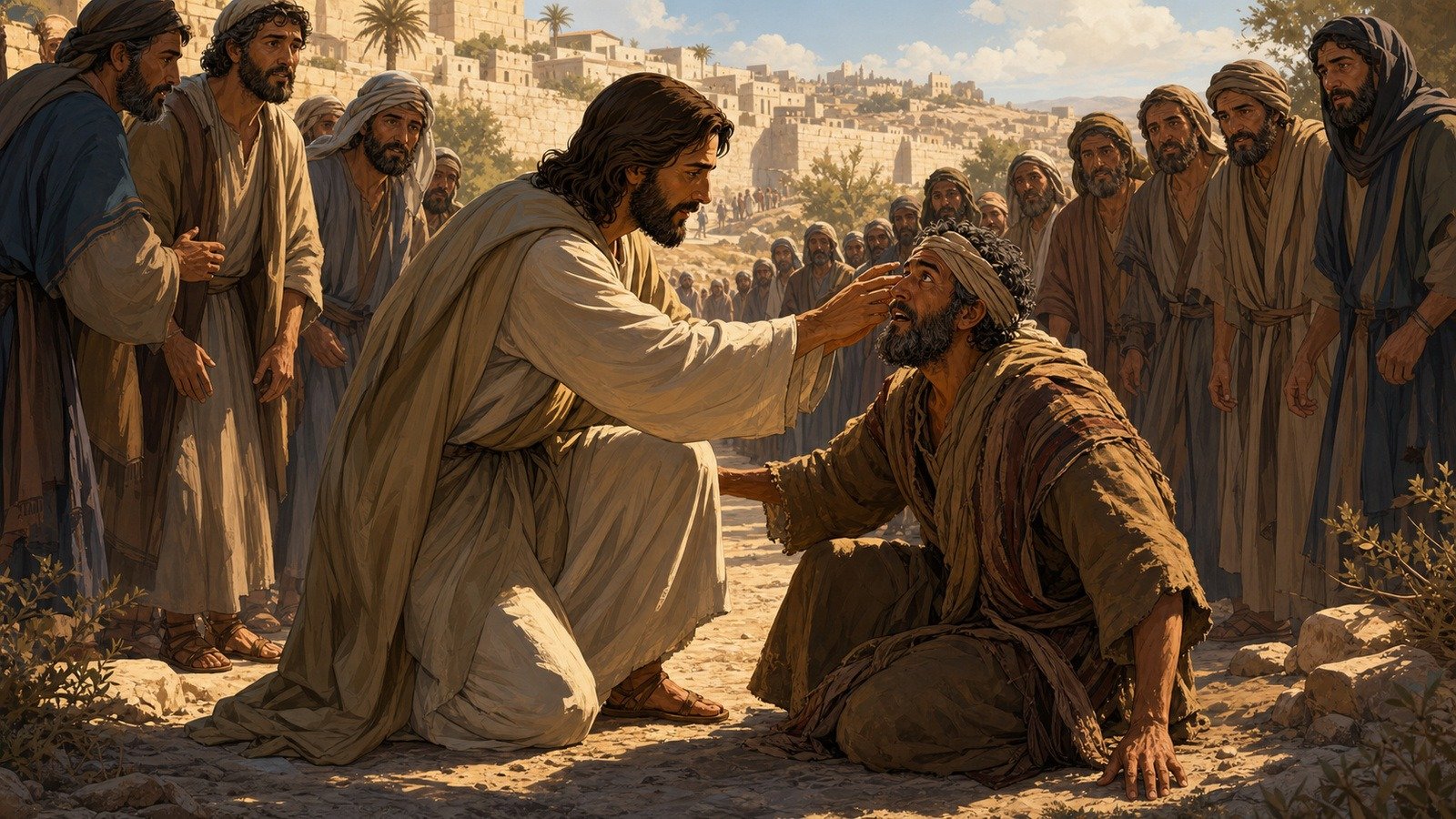
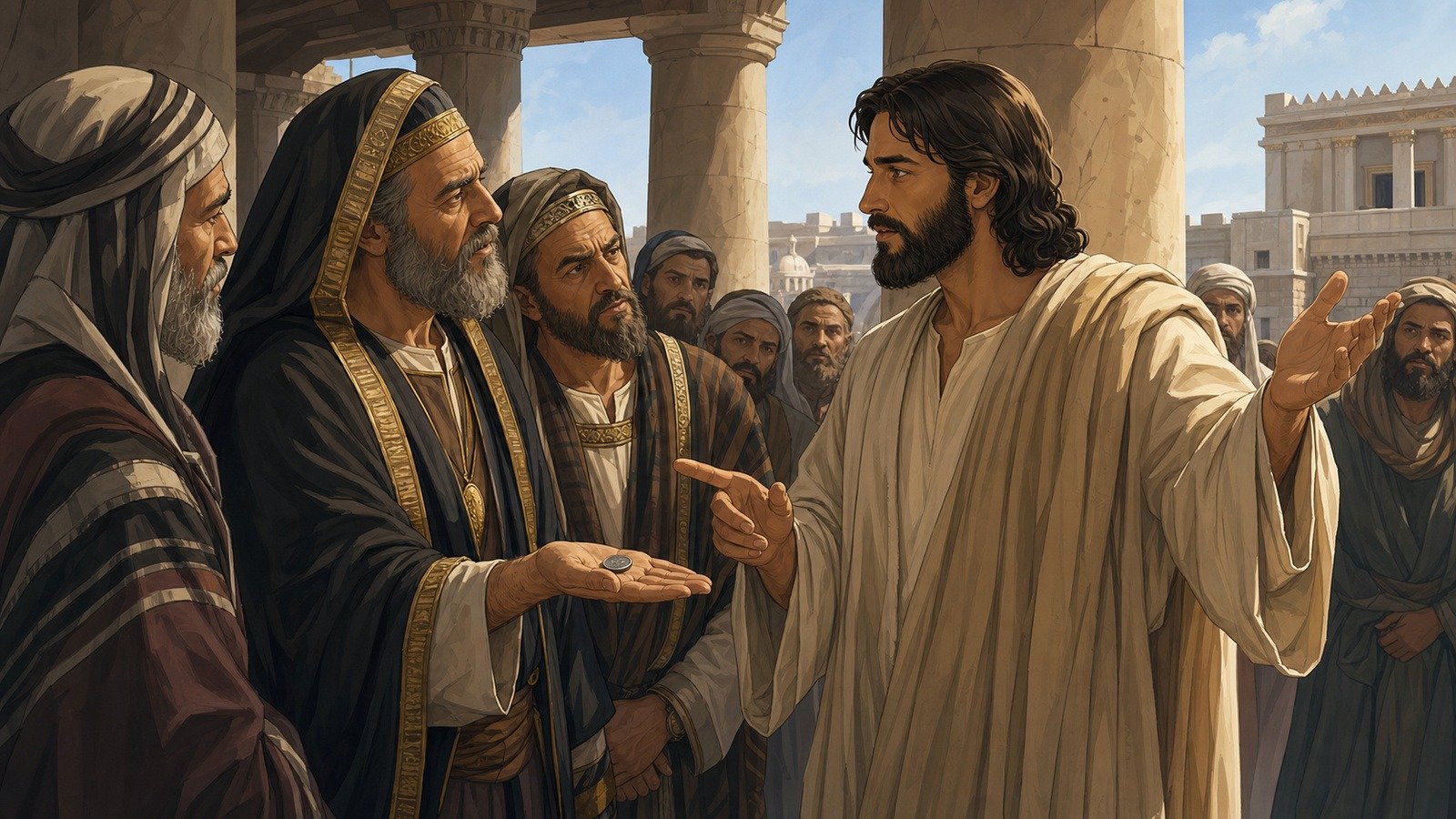
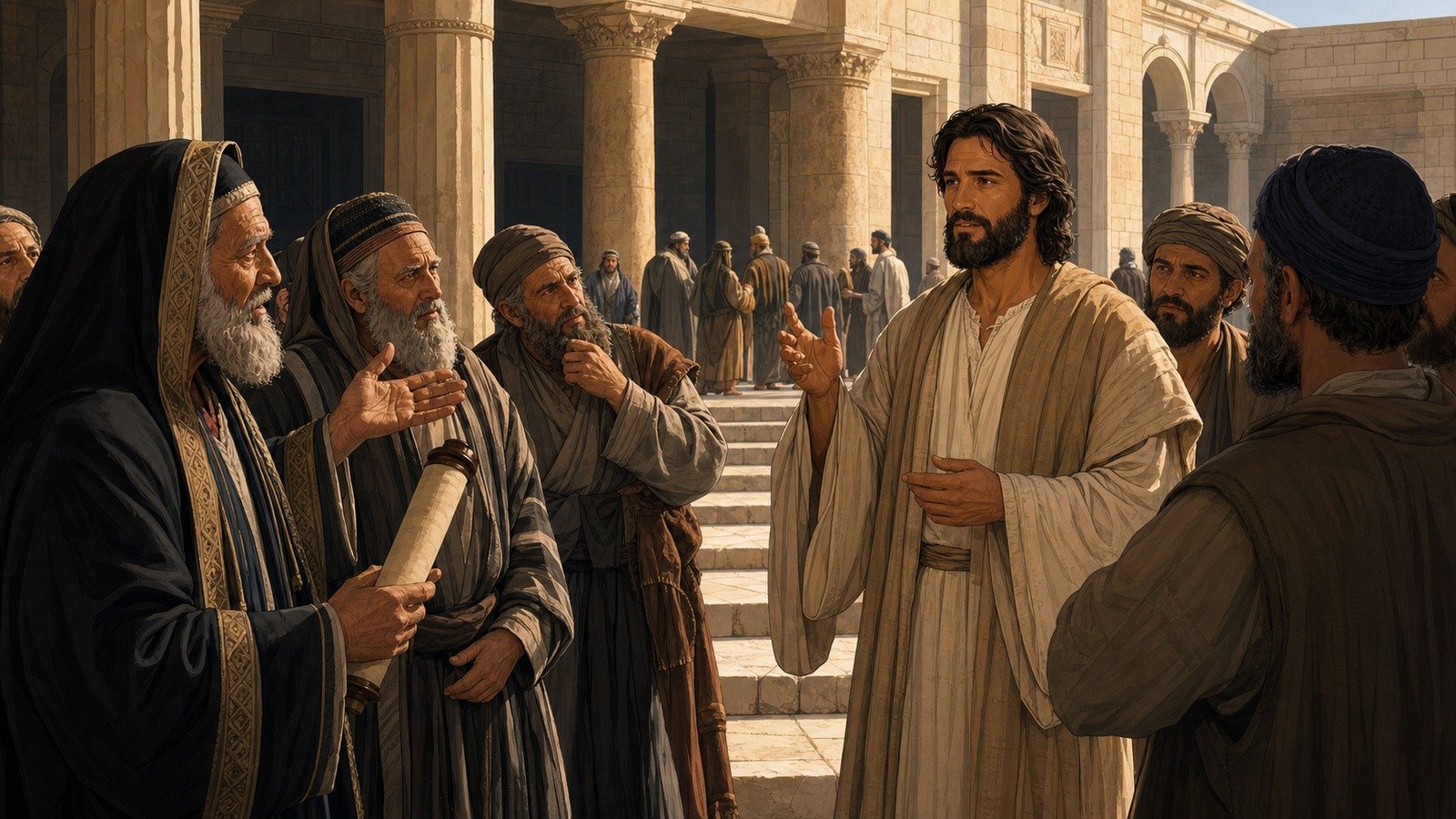
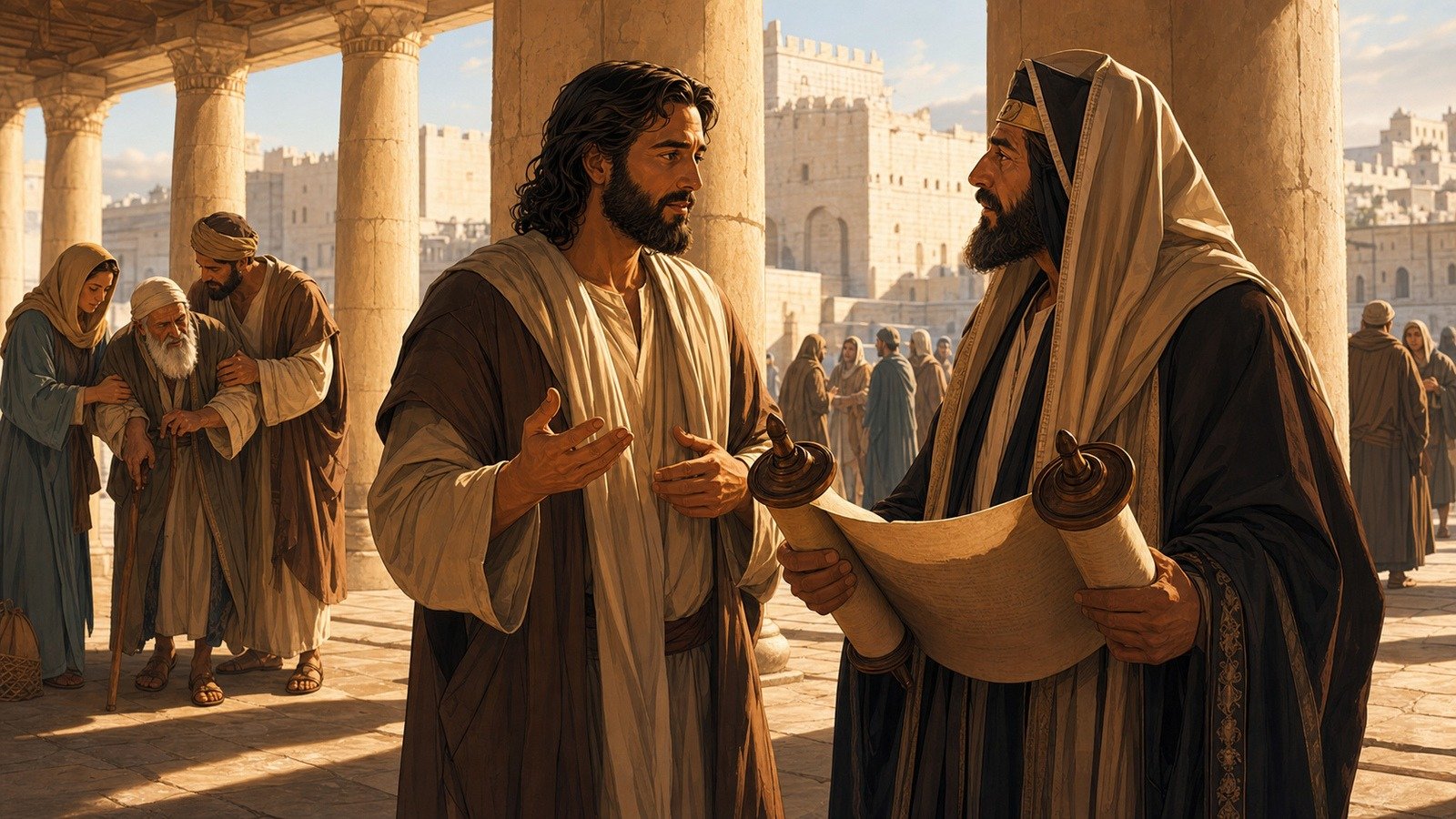
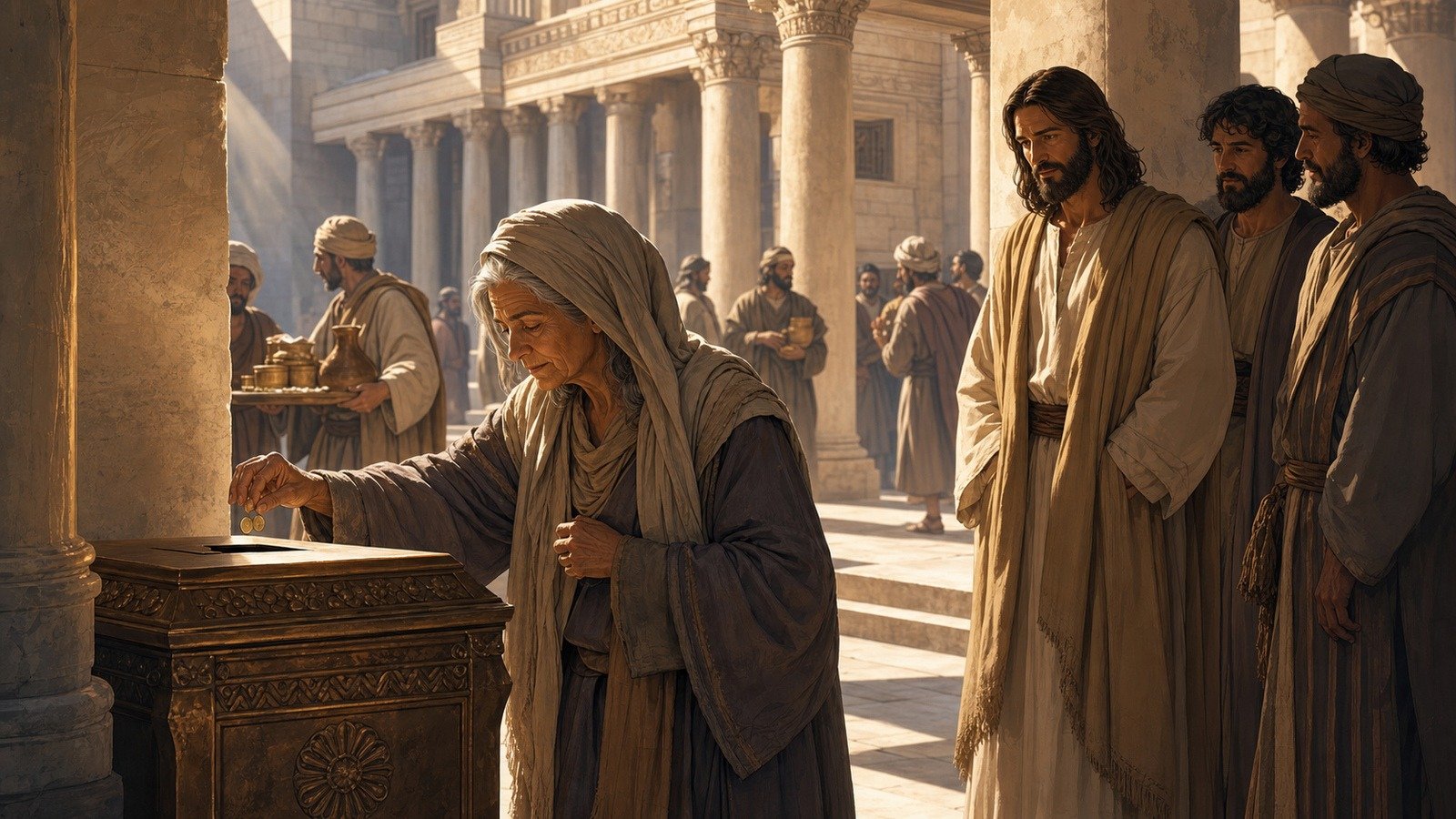
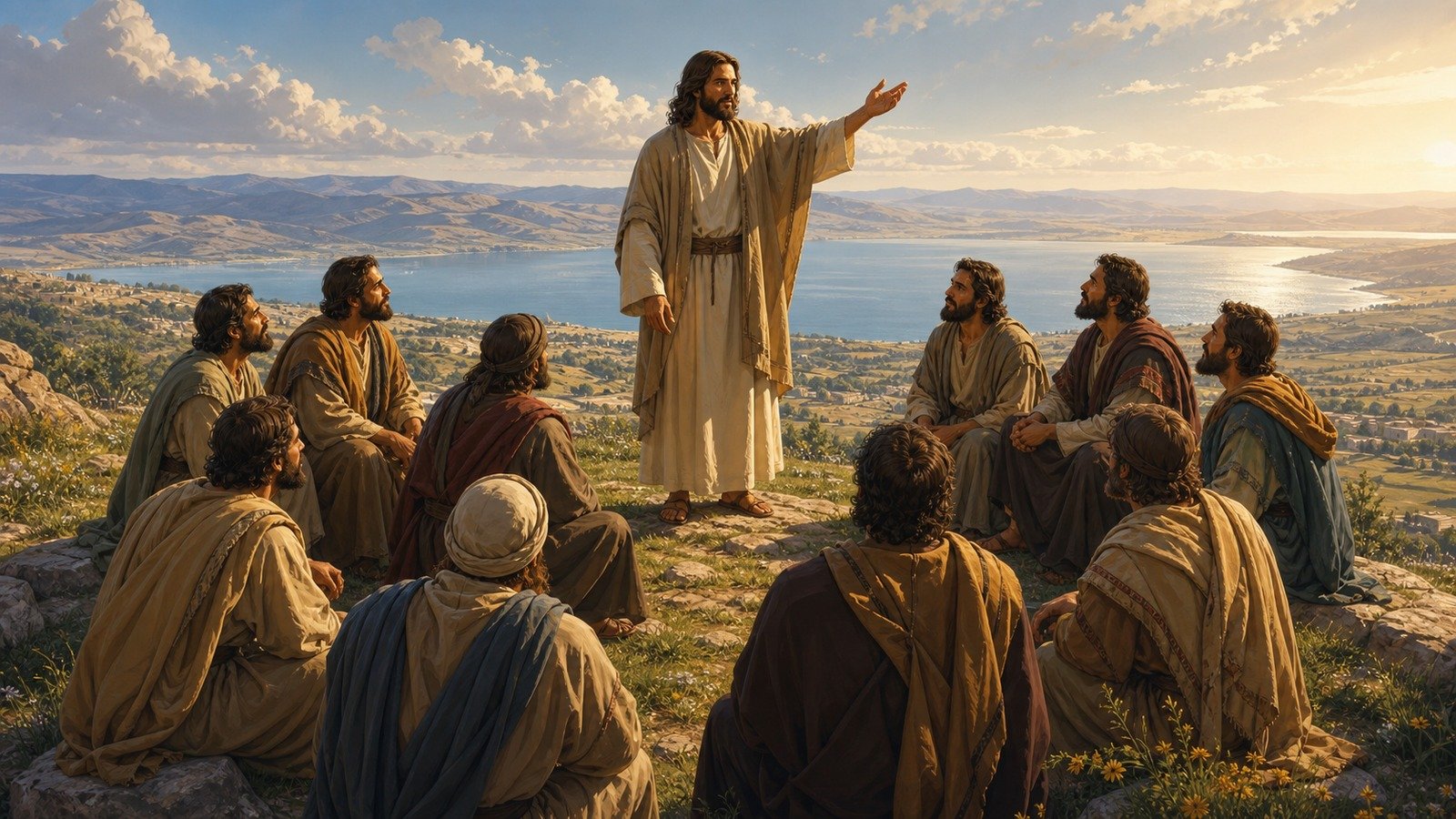
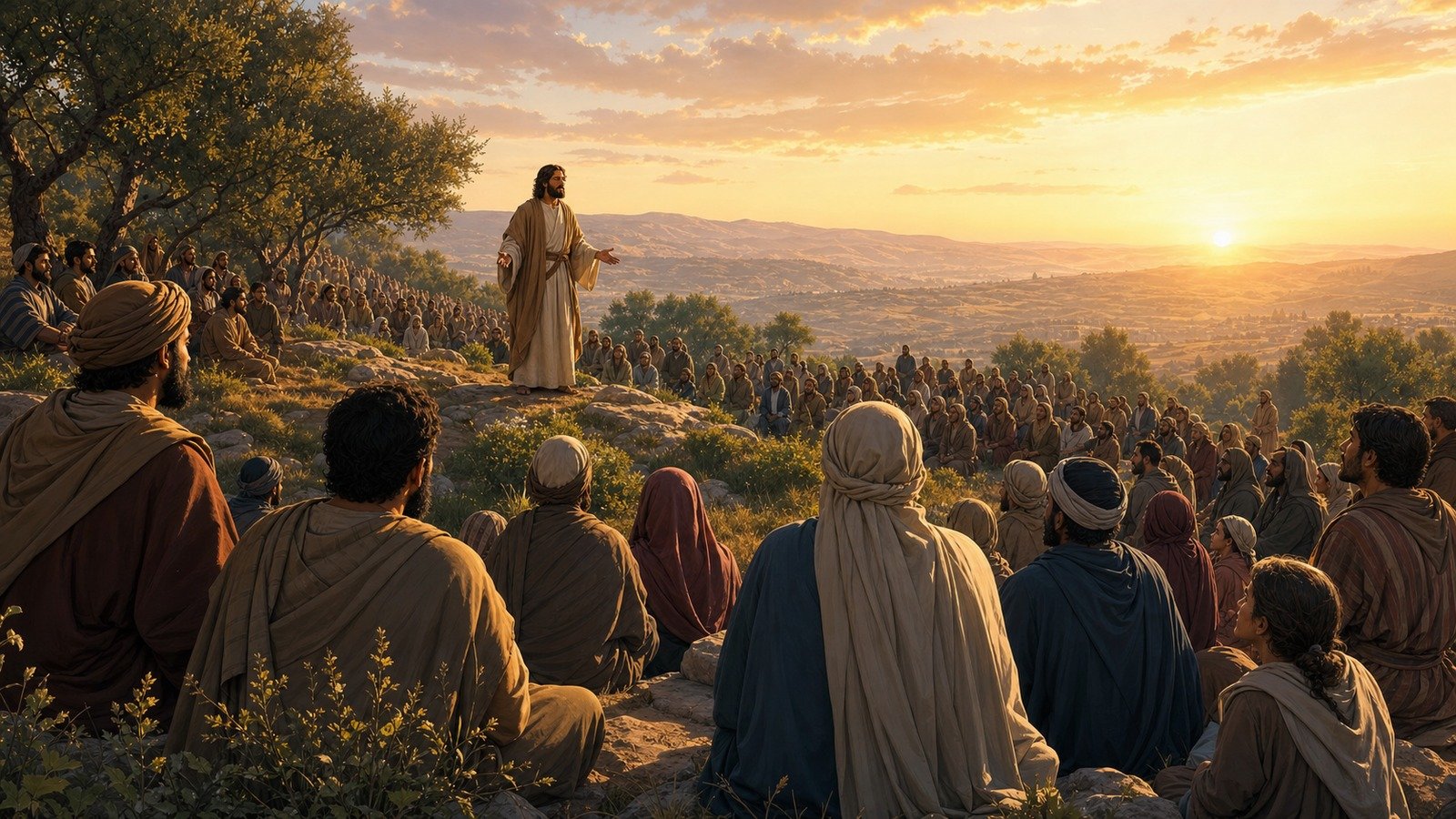
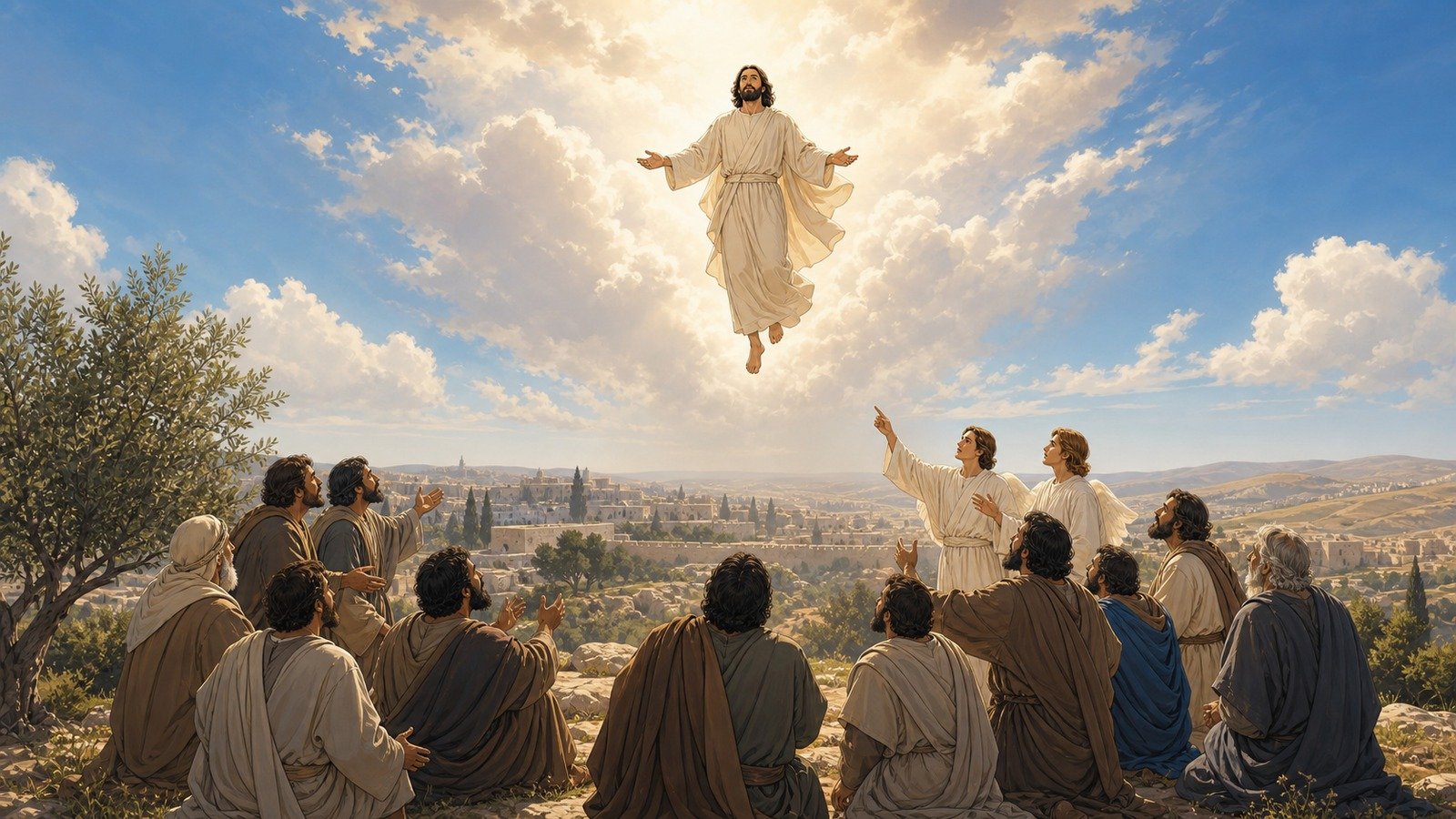
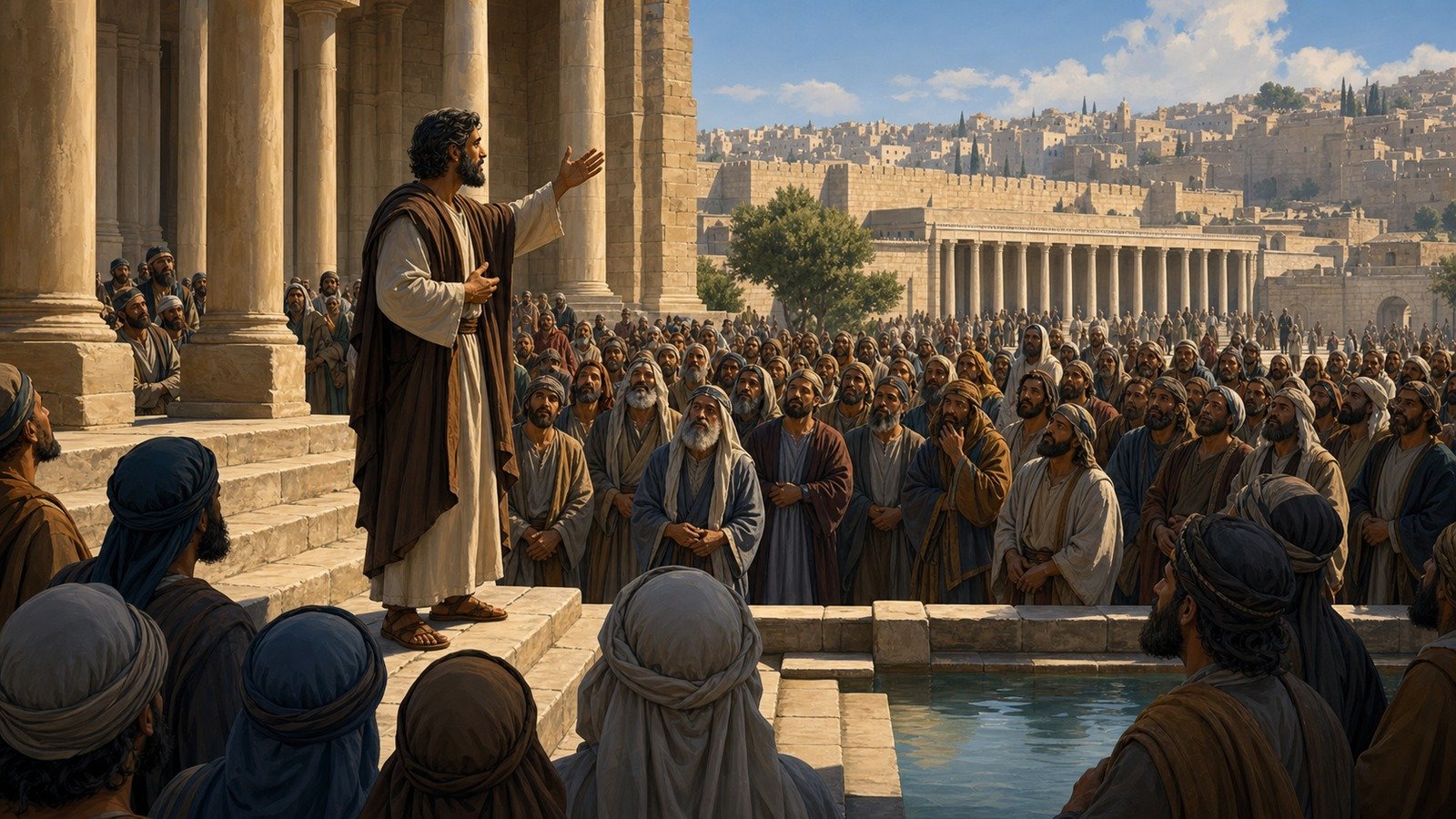
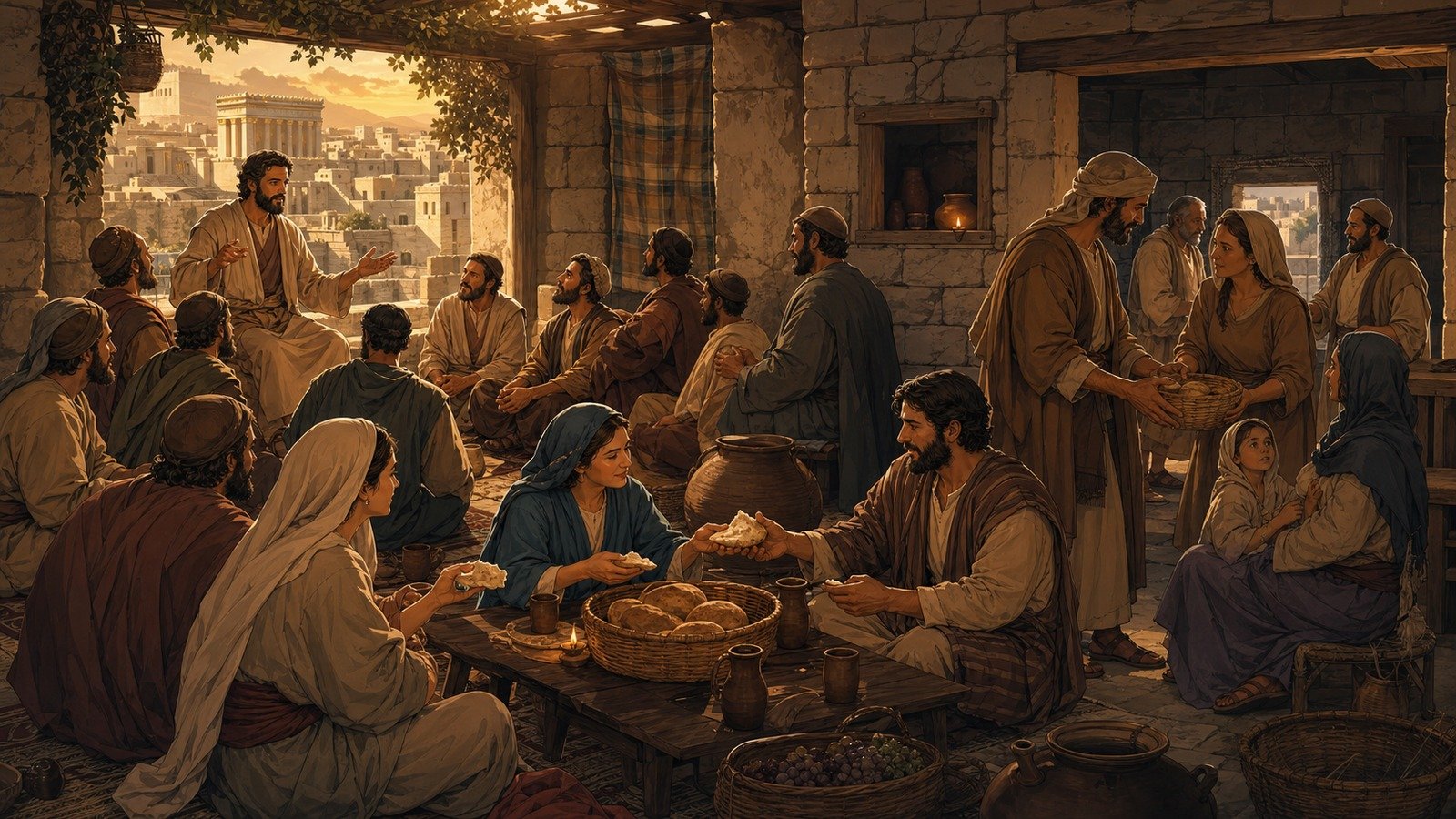
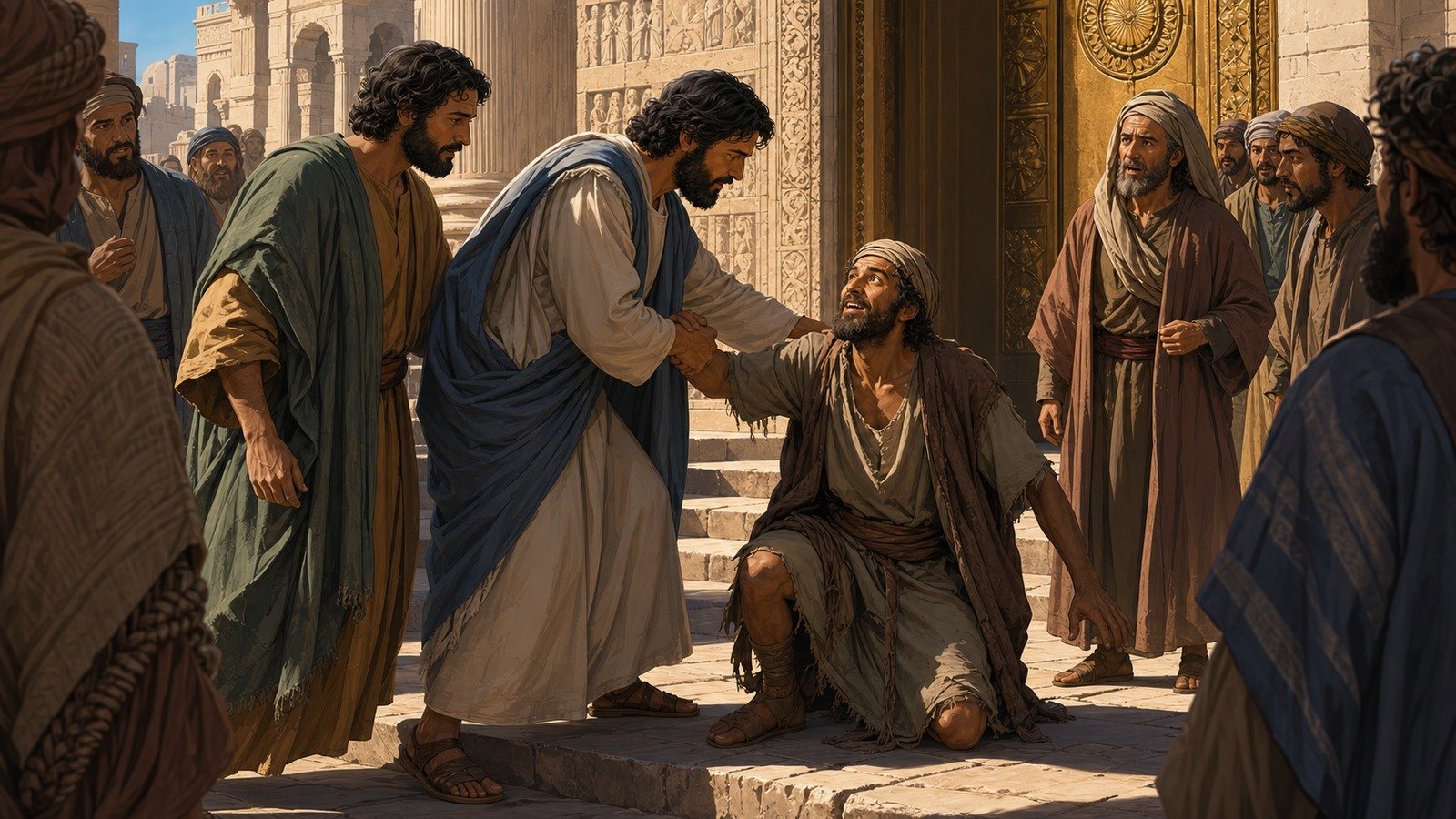
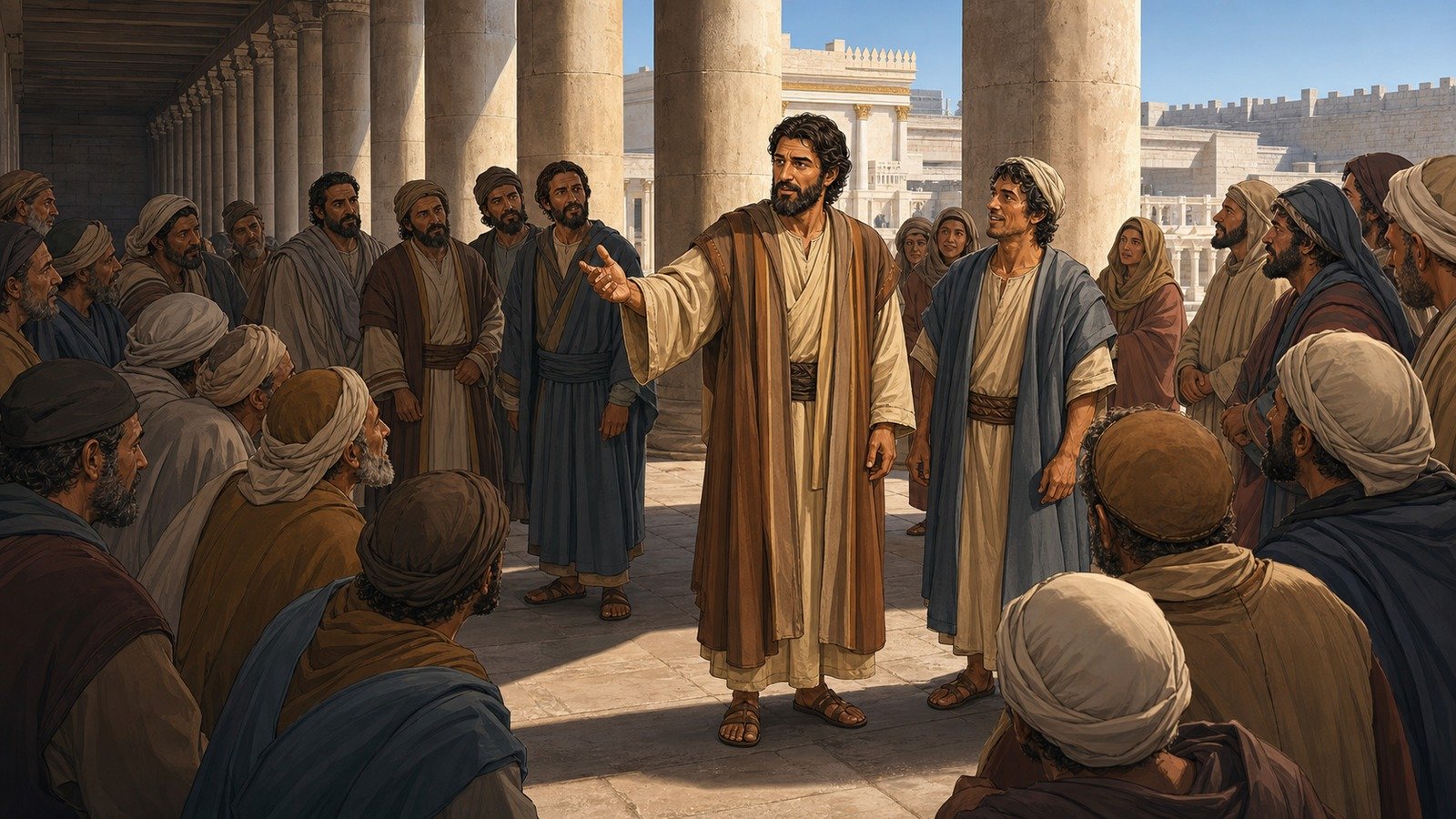
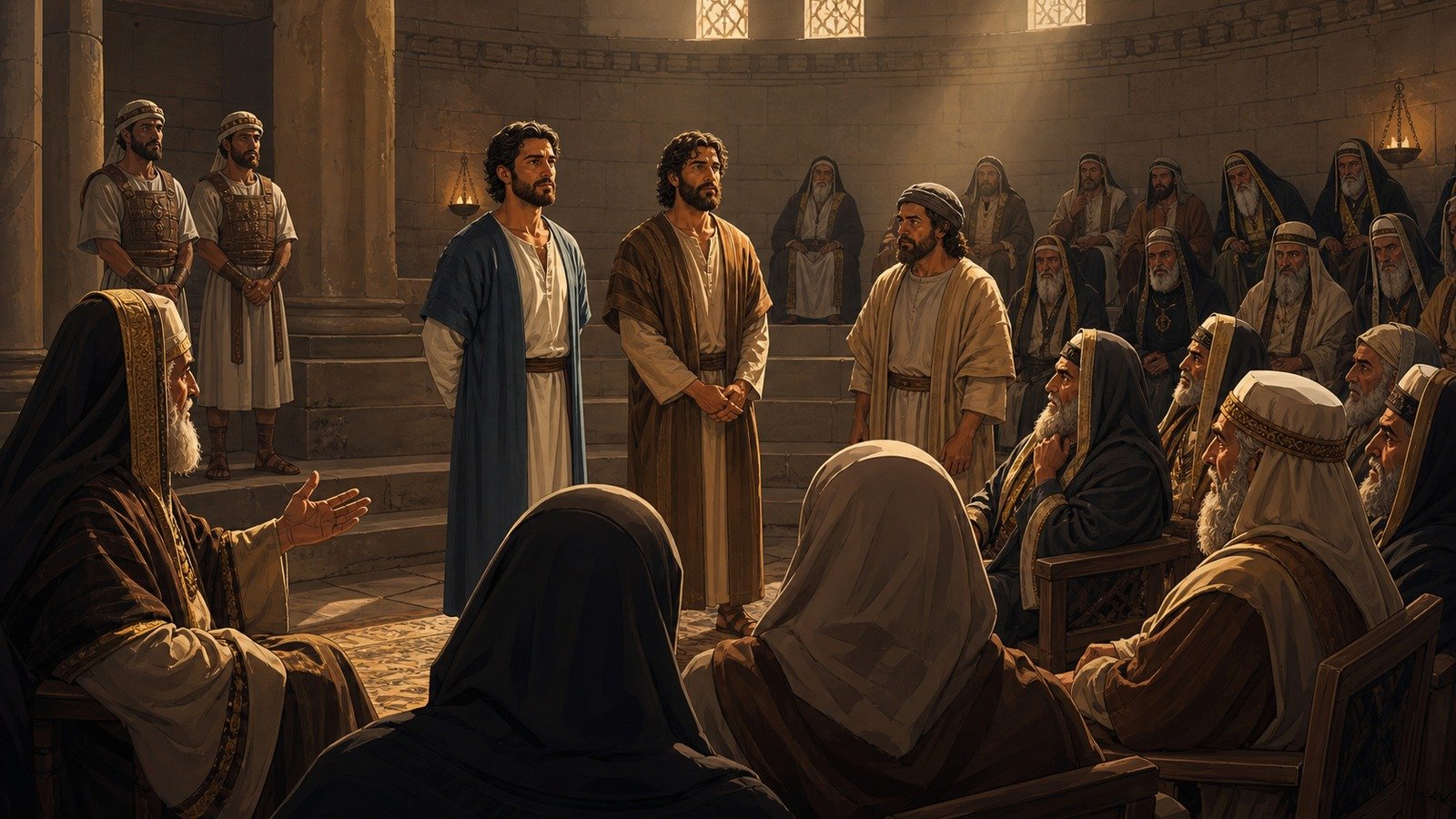
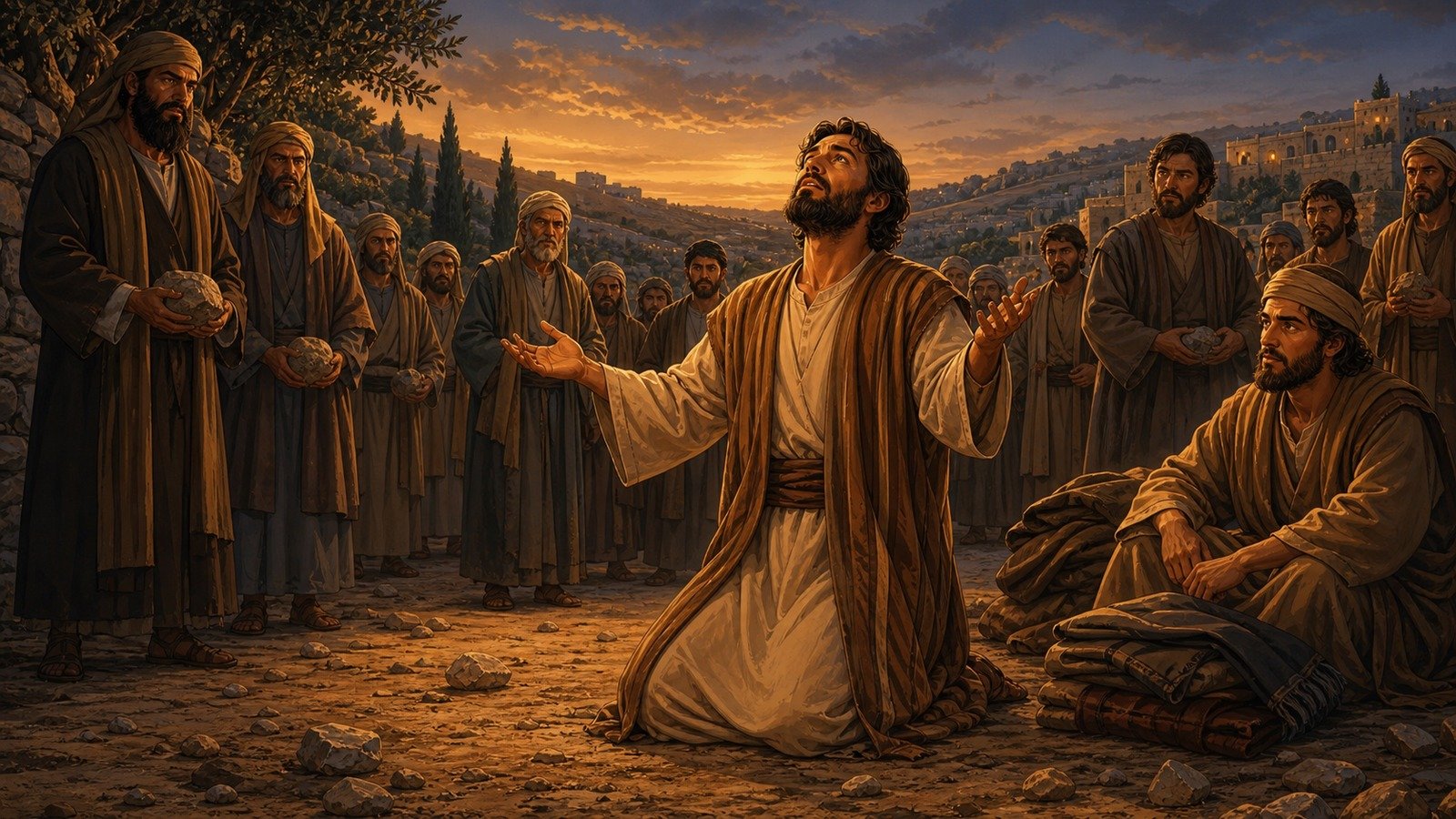
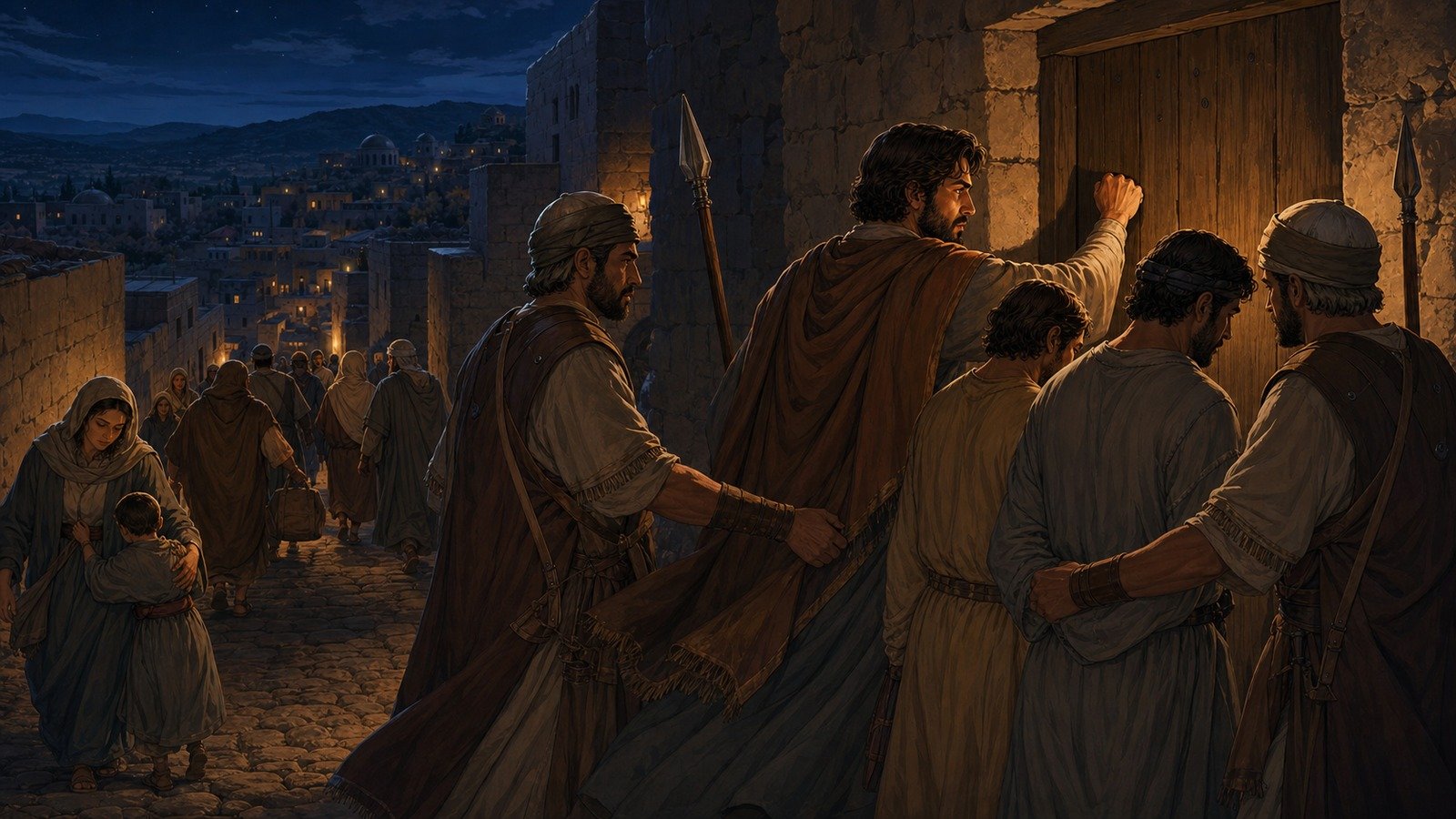
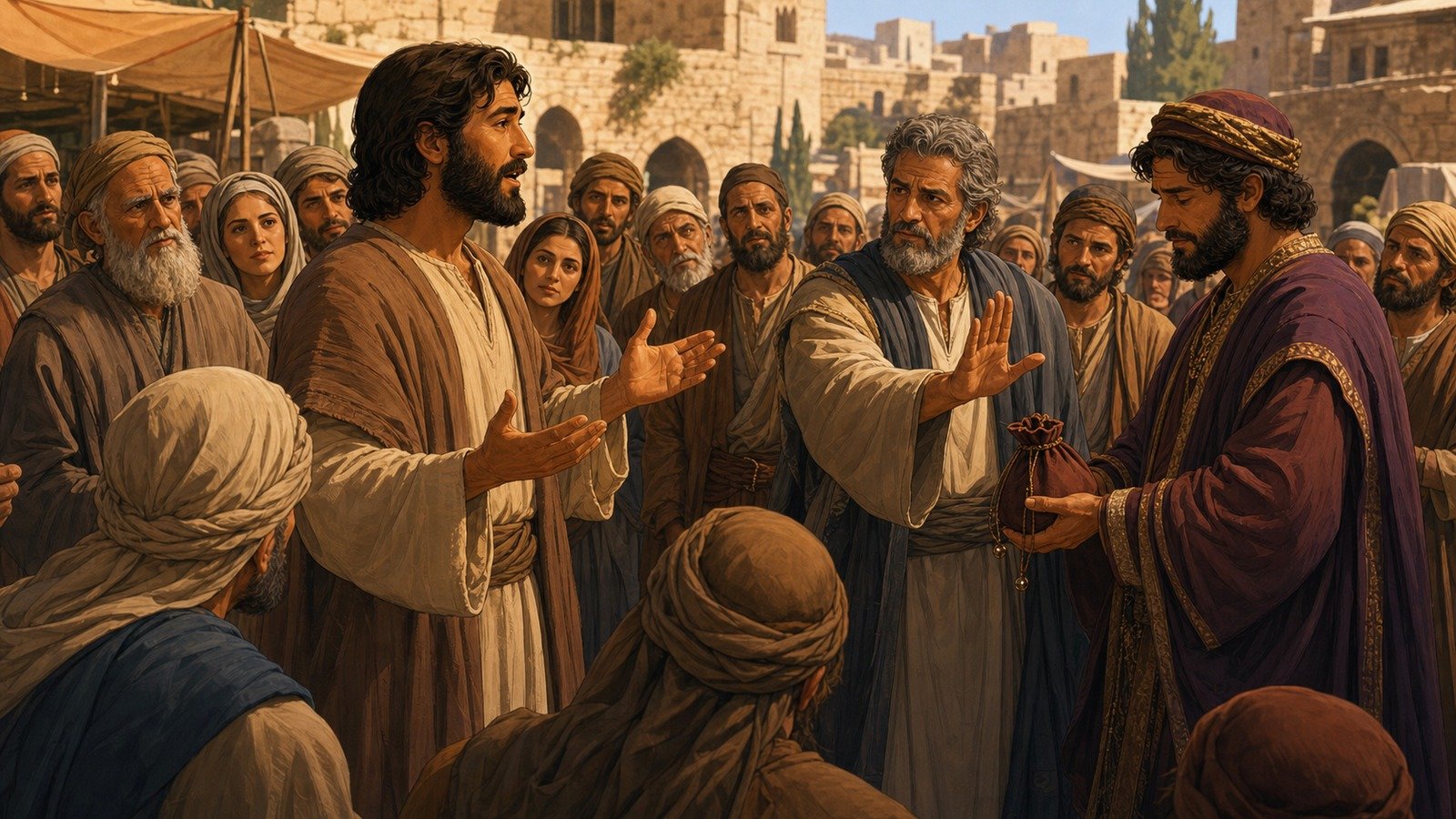
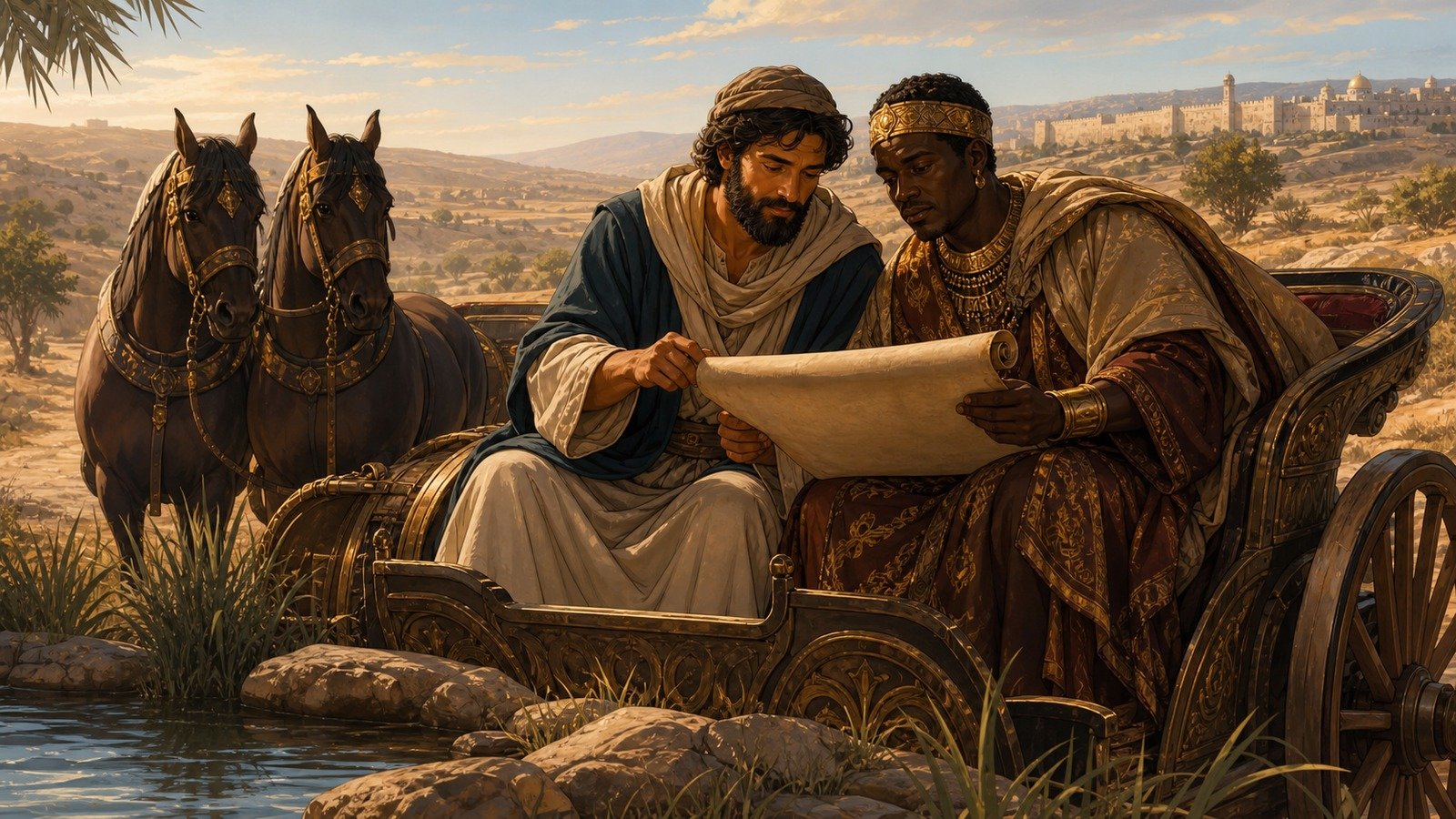
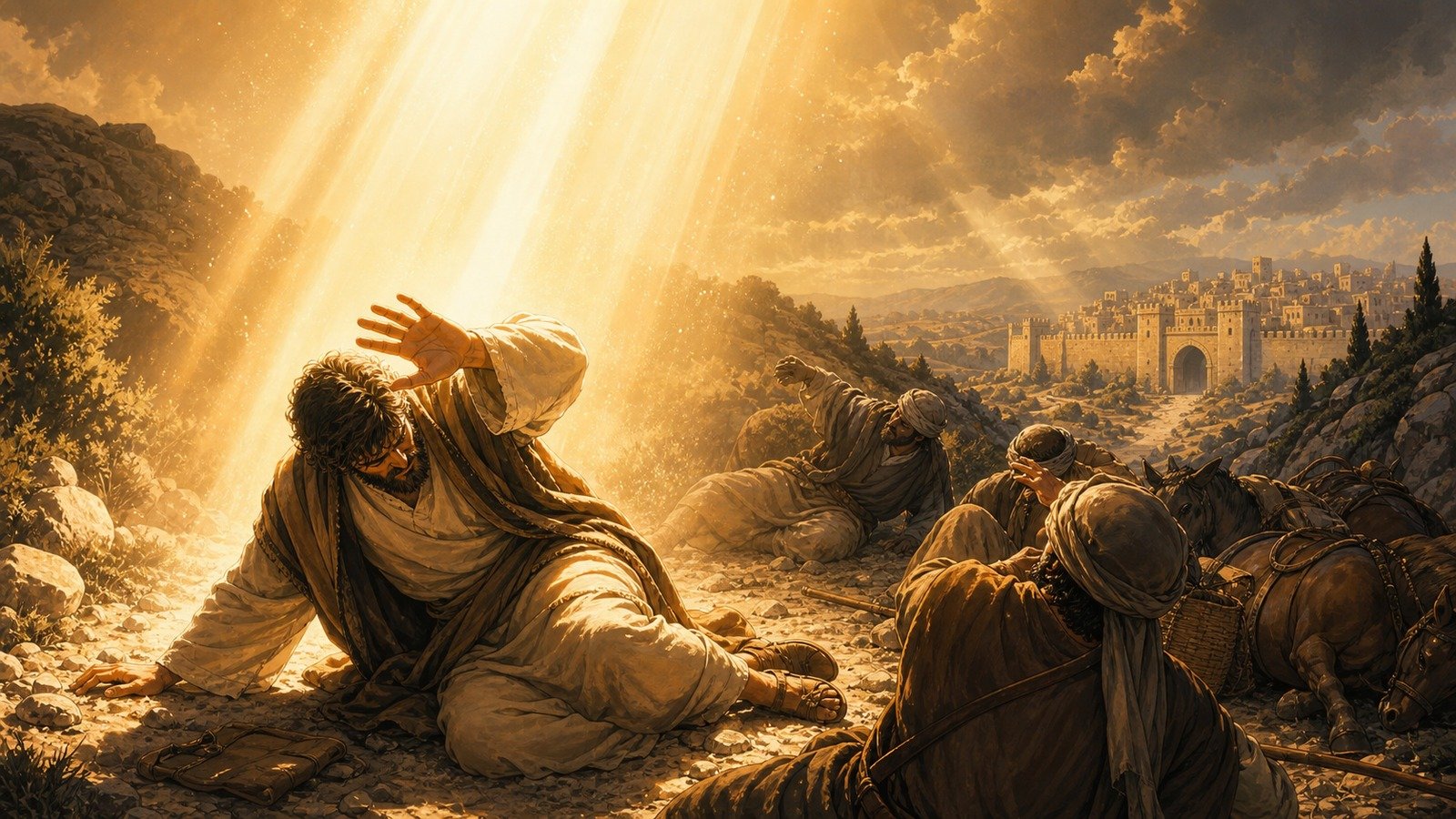
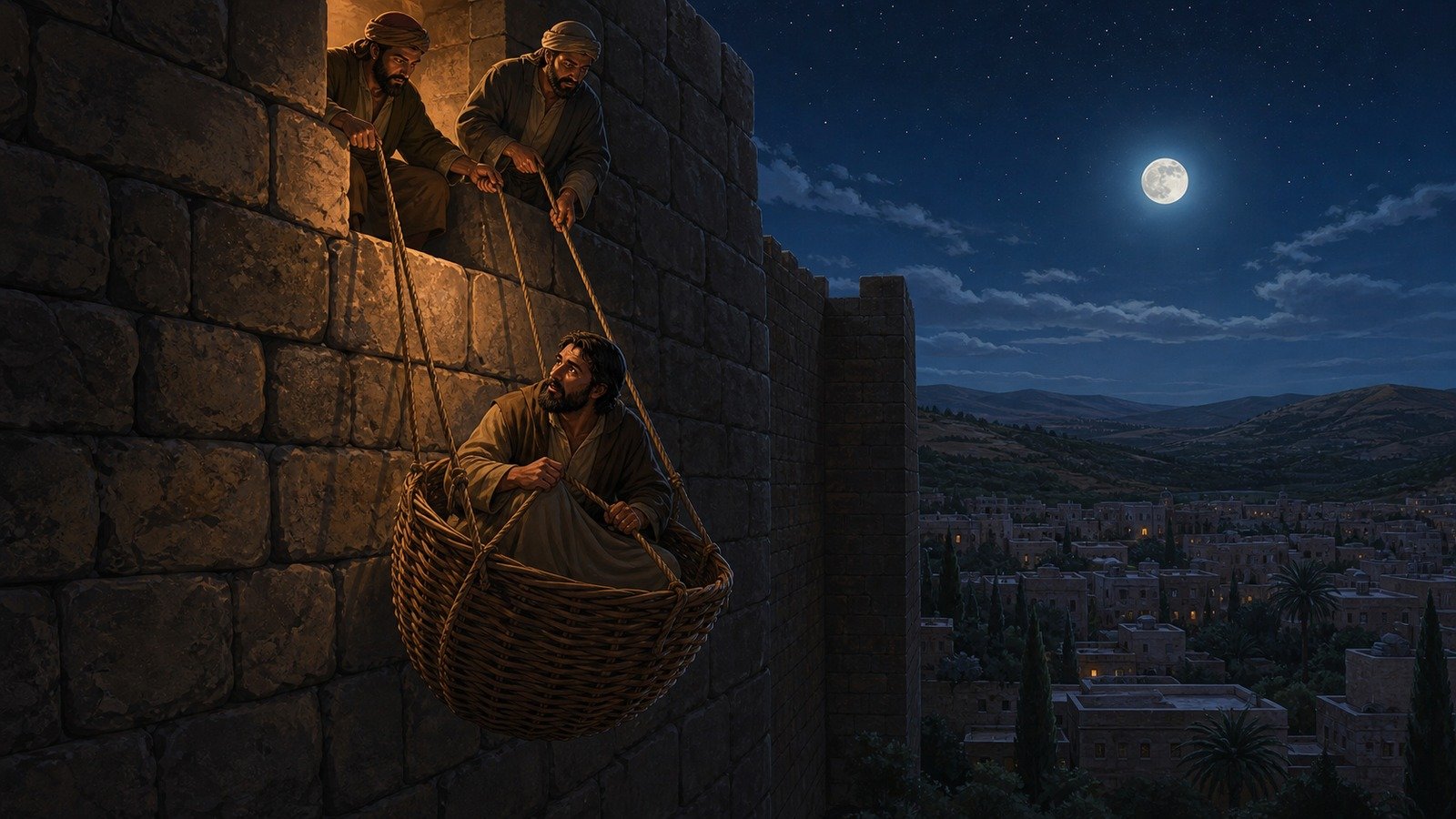
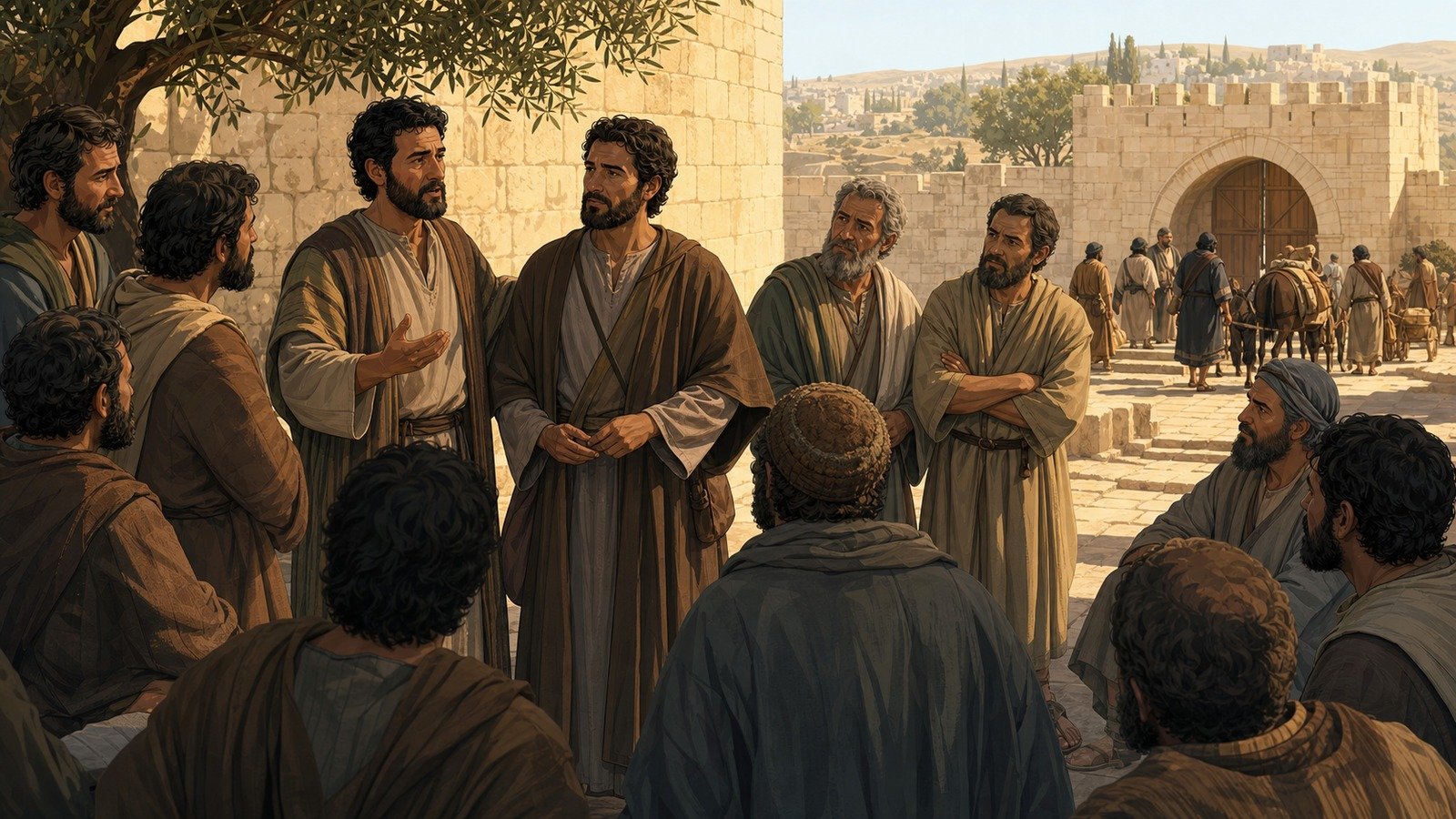
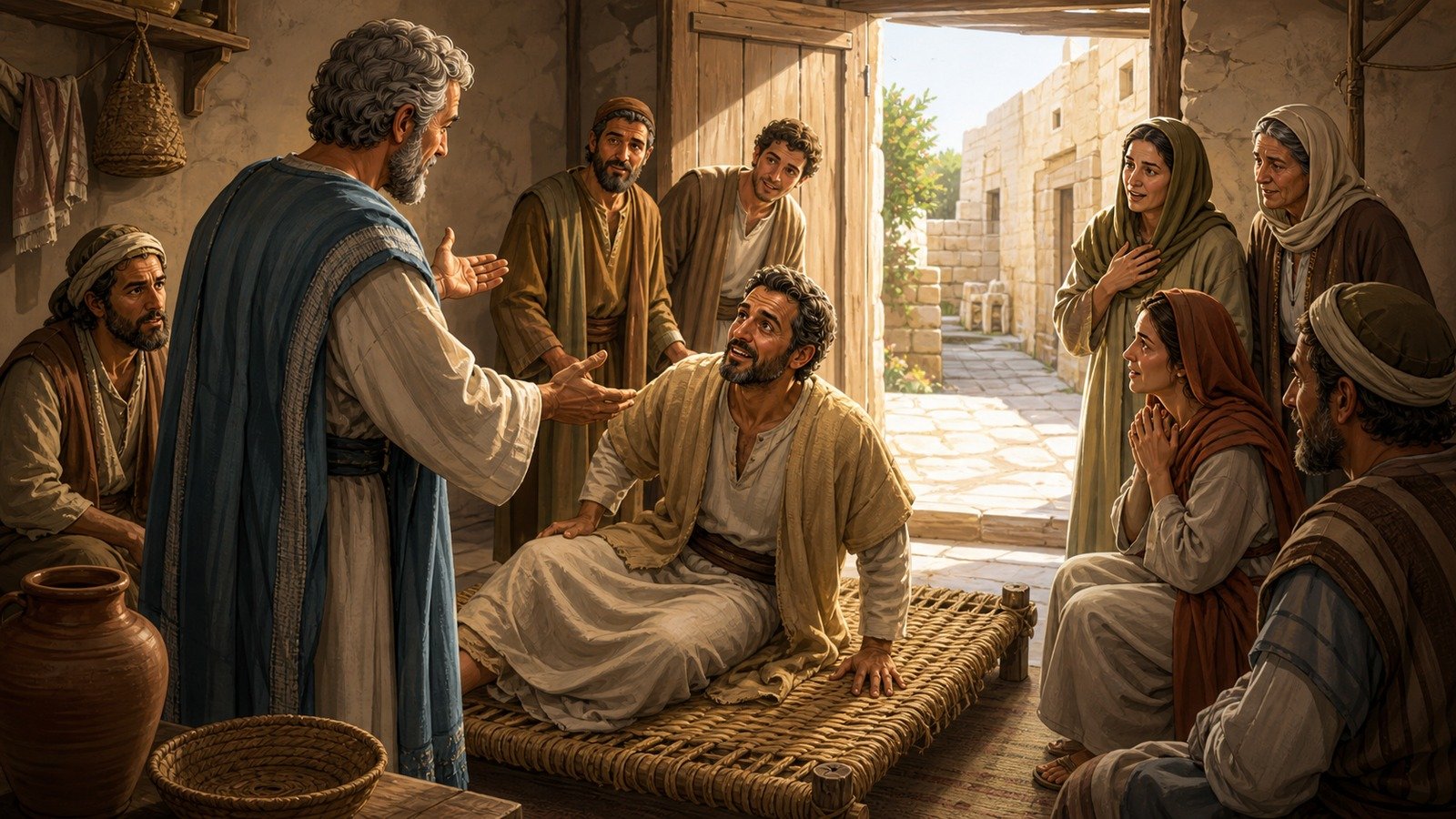
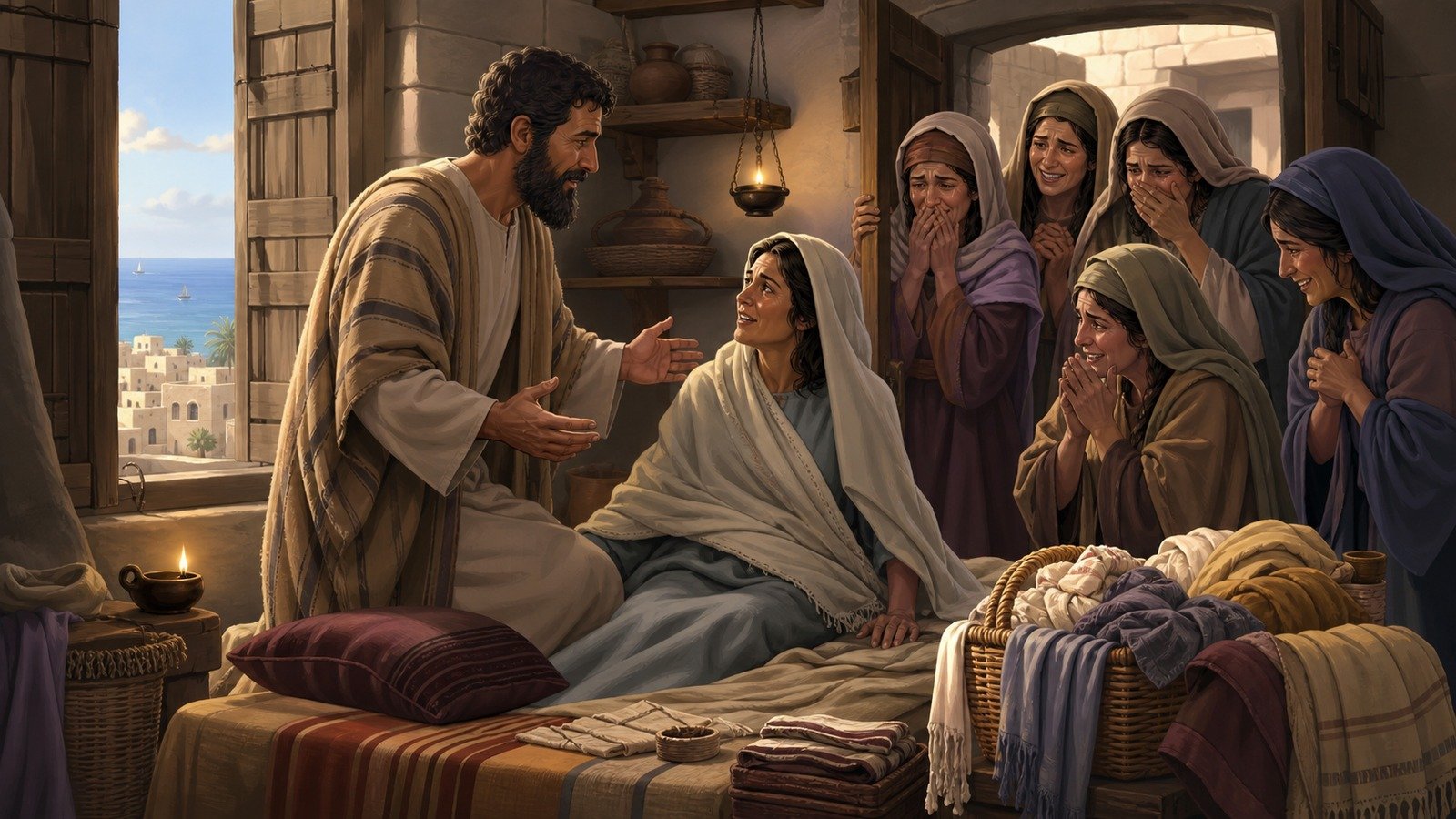
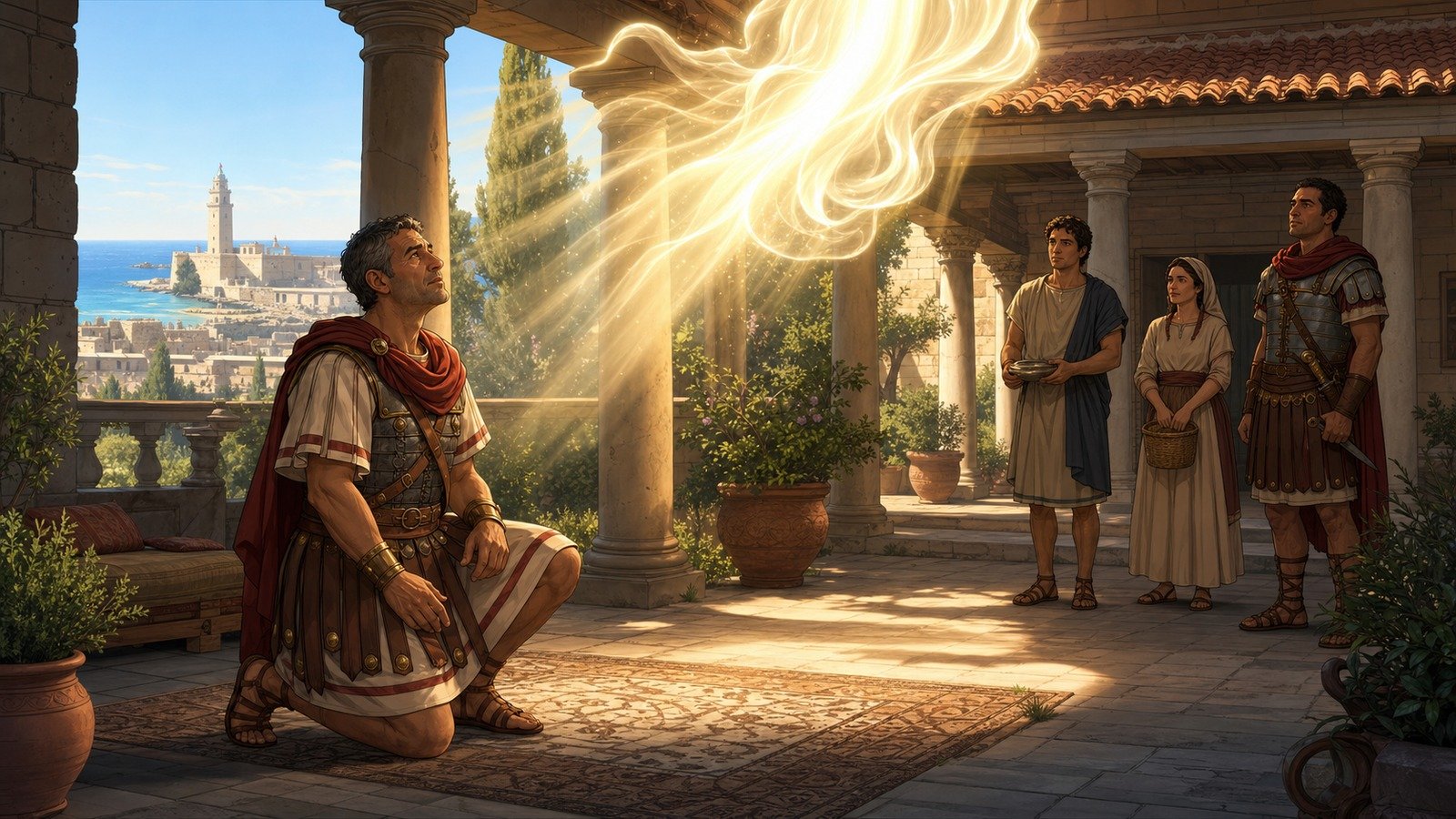
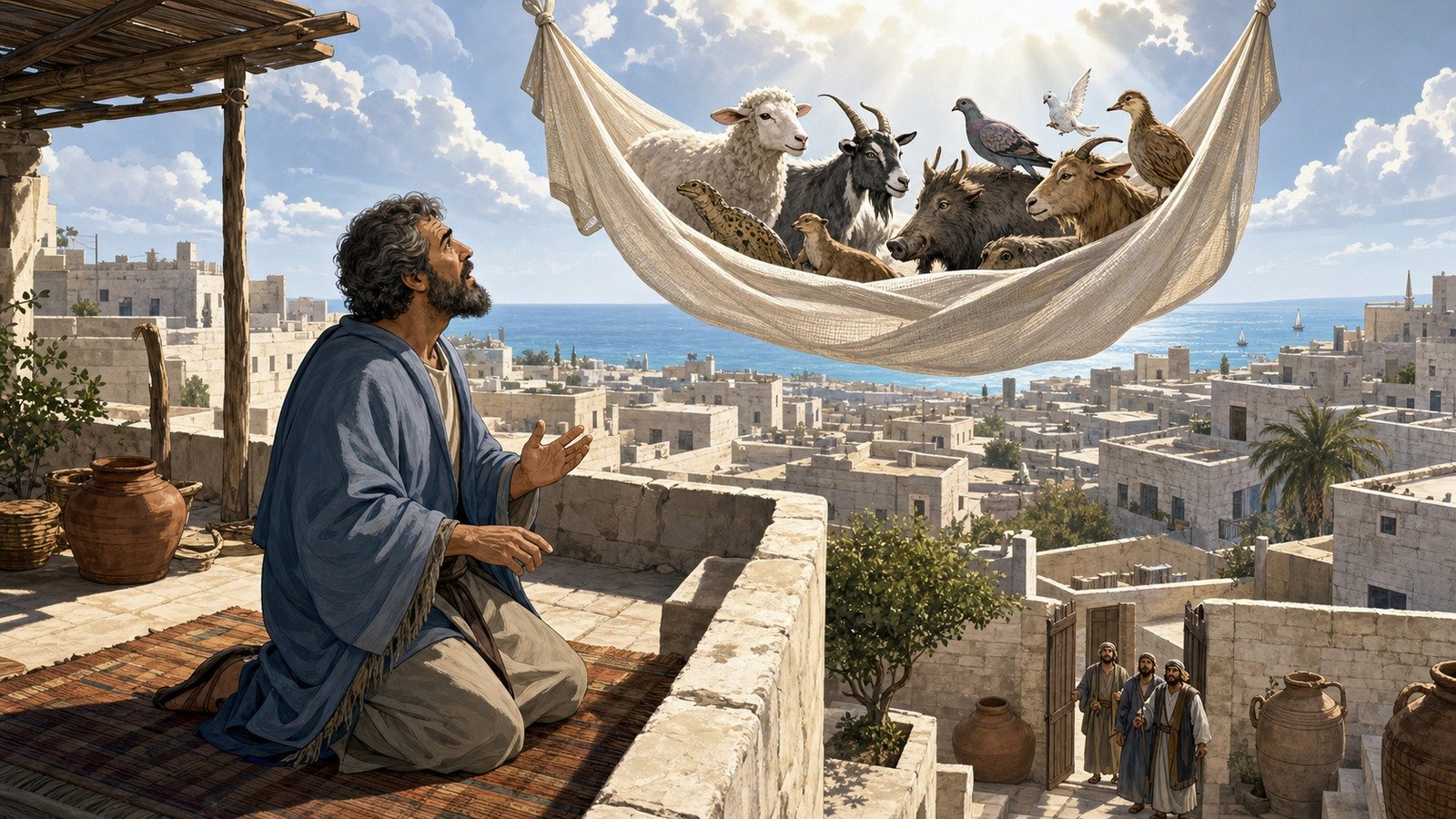
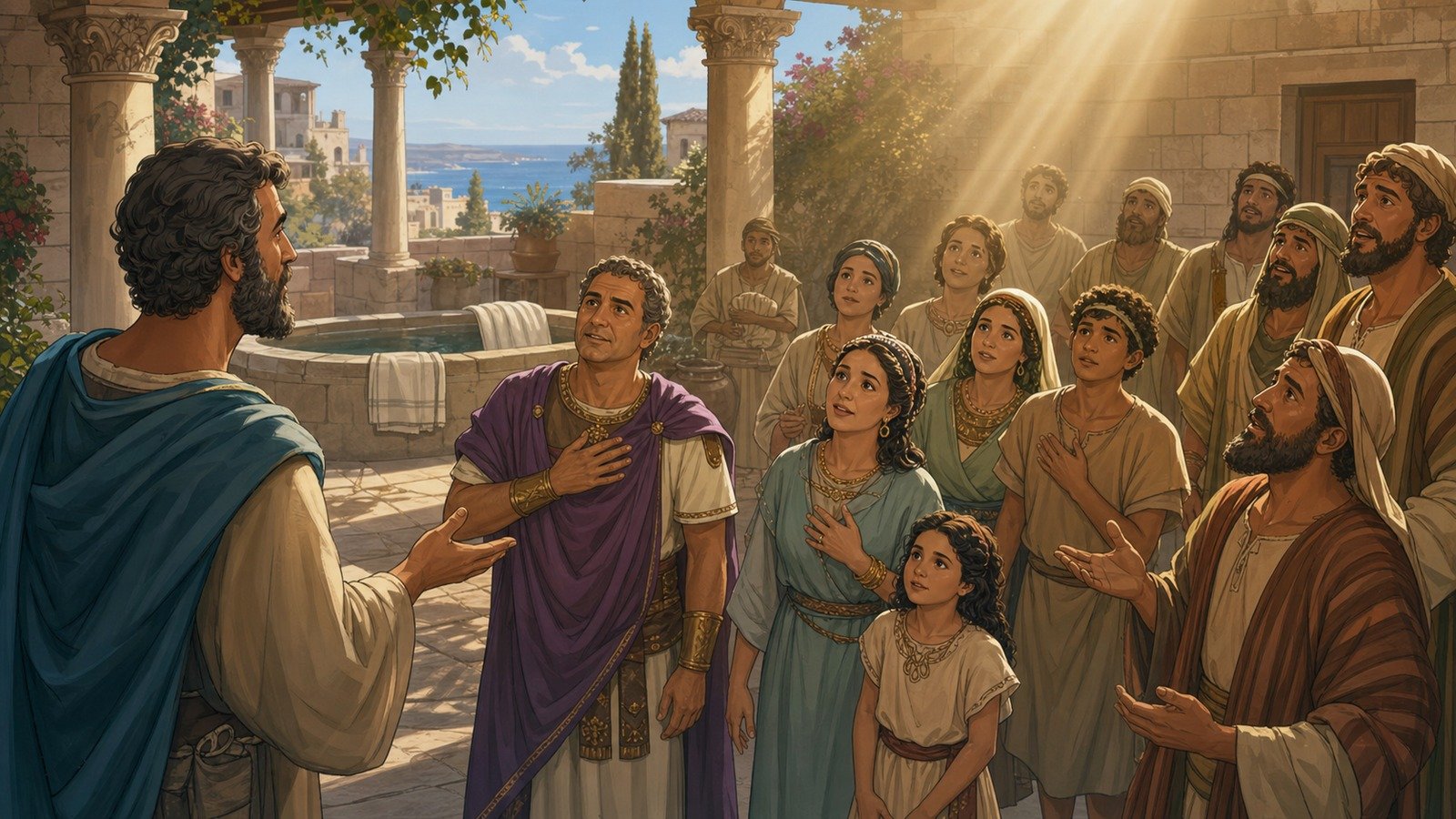
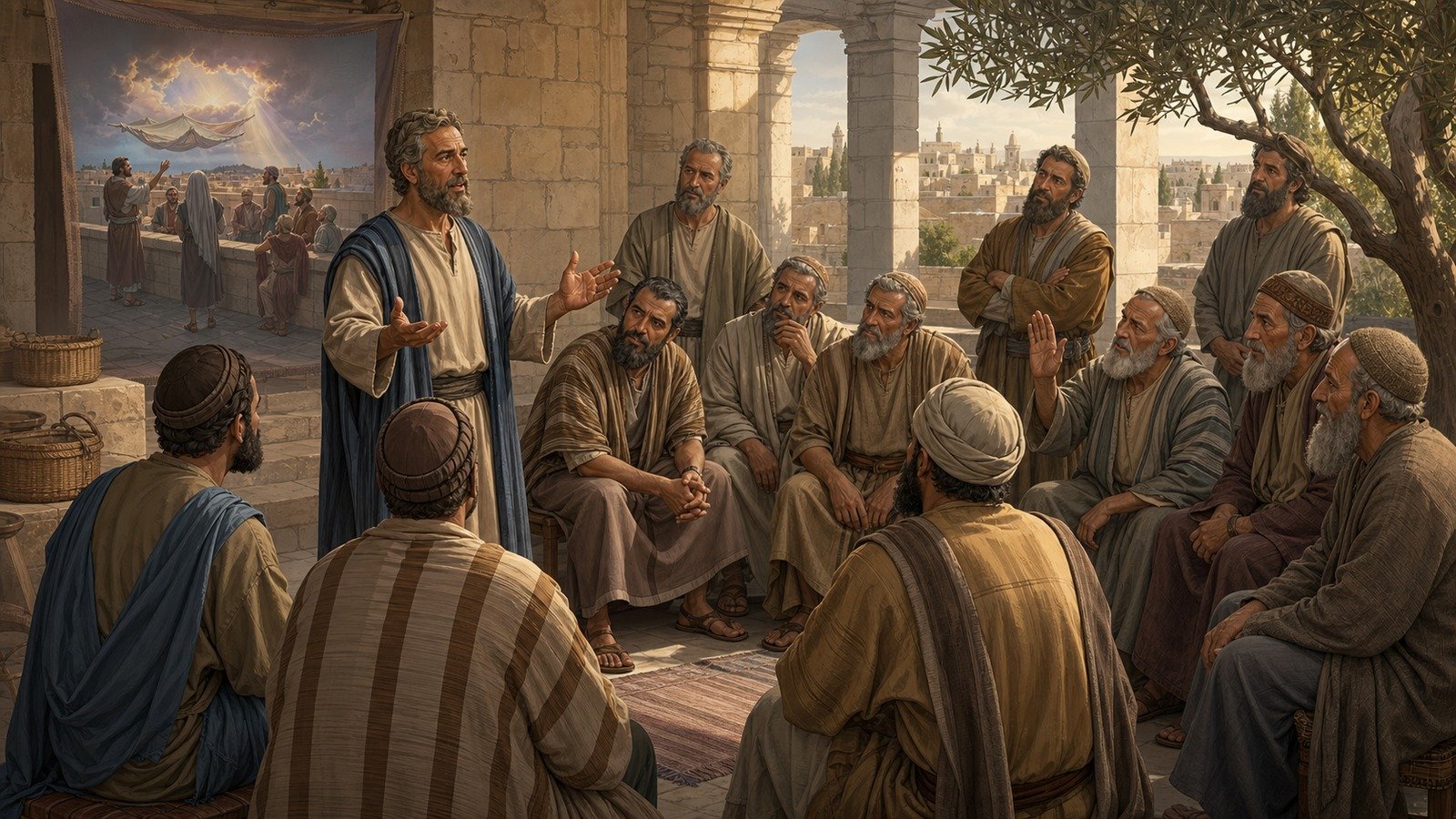
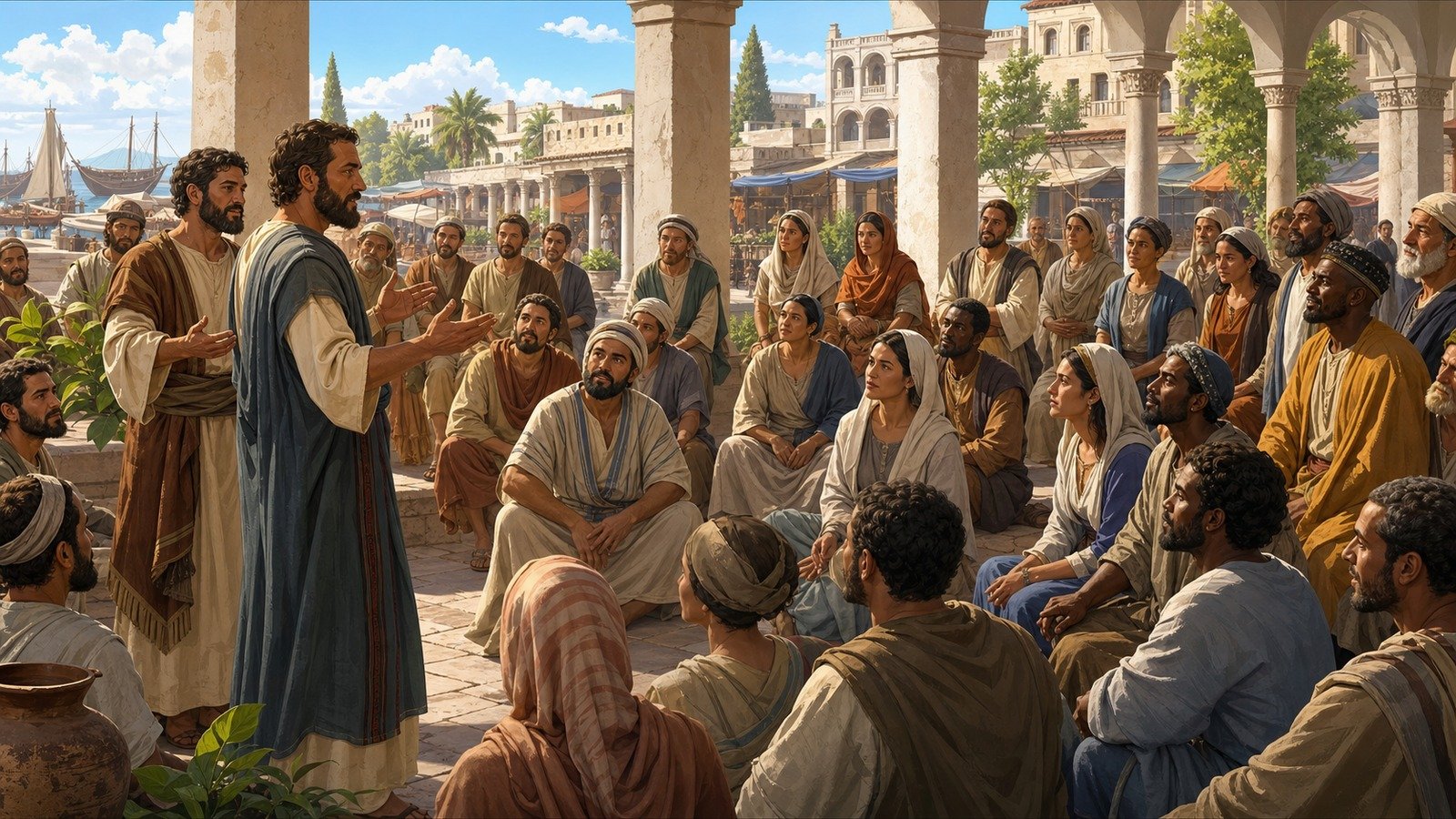
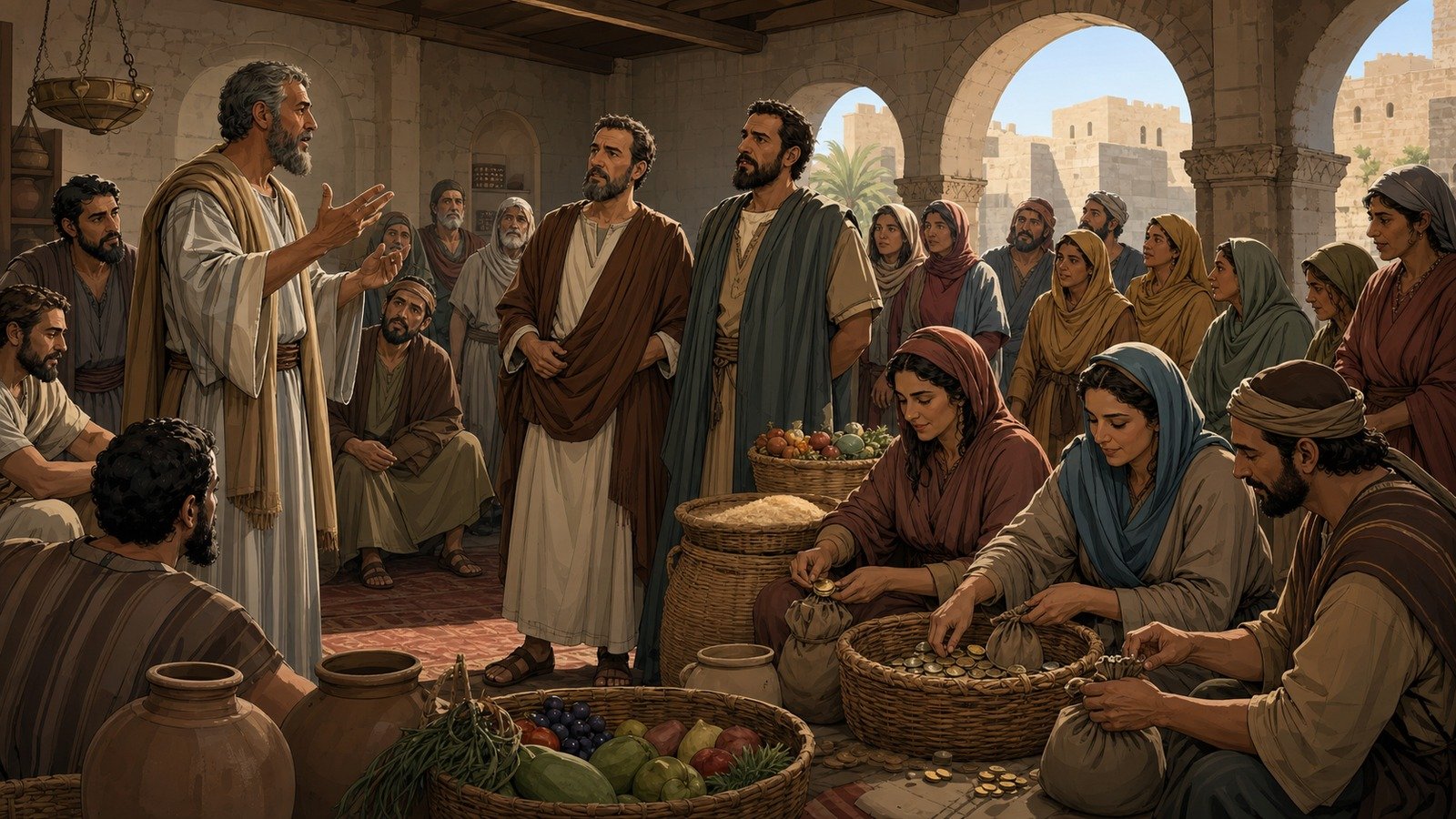
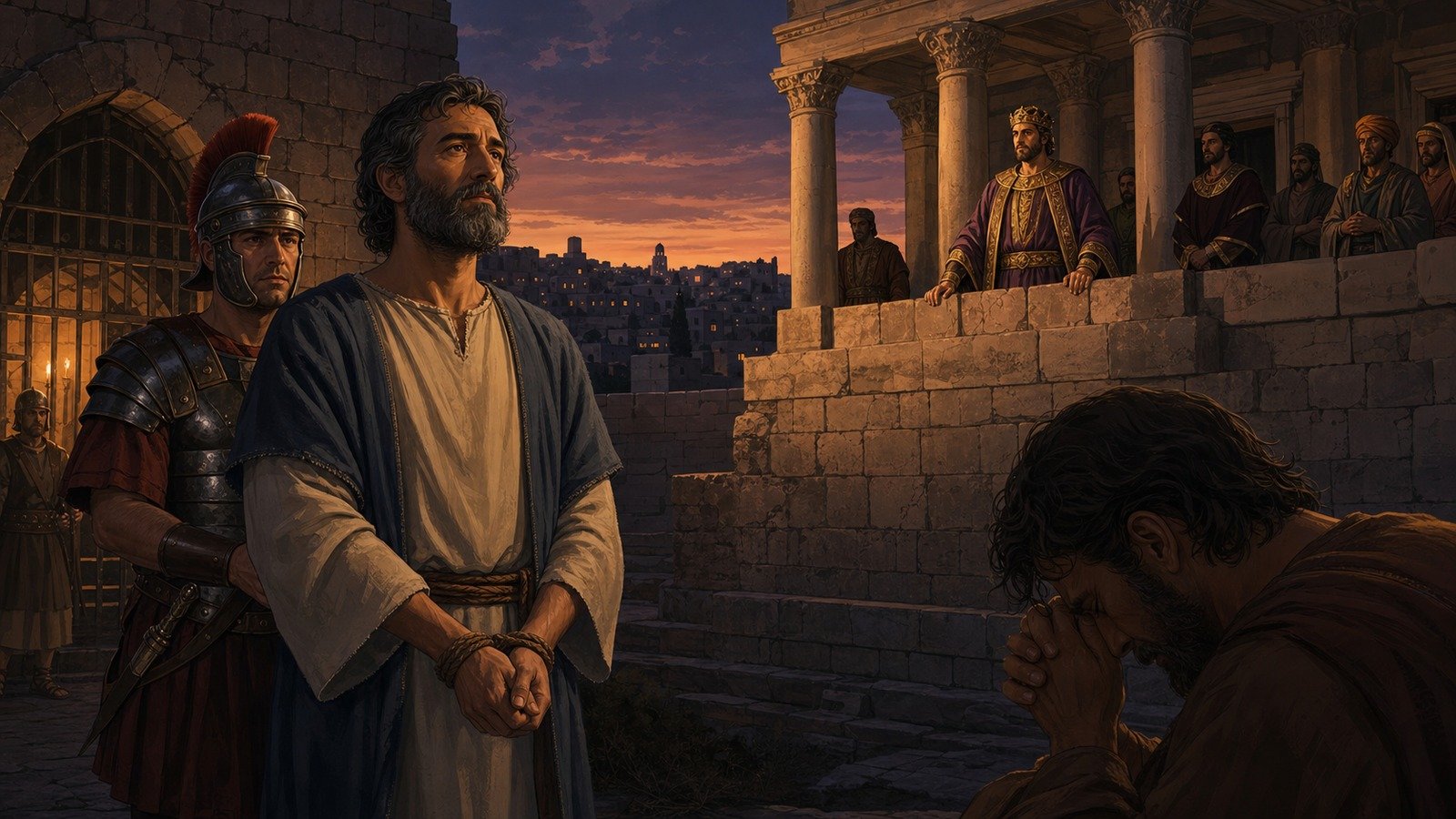
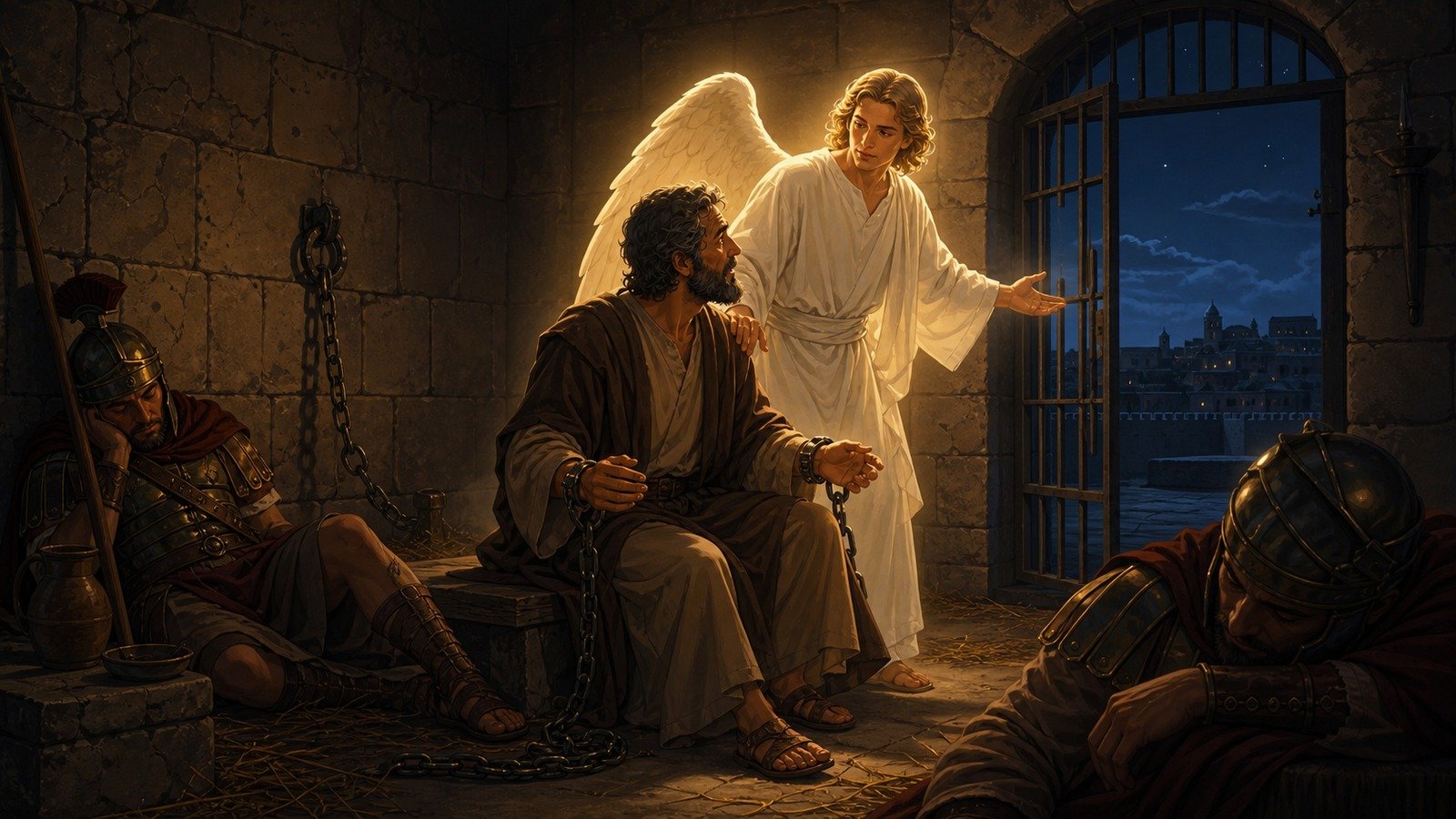
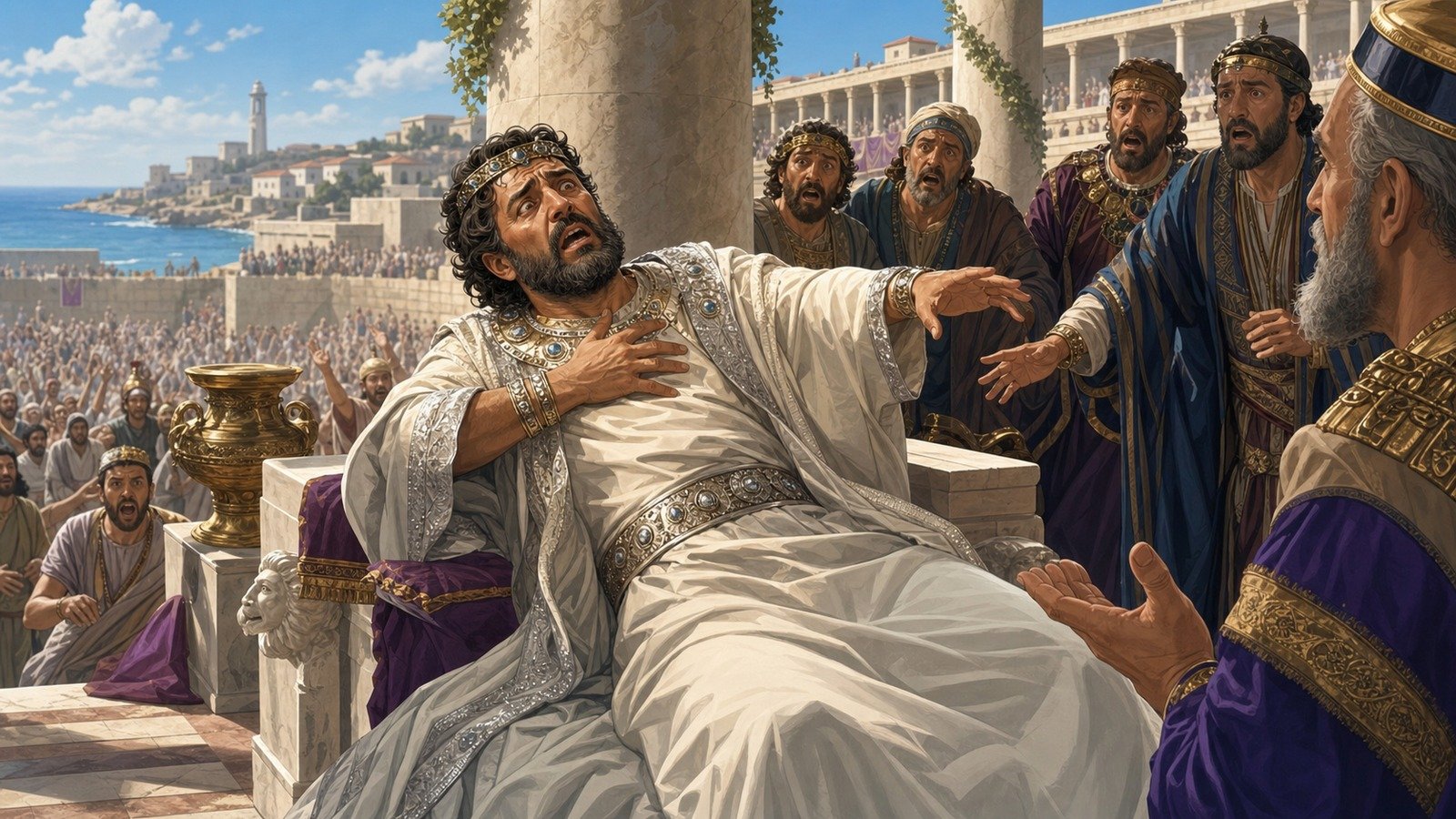
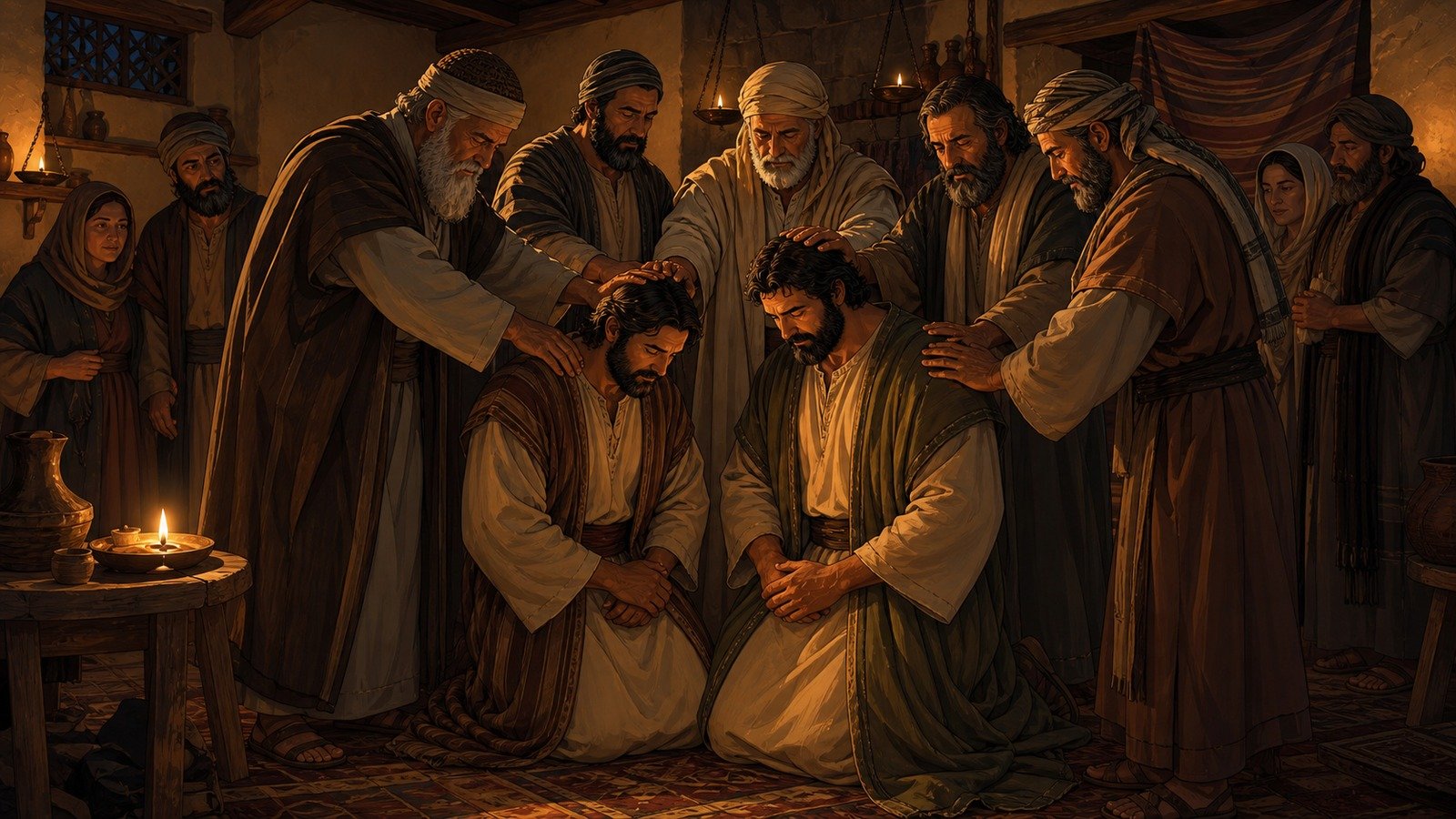
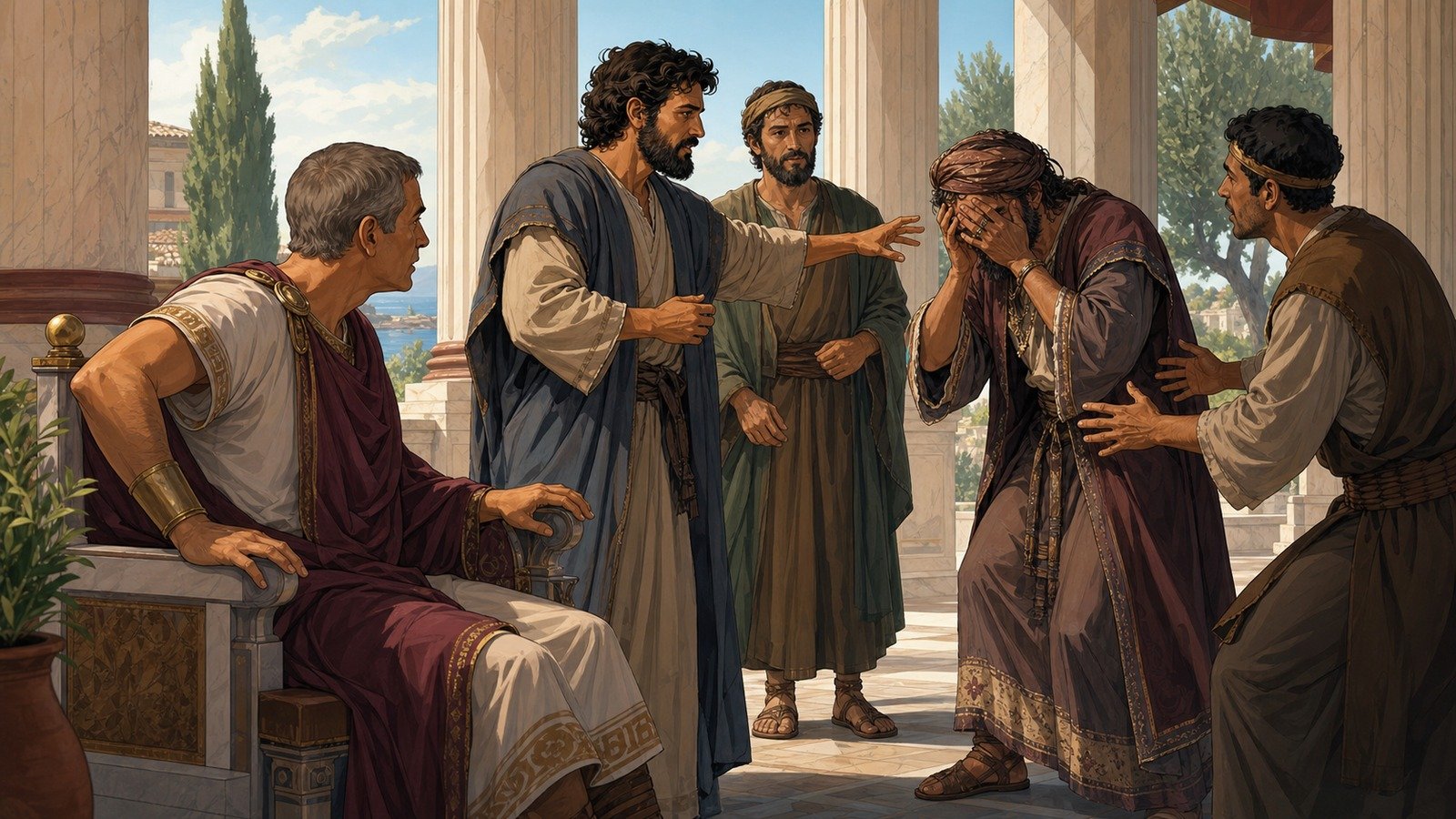
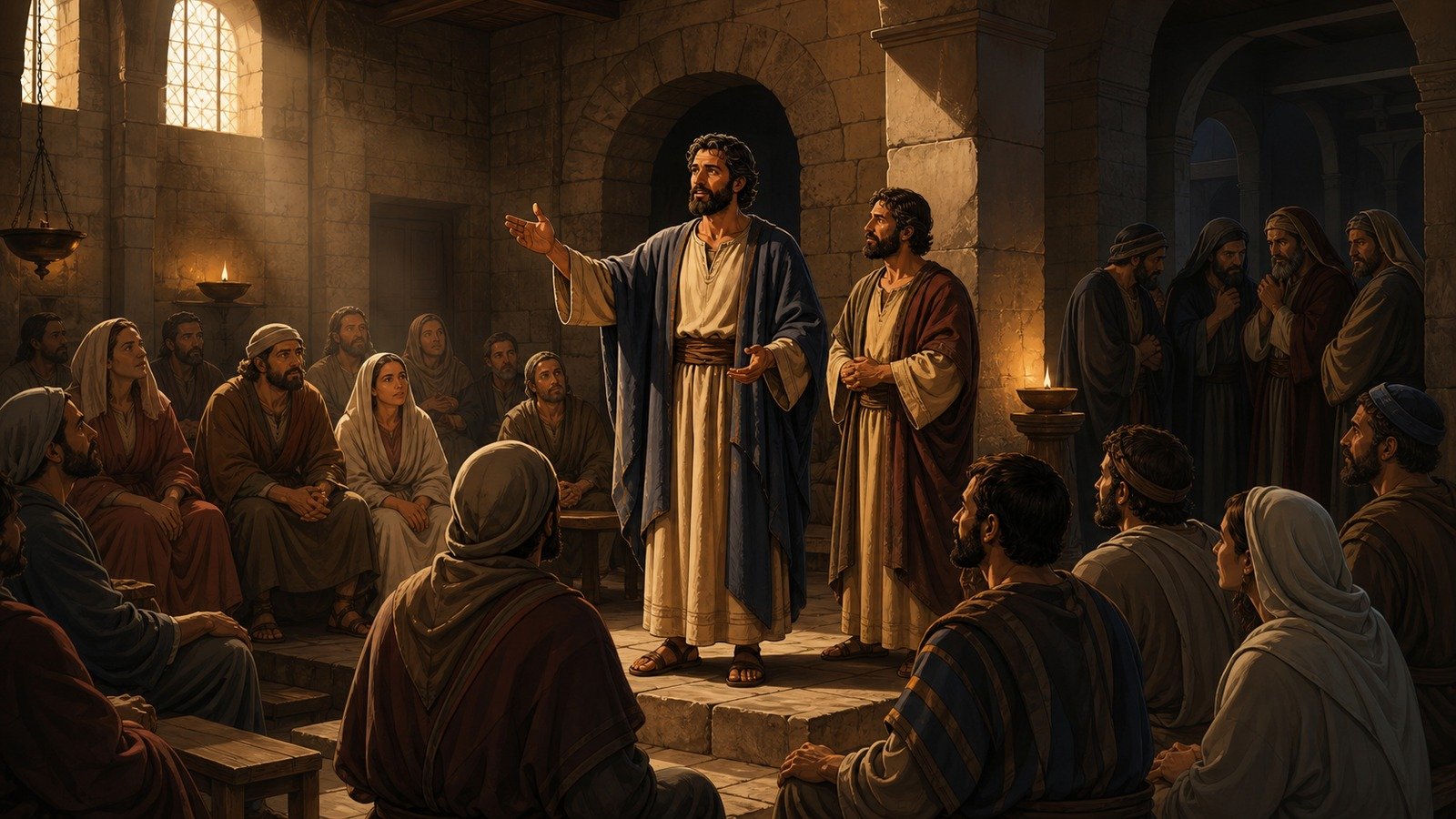
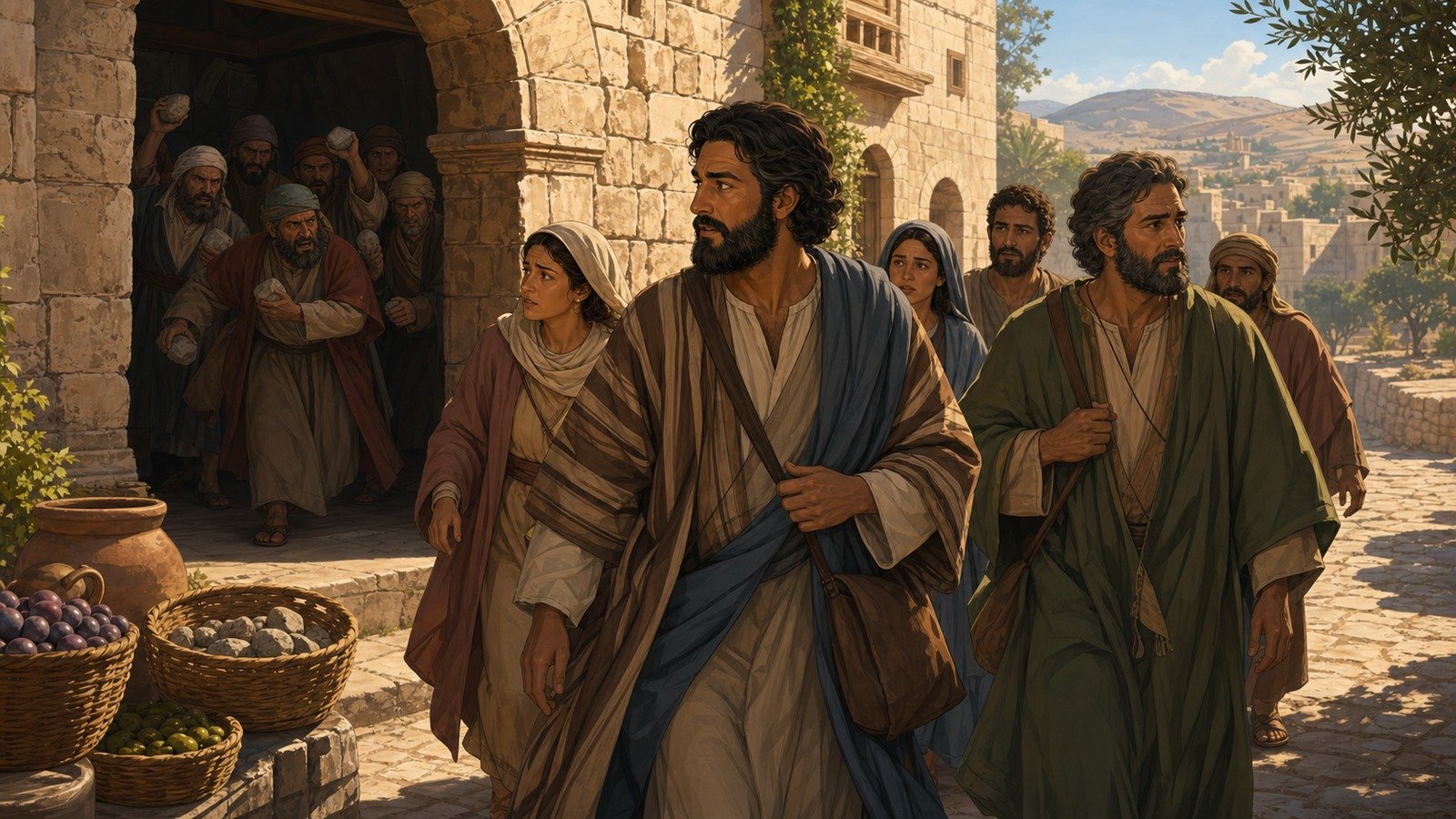
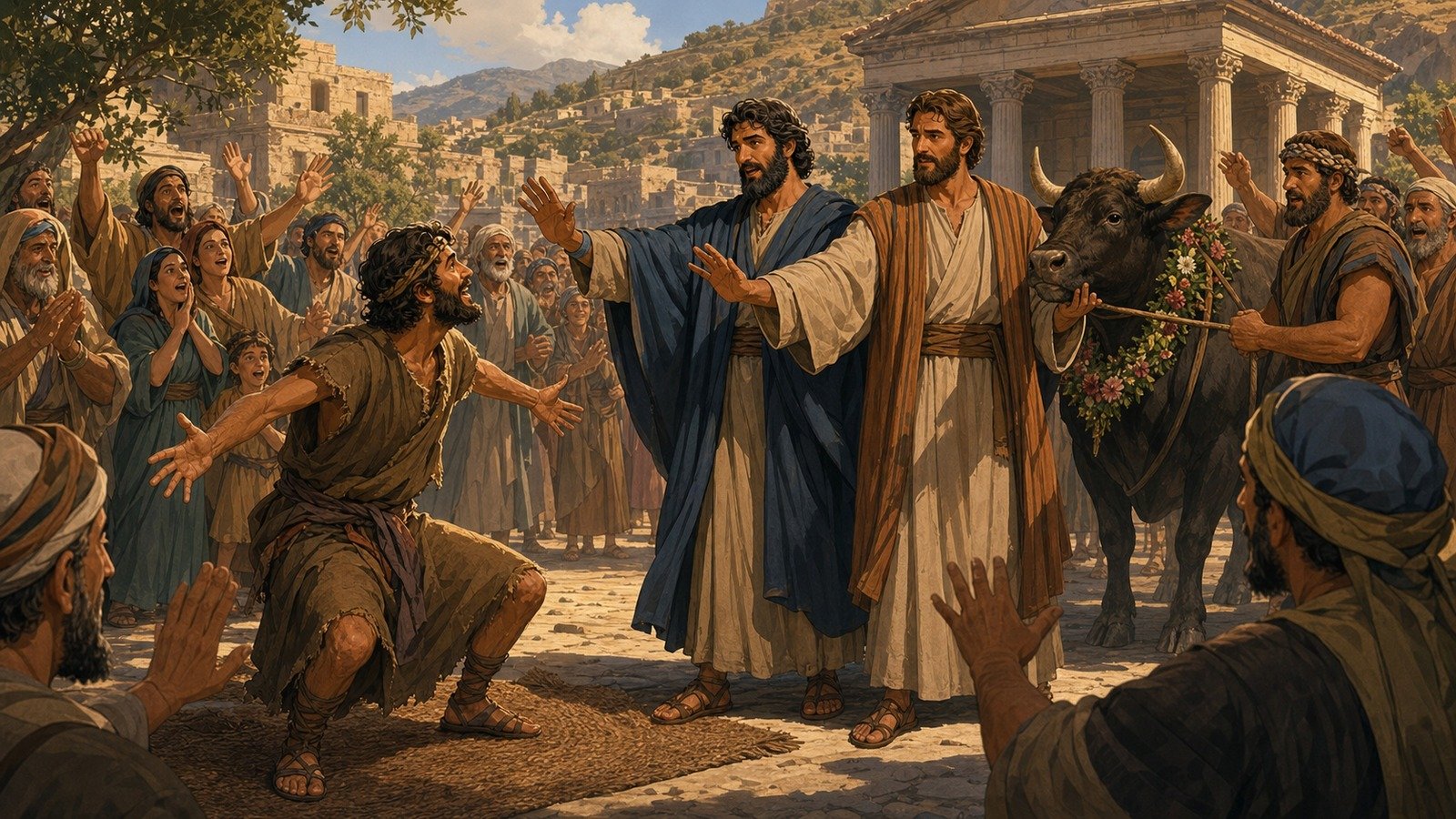
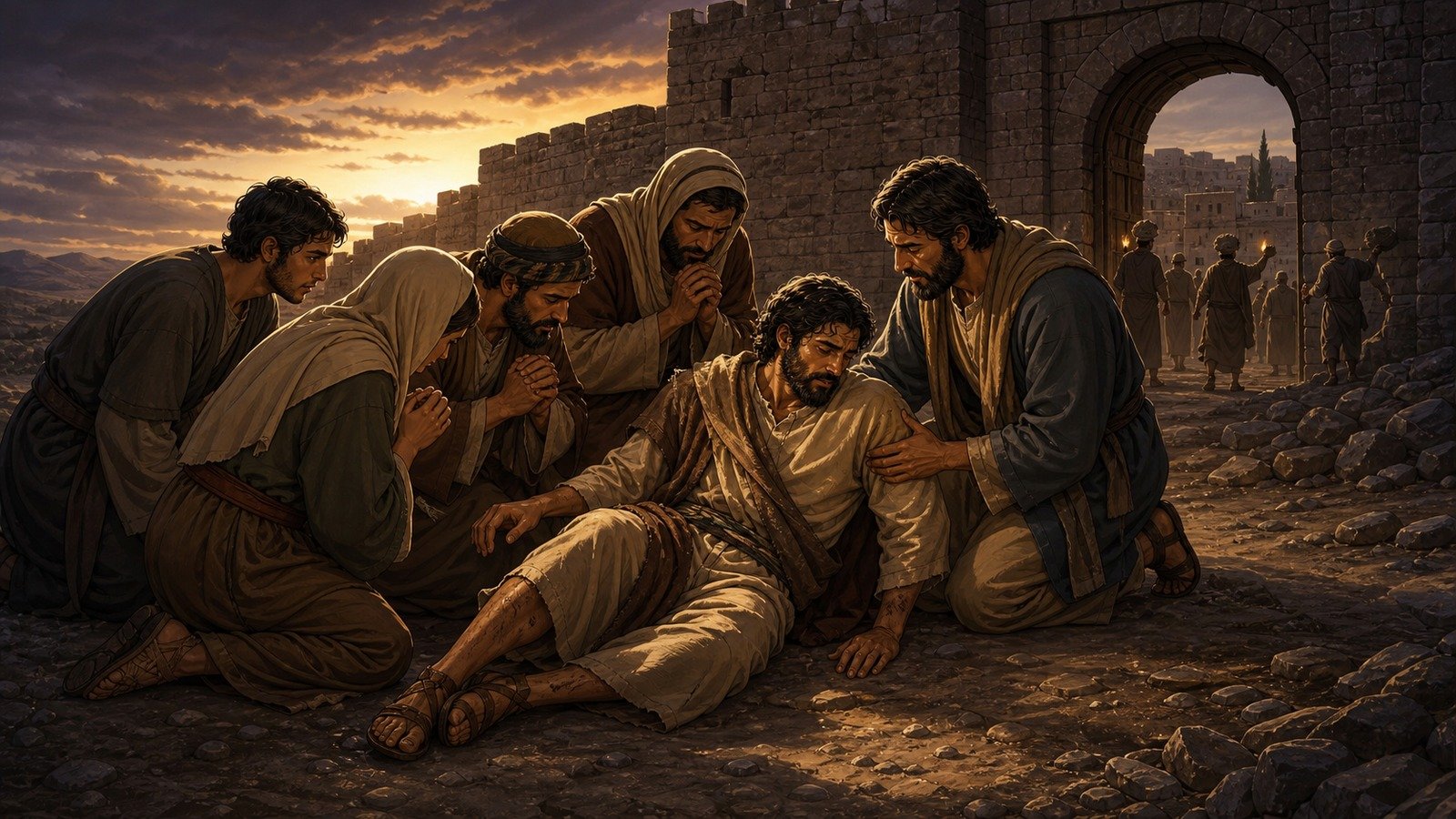
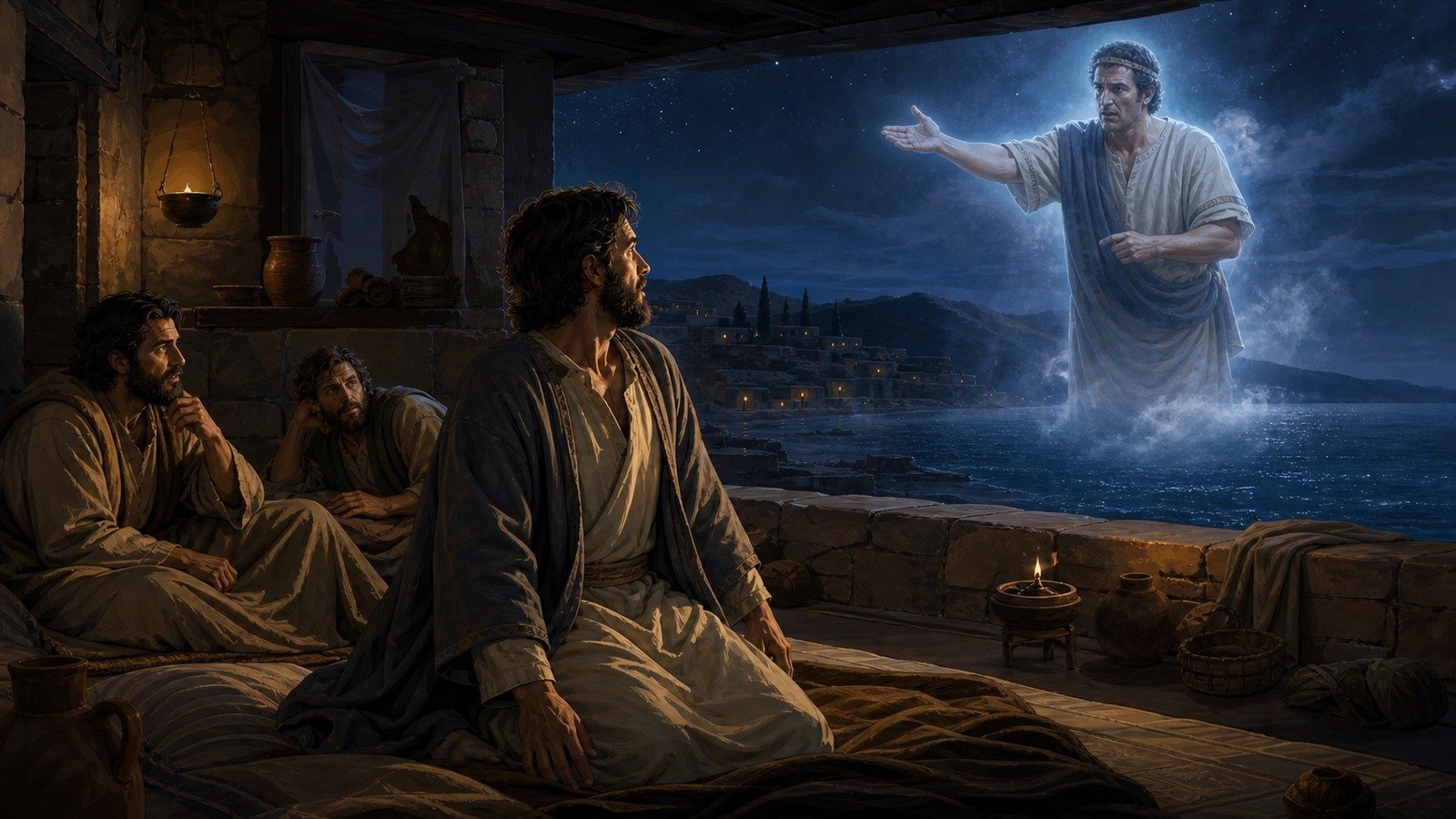
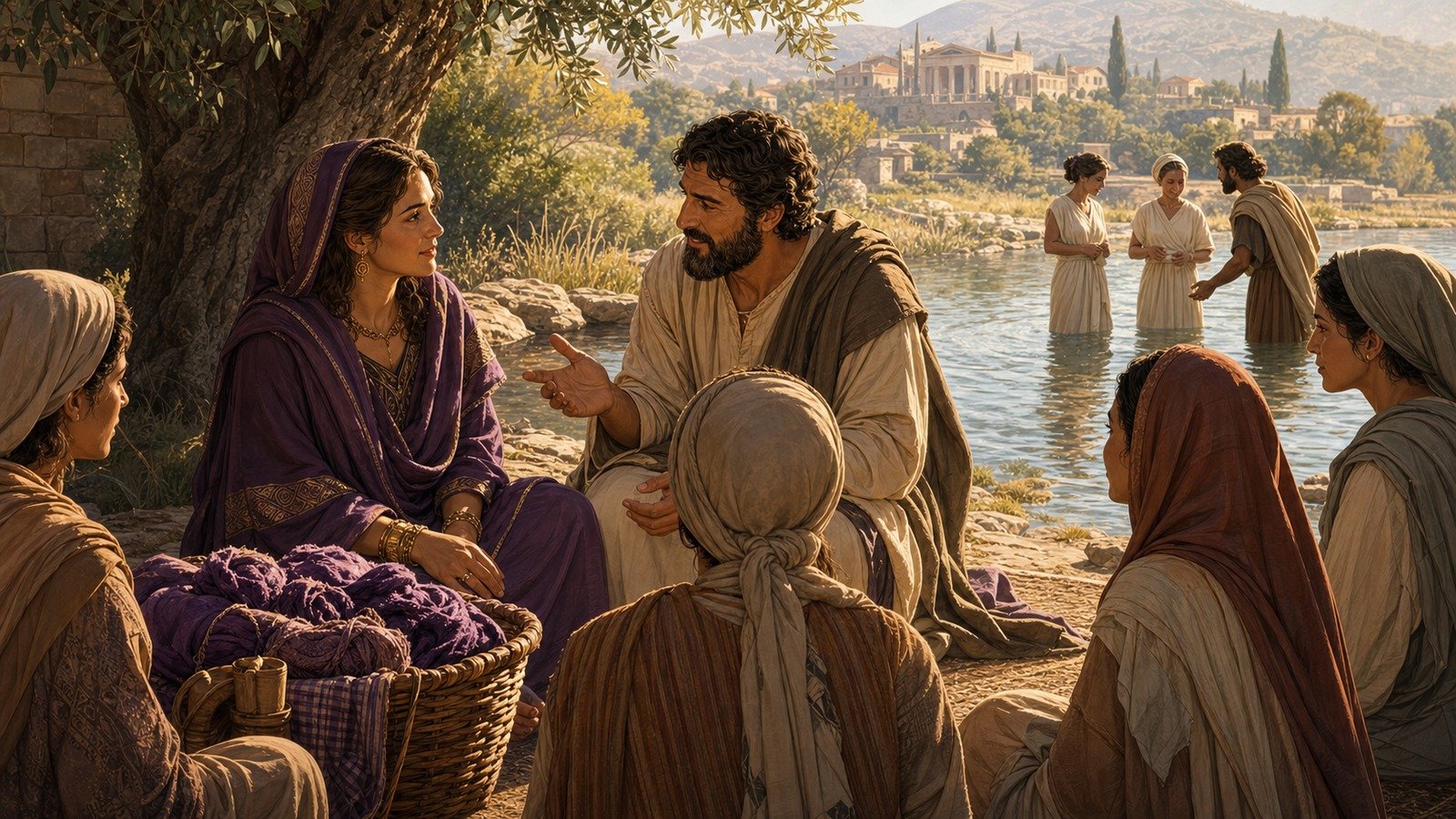
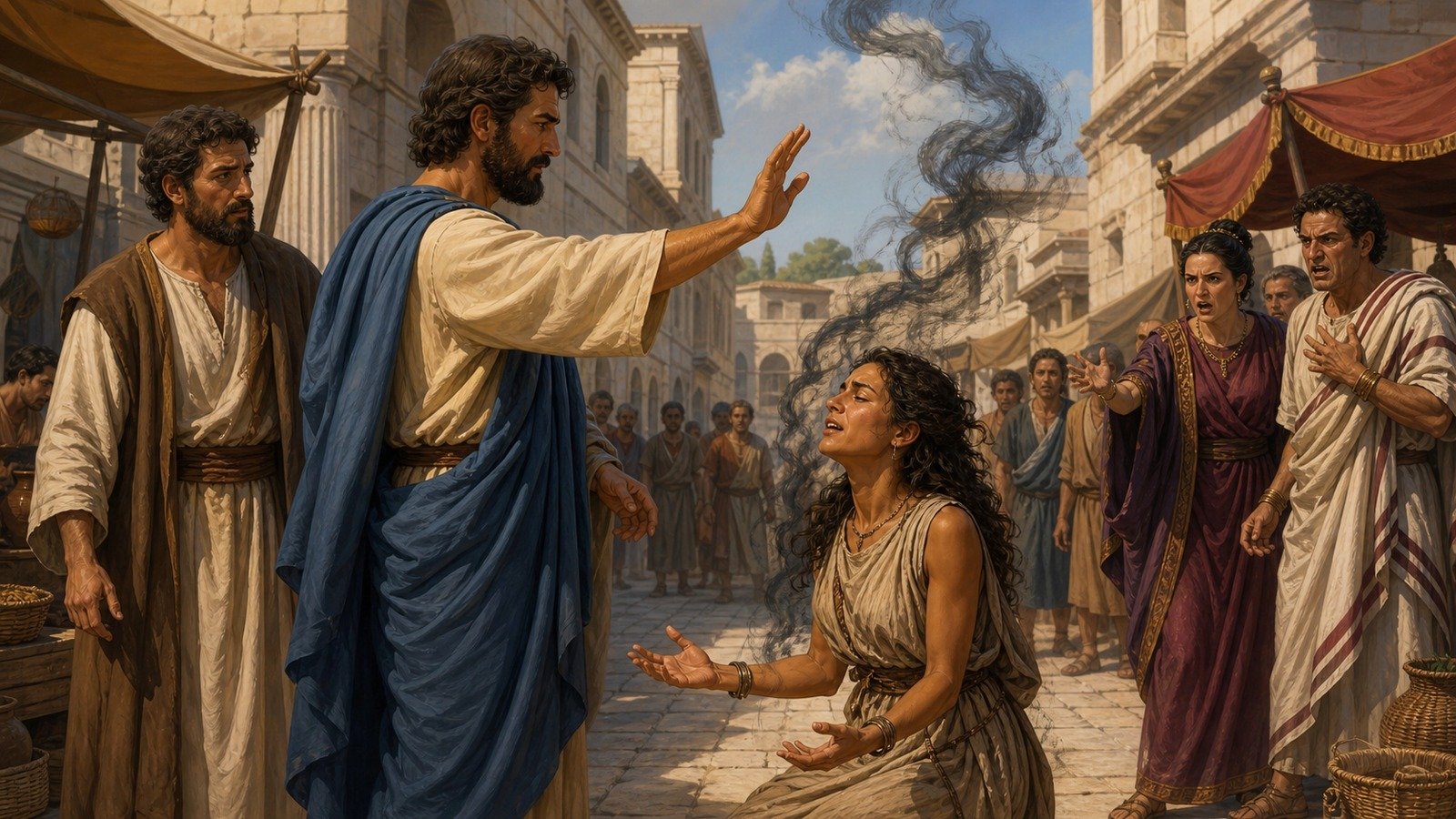
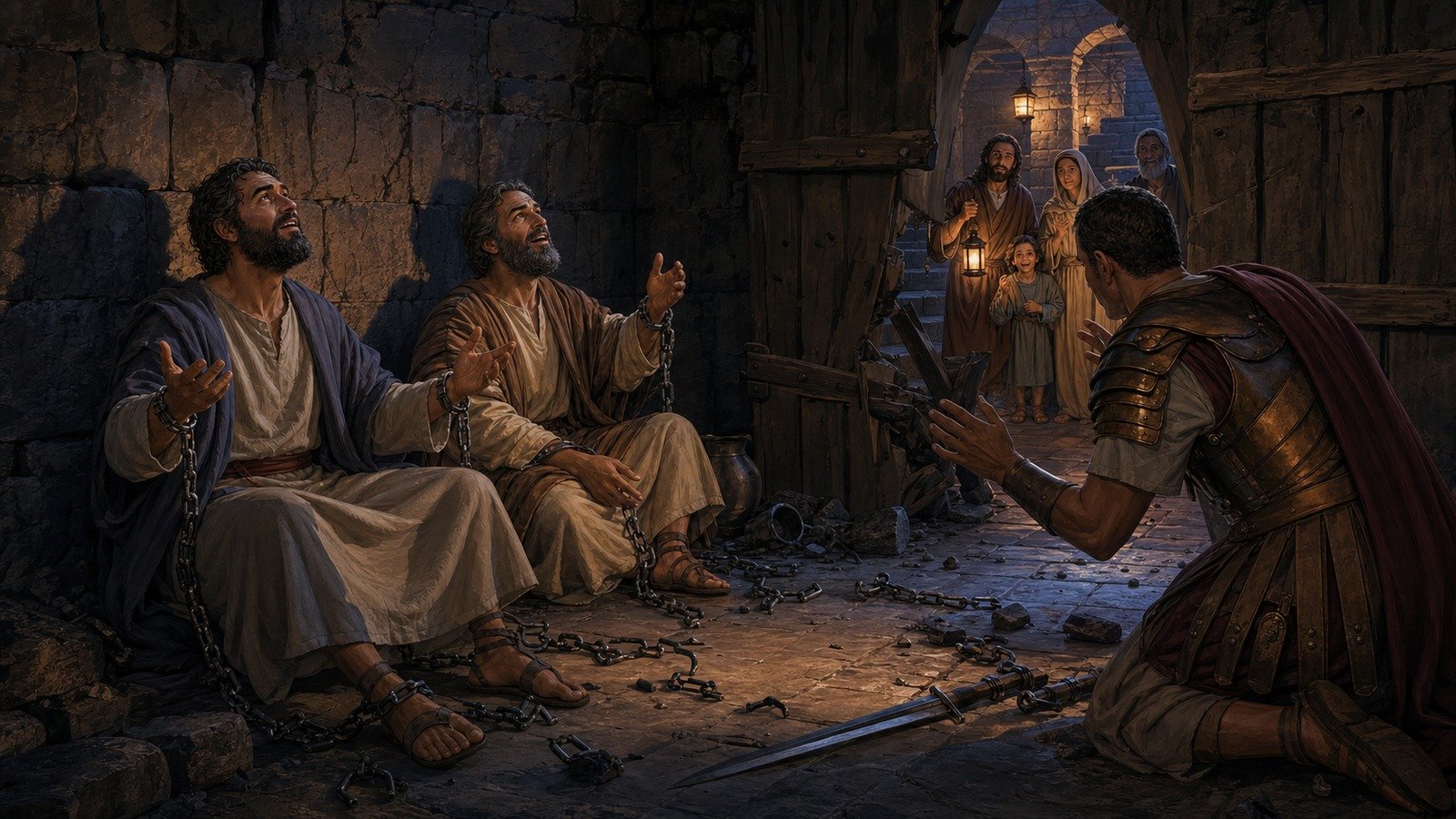
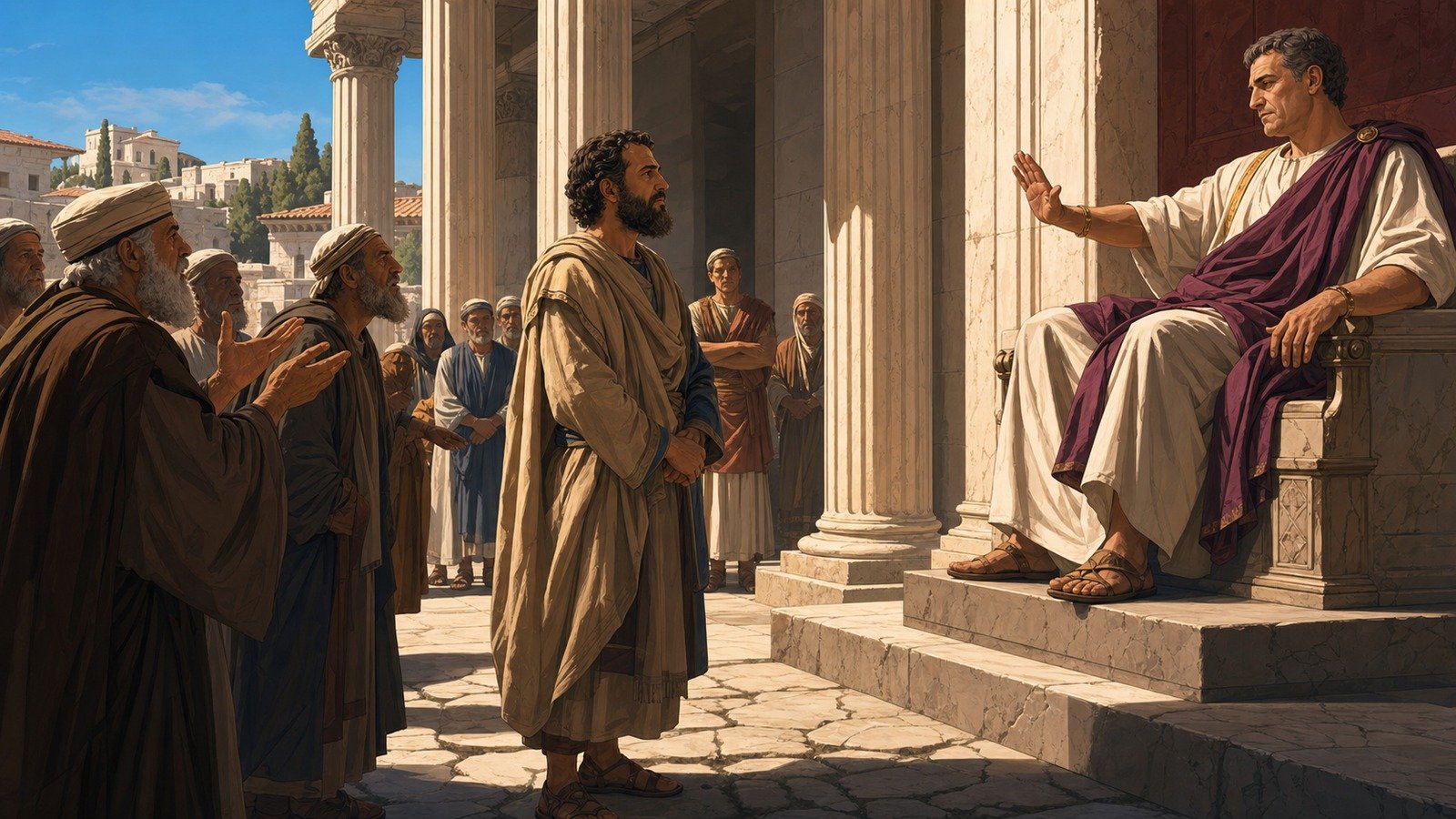
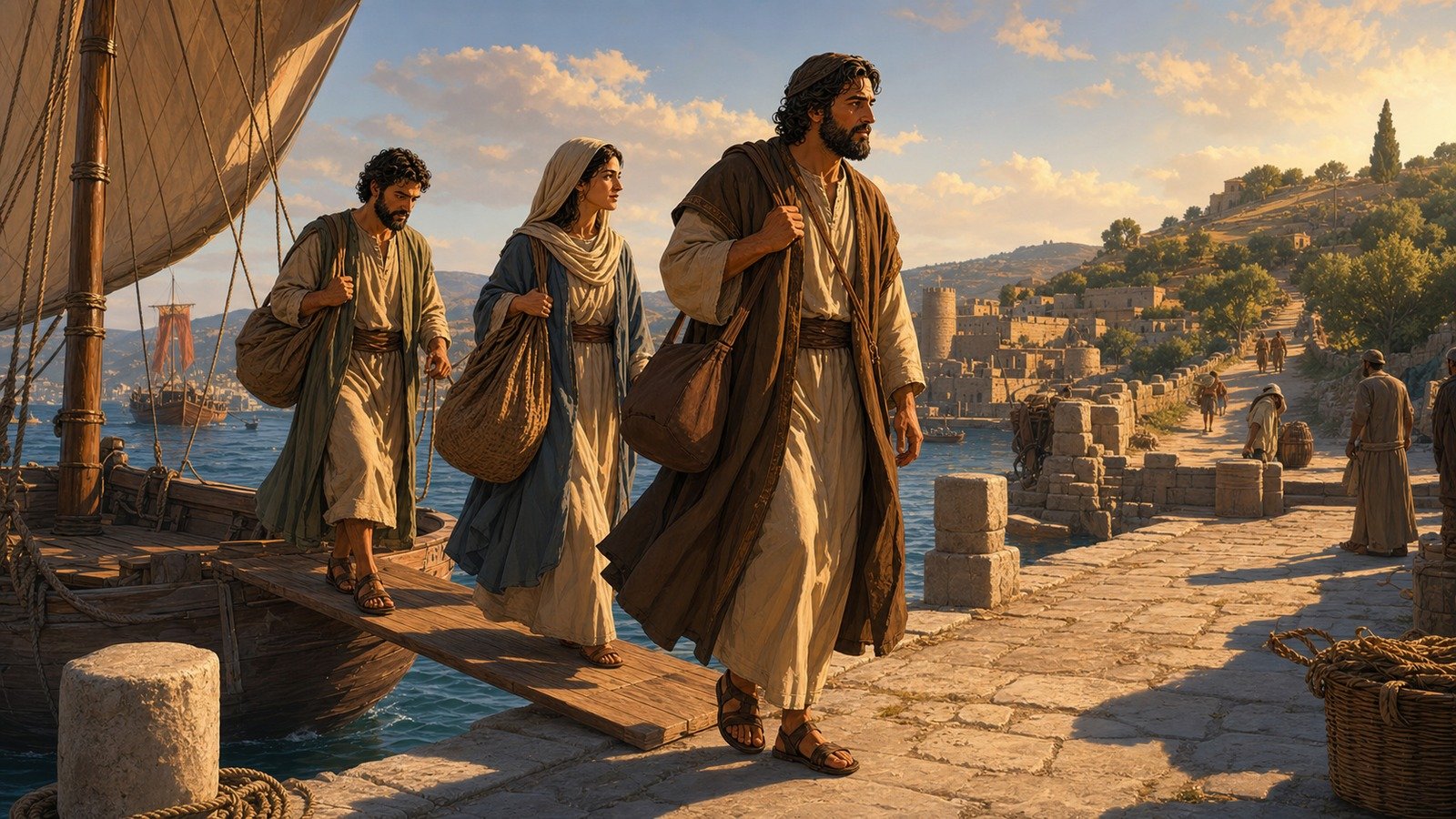
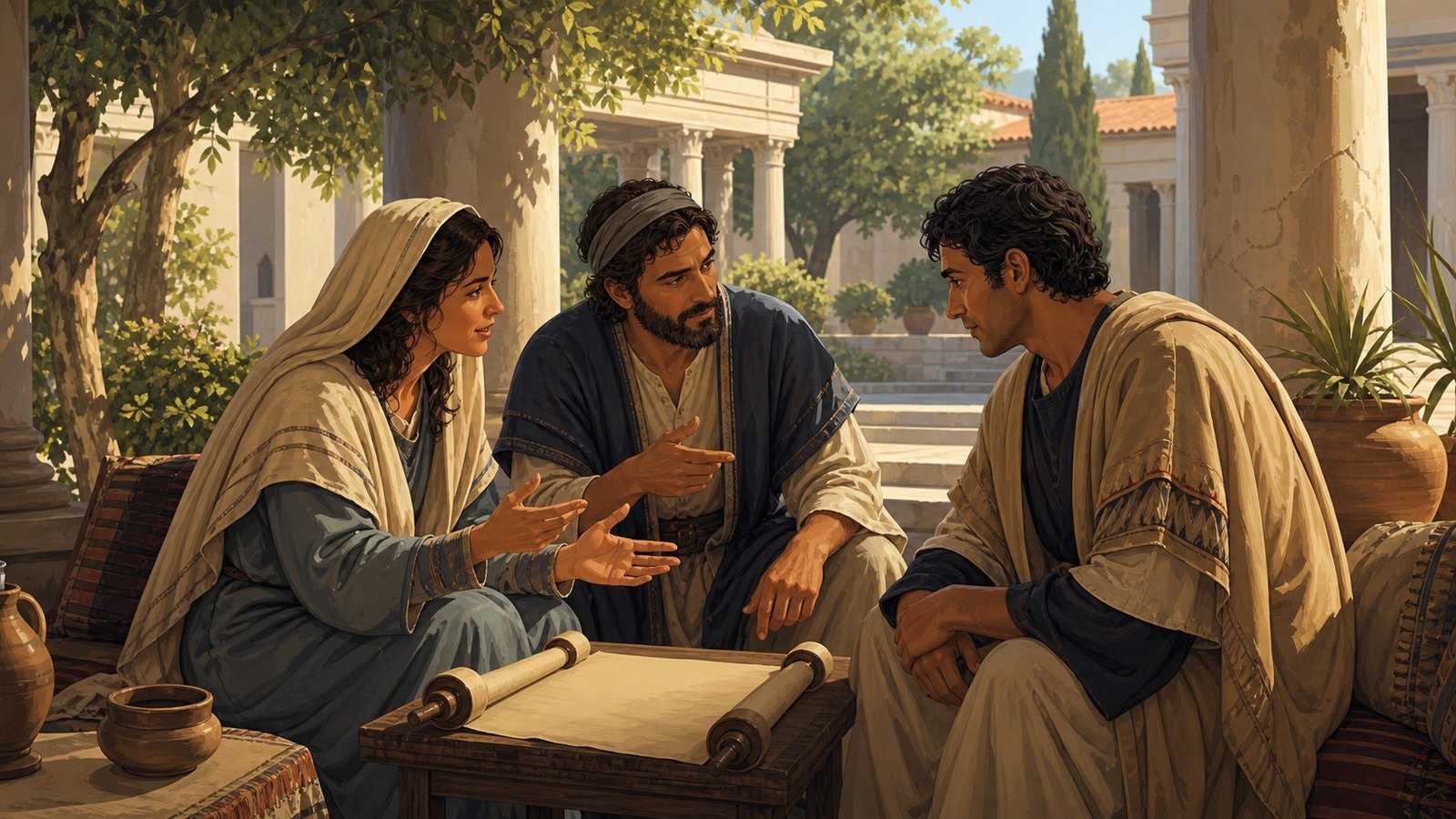
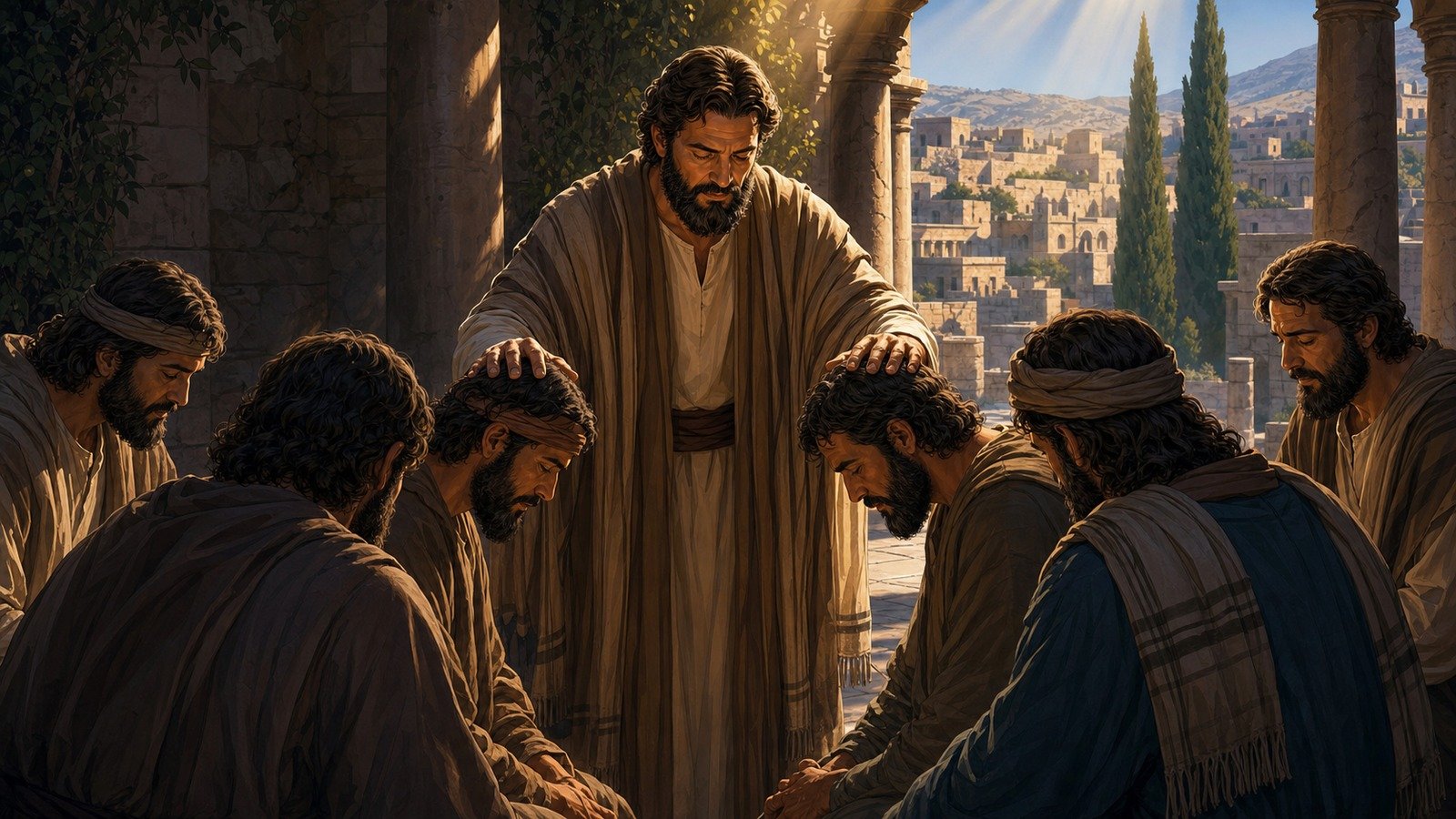
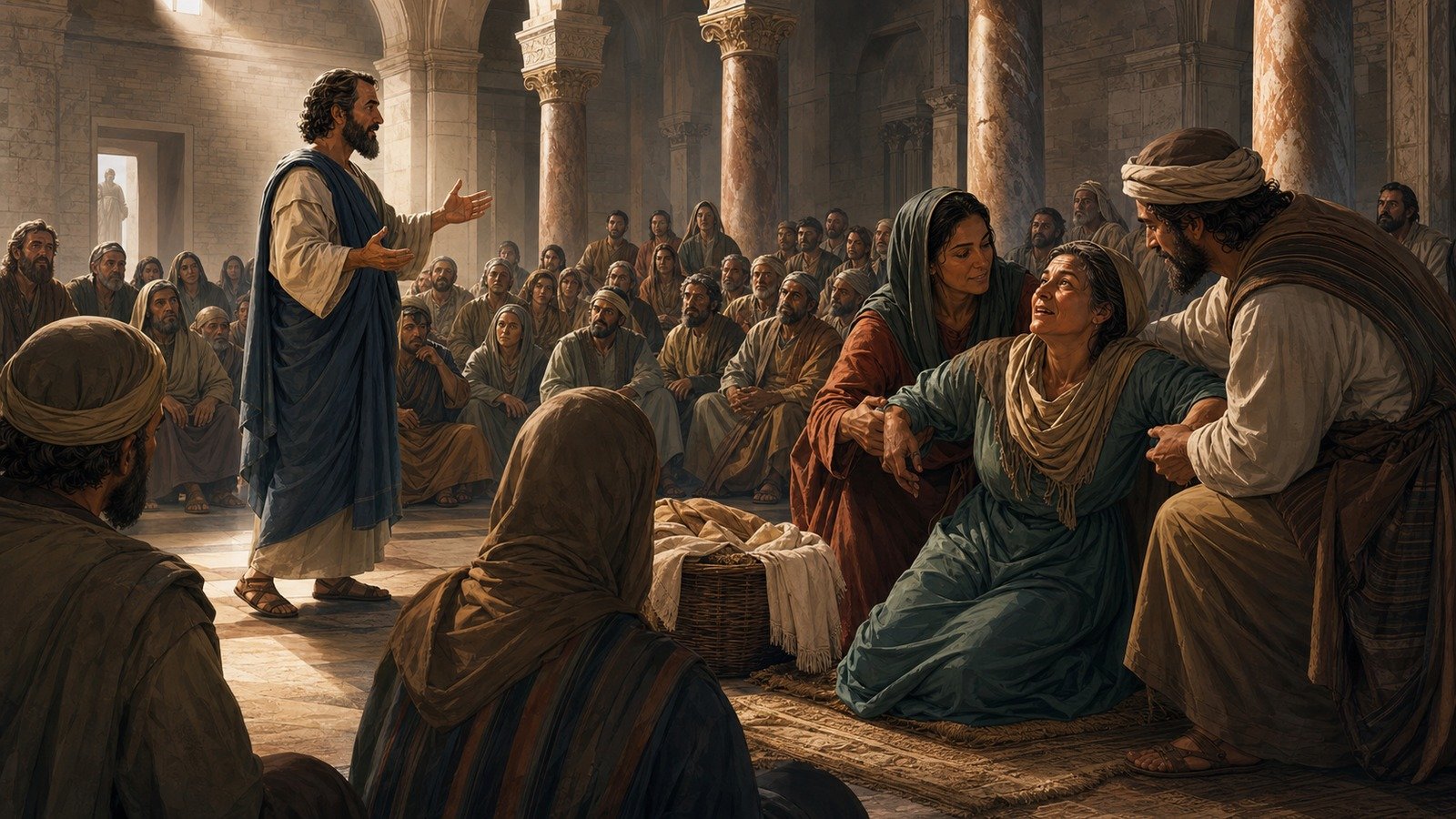
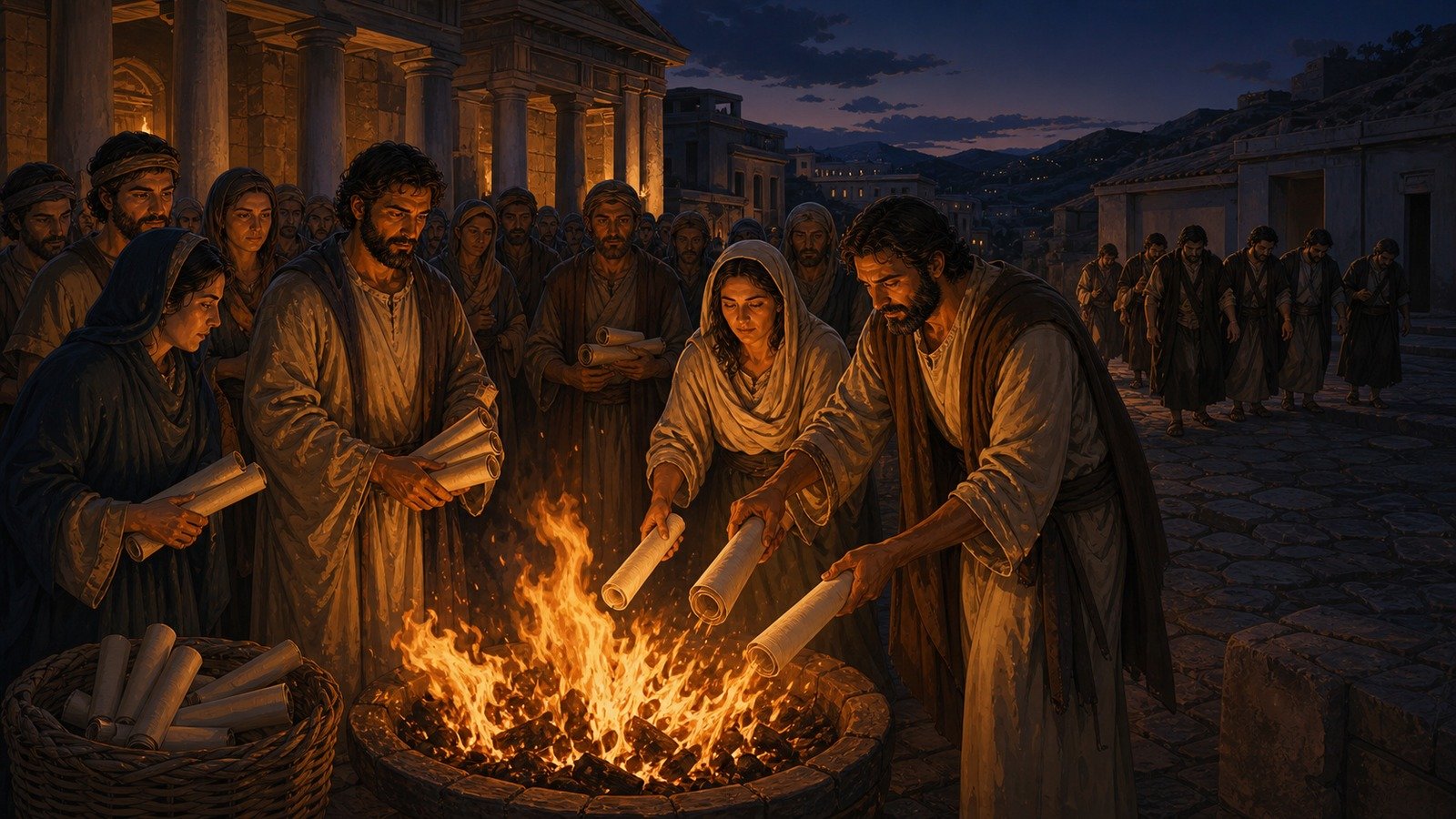
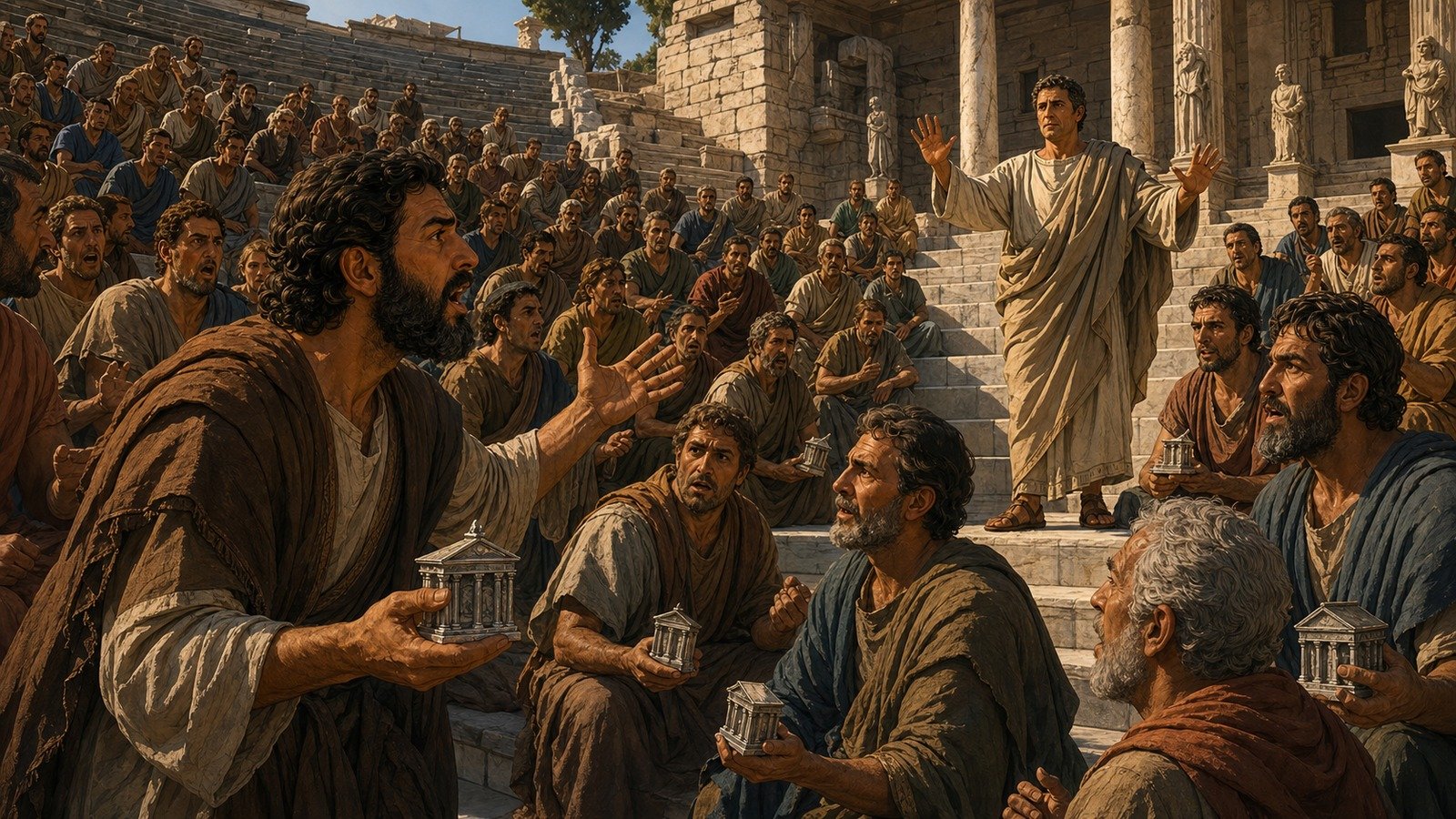
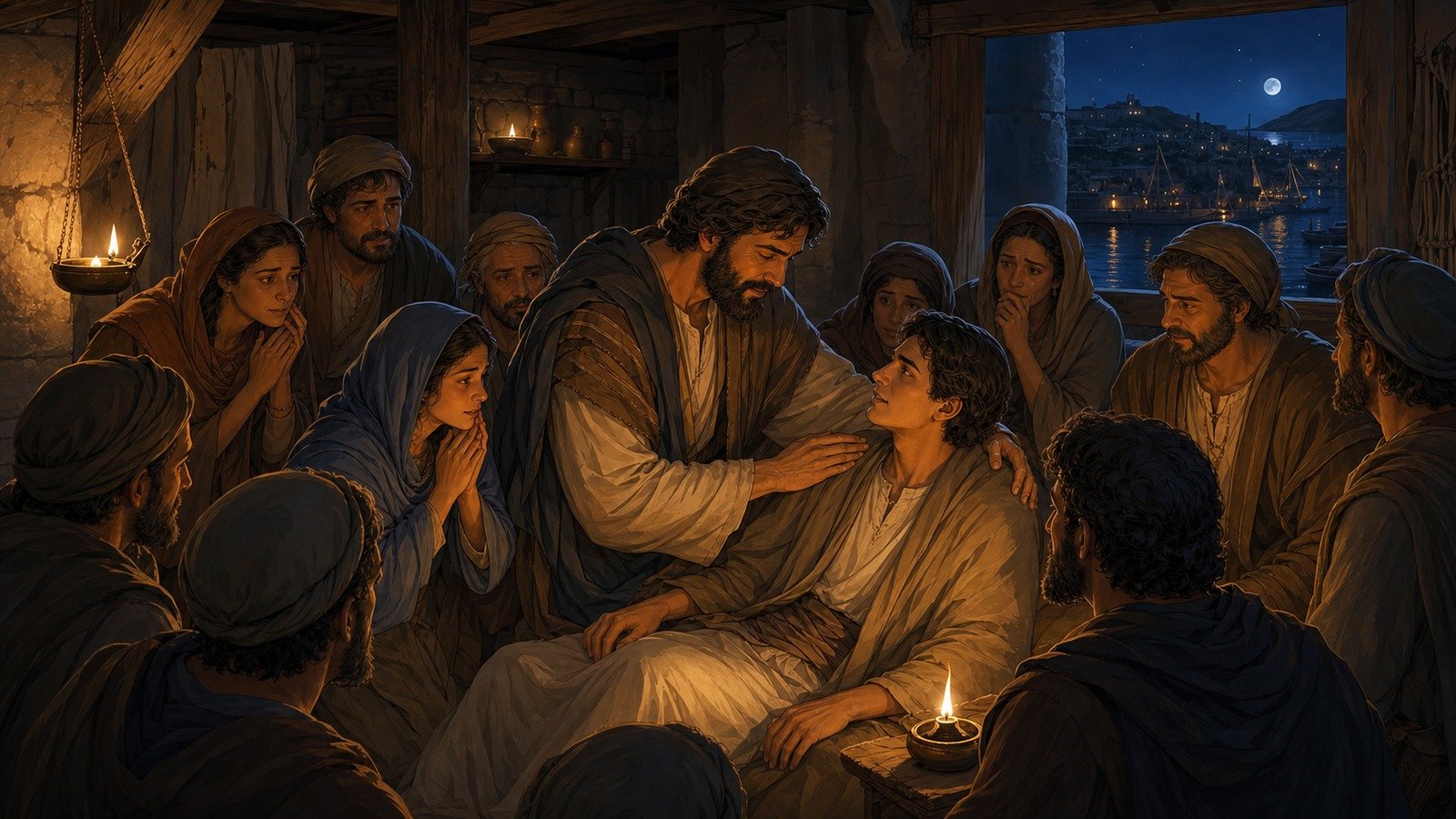
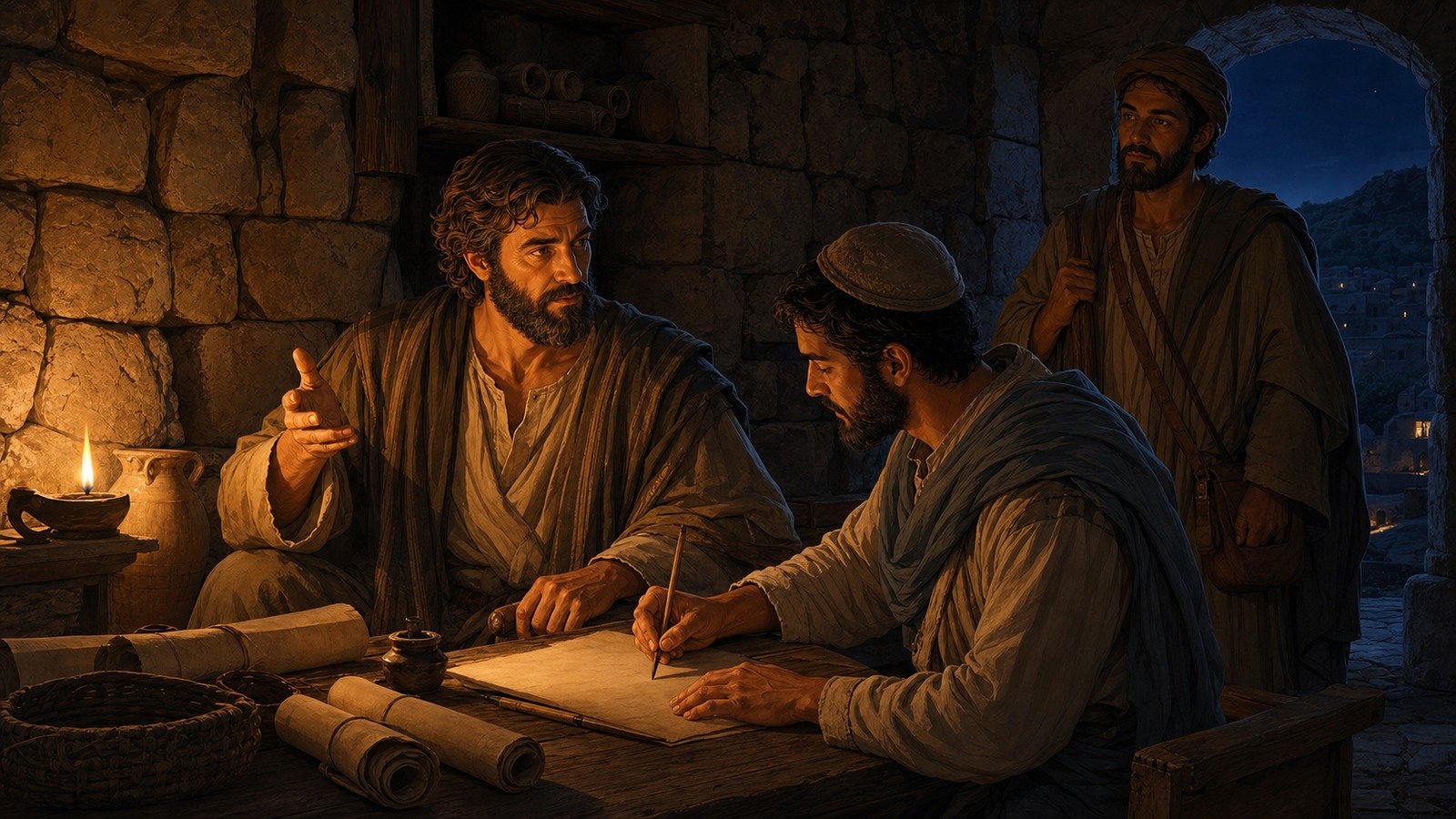
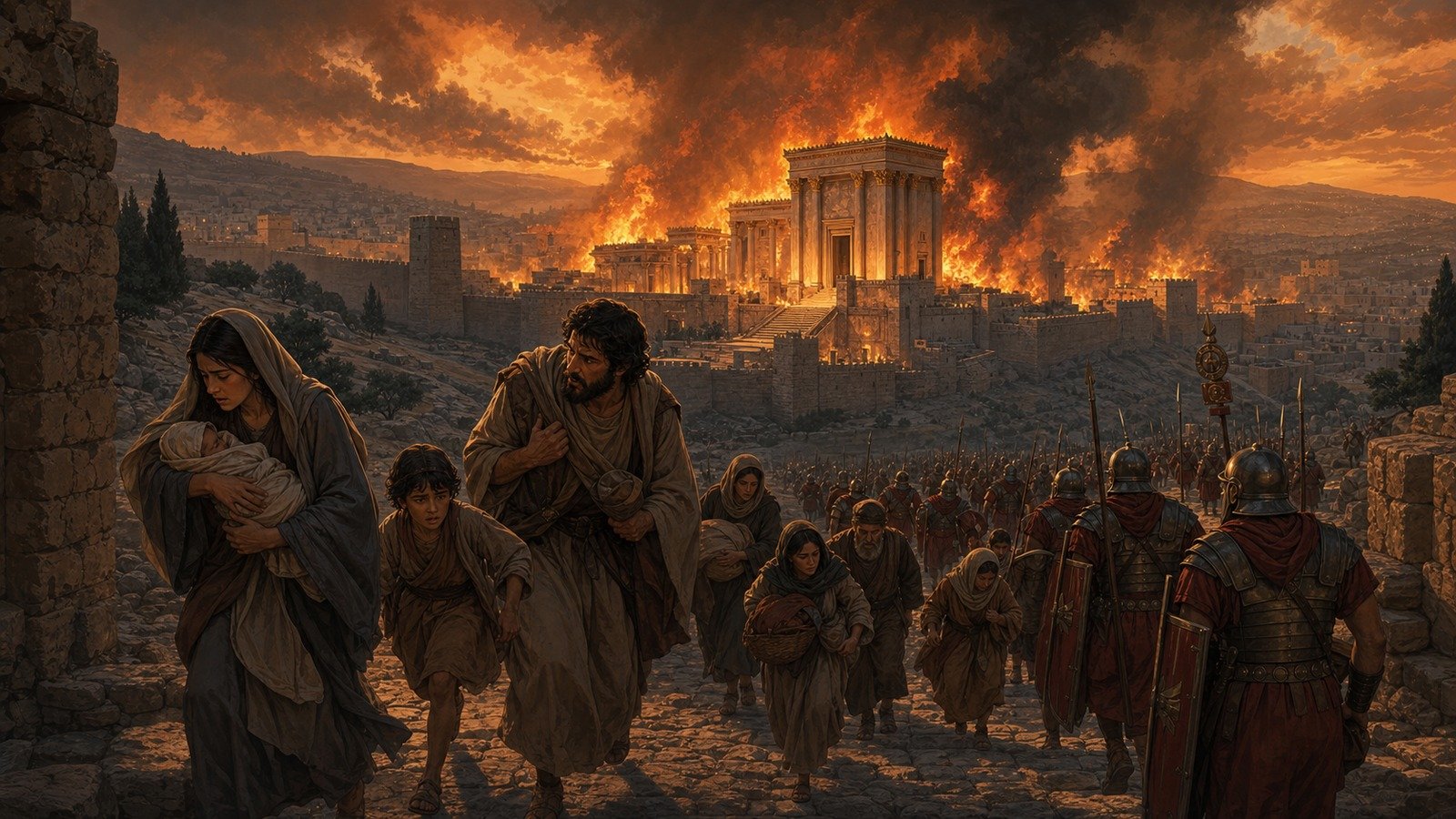
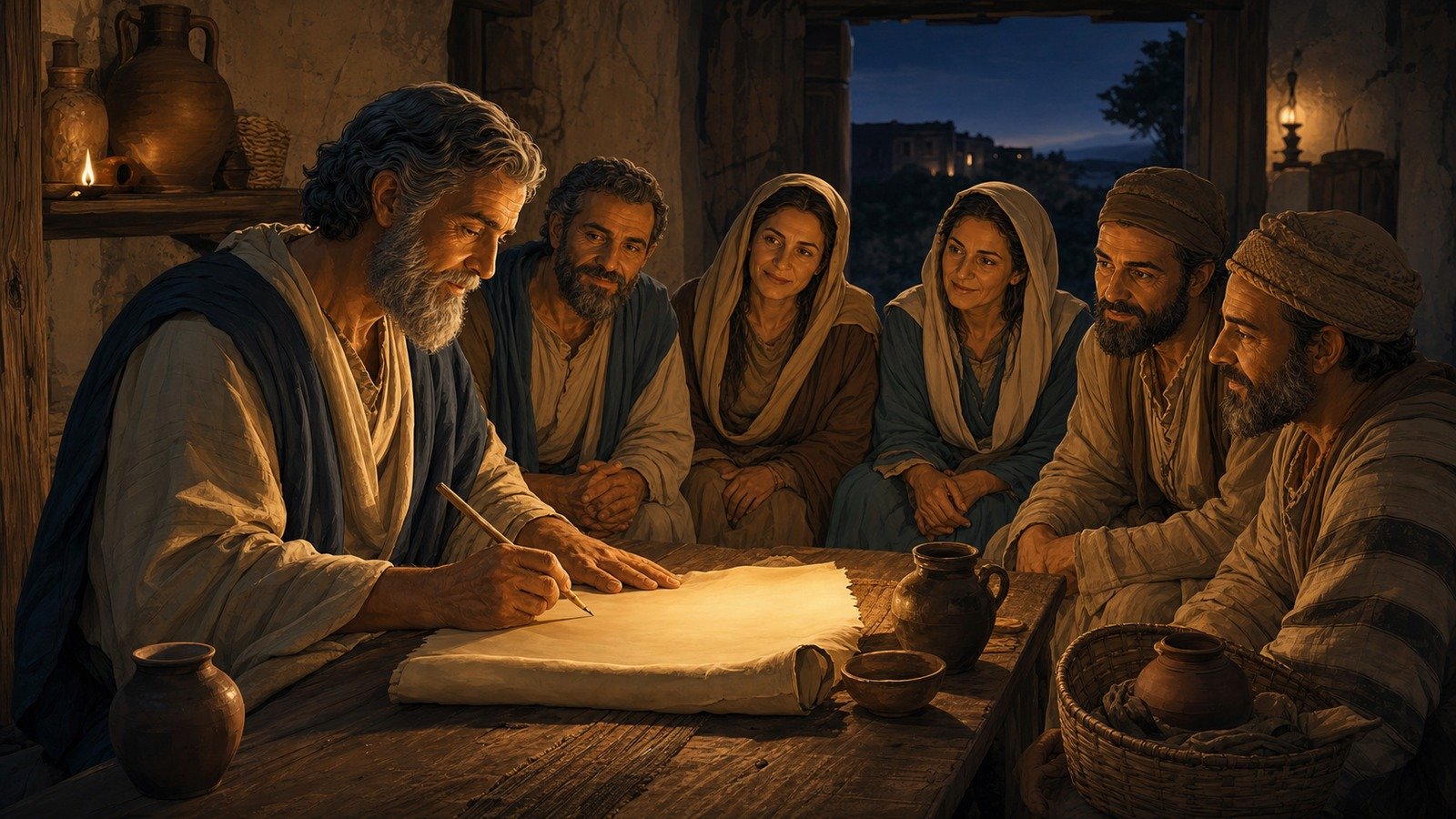
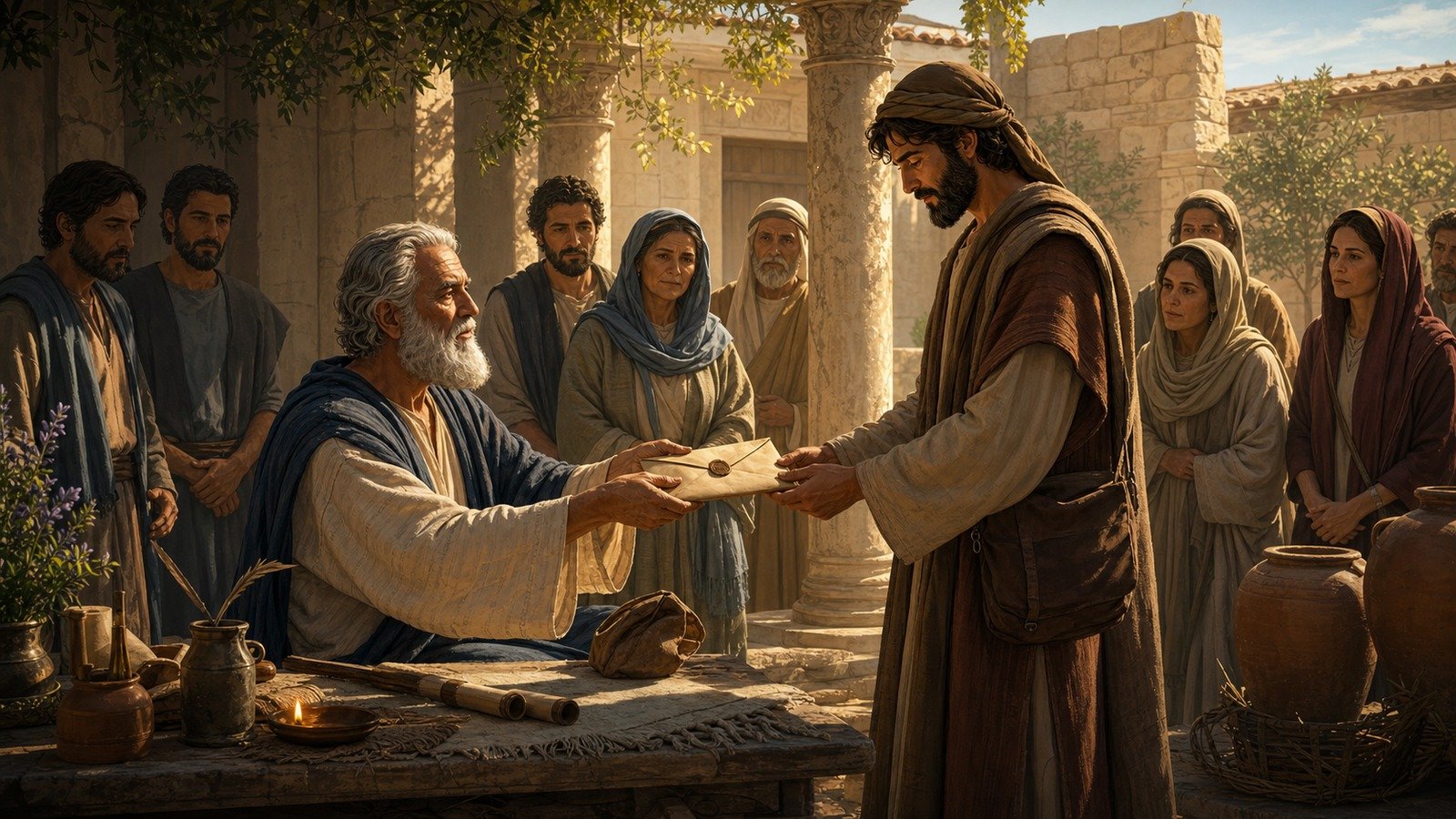
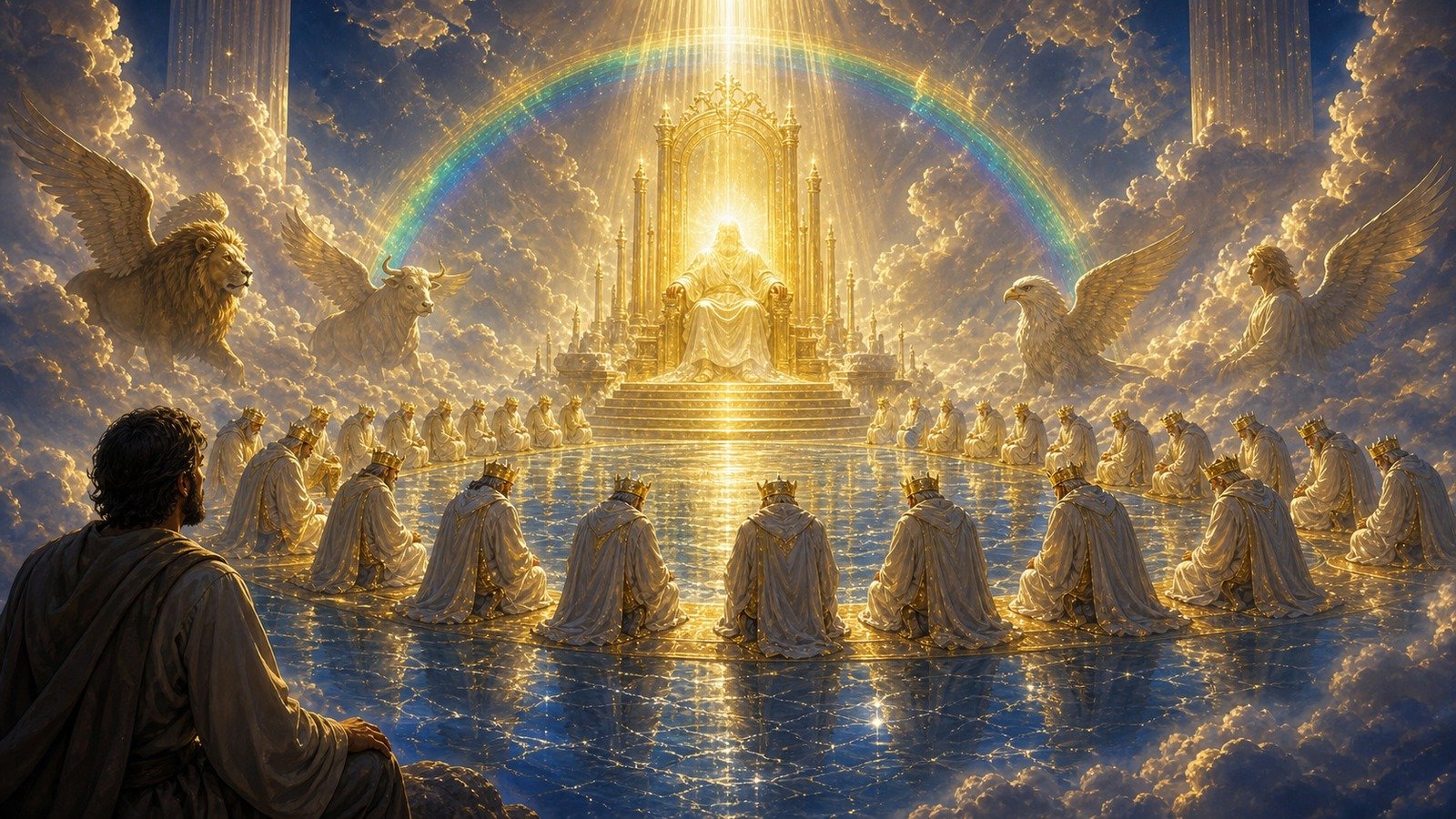
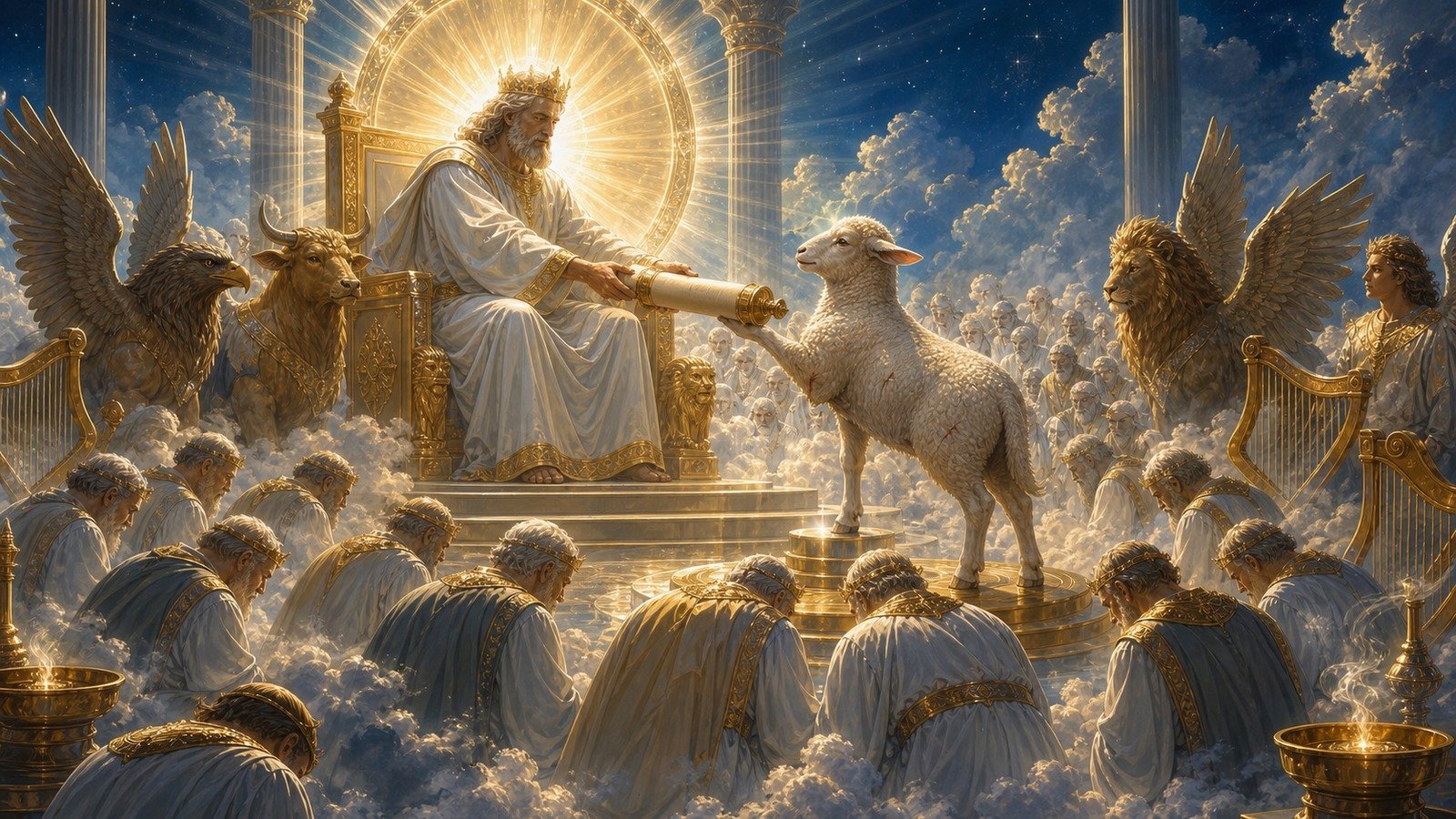
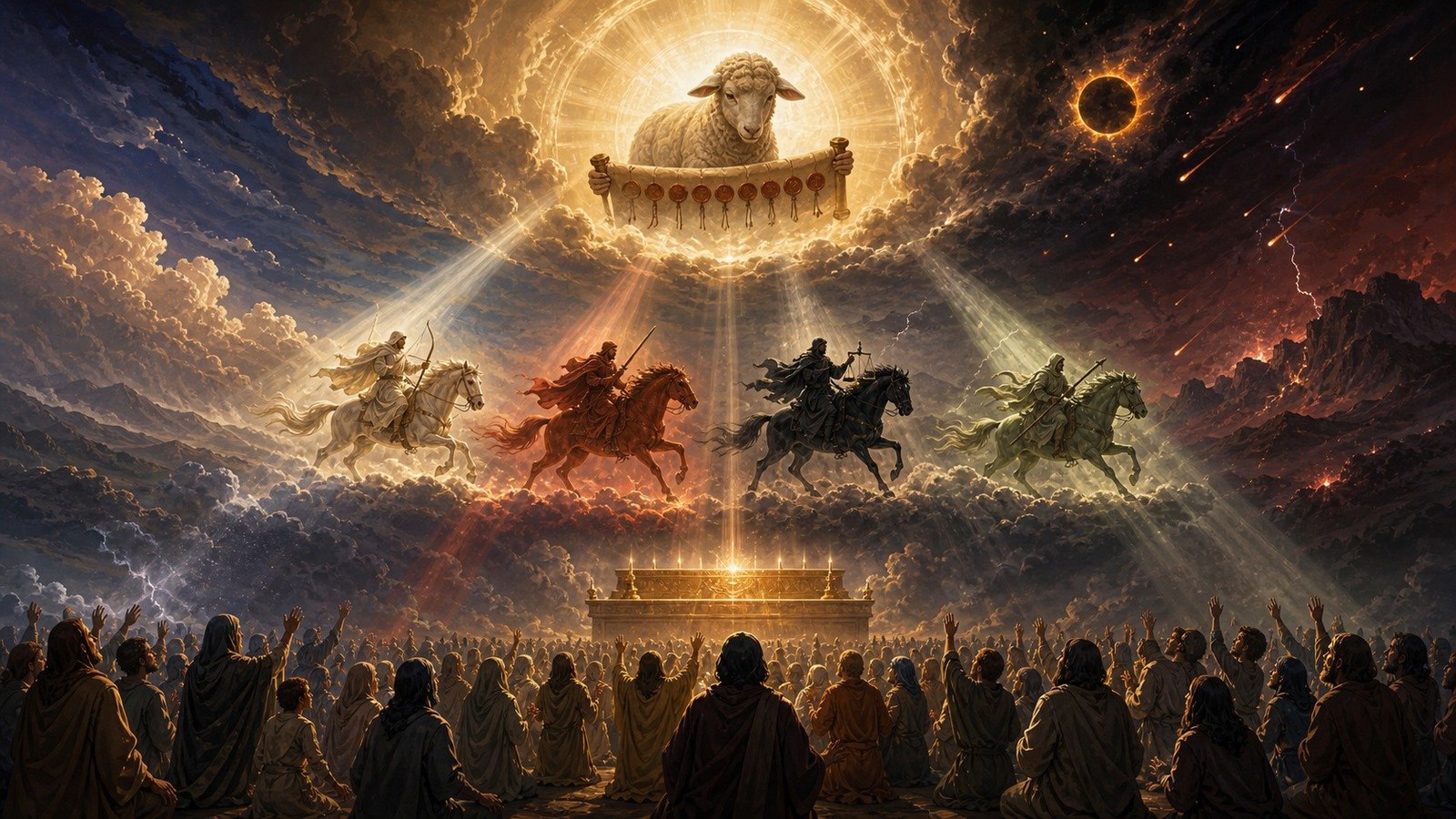
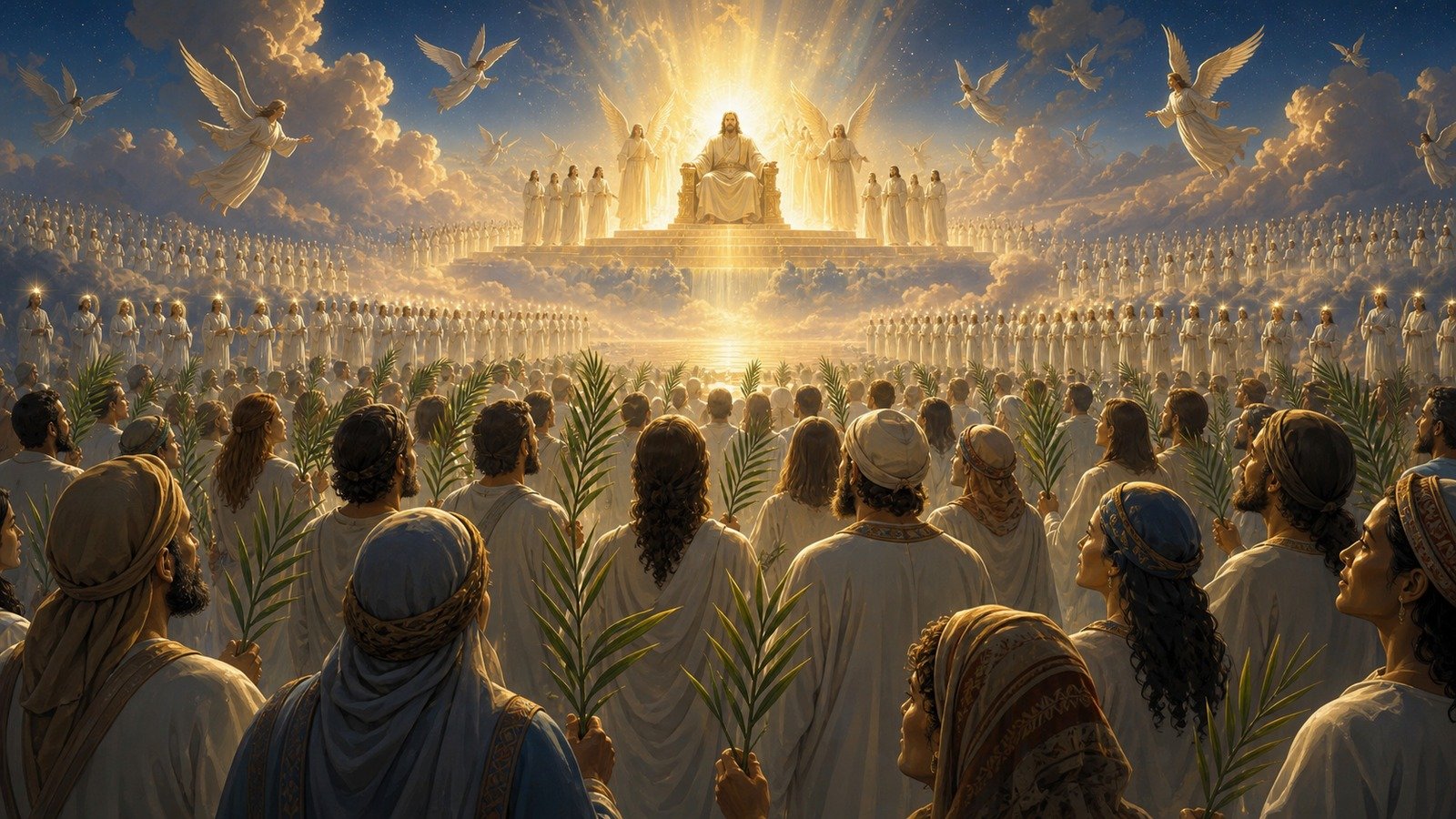
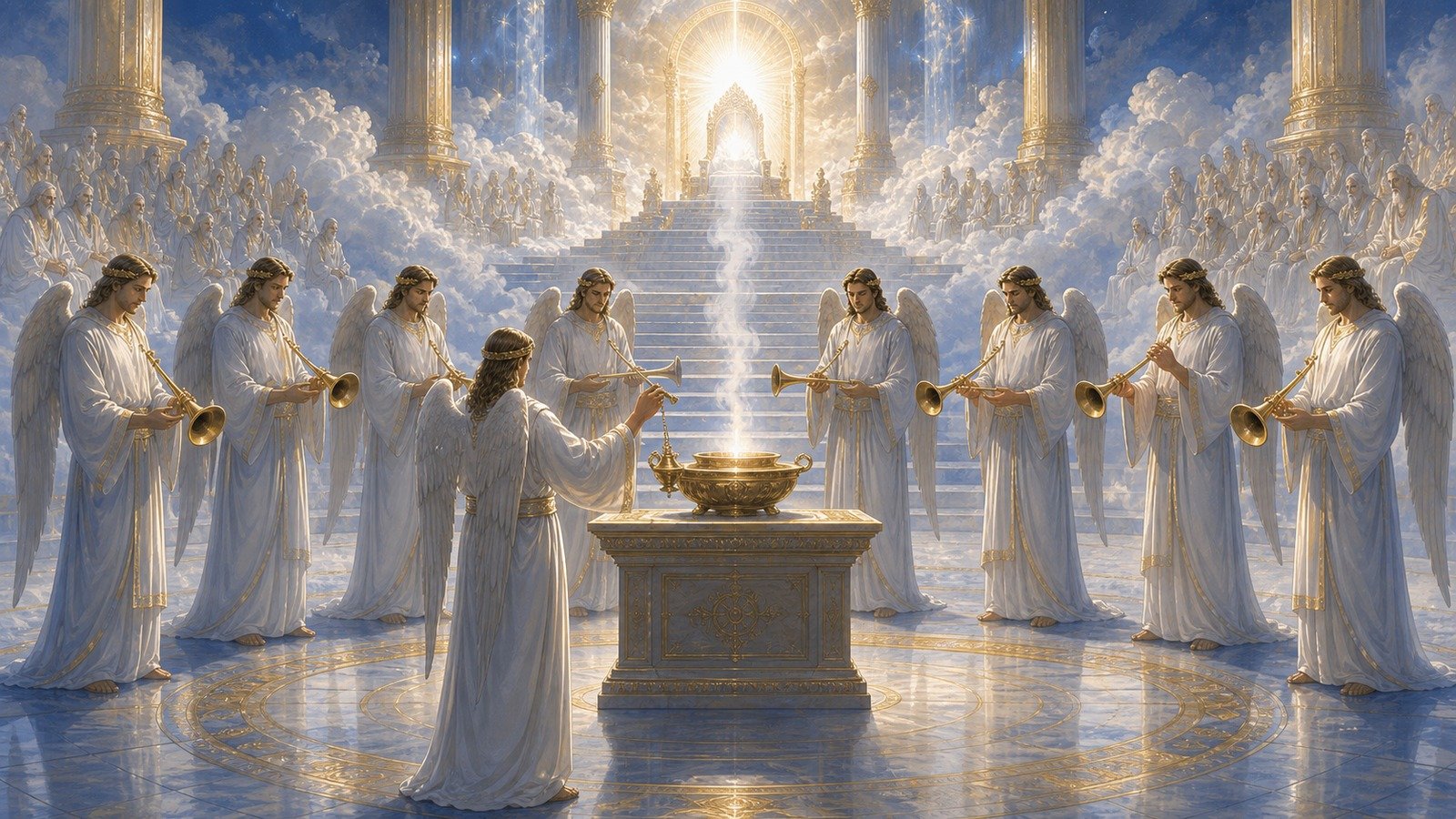
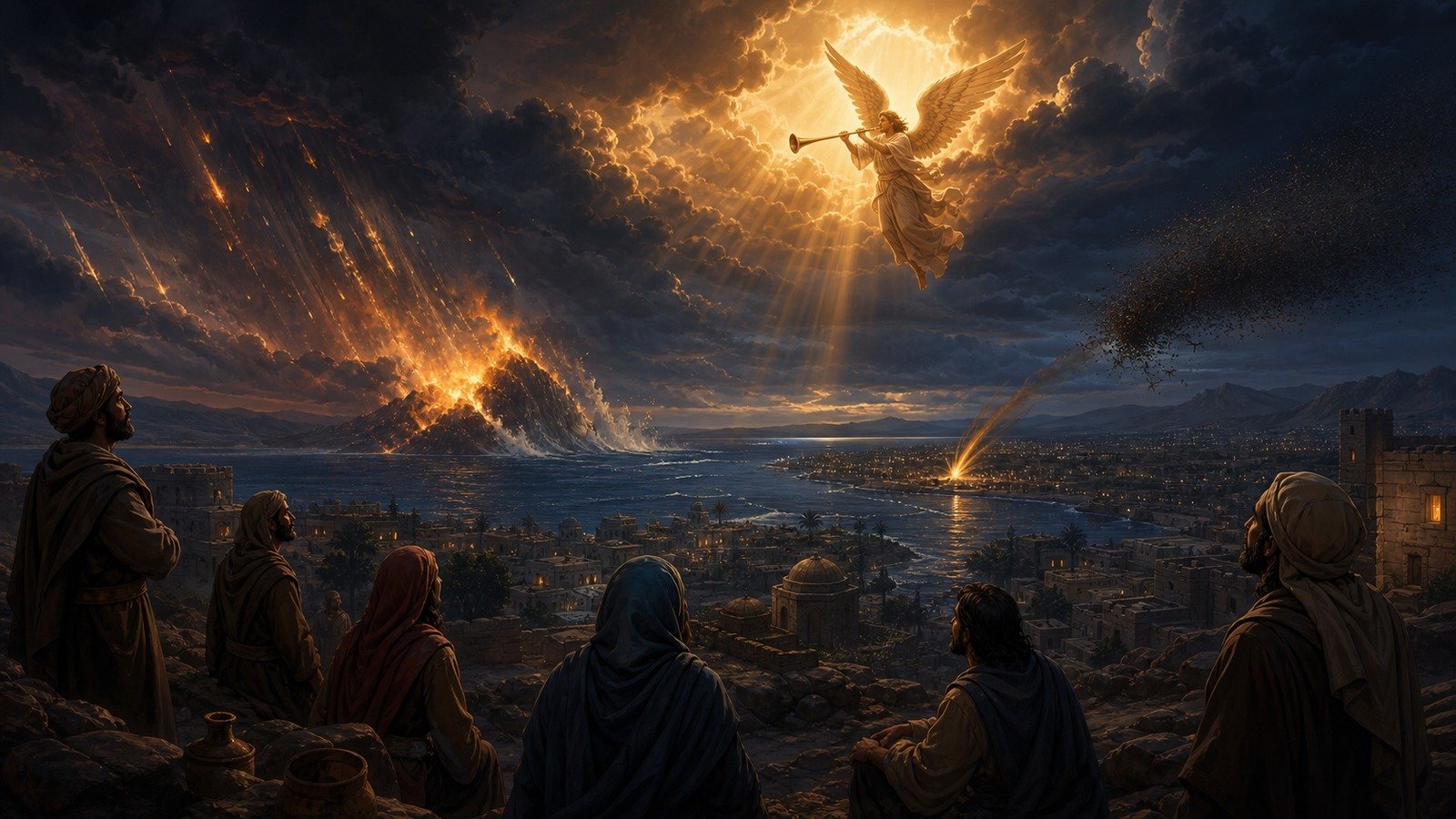
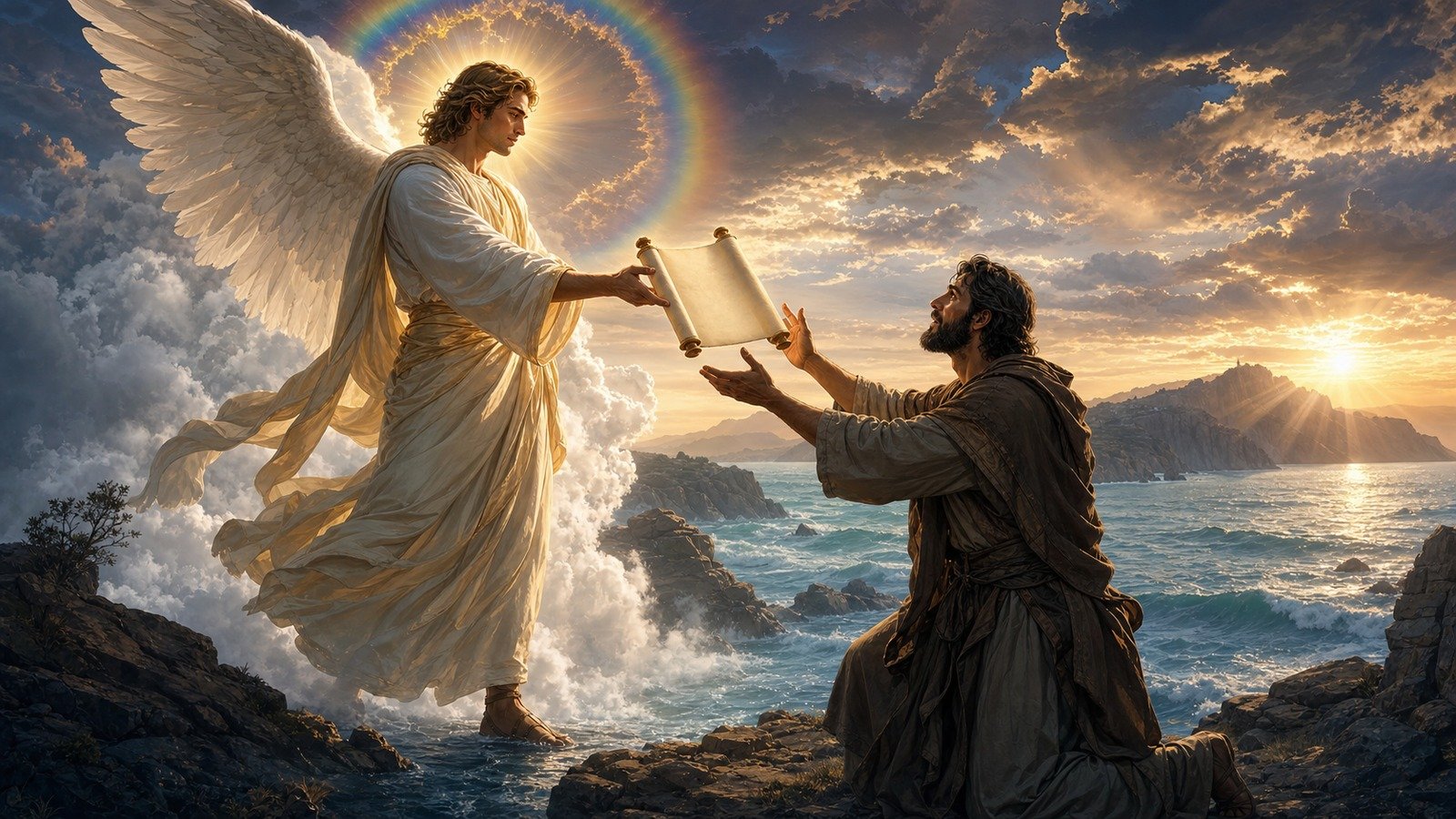
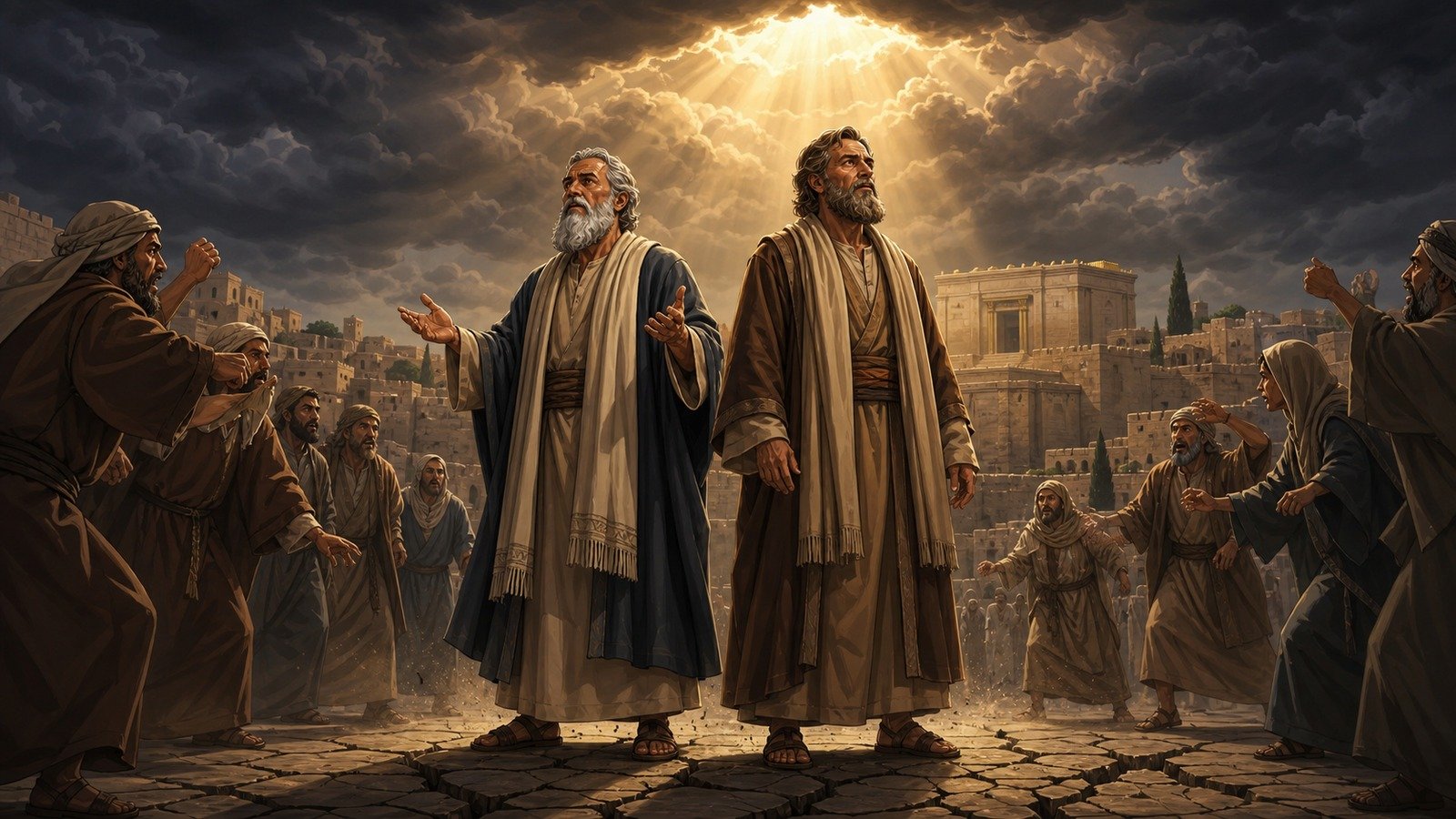
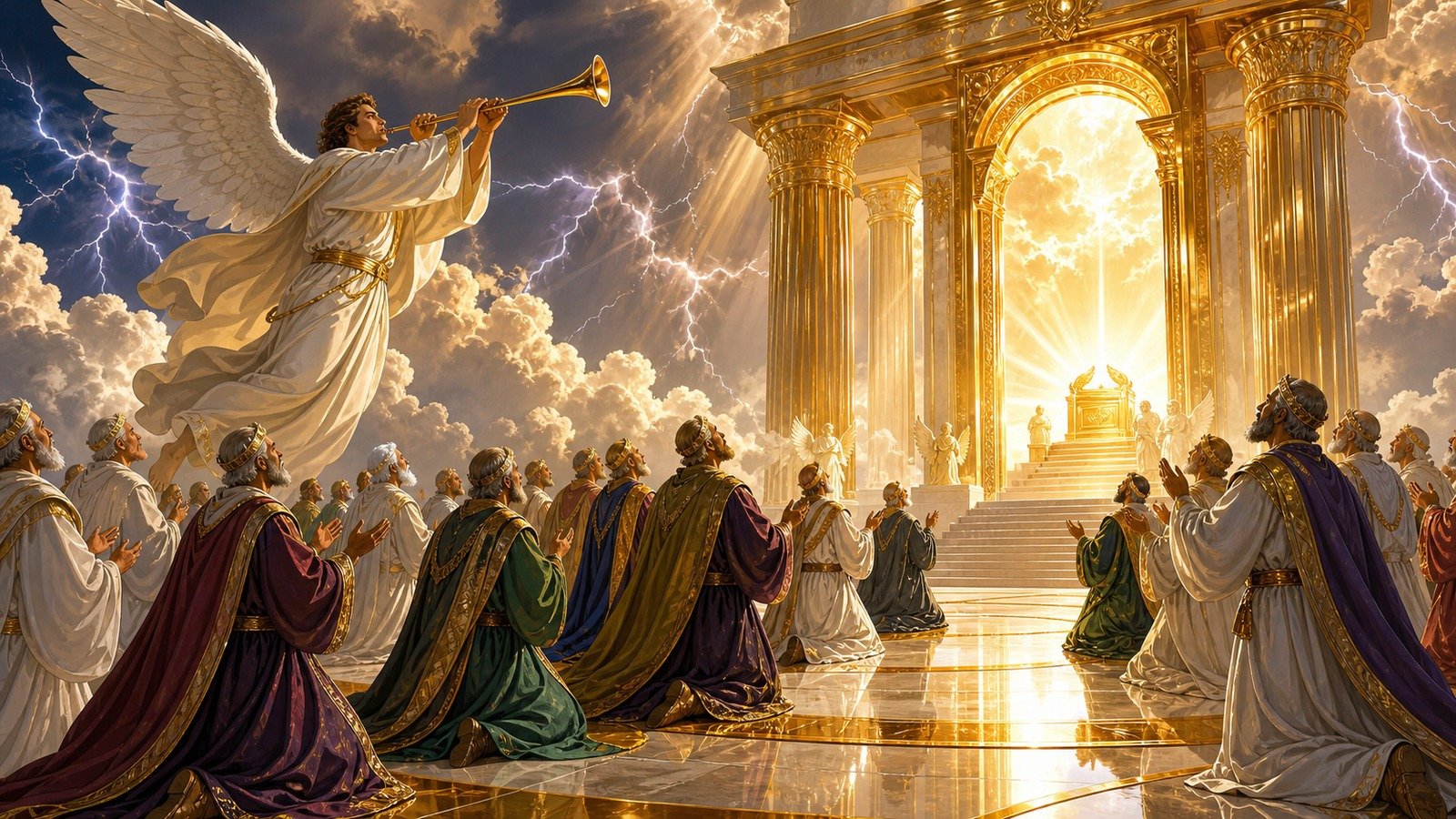
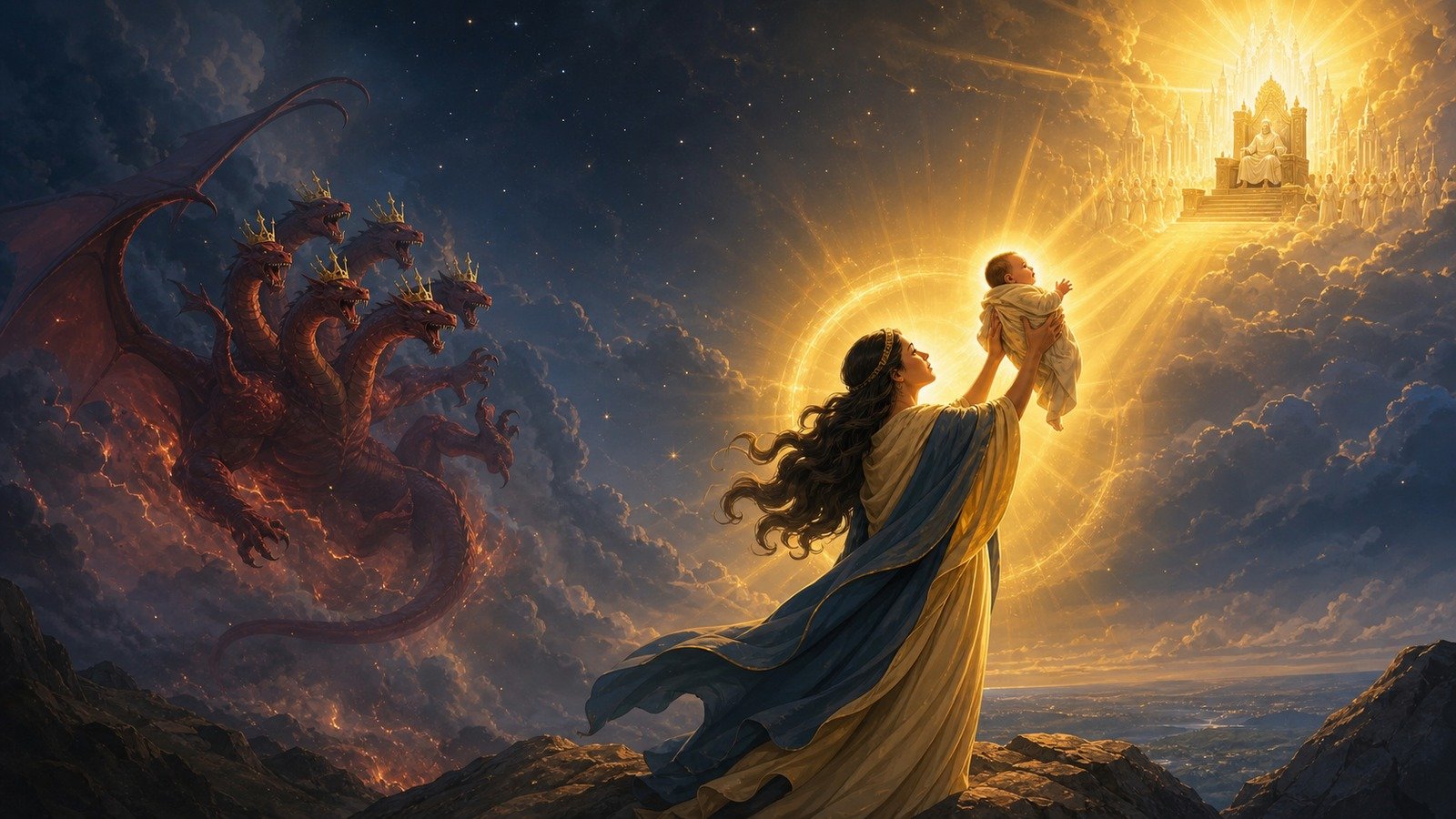
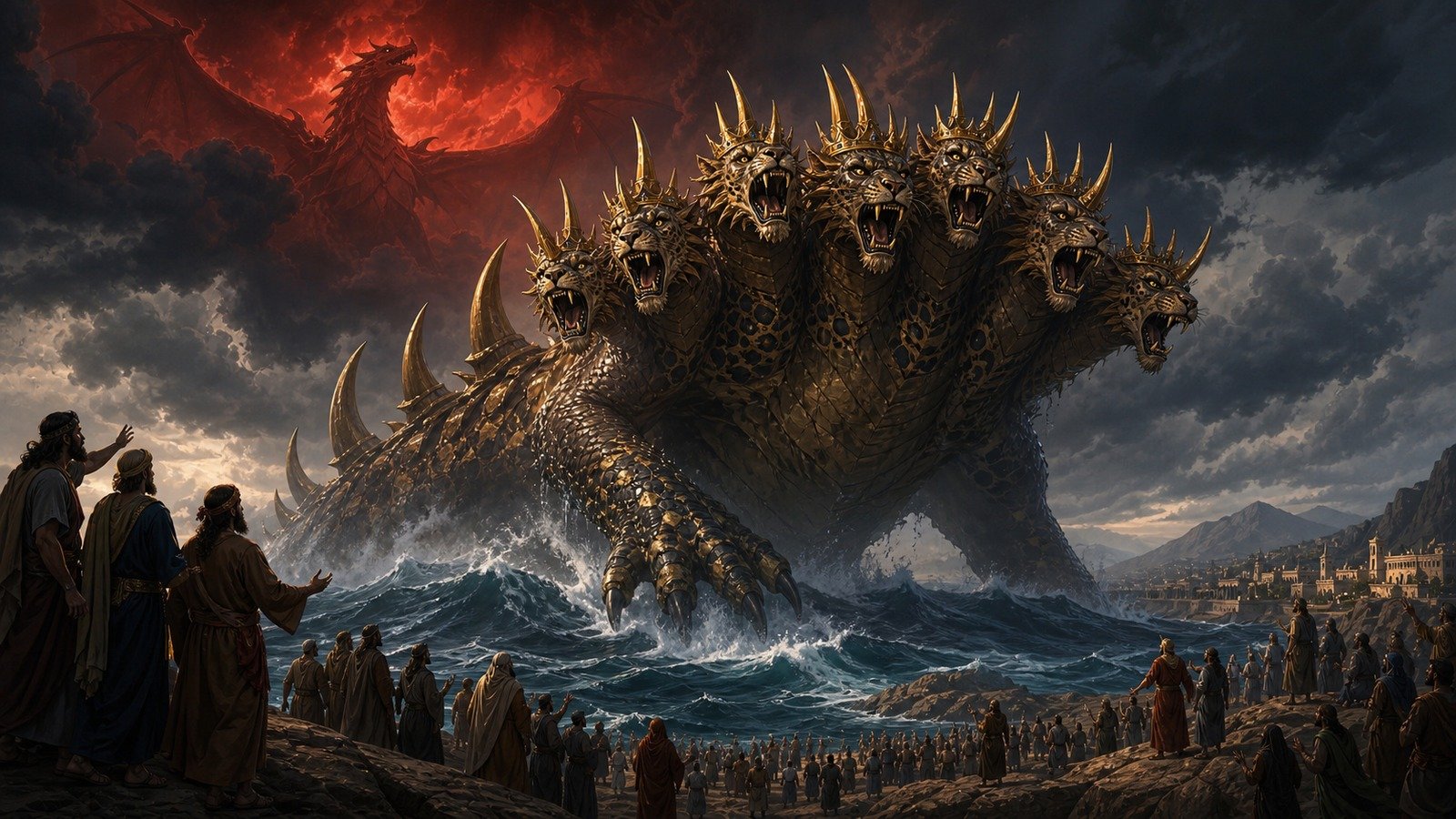
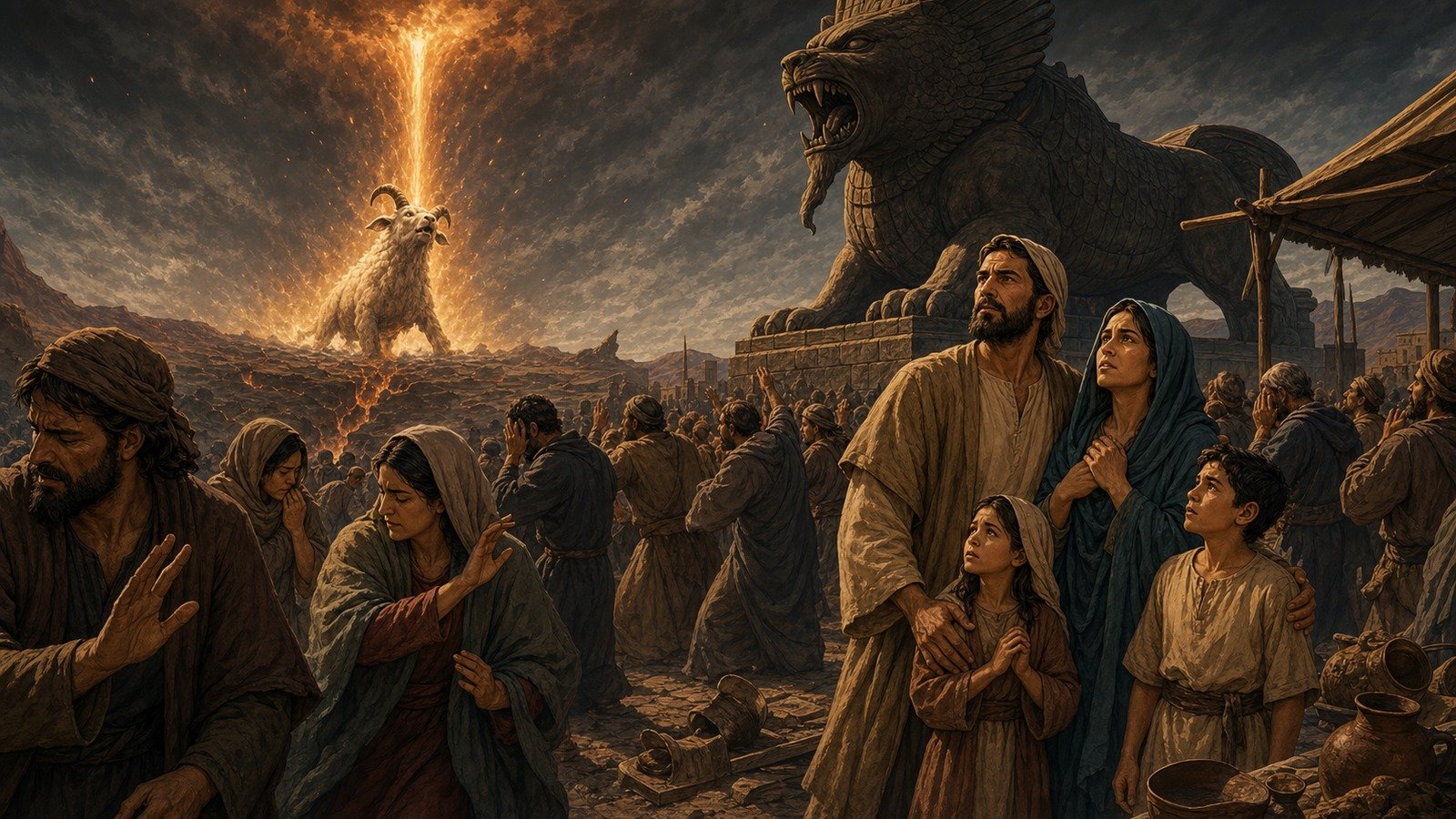
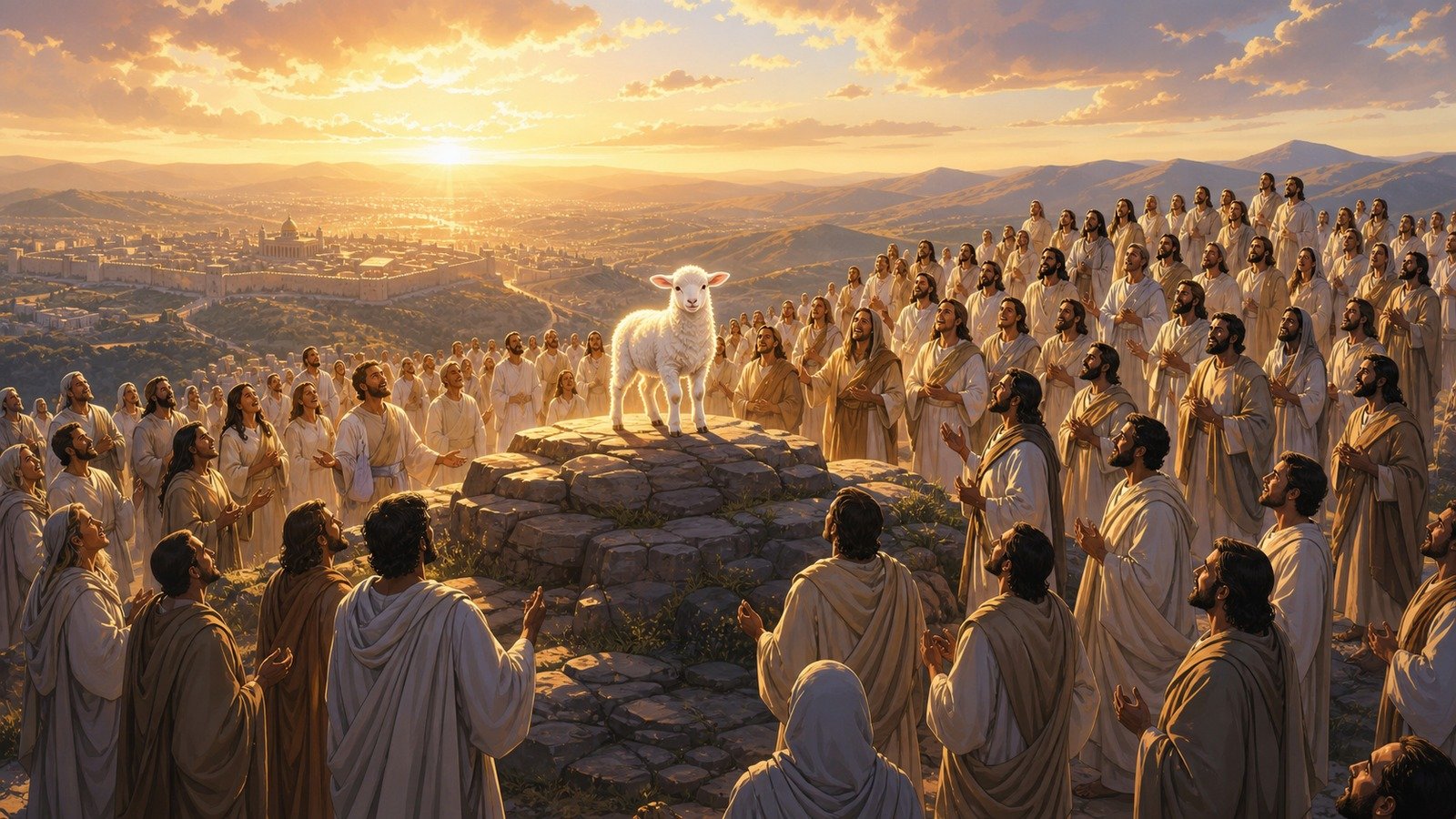
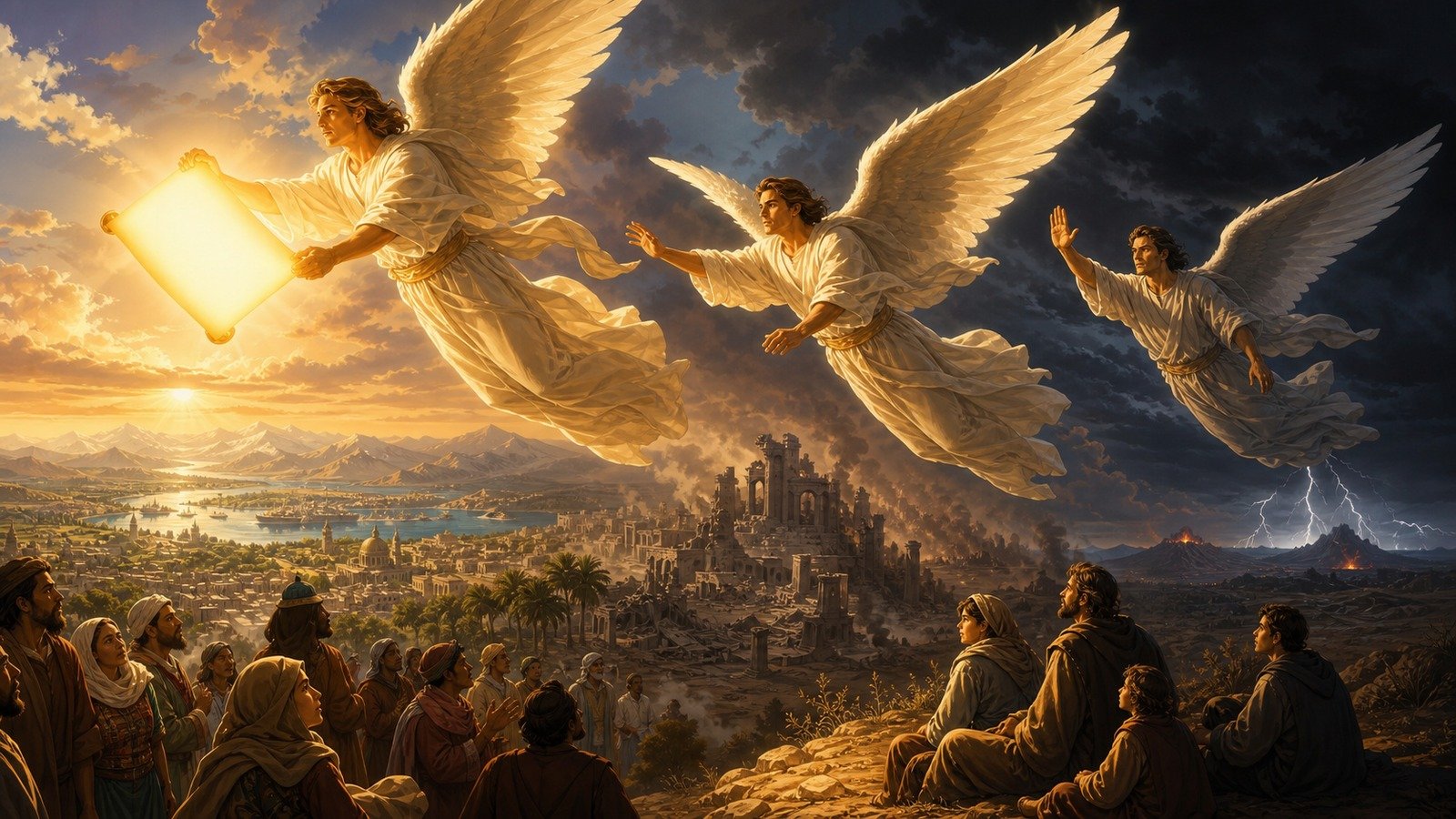
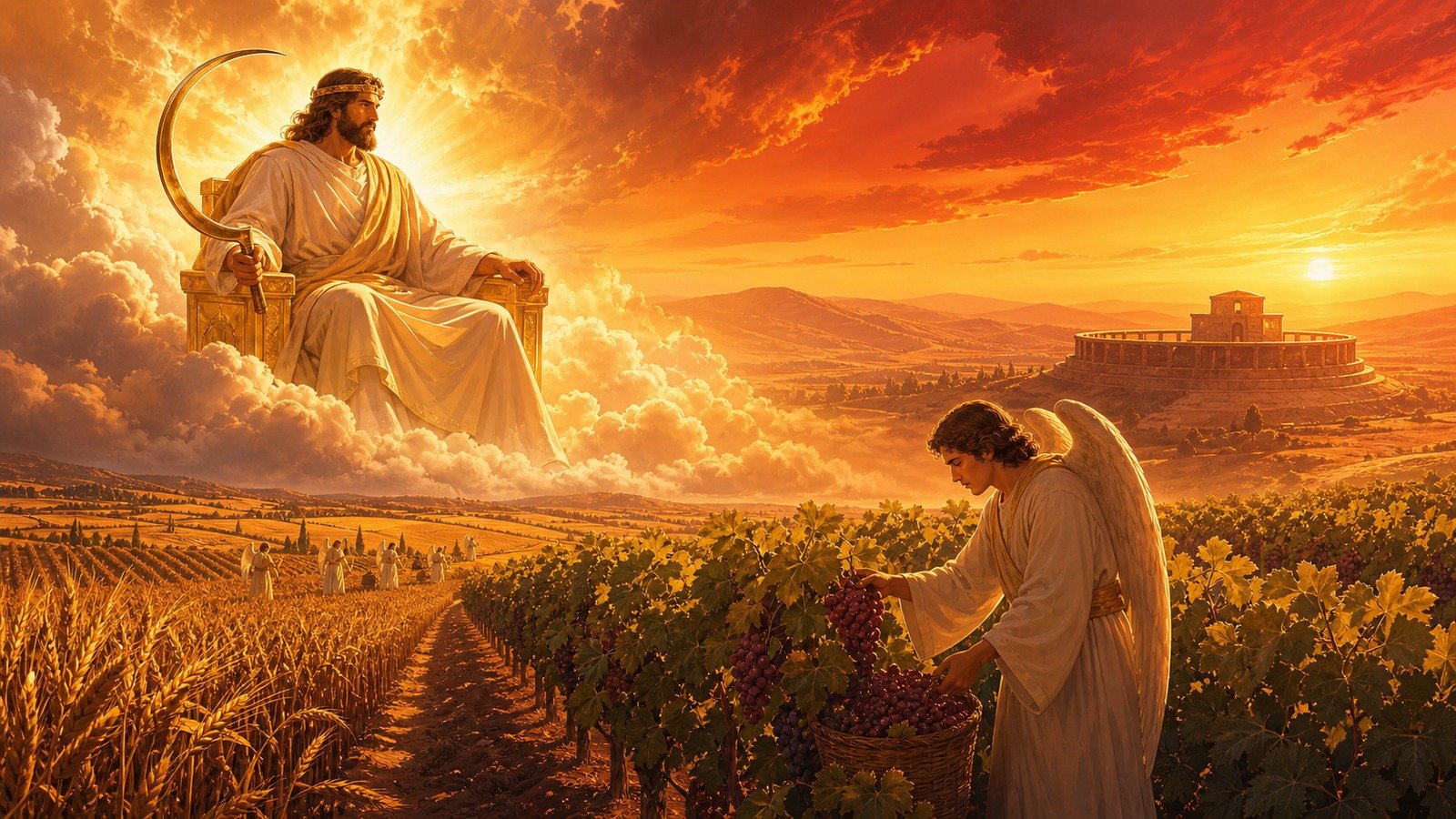
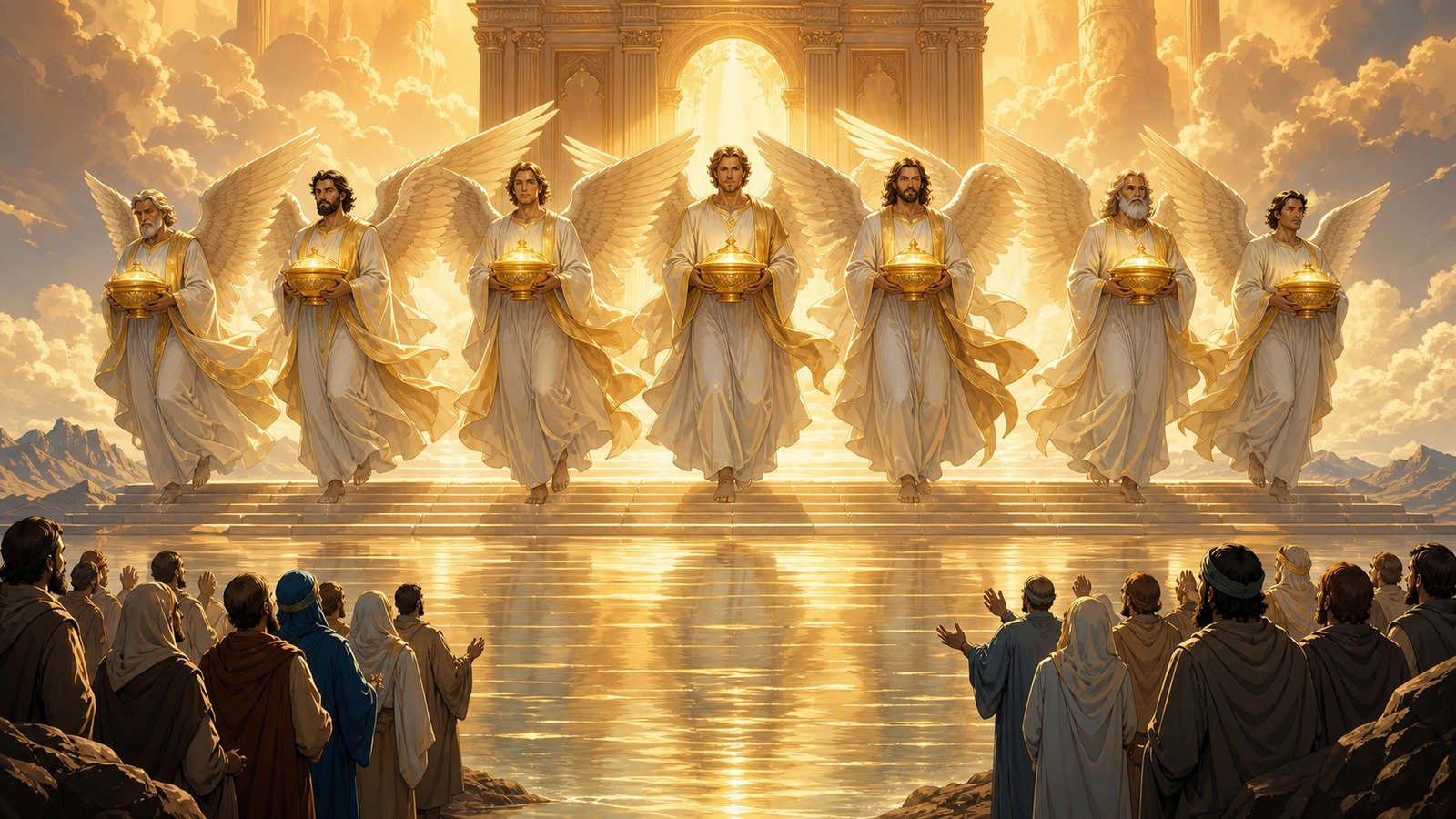
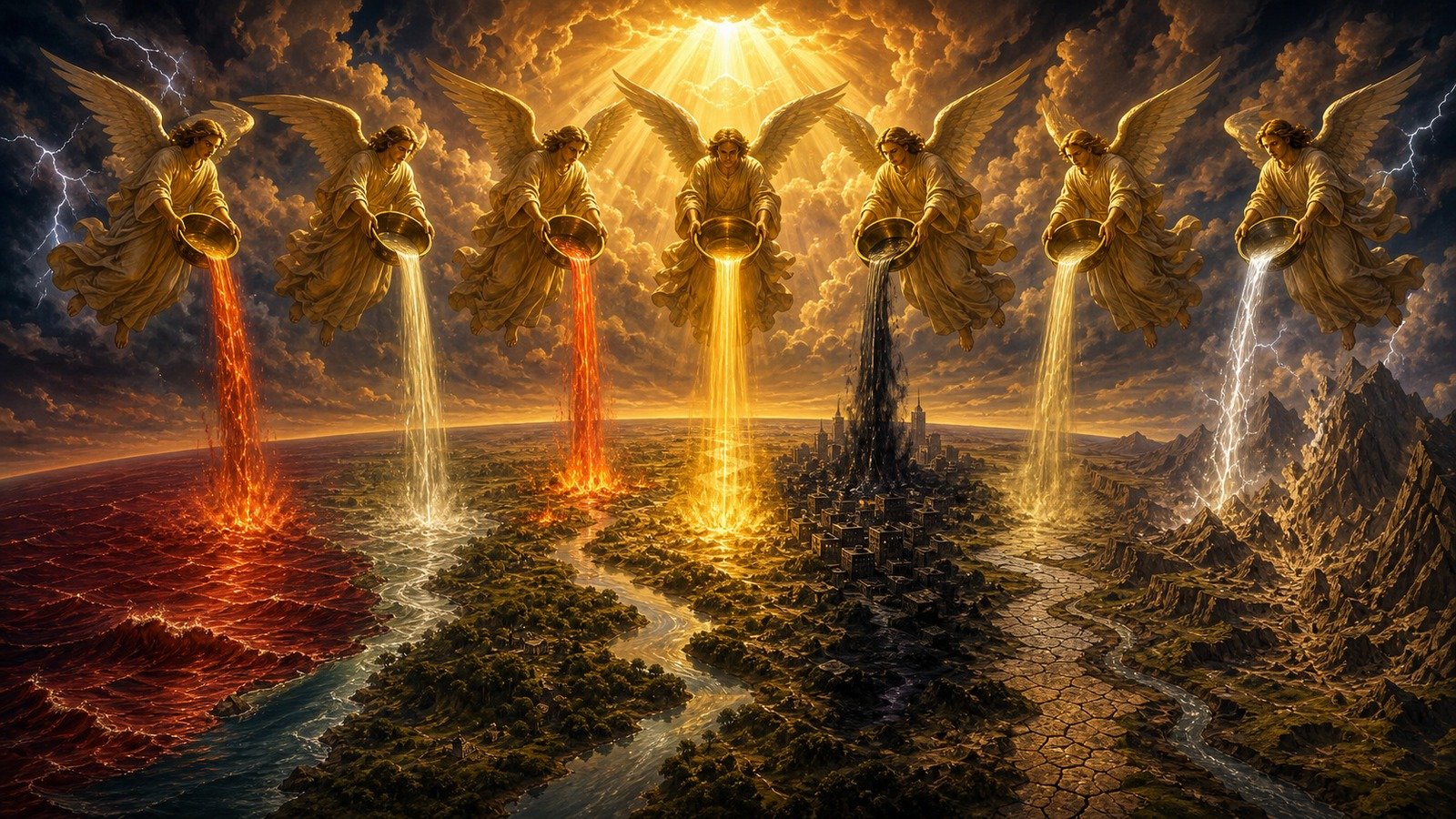
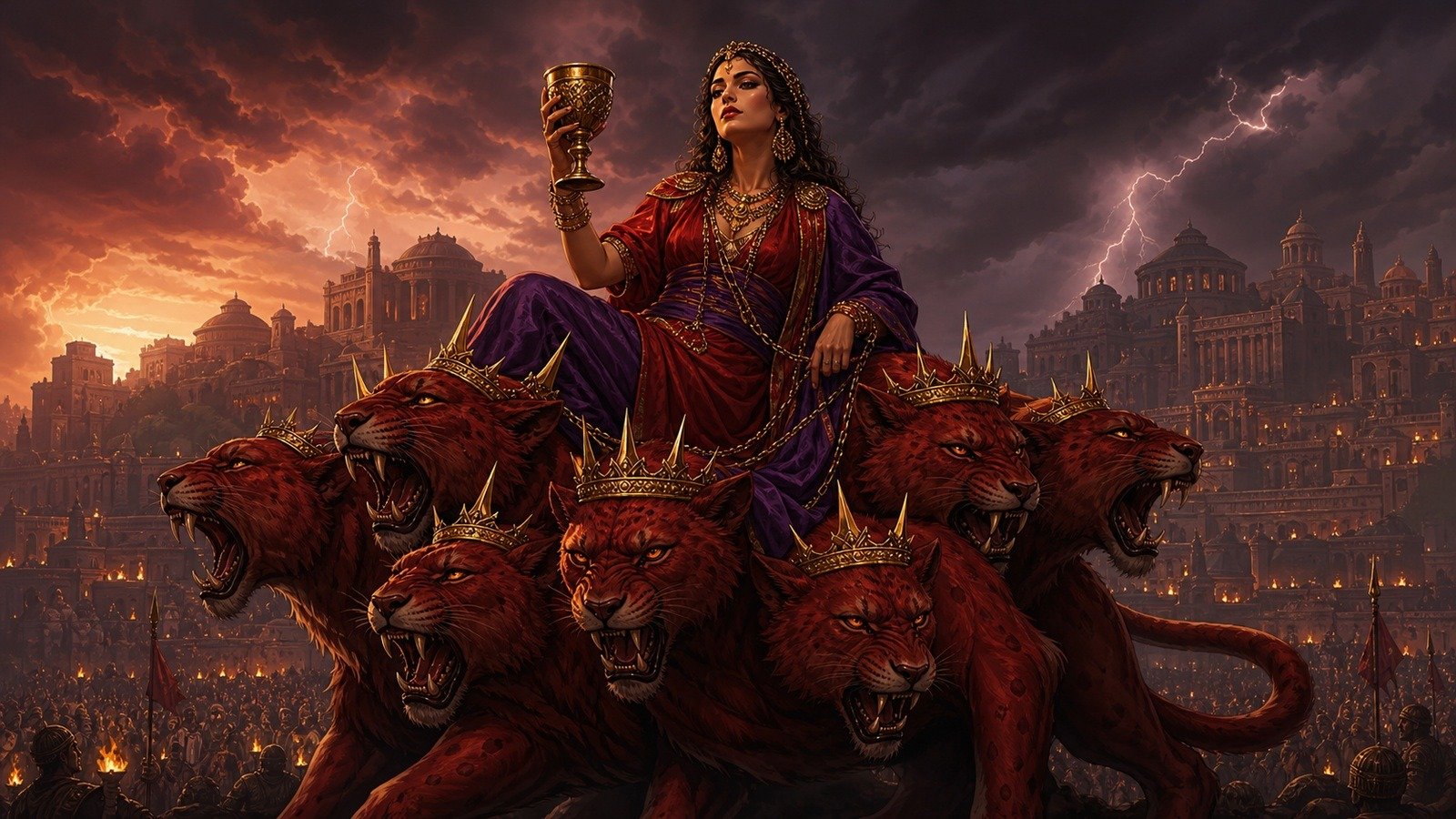
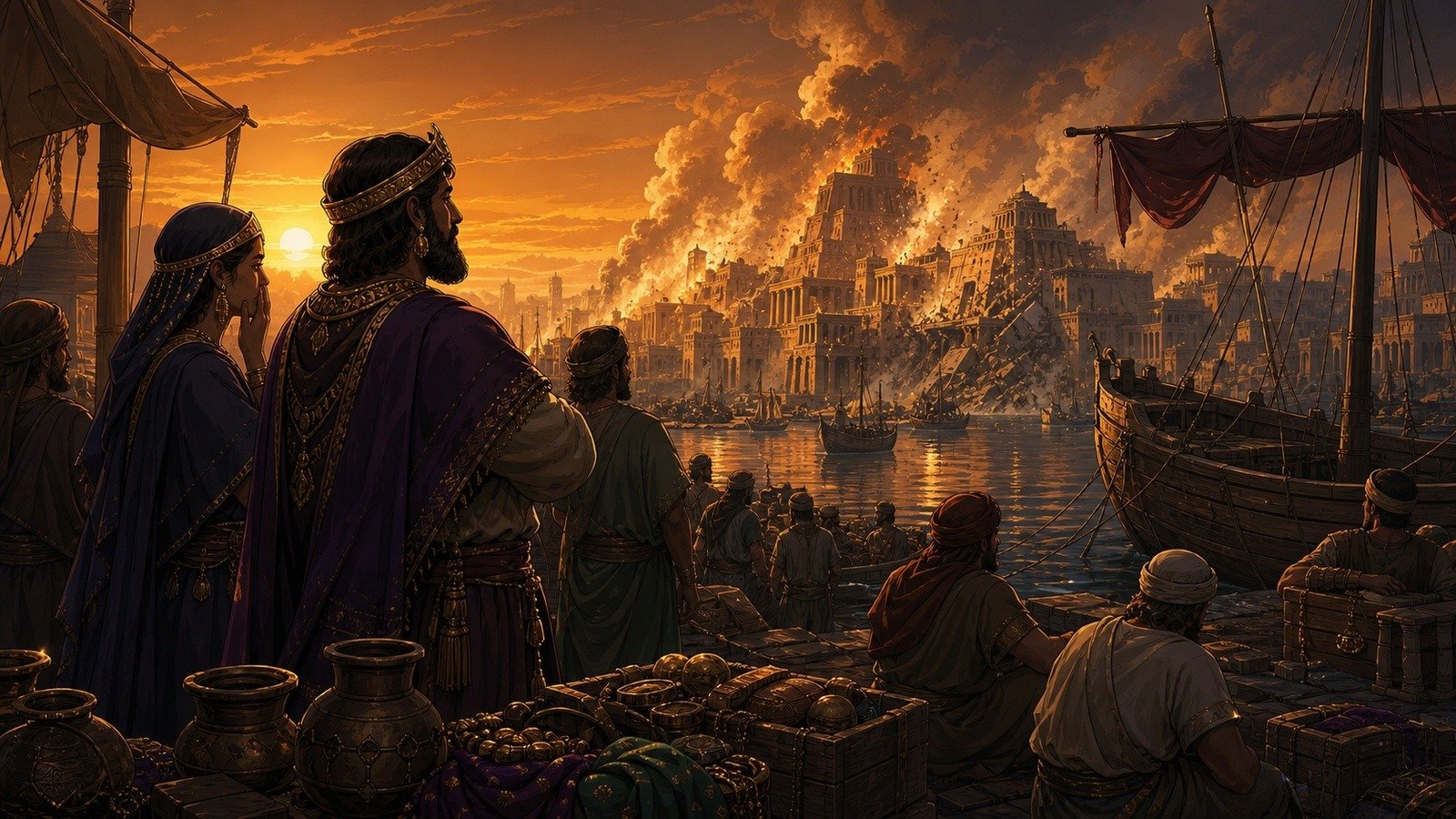
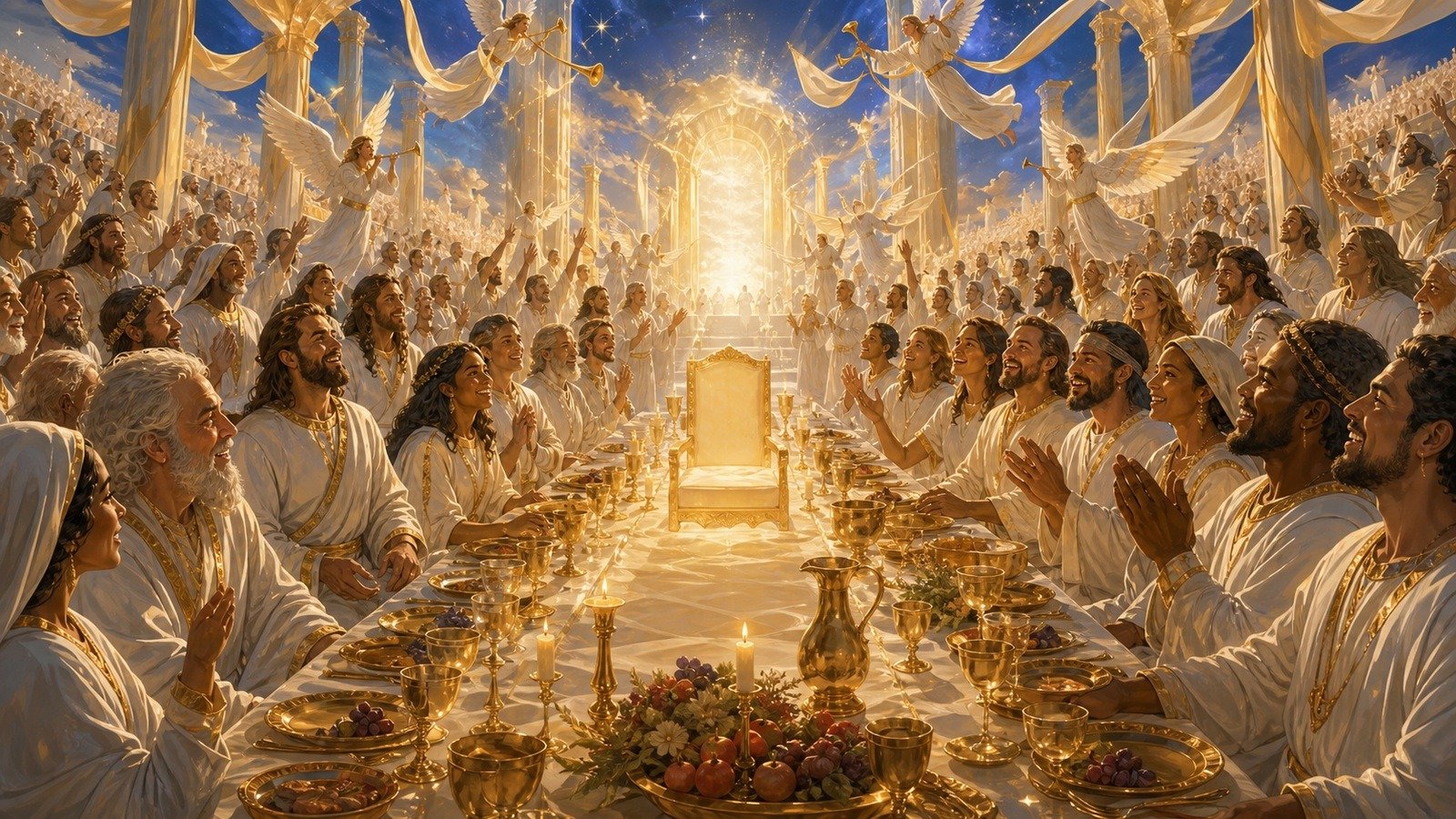
God creates light, sky, land, seas, vegetation, sun, moon, stars, sea creatures, birds and land animals across six days, then rests on the seventh. The account establishes God as sole creator of an ordered world and frames everything that follows in Scripture.
God forms the man from dust, breathes life into him, and places him in Eden to work and keep it, giving a single prohibition against eating from the tree of the knowledge of good and evil. This establishes humanity's original vocation and the one boundary the following chapter's temptation will target.
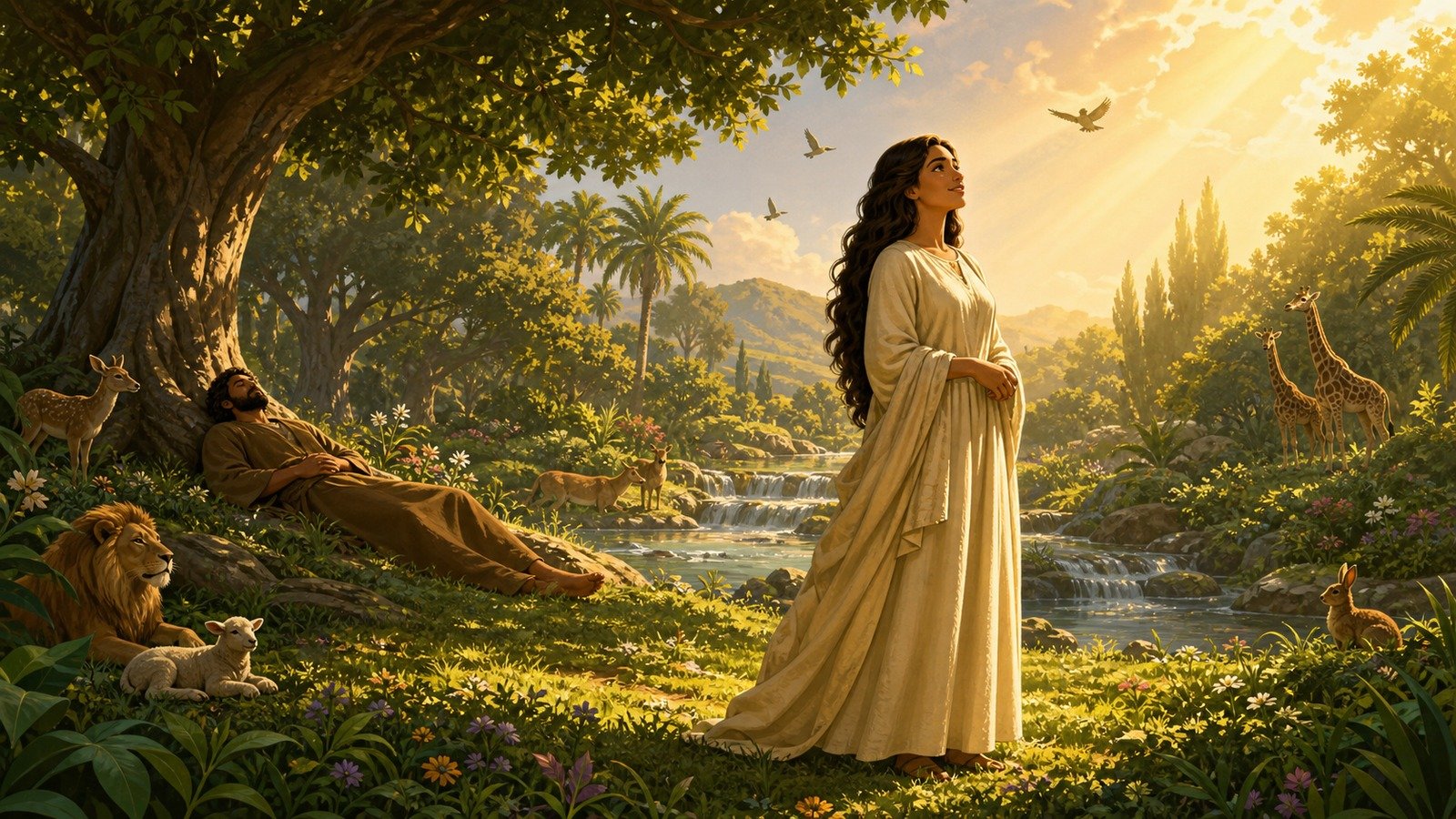
Finding no suitable companion among the animals Adam has named, God forms the woman from the man's side while he sleeps; the chapter closes by establishing marriage, "the two will become one flesh," as the pattern for human relationship going forward.
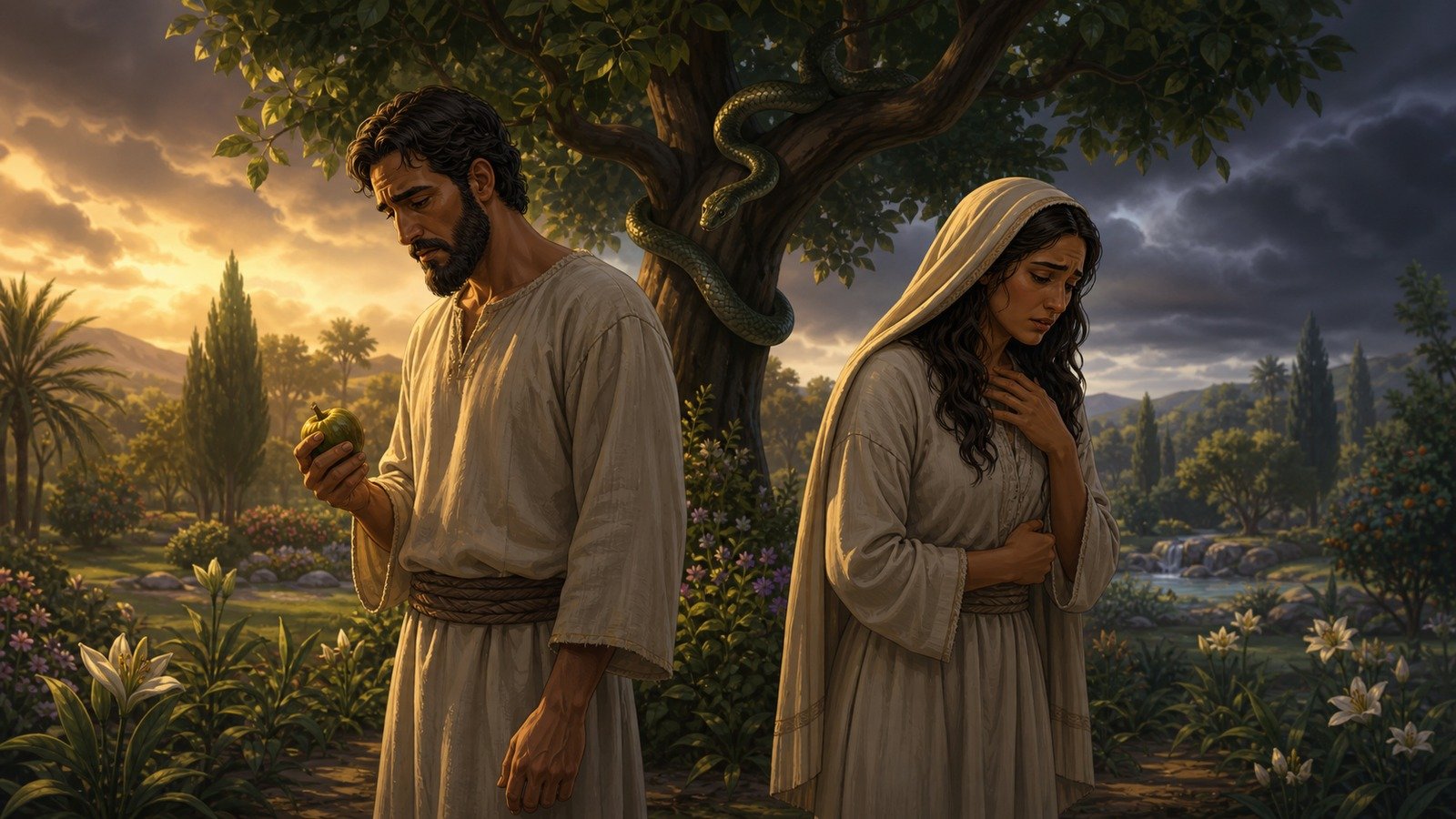
The serpent tempts Eve, she and Adam eat the forbidden fruit, and both are expelled from Eden under a curse touching the serpent, the woman and the ground itself. Genesis 3:15 promises a future descendant of the woman who will crush the serpent, a line Christian readers have long taken as the Bible's first messianic promise.
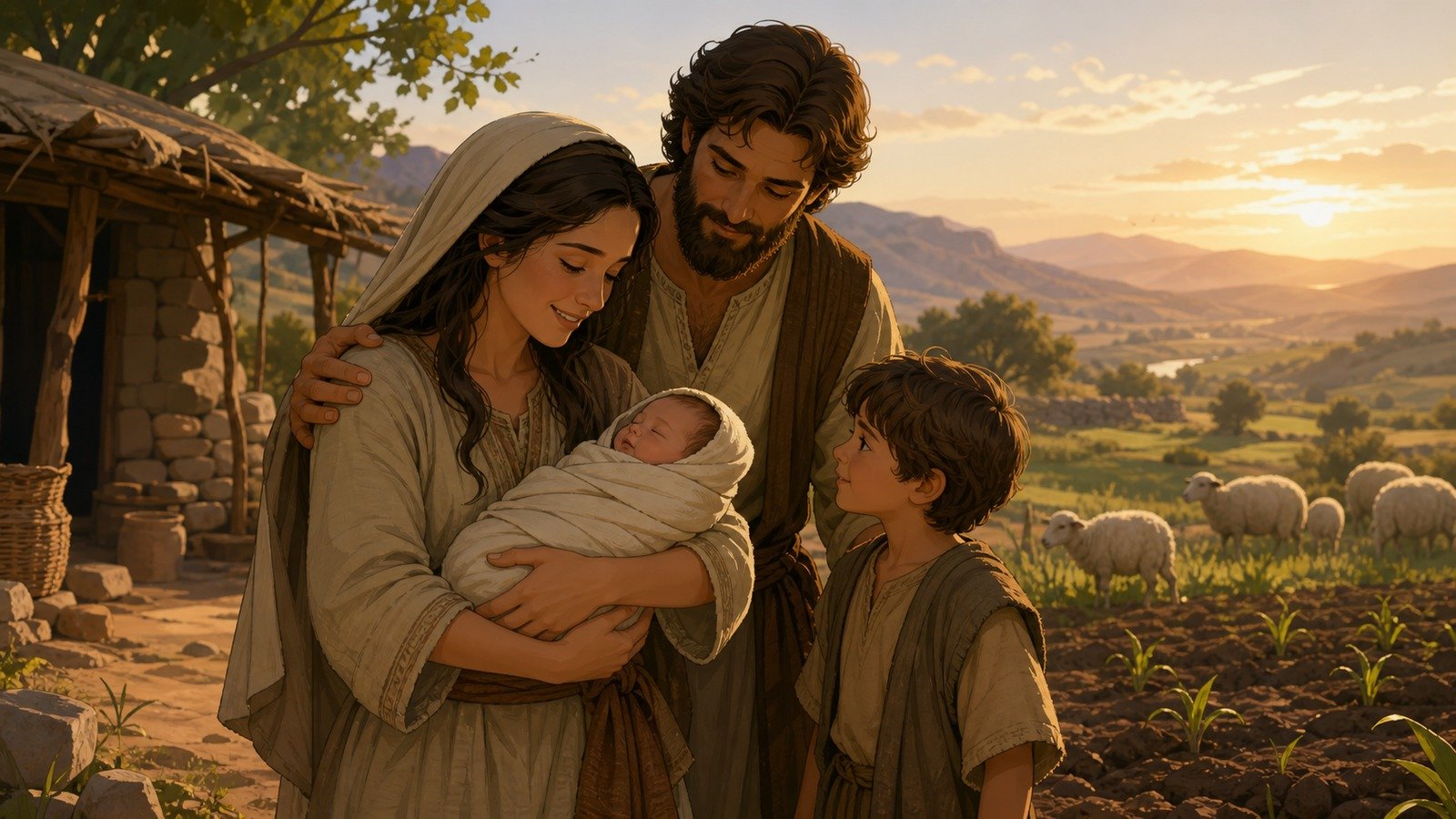
Adam and Eve's first two sons are born after their expulsion from Eden, Cain a farmer and Abel a shepherd, setting up the sibling rivalry the rest of the chapter turns on.
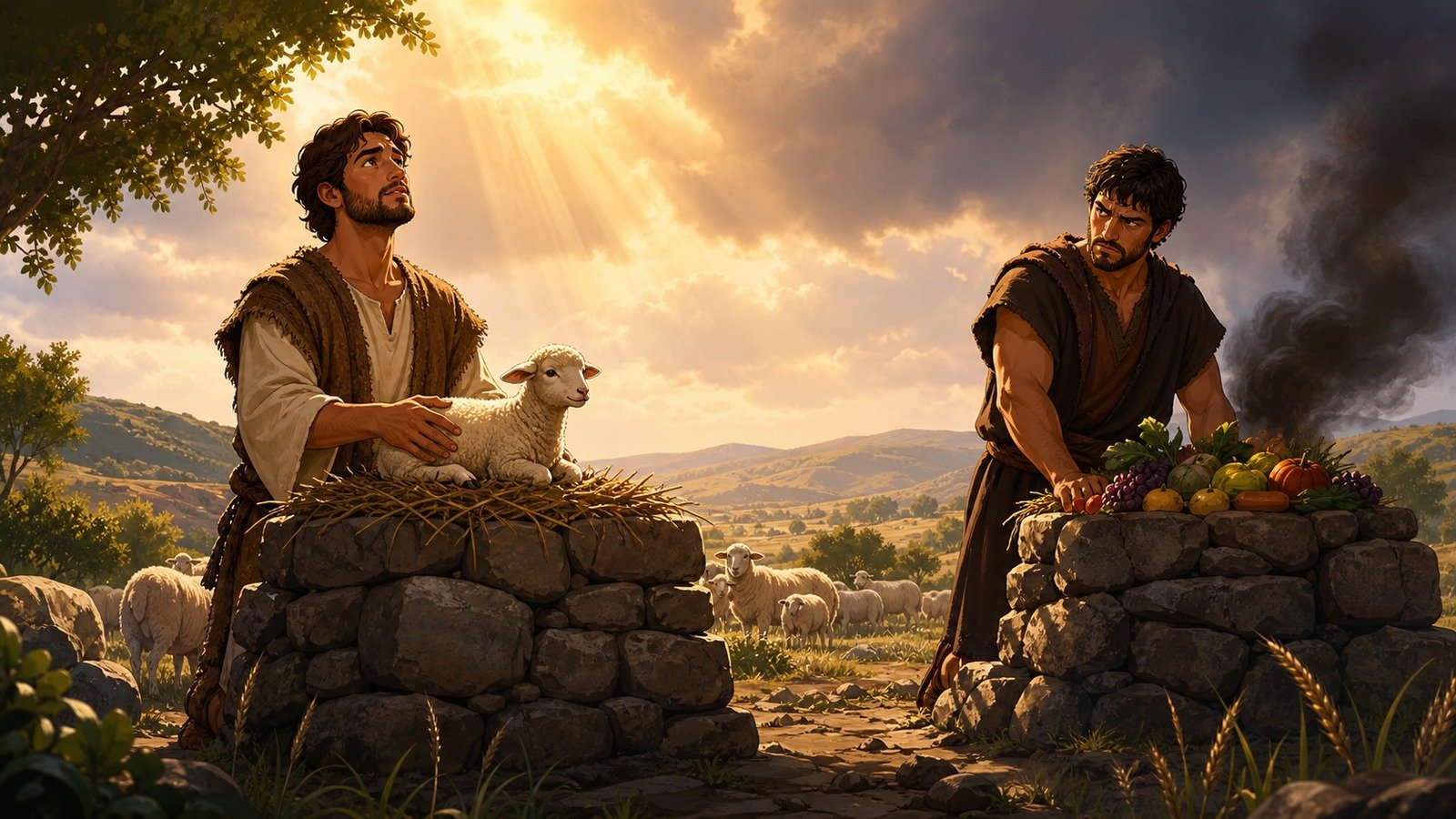
Cain and Abel each bring an offering to God; Abel's, from the firstborn of his flock, is accepted, while Cain's is not, and God warns Cain directly that "sin is crouching at your door" as his anger builds.
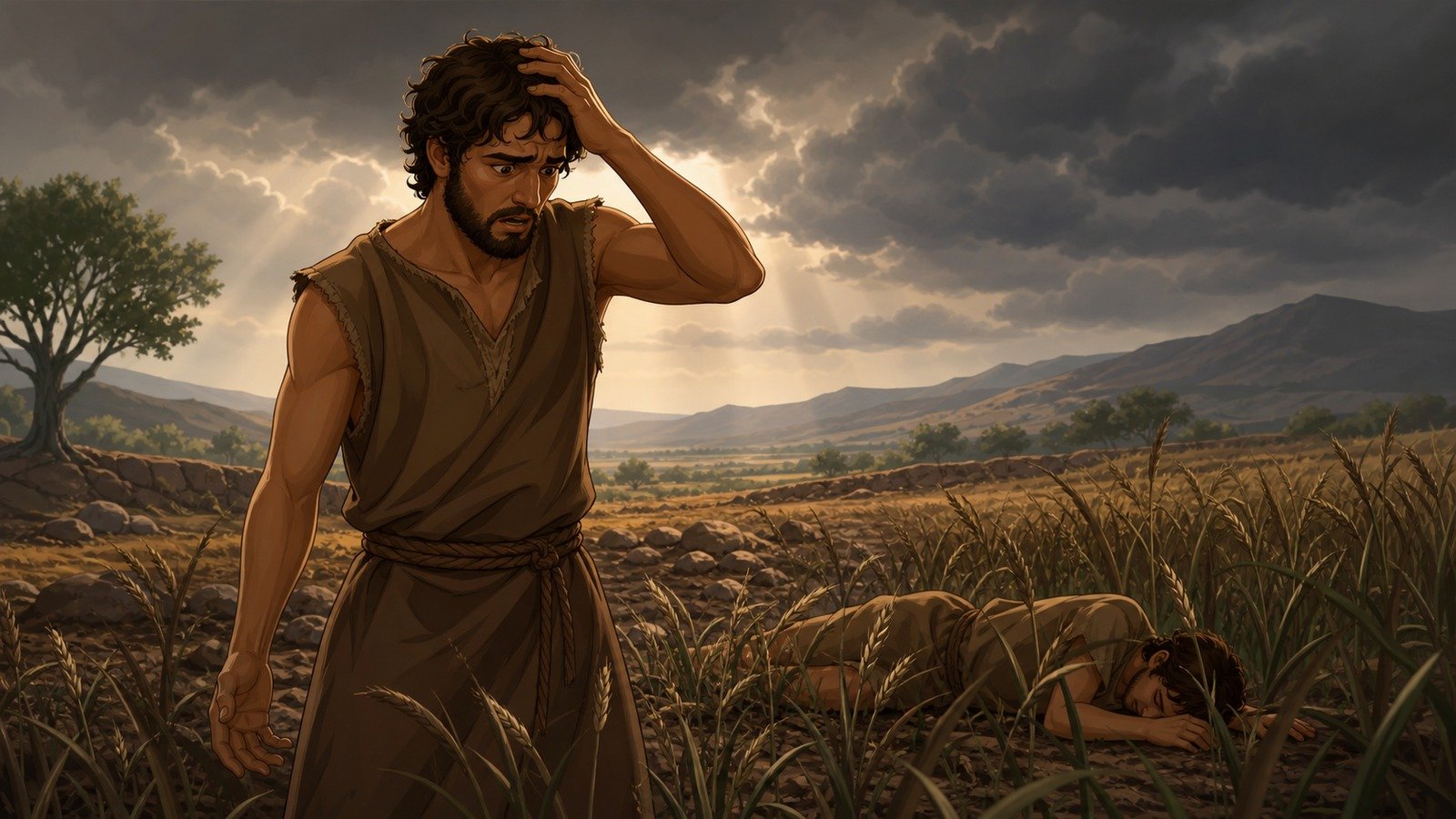
Cain kills Abel in the field and is banished, marked, and sent to wander east of Eden. It is the first death and the first murder recorded in Scripture.
Ten generations are traced from Adam to Noah, recording each patriarch's lifespan; this list supplies the raw data later chronologists used to construct calendar dates for the primeval period.
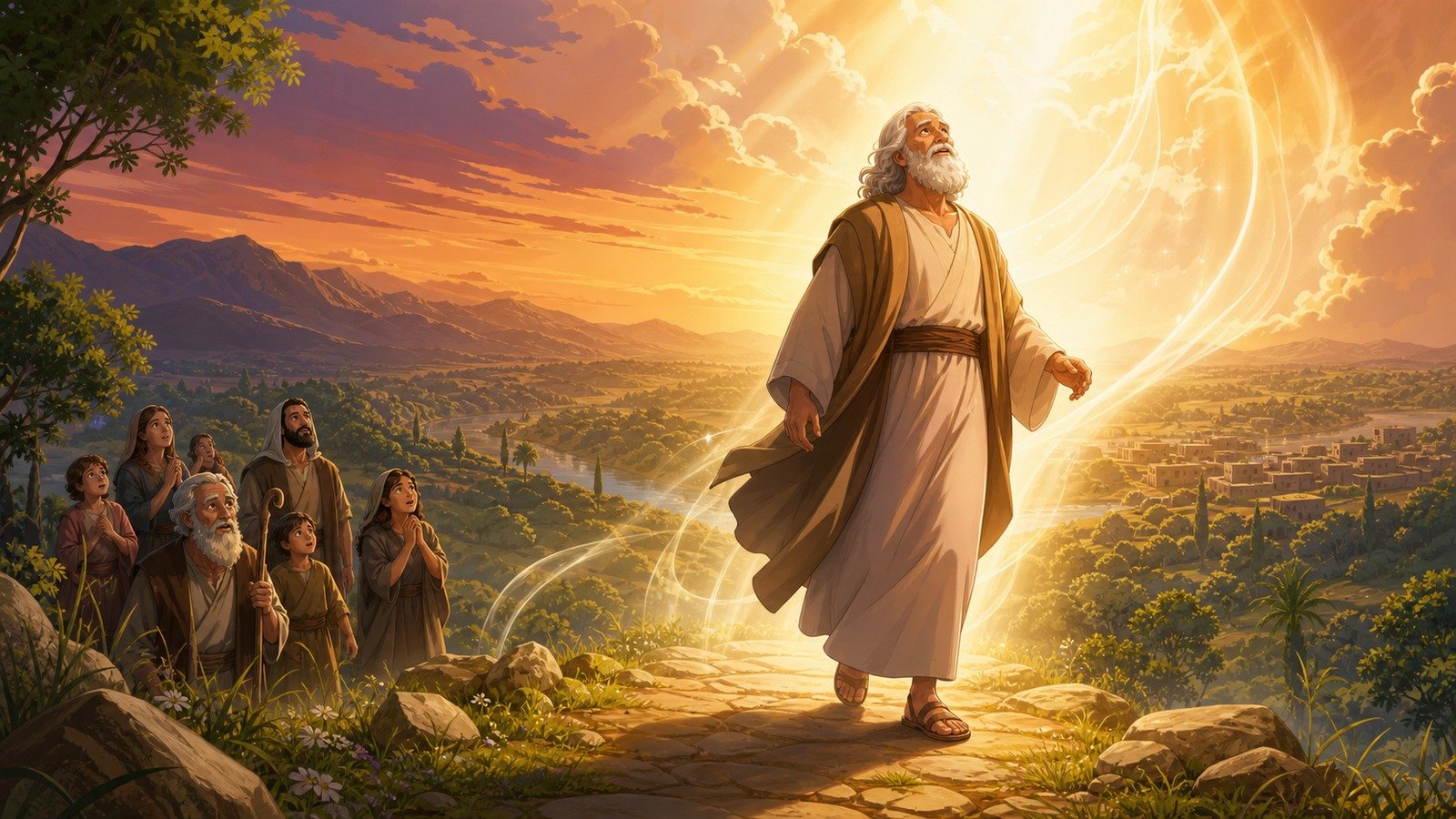
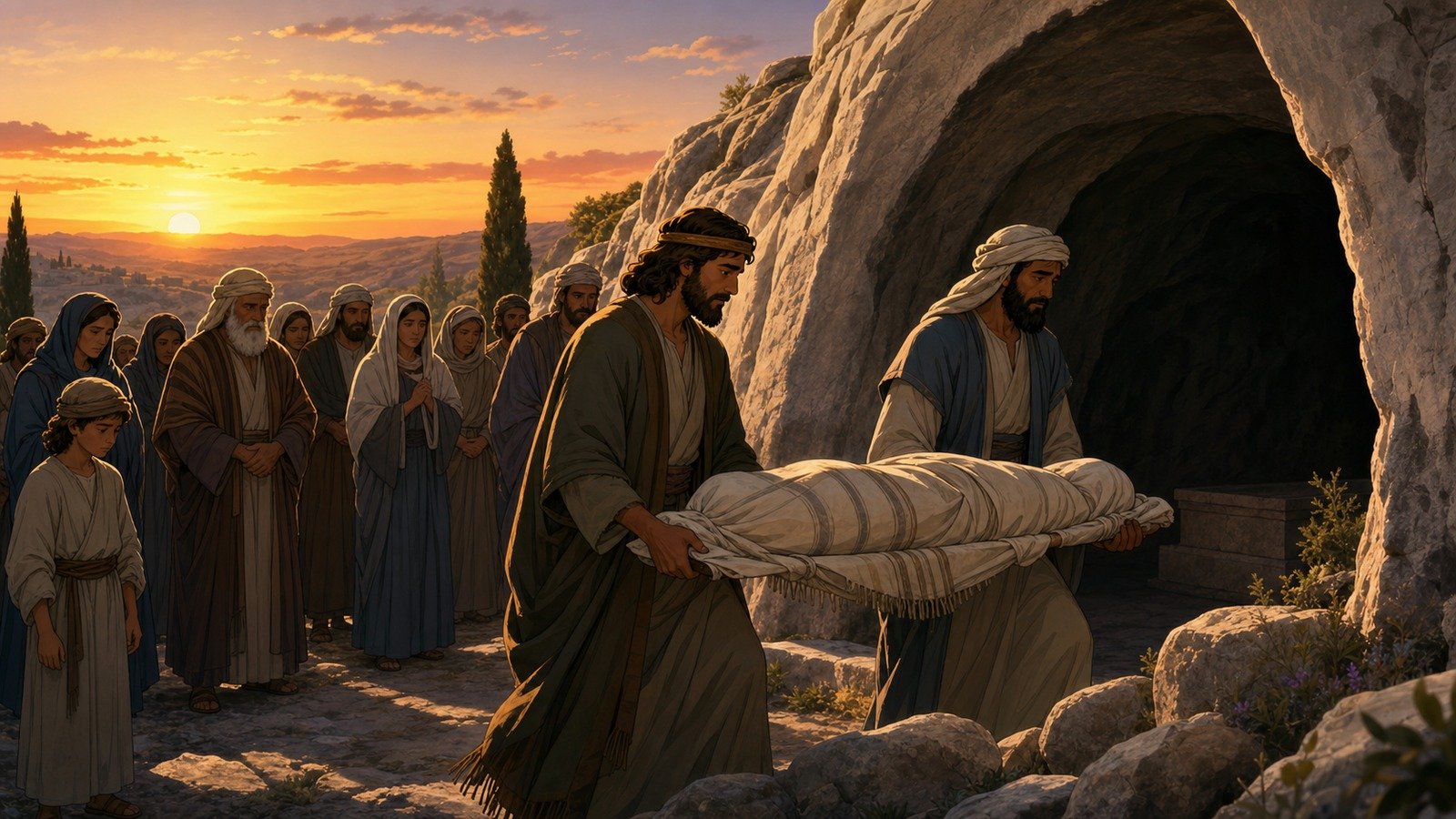
Enoch is singled out within the Genesis 5 genealogy as a man who "walked faithfully with God," and, uniquely among the antediluvians, does not die but is taken by God directly.
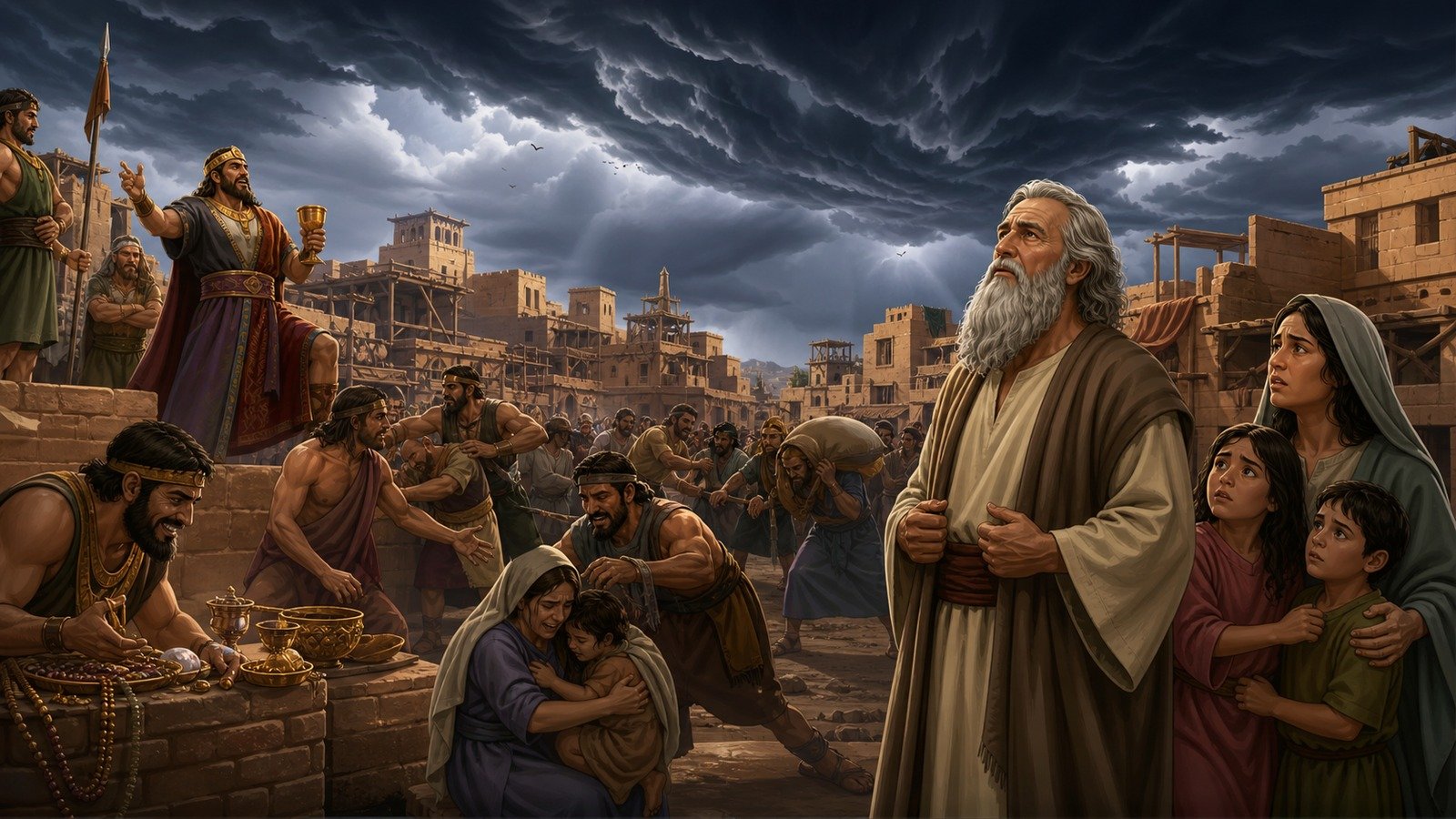
Genesis records widespread human corruption and violence, God's grief over it, and his decision to blot out life from the earth, sparing only Noah, "a righteous man, blameless among the people of his time."
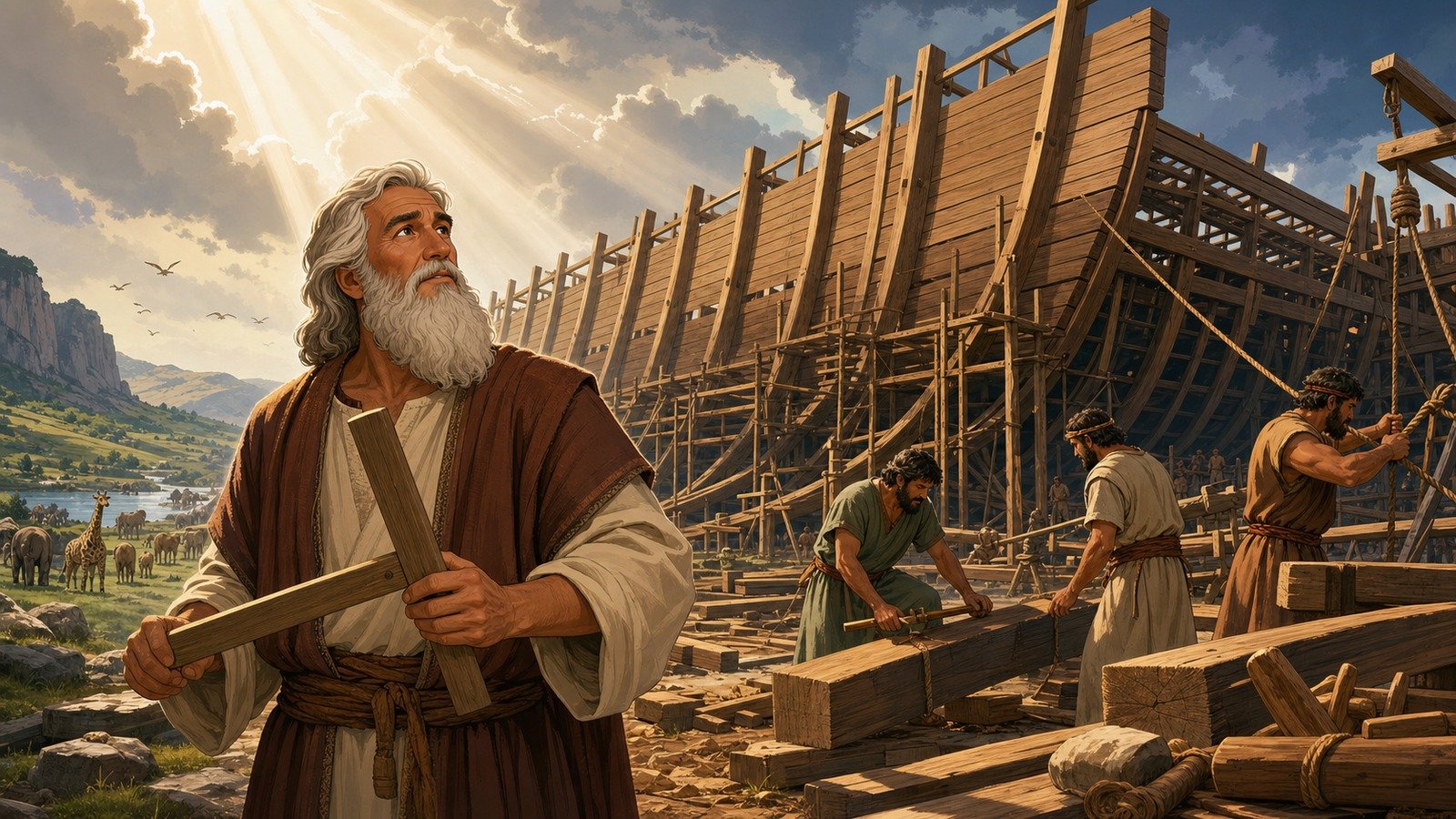
God gives Noah detailed instructions for the ark's construction and announces both the coming Flood and the covenant he will establish with Noah's family and the animals brought aboard.
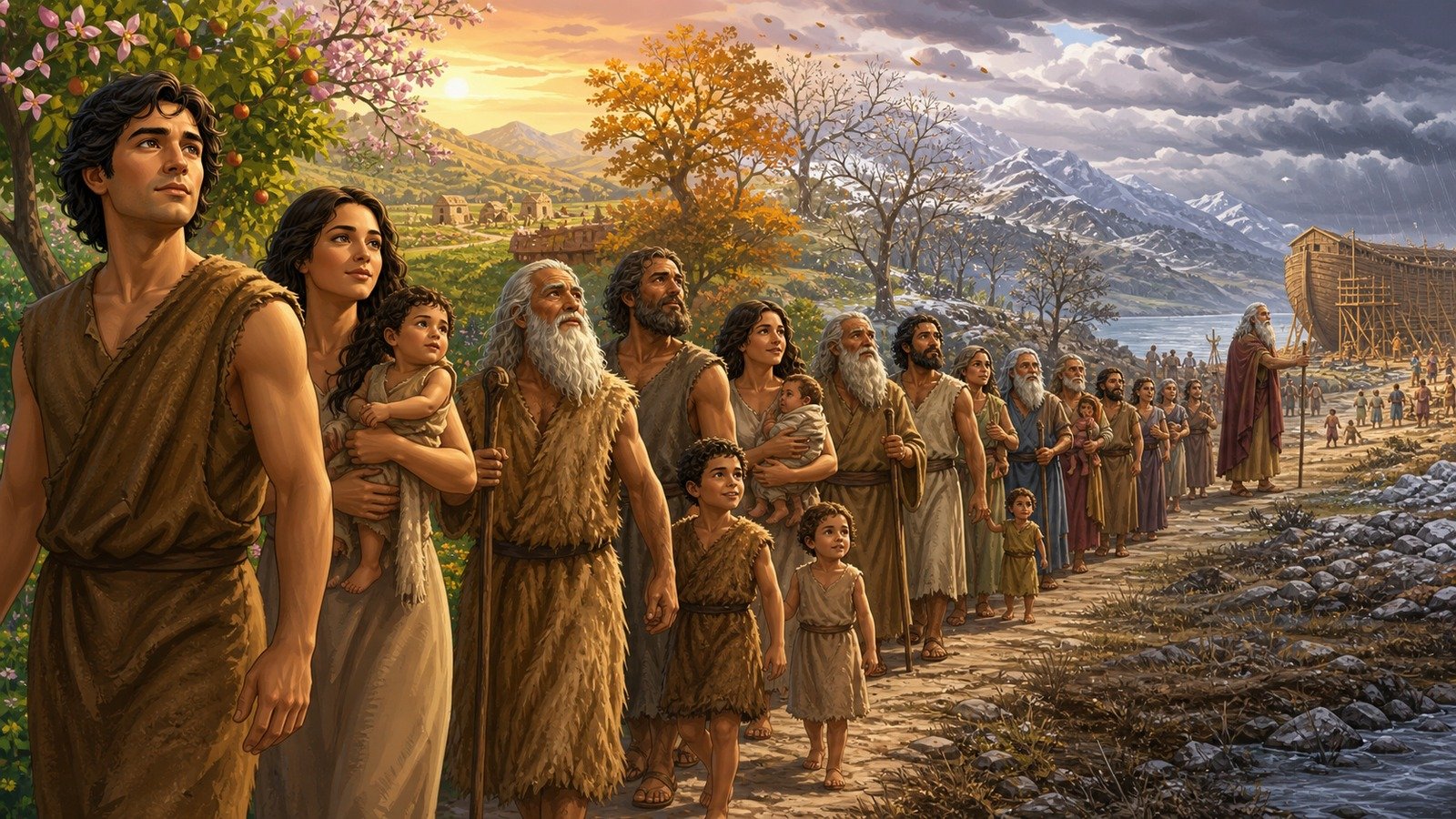
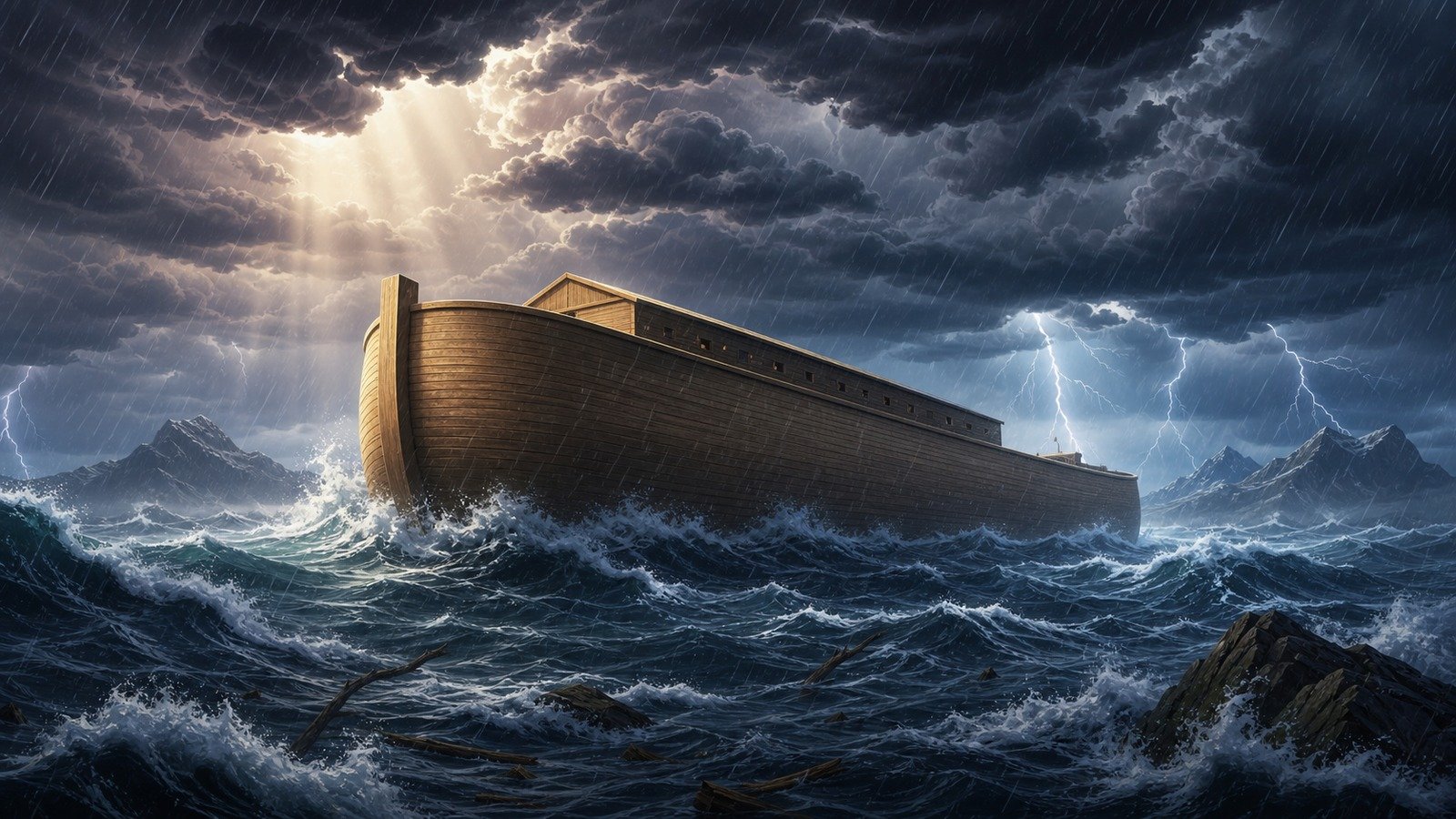
The Flood covers the earth for forty days of rain and a total of 150 days before the waters begin to recede, destroying all land-dwelling life outside the ark. Noah's family and the animals with them survive as the sole continuation of terrestrial life.
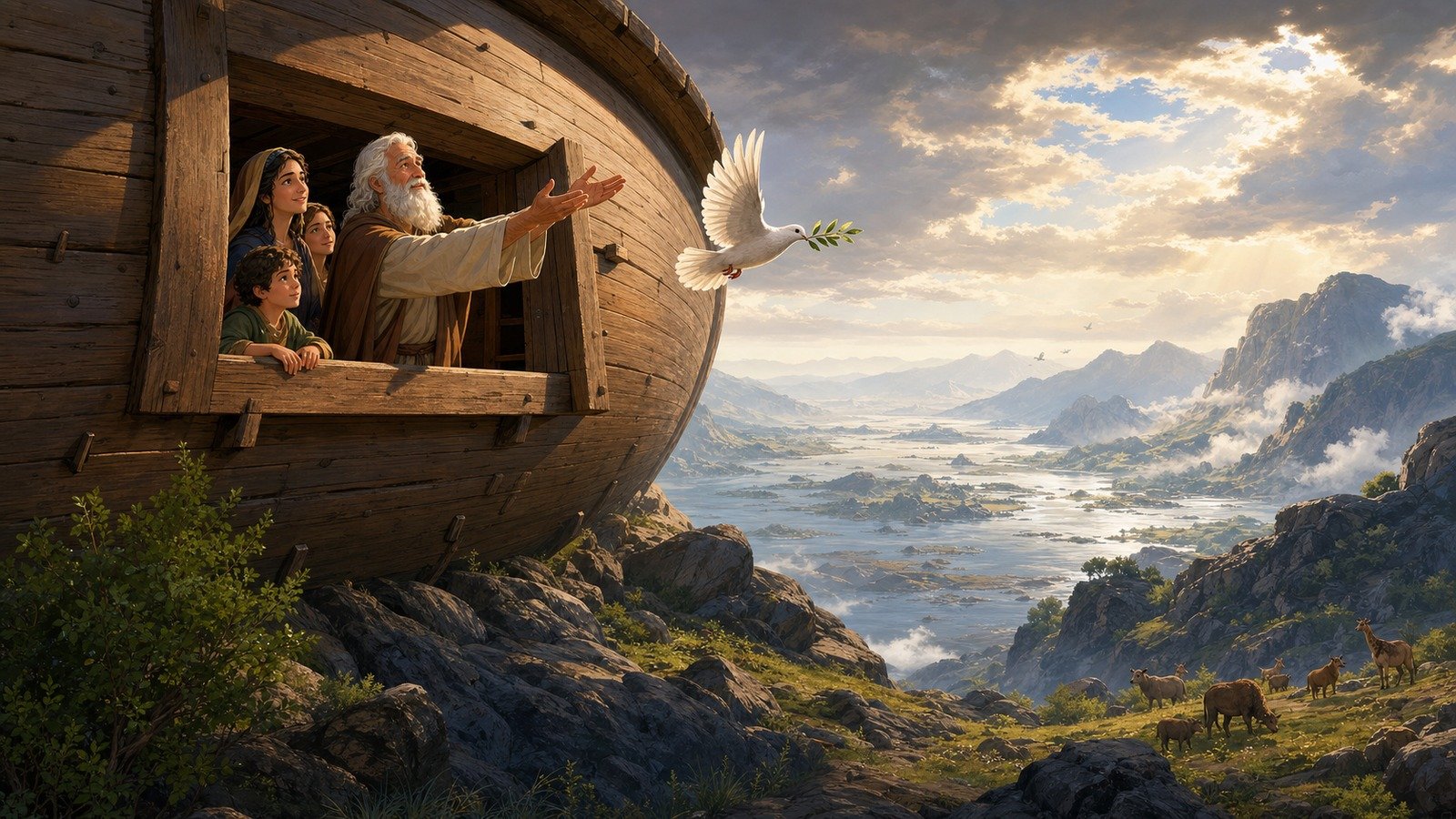
The waters recede over several months, the ark rests on the mountains of Ararat, and Noah sends out a raven and then doves to test whether the ground has dried before finally leaving the ark.
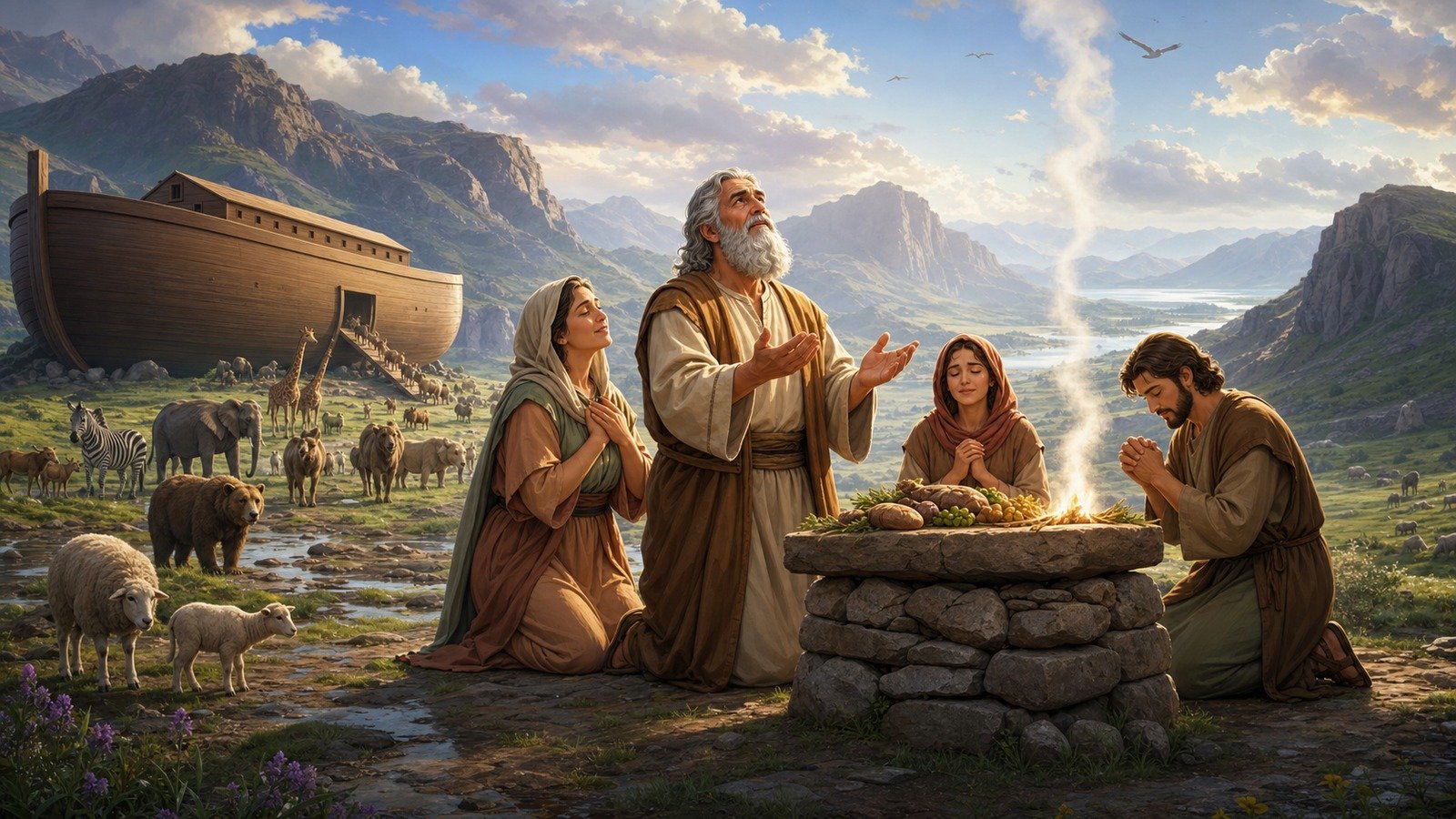
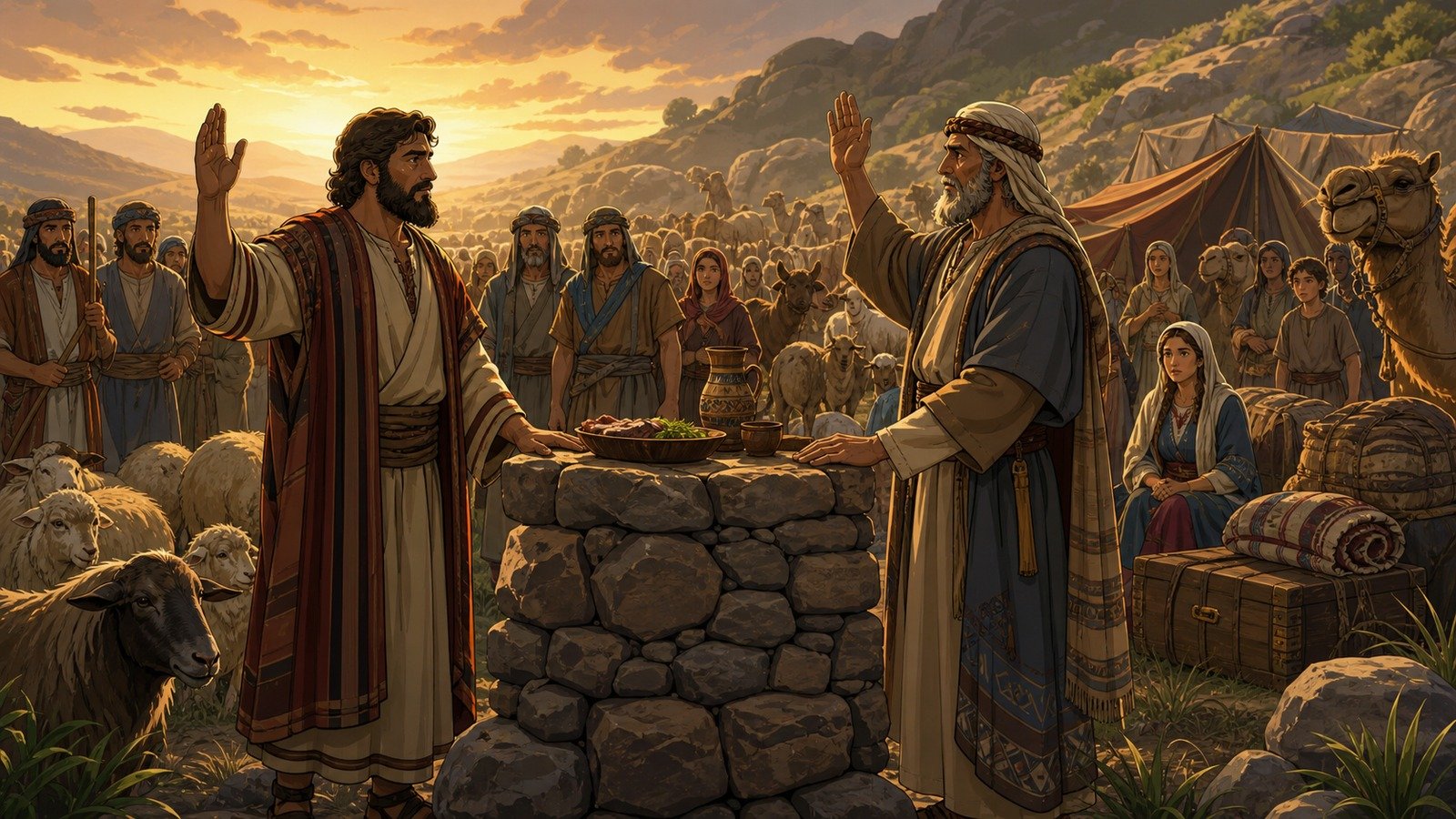
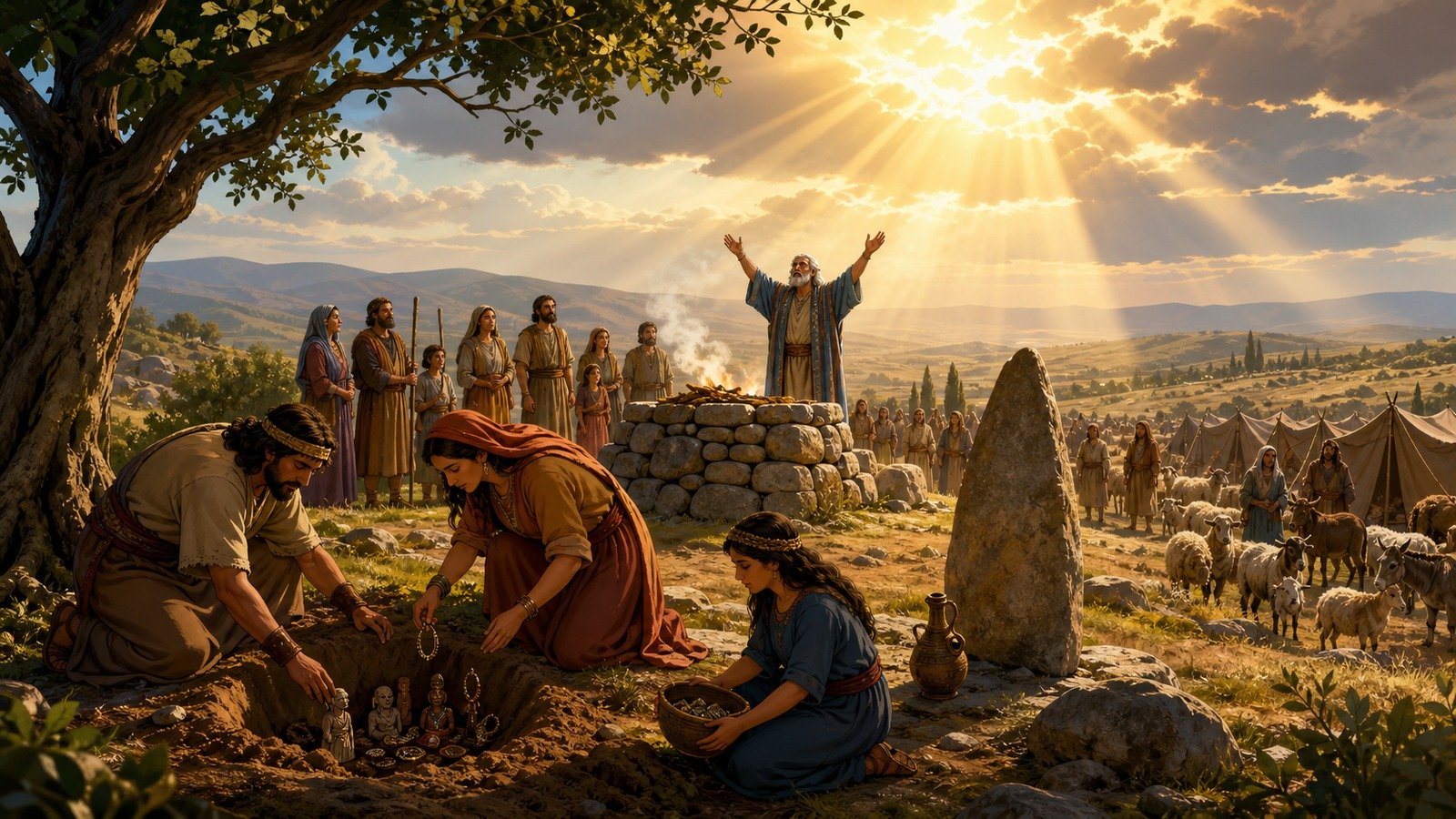
Noah, his family and the animals leave the ark, and Noah builds an altar and sacrifices some of every clean animal; God resolves never again to curse the ground because of humanity, and promises the regularity of the seasons will continue.
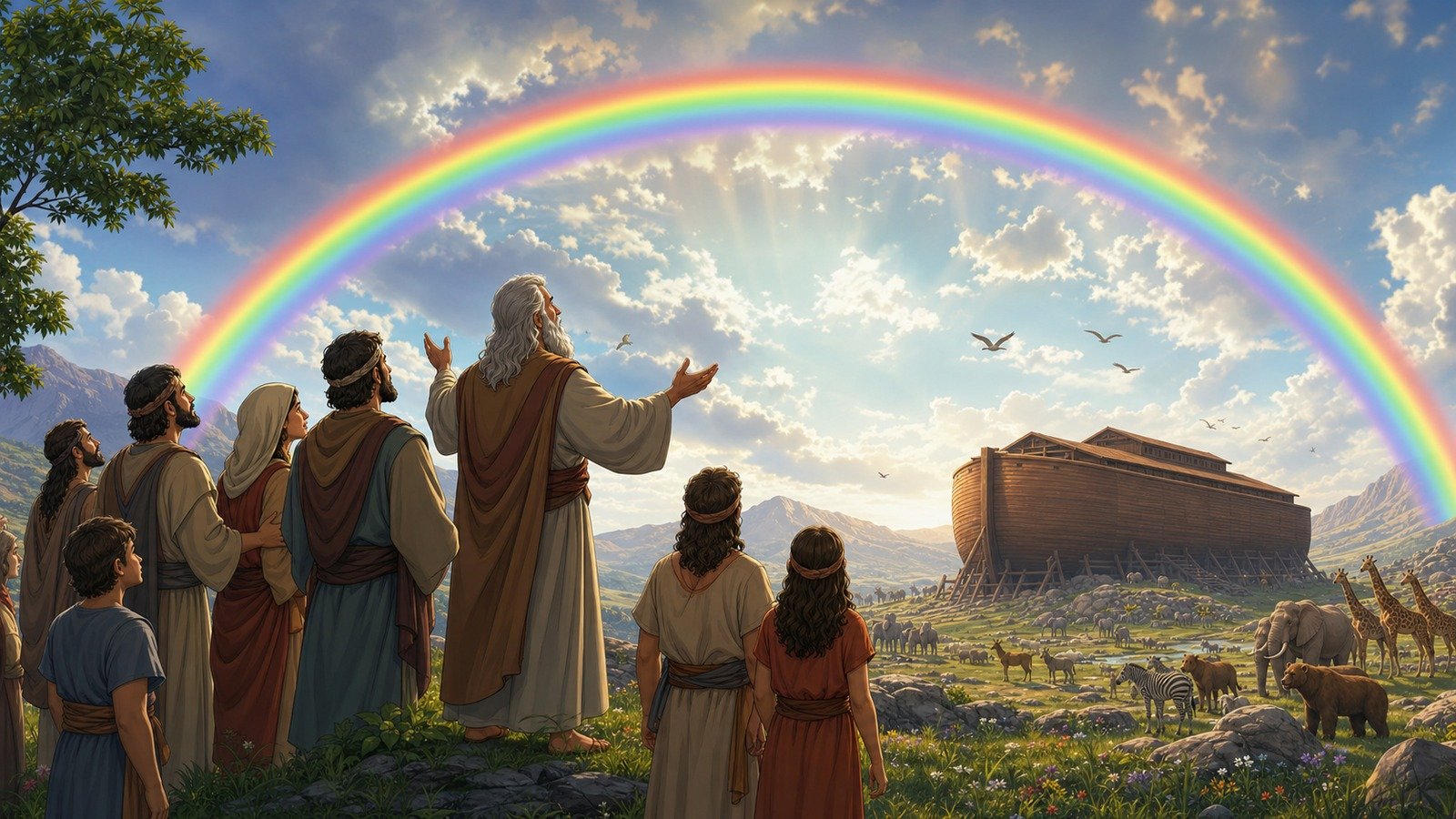
God blesses Noah and his sons, permits the eating of meat, prohibits murder, and establishes an unconditional covenant never again to destroy all life by flood, with the rainbow given as its sign. This is the first explicit covenant named in Scripture.
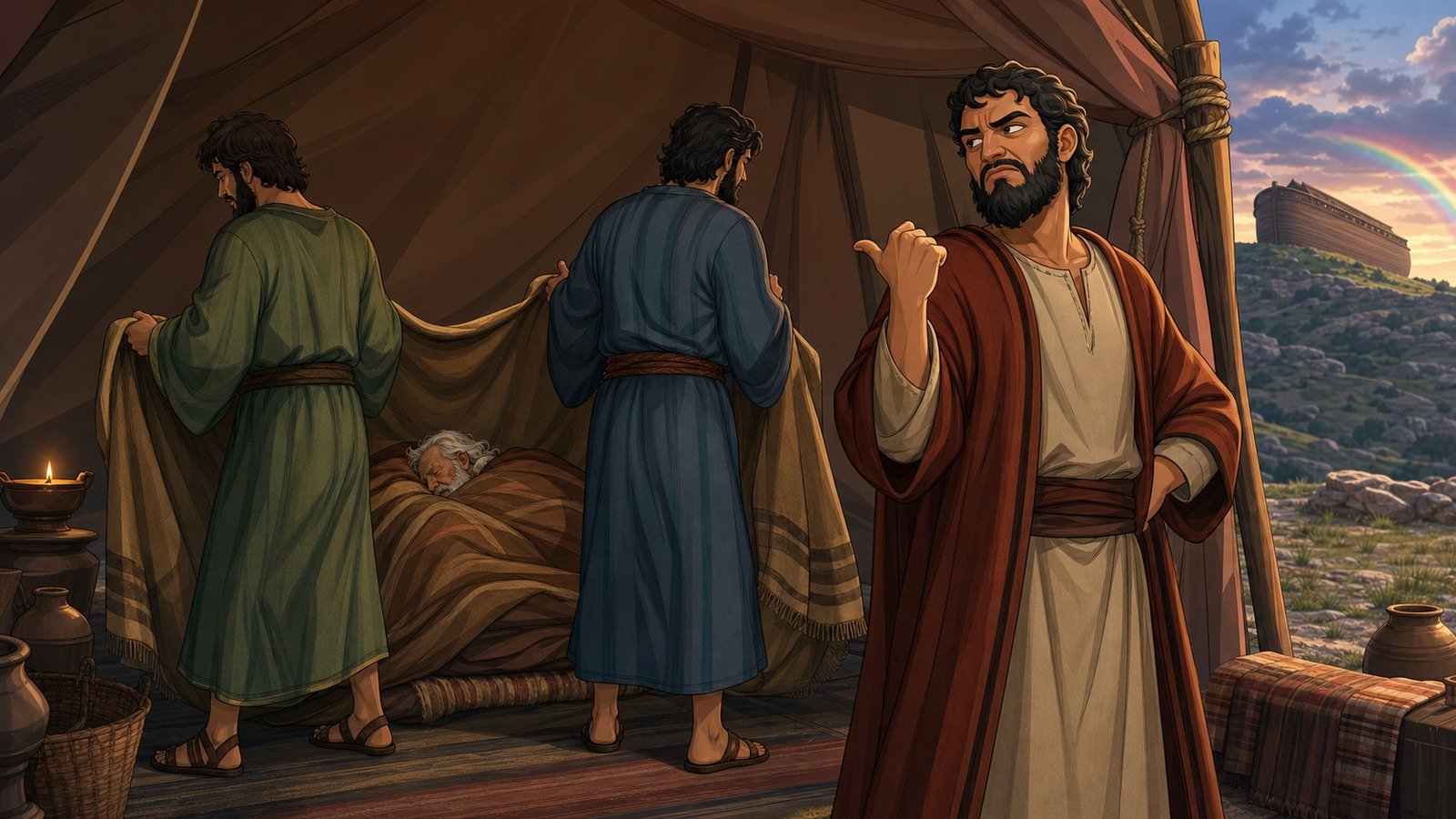
Noah becomes drunk and exposes himself in his tent; his son Ham's disrespect leads Noah to pronounce a curse on Ham's son Canaan, while blessing Shem and Japheth, an episode later readers have connected, at times controversially, to later Israelite-Canaanite conflict.
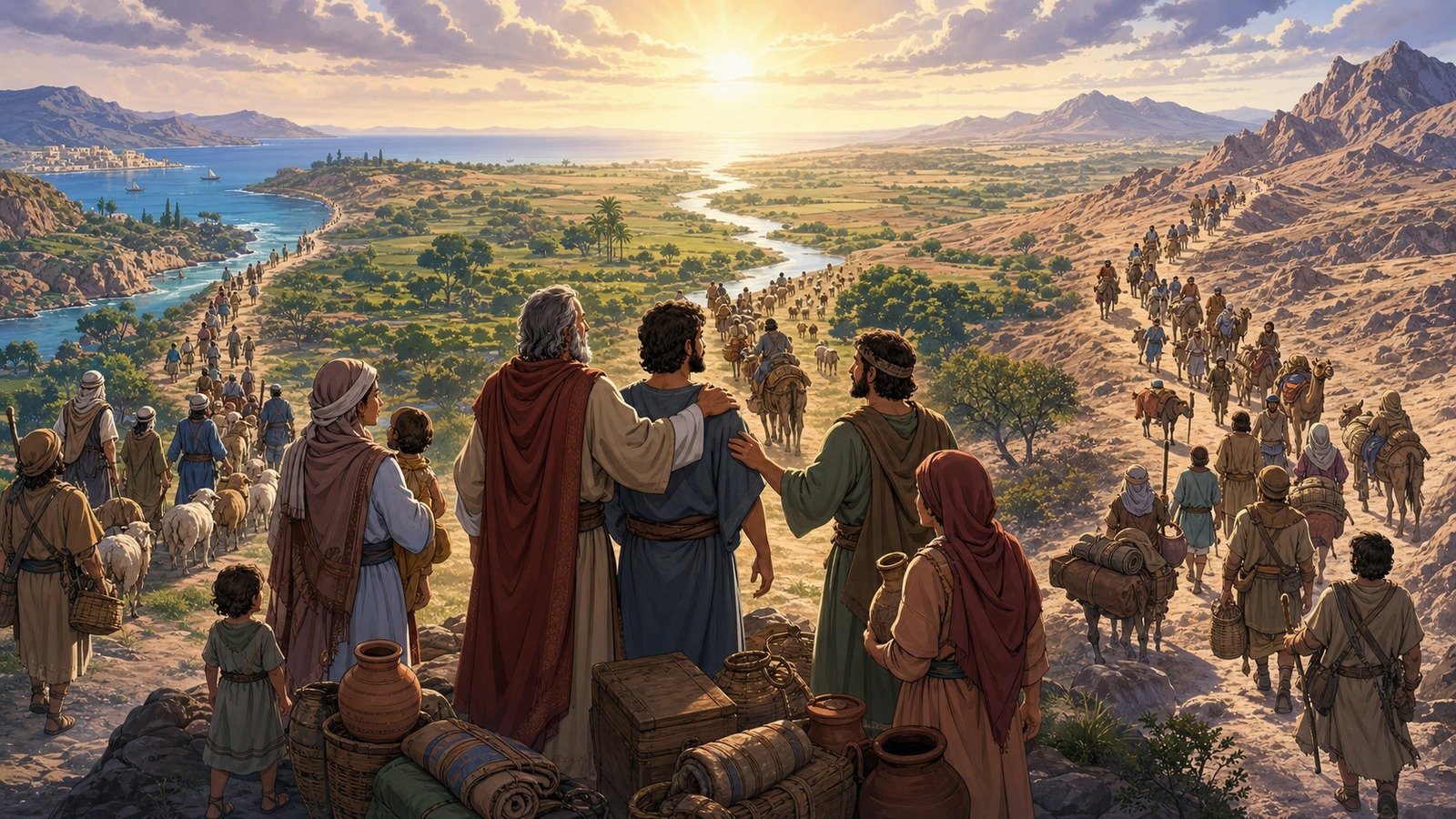
A genealogical list traces the nations descended from Shem, Ham and Japheth, accounting within the narrative's own logic for the spread of peoples known to the ancient Near East.
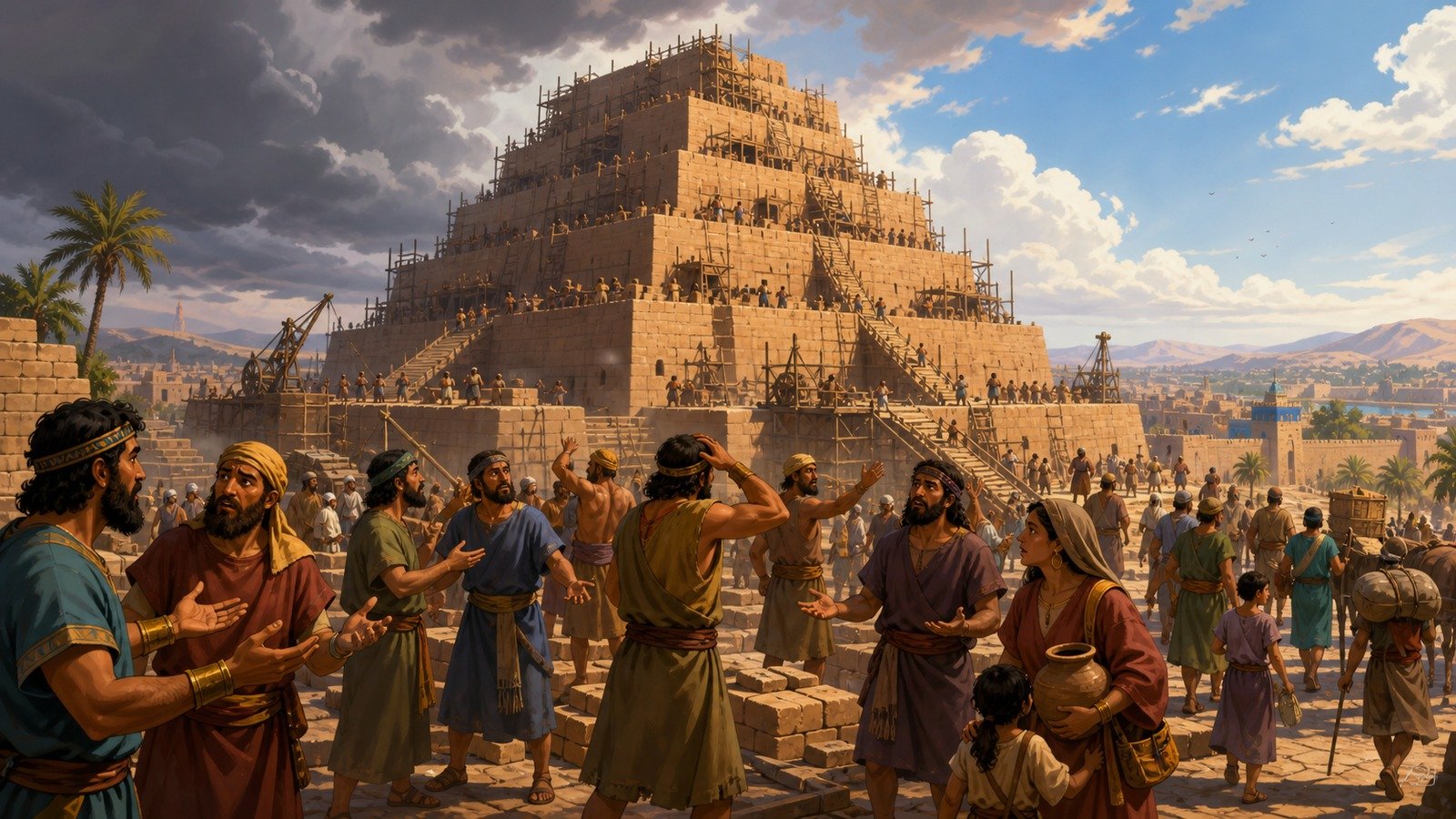
Humanity, still speaking one language, attempts to build a city and tower "that reaches to the heavens" to make a name for itself. God confuses their language and scatters them across the earth, explaining the origin of linguistic diversity within the narrative's own logic.
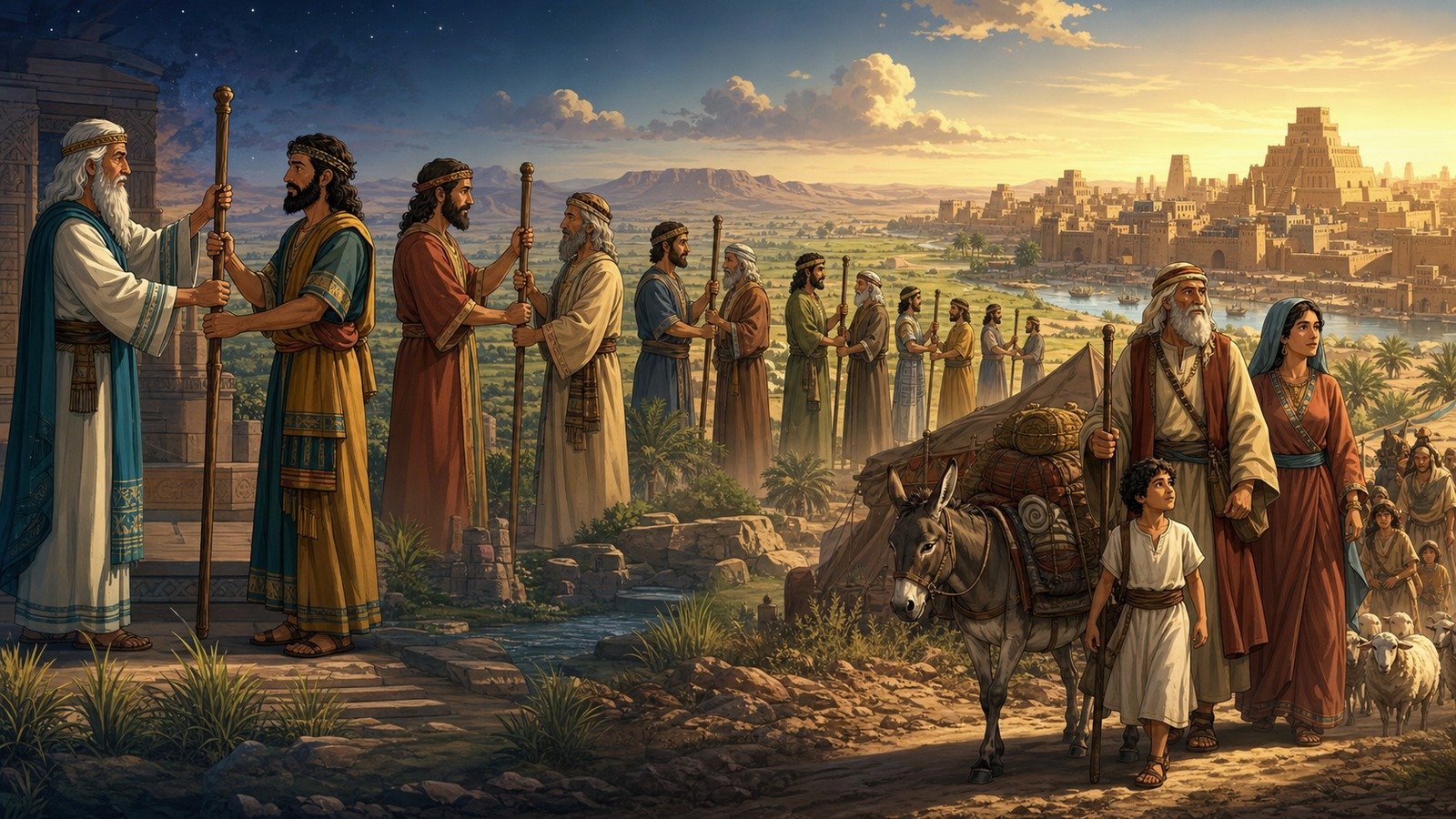
A second genealogy bridges the Flood to Abram, tracing ten generations through Shem's line and noting the family's move from Ur of the Chaldeans to Harran under Terah, Abram's father.
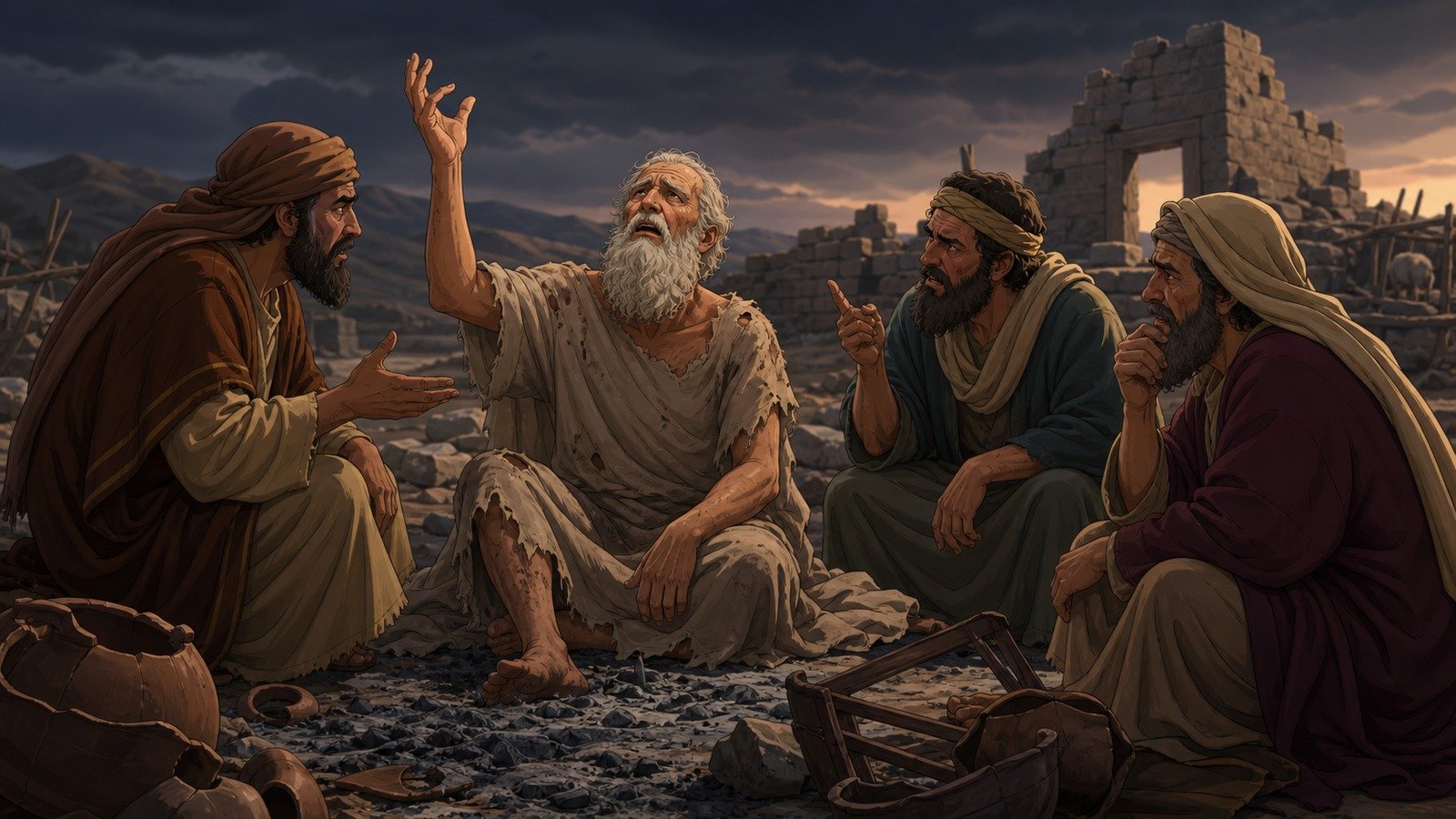
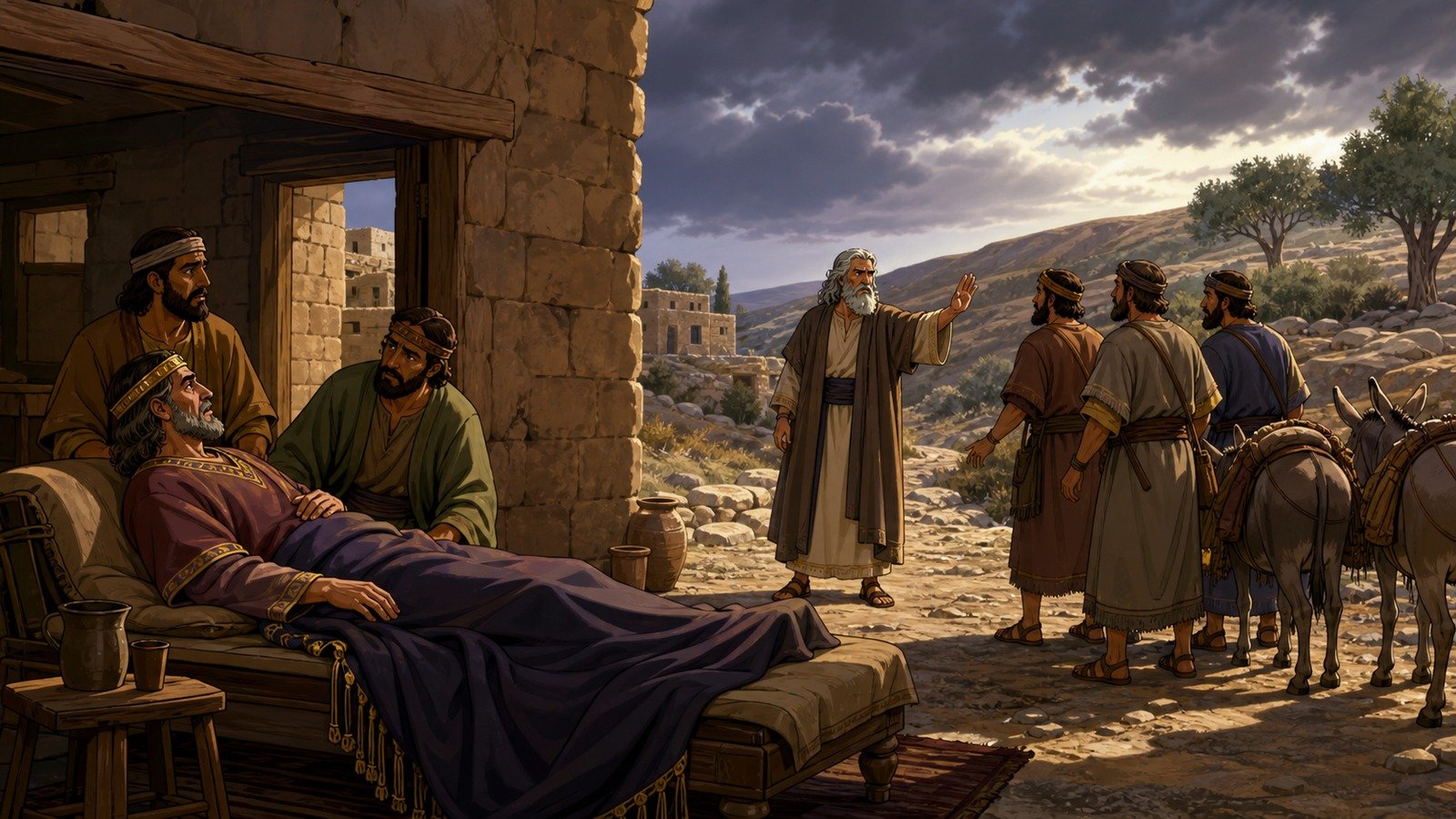
Job, a wealthy and righteous man from the land of Uz, loses his family, health and possessions in a series of disasters permitted by God after a challenge from "the Accuser." Job's own lament and lengthy debate with three friends over why he is suffering occupy most of the book.
God answers Job from a whirlwind, not by explaining his suffering but by confronting him with the scale of creation; Job responds with humility rather than further argument, and his fortunes are ultimately restored twofold.
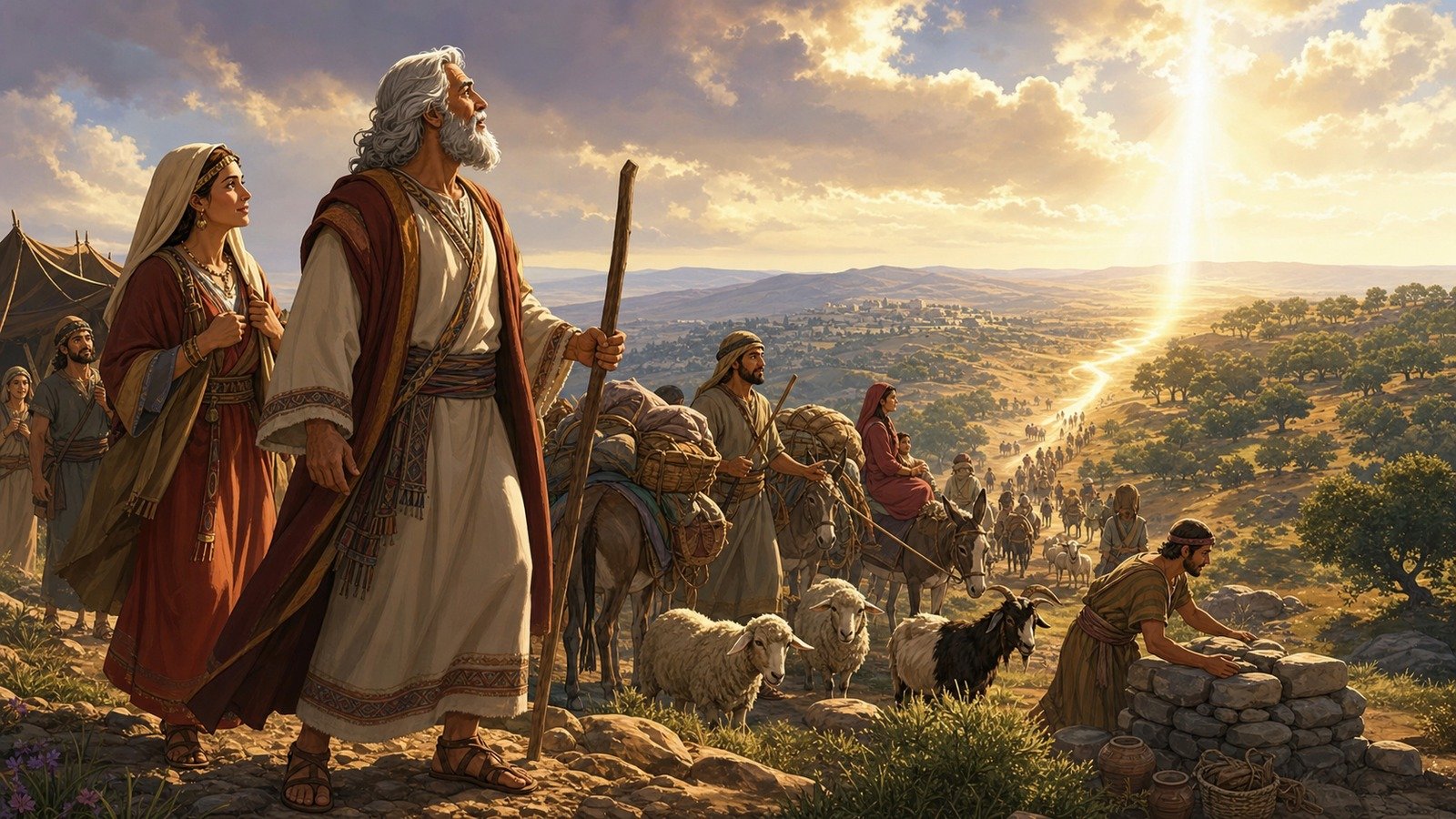
God calls Abram, aged 75, to leave Harran for a land he will be shown, promising to make him into a great nation and to bless all peoples through him. Abram, Sarai and Lot travel to Canaan and Abram builds altars at Shechem and Bethel.
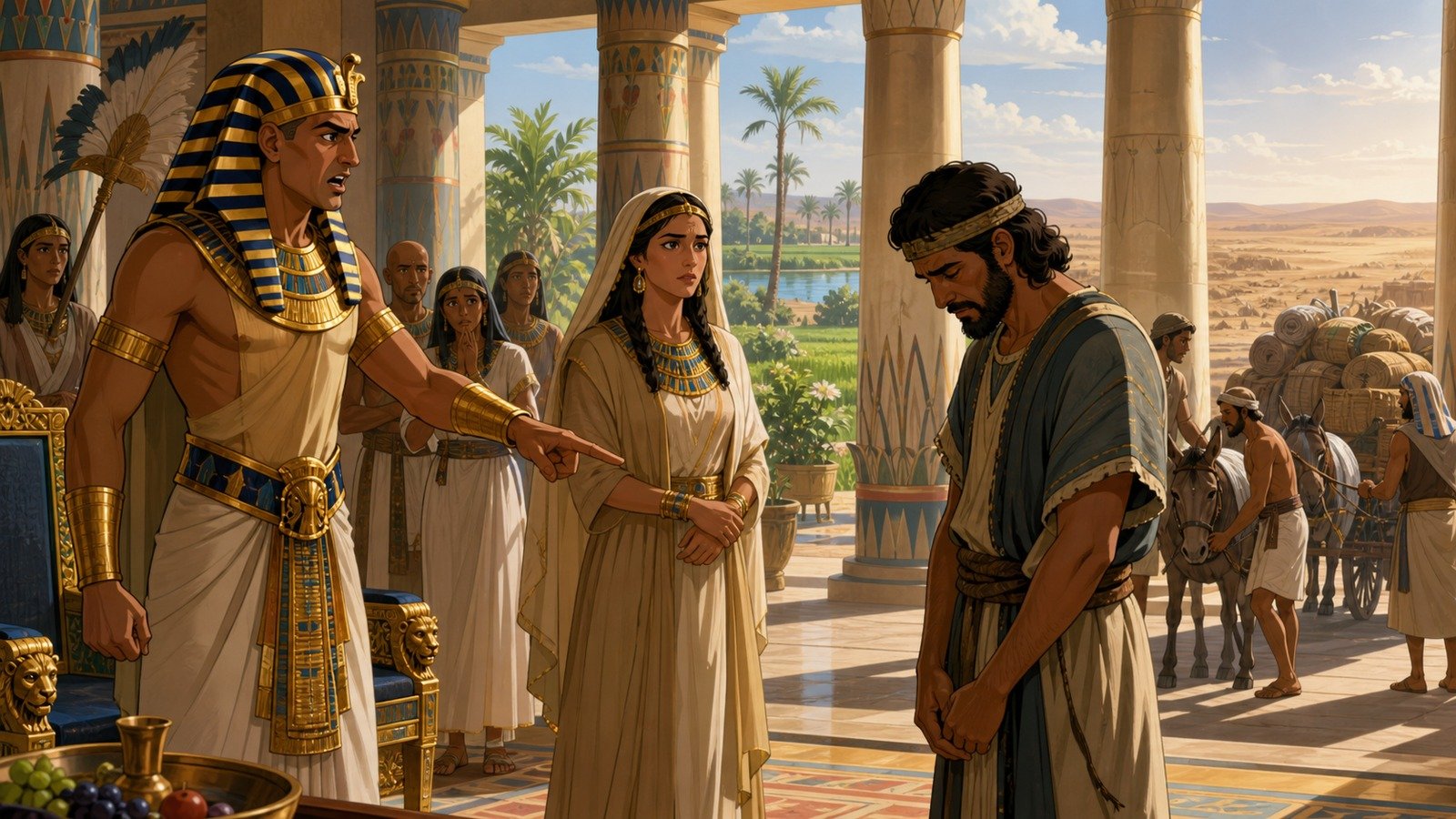
Famine drives Abram to Egypt, where he presents Sarai as his sister out of fear for his own life. Pharaoh takes her into his household, is struck with plagues, and expels Abram once the deception is discovered.
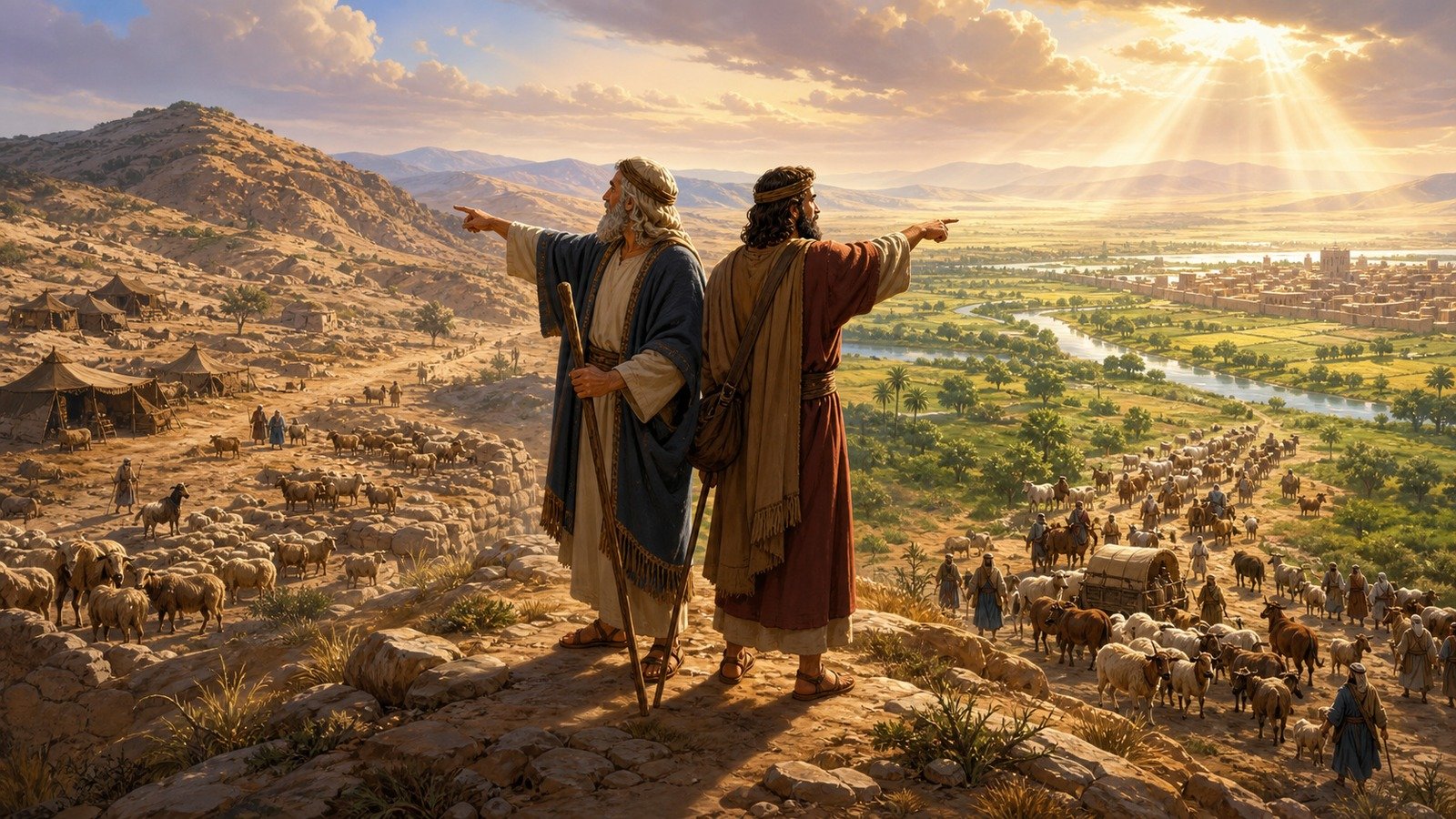
Growing herds and strife between Abram's and Lot's herdsmen force a separation. Lot chooses the well-watered plain toward Sodom, and God renews to Abram the promise of land and descendants "as numerous as the dust of the earth."
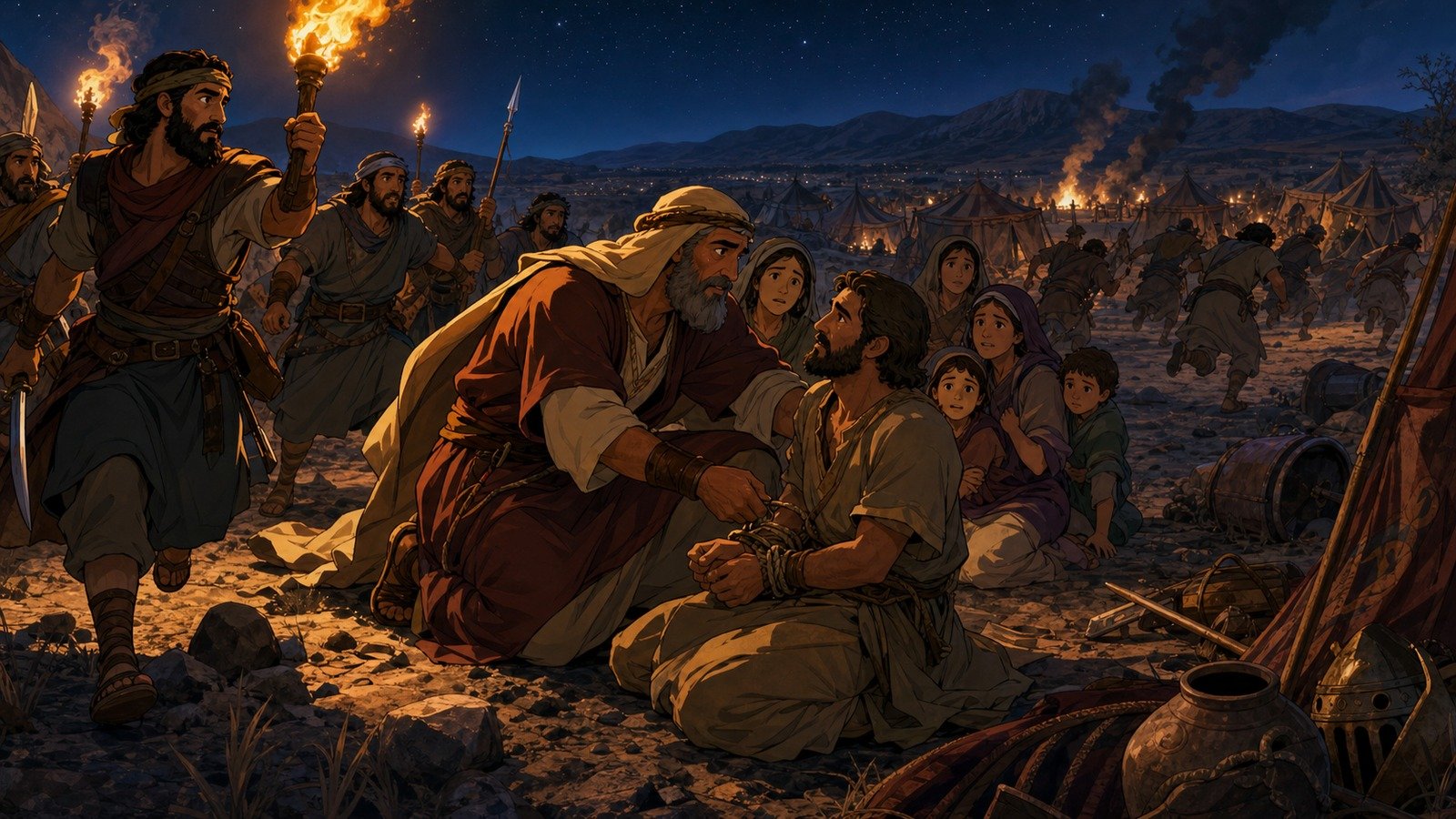
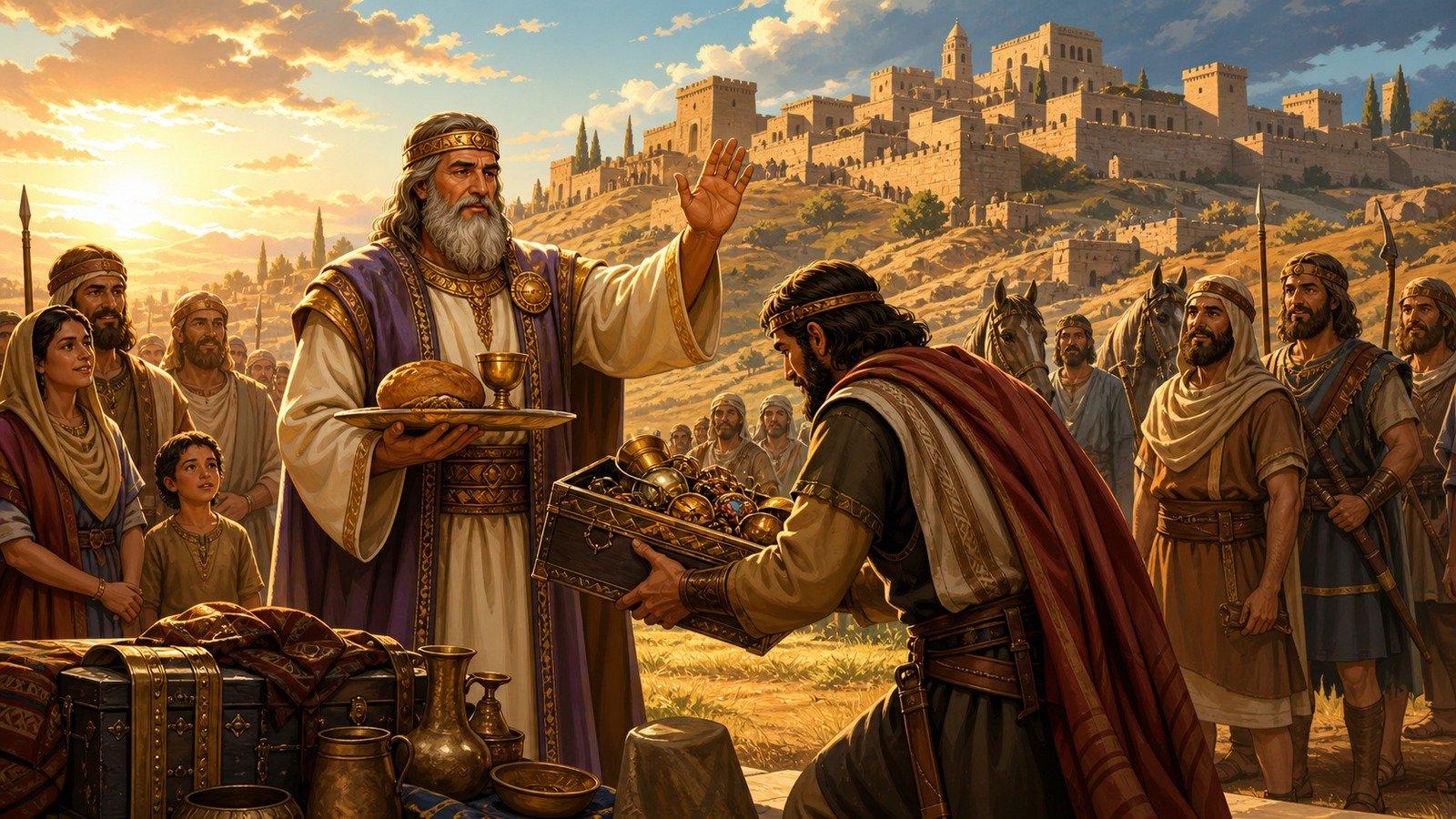
Returning from the rescue, Abram meets Melchizedek, king of Salem and priest of God Most High, who blesses him; Abram gives Melchizedek a tenth of the recovered spoils, an episode later central to the argument of Hebrews about Christ's priesthood.
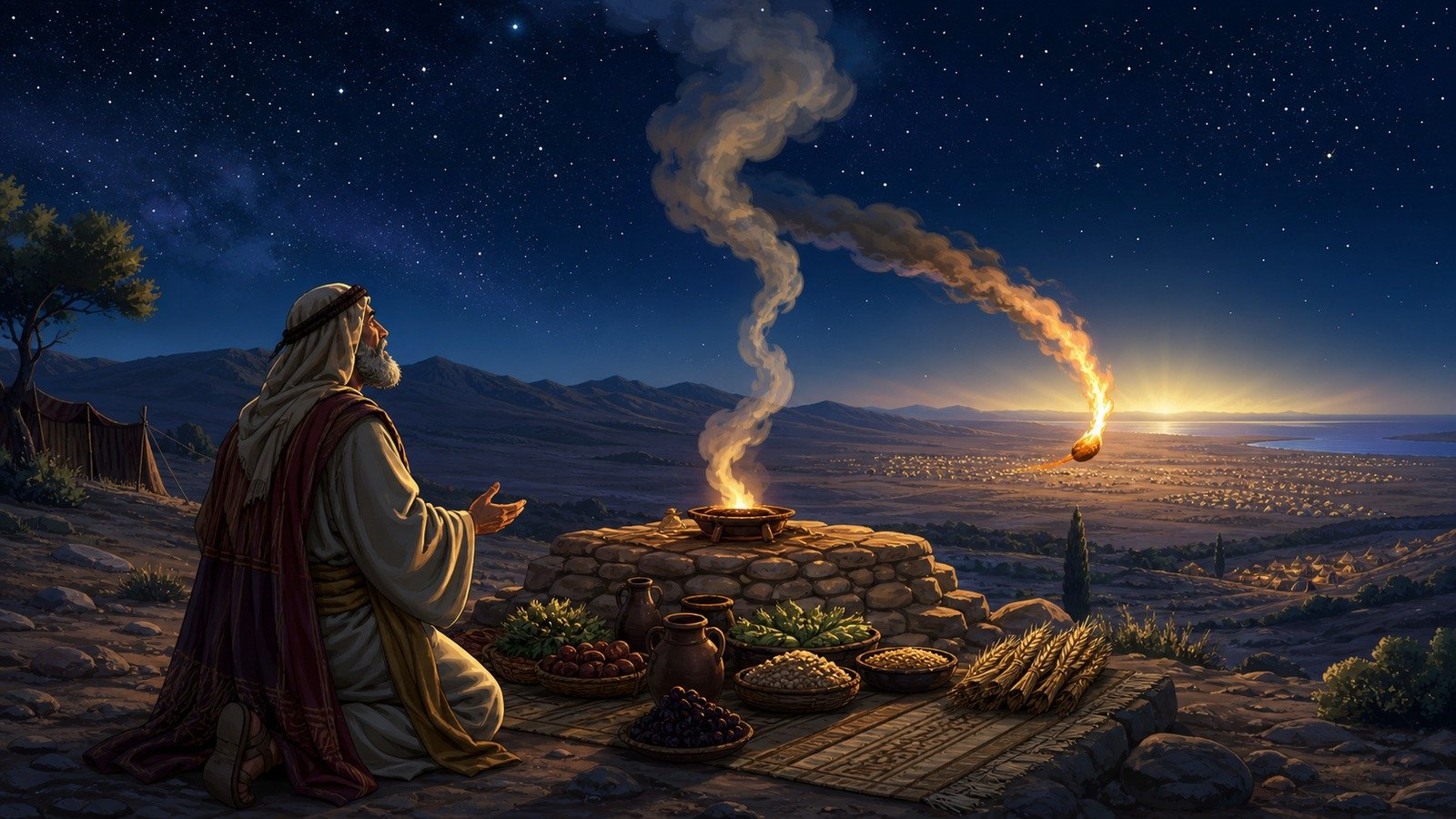
God reaffirms his promise of offspring and land to Abram in a formal covenant ceremony, foretelling four hundred years of slavery for his descendants before their return to Canaan. Abram's faith is "credited to him as righteousness," a phrase Paul later builds a theology on.
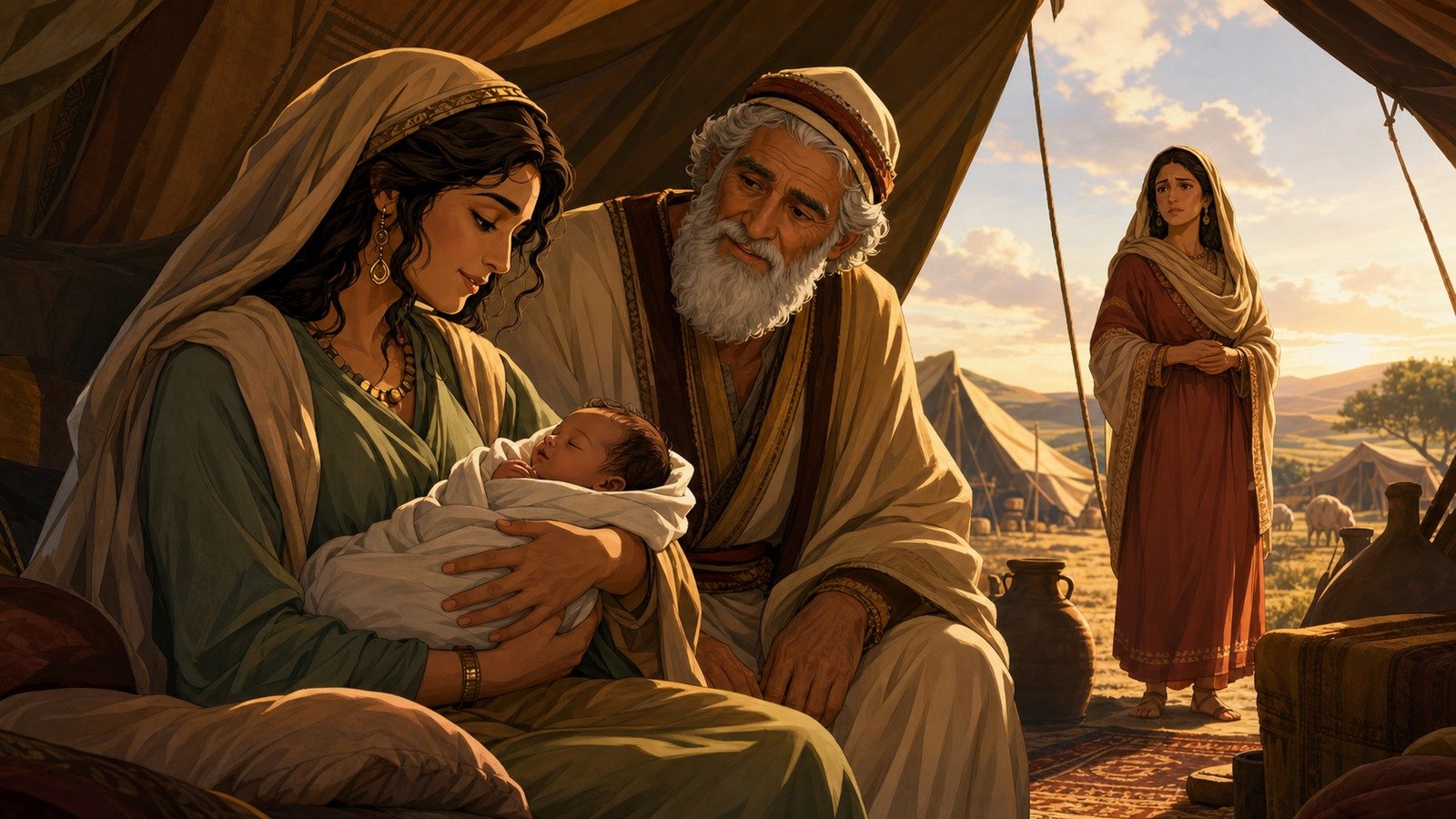
Sarai, still childless, gives her servant Hagar to Abram to bear a son on her behalf, following a common ancient Near Eastern custom. Ishmael is born when Abram is 86; tension between Sarai and Hagar begins immediately.
Thirteen years after Ishmael's birth, God renews his covenant with Abram, now 99, renaming him Abraham ("father of many") and Sarai as Sarah, and establishing circumcision as the covenant's physical sign for every male in his household.
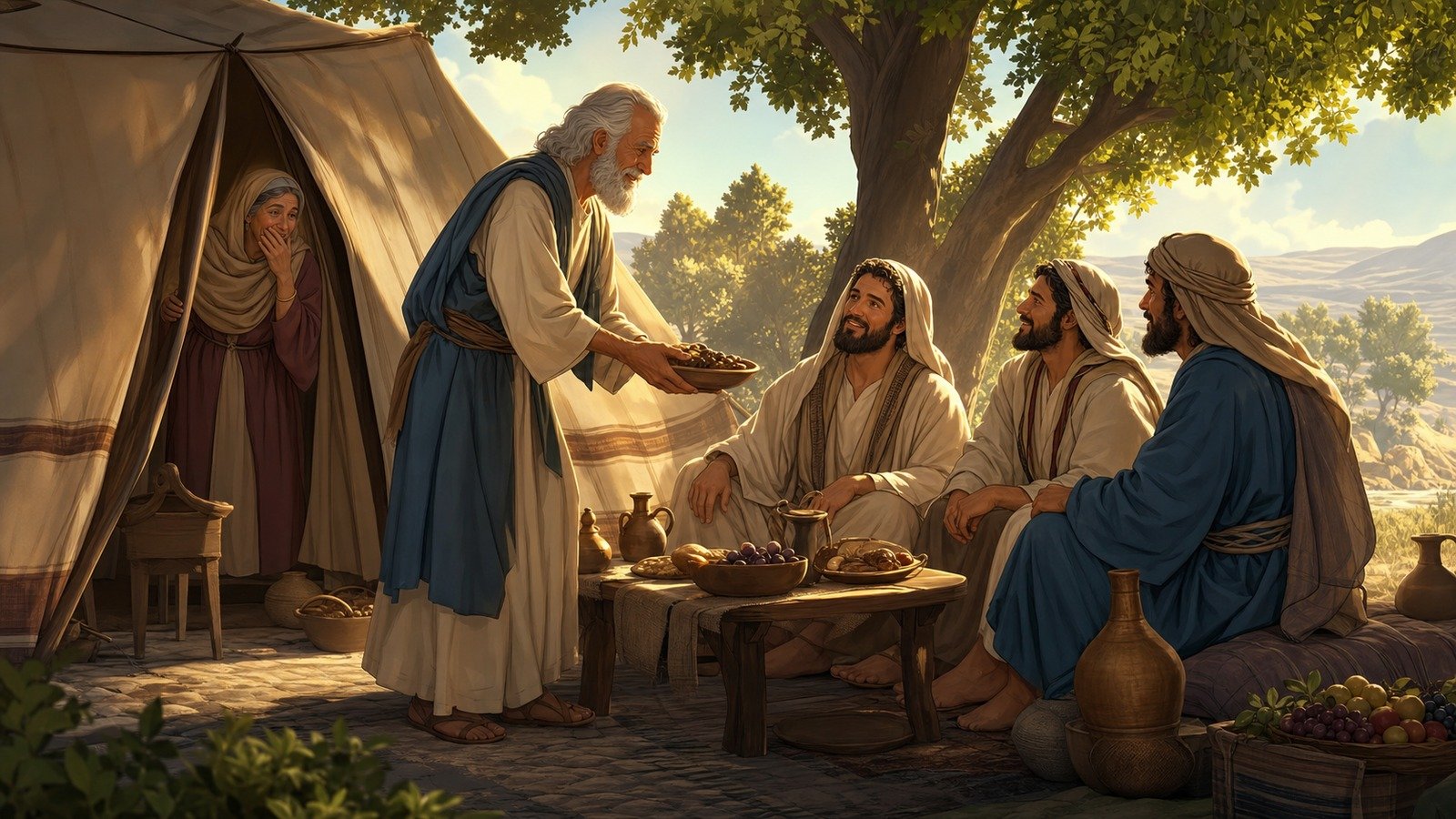
Three visitors, one identified as the Lord, tell Abraham that Sarah will bear a son within the year. Sarah, listening from inside the tent, laughs at the prospect.
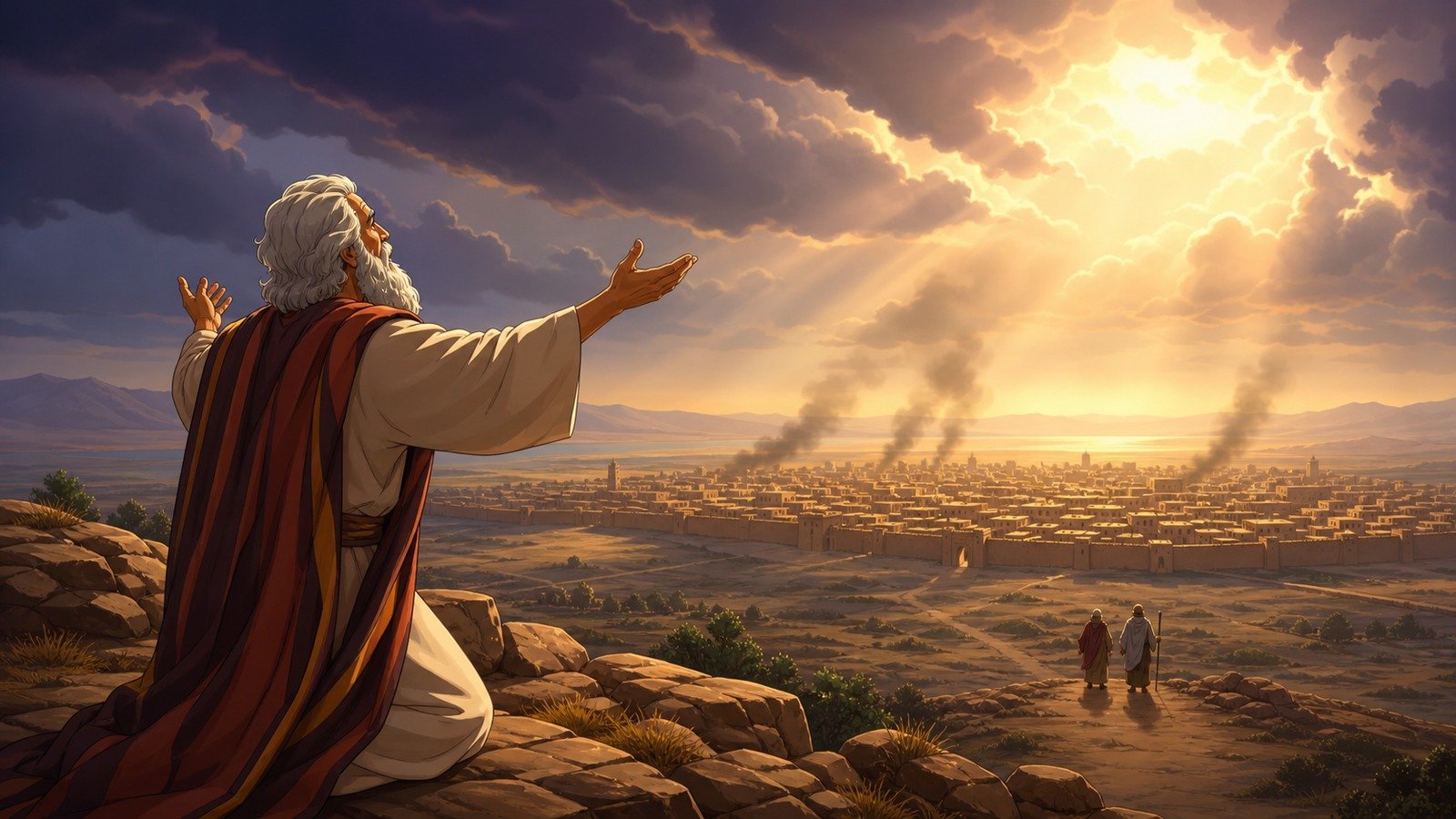
Told that Sodom faces judgement, Abraham bargains with God on the city's behalf, successively lowering the number of righteous people that would be needed to spare it, down to just ten.
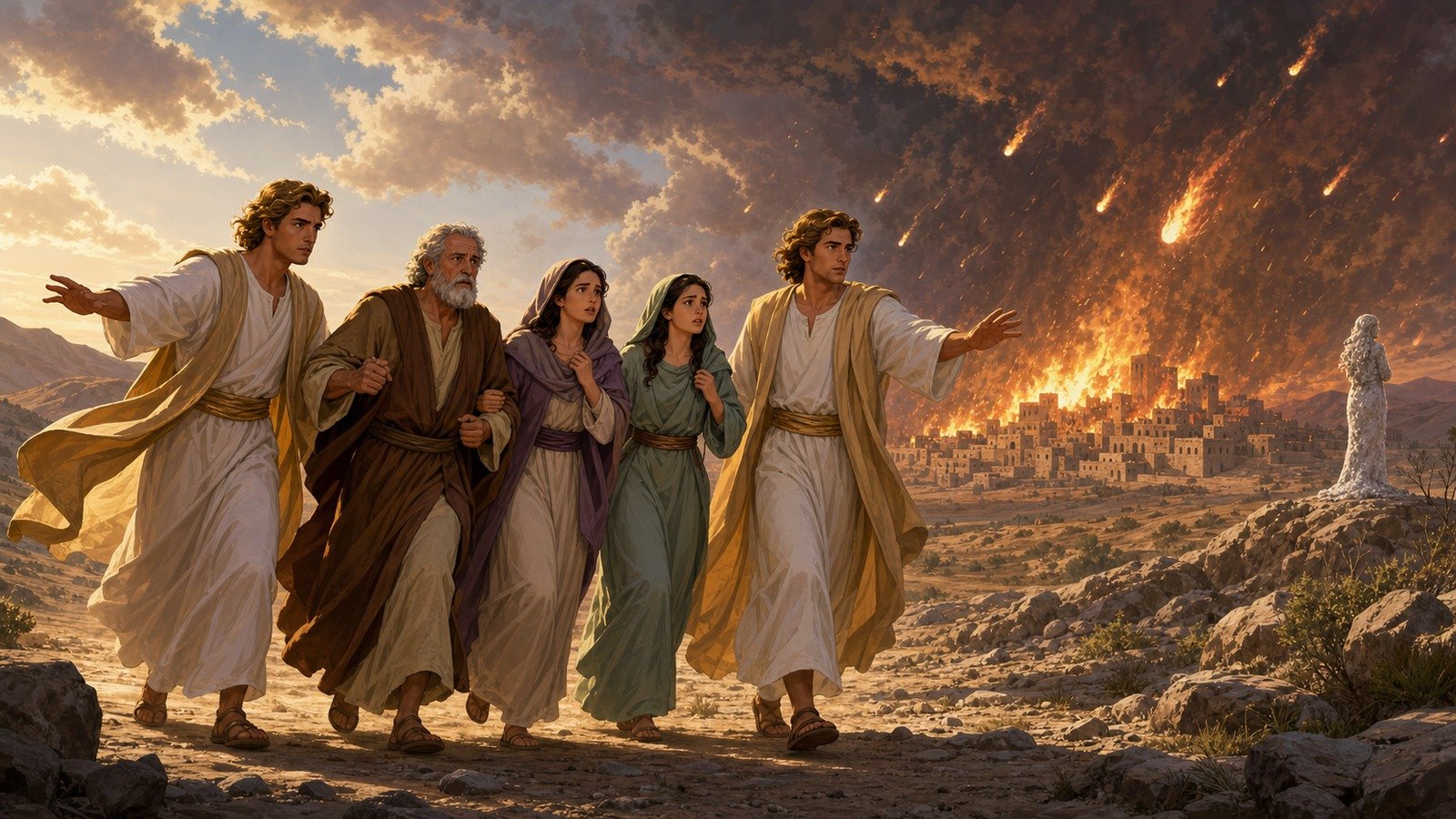
Two angels rescue Lot and his daughters from Sodom before God destroys the city and the surrounding plain with burning sulphur. Lot's wife looks back and is turned to a pillar of salt; the episode becomes a fixed Biblical image of divine judgement.
Abraham again presents Sarah as his sister, this time to Abimelech of Gerar, who takes her in good faith and is warned off by God in a dream before any wrong is done. Abimelech restores Sarah and rebukes Abraham, who intercedes to heal Abimelech's household.
Sarah bears Isaac when Abraham is 100 years old, exactly as God had promised, fulfilling the covenant promise of a son through whom the line of blessing will continue.
After Isaac is weaned, Sarah insists that Hagar and Ishmael be sent away so Ishmael will not share Isaac's inheritance. God provides for them in the wilderness and promises Ishmael will also become a great nation.
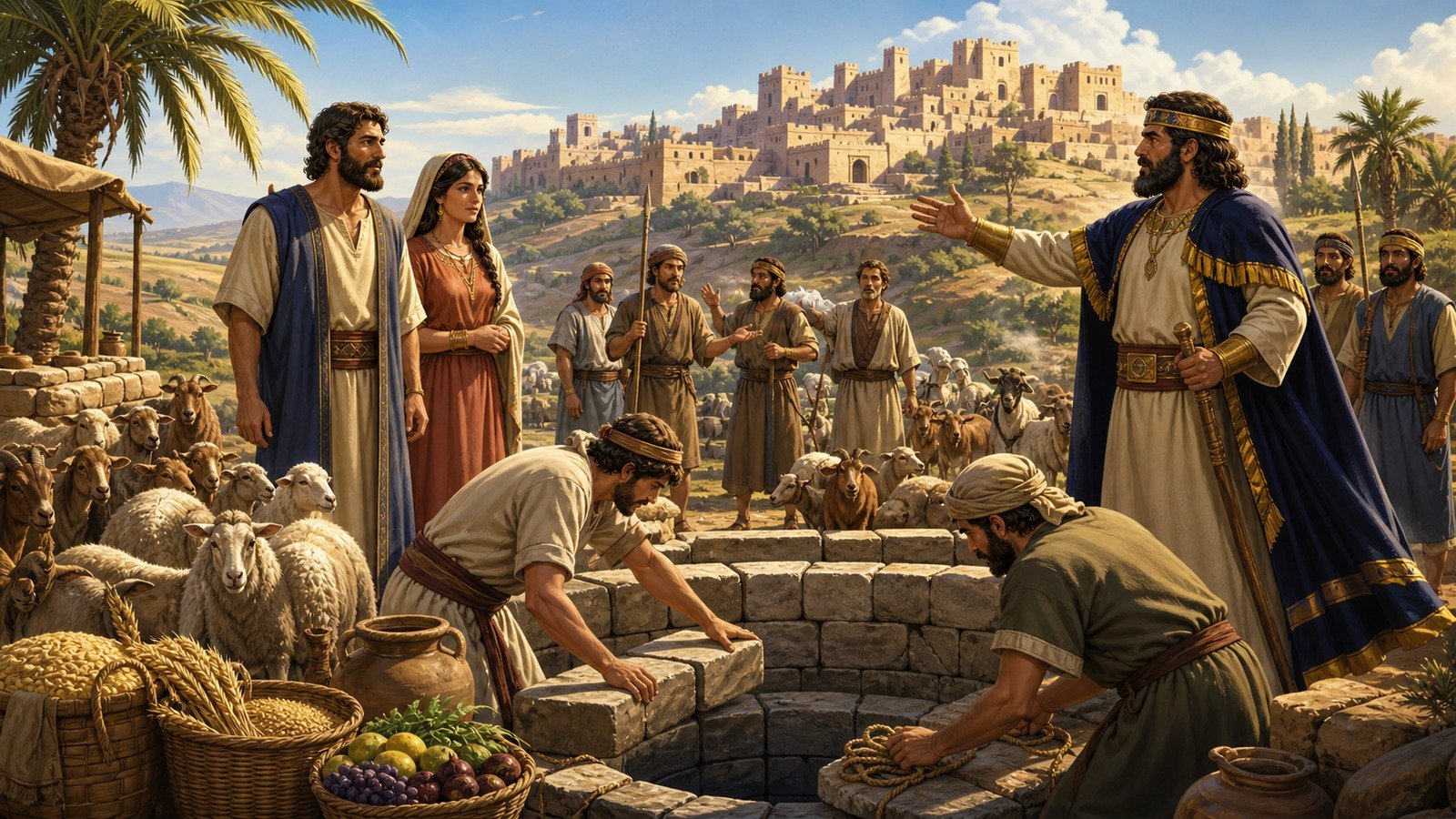
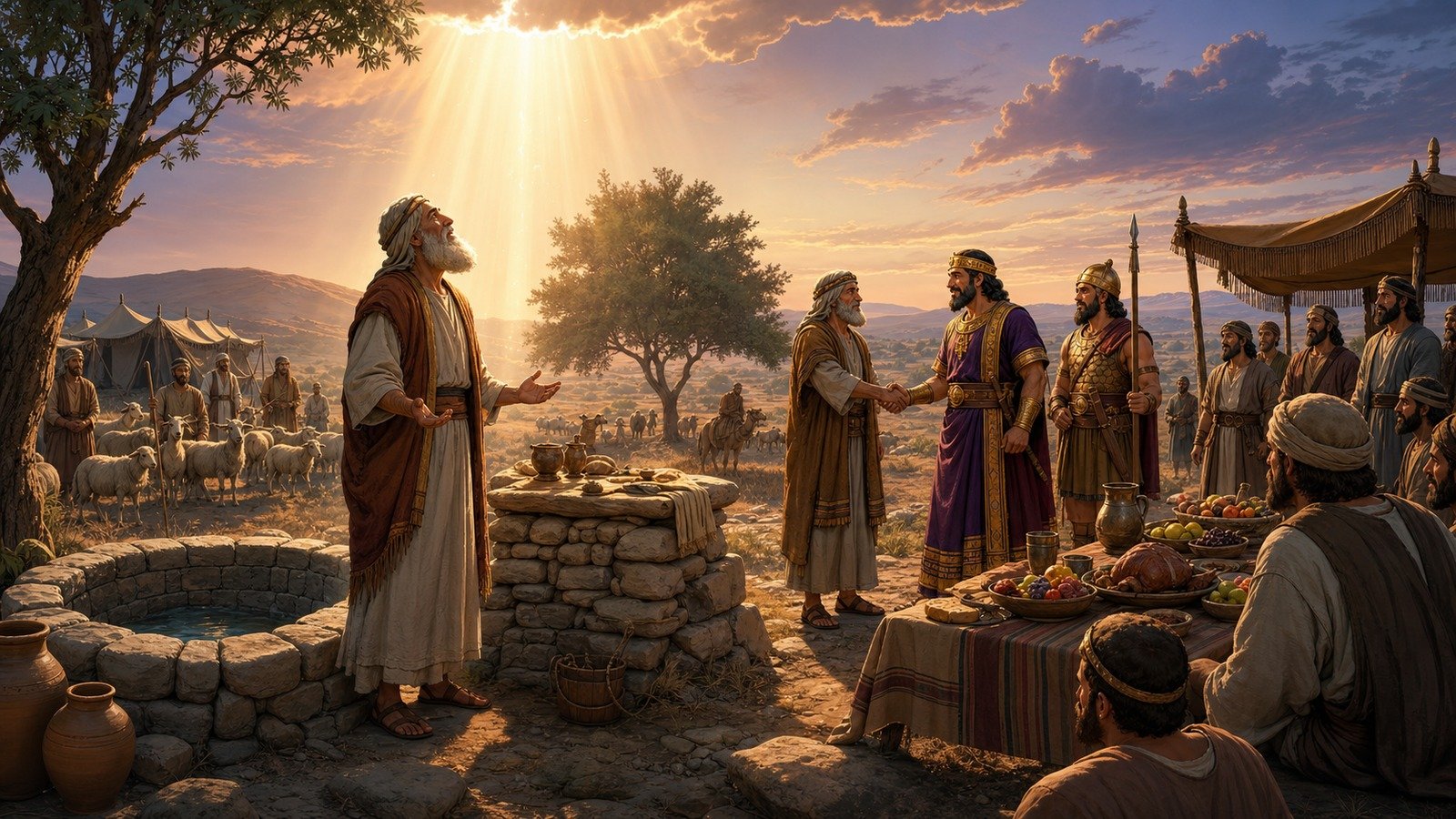
Abraham and Abimelech resolve a dispute over a well and formalise a mutual non-aggression treaty at Beersheba, which Abraham names for the oath ("well of the oath" or "well of seven") sworn there.
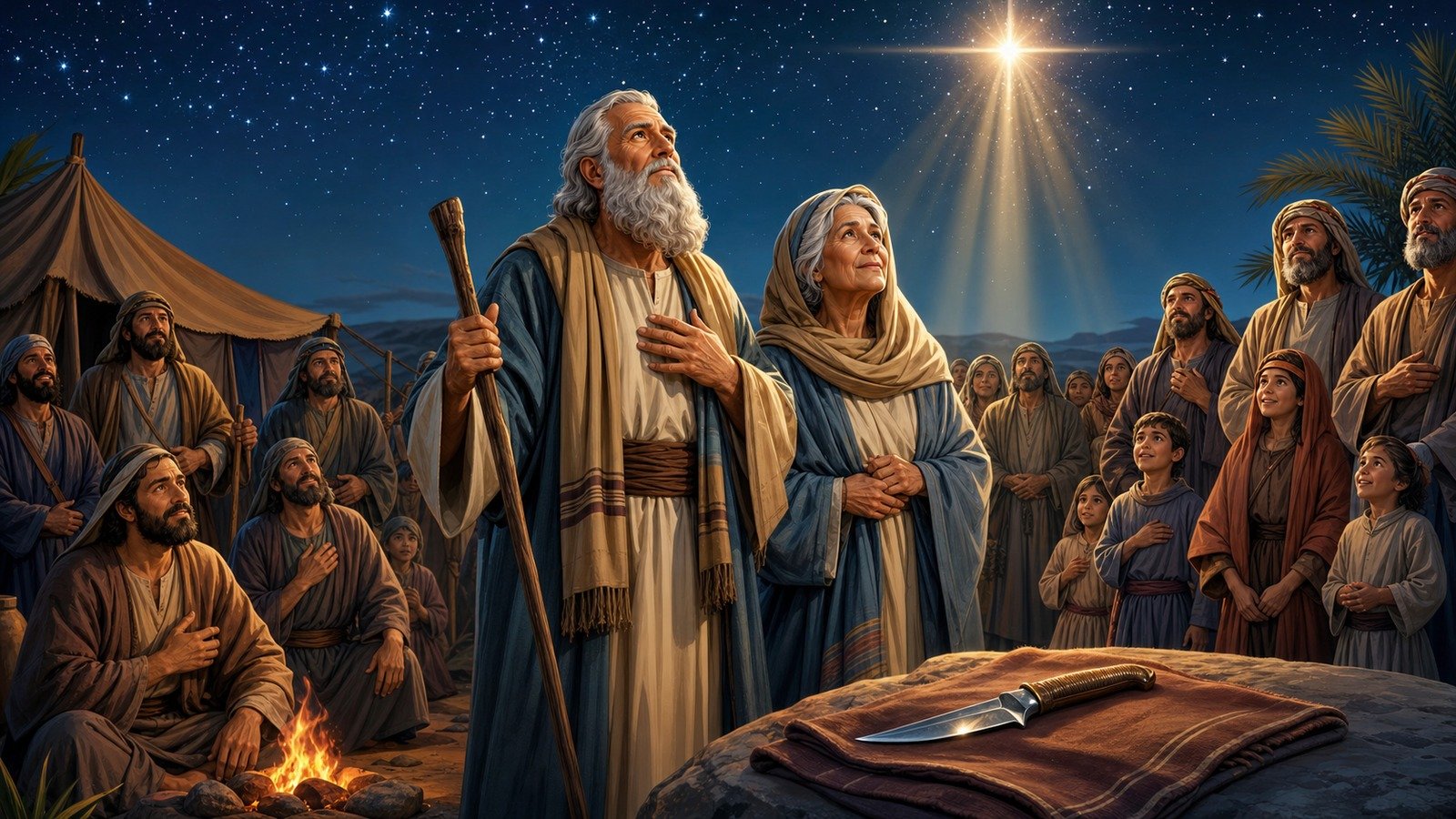
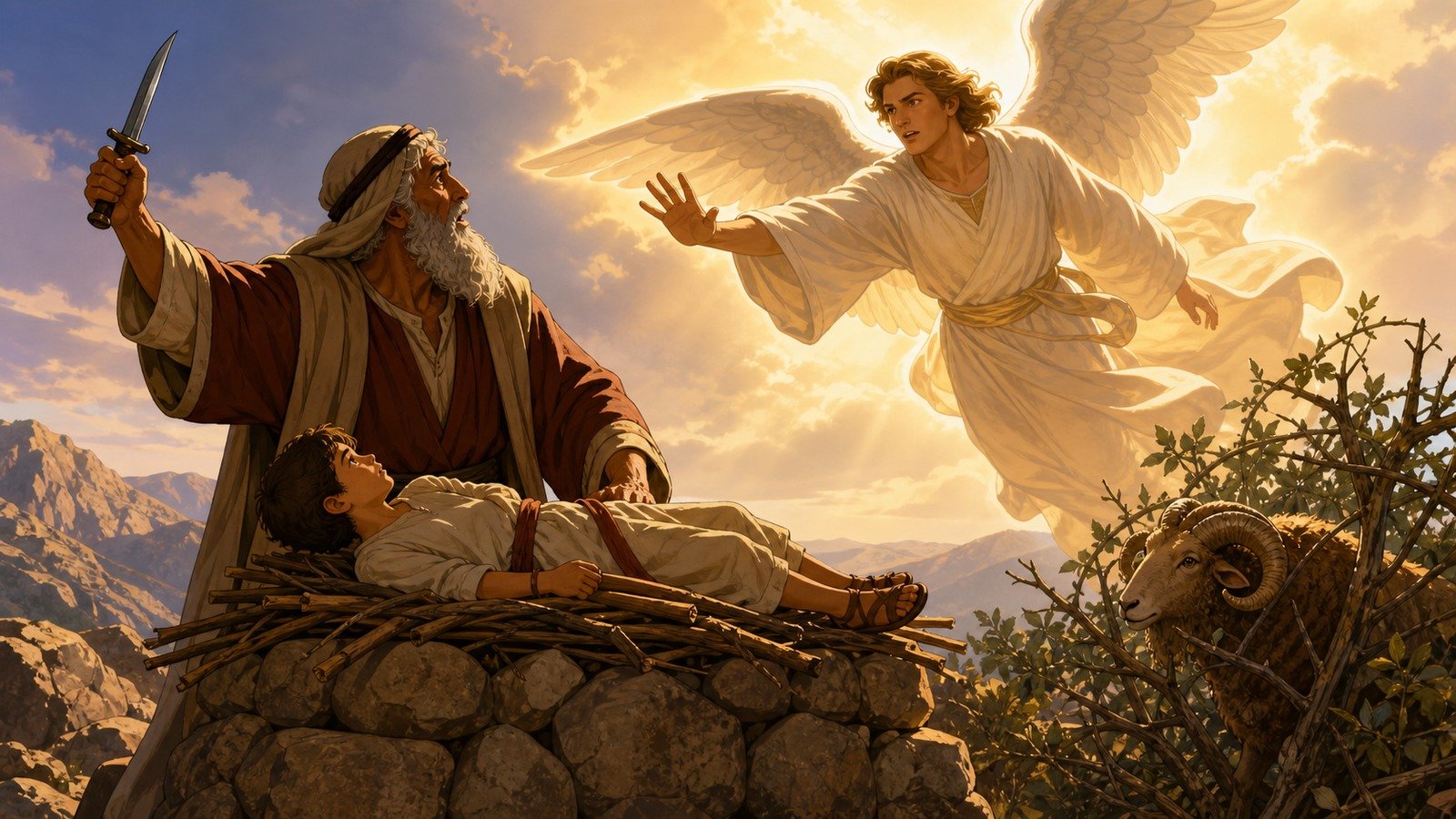
God tests Abraham by commanding him to sacrifice Isaac; Abraham obeys to the point of raising the knife before an angel stops him and a ram is provided instead. Christian tradition has long read this as an Old Testament foreshadowing of substitutionary sacrifice, though this is an interpretive reading rather than something the text states outright.
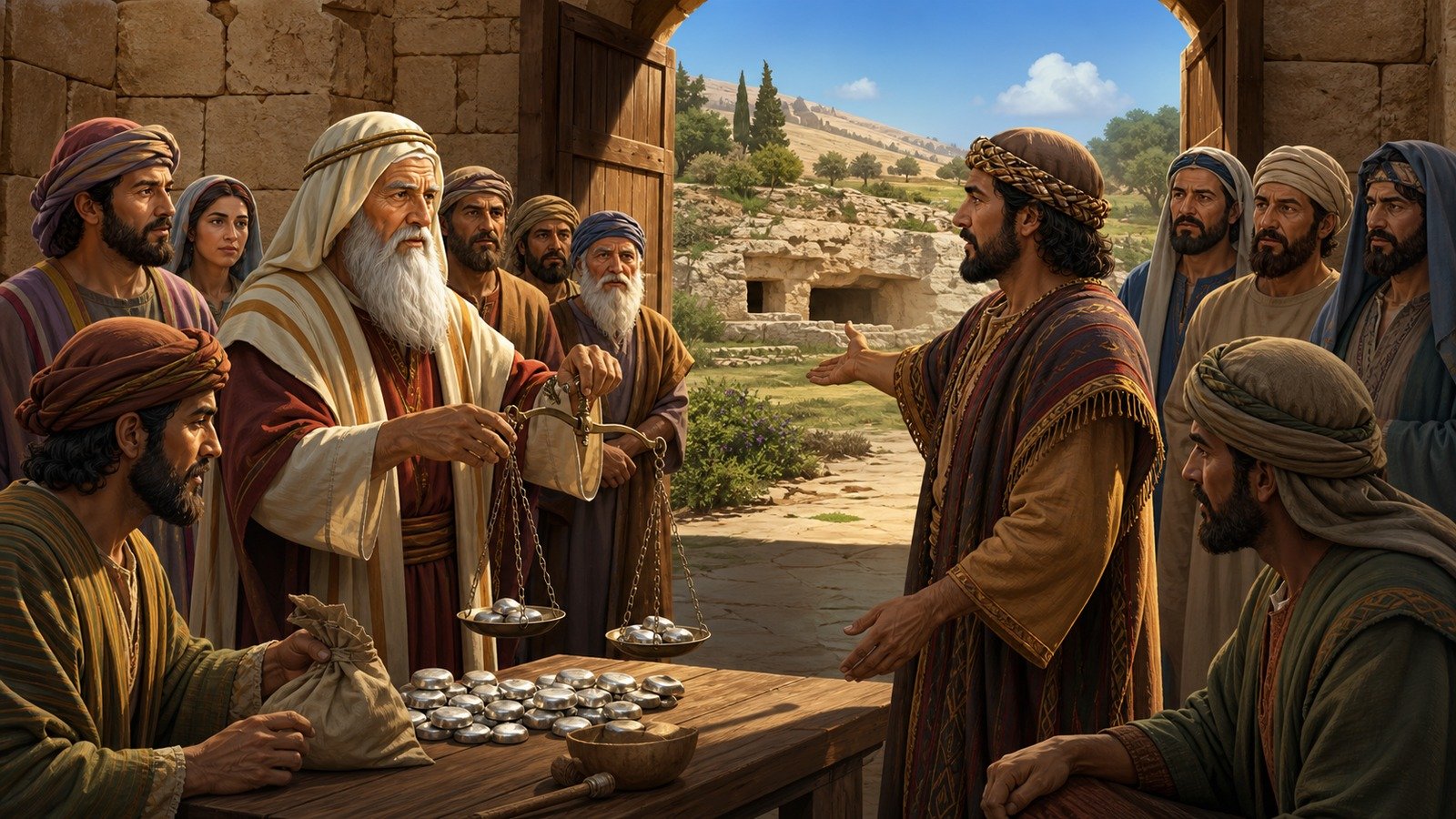
Abraham negotiates the purchase of the cave of Machpelah from Ephron the Hittite as a family burial site, the first piece of land in Canaan he owns outright despite decades of God's promise that the whole land would be his descendants'.
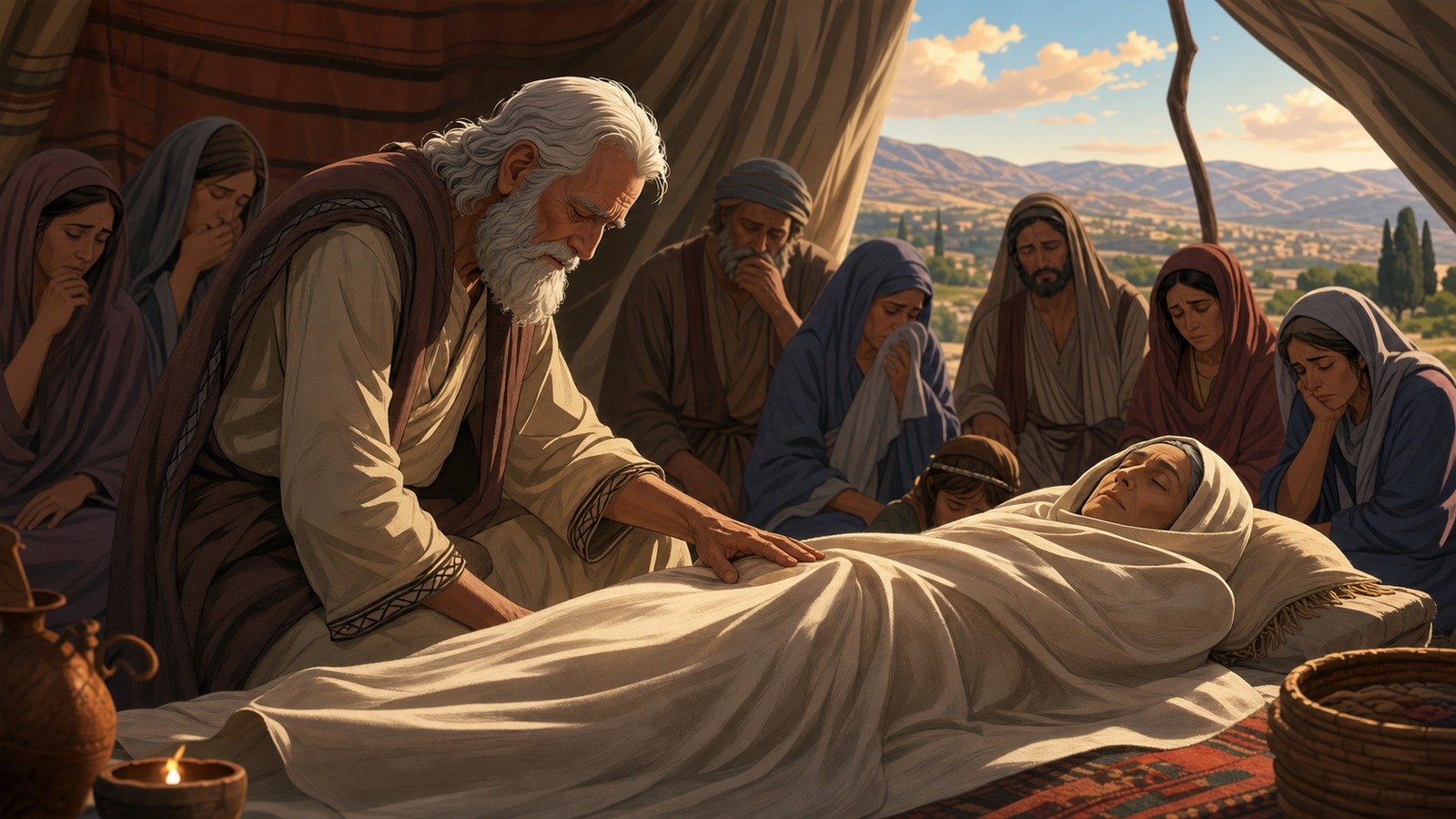
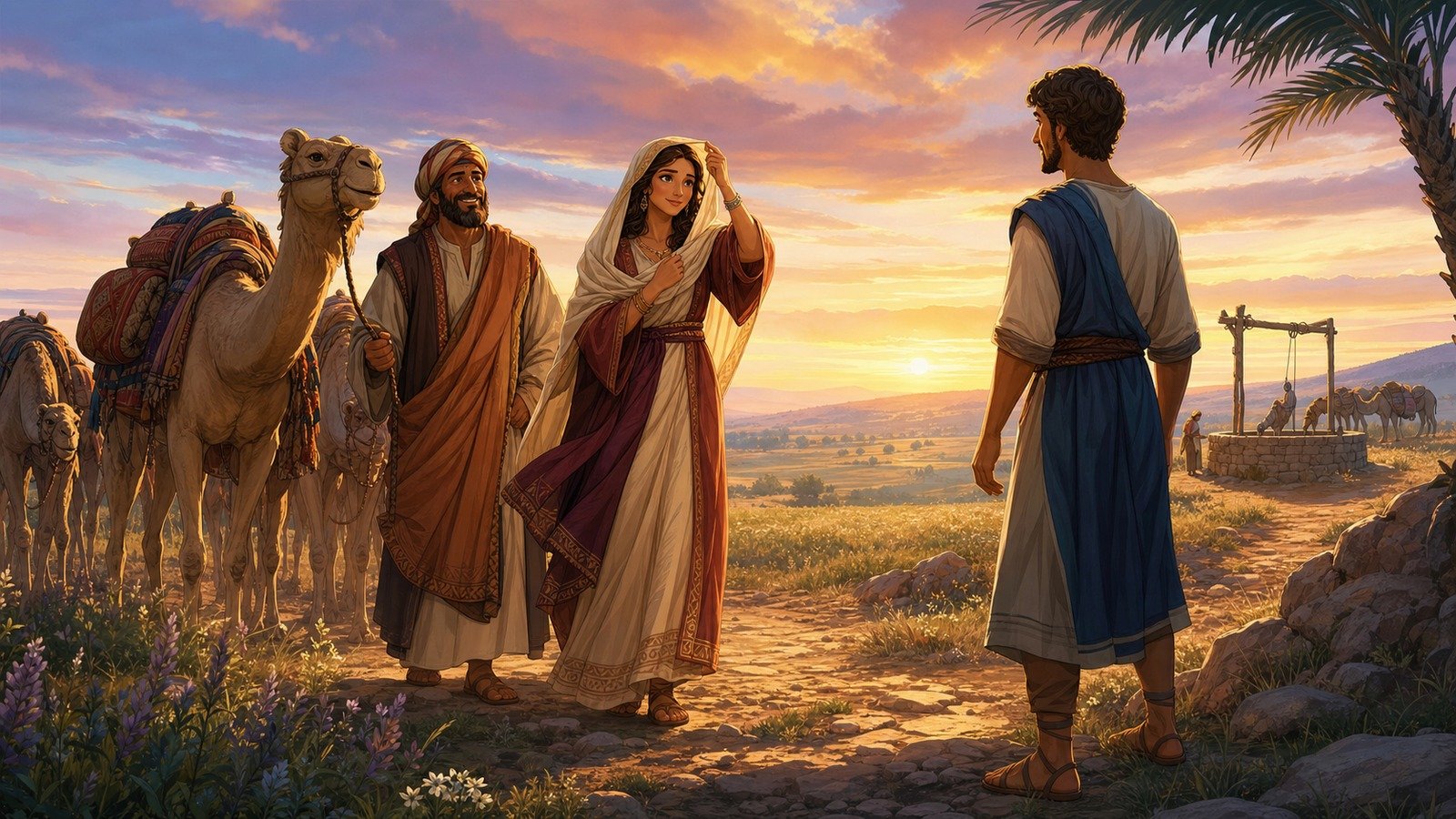
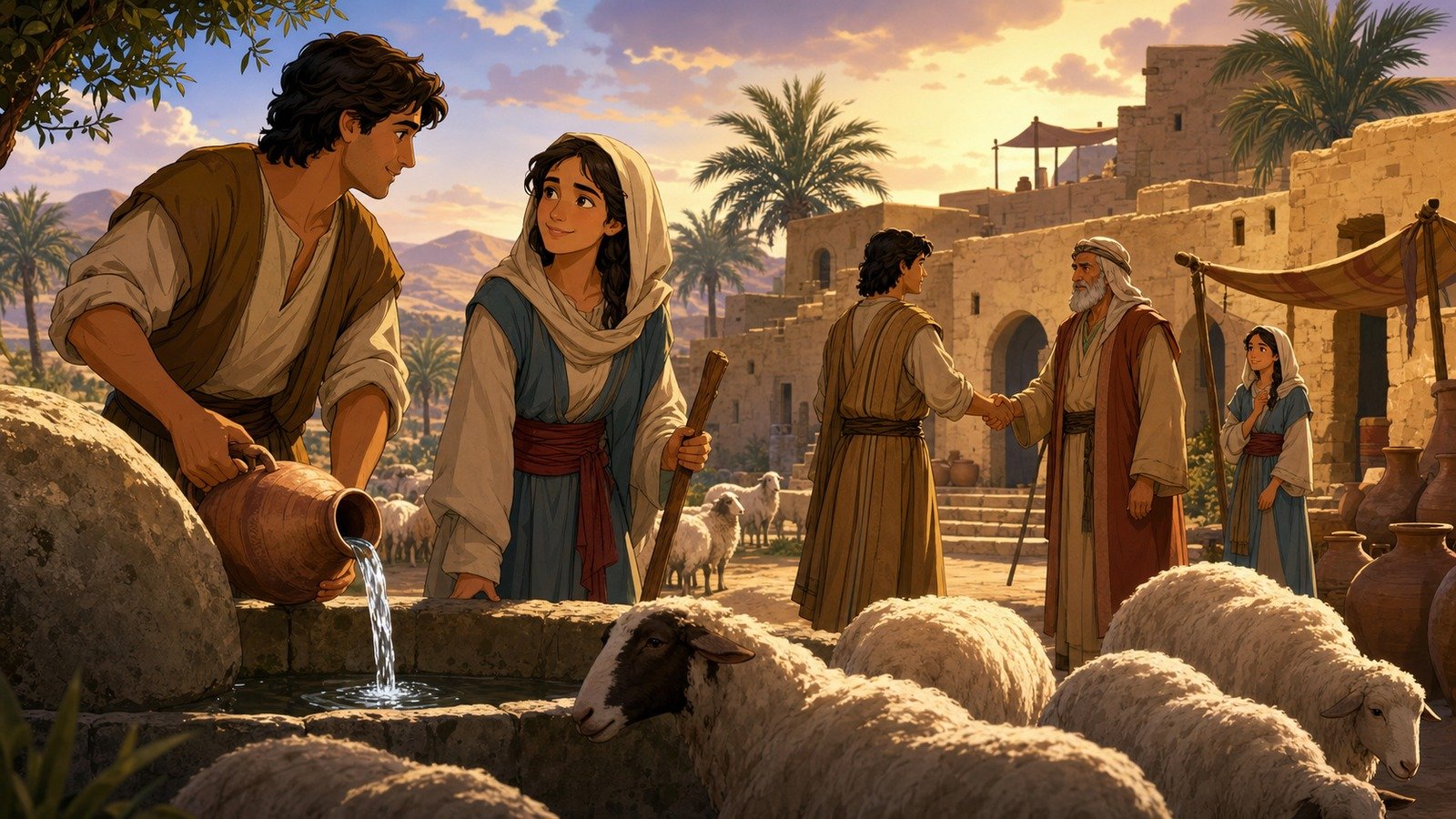
Abraham sends his servant back to Harran to find a wife for Isaac from among his own relatives rather than the Canaanites. The servant's prayer is answered by Rebekah at the well, and Isaac marries her, finding comfort after his mother's death.
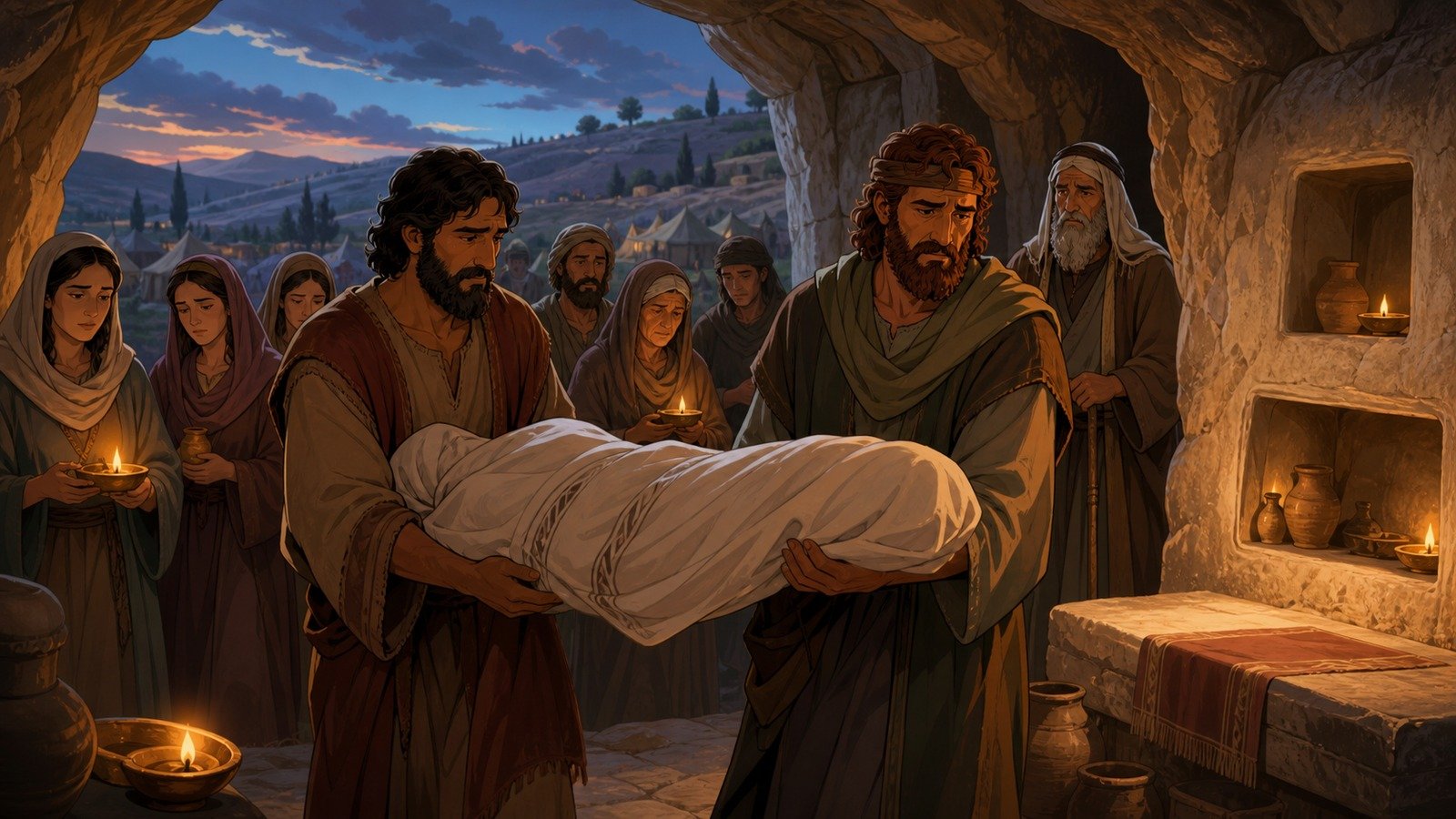
Abraham takes a further wife, Keturah, and fathers more children before dying at 175. Isaac and Ishmael together bury him beside Sarah in the cave of Machpelah.
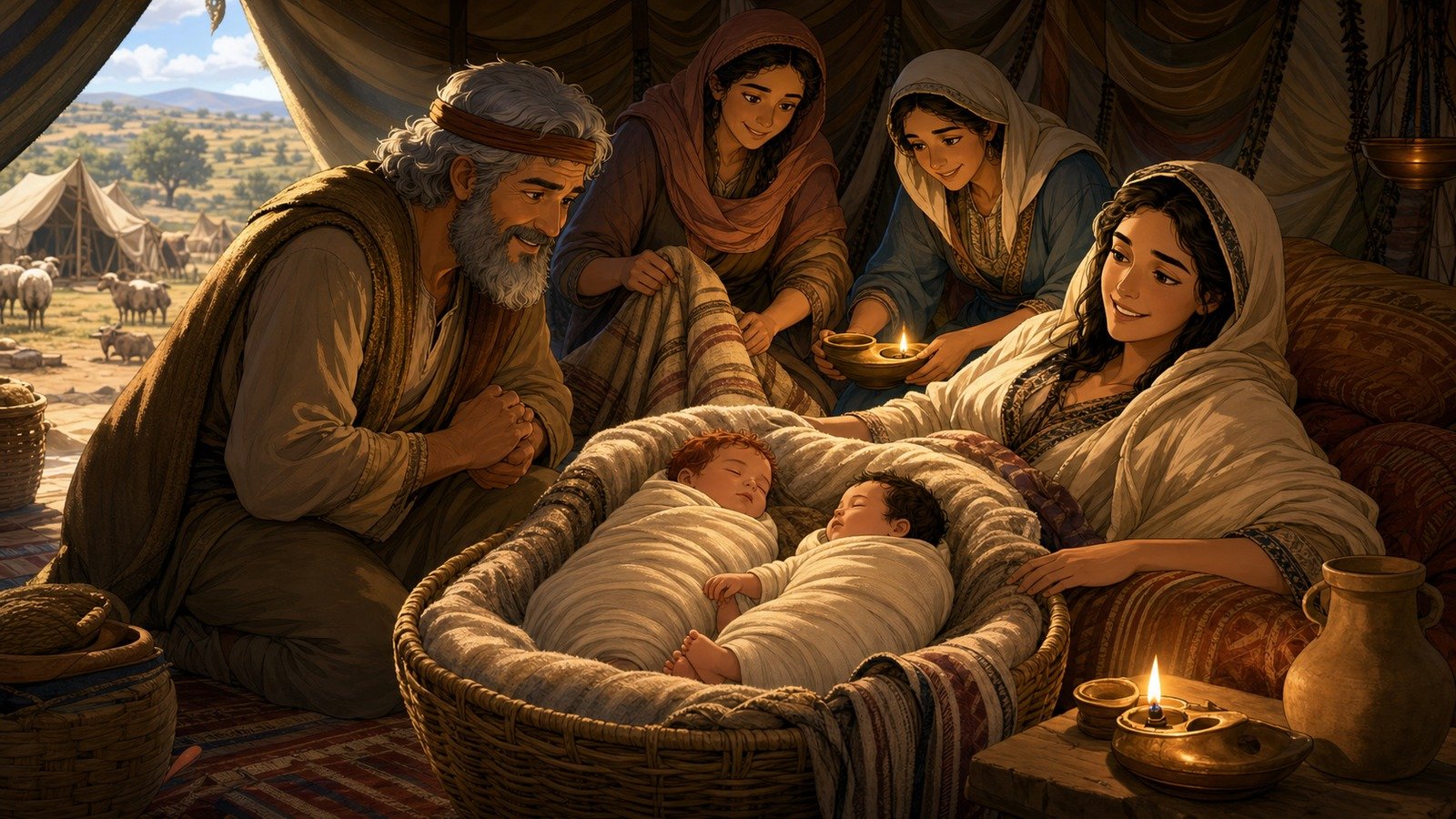
After twenty years of Rebekah's barrenness, twins are born to Isaac: Esau first, then Jacob grasping his heel. God tells Rebekah beforehand that the older will serve the younger, a reversal that shapes the rest of the family's story.
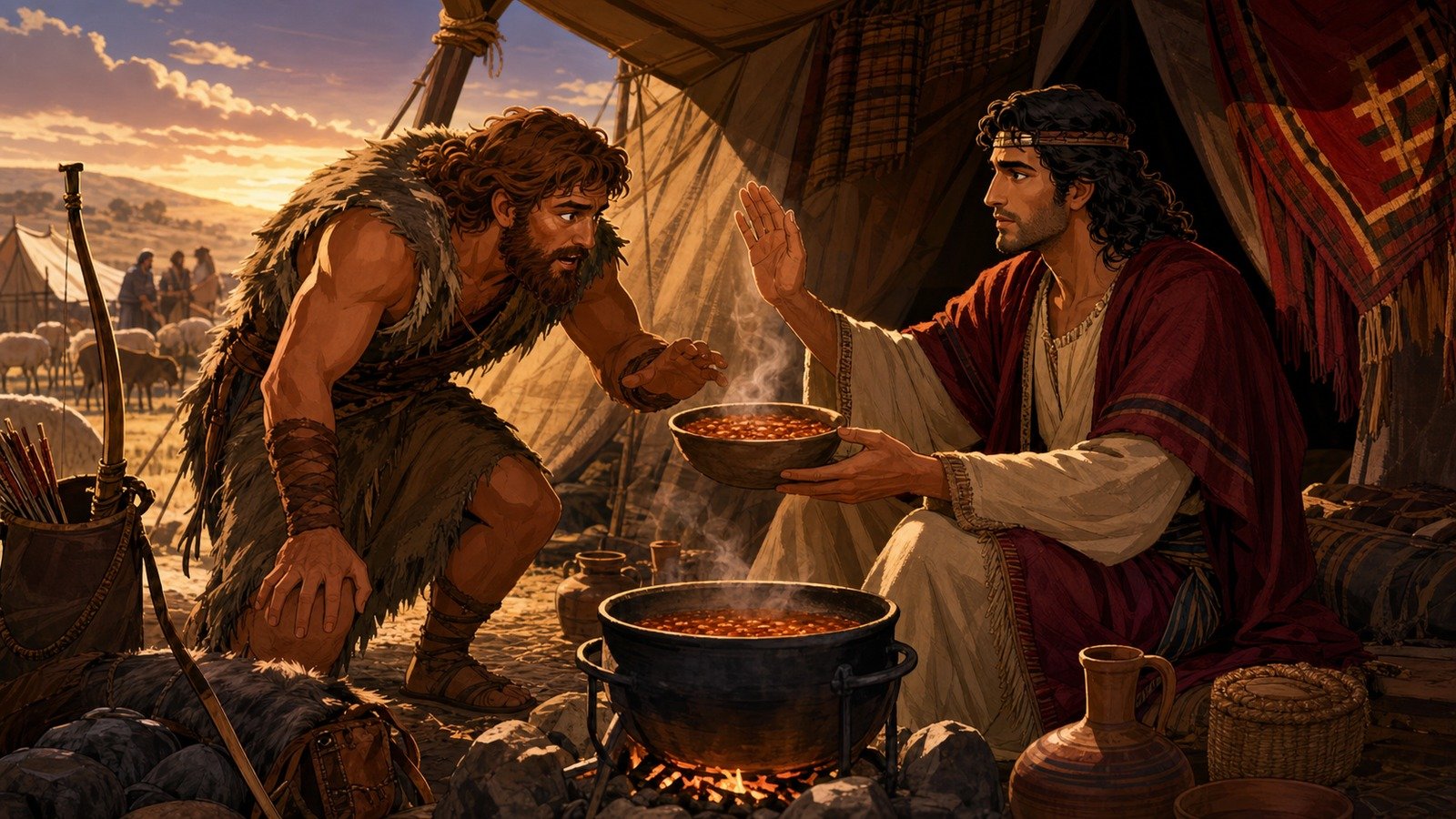
Returning exhausted from the field, Esau trades his birthright, the double inheritance and family leadership due the firstborn, for a bowl of Jacob's stew, an act Scripture treats as evidence of his contempt for his inheritance.
Isaac repeats his father's deception about his wife during a famine, then prospers in Gerar to the point that the Philistines envy him, and redigs the wells his father had dug, which the Philistines had filled in after Abraham's death.
God appears to Isaac at Beersheba to renew the promise first given to Abraham, and Isaac makes a covenant of peace with Abimelech at the same site his father had, echoing Abraham's earlier treaty there.
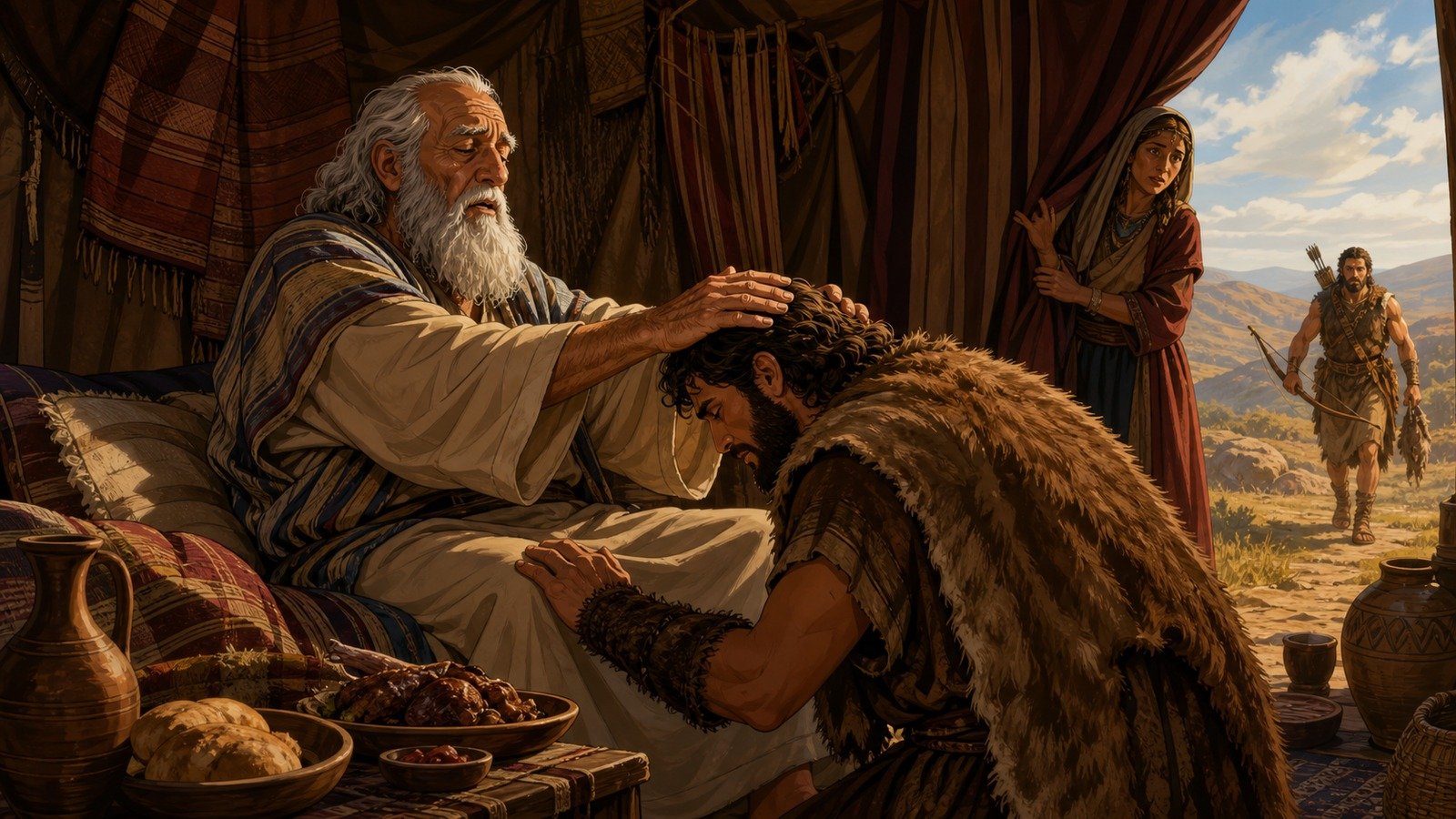
With Rebekah's help, Jacob disguises himself as Esau to secure the blind and dying Isaac's blessing, the formal transfer of covenant leadership. Esau's fury forces Jacob to flee, fulfilling the birthright sale while deepening the brothers' estrangement.
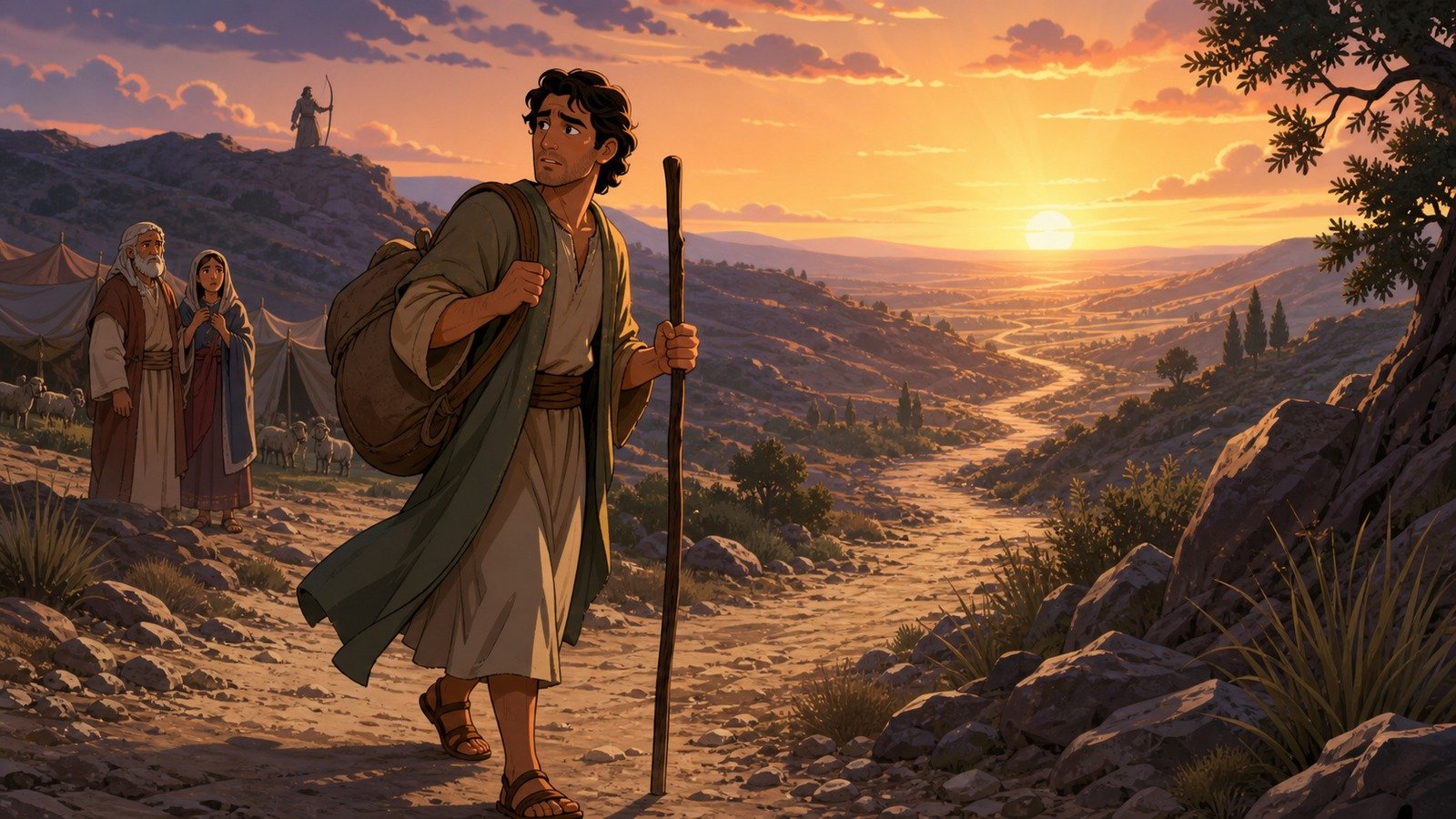
Isaac sends Jacob to his mother's family in Harran, both to escape Esau's anger and to find a wife from among his own relatives rather than the local Canaanites.
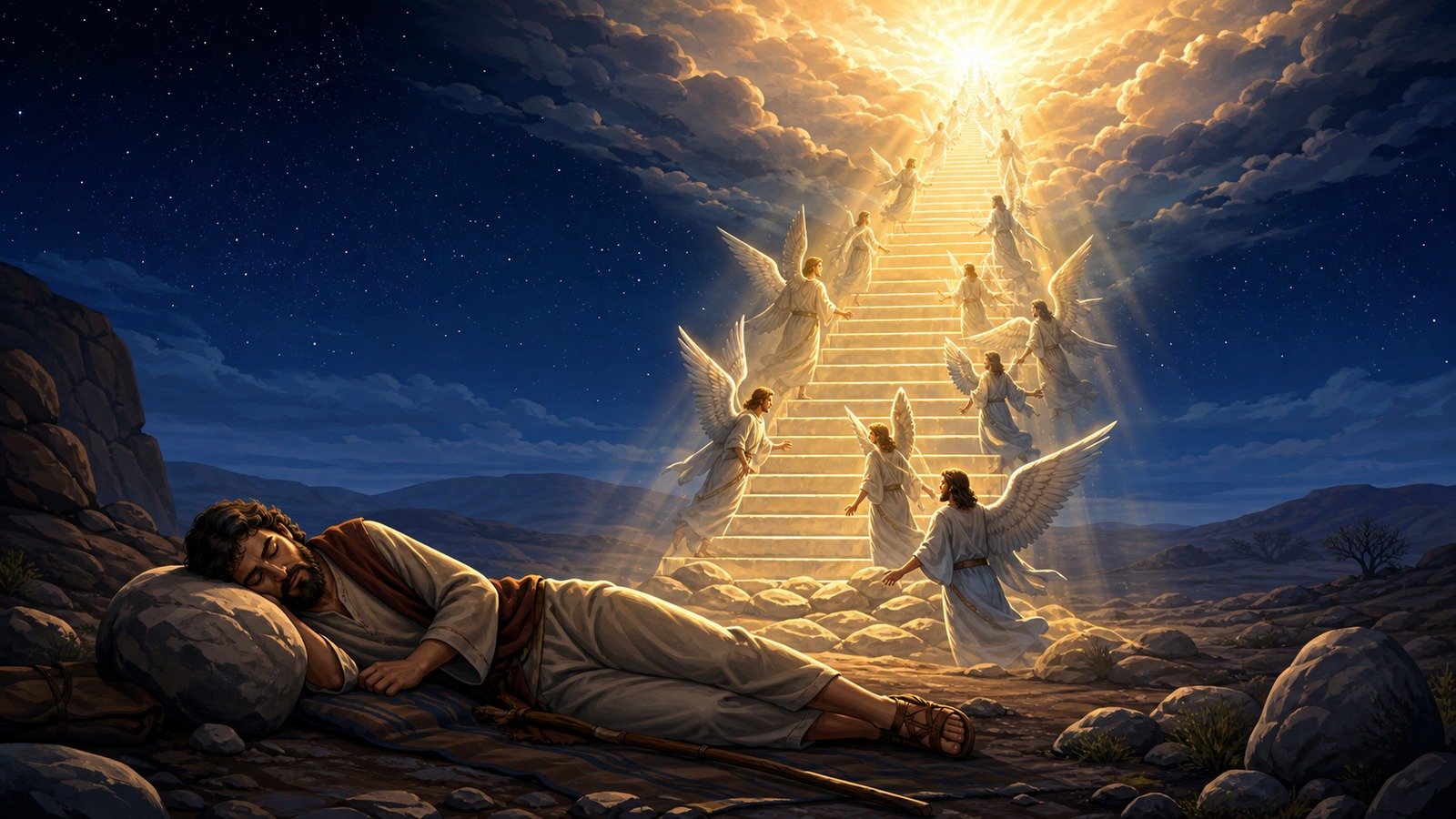
On the road to Harran, Jacob dreams of a stairway to heaven with angels ascending and descending; God personally renews to him the covenant promise first given to Abraham, and Jacob names the site Bethel, "house of God."
Laban substitutes his older daughter Leah on the wedding night; Jacob discovers the deception only the next morning and agrees to a further seven years' service to marry Rachel as well, beginning the rivalry between the two sisters.
Loved less than Rachel, Leah bears Jacob four sons in succession; she reads each birth as a sign of God's attention to her situation, naming Judah, whose line later includes David and Jesus, in simple gratitude.
Still childless and desperate, Rachel gives her servant Bilhah to Jacob to bear children on her behalf, following the same custom Sarah had used with Hagar a generation earlier; Dan and Naphtali are born.
Following an exchange of mandrakes between Leah and Rachel, Leah bears Jacob three more children, two sons and a daughter, Dinah, whose story becomes significant later in Genesis 34.
Jacob negotiates a wage of speckled and spotted livestock from Laban, then prospers through selective breeding practices, growing wealthy enough to provoke resentment from Laban's sons.
Jacob leaves Laban secretly with his family and flocks; Laban pursues him but the two part on terms of a covenant at Galeed, after Rachel's theft of her father's household idols goes undiscovered.
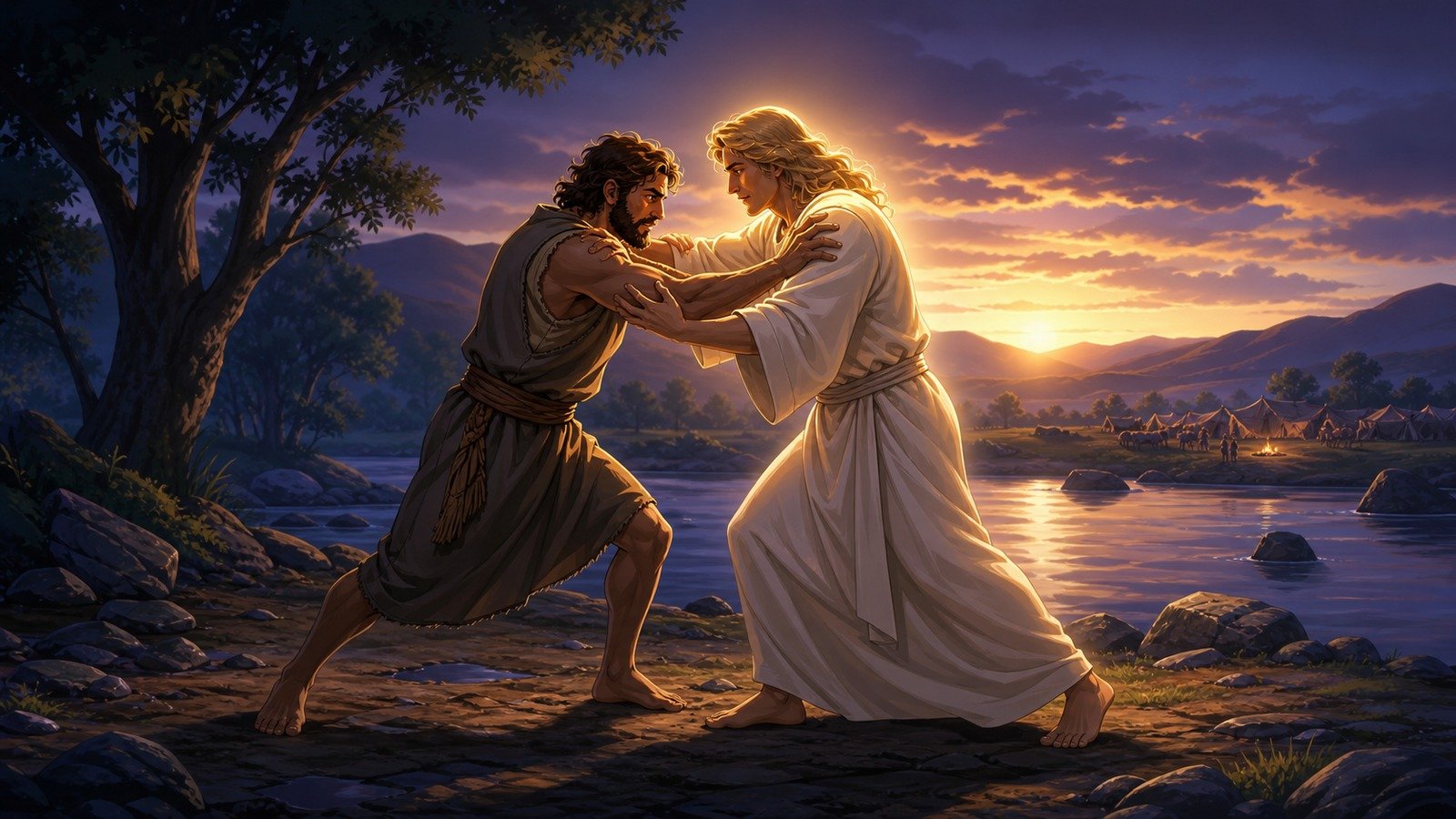
On the way to meet Esau, Jacob wrestles through the night with a divine figure, is given the name Israel ("he struggles with God"), and comes away with a permanent limp and a changed identity ahead of the reunion he fears.
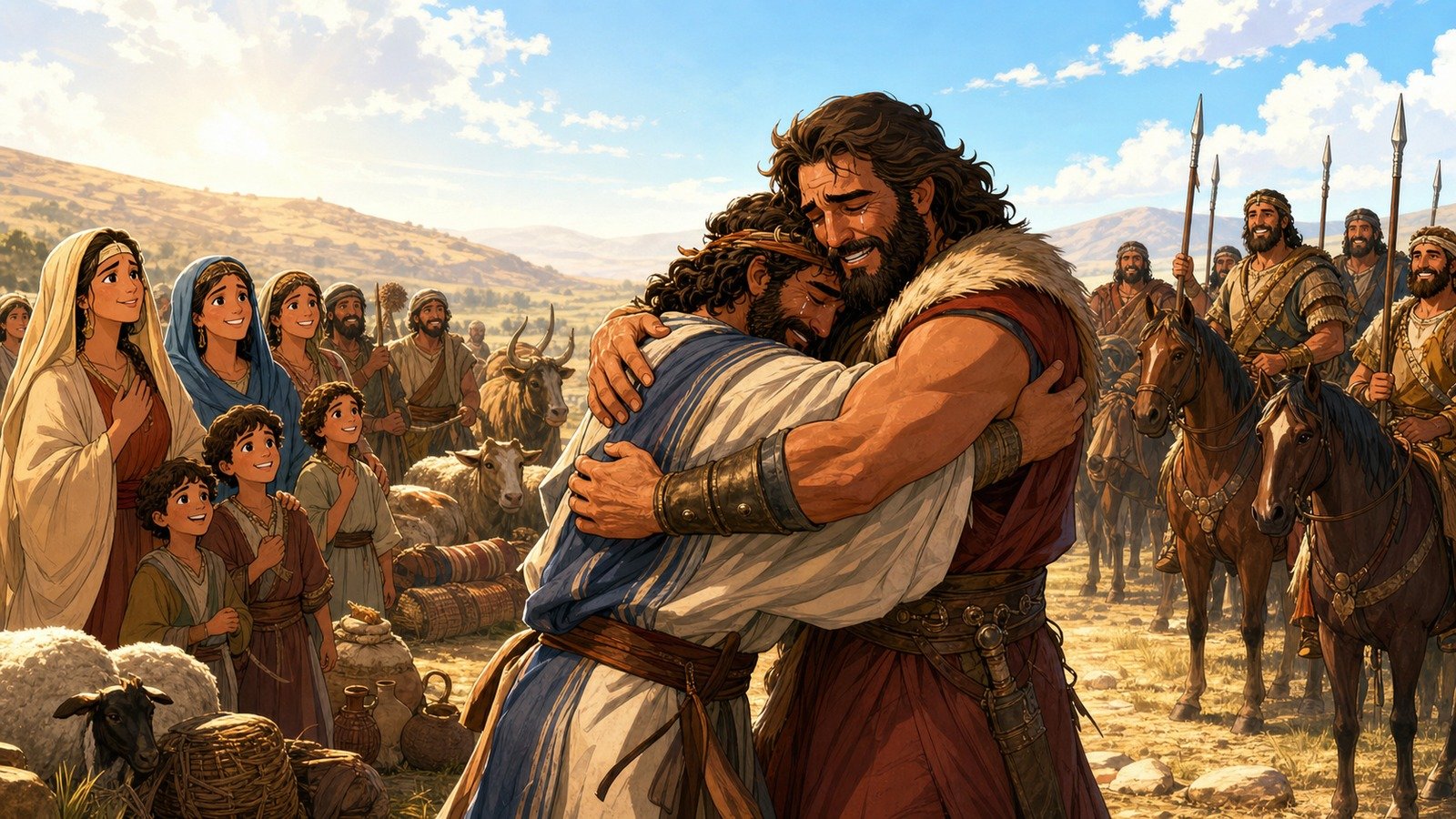
After twenty years apart, Esau runs to meet Jacob, embraces him, and weeps; the feared confrontation becomes a reconciliation, and the brothers part peacefully to settle in different regions.
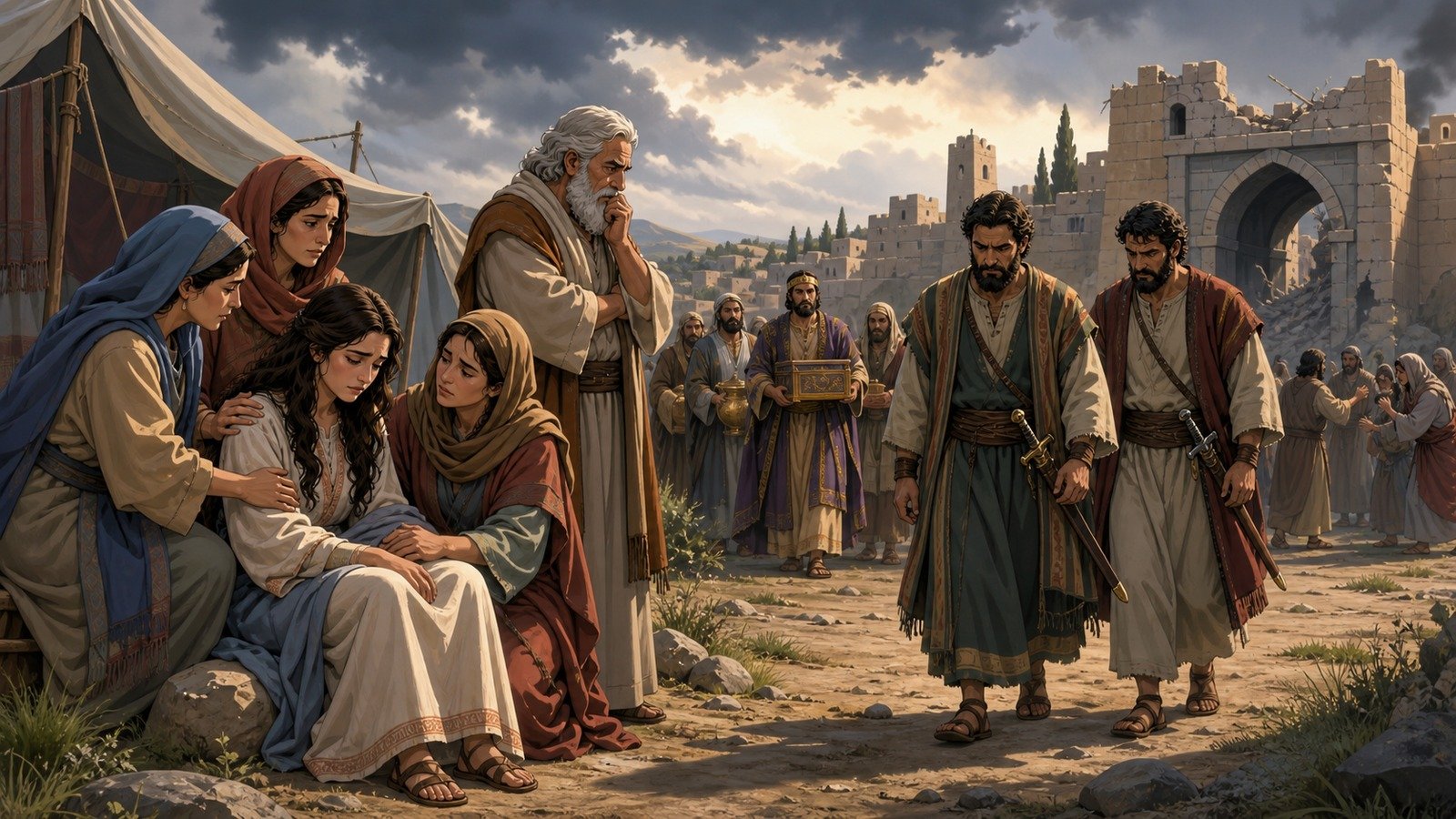
Shechem, son of the local ruler Hamor, rapes Jacob's daughter Dinah and then seeks to marry her. Simeon and Levi deceive the Shechemites into circumcision, then massacre them while incapacitated, an act Jacob later condemns on his deathbed.
God calls Jacob back to Bethel to renew his vow; Jacob has his household rid itself of foreign gods first, and God reaffirms both his new name, Israel, and the covenant promise.
Isaac dies at 180 in Hebron, and both Jacob and Esau bury him beside Abraham and Sarah at Machpelah, one of the rare moments the estranged brothers appear together again.
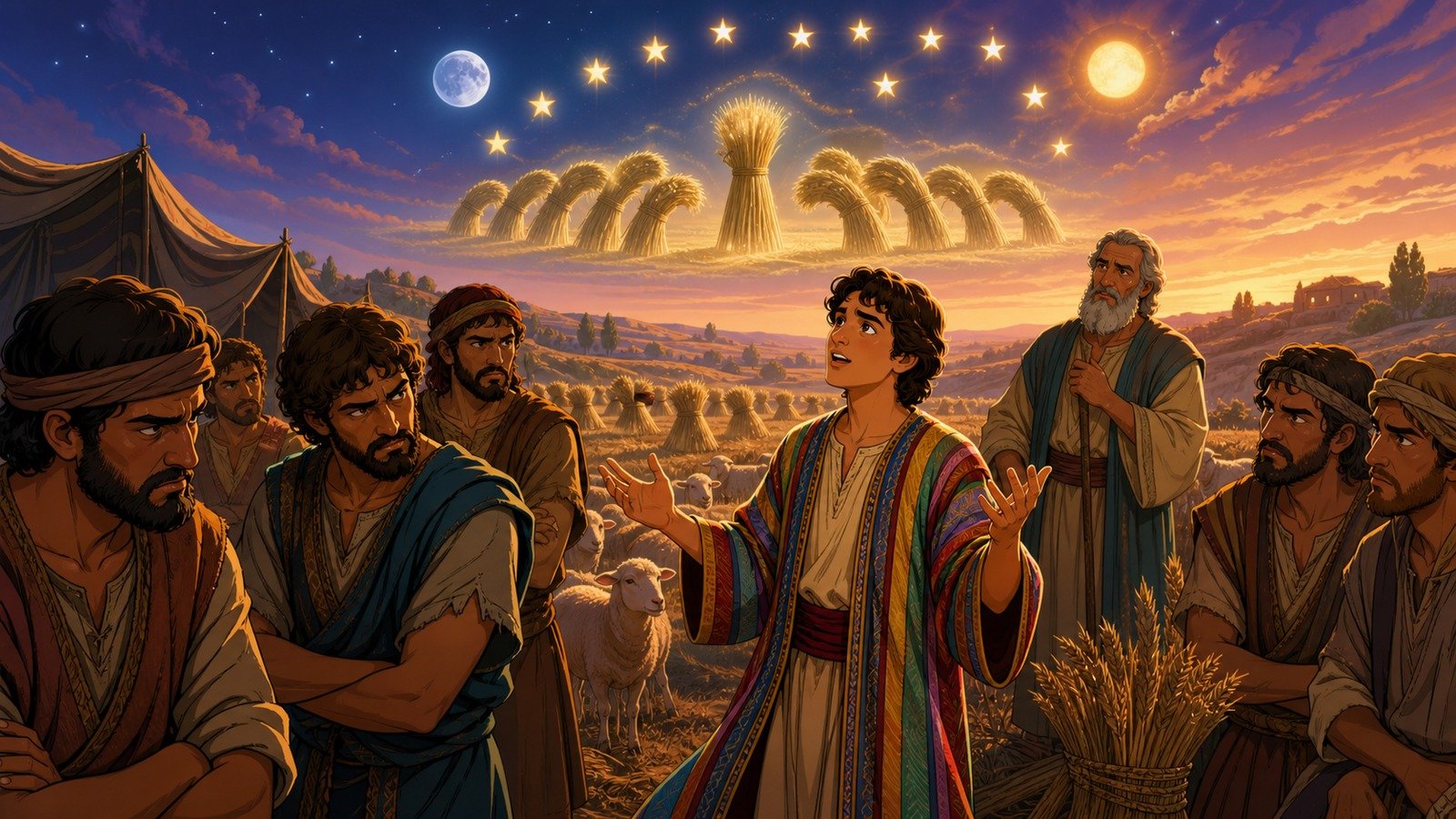
Jacob's evident favouritism toward Joseph, marked by an ornate robe, and Joseph's own dreams of his family bowing to him, provoke deep resentment among his older brothers.
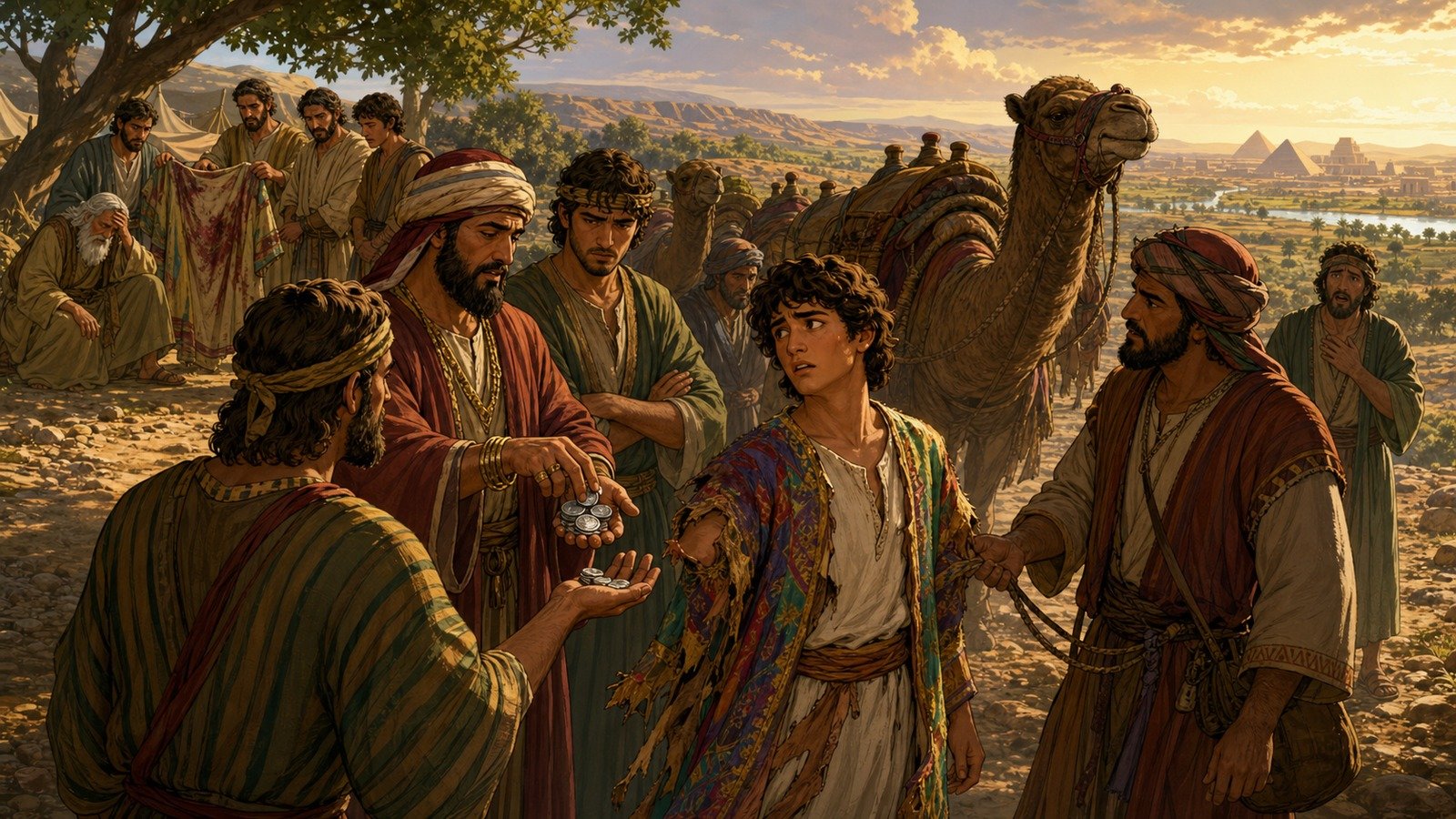
The brothers seize Joseph, consider killing him, then sell him to Midianite traders for twenty pieces of silver; he is taken to Egypt while his brothers deceive Jacob into believing he was killed by a wild animal.
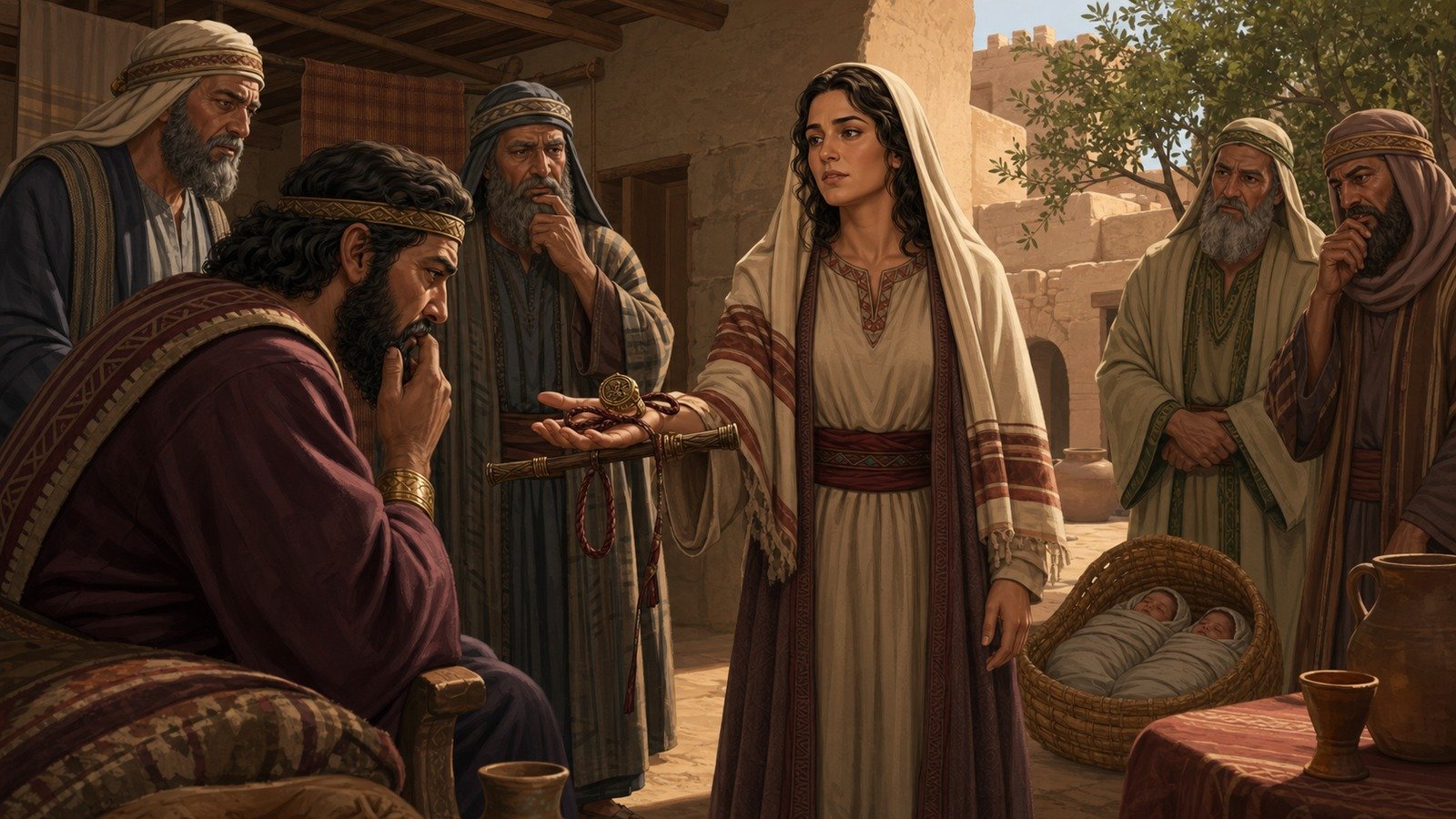
Judah's widowed daughter-in-law Tamar, denied her rightful levirate marriage, disguises herself and conceives twins by Judah himself. The episode, set apart from the main Joseph narrative, places Perez, an ancestor of David and of Jesus, in the family line.
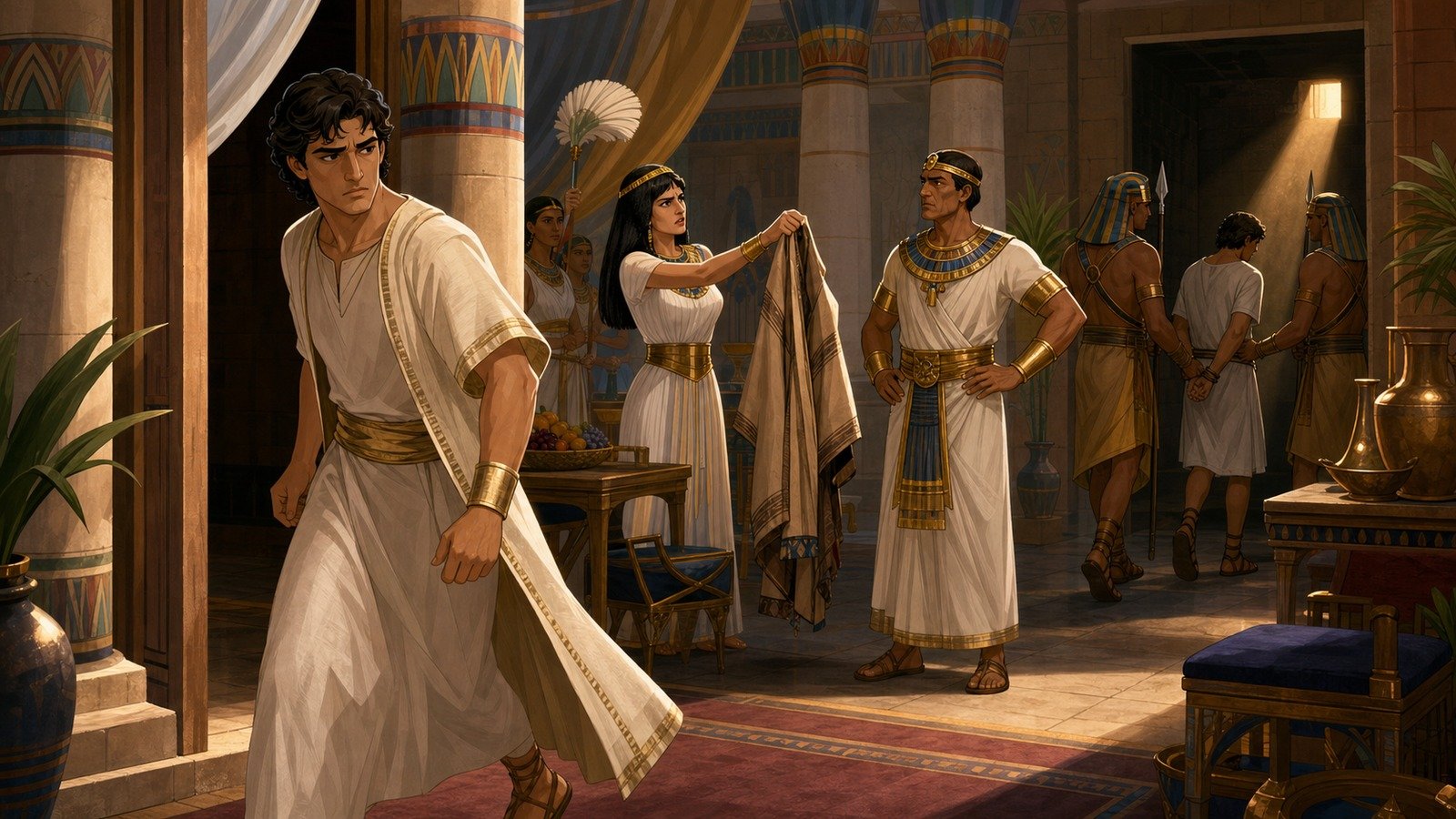
Joseph rises to oversee Potiphar's household, refuses the advances of Potiphar's wife, and is imprisoned on her false accusation of assault. Genesis repeatedly notes that "the Lord was with Joseph" even in prison.
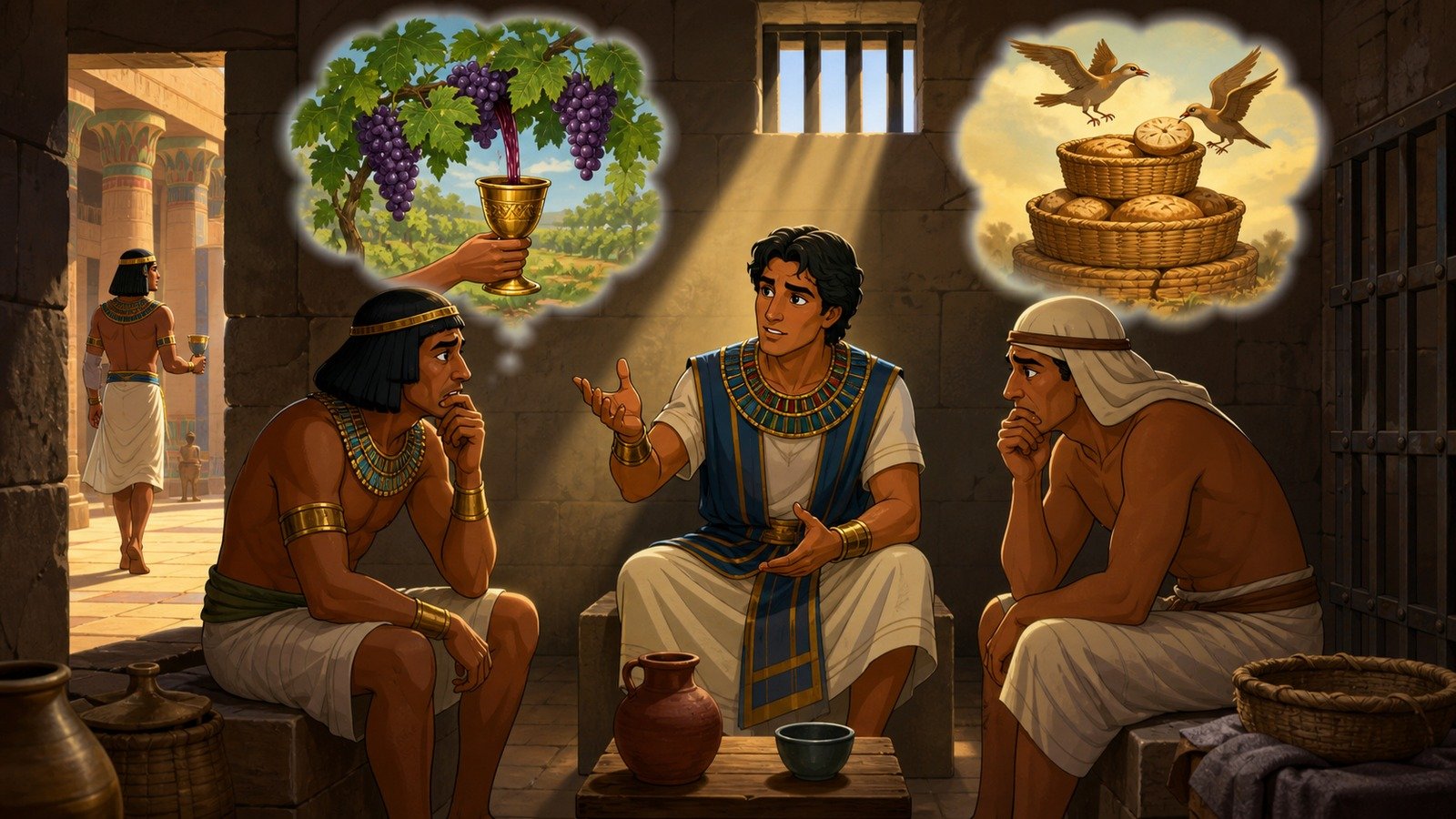
In prison, Joseph correctly interprets dreams for Pharaoh's cupbearer and baker, predicting restoration for one and execution for the other. The cupbearer, restored as predicted, forgets Joseph for two full years.
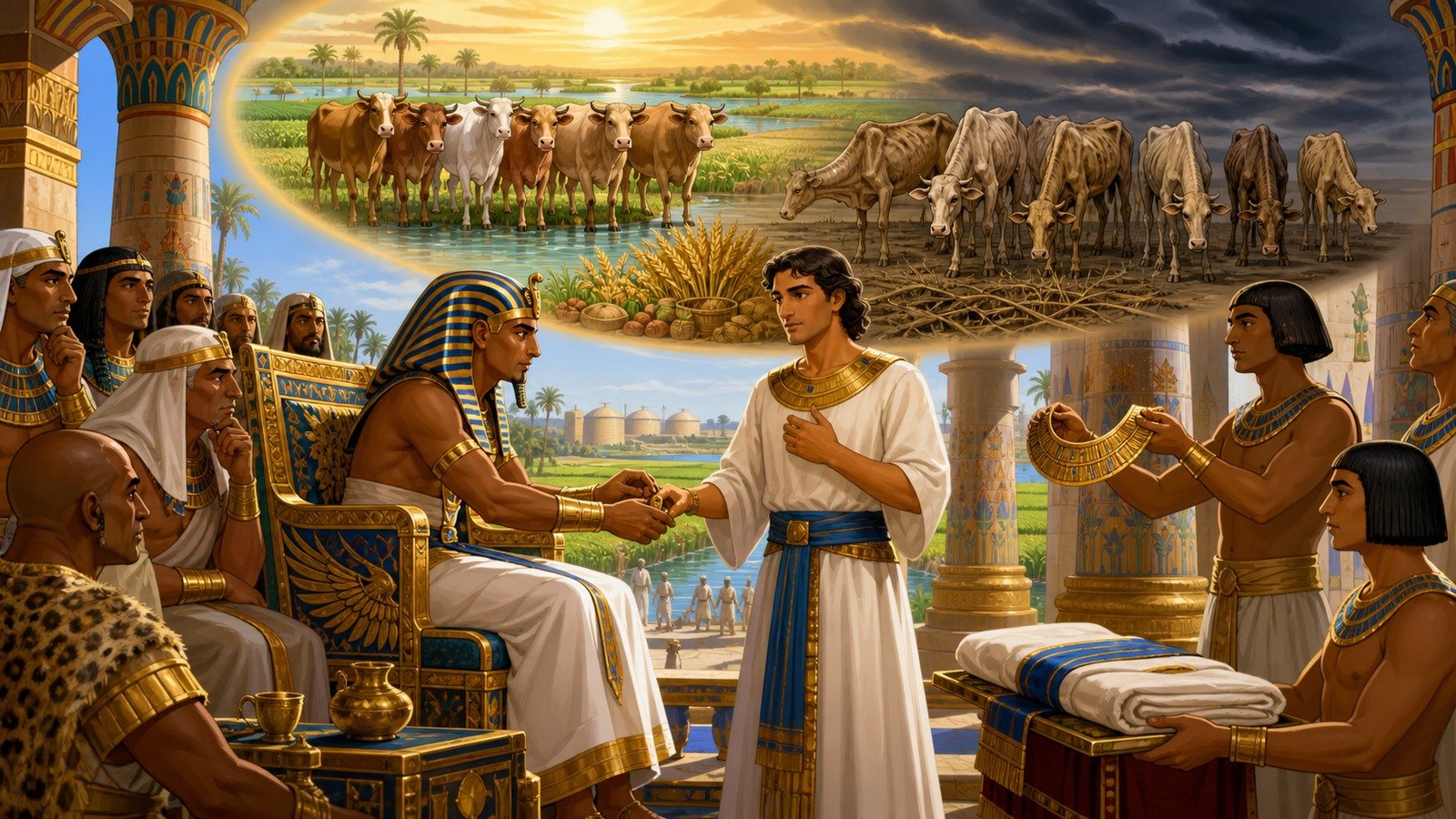
Joseph interprets Pharaoh's dreams of seven fat and seven lean cows as seven years of plenty followed by seven of famine, and is appointed second-in-command over all Egypt at the age of 30 to oversee the coming crisis.
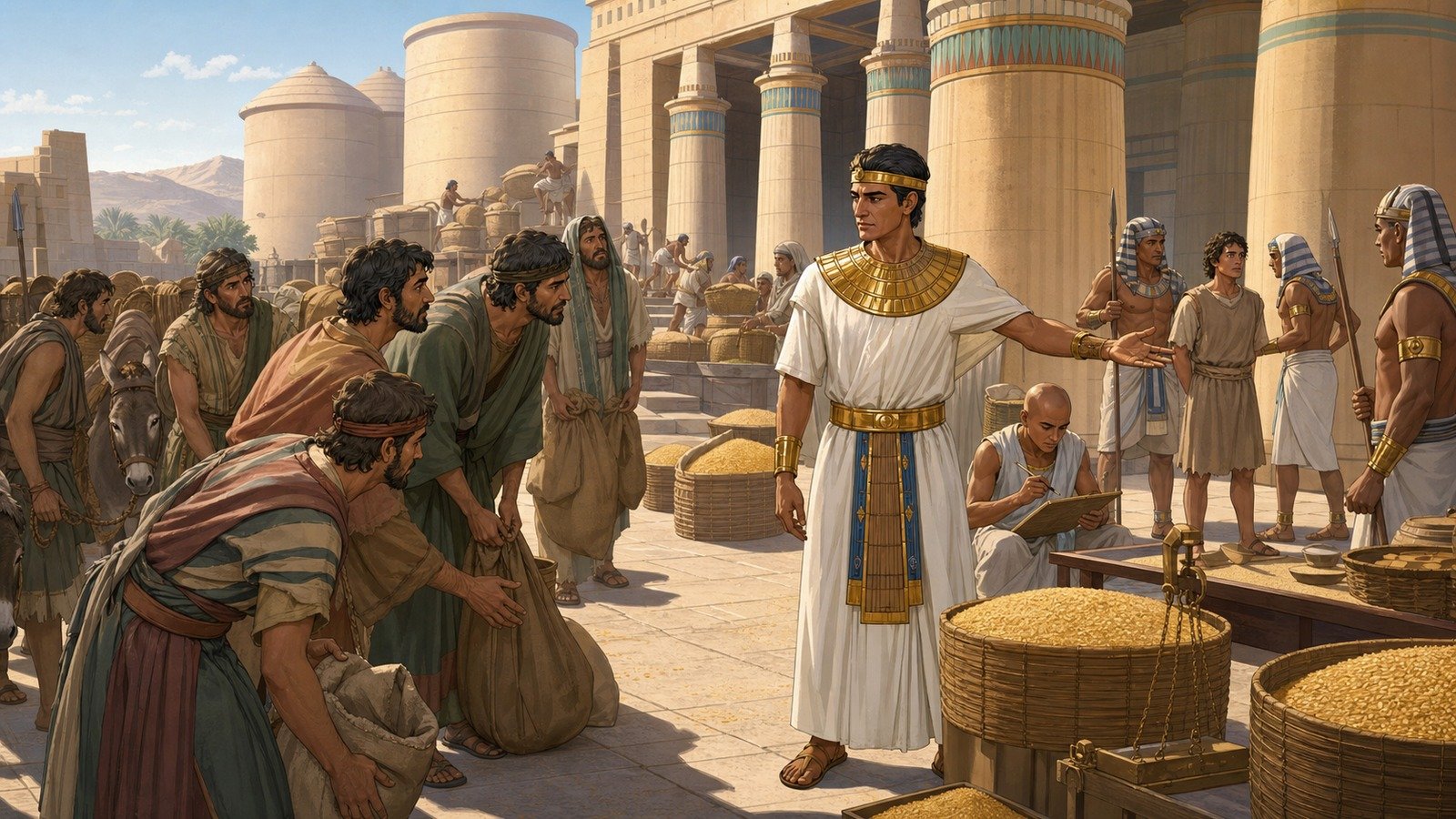
Famine drives Joseph's brothers to Egypt for grain; Joseph, unrecognised, accuses them of spying, holds Simeon hostage, and demands they return with their youngest brother Benjamin to prove their honesty.
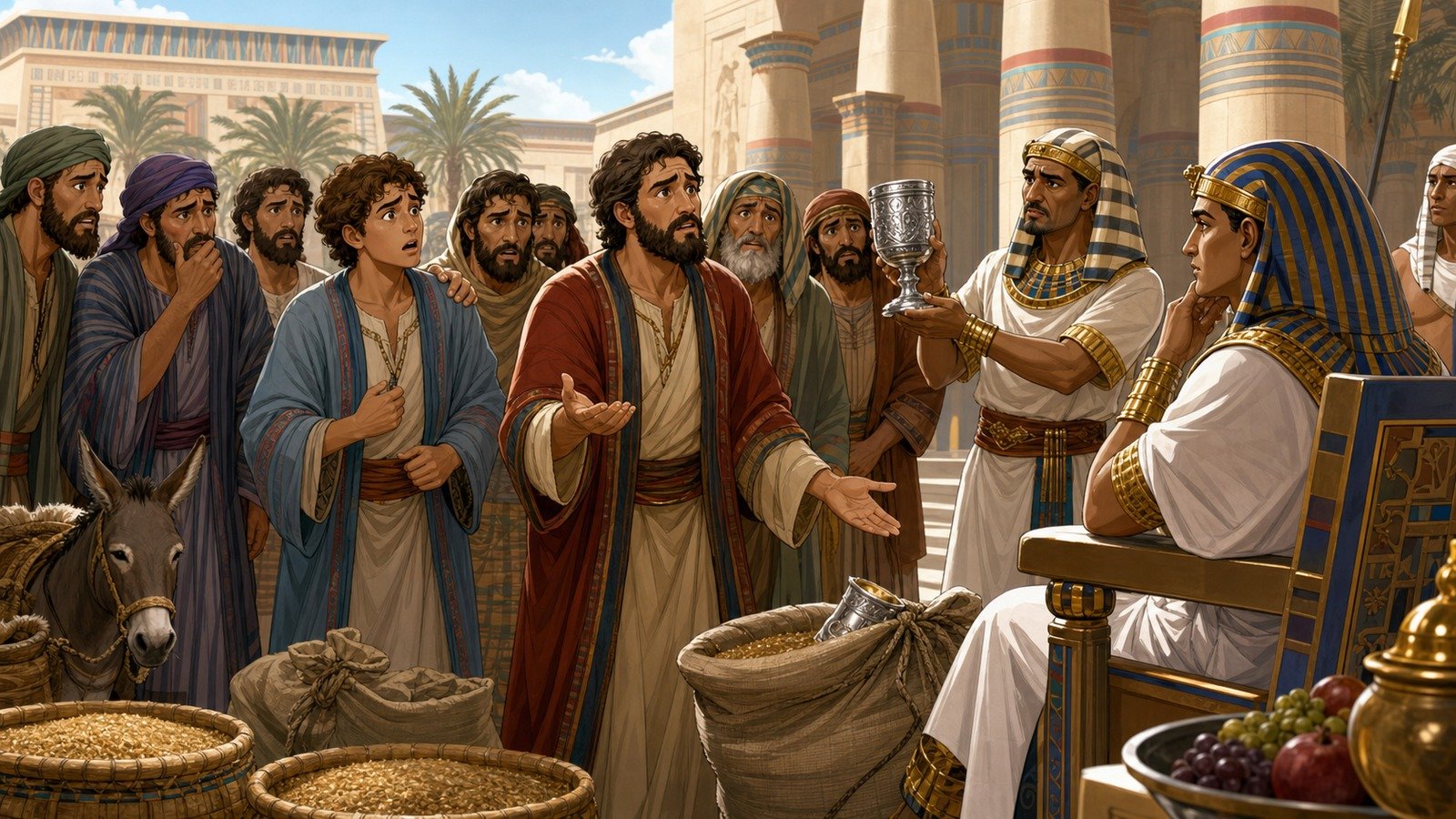
The brothers return with Benjamin; Joseph tests them further with a silver cup planted in Benjamin's sack, and Judah's offer to take Benjamin's punishment himself shows the brothers have genuinely changed since selling Joseph into slavery.
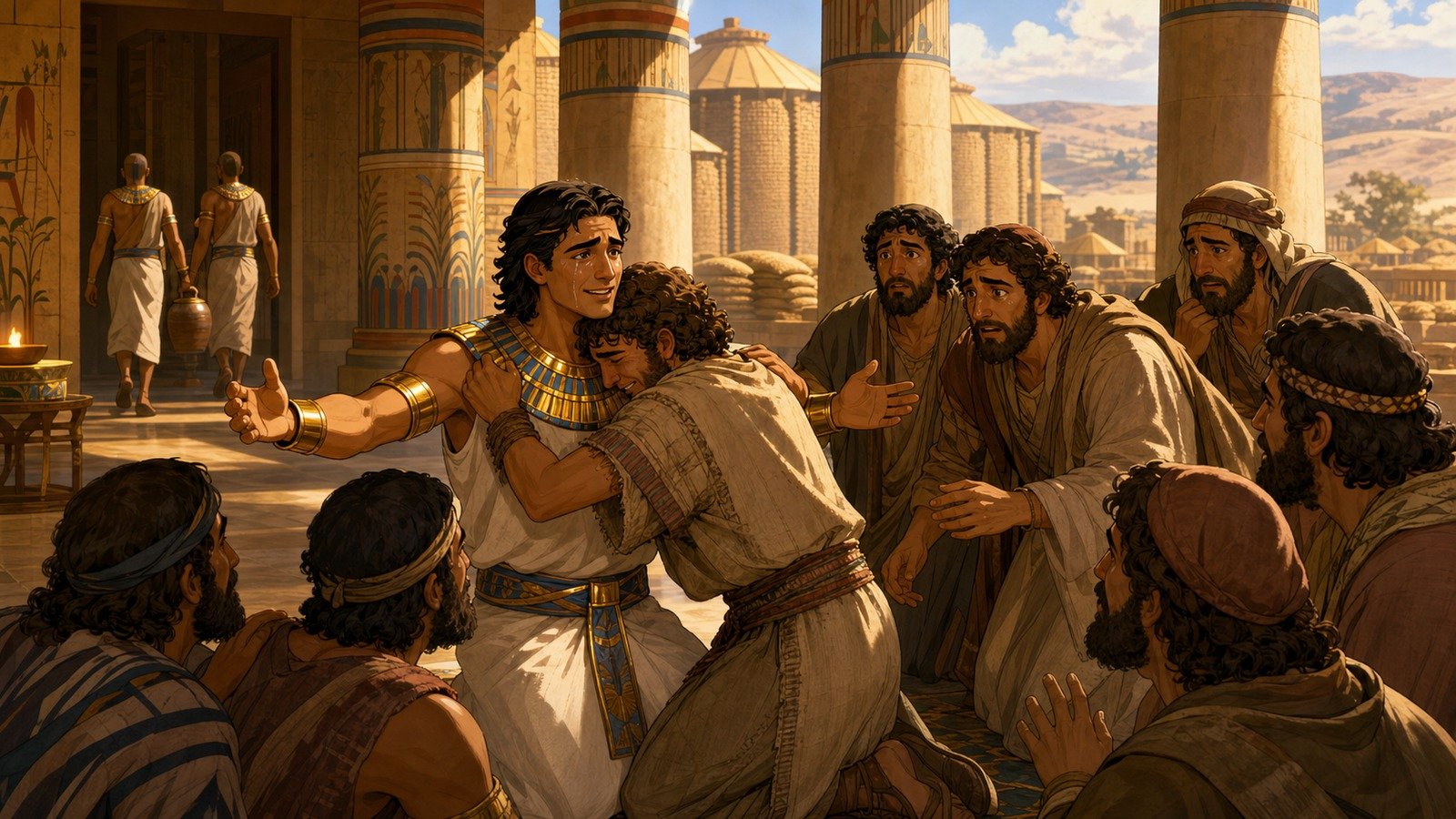
Overcome with emotion, Joseph reveals who he is, forgives his brothers, and reframes their betrayal within God's purpose to preserve life through famine. He sends for Jacob and the whole family to settle in Egypt.
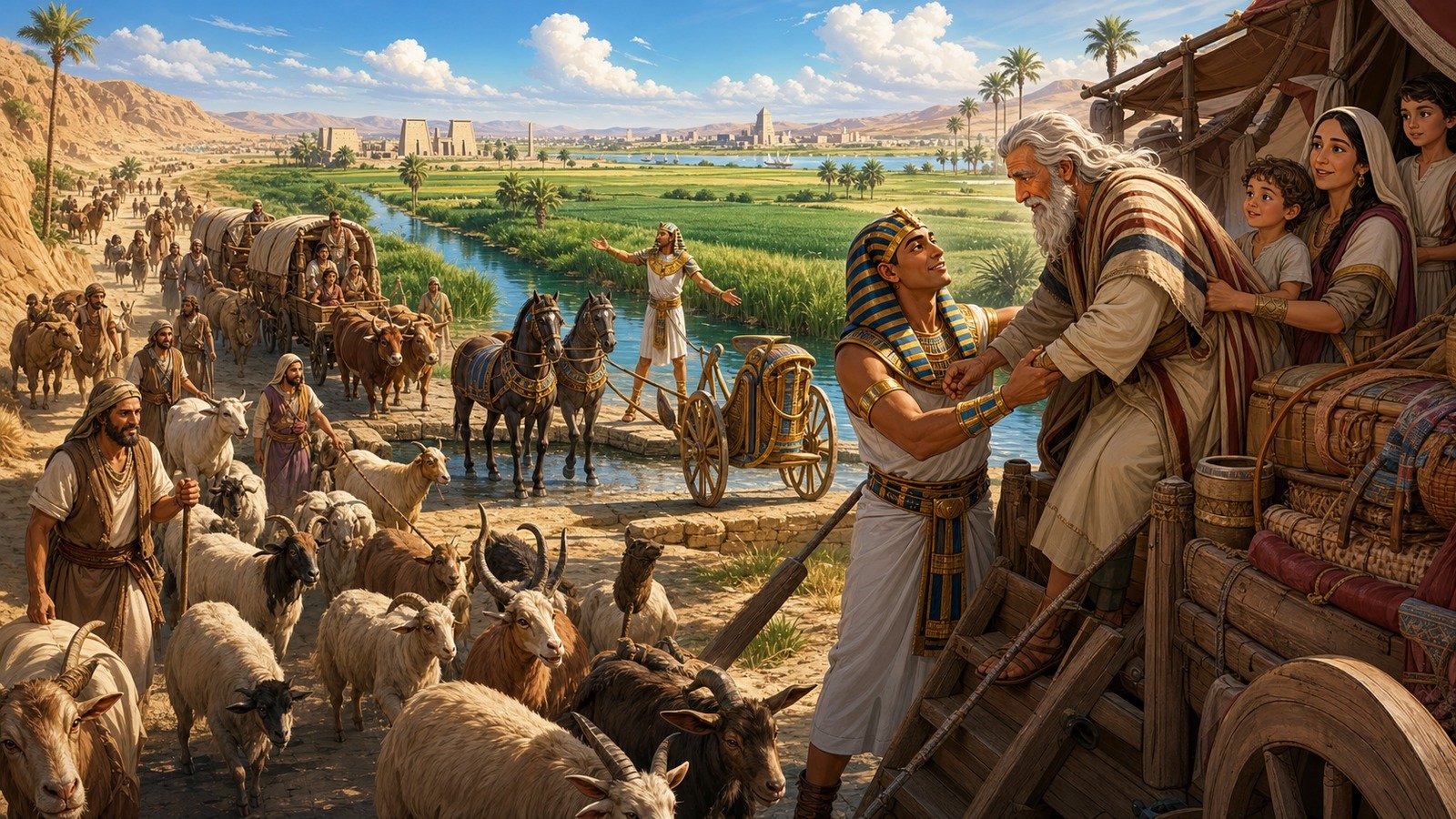
Jacob, now 130, leads seventy family members down into Egypt, where Pharaoh grants them the fertile region of Goshen to settle as shepherds, separate from the Egyptian population. This migration begins the sojourn later reversed by the Exodus.
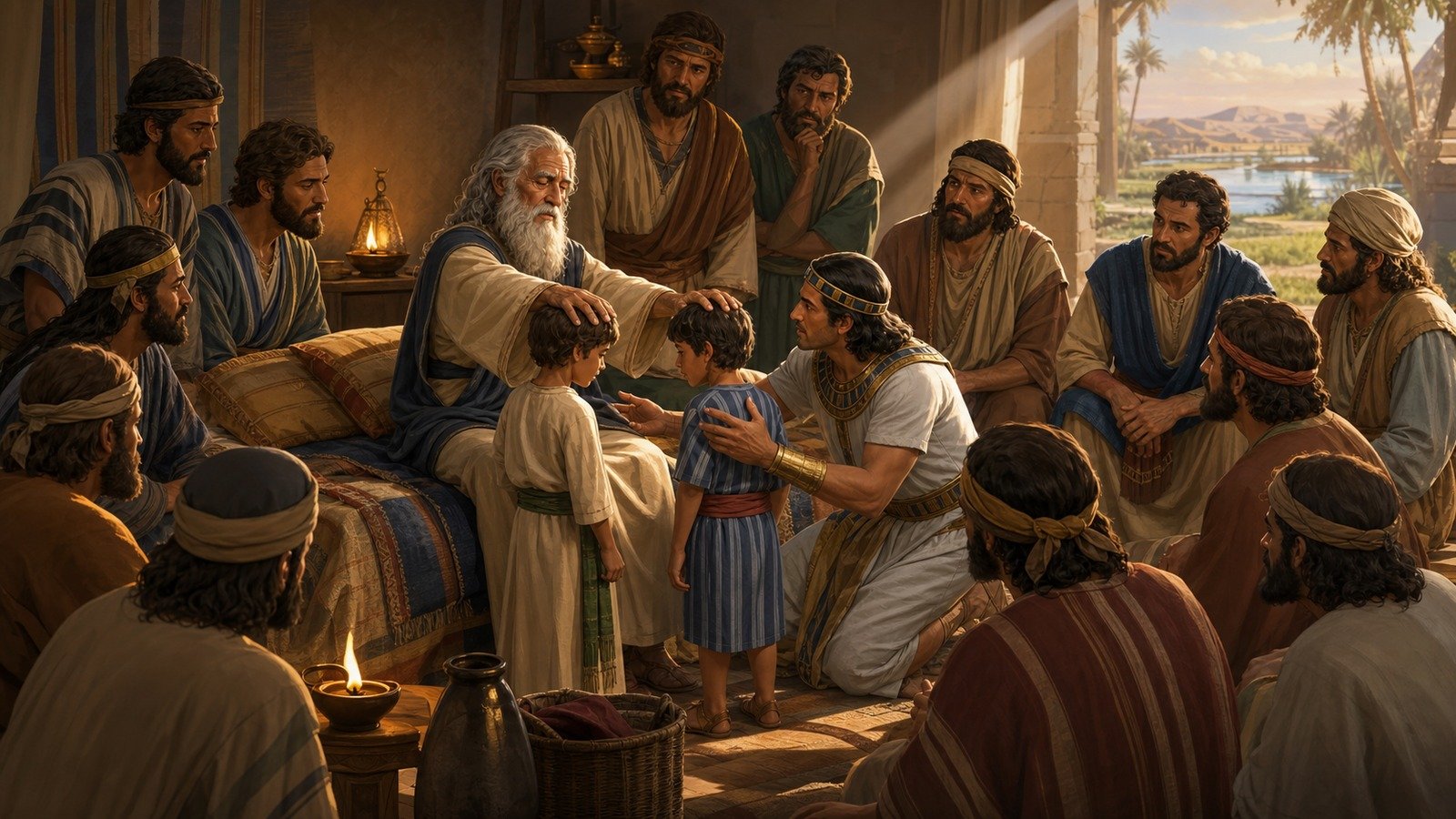
Jacob adopts Joseph's two sons as his own, giving each a share of the inheritance, and pronounces individual blessings and prophecies over all twelve sons as he nears death.
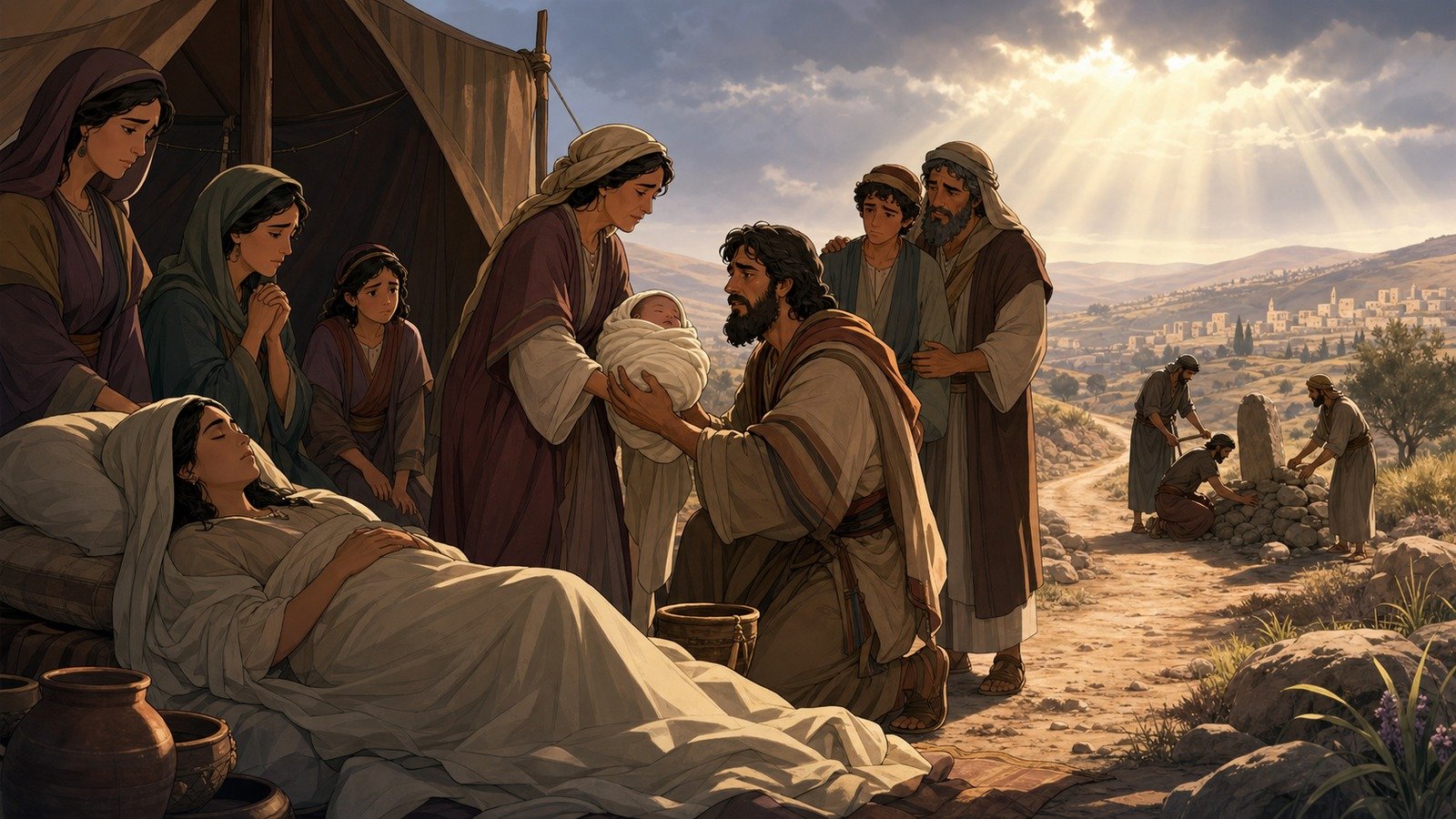
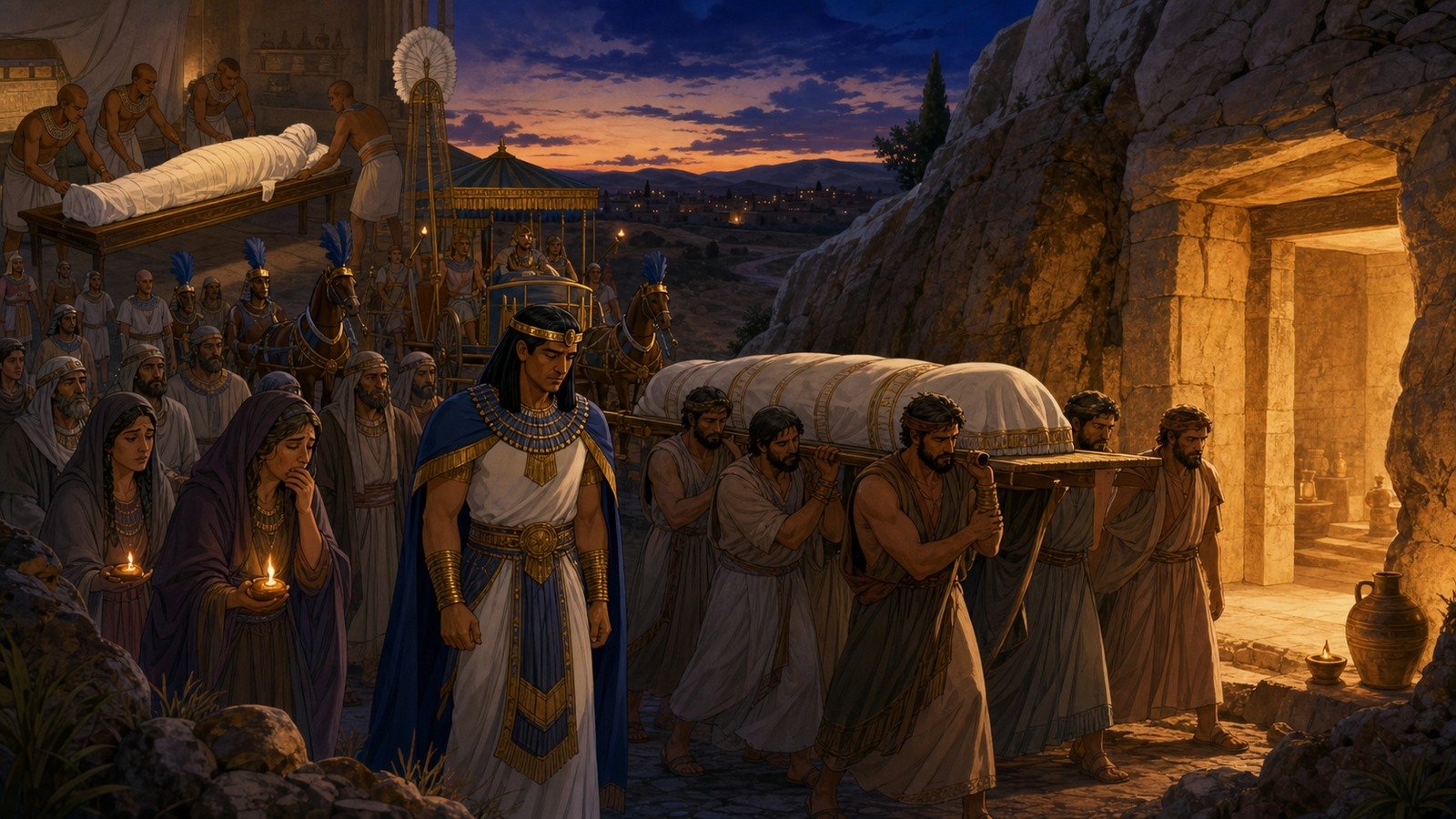
Jacob dies at 147; Joseph has him embalmed and, with Pharaoh's permission, buries him at Machpelah in Canaan alongside Abraham, Sarah, Isaac, Rebekah and Leah.
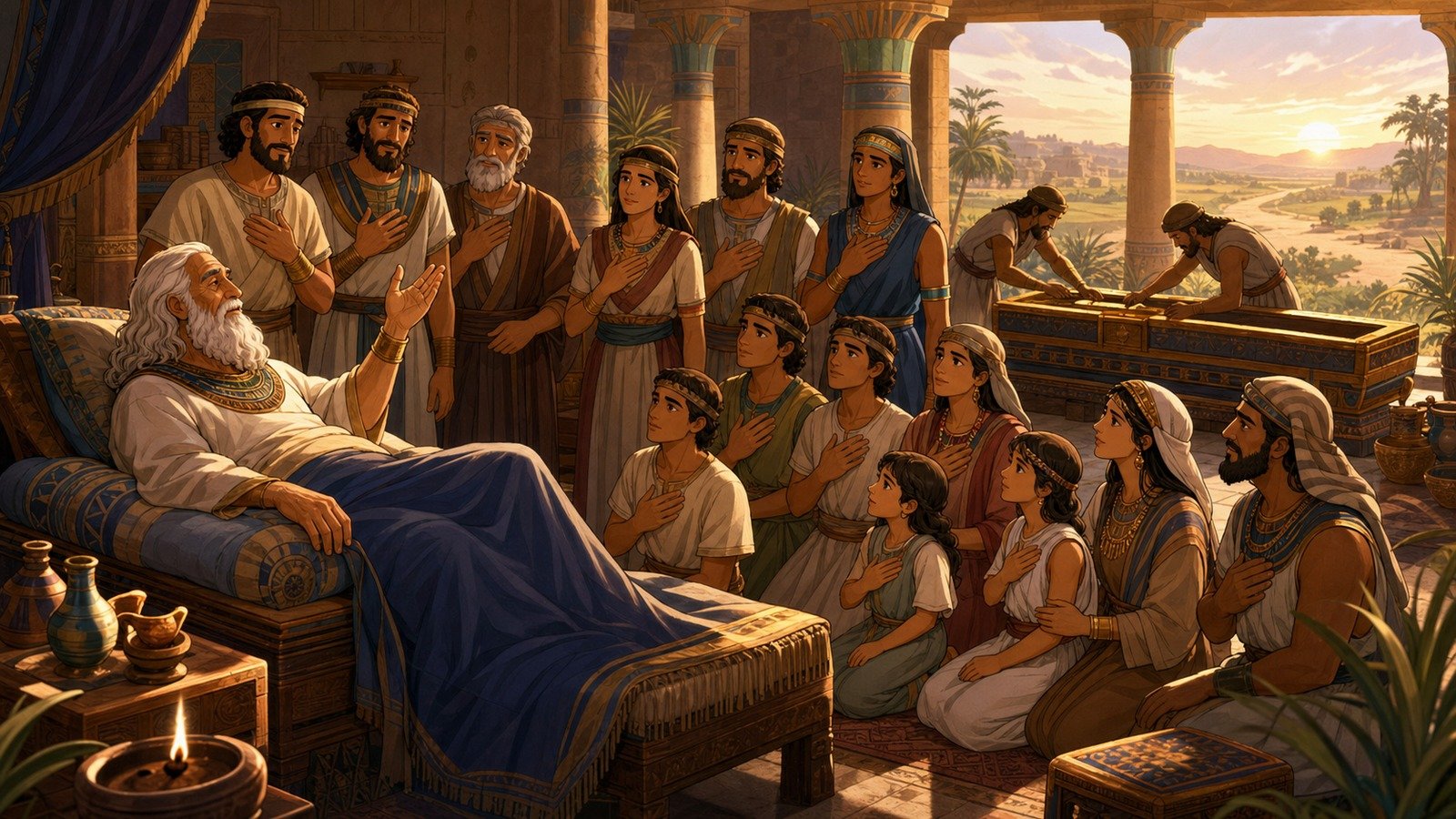
Joseph dies at 110, having seen his great-grandchildren, and, anticipating Israel's eventual return to Canaan, makes his family swear to carry his bones out of Egypt when God brings them back. His death closes the book of Genesis.
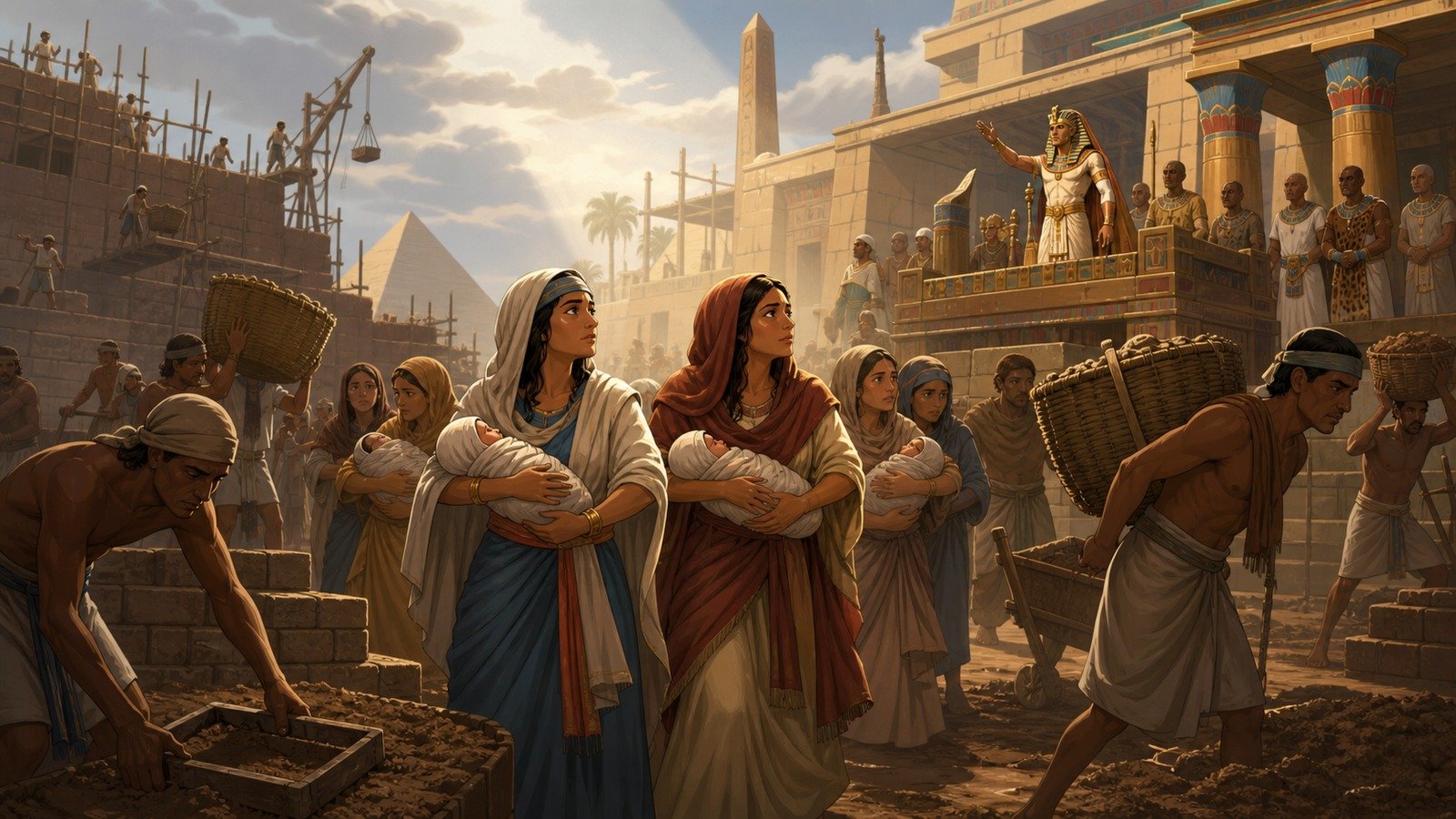
Generations after Joseph's death, a pharaoh "who did not know Joseph" grows fearful of Israel's numbers and imposes forced labour, then orders the killing of newborn Hebrew boys. Hebrew midwives Shiphrah and Puah defy the order, preserving the population God had promised to multiply.
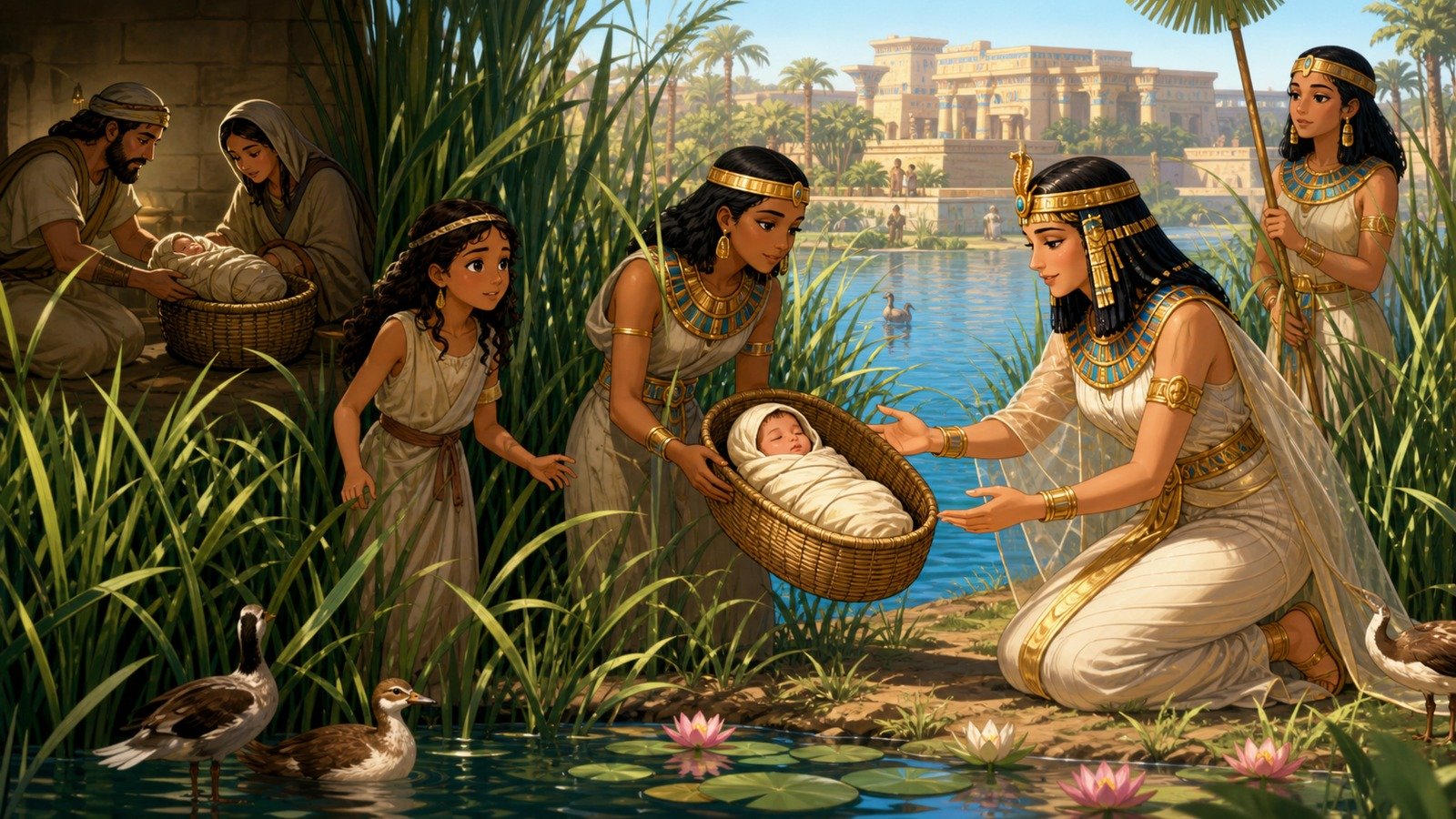
Moses is hidden as an infant to escape Pharaoh's decree, then found and adopted by Pharaoh's own daughter, who raises him within the Egyptian royal court.
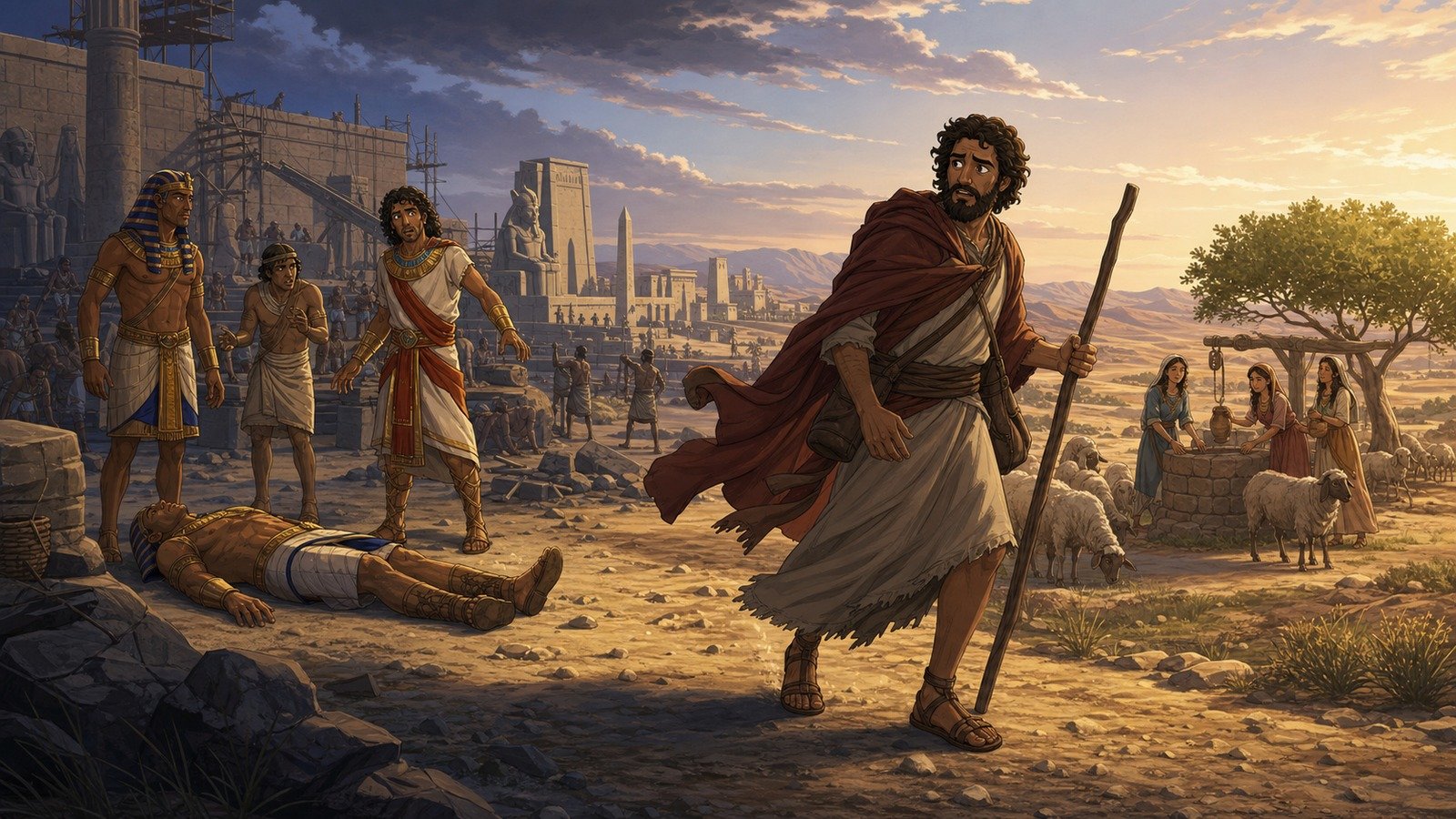
As an adult, Moses kills an Egyptian overseer he sees beating a Hebrew slave, then flees to Midian when the act becomes known, marries Zipporah, and settles as a shepherd for the next forty years.
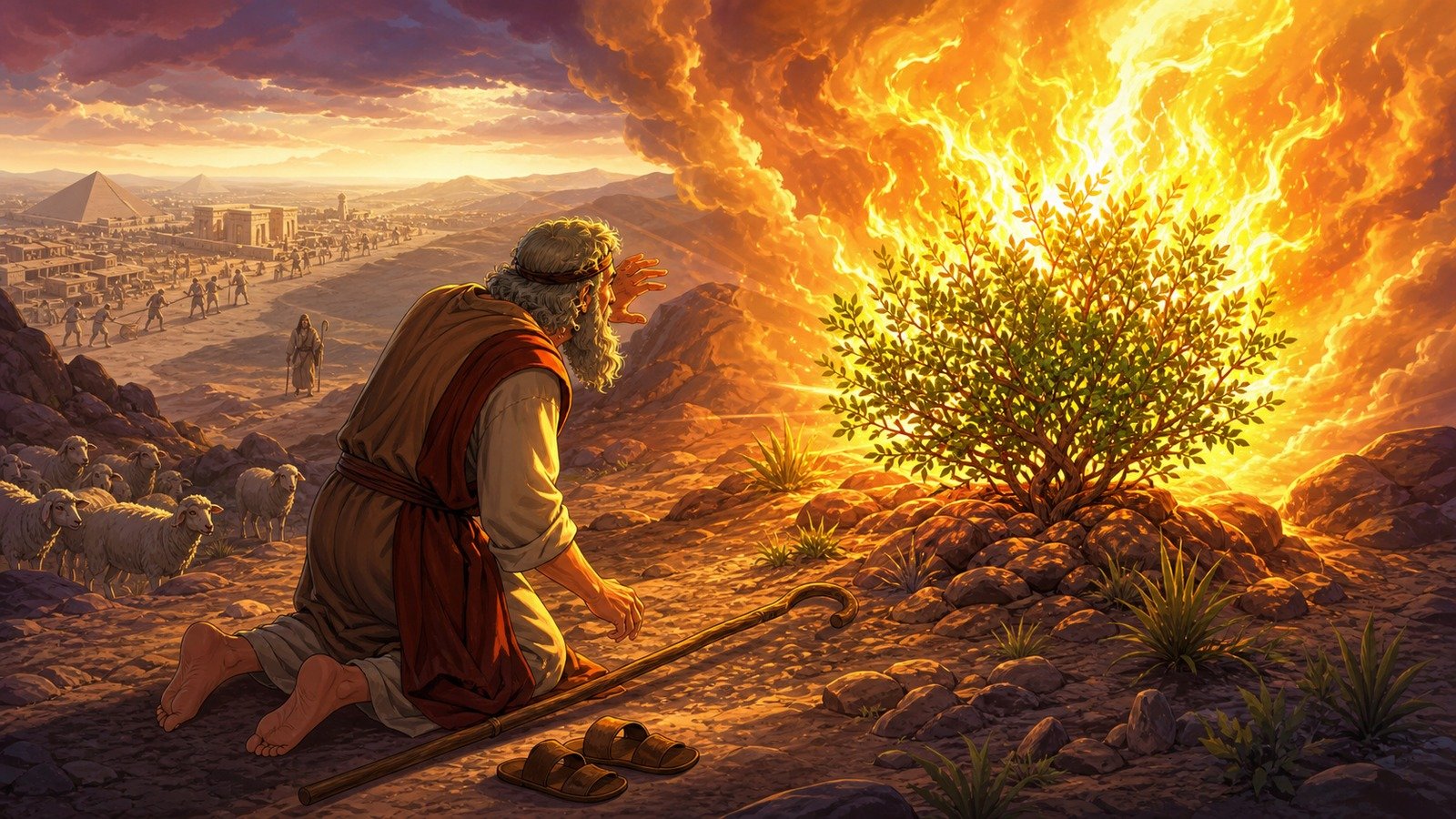
God appears to Moses in a burning bush that is not consumed, reveals his covenant name (YHWH, "I am who I am"), and commissions him to confront Pharaoh and lead Israel out of Egypt, despite Moses' repeated objections.
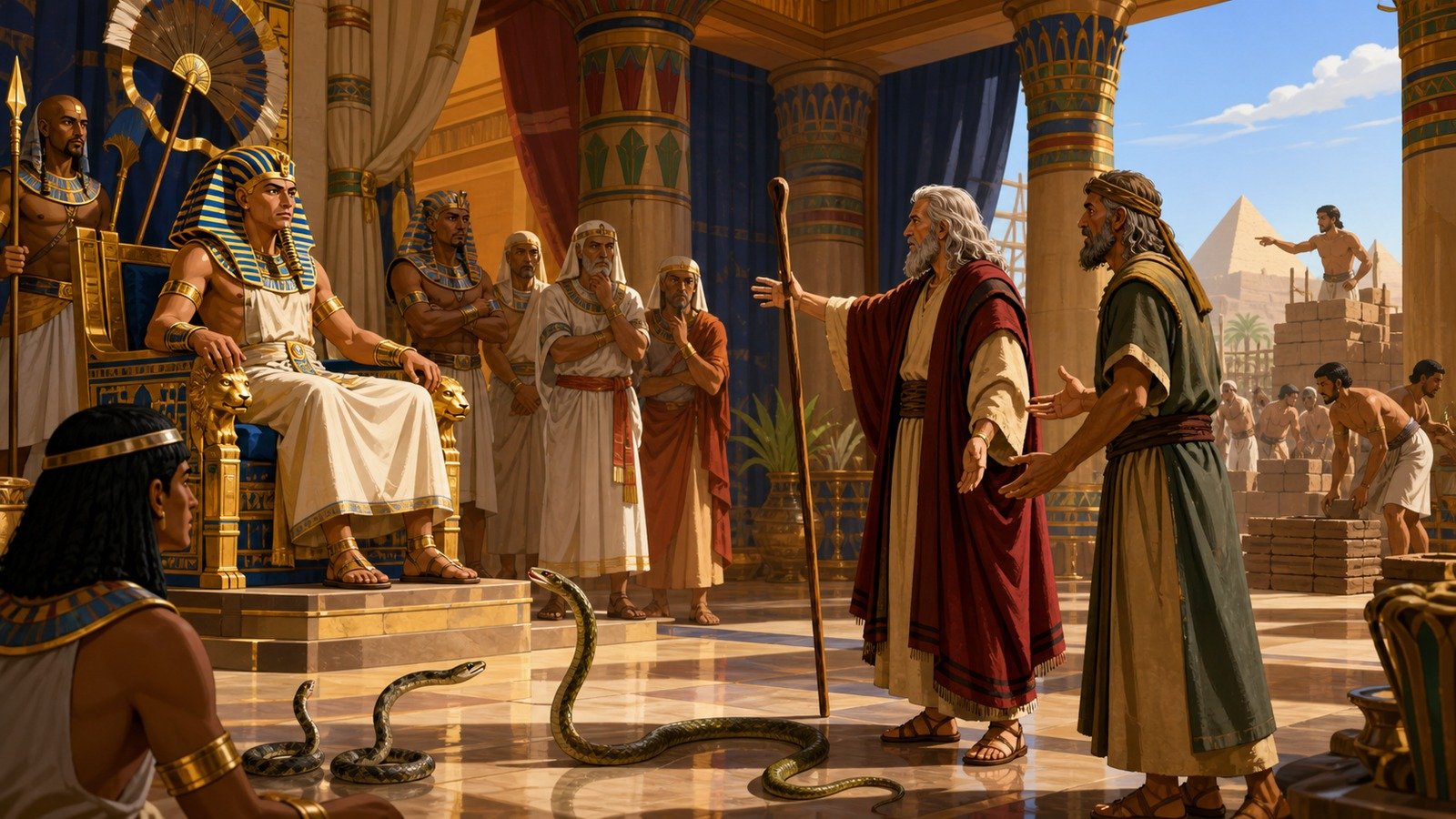
Moses and Aaron demand Israel's release; Pharaoh refuses and increases the Israelites' workload instead. As a first sign, Aaron's staff becomes a snake before Pharaoh, and his own magicians replicate the feat, hardening Pharaoh's resolve.
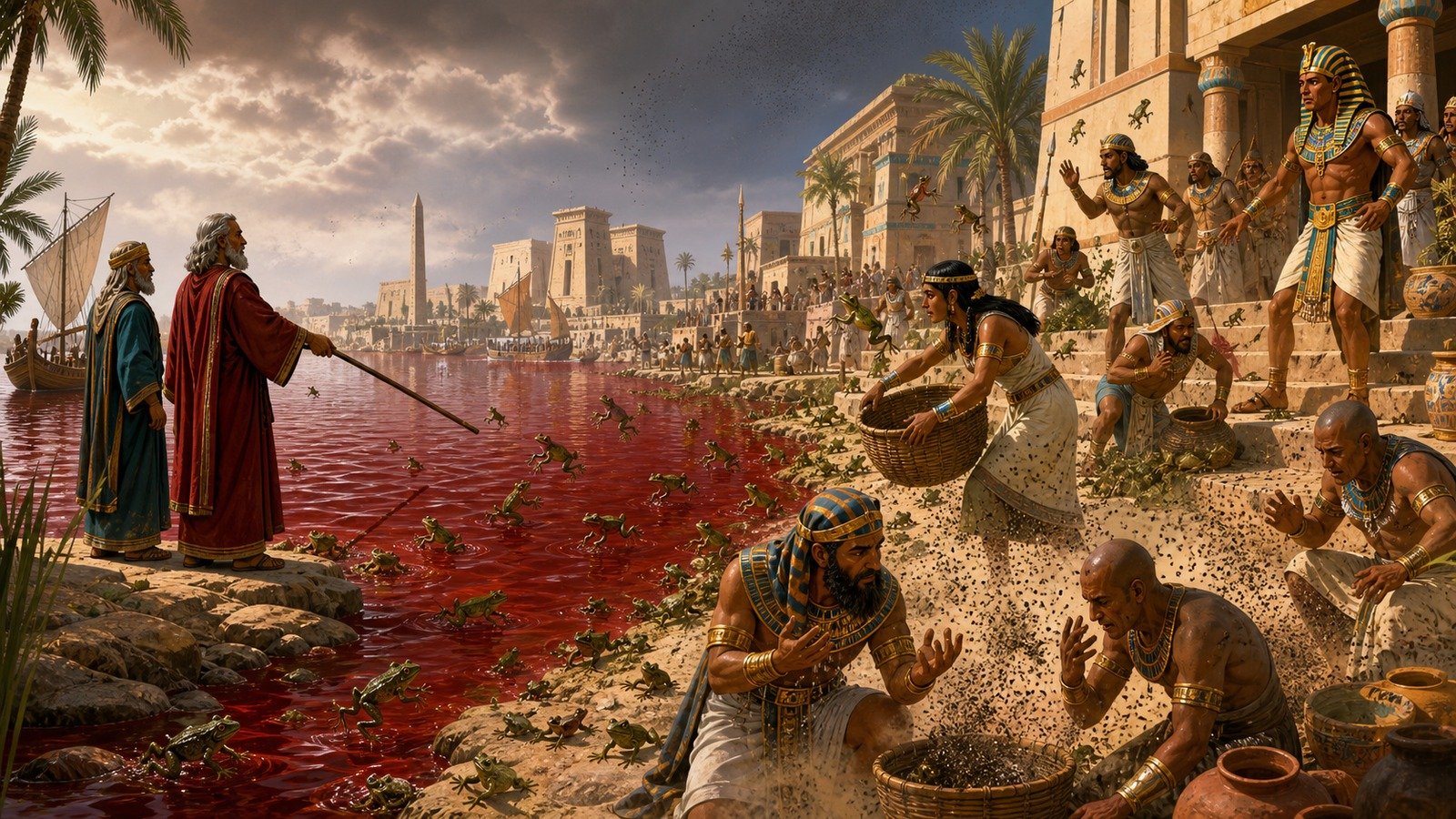
The Nile turns to blood, frogs overrun the land, and dust becomes gnats, each plague striking directly at an aspect of Egyptian life or religion; Pharaoh's magicians can replicate the first two but not the third.
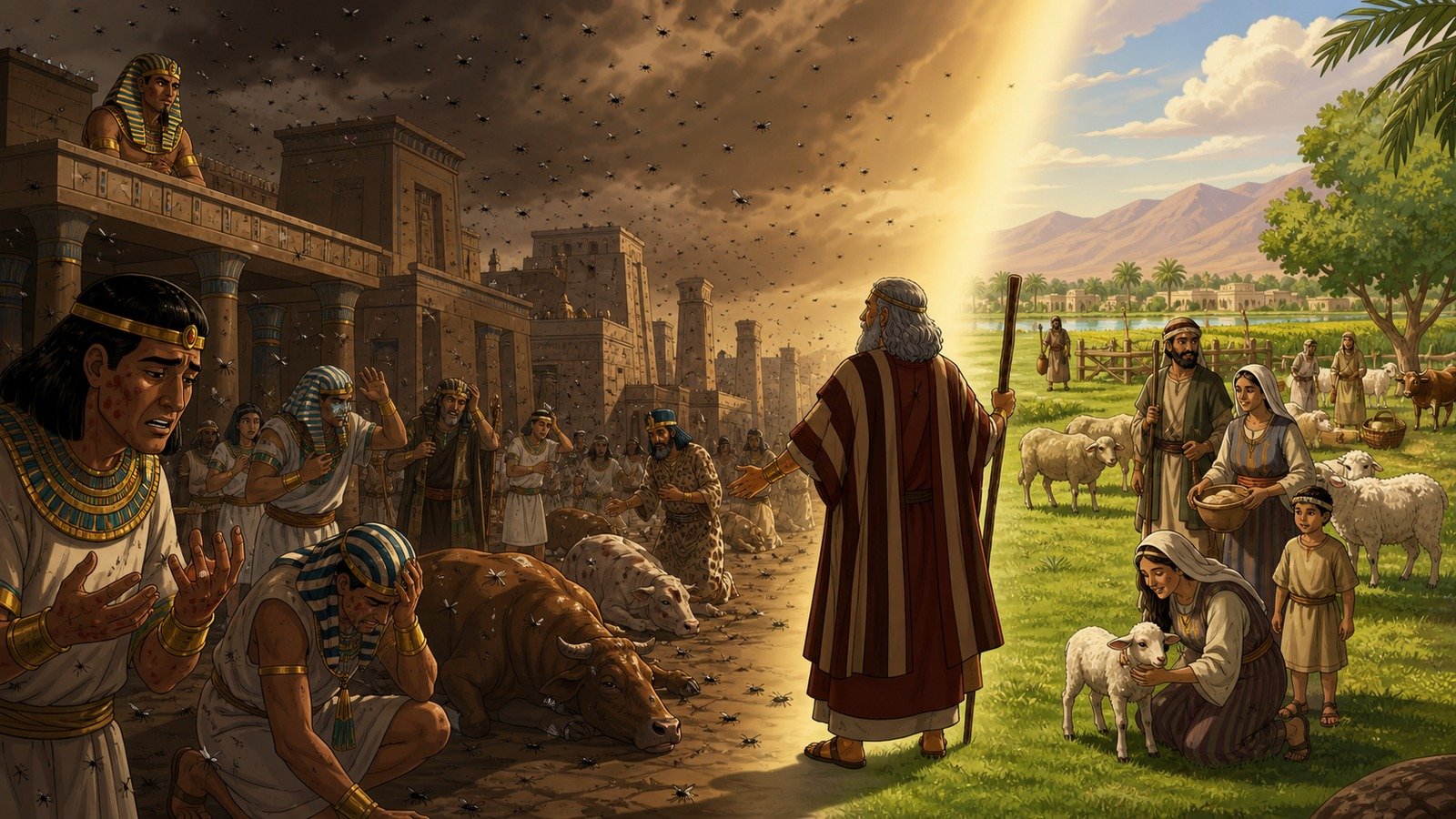
Swarms of flies, a plague on Egyptian livestock, and painful boils on people and animals follow; from this point Exodus notes God begins distinguishing Goshen, where the Israelites live, from the rest of Egypt.
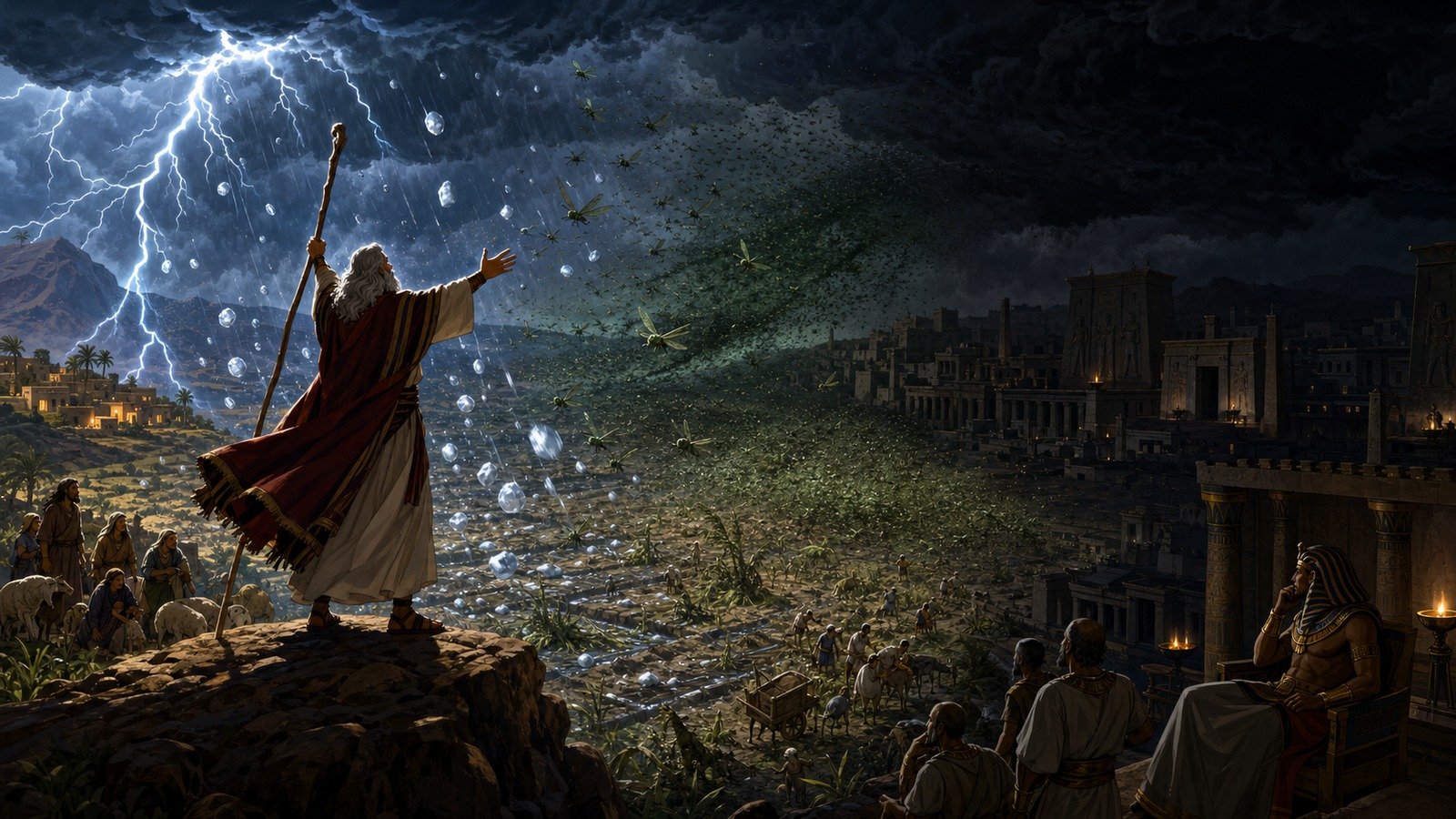
Devastating hail, a locust swarm that strips the land bare, and three days of total darkness bring Egypt to its knees; Pharaoh repeatedly offers partial concessions and withdraws them once each plague lifts.
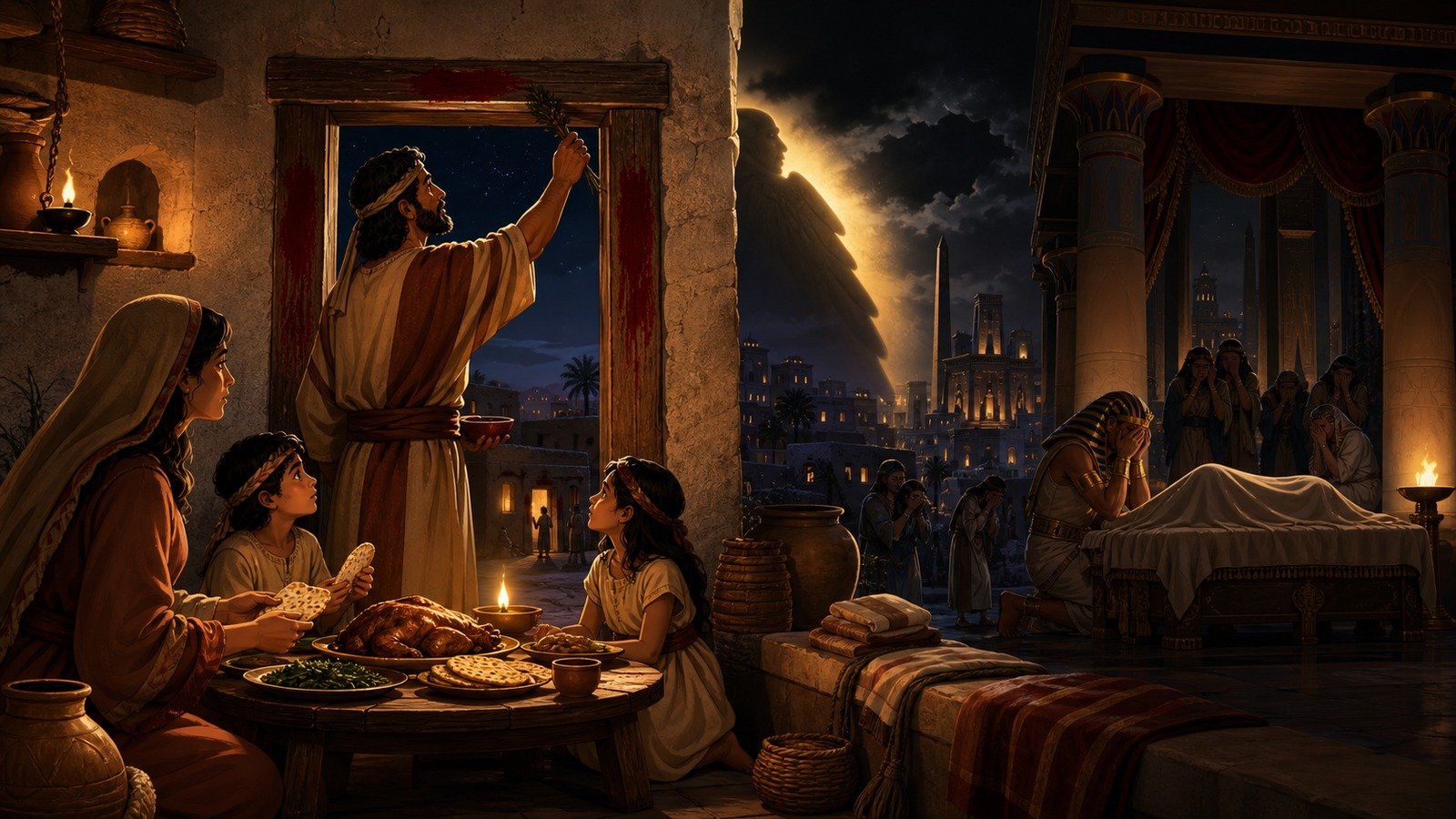
Israel is instructed to sacrifice a lamb and mark their doorframes with its blood so the final plague, the death of every Egyptian firstborn, passes over their houses. Every firstborn son of Egypt, including Pharaoh's, dies that night, finally breaking Pharaoh's resistance.
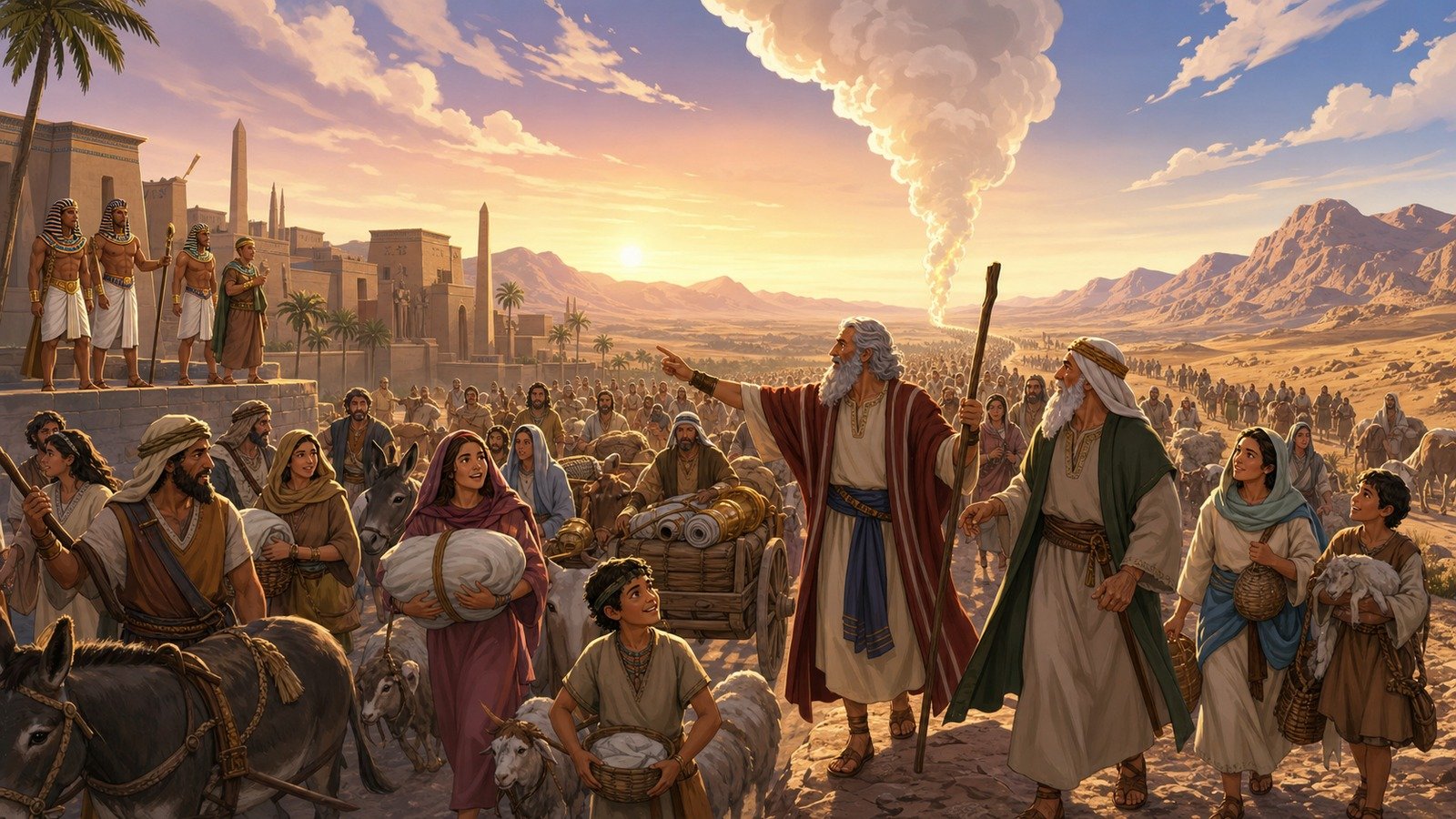
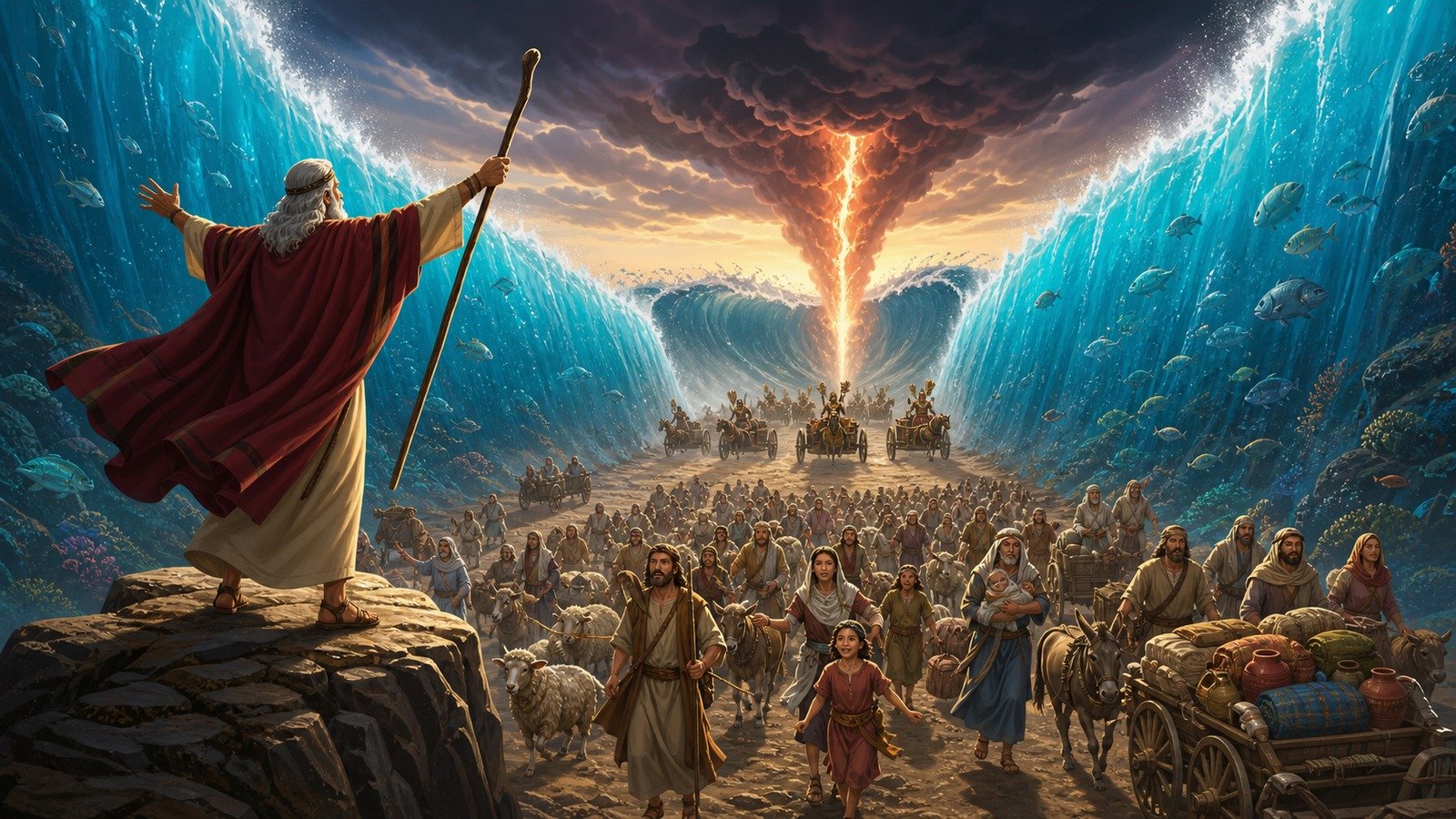
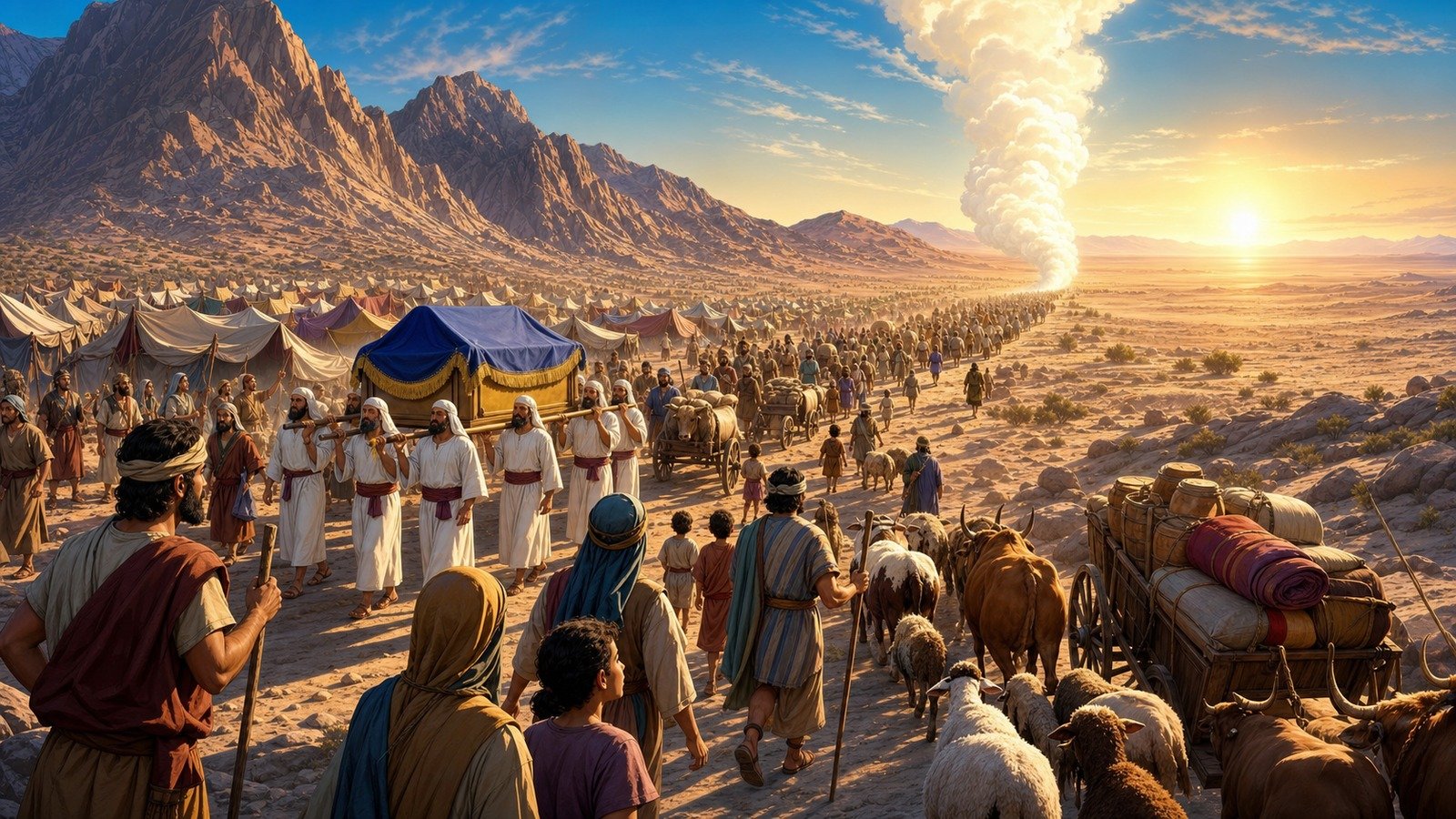
Pharaoh finally lets Israel go; around 600,000 men plus women and children leave Egypt after 430 years, taking unleavened dough and Egyptian plunder with them. God leads them by pillar of cloud by day and fire by night.
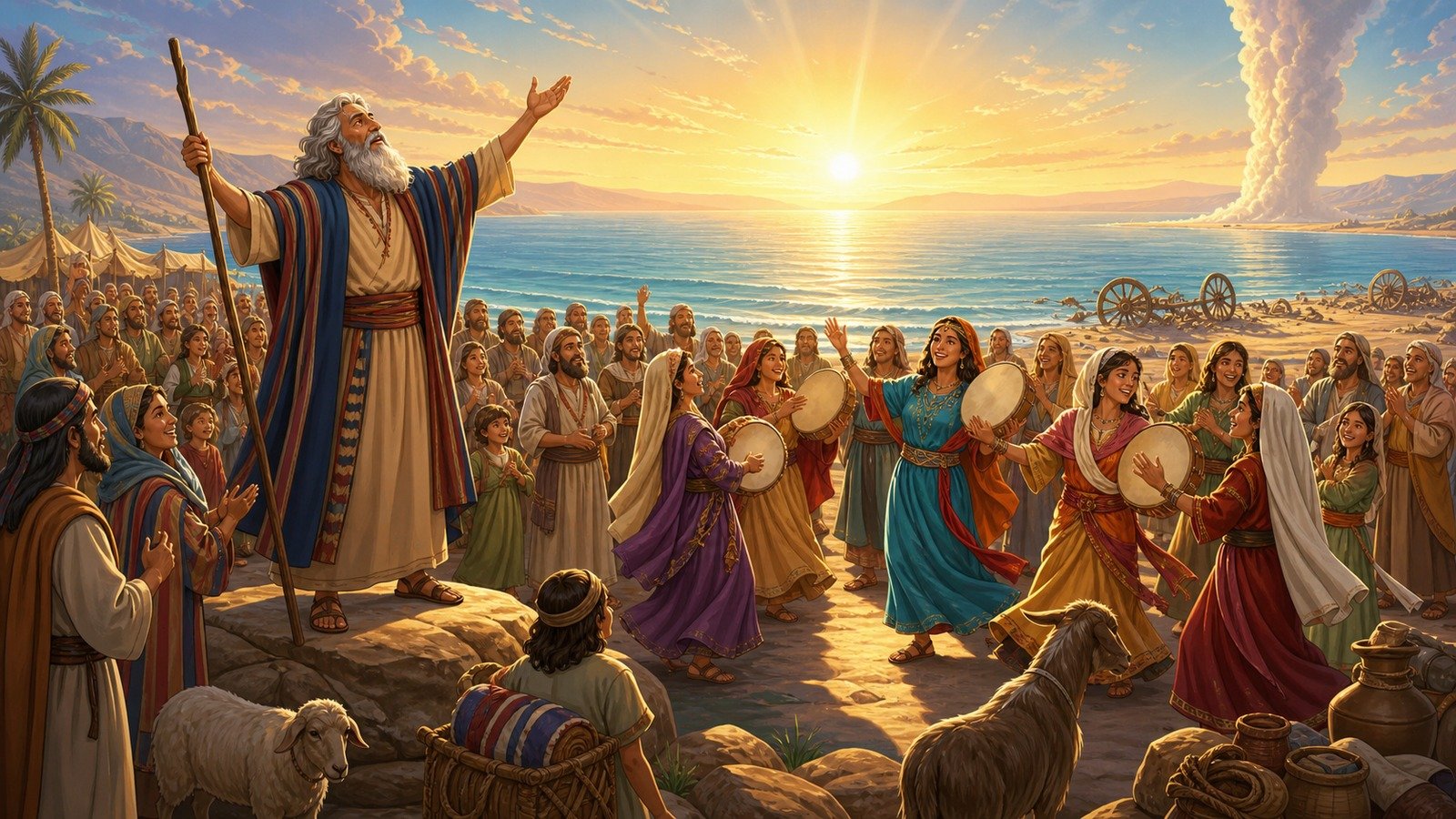
Moses and Miriam lead the people in songs celebrating the sea's crossing and God's power over Pharaoh's army, among the oldest poetry preserved in the Bible.
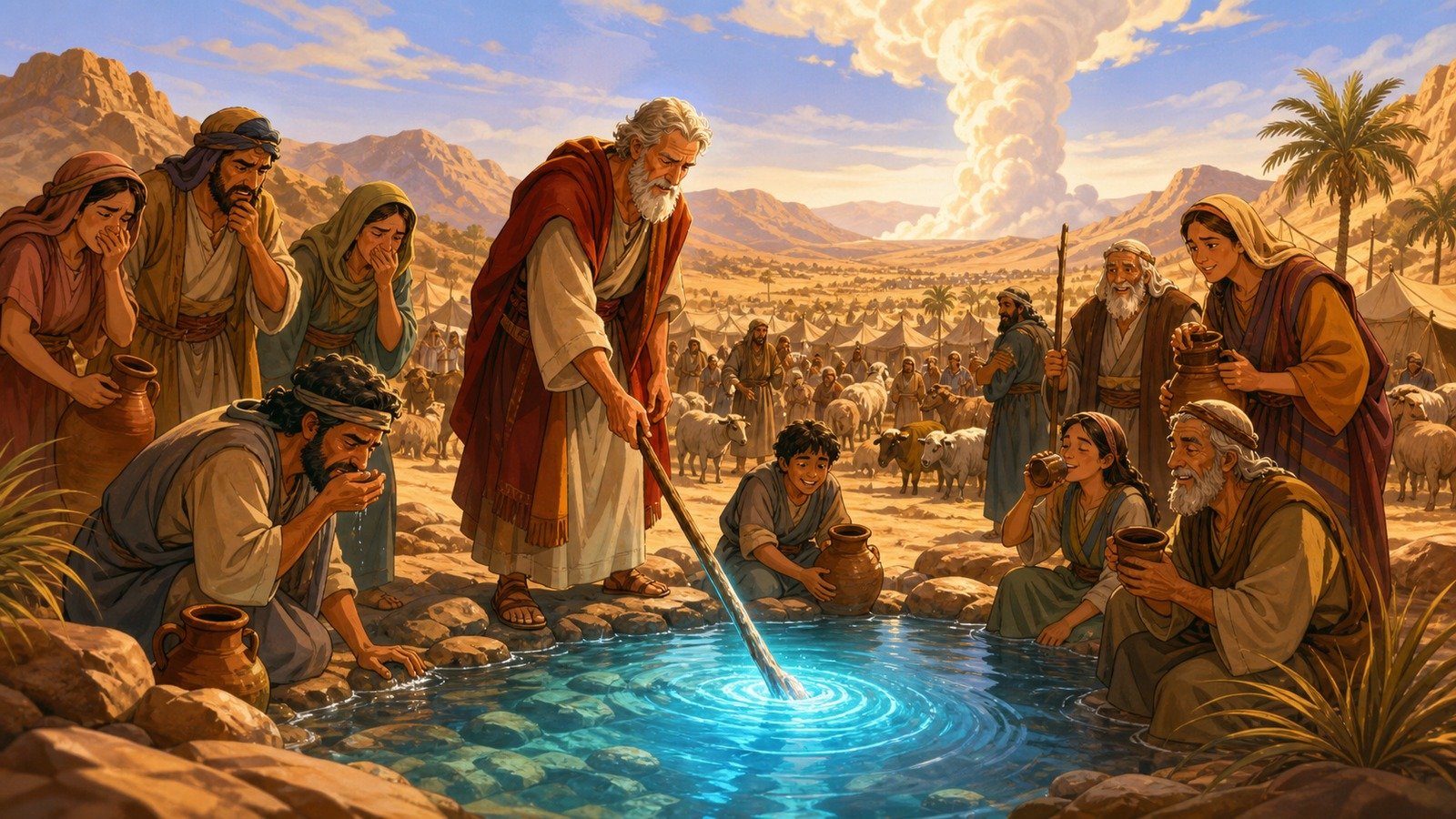
Three days after the crossing, Israel finds only bitter water at Marah; God shows Moses a piece of wood that sweetens it when thrown in, and gives Israel a statute promising freedom from Egypt's diseases if they obey him.
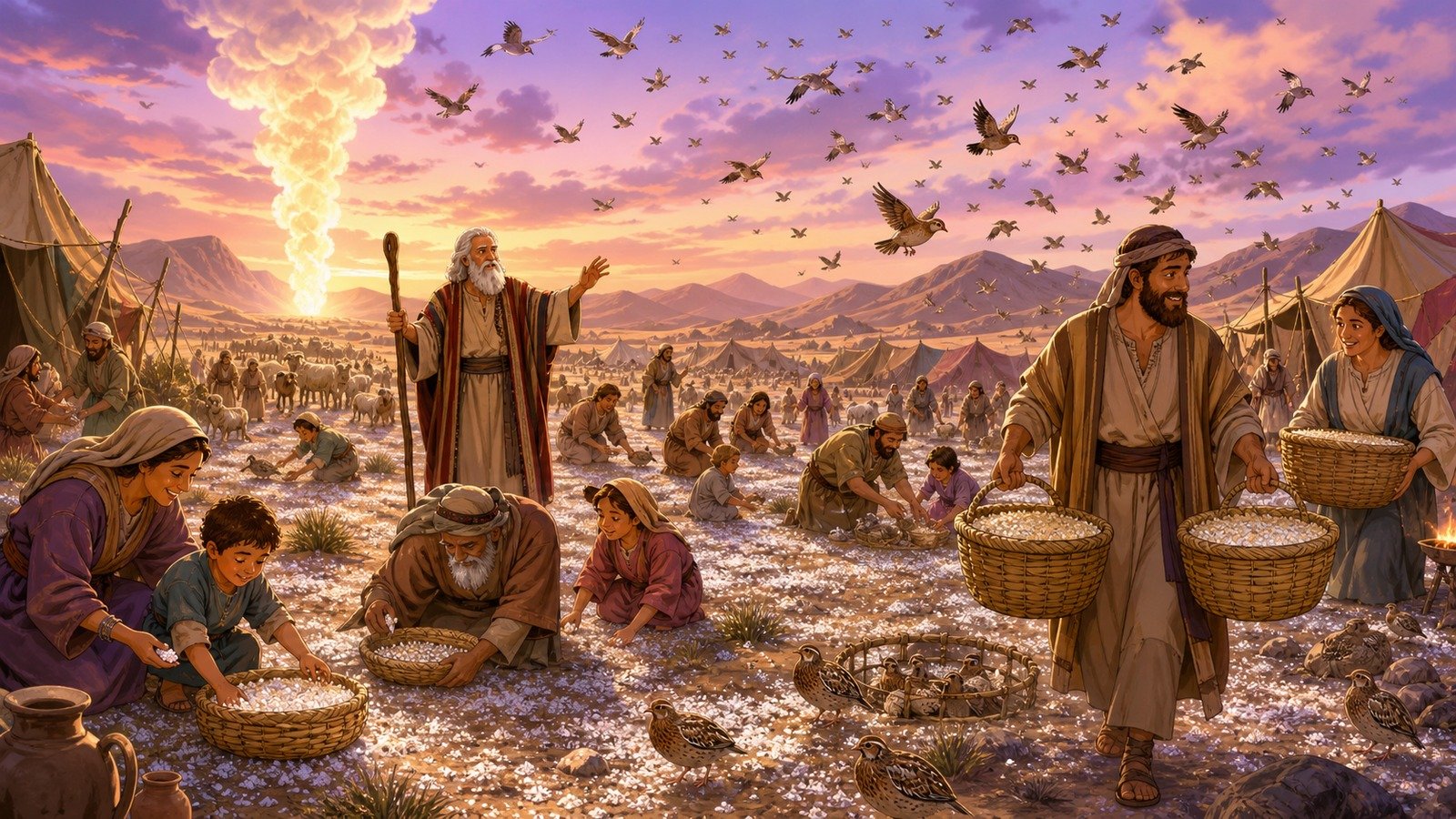
Facing hunger within six weeks of leaving Egypt, Israel complains bitterly for food; God provides quail and daily manna, with a double portion on the sixth day so the Sabbath can be kept without gathering.
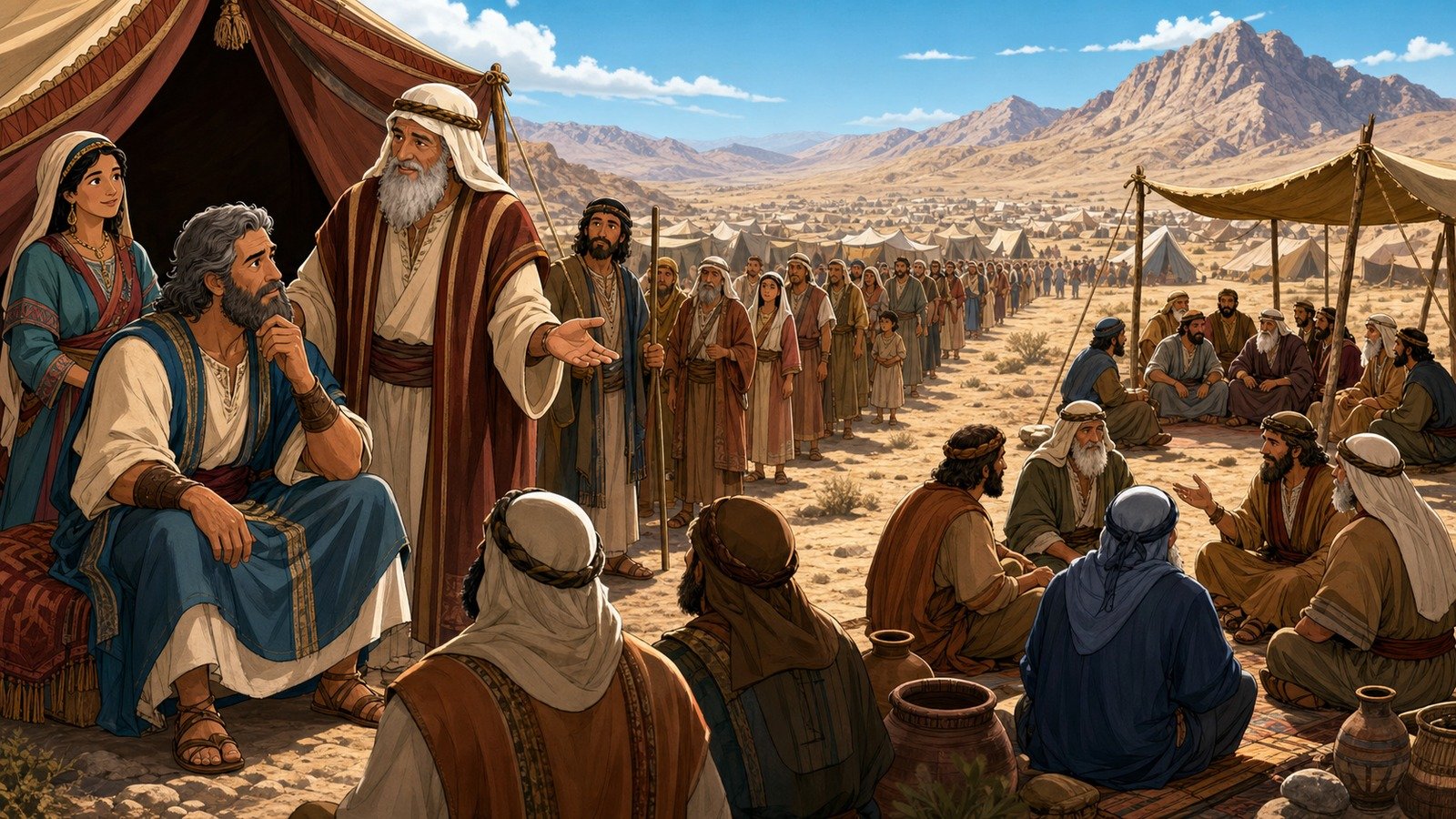
Moses' father-in-law Jethro visits and observes Moses judging every dispute alone; he advises appointing capable leaders over smaller groups to share the judicial burden, an early model of delegated governance Moses adopts.
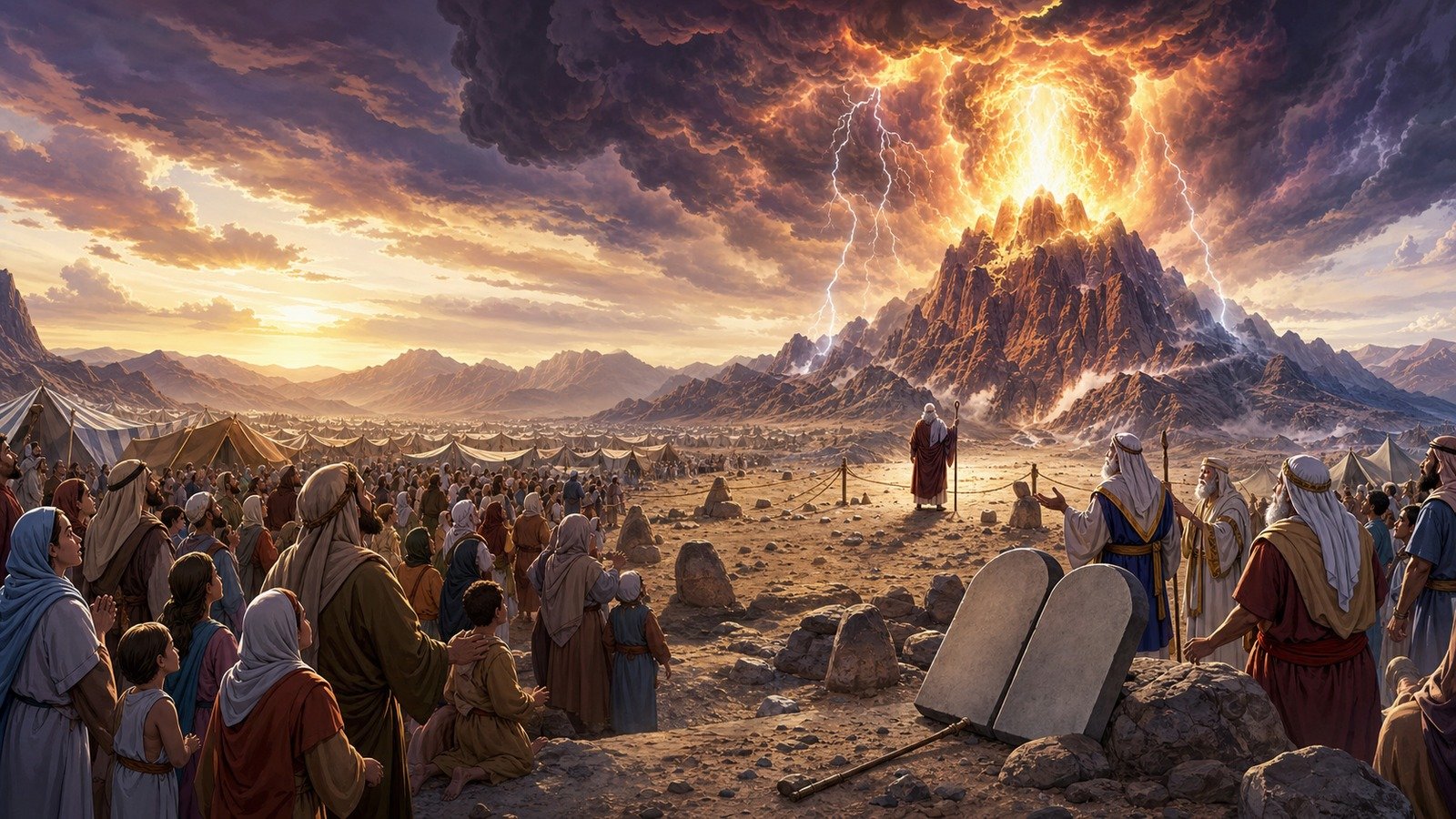
Three months after leaving Egypt, Israel camps at Sinai. God descends on the mountain in fire and smoke and speaks the Ten Commandments directly to the people, the foundational moral and covenantal law of Israel.
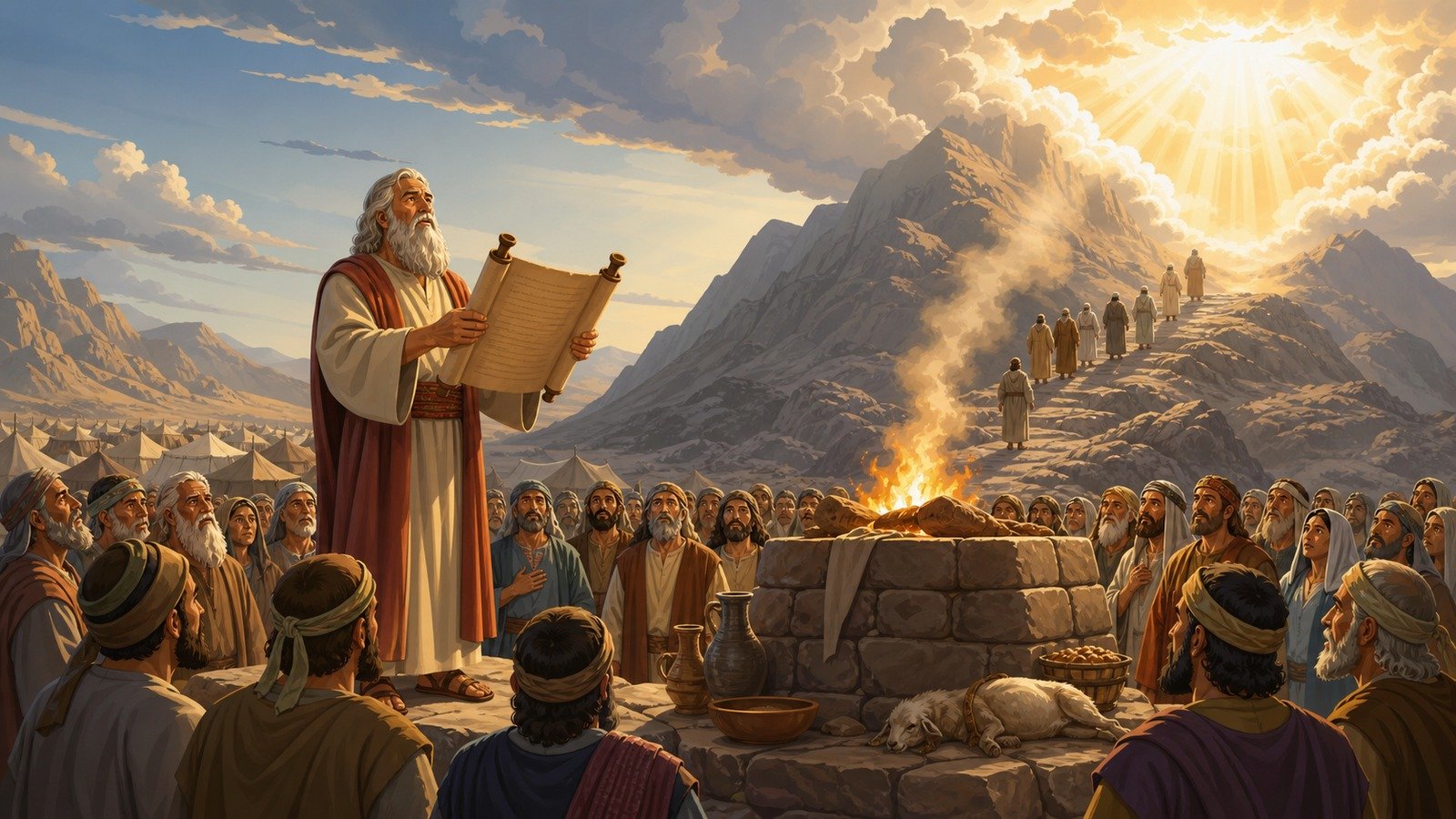
Further case law covering property, personal injury and social justice is given, and Israel formally accepts the covenant, sealed with sacrificial blood and a meal on the mountain in the presence of God.
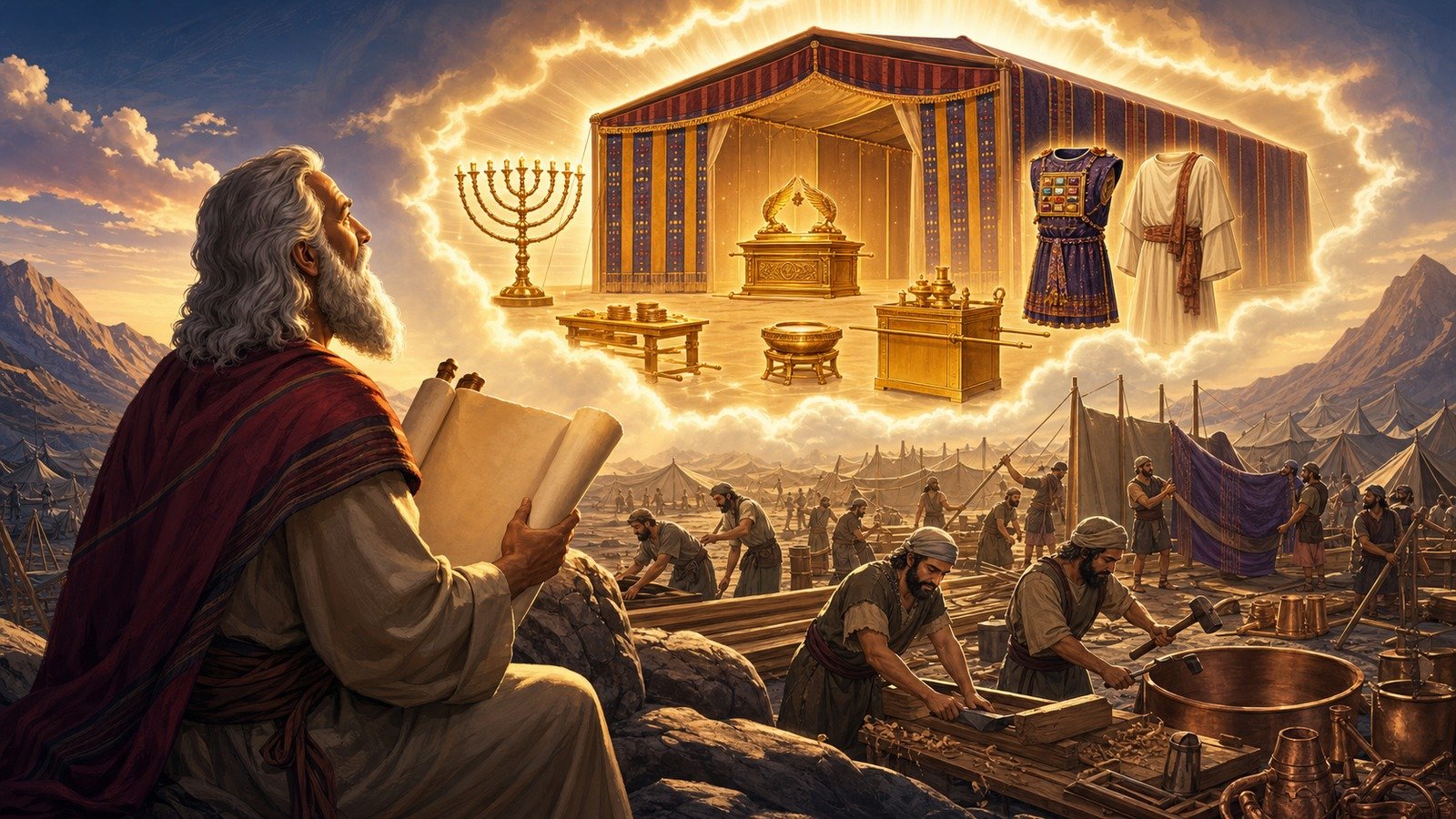
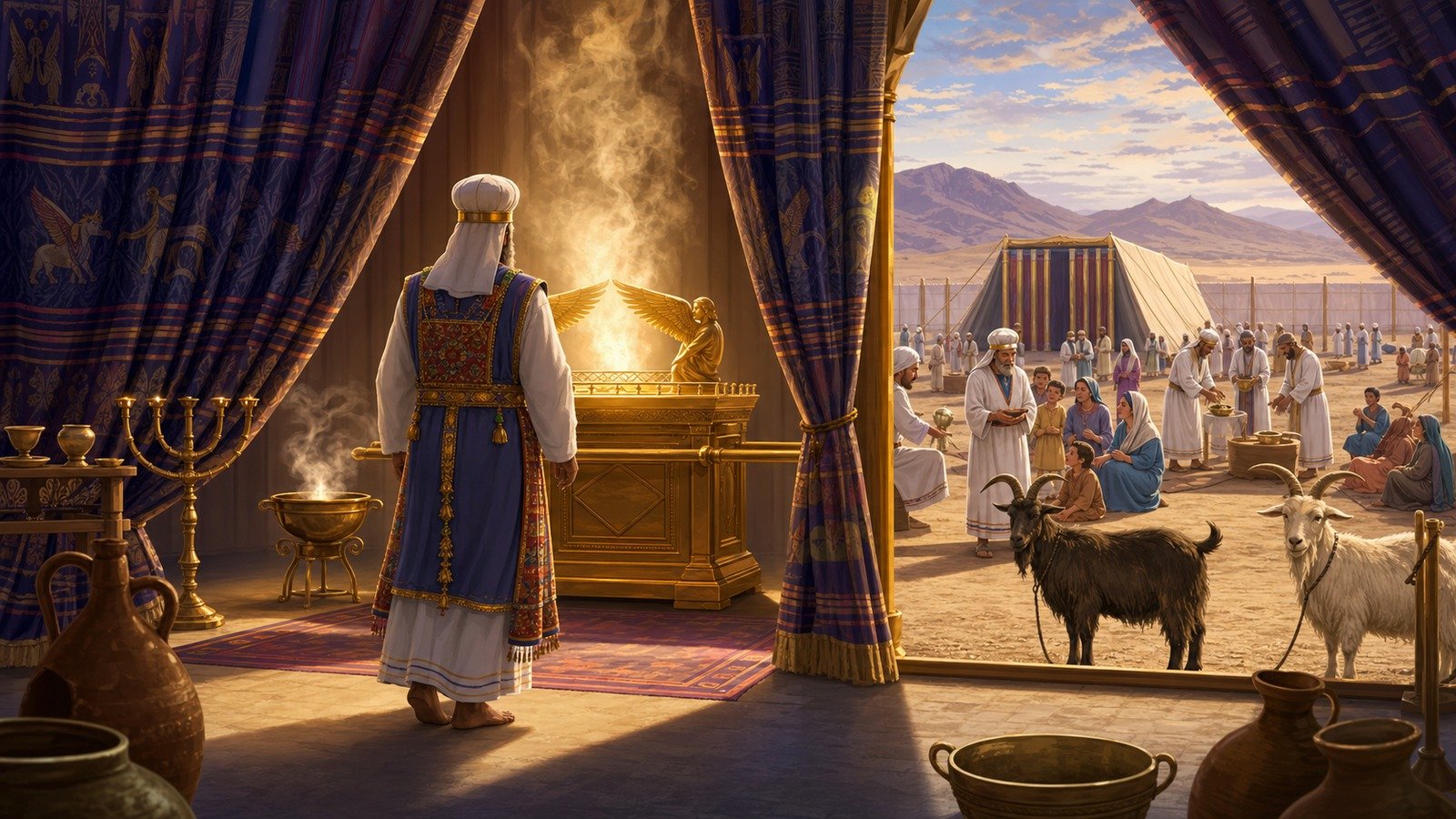
God gives Moses detailed instructions for a portable sanctuary, the ark of the covenant, its furnishings, the priestly garments and the appointment of skilled craftsmen, establishing the pattern for Israel's worship.
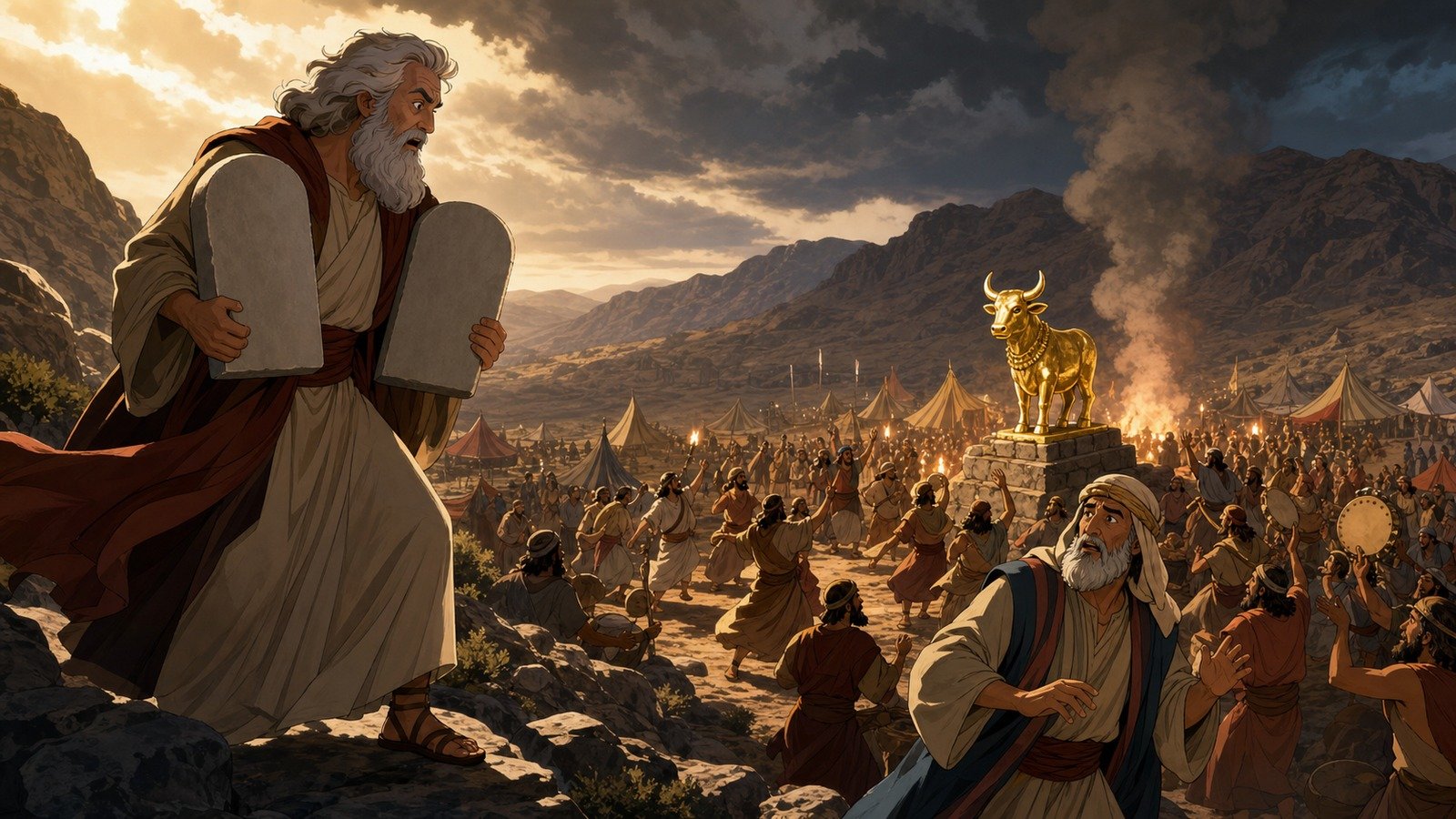
While Moses is on the mountain, Israel persuades Aaron to cast a golden calf and worships it. Moses breaks the tablets in anger on seeing it, and judgement falls on the ringleaders.
Moses pleads for the people and asks to see God's glory; God passes before him proclaiming his own character, "compassionate and gracious," and the covenant is renewed with fresh stone tablets.
Skilled workers construct the tabernacle exactly as instructed; on completion, the glory of the Lord fills it so densely that Moses cannot enter, marking God's presence dwelling visibly among Israel.
God sets out burnt, grain, fellowship, sin and guilt offerings in detail, establishing the mechanics of Israel's sacrificial worship at the newly completed tabernacle.
Aaron and his sons are formally ordained and begin offering sacrifices; two of his sons, Nadab and Abihu, die immediately after offering "unauthorised fire," a sober warning against careless worship.
Extensive dietary and purity laws are given, along with the Day of Atonement ritual, the one day each year the high priest enters the Most Holy Place to make atonement for the nation's sin.
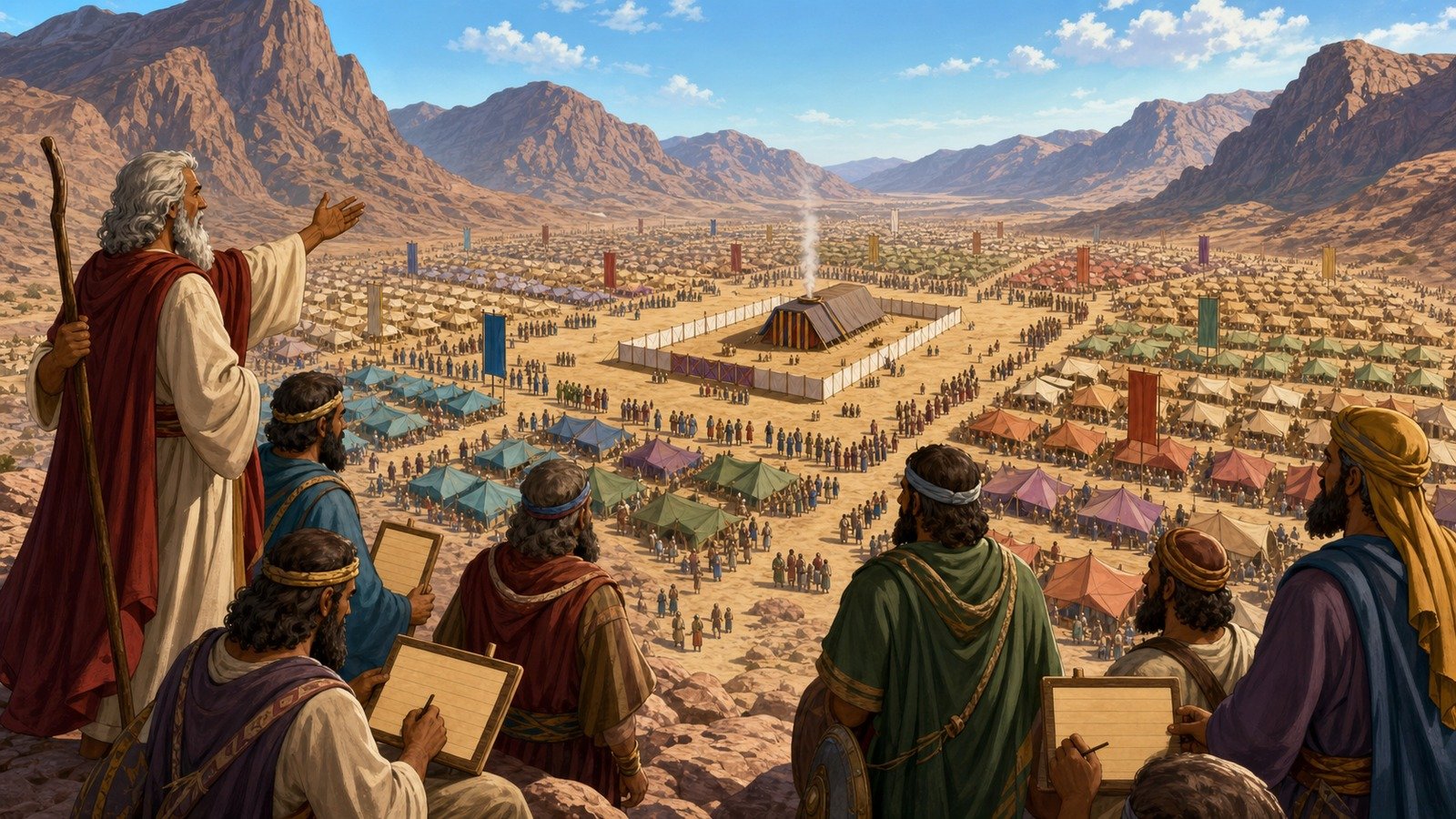
In the second year after the Exodus, Moses takes a census of Israel's fighting men by tribe and arranges the tribal encampments and marching order around the tabernacle at the centre.
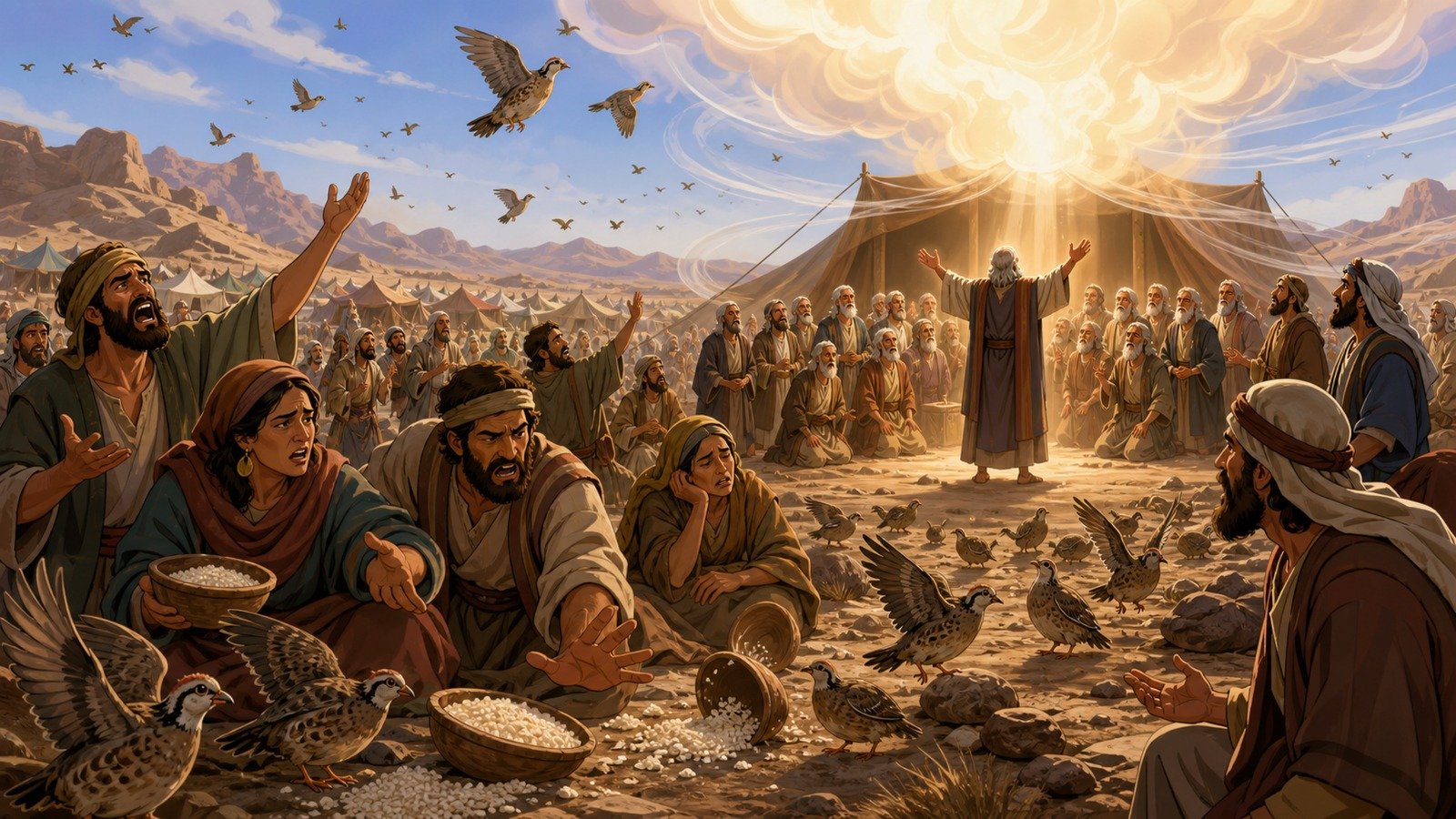
The people complain about the manna, longing for Egypt's food; God provides quail in overwhelming quantity along with a plague, and also empowers seventy elders to share the burden of leadership with Moses.
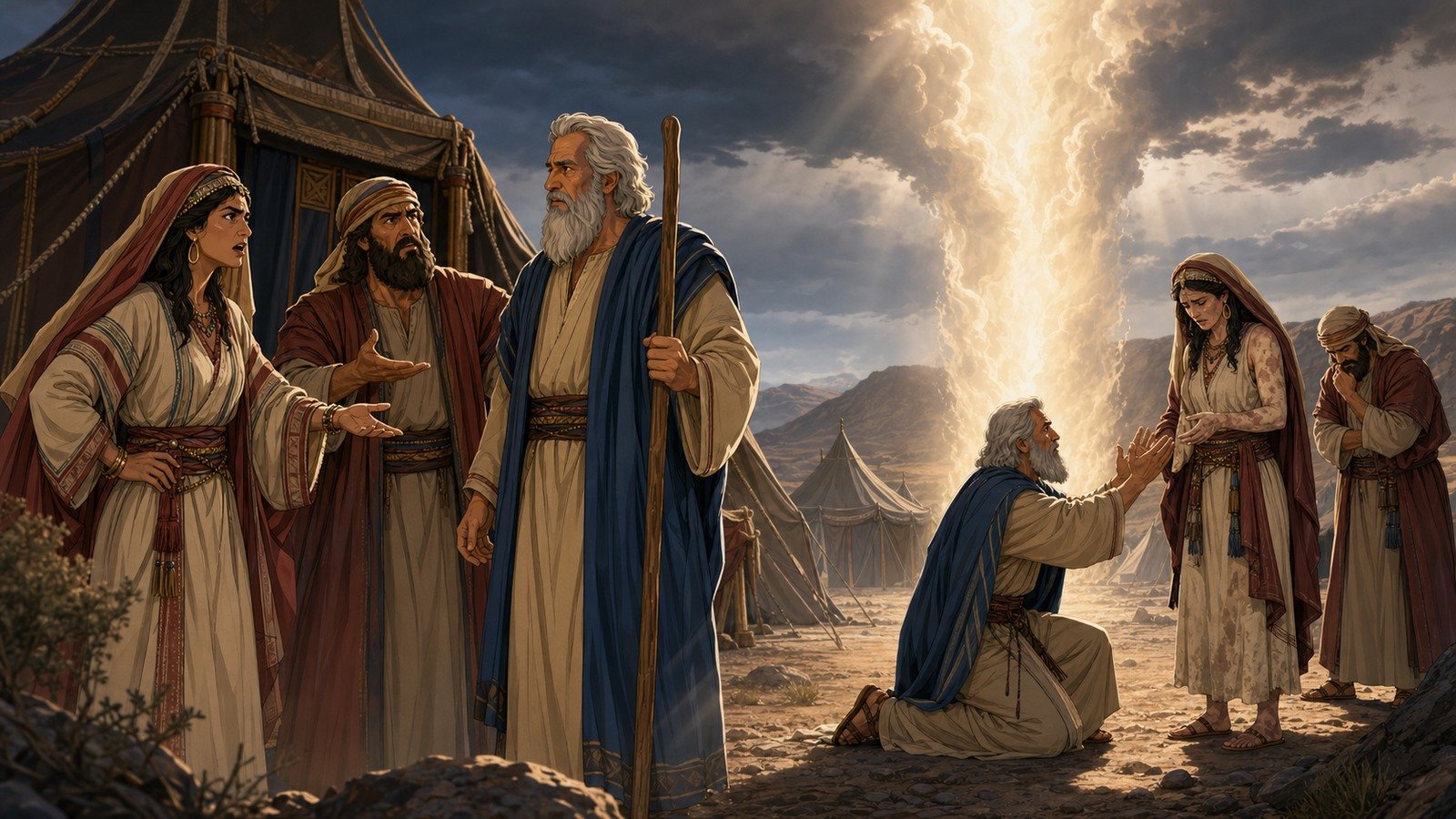
Miriam and Aaron challenge Moses' unique authority, questioning his Cushite marriage as pretext; Miriam alone is struck with a skin disease and healed only after Moses intercedes for her.
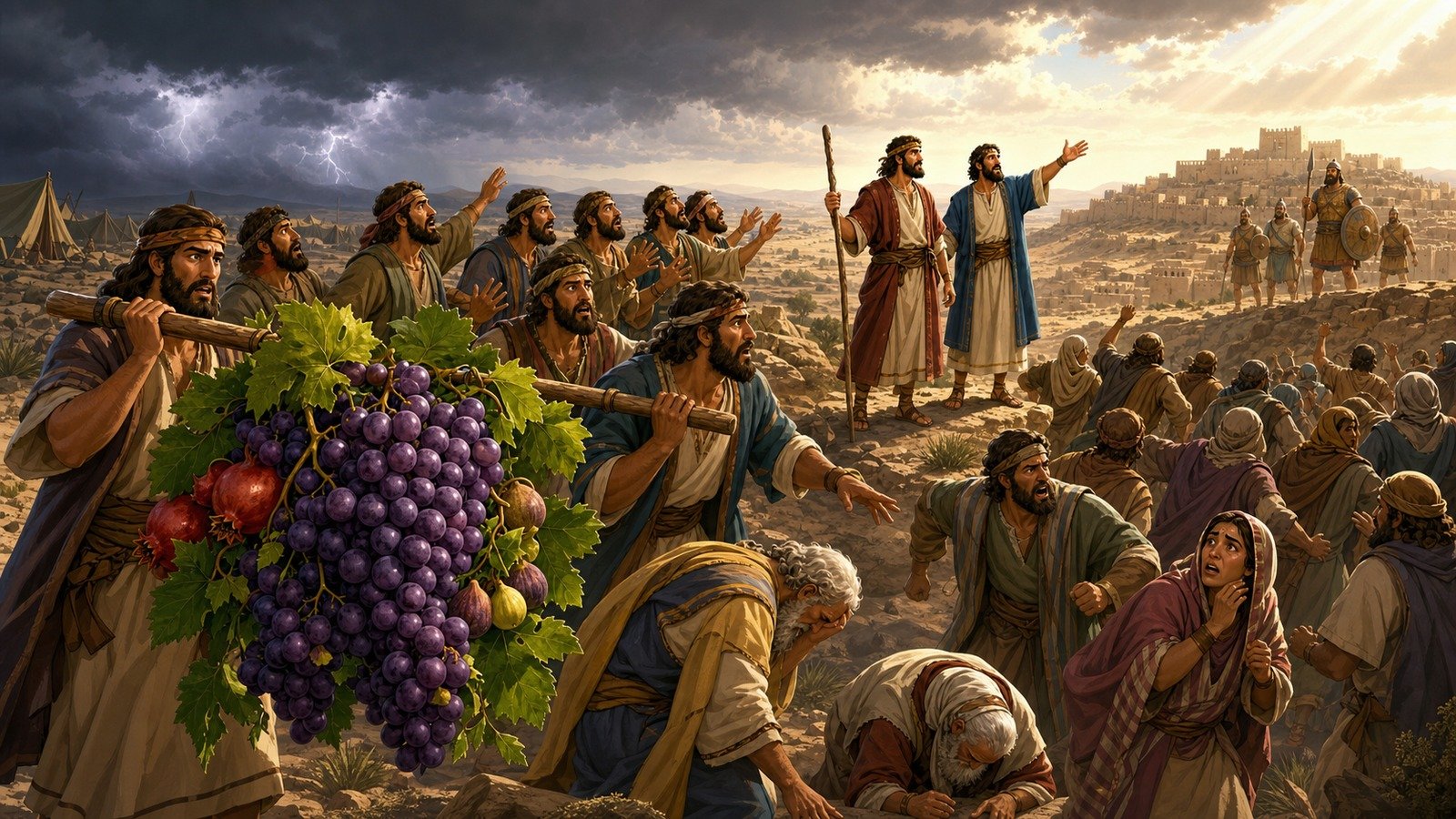
Twelve spies scout Canaan; ten report the inhabitants are too strong to defeat, only Joshua and Caleb urge trust in God. The people side with the majority report and refuse to enter the land, so God condemns that entire generation to die in the wilderness over the next 38 years.
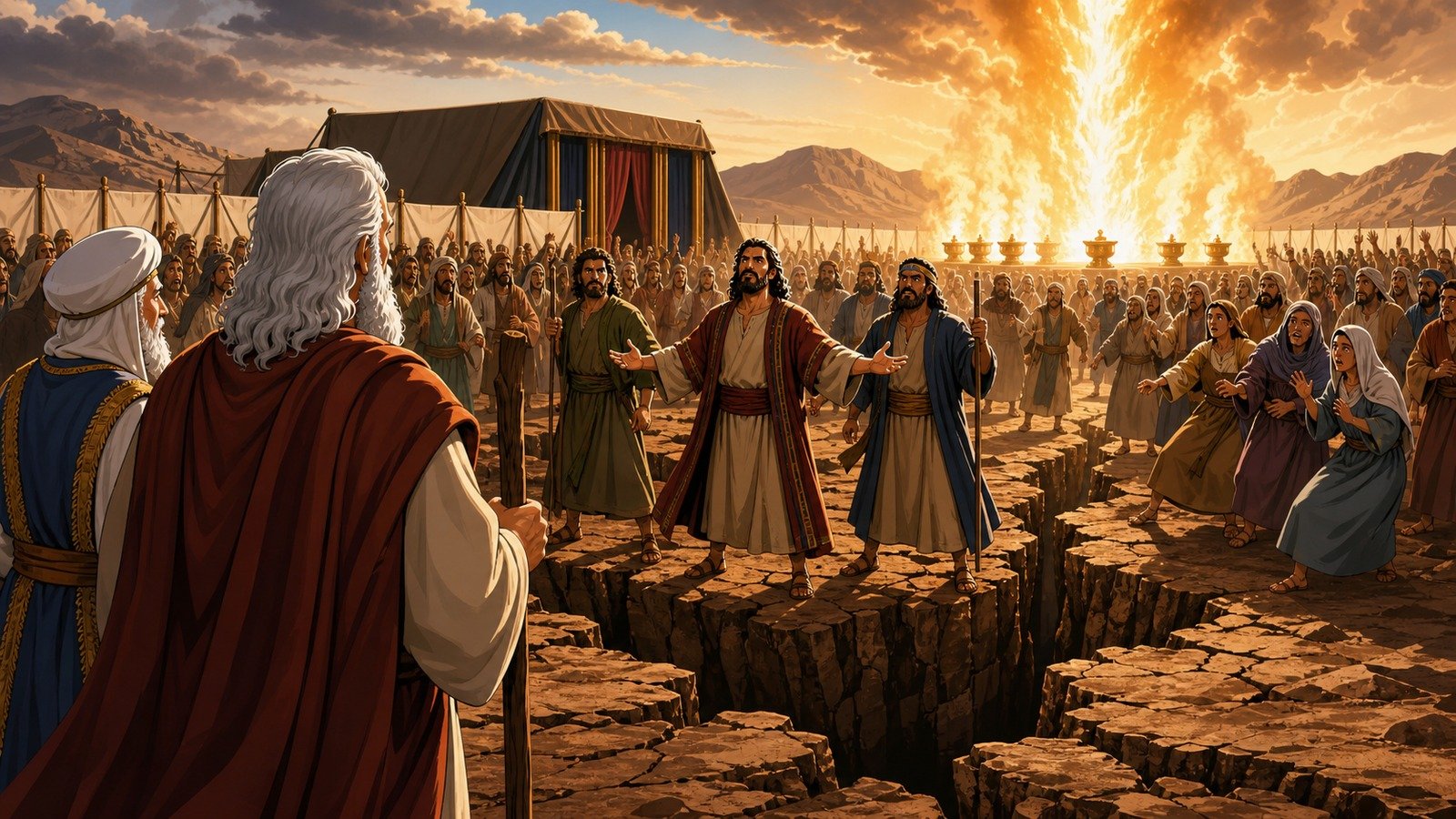
Korah, Dathan and Abiram lead a challenge against Moses' and Aaron's leadership; the ground swallows the ringleaders and fire consumes 250 supporters, a severe judgement on organised rebellion against appointed leadership.
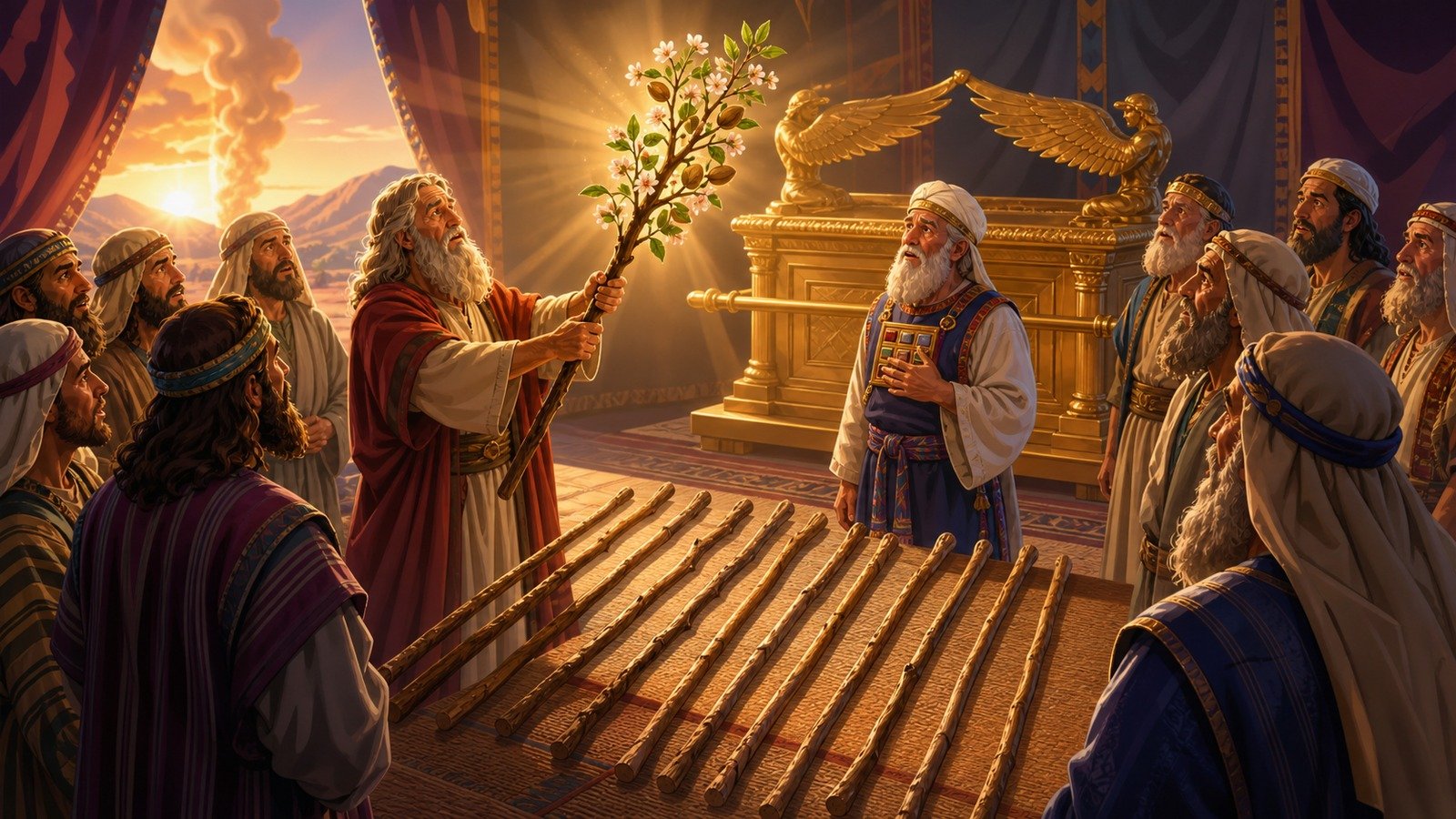
Following Korah's rebellion, each tribal leader's staff is placed before the ark overnight; only Aaron's sprouts, blossoms and produces almonds by morning, a sign confirming his priesthood before the whole community.
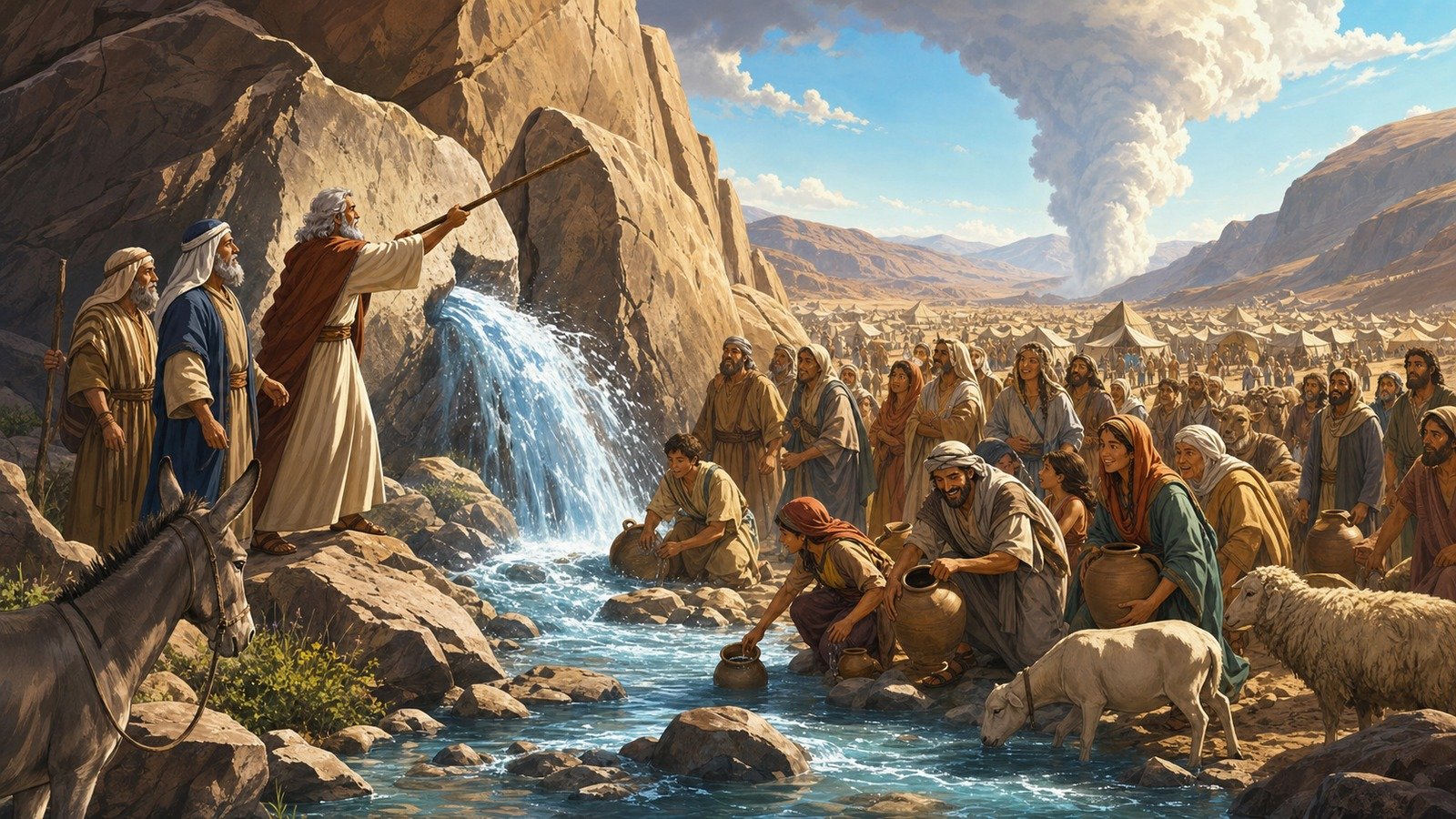
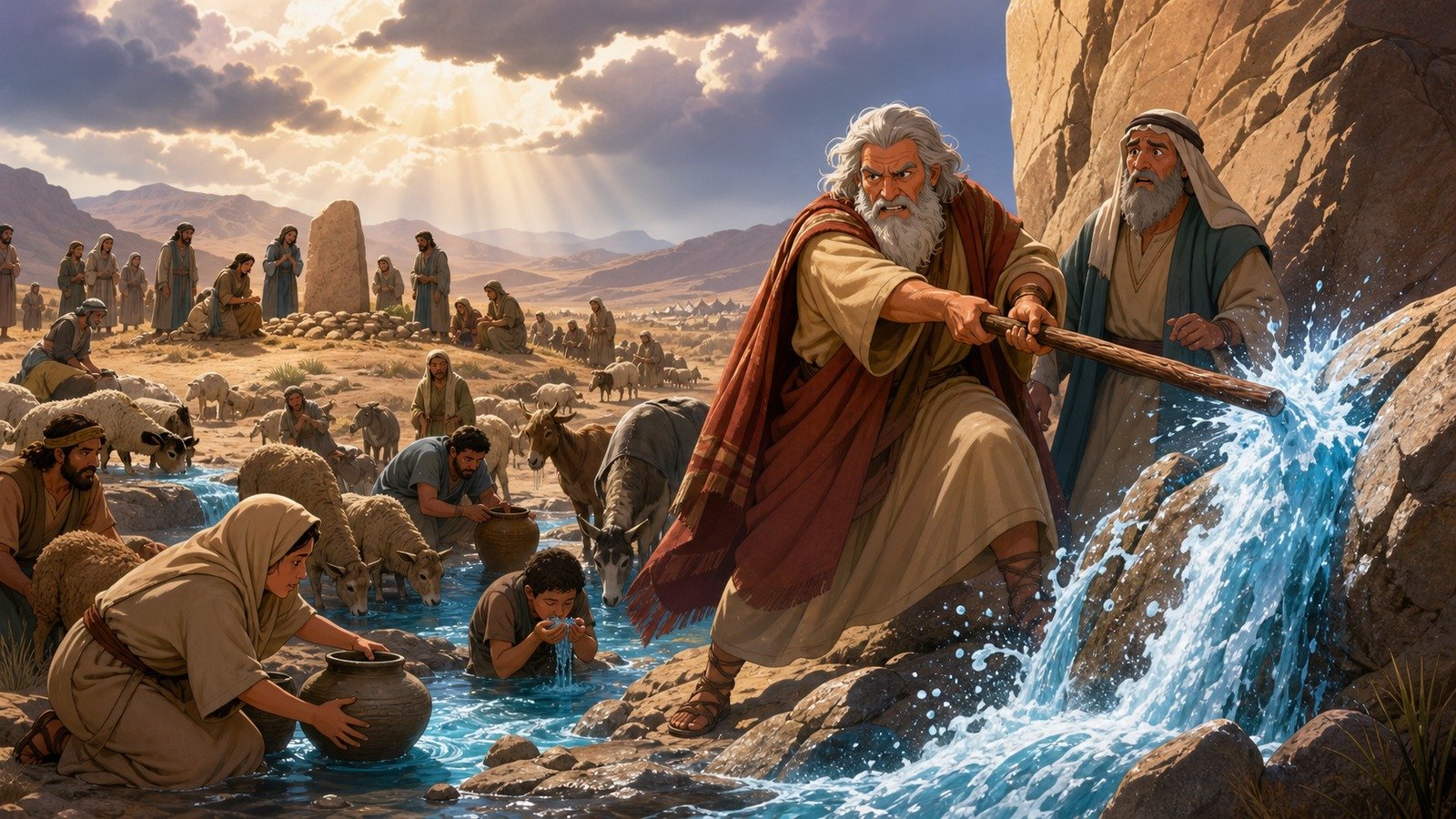
Miriam dies at Kadesh late in the wilderness period. When the people again complain of thirst, Moses strikes the rock instead of speaking to it as instructed, and God bars both Moses and Aaron from entering the promised land as a consequence.
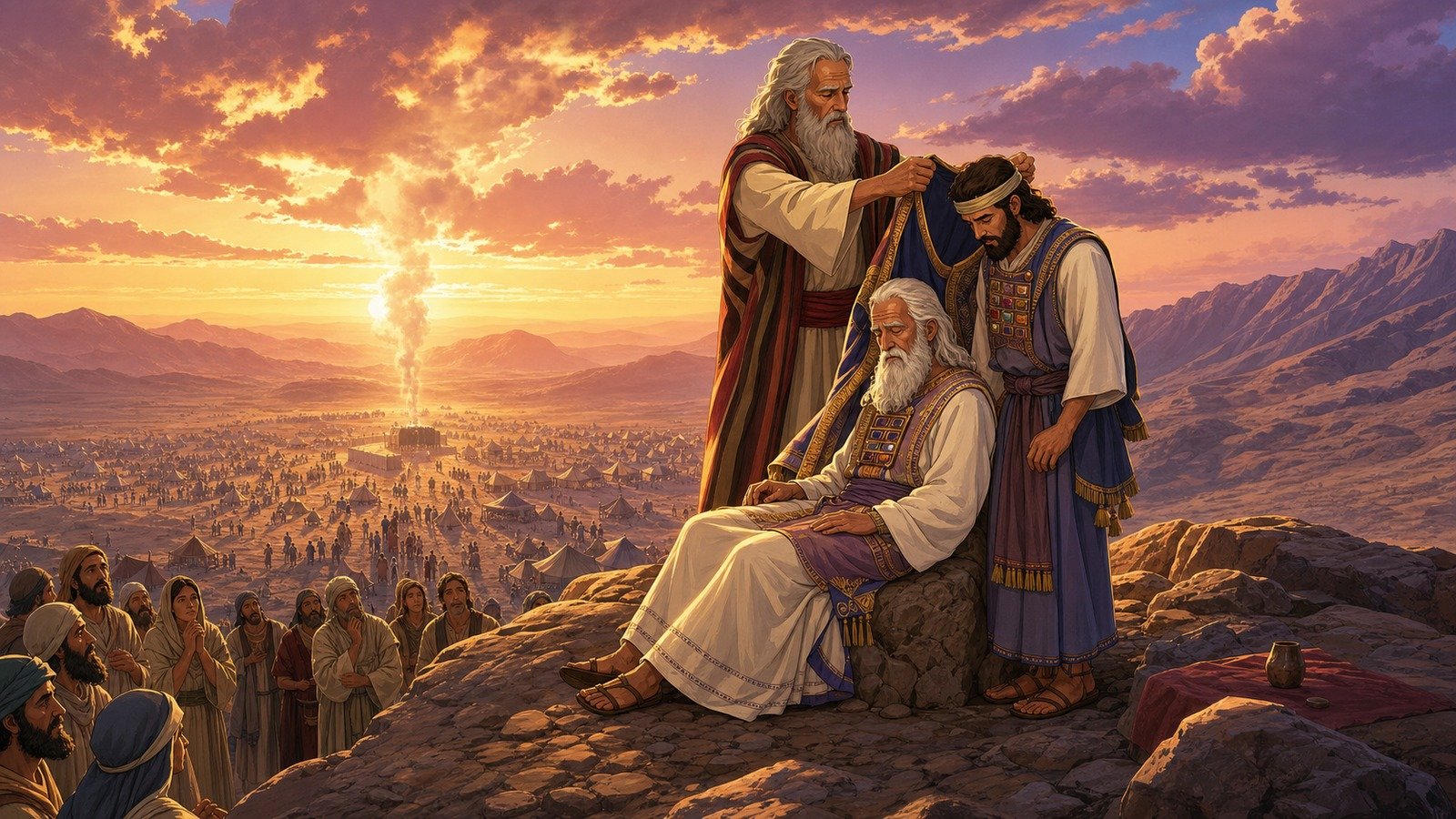
Aaron dies on Mount Hor at 123, and the priesthood passes to his son Eleazar, marking the end of the first high priestly generation before Israel enters Canaan.
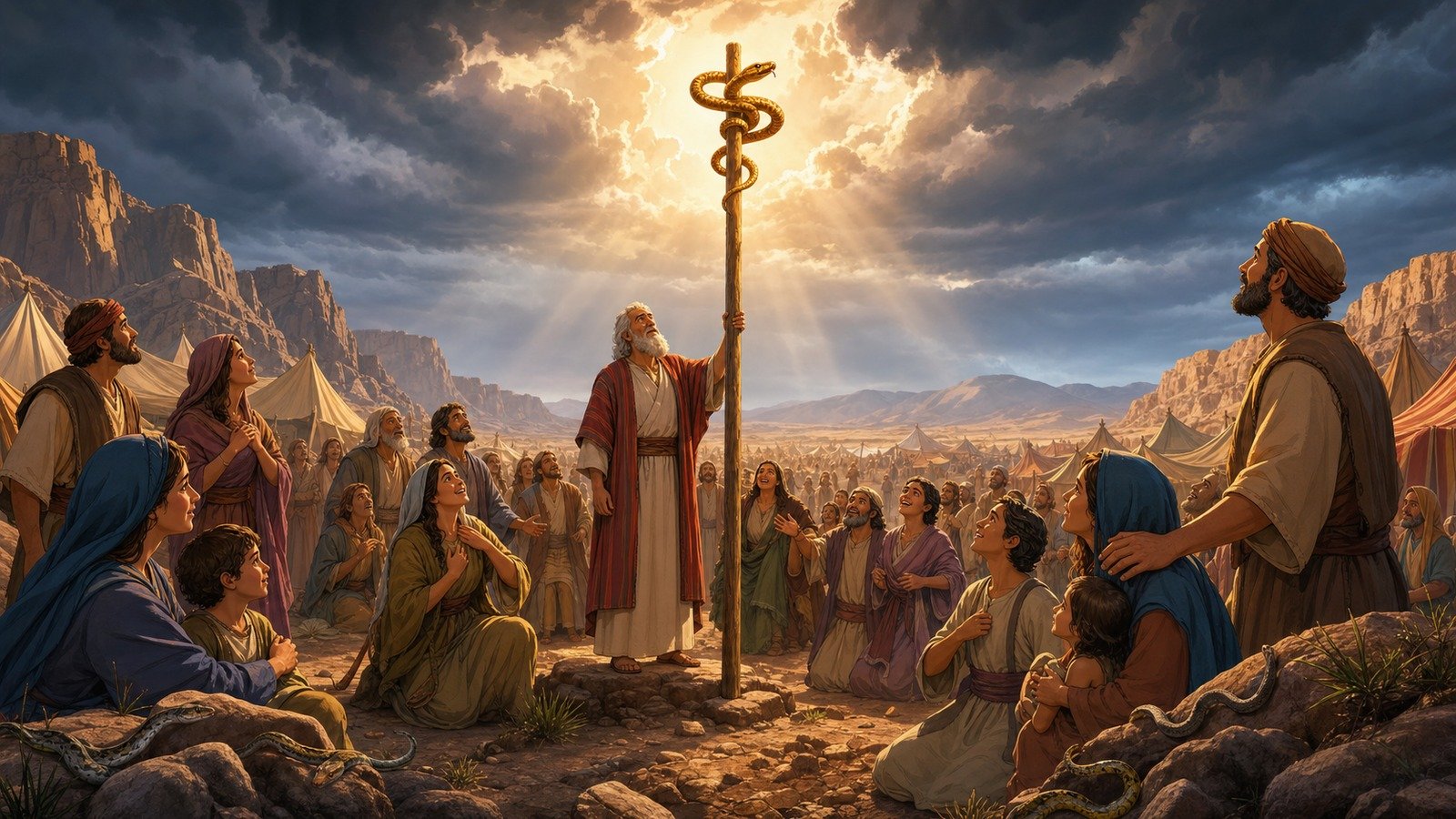
Israel again complains, and venomous snakes attack the camp. God instructs Moses to mount a bronze snake on a pole so that anyone bitten who looks at it lives, a healing sign Jesus later applies to himself.
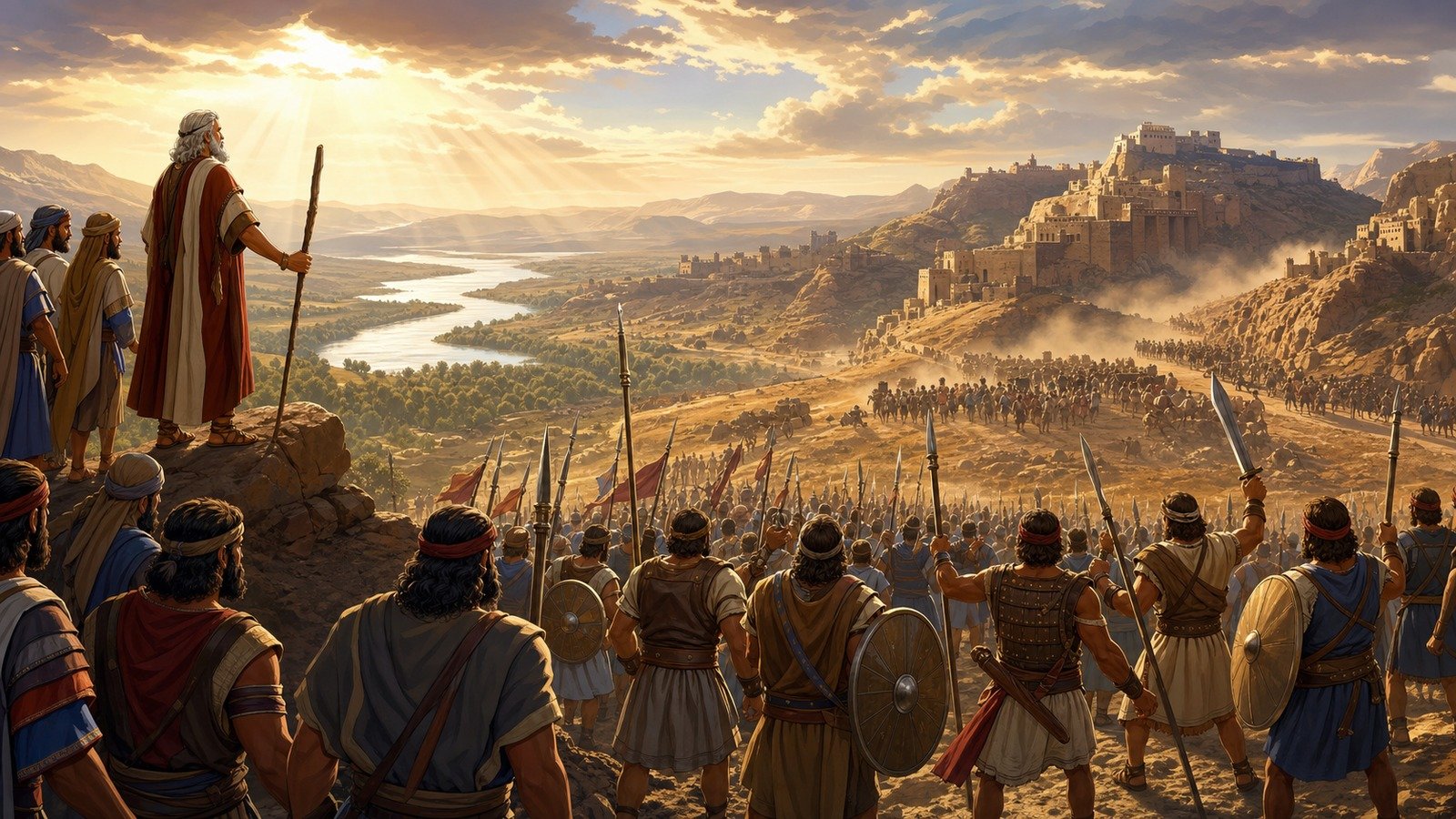
Israel defeats the Amorite kings Sihon and Og east of the Jordan, securing territory later assigned to Reuben, Gad and half of Manasseh, before crossing into Canaan proper.
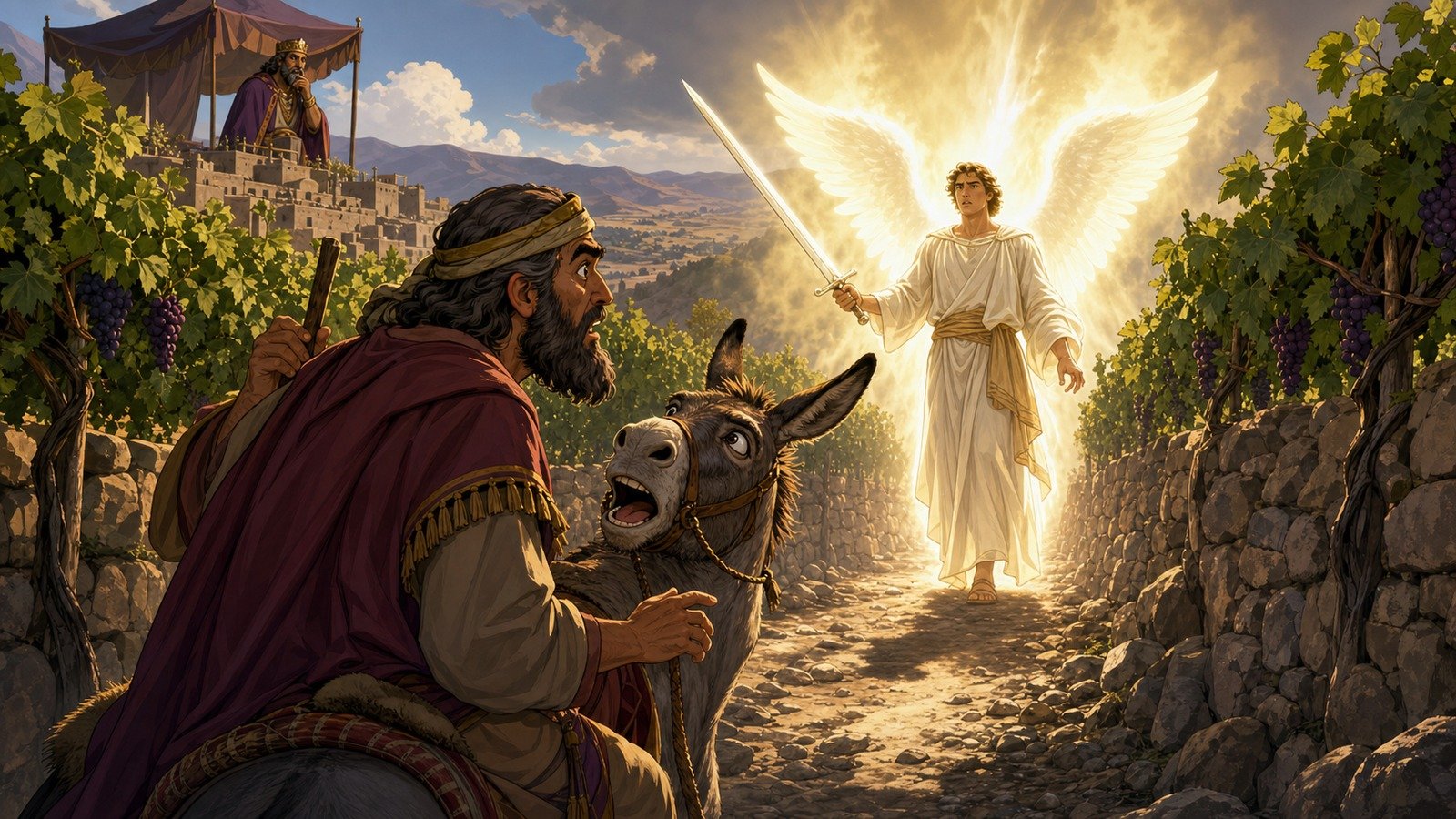
Moabite king Balak hires the pagan seer Balaam to curse Israel; on the way, Balaam's own donkey sees a blocking angel he cannot and speaks to rebuke him, a strange and famous episode confirming that Balaam ultimately answers to God, not Balak.
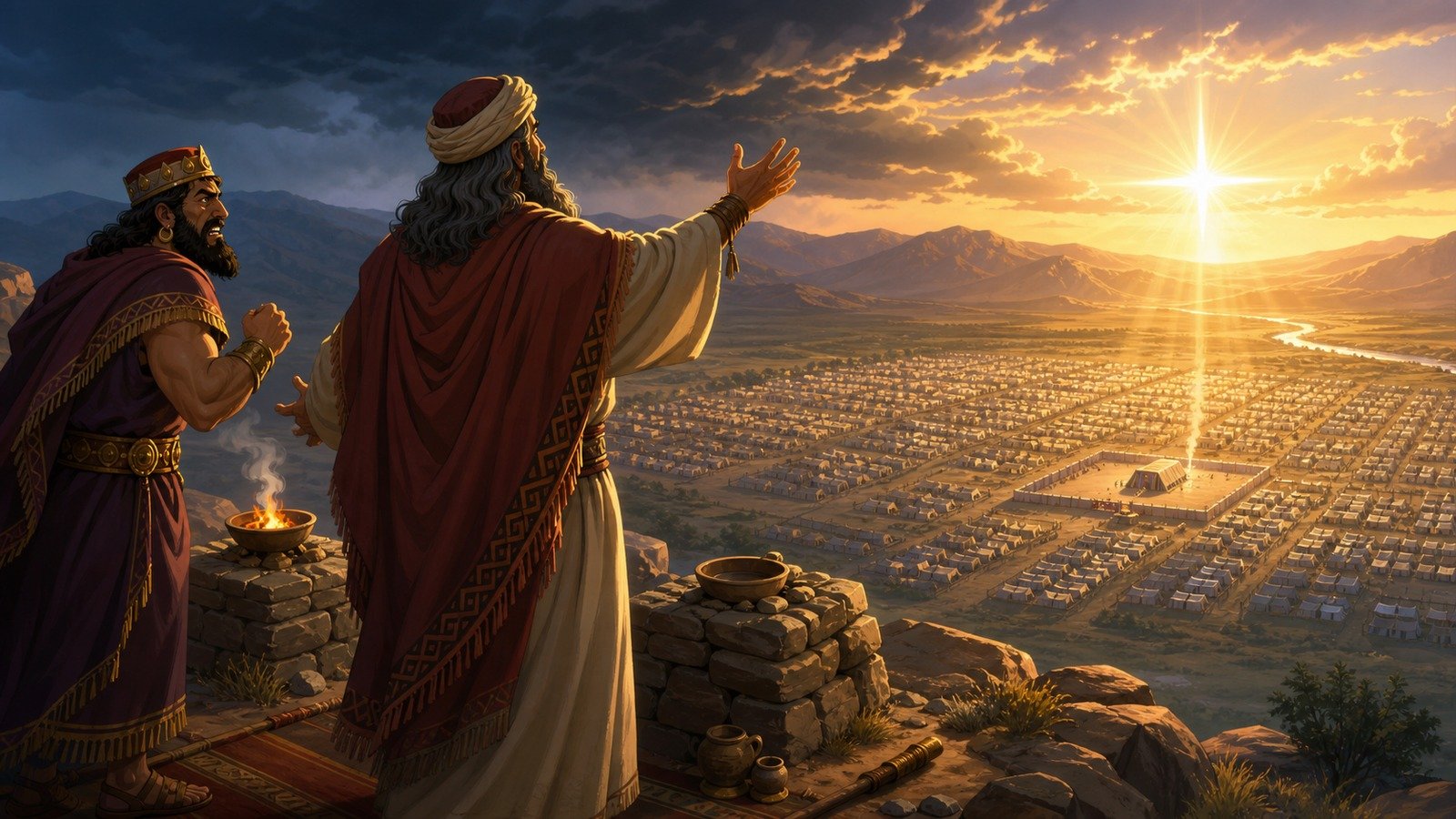
God repeatedly turns Balaam's intended curses into blessings over Israel across four oracles, including a prophecy of a coming "star out of Jacob," despite Balak's mounting frustration.
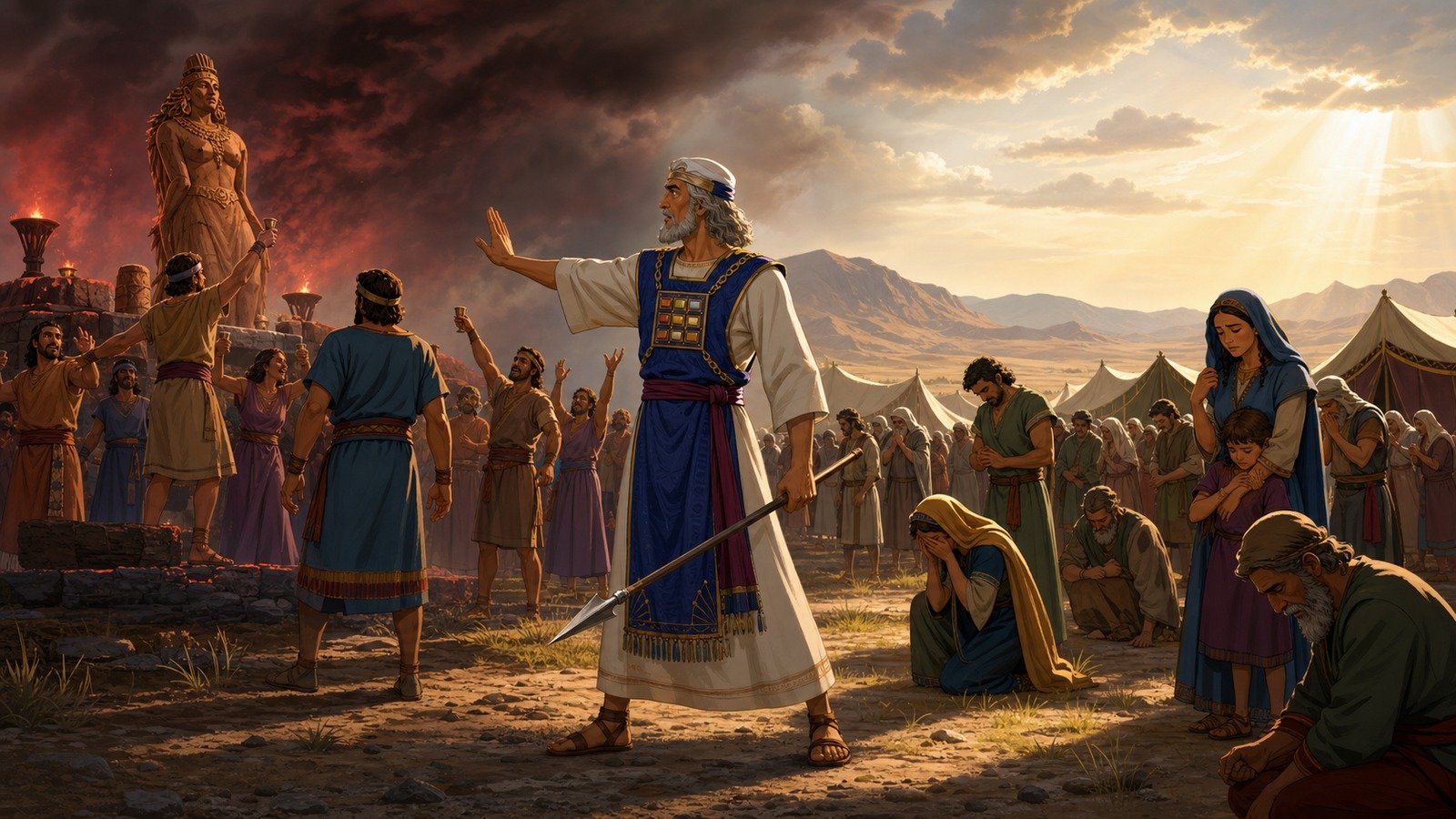
Israelite men engage in sexual immorality and idol worship with Moabite women at Baal Peor; a plague kills 24,000 before Phinehas' decisive intervention ends it, and he is rewarded with a covenant of lasting priesthood.
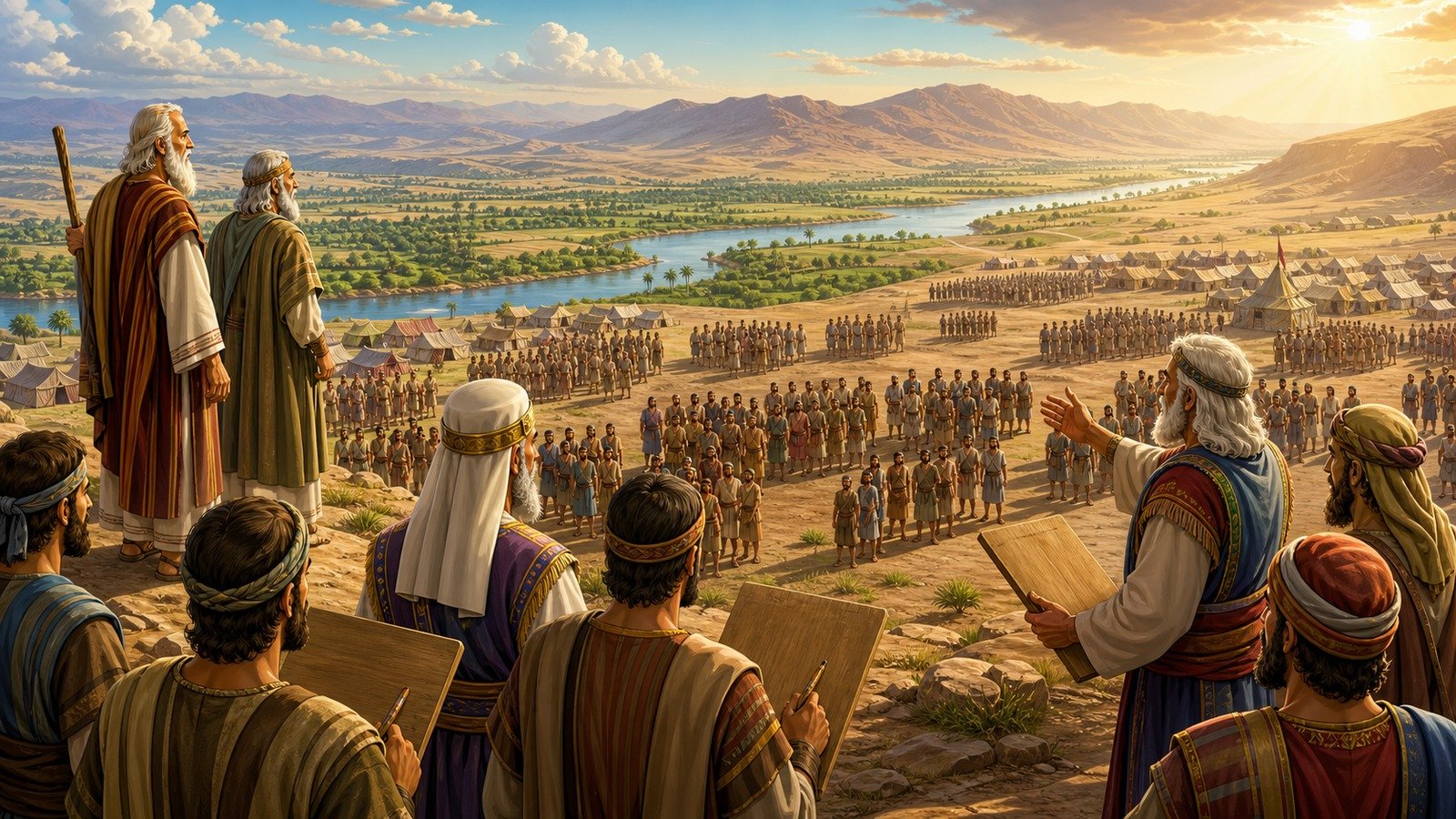
A new census counts the generation about to enter Canaan, confirming that none of the men counted at Sinai, except Joshua and Caleb, survive to see the promised land.
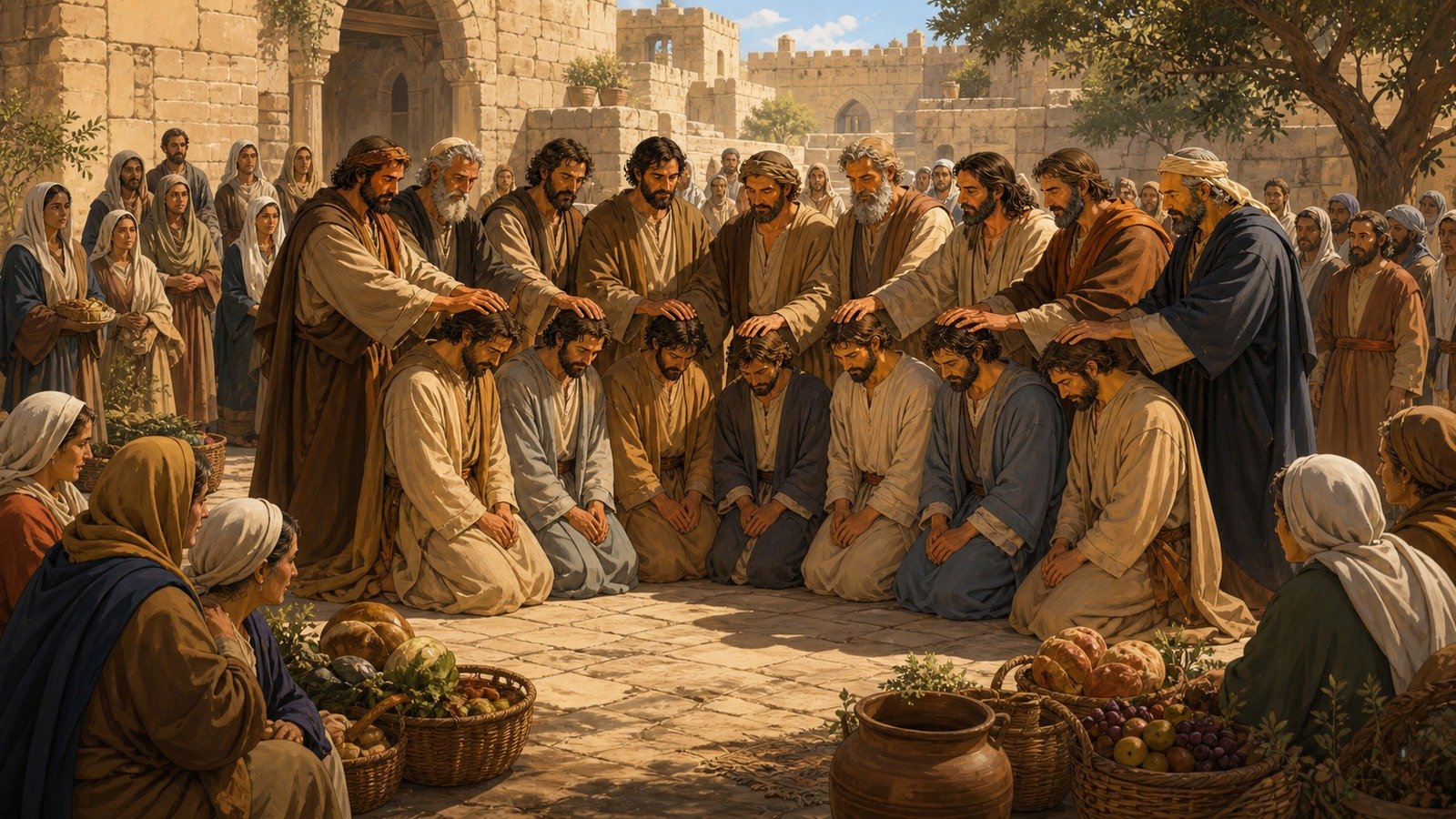
Told he will not enter Canaan himself, Moses asks God to appoint a successor; God formally commissions Joshua before the assembled community through the laying on of hands.
On the plains of Moab, Moses reviews forty years of Israel's history for the new generation and restates the Law, including the Shema, Israel's central confession of faith.
Moses sets out in detail the blessings that will follow covenant faithfulness and the curses that will follow rebellion, and teaches Israel a song intended to stand as a witness against them in future generations.
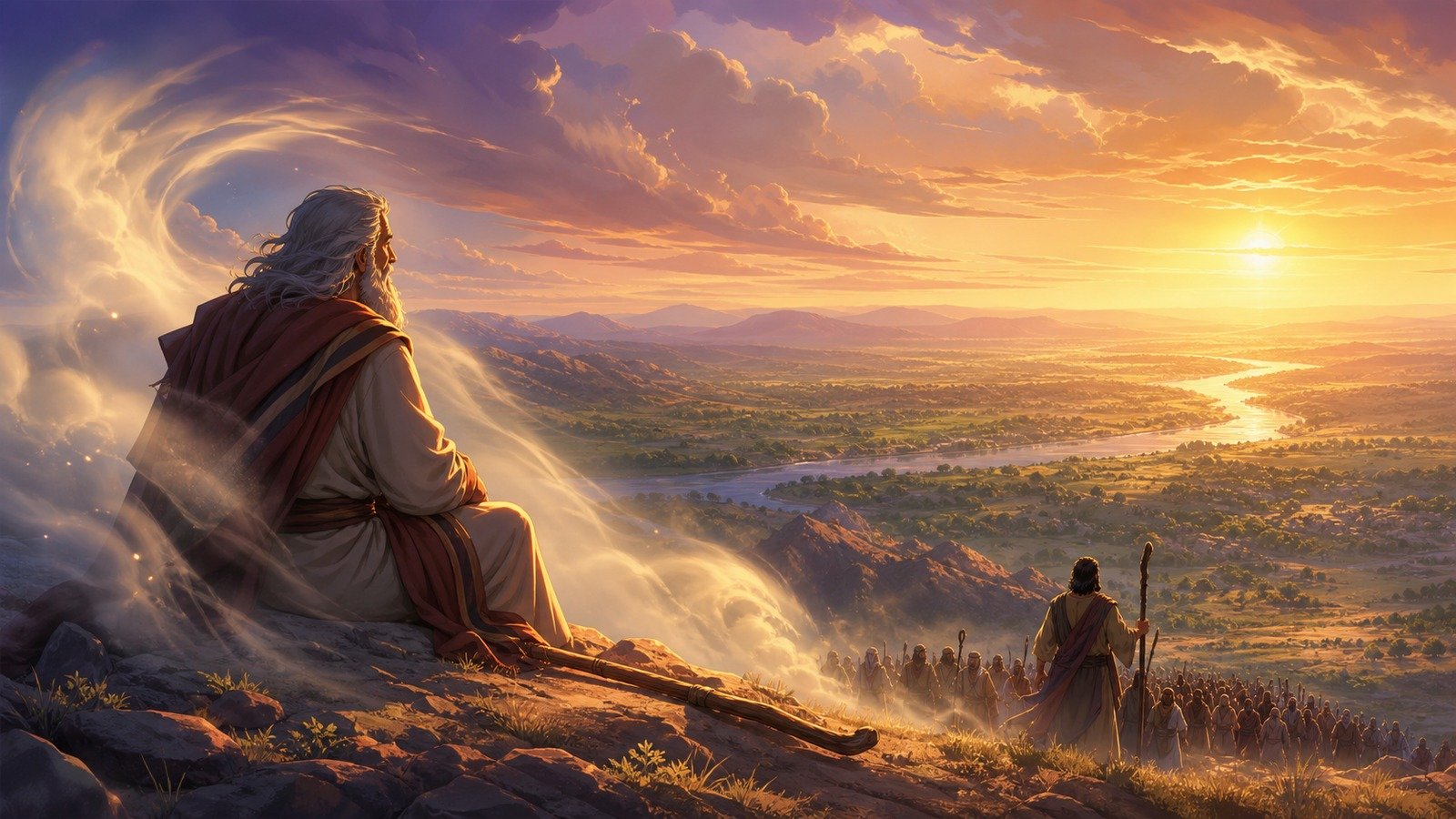
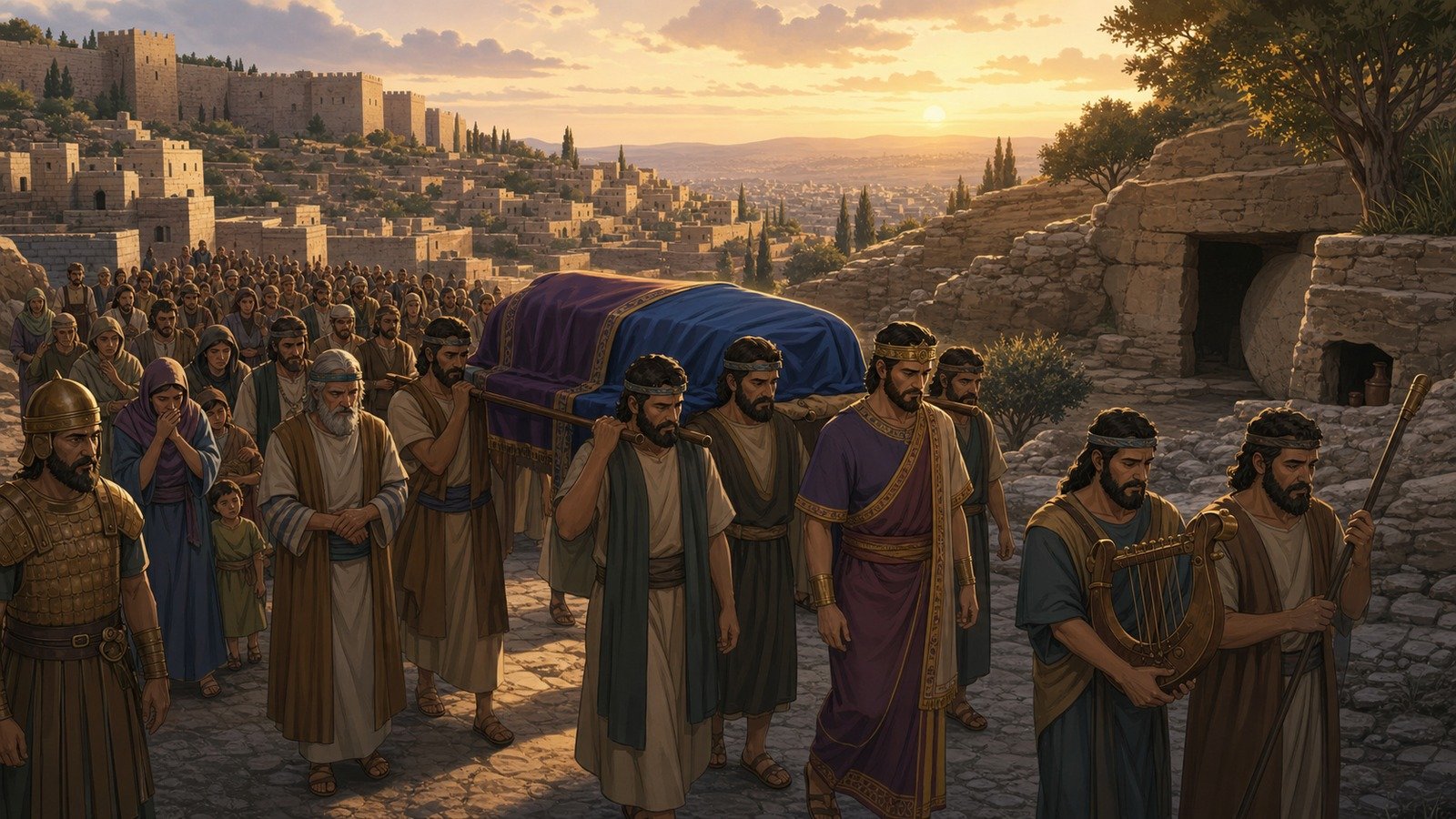
Moses views the promised land from Mount Nebo but is not permitted to enter it himself, and dies at 120. He is buried by God in an unknown location, and Scripture notes no prophet like him arose again in Israel.
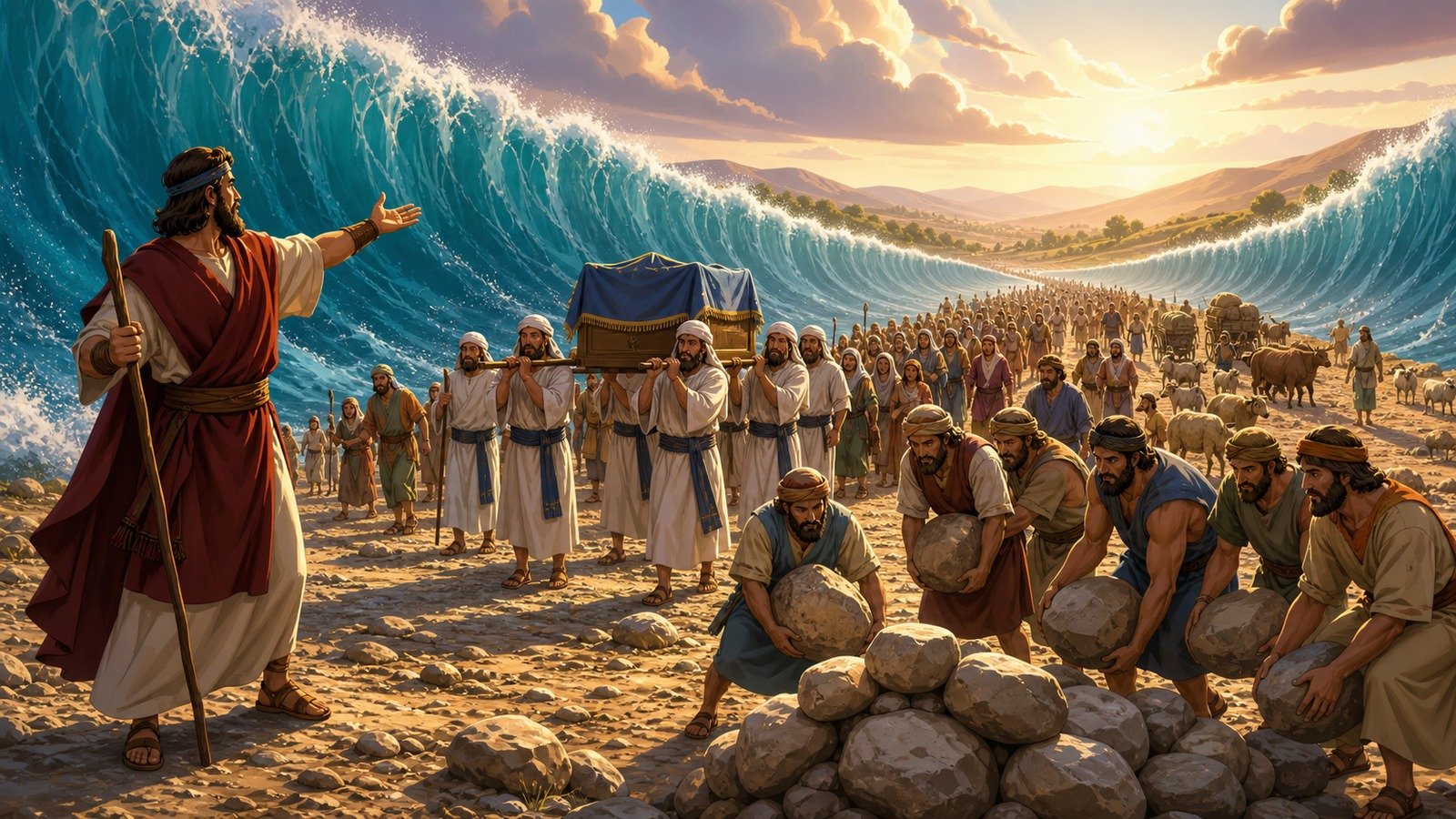
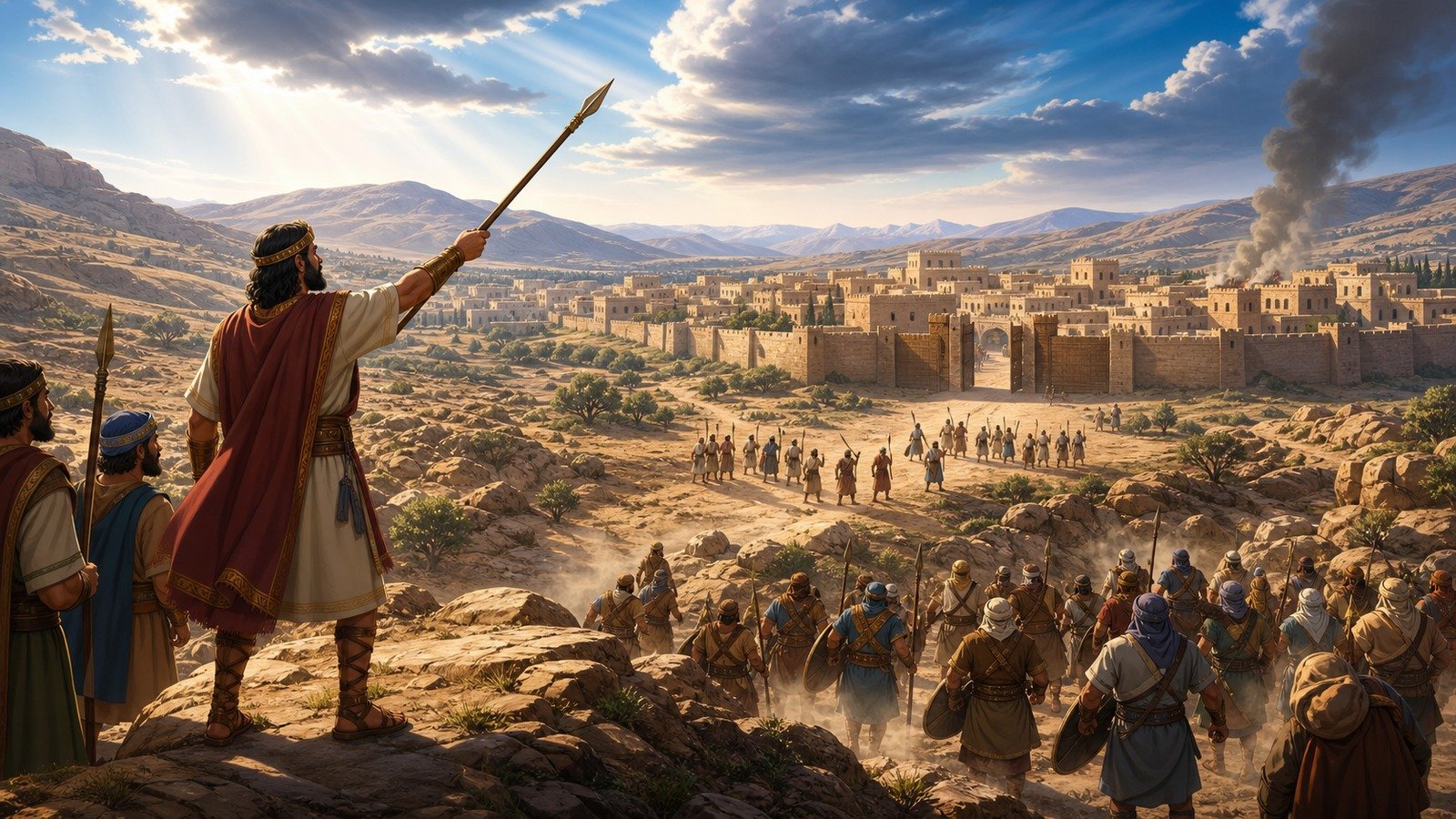
God commissions Joshua to lead the conquest, and Israel crosses the Jordan on dry ground when the priests carrying the ark step into the river, echoing the Red Sea crossing forty years earlier. Twelve memorial stones mark the crossing point.
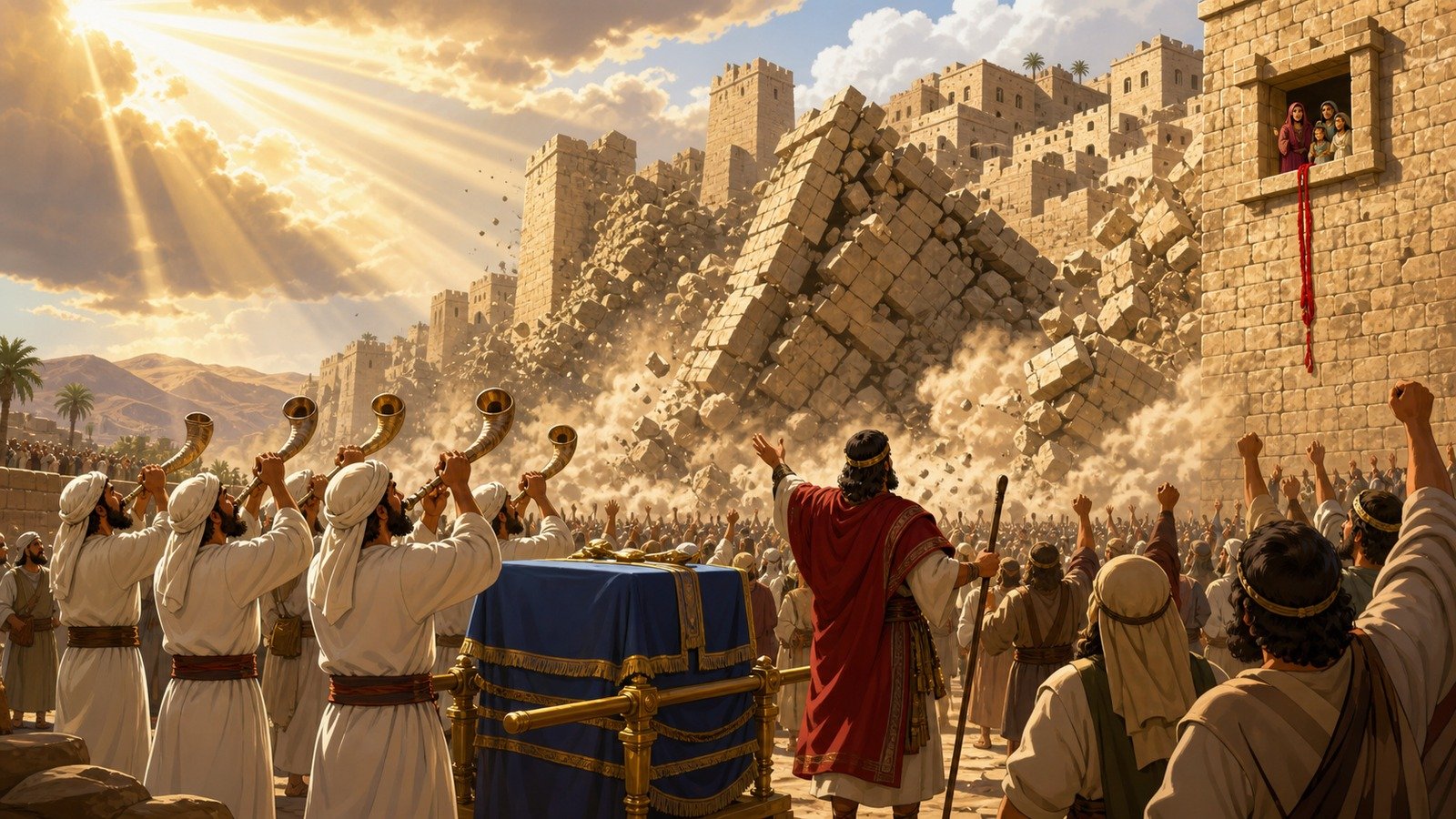
Following God's unconventional battle plan, Israel marches around Jericho for seven days; on the seventh day the walls collapse after a shout and trumpet blast, and the city is destroyed, sparing only Rahab and her family for hiding the Israelite spies.
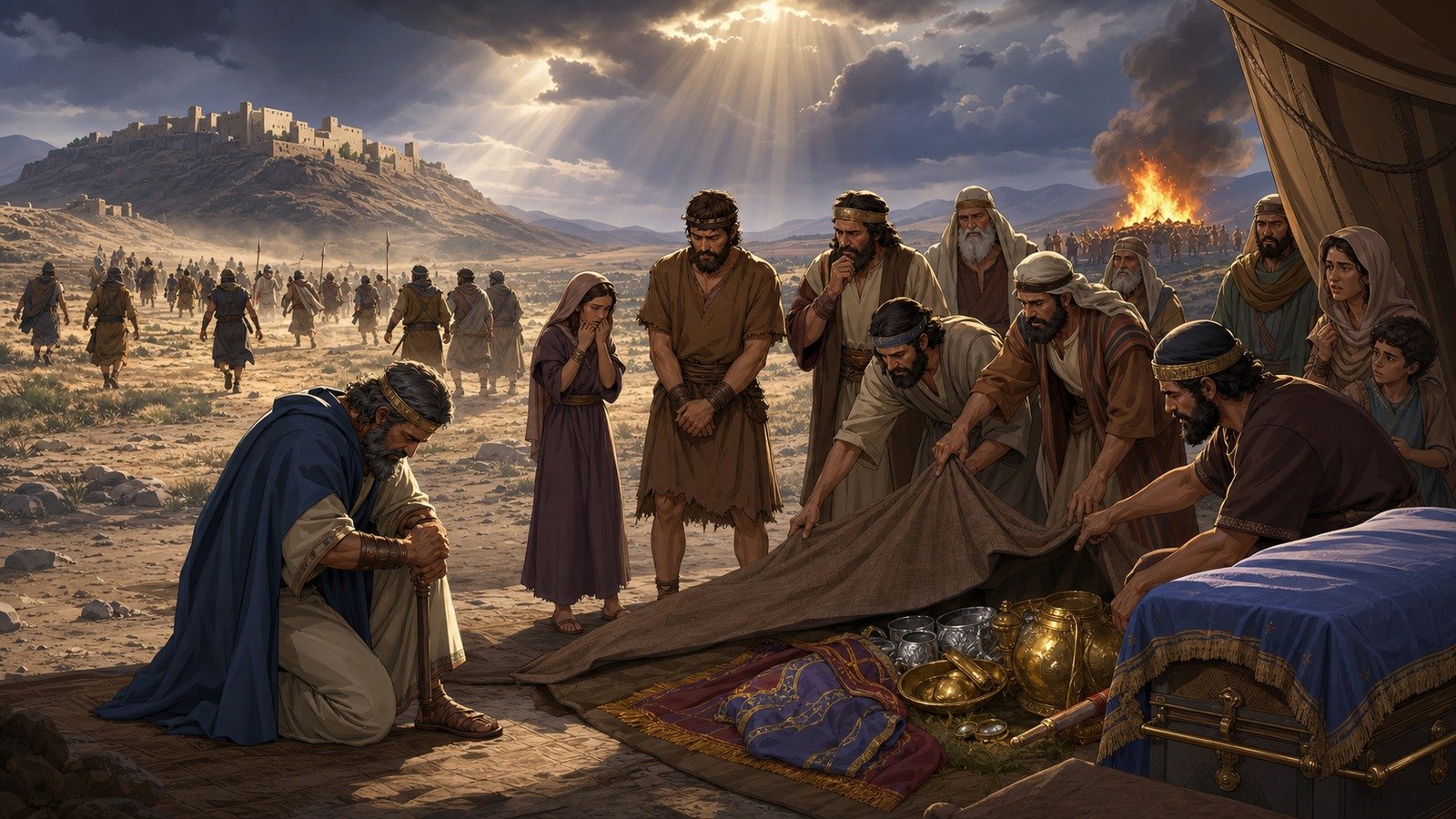
Israel is unexpectedly defeated at Ai because Achan secretly kept plunder devoted to destruction from Jericho; once his sin is exposed, he and his family are executed and the plunder destroyed.
The Gibeonites disguise themselves as distant travellers to trick Israel into a peace treaty without consulting God first. Once the deception is discovered, Israel honours the oath but reduces the Gibeonites to servitude.
A coalition of five Amorite kings attacks Gibeon for its treaty with Israel; Joshua marches through the night to relieve it, and, in a passage long debated by interpreters, the sun and moon are said to stand still to extend the day of battle.
Joshua defeats a northern coalition led by Jabin of Hazor, burning the city, and Joshua 12 summarises the full list of kings defeated on both sides of the Jordan. The text notes land still remained to be taken even after the main campaigns ended.
Joshua and Eleazar oversee the allotment of Canaan by tribe and by lot, including forty-eight Levitical towns and six cities of refuge for those guilty of accidental killing, fulfilling the land promise first made to Abraham.
In his final address, Joshua reviews God's faithfulness and challenges Israel to choose whom they will serve; the assembled people renew the covenant, "as for me and my household, we will serve the Lord."
After Joshua's generation dies, Israel fails to complete the conquest and adopts Canaanite worship. Judges 2 sets out the recurring pattern that structures the rest of the book: apostasy, oppression by a foreign power, a cry for help, and a God-raised deliverer.
Three early judges deliver Israel from successive oppressors: Othniel from Aram-Naharaim, Ehud from Moab through the assassination of King Eglon, and Shamgar from the Philistines. Each victory is followed by a period of peace before the cycle repeats.
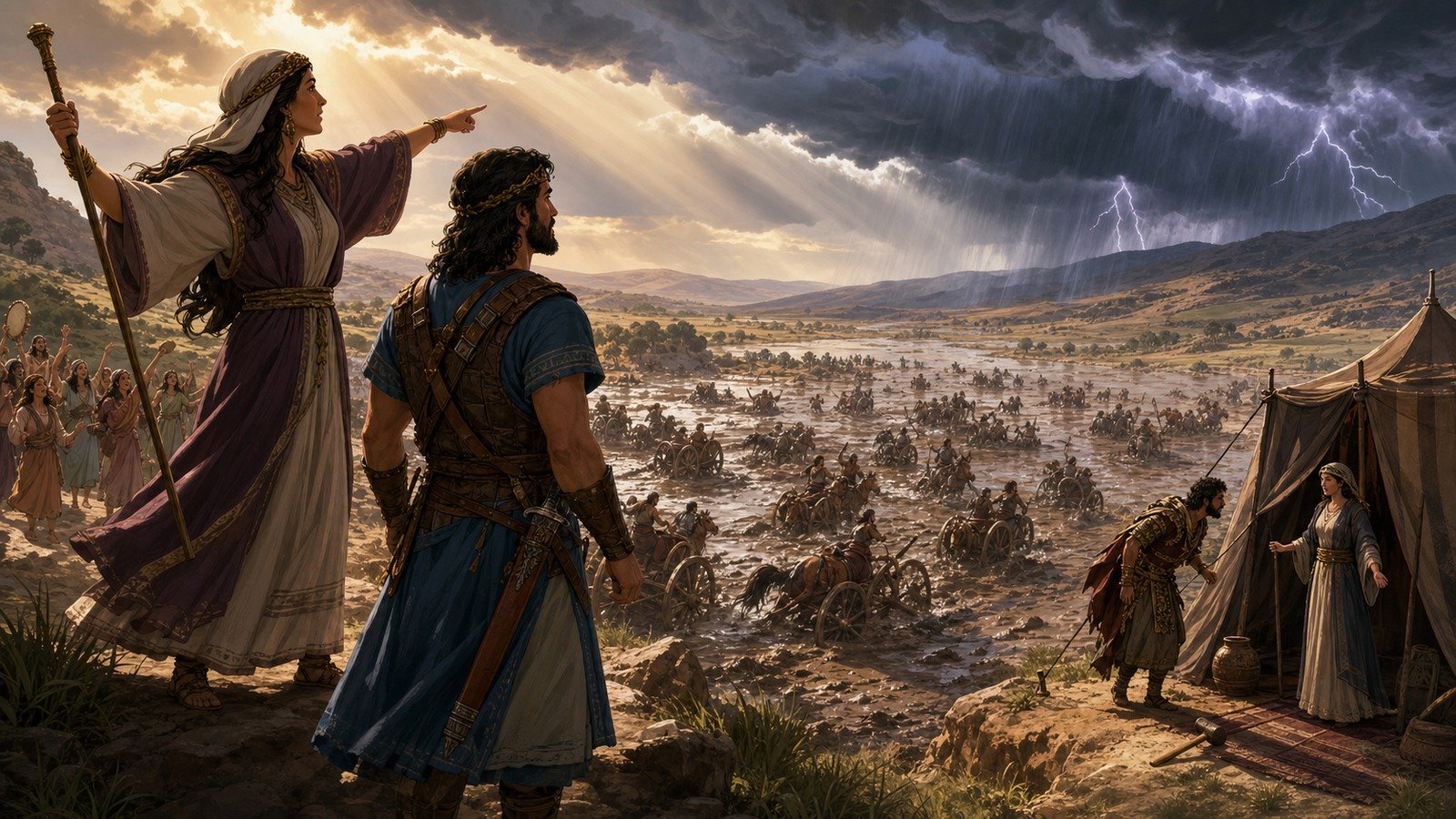
Deborah, a prophetess and judge, summons Barak to lead Israel against Canaanite commander Sisera; the battle is won and Sisera is killed by Jael, a Kenite woman, in her tent. Judges 5 preserves the victory in one of the Bible's oldest poems.
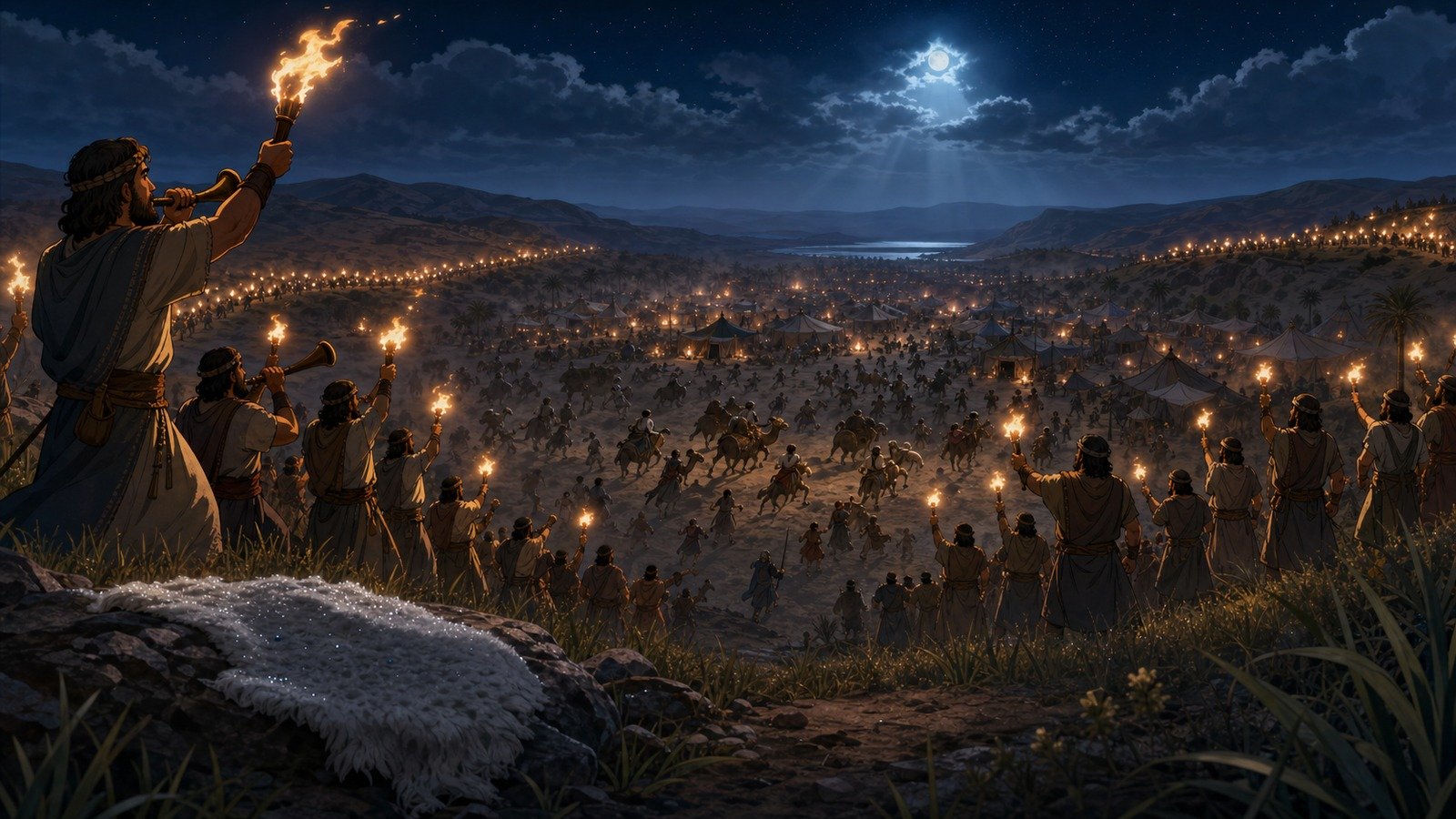
Called while threshing wheat in hiding from Midianite raiders, Gideon tests God with the fleece, then defeats a vastly larger Midianite army with just 300 men armed with trumpets and torches, so that Israel could not credit the victory to its own strength.
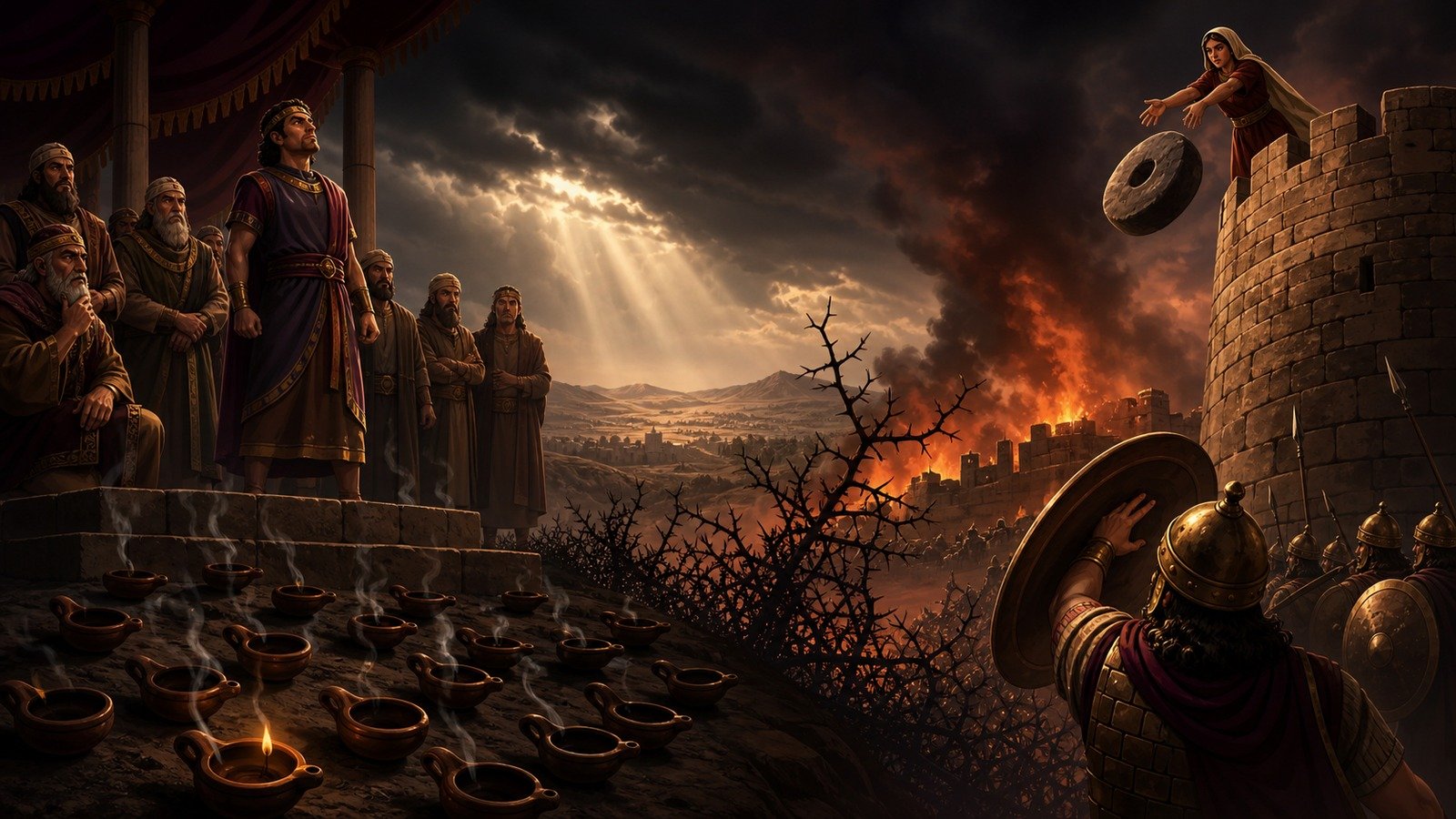
Gideon's son Abimelech murders 70 of his brothers and has himself made king at Shechem; his brief, violent reign ends when a woman drops a millstone on his head during a siege, fulfilling Jotham's earlier parable-curse against him.
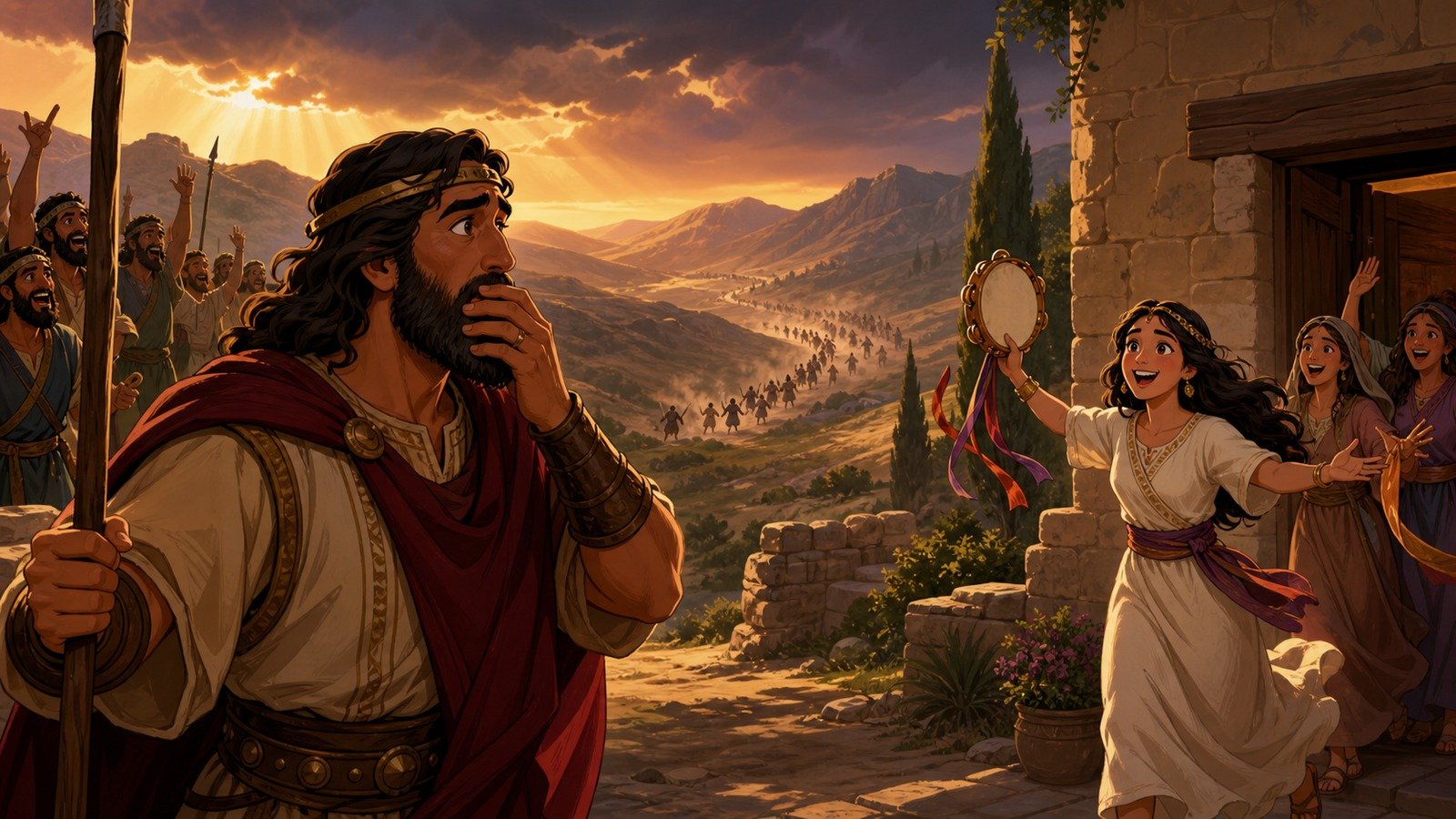
Jephthah, a rejected outcast, is recalled to lead Israel against Ammon and makes a rash vow to sacrifice whatever comes from his house first if granted victory; it proves to be his own daughter, one of the most disturbing episodes in the book.
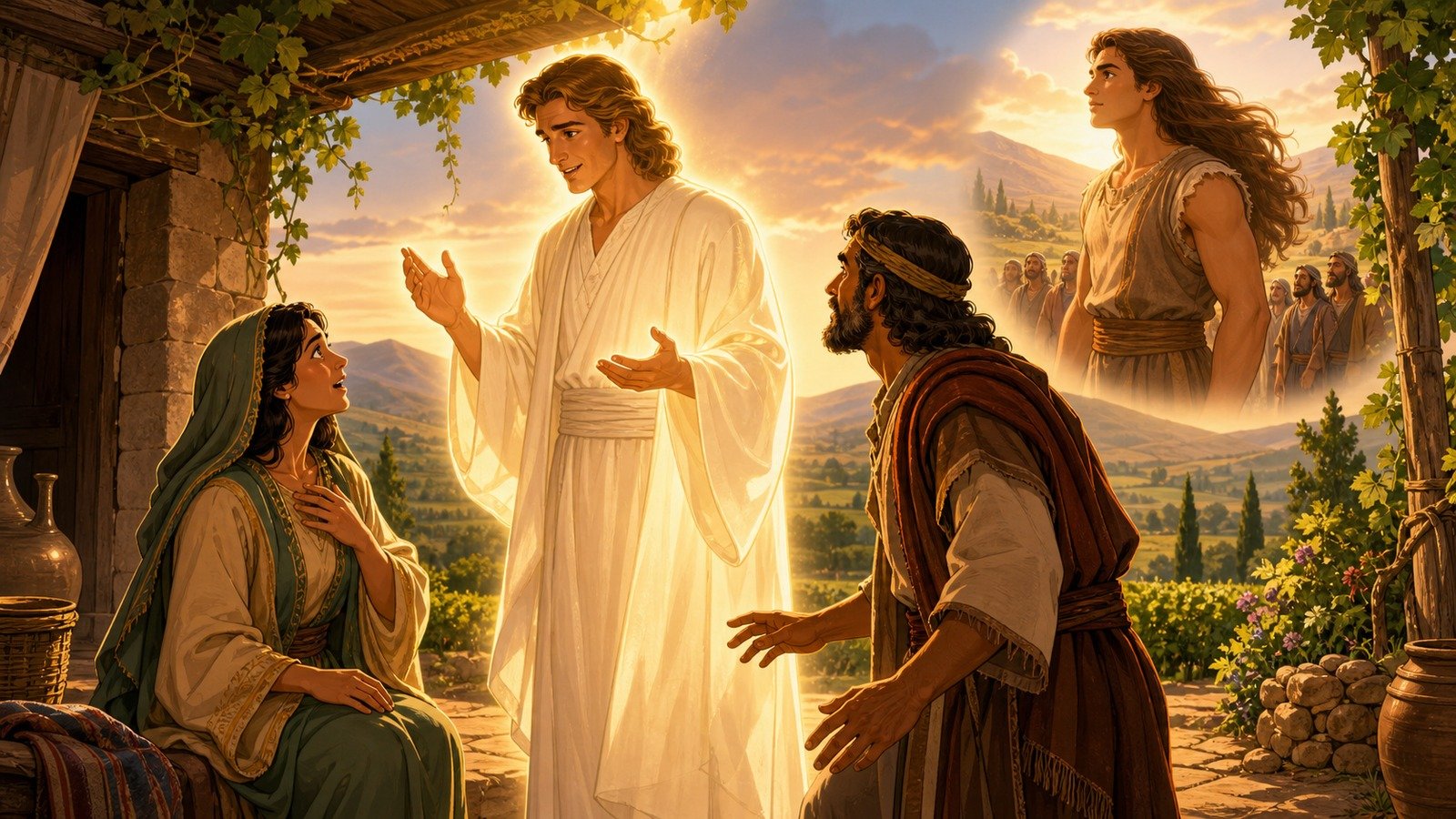
An angel announces Samson's birth to a previously barren woman, instructing that he be raised as a Nazirite, set apart from wine and from cutting his hair, and destined to begin Israel's deliverance from the Philistines.
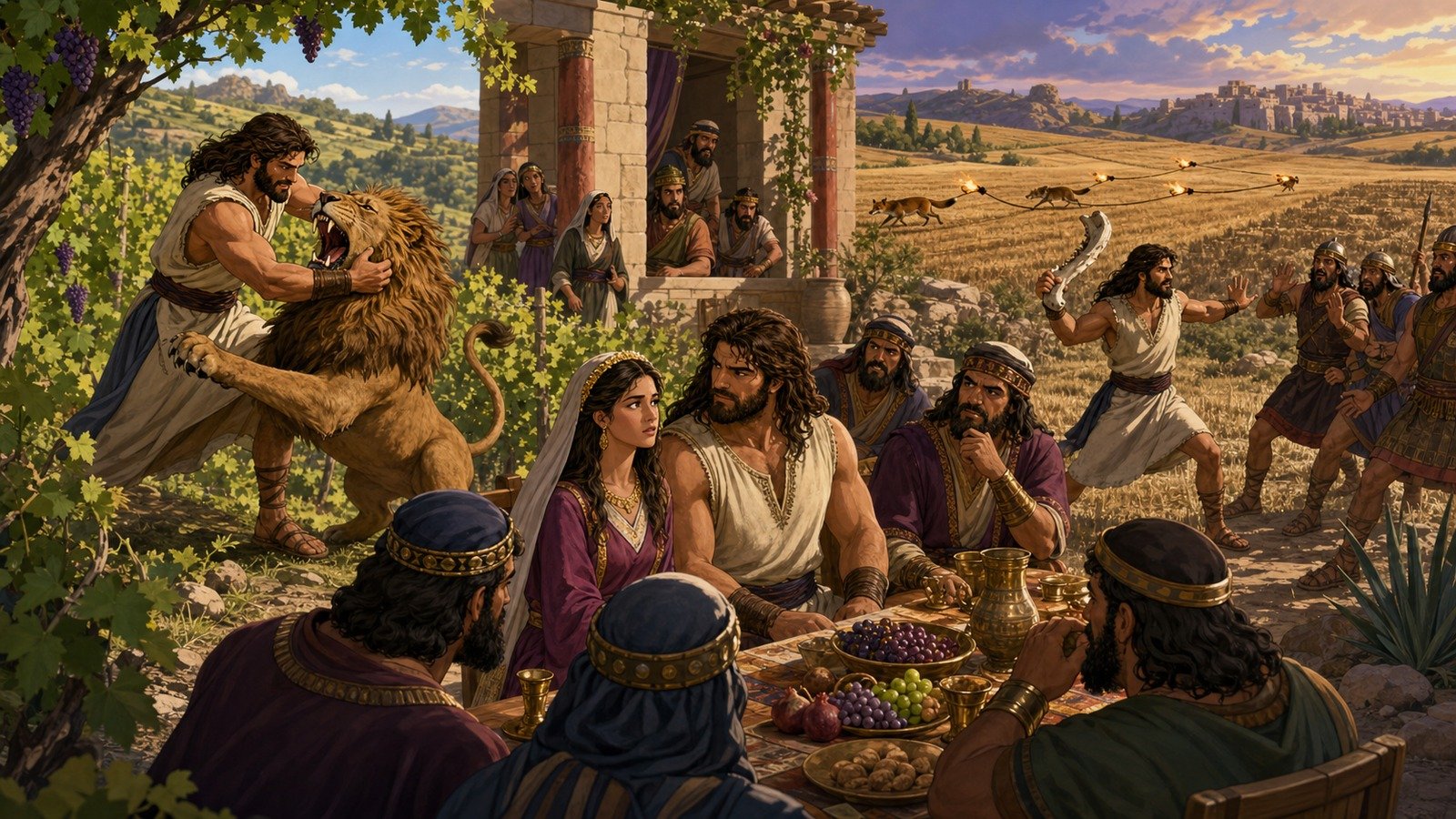
Samson marries a Philistine woman against his parents' wishes, and a chain of personal grievances escalates into a running conflict with the Philistines, including killing a lion barehanded and burning their fields with foxes tied to torches.
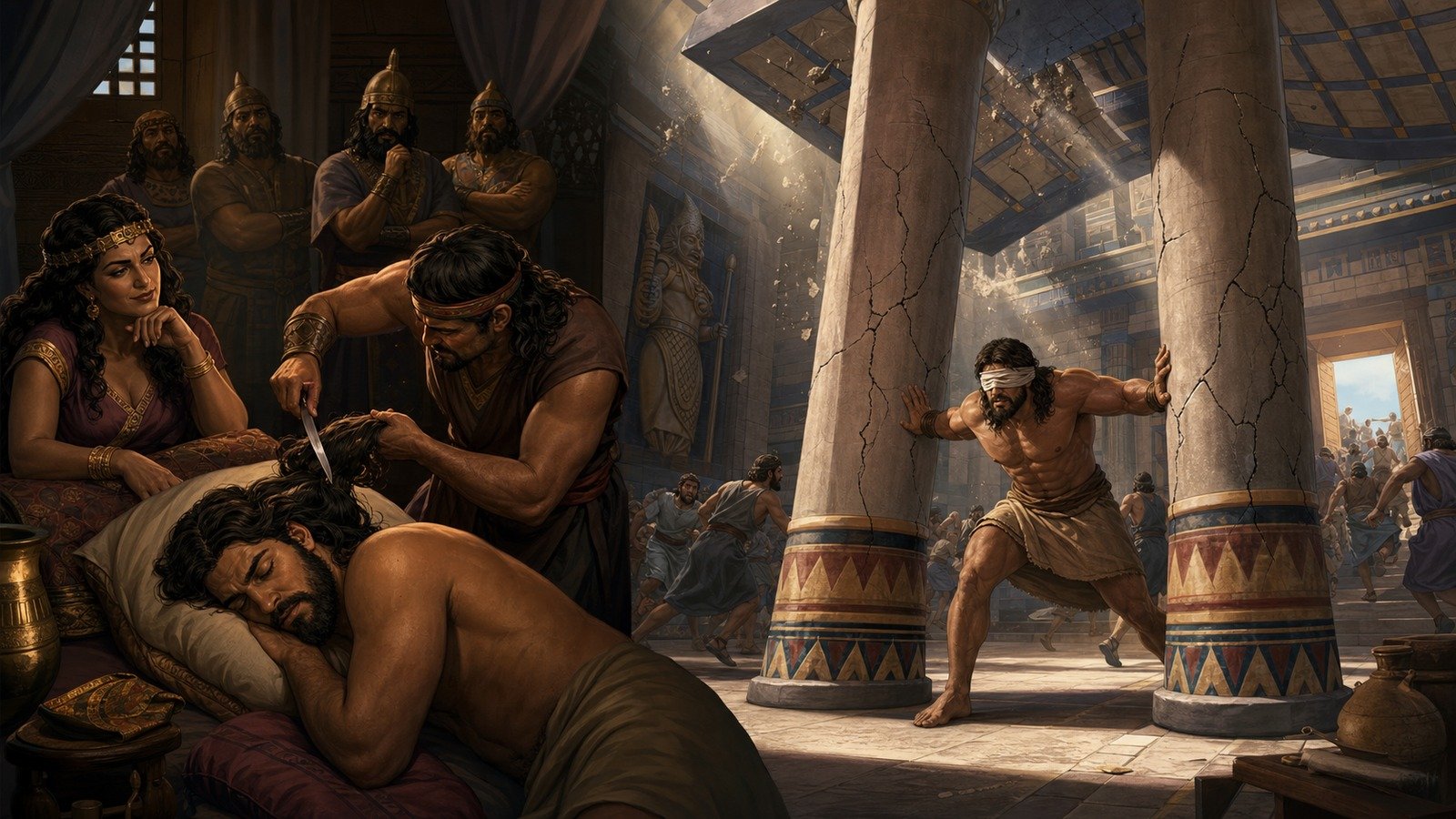
Delilah, paid by Philistine rulers, wears Samson down until he reveals that his strength lies in his uncut hair; blinded and enslaved after his capture, he pulls down the temple of Dagon in his final act, killing more Philistines in his death than in his life.
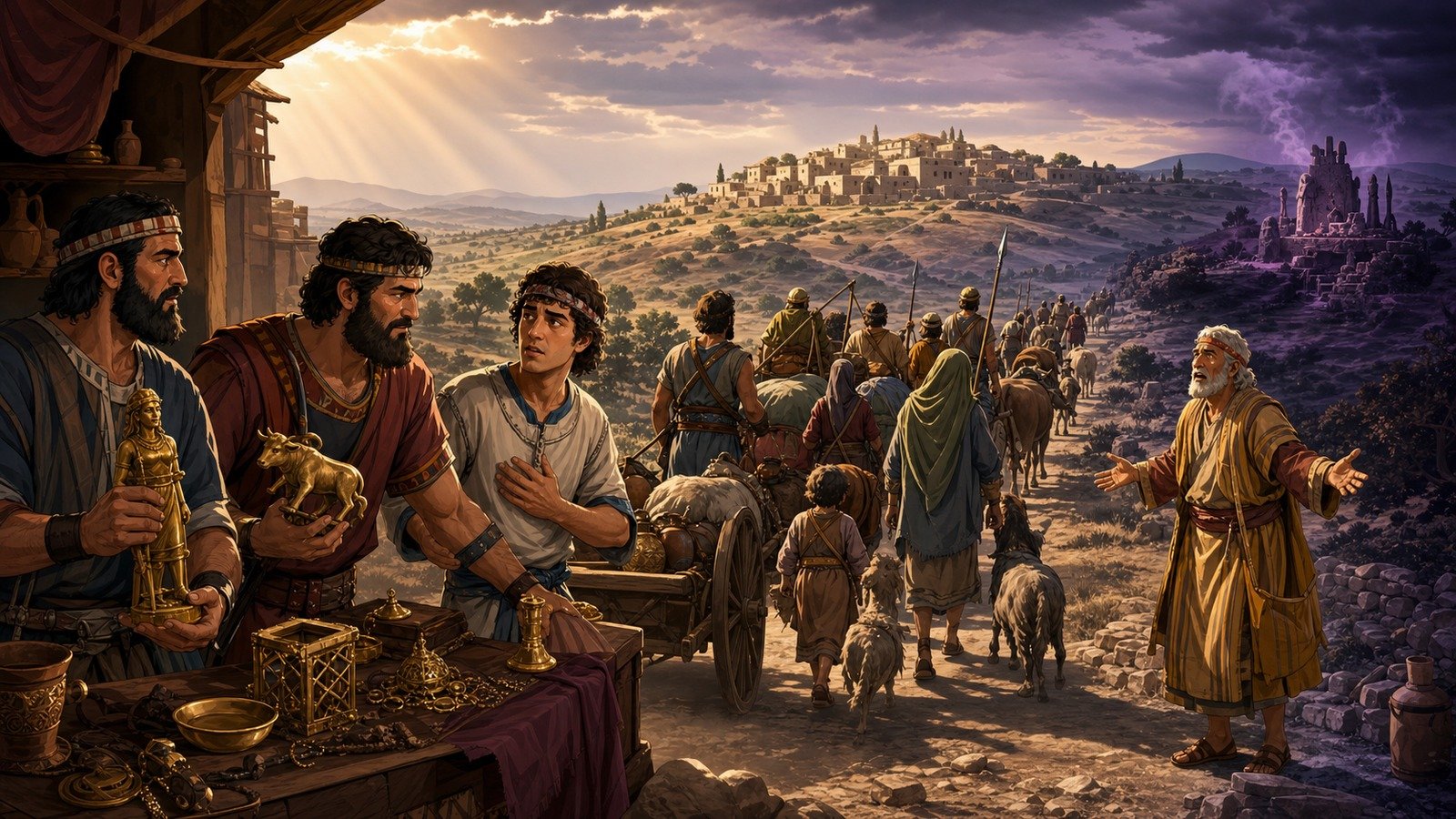
Micah sets up a private shrine with an idol and a hired Levite priest; the tribe of Dan, seeking territory, seizes both on its migration north and establishes an illegitimate rival cult at Laish (renamed Dan), illustrating the religious chaos of the period.
The brutal rape and murder of a Levite's concubine at Gibeah leads the other tribes to near-annihilate Benjamin in a civil war, then scramble to preserve the tribe's survival through further violence. The book closes on this account of Israel's moral collapse without a king.
Famine drives Naomi's family to Moab, where her sons marry Moabite women before all three men die. Naomi returns to Bethlehem, and her Moabite daughter-in-law Ruth refuses to leave her, pledging loyalty in words that became one of Scripture's best-known statements of devotion.
Boaz, a relative of Naomi's late husband, acts as kinsman-redeemer and marries Ruth. Their son Obed becomes the grandfather of David, quietly placing a Moabite woman in the direct ancestral line of Israel's greatest king and, later, of Jesus.
Hannah, long barren, prays for a son and dedicates him to the Lord's service; Samuel grows up under the priest Eli at Shiloh and, as a boy, receives his first prophetic call in the night, beginning a ministry that bridges the Judges period and the monarchy.
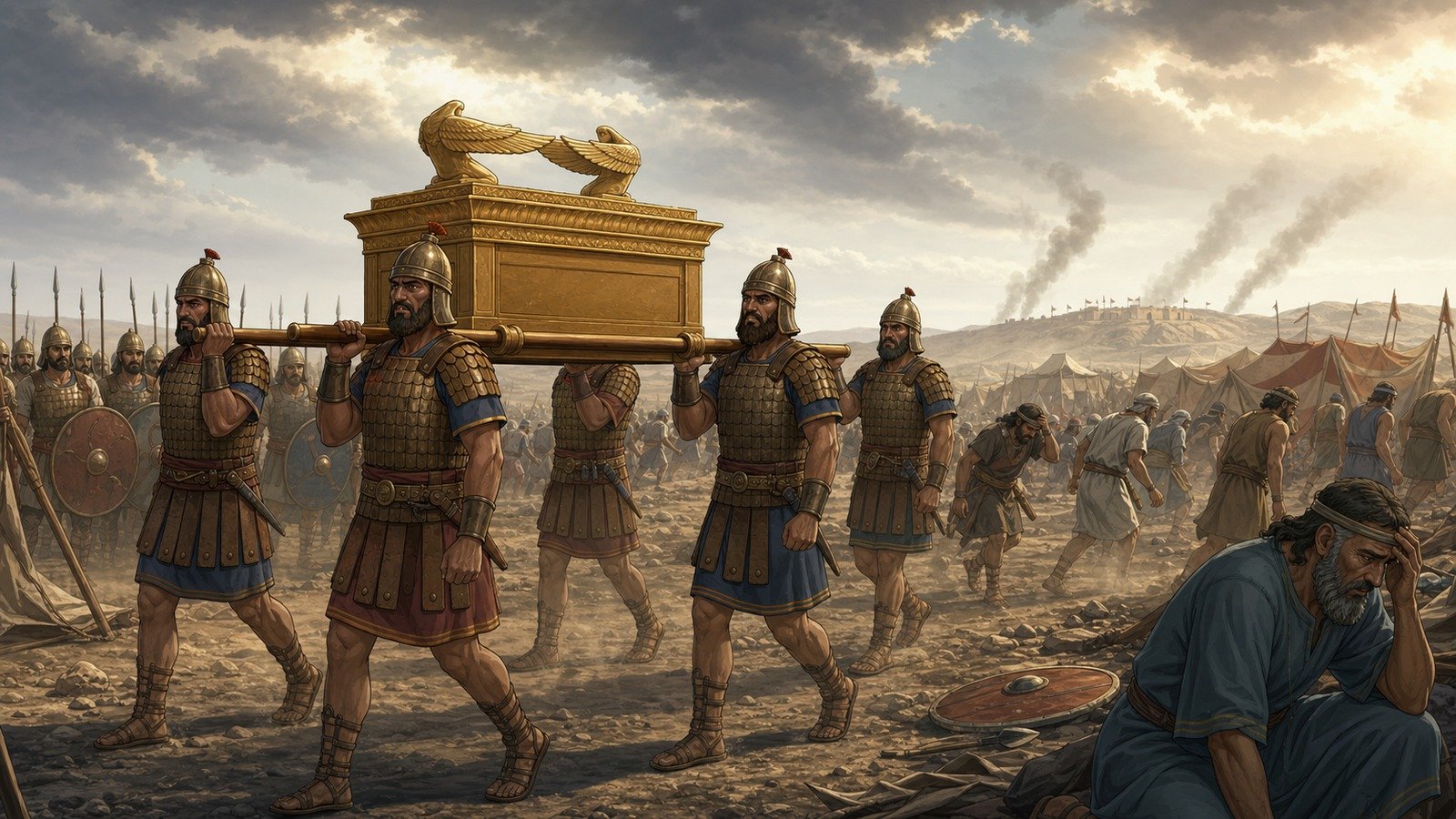
Israel brings the ark of the covenant into battle hoping it will guarantee victory, but is routed by the Philistines, who capture the ark itself; Eli's sons die in the battle and Eli dies on hearing the news.
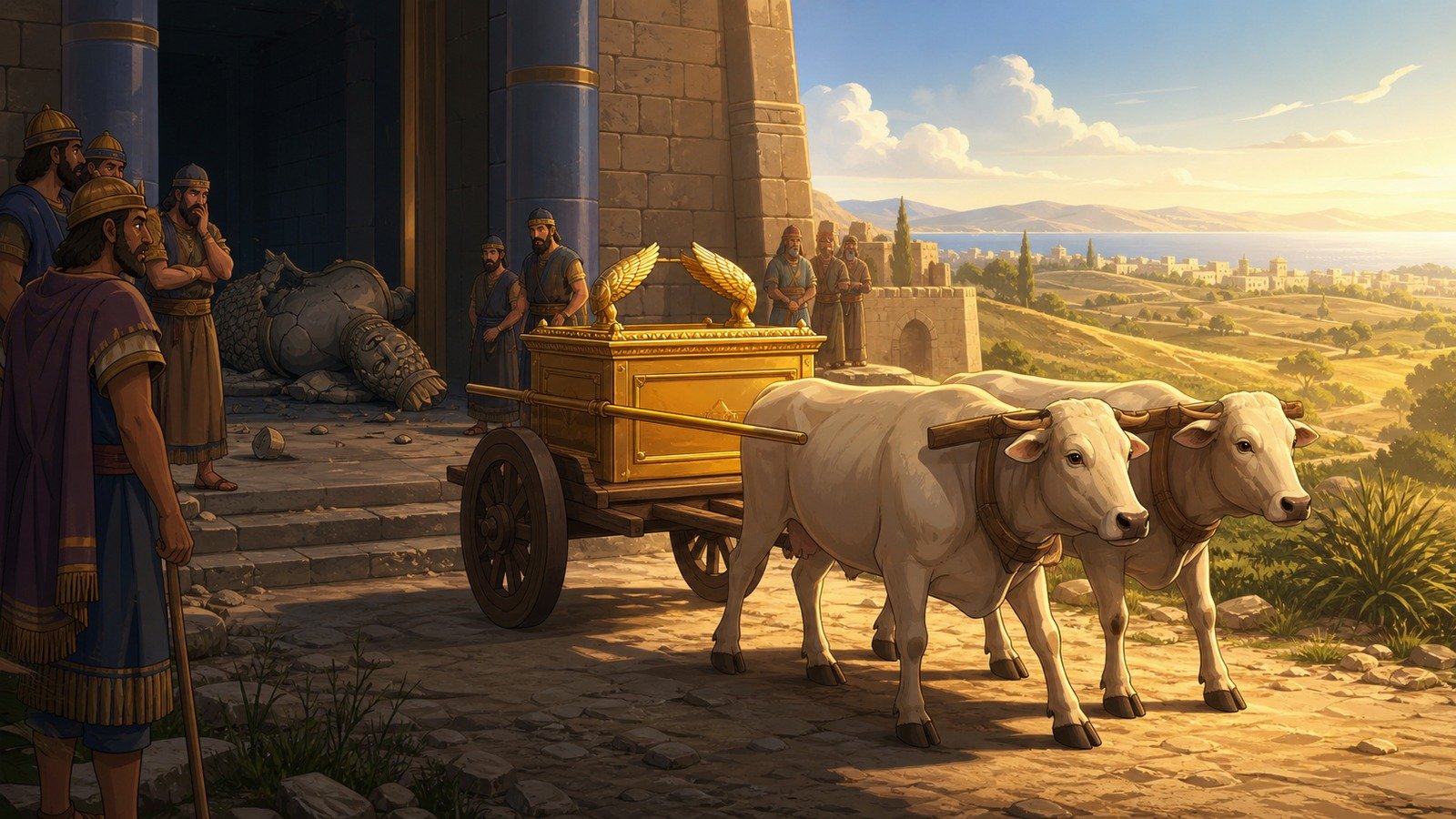
The captured ark brings plague and the collapse of the Philistine god Dagon's idol wherever it is placed. After seven months the Philistines return it to Israel on a cart pulled by cows, along with a guilt offering.
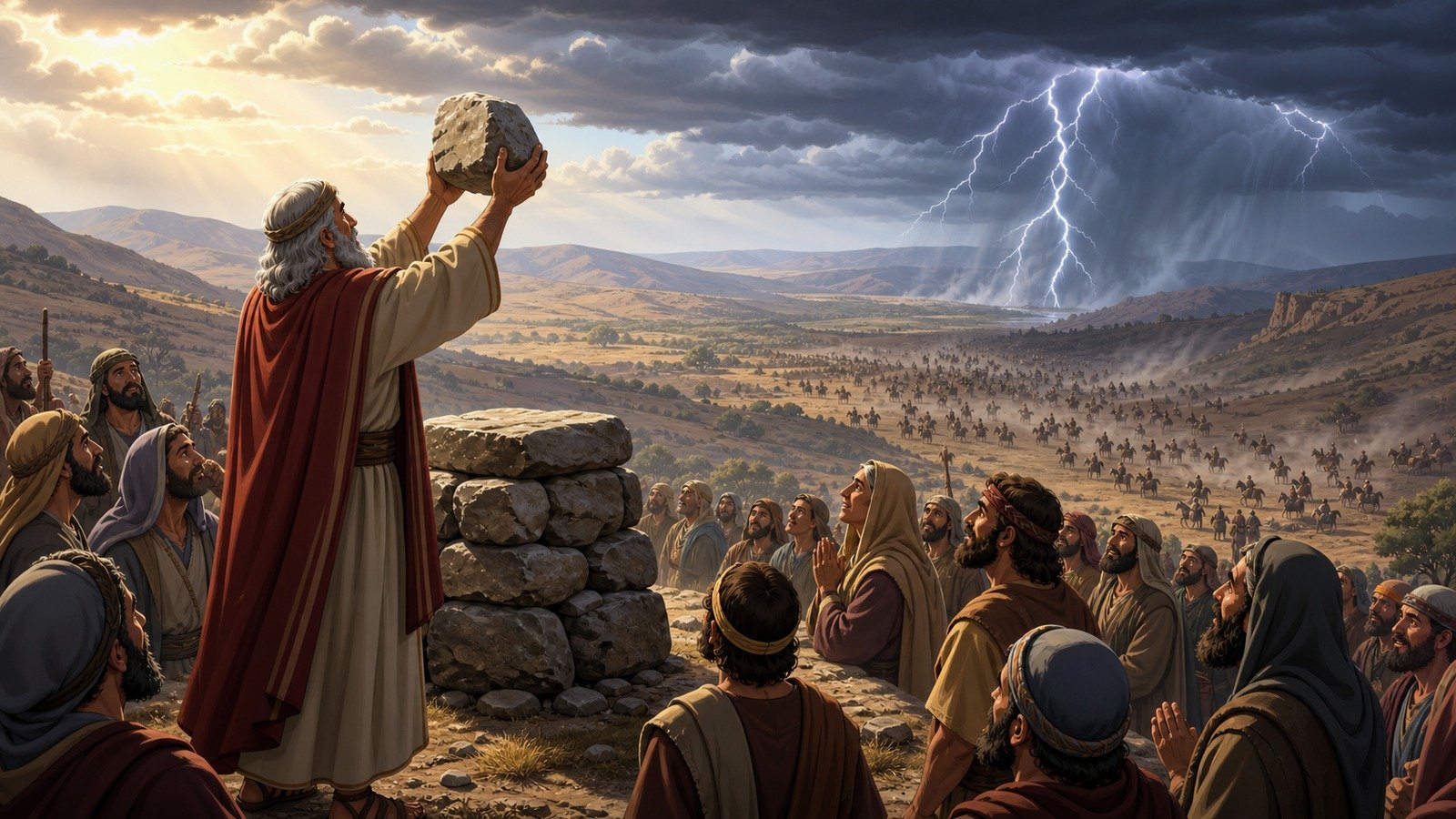
Samuel calls Israel to put away foreign gods and leads a national gathering at Mizpah; God routs the attacking Philistines with thunder, and Samuel sets up a memorial stone, "Ebenezer" ("stone of help"), marking two decades of subsequent peace.
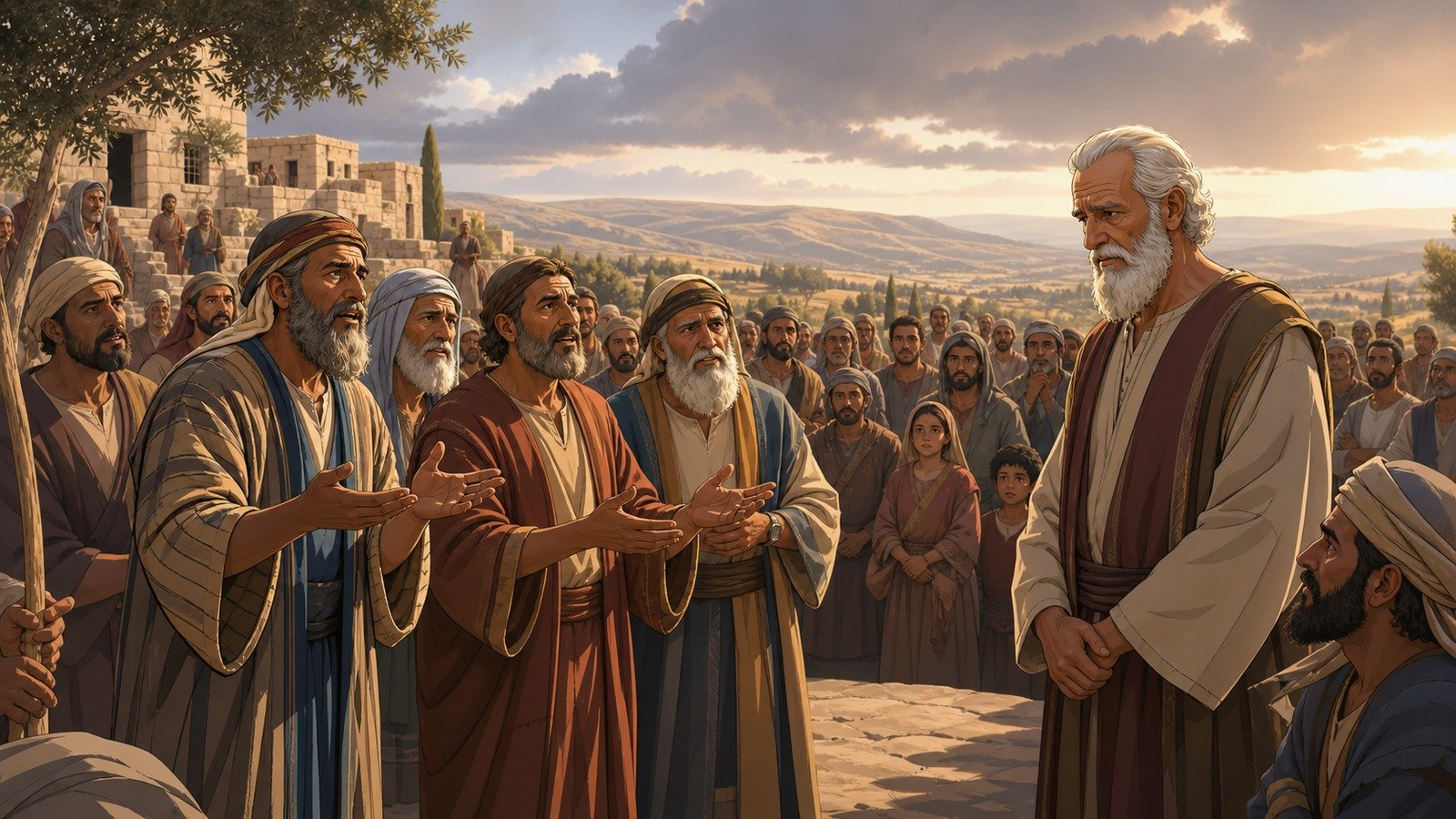
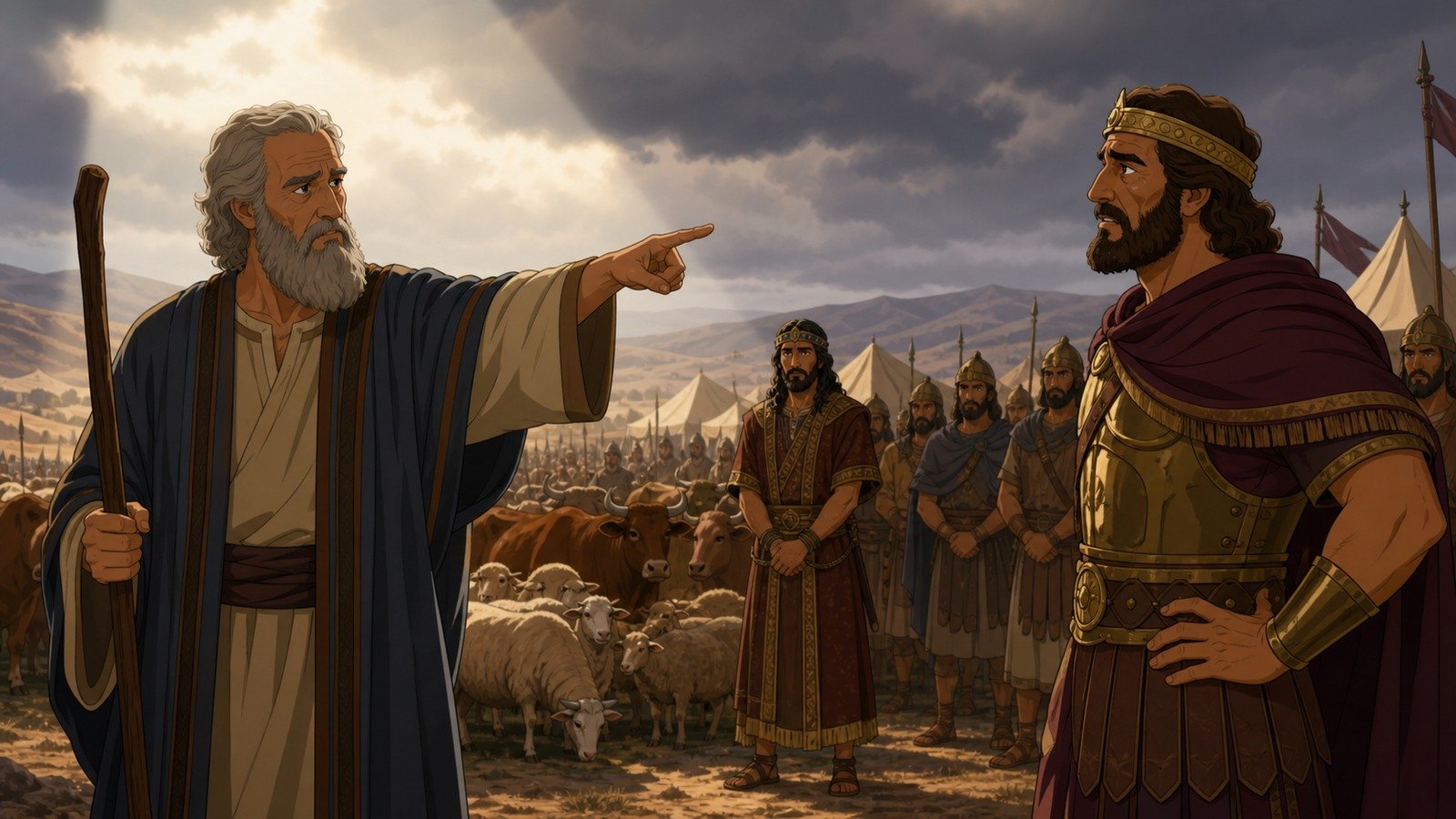
Ageing and with corrupt sons, Samuel is asked by Israel's elders for a king "such as all the other nations have." God tells Samuel this is a rejection of his own kingship, but instructs him to grant the request while warning the people what a king will cost them.
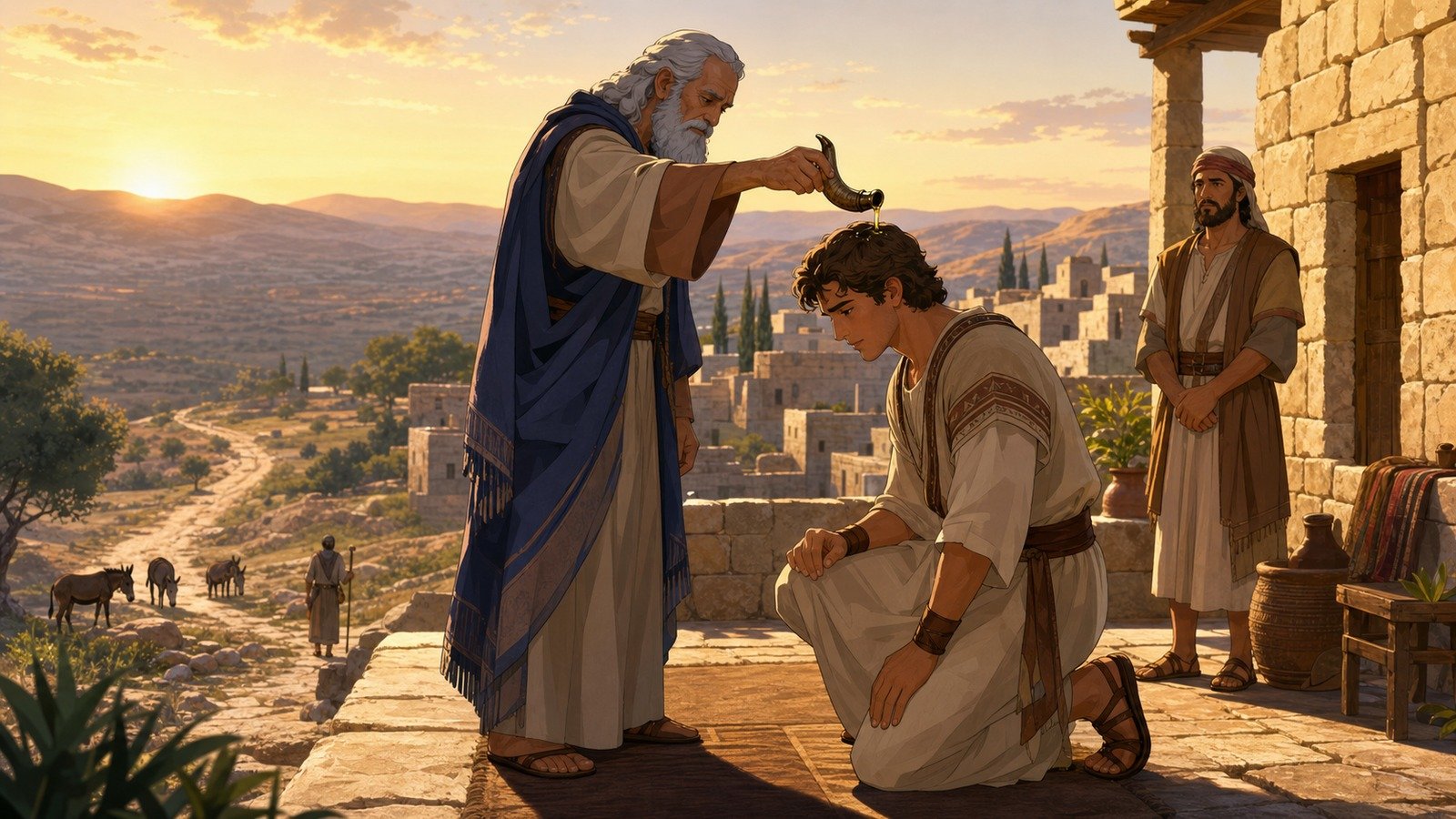
Samuel privately anoints Saul, a tall Benjamite out searching for his father's lost donkeys, telling him God has chosen him to lead Israel, though Saul himself hides the news from his own family.
Saul is chosen by lot before the assembled tribes at Mizpah and publicly acclaimed king, despite hiding among the supplies out of reluctance, and despite a group of troublemakers who openly doubt he can save Israel.
Saul rallies Israel to relieve Jabesh-Gilead, besieged by Nahash the Ammonite, winning a decisive victory that silences earlier doubts about his kingship and leads to its public confirmation at Gilgal.
Facing a Philistine army and Samuel's delay, Saul offers a sacrifice himself rather than waiting for the priest, violating his role; Samuel arrives and tells him his dynasty will not endure because of this impatience.
Jonathan and his armour-bearer alone attack a Philistine outpost, triggering a panic that Saul's army exploits into a full rout, though Saul's rash oath nearly costs Jonathan his life afterward.
Saul is commanded to destroy the Amalekites and everything belonging to them, but spares King Agag and the best livestock. Samuel delivers the verdict that "to obey is better than sacrifice" and announces that God has rejected Saul as king.
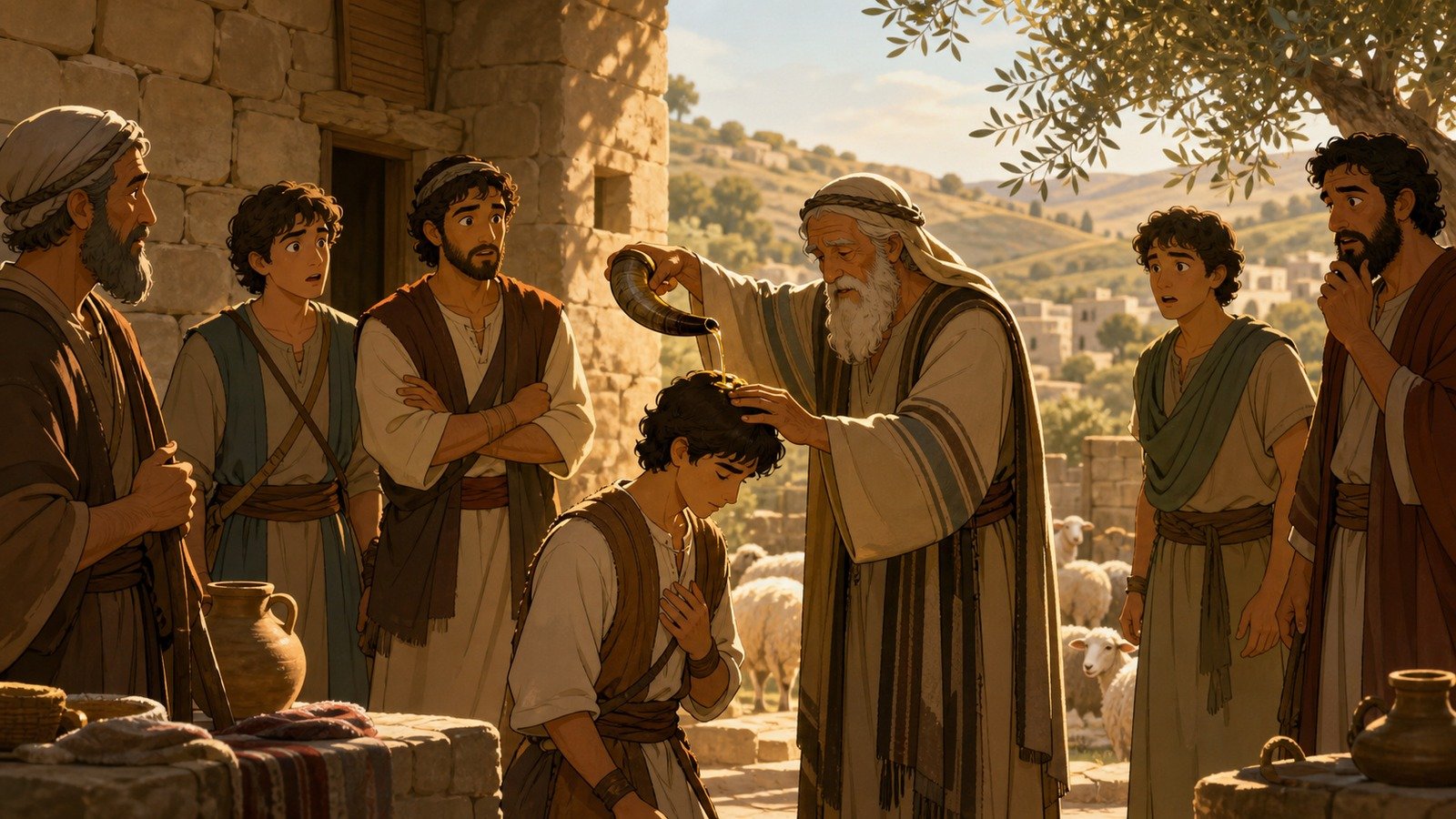
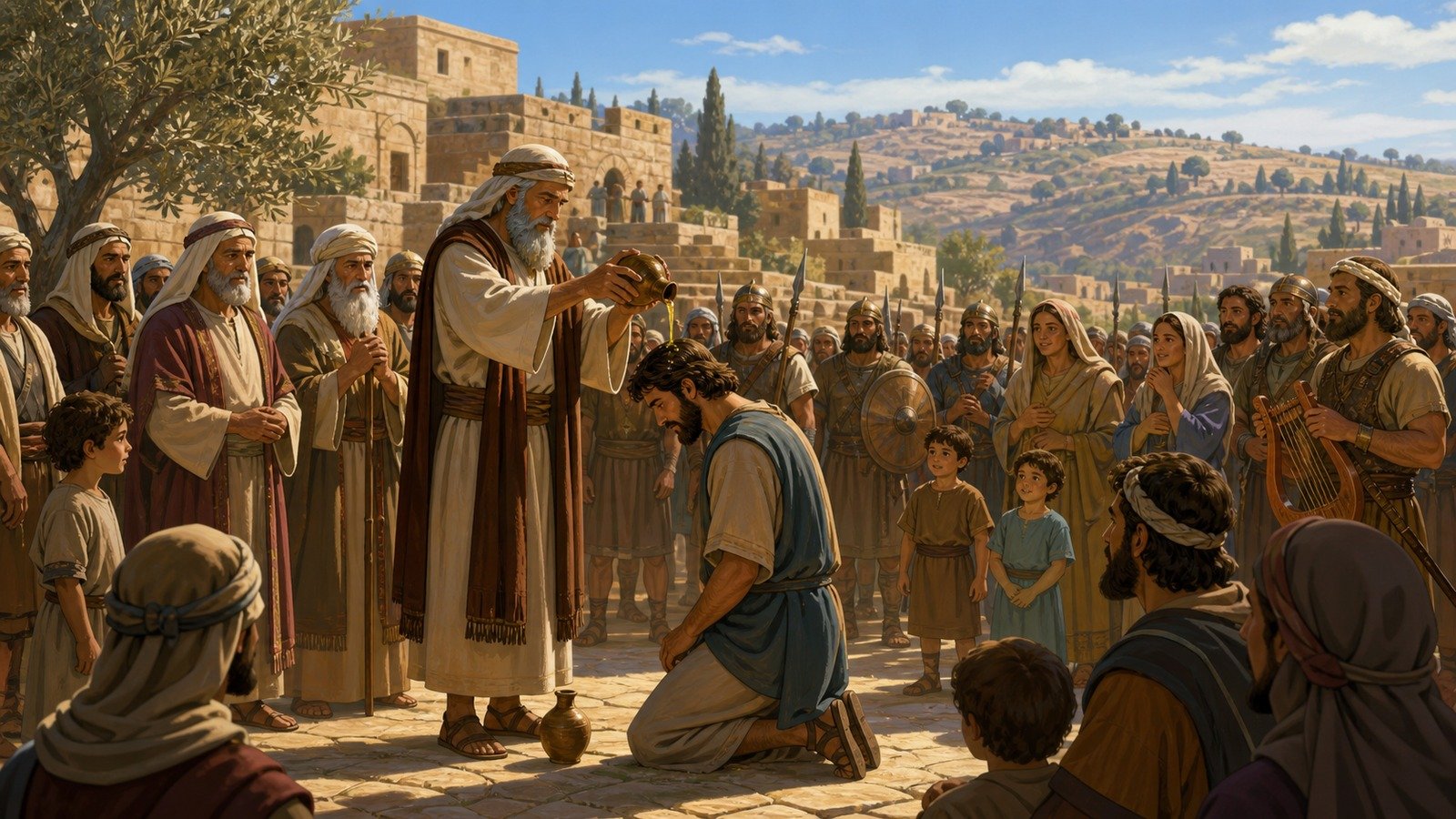
Sent to Jesse's household, Samuel passes over David's older brothers and anoints the youngest, a shepherd boy, as Israel's future king, "for the Lord looks at the heart." David also begins serving Saul as a musician to soothe his troubled moods.
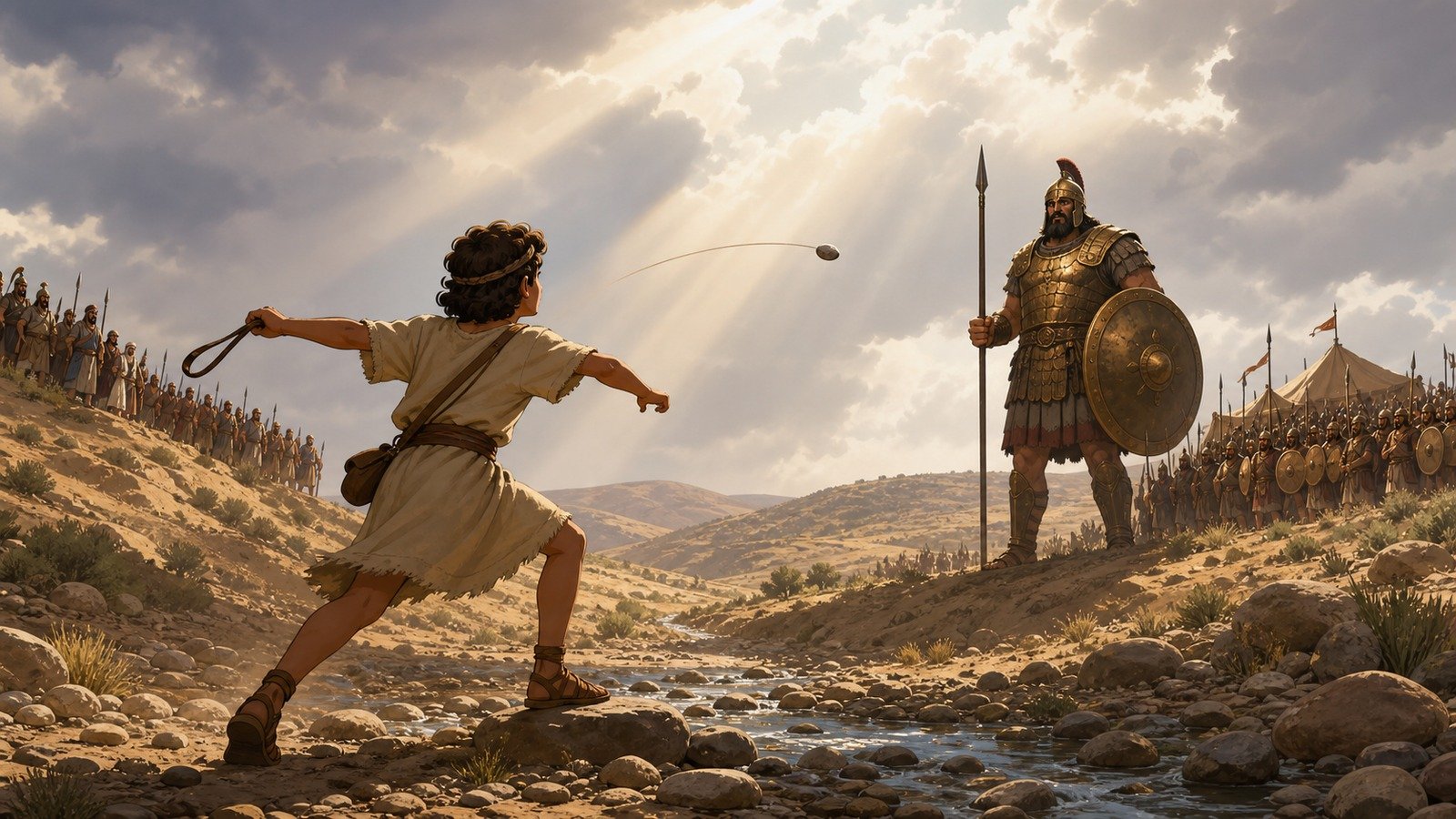
The Philistine champion Goliath taunts Israel's army for forty days until David, still a youth, kills him with a sling and stone, refusing Saul's armour in favour of the skill he had used defending his father's sheep.
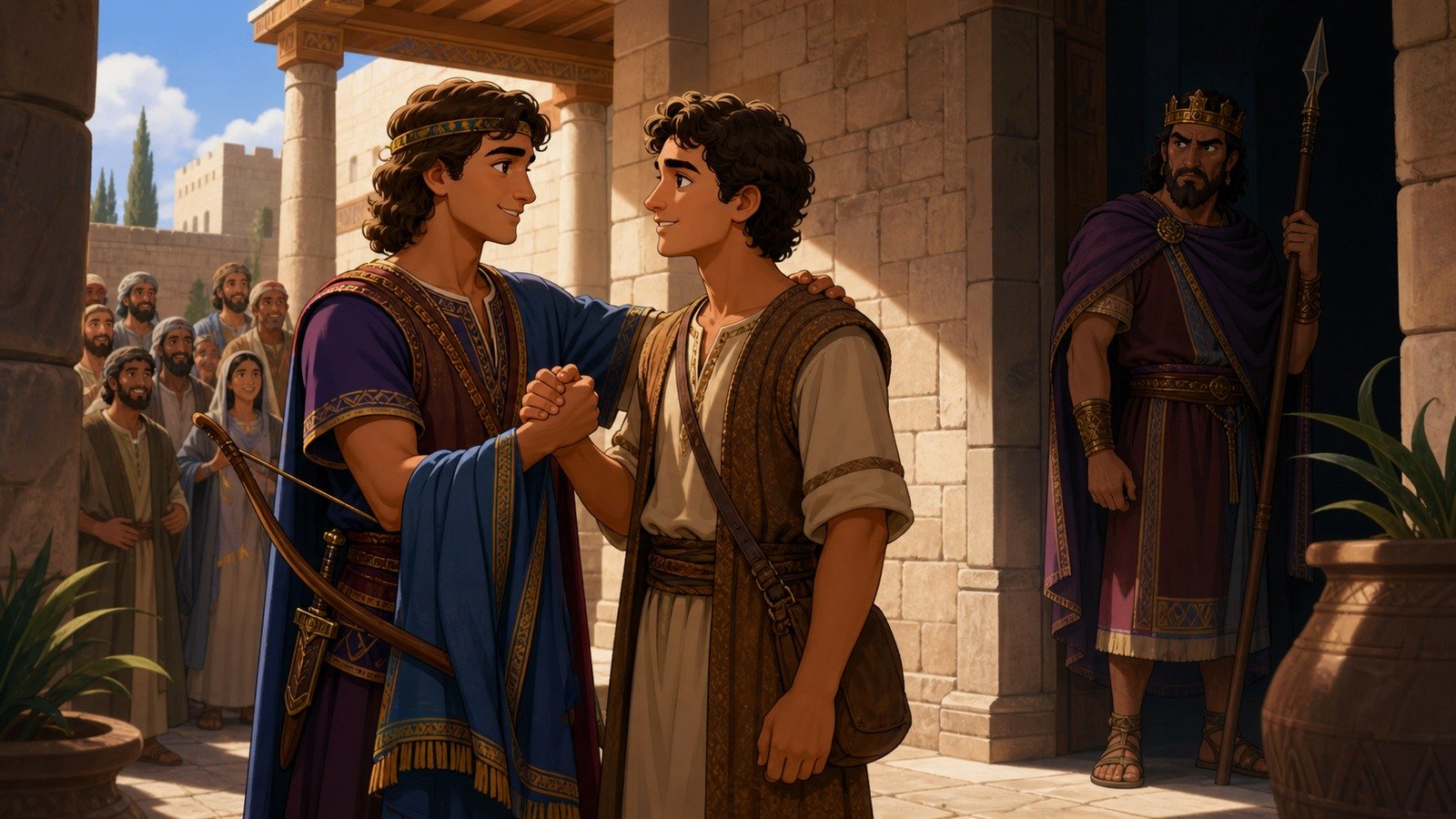
David's popularity after Goliath ("Saul has slain his thousands, and David his tens of thousands") provokes Saul's jealousy, while Jonathan, Saul's own son and heir, forms a covenant loyalty with David that persists despite his father's hostility.
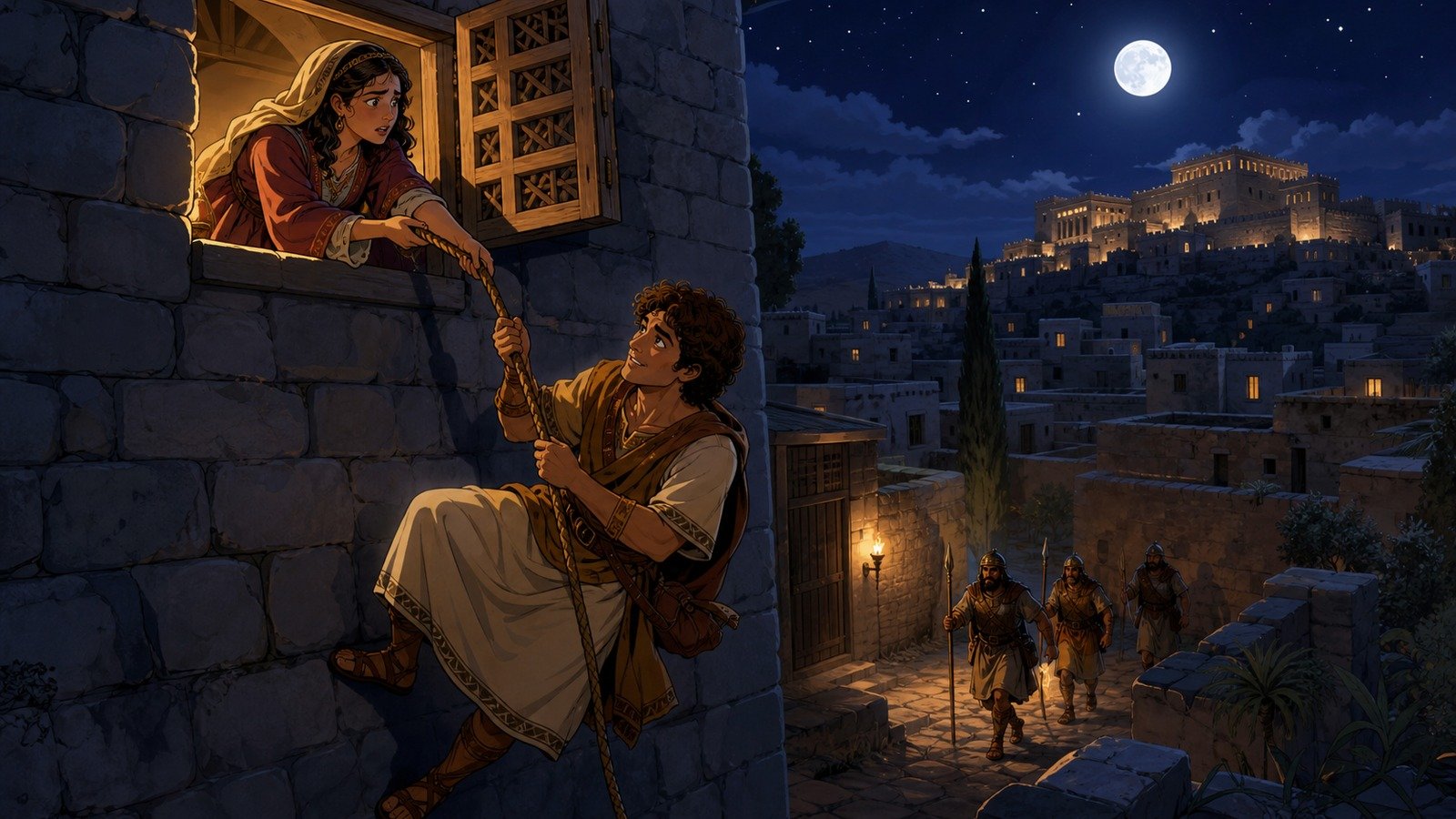
Saul repeatedly tries to kill David directly and through his soldiers; Michal, David's wife and Saul's daughter, helps him escape through a window, and David becomes a fugitive from this point on.
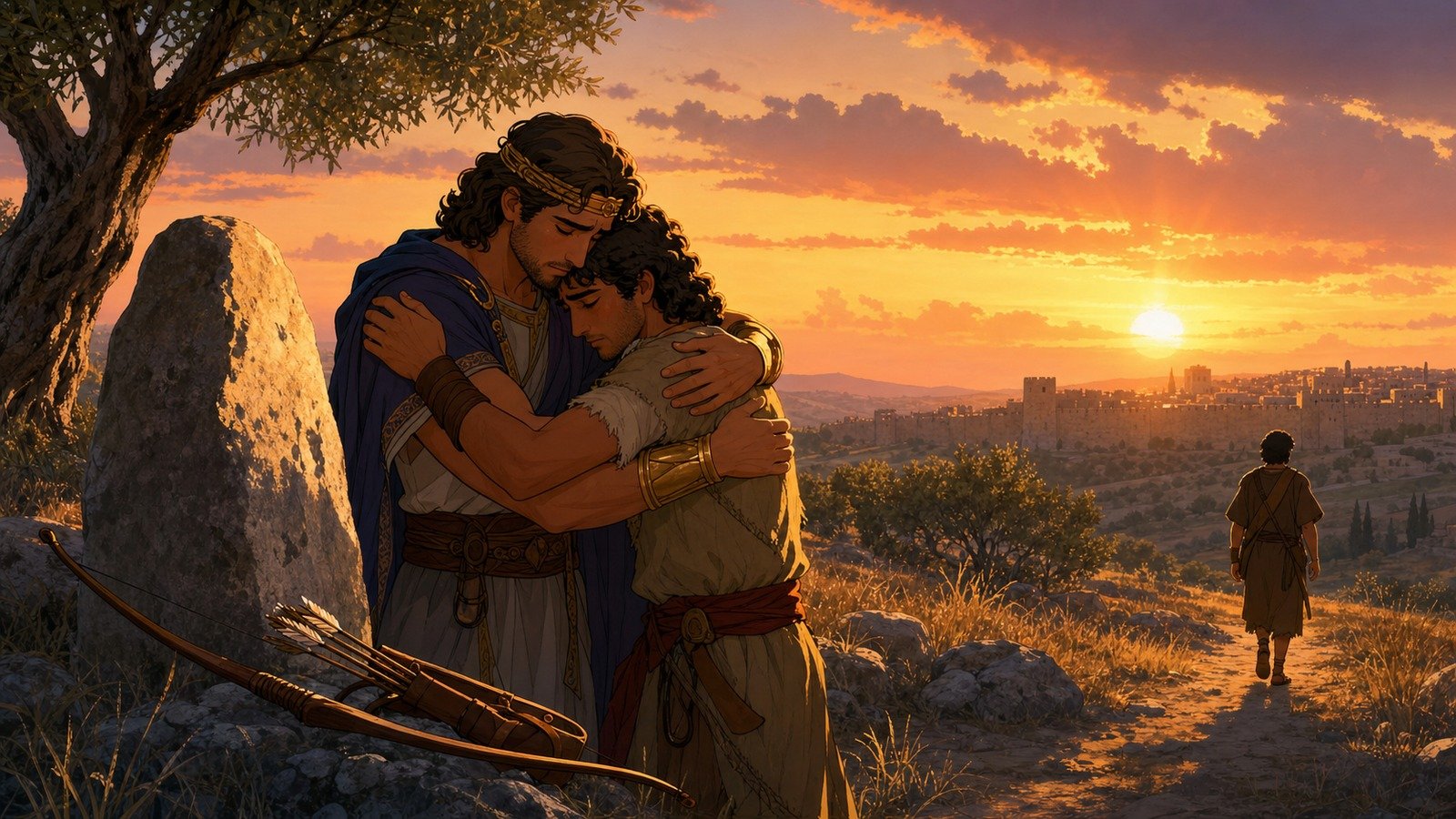
Jonathan confirms his father's murderous intent through a coded signal at a prearranged meeting, and the two friends renew their covenant loyalty before parting, not knowing it will be one of their last meetings.
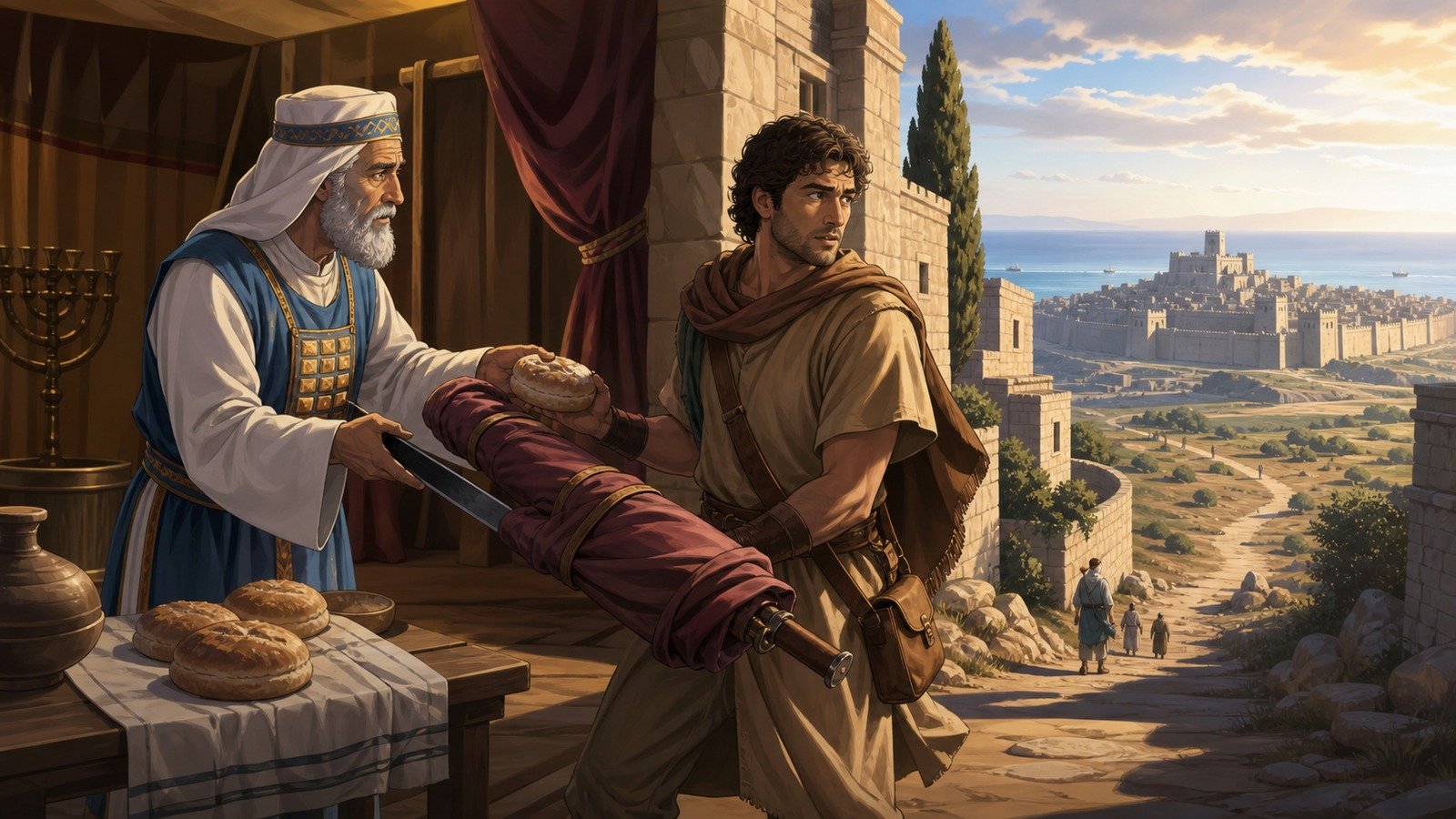
Fleeing Saul, David receives consecrated bread and Goliath's sword from the priest Ahimelech at Nob, an act itself transgressing purity taboos, then feigns madness before the Philistine king of Gath to escape recognition.
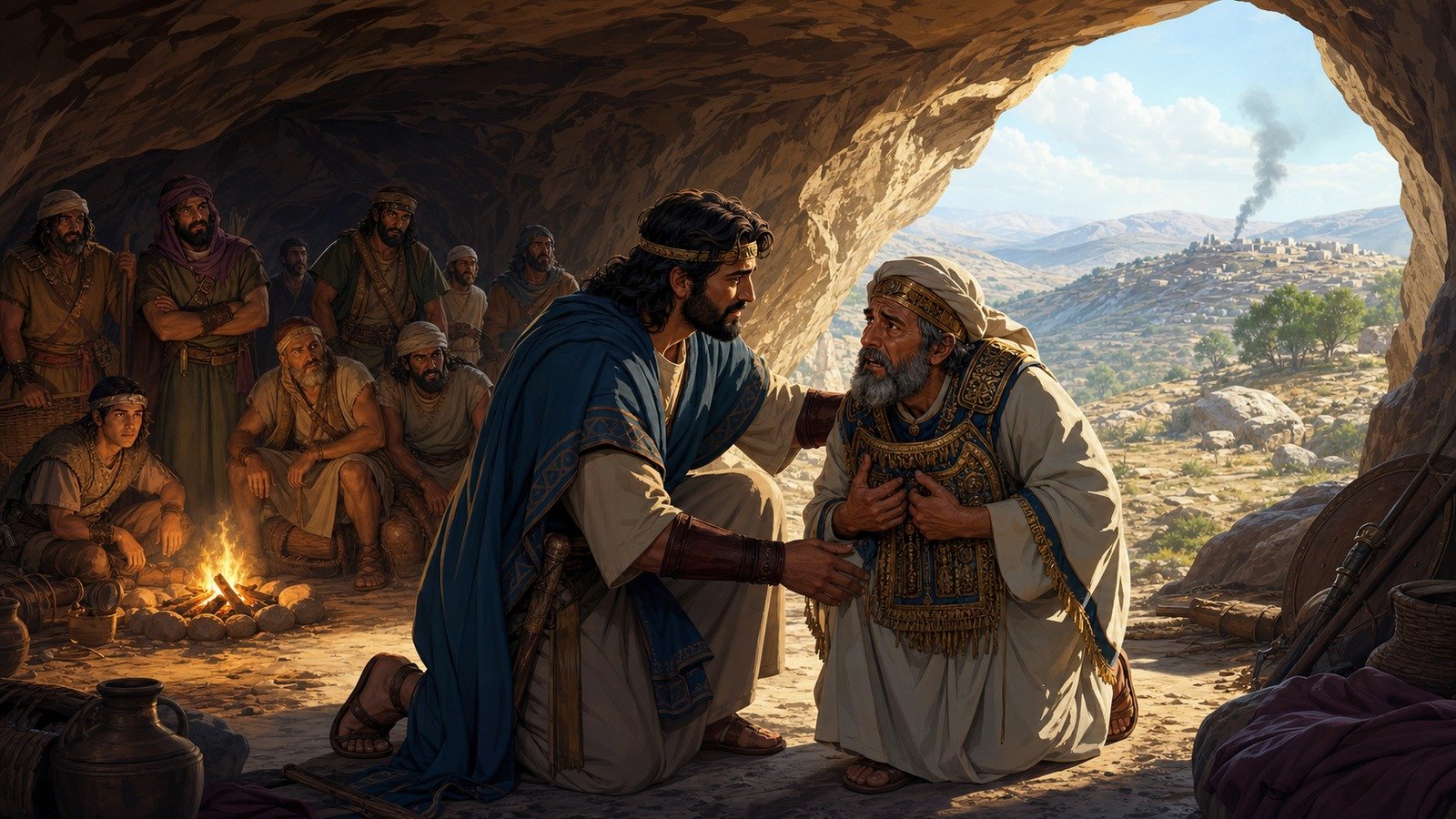
David gathers a band of outcasts and debtors at the cave of Adullam; Saul, learning Ahimelech had helped David, has him and the entire priestly community of Nob executed, sparing only Abiathar, who escapes to join David.
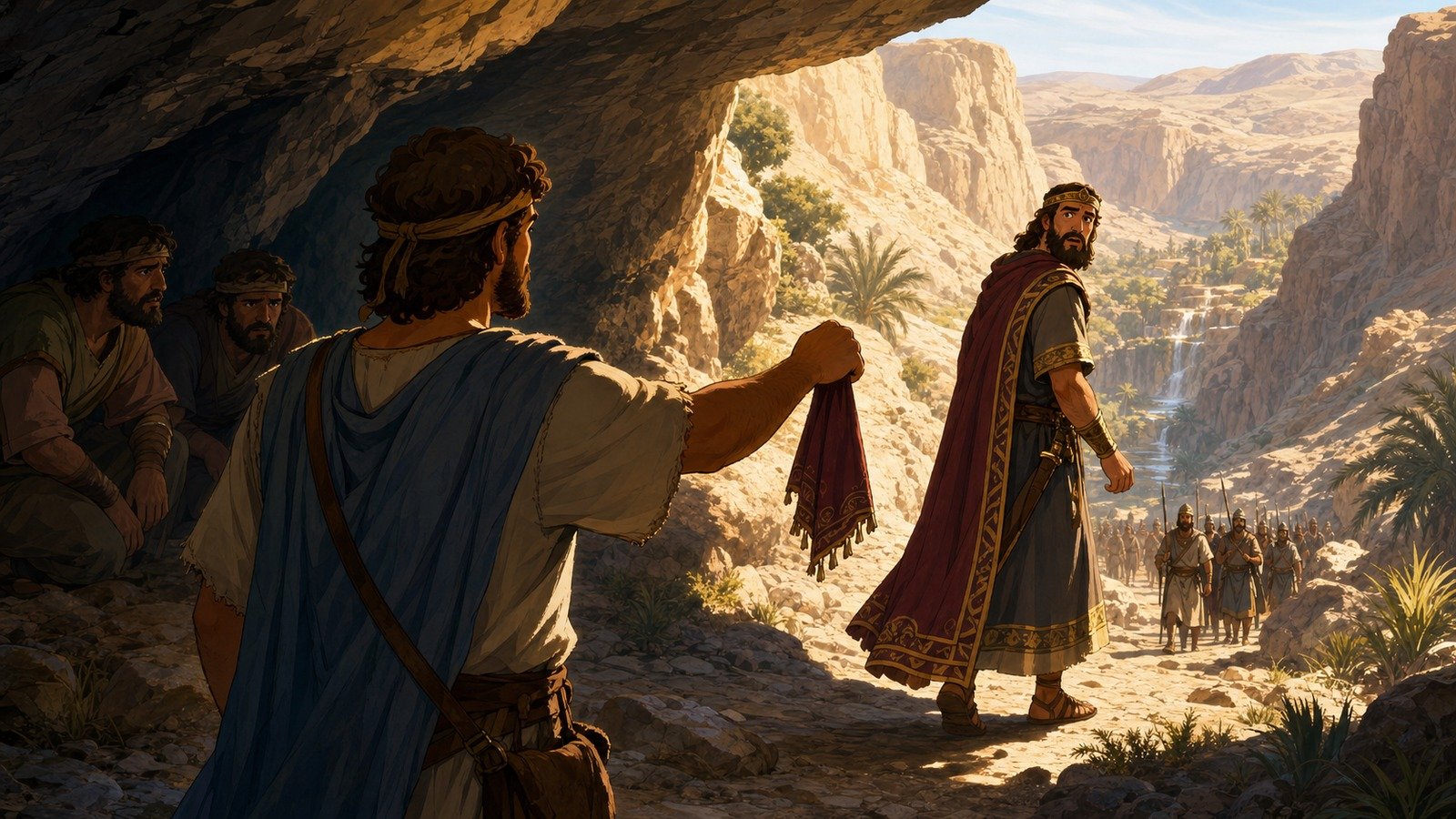
Saul unknowingly enters the very cave where David and his men are hiding at En Gedi; David cuts off a corner of Saul's robe but refuses to kill "the Lord's anointed," and later shows Saul the cloth as proof of his restraint.
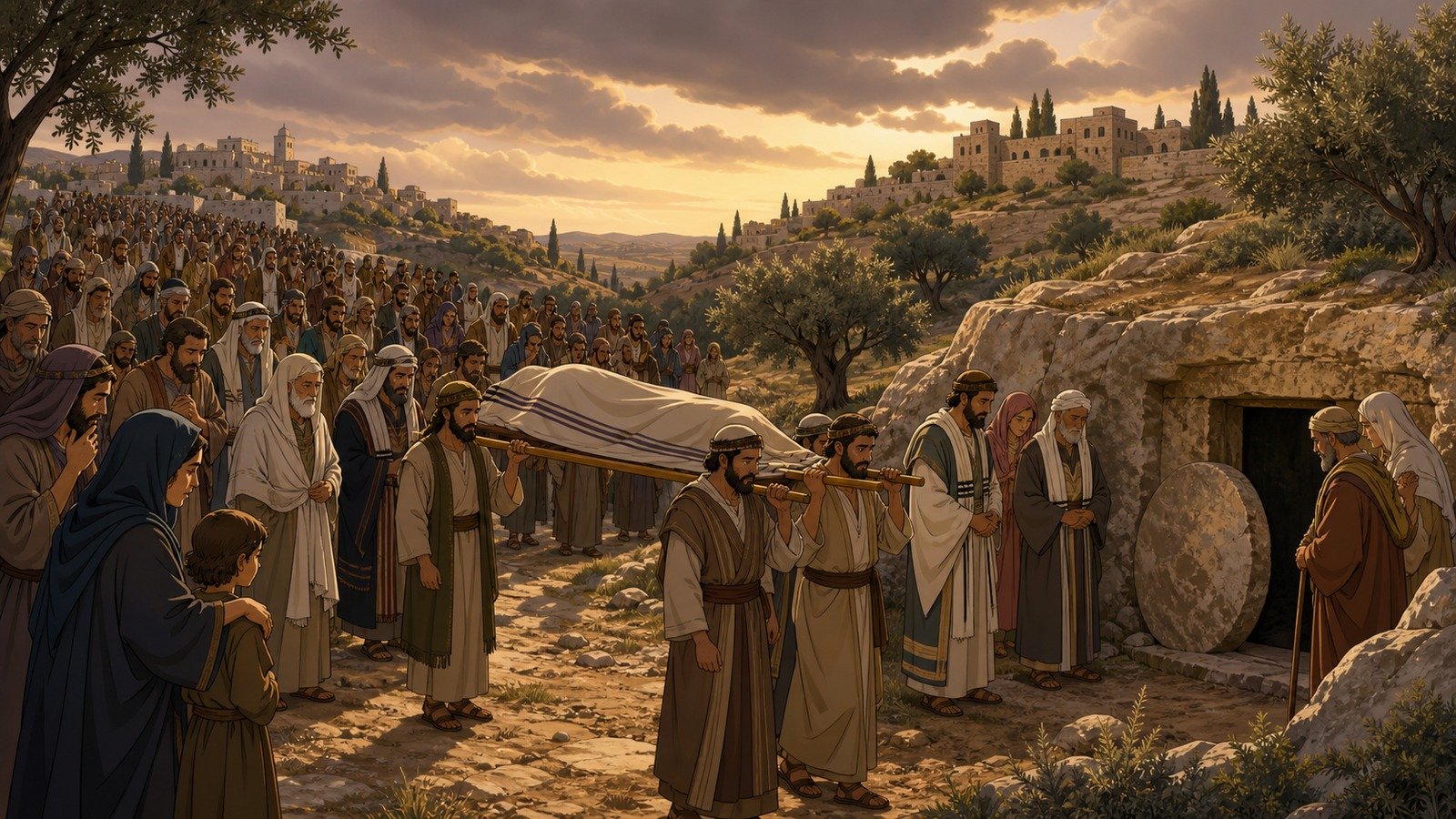
Samuel dies, and "all Israel" gathers to mourn him, a brief notice marking the end of the last of Israel's judges as the monarchy he had reluctantly anointed continues without him.
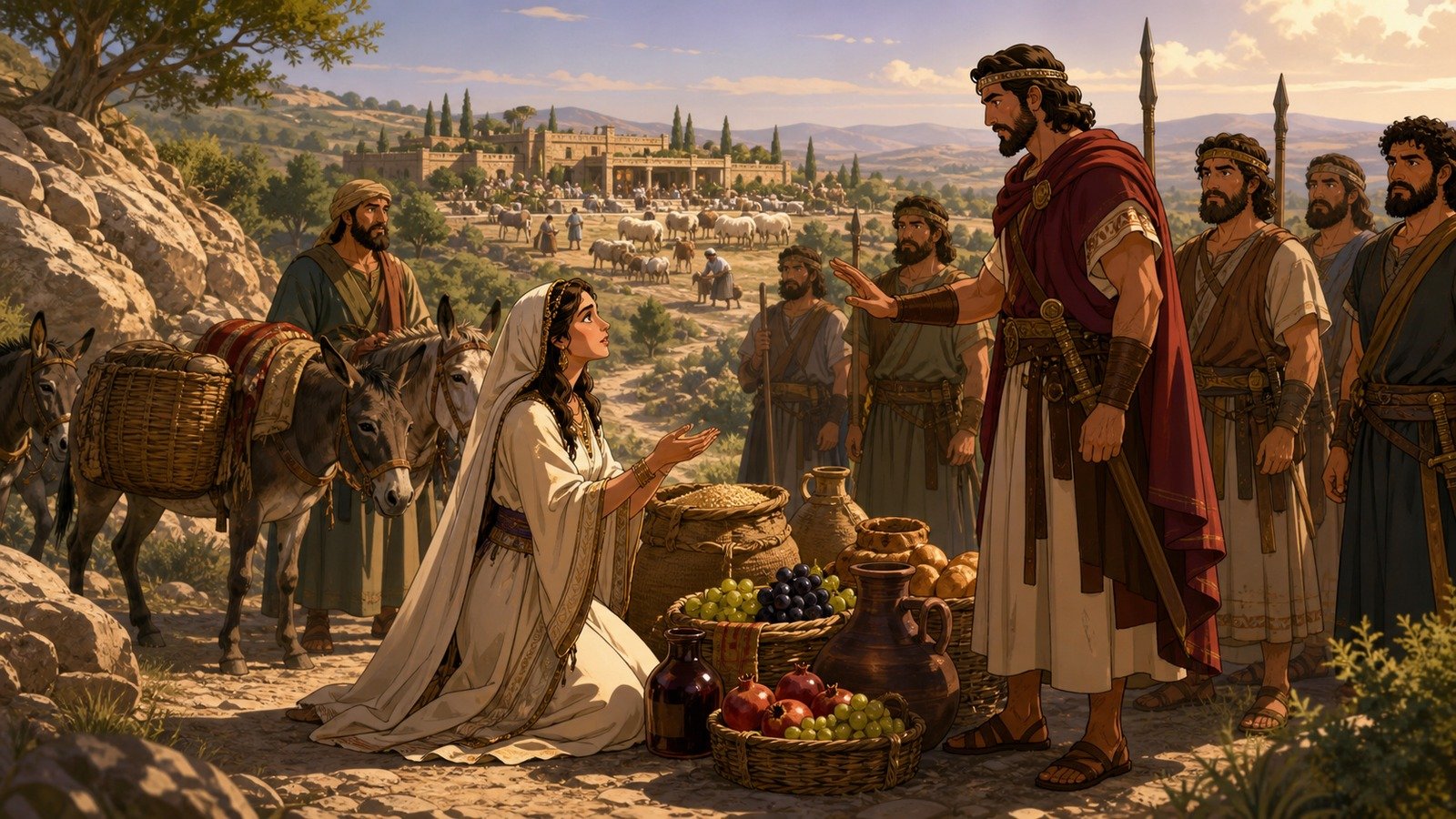
The wealthy but foolish Nabal insults David's men after they had protected his flocks; his wife Abigail intervenes with gifts and wisdom to prevent bloodshed, and after Nabal's sudden death she becomes David's wife.
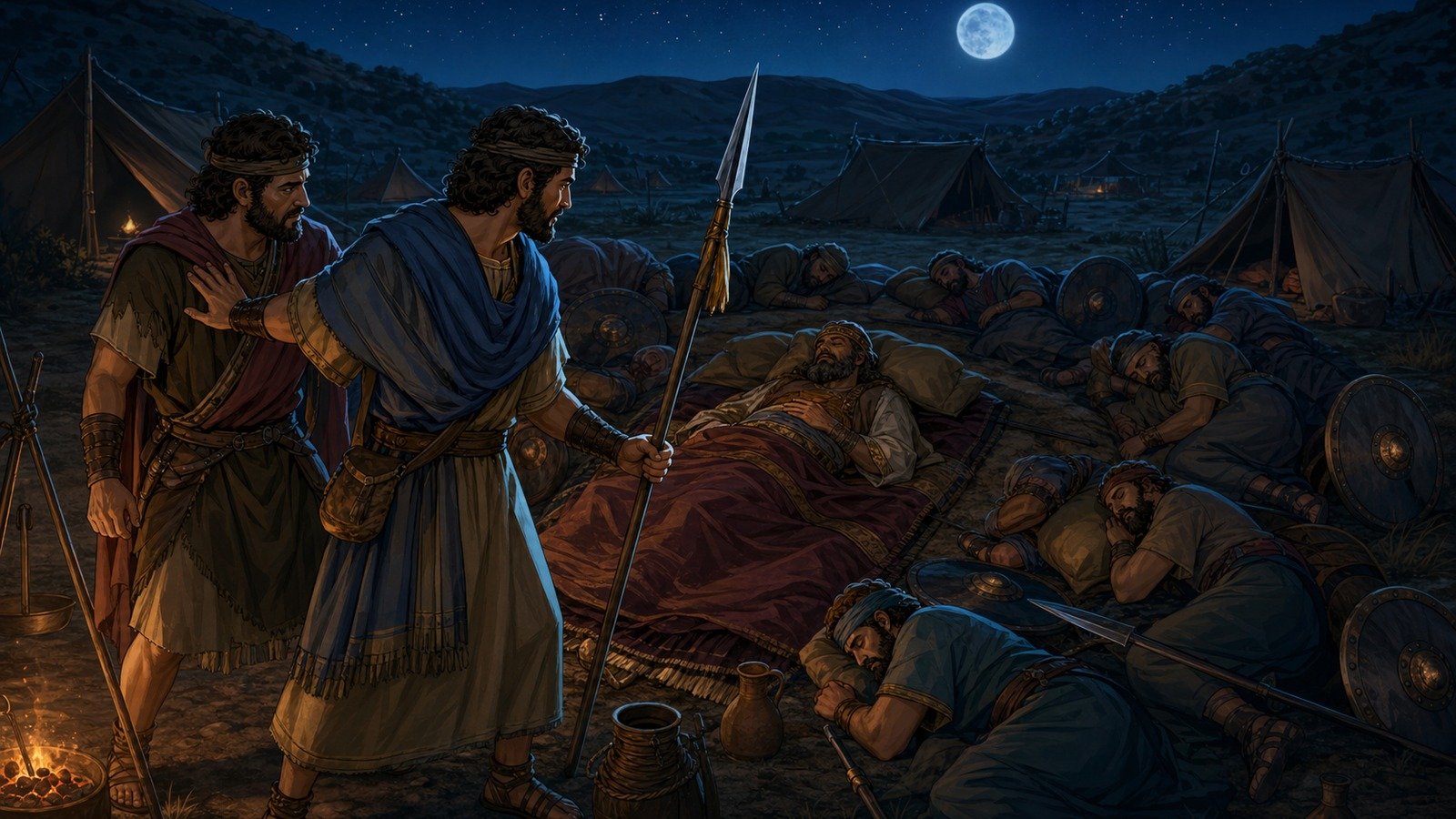
David sneaks into Saul's camp by night and takes his spear and water jug rather than killing him, again refusing to harm "the Lord's anointed" despite his men urging him to do so.
David takes refuge under Philistine king Achish at Ziklag, conducting raids while deceiving Achish about his targets; when the Philistines muster against Israel, other commanders' suspicion of David gets him excused from having to fight his own people.
David returns from being dismissed by the Philistine army to find Ziklag burned and the women and children taken by Amalekite raiders; he leads a successful pursuit and rescue, and establishes a rule that those who guarded the supplies share equally in the plunder.
With the Philistines massed for battle and God no longer answering him, Saul, who had previously banned mediums, disguises himself to consult one at Endor, who summons an apparition of Samuel that pronounces Saul's impending defeat and death.
Israel is routed by the Philistines; three of Saul's sons, including Jonathan, are killed, and the wounded Saul takes his own life rather than be captured. Both bodies are later rescued and buried by the men of Jabesh-Gilead in gratitude for Saul's earlier deliverance of their city.
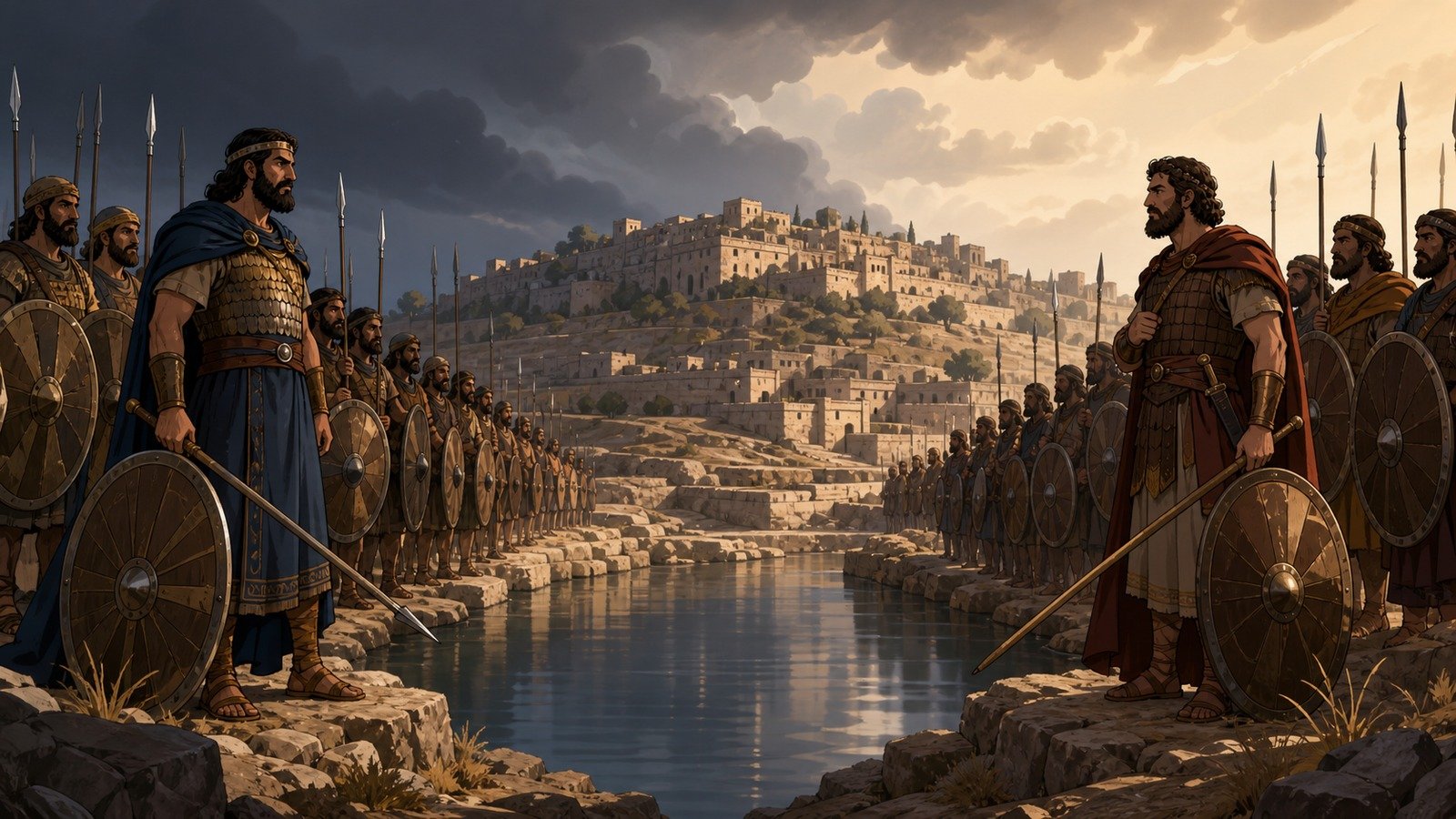
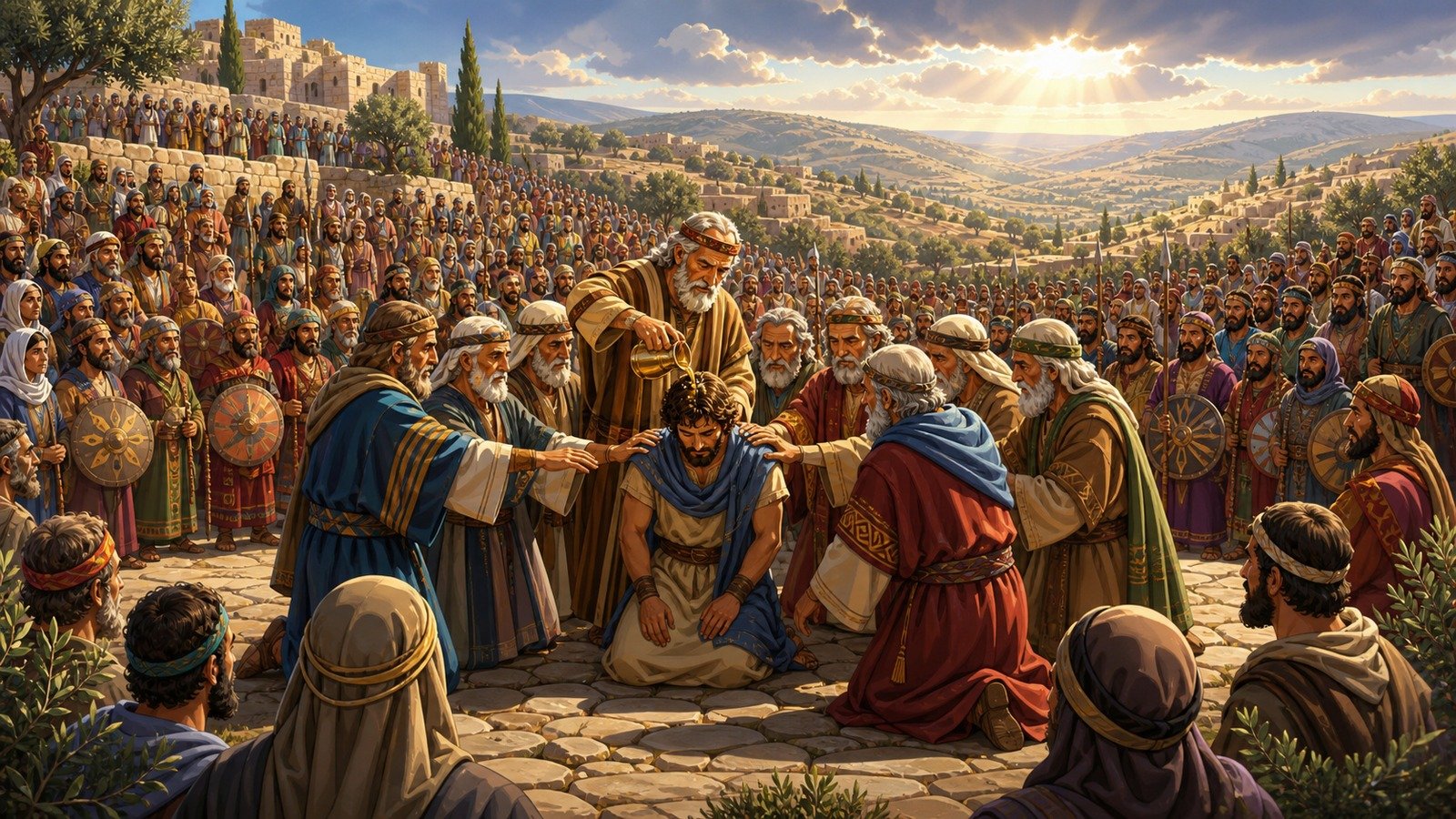
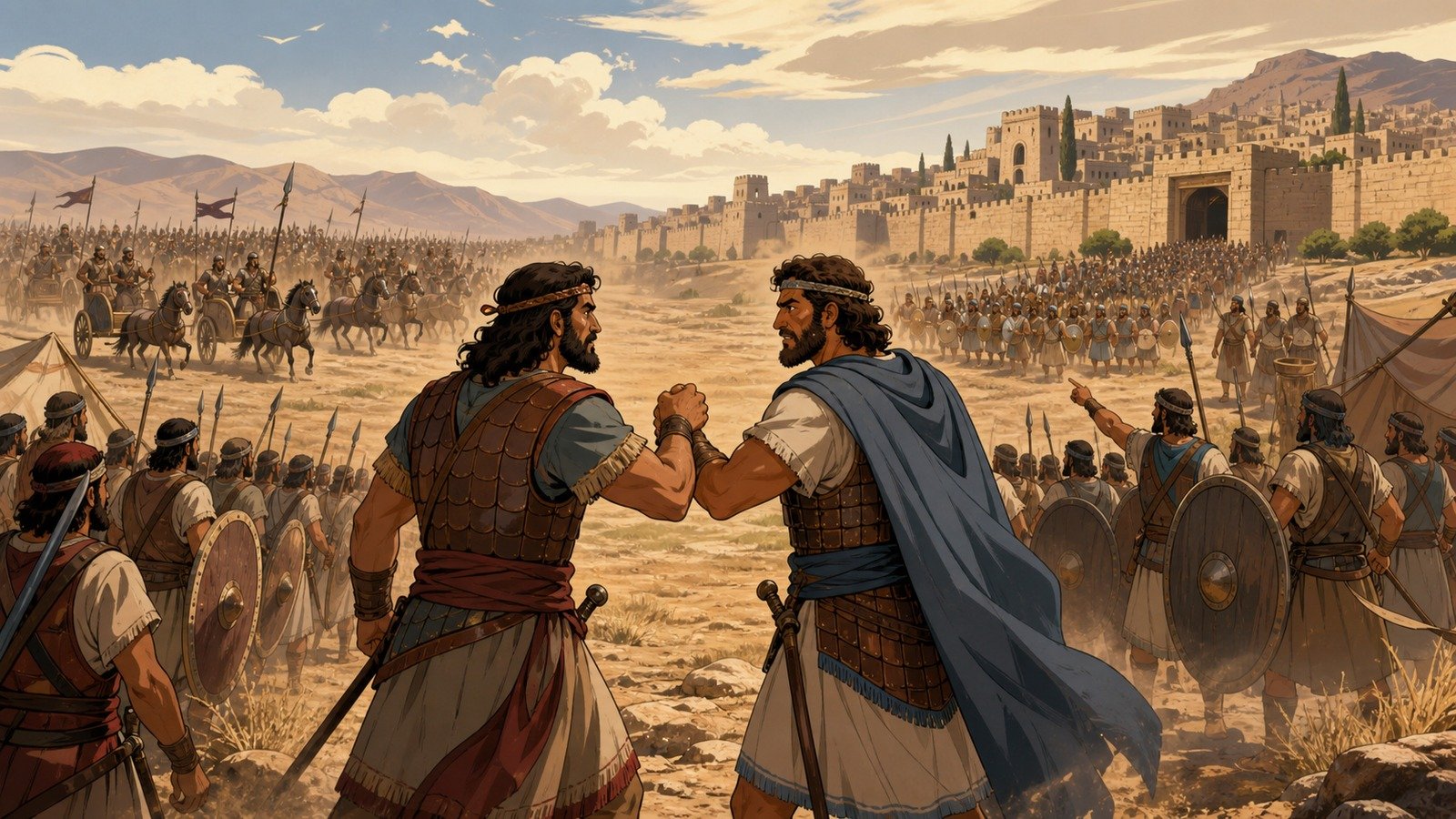
Following Saul's death, David is anointed king by the tribe of Judah at Hebron, while the rest of Israel initially remains loyal to Saul's surviving son Ish-Bosheth under the general Abner.
A prolonged conflict follows between Ish-Bosheth's forces under Abner and David's forces under Joab, weakening steadily until Abner defects to David and is then murdered by Joab in revenge for his brother, and Ish-Bosheth is finally assassinated by his own officers.
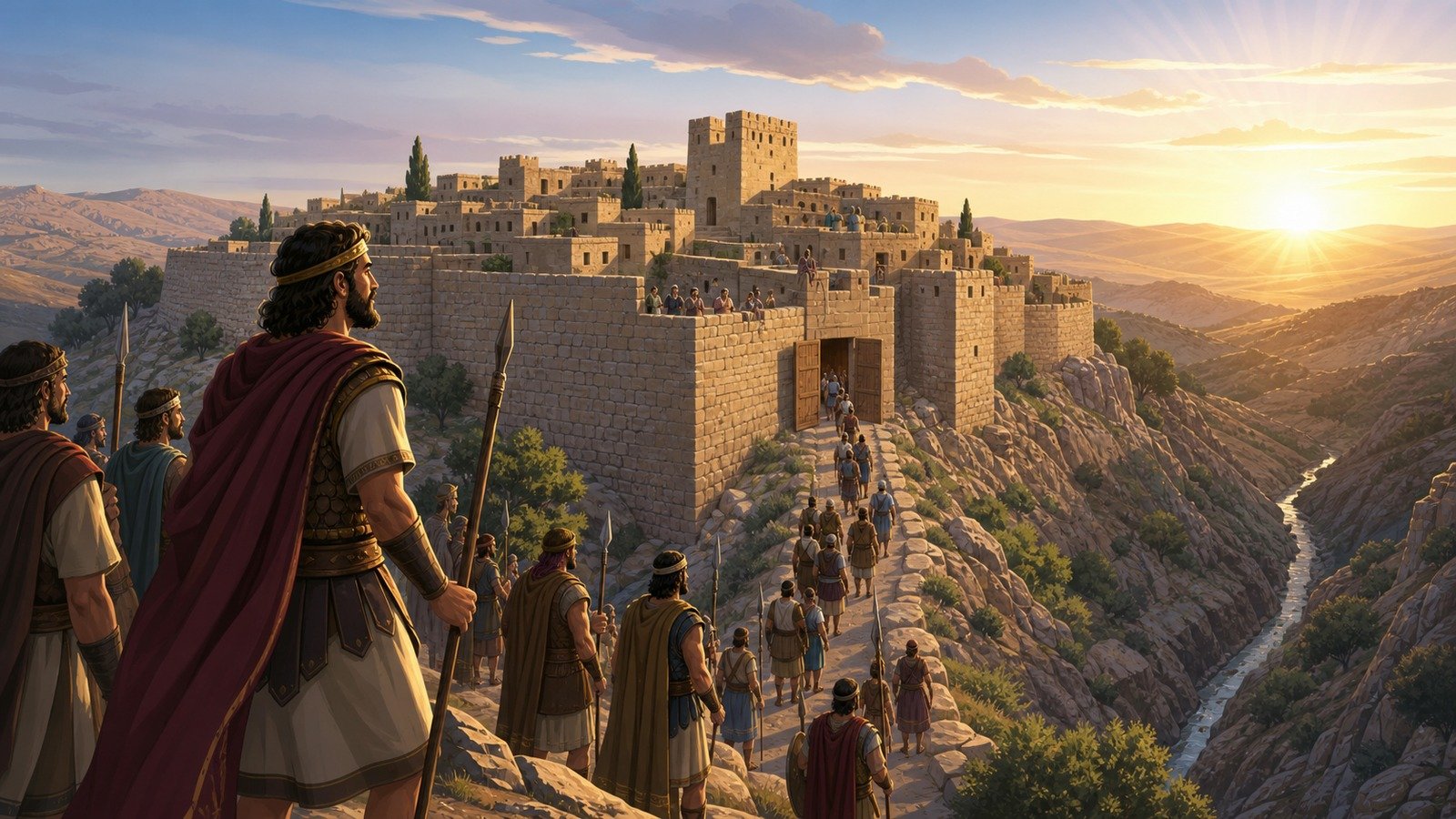
David captures the Jebusite stronghold of Jerusalem, previously thought impregnable, and makes it his new capital, strategically neutral between the northern and southern tribes.
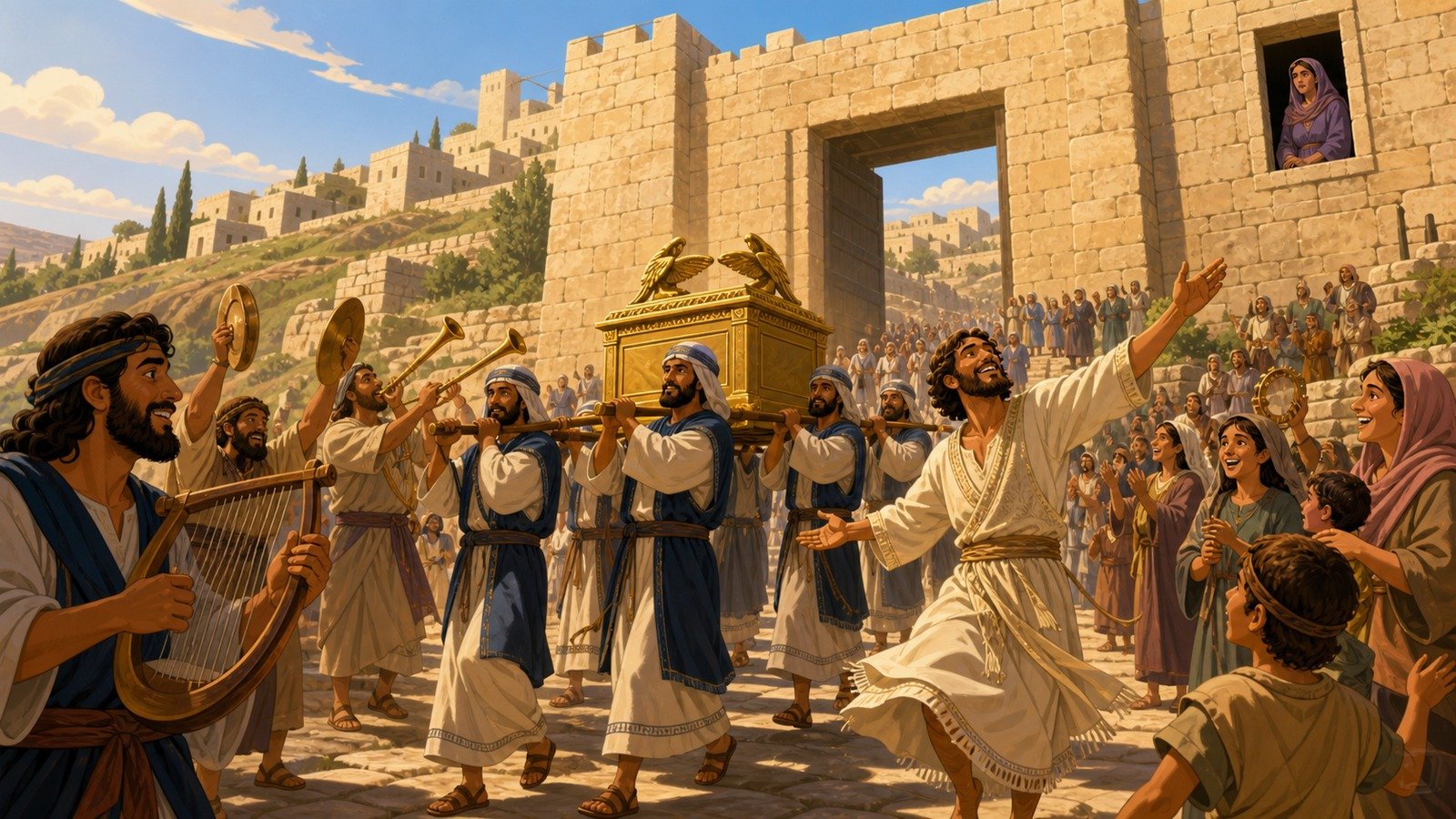
David brings the ark of the covenant to Jerusalem amid celebration, though the first attempt ends in Uzzah's death for touching it improperly; on the second, successful attempt David dances before the ark, drawing his wife Michal's contempt.
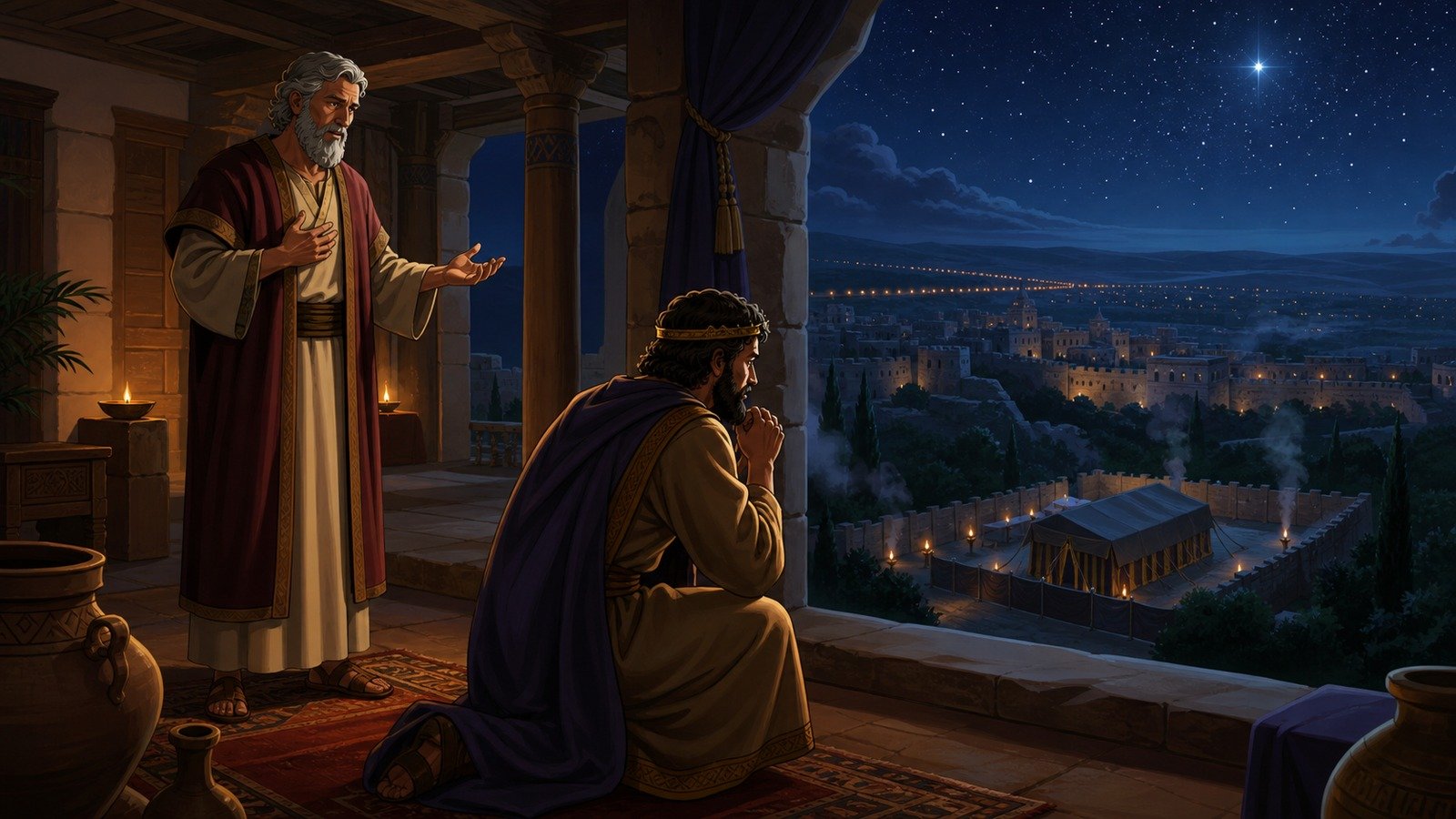
David proposes building God a permanent temple; instead, God promises through Nathan that David's own house, throne and kingdom will endure forever, a promise the New Testament repeatedly applies to Jesus as David's ultimate heir.
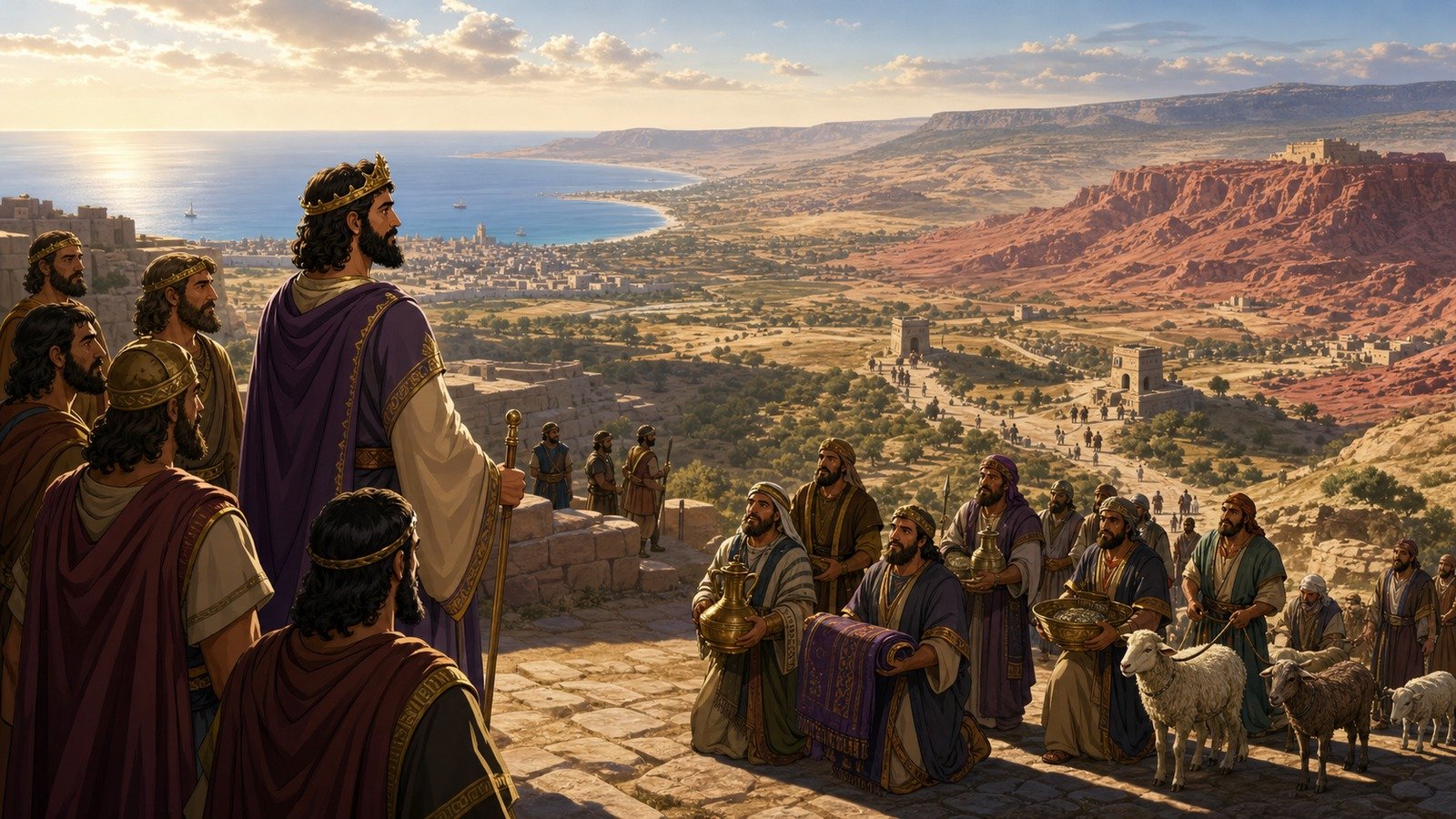
David subdues the Philistines, Moab and Edom, extending Israel's borders and securing tribute from surrounding kingdoms; the chapter closes with a summary list of his administration.
Ammon humiliates David's diplomatic envoys and then hires Aramean mercenaries against Israel; David's forces under Joab and Abishai defeat the combined coalition, further securing the kingdom's borders.
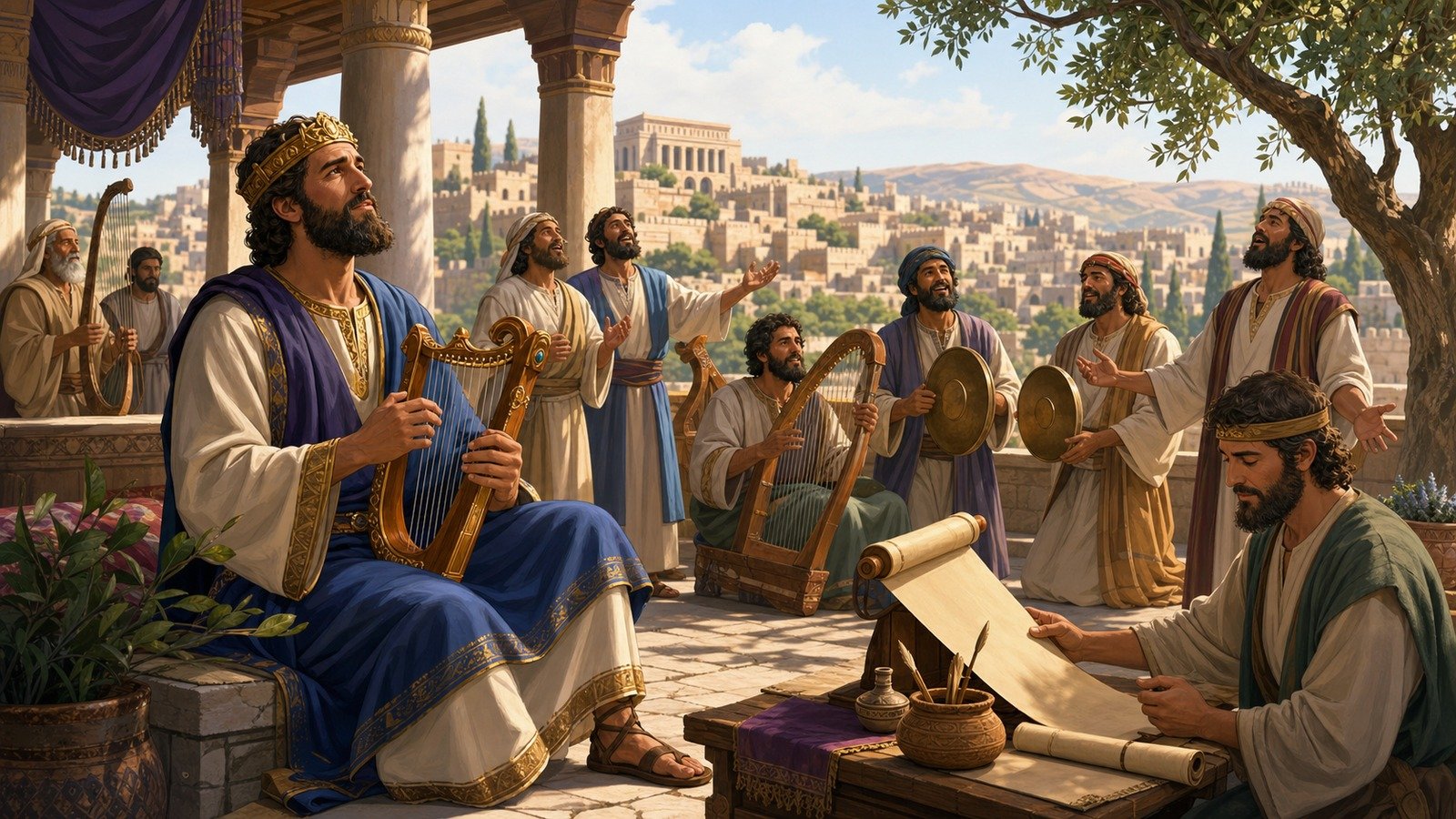
Roughly half the Psalter carries a superscription attributing it to David, spanning his years as a fugitive, king and penitent sinner; other psalms are attributed to Asaph, the sons of Korah and Solomon, with the collection assembled and edited over a much longer period.
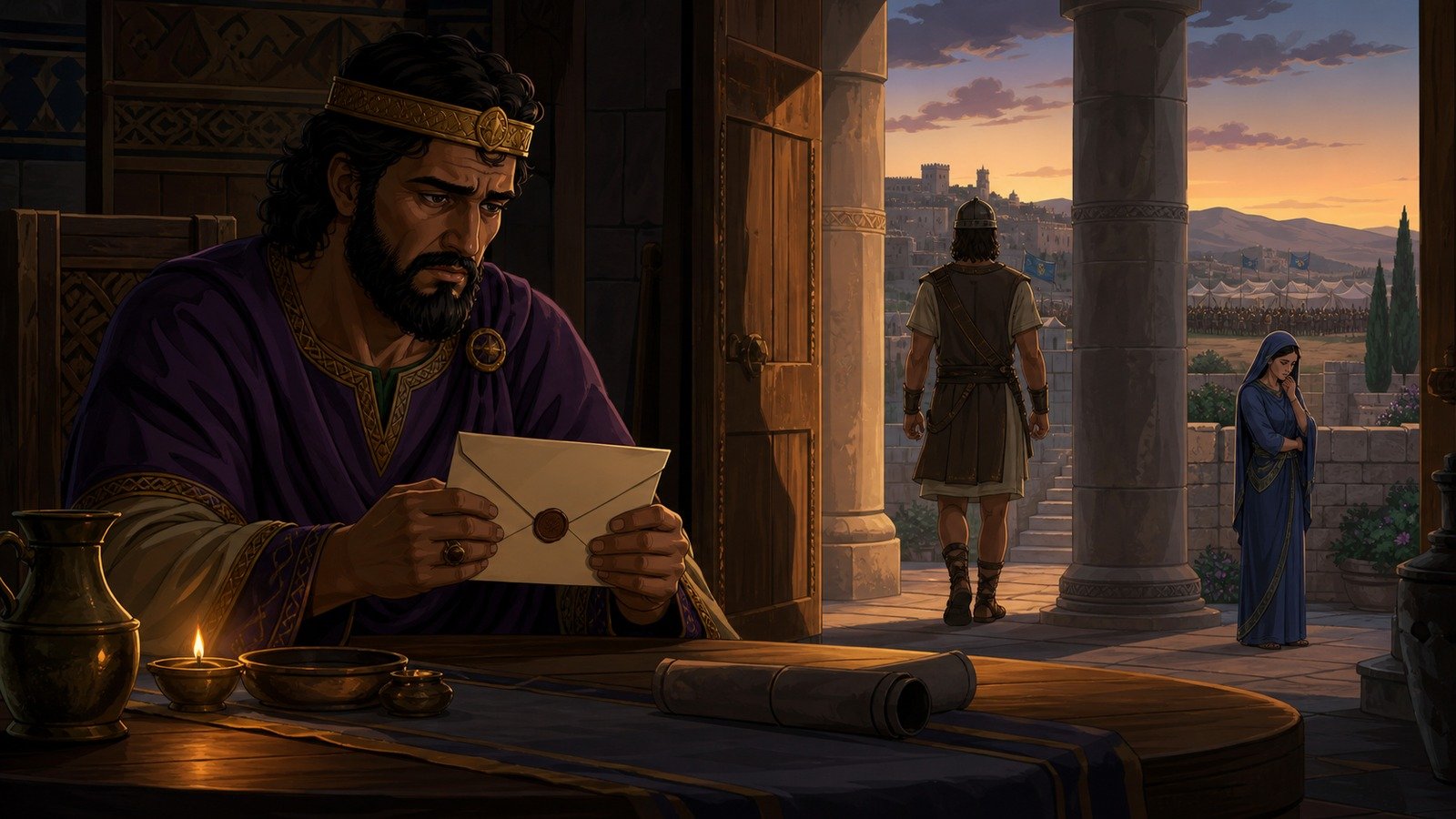
While his army is at war, David remains in Jerusalem, sees Bathsheba bathing, sends for her, and, when she becomes pregnant, arranges the death of her husband Uriah in battle to cover his own adultery.
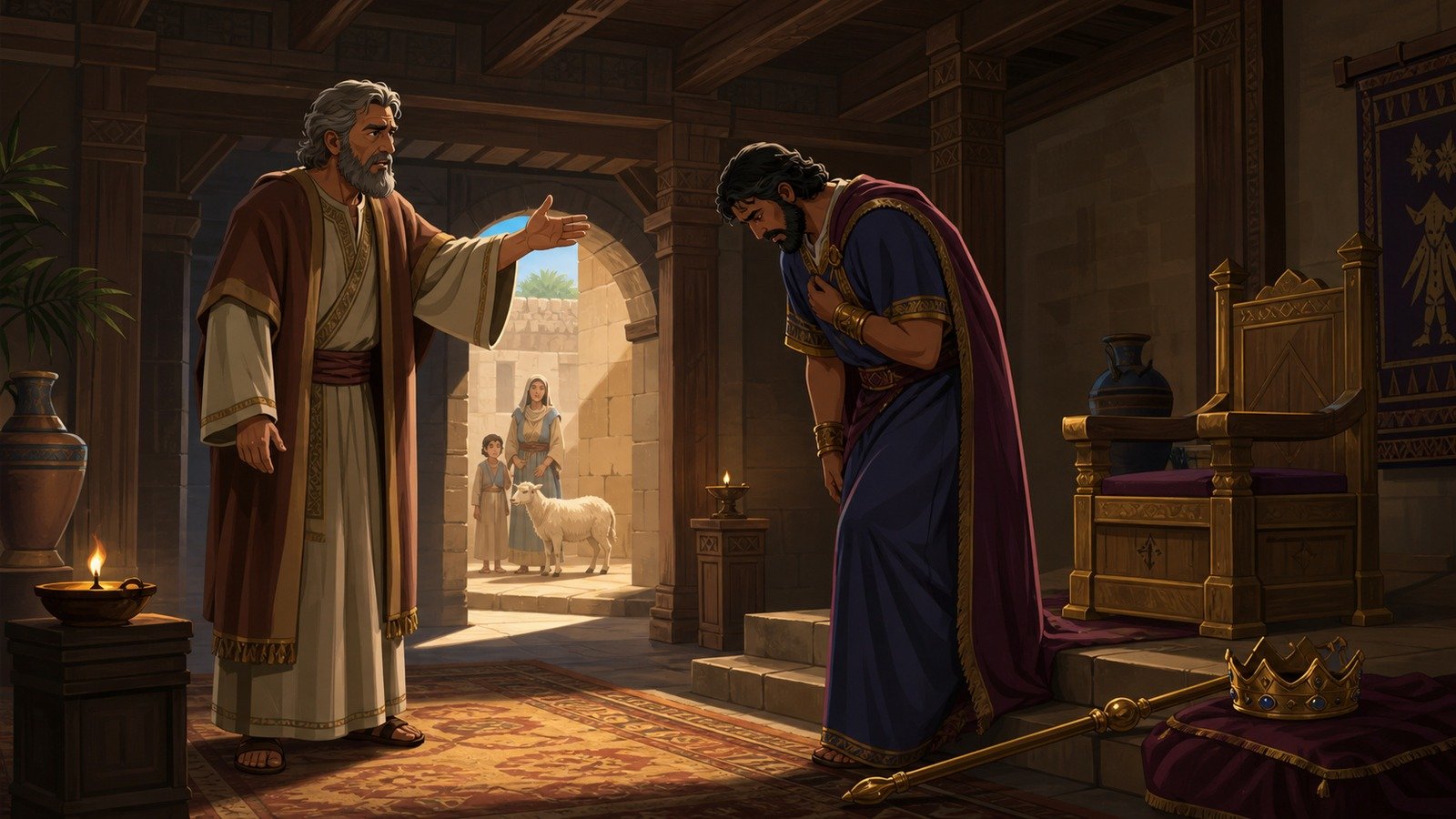
The prophet Nathan confronts David with a parable that exposes his own guilt; David confesses immediately, and though forgiven, is told the sword will never leave his household. The child conceived with Bathsheba dies; Solomon is born to the couple afterward.
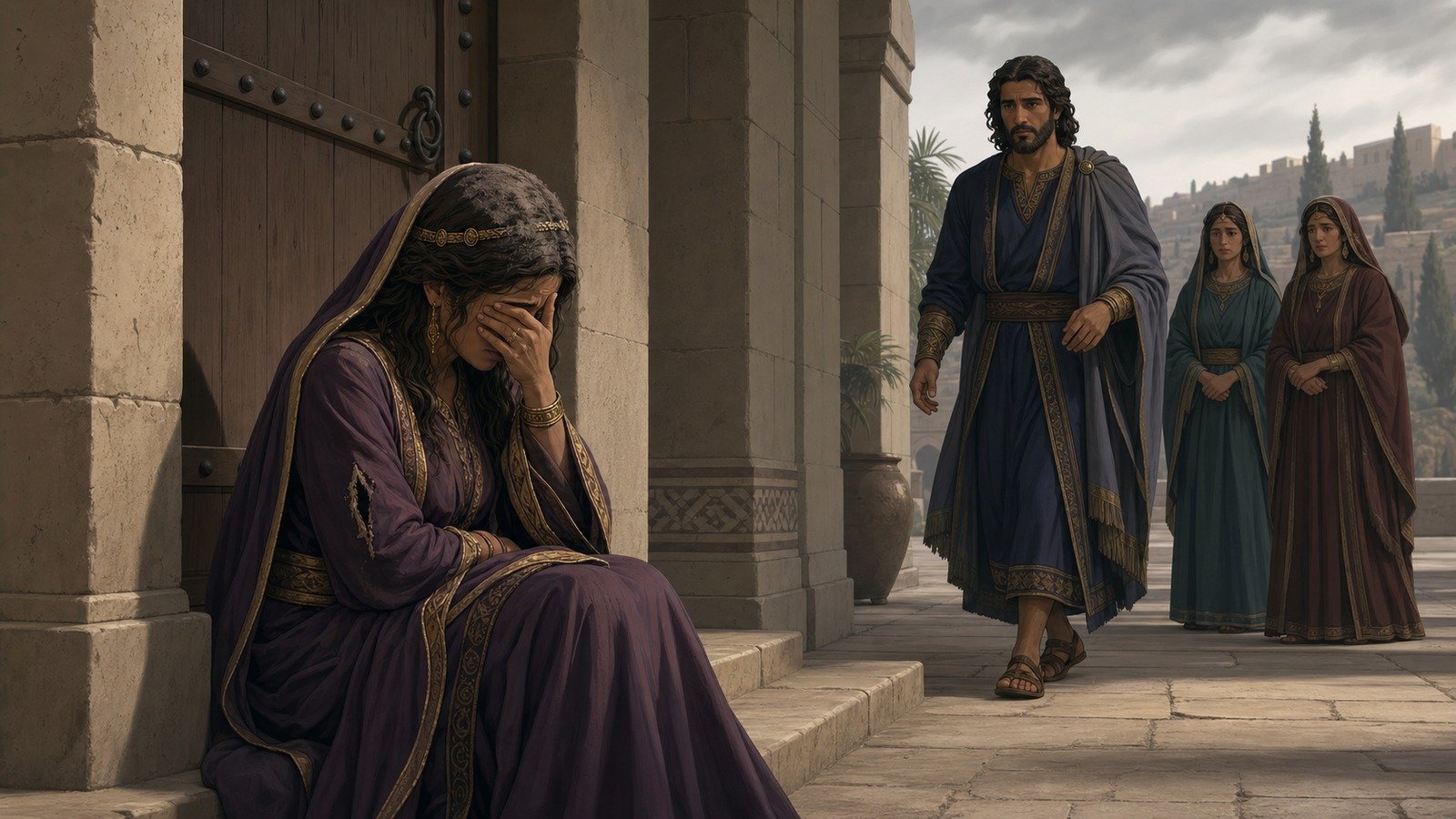
David's son Amnon feigns illness to lure his half-sister Tamar into his room and rapes her; David is angry but takes no disciplinary action, a failure that sets up Absalom's later revenge.
Two years after the rape, Absalom has Amnon killed at a feast and flees to his grandfather's kingdom of Geshur, beginning a rupture with David that will eventually erupt into open rebellion.
Joab engineers Absalom's return to Jerusalem through a staged appeal from a wise woman, but David keeps Absalom at a distance for two further years even after allowing him back, a reconciliation in name only.
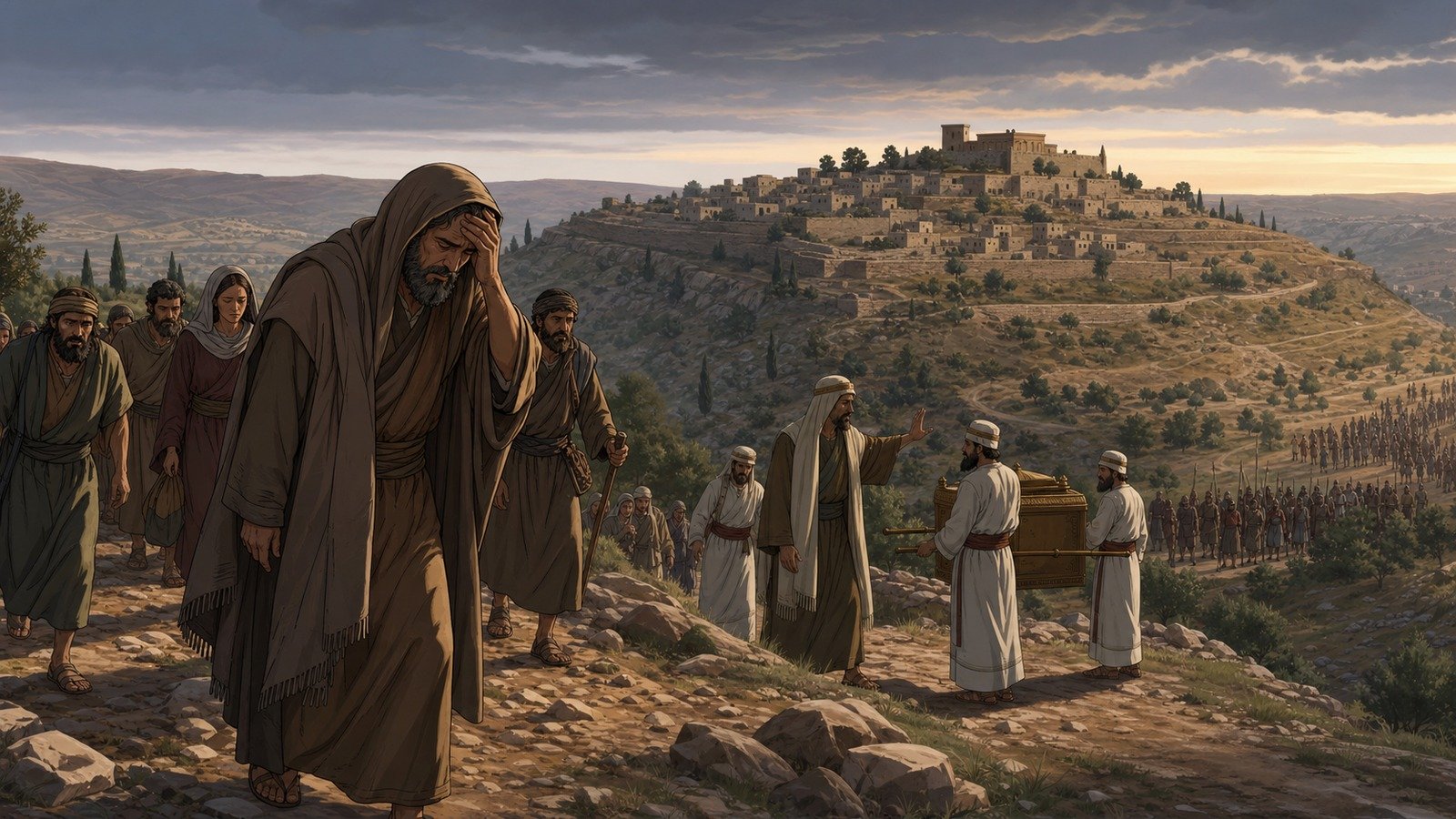
Having spent years courting popular support, Absalom launches an open rebellion that forces David to flee Jerusalem, one of the lowest points of his reign, while advisors on both sides manoeuvre for advantage.
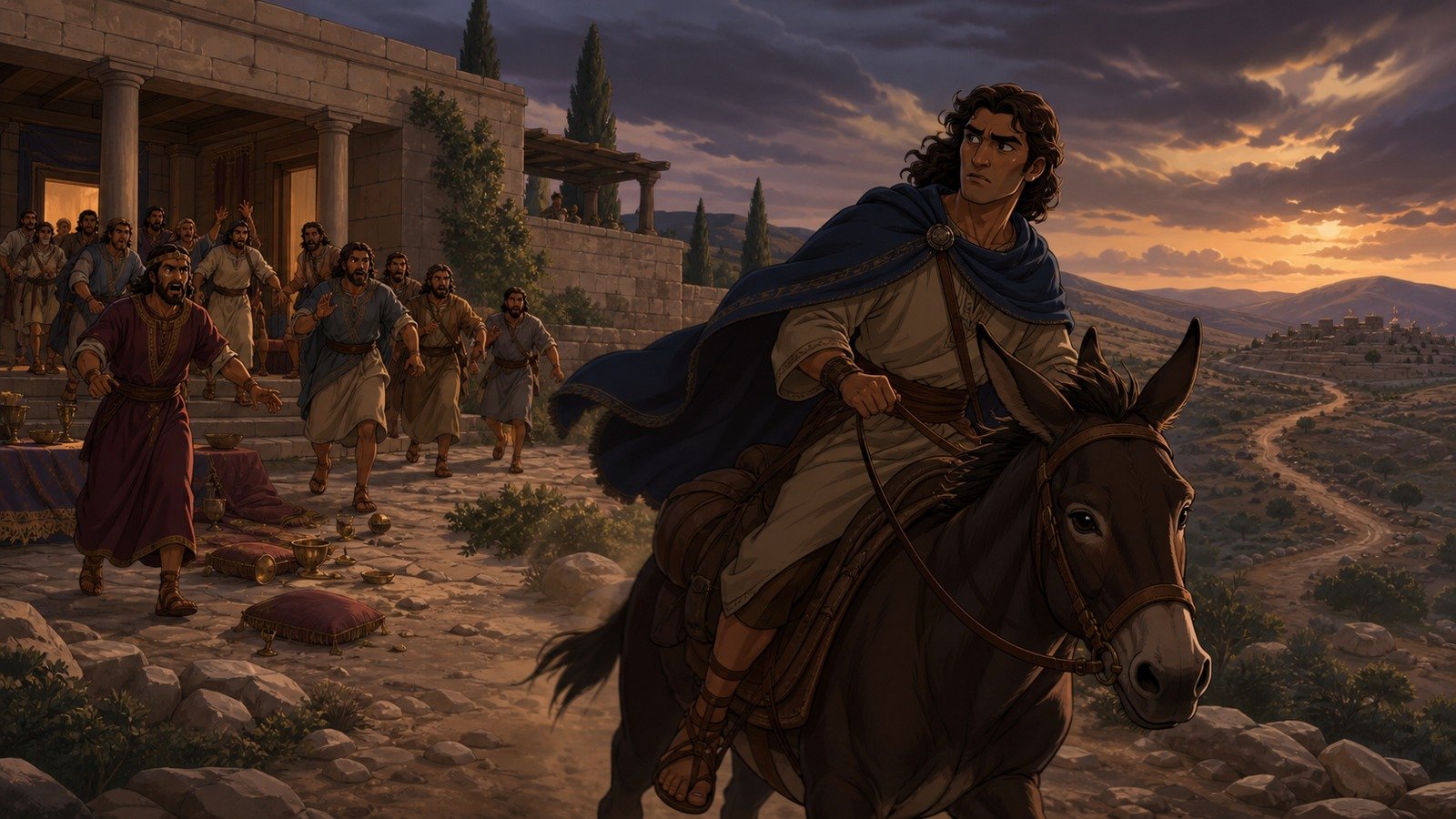
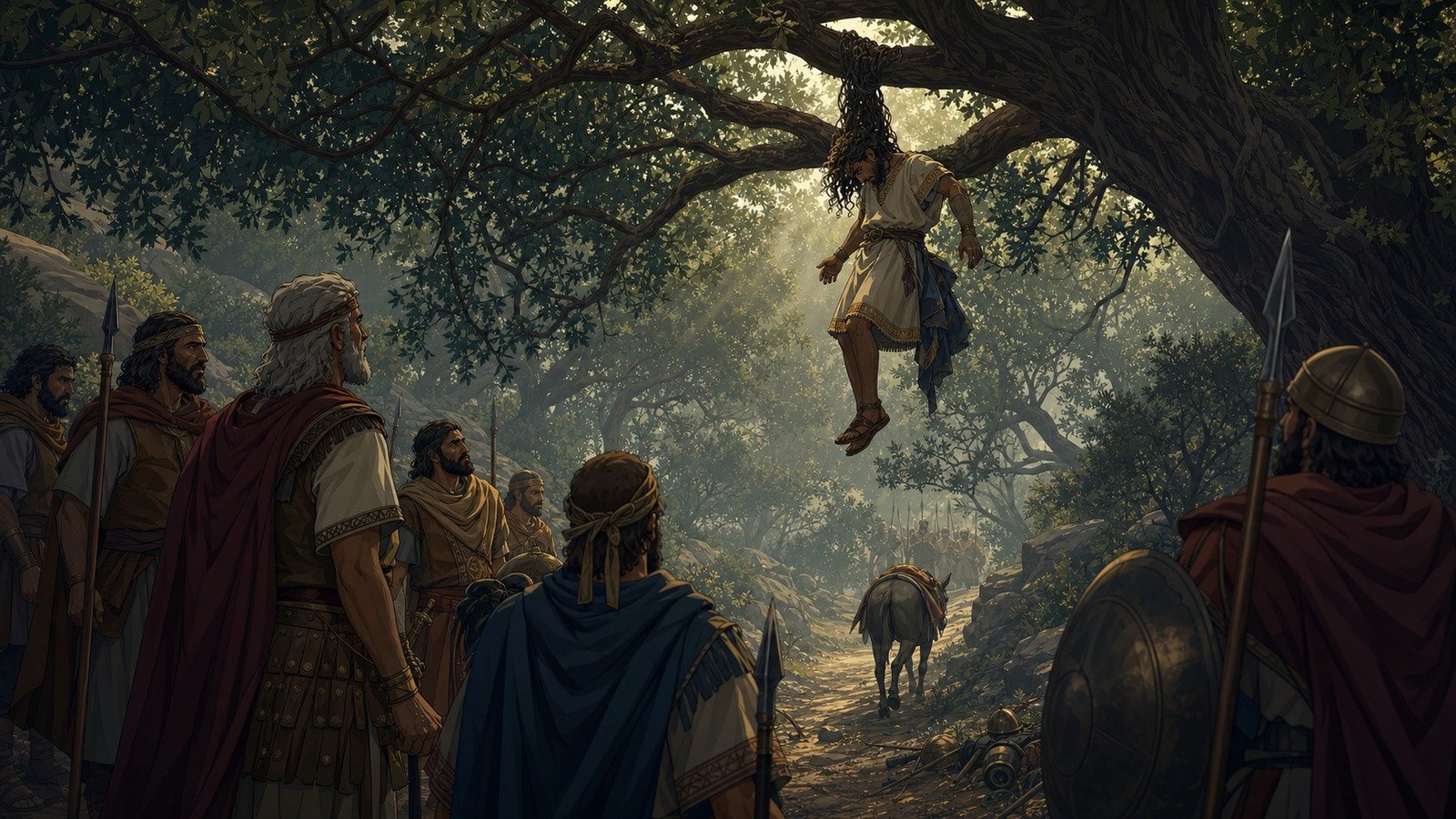
Absalom's forces are defeated, and against David's explicit orders Joab kills him personally after finding him caught in a tree by his hair, plunging David into grief even in victory.
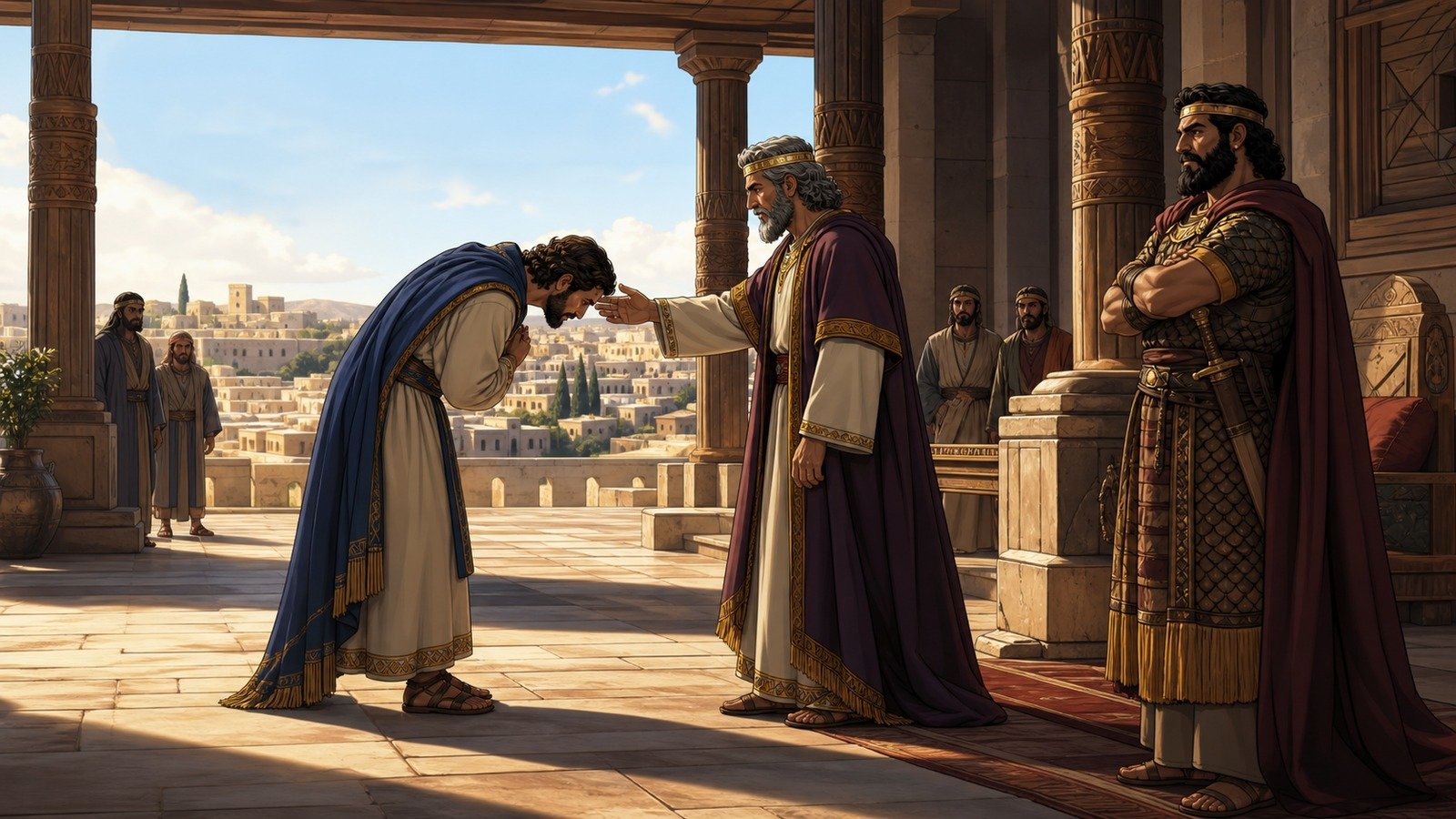
David is persuaded by Joab to set aside his public grief for Absalom, and negotiates a careful, deliberately gracious return to Jerusalem to rebuild loyalty across the tribes.
A Benjamite named Sheba leads a further, smaller revolt against David almost immediately after Absalom's rebellion ends; Joab suppresses it, and a wise woman's negotiation spares an entire city by having Sheba's head handed over instead.
David orders a census of fighting men against Joab's advice, an act Scripture treats as prideful self-reliance; a plague follows as judgement, and David purchases Araunah's threshing floor as an altar, the site later identified with the Temple Mount.
With David elderly, his son Adonijah tries to seize the throne with support from Joab and the priest Abiathar; Nathan and Bathsheba intervene, and David has Solomon publicly anointed and enthroned before his own death.
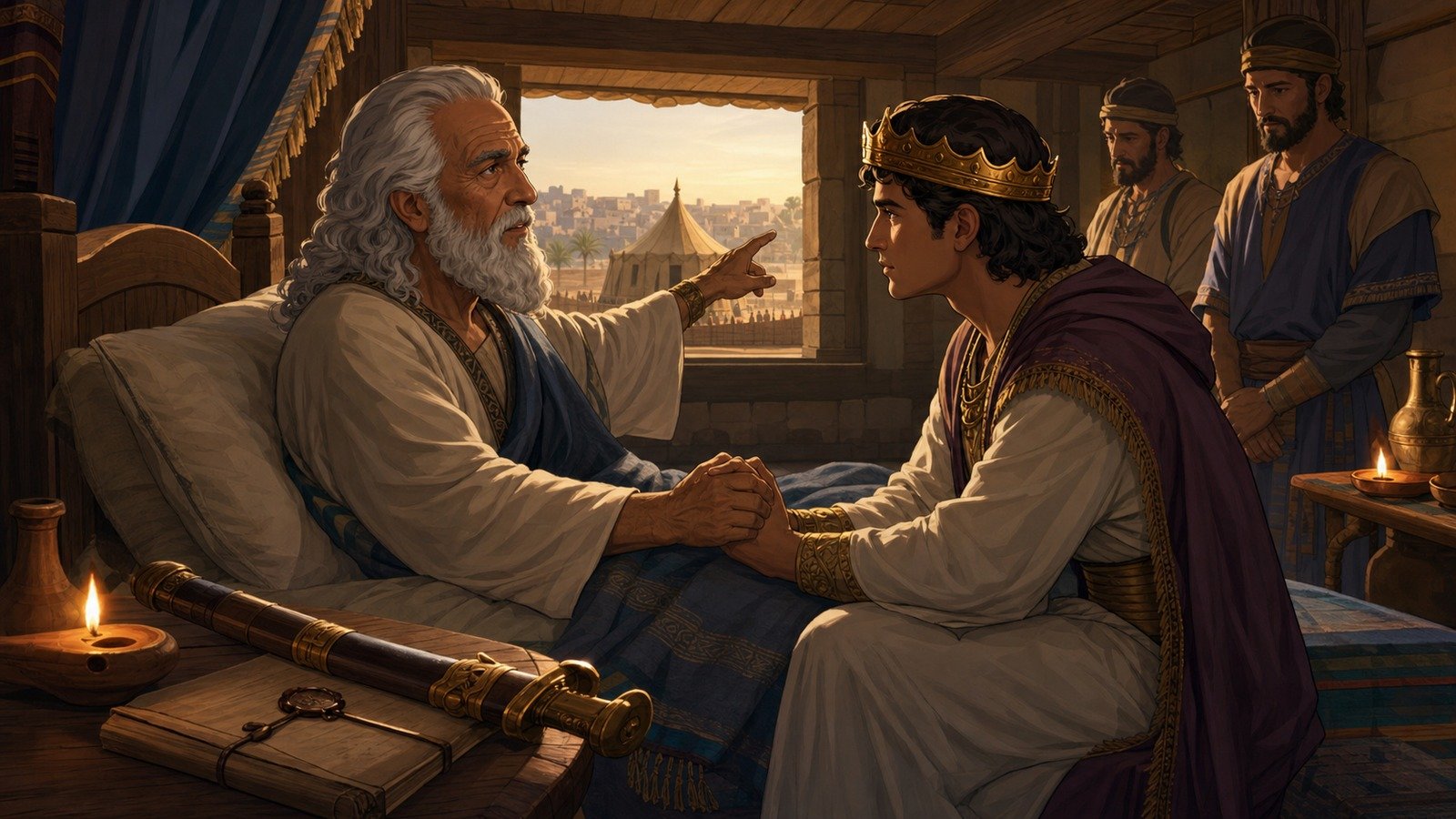
On his deathbed, David charges Solomon to walk faithfully with God and keep his commands, while also instructing him to settle several old scores, including Joab's earlier murders, left unresolved during David's own reign.
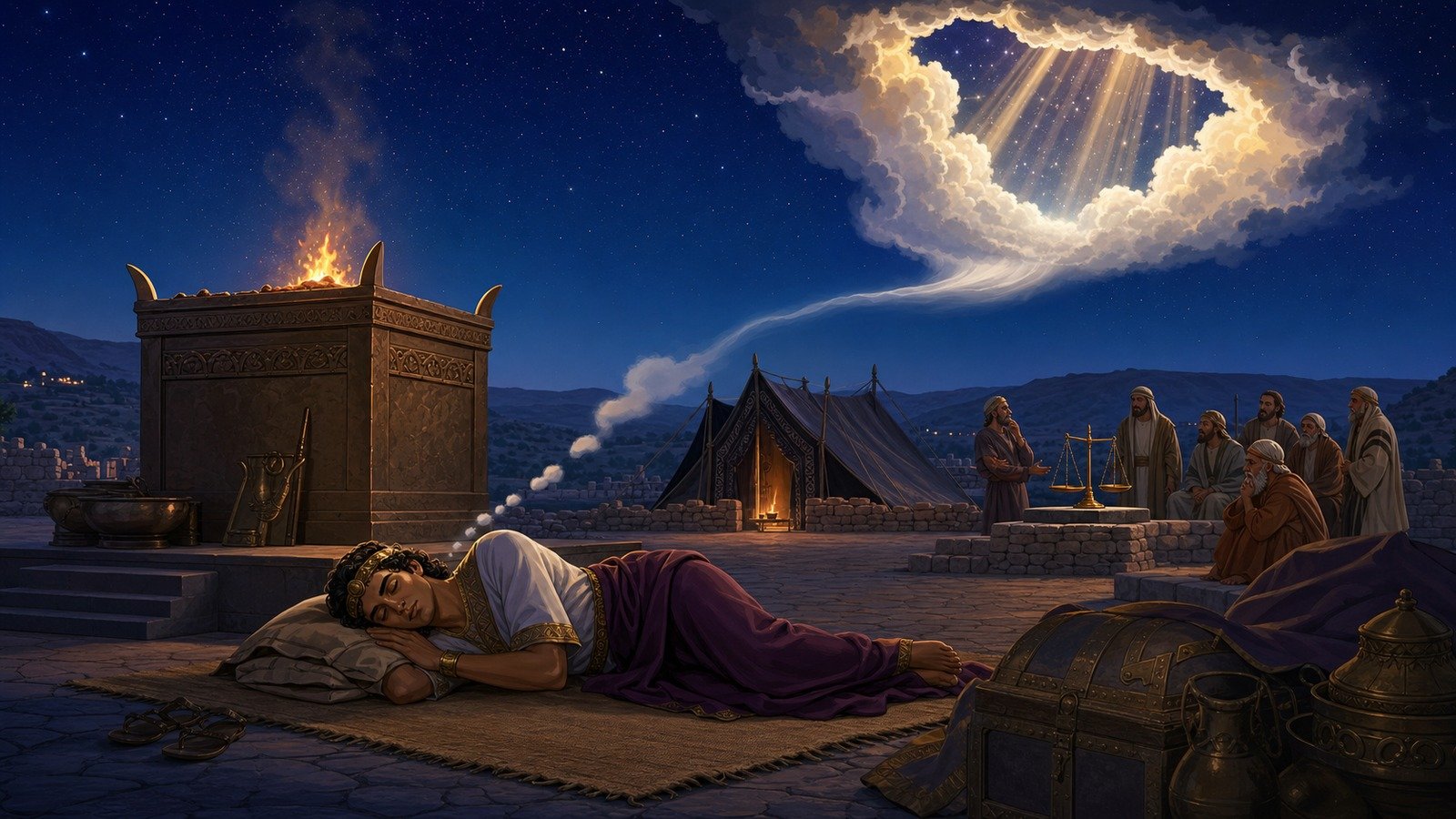
God appears to Solomon in a dream at Gibeon and offers him whatever he asks; Solomon requests wisdom to govern rather than wealth or long life, and God grants both the wisdom and the riches he did not ask for.
Solomon organises the kingdom into administrative districts, oversees a period of peace and prosperity across his reign, and becomes internationally renowned for wisdom that "surpassed the wisdom of all the people of the East."
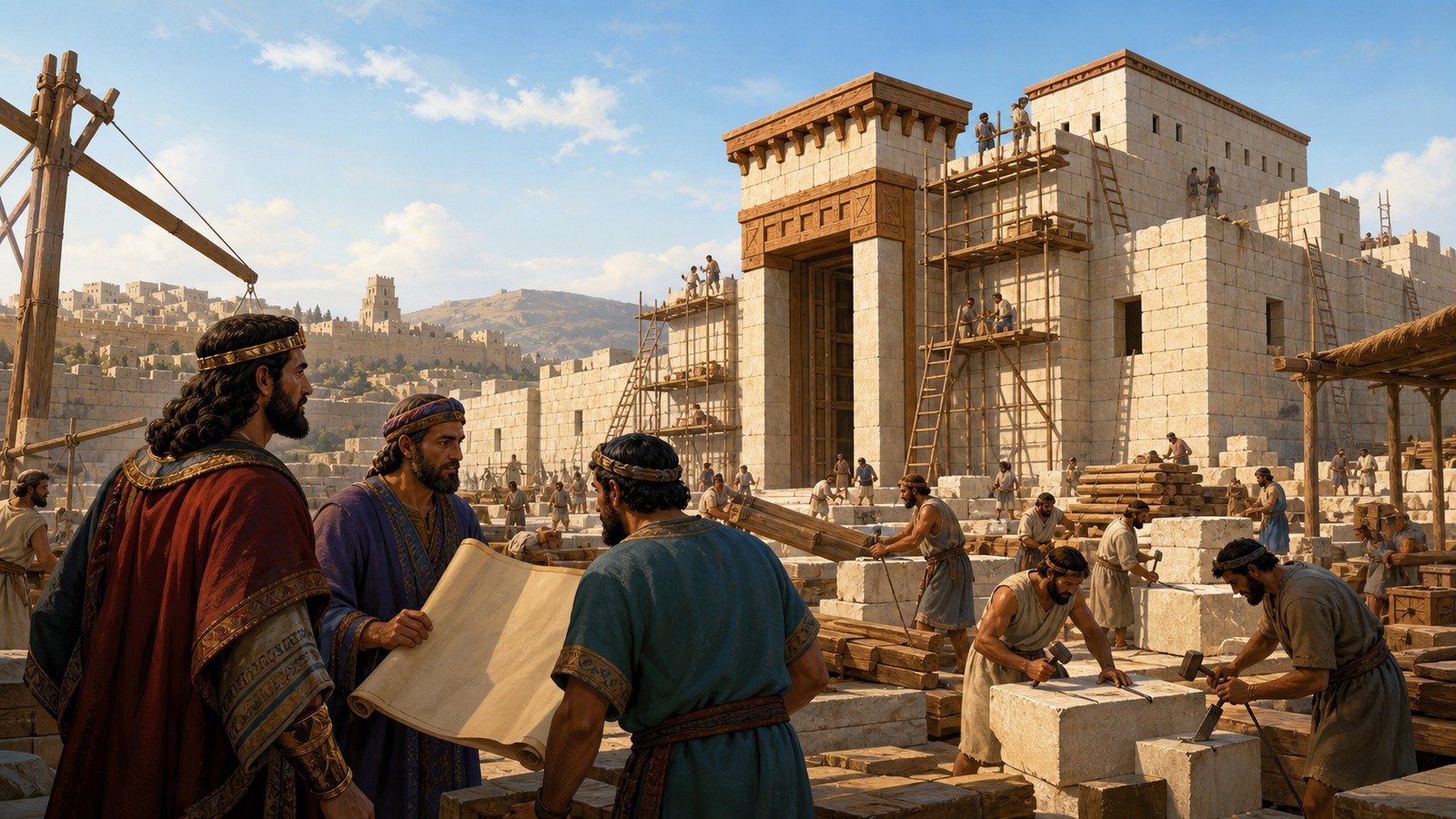
Construction begins in Solomon's fourth regnal year, 480 years after the Exodus by the text's own reckoning, using cedar from Hiram of Tyre and skilled labour; the Temple takes seven years to complete.
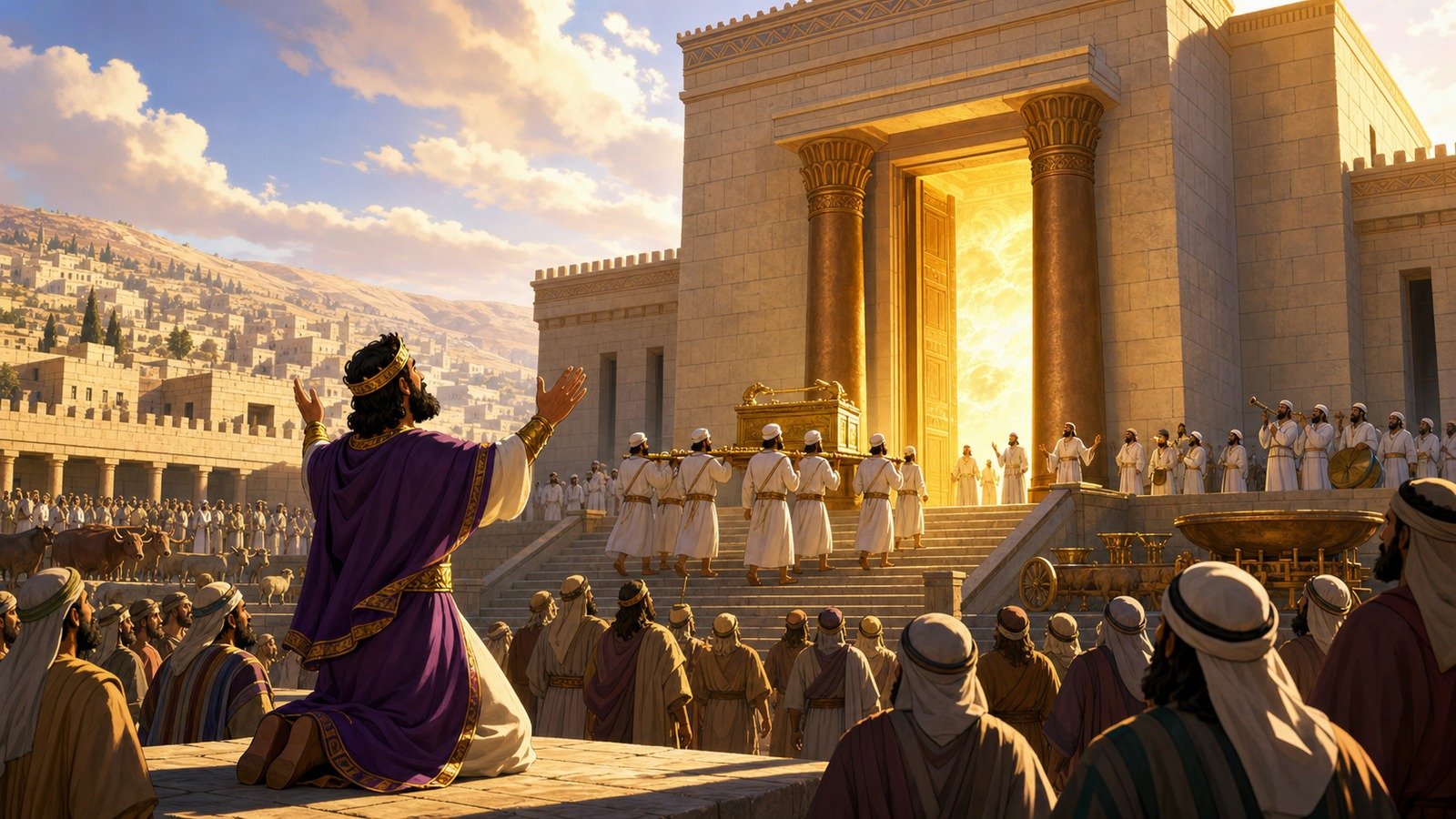
Solomon dedicates the completed Temple with the ark installed in the Most Holy Place, a lengthy public prayer of dedication, and sacrifices so numerous they could not be counted, as the glory of the Lord fills the building.
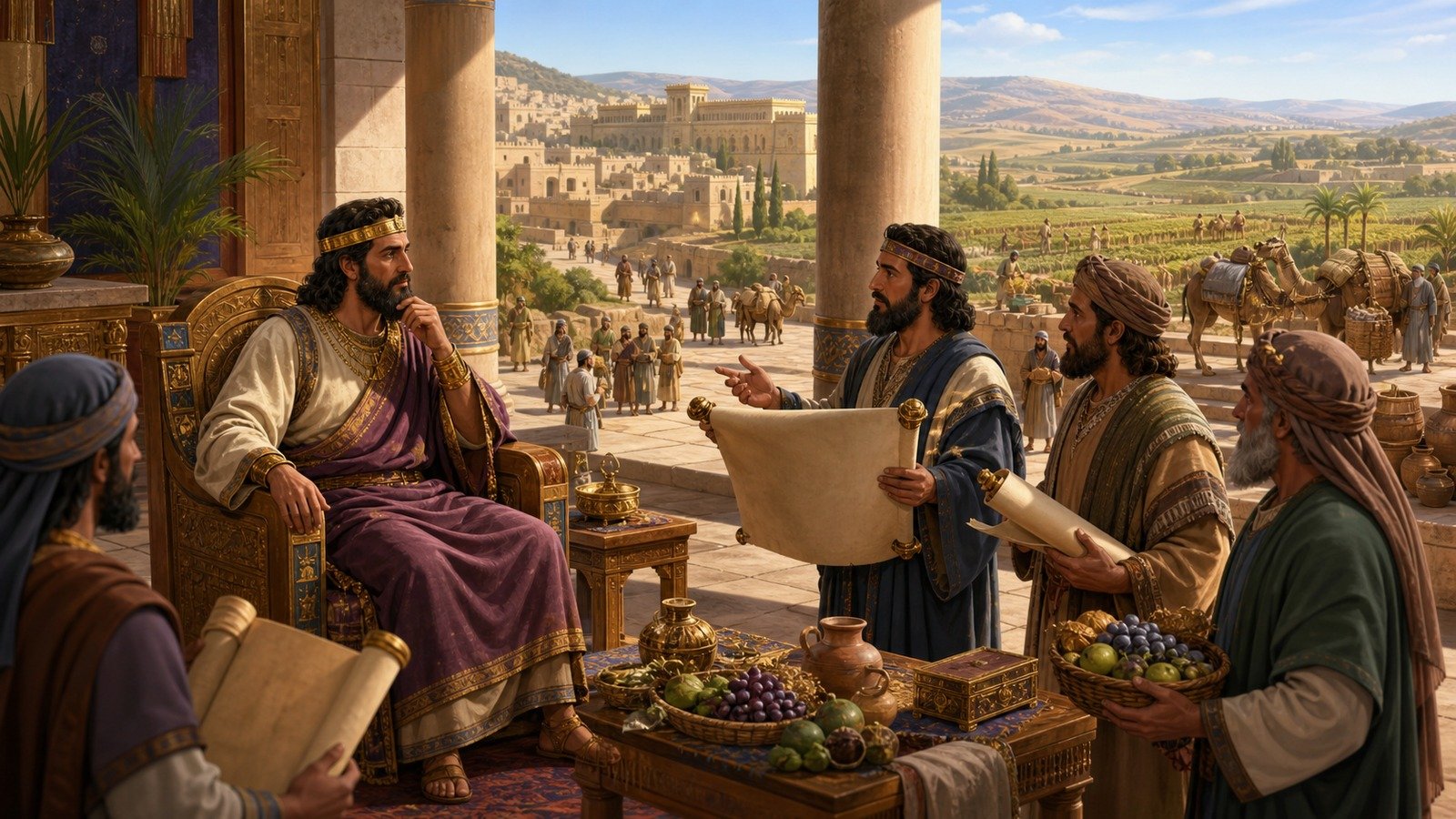
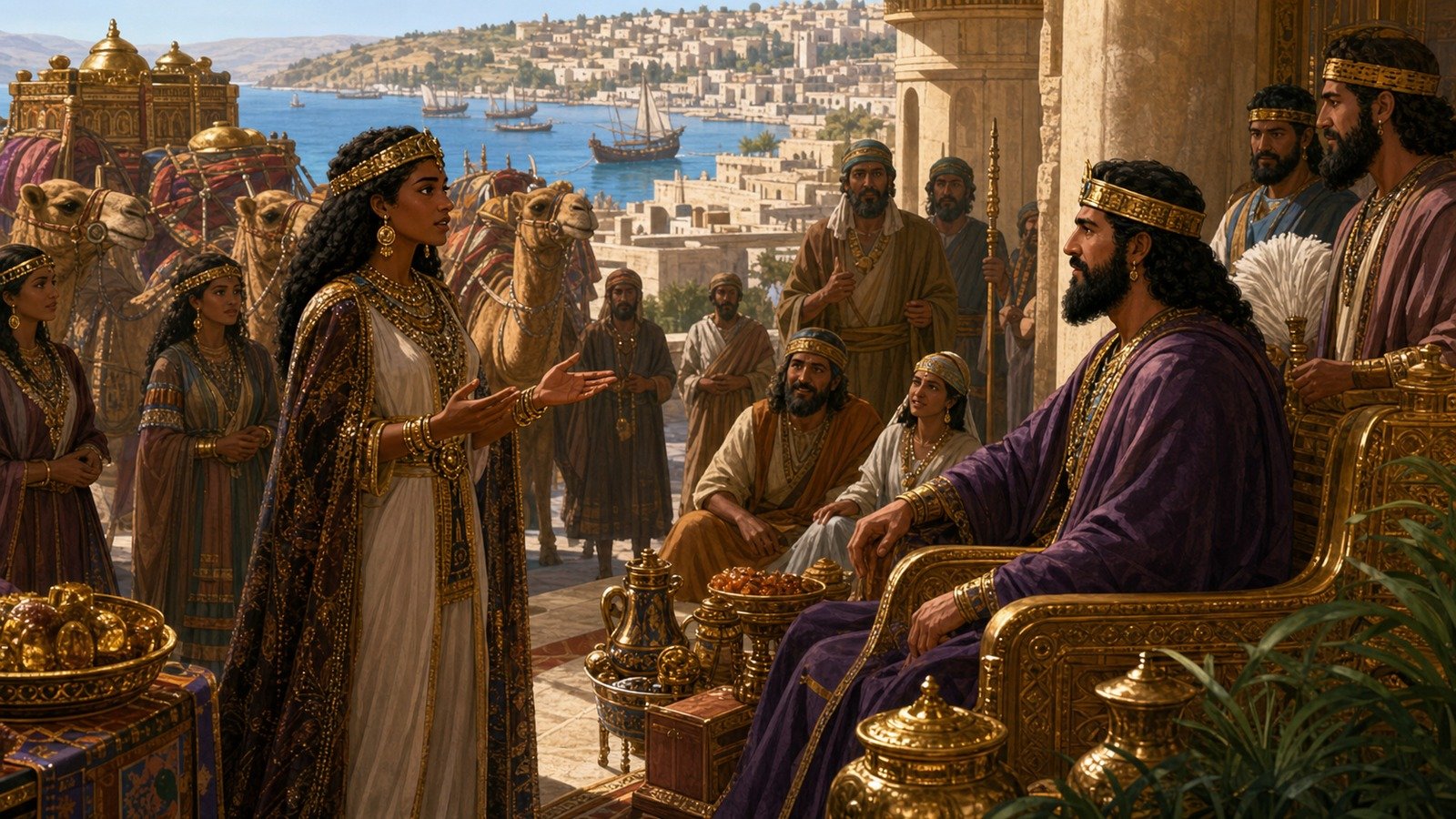
Solomon's fame draws the Queen of Sheba to test him with hard questions; she leaves impressed by his wisdom and wealth, which the chapter goes on to describe in detail, including a fleet trading in gold, and a throne without equal in any kingdom.
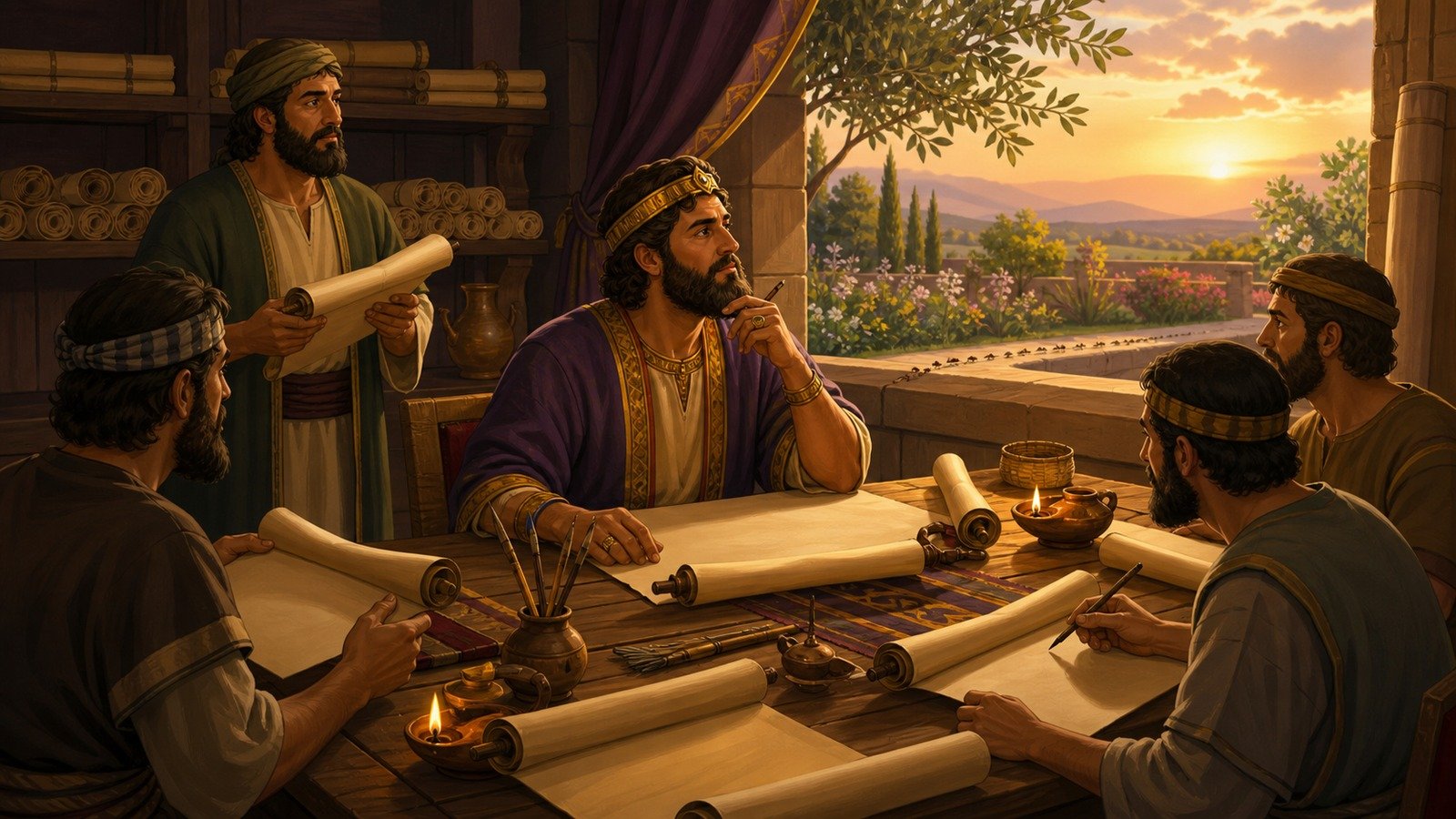
Solomon is credited with 3,000 proverbs and over a thousand songs; the books of Proverbs, Ecclesiastes and Song of Songs all carry Solomonic attribution, though scholars debate how much of Proverbs in particular reflects later editorial compilation under his name.
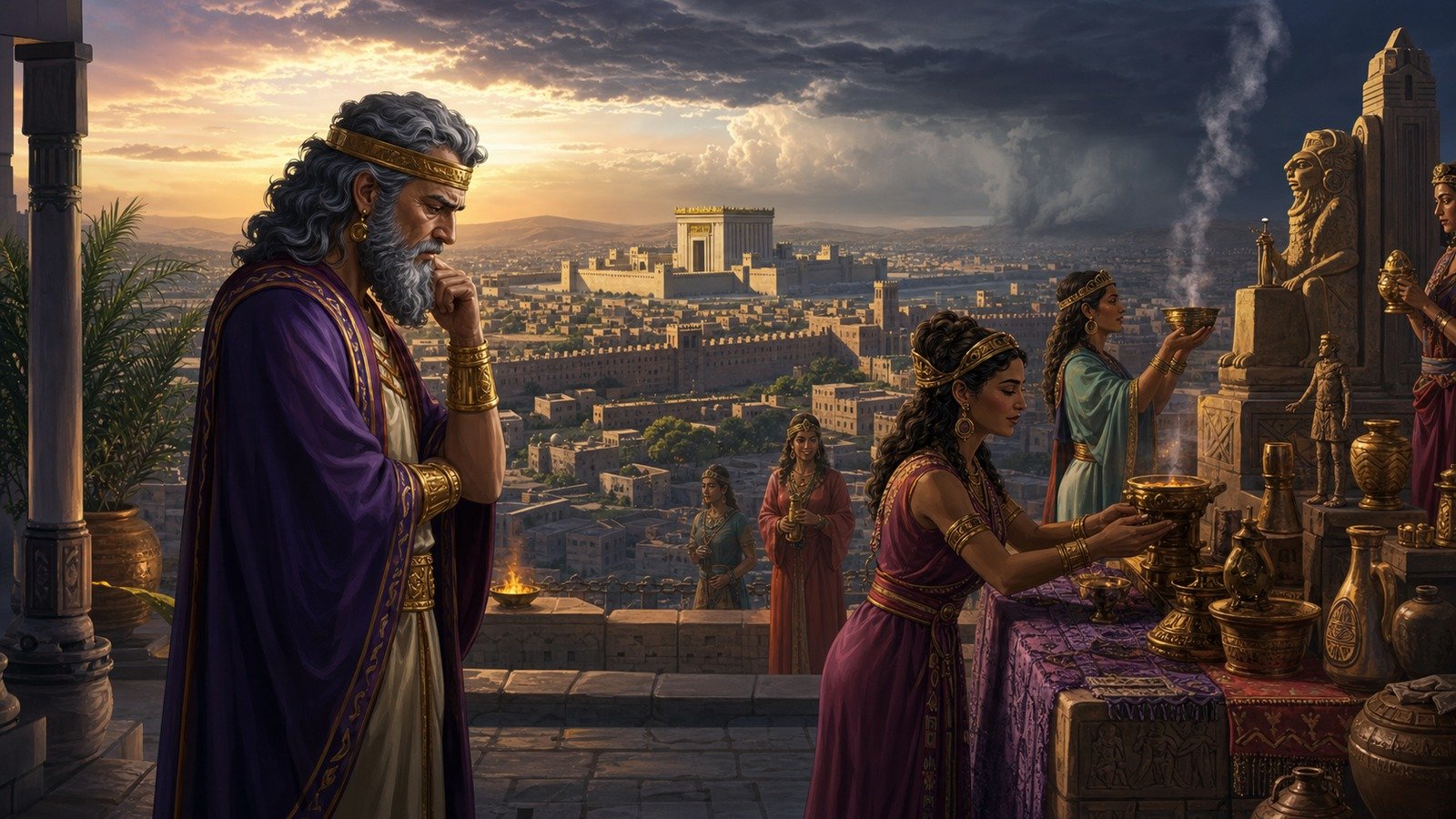
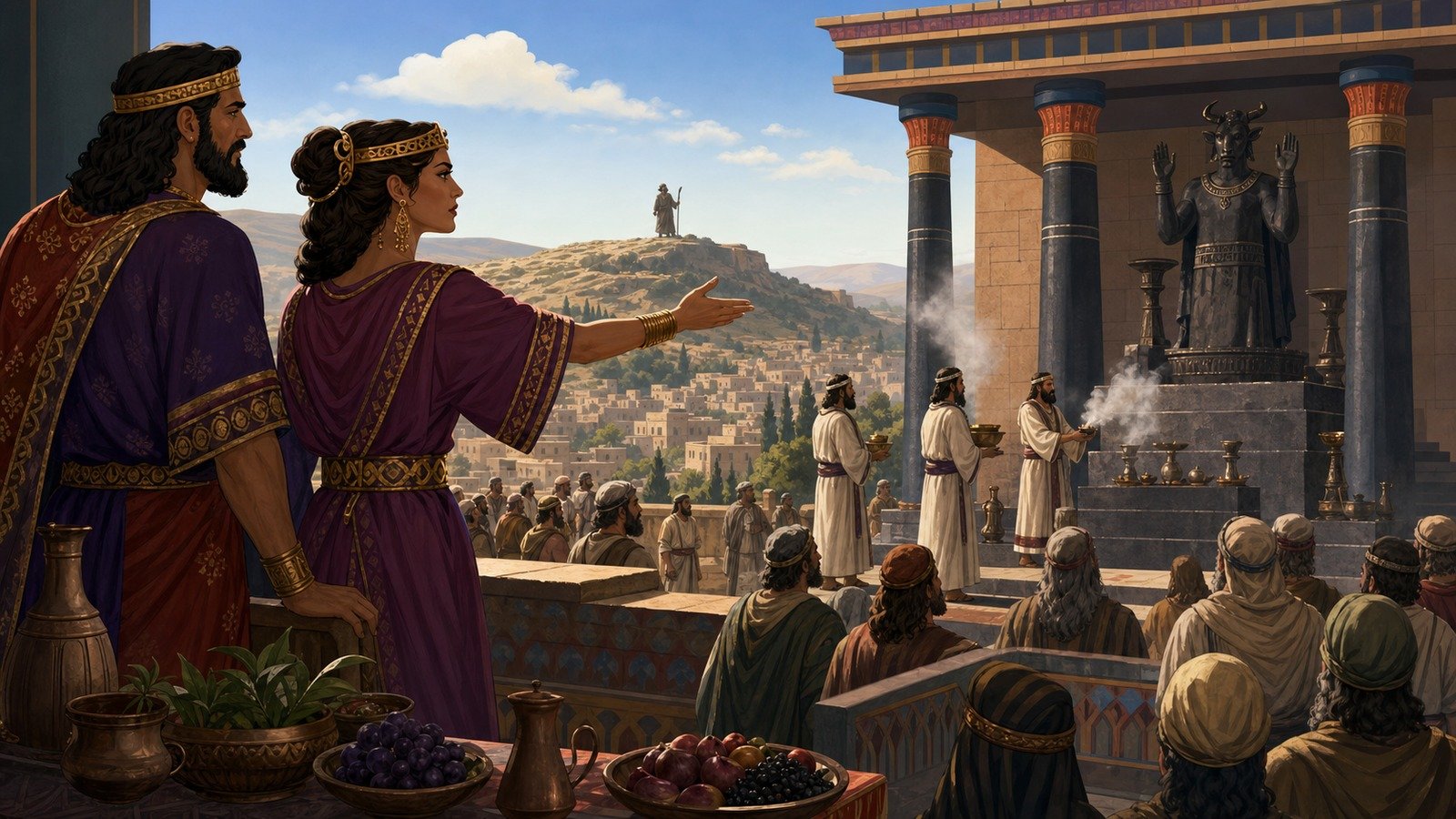
Solomon's many foreign marriages, made largely for political alliance, lead him into tolerating and even building shrines to his wives' gods; God announces the kingdom will be torn from his son, though not from Solomon himself for David's sake, and raises up adversaries against him.
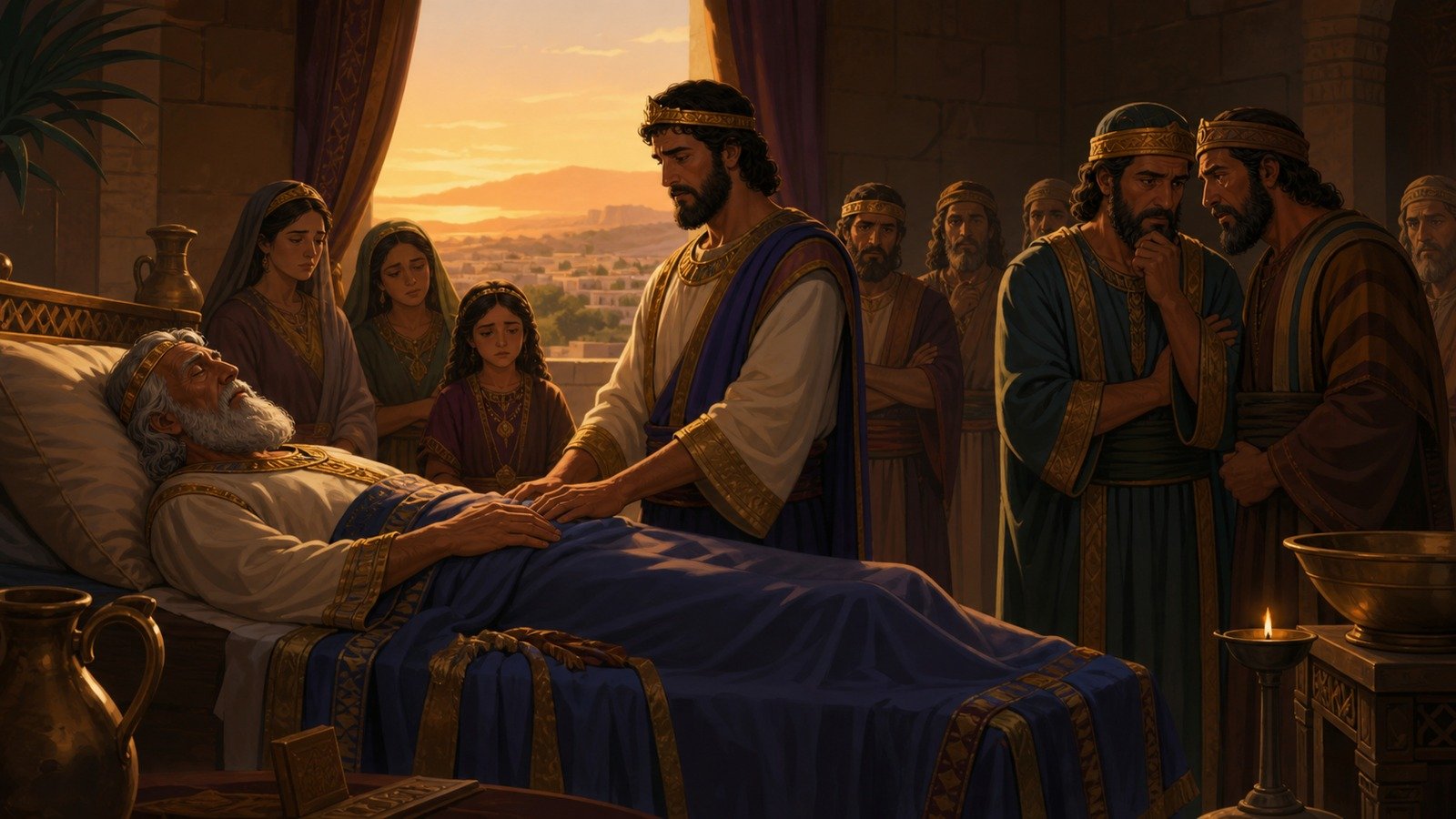
Solomon dies after 40 years on the throne, and his son Rehoboam succeeds him, inheriting a kingdom whose internal tensions are about to surface immediately.
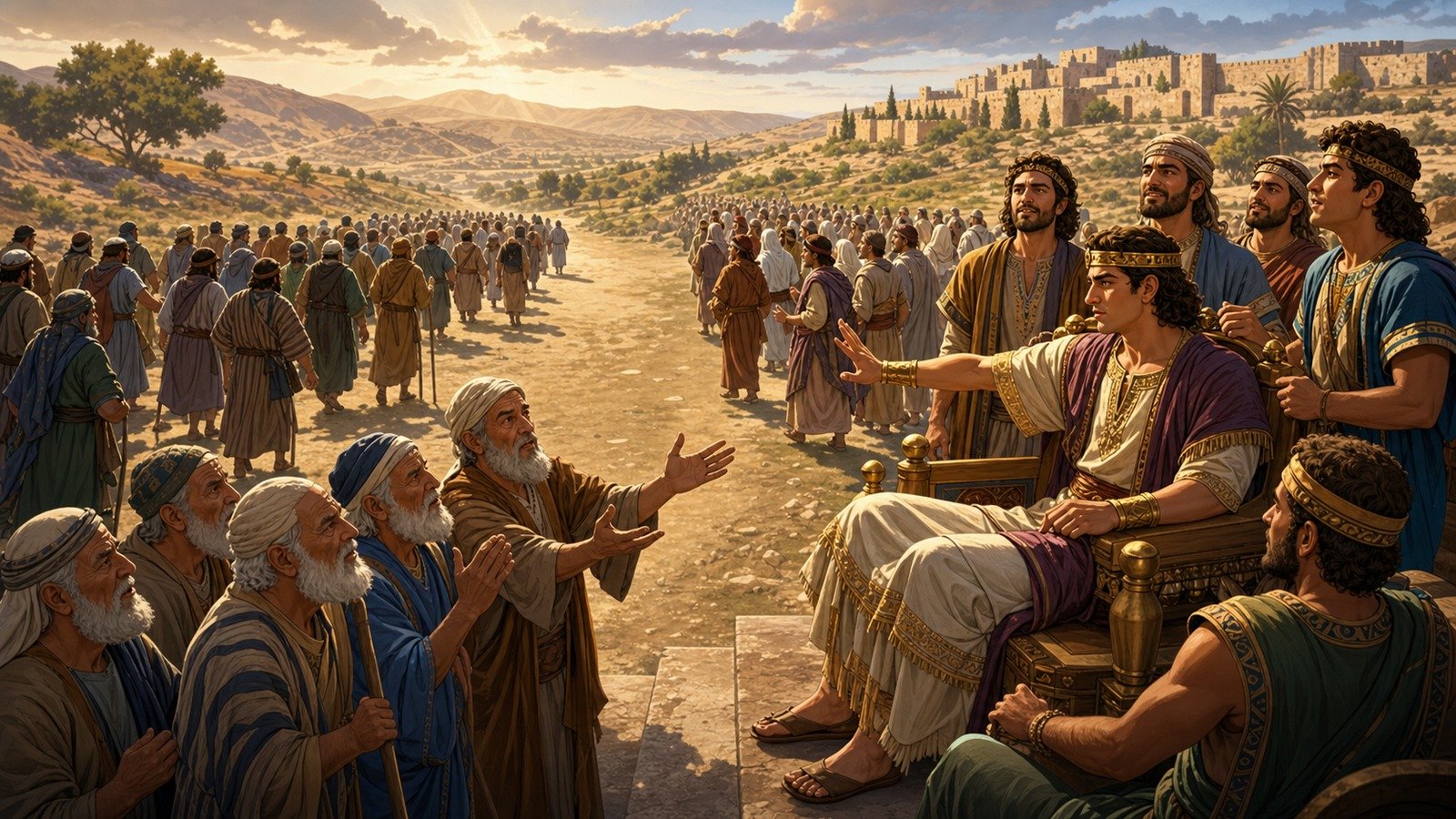
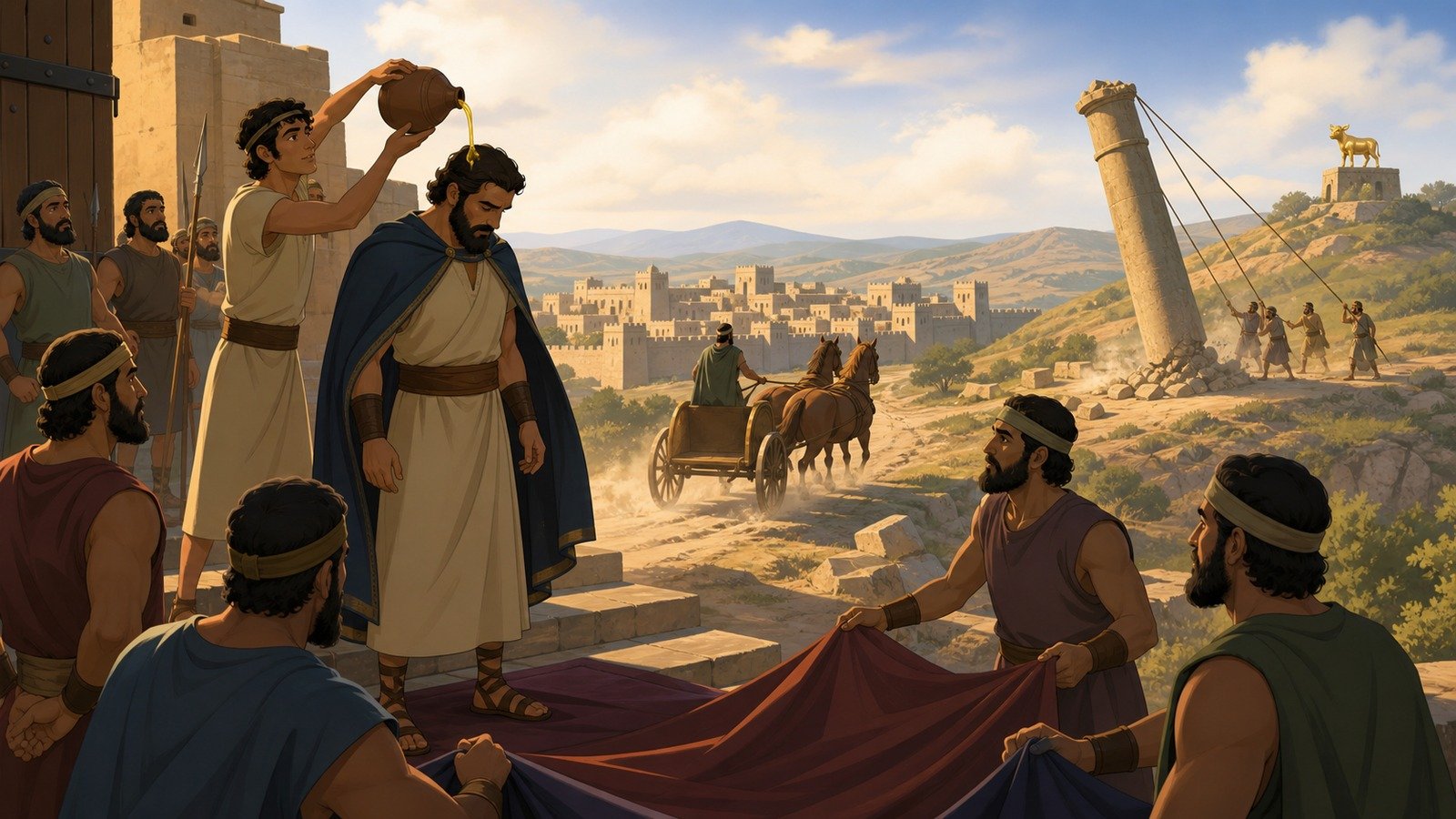
Rehoboam's harsh response to the northern tribes' request for lighter labour, rejecting his older advisors' counsel for his young friends', triggers a permanent split: ten tribes follow Jeroboam as the kingdom of Israel, leaving Rehoboam with Judah and Benjamin in the south.
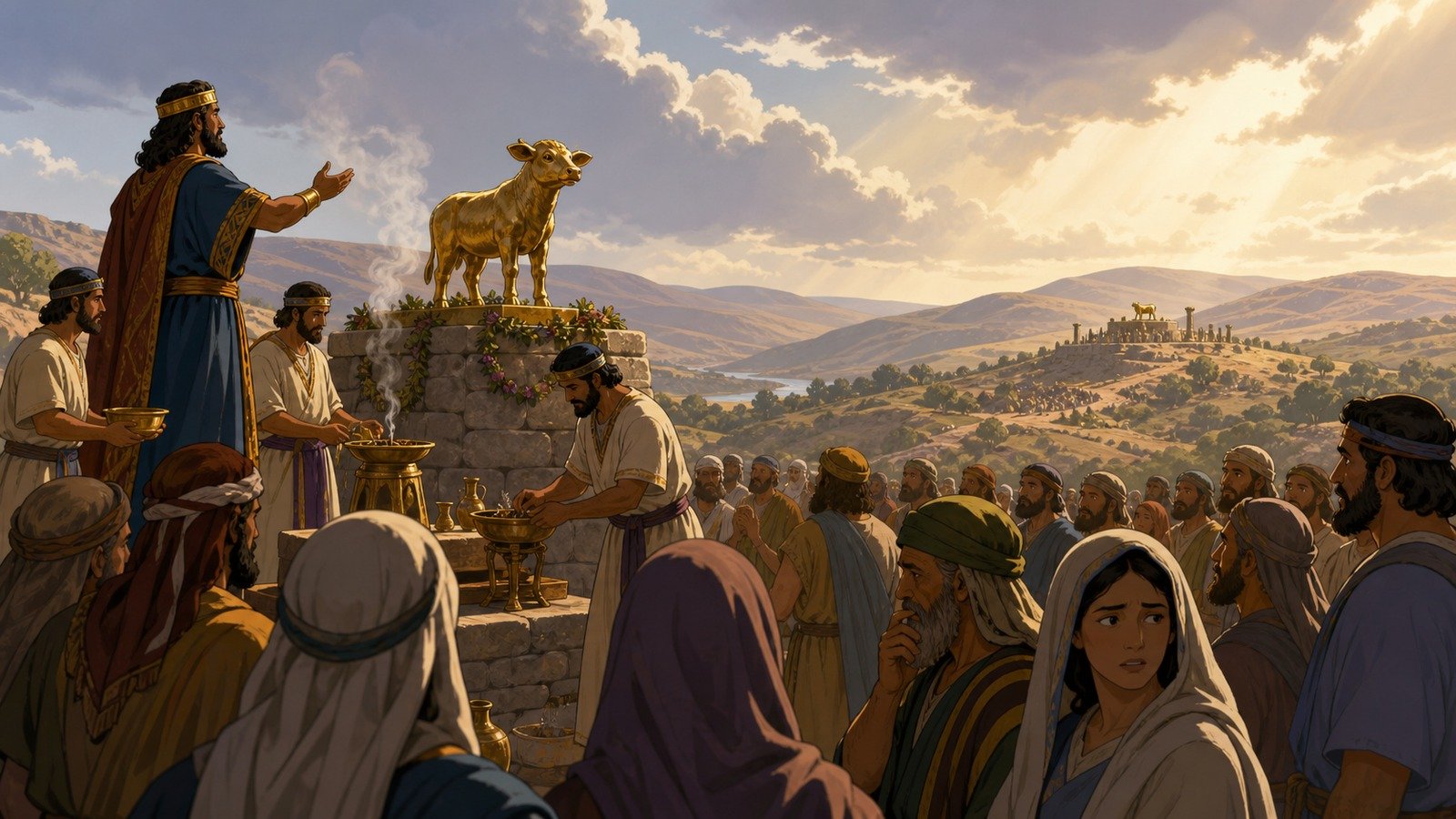
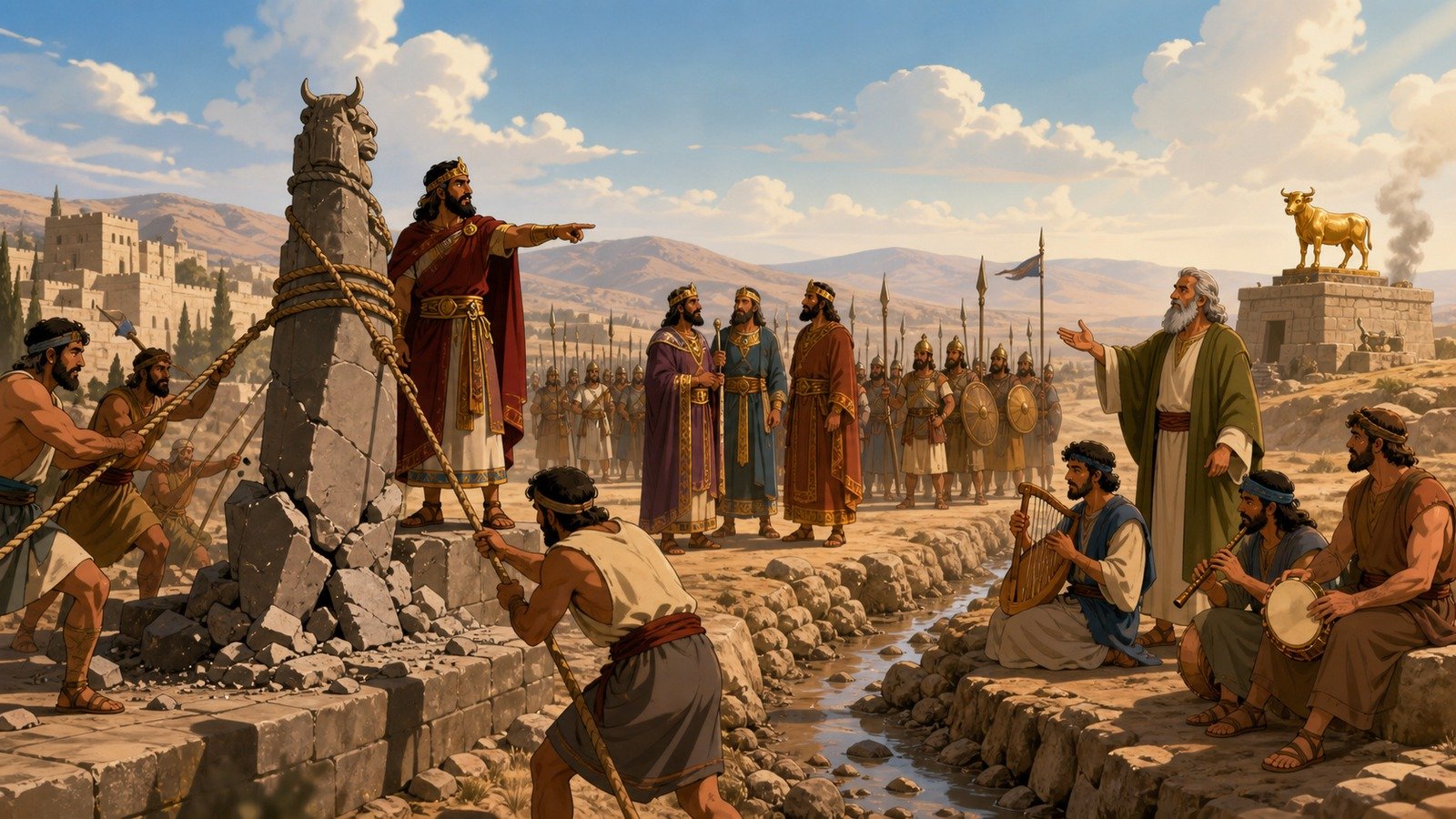
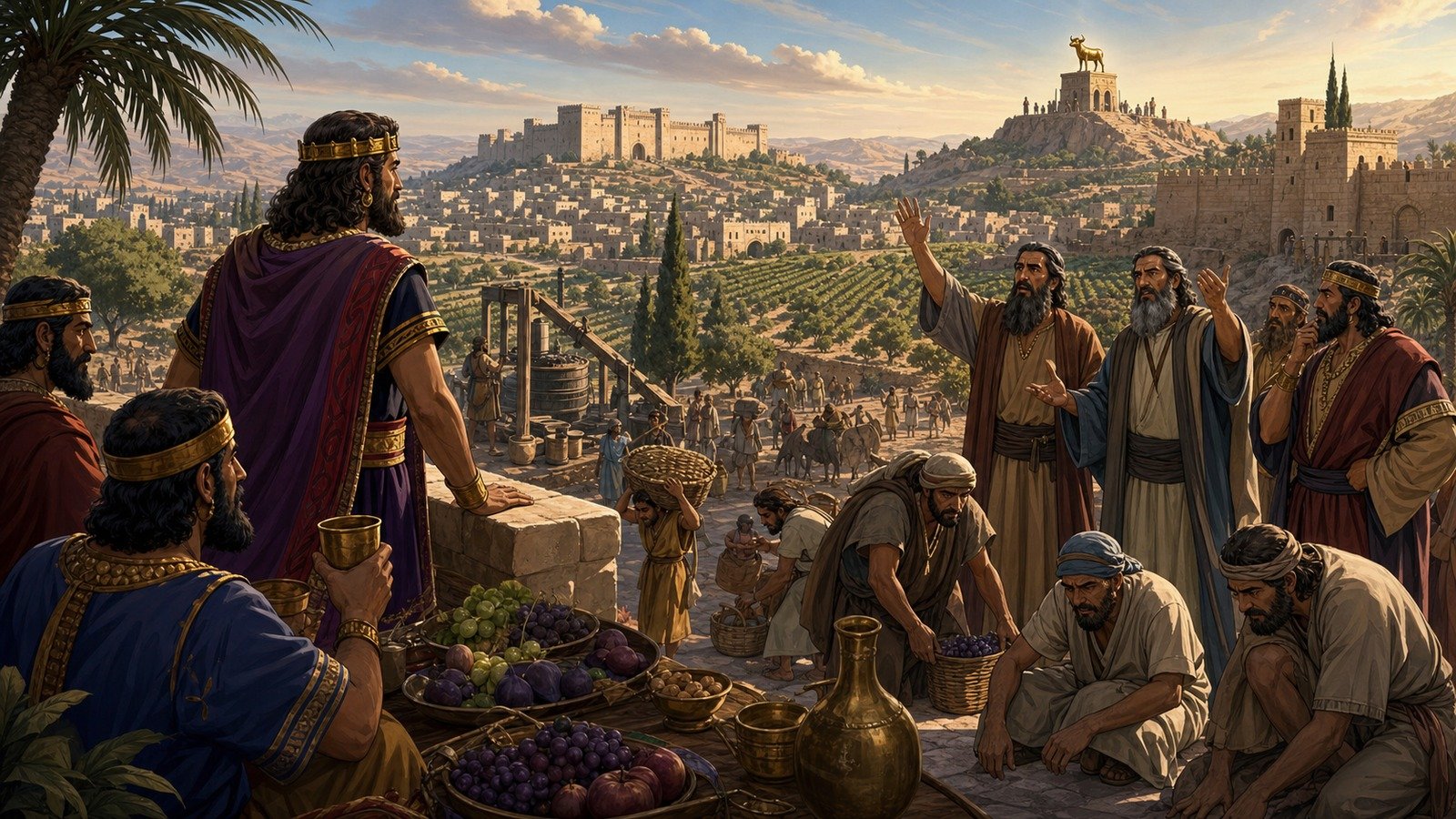
Fearing that pilgrimage to Jerusalem's Temple would draw the northern tribes back to Rehoboam, Jeroboam sets up golden calf shrines at Bethel and Dan and institutes a rival priesthood and festival calendar, a policy Kings repeatedly calls "the sin of Jeroboam" that every subsequent northern king is judged against.
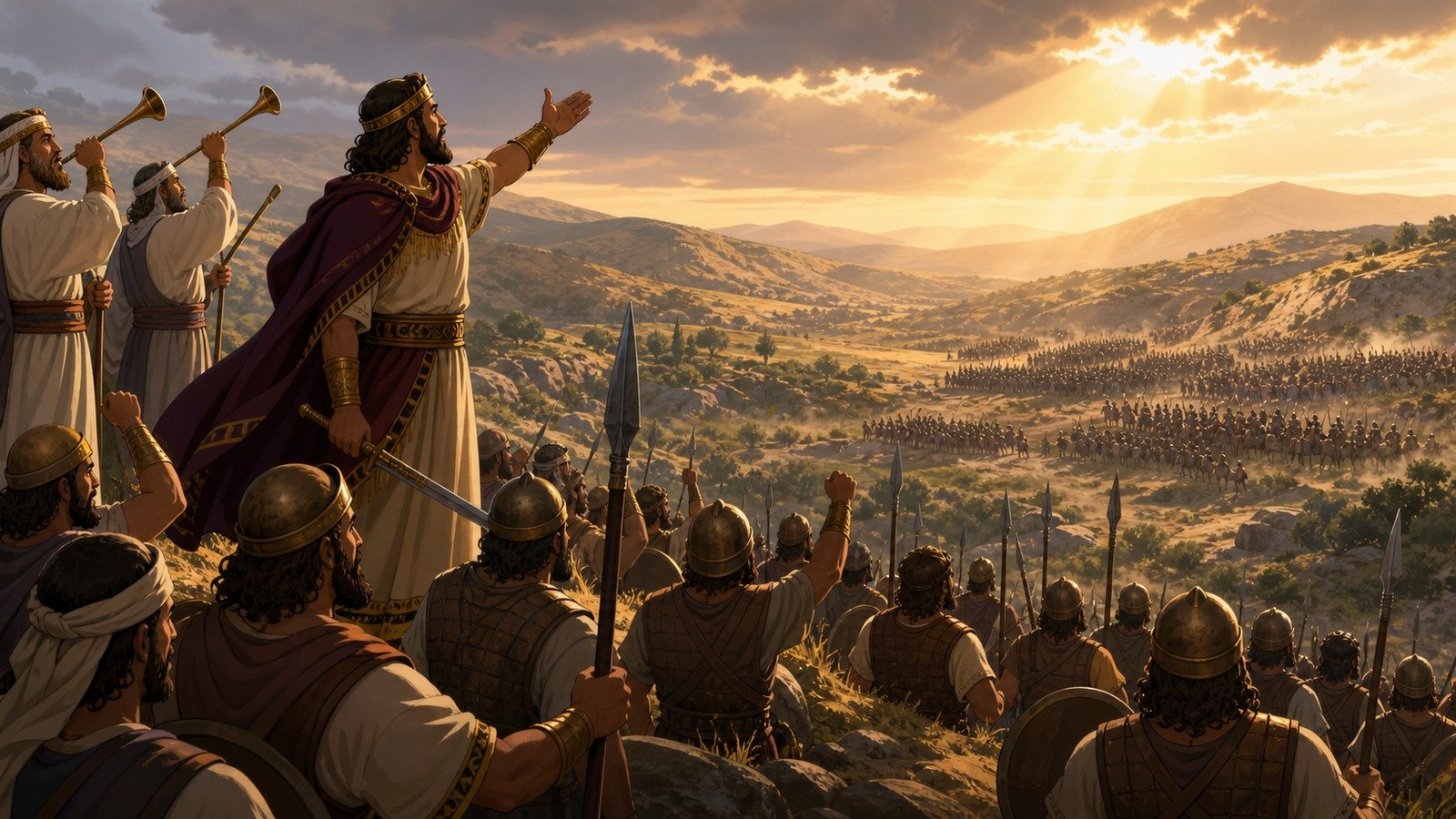
Rehoboam's son Abijah continues intermittent warfare against Jeroboam's Israel, winning a decisive battle described in Chronicles despite being outnumbered, though Kings judges his personal faithfulness more harshly than Chronicles does.
Asa removes many idolatrous shrines and even deposes his own grandmother for making an Asherah pole, but later in his reign pays the Arameans to attack Israel rather than trusting God, a decision the prophet Hanani condemns.
Jeroboam's son Nadab reigns barely two years before Baasha assassinates him during a siege and wipes out the rest of Jeroboam's family, fulfilling an earlier prophecy against Jeroboam's house.
Baasha continues the northern kingdom's idolatry and fights an extended border war with Judah's Asa, who eventually buys Aramean intervention to force Baasha's withdrawal.
Zimri holds the throne for only seven days before Omri's army, hearing of the coup, marches on the capital; Zimri sets the palace on fire around himself rather than surrender, the shortest reign of any king in either kingdom.
Omri outlasts a rival claimant, buys the hill of Samaria and builds it as his new capital, founding a dynasty significant enough that Assyrian records continued calling Israel "the House of Omri" long after his line ended.
Jehoshaphat strengthens Judah, sends teachers to instruct the people in the Law, and largely follows his father Asa's faithfulness, though his military alliances by marriage with Ahab's house draw sharp prophetic criticism and later cause trouble for his descendants.
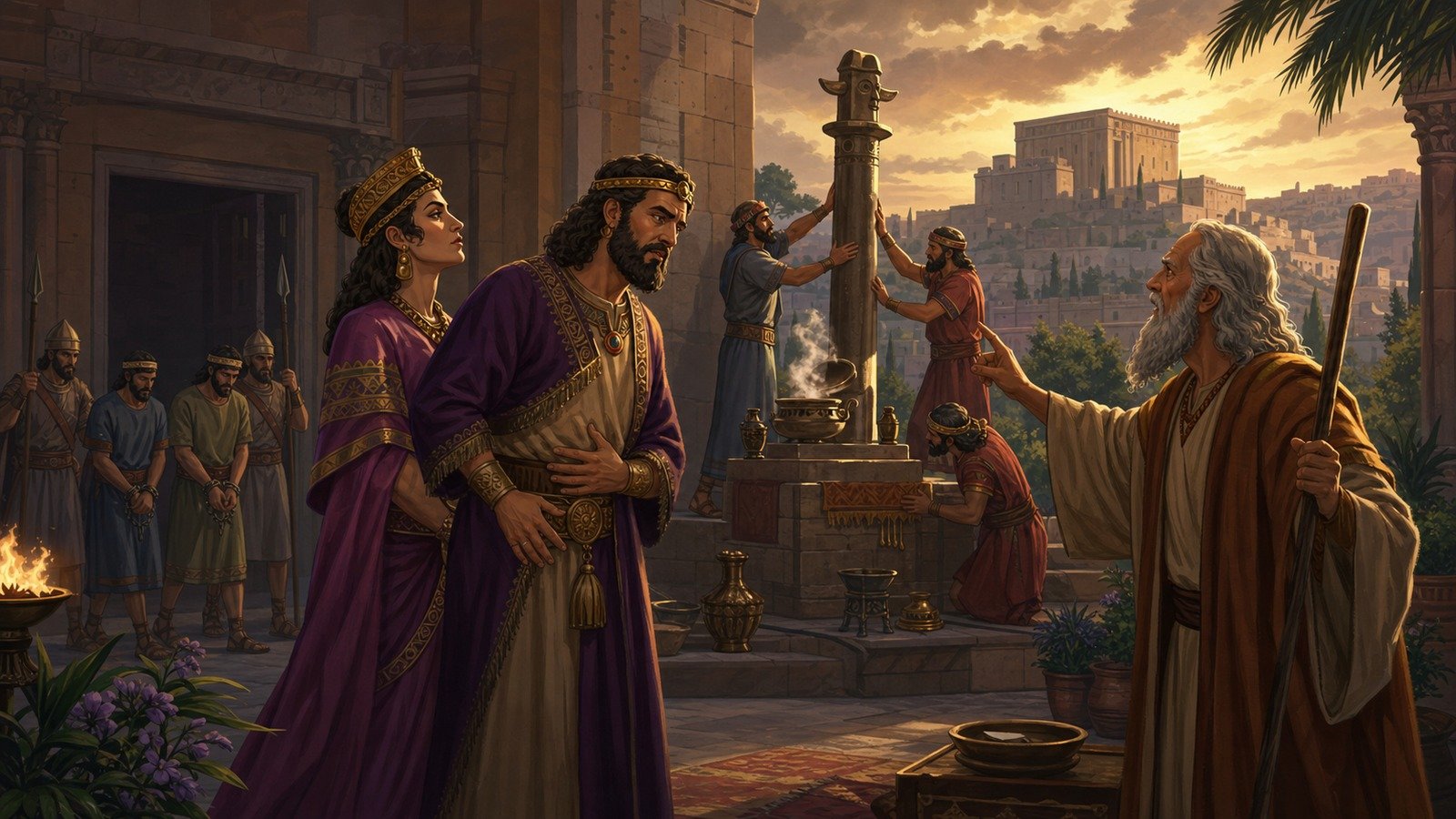
Ahab marries the Phoenician princess Jezebel and, at her instigation, builds a temple to Baal in Samaria, provoking the confrontation with Elijah that dominates the following chapters. A king commonly identified as Ahab is independently attested fighting at the battle of Qarqar in 853 BC.
Ahab's son Ahaziah continues his parents' Baal worship; injured in a fall, he sends messengers to consult the Philistine god Baal-Zebub about his recovery rather than God, and Elijah confronts and condemns the enquiry before Ahaziah dies childless.
Ahab's second son Joram succeeds his brother and removes the more overt Baal pillar Ahab had erected, though he retains the golden calves; he campaigns with Judah and Edom against a rebellious Moab, a war narrated with Elisha's involvement.
Jehoshaphat's son Jehoram marries Ahab's daughter Athaliah and murders his own brothers to secure the throne, importing Baal worship into Judah for the first time; Chronicles records he dies of a painful intestinal disease as a specific prophetic judgement.
Jehoram's son Ahaziah reigns only a single year before he is killed alongside Joram of Israel, his uncle, during Jehu's purge of the house of Ahab, having gone to visit him while wounded.
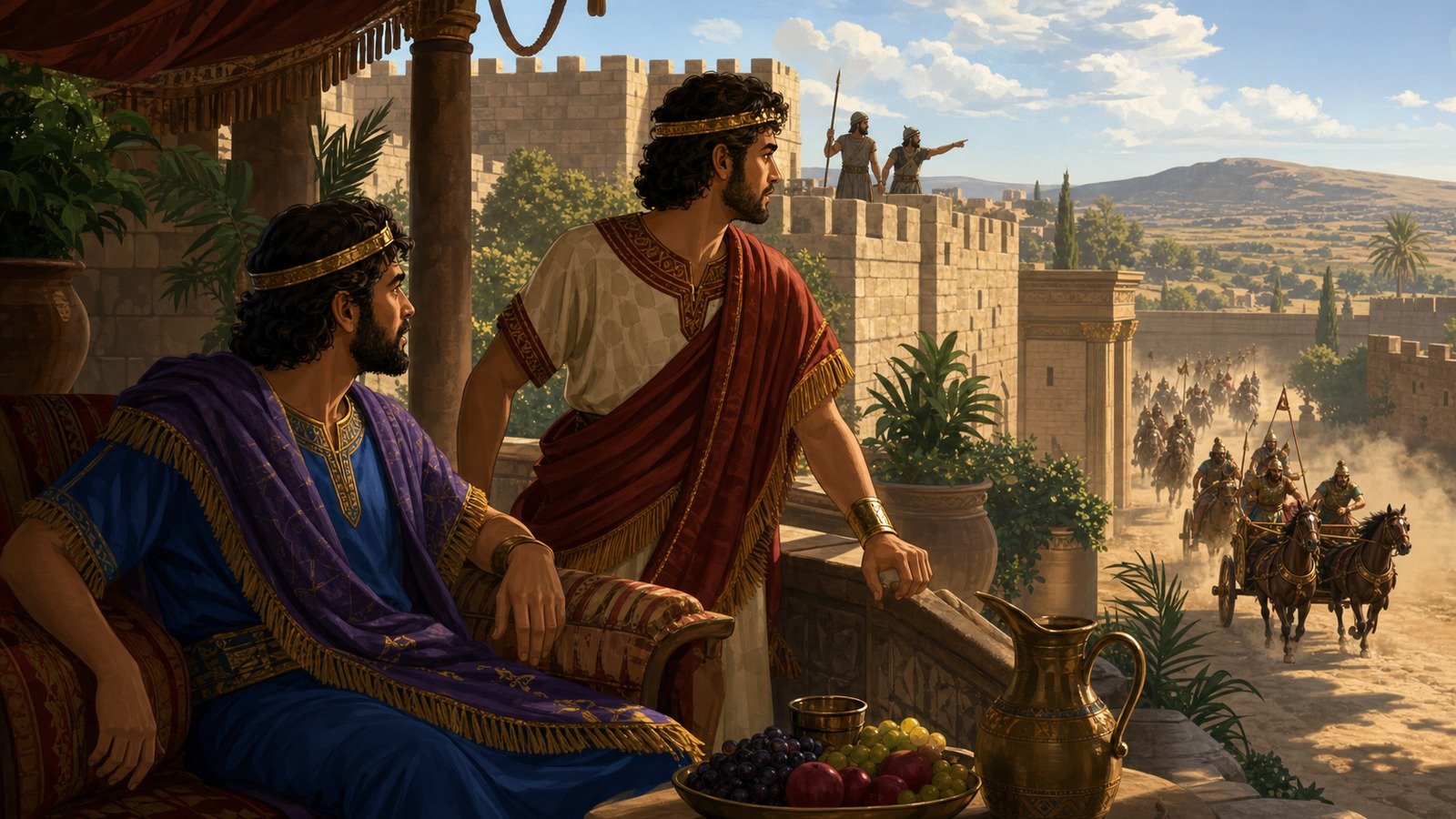
Anointed by a prophet sent by Elisha, Jehu kills Joram, Jezebel and the entire house of Ahab, along with Judah's visiting King Ahaziah, then destroys Baal worship in Israel, though he leaves Jeroboam's golden calves in place.
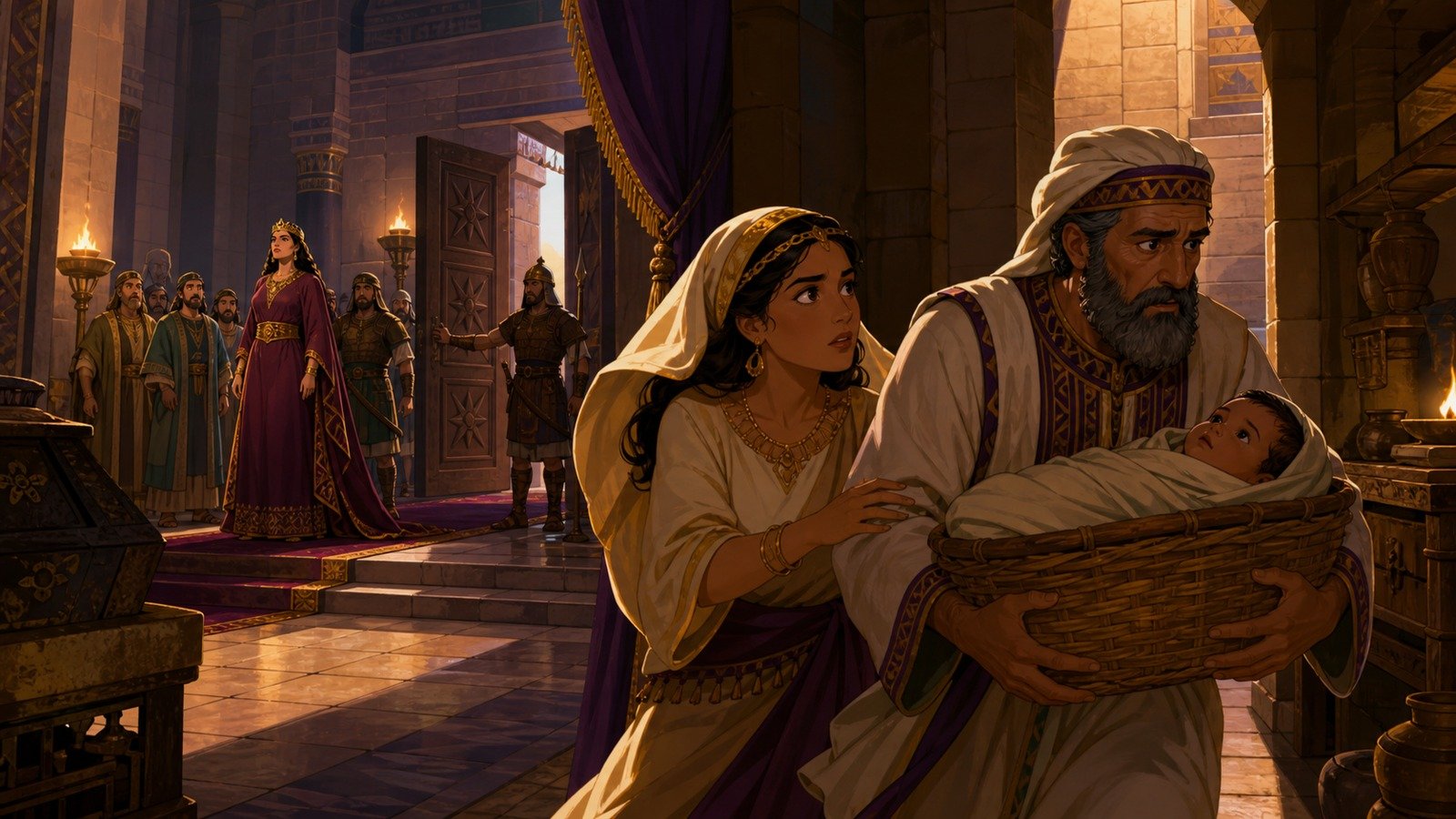
On learning her son Ahaziah is dead, Athaliah murders the rest of the royal family to seize the throne herself, the only woman to rule Judah in her own right; the infant Joash alone survives, hidden by his aunt.
Despite his zeal against Baal worship, Jehu continues Jeroboam's golden calves, and his reign sees Israel's territory shrink under sustained Aramean pressure under Hazael.
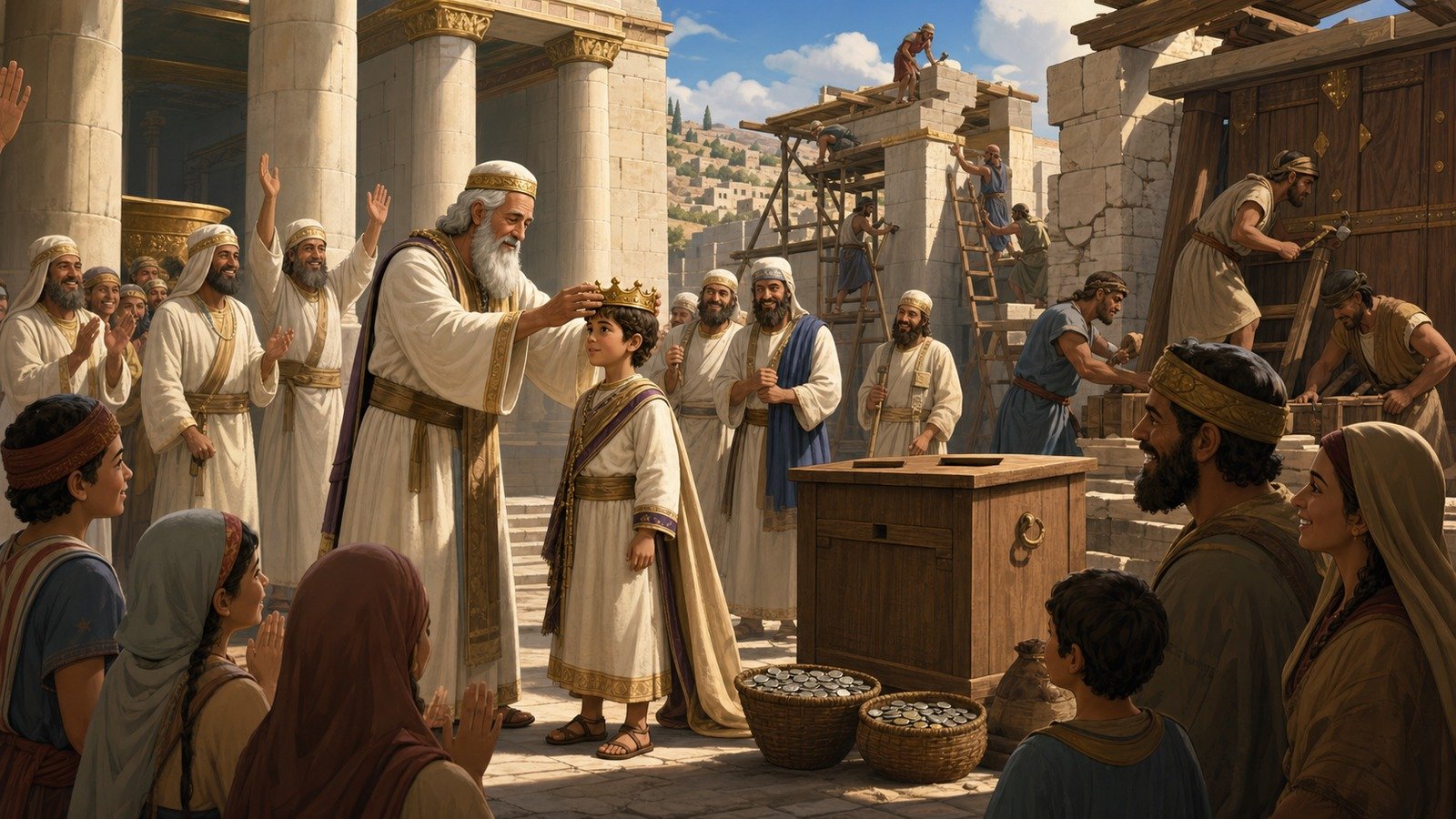
The priest Jehoiada crowns the hidden child Joash at seven, has Athaliah executed, and guides the young king through reforms that include repairing the Temple, though Joash later drifts from faithfulness and has Jehoiada's own son murdered for confronting him.
Jehu's son Jehoahaz sees Israel's military reduced almost to nothing by Hazael of Aram; only when he pleads with God does relief eventually come, though Kings does not say exactly how.
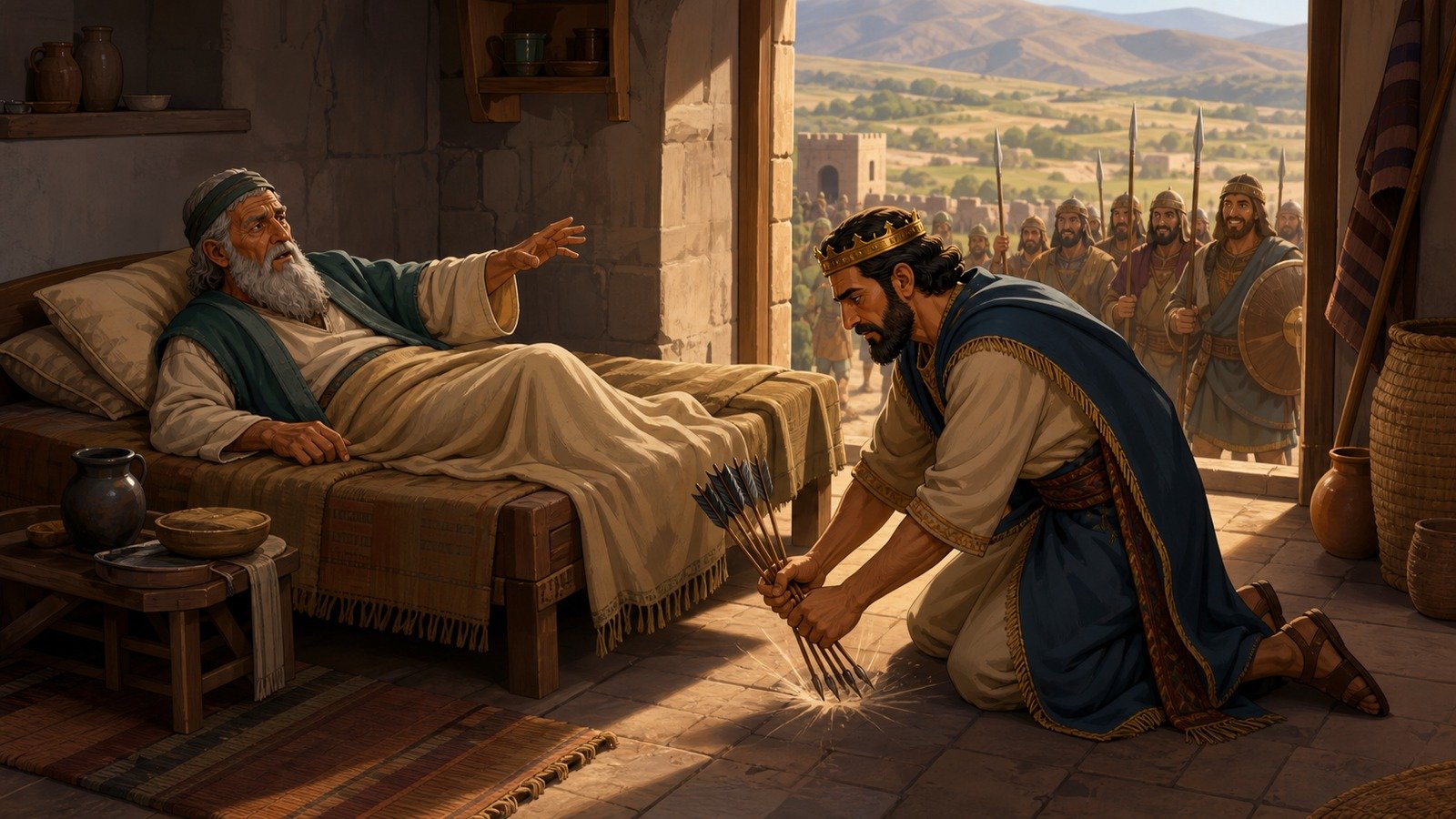
Jehoash visits the dying Elisha, who promises limited victories over Aram symbolised by striking arrows on the ground; Jehoash also defeats Judah's Amaziah in battle, beginning a recovery of Israel's fortunes.
Amaziah defeats Edom but then unwisely provokes Israel into war, suffering a humiliating defeat in which Jerusalem's wall is breached and Temple treasures plundered; he is eventually assassinated in a conspiracy.
Jeroboam II restores Israel's borders to nearly Solomonic extent and presides over a long, materially prosperous reign, condemned nonetheless by Amos and Hosea for the social injustice and idolatry it concealed.
Uzziah (also called Azariah) reigns long and successfully, strengthening Judah's military and economy, until pride leads him to usurp priestly duties in the Temple and he is struck with a skin disease for the rest of his life, ruling from isolation with his son Jotham as co-regent.
Jeroboam II's son Zechariah reigns only six months before being assassinated in public by Shallum, ending Jehu's dynasty exactly as an earlier prophecy to Jehu had specified, "four generations."
Shallum holds the throne for only a month before Menahem kills him and seizes power in turn, part of a rapid sequence of assassinations marking the northern kingdom's final, unstable decades.
Menahem secures his rule with notable brutality against a rebellious town, then pays a heavy tribute to Tiglath-Pileser III of Assyria to keep his throne, an early sign of Israel's coming subjugation.
Pekah allies with Aram against Judah and Assyria, provoking Tiglath-Pileser III to strip away Israel's northern and Transjordan territories and deport their populations; Pekah is himself assassinated by Hoshea shortly after.
Jotham continues his father Uzziah's building projects and remains personally faithful, but the text notes the people themselves remain corrupt, and Aram and Israel begin pressuring Judah's borders during his reign.
Facing invasion from Israel and Aram, Ahaz buys protection from Tiglath-Pileser III of Assyria at the cost of Temple treasures and lasting vassal status, and introduces a pagan altar modelled on one he saw in Damascus.
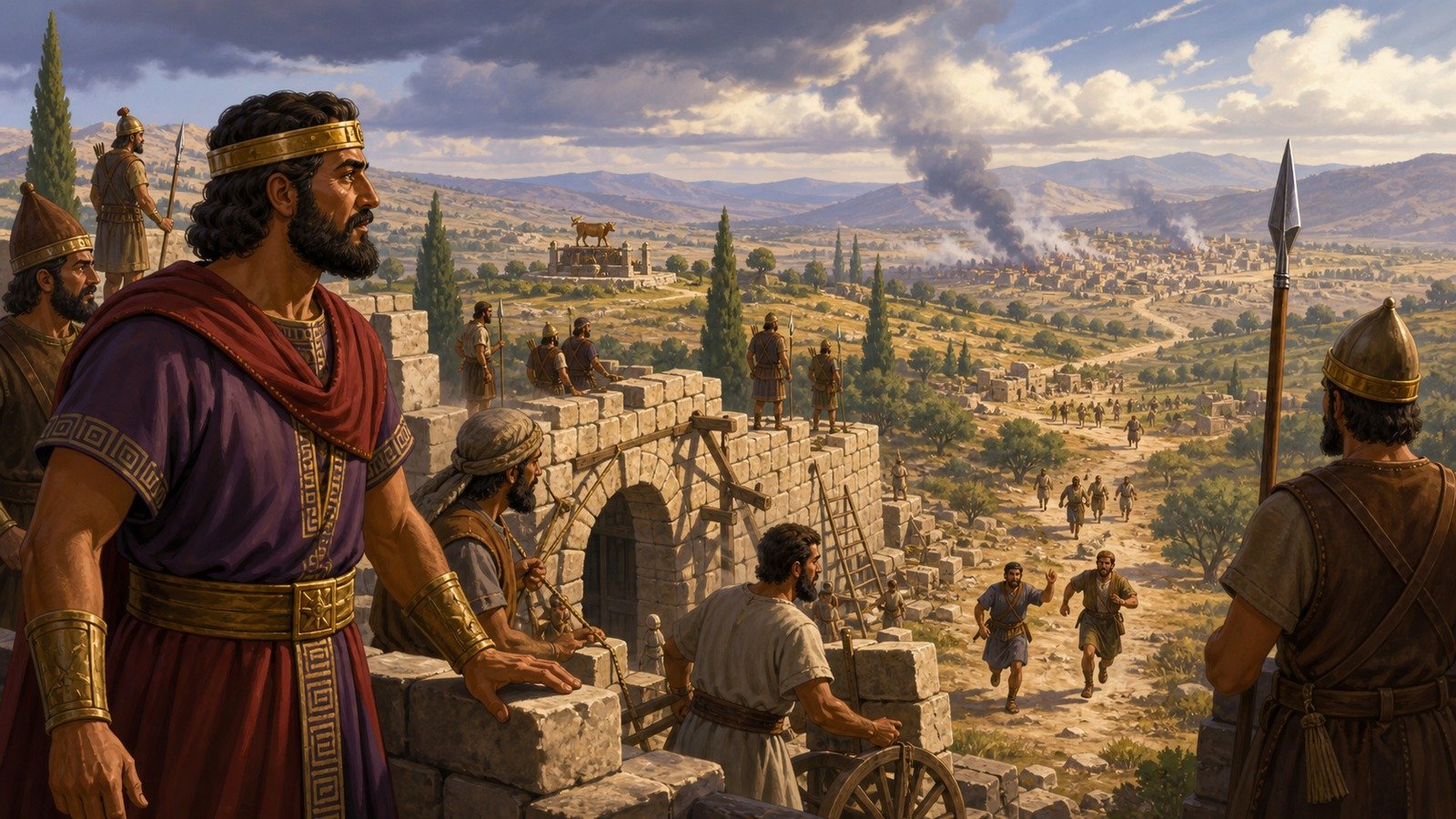
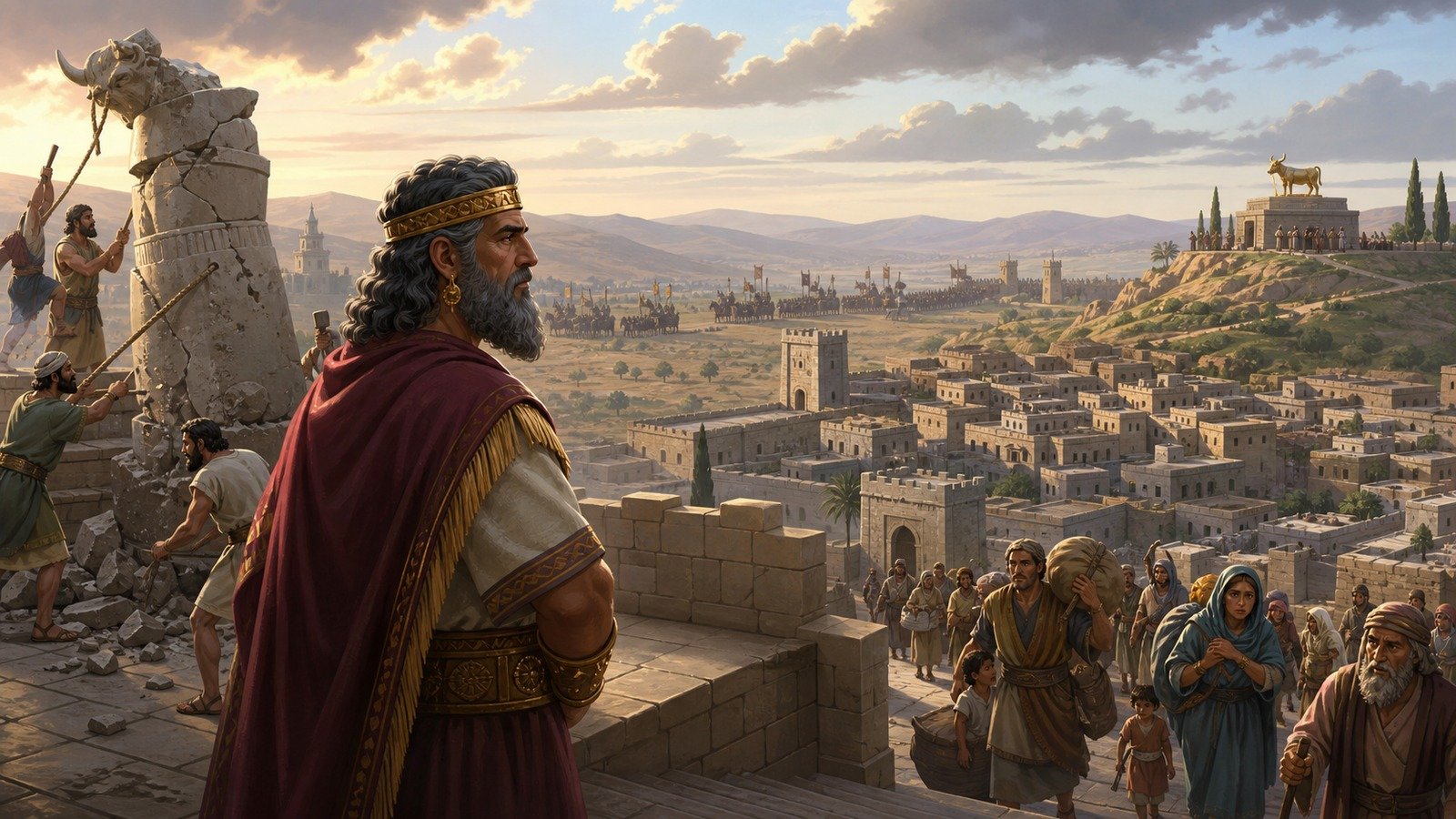
Israel's last king, Hoshea, rebels against Assyria after paying tribute; Shalmaneser V besieges Samaria, and Sargon II completes its capture, deporting the northern population and resettling the land with foreign peoples, permanently ending the northern kingdom of Israel.
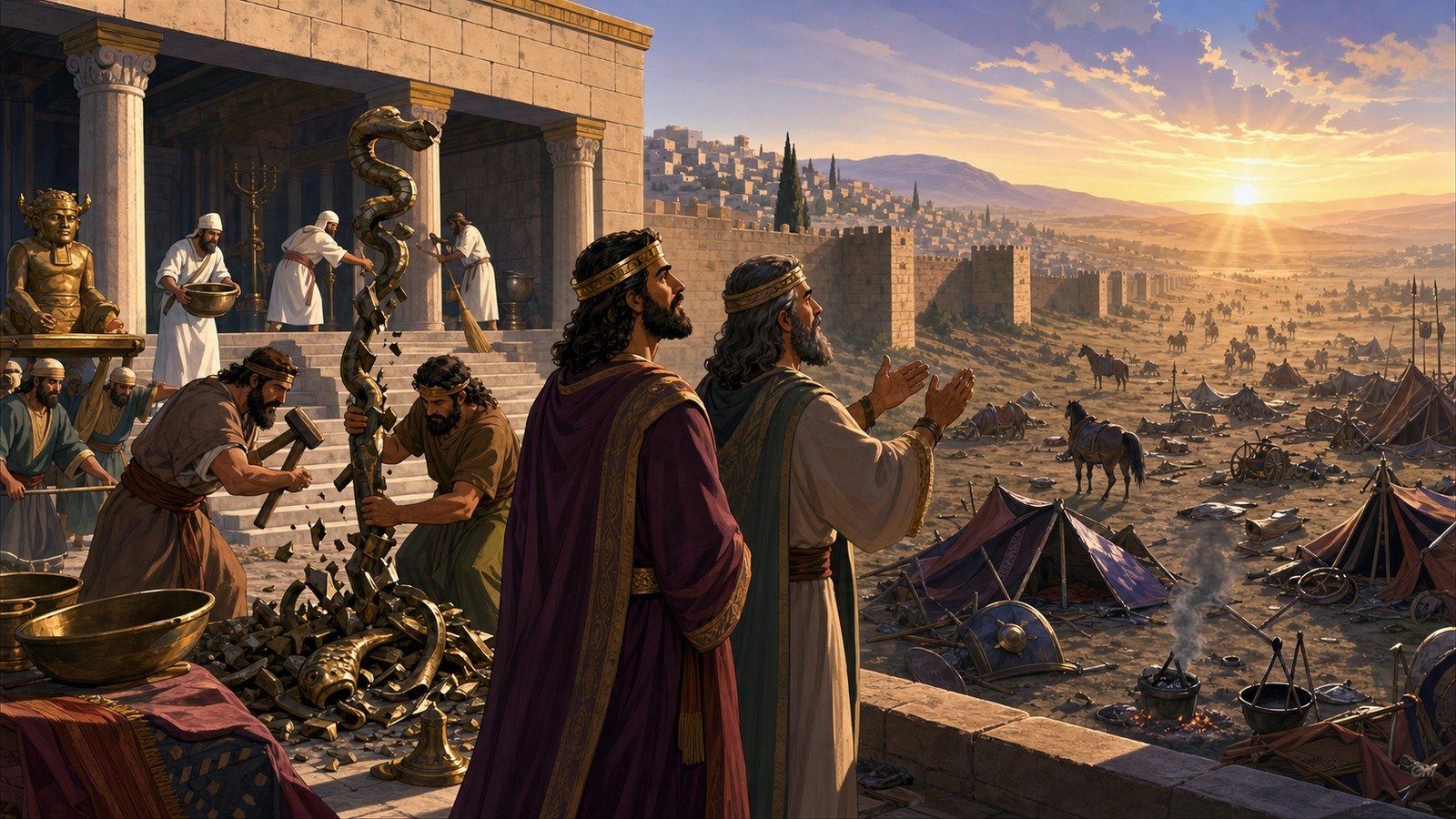
Hezekiah reverses his father's policies, removing idolatrous shrines and even the bronze snake from Moses' day once it became an object of worship. When Sennacherib of Assyria besieges Jerusalem in 701 BC after Hezekiah's rebellion, the city is spared following Isaiah's prophecy and a sudden destruction of the Assyrian camp.
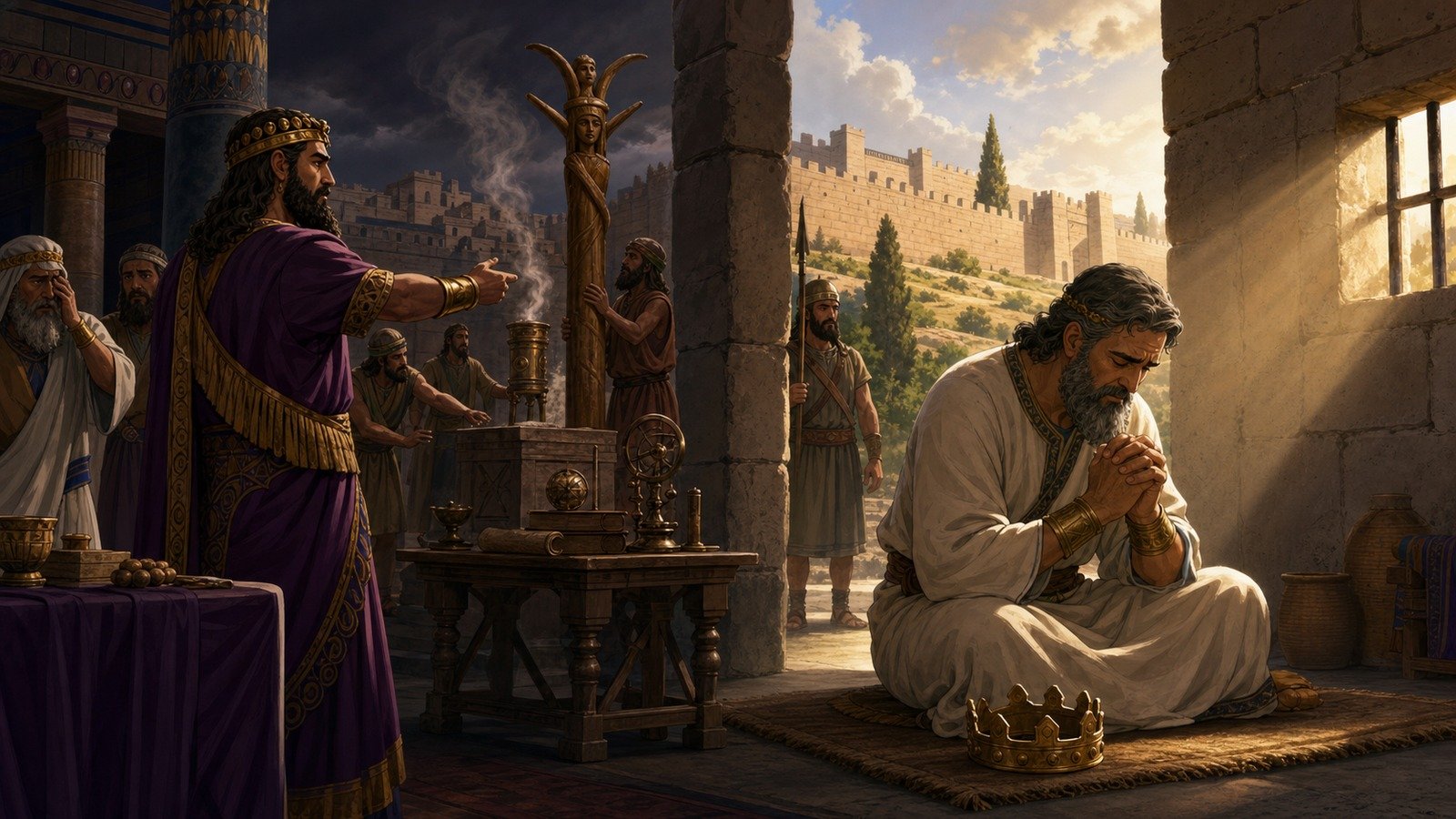
Manasseh reverses Hezekiah's reforms, restoring pagan altars, practising divination, and reportedly sacrificing his own son; 2 Chronicles records a later imprisonment in Babylon that leads to genuine repentance.
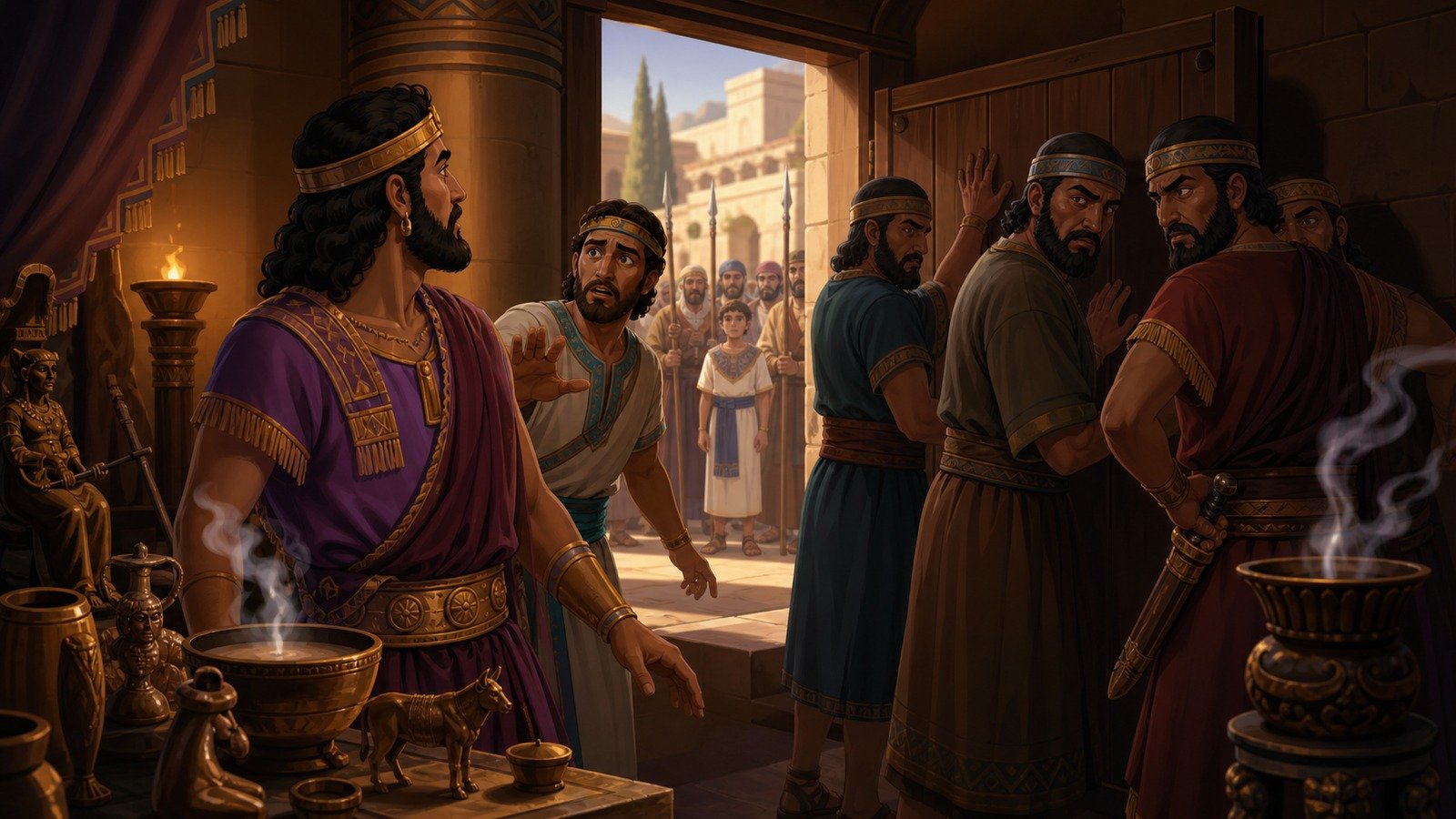
Manasseh's son Amon reverts fully to his father's earlier idolatry and is assassinated by his own officials within two years, who are themselves then executed by "the people of the land" in favour of the child Josiah.
Crowned at eight, Josiah initiates Temple repairs during which a copy of the Law is rediscovered; its reading provokes sweeping reforms, the destruction of pagan altars across both former kingdoms, and a national Passover celebration. He dies in battle against Pharaoh Necho at Megiddo in 609 BC.
Josiah's son Jehoahaz reigns only three months before Pharaoh Necho deposes him and deports him to Egypt, installing his brother Jehoiakim in his place.
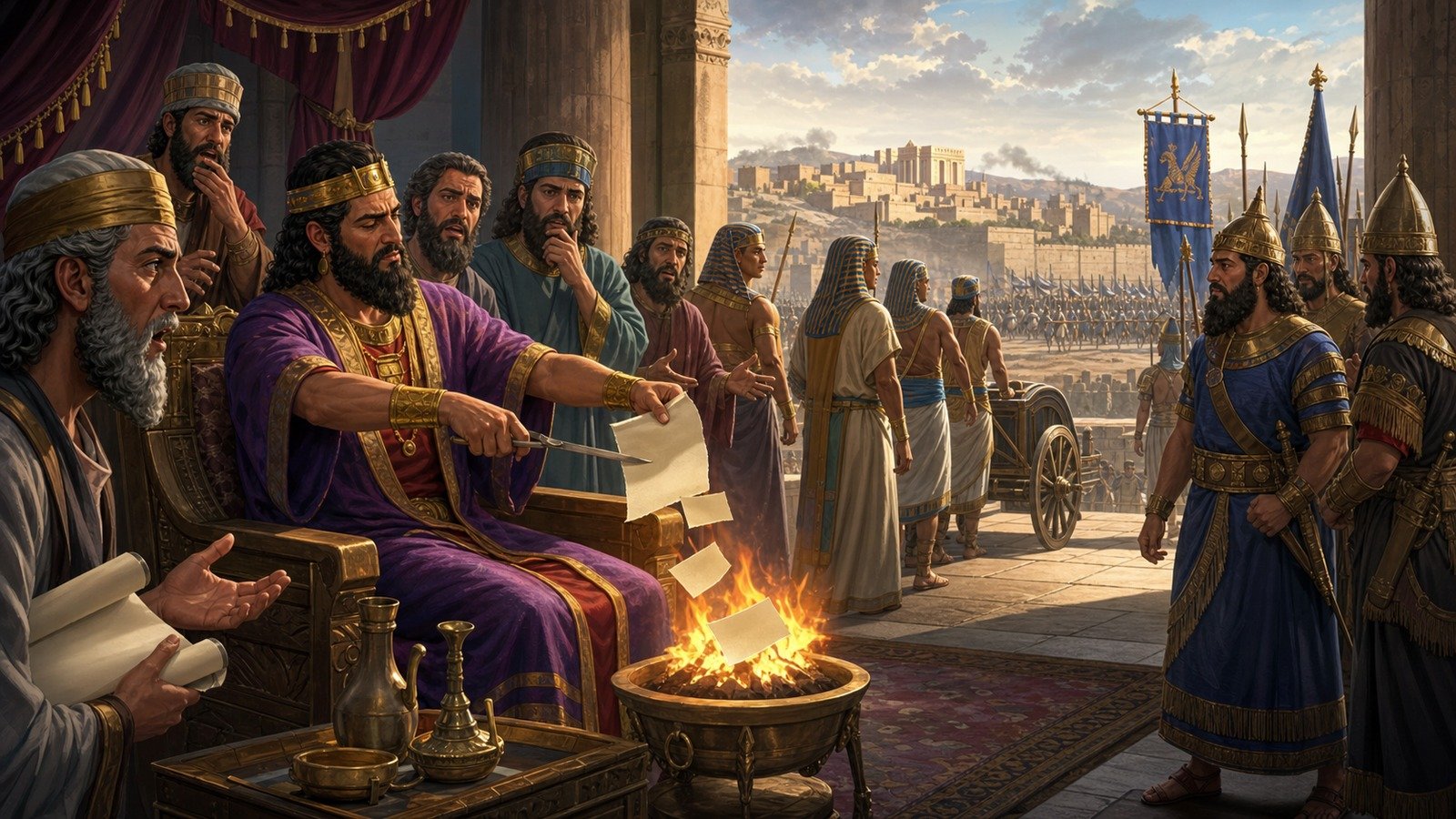
Jehoiakim rules first as an Egyptian and then, after Nebuchadnezzar's victory at Carchemish in 605 BC, as a Babylonian vassal; he burns a scroll of Jeremiah's prophecies in defiance and later rebels against Babylon, dying shortly before Jerusalem's first major siege.
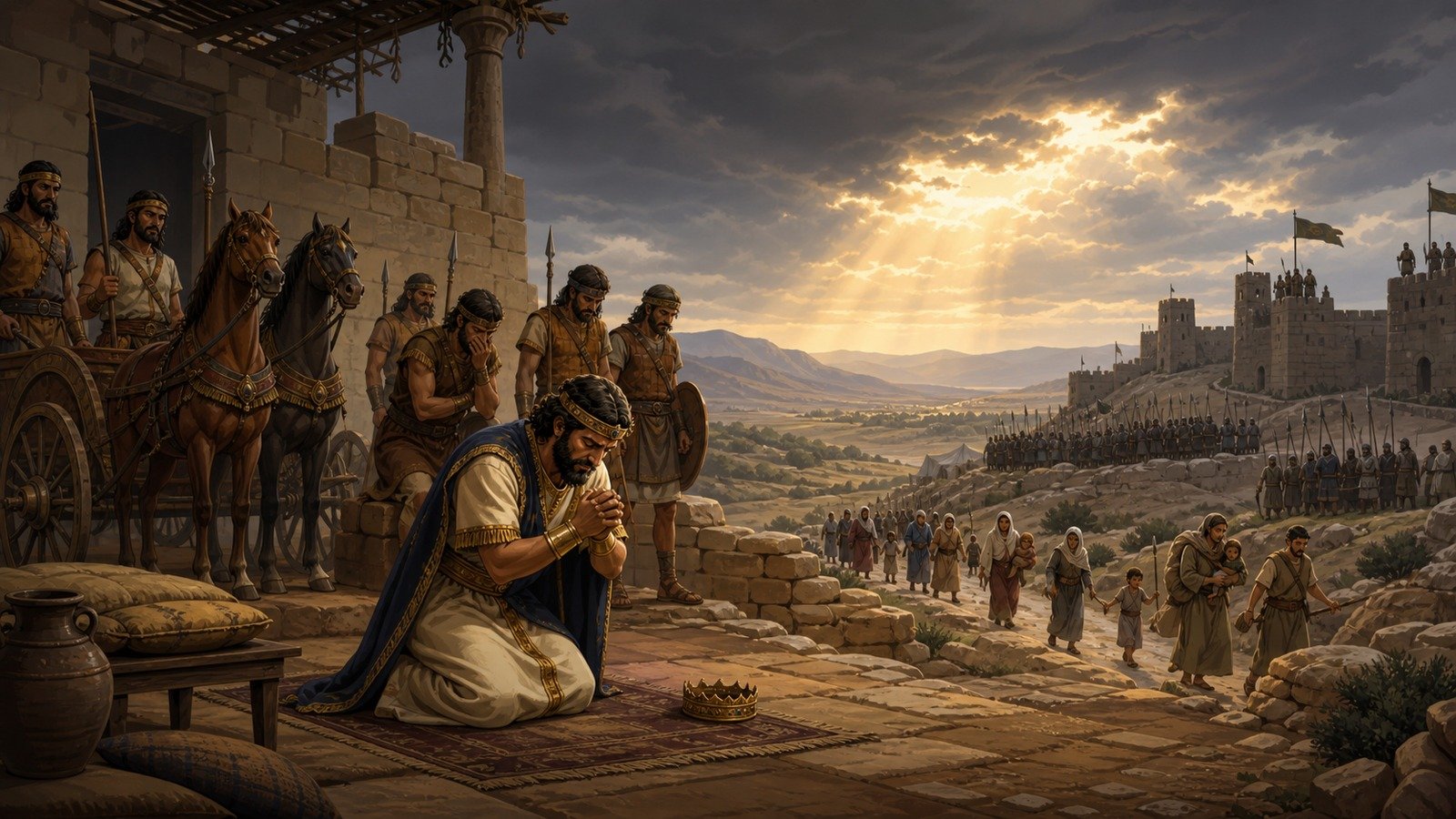
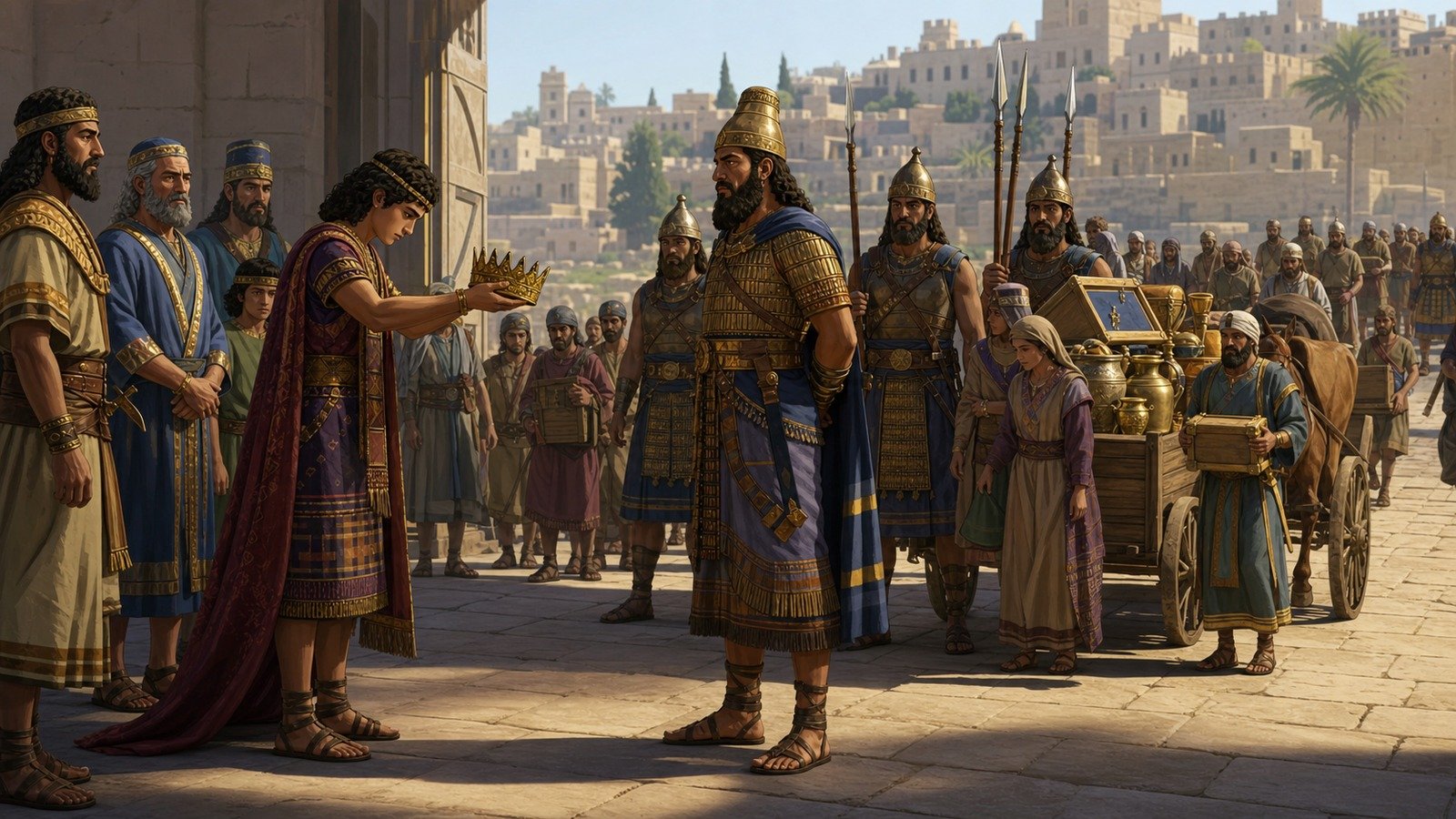
Jehoiakim's son Jehoiachin reigns only three months before Nebuchadnezzar besieges Jerusalem and deports him to Babylon along with the Temple's treasures and much of the elite.
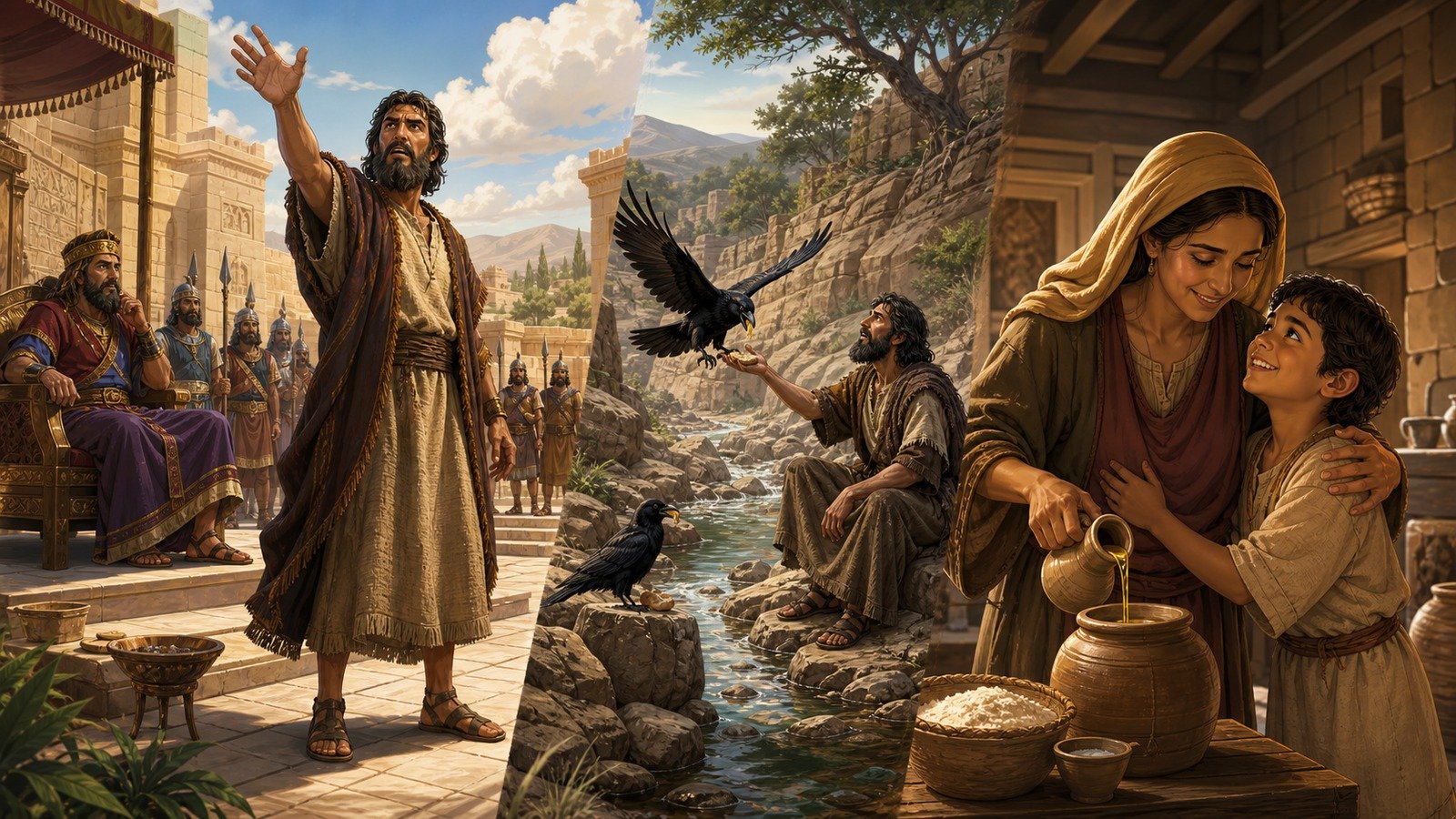
Elijah announces a drought as judgement on Ahab's Baal worship, is fed by ravens at the Kerith Ravine, and then sustains a widow at Zarephath through a jar of flour and jug of oil that do not run out, later raising her son from death.
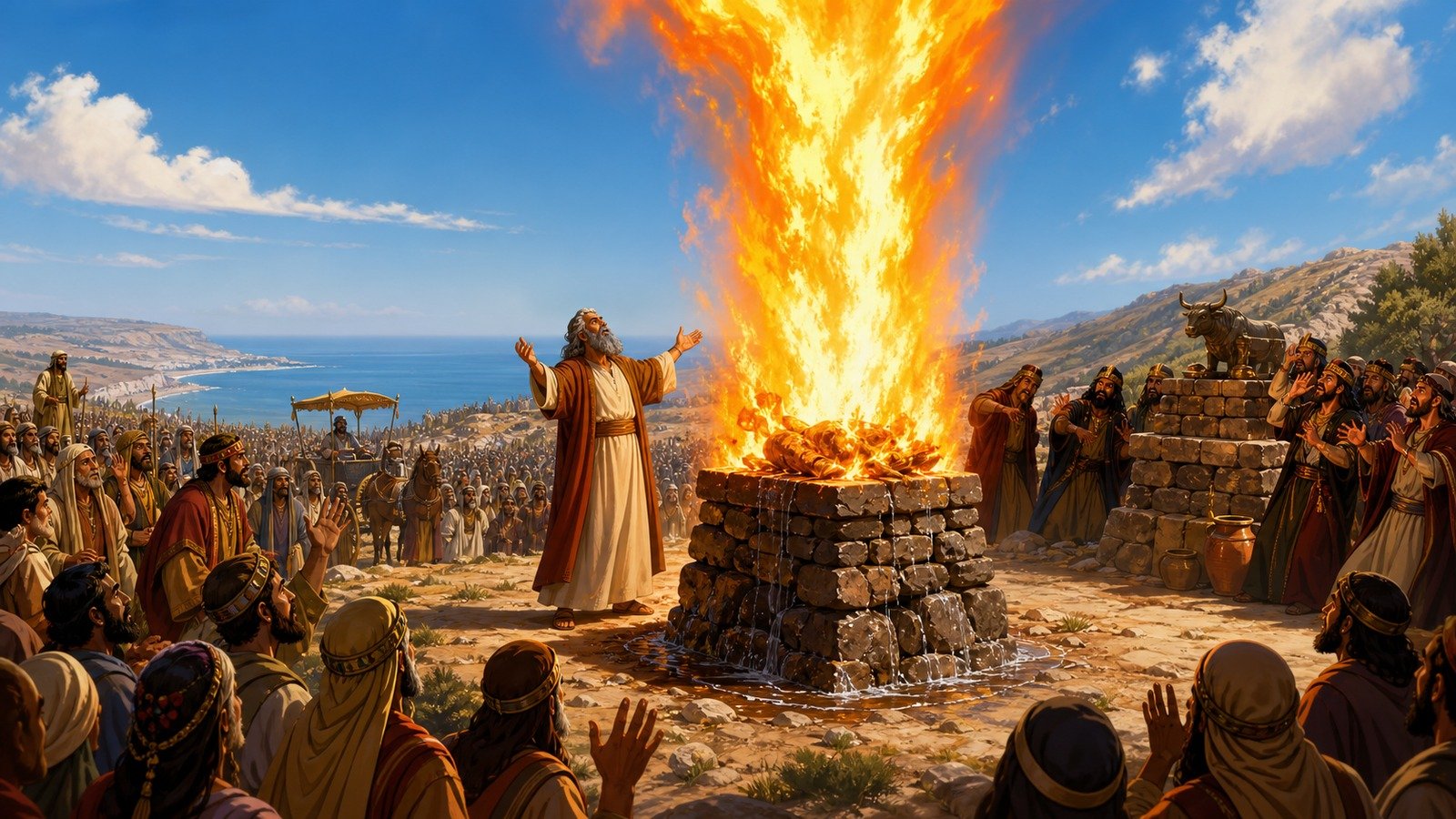
Elijah challenges 450 prophets of Baal to a public contest to see whose god will send fire to consume a sacrifice; after their frantic, failed appeals, Elijah's simple prayer is answered instantly, and the assembled prophets of Baal are executed, ending the contest decisively.
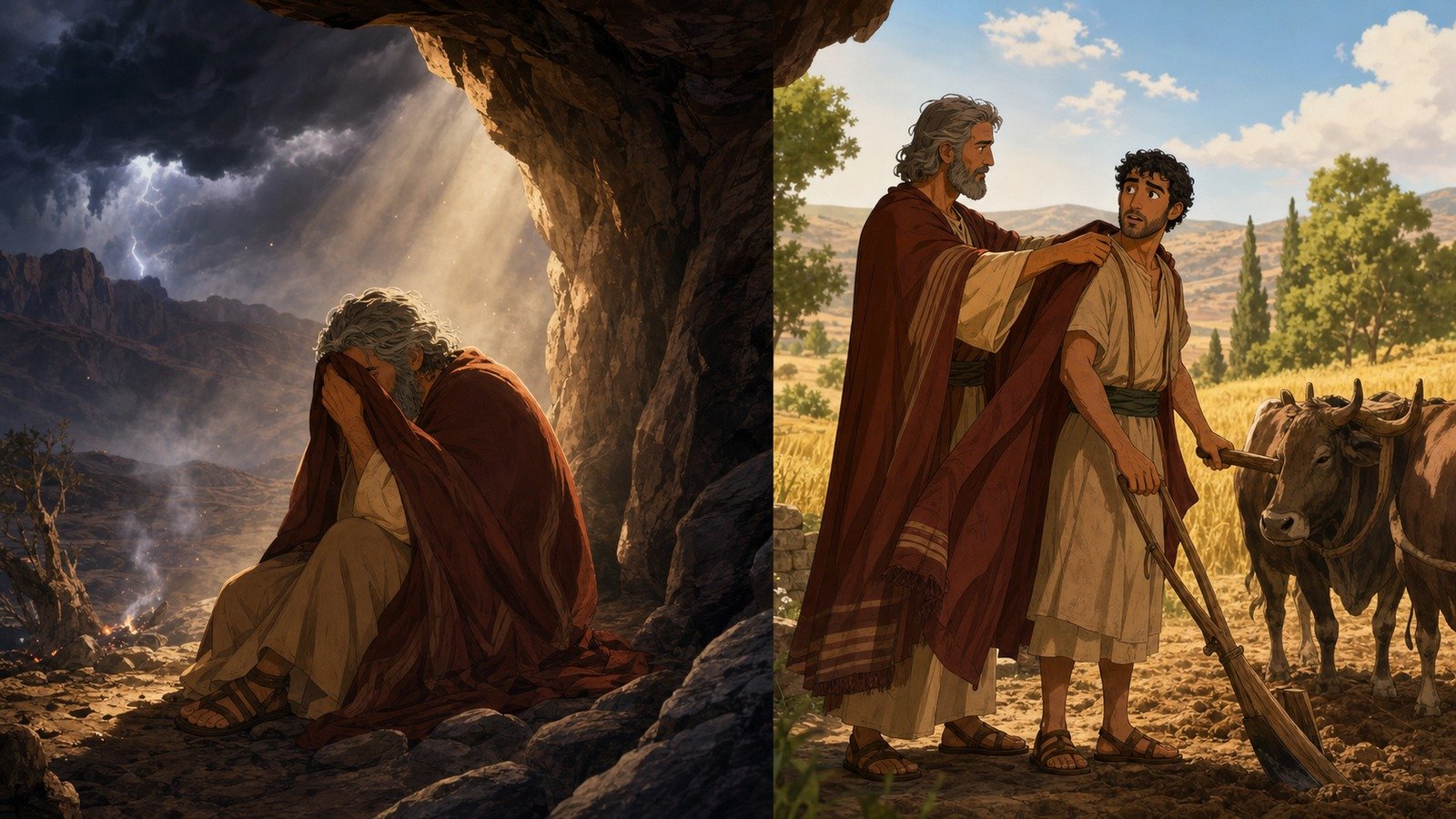
Fleeing Jezebel's death threat and despairing of his mission, Elijah travels forty days to Horeb, where God speaks not in wind, earthquake or fire but in a gentle whisper, recommissions him, and directs him to anoint Elisha as his eventual successor.
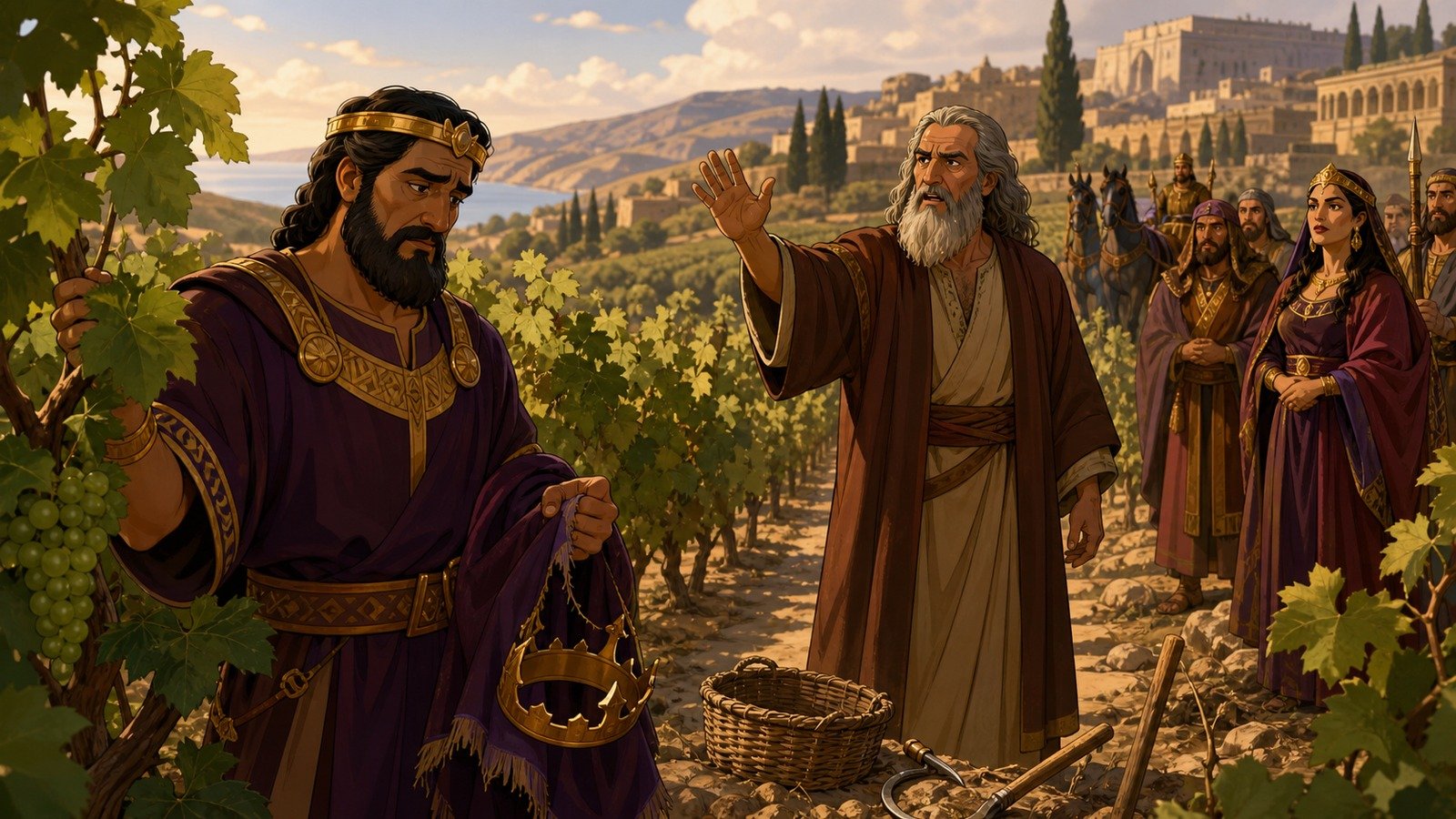
Jezebel arranges false charges to have Naboth executed so Ahab can seize his vineyard; Elijah confronts Ahab with God's judgement on his house, a sentence partially deferred because of Ahab's momentary repentance but ultimately fulfilled on his dynasty.
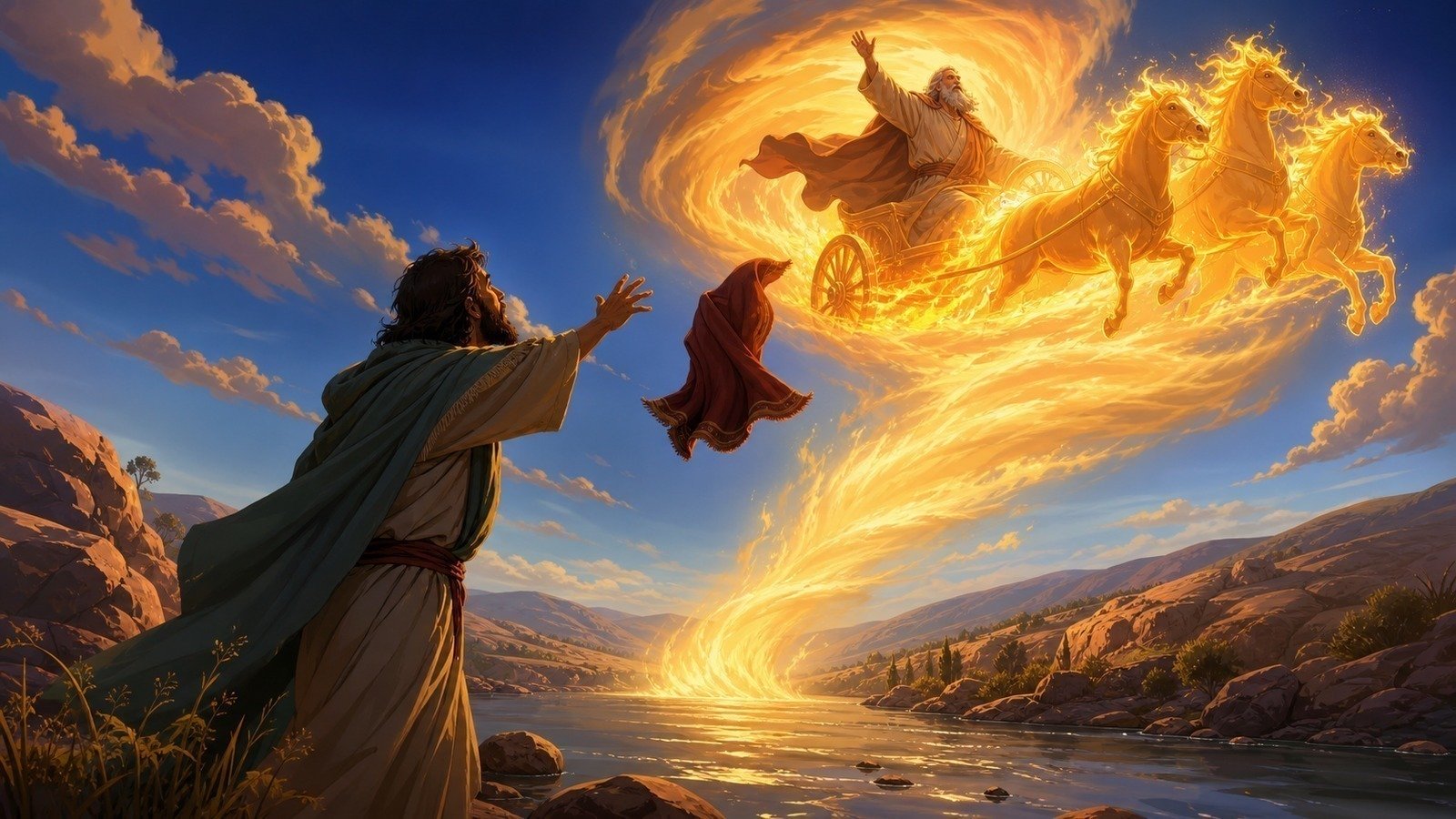
Elijah is taken up in a whirlwind by a chariot and horses of fire, witnessed by Elisha, who receives a double portion of his spirit and takes up his mantle to begin his own prophetic ministry, immediately demonstrated by parting the Jordan River.
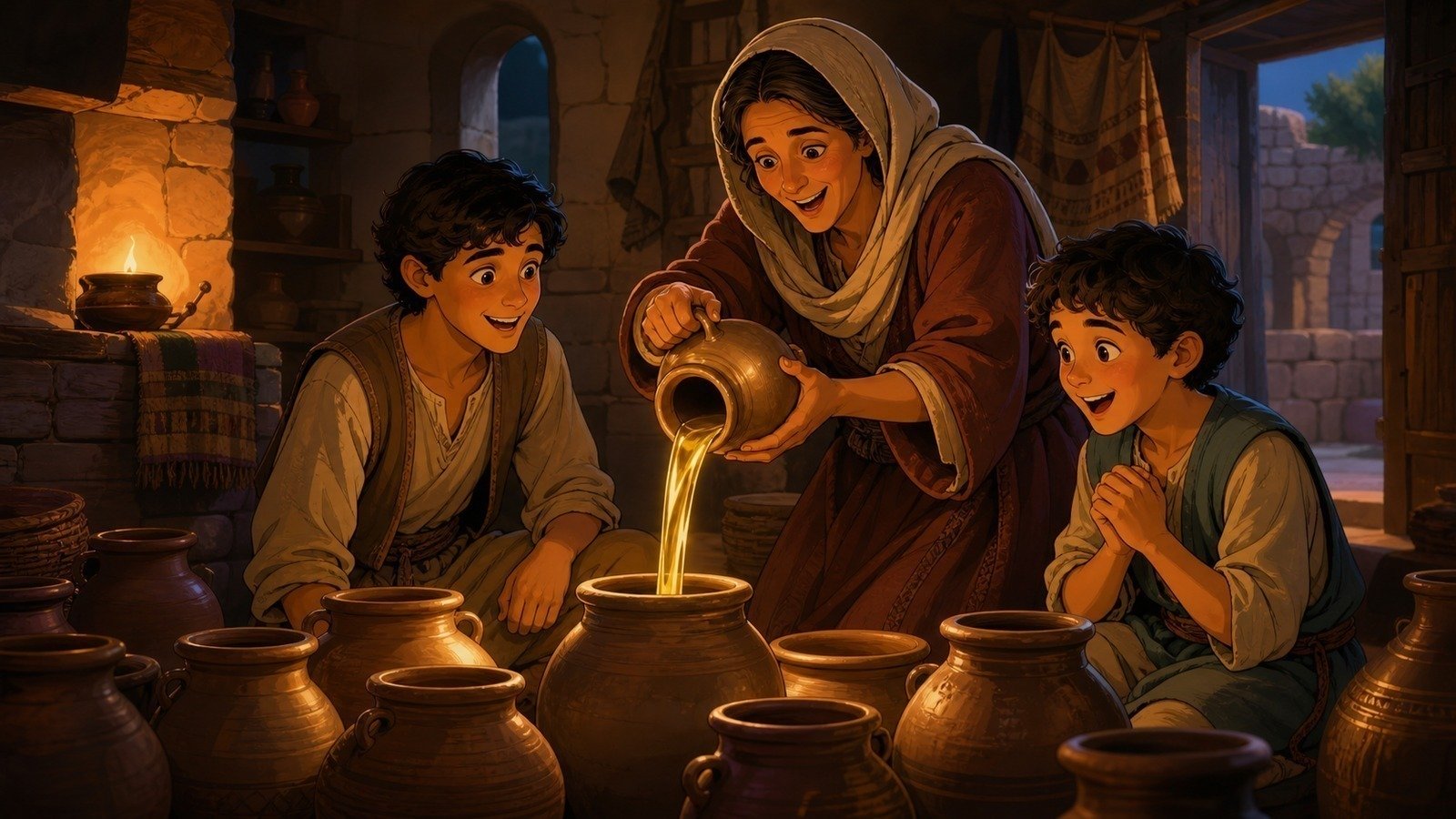
A widow facing debt-slavery for her sons appeals to Elisha; he instructs her to gather empty jars and pour from her one remaining jar of oil, which keeps flowing until every borrowed jar is full, enough to sell and clear her debt.
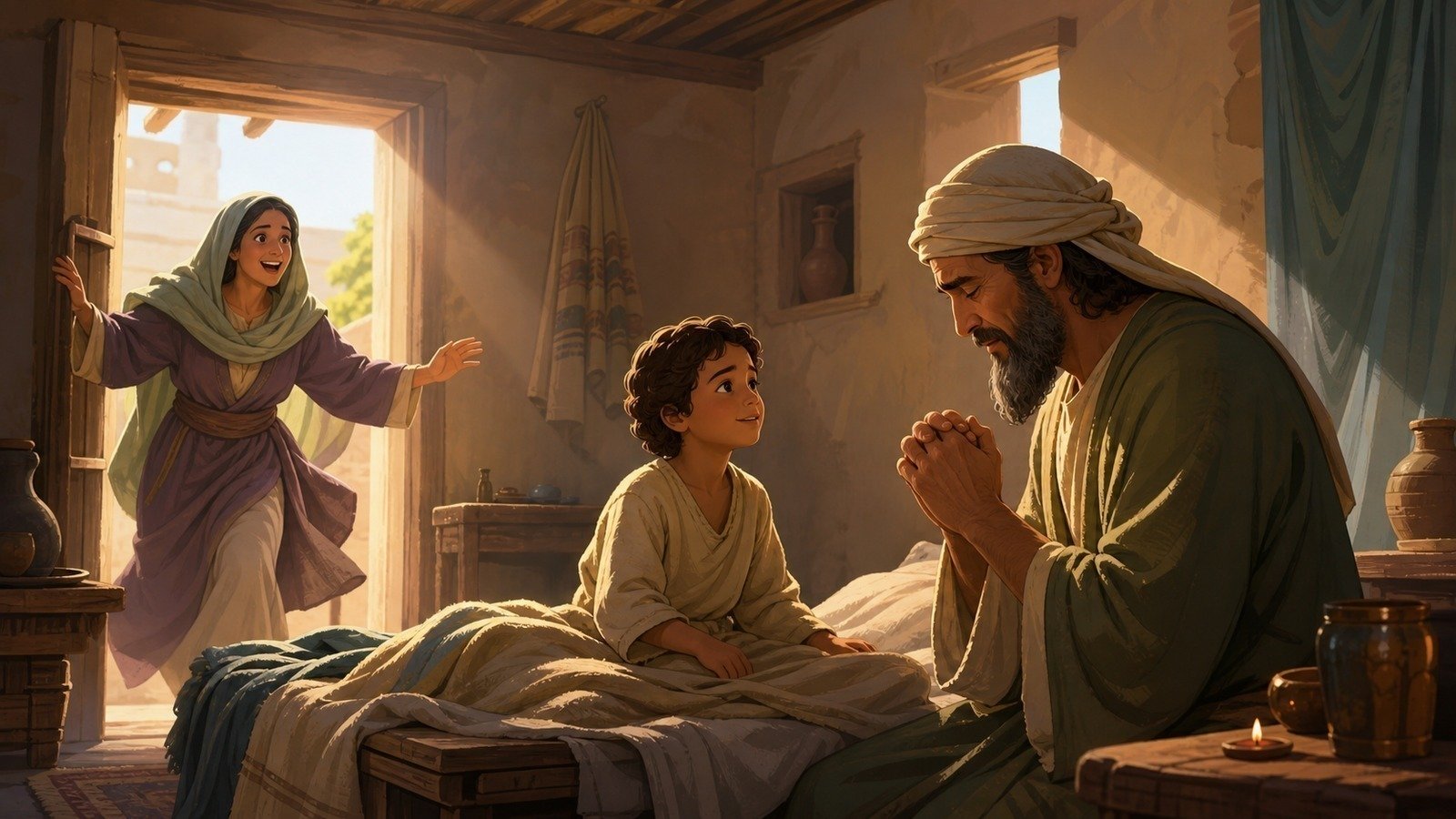
A wealthy Shunammite woman who had shown Elisha regular hospitality is promised, and bears, a son; when the boy later dies suddenly, Elisha stretches himself over the body in prayer and revives him.
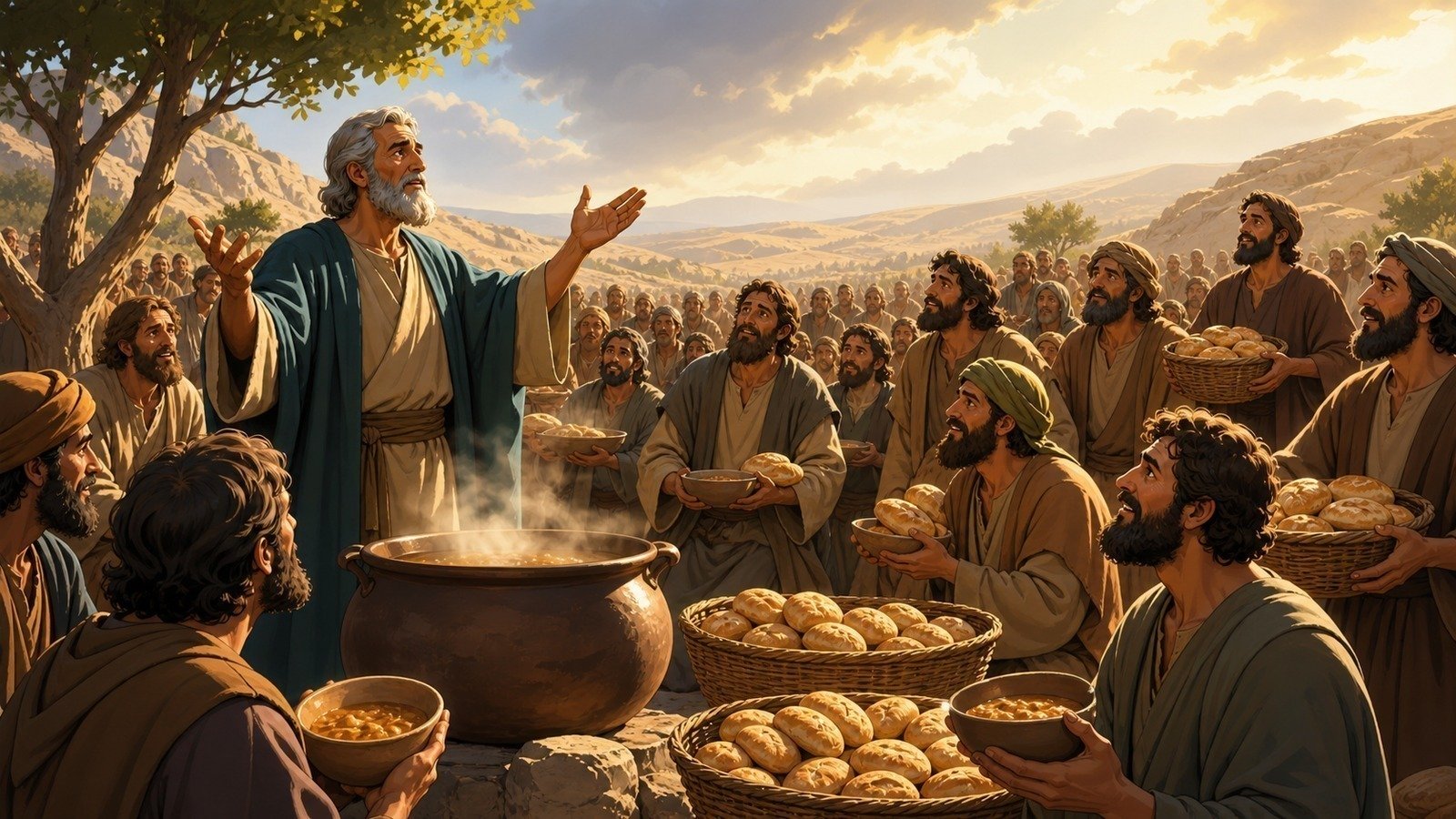
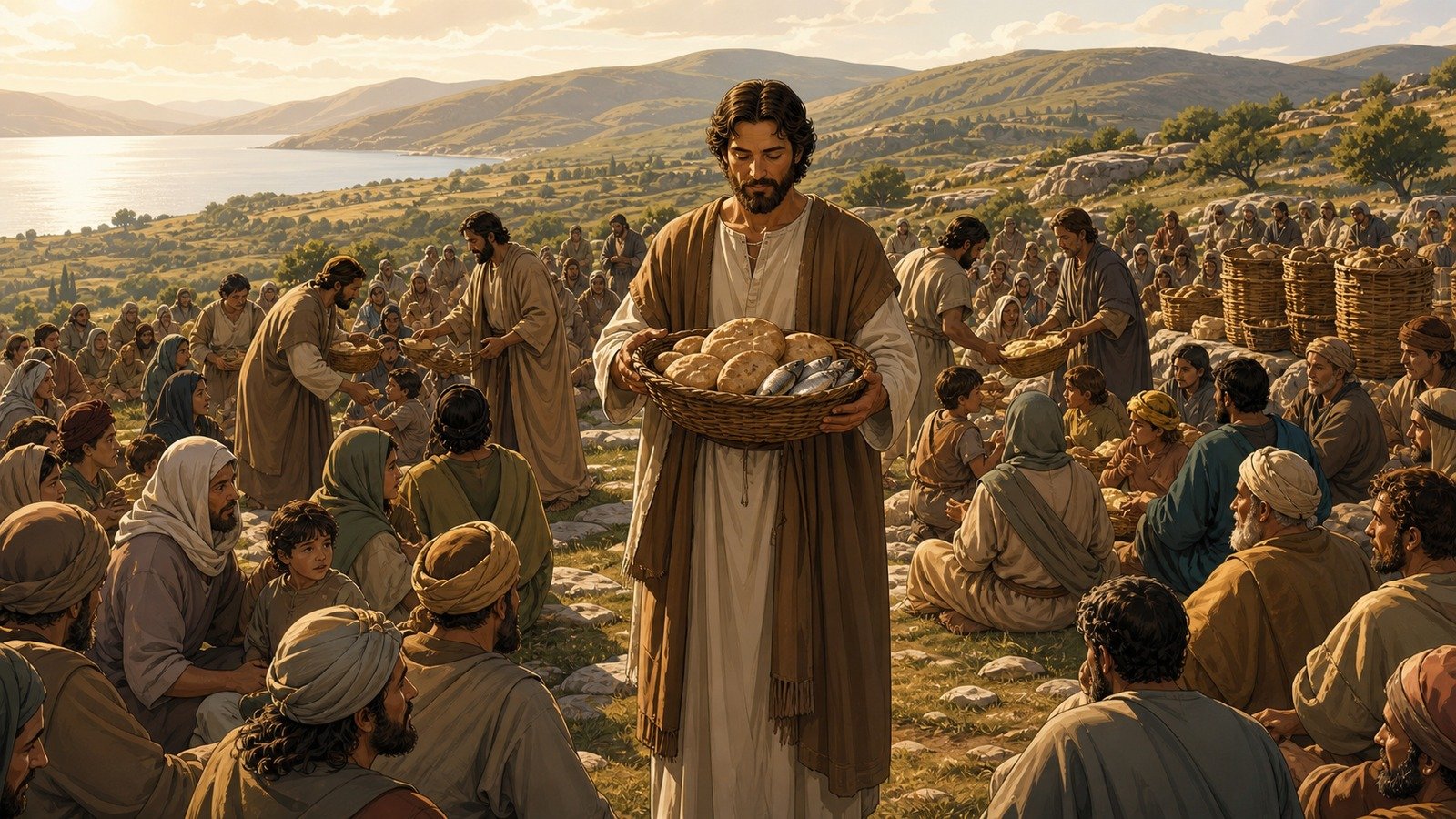
During a famine, Elisha neutralises a pot of stew accidentally poisoned with wild gourds, then feeds a hundred men from twenty loaves of bread with food left over, foreshadowing Jesus' later feeding miracles.
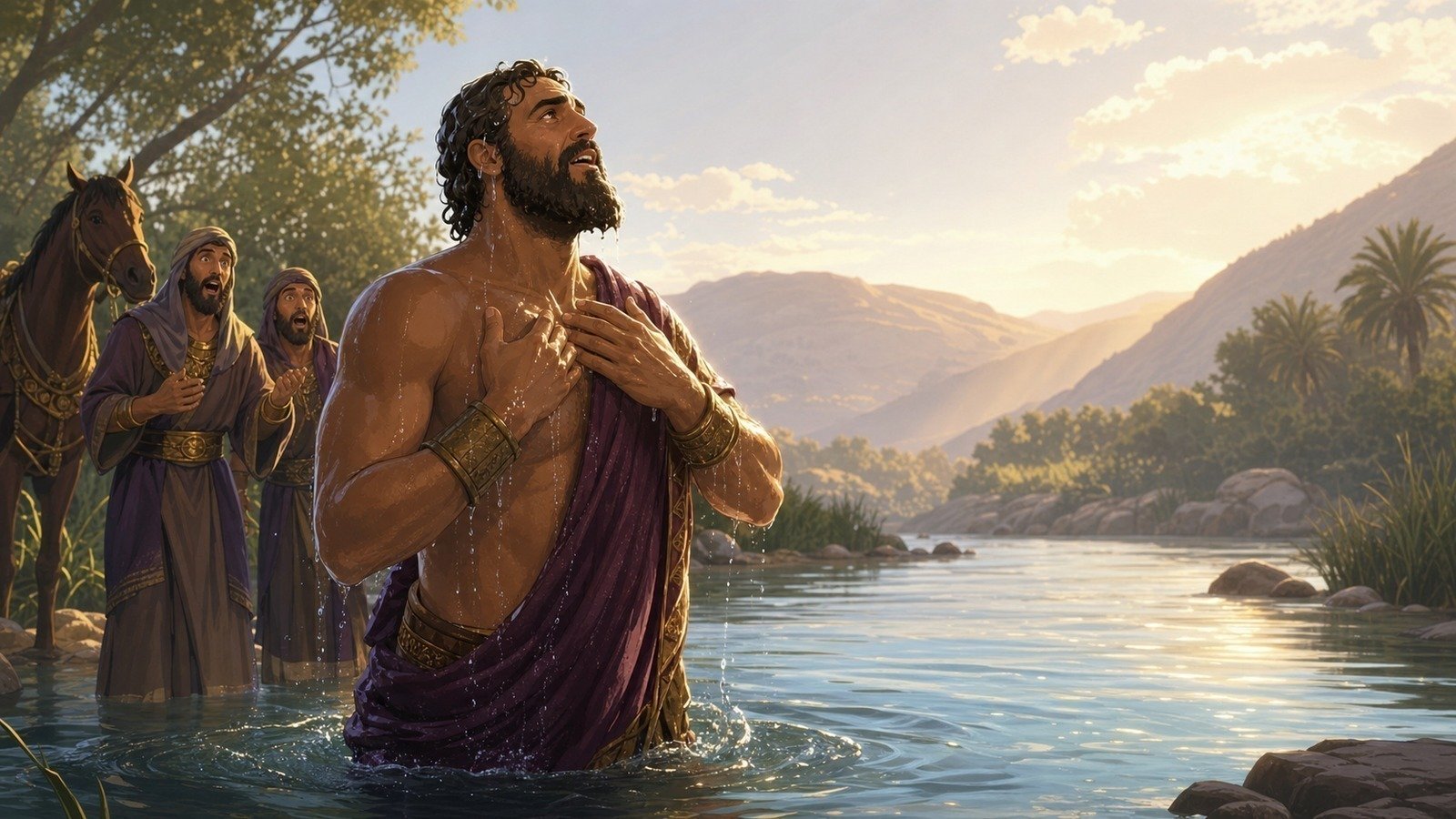
The Aramean army commander Naaman is healed of leprosy after reluctantly washing seven times in the Jordan as Elisha instructs, becoming a worshipper of Israel's God; Elisha's servant Gehazi, by contrast, is struck with Naaman's leprosy for deceitfully accepting payment Elisha had refused.
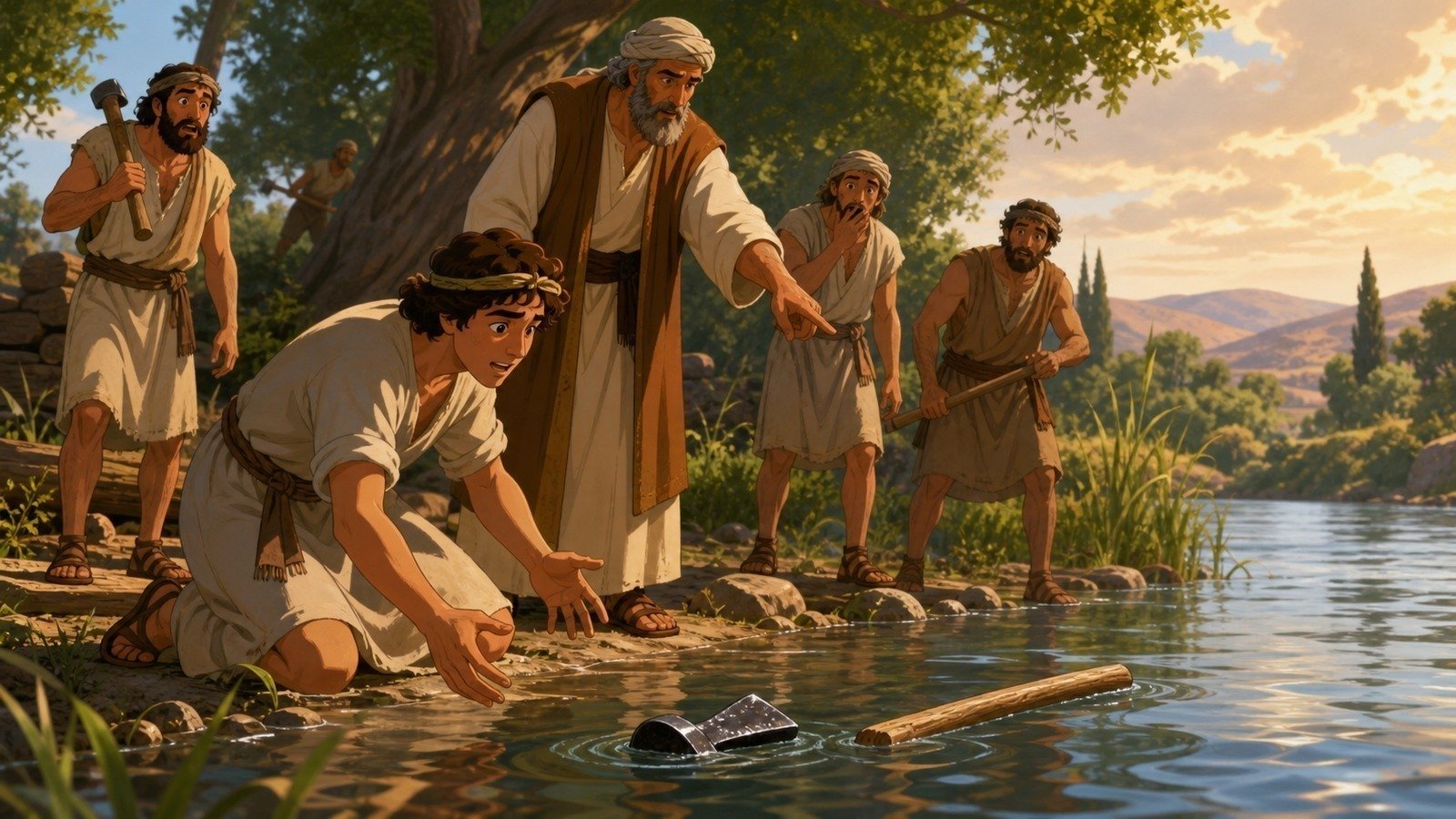
A young prophet loses a borrowed iron axehead in the Jordan while cutting timber; Elisha throws in a stick, and the iron floats to the surface, a small miracle addressing a real financial anxiety over a borrowed tool.
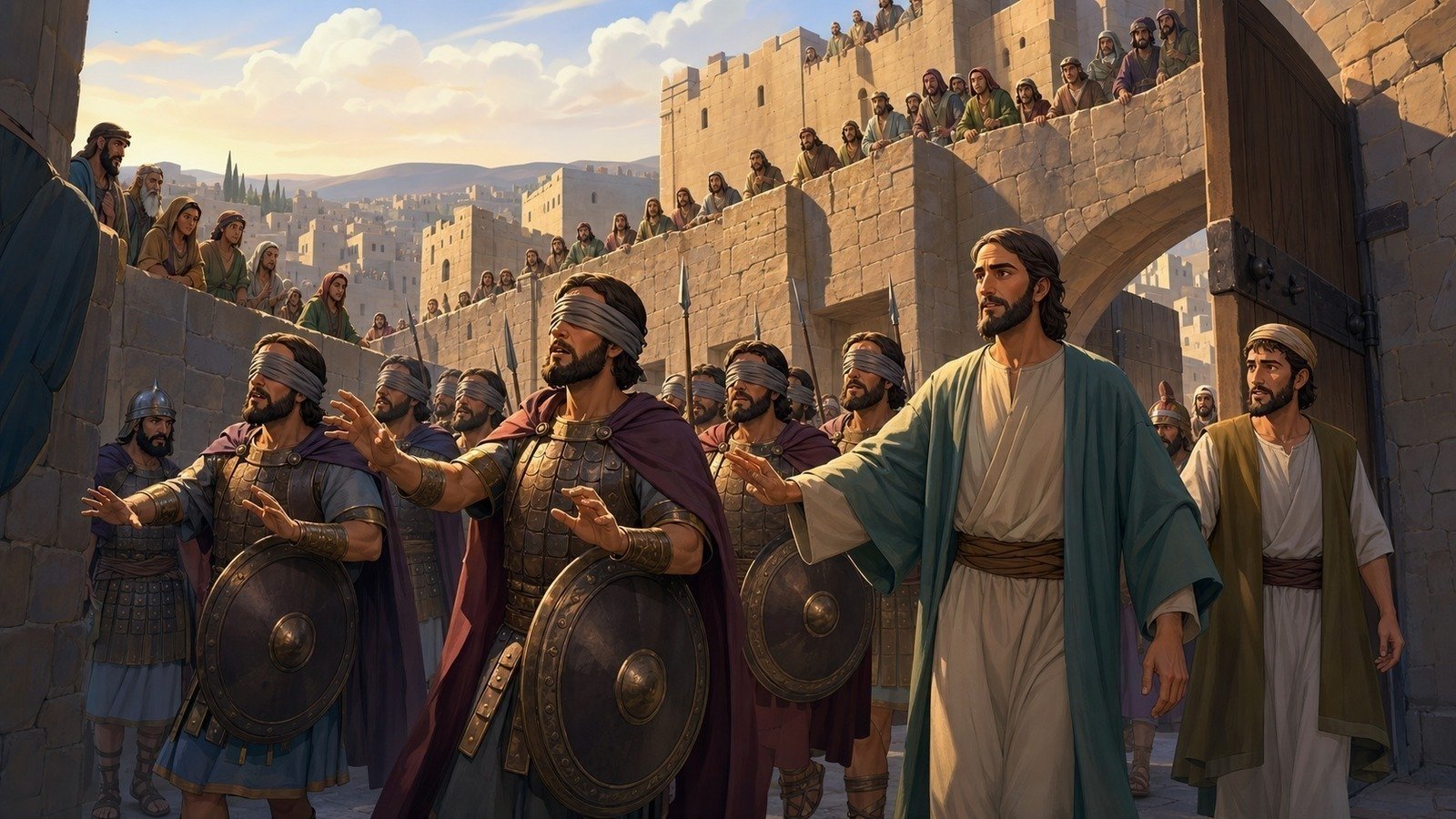
Elisha repeatedly reveals Aramean military plans to Israel's king, and when an Aramean force is sent to capture him, he strikes them with temporary blindness and leads them into Samaria itself before having them fed and released.
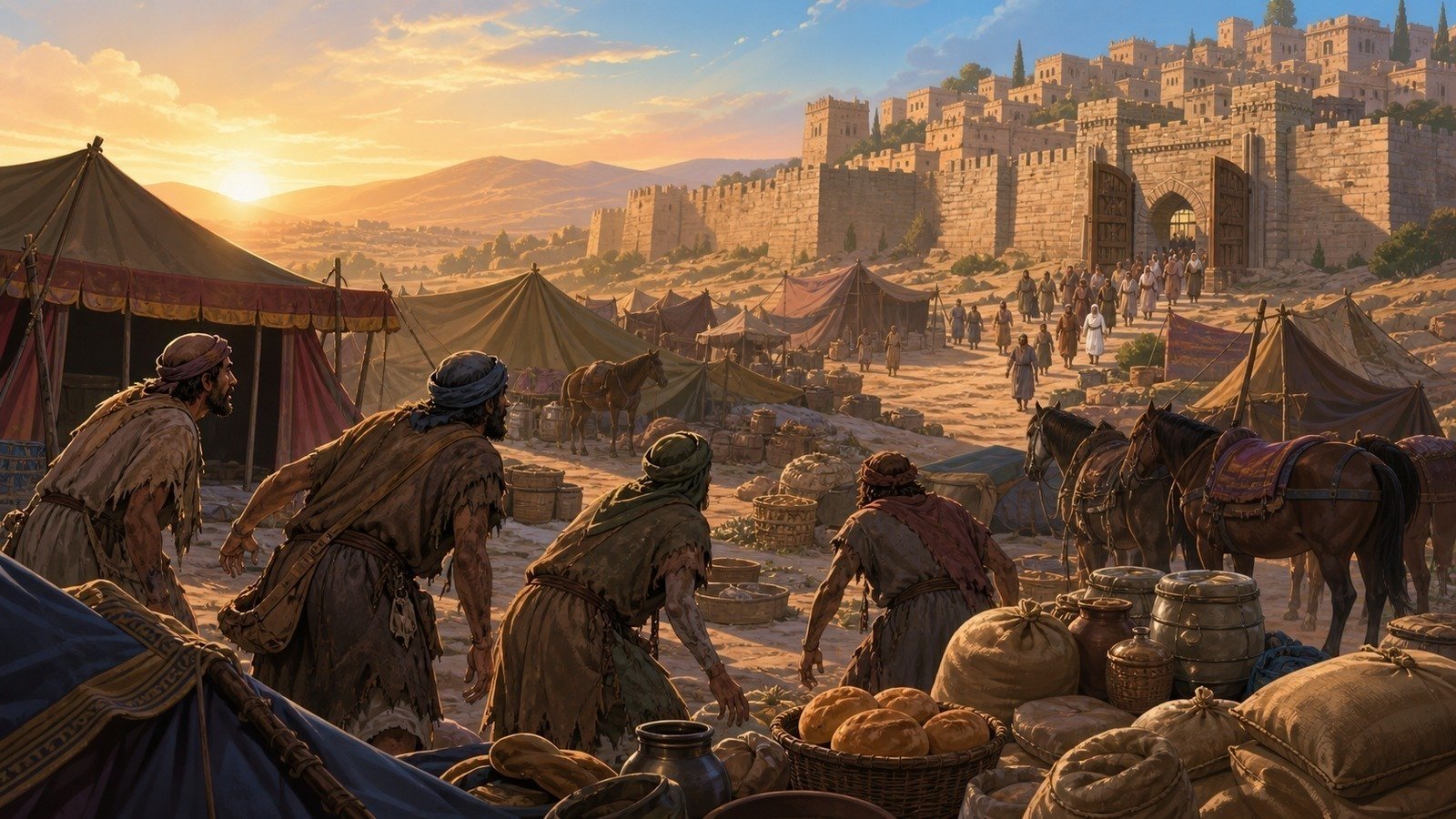
A severe Aramean siege of Samaria reduces the city to cannibalism; Elisha predicts sudden, abundant food within a day, fulfilled when the Aramean army flees in panic overnight, leaving its supplies behind.
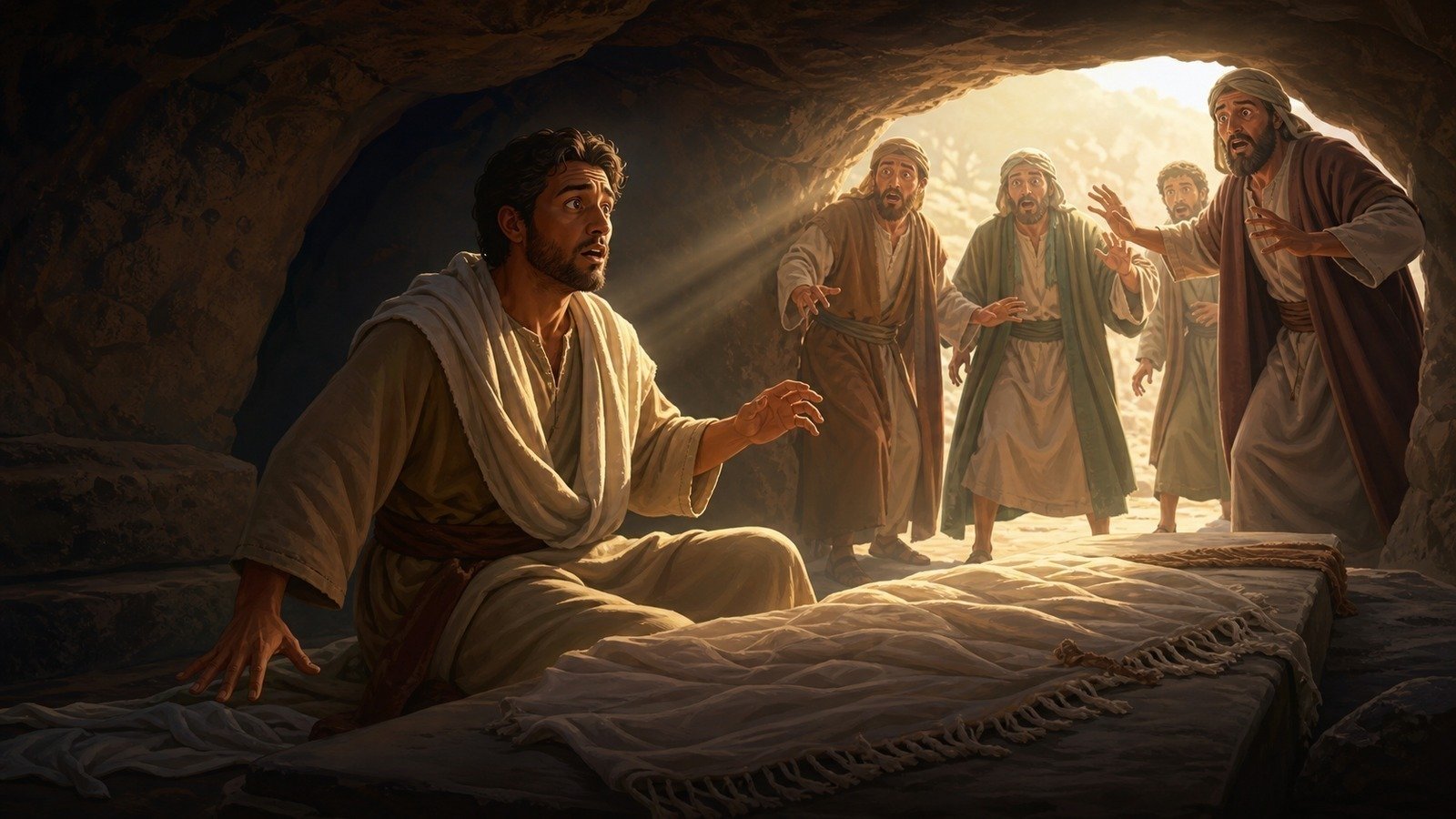
Elisha dies of illness during the reign of Jehoash; a dead man thrown hastily into Elisha's tomb is revived on touching his bones, a final miracle attributed to the prophet even after death.
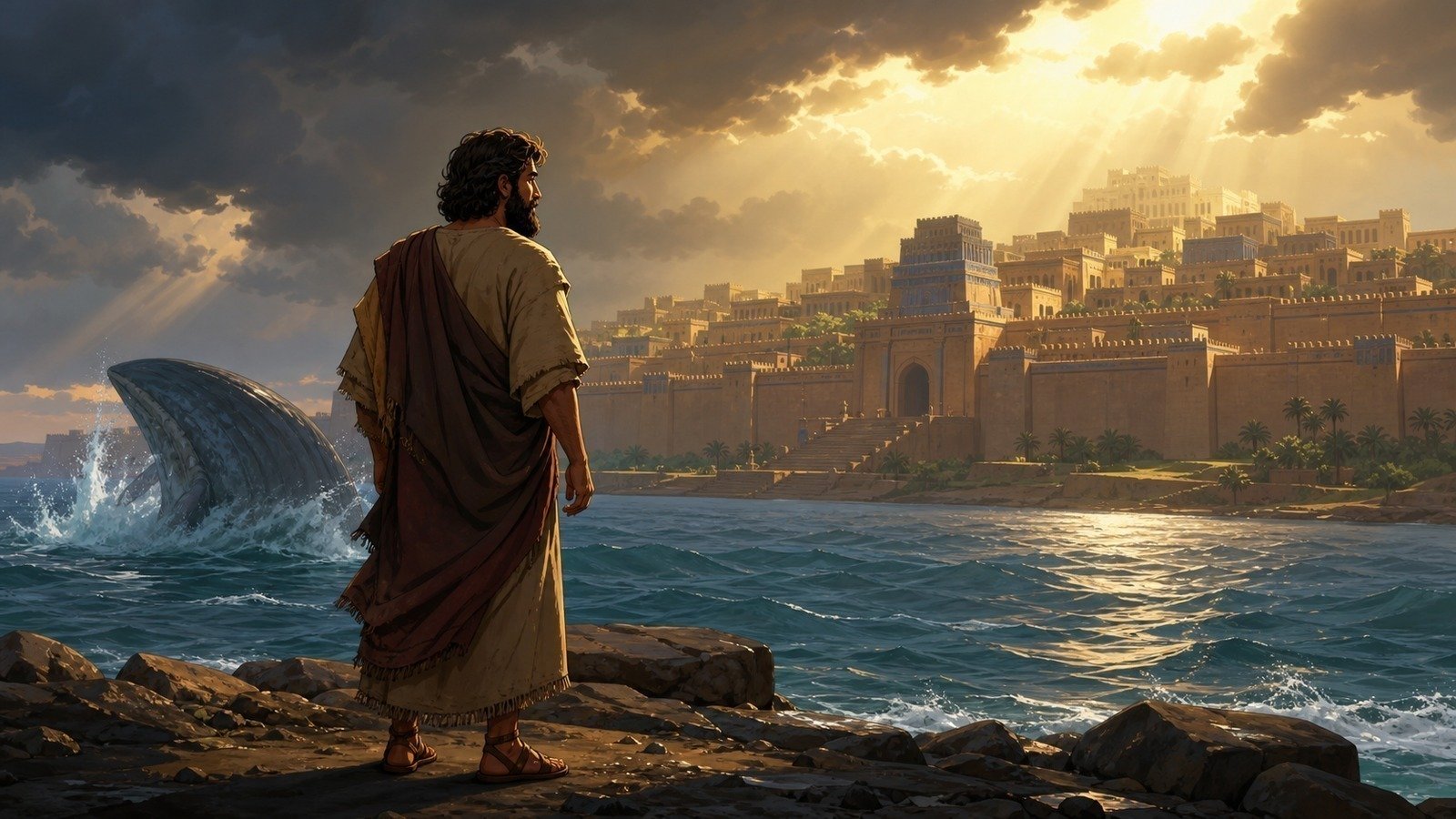
Jonah, a prophet named in 2 Kings as active under Jeroboam II, flees God's call to preach against Nineveh, is swallowed by a great fish after being thrown overboard, and eventually delivers a message that leads the entire city to repent, provoking Jonah's own resentment at God's mercy toward Israel's enemies.
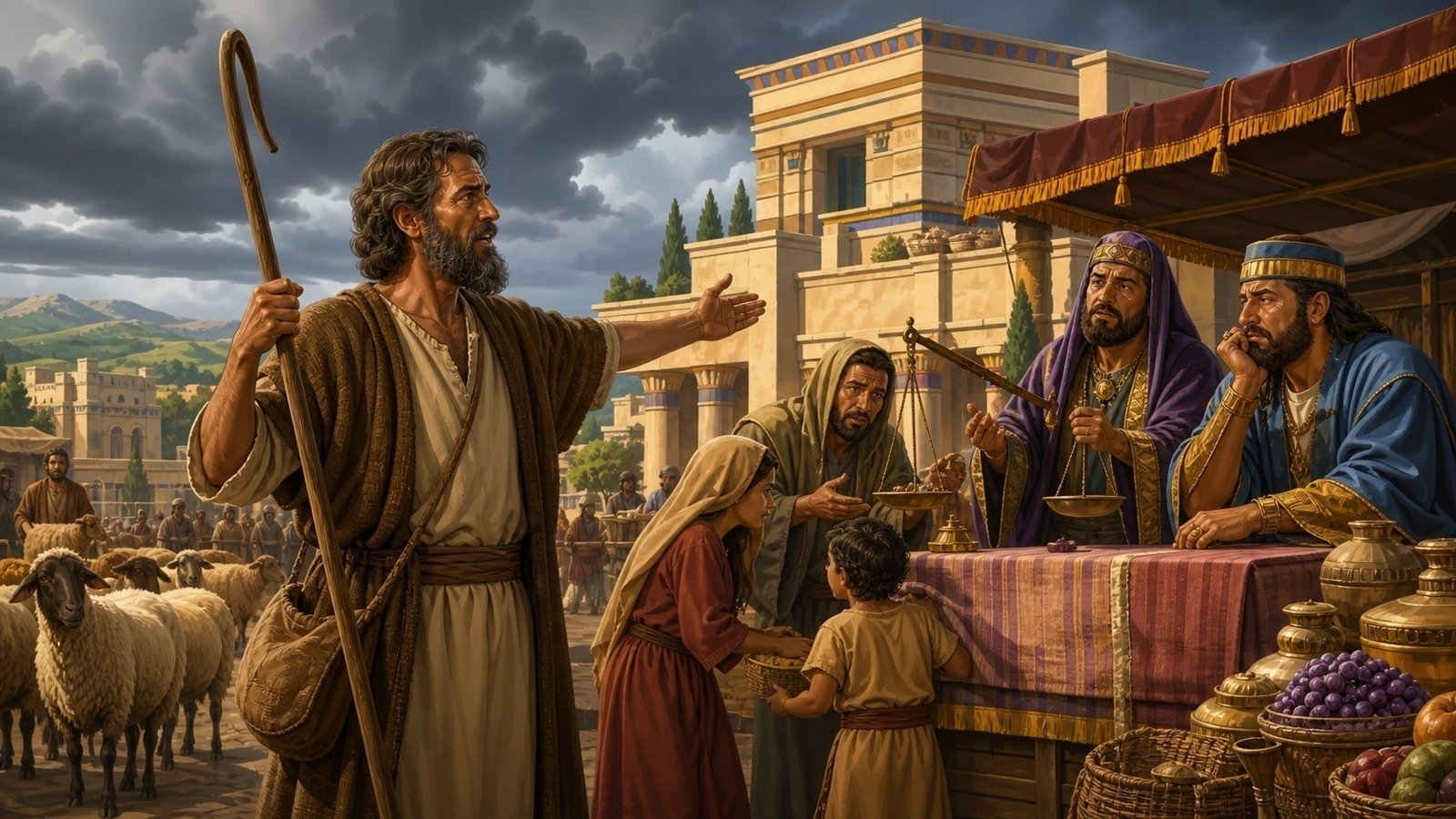
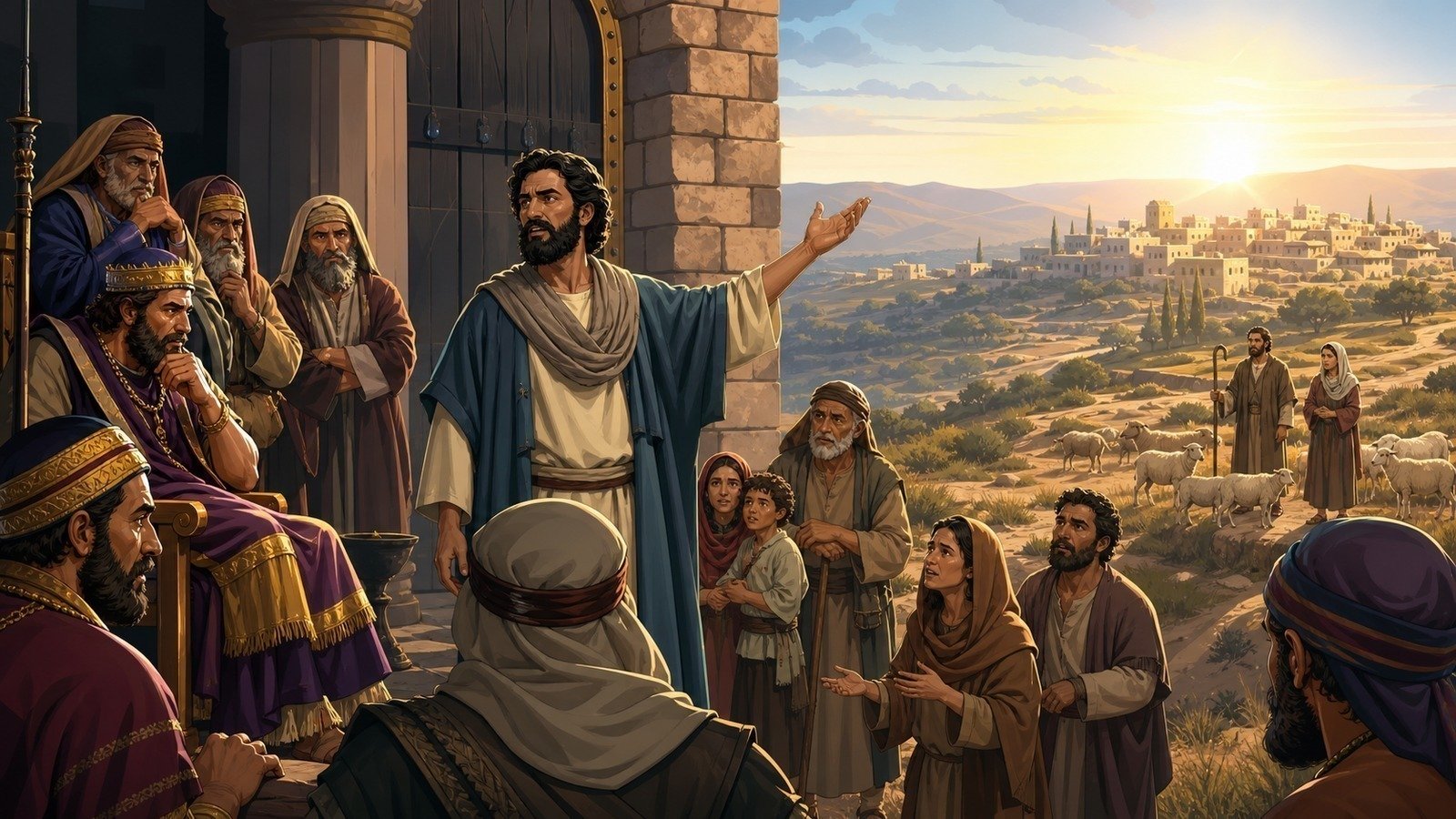
A shepherd from Judah, Amos prophesies against Israel's social injustice and religious hypocrisy during the outwardly prosperous reign of Jeroboam II, warning of coming judgement despite the kingdom's apparent strength.
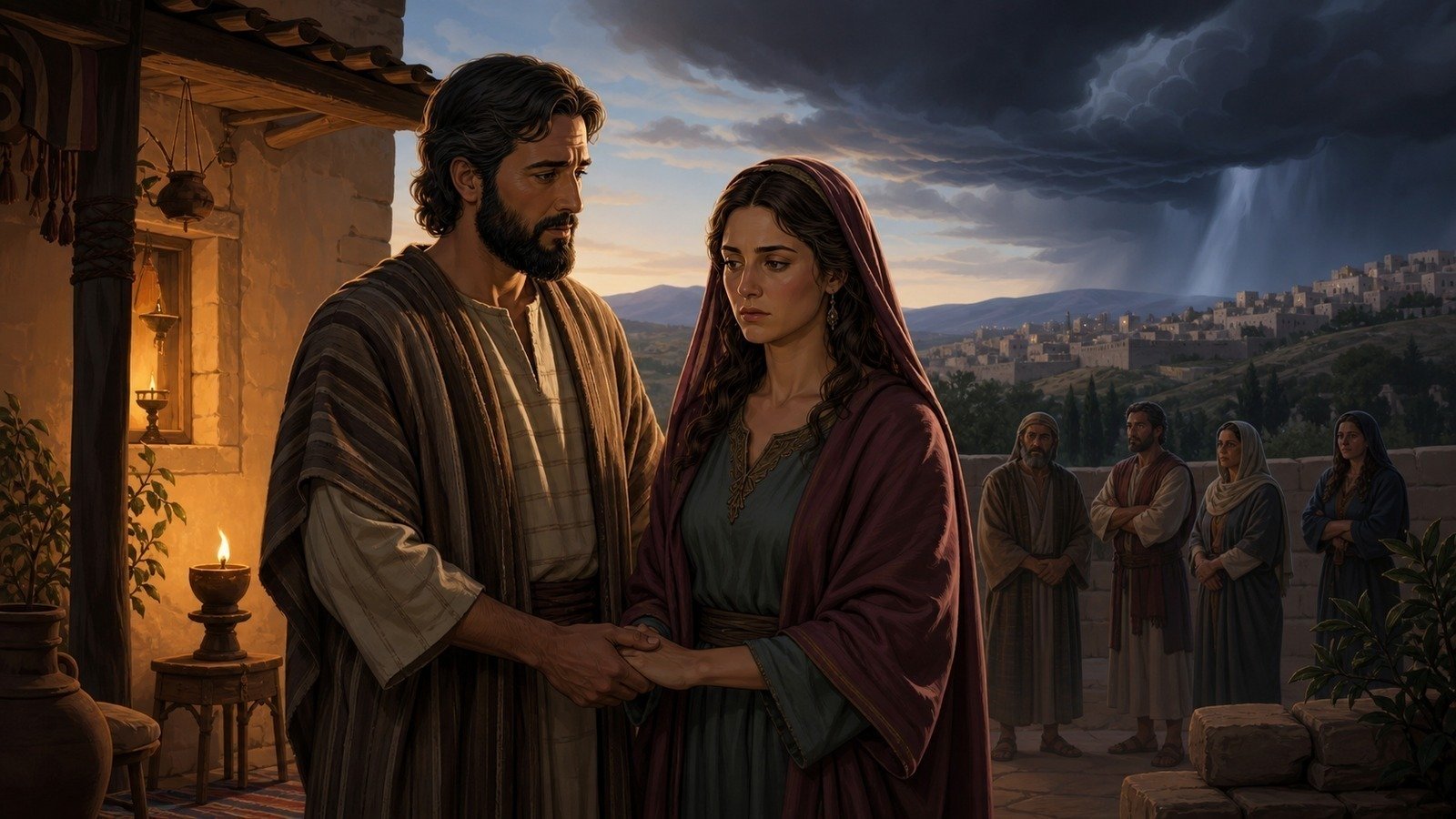
God instructs Hosea to marry an unfaithful woman, Gomer, as a living picture of Israel's unfaithfulness to God; his ministry spans the final, chaotic decades of the northern kingdom up to its fall.
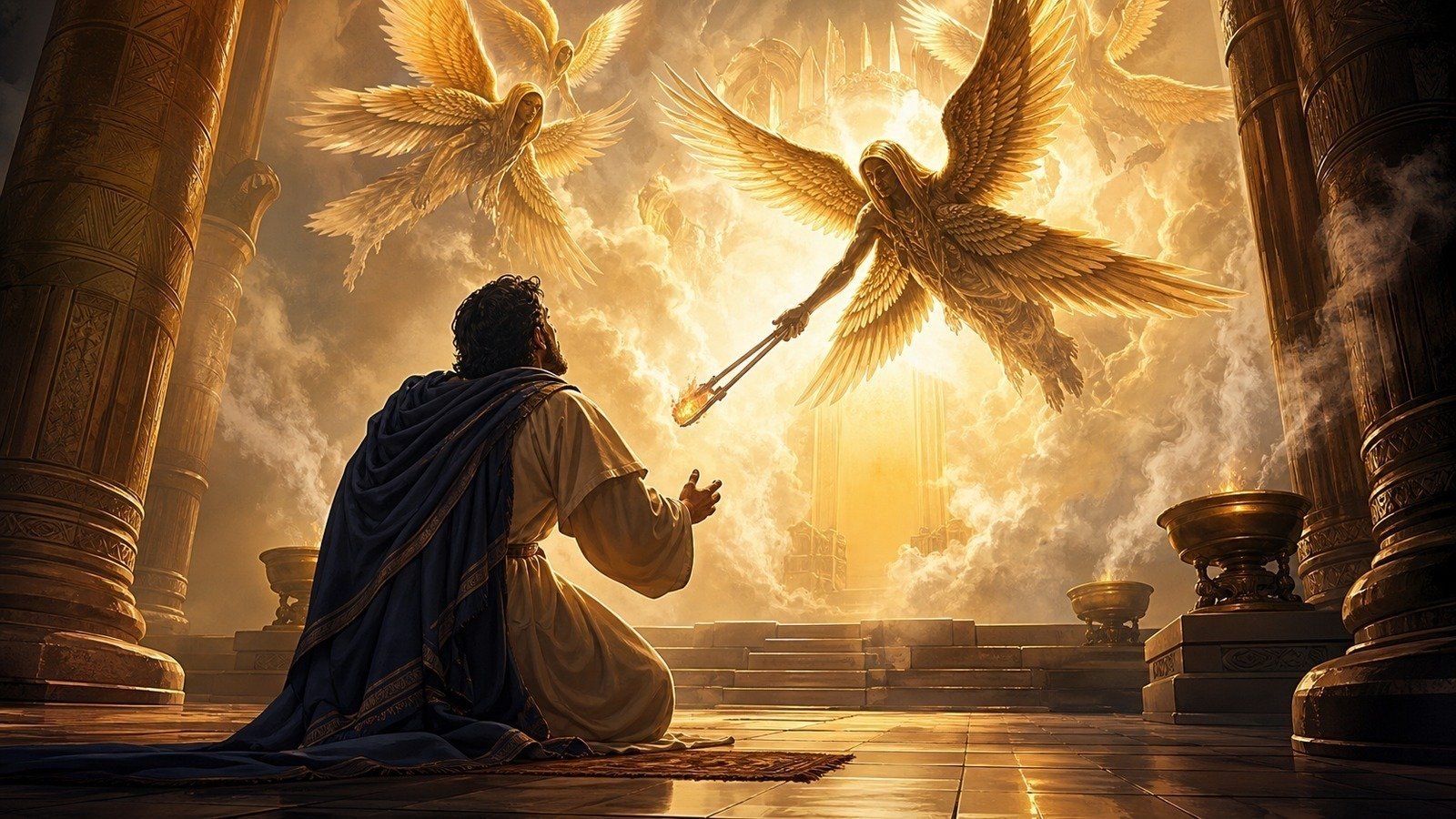
Isaiah receives a vision of God enthroned in the Temple "in the year King Uzziah died" and is commissioned as a prophet despite being warned the people will not listen; his ministry runs through the reigns of Jotham, Ahaz and Hezekiah.
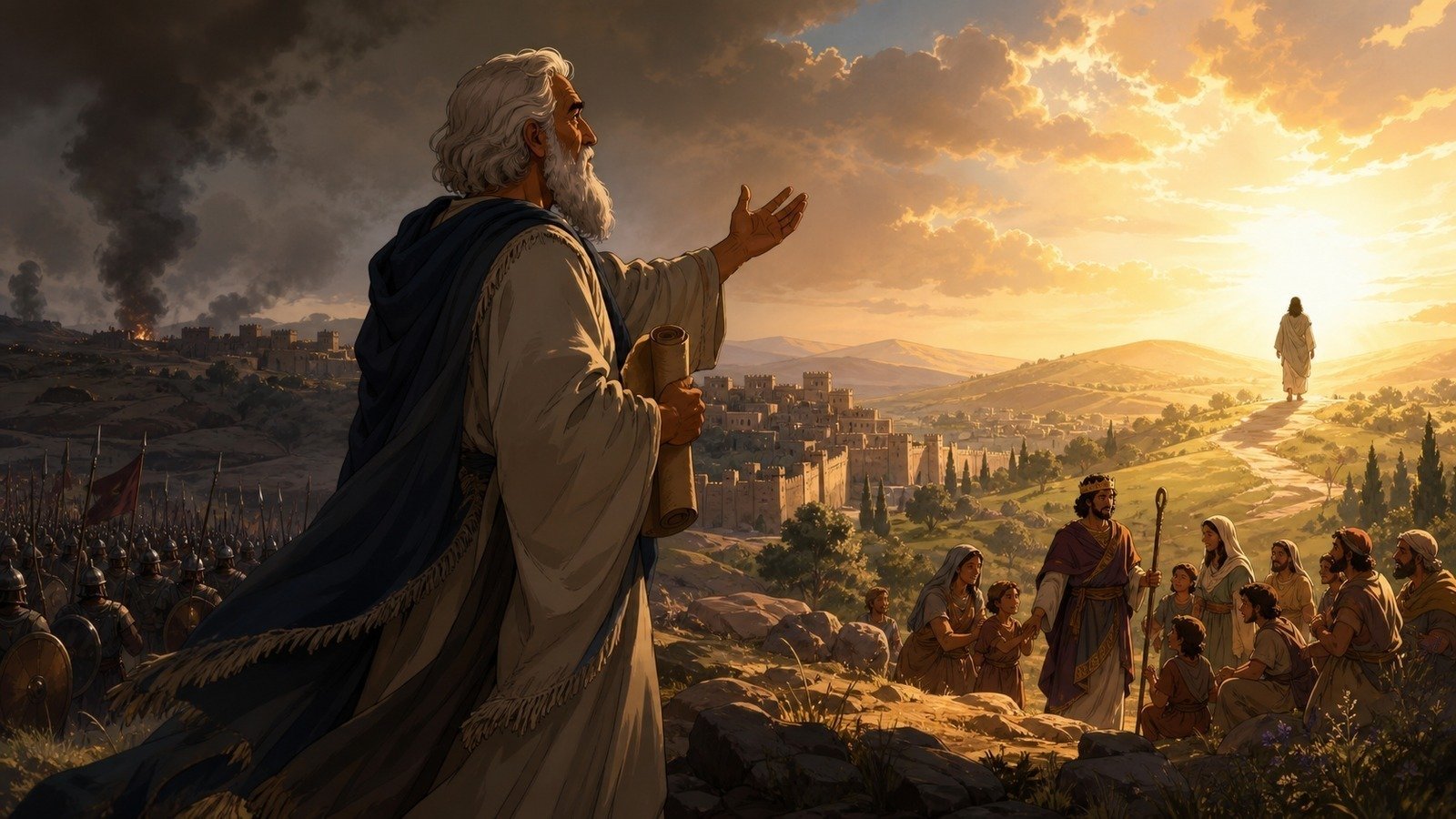
Across his ministry Isaiah oscillates between warning both kingdoms of judgement and promising a future king from David's line who will reign in justice, and a suffering servant who bears the sin of others; the New Testament writers repeatedly apply these texts to Jesus, a reading Christian tradition holds but which is itself a later theological interpretation of the Hebrew text.
A contemporary of Isaiah, Micah condemns corrupt leadership in both kingdoms, summarises true religion as acting justly, loving mercy and walking humbly with God, and names Bethlehem as the birthplace of a future ruler over Israel.
Nahum announces the coming destruction of Nineveh, the Assyrian capital, in vivid, celebratory terms, a message that would have offered comfort to a Judah still living under Assyrian shadow.
Zephaniah, identified in his own superscription as a descendant of Hezekiah, warns of a coming "day of the Lord" against Judah's idolatry, likely preaching before or alongside Josiah's reforms.
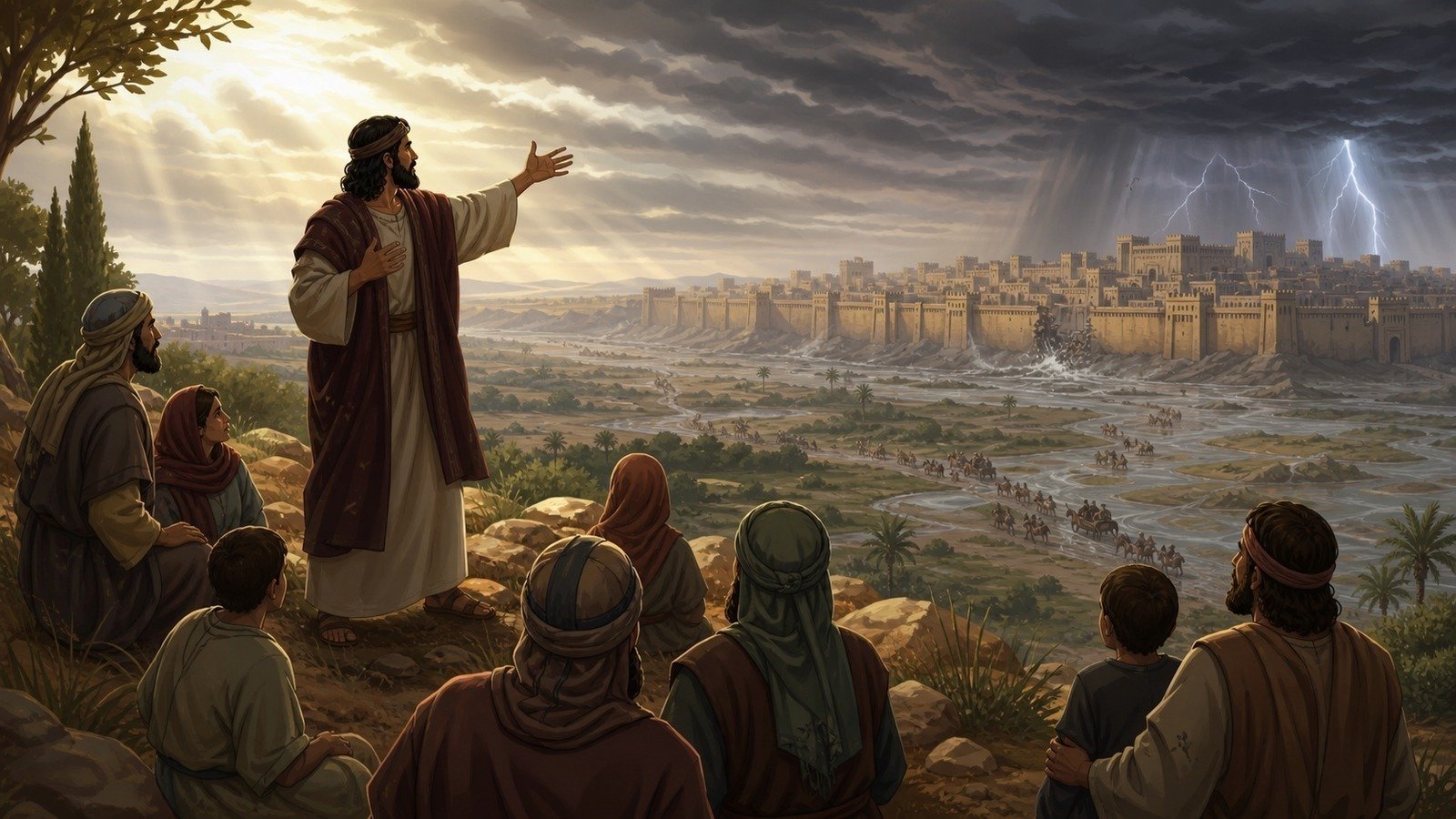
Habakkuk questions God directly about using the violent Babylonians to judge a sinful Judah, and is answered that "the righteous will live by his faith," a line Paul later builds central arguments on, before closing in a prayer of trust despite coming devastation.
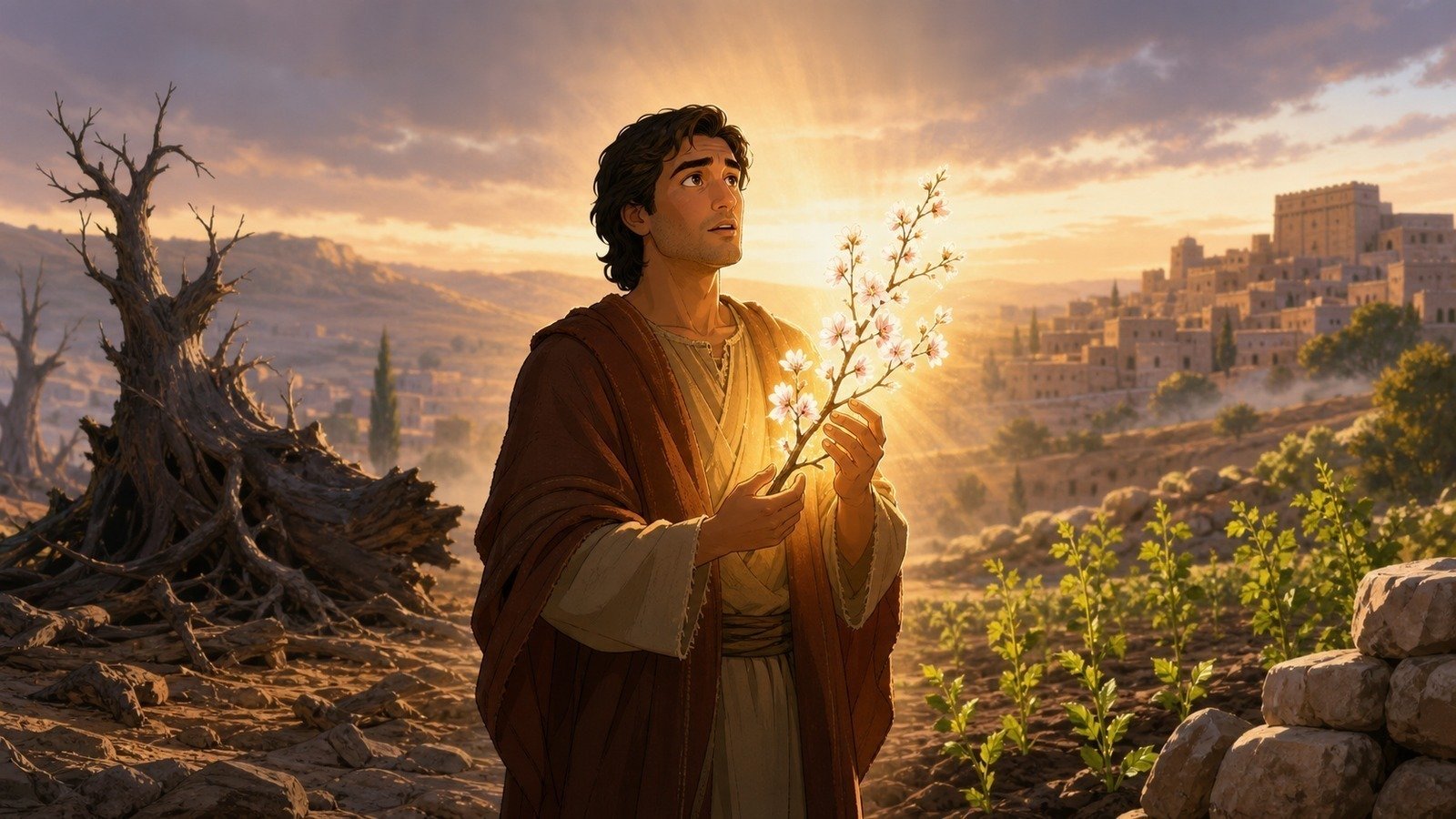
God calls Jeremiah as a young man, telling him "before you were born I set you apart," and commissions him to a difficult, largely rejected ministry to "uproot and tear down… build and plant" that will run through the kingdom's final decades and into exile.
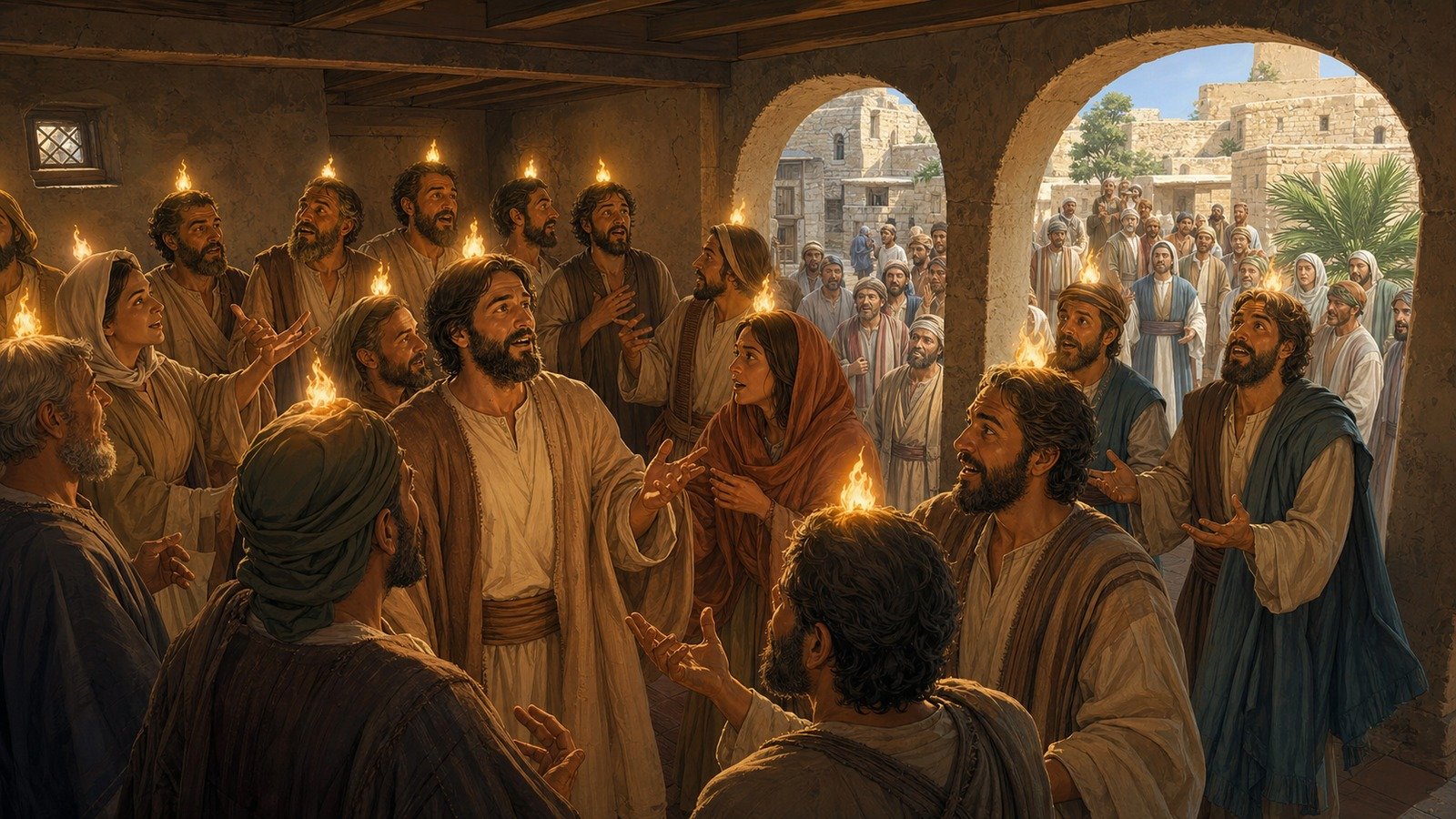
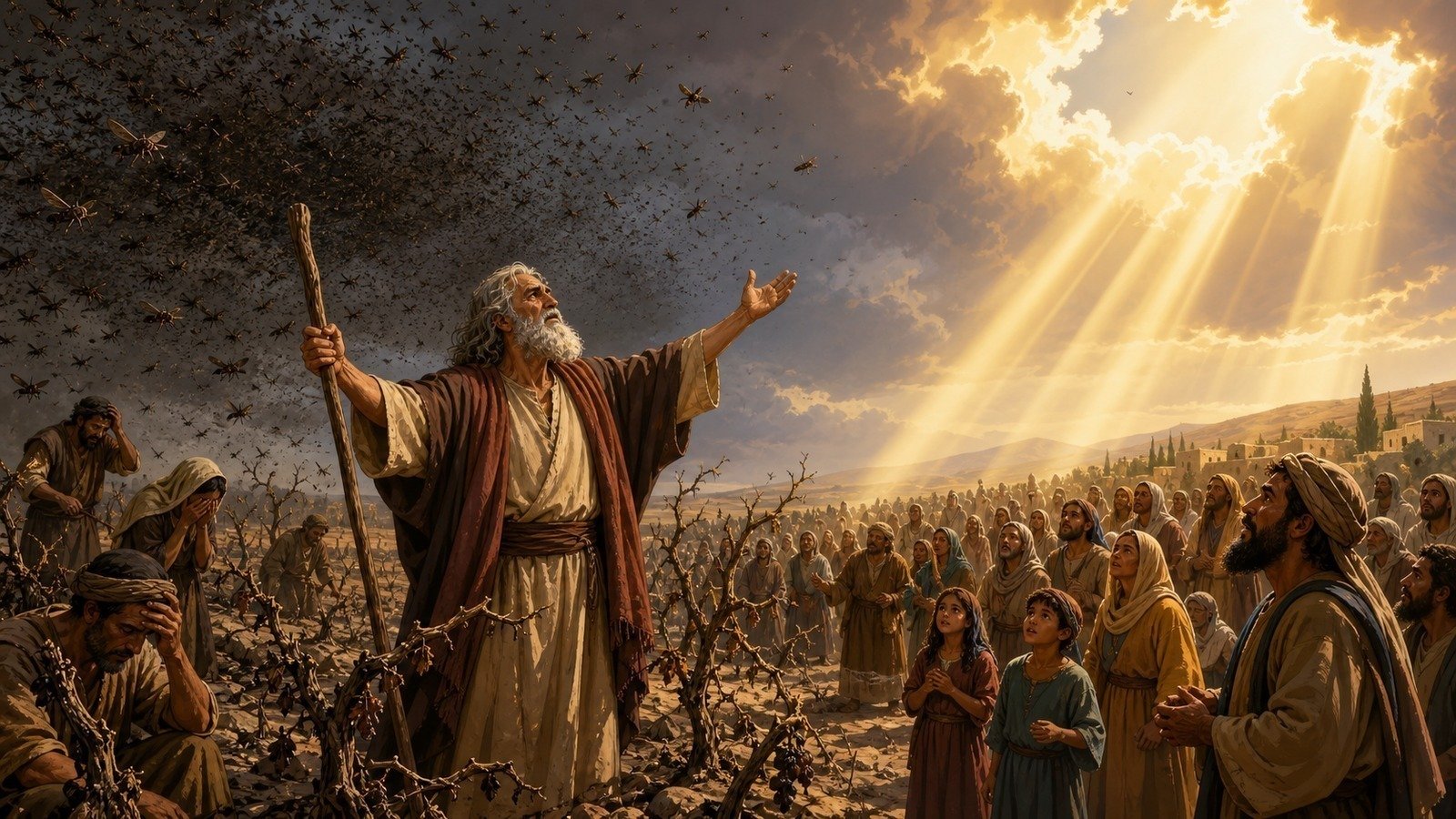
Joel uses a devastating locust plague as the springboard for a wider warning of the coming day of the Lord, and promises a future outpouring of God's Spirit "on all people," a passage Peter quotes at Pentecost.
Nebuchadnezzar installs Jehoiachin's uncle Zedekiah as a puppet king; despite Jeremiah's repeated warnings to submit to Babylon, Zedekiah eventually rebels, prompting the final Babylonian siege of Jerusalem.
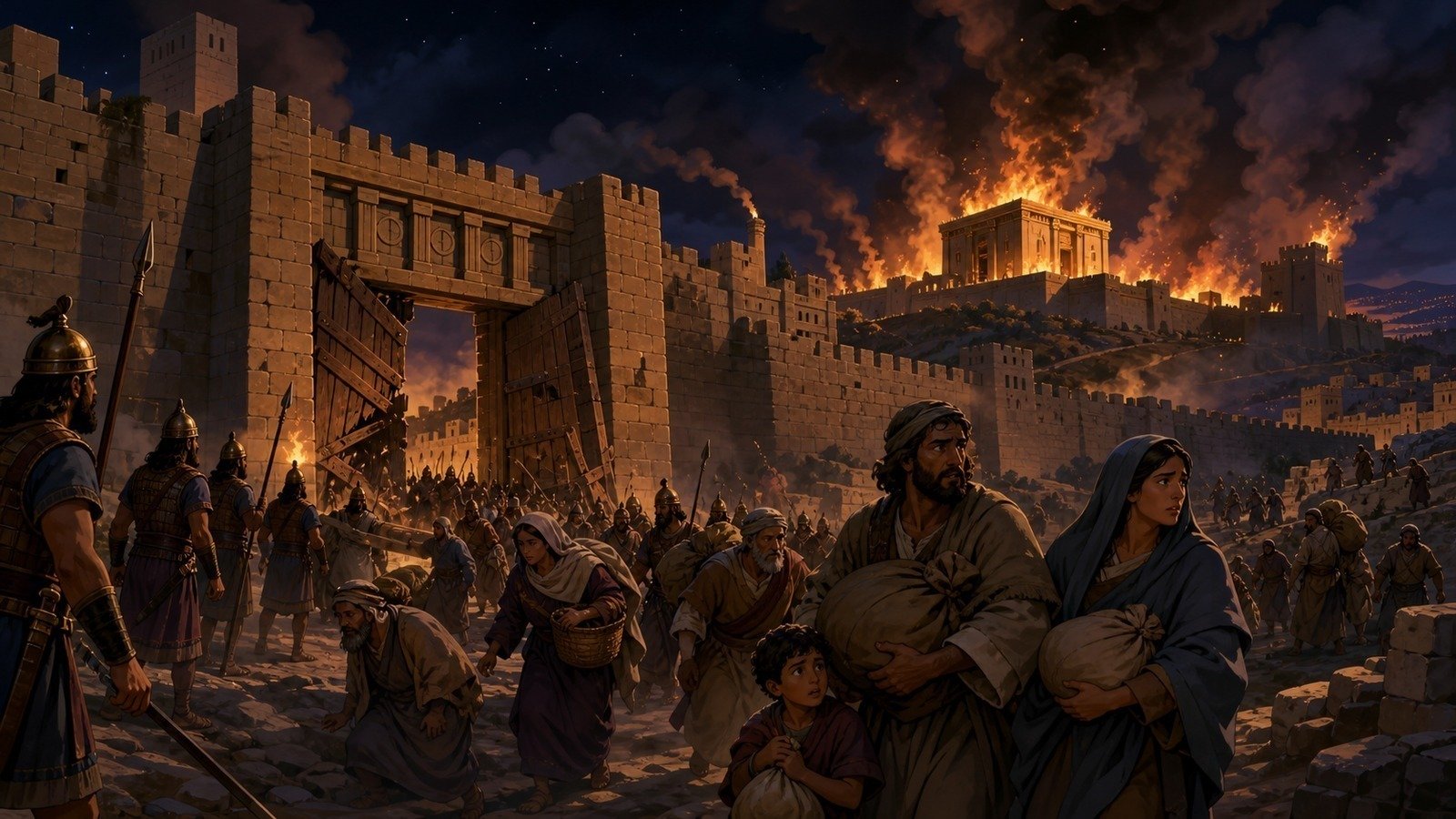
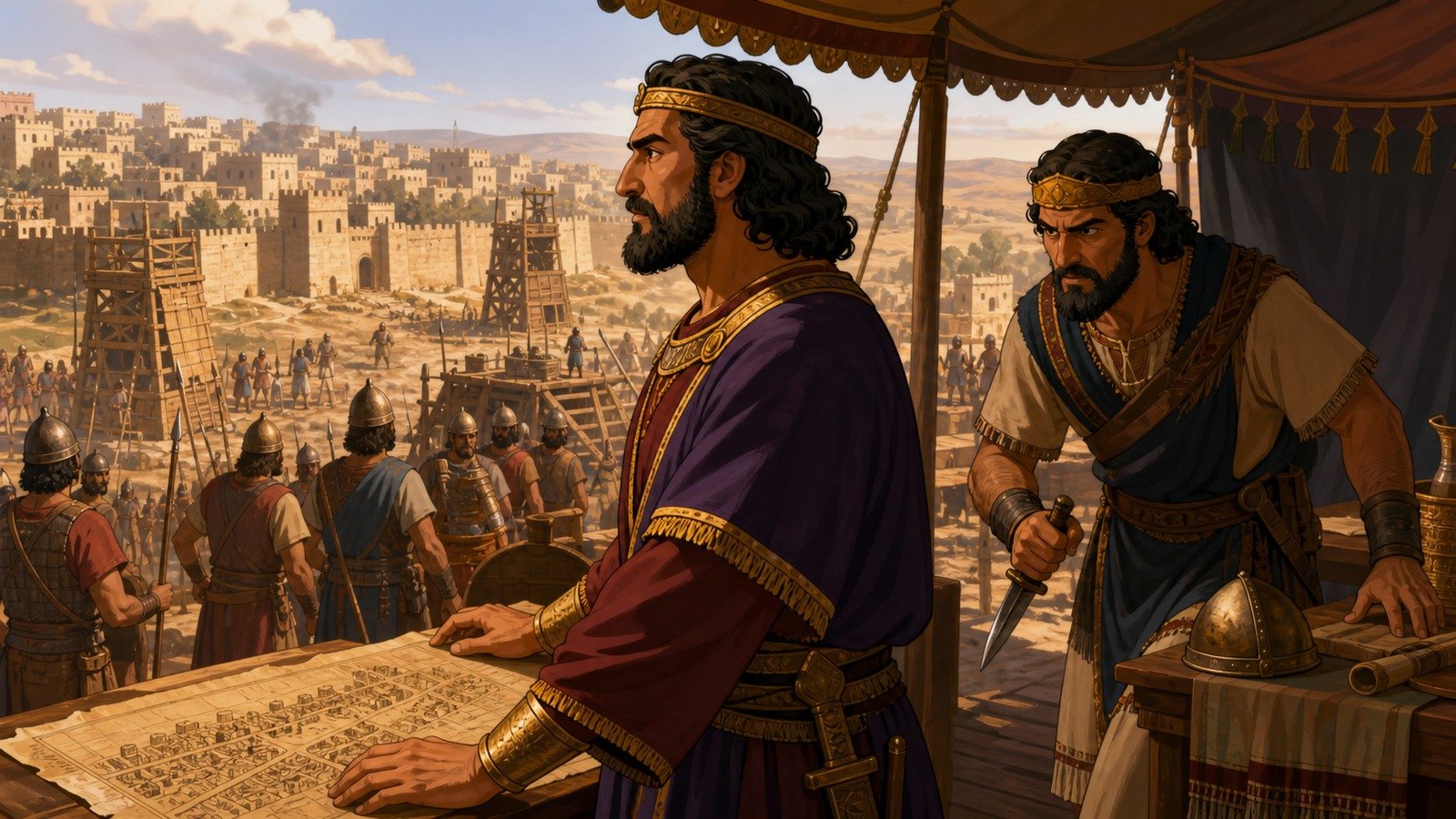
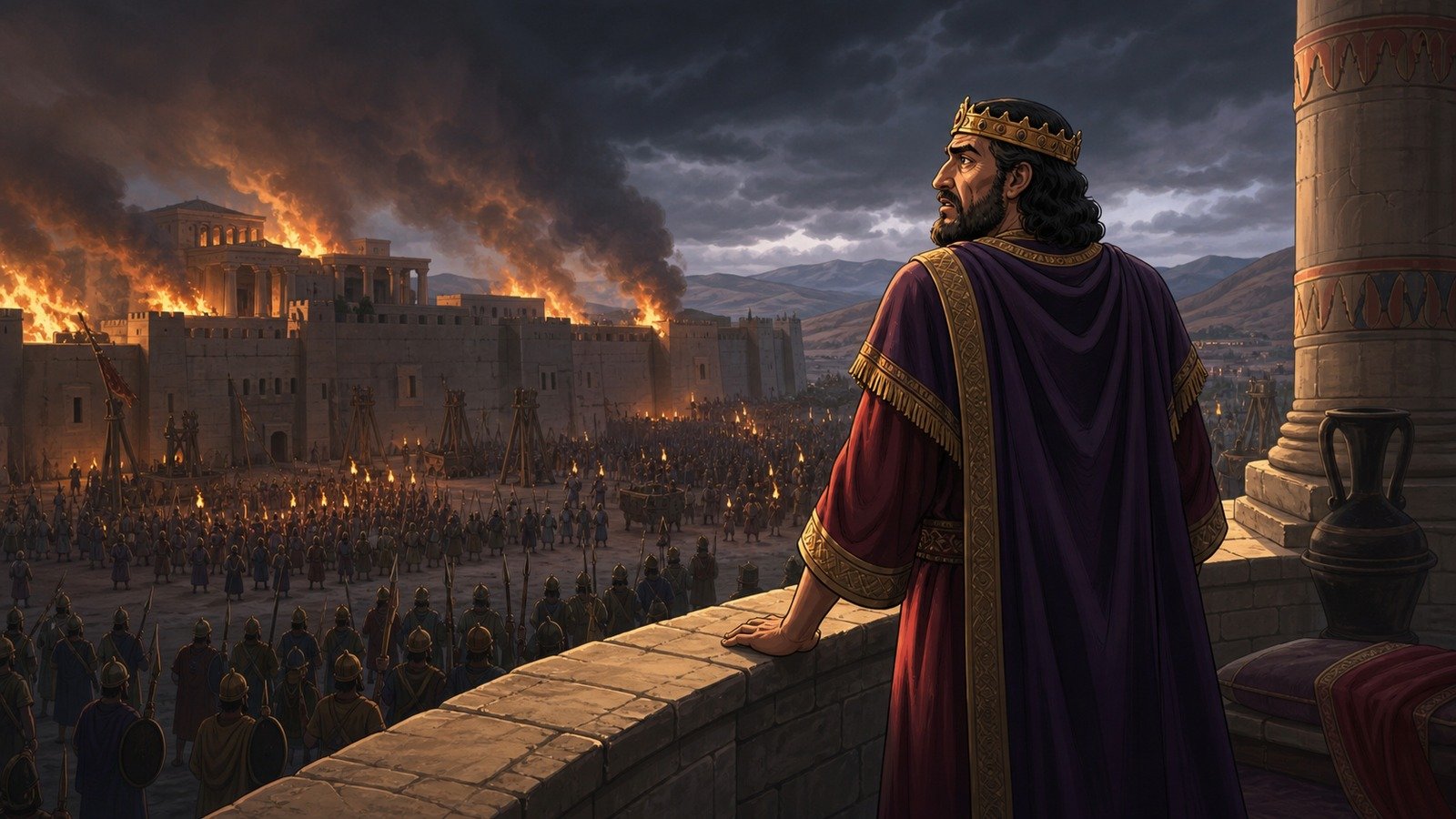
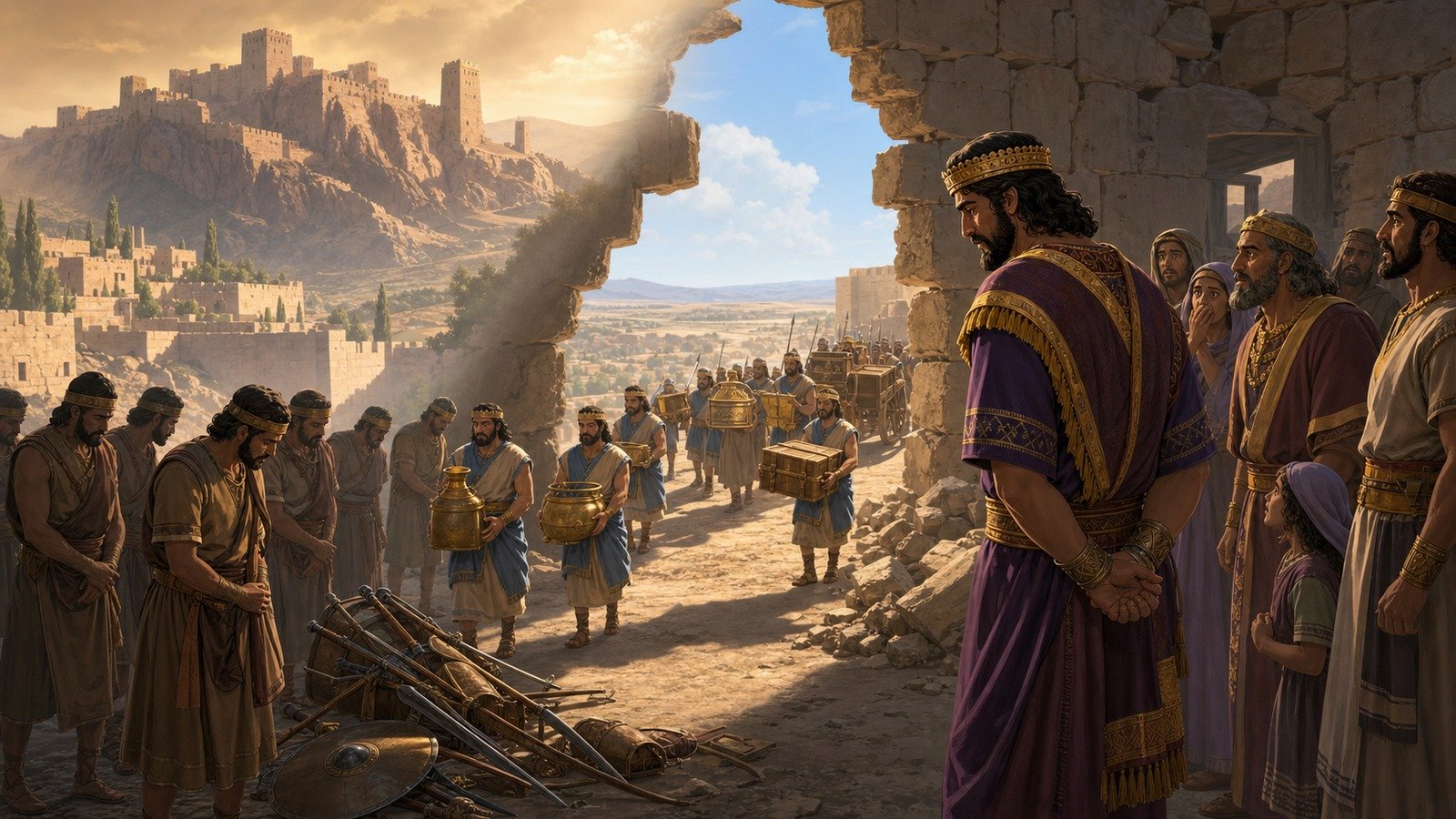
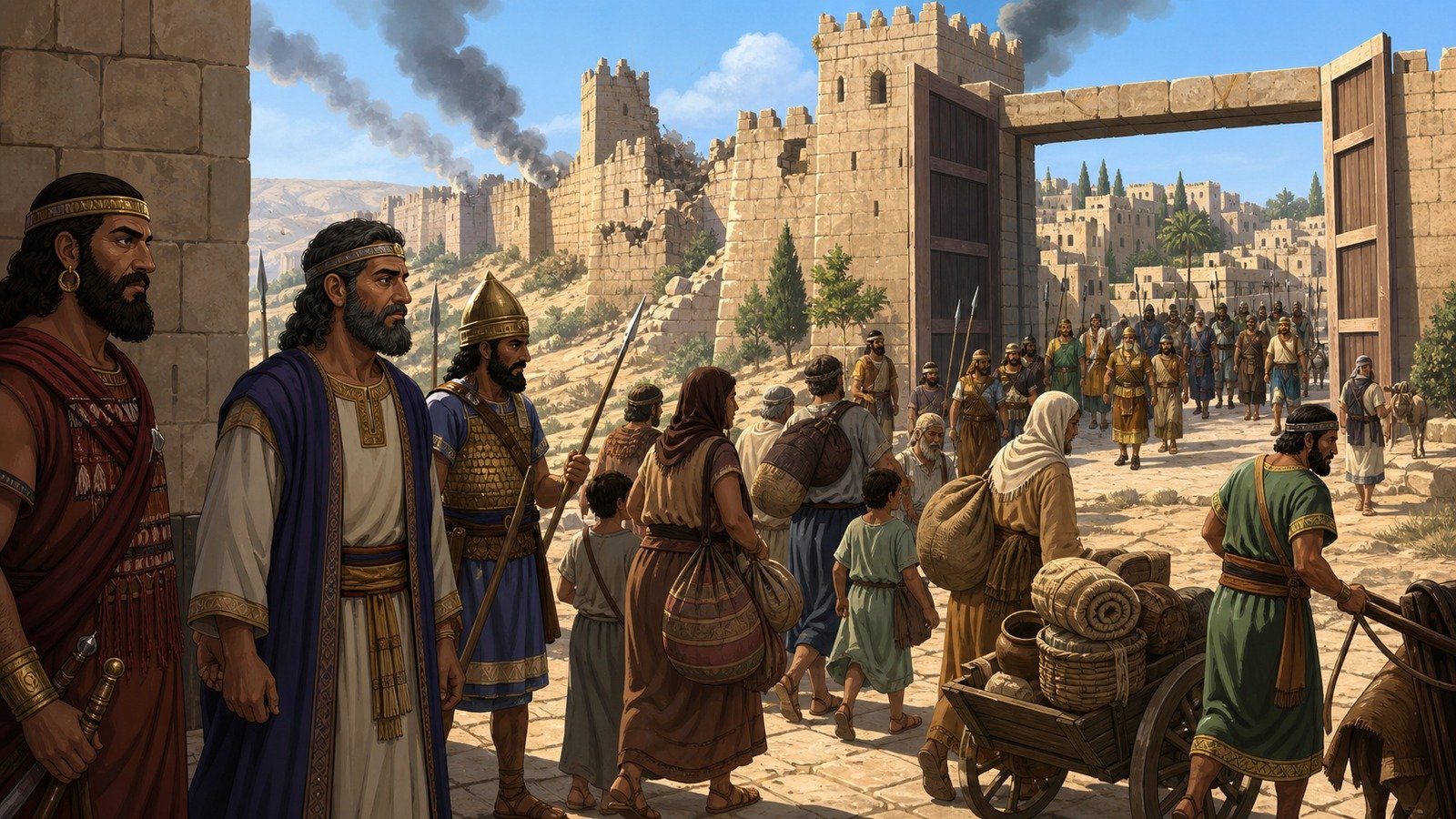
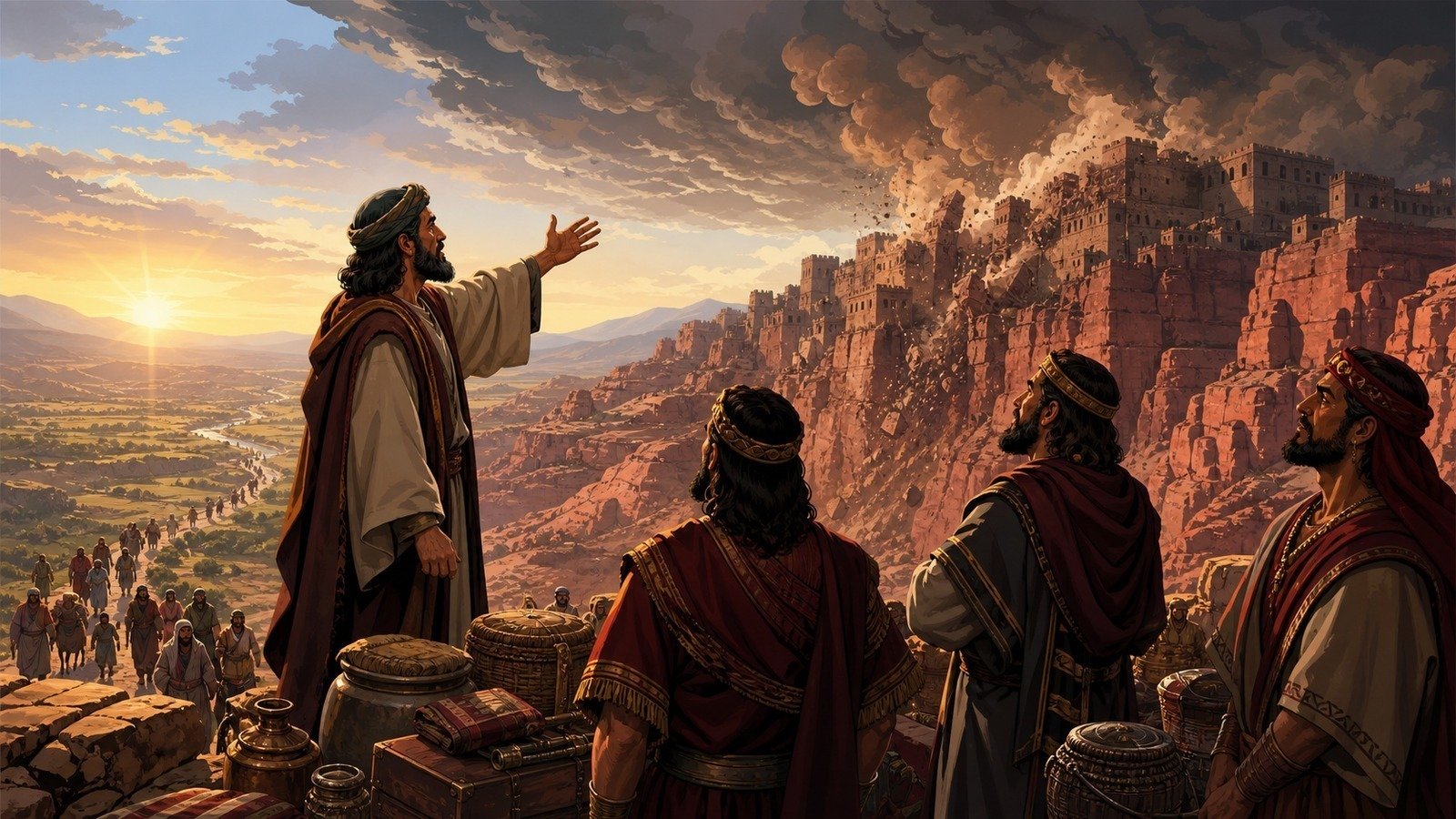
After an eighteen-month siege, Babylonian forces breach Jerusalem's walls, burn the Temple, palace and city, execute Zedekiah's sons before his eyes and then blind him, and deport most of the remaining population, ending the kingdom of Judah as a sovereign state.
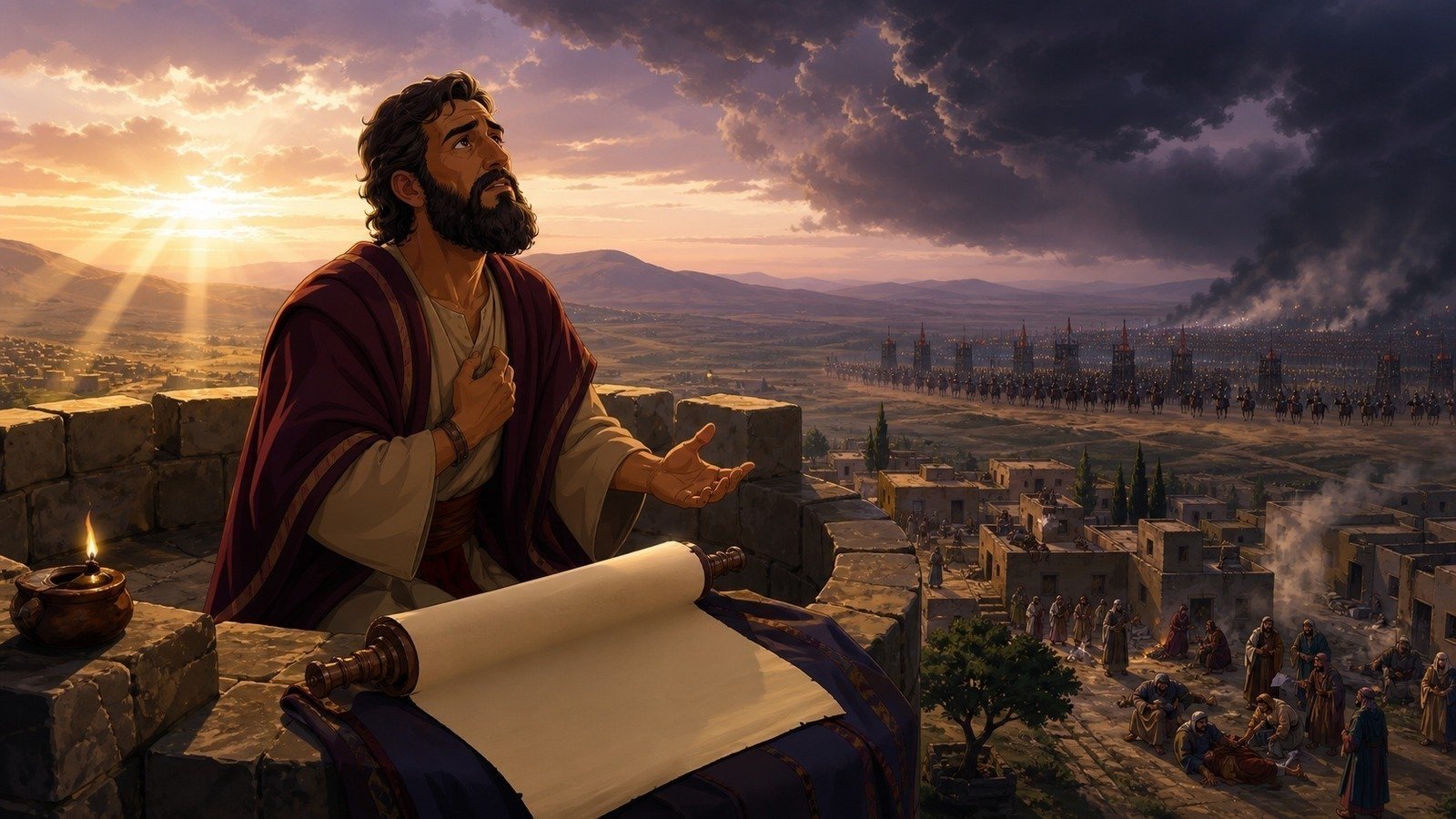
A series of five acrostic poems mourns the destruction of Jerusalem and the Temple in unflinching detail, while still affirming, at its emotional centre, that God's mercies "are new every morning."
Babylon appoints Gedaliah governor over those left in Judah; he is assassinated within months by Ishmael, a royal descendant, along with the Babylonian officials stationed with him.
Fearing Babylonian reprisal for Gedaliah's assassination, the remaining population flees to Egypt against Jeremiah's explicit warning, forcibly taking Jeremiah himself with them.
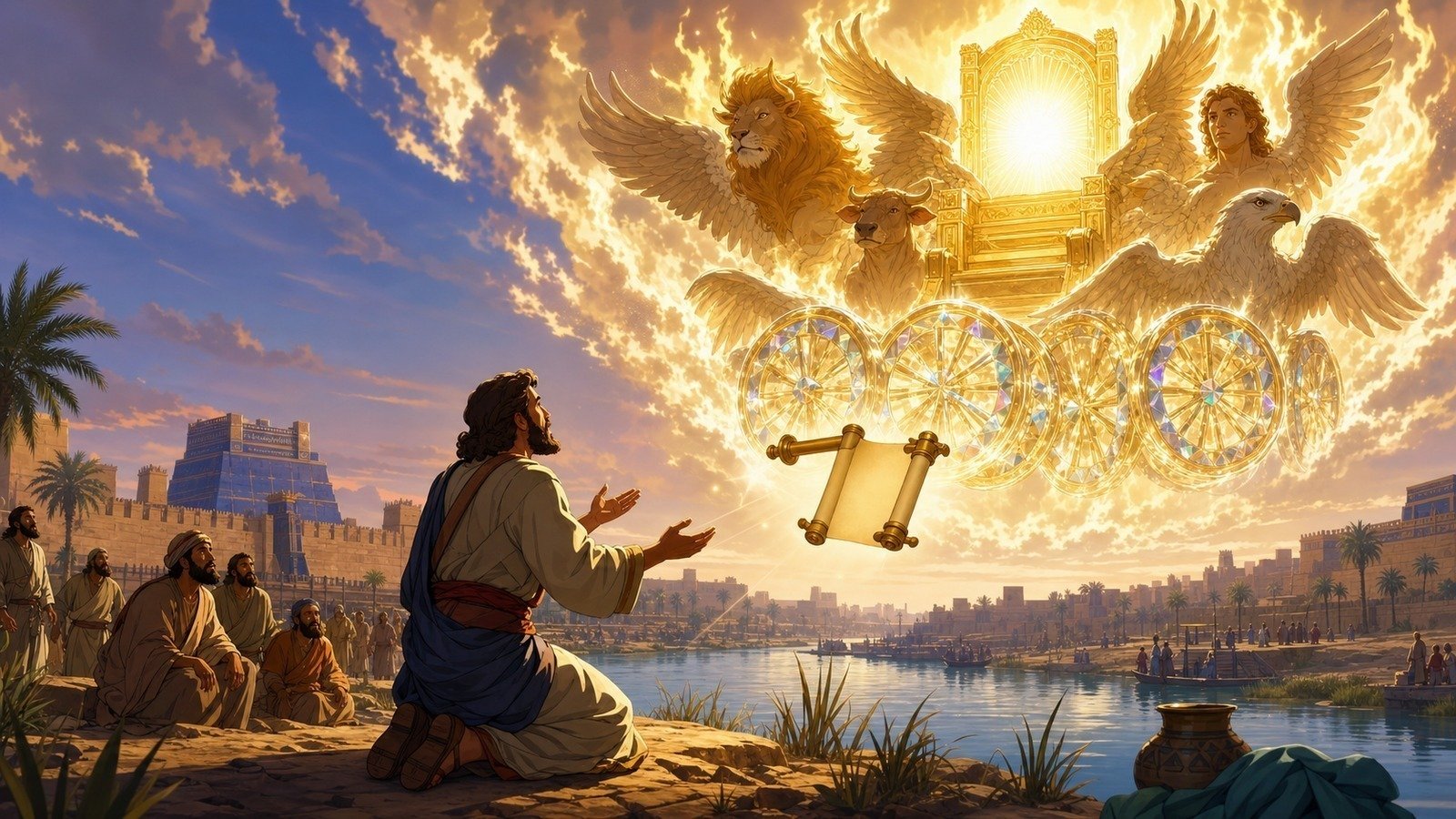
Among the Judean exiles already deported in 597 BC, the priest Ezekiel sees an overwhelming vision of God's throne-chariot by the river Kebar in Babylonia and is commissioned as a prophet to his fellow exiles, told to eat a scroll of lament as a sign of his message.
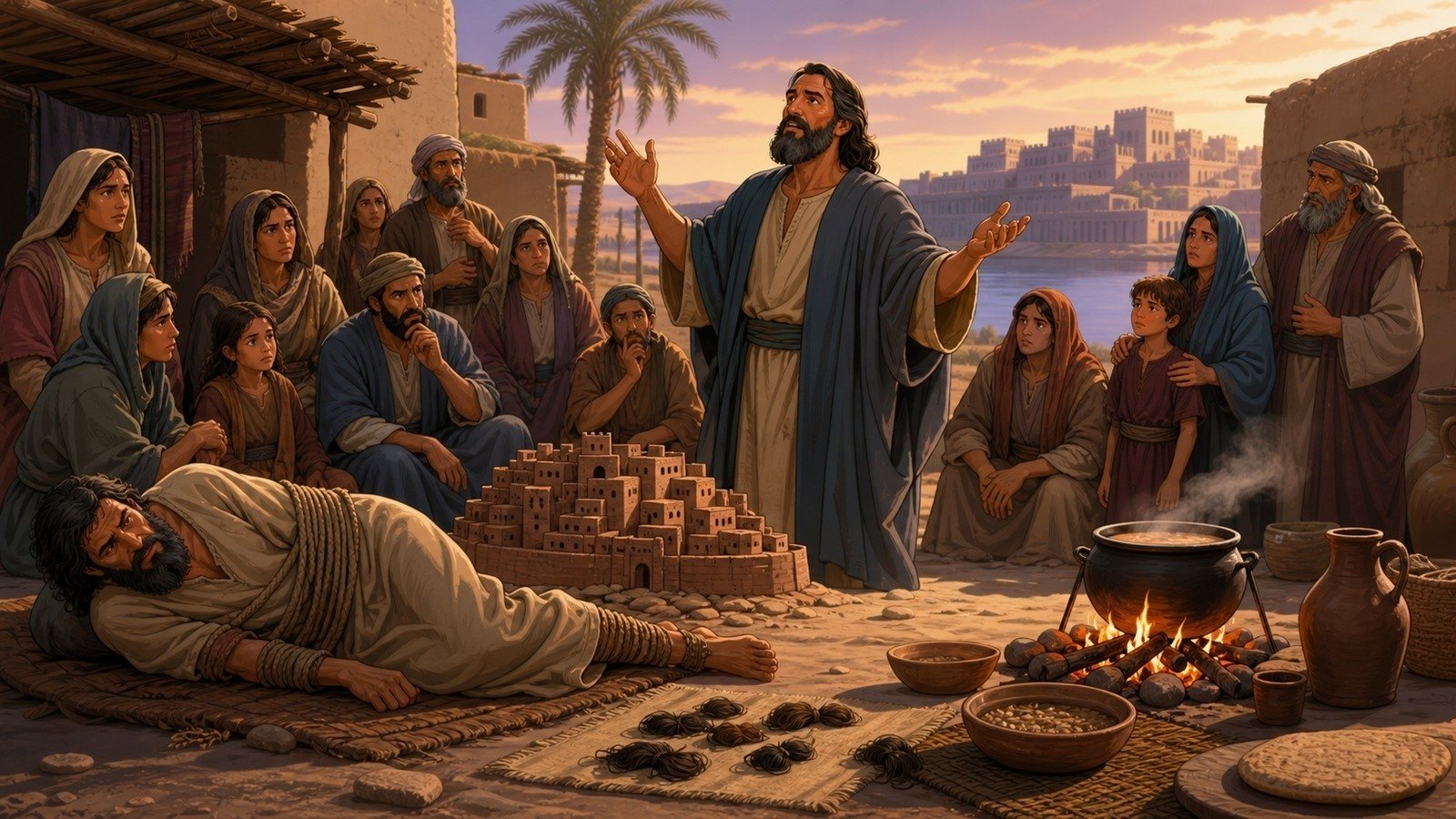
Ezekiel performs a series of striking symbolic acts, lying bound for over a year, shaving and dividing his hair, cooking over dung, to dramatise the coming siege, while also insisting each individual bears responsibility for their own sin rather than inherited guilt alone.
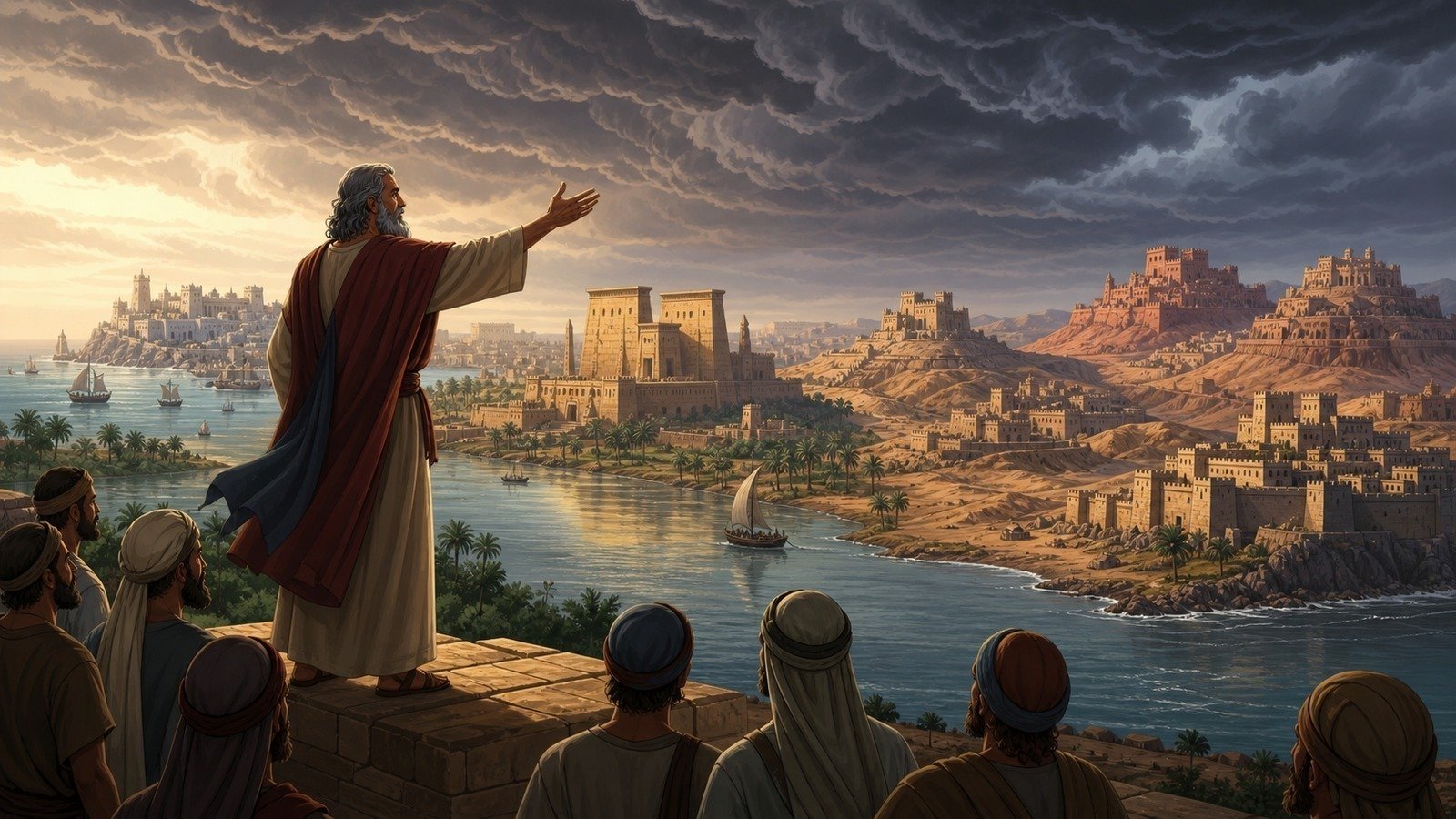
Ezekiel pronounces judgement on Judah's neighbours, including Ammon, Moab, Edom, Philistia, Tyre and Egypt, for their hostility toward Judah or their own arrogance, extending the scope of his ministry beyond Israel itself.
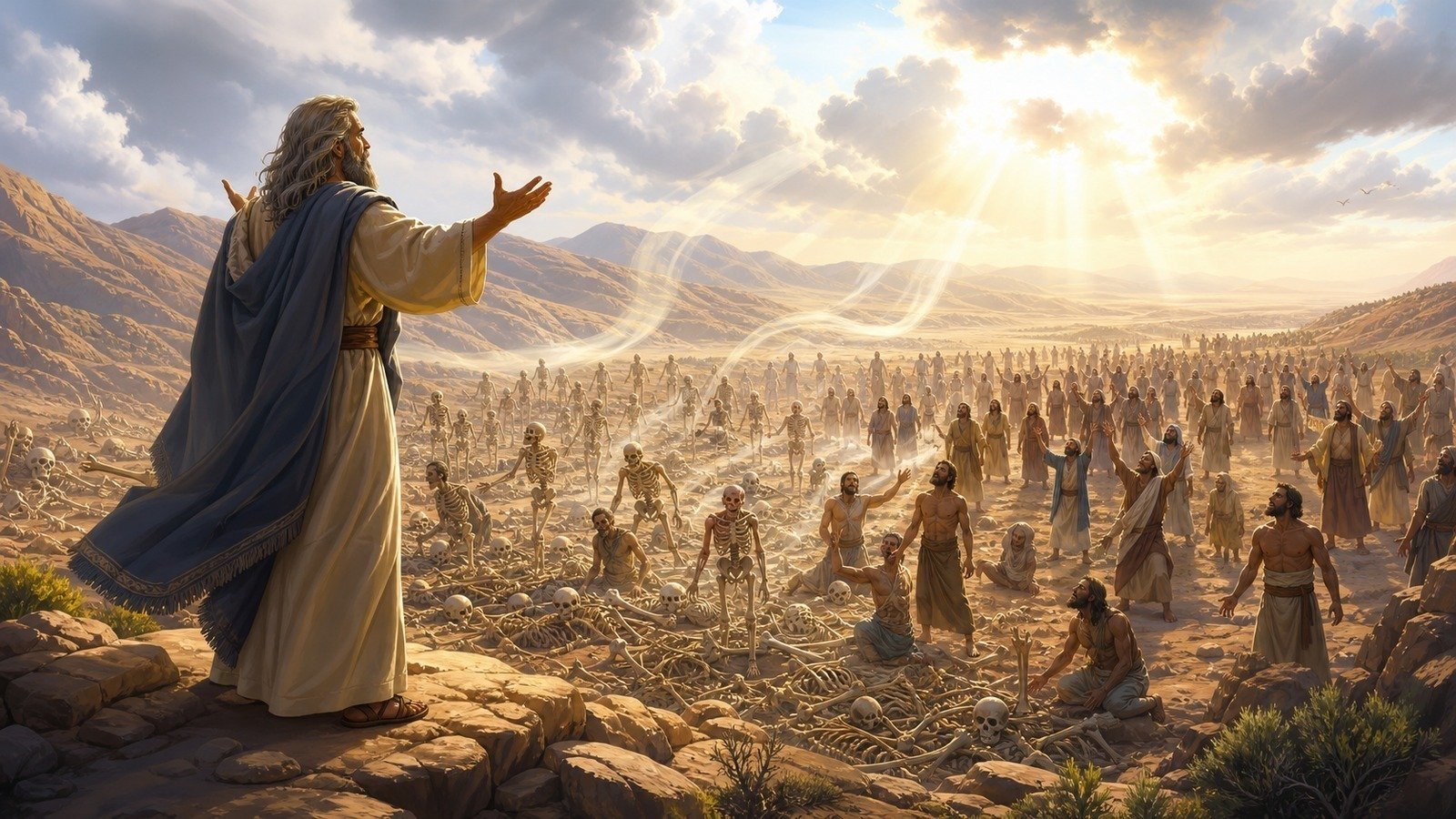
Ezekiel is shown a valley of scattered, dry bones that come together, are covered with flesh, and are finally filled with breath at God's command, a vision explicitly interpreted as a promise of national restoration for a people who felt utterly without hope.
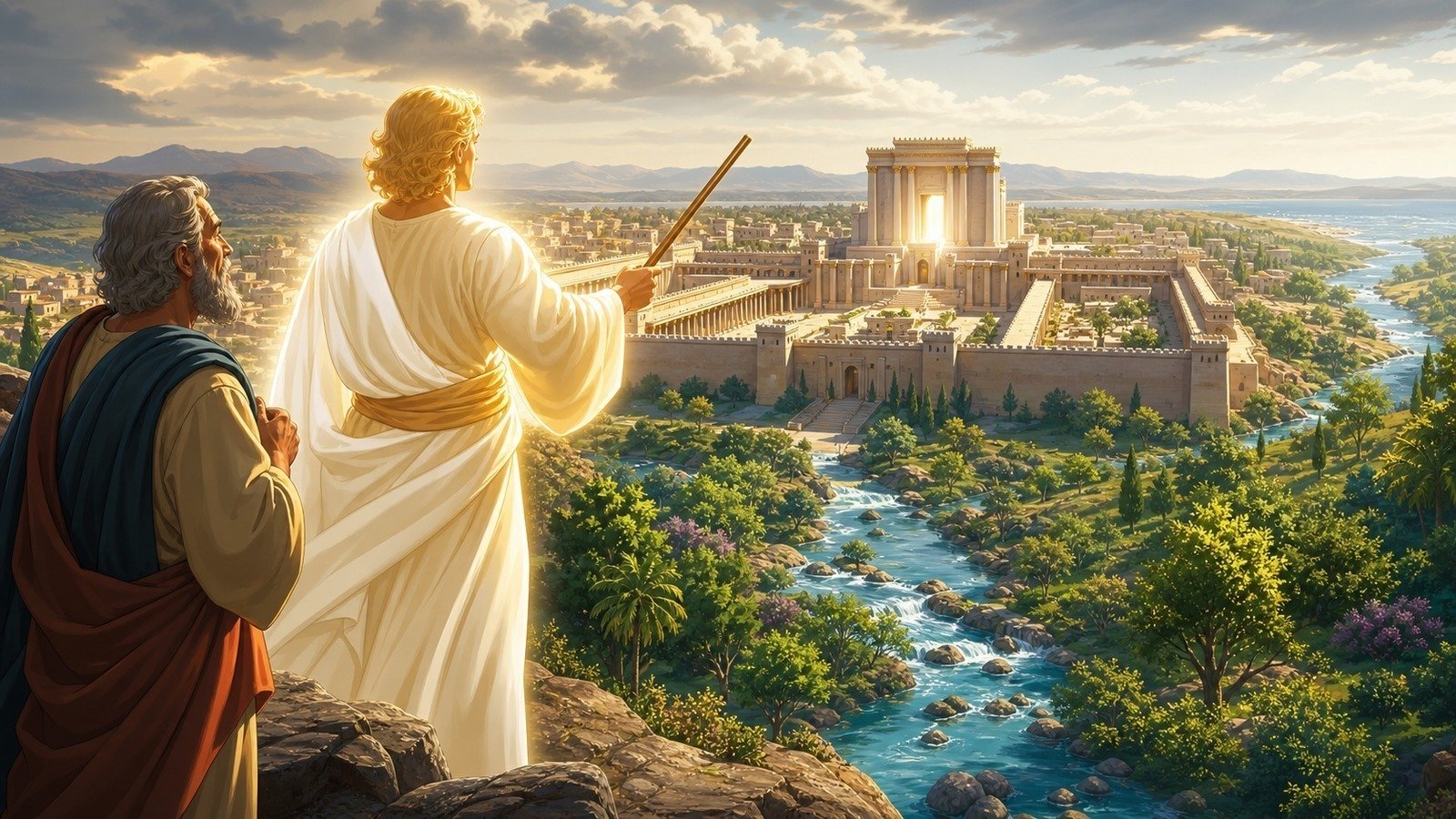
In extensive detail, Ezekiel is shown the measurements of a future temple, the return of God's glory to dwell in it, and a river flowing from it that brings life wherever it goes, closing the book on a note of restored worship and divine presence.
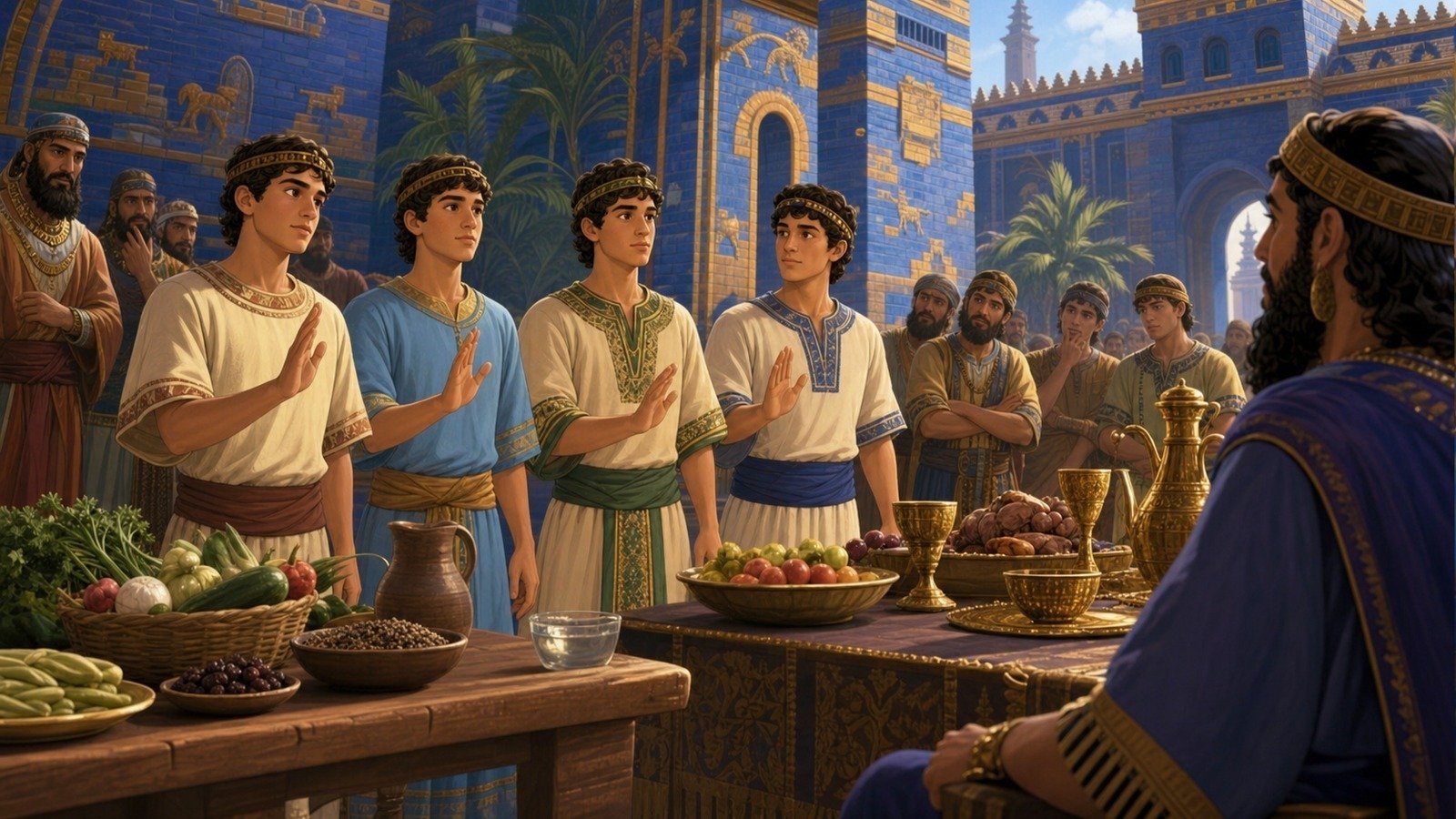
Following Nebuchadnezzar's first campaign against Jerusalem, Daniel and three companions are among the young nobility deported to Babylon for training in the royal court; they resolve not to defile themselves with the king's food, and are found ten times wiser than all the royal magicians.
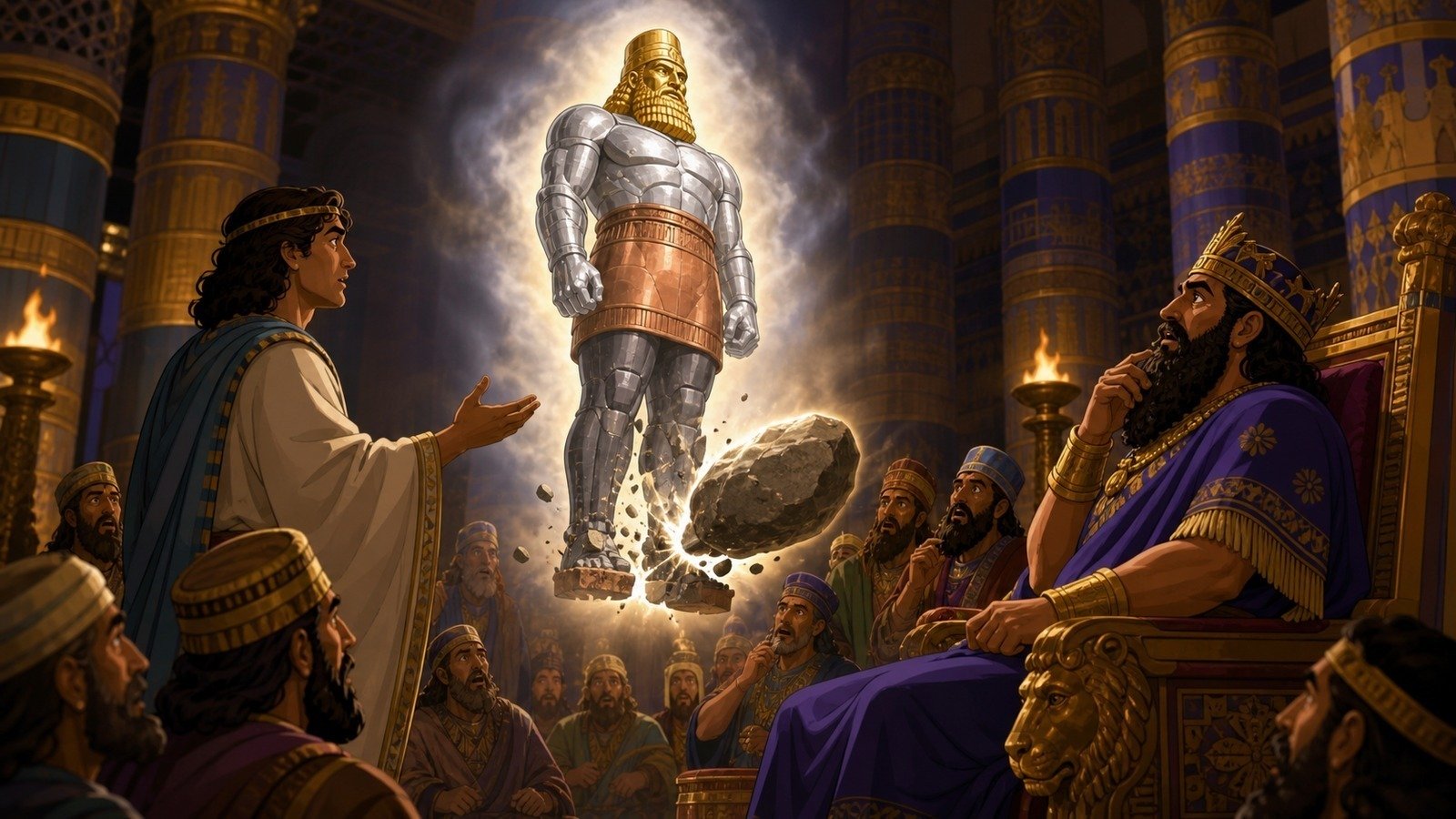
Daniel succeeds where Babylon's own diviners fail, both recounting and interpreting Nebuchadnezzar's dream of a statue made of four metals struck down by an uncut stone, read as a succession of kingdoms ultimately superseded by God's own indestructible kingdom.
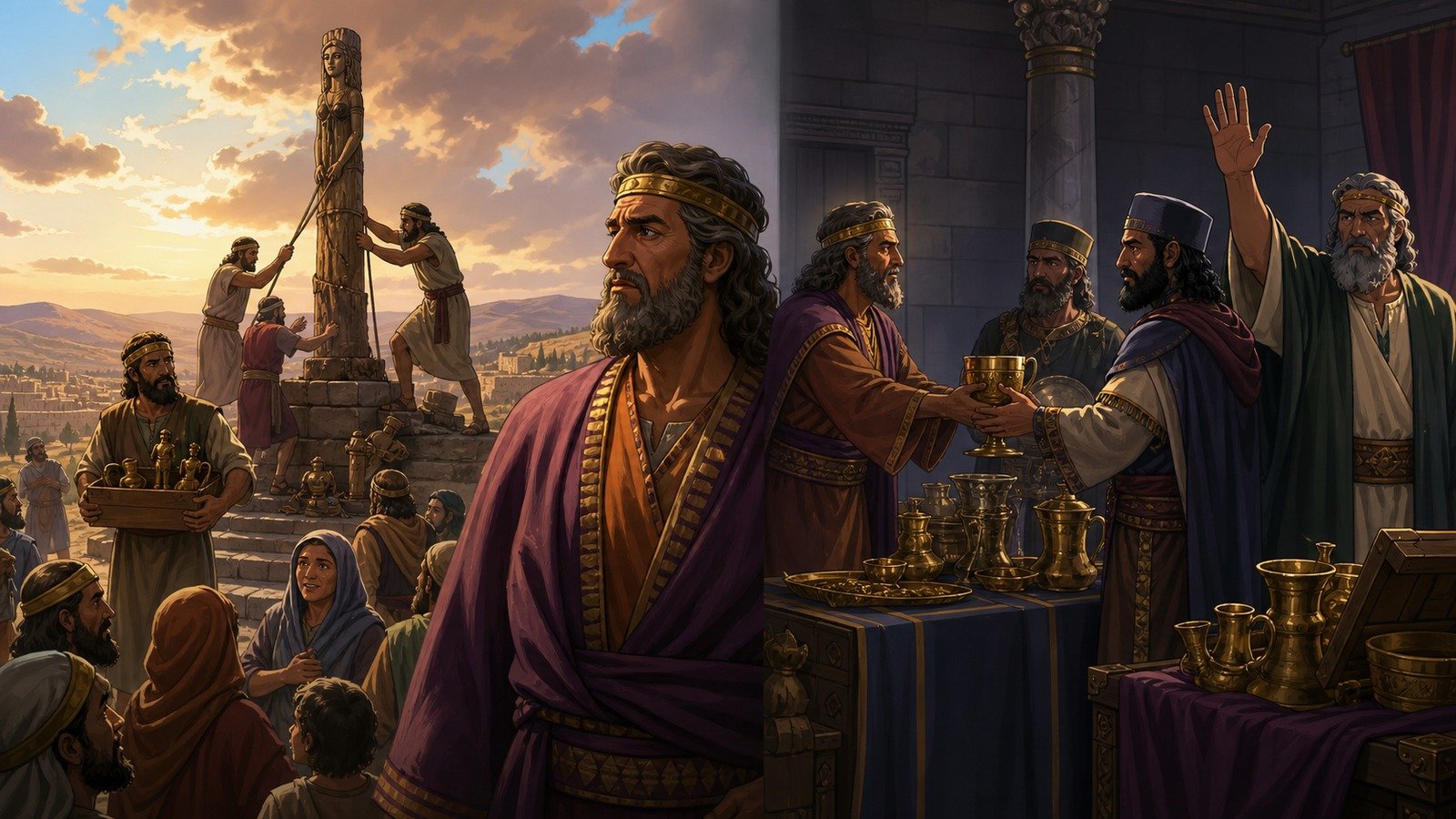
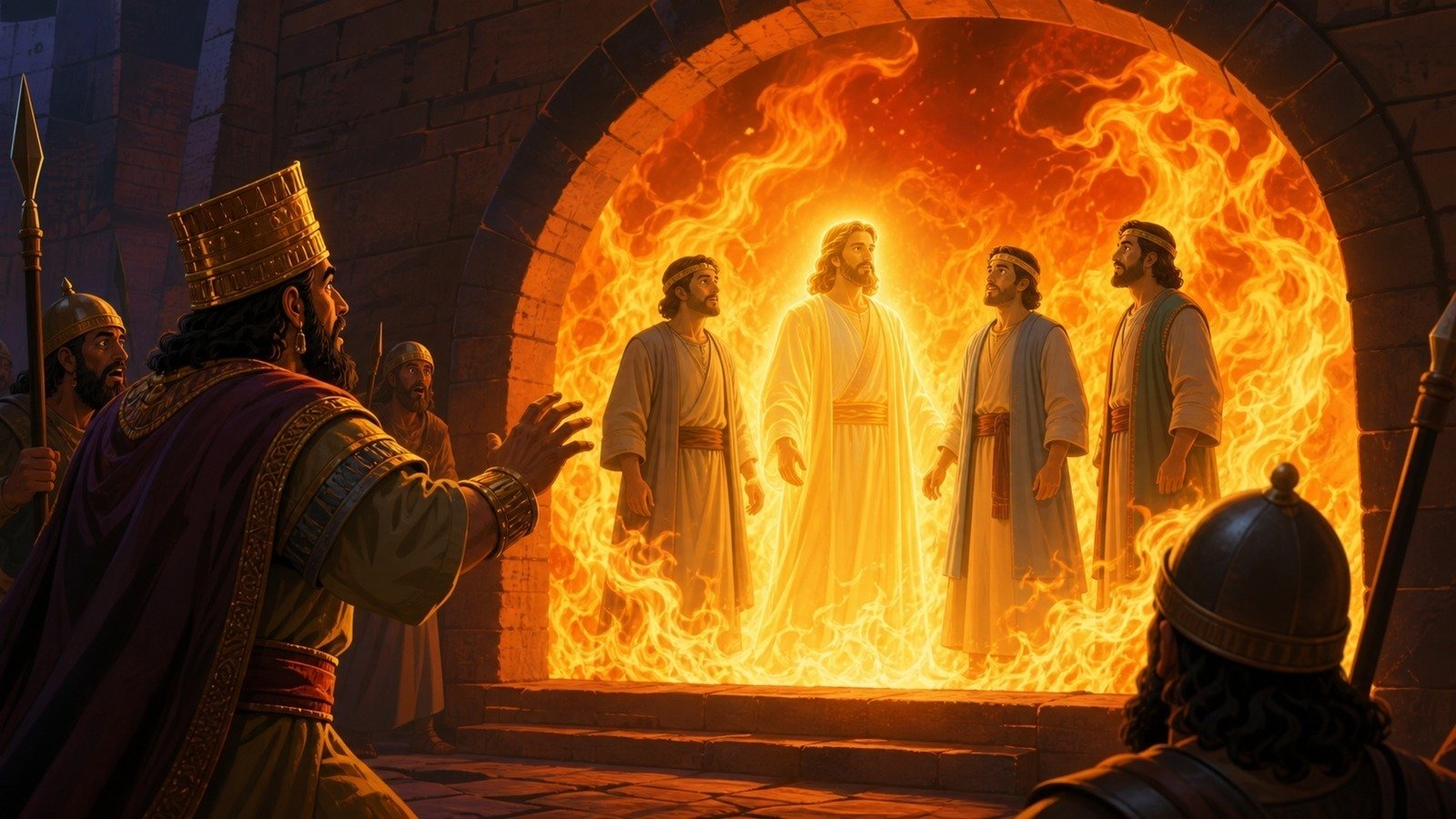
Daniel's three companions refuse to bow to Nebuchadnezzar's golden image and are thrown into a furnace heated seven times hotter than normal; they emerge unharmed, accompanied, the king observes, by a fourth figure "like a son of the gods."
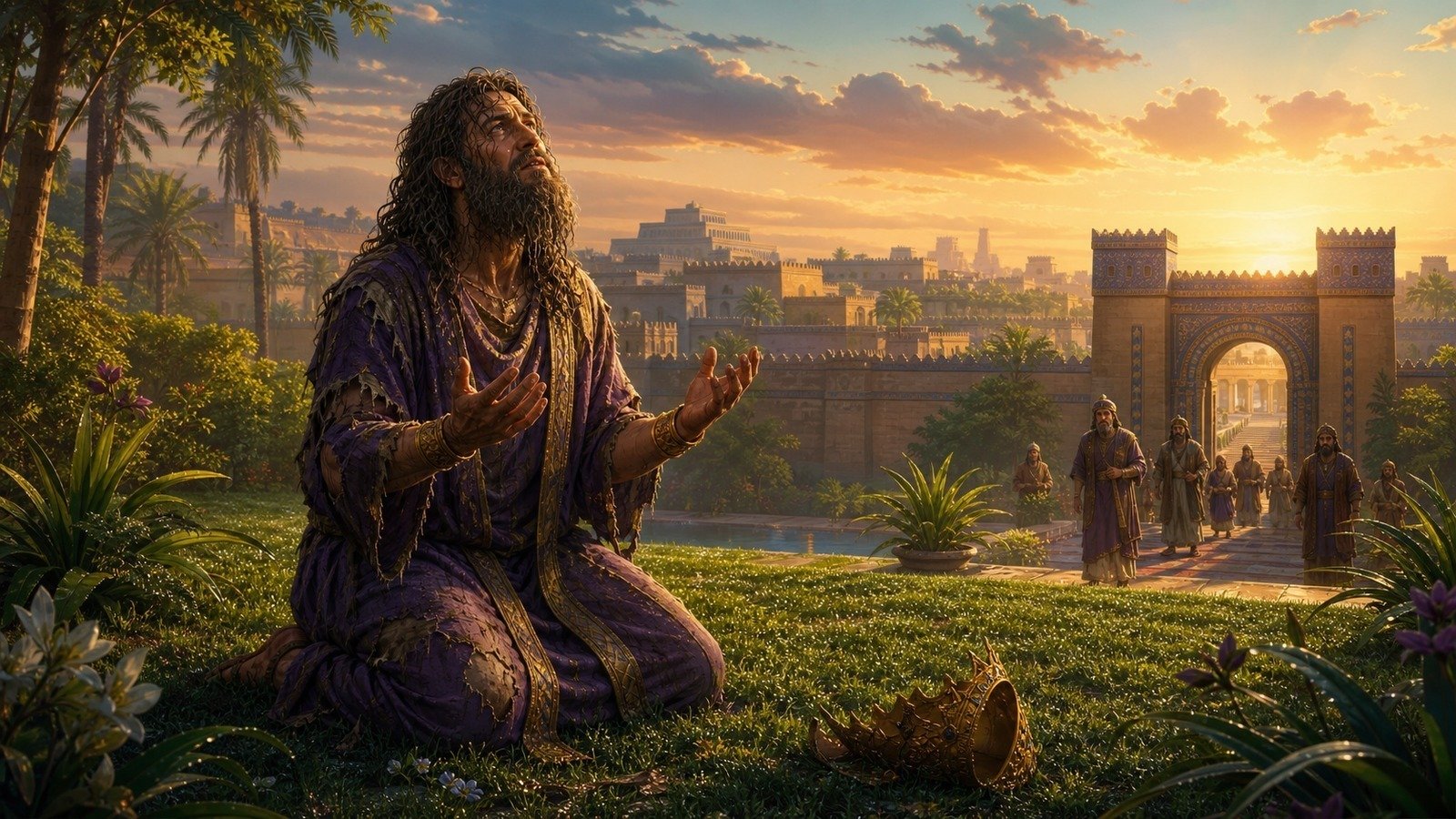
After a dream warning him of coming humiliation for his pride, Nebuchadnezzar is driven from human society for a period, living like an animal, until his sanity and throne are restored when he acknowledges "that the Most High is sovereign."
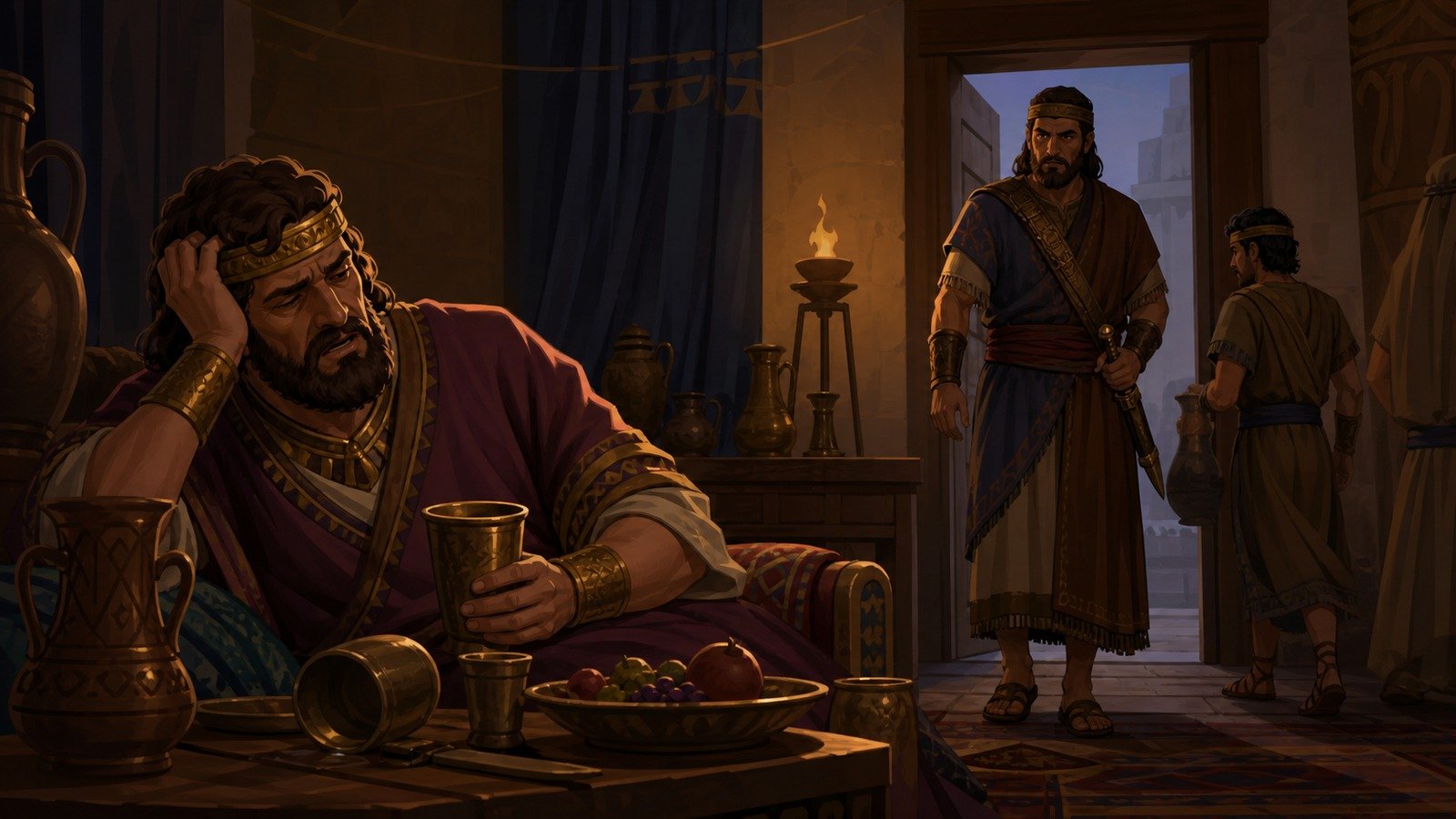
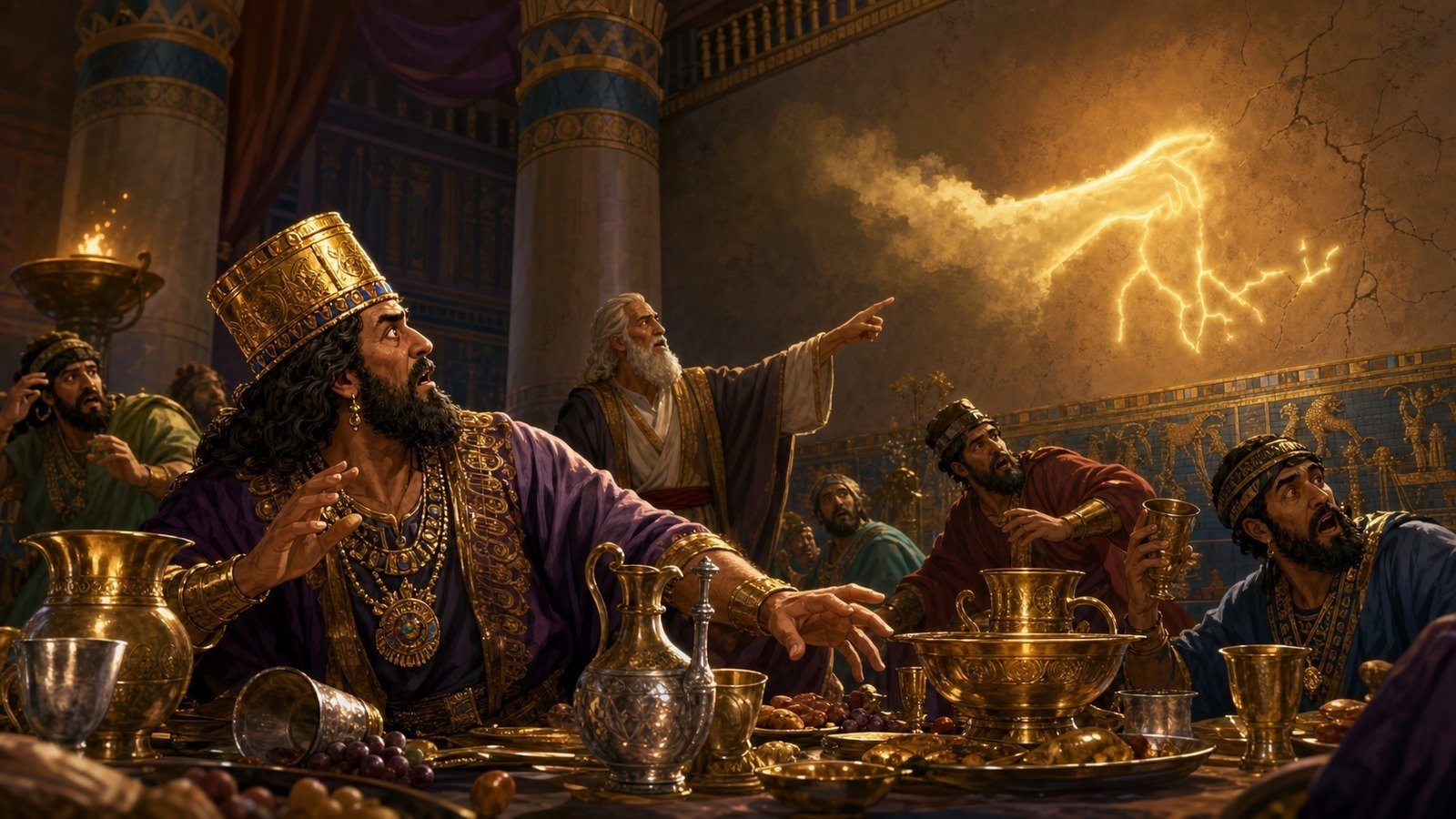
During a drunken feast using vessels looted from Jerusalem's Temple, a disembodied hand writes a cryptic judgement on the palace wall; Daniel interprets it as the end of Belshazzar's kingdom, fulfilled that same night.
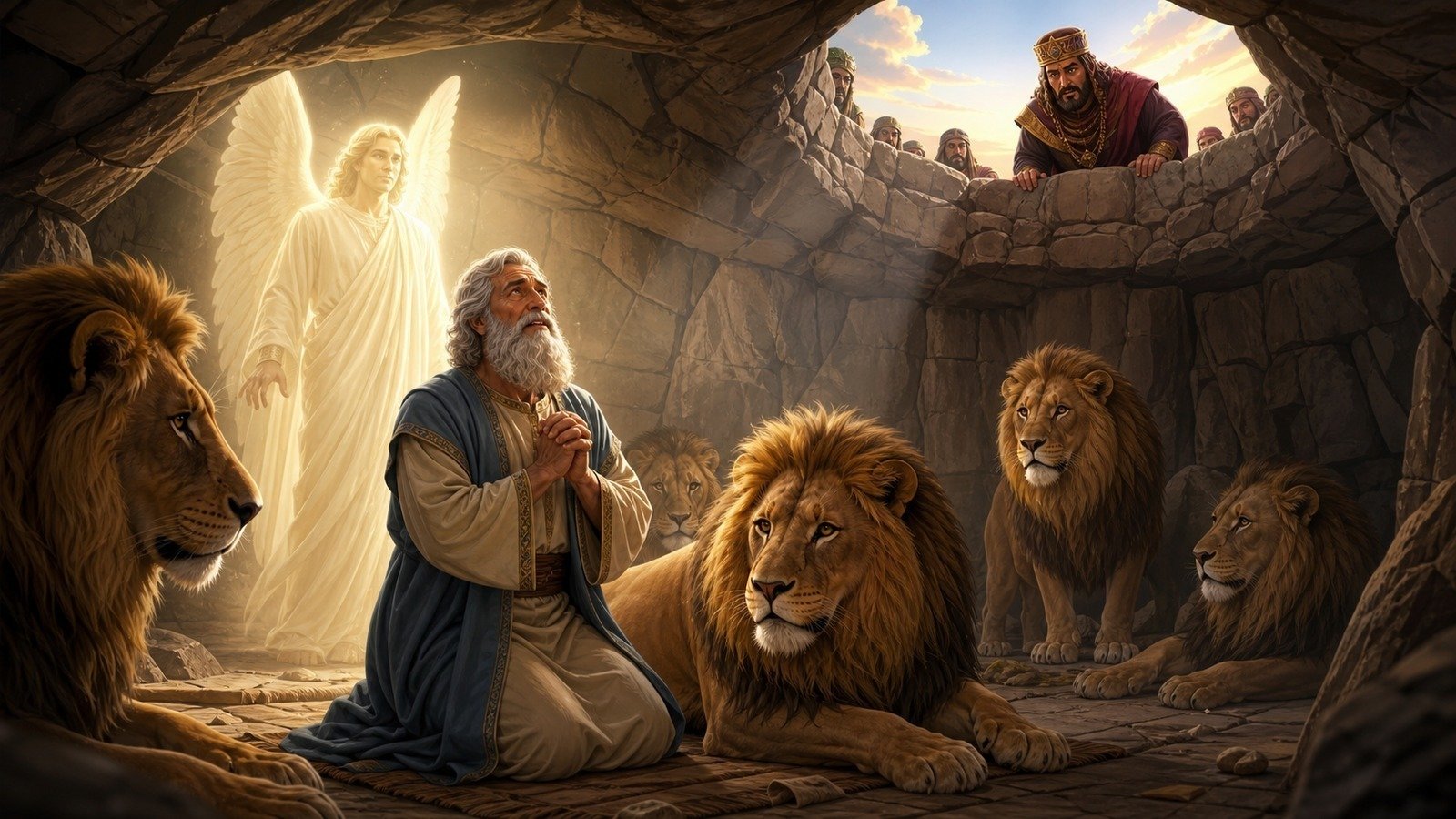
Under the new Persian administration, jealous officials trick "Darius the Mede" into a decree banning prayer to anyone but the king; Daniel continues praying openly regardless, is thrown to the lions as required by law, and survives the night unharmed.
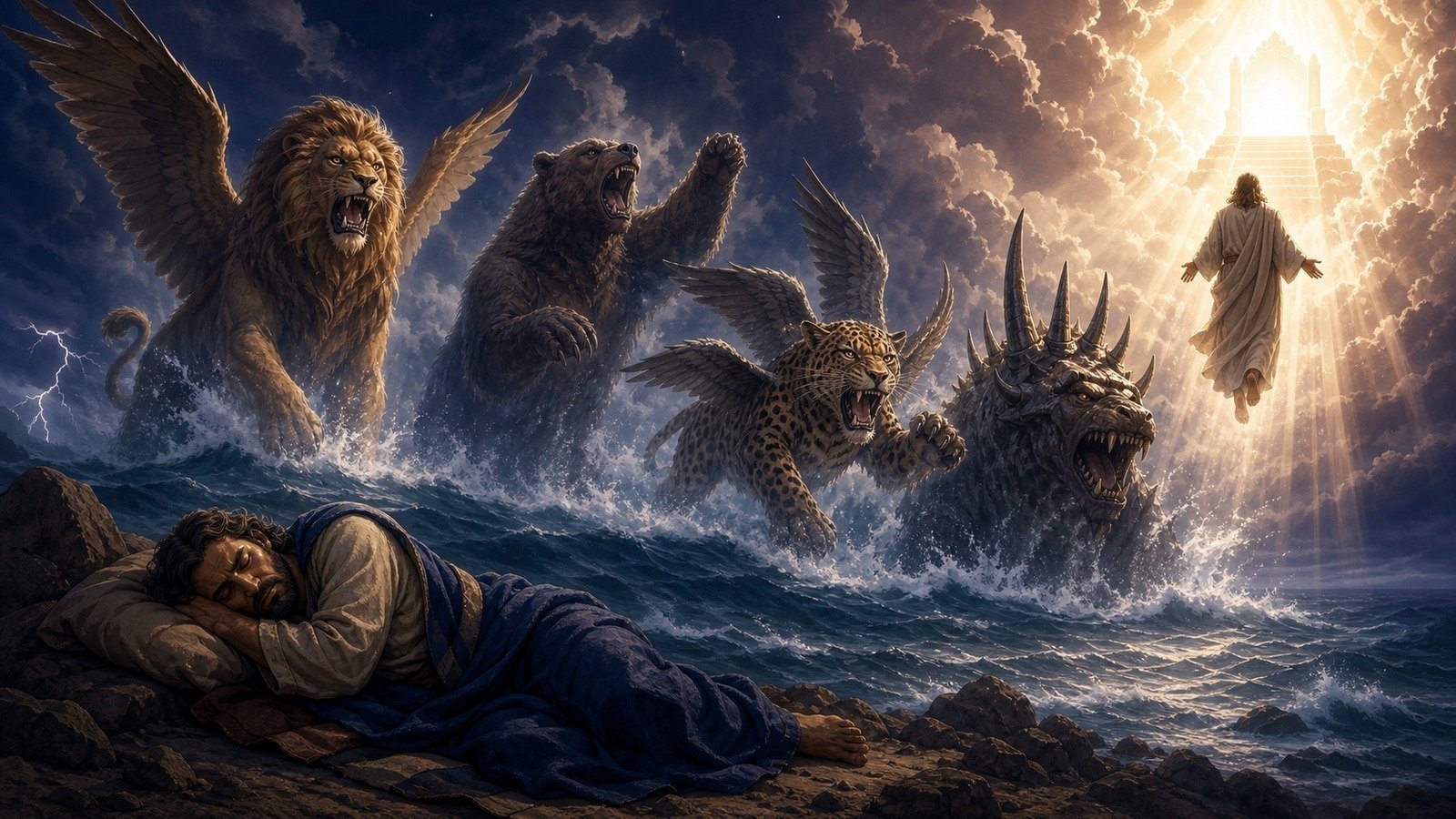
Daniel sees four beasts representing successive empires and a "son of man" given everlasting dominion, then a further vision of a ram and goat that most interpreters read as depicting the Medo-Persian and Greek empires.
After praying over Jeremiah's prophecy of seventy years' exile, Daniel receives a further prophecy of "seventy weeks" concerning Jerusalem's future, one of the most debated passages in the book.
The shortest Old Testament book condemns Edom for standing by, or actively assisting, while Jerusalem fell, and promises Edom's own eventual downfall alongside Israel's ultimate restoration.
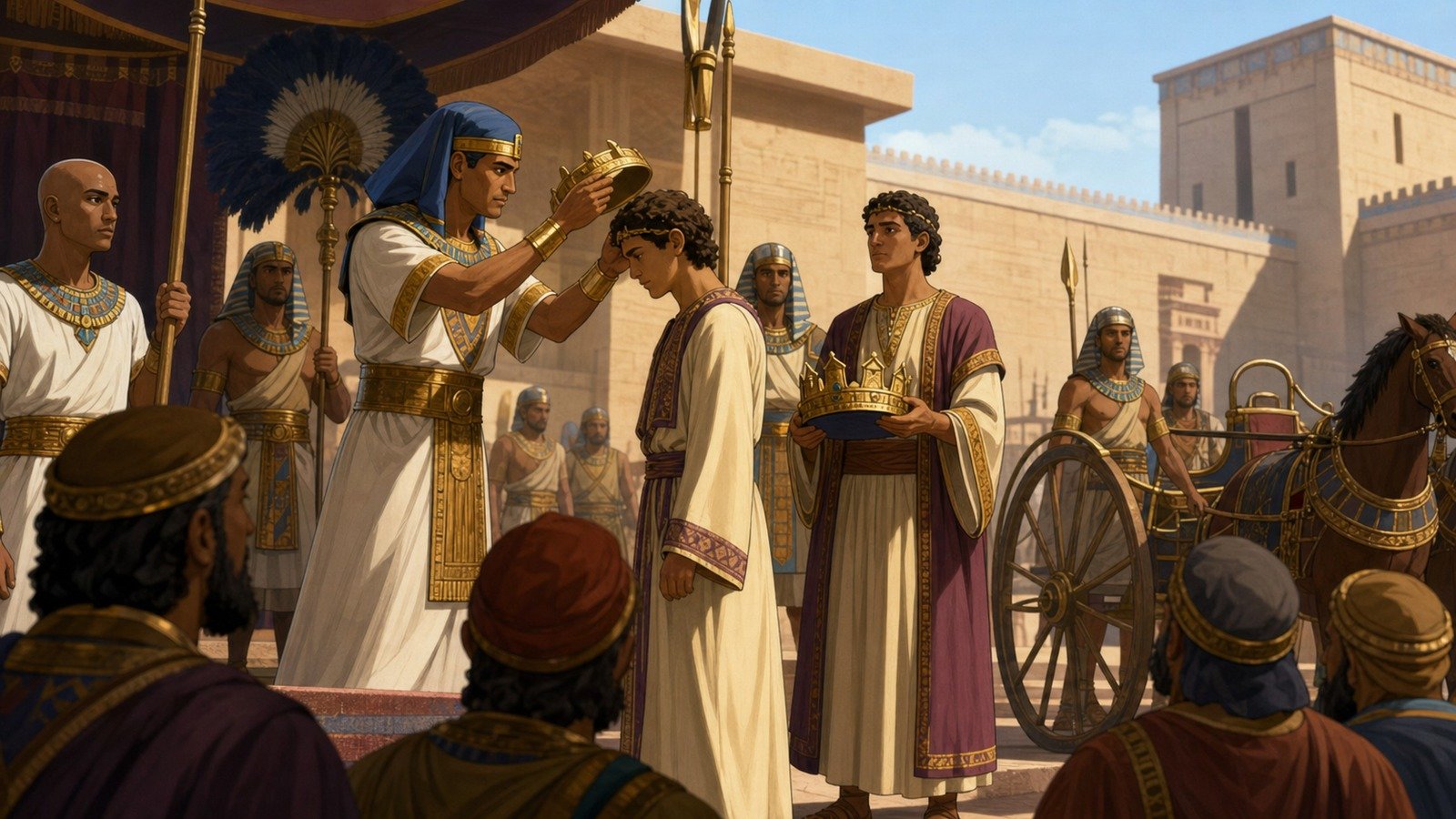
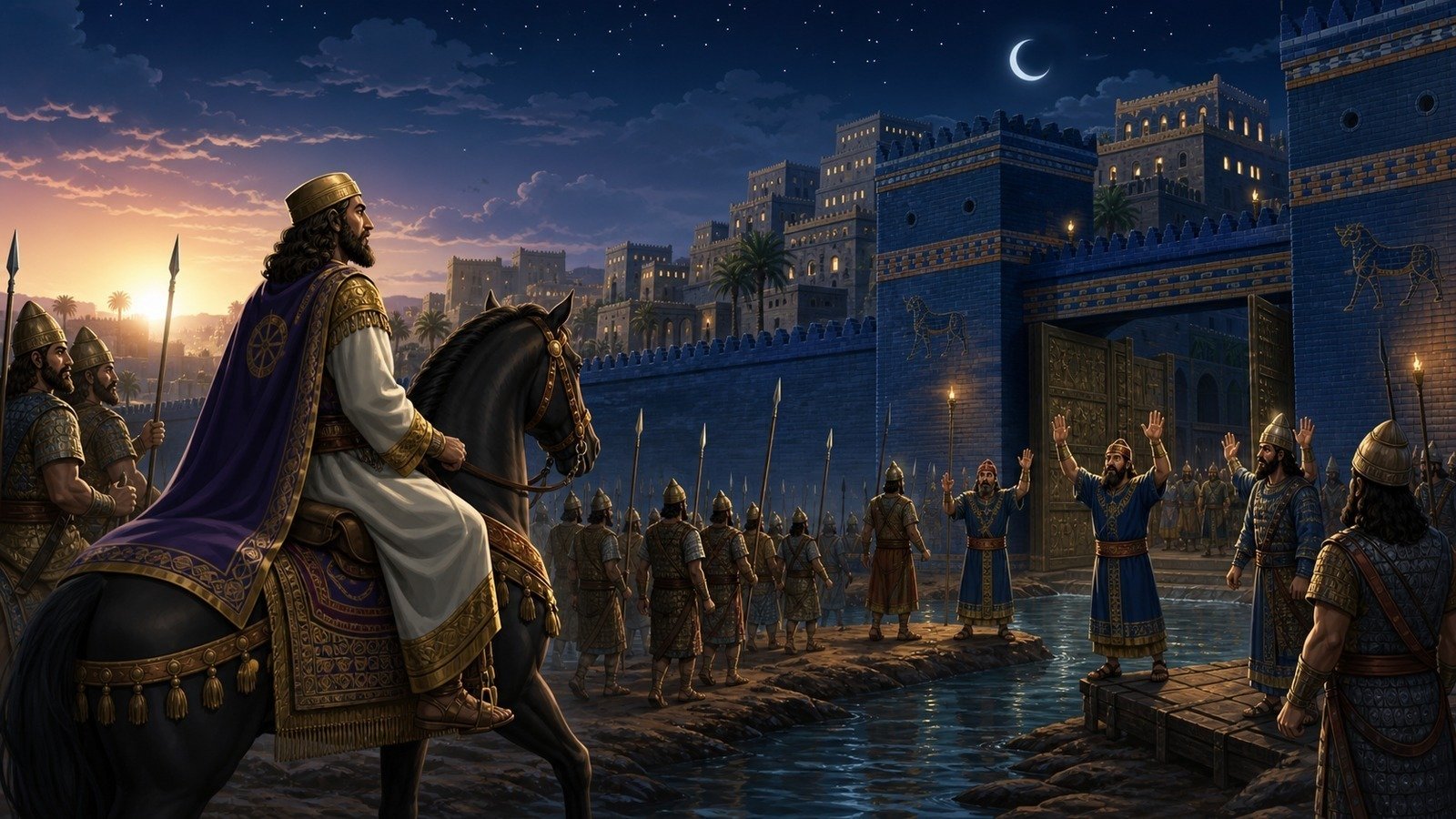
Cyrus the Great of Persia takes Babylon, ending the Babylonian empire and, within the Biblical narrative, fulfilling Isaiah's much earlier prophecy naming Cyrus by name as God's chosen instrument to release Judah from exile.
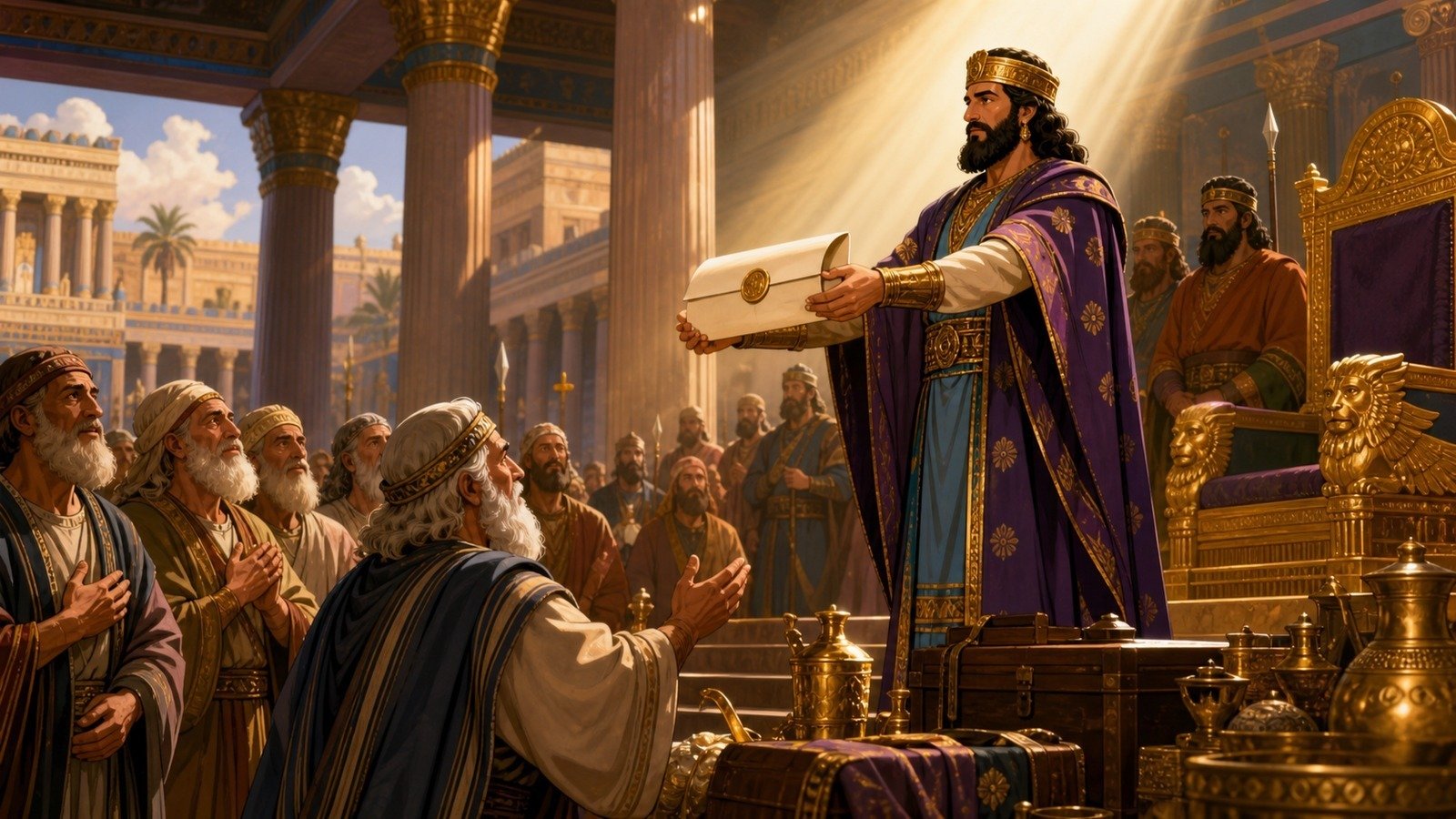
Cyrus issues a decree permitting exiled peoples to return home and rebuild their temples, framed in Ezra as a direct act of God stirring the Persian king's spirit.
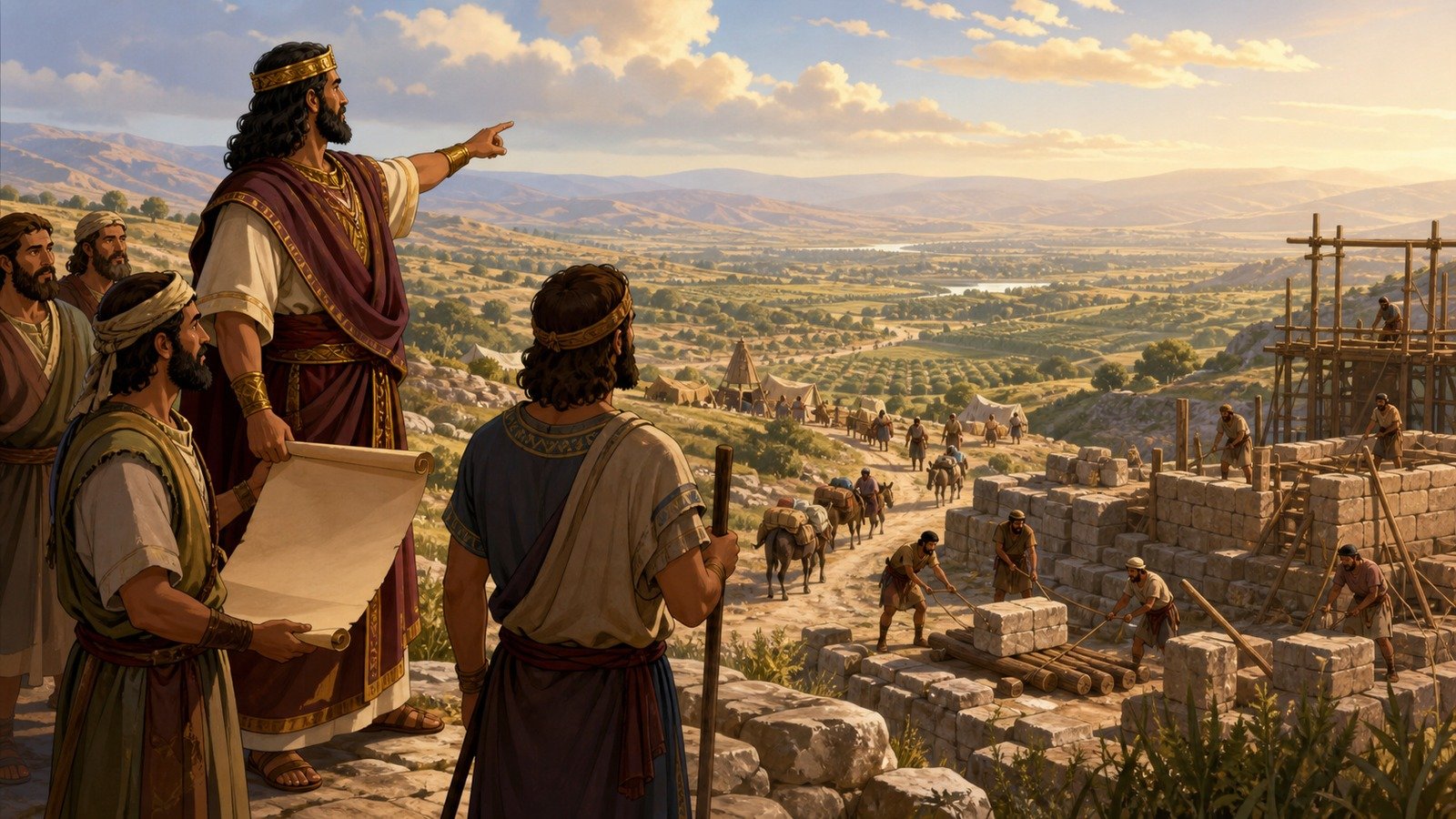
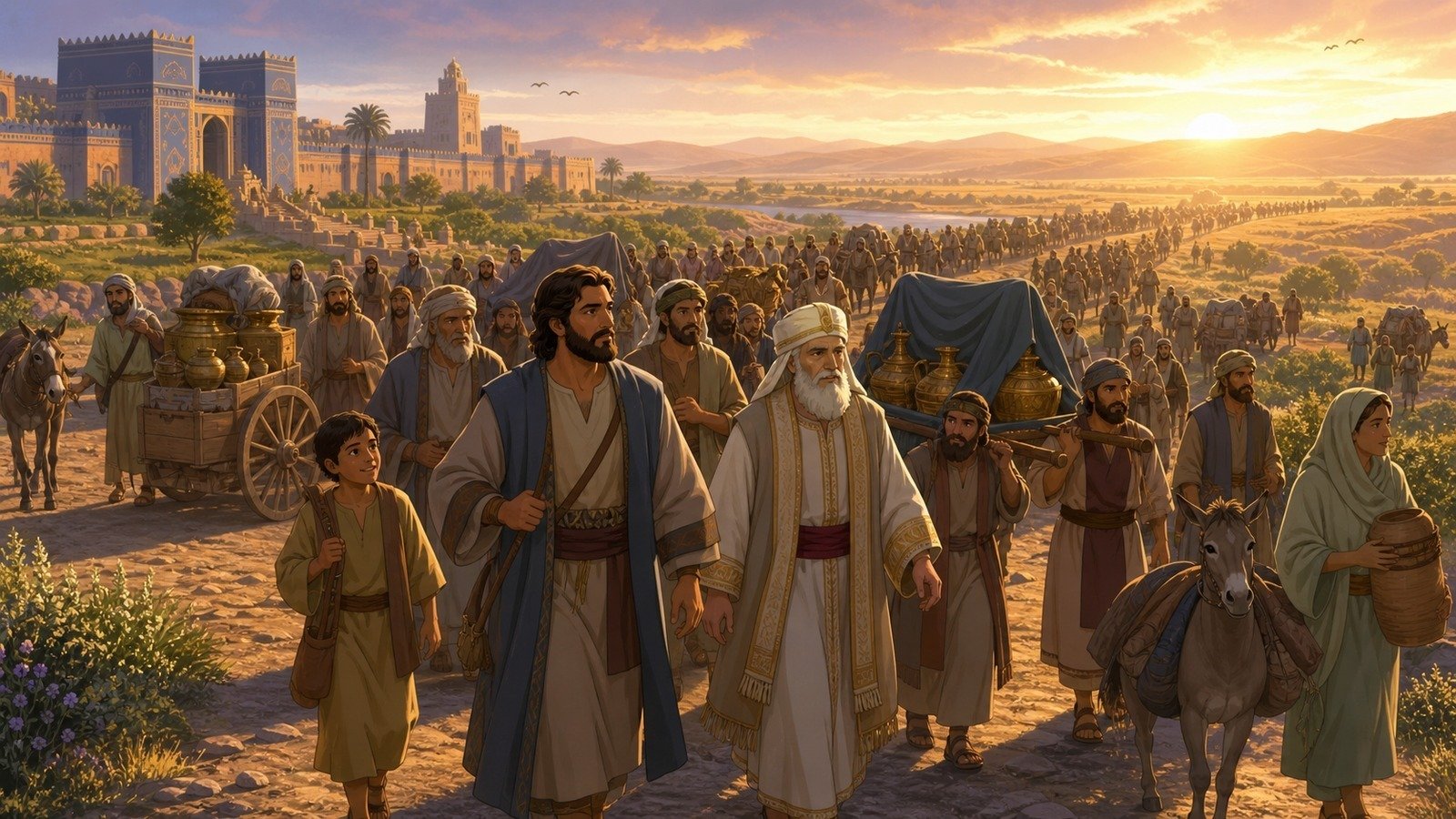
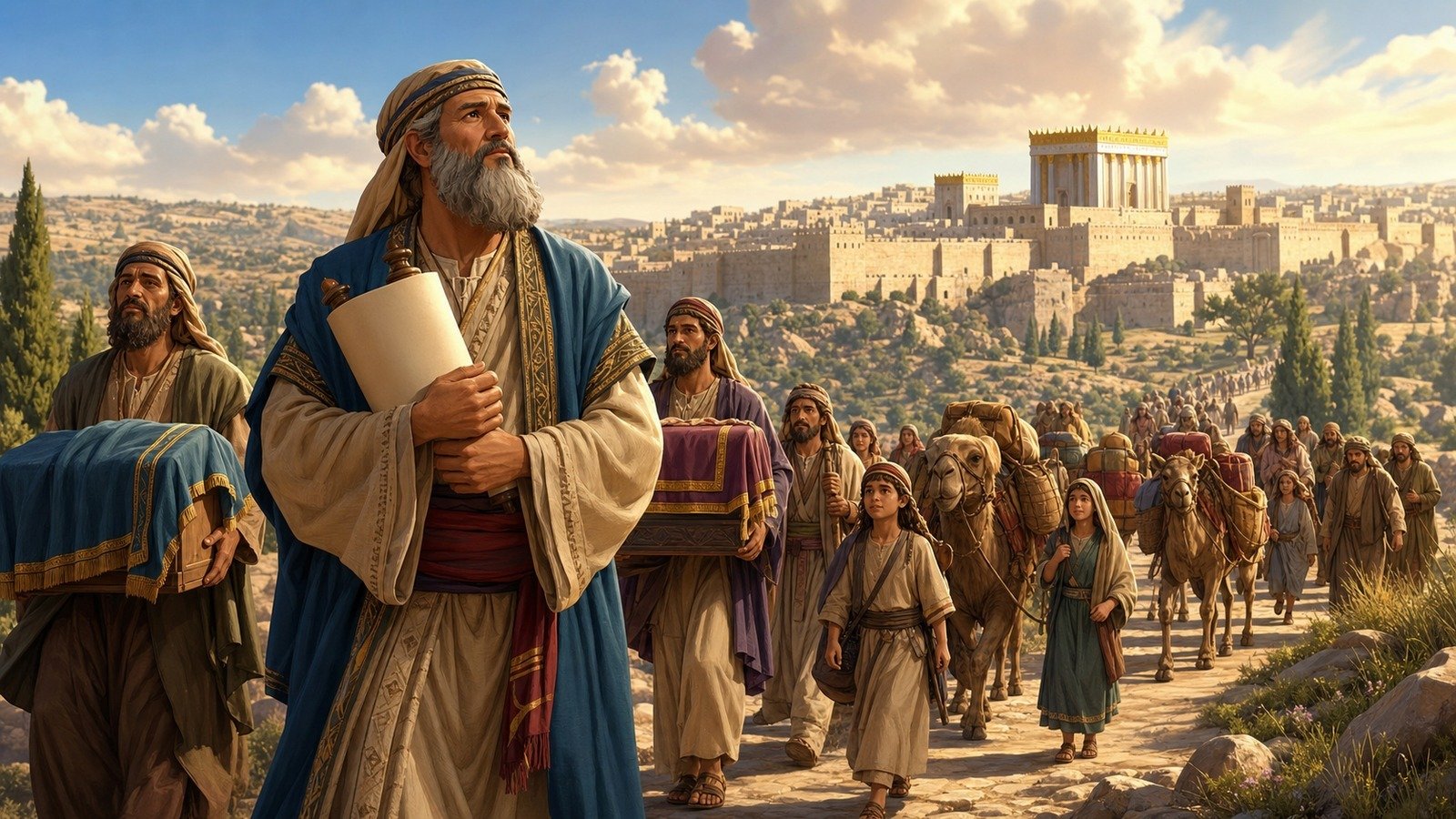
Roughly 50,000 Jews, led by the Davidic descendant Zerubbabel and the high priest Joshua, return to Judah, carrying back the Temple articles Nebuchadnezzar had taken.
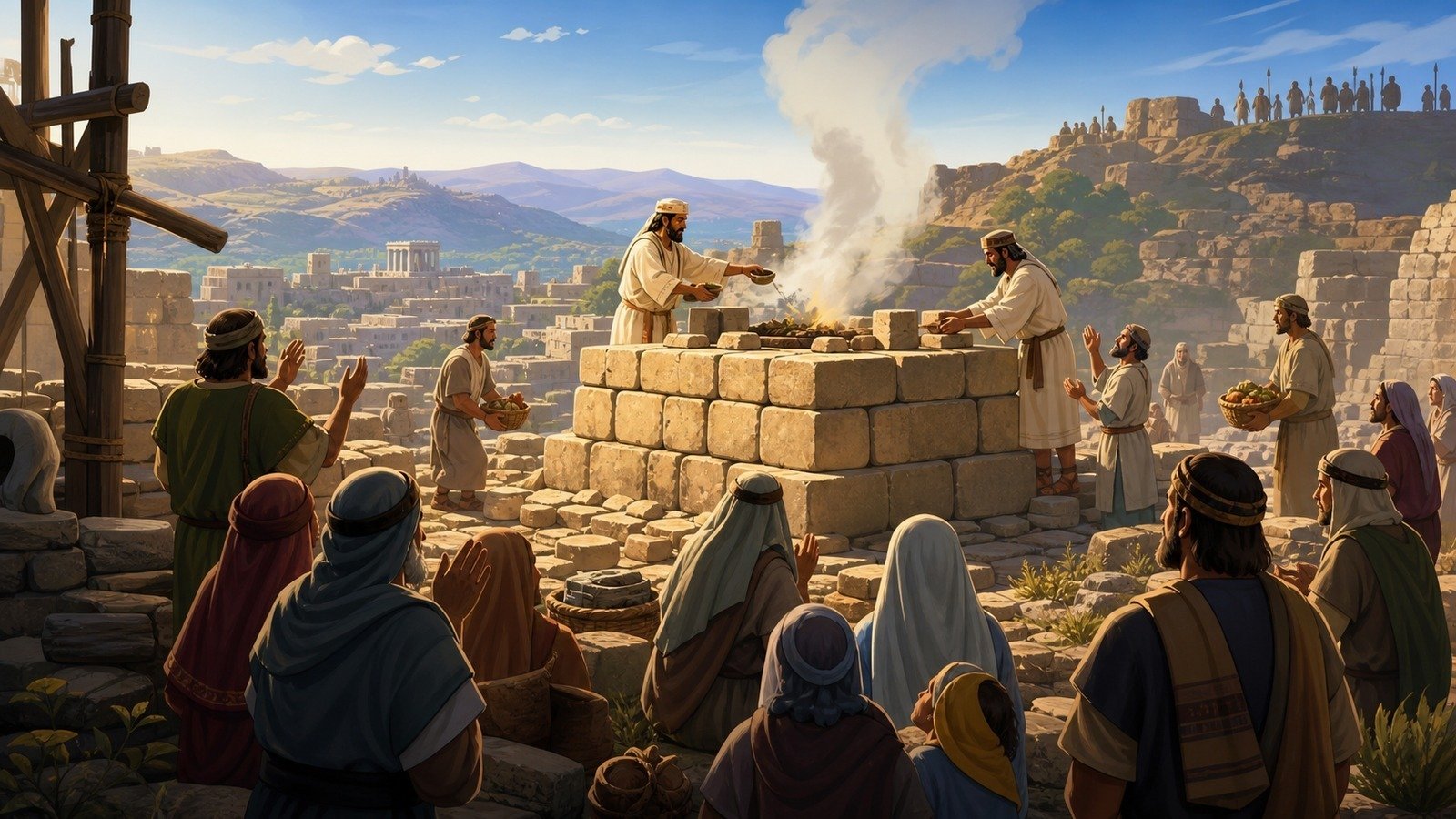
The returned exiles rebuild the altar on its original site and resume sacrifice despite their fear of surrounding peoples, restoring regular worship before the Temple itself is rebuilt.
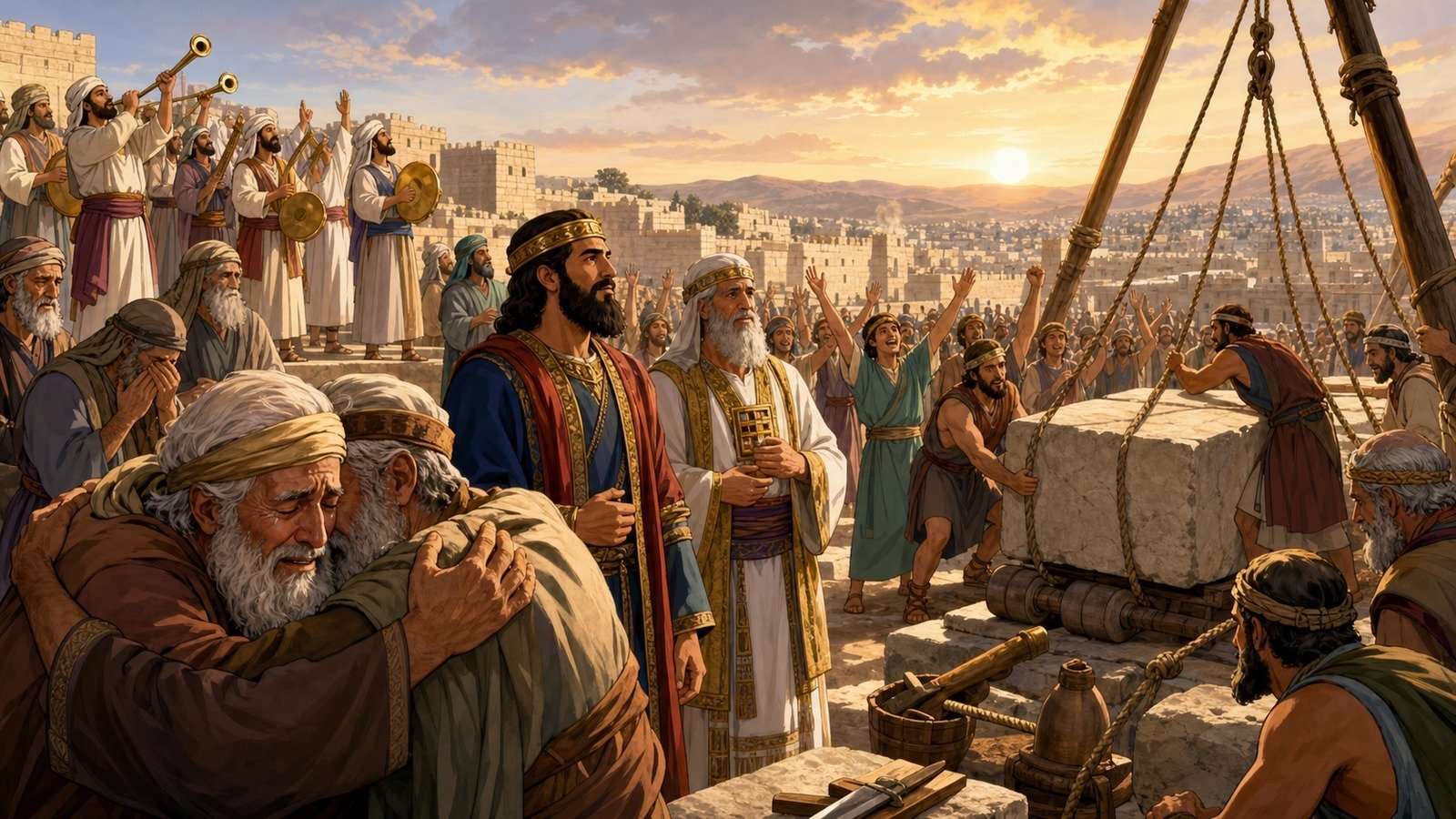
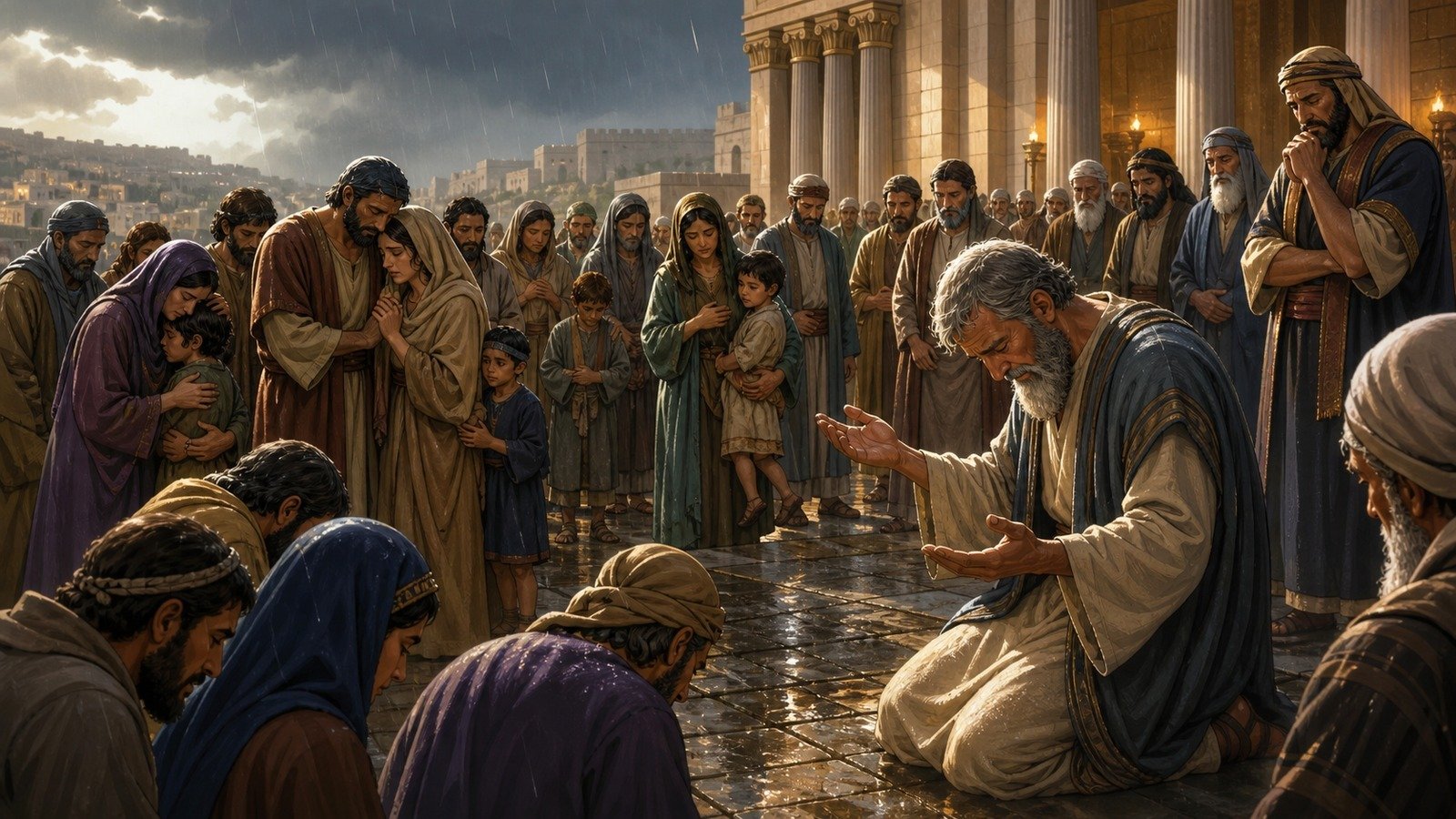
The Temple's foundation is laid amid mixed reactions: older exiles who remembered Solomon's Temple weep at the comparison, while others shout for joy at the restoration beginning at all.
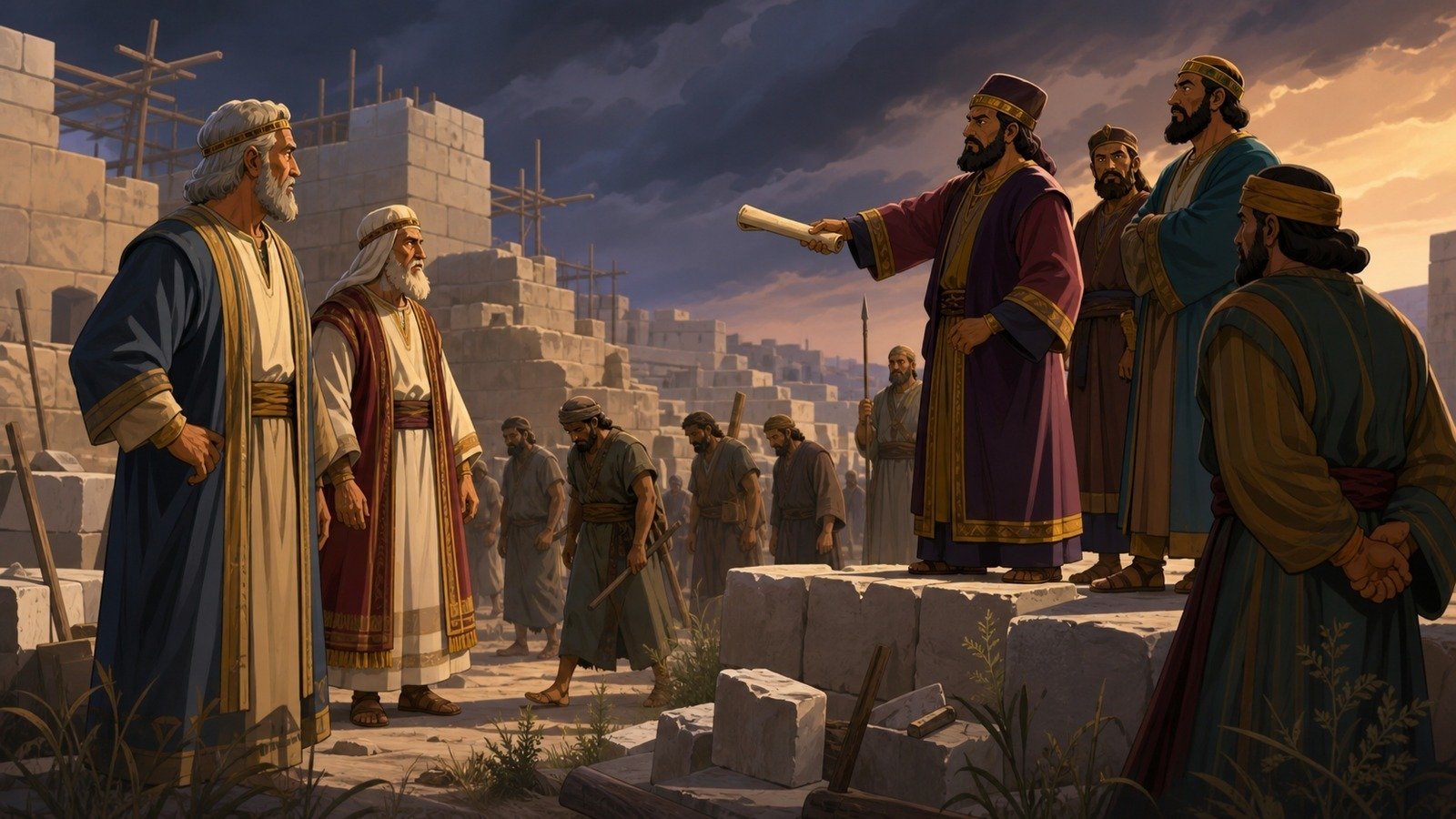
Local opposition, including formal complaints to the Persian court, halts construction on the Temple for roughly sixteen years, leaving the foundation unfinished until Darius I's reign.
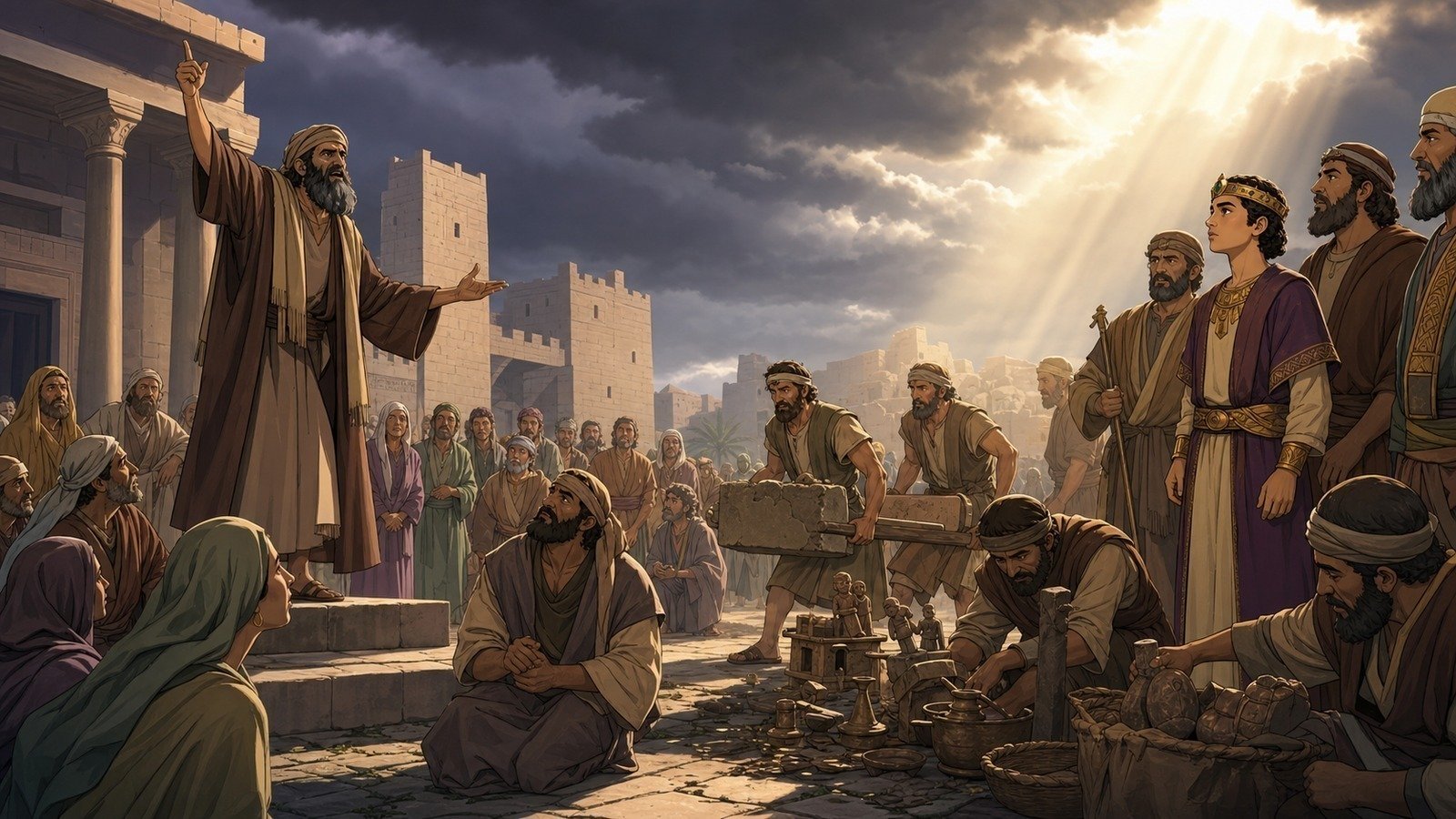
Haggai rebukes the returned community for prioritising their own houses over God's while the Temple lies unfinished, and promises this second Temple's future glory will exceed the first, spurring work to resume.
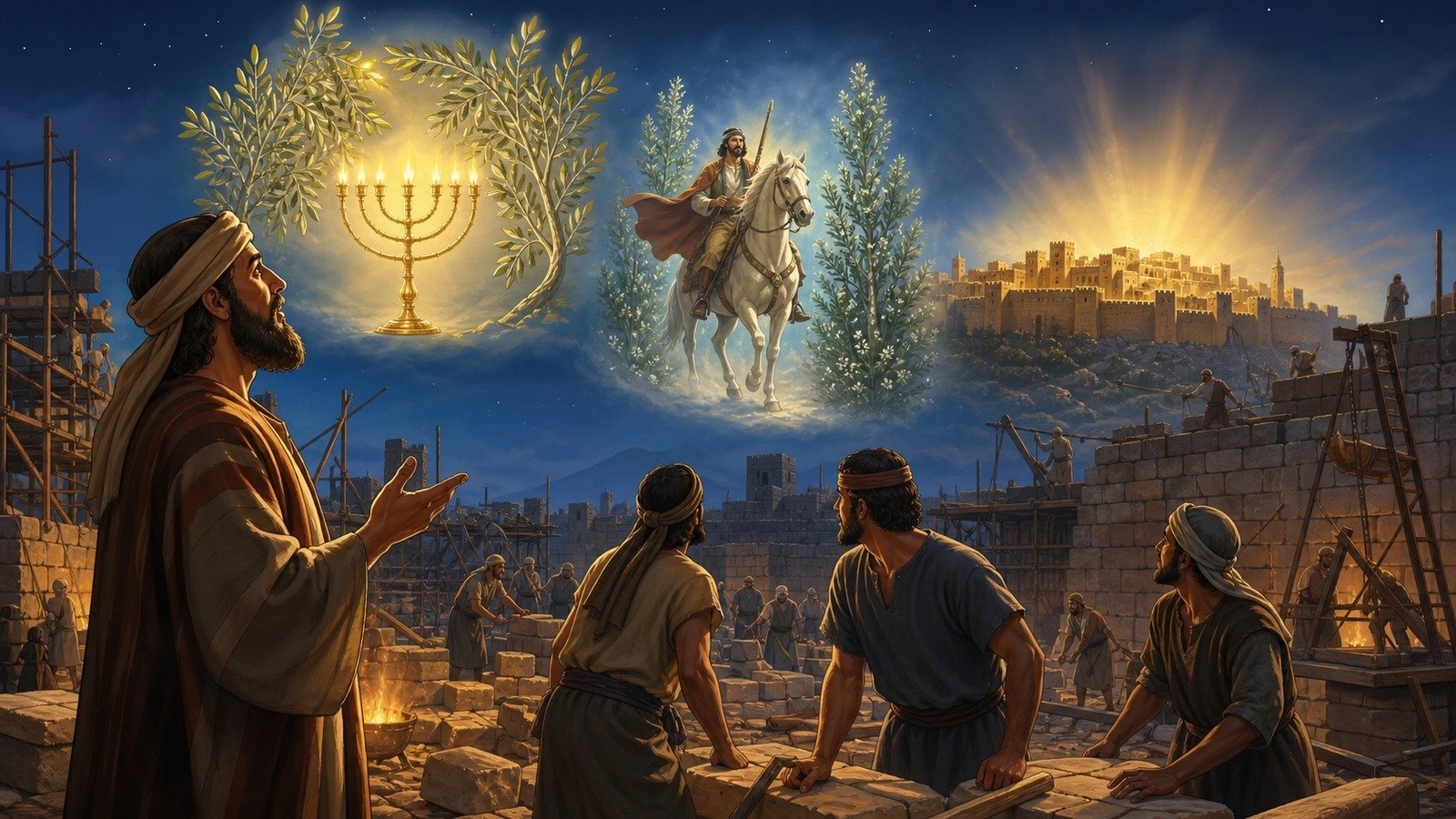
Alongside Haggai, Zechariah supplements the rebuilding effort with a series of encouraging night visions and a promise of the Temple's future glory, sustaining momentum through to completion.
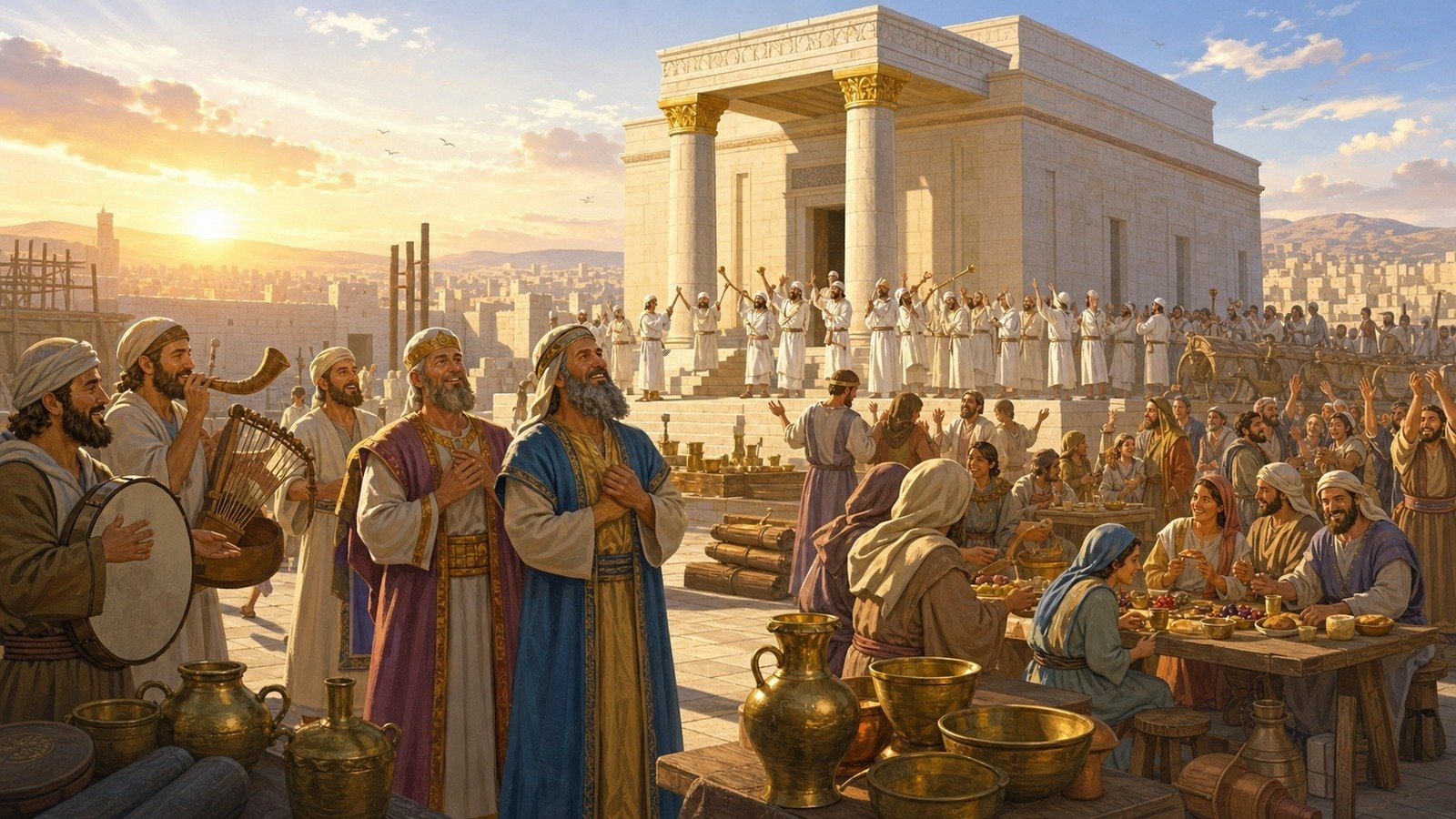
Darius I confirms Cyrus's original decree after a records search and orders the rebuilding funded from the royal treasury; the Temple is completed and dedicated roughly seventy years after its destruction, and Passover is celebrated there for the first time since the exile.
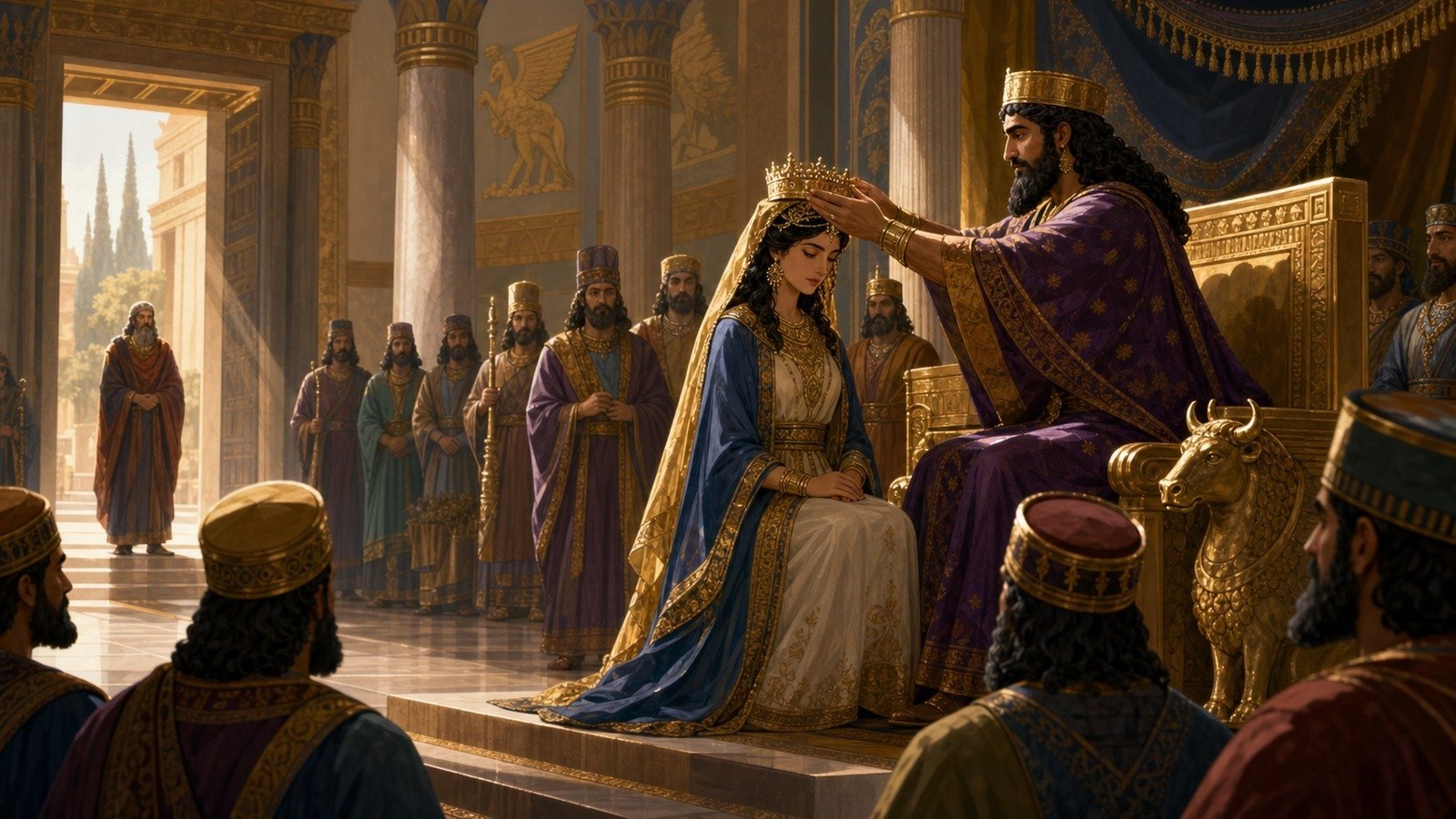
After Queen Vashti's removal for refusing a public summons, a kingdom-wide search brings the Jewish orphan Esther, raised by her cousin Mordecai, into King Xerxes' court, where she is chosen queen without revealing her Jewish identity.
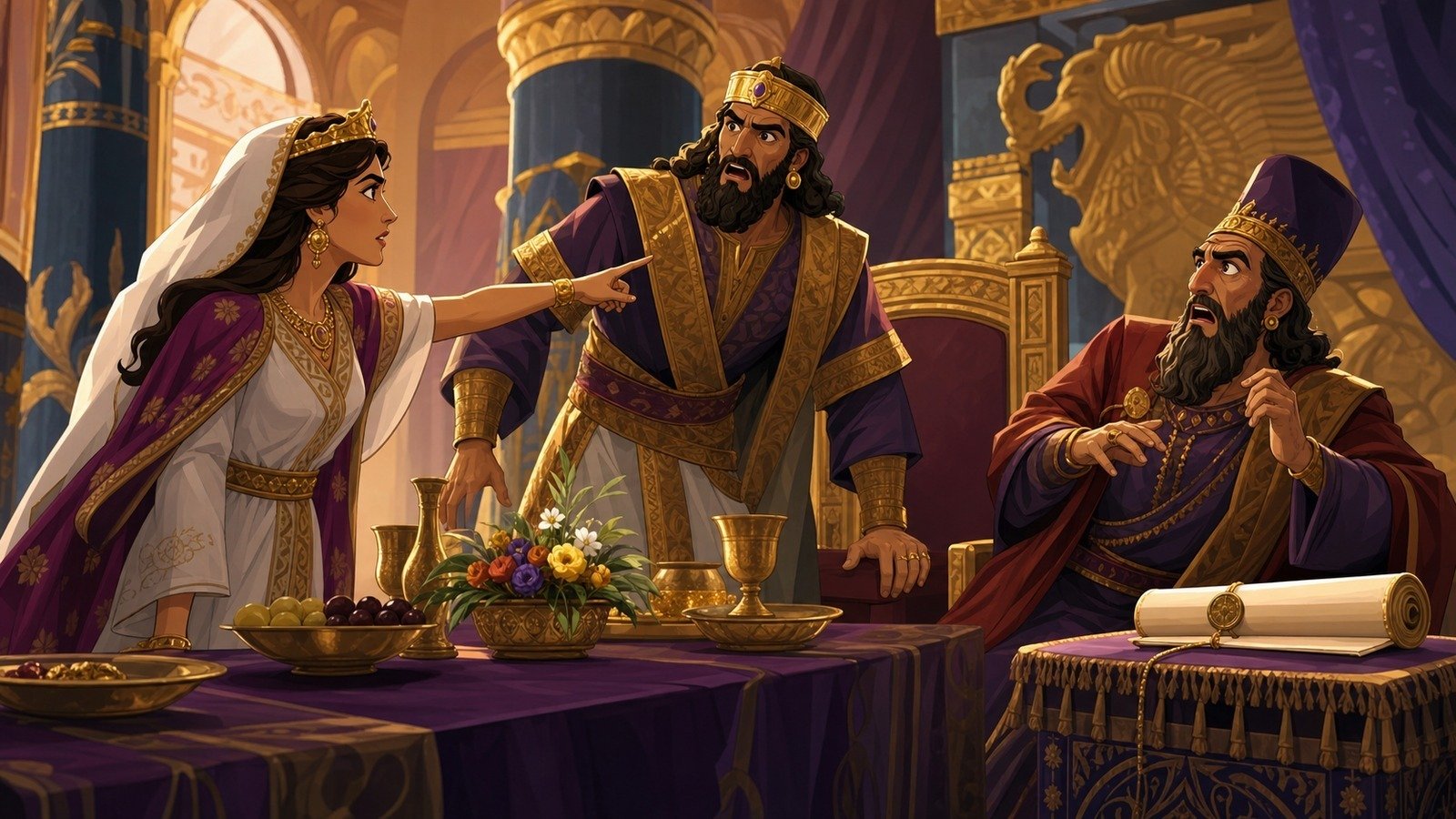
The court official Haman, enraged by Mordecai's refusal to bow to him, secures a decree to annihilate the Jews throughout the empire; Esther risks her life by approaching the king unsummoned and exposes Haman's plot at a private banquet.
With Haman's decree still technically in force, a second royal edict allows the Jews to defend themselves; their deliverance is commemorated ever after in the festival of Purim.
The priest and scribe Ezra leads a second group of returnees, carrying further Temple articles and royal authority to teach and enforce the Law across the province.
On arrival, Ezra is confronted with widespread intermarriage between returned exiles and surrounding peoples; he leads the community in public confession and a controversial reform requiring these marriages be dissolved.
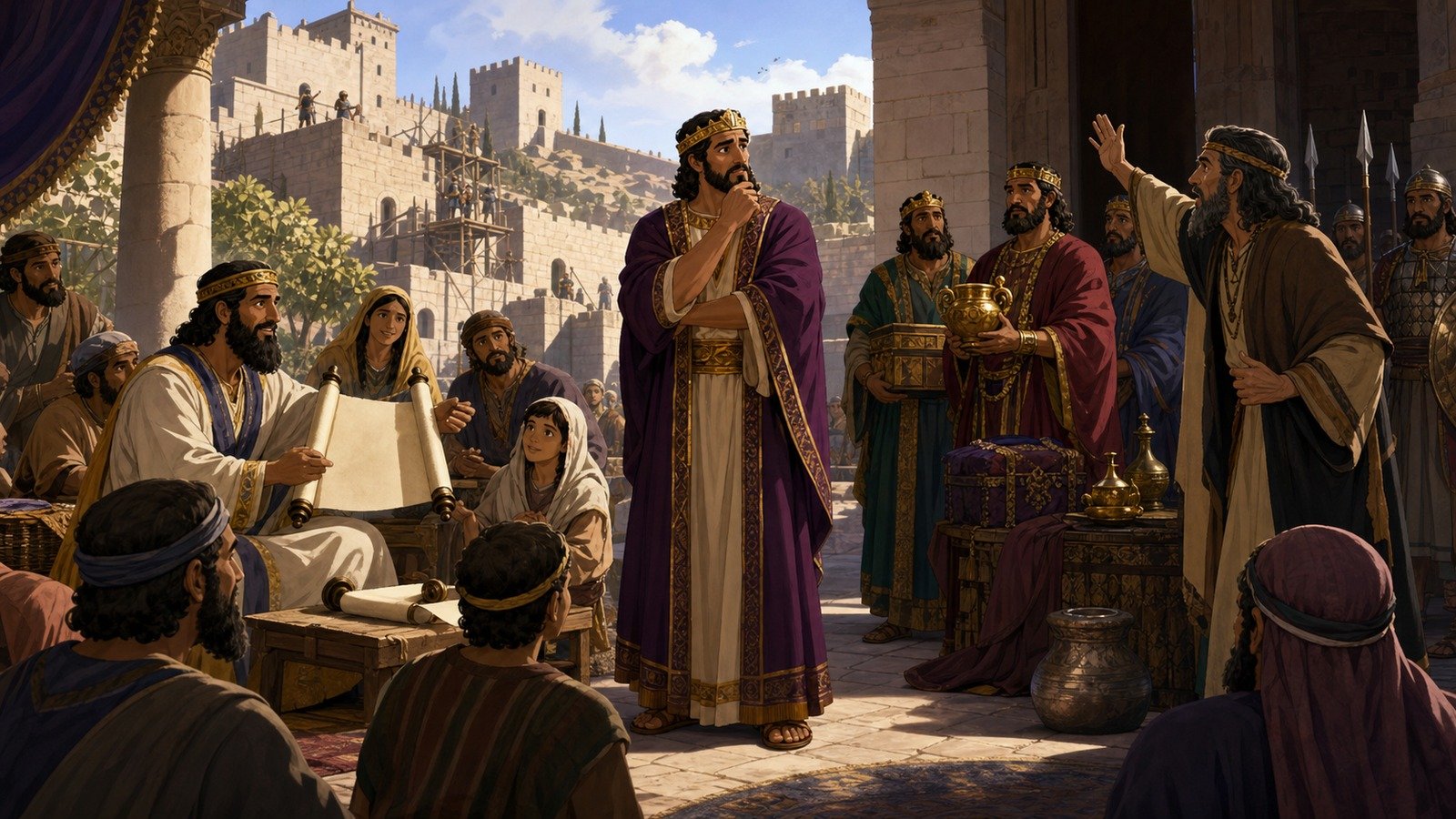
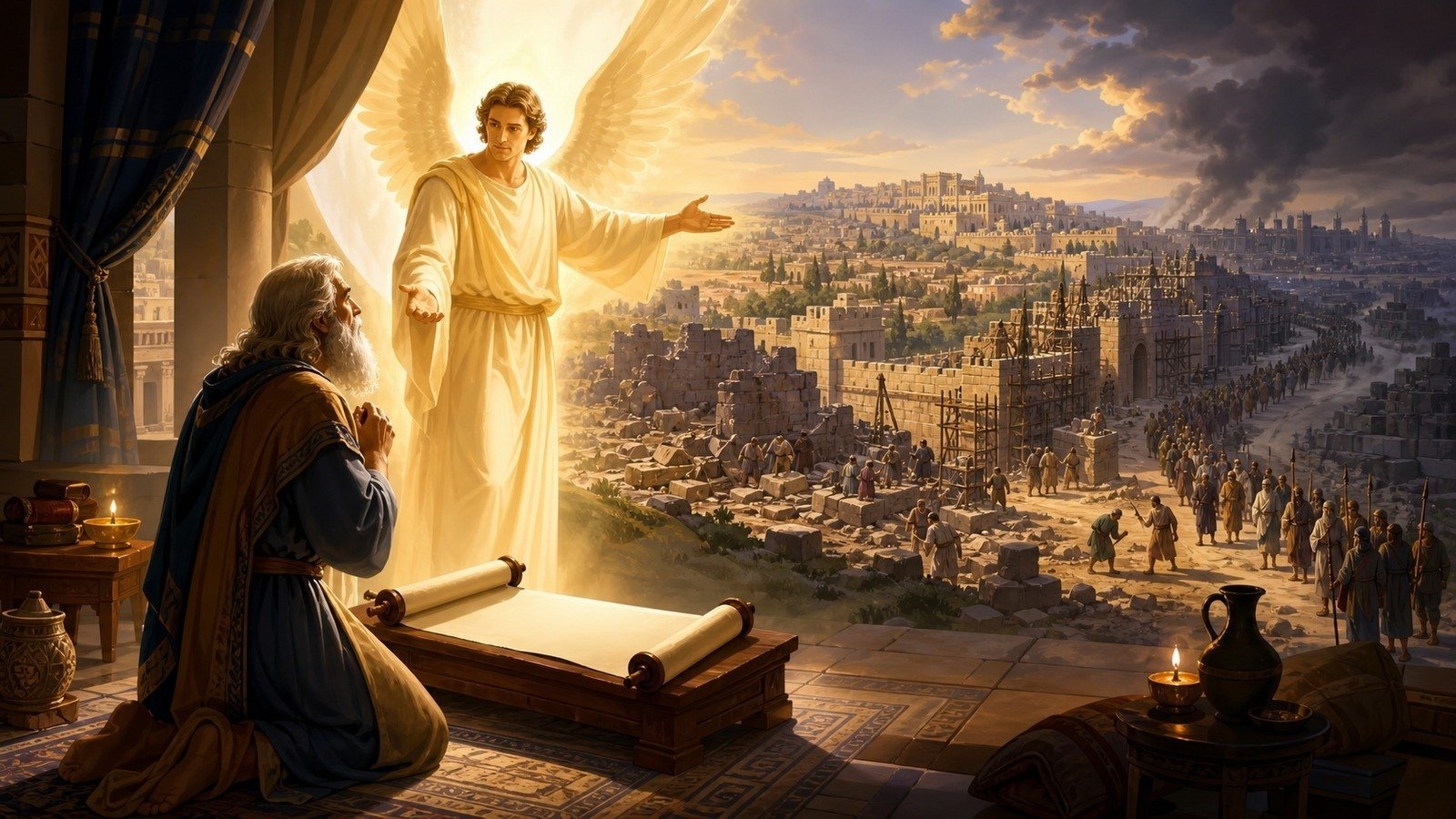
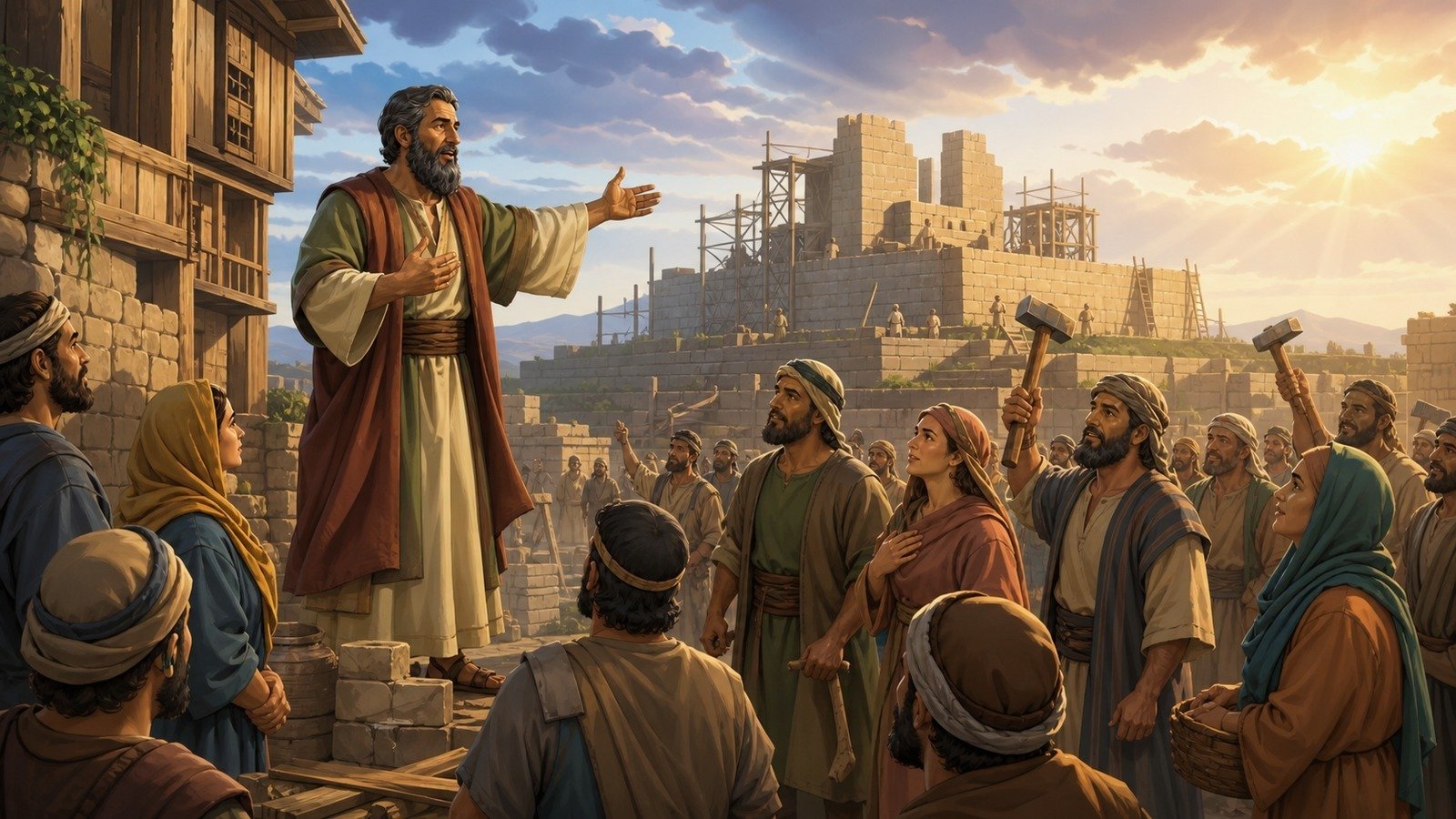
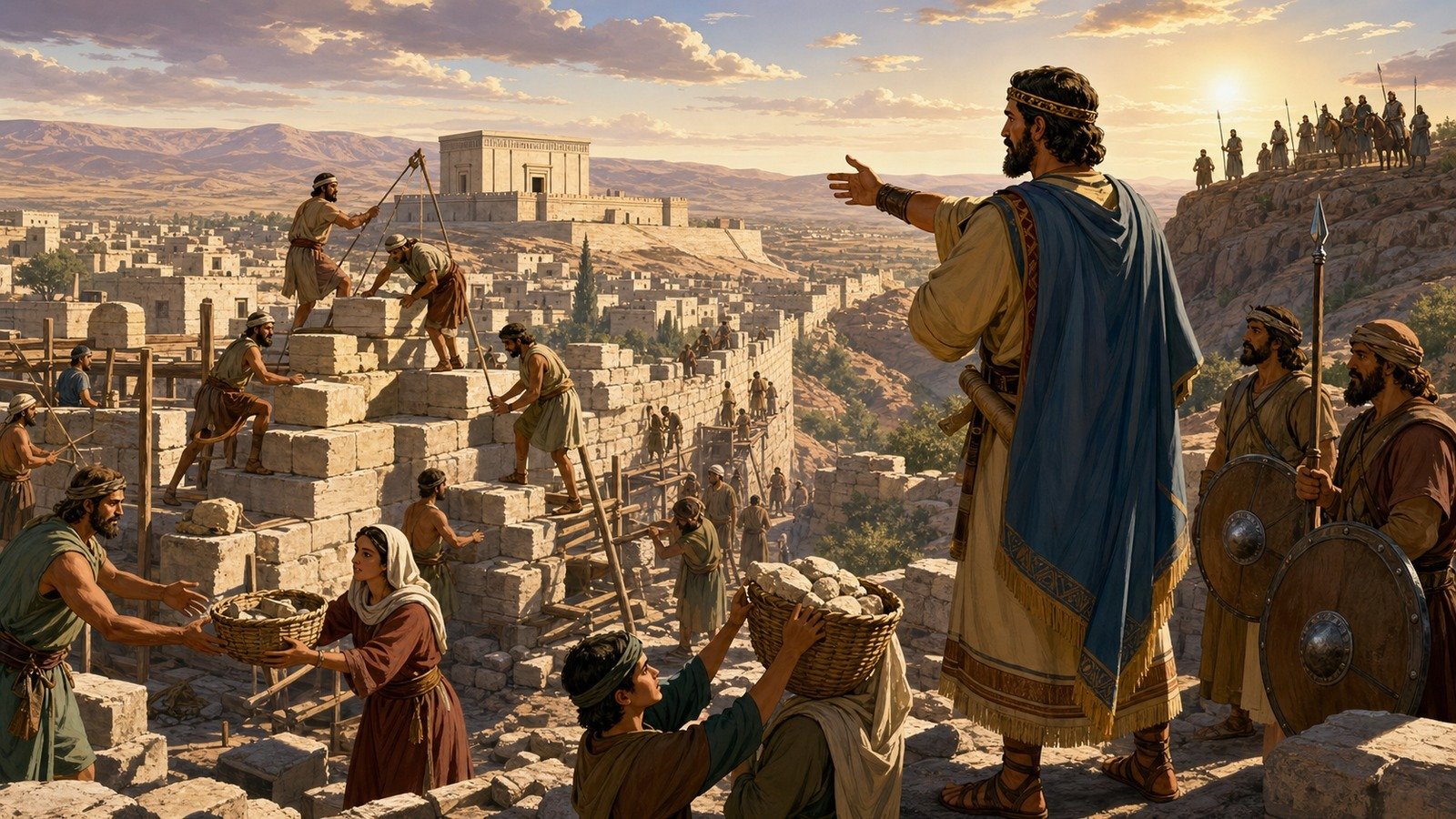
Grieved by reports of Jerusalem's ruined walls, Nehemiah, cupbearer to Artaxerxes I, secures royal permission and resources to return and organise the city's defence rebuilding, completing the walls in just fifty-two days despite sustained opposition and sabotage attempts.
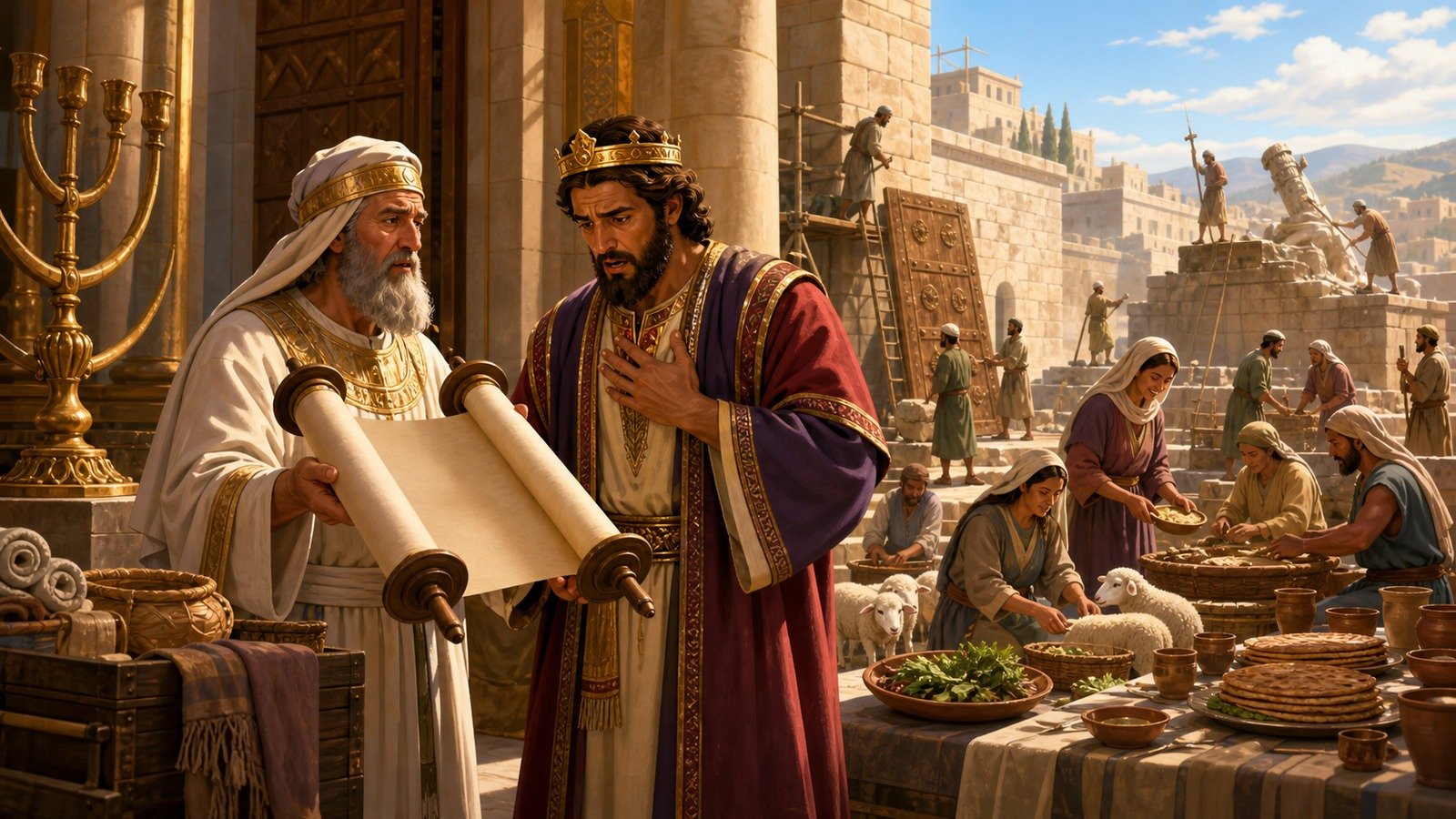
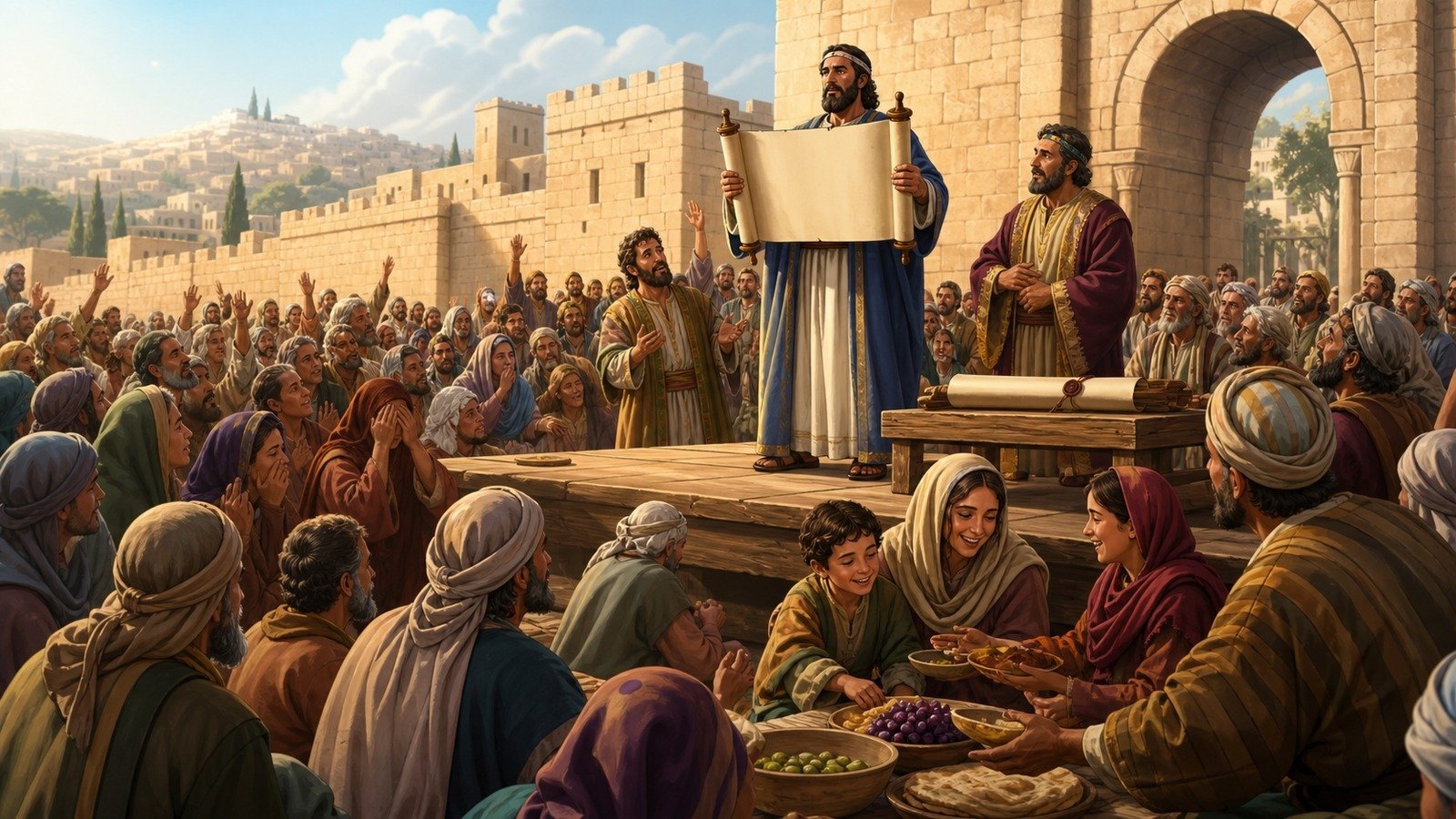
With the walls complete, Ezra publicly reads the Law to the assembled community, who weep and then celebrate; the people confess their history of failure and formally recommit themselves in a written covenant to obey God's law.
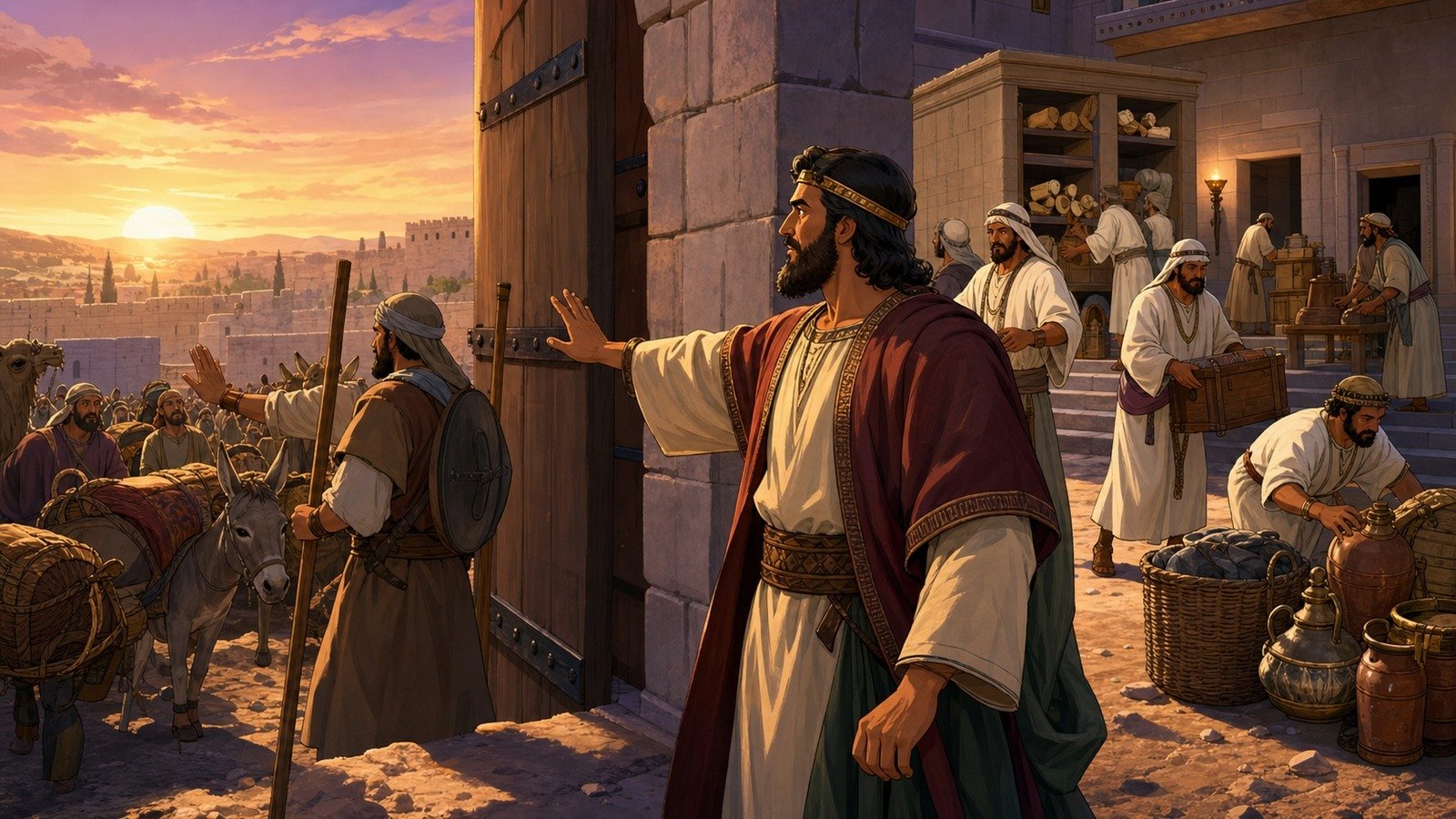
After a period back in Persia, Nehemiah returns to Jerusalem to find earlier reforms neglected, Temple provisions misused, Sabbath trading resumed and intermarriage widespread again, and takes decisive, sometimes forceful, action to correct it.
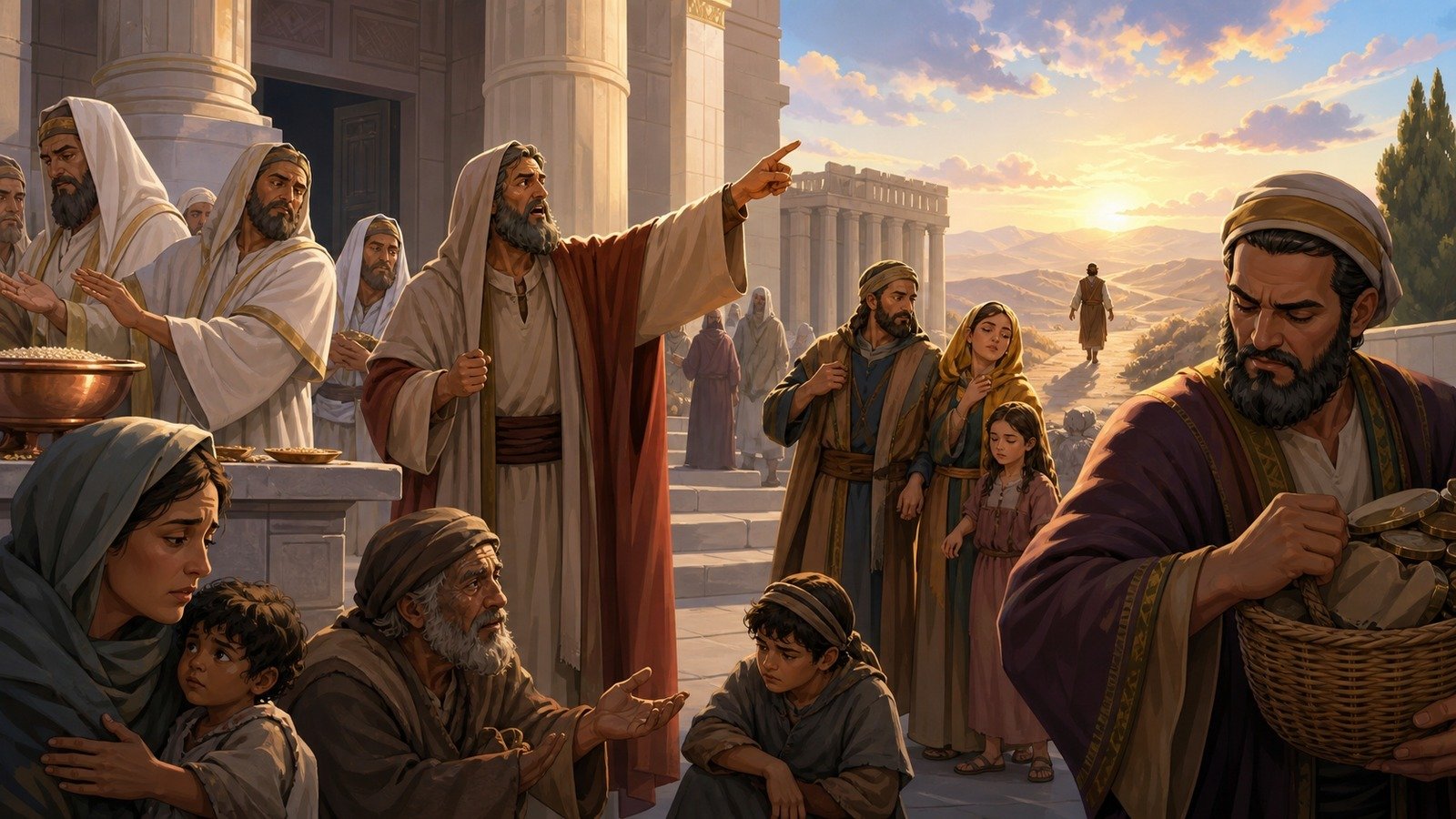
Malachi confronts a spiritually complacent post-exilic community over careless worship, unfaithful marriages and withheld tithes, and closes the Hebrew canon's prophetic voice with a promise of a coming messenger to prepare the way before "the great and dreadful day of the Lord."
Judea remains a minor province of the Persian empire for roughly a century after Malachi, governed locally by the high priesthood under distant Persian oversight, a period from which almost no Biblical or detailed historical record survives.
323 BC
Alexander's empire divided among his generals
Alexander's sudden death without a clear heir leads his leading generals, the Diadochi, to carve his empire into rival successor kingdoms, setting the stage for two centuries of Hellenistic dynastic competition that Judea's geography placed directly in the middle of.
323–198 BC
Ptolemaic rule over Judea
Judea falls initially under the Ptolemaic dynasty ruling from Egypt, a period that includes the Septuagint's beginnings, the Greek translation of the Hebrew Scriptures used extensively by New Testament writers.
198 BC
Seleucid rule over Judea begins
The Seleucid dynasty, ruling from Syria, wins Judea from the Ptolemies at the battle of Panium, bringing increasing Hellenistic cultural pressure on Jewish religious practice over the following decades.
164 BC
Rededication of the Temple; origins of Hanukkah
Judas Maccabeus recaptures Jerusalem and rededicates the desecrated Temple, an event commemorated annually in the Jewish festival of Hanukkah, referenced in the Gospels as the Festival of Dedication.
140–63 BC
The Hasmonean dynasty established
The Maccabean family's descendants, the Hasmoneans, rule an independent Jewish state that also combines the high priesthood with kingship, a period marked by territorial expansion, forced conversions of neighbouring peoples, and, later, internal dynastic conflict and the rise of the Pharisee and Sadducee parties.
63 BC
Roman conquest of Judea; Pompey enters Jerusalem
Called in to arbitrate a Hasmonean succession dispute, the Roman general Pompey instead takes Jerusalem by force and enters the Temple's Most Holy Place, ending Jewish political independence and beginning direct Roman involvement in Judean affairs.
20 BC onward
Herod's building projects, including the Temple's expansion
Herod undertakes an ambitious building programme across Judea, most significantly a massive expansion and rebuilding of the Second Temple, a project so extensive it continues for decades after his death and is still under construction during Jesus' adult ministry.
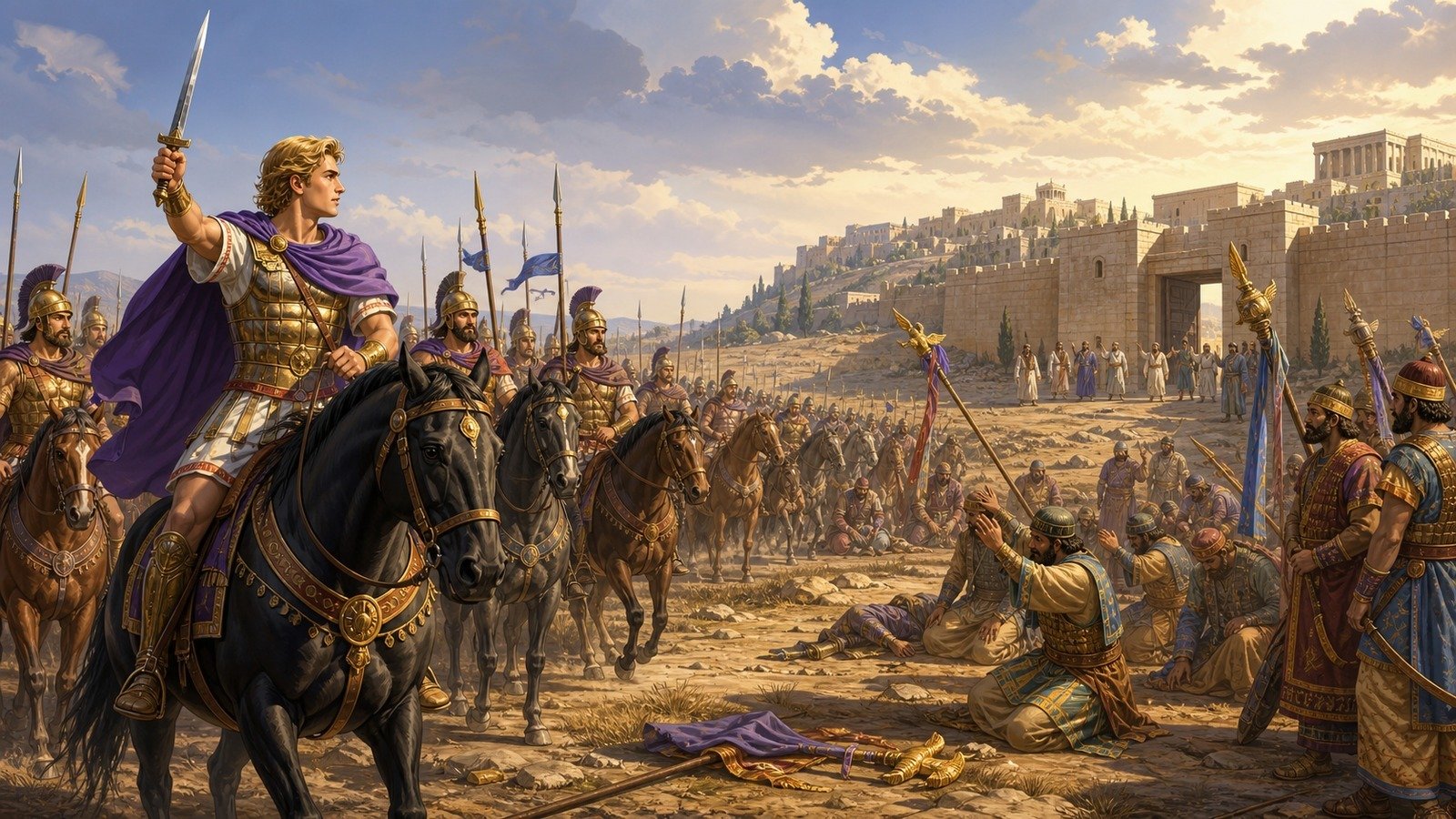
Alexander defeats the Persian empire in a series of campaigns, taking Judea without recorded resistance, and spreads Greek language and culture across the entire eastern Mediterranean and Near East, the linguistic and cultural precondition for a Greek New Testament three centuries later.
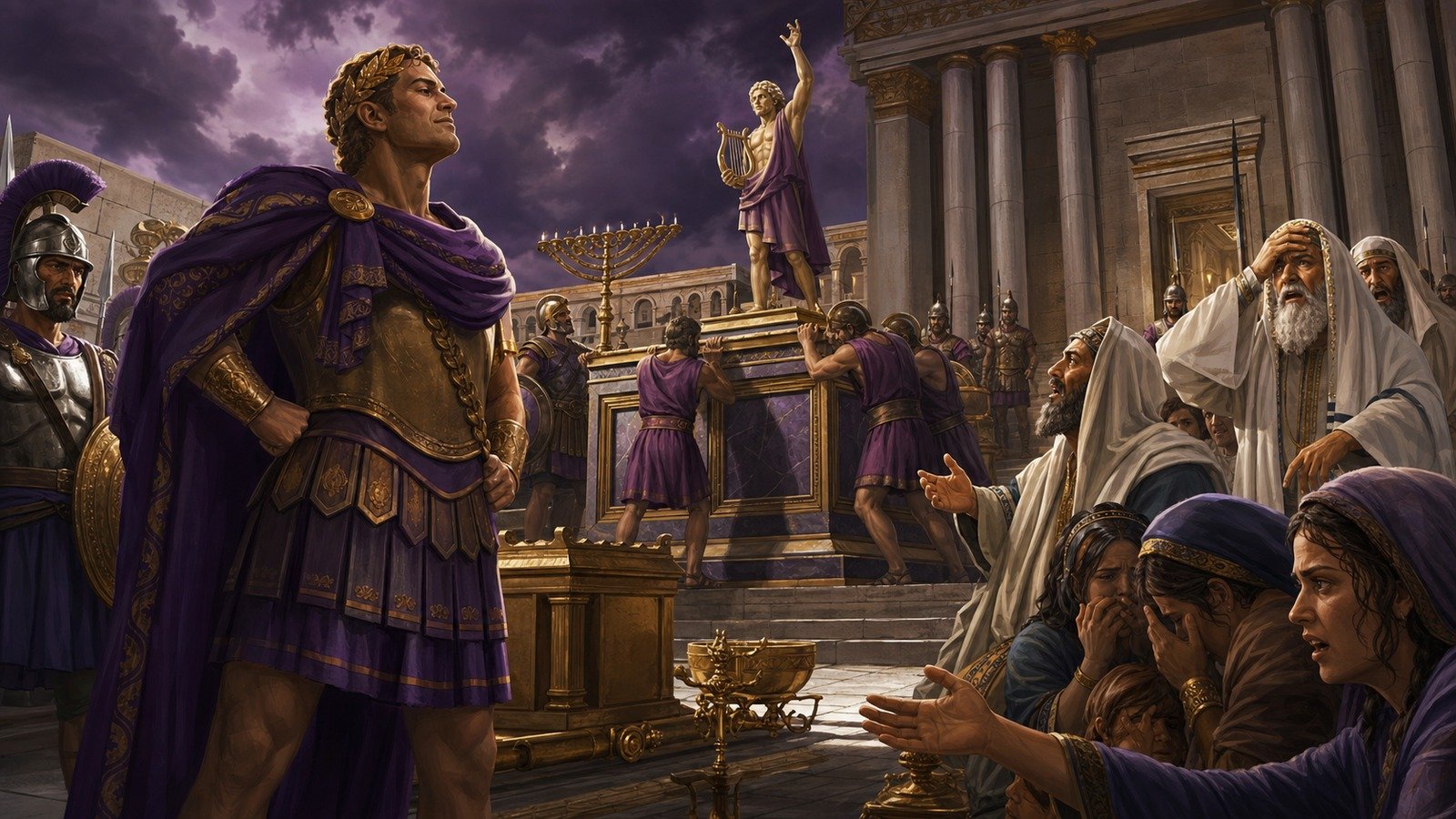
Seleucid king Antiochus IV bans Jewish religious practice, outlaws circumcision and Sabbath observance, and erects an altar to Zeus in the Temple, sacrificing a pig on it, an act of deliberate desecration that provokes open Jewish revolt.
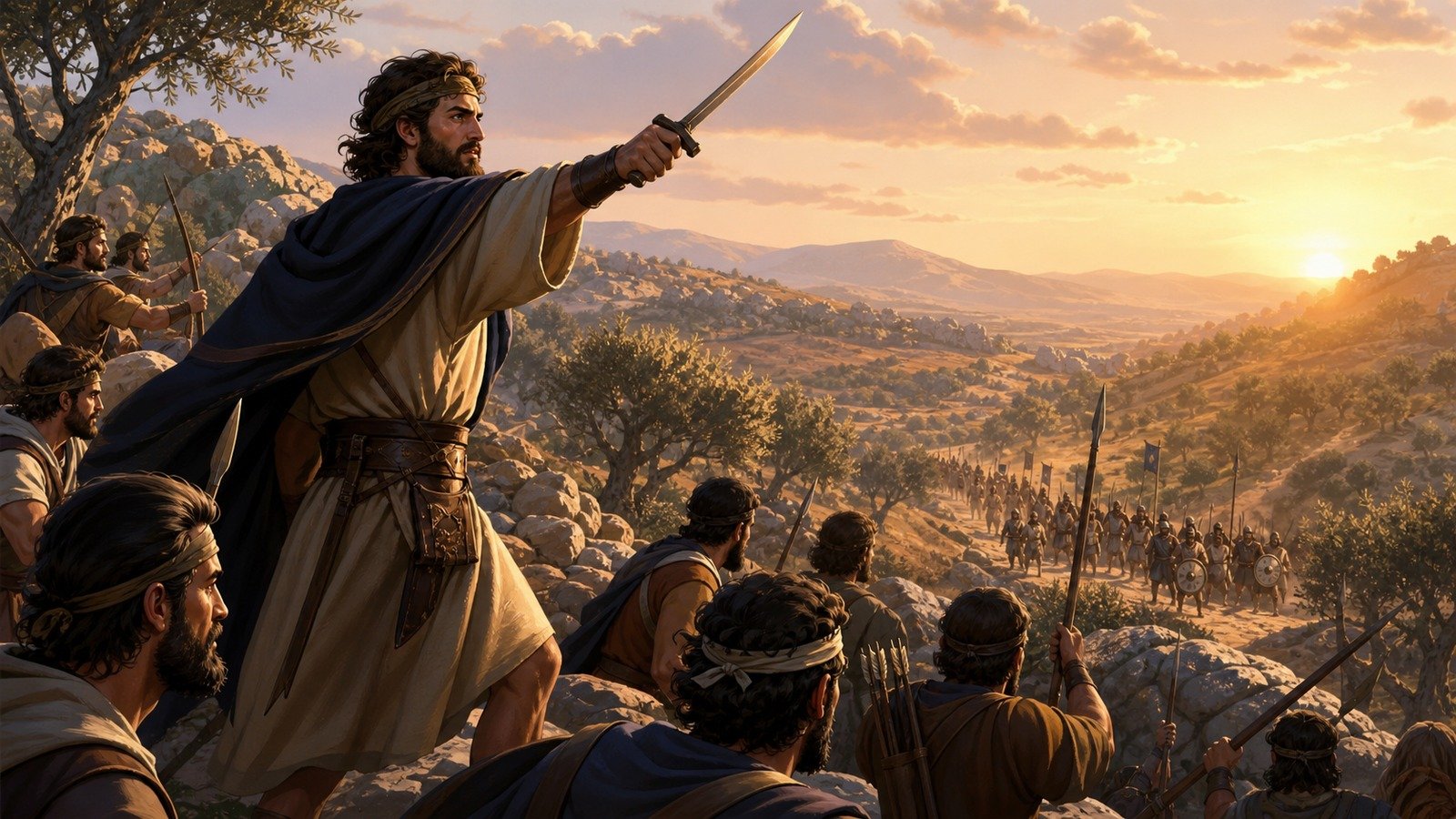
Led first by the priest Mattathias and then by his son Judas Maccabeus ("the hammer"), Jewish forces wage a sustained guerrilla and open war against Seleucid rule, eventually securing religious freedom and, later, political independence.
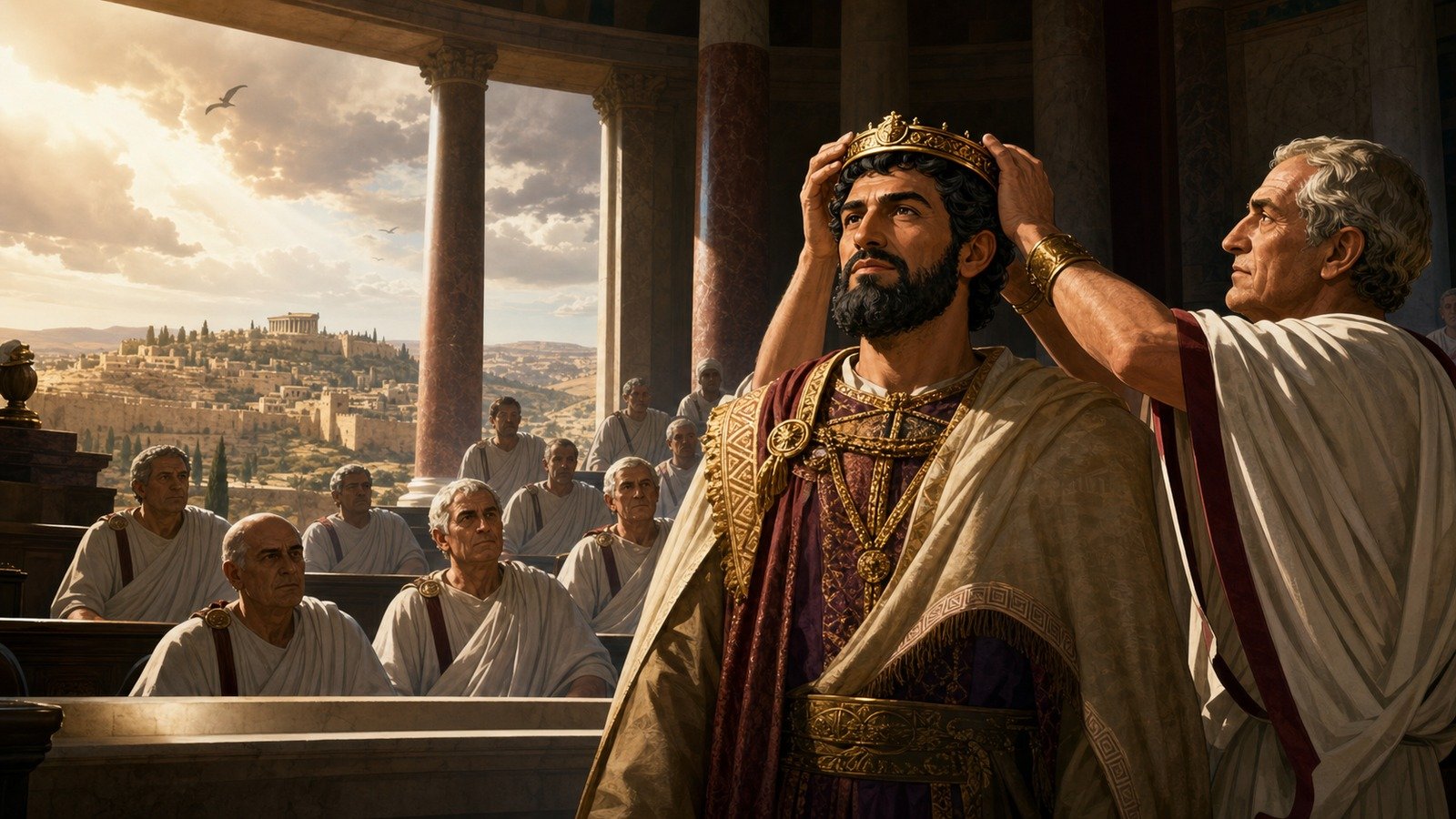
The Roman Senate names Herod, an Idumean with no Hasmonean blood, "King of the Jews"; it takes him three further years of fighting to actually secure Jerusalem, after which he rules as a Roman client king known for both grand building projects and ruthless suppression of rivals, including members of his own family.
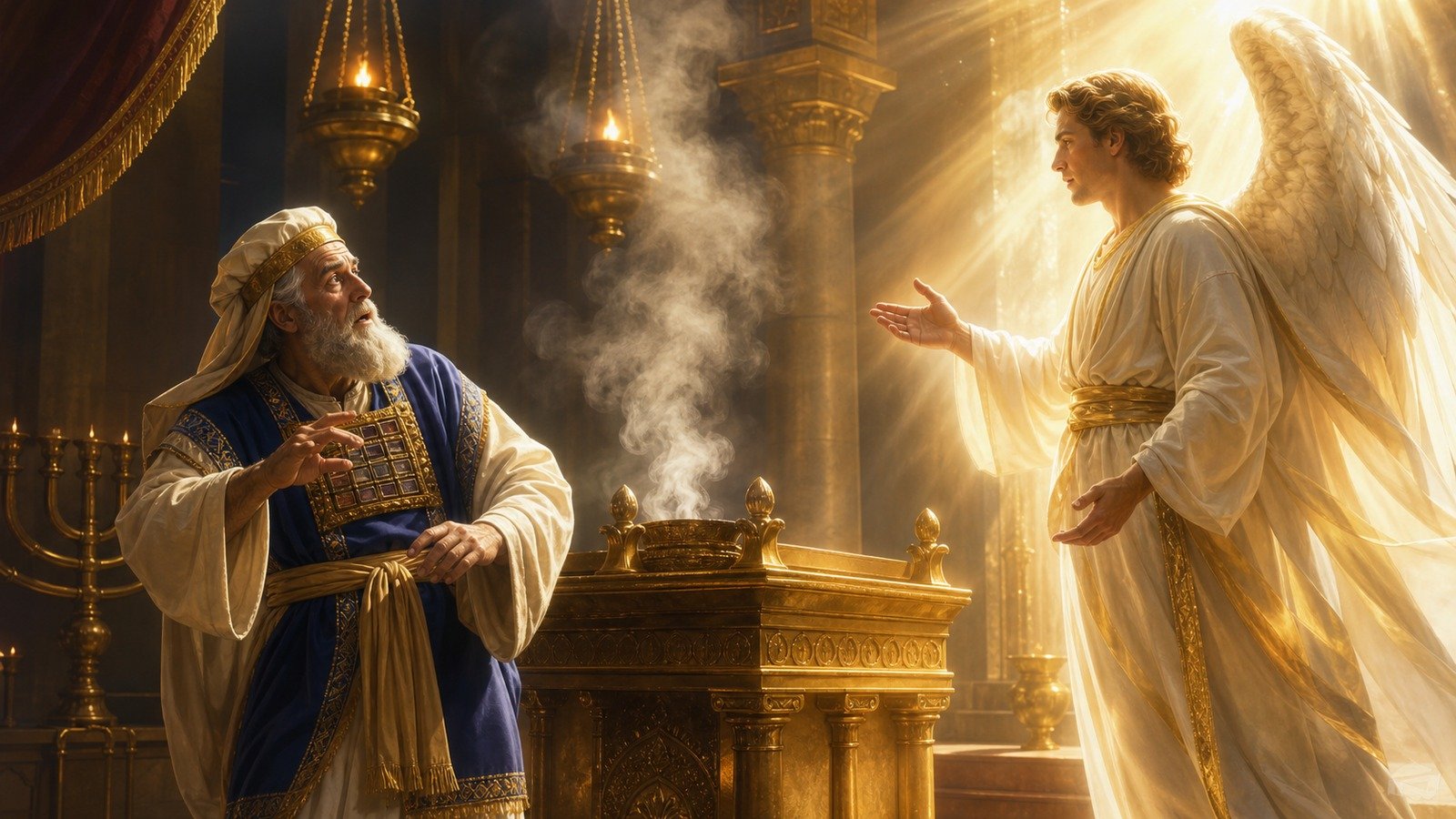
The angel Gabriel appears to the priest Zechariah while he is serving in the Temple, announcing that his elderly, previously barren wife Elizabeth will bear a son who will prepare the way for the Lord. Zechariah's doubt leaves him unable to speak until the child is born.
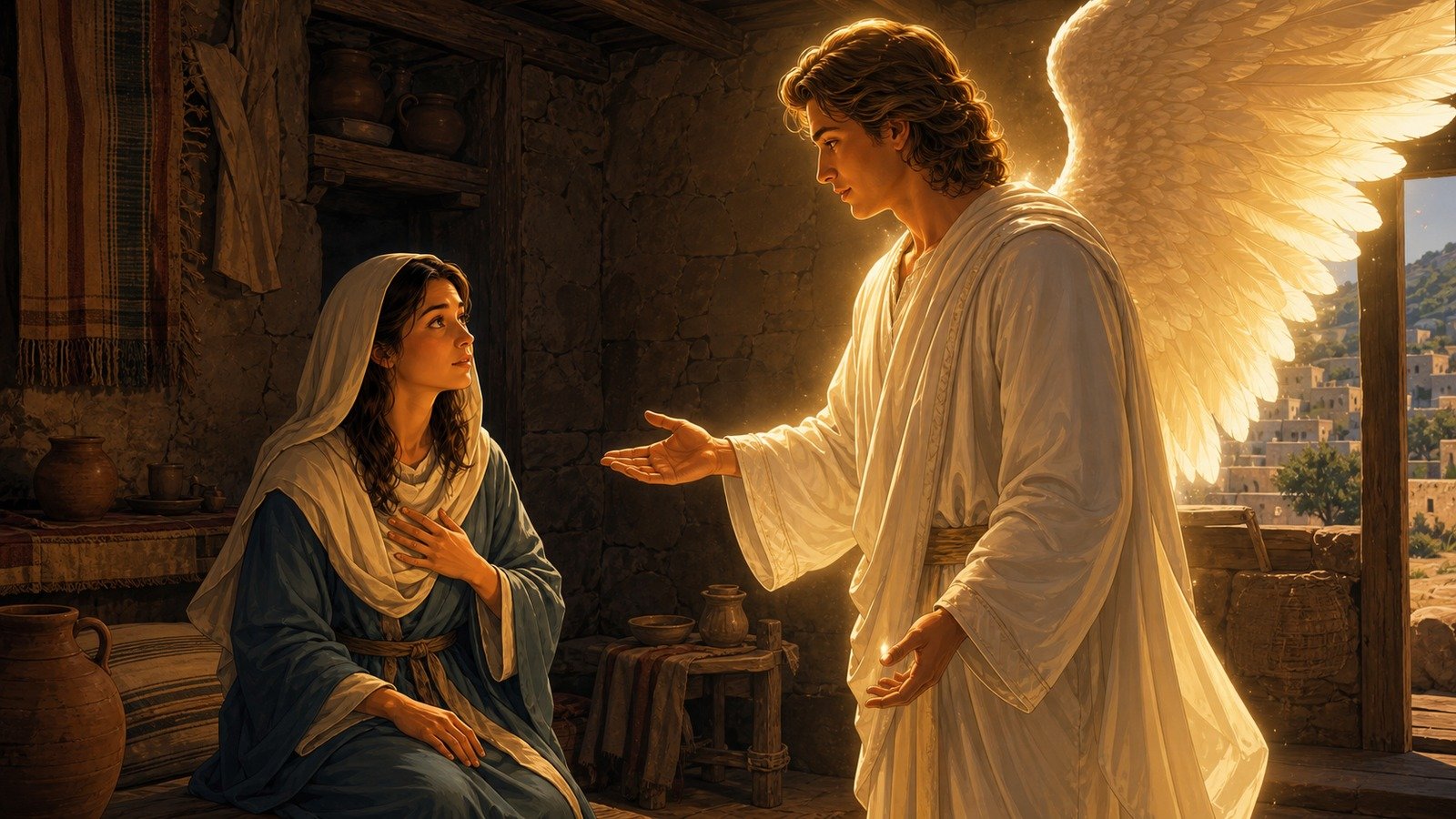
Six months into Elizabeth's pregnancy, Gabriel visits Mary, a young woman betrothed to Joseph, announcing she will conceive by the Holy Spirit and bear a son to be called Jesus, "the Son of the Most High." Mary consents: "I am the Lord's servant."
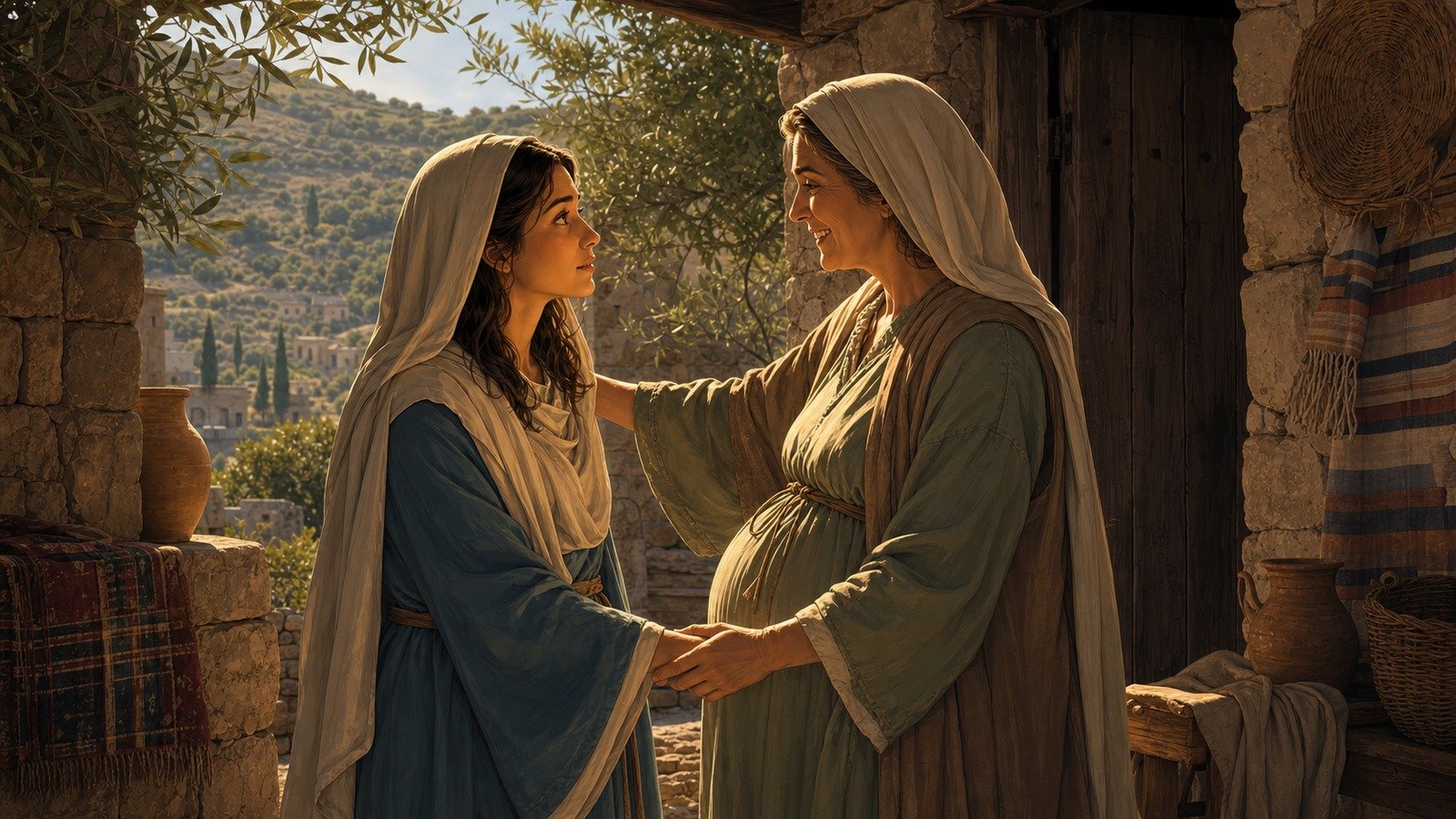
Mary travels to visit her relative Elizabeth; the unborn John leaps in the womb at Mary's greeting, Elizabeth blesses Mary as "the mother of my Lord," and Mary responds with a song of praise, the Magnificat, echoing the language of Hannah's earlier prayer.
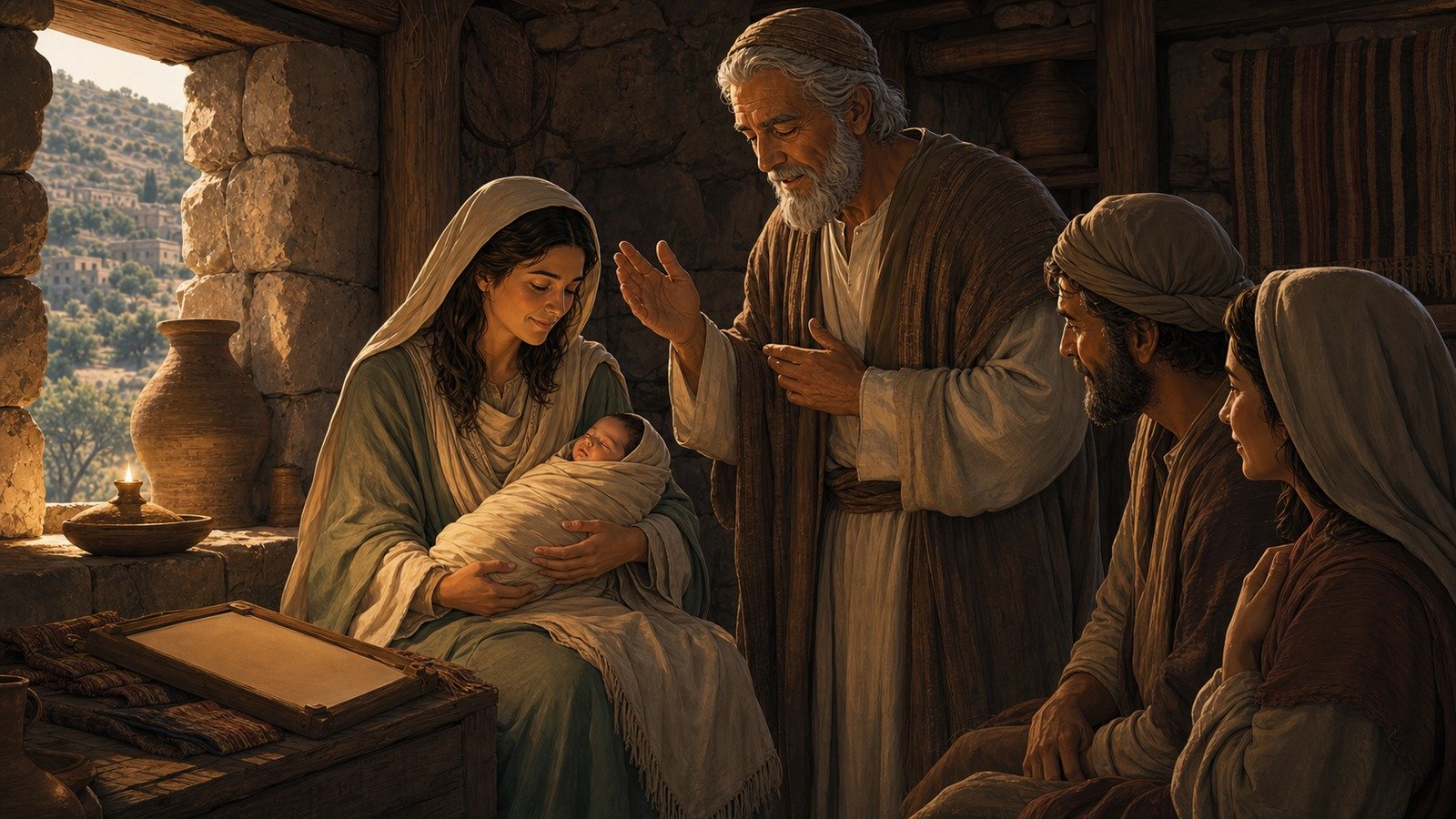
Elizabeth bears the promised son; Zechariah, insisting against family expectation that he be named John as Gabriel instructed, immediately regains his speech and prophesies over the child's future role preparing the way for the Messiah.
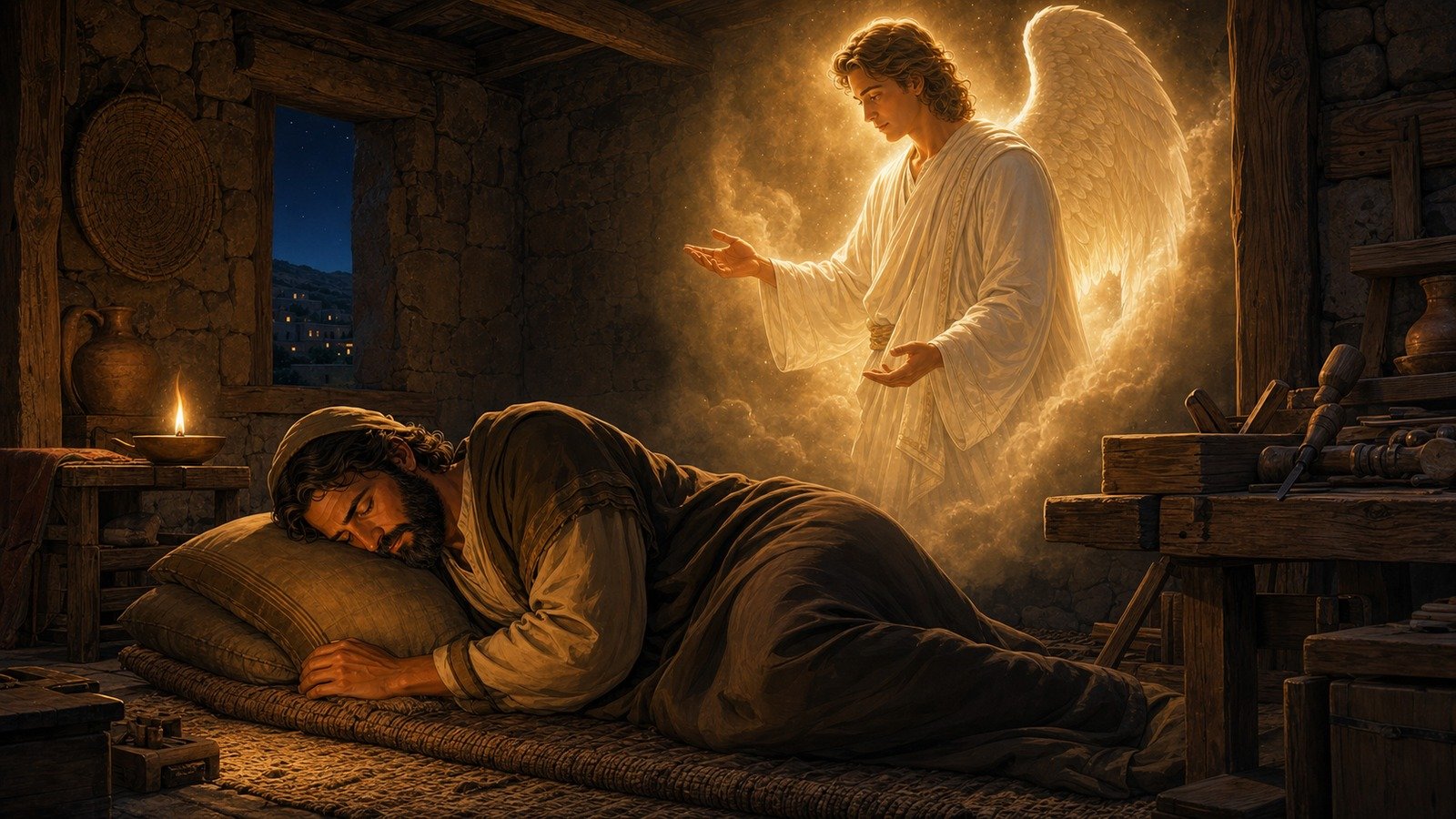
Discovering Mary pregnant before their marriage is completed, Joseph plans to quietly end the betrothal until an angel explains the child's origin in a dream and instructs him to name the boy Jesus, "because he will save his people from their sins."
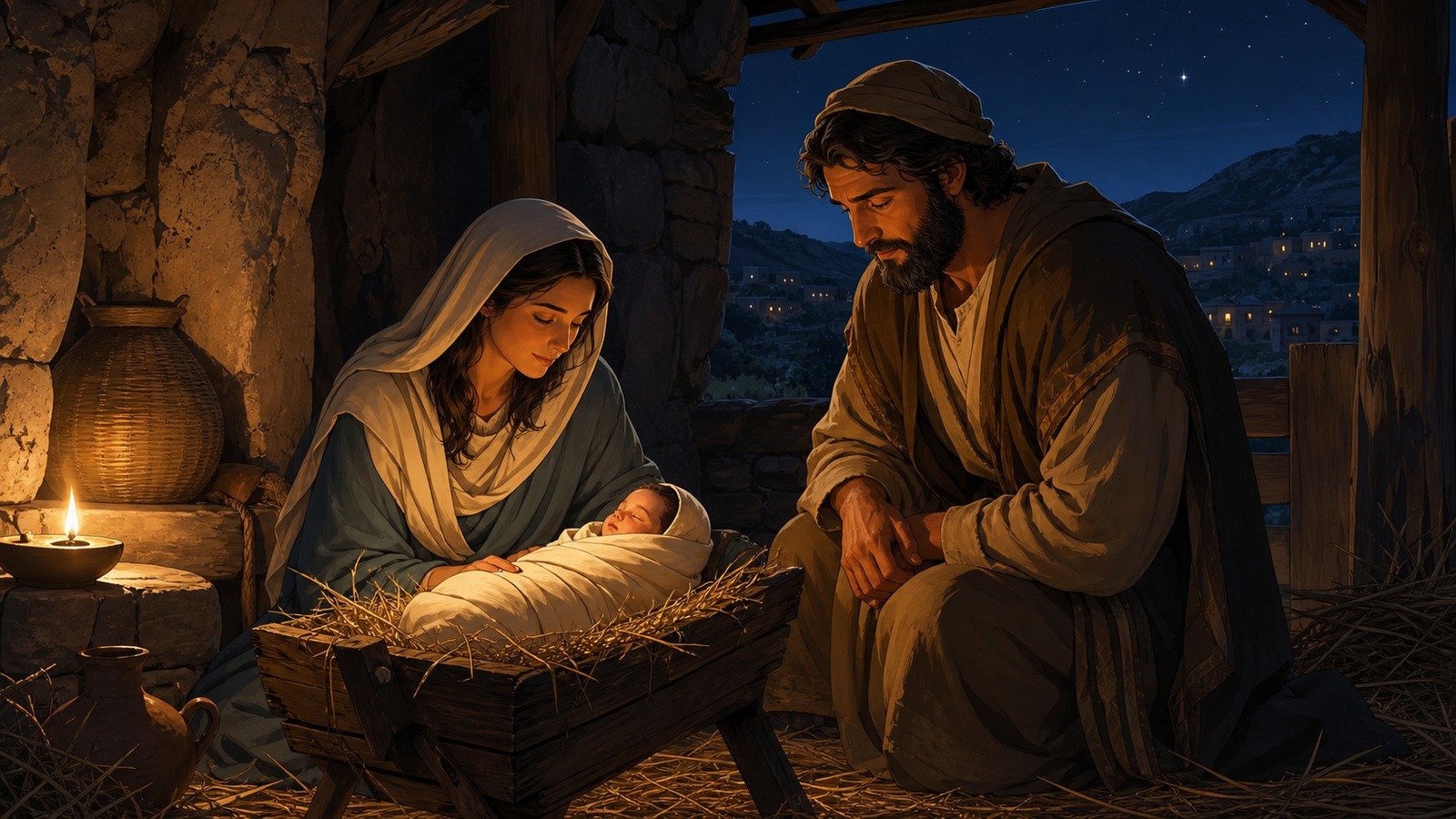
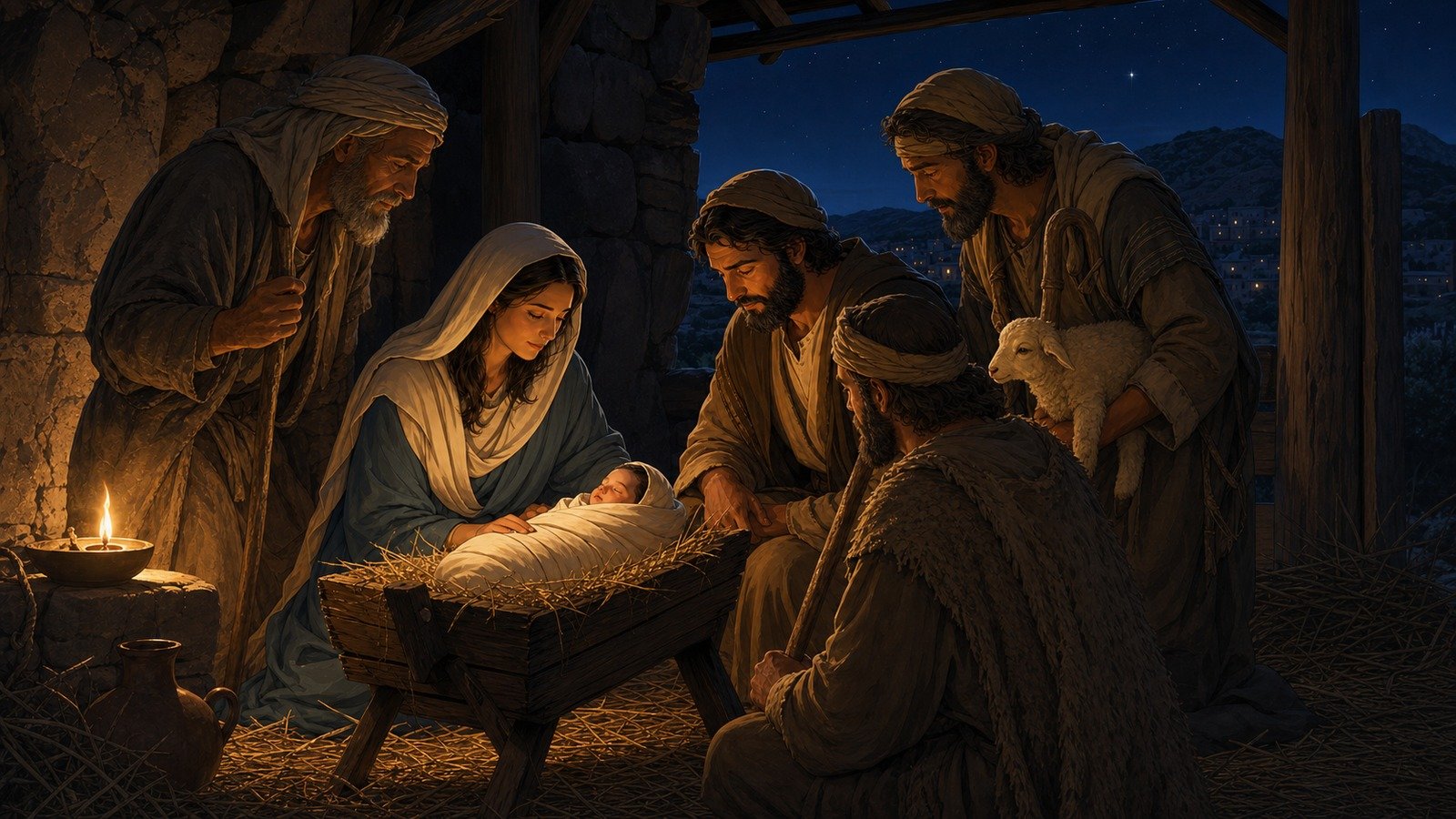
A Roman census brings Joseph and the heavily pregnant Mary to Bethlehem, Joseph's ancestral town, where Jesus is born and laid in a manger because there is no guest room available, fulfilling Micah's earlier prophecy of Bethlehem as the Messiah's birthplace.
An angel announces the birth to shepherds keeping watch over their flocks at night, followed by "a great company of the heavenly host" praising God; the shepherds go to Bethlehem, find the child as described, and spread the news.
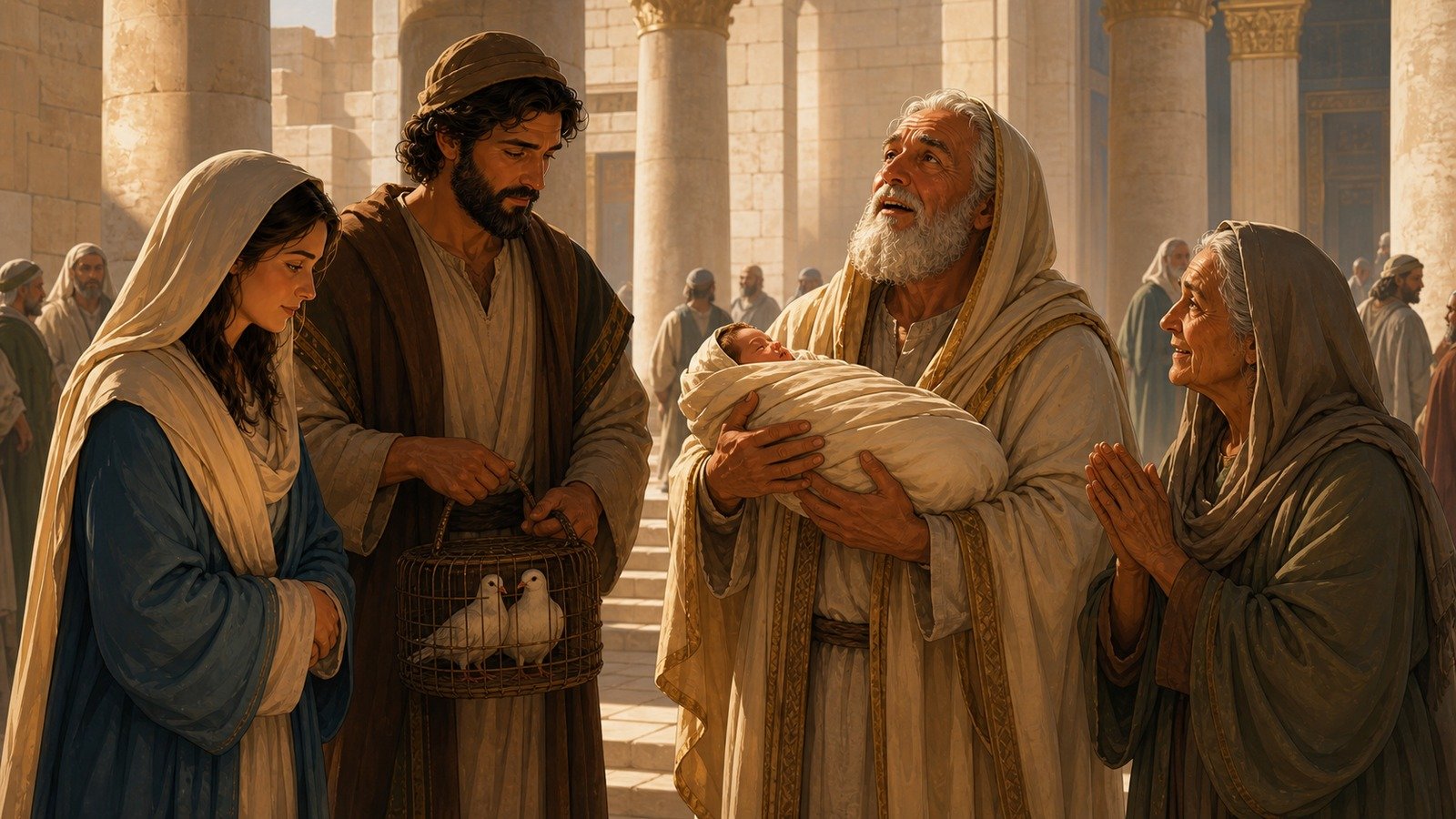
Jesus is circumcised on the eighth day and presented at the Temple forty days after birth per the Law; the elderly Simeon, told he would not die before seeing the Messiah, recognises the infant and blesses him, and the prophetess Anna also speaks about the child to all who were looking for redemption.
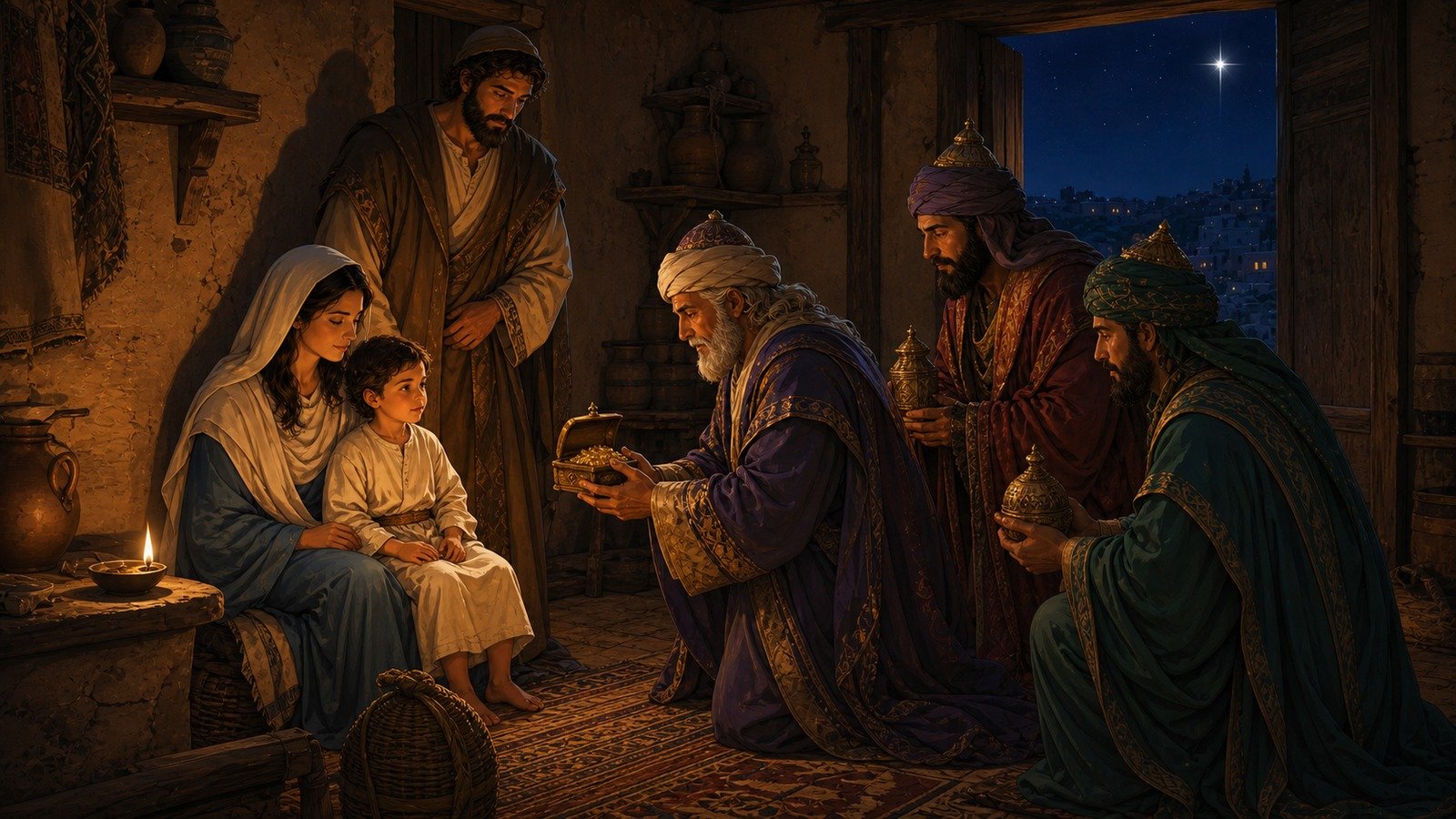
Magi from the East, having followed a star, arrive in Jerusalem asking for "the one who has been born king of the Jews," alarming Herod; guided further to Bethlehem, they present the child with gold, frankincense and myrrh before returning home by a different route, warned in a dream to avoid Herod.
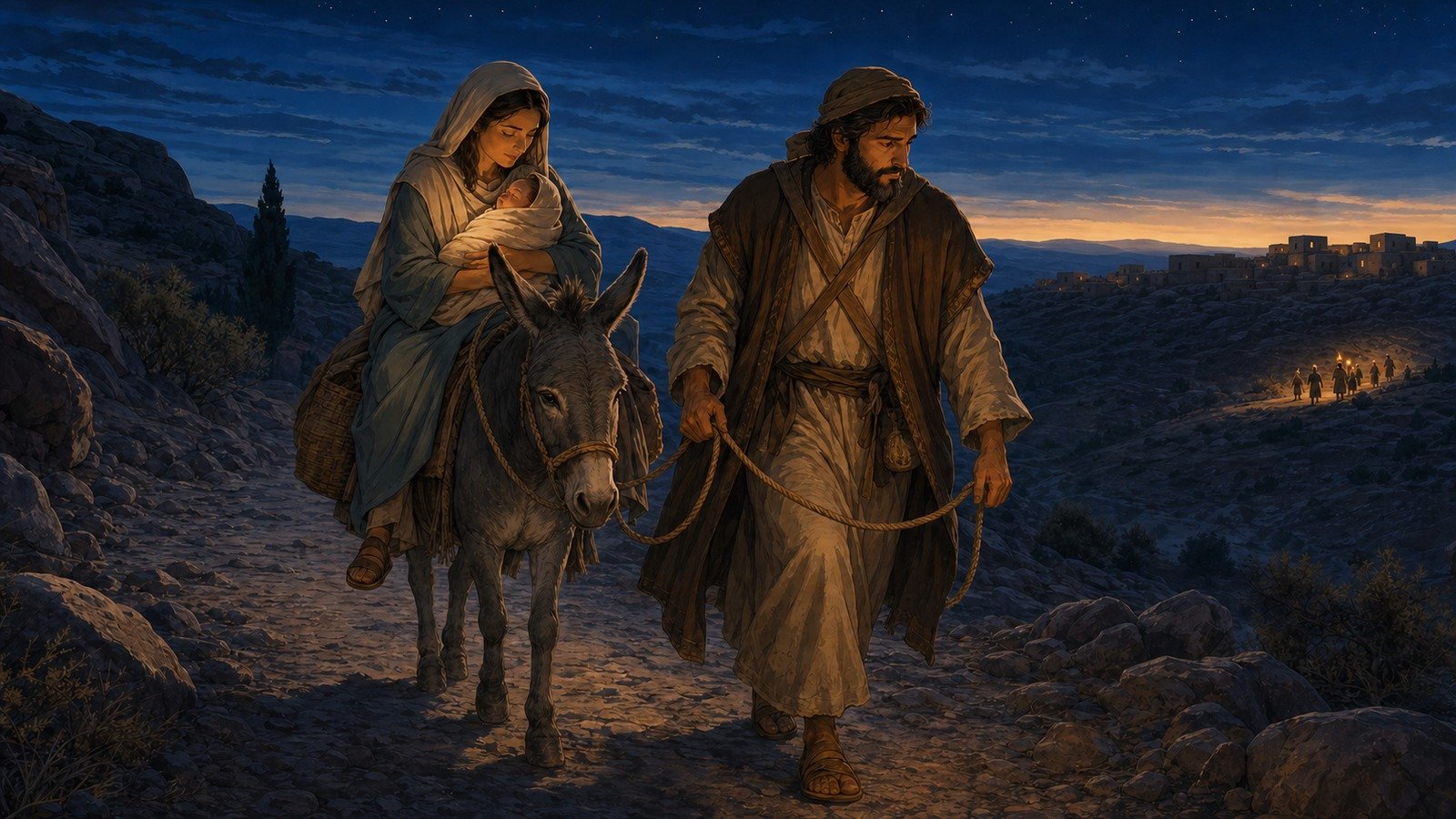
Warned in a dream, Joseph flees with Mary and Jesus to Egypt; Herod, enraged at being outwitted by the Magi, orders the killing of all boys two and under in Bethlehem's vicinity, an atrocity consistent with Herod's well-documented historical brutality even if not separately attested outside Matthew.
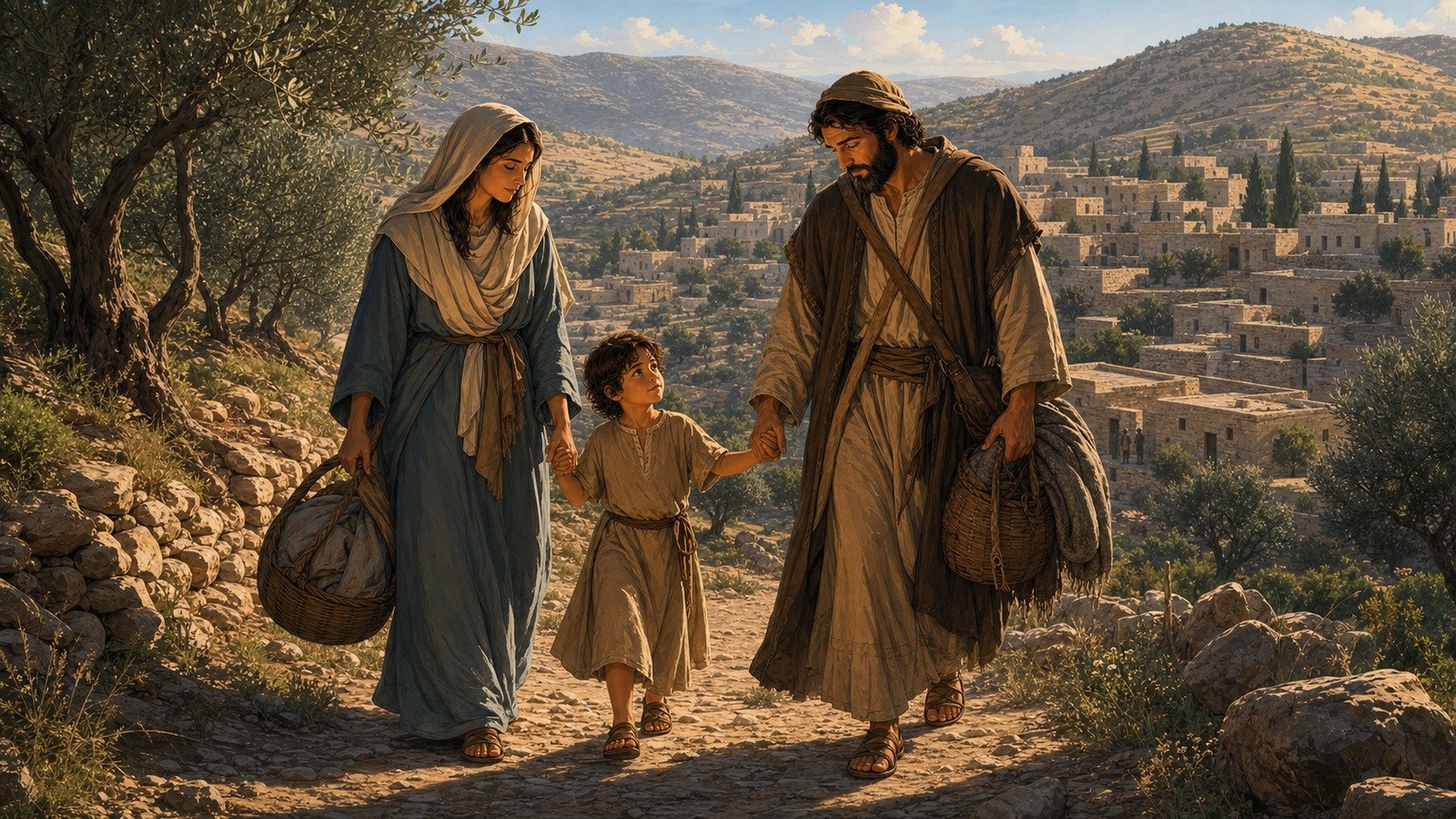
After Herod's death, an angel tells Joseph it is safe to return, but he settles the family in Nazareth in Galilee rather than Judea, avoiding Herod's equally volatile son Archelaus, and Jesus grows up there.
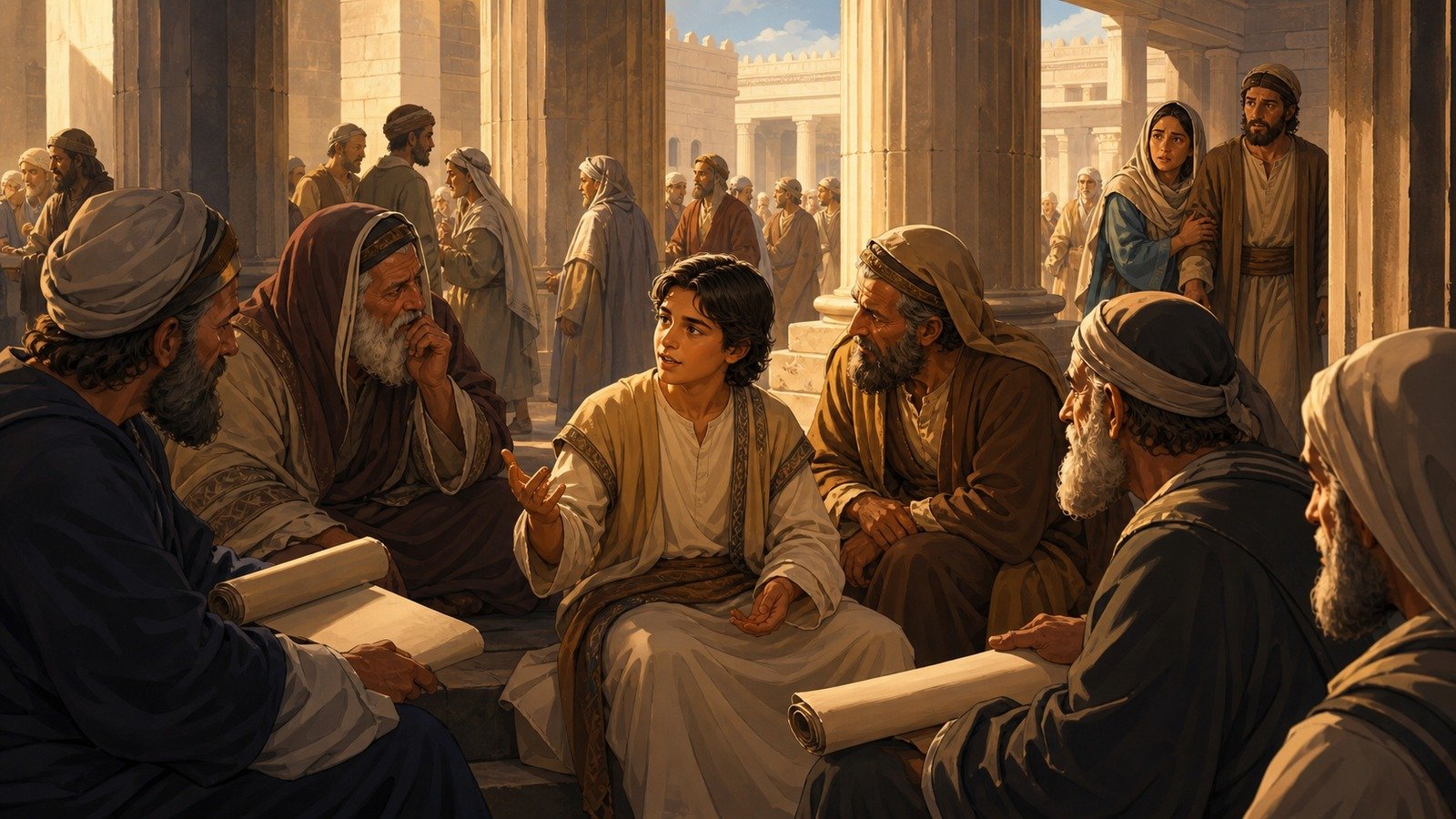
During a Passover pilgrimage, the twelve-year-old Jesus stays behind in the Temple, found after three days sitting among the teachers, listening and asking questions, telling his anxious parents he had to be "in my Father's house." This is the only recorded incident of Jesus' childhood.
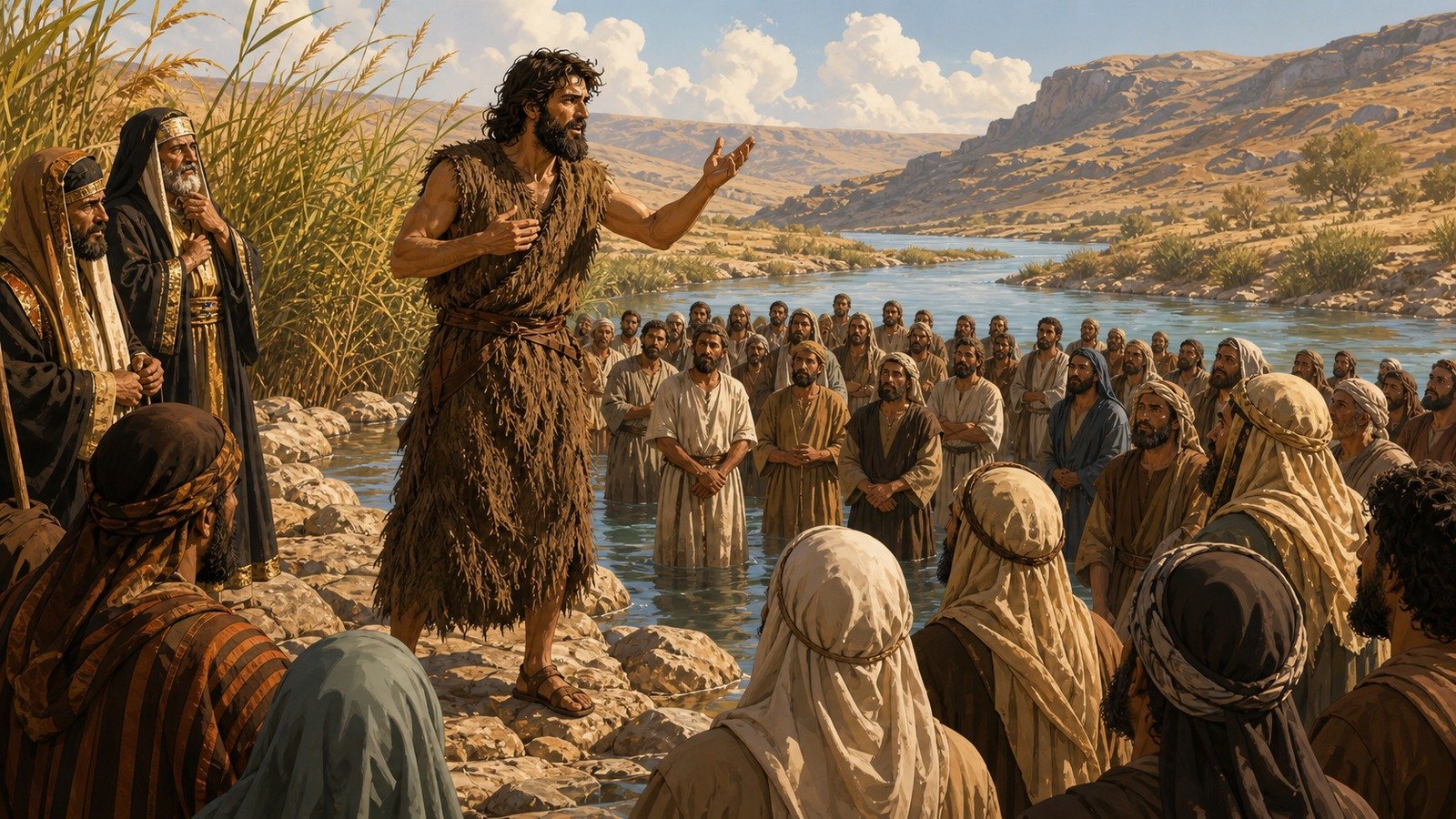
John preaches repentance and baptism in the Judean wilderness, drawing large crowds, calling out religious hypocrisy directly, and pointing to one coming after him "whose sandals I am not worthy to carry."
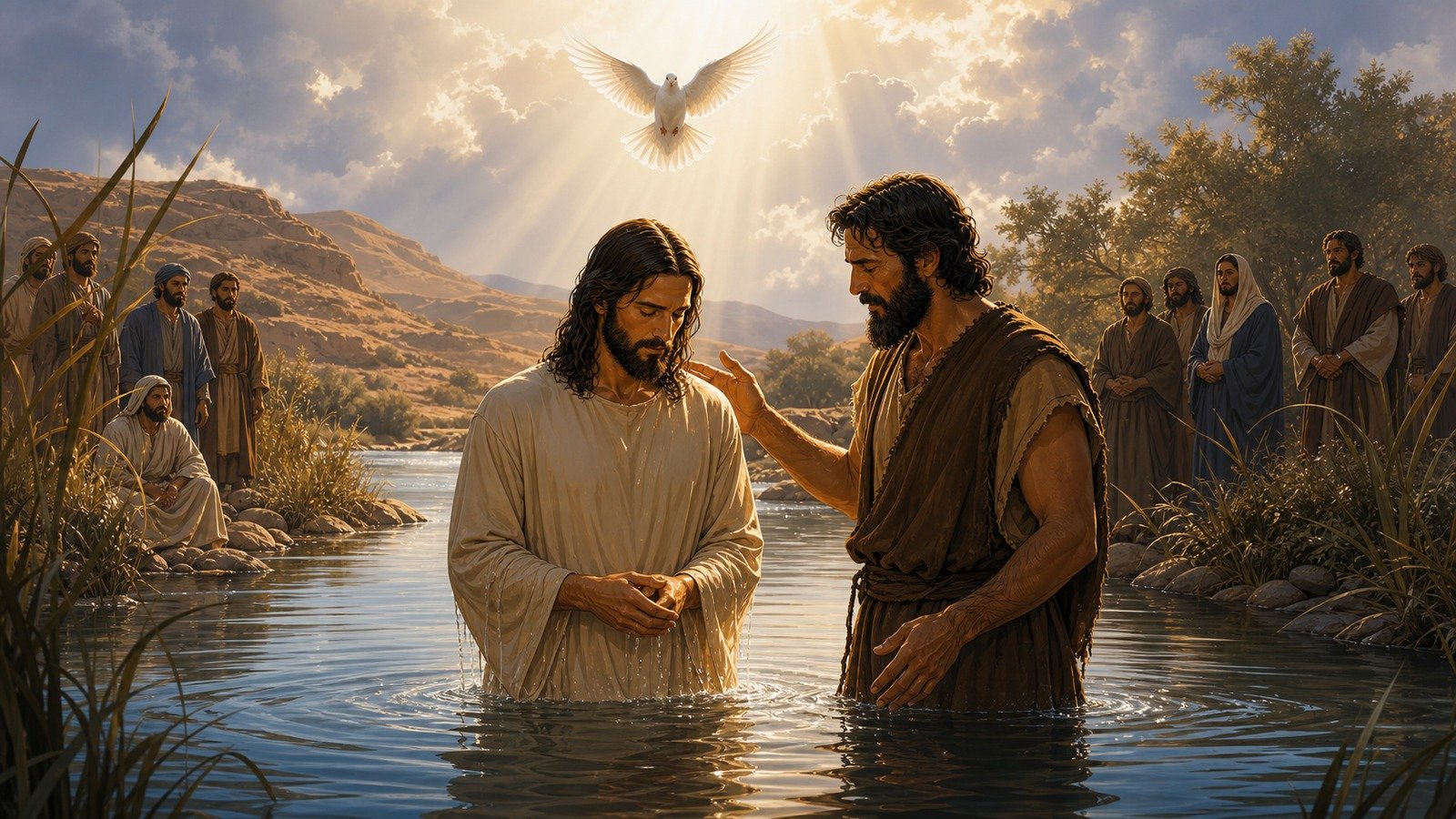
John baptises Jesus in the Jordan; the Spirit descends visibly as a dove and a voice from heaven declares, "This is my Son, whom I love; with him I am well pleased," a moment traditionally read as marking the public beginning of Jesus' ministry. Christians have long read this scene, Father, Son and Spirit all present at once, as one of the New Testament's clearest pointers toward the Trinity.
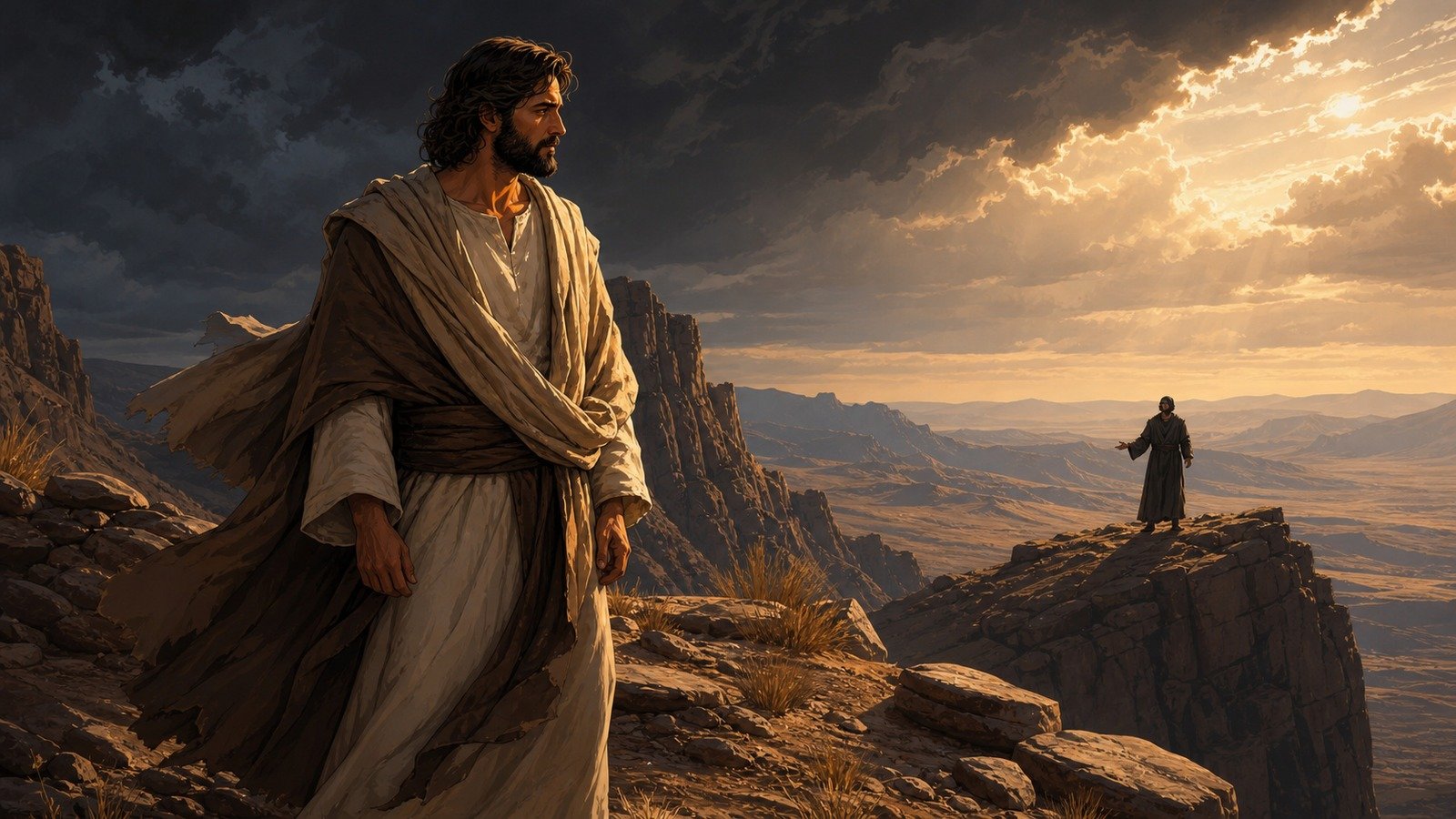
Led by the Spirit into the wilderness, Jesus fasts forty days and is tempted by Satan to turn stones to bread, to test God by jumping from the Temple, and to receive worldly power in exchange for worship, answering each temptation with Scripture.
Two of John the Baptist's disciples, including Andrew, follow Jesus after John identifies him as "the Lamb of God"; Andrew brings his brother Simon Peter, and Philip and Nathanael are called soon after, an initial, informal following prior to the later formal call by the Sea of Galilee.
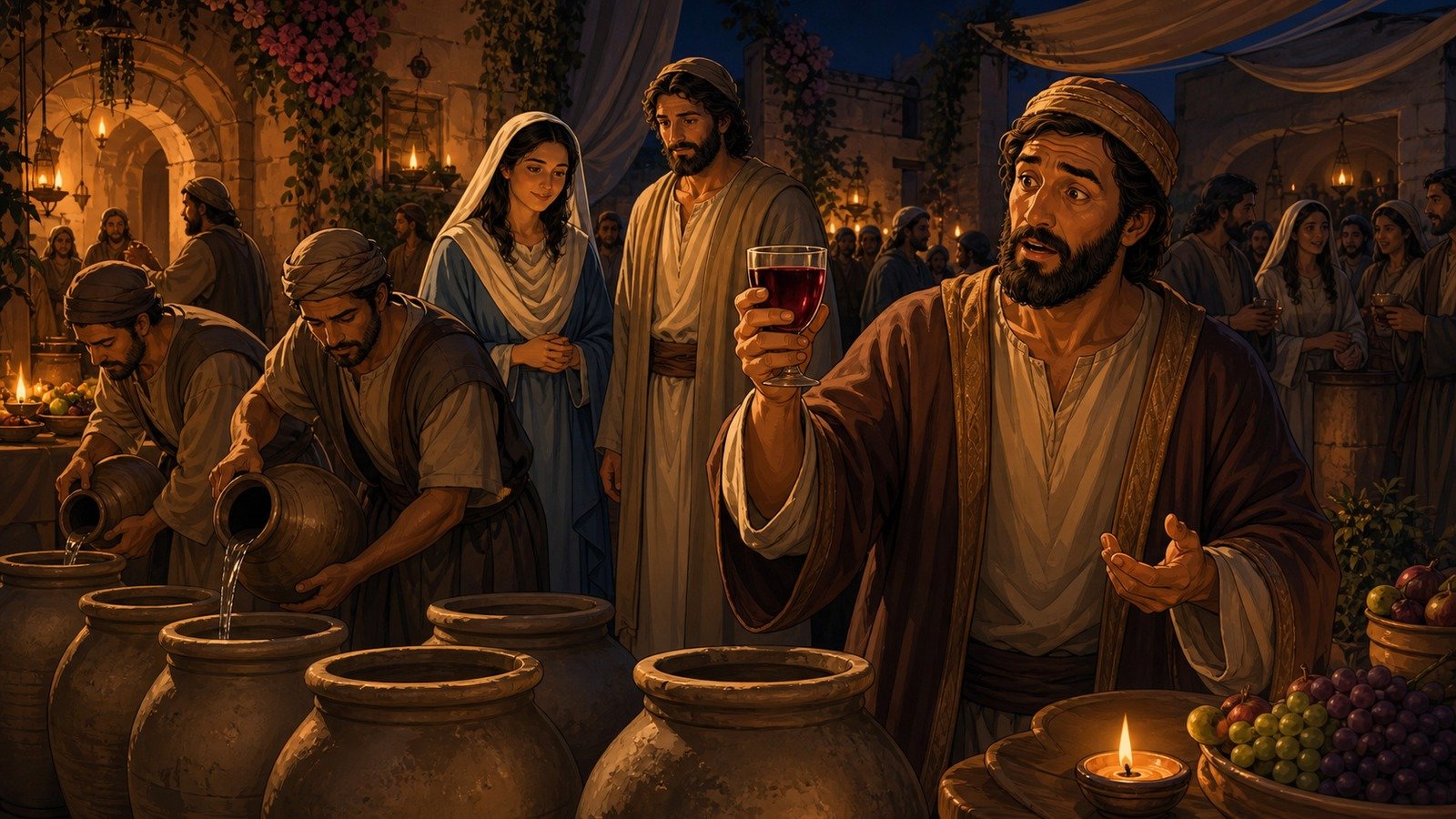
At a wedding in Cana, Jesus turns water into wine at his mother's prompting after the wine runs out, "the first of the signs through which he revealed his glory," strengthening his disciples' fledgling belief in him.
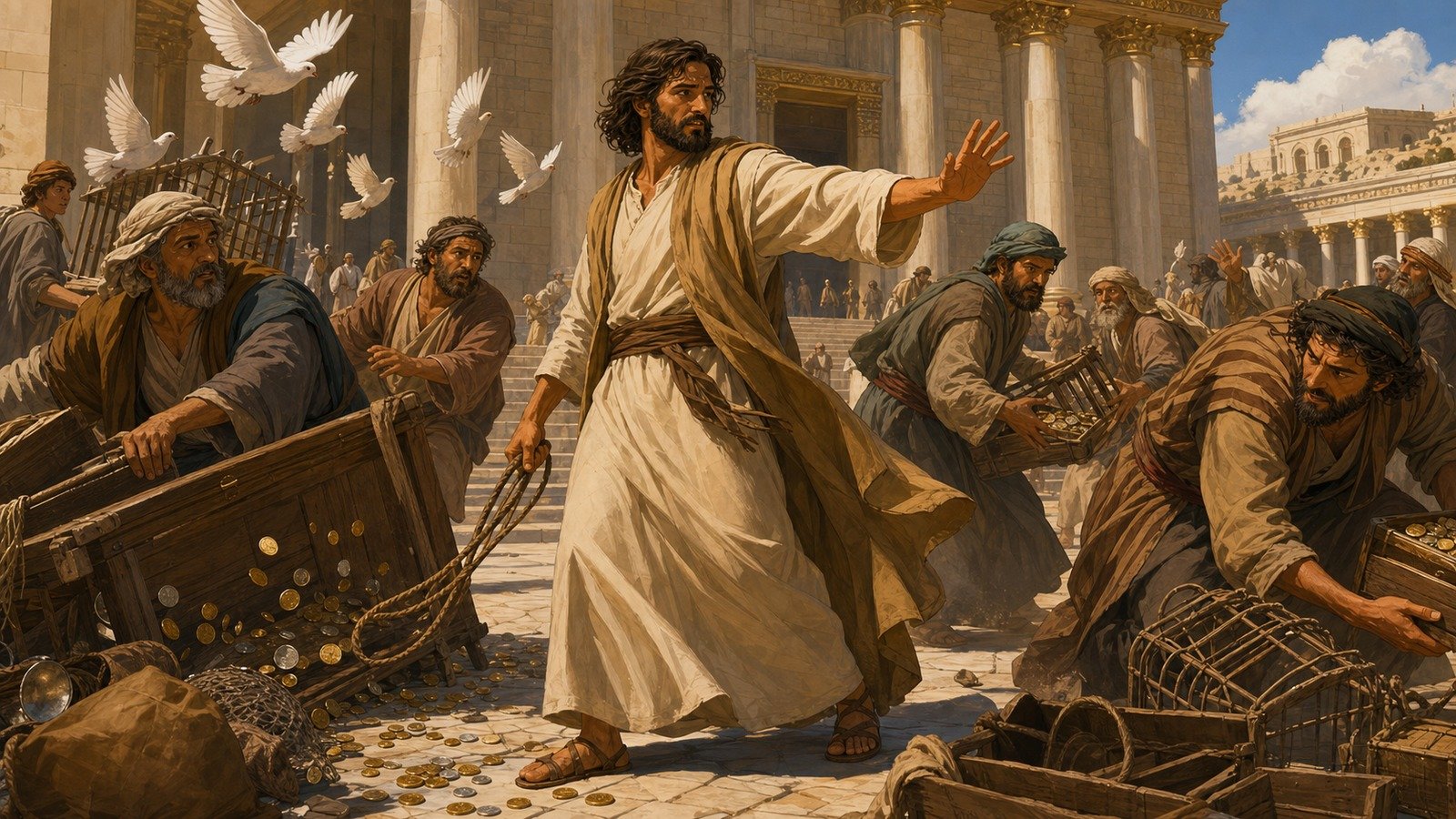
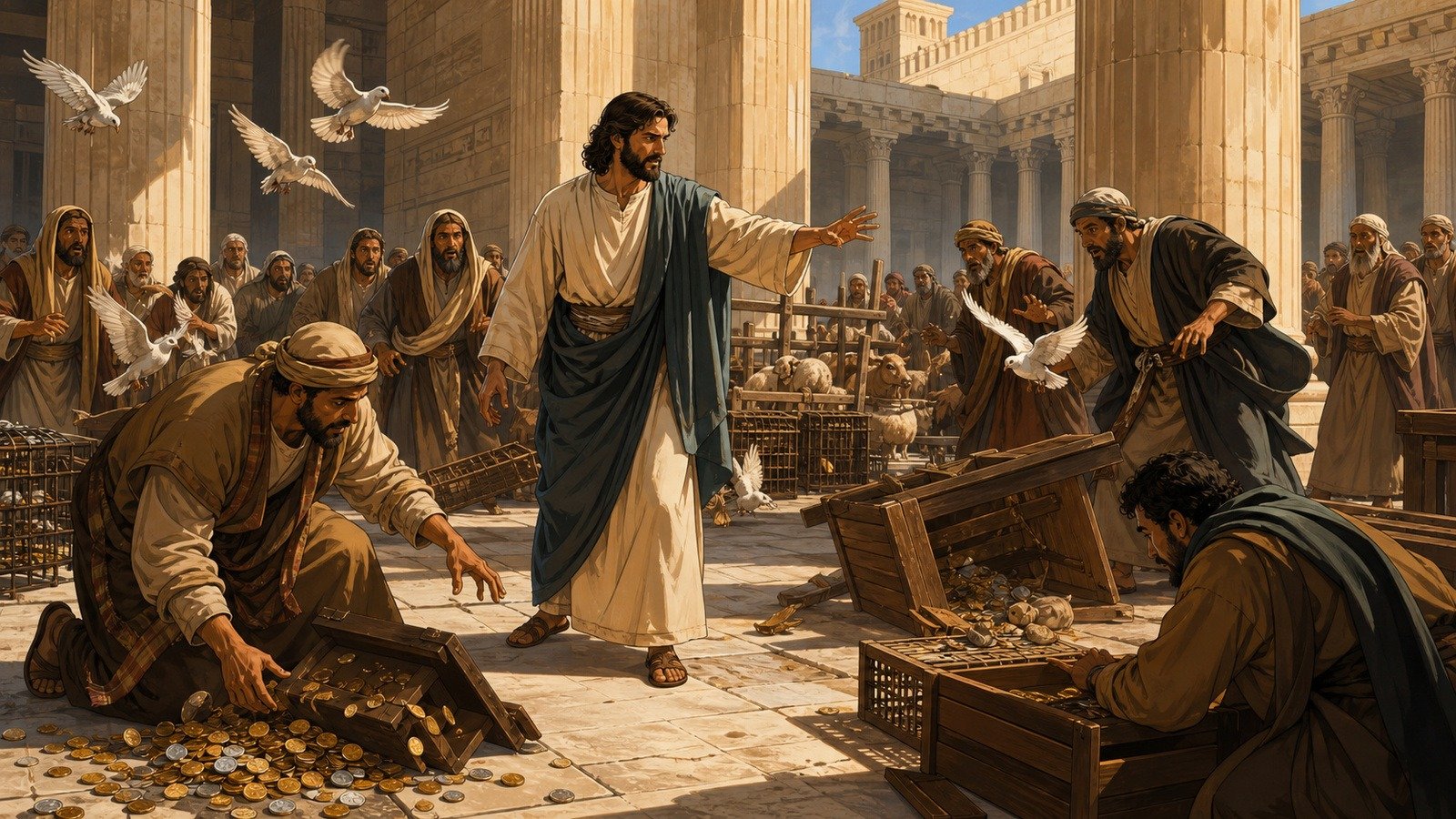
Jesus drives out money changers and animal sellers from the Temple courts, accusing them of turning "my Father's house into a market," and cryptically speaks of destroying and rebuilding "this temple" in three days, a saying his disciples only understand after the resurrection.
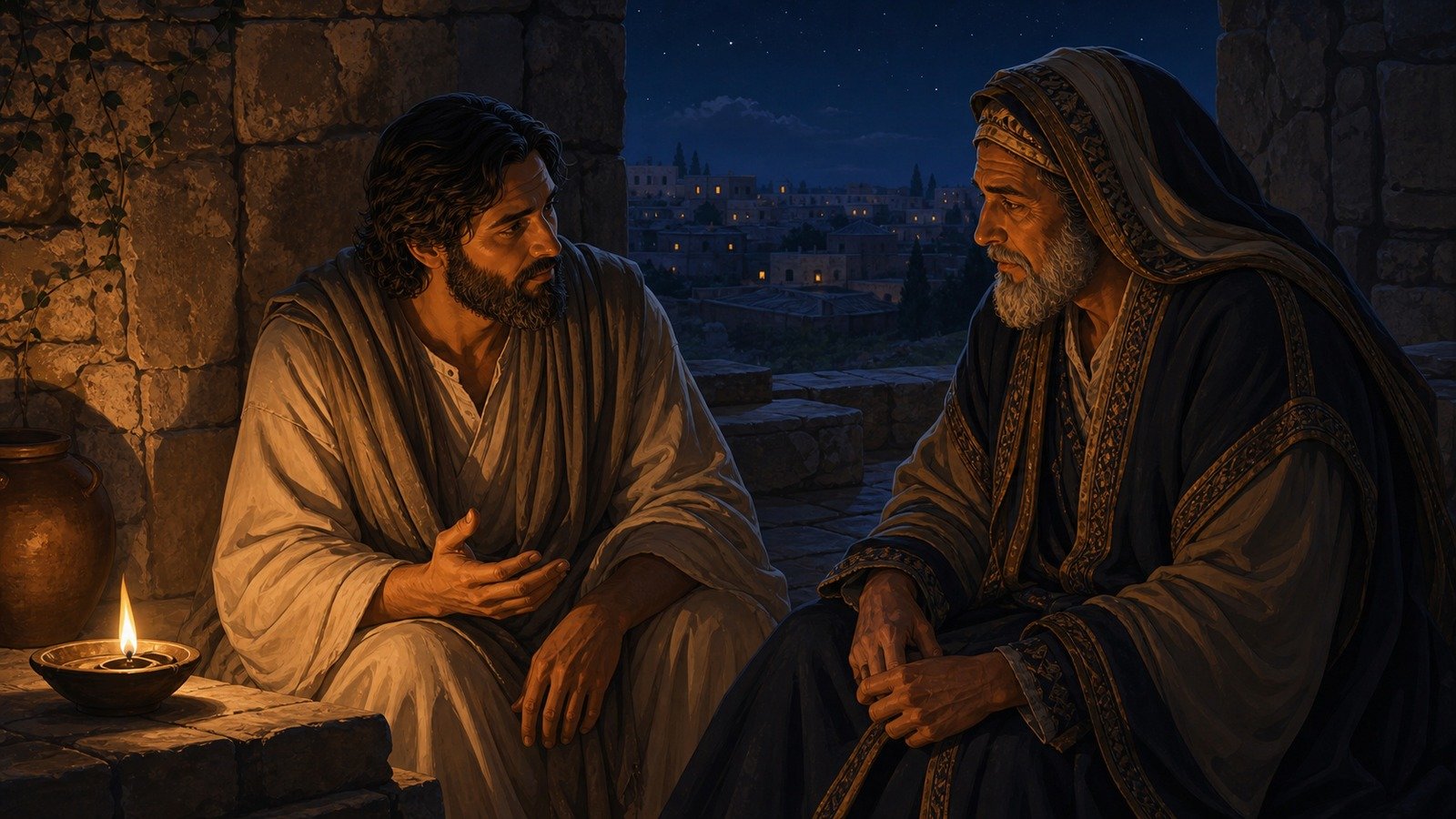
A Pharisee and member of the Jewish ruling council, Nicodemus, comes to Jesus privately by night; Jesus tells him no one can see the kingdom of God without being "born again," and the conversation contains John 3:16, among the most widely known verses in the New Testament.
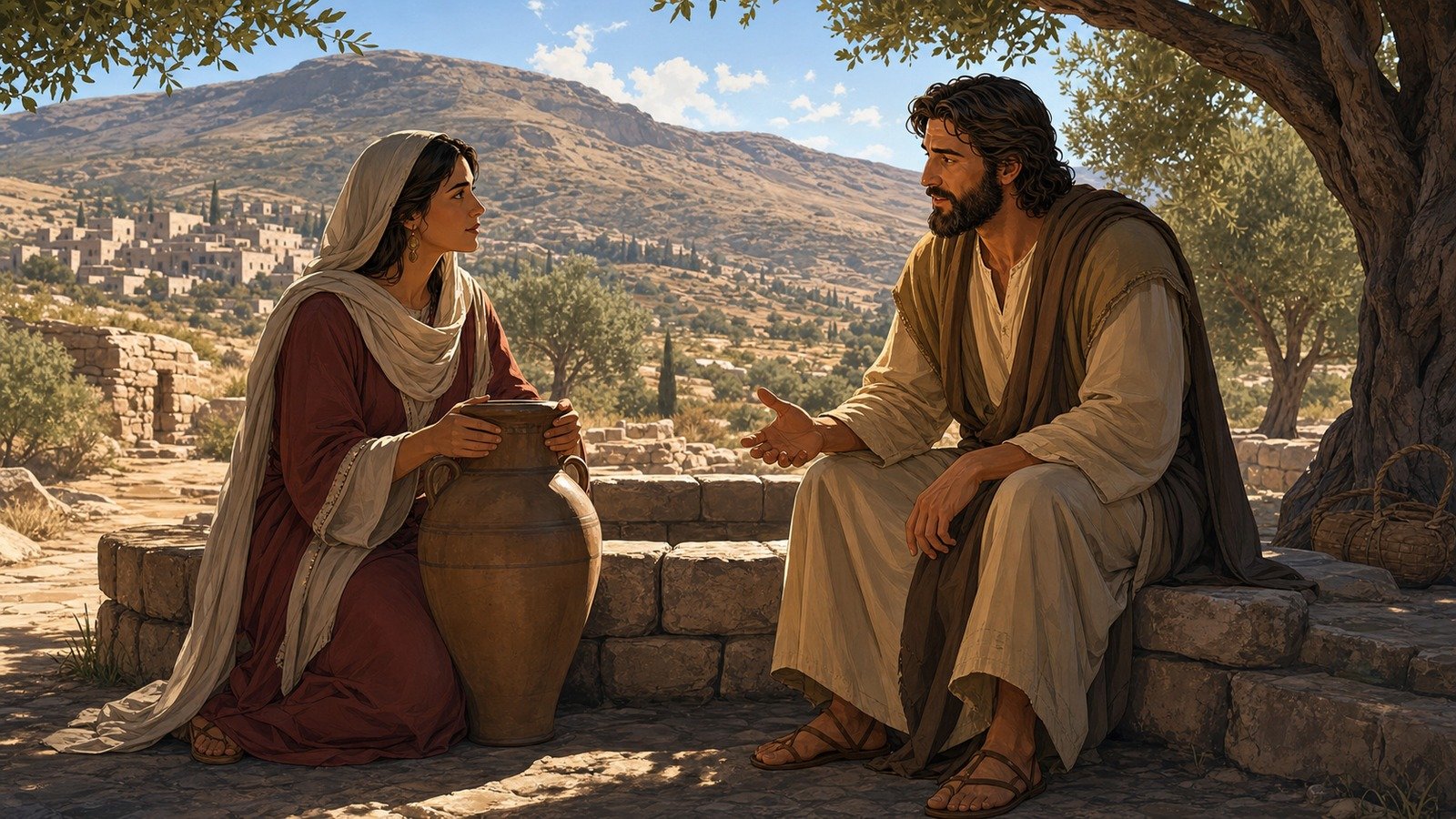
Travelling through Samaria, Jesus speaks with a Samaritan woman at Jacob's well, crossing both gender and ethnic boundaries of the day, offering her "living water" and revealing knowledge of her past; many Samaritans in the town believe as a result.
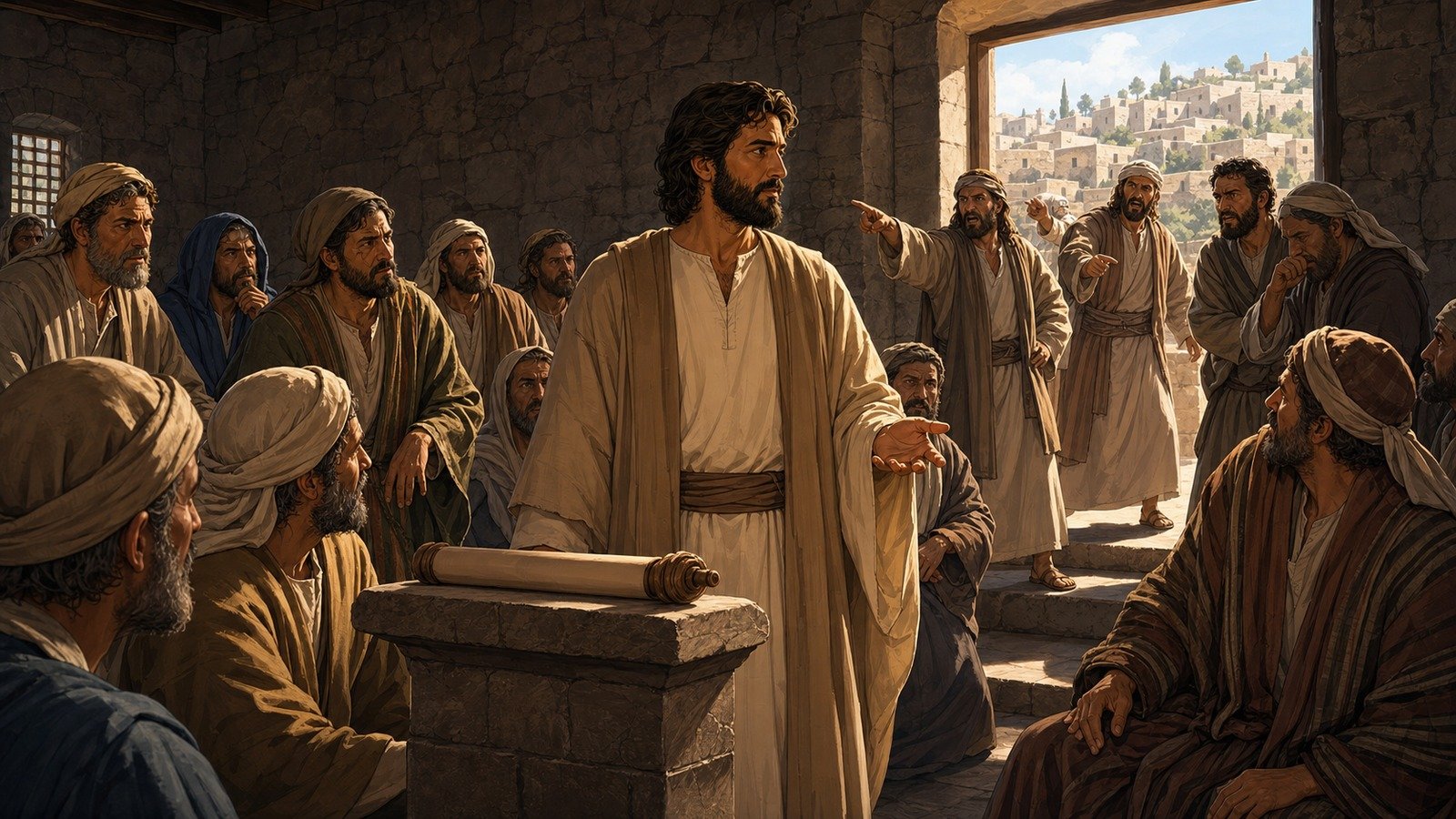
Jesus returns to Galilee following John's arrest and reads from Isaiah in the Nazareth synagogue, declaring the prophecy fulfilled in himself; the initial admiration turns to fury when he suggests God's favour has historically extended beyond Israel, and the crowd attempts to throw him off a cliff.
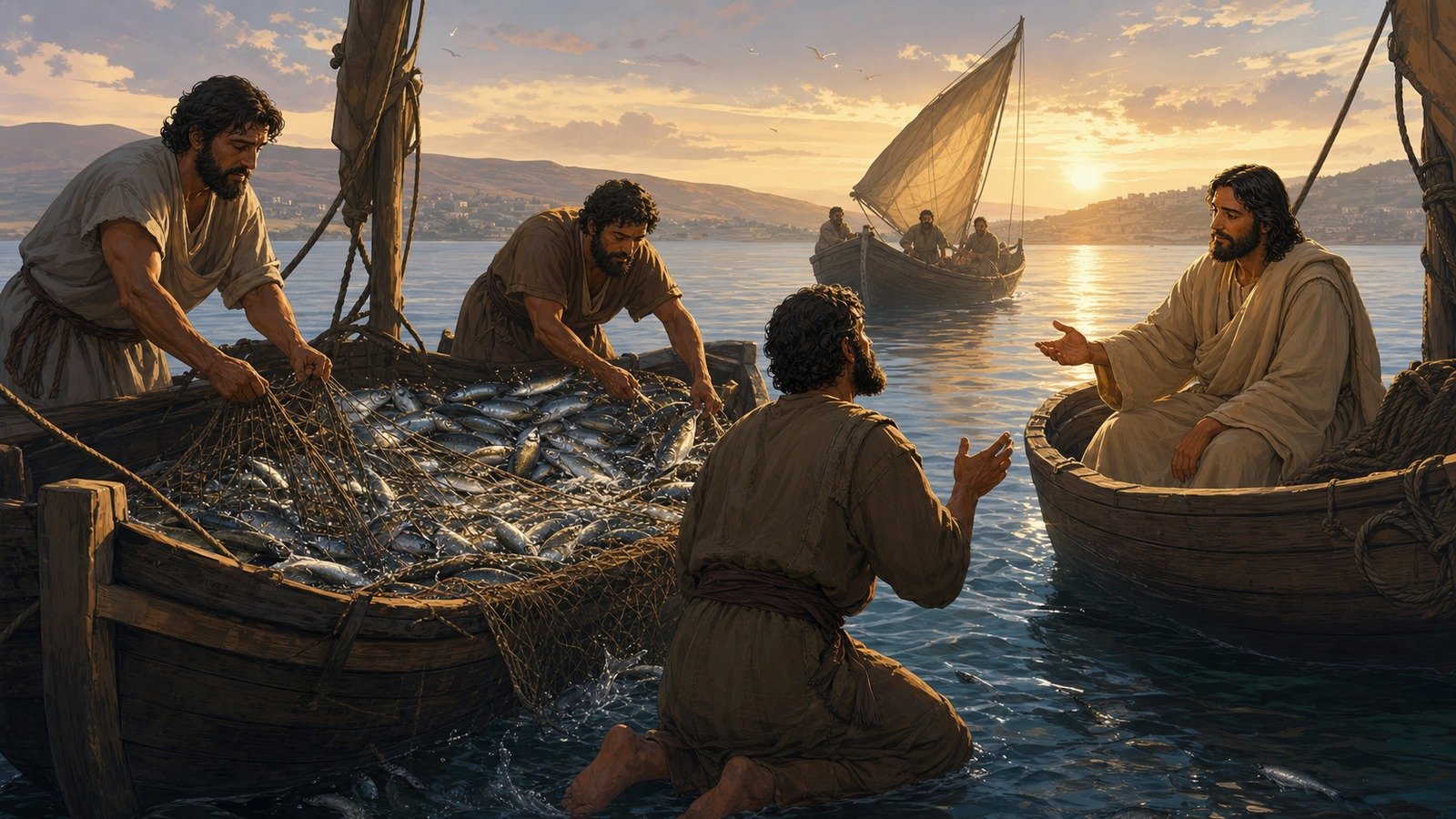
After a night of catching nothing, Peter obeys Jesus' instruction to let down the nets again and hauls in a catch so large it nearly sinks two boats; overwhelmed, Peter, James and John leave everything to follow Jesus permanently.
Teaching in Capernaum's synagogue "as one who had authority," Jesus casts out an evil spirit that had recognised him publicly as "the Holy One of God," astonishing the whole congregation.
Jesus heals Peter's fevered mother-in-law at his own home; that evening, once the Sabbath ends, the whole town brings its sick and demon-possessed to the door, and Jesus heals many of them.
Rising early to pray alone, Jesus tells his disciples they must move on to preach in other Galilean towns as well, "that is why I have come," beginning a wider circuit of preaching, teaching and healing that draws crowds from well beyond Galilee.
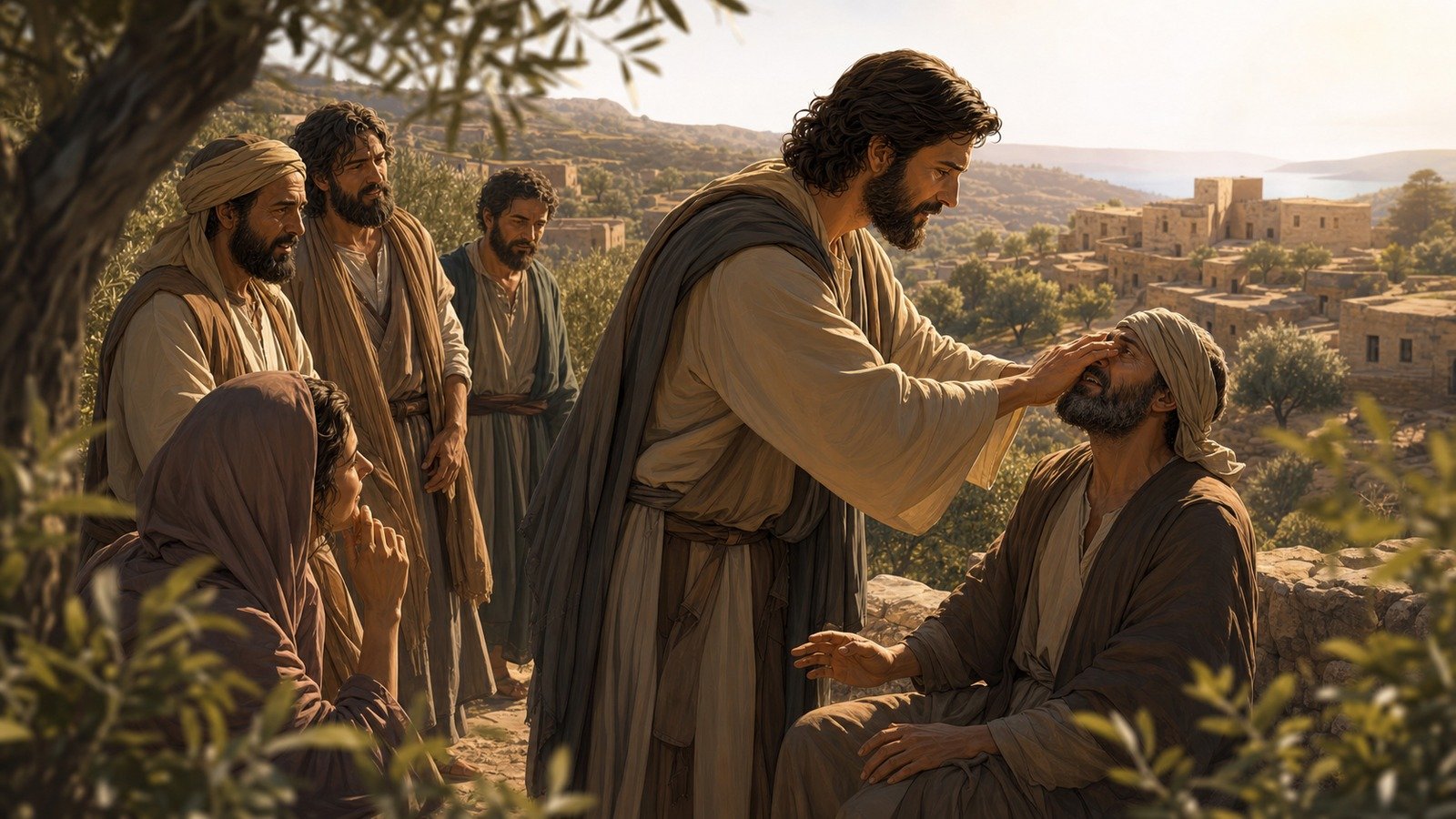
A man with leprosy, an illness that made him ritually unclean and socially isolated, asks Jesus for healing; Jesus touches him, an act itself transgressing purity taboos, and he is cleansed immediately.
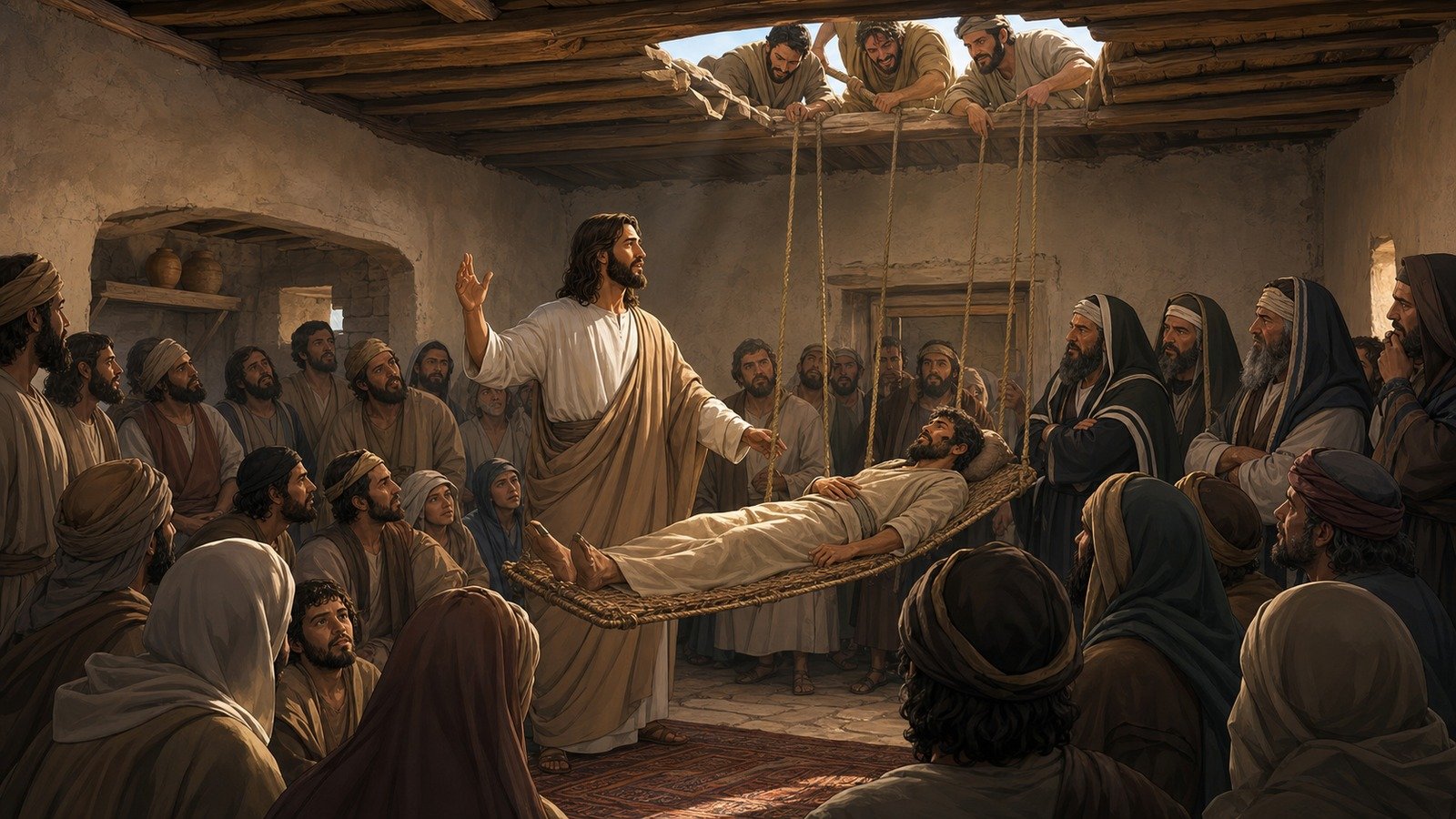
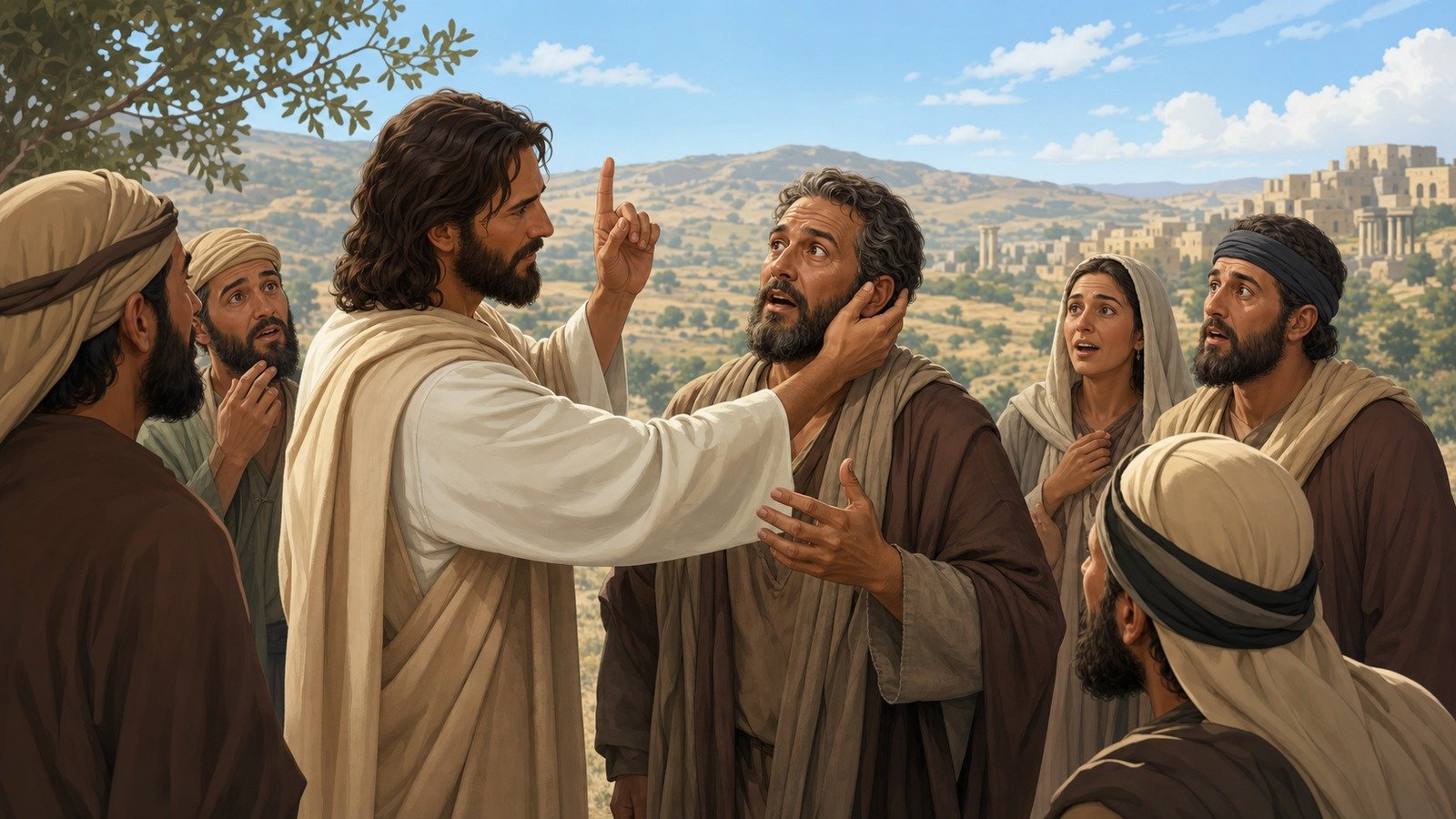
Friends lower a paralysed man through a roof to reach the crowded house where Jesus is teaching; Jesus first declares his sins forgiven, provoking accusations of blasphemy from religious teachers, then heals him physically as evidence of his authority to do both.
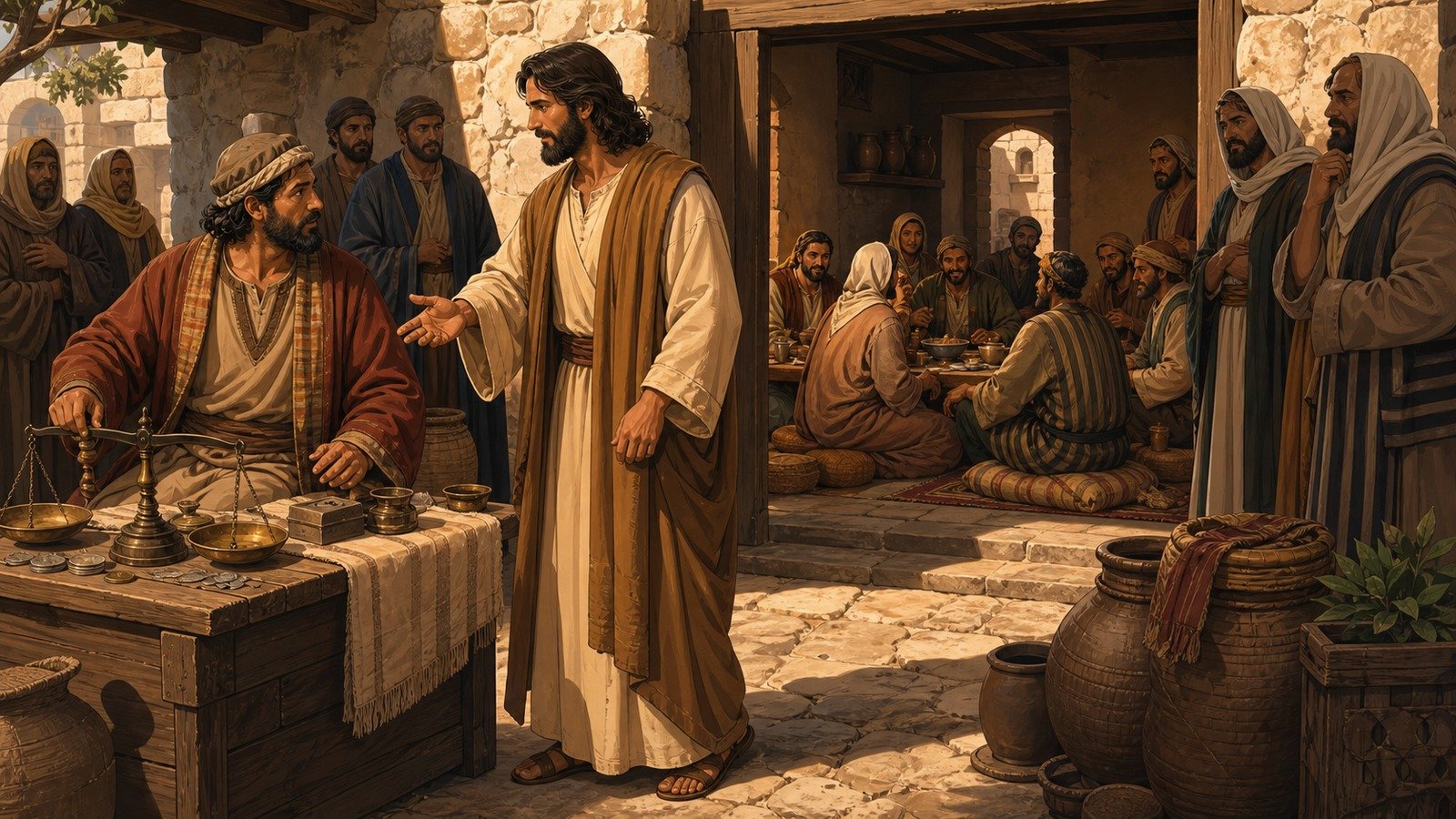
Jesus calls the tax collector Matthew directly from his booth, then eats at his house with other tax collectors and "sinners," drawing criticism he answers with, "It is not the healthy who need a doctor, but the sick."
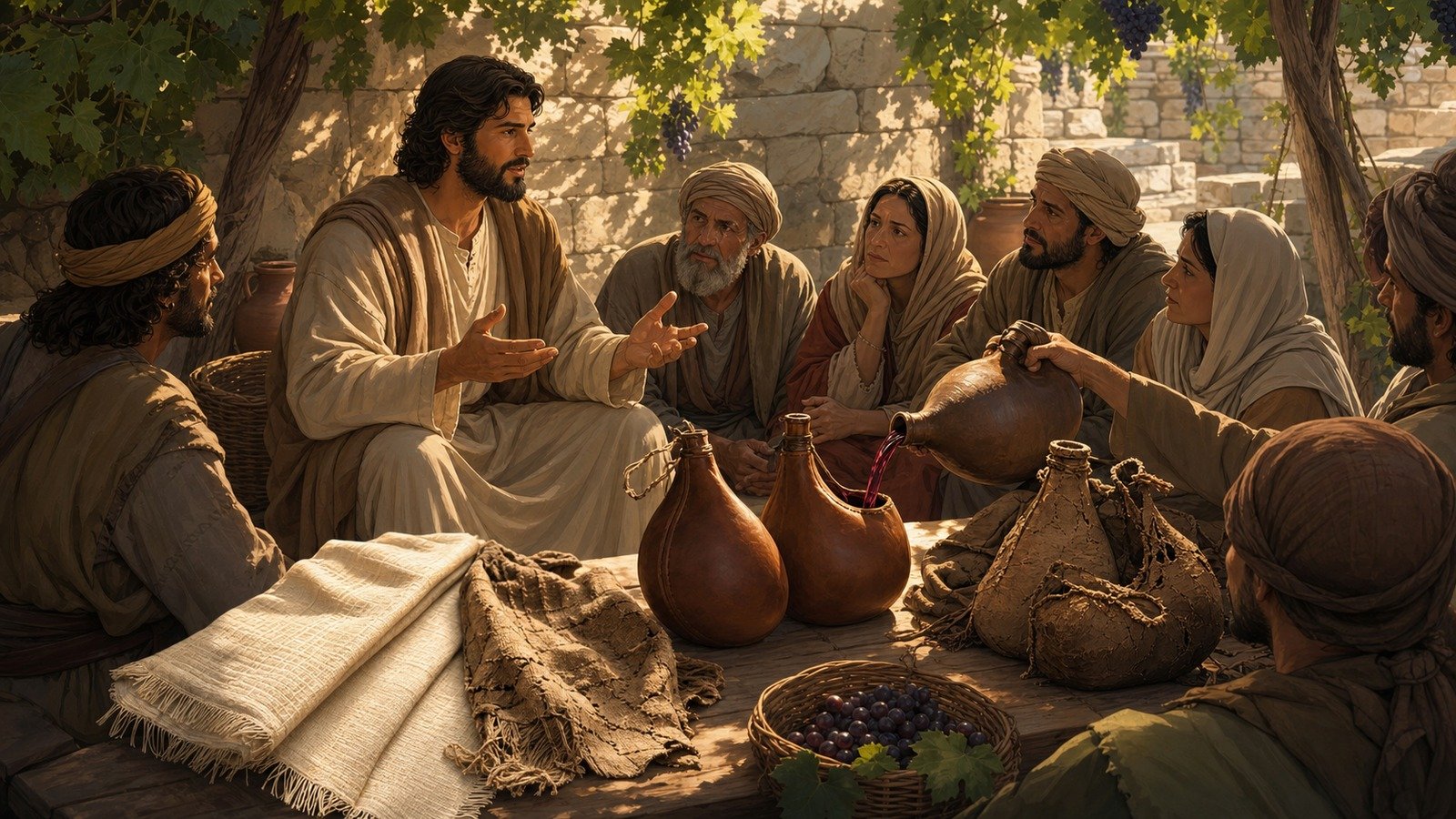
Asked why his disciples do not fast as John's do, Jesus answers with short parables about new cloth on an old garment and new wine in old wineskins, framing his own ministry as something too new to force into old religious patterns.
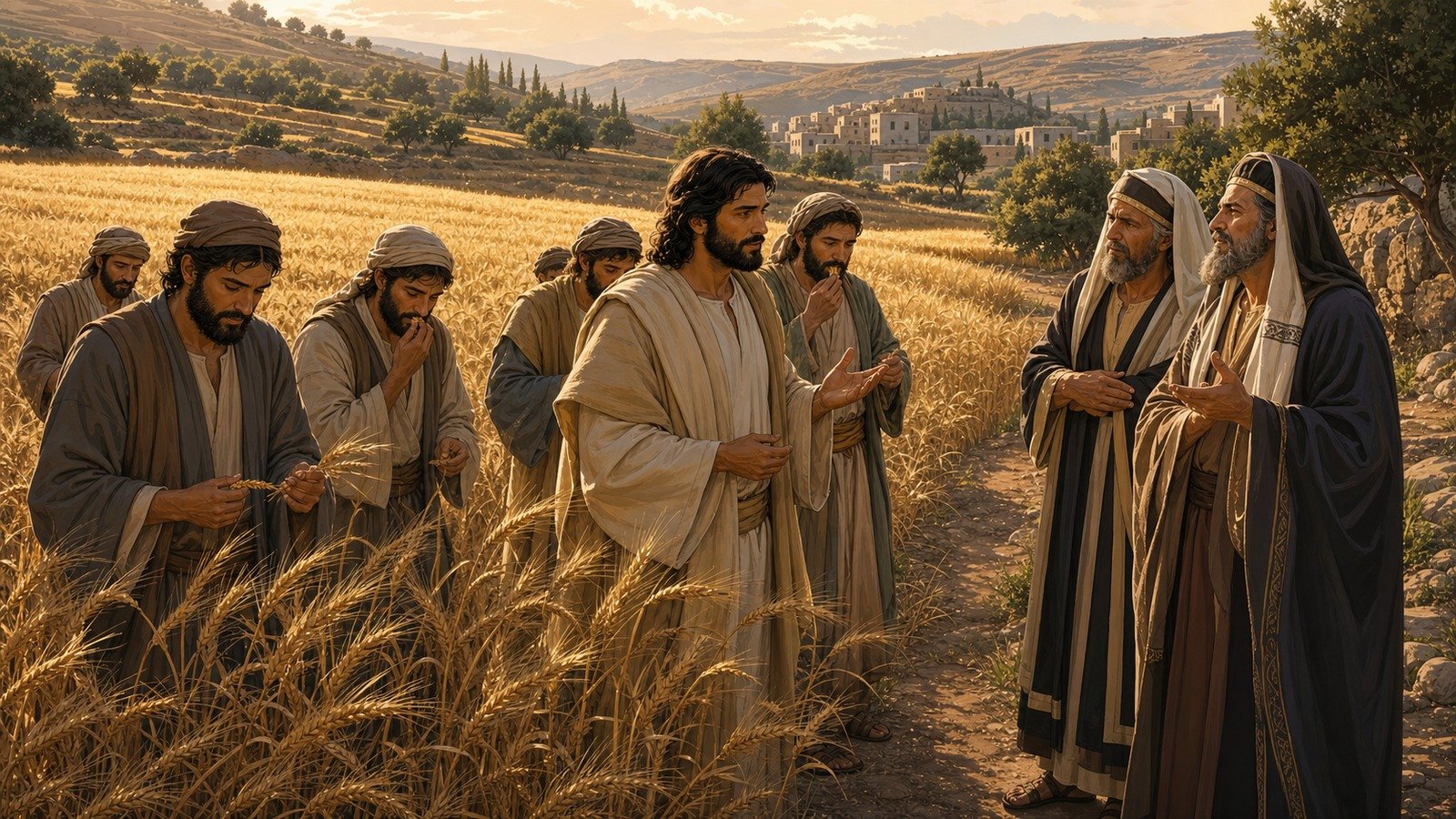
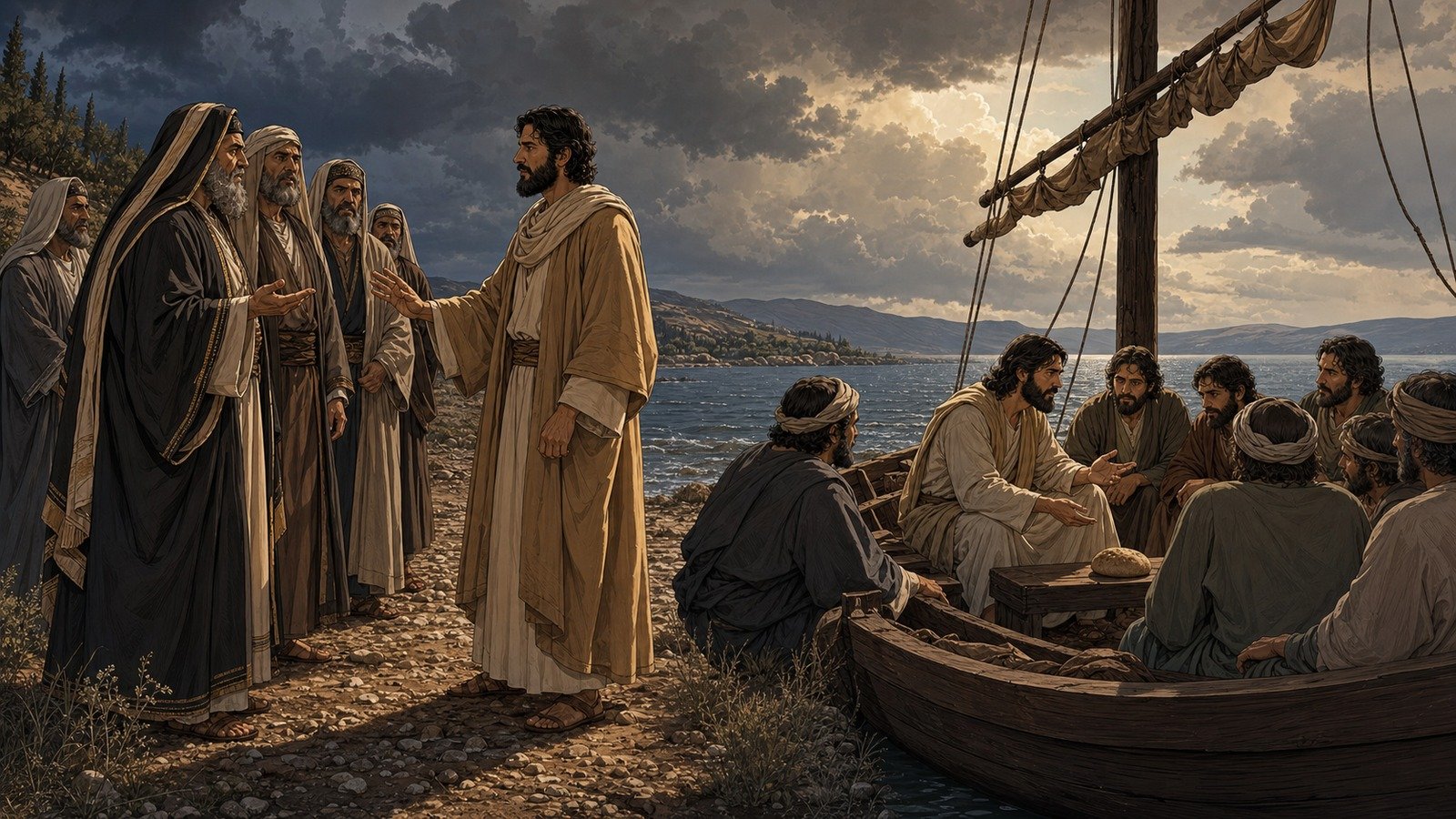
Jesus' disciples pick and eat grain while walking through a field on the Sabbath; when Pharisees object, Jesus points to David's precedent of eating consecrated bread and declares, "the Sabbath was made for man, not man for the Sabbath."
Watched closely by hostile religious leaders, Jesus deliberately heals a man's shrunken hand in a synagogue on the Sabbath, asking pointedly whether it is lawful to do good or harm on the Sabbath; the healing provokes a plot to kill him.
After a night of prayer, Jesus formally selects twelve disciples as apostles, "sent ones," from among his wider following, giving them his own authority to preach, heal and cast out demons, and forming the group that will lead the movement after his resurrection.
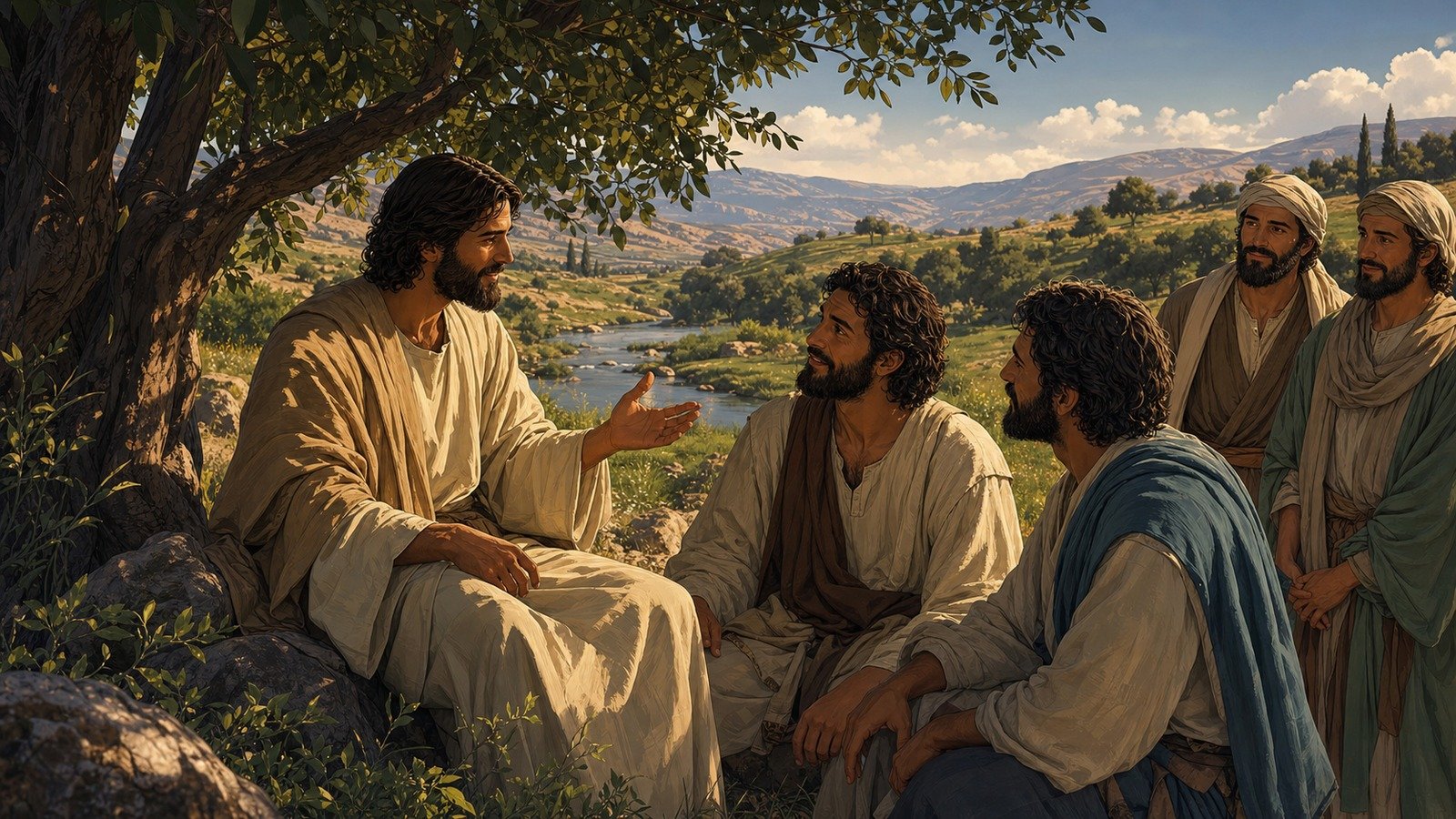
Jesus delivers his most extended recorded teaching, covering the Beatitudes, anger, lust, oaths, retaliation, love of enemies, prayer (including the Lord's Prayer), fasting, wealth, anxiety, judging others, and the parable of building on rock versus sand, laying out the ethic of his kingdom.
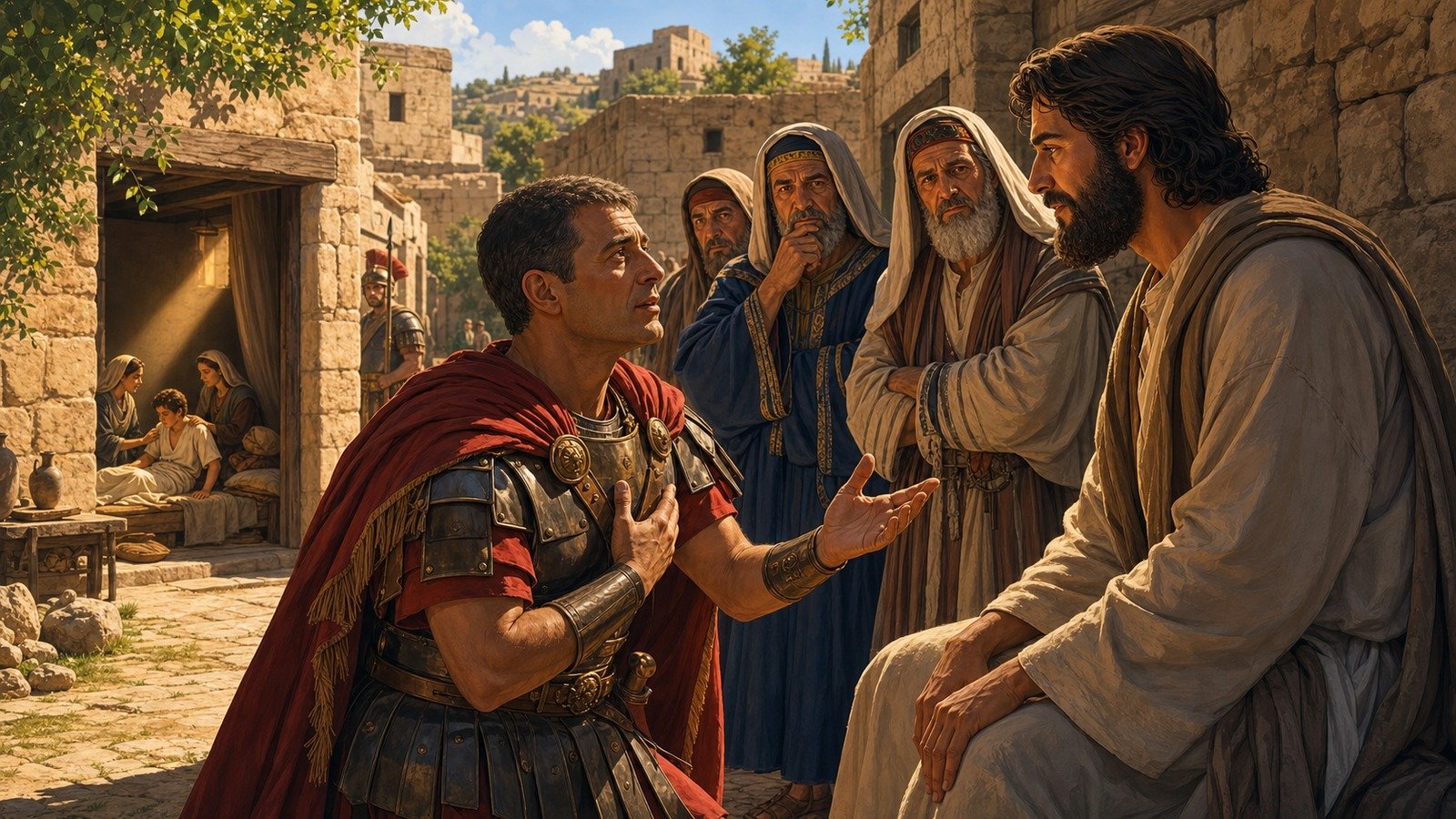
A Roman centurion asks Jesus to heal his servant remotely, reasoning that Jesus, like an officer, need only "say the word"; Jesus commends his faith as greater than anything found in Israel, and the servant is healed at that moment.
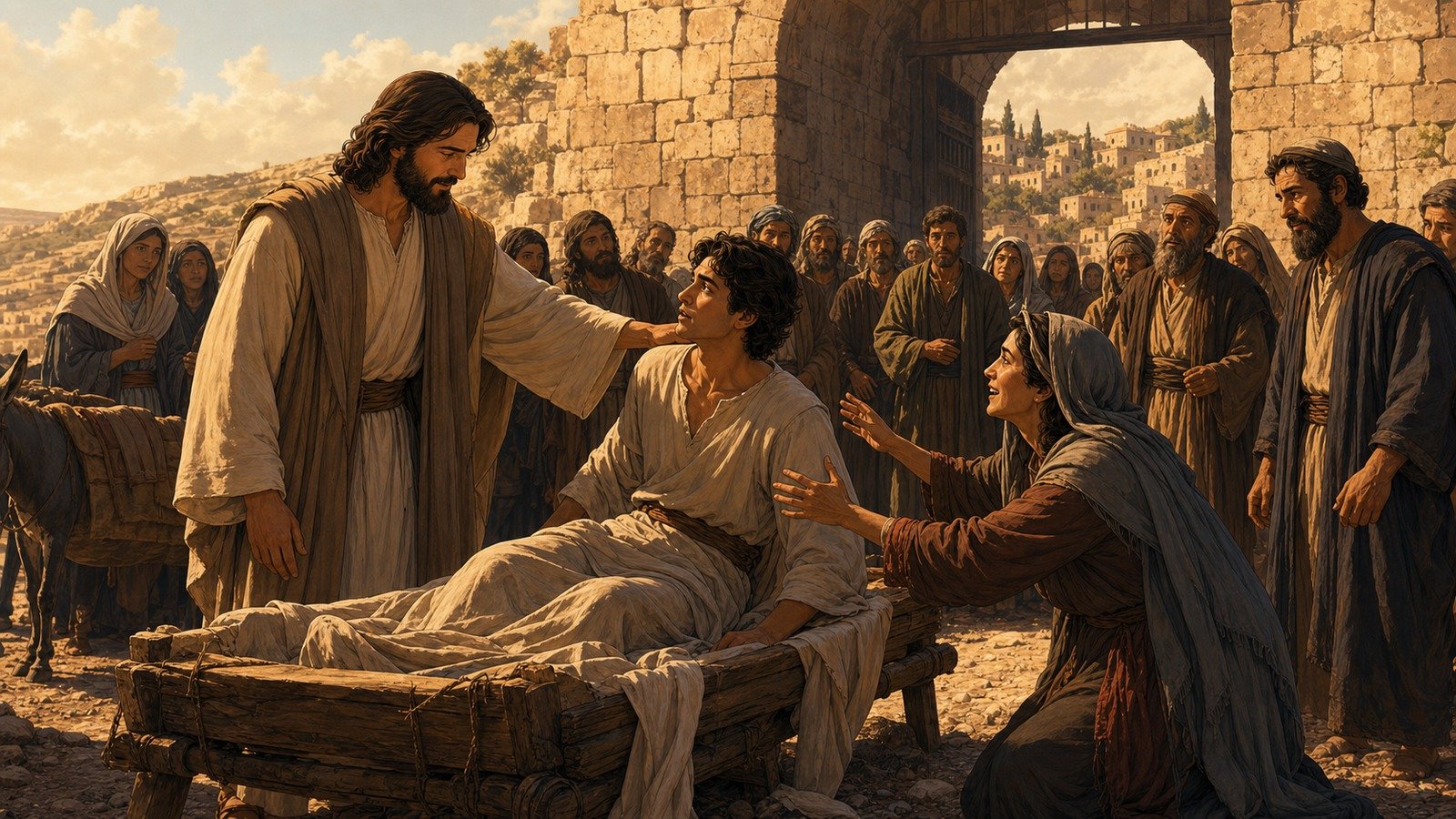
Encountering a funeral procession for a widow's only son at Nain, Jesus is moved with compassion, touches the coffin, and tells the young man to rise; he does, and the crowd, awestruck, spreads word that "a great prophet has appeared among us."
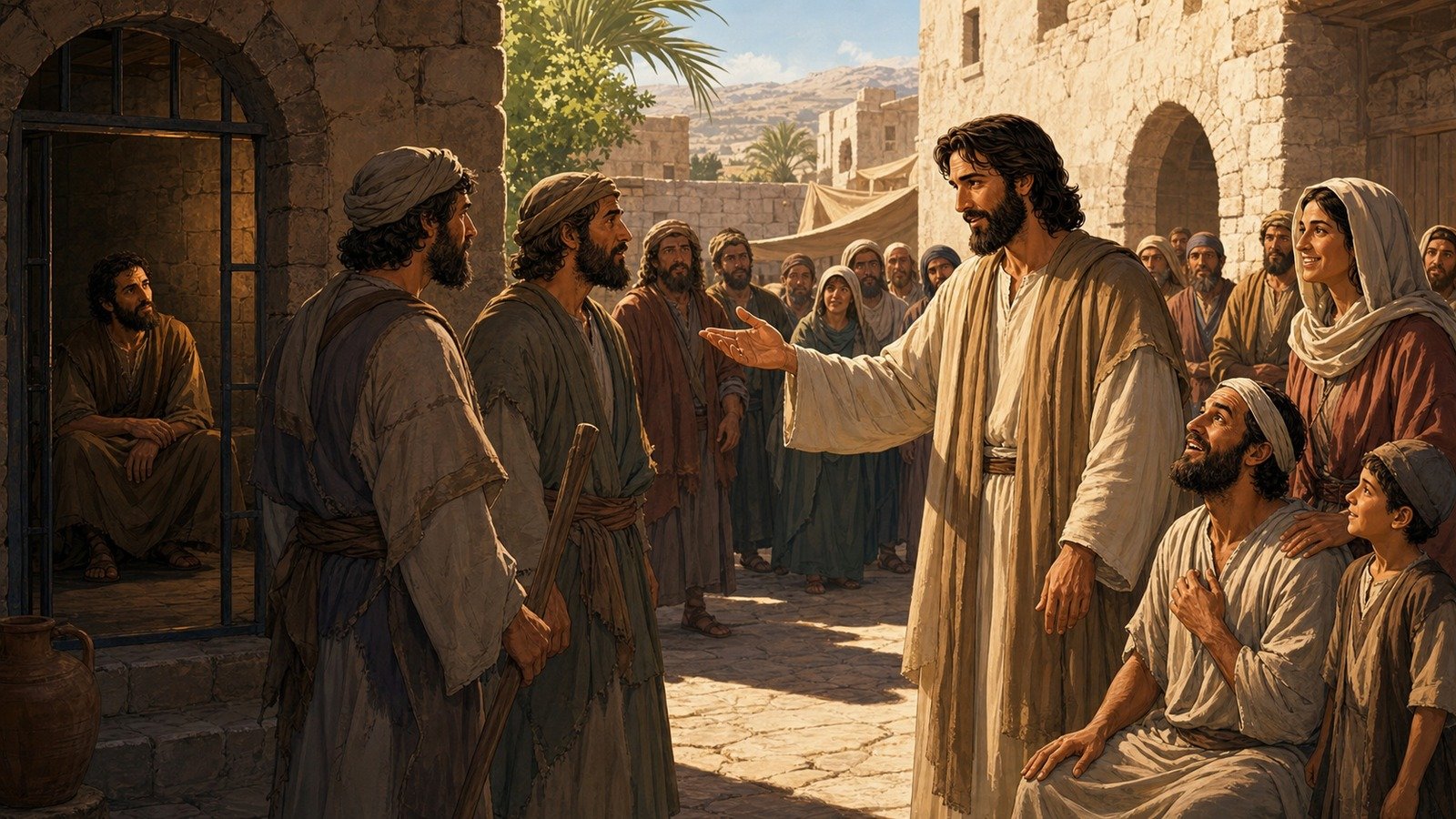
Imprisoned by Herod Antipas, John sends disciples to ask whether Jesus really is "the one who is to come." Jesus points to his miracles as evidence, then publicly praises John as the greatest of the prophets while noting even he is outranked by anyone in the coming kingdom.
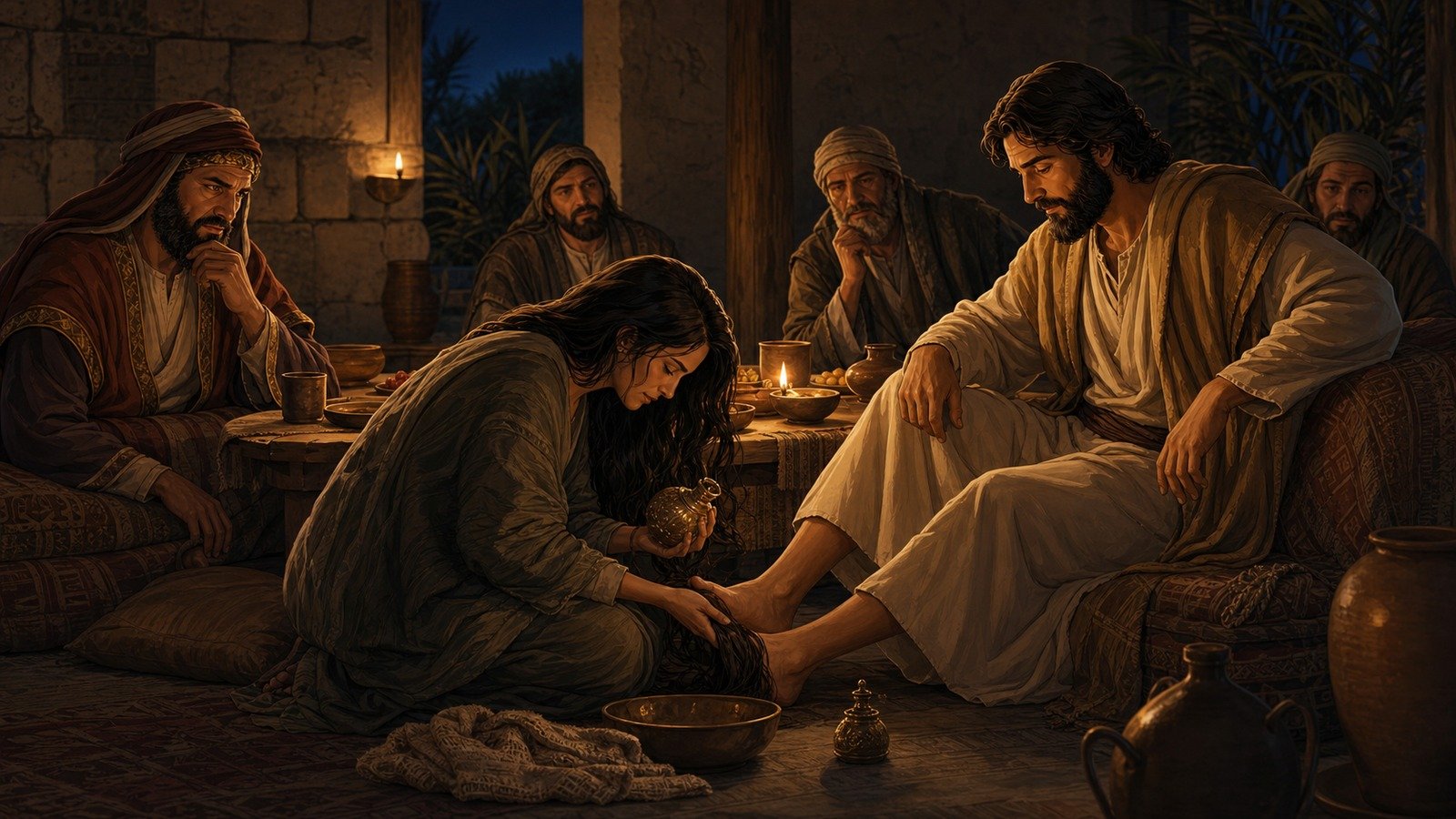
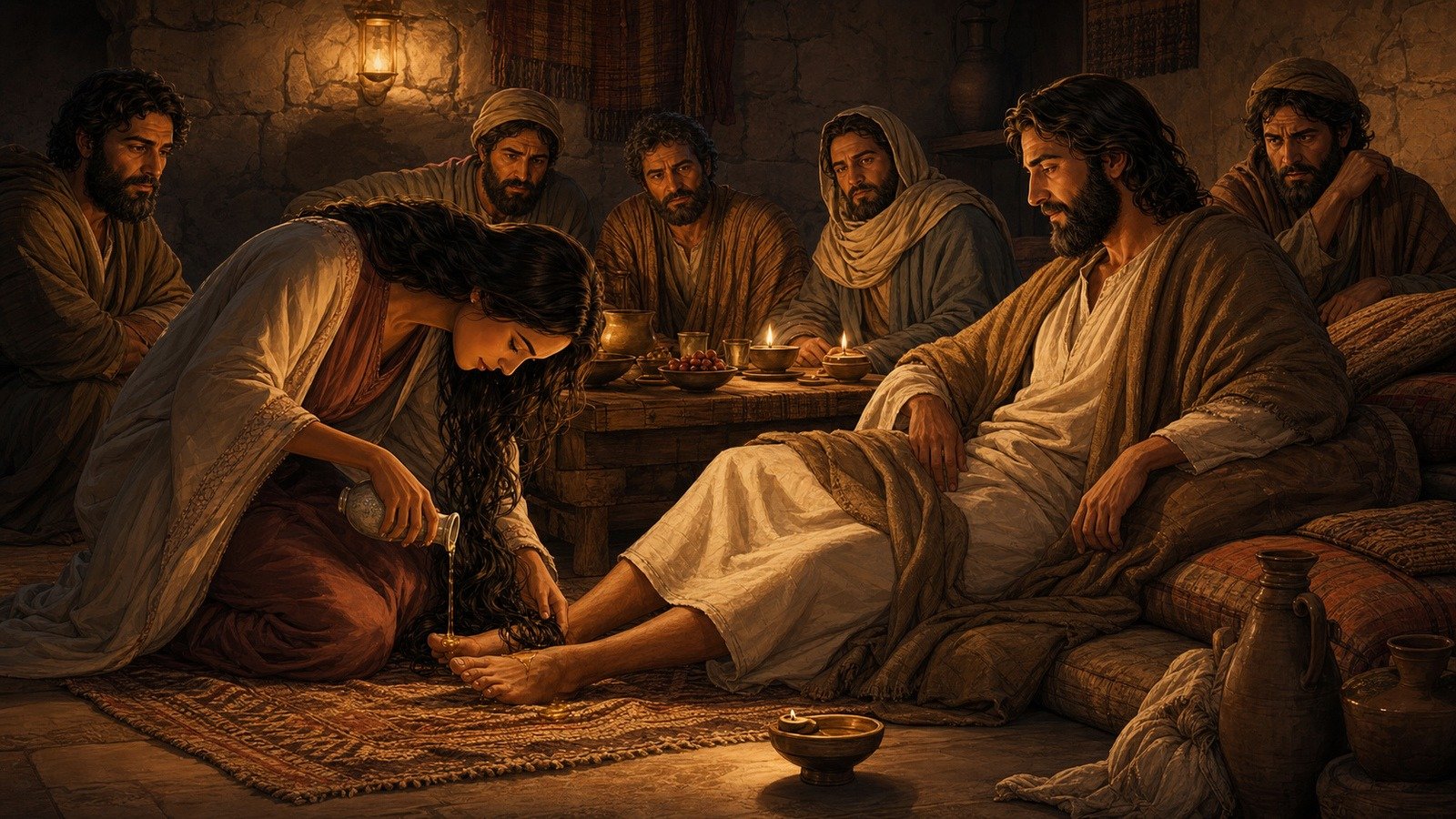
At a Pharisee's dinner, a woman known for sin washes Jesus' feet with her tears and perfume; Jesus rebukes his host's silent contempt with a parable about two forgiven debts, concluding that "whoever has been forgiven little loves little."
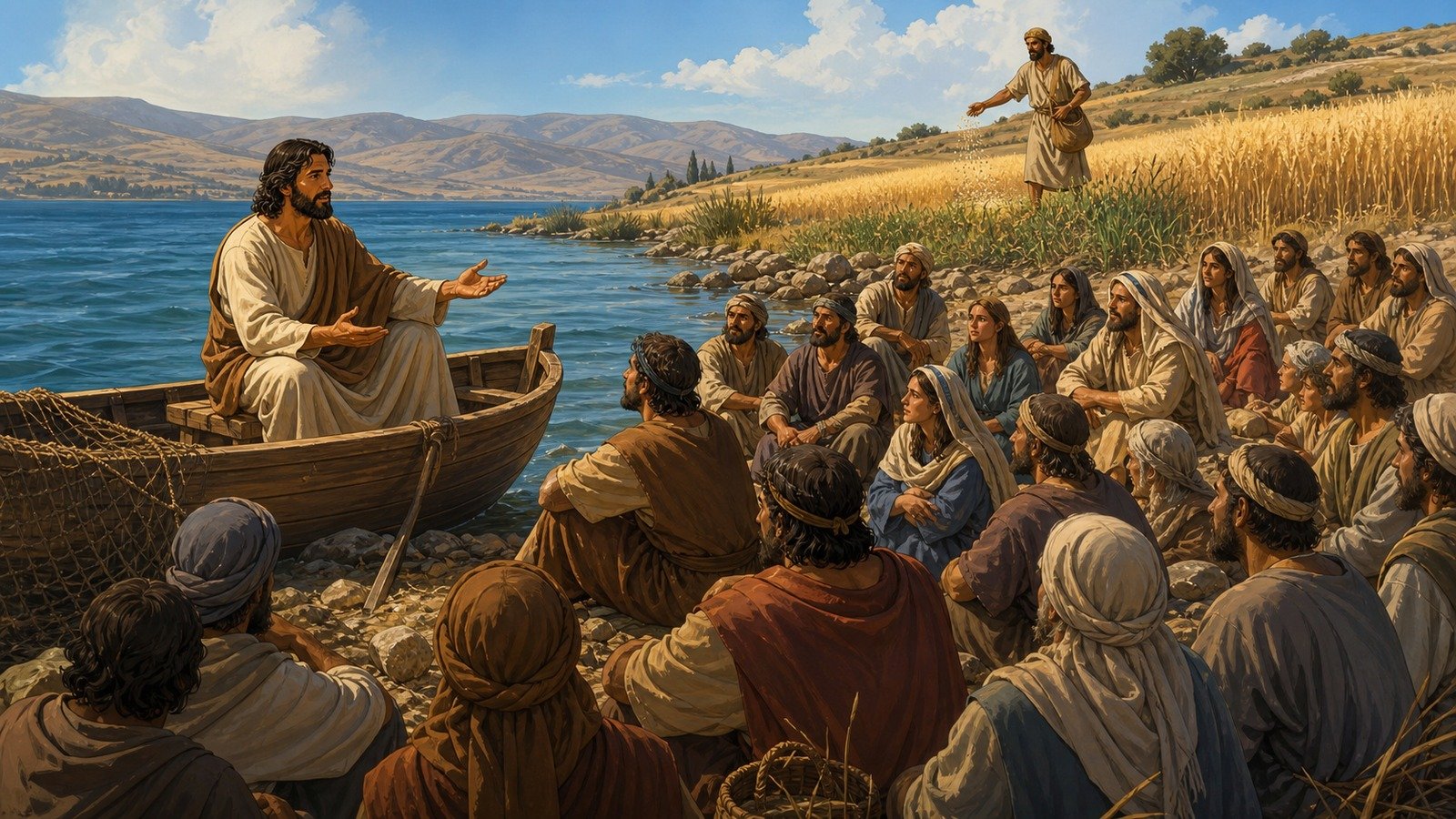
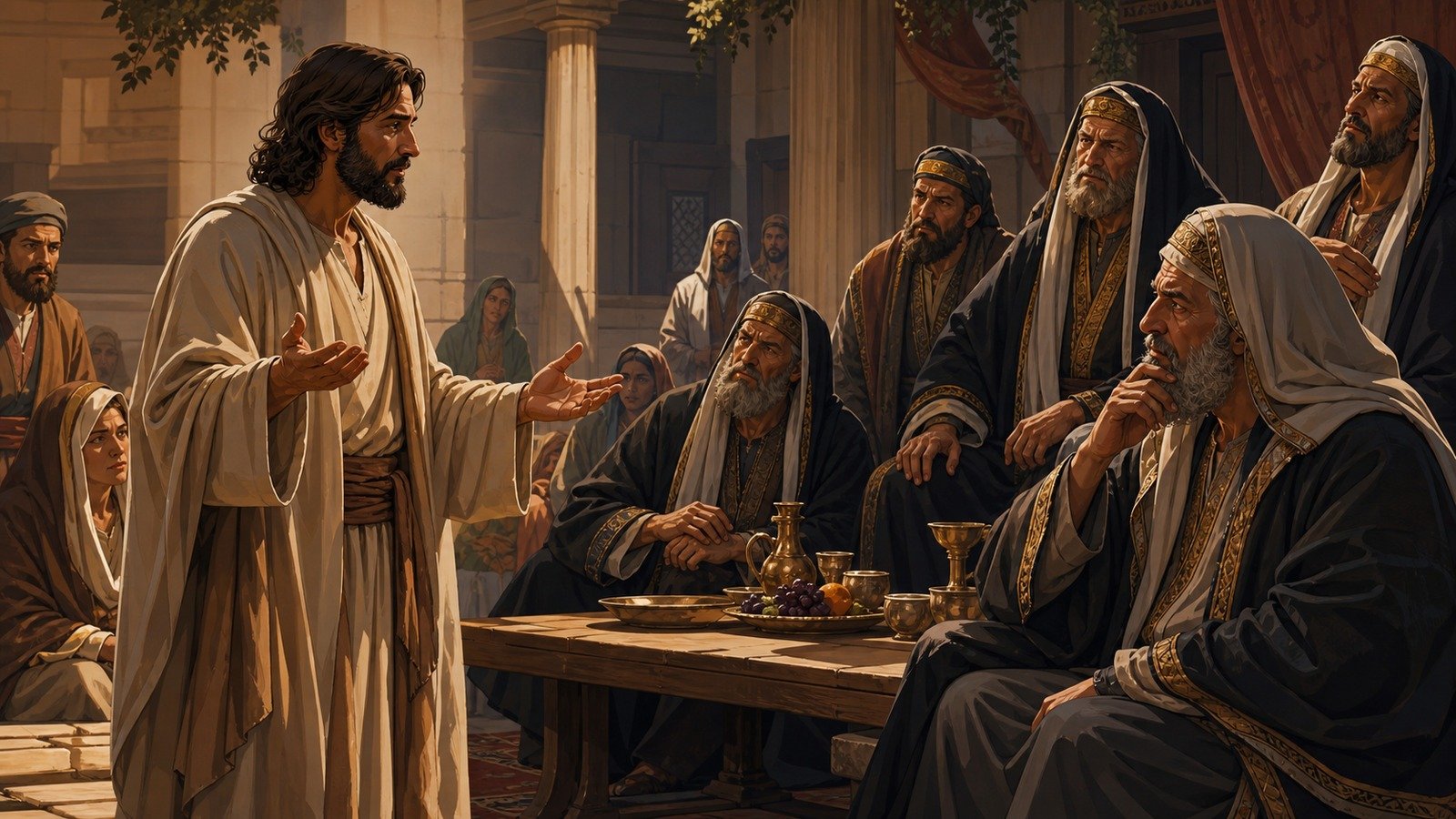
Jesus teaches extensively in parables, including the sower, the weeds among the wheat, the mustard seed and the yeast, explaining to his disciples privately that the form itself both reveals truth to the receptive and conceals it from the indifferent.
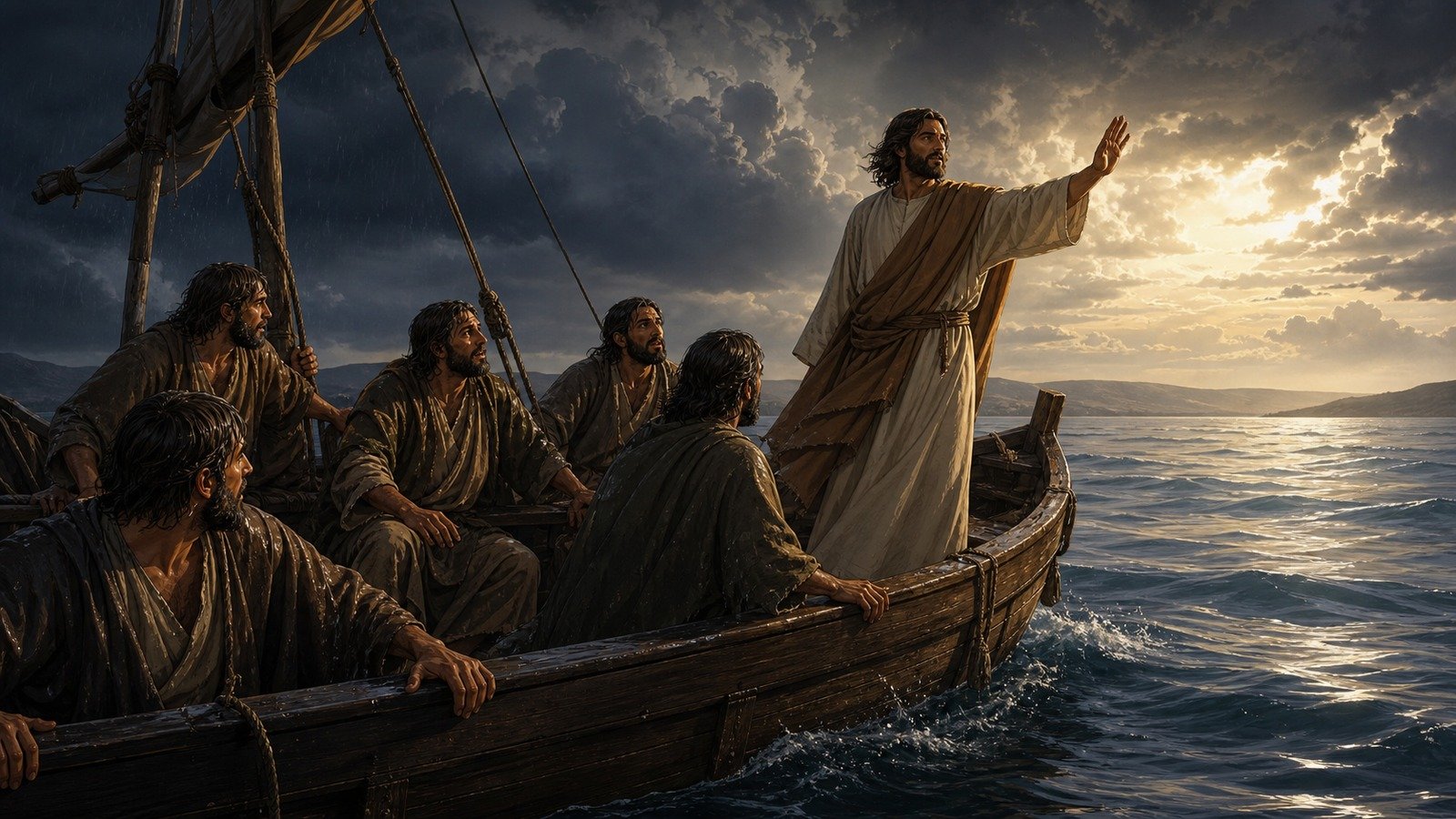
Asleep in a boat during a sudden, violent storm on the Sea of Galilee, Jesus is woken by his terrified disciples and calms both wind and waves with a word, prompting the awed question, "What kind of man is this?"
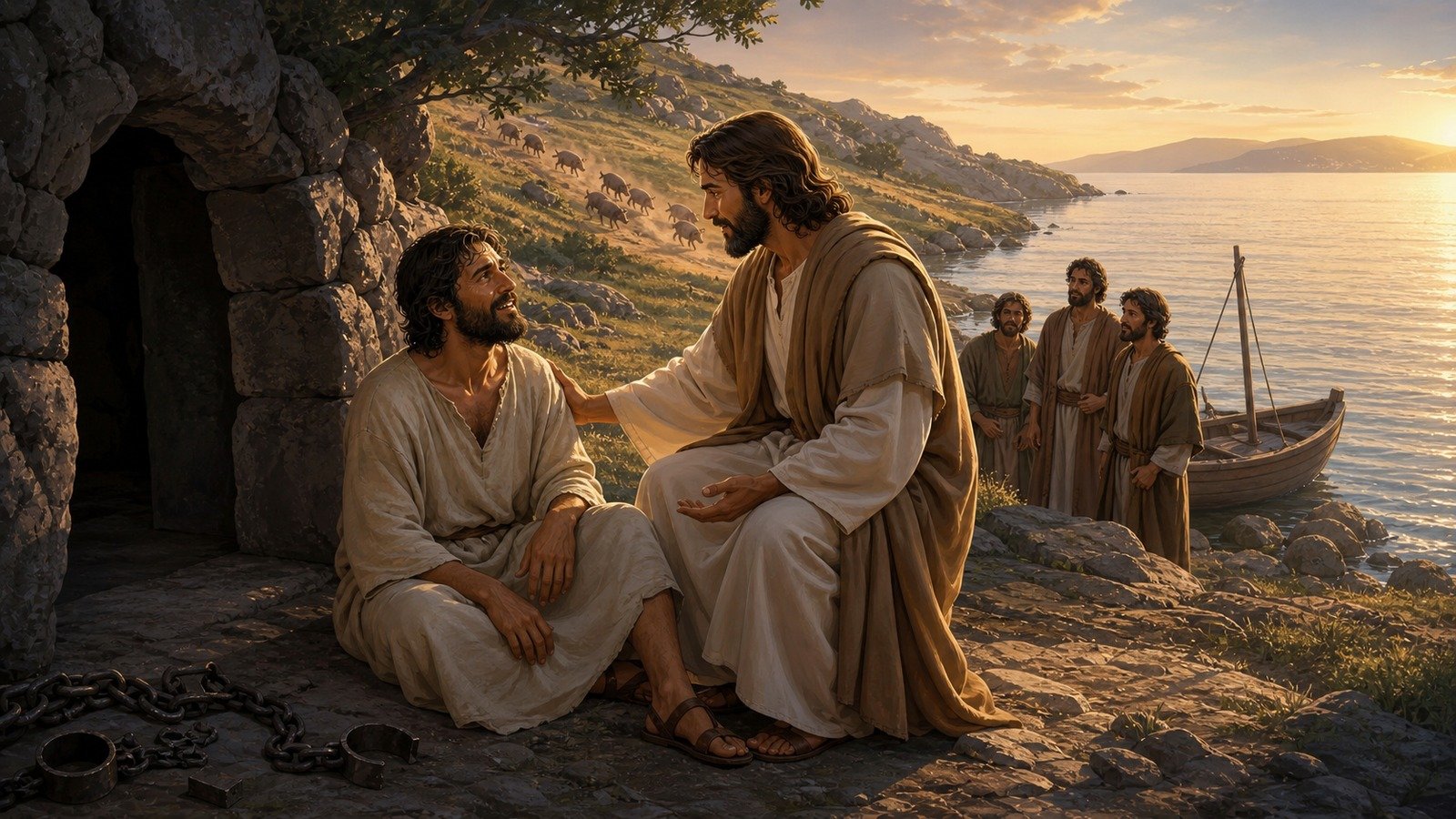
Jesus delivers a violently demon-possessed man living among tombs; the demons, identifying themselves as "Legion," request to enter a nearby herd of pigs, which then rushes into the lake and drowns, and the healed man becomes an early missionary to his own region.
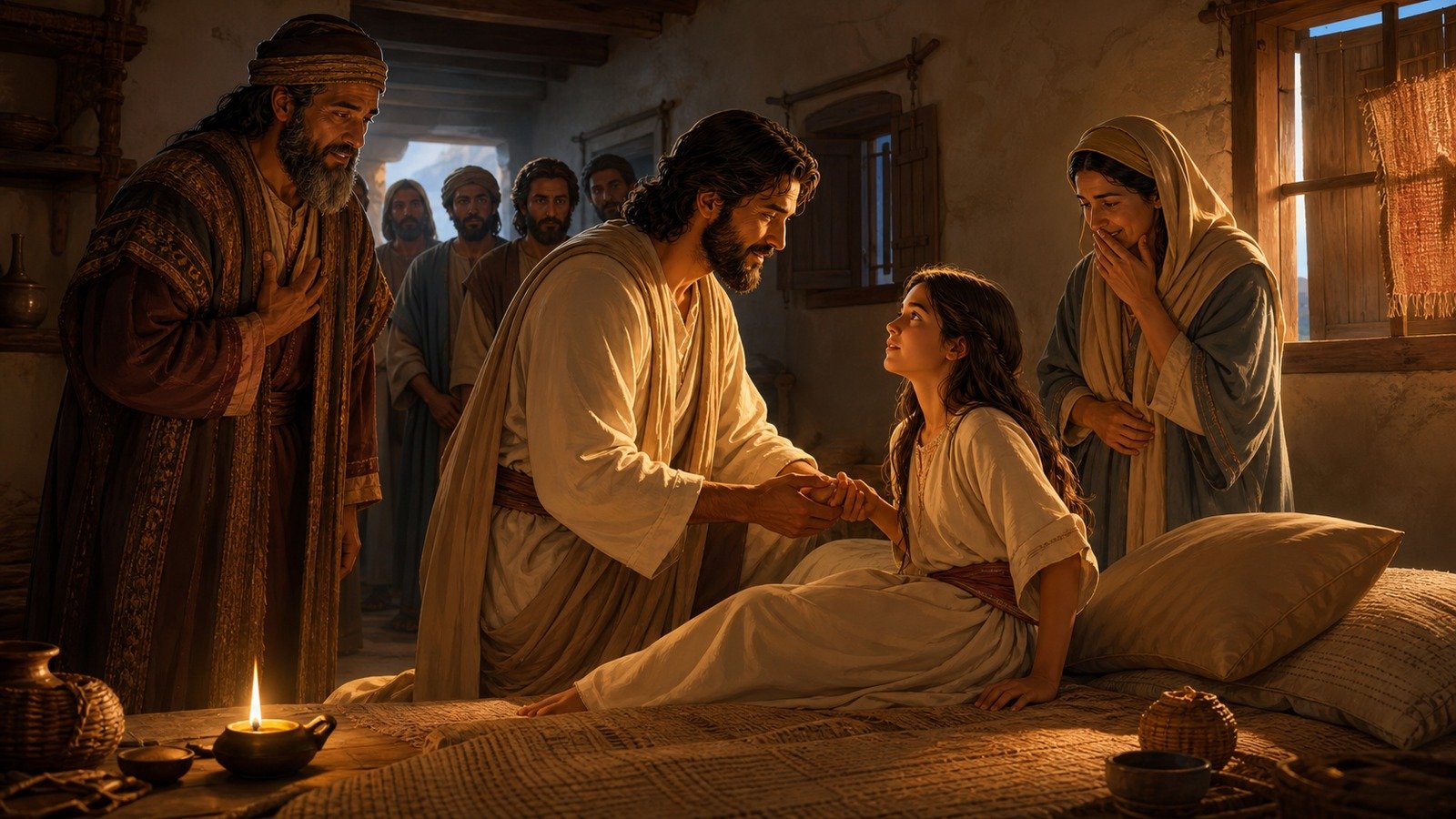
A synagogue leader named Jairus begs Jesus to heal his dying daughter; by the time Jesus arrives she has died, but he raises her regardless, telling the astonished witnesses to keep it quiet.
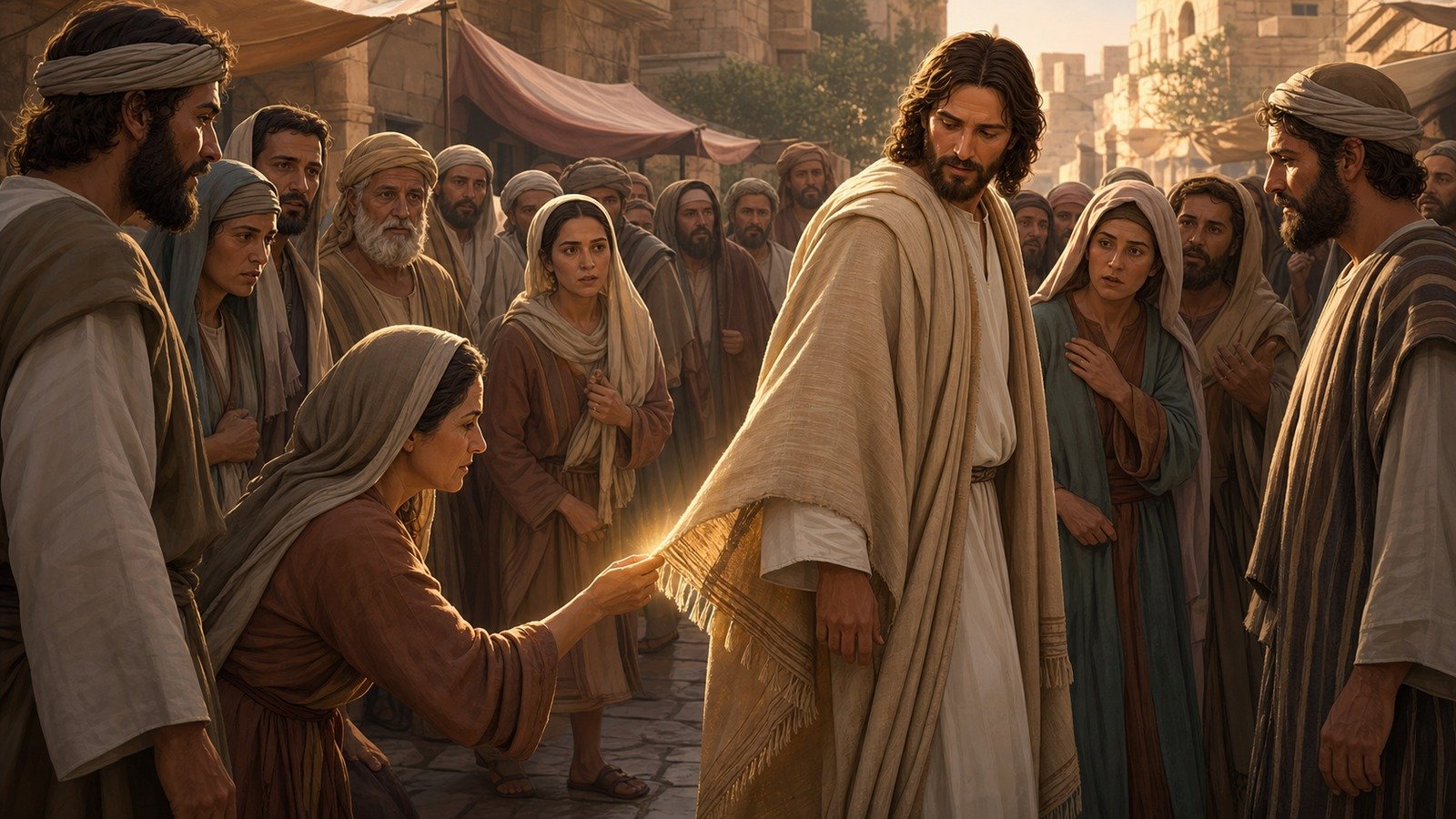
On the way to Jairus' house, a woman who had suffered constant bleeding for twelve years touches Jesus' cloak in the crowd and is healed instantly; Jesus stops to identify her publicly, "your faith has healed you."
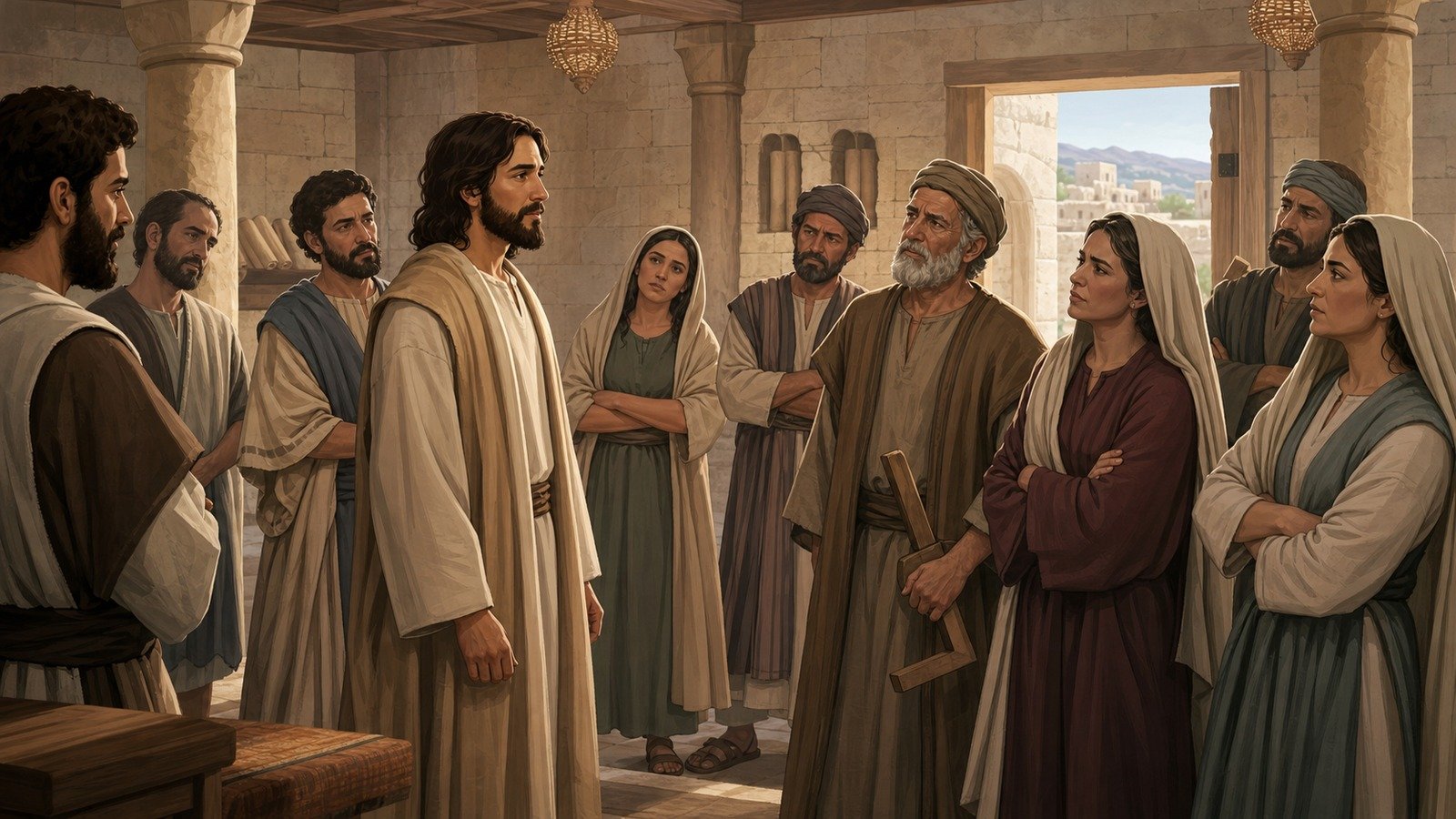
Jesus is again rejected in his hometown, where familiarity breeds contempt, "Isn't this the carpenter's son?", and Mark notes he could do few miracles there because of their lack of faith.
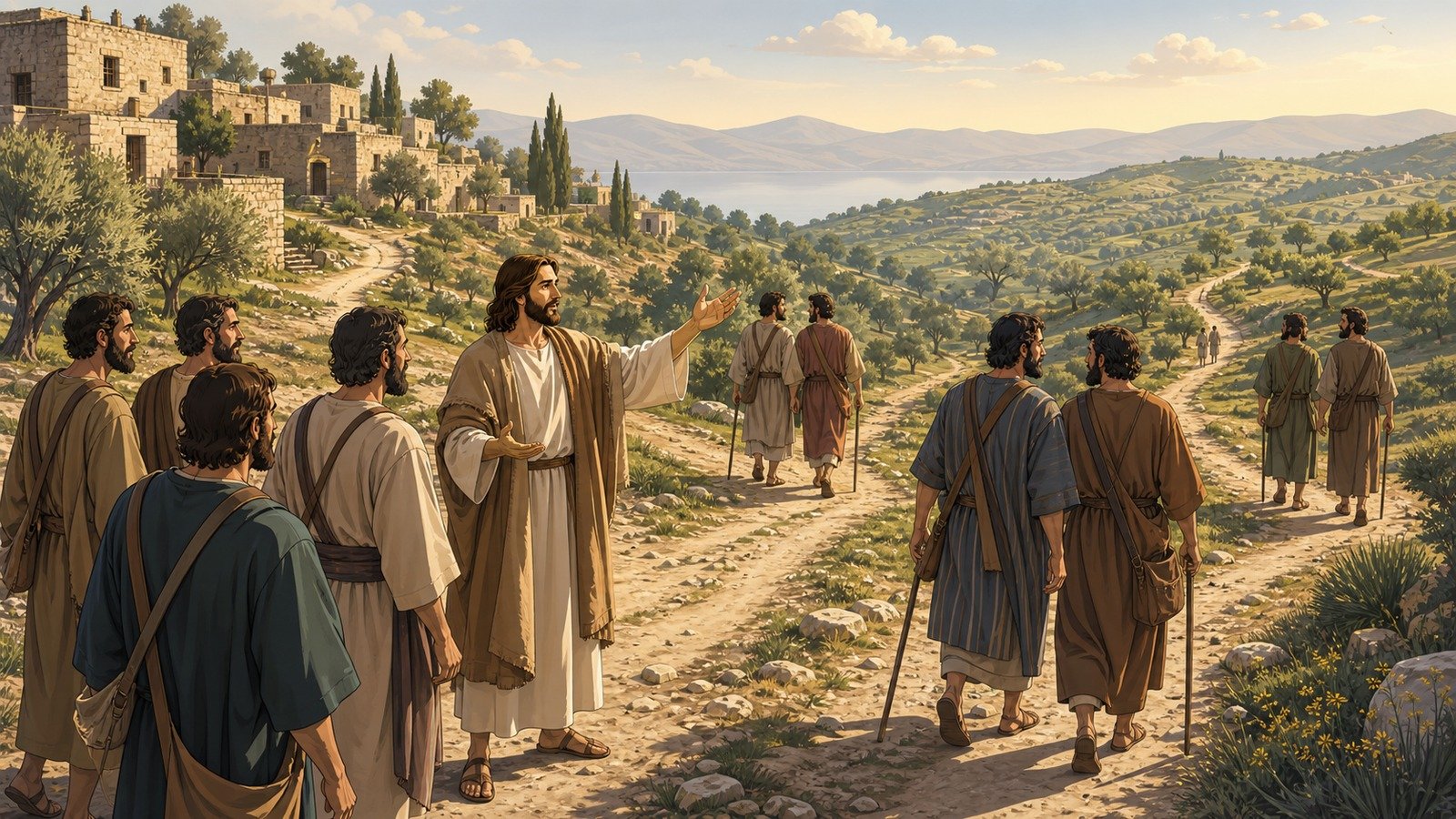
Jesus sends the Twelve out in pairs to preach and heal across the surrounding towns, instructing them to travel light and depend on local hospitality, extending his own ministry through delegated authority for the first time.
Herod Antipas, who had imprisoned John for condemning his unlawful marriage to his brother's wife Herodias, has him beheaded after a rash oath made to Herodias' daughter during a banquet, having been reluctant to kill John himself.
With a crowd of thousands following him into a remote area, Jesus multiplies five loaves and two fish to feed everyone, with twelve baskets left over, the only miracle recorded in all four Gospels.
Jesus walks across the water to reach his disciples' boat during a night storm; Peter briefly walks toward him before doubt sinks him, and both are pulled into the boat as the wind dies down.
Following the feeding of the crowd, Jesus teaches in Capernaum's synagogue that he himself is "the bread of life" and that eating his flesh and drinking his blood is necessary for eternal life, language so difficult that many who had followed him abandon him at this point.
Pharisees and teachers of the law criticise Jesus' disciples for not performing ritual handwashing; Jesus counters that human tradition has been elevated above God's actual commands, and that moral defilement comes from within a person, not from external ritual failure.
A Gentile woman from the region of Tyre and Sidon persistently pleads for her demon-possessed daughter's healing despite an initial, testing rebuff from Jesus; her persistence and faith are commended, and her daughter is healed from a distance.
Jesus heals a deaf and mute man in the Decapolis region using physical touch and a spoken command, "Ephphatha" ("Be opened"), and the crowd is "overwhelmed with amazement."
In a second mass feeding distinct from the earlier one, Jesus multiplies seven loaves and a few fish to feed four thousand people, with seven basketfuls left over.
Pharisees and Sadducees ask Jesus for a miraculous sign to test him; he refuses beyond "the sign of Jonah" and warns his disciples privately against the corrupting influence, the "yeast," of both religious hypocrisy and political compromise.
Jesus heals a blind man in two stages, an unusual, gradual healing that first restores partial, blurred sight before a second touch brings full clarity, recorded only in Mark.
Asked who people say he is, and then who the disciples themselves say he is, Peter answers, "You are the Messiah, the Son of the living God." Jesus affirms this and states he will build his church on this confession, while instructing the disciples not yet to publicise it.
Jesus tells his disciples plainly for the first time that he must suffer, be rejected, be killed and rise again three days later; Peter's objection draws a sharp rebuke, and Jesus calls anyone who would follow him to "take up their cross" as well.
On a mountain, Jesus is transfigured before Peter, James and John, his face and clothes becoming dazzlingly bright, and appears conversing with Moses and Elijah; a voice from a cloud again identifies him as God's beloved Son, echoing the baptism.
Coming down from the mountain, Jesus heals a boy with a violent, convulsive spirit that the disciples had been unable to cast out themselves, attributing their failure to insufficient faith and, in Mark's account, to a need for prayer.
Jesus repeats his prediction of betrayal and death privately to the disciples as they travel through Galilee; Luke notes they still do not understand and are afraid to ask him about it.
Finding the disciples arguing about who is greatest, Jesus sets a child before them as the model of kingdom greatness, followed by teaching on causing others to sin, restoring a sinning brother, and forgiving without limit.
Luke turns a corner here: Jesus "resolutely set out for Jerusalem," beginning a broader journey narrative; a Samaritan village refuses him hospitality because of his destination, and Jesus rebukes his disciples' desire to call down fire on it.
Jesus sends a much larger group of followers ahead of him in pairs to towns he intends to visit, extending the earlier mission of the Twelve; they return rejoicing that even demons submitted to them, and Jesus responds with a moment of prayerful joy at the Father's revelation to "little children."
Asked by an expert in the law who counts as a "neighbour," Jesus tells of a Samaritan, a despised outsider by Jewish standards, who helps a beaten traveller after a priest and a Levite pass by, redefining neighbourly obligation around compassionate action rather than ethnic or religious identity.
Visiting the sisters Mary and Martha, Jesus gently corrects Martha's anxious focus on hospitality tasks, commending Mary's choice to sit and listen to his teaching instead as "what is better."
Asked by a disciple to teach them to pray, Jesus gives a version of the Lord's Prayer and follows it with teaching on persistence in prayer and God's reliability as a good father who gives good gifts to his children.
Teaching openly in the Temple during the Feast of Tabernacles despite a plot against his life, Jesus provokes division among the crowds over his identity, some calling him the Prophet or the Messiah, others dismissing the possibility because of his Galilean origin.
Religious leaders bring a woman caught in adultery to test Jesus, demanding he either endorse her stoning under the Law or contradict it; he defuses the trap with, "Let any one of you who is without sin be the first to throw a stone."
Jesus declares, "I am the light of the world," provoking a sharp exchange with Pharisees over the validity of his testimony about himself and, ultimately, over his identity in relation to God.
Jesus heals a man blind from birth using mud made from spit and dust, provoking a Sabbath controversy and an interrogation by religious authorities that ends with the healed man's expulsion from the synagogue and his growing recognition of who Jesus is.
Jesus describes himself as the good shepherd who lays down his life for the sheep, in contrast to hired hands who abandon them; at the winter Feast of Dedication (Hanukkah) he claims unity with the Father so directly that his listeners attempt to stone him for blasphemy.
Jesus pronounces a series of sharp "woes" against religious leaders for prioritising external ritual and status over justice, mercy and genuine faithfulness, among his most confrontational recorded teaching.
Responding to criticism for welcoming "sinners," Jesus tells of a shepherd who leaves ninety-nine sheep to find one lost one, and a woman who searches her house for a single lost coin, each closing with heaven's joy over one sinner who repents.
A younger son squanders his inheritance and returns home in desperation, only to be welcomed by his father with open celebration, while an older brother resents the mercy shown; the parable closes the sequence in Luke 15 as its fullest statement of God's pursuing grace.
Jesus tells of a wealthy man who ignores a poor beggar, Lazarus, at his gate; after death their situations reverse, and the rich man's request to warn his living brothers is refused, since "they will not be convinced even if someone rises from the dead."
Tested by Pharisees on the grounds for divorce, Jesus points back to God's original design in creation, "the two will become one flesh," treating Moses' allowance for divorce as an accommodation to human hard-heartedness rather than the ideal.
Jesus welcomes children his disciples had tried to turn away, saying "the kingdom of heaven belongs to such as these," and blesses them by placing his hands on them.
A wealthy young man asks what he must do to inherit eternal life; when Jesus tells him to sell his possessions and follow him, he leaves grieving, unable to part with his wealth, prompting Jesus' teaching that it is easier for a camel to pass through a needle's eye than for a rich person to enter the kingdom.
Jesus deliberately delays going to his sick friend Lazarus, arriving after he has already been dead four days; weeping at the tomb despite knowing what he is about to do, he calls Lazarus out alive, the last and greatest of the "signs" recorded in John's Gospel.
Alarmed by Lazarus's raising and the popular response to it, the chief priests and Pharisees convene the Sanhedrin; the high priest Caiaphas argues it is expedient for one man to die for the nation, and Jesus withdraws from public view to a town called Ephraim until the time is right.
Jesus gives his most detailed prediction yet of his coming death by crucifixion and resurrection, on the road up to Jerusalem, naming the mockery, flogging and death that await him.
James and John, or their mother on their behalf, ask for the most prominent seats in Jesus' kingdom immediately after his clearest prediction yet of his death, prompting Jesus' teaching that true greatness in his kingdom means serving others.
A blind beggar, Bartimaeus in Mark's account, calls out to Jesus as "Son of David" despite the crowd's attempts to silence him; Jesus stops, restores his sight, and Bartimaeus follows him on the road, one of the final healings before Jerusalem.
A short, wealthy tax collector, Zacchaeus, climbs a tree to see Jesus over the crowd and is rewarded with a personal visit that leads to his public repentance and restitution, "today salvation has come to this house."
Anticipating that his listeners expect the kingdom to appear immediately on reaching Jerusalem, Jesus tells a parable about servants entrusted with money while their master is away, preparing his followers for the interval between his departure and eventual return.
Jesus enters Jerusalem riding a donkey, deliberately fulfilling Zechariah's prophecy of a humble king, while crowds spread cloaks and branches and shout "Hosanna"; Luke alone records Jesus weeping over the city, foreseeing its coming destruction.
Jesus curses a fruitless fig tree as an acted-out warning about hollow religious appearance without substance; the disciples find it withered the next day, and Jesus uses the moment to teach on faith and forgiveness in prayer.
Religious leaders directly challenge Jesus' authority to teach and act as he does; he answers with a counter-question about John the Baptist's authority that leaves them unable to respond without political risk either way.
Jesus tells of two sons whose actions, not words, reveal true obedience, then of tenant farmers who kill the vineyard owner's son, a thinly veiled parable the religious leaders recognise is aimed at them.
Jesus tells of a king's wedding banquet whose invited guests refuse to attend, so the invitation is thrown open to anyone who can be found, a parable of the kingdom's unexpected guest list and of the need to be properly prepared regardless.
Opponents try to trap Jesus into either endorsing or rejecting Roman taxation; his answer, "give back to Caesar what is Caesar's, and to God what is God's," avoids the trap while raising a deeper question about ultimate loyalty.
Sadducees, who deny bodily resurrection, pose a hypothetical case about a woman widowed by seven brothers in turn to make resurrection seem absurd; Jesus answers that resurrection life is not simply a continuation of earthly marriage arrangements.
Asked which commandment is greatest, Jesus summarises the entire Law and Prophets as love of God and love of neighbour, and the questioning expert in the law is told he is "not far from the kingdom of God."
Watching people give at the Temple treasury, Jesus points out a poor widow's two small coins as a greater gift than the large sums given by the wealthy, since she gave "all she had to live on."
On the Mount of Olives, Jesus gives an extended private prophecy of the Temple's destruction, wars, persecution and false messiahs, and his own future return, illustrated with the parables of the ten virgins, the talents and the sheep and the goats.
Judas Iscariot, one of the Twelve, approaches the chief priests separately and agrees to betray Jesus for thirty pieces of silver, then watches for an opportunity to hand him over away from the crowds.
With the Passover approaching, the chief priests and elders plot to arrest Jesus by stealth and kill him, wary of doing so during the festival itself for fear of provoking a riot among the crowds.
A woman, identified as Mary of Bethany in John, anoints Jesus with expensive perfume; over Judas' objection about the waste, Jesus defends her act as preparation for his burial and says it will be remembered "wherever this gospel is preached."
Sharing a final Passover meal with the Twelve, Jesus reinterprets the bread and wine as his own body and blood, given for them, establishing what the church came to call communion or the Lord's Supper, and predicts both his betrayal and Peter's coming denial.
Before the meal, Jesus takes a servant's role and washes each disciple's feet, including Judas', over Peter's initial protest, establishing humble service as the model for how his followers are to treat one another.
Jesus prepares the disciples for his departure, promising the Holy Spirit as an "Advocate" who will continue his work, describing himself as the true vine to which they must remain connected, and warning them plainly that the world will hate them as it hated him.
Jesus prays aloud in the disciples' presence, first for himself facing the cross, then for the disciples' protection and unity, and finally for all future believers, "that all of them may be one," closing his final teaching before the arrest.
In an olive grove called Gethsemane, Jesus prays in visible anguish, asking that "this cup" be taken from him while submitting to the Father's will; his closest disciples repeatedly fall asleep instead of keeping watch with him as he had asked.
Judas identifies Jesus to an armed crowd with a kiss; Peter strikes off a servant's ear, which Jesus immediately heals, before rebuking the use of violence and submitting to arrest, and the rest of the disciples scatter.
Jesus faces an irregular night hearing before the Sanhedrin, where his acknowledgement of being "the Messiah, the Son of God" is treated as blasphemy, and he is beaten and mocked by those holding him.
In the courtyard below the hearing, Peter denies knowing Jesus three times before a rooster crows, exactly as Jesus had predicted, and weeps bitterly once he realises what he has done.
The Sanhedrin hands Jesus to the Roman governor Pontius Pilate, who questions him directly about kingship and finds no legal basis for a charge, despite Jesus' largely silent response to the accusations against him.
Pilate sends Jesus briefly to Herod Antipas, who mocks him and sends him back; despite his own reluctance, Pilate eventually yields to the crowd's demand and releases the insurrectionist Barabbas instead, sentencing Jesus to crucifixion.
Overcome with remorse after seeing Jesus condemned, Judas returns the thirty pieces of silver to the chief priests and hangs himself; the priests use the money to buy a field, fulfilling, Matthew notes, an Old Testament prophecy.
Jesus is mocked, flogged and crucified between two criminals outside Jerusalem's walls; darkness covers the land for three hours, the Temple curtain tears in two at his death, and a Roman centurion overseeing the execution declares, "Surely this man was the Son of God."
Joseph of Arimathea, a wealthy member of the Sanhedrin who had not consented to Jesus' condemnation, requests the body from Pilate and lays it in his own new rock-cut tomb before the Sabbath begins, with Nicodemus assisting and women disciples watching where the body was placed.
Concerned that Jesus' disciples might steal the body and claim a resurrection, the chief priests obtain a Roman guard and seal the tomb's stone, details Matthew alone records and which later become relevant to explaining the empty tomb.
Women arriving to anoint Jesus' body find the tomb's stone already rolled away and the tomb empty; an angel, or angels, announce that Jesus has risen, and the women run to tell the disciples, who initially dismiss the report as "nonsense."
The risen Jesus appears first to Mary Magdalene at the tomb, who initially mistakes him for a gardener, then recognises him when he speaks her name, and becomes the first witness to carry news of the resurrection to the other disciples.
Jesus walks unrecognised with two disciples on the road to Emmaus, explaining how the Scriptures pointed to his suffering, until he breaks bread with them and they finally recognise him, at which point he vanishes from their sight.
Jesus appears to the disciples gathered behind locked doors, shows them his wounds to prove he is not a ghost, eats with them, and breathes on them, "Receive the Holy Spirit," commissioning them before Thomas, who was absent, hears about it.
Absent at the first appearance, Thomas refuses to believe without physical proof; a week later Jesus appears again and invites him to touch his wounds directly, prompting Thomas' declaration, "My Lord and my God!" and Jesus' blessing on those who believe without having seen.
Jesus appears to several disciples fishing on the Sea of Galilee, again producing a miraculous catch; after breakfast he restores Peter through a threefold question, "Do you love me?", mirroring Peter's threefold denial, and reinstates him to leadership.
On a mountain in Galilee, Jesus commissions the eleven remaining disciples to make disciples of all nations, baptising and teaching them, with the promise, "I am with you always, to the very end of the age," the founding mandate for the Church's later mission.
Paul later lists a fuller sequence of resurrection appearances not all individually narrated in the Gospels, including one to more than five hundred people at once, most of whom, he notes, were still alive at his time of writing and could be asked directly.
Having appeared to his disciples over forty days, teaching them about the kingdom of God, Jesus leads them out near Bethany, blesses them, and is taken up into a cloud out of their sight; two angels tell the watching disciples he will return "in the same way you have seen him go."
Fifty days after Passover, the gathered disciples experience what they describe as a sound like a rushing wind and tongues of fire, and begin speaking in other languages; pilgrims from across the Mediterranean world each hear their own tongue being spoken.
Peter addresses the Pentecost crowd, arguing from the prophet Joel and from the Psalms that Jesus is both Lord and Messiah; his hearers are "cut to the heart," and about three thousand are baptised that day, usually reckoned the church's founding moment.
Luke summarises the young Jerusalem church's pattern of life: devotion to the apostles' teaching, communal meals, shared property to meet one another's needs, and daily meeting both at the Temple and in homes, with numbers growing steadily.
At the Temple's Beautiful Gate, Peter tells a man lame from birth, "silver or gold I do not have, but what I do have I give you," and heals him in Jesus' name; the man's leaping and praising draws an astonished crowd.
Peter uses the healed man's presence to preach again to the gathered crowd, calling them to repentance and identifying Jesus as the prophet Moses foretold, God's servant sent first to Israel.
Annoyed at the apostles' preaching of the resurrection, the Temple authorities arrest Peter and John; unable to deny the healed man standing before them, the council can only warn the apostles to stop speaking in Jesus' name, a warning they refuse to keep.
Released, Peter and John report to the believers, who pray together for boldness rather than safety; the place where they are meeting shakes, and Luke records they are filled again with the Holy Spirit.
Luke describes a community holding property loosely, selling land and goods to support those in need; Barnabas, later Paul's companion, is singled out for selling a field and giving the proceeds to the apostles.
A married couple sell a property but secretly keep back part of the proceeds while claiming to have given it all; when Peter confronts each of them in turn, both fall dead, and "great fear seized the whole church."
The apostles' healings grow so well known that people bring the sick into the streets hoping even Peter's shadow might fall on them, and crowds come from towns around Jerusalem bringing those who are ill or troubled by evil spirits.
The high priest has the apostles imprisoned out of jealousy, but an angel releases them overnight; hauled before the Sanhedrin again, they are spared execution when the respected teacher Gamaliel counsels caution, reasoning that a movement not from God will collapse on its own.
A dispute arises over the neglect of Greek-speaking widows in the daily distribution of food; the apostles have the community choose seven men, including Stephen, to oversee this practical work so the apostles can concentrate on prayer and teaching.
Stephen's preaching and miracles provoke opposition from a synagogue of Greek-speaking Jews, who bring false witnesses to accuse him of speaking against the Temple and the Law before the Sanhedrin.
Rather than answering the charges directly, Stephen retells Israel's history from Abraham to Solomon, arguing that Israel has repeatedly resisted God's messengers, and closes by accusing his own judges of the same pattern, "you always resist the Holy Spirit."
Enraged by Stephen's speech, the Sanhedrin drags him out of the city and stones him; he dies asking forgiveness for his killers, echoing Jesus' own words on the cross, while a young man named Saul looks after the coats of those throwing the stones and approves of his death.
A severe persecution breaks out in Jerusalem following Stephen's death, scattering believers across Judea and Samaria; Saul goes house to house dragging off men and women and committing them to prison, a campaign he later describes in his own letters.
Philip, one of the seven, preaches in Samaria with striking results, including the conversion of a local sorcerer named Simon, who later tries to buy the ability to confer the Holy Spirit and is sharply rebuked by Peter for it.
Directed by an angel to a desert road, Philip meets a court official of the Ethiopian queen reading Isaiah, explains the passage as pointing to Jesus, and baptises him before being "suddenly taken away" to continue preaching elsewhere.
Travelling to Damascus with letters authorising the arrest of believers there, Saul is confronted by a blinding light and a voice identifying itself as Jesus; blinded for three days, he is restored and baptised by a disciple named Ananias, and begins the reversal that makes him the New Testament's central missionary figure.
Saul begins immediately preaching in the Damascus synagogues that Jesus is the Son of God, baffling those who knew him as a persecutor; when a plot forms to kill him, believers lower him over the city wall in a basket by night.
Distrusted by the Jerusalem believers who remember his persecution, Saul is introduced to the apostles by Barnabas; after a further threat on his life he is sent home to Tarsus, beginning a quiet period of several years before his missionary career proper begins.
Travelling among the scattered believers, Peter heals a paralysed man named Aeneas at Lydda; the healing leads, Luke says, to many in the surrounding region turning to the Lord.
At Joppa, Peter is called to the body of Tabitha, a disciple known for her charity, and raises her back to life, a miracle Luke says becomes known throughout the town.
A Roman centurion at Caesarea named Cornelius, described as devout and generous though not a convert to Judaism, is told in a vision to send for Peter, setting up one of the New Testament's turning points for Gentile inclusion.
While Cornelius' messengers are travelling, Peter sees a vision of a sheet lowered from heaven filled with animals he considers unclean and is told, "do not call anything impure that God has made clean"; he understands only afterward that the vision concerns people, not food.
Peter preaches to Cornelius' household, and the Holy Spirit falls on them while he is still speaking, before baptism and without the Jewish believers present laying hands on them; the astonished Jewish believers with Peter conclude that God has extended the gift of the Spirit to Gentiles directly.
Criticised by circumcised believers in Jerusalem for eating with Gentiles, Peter recounts his vision and Cornelius' conversion; his account satisfies his critics, who conclude, "God has granted even the Gentiles repentance that leads to life."
Believers scattered by the earlier persecution begin preaching to Gentiles at Antioch in Syria with considerable success; Barnabas is sent to investigate, brings Saul from Tarsus to help teach the growing church, and it is here, Luke notes, that disciples are first called Christians.
A prophet named Agabus predicts a severe famine across the Roman world; the Antioch church responds by sending financial relief to the believers in Judea by the hands of Barnabas and Saul, an episode some scholars connect with the Jerusalem visit Paul describes in Galatians 2.
Herod Agrippa I, grandson of Herod the Great, has the apostle James executed to please his Jewish subjects, making James the first of the Twelve to be martyred.
Encouraged by the reaction to James' death, Herod imprisons Peter as well; an angel wakes Peter, loosens his chains and leads him past the guards and through the city gate, which Peter at first takes for a vision.
Accepting a crowd's flattering acclamation of him as a god, Herod Agrippa I is struck down by illness and dies; Josephus independently records his death in AD 44, giving this episode one of the New Testament's firmest dates.
During worship and fasting, the Antioch church is told by the Holy Spirit to set apart Barnabas and Saul for a specific work; the church commissions them with the laying on of hands, beginning what is traditionally called Paul's first missionary journey.
On Cyprus, Saul, now called Paul in the text for the first time, confronts a sorcerer named Elymas who opposes his preaching to the Roman proconsul; Paul strikes him blind, and the proconsul, astonished, believes.
In a synagogue at Pisidian Antioch, Paul surveys Israel's history culminating in Jesus and offers forgiveness through him; when jealous opposition arises from some in the synagogue, Paul and Barnabas declare they are turning to the Gentiles instead.
At Iconium, Paul and Barnabas see both a large number of converts and a hostile plot against them, forcing them to flee to the Lycaonian cities of Lystra and Derbe.
Paul heals a man lame from birth at Lystra, and the astonished crowd tries to offer sacrifices to Paul and Barnabas as the gods Hermes and Zeus; the two barely restrain them, insisting they are only men bringing good news.
Opponents from Antioch and Iconium follow Paul to Lystra, stone him and drag him out of the city assuming he is dead; he gets up and returns to the city the next day, then leaves for Derbe.
After preaching at Derbe, Paul and Barnabas retrace their route, strengthening the new believers, appointing elders in each church, and finally sail back to Antioch to report what God has done, "how he had opened a door of faith to the Gentiles."
A dispute over whether Gentile converts must be circumcised and keep the Law of Moses brings Paul and Barnabas to Jerusalem; after debate, Peter and James speak in favour of not burdening Gentile believers, and the council sends a letter asking only that they avoid a short list of specific practices.
Planning a return visit to the churches founded on the first journey, Paul and Barnabas disagree sharply over whether to bring John Mark, who had left them partway through the earlier trip; the two separate, Barnabas taking Mark to Cyprus and Paul choosing Silas instead.
At Lystra, Paul recruits a young disciple named Timothy, son of a Jewish mother and Greek father, who becomes one of his closest and most frequently mentioned co-workers in the letters that follow.
Prevented, Luke says, by the Holy Spirit from preaching in the province of Asia, Paul instead sees a night vision of a Macedonian man pleading, "come over and help us," and the group concludes God is calling them to Macedonia, taking the gospel into Europe for the first time.
At Philippi, Paul meets a group of women praying by a river; a merchant of purple cloth named Lydia responds to his message, is baptised with her household, and offers her home as a base for the mission.
A slave girl whose fortune-telling brings her owners considerable profit follows Paul's group shouting about them for days; Paul, apparently more irritated than moved, commands the spirit out of her in Jesus' name.
Furious at losing income from the freed slave girl, her owners have Paul and Silas beaten and jailed; at midnight, while they sing hymns, an earthquake breaks open the prison doors, and the terrified jailer, initially about to take his own life, is converted along with his household.
Paul reasons from the Scriptures in the Thessalonian synagogue for three Sabbaths, winning converts but also provoking a hostile crowd that drags a local believer before the city officials, forcing Paul and Silas to leave by night.
At Berea, Paul finds a more receptive hearing; Luke praises the Bereans for examining the Scriptures daily to test what Paul was telling them, though agitators from Thessalonica eventually follow and stir up trouble here too.
Distressed by the idols filling Athens, Paul is invited to address the city's philosophers at the Areopagus; he starts from an altar inscribed "to an unknown god" and argues toward the resurrection, a claim that draws both mockery and a handful of converts.
At Corinth, Paul meets a Jewish couple, Aquila and Priscilla, recently expelled from Rome under Claudius; sharing their trade as tentmakers, he lodges and works with them while reasoning in the synagogue every Sabbath.
Jewish opponents in Corinth bring Paul before the proconsul Gallio, who dismisses the case as an internal religious dispute rather than a matter for Roman law, allowing Paul to continue his eighteen months of ministry in the city undisturbed.
Paul sails from Corinth with Priscilla and Aquila, pauses briefly at Ephesus, then continues to Caesarea and up to Antioch, bringing the second missionary journey to a close.
A learned Alexandrian Jew named Apollos arrives at Ephesus preaching about Jesus but knowing only the baptism of John; Priscilla and Aquila take him aside and explain "the way of God more adequately," after which he becomes an effective advocate for the gospel.
Beginning what is traditionally called his third missionary journey, Paul finds a small group at Ephesus who had received only John's baptism; he baptises them in Jesus' name, and the Holy Spirit comes on them as he lays hands on them.
Paul teaches daily at Ephesus for roughly two years, reasoning in a lecture hall after being pushed out of the synagogue, while extraordinary healings occur through items that had merely touched him, a period Luke says spread the gospel across the entire province.
Itinerant Jewish exorcists attempt to invoke "the Jesus whom Paul preaches" over a demon-possessed man and are overpowered instead; the episode leads many practitioners of magic in Ephesus to burn their scrolls publicly, a collection Luke values at fifty thousand silver coins.
A silversmith named Demetrius, whose trade making shrines of the goddess Artemis is threatened by Paul's preaching, incites a riot that fills the city's theatre with a confused, shouting crowd for two hours before a city official manages to disperse them.
Paul travels through Macedonia and Greece encouraging the churches he had founded; at Troas, a young man named Eutychus falls asleep during a long night of Paul's teaching, drops from a third-storey window and is taken up dead, but Paul restores him to life.
Avoiding a stop at Ephesus itself to save time, Paul summons the city's elders to Miletus instead, reviews his ministry among them, warns of coming false teachers, and tells them plainly they will not see his face again; the elders weep as they see him off.
Sailing toward Jerusalem despite repeated warnings along the way, Paul is told by the prophet Agabus, through a dramatic sign of binding his own hands and feet, that Paul will be bound and handed over to Gentiles in Jerusalem; Paul insists on going anyway, "ready to die for the name of the Lord Jesus."
Paul reports to James and the Jerusalem elders on his Gentile mission; concerned about rumours that Paul teaches Jews to abandon the Law, they ask him to join in a purification rite at the Temple to demonstrate his continued respect for Jewish custom.
Jews from the province of Asia recognise Paul in the Temple and falsely accuse him of bringing a Gentile into its restricted area; a mob drags him out intending to kill him, and he is saved only by the intervention of a Roman commander and his troops.
Given permission to speak, Paul addresses the hostile crowd in Aramaic, recounting his upbringing, his conversion on the Damascus road, and his commission to the Gentiles, a claim that reignites the crowd's fury the moment he mentions it.
Brought before the Sanhedrin, Paul provokes a sharp dispute between Pharisees and Sadducees by declaring he is on trial over the resurrection of the dead, a claim the Pharisees present accept and the Sadducees reject, leaving the council too divided to proceed.
More than forty men bind themselves by an oath not to eat until Paul is dead; warned by his nephew, Paul is secretly moved under heavy guard to the governor's residence at Caesarea to await trial.
Accused before the governor Felix of stirring up riots and desecrating the Temple, Paul defends himself and speaks candidly with Felix and his wife Drusilla about faith and self-control; Felix, hoping for a bribe, leaves Paul in custody for two years without a verdict.
Felix's successor, Festus, considers sending Paul back to Jerusalem to stand trial there; recognising the danger, Paul exercises his right as a Roman citizen to appeal directly to the emperor, a decision that sets the direction for the rest of Acts.
Festus invites the Jewish client king Agrippa II to hear Paul's case before sending him to Rome; Paul recounts his conversion and mission once more, and Agrippa remarks that Paul has almost persuaded him to become a Christian, while both agree Paul could have been freed had he not appealed to Caesar.
Sailing for Rome as a prisoner under guard, Paul's ship is caught in a violent storm and eventually wrecked off the island of Malta; Luke, an eyewitness for this section, records that all 276 people aboard reach land safely, as Paul had predicted.
On Malta, a viper bites Paul's hand as he gathers firewood; when he suffers no harm, the islanders' assumption that he is a murderer under divine punishment shifts to thinking he is a god, and he goes on to heal the local chief official's father and others on the island.
Paul finally reaches Rome, where he is allowed to live under guard in his own rented lodging; Acts closes with him there for two full years, "boldly and without hindrance," proclaiming the kingdom of God and teaching about Jesus to all who visit him.
Traditionally attributed to James, the brother of Jesus and leader of the Jerusalem church, this practical letter on faith and works is dated by many scholars earlier than any other New Testament document, though its precise date and even its authorship are debated.
Paul writes urgently to churches in Galatia who are being persuaded to adopt Jewish law-keeping alongside faith in Christ, defending his apostolic authority and arguing that justification comes through faith rather than through observing the Law.
Writing from Corinth shortly after founding the Thessalonian church, Paul encourages believers facing persecution and addresses their concern about fellow Christians who have died before Christ's return, widely regarded as his earliest surviving letter.
This shorter follow-up letter corrects a misunderstanding that the day of the Lord has already come, urging believers not to abandon their daily work while waiting; some scholars question whether Paul wrote it himself given differences in tone and eschatology from the first letter.
Writing from Ephesus, Paul addresses reports of division, sexual immorality, lawsuits between believers, disorder at the shared meal, and confusion over spiritual gifts and resurrection, in one of his longest and most practically detailed letters.
Written from Macedonia after a painful, unrecorded visit to Corinth, Paul defends his apostolic ministry against rival teachers who have questioned his authority, and reflects on suffering, reconciliation and generosity toward the Jerusalem collection.
Writing from Corinth to a church he has not yet visited, Paul sets out his fullest treatment of sin, grace, justification by faith, and the place of Israel and the Gentiles in God's plan, before requesting support for a planned mission to Spain.
Written during a Roman imprisonment, this letter reflects broadly on the church as Christ's body drawing Jew and Gentile together, with less of the specific local detail found in Paul's other letters; a substantial body of scholarship questions whether Paul wrote it himself or a close follower wrote it in his name after his death, a common ancient practice.
Writing from prison, likely in Rome, Paul thanks the Philippian church warmly for their financial support, reflects on his own possible death, and urges unity and joy, including an early hymn celebrating Christ's humility and exaltation.
Written to a church Paul had not personally founded, this letter counters a specific local teaching that mixed Christian faith with philosophical speculation and ascetic practice, insisting on Christ's supremacy over every spiritual power; its authorship is disputed on grounds similar to Ephesians, though the two letters share much material either way.
A brief, personal letter written alongside Colossians, appealing to a slave owner named Philemon to receive back his runaway slave Onesimus "no longer as a slave, but better than a slave, as a dear brother," without ever directly demanding manumission.
Written to Paul's younger colleague Timothy, left in charge at Ephesus, this letter gives practical instruction on church leadership, false teaching, and conduct in worship; along with 2 Timothy and Titus, its authorship is among the most contested in the New Testament, with many scholars dating it after Paul's lifetime.
Paul writes to Titus, left to organise the church on Crete, giving qualifications for elders and practical instruction for different groups within the congregation; it shares the disputed authorship question of the other two pastoral letters.
Written, on the traditional view, during a second and harsher Roman imprisonment shortly before Paul's death, this letter has a markedly personal, farewell tone: "I have fought the good fight, I have finished the race," as Paul urges Timothy to remain faithful and to come to him soon.
An anonymous, carefully argued letter presenting Jesus as the great high priest whose sacrifice surpasses the entire Old Testament sacrificial system, written to Jewish Christians apparently tempted to abandon their faith under pressure; its author was already disputed in the early church, with Paul, Barnabas, Apollos and others all proposed without consensus.
Written to scattered churches across Asia Minor facing hostility and social pressure, Peter encourages steadfast faith and honourable conduct, closing with greetings from "she who is in Babylon," widely read as a coded reference to Rome.
Church tradition, first recorded by writers such as Clement of Rome and later Eusebius, holds that Paul was executed in Rome under the emperor Nero, reportedly by beheading as a Roman citizen; the New Testament itself does not narrate his death.
Early Christian tradition, including a saying attributed to Jesus in John's Gospel about Peter's death by another's hands, holds that Peter was also executed in Rome under Nero, with later tradition specifying crucifixion, reportedly upside down at his own request.
Warning against false teachers and mockers who doubt Christ's return, this letter has the most disputed authorship question of any New Testament document; many scholars date it well after Peter's traditional death, seeing it written in his name and legacy, while others defend it as genuinely his final letter.
A short, urgent letter from a writer identifying himself as "a brother of James," traditionally understood as another brother of Jesus, warning against false teachers using vivid imagery from both Scripture and Jewish tradition outside it.
Roman legions under Titus destroy Jerusalem and the Temple after a prolonged Jewish revolt, an event the Gospels present Jesus as having foreseen and that permanently ended the Temple sacrificial system central to first-century Jewish and early Christian life.
Written against teachers denying that Jesus truly came "in the flesh," this letter emphasises love within the community, obedience, and confidence before God, in language closely echoing the Gospel of John.
A brief personal letter, addressed to "the chosen lady," most likely a local church, warning against welcoming travelling teachers who deny that Jesus came in the flesh.
The shortest book in the New Testament, this personal letter praises a believer named Gaius for hospitality to travelling teachers and criticises a certain Diotrephes for refusing to welcome them and expelling those who did.
Exiled to the small island of Patmos "because of the word of God," a writer identifying himself as John receives a vision of the risen Christ walking among seven golden lampstands and is commanded to write what he sees to seven churches in the province of Asia.
Christ commends the Ephesian church's perseverance and doctrinal discernment but warns that it has "forsaken the love you had at first," calling it to repentance with the promise of the tree of life for those who overcome.
Christ acknowledges the Smyrnan church's poverty and suffering, warning of coming imprisonment and urging faithfulness "even to the point of death," with the promise of the crown of life and protection from "the second death."
Christ commends the Pergamene church for remaining faithful "where Satan has his throne," but rebukes it for tolerating teaching associated with Balaam and the Nicolaitans, calling for repentance.
Christ praises the Thyatiran church's growing love, faith and service, but sharply condemns its tolerance of a prophetess he calls "Jezebel," who is leading believers into sexual immorality and idolatry.
Christ tells the Sardis church that it has "a reputation of being alive, but you are dead," urging it to wake up and strengthen what remains before it is too late.
Christ commends the Philadelphian church, the only one of the seven to receive no rebuke, for keeping his word despite having "little strength," and promises to set before it an open door no one can shut.
Christ rebukes the wealthy but complacent Laodicean church as "lukewarm," neither cold nor hot, and famously stands "at the door and knocks," inviting a response from anyone willing to listen.
John is taken up "in the Spirit" to see a throne surrounded by twenty-four elders and four living creatures, all continually worshipping the one seated on the throne as holy and worthy of glory.
A sealed scroll appears that no one is found worthy to open, until a Lamb "looking as if it had been slain" steps forward to take it, prompting the assembled creatures and elders to sing a new song of worship.
As the Lamb opens each seal, four riders on differently coloured horses appear, traditionally associated with conquest, war, famine and death, followed by the cry of martyrs under the altar and a great cosmic upheaval at the sixth seal.
Before further judgement falls, 144,000 are sealed from the twelve tribes of Israel, followed by a vision of "a great multitude that no one could count," from every nation, standing before the throne in white robes.
The seventh seal opens to "silence in heaven for about half an hour," followed by the prayers of God's people rising like incense and seven angels being given trumpets to sound in turn.
Each trumpet brings escalating disaster: hail and fire, a burning mountain cast into the sea, a poisoned star, darkened skies, monstrous locusts that torment without killing, and an army of two hundred million that kills a third of humanity.
A mighty angel gives John a small scroll to eat, sweet in his mouth but bitter in his stomach, and tells him he must prophesy again about many peoples, nations, languages and kings.
Two witnesses prophesy for 1,260 days with extraordinary power, are killed by "the beast" and left unburied in the street, then are raised and taken up to heaven before their watching enemies, followed by a great earthquake.
The seventh trumpet sounds, and loud voices in heaven declare that "the kingdom of the world has become the kingdom of our Lord," while the twenty-four elders fall down in worship and God's Temple in heaven is opened.
A woman "clothed with the sun" gives birth to a son destined to rule the nations while a great red dragon waits to devour him; the child is snatched up to God's throne, the dragon is thrown down from heaven, and it turns to pursue the woman and her offspring.
A monstrous beast rises from the sea, receives authority from the dragon, and is worshipped by the whole world; it wages war against God's people and is given power over every tribe, people, language and nation.
A second beast emerges, performing deceptive signs and forcing everyone to receive a mark, without which no one can buy or sell; the passage closes with the famously cryptic instruction to calculate the beast's number, "666."
John sees the Lamb standing on Mount Zion with the 144,000, singing a new song only they can learn, described as having "kept themselves pure" and following the Lamb wherever he goes.
Three angels fly in succession, announcing the eternal gospel to every nation, declaring the fall of Babylon, and warning of judgement on those who worship the beast, followed by a blessing on those who die in the Lord from then on.
A figure "like a son of man" reaps the earth with a sickle, followed by an angel gathering grapes from the earth's vine and throwing them into "the great winepress of God's wrath."
John sees seven angels given the seven last plagues, "last, because with them God's wrath is completed," while those who had triumphed over the beast sing the song of Moses and the song of the Lamb beside a sea of glass.
Seven angels pour out bowls of judgement in turn, bringing sores, seas and rivers turned to blood, scorching heat, darkness, the drying of the Euphrates, and finally a catastrophic earthquake, ending with the declaration "It is done."
John is shown a woman named "Babylon the Great," dressed in extravagant wealth and riding the scarlet beast, identified as the corrupting power behind the nations, whom the beast and its allies will eventually turn on and destroy.
An angel announces Babylon's sudden downfall in a single hour, while merchants, sailors and kings who profited from her mourn her destruction from a safe distance, and heaven is called to rejoice over her judgement.
Heaven erupts in celebration at Babylon's fall, and the announcement comes that "the wedding of the Lamb has come," with the church pictured as a bride "given fine linen, bright and clean, to wear."
Heaven opens to reveal a rider called Faithful and True, his robe dipped in blood, leading the armies of heaven to judge and make war, with a sword from his mouth and a name written on him, "King of kings and Lord of lords."
The beast and the kings of the earth gather to fight the rider on the white horse but are defeated; the beast and the false prophet are thrown alive into a fiery lake, and the rest are killed by the sword from the rider's mouth.
An angel seizes "the dragon, that ancient serpent," binds him for a thousand years and throws him into the Abyss, sealing it so he can no longer deceive the nations until that period ends.
Those who had been faithful under persecution reign with Christ for the thousand years; when the period ends, Satan is released briefly, gathers the nations for a final rebellion, and is defeated and thrown into the lake of fire permanently.
The dead, great and small, stand before a great white throne to be judged according to what they have done, recorded in books, while anyone whose name is not found written in the book of life is thrown into the lake of fire.
John sees "a new heaven and a new earth," with the old order passed away, and a holy city, the New Jerusalem, descending from heaven "as a bride beautifully dressed for her husband," accompanied by the promise that God will wipe every tear from their eyes.
An angel gives John a detailed tour of the New Jerusalem's dimensions, gates and foundations, built of gold and precious stones, noting it has no temple, "because the Lord God Almighty and the Lamb are its temple," and needs no sun, since God's glory is its light.
A river of the water of life flows from God's throne through the city, lined by the tree of life bearing fruit every month, its leaves "for the healing of the nations," in an image deliberately echoing Eden at the very start of the Biblical story.
Revelation closes with assurances that these words are trustworthy, repeated promises of Christ's imminent return, a warning against tampering with the book's text, and a final invitation, "Let the one who is thirsty come," ending the New Testament, and the whole Christian Bible, on a note of expectation.