

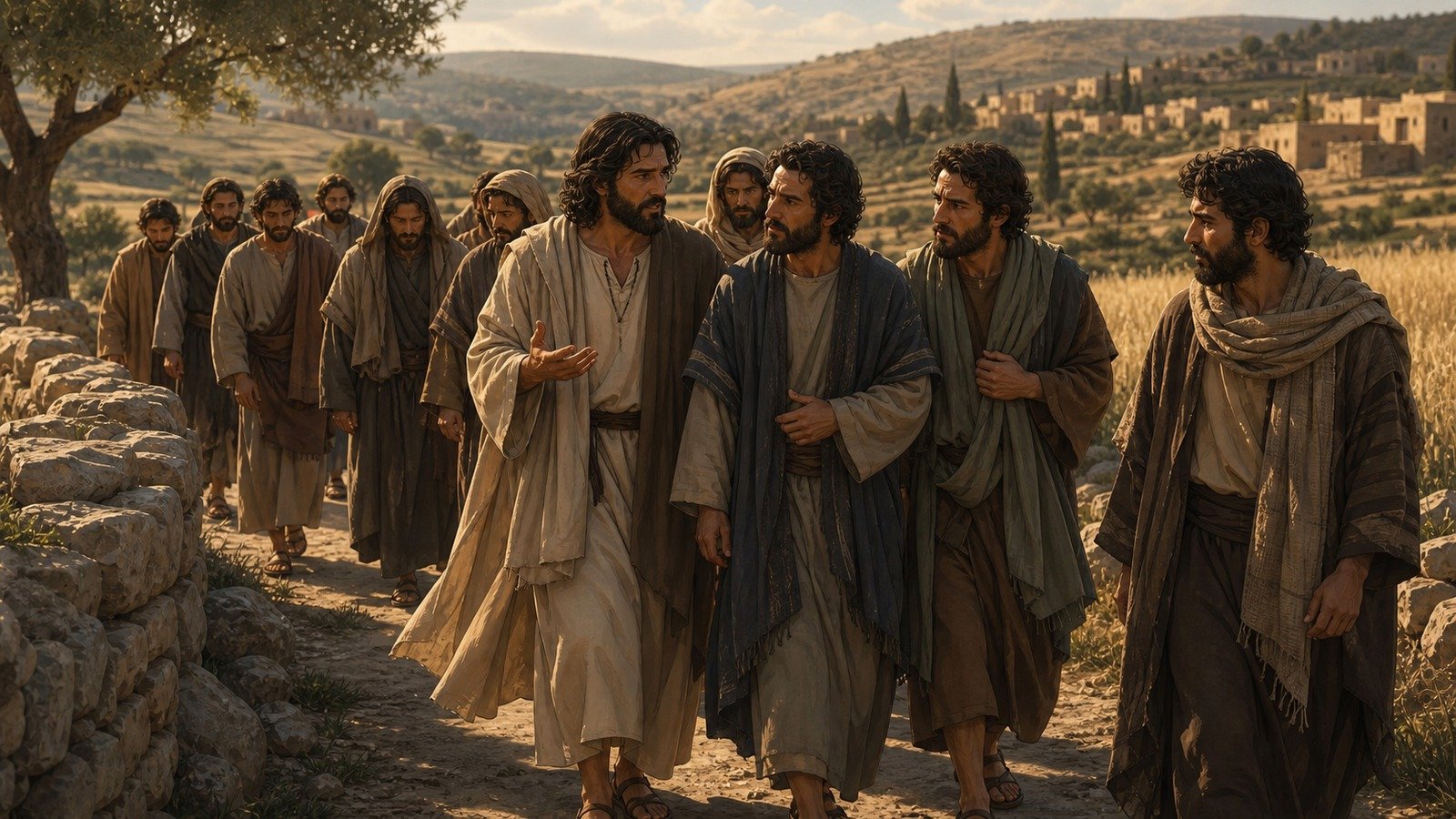
Jesus repeats his prediction of betrayal and death privately to the disciples as they travel through Galilee; Luke notes they still do not understand and are afraid to ask him about it.
Further context
2 min readJesus and the Twelve leave the area and pass through Galilee, and he does not want anyone to know where they are, because he is teaching his disciples.
That is a deliberate withdrawal. The crowds have been enormous for months and he now moves through his own home province avoiding notice, because there is something he needs to say to twelve men and cannot say in public.
What he tells them is short. The Son of Man is going to be delivered into the hands of men. They will kill him, and after three days he will rise.
The verb rendered delivered is the one used for handing a prisoner over to the authorities, and it becomes one of the recurring words of the final week, applied to Judas, to the Sanhedrin passing him to Pilate, and to Pilate passing him to the soldiers.
Their reaction is recorded in three parts and each part is worth noticing. They did not understand what he meant. They were afraid to ask him about it. And, in Luke's version, it was hidden from them so that they did not grasp it.
Being afraid to ask is the human detail. The last time this subject came up, Peter had objected and been called Satan in front of everyone. Nobody wanted to be the next one to speak.
Why they could not understand a plain statement has a straightforward answer in their situation rather than in their intelligence. Every current expectation of a deliverer ran towards victory: the foreign occupier removed, the throne of David restored, the nations coming to Jerusalem. Some writings of the period do describe a suffering righteous figure, and the fourth of the servant songs describes a man pierced for the transgressions of others, but nobody in that century seems to have combined those pictures with the coming king. The two ideas sat in separate compartments.
There was also a practical difficulty with the timing. Rising after three days was not a category anyone applied to an individual. Resurrection was expected, but at the end of history, for everyone at once, which is what Martha says at her brother's tomb when she is told he will rise again.
What they do next demonstrates how far the message had travelled. Walking on the same road, they argue about which of them is the greatest, and when he asks what they had been discussing on the way, nobody answers.
That silence is the whole state of affairs in one sentence. He has just told them he is going to be executed, and they have spent the journey ranking themselves.
Capernaum is where they end up, and it is where the argument about greatness is dealt with. The town sat on the northern shore, a fishing settlement of perhaps a thousand people with a customs post on the road running from Damascus down to the coast, and it had been his base for most of the working ministry.
That the withdrawal through Galilee is described as secret is the clearest sign of where things stood. The province where he had been followed by thousands is now territory to be crossed quietly, and the man who ruled it had recently executed a prophet on a dinner-party promise.