

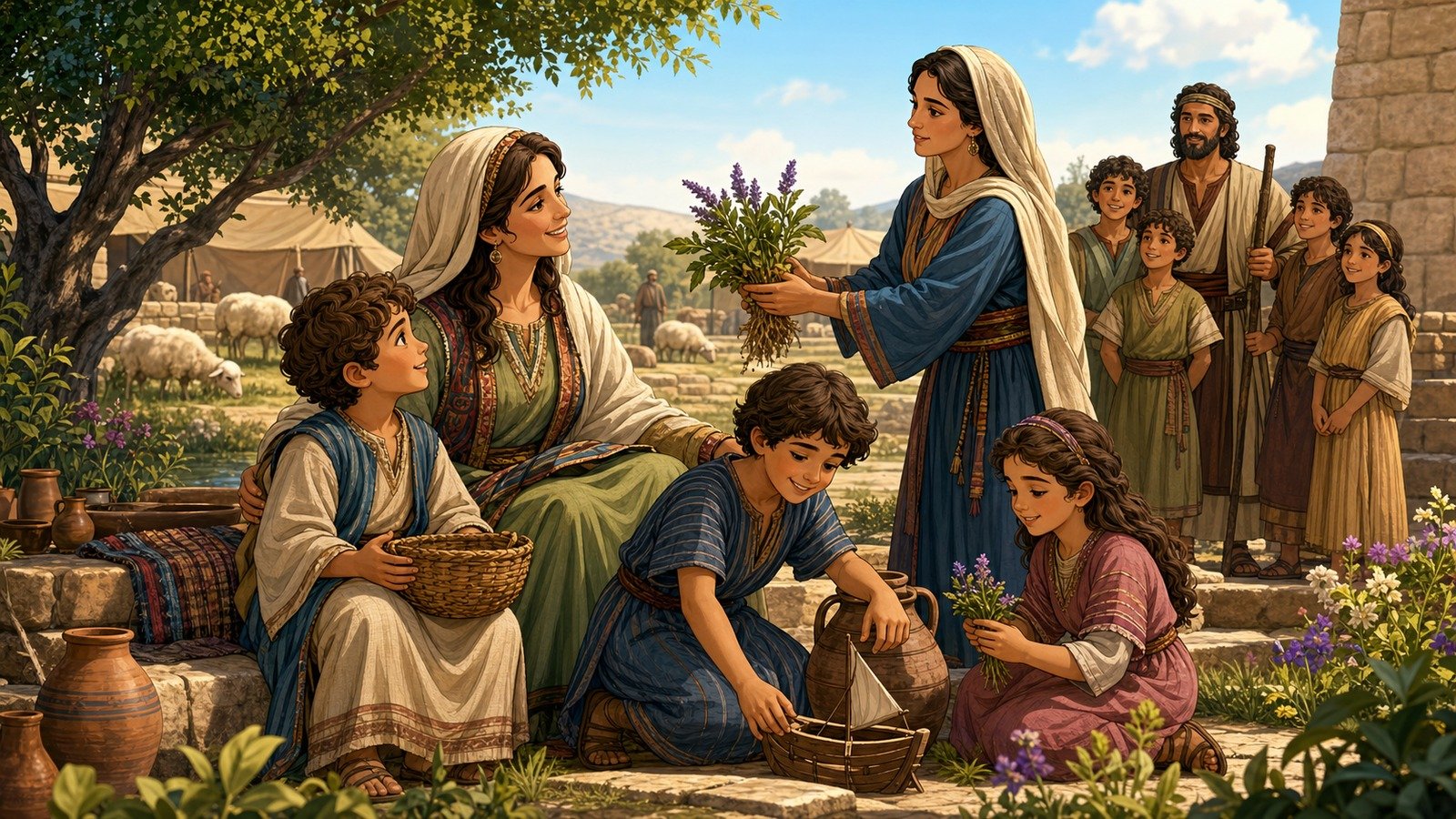
Following an exchange of mandrakes between Leah and Rachel, Leah bears Jacob three more children, two sons and a daughter, Dinah, whose story becomes significant later in Genesis 34.
Further context
2 min readA boy finds a plant in a field during the wheat harvest, and it turns into a transaction. Reuben, Leah's eldest, brings mandrakes to his mother.
The mandrake is a real plant with a real reputation. It grows across the Mediterranean, has a thick forked root that suggests a human figure, a strong scent and mildly narcotic properties, and was believed throughout the ancient world to promote conception. The Hebrew word for it (dudaim) resembles the word for love, and the only other place it turns up is the Song of Songs. The harvest reference puts the scene in late spring.
Rachel asks her sister for some. Leah's reply carries years behind it: was it not enough that you took away my husband? Will you take my son's mandrakes too? The bargain struck is that Rachel will give Leah a night with Jacob in exchange for the plants, which means the two women are now allocating their husband between them and informing him afterwards. Leah goes out to meet him as he comes in from the fields and tells him she has hired him with her son's mandrakes.
The outcome inverts the deal. Rachel gets the fertility plant and stays childless for the moment. Leah conceives, and what is credited is God listening to her rather than anything in the exchange.
Issachar is born, and she says God has rewarded her; the name is connected with wages or hire (sakar), which is also the word she used of hiring her husband. Zebulun follows, and she says God has presented her with a precious gift and that now her husband will treat her with honour, because she has borne him six sons. That is the same hope she was expressing after the third birth, four sons later.
Then one line: some time later she gave birth to a daughter and named her Dinah. No explanation of the name is offered, which breaks the pattern of everything around it. Dinah is the only daughter of Jacob named anywhere, though his daughters are referred to in the plural when the family later moves to Egypt. She appears in one episode, and what happens in it reshapes the family permanently.
The two tribes from this stretch take land in the north. Issachar receives the Jezreel valley, the best agricultural ground in the country and the most fought over, because the main route between Egypt and Mesopotamia runs straight through it. Zebulun is allotted the hills between Issachar and the coast, and Nazareth lies inside that territory.
One feature of the episode is easy to miss because it moves quickly. Jacob is not consulted at any point. His wives negotiate over him, one of them informs him of the arrangement as he comes in from work, and he goes along with it. He has not spoken since telling Rachel he was not in the place of God. Across four births and two servants he is given no line of dialogue at all, and the household is presented as being run by the two sisters.