

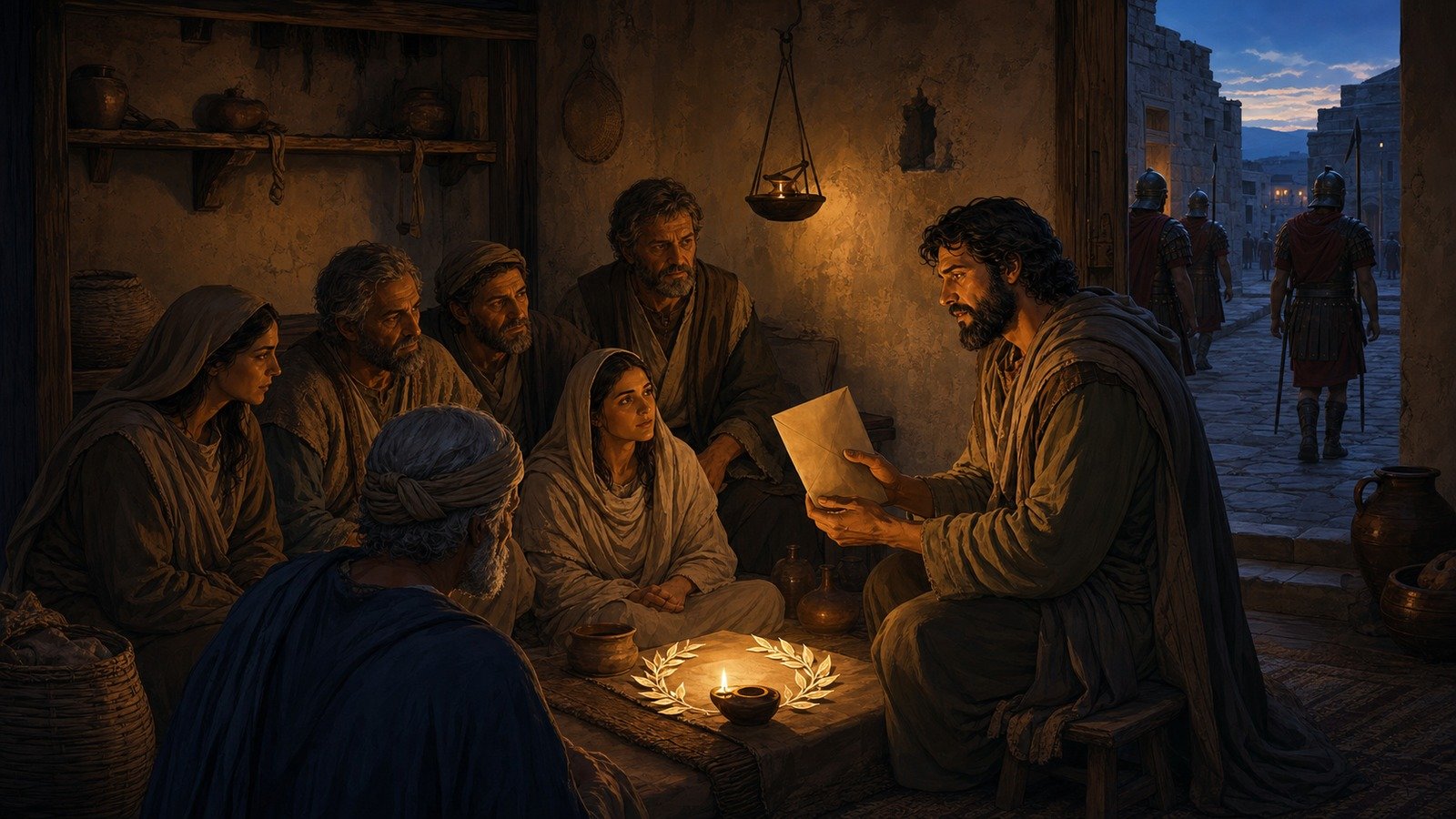
Christ acknowledges the Smyrnan church's poverty and suffering, warning of coming imprisonment and urging faithfulness "even to the point of death," with the promise of the crown of life and protection from "the second death."
Further context
2 min readSmyrna is one of two congregations of the seven that receive no criticism at all.
The city was about sixty-five kilometres north of Ephesus, with an excellent harbour, and it survives as Izmir, the third largest city in Turkey. It had been destroyed and refounded, which may lie behind the description of the speaker as him who died and came to life again. It was also fiercely loyal to Rome, having built a temple to the goddess Roma as early as 195 BC and competed successfully for the right to build one to Tiberius, which made it a centre of the imperial cult.
I know your afflictions and your poverty, yet you are rich.
The word used for poverty is the stronger of the two available in Greek, meaning destitution rather than modest means. A congregation excluded from trade guilds, which held their feasts in temples, would have found earning a living difficult.
I know about the slander of those who say they are Jews and are not, but are a synagogue of Satan.
That sentence has been used to appalling effect in later centuries, and its setting needs stating. This is an intra-Jewish dispute of the first century, conducted in the vocabulary the prophets used against their own people, and the speaker, the writer and most of the audience were Jews. It says nothing whatever that licenses what was later done with it.
Then a specific warning: the devil will put some of you in prison to test you, and you will suffer persecution for ten days. Be faithful, even to the point of death, and I will give you life as your victor's crown.
Smyrna is where Polycarp was bishop. He is said to have been a disciple of John, and Ignatius of Antioch wrote to him around AD 107 on the way to his own execution. In about AD 155, at the age of eighty-six, Polycarp was arrested during a festival, taken into the stadium and told to swear by the emperor's fortune and curse Christ.
His recorded answer is the most famous sentence to come out of that city: eighty-six years I have served him, and he has done me no wrong. How can I blaspheme my King who saved me?
He was burned, and his own congregation wrote down what happened, the earliest such record outside the New Testament.
Smyrna's message and Philadelphia's are the only two with no criticism attached, and both are addressed to congregations in trouble. The pattern across the seven is that the comfortable churches get the rebukes.
The promise given is the crown of life, and the Greek word is the wreath awarded at games rather than a royal diadem. Smyrna held its own games and the image would have been immediate.
Smyrna claimed to be the birthplace of Homer and struck coins saying so, and it was one of the cities that competed for the honour of building a temple to the emperor and won.
The message to Smyrna also contains a phrase used nowhere else in the book: the second death will not hurt the one who is victorious, which is explained much later as the lake of fire.