

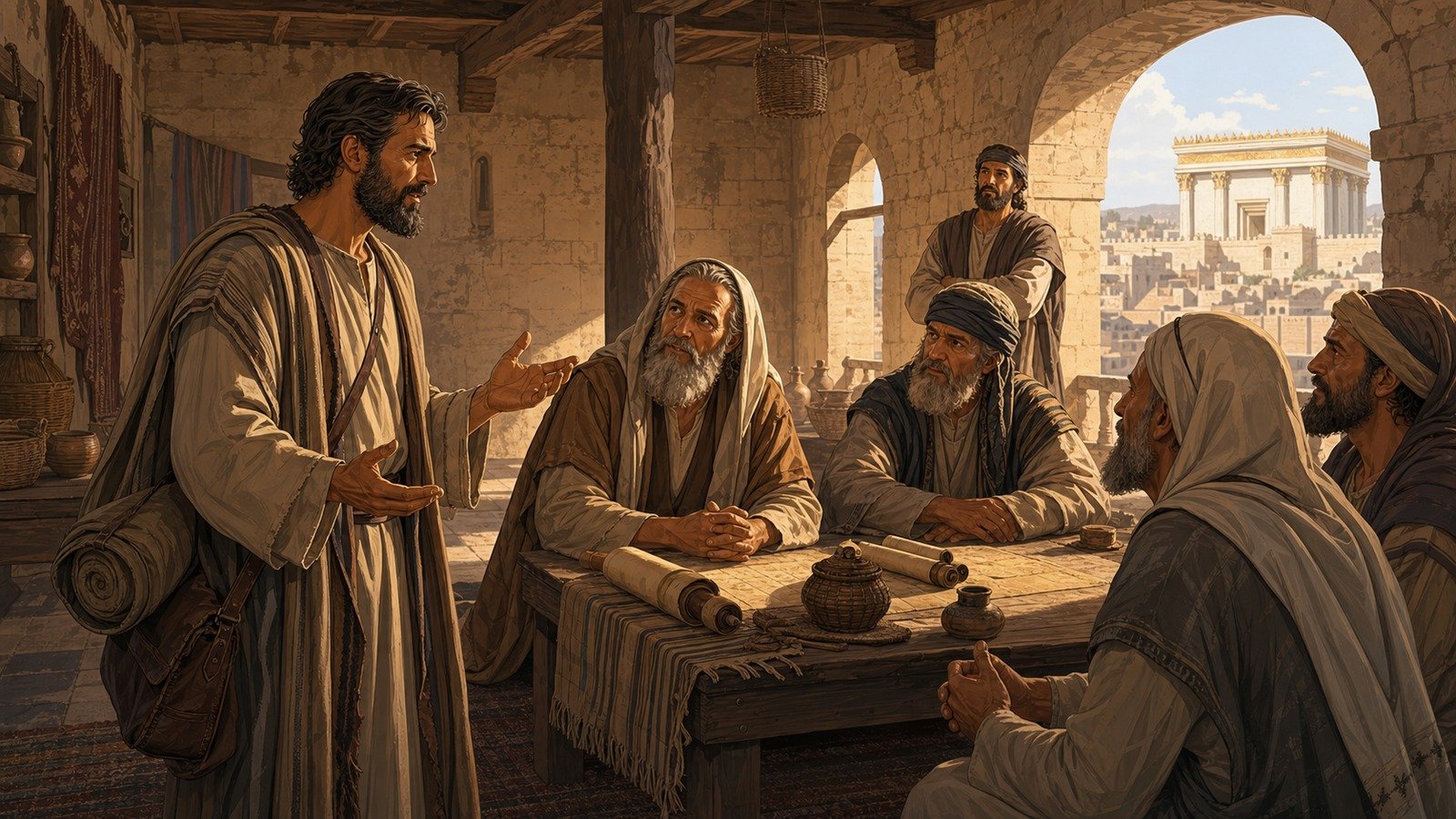
Paul reports to James and the Jerusalem elders on his Gentile mission; concerned about rumours that Paul teaches Jews to abandon the Law, they ask him to join in a purification rite at the Temple to demonstrate his continued respect for Jewish custom.
Further context
2 min readPaul and his companions are welcomed warmly by the believers, and the next day he goes to see James, with all the elders present.
Peter is not mentioned, which fits everything else known about this period: James, the brother of Jesus, is leading the Jerusalem church, and Peter is travelling.
Paul reports in detail what God had done among the Gentiles through his ministry. When they heard this, they praised God.
Then the difficulty. Then they said to him: you see, brother, how many thousands of Jews have believed, and all of them are zealous for the law. They have been informed that you teach all the Jews who live among the Gentiles to turn away from Moses, telling them not to circumcise their children or live according to our customs.
The word rendered thousands is literally tens of thousands, and whether it is exact or a figure of speech, the Jerusalem church was large and thoroughly Jewish in practice. Nothing about that had changed in twenty years.
The accusation reported is a distortion of Paul's position, and it is the distortion an opponent would naturally produce. He had argued that Gentiles need not keep the law; the rumour says he told Jews to abandon it. He had taken a Nazirite vow himself, circumcised Timothy and kept the festivals, none of which fits the rumour.
The elders propose a demonstration. Four men who have taken a vow are about to complete it; Paul is to join them in the purification rites and pay their expenses, so that everyone will know there is no truth in these reports.
Paying the costs of another man's vow, which included sacrifices, was a recognised act of piety, and Agrippa I is recorded doing it for a group of Nazirites.
Paul agrees. The next day he takes the men, purifies himself along with them, and goes to the temple to give notice of the date when the offering would be made for each of them.
The strategy was reasonable and it failed completely. Near the end of the seven days, some Jews from the province of Asia saw him at the temple.
James, the brother of Jesus, had not believed during his lifetime and was leading the mother church within a few years of the crucifixion. Josephus records his execution by stoning in AD 62, on the orders of a high priest acting in the gap between two Roman governors, and says the more moderate citizens of Jerusalem objected.
The letter that carries his name is addressed to the twelve tribes scattered among the nations and is the most Jewish document in the New Testament in its idiom.
Paying for another man's sacrifices was expensive. The Nazirite offering required lambs, a ram, grain and drink offerings for each person, and Paul was covering four men while under suspicion of despising the whole system.
The rumour about Paul teaching Jews to abandon the law outlived him. Jewish Christian groups in the second century are reported as rejecting him entirely on those grounds, which suggests the elders' concern was well founded and their remedy inadequate.