

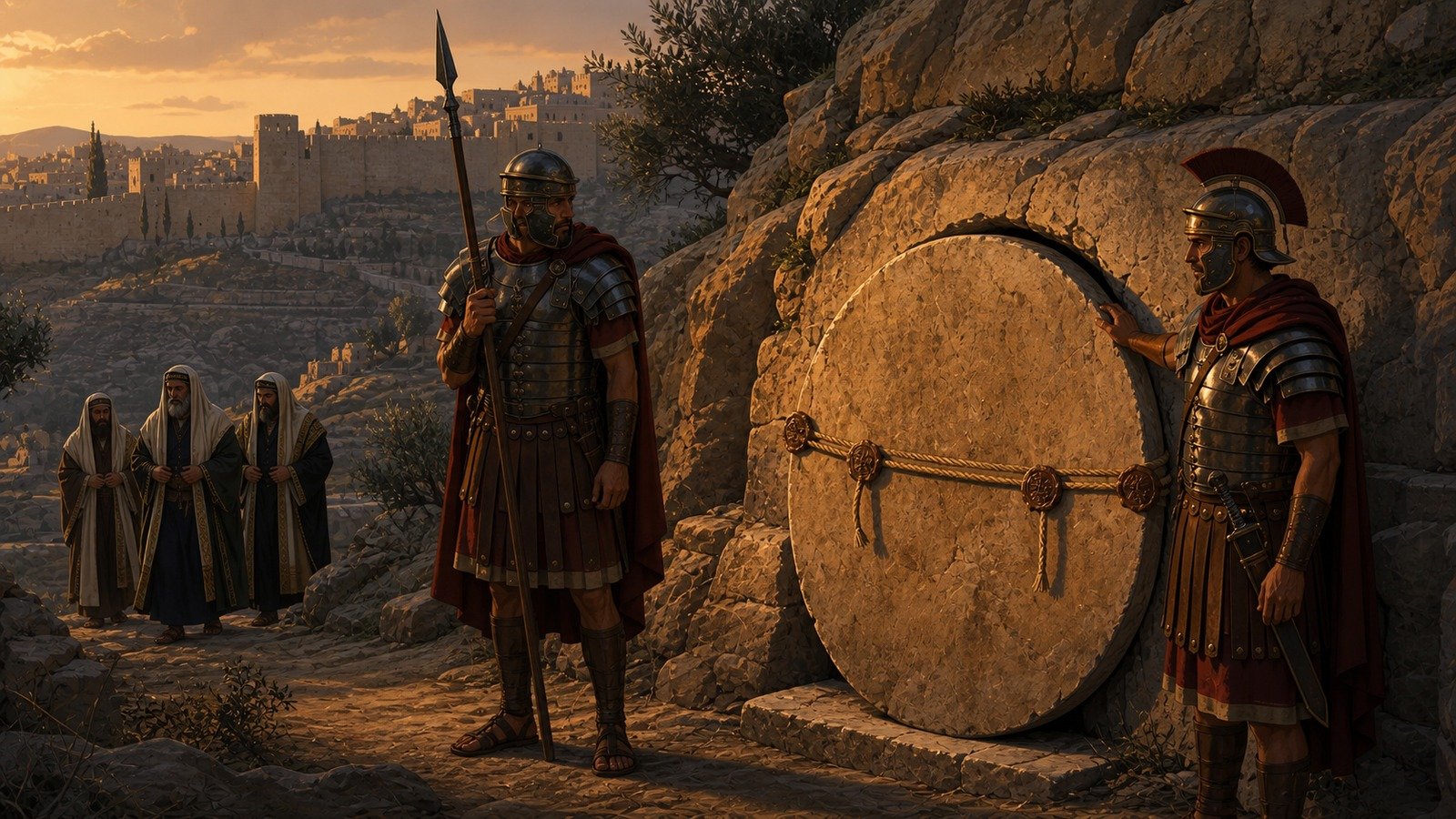
Concerned that Jesus' disciples might steal the body and claim a resurrection, the chief priests obtain a Roman guard and seal the tomb's stone, details Matthew alone records and which later become relevant to explaining the empty tomb.
Further context
2 min readThe next day, the day after Preparation Day, the chief priests and the Pharisees go to Pilate, and what they say reveals something none of the disciples appear to have grasped.
Sir, we remember that while he was still alive that deceiver said, after three days I will rise again. So give the order for the tomb to be made secure until the third day. Otherwise, his disciples may come and steal the body and tell the people that he has been raised from the dead. This last deception will be worse than the first.
His opponents had been listening more carefully than his followers. The disciples are, at this moment, hiding behind locked doors, and the women are preparing spices for a body they expect to find where it was left.
Pilate's answer is curt: take a guard. Go, make the tomb as secure as you know how.
Whether that guard was Roman or the temple police has been debated on the wording, which can be read either way; the mention later of the soldiers needing to be protected from the governor's anger points towards Romans.
So they go and make the tomb secure by putting a seal on the stone and posting the guard. Sealing meant a cord across the stone fixed at each end with clay or wax bearing an official impression, so that any movement would show. Breaking an official seal was itself an offence.
Only Matthew has any of this, which is one reason it is treated sceptically by some historians, along with the observation that it answers an objection Christians would have needed to answer.
The counter-observation is that the objection it answers is one Matthew also records being made: the story that the body was stolen is described as circulating among the Jewish population at the time of writing, and a narrative invented to rebut a rumour would be strange if the rumour did not exist.
What can be said with confidence is that both sides in the first-century argument agreed the tomb was empty. What they disagreed about was why.
Whichever body supplied the guard, the practical point is the same. Both the authorities and the followers had an interest in the tomb, and the authorities took steps.
Matthew also records what happened afterwards: the guards report to the chief priests, are given a large sum of money and told to say the disciples came at night and stole the body while they were asleep, with an assurance that the governor will be handled if it reaches him. Whether a soldier would repeat a story that convicted him of sleeping on duty is the obvious objection, and it was raised in antiquity.
Preparation Day is the Friday, the day before the Sabbath, so this meeting takes place on the Saturday, which means the men involved conducted the business on a Sabbath during Passover.
The seal and the guard also produce the one point everybody in the first-century argument agreed on. Christians said he had risen; their opponents said the body had been taken. Neither side is recorded suggesting the tomb still held it, which would have been the simplest answer available to the authorities and the one they were best placed to demonstrate.