

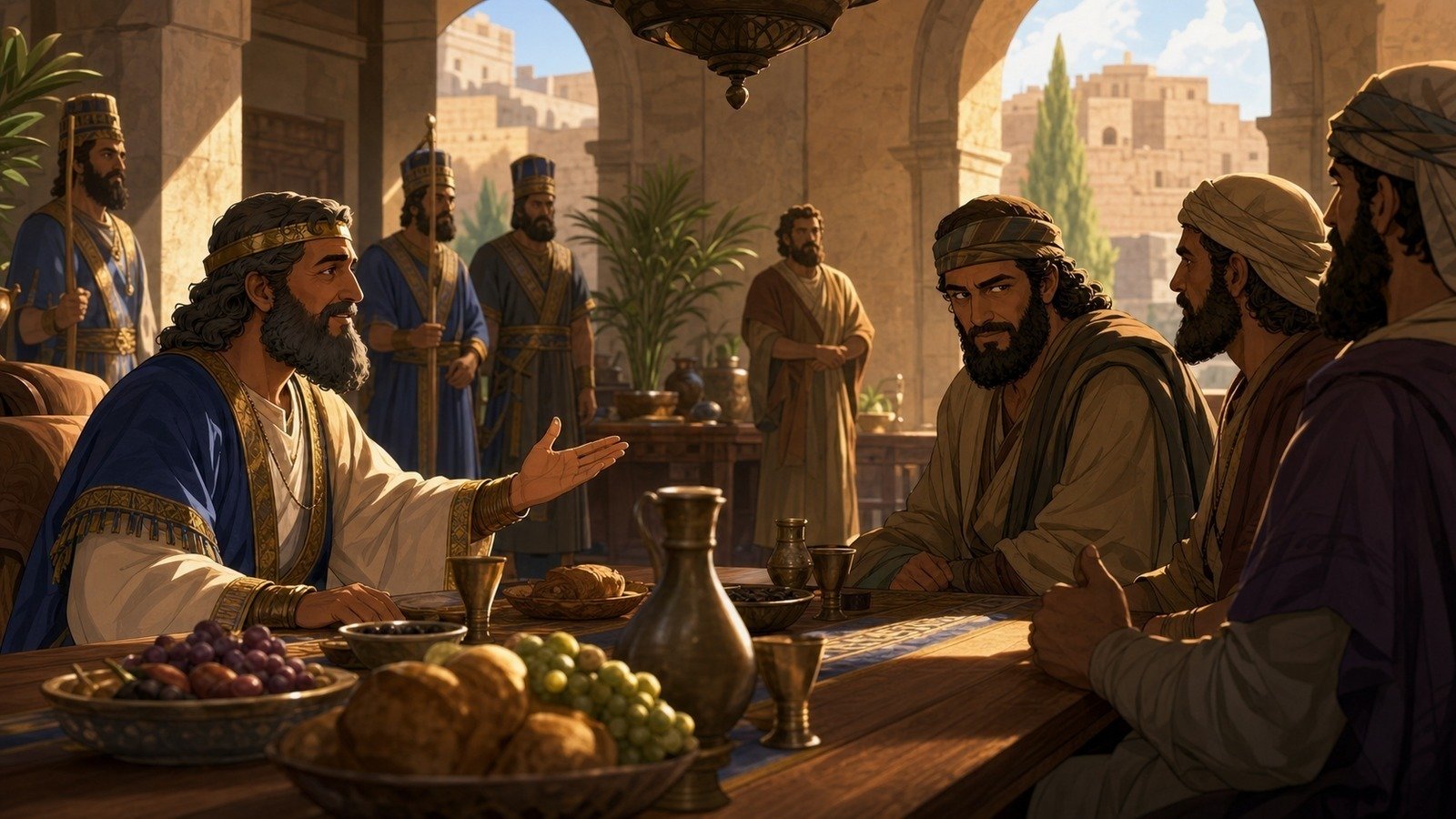
Babylon appoints Gedaliah governor over those left in Judah; he is assassinated within months by Ishmael, a royal descendant, along with the Babylonian officials stationed with him.
Further context
3 min readNebuchadnezzar does not annex Judah outright. He appoints a governor over the people left behind, and the man he chooses is Gedaliah son of Ahikam, whose grandfather Shaphan had been secretary to Josiah and whose father had personally protected Jeremiah from a lynch mob years earlier. A family that had backed the reform and the prophet is now running the province.
He sets up at Mizpah, a few kilometres north of the ruined capital, because Jerusalem is uninhabitable.
His administration lasts a matter of months and what he does in them is sensible. Army officers who had been hiding in the open country come to him with their men, and he takes an oath and tells them not to be afraid of serving the Babylonians, to settle in the land and to harvest wine, summer fruit and olive oil and store them in their jars. Judaeans who had fled to Moab, Ammon and Edom hear that a remnant has been left and a governor appointed, and come back, and they gather an abundant harvest.
That is the picture: a wrecked province, a moderate administrator, returning refugees and one good harvest.
Then Johanan son of Kareah warns him privately that Baalis king of the Ammonites has sent Ishmael son of Nethaniah to assassinate him, and offers to kill Ishmael first, quietly, arguing that otherwise the remnant will be scattered and perish. Gedaliah refuses to believe it and forbids it, and the wording of the refusal is that he was telling a lie about Ishmael.
Ishmael, who is of royal blood, comes with ten men, eats a meal with him at Mizpah and kills him at the table, along with the Judaeans who were with him and the Babylonian soldiers stationed there.
The next day, before anyone knows, eighty men arrive from Shechem, Shiloh and Samaria with grain offerings and incense for the house of the LORD, with their beards shaved, their clothes torn and their bodies cut. Northerners are walking south to bring offerings to a temple that has been burnt to the ground. Ishmael goes out weeping to meet them, invites them in and slaughters seventy of them into a cistern, sparing ten who offer him hidden stores of wheat, barley, oil and honey.
He then takes the survivors of Mizpah captive, including the king's daughters, and heads for Ammon. Johanan catches him at Gibeon and rescues everyone, and Ishmael escapes with eight men.
The consequence of the assassination is out of all proportion to it. Babylon had left a governor and a garrison rather than annexing the province outright, which was a relatively light arrangement, and killing both removed any reason for restraint. The community that was left destroys the one workable political settlement it had been given, within months of receiving it, over a dynastic grudge.
The fast commemorating the murder is still kept in the Jewish calendar, the day after the new year.
Gedaliah was appointed by the Babylonians to govern what was left, and he came from a family that had been in government for two generations. His father Ahikam had protected Jeremiah when a mob wanted him killed, and his grandfather Shaphan had been the secretary who read the newly found law scroll to Josiah.
He sets up at Mizpah, a few miles north of the ruined capital, and his policy is stated in one sentence: settle down in the land and serve the king of Babylon, and it will go well with you.
For a few months it works. People who had scattered to Moab, Ammon and Edom come back, and the harvest of wine and summer fruit is abundant.
Then Ishmael son of Nethaniah, a member of the royal family, arrives with ten men, eats a meal with him and kills him, along with the Babylonian garrison. He had been warned about the plot and had refused to believe it.