

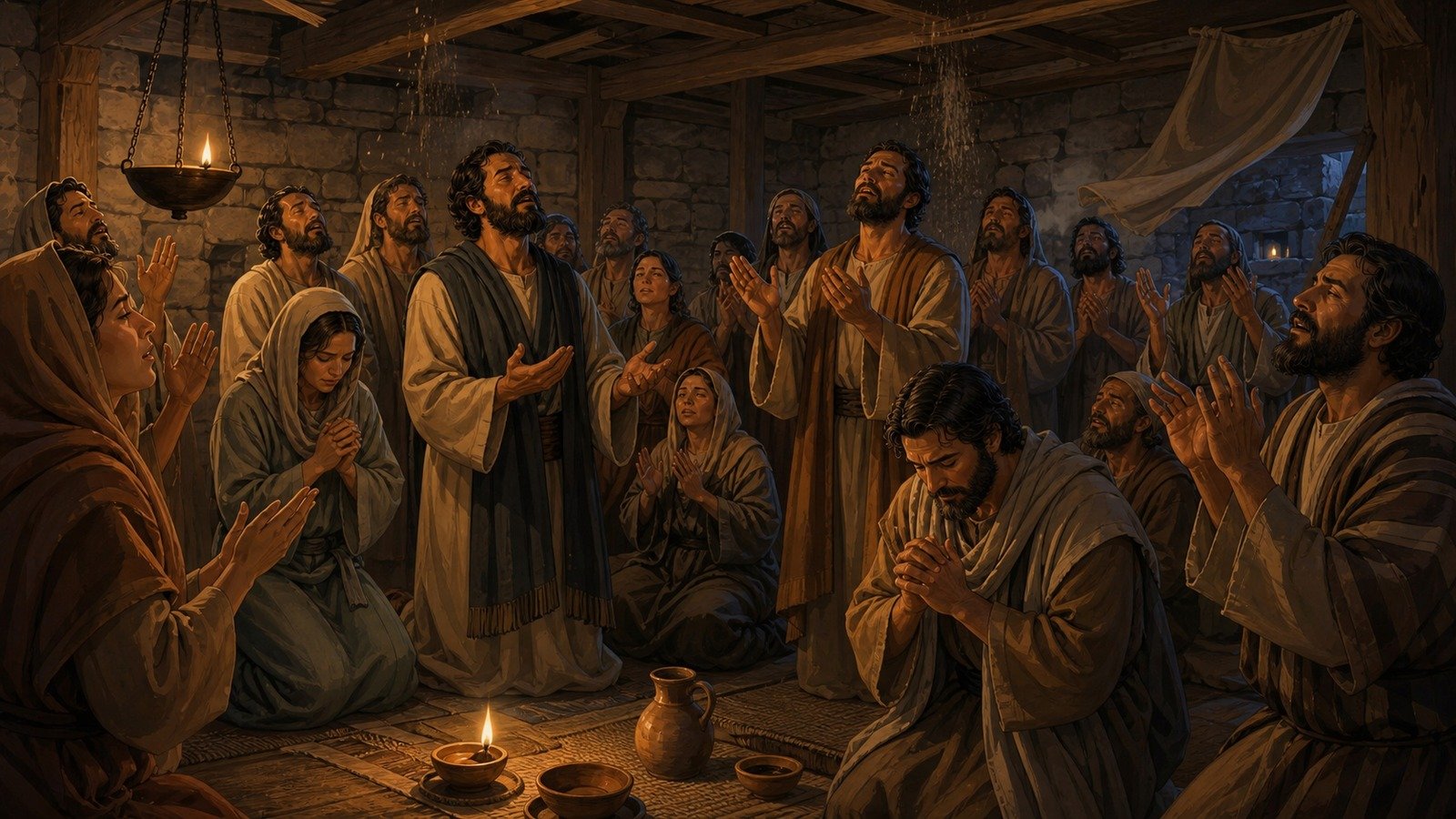
Released, Peter and John report to the believers, who pray together for boldness rather than safety; the place where they are meeting shakes, and Luke records they are filled again with the Holy Spirit.
Further context
2 min readReleased, Peter and John go back to their own people and report everything the chief priests and the elders had said, and the community's response is to pray together.
What they ask for is the thing worth noticing. Not protection, not the removal of the threat, and not vindication. Now, Lord, consider their threats and enable your servants to speak your word with great boldness.
The prayer begins with a quotation from a psalm: why do the nations rage and the peoples plot in vain? The kings of the earth rise up and the rulers band together against the Lord and against his anointed one.
Then they apply it, naming names: Herod and Pontius Pilate met together with the Gentiles and the people of Israel in this city to conspire against your holy servant Jesus. Four parties are listed, and two of them are their own.
They also make a claim about what happened that is theologically loaded and easy to skate past: they did what your power and will had decided beforehand should happen. The men involved are held responsible, and the outcome is described as what had been determined. Christian writers have been trying to hold those two statements together ever since, and the attempts have names and centuries attached to them.
The request is followed by a second one: stretch out your hand to heal and perform signs and wonders through the name of your holy servant Jesus.
After they prayed, the place where they were meeting was shaken. And they were all filled with the Holy Spirit and spoke the word of God boldly.
The shaking is described without explanation. Earthquakes are common enough in that region, and the connection drawn is with the prayer rather than with geology.
What follows immediately is a description of the community's life, and the two are placed together deliberately: a group that has just been threatened by the highest court in the country responds by asking for more courage, gets it, and goes on holding its property loosely and testifying to the resurrection with great power.
The prayer is also the earliest recorded instance of the church interpreting an event through Scripture rather than the other way round. A psalm about kings conspiring against the Lord's anointed is applied to a specific week, in a specific city, with the participants listed by name.
Boldness translates parrēsia, a word from the political vocabulary of the Greek city, meaning the right of a citizen to speak freely in the assembly. What they ask for is the freedom to say the thing they have just been forbidden to say.
Their own leaders are listed alongside Herod and Pilate in the prayer, which is not the way a group under pressure usually describes a conspiracy against it.
The filling with the Spirit is described again here, weeks after Pentecost and to some of the same people, which suggests the writer did not regard it as a single completed event.
The word for shaken describes physical movement, and it is used again later of a prison at Philippi. Both times the writer reports the event and draws no conclusion from it beyond what happened next.