

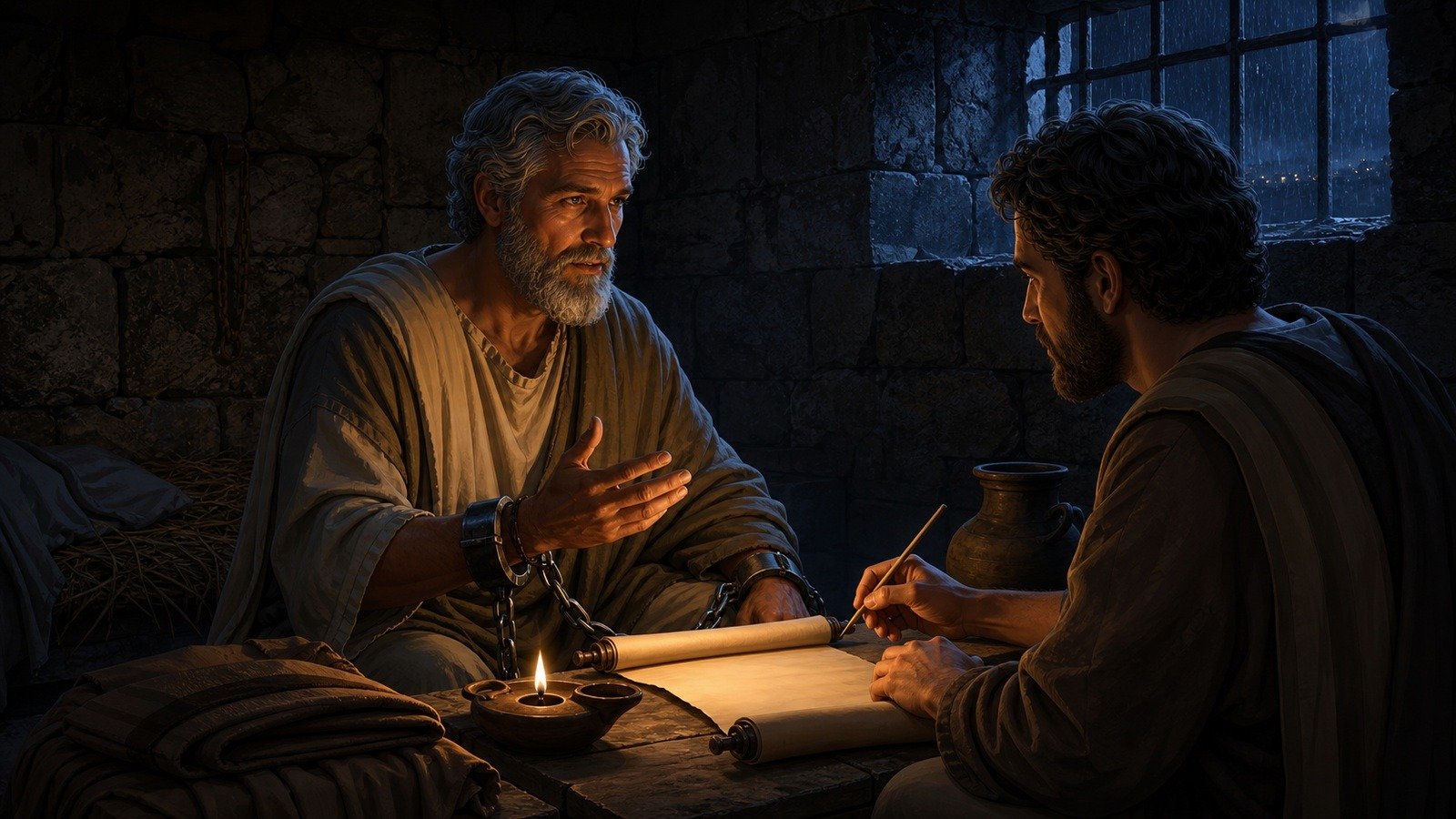
Written, on the traditional view, during a second and harsher Roman imprisonment shortly before Paul's death, this letter has a markedly personal, farewell tone: "I have fought the good fight, I have finished the race," as Paul urges Timothy to remain faithful and to come to him soon.
Further context
2 min readOn the traditional reading this is the last thing Paul wrote, from a second imprisonment at Rome, and it reads like it.
The difference from the first letter to Timothy is immediate. That one was administrative. This one is personal, and the situation behind it is bleak.
Everyone in the province of Asia has deserted him. A man named Demas, listed as a fellow worker in two earlier letters, has left, because he loved this present world. At his first defence no one came to his support, but everyone deserted him. Alexander the metalworker did him a great deal of harm. He is cold, and asks for the cloak he left at Troas, along with the scrolls and especially the parchments.
Only Luke is with him.
The requests at the end are the most human things in his surviving correspondence: bring the cloak, bring the books, bring Mark, do your best to get here before winter. The last of those is a practical calculation, since shipping across the Mediterranean shut down in the autumn and a delay meant months.
Mark is the young man he had refused to travel with, and the reason given is that he is helpful to me in my ministry.
What he says about his own position is stated without drama. I am already being poured out like a drink offering, and the time for my departure is near. The image is of the wine poured over a sacrifice at the altar, which was the last act before the offering was finished.
I have fought the good fight, I have finished the race, I have kept the faith.
The instructions to Timothy have the tone of a handover. Guard the deposit entrusted to you. Fan into flame the gift of God. Endure hardship like a good soldier. Preach the word; be prepared in season and out of season. And the sentence that has anchored every subsequent Christian argument about Scripture: all Scripture is God-breathed and is useful for teaching, rebuking, correcting and training in righteousness.
The Scripture he means is the Hebrew Bible, since almost nothing of the New Testament existed as a collection when he wrote.
He also reminds Timothy that from infancy he had known the Holy Scriptures, taught by his mother and grandmother.
Whether there was a second imprisonment is the whole question. The record of the church's early years ends with Paul under house arrest, receiving visitors freely, which does not match the conditions described here: chained like a criminal, deserted, and expecting to die.
Early tradition asserts a release, a further period of travel including Crete and possibly Spain, and a second arrest under harsher conditions during Nero's persecution. If that is right, this letter belongs to it.
Demas is named as a fellow worker in two earlier letters and named here as a deserter, and nothing further is known about him. Whatever happened, somebody thought it worth writing down.
The parchments Paul asks for are distinguished from the scrolls, and parchment was the expensive material, which has led to the guess that they were copies of Scripture or his own notes.