

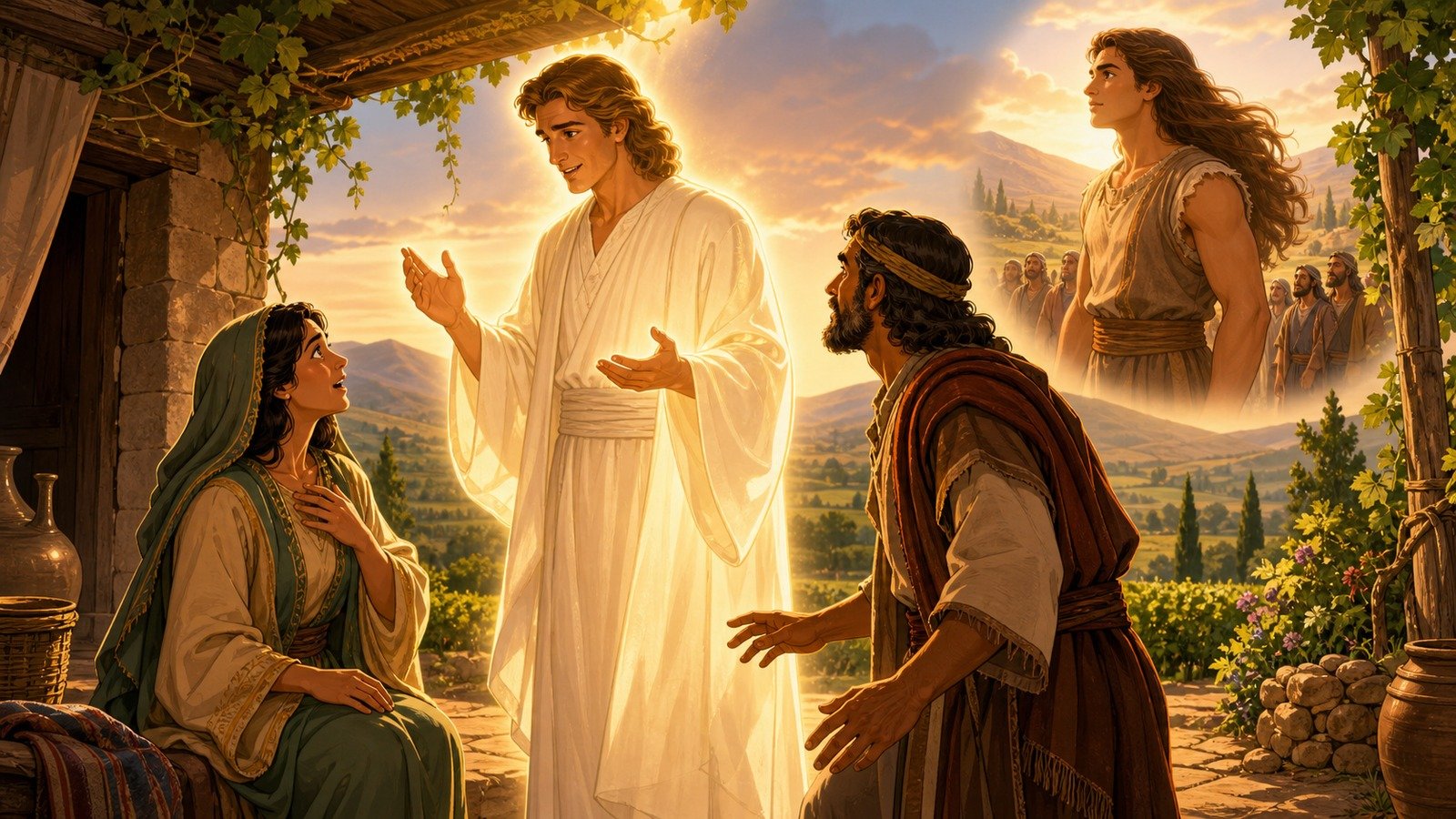
An angel announces Samson's birth to a previously barren woman, instructing that he be raised as a Nazirite, set apart from wine and from cutting his hair, and destined to begin Israel's deliverance from the Philistines.
Further context
2 min readThe Philistines have controlled Israel for forty years, and this time nobody cries out for help. The cycle that has run through the whole period breaks here: the oppression is stated and the appeal is missing. Deliverance arrives unrequested.
A woman of the tribe of Dan, married to Manoah and unable to have children, is visited by the angel of the LORD and told she will conceive. The instructions given are to her rather than to her husband: drink no wine or fermented drink, eat nothing unclean, and no razor may be used on the boy's head, because he will be a Nazirite dedicated to God from birth.
The Nazirite vow was ordinarily temporary and voluntary, taken by an adult for a set period, with three requirements: abstain from grapes and anything made from them, avoid contact with a corpse, and let the hair grow uncut. Here it is lifelong and imposed before birth, and the mother is put under part of it during the pregnancy.
Manoah's behaviour when she tells him is the comedy of the scene. He asks God to send the man again to teach them what to do, and the angel returns to the woman while she is alone in the field, and she has to run and fetch her husband. He then asks the same questions his wife has already had answered, and is told the same things. He offers to prepare a meal, asks the visitor's name and is told it is beyond understanding, and when the flame goes up from the altar and the angel goes up in it, he concludes that they are going to die because they have seen God.
His wife's reply is the most sensible line in the episode: if the LORD had meant to kill us, he would not have accepted a burnt offering from our hands, nor shown us all these things, nor told us this.
She is never named. The mother of the strongest man in the Hebrew scriptures, who receives two angelic visits, understands them correctly both times and has to explain the situation to her husband, is called only the wife of Manoah.
The Philistines themselves are a different kind of enemy from anything before. They arrived on the coastal plain in the twelfth century BC as part of the wider movement of Aegean peoples that brought down several Bronze Age states, and their five cities operated as a coordinated group with an aristocracy, a monopoly on ironworking and Aegean-style pottery and architecture that has been excavated at Ashdod, Ashkelon, Ekron and Gath. They are not raiders coming up at harvest and going home. They are a settled, better-equipped neighbour.
Everything set up here is broken later. He will hold a wedding feast lasting seven days, which certainly involved wine, handle a lion's carcass and eat honey out of it, kill a thousand men with the jawbone of a donkey, and finally have his head shaved by a woman in Philistine pay. The three terms of the vow are violated in order.