

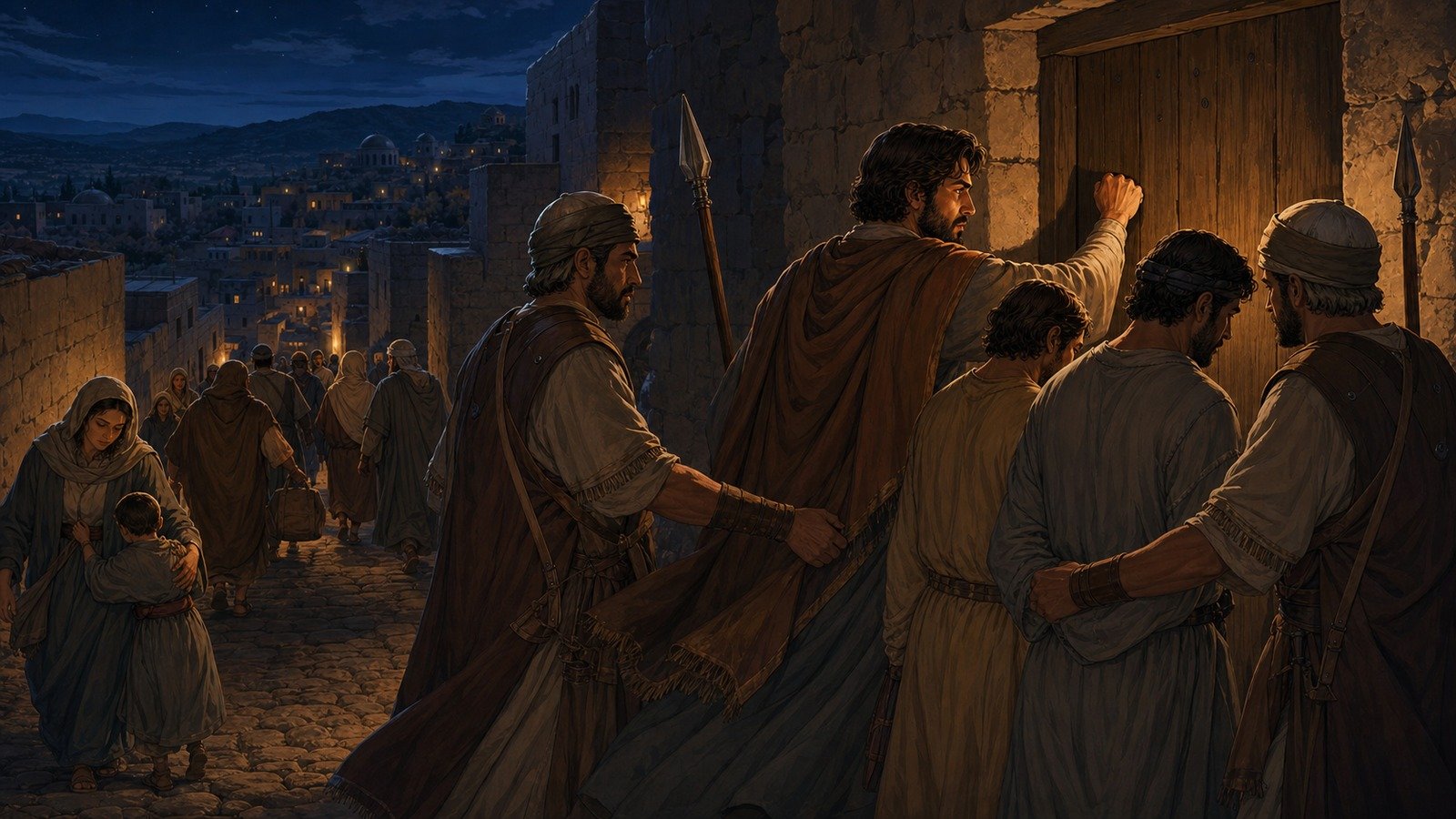
A severe persecution breaks out in Jerusalem following Stephen's death, scattering believers across Judea and Samaria; Saul goes house to house dragging off men and women and committing them to prison, a campaign he later describes in his own letters.
Further context
2 min readOn the day Stephen was killed, a great persecution broke out against the church in Jerusalem, and all except the apostles were scattered throughout Judea and Samaria.
The word used for what Saul did to the church is a violent one. It appears elsewhere of a wild animal ravaging a vineyard, and what it describes is set out concretely: going from house to house, he dragged off both men and women and put them in prison.
Two things in that sentence deserve attention.
House to house means the movement had no separate buildings and met in homes, so persecuting it meant raiding domestic addresses, which required informers and lists. And the specific mention of women is unusual in an ancient account of arrests, and Paul himself repeats it decades later when describing what he had done, saying he persecuted the followers of the Way to their death, arresting both men and women and throwing them into prison.
He also says he cast his vote against them when they were put to death, and that he tried to make them blaspheme, and that he was so obsessed with them that he went to foreign cities to pursue them. Whatever else the reports of this period contain, the man responsible confirmed them in writing and never attempted to minimise them.
Why the apostles stayed is not explained. The likeliest reading is that the persecution fell hardest on the Greek-speaking wing of the community, Stephen's own group, whose criticisms of the temple had provoked the trouble, while the Aramaic-speaking believers who kept the temple hours were less conspicuous.
Godly men buried Stephen and mourned deeply for him.
Then a sentence that changes the direction of everything: those who had been scattered preached the word wherever they went.
The persecution intended to end the movement instead distributed it. Within a few years there were believers in Samaria, along the coastal plain, in Damascus, and in Antioch, the third city of the empire. The commission had named Jerusalem, Judea, Samaria and the ends of the earth, and the mechanism that got them out of Jerusalem was a man going from house to house with warrants.
How long the persecution lasted is unknown. It is described as severe and as producing a general dispersal, and by the time Saul sets out for Damascus he is going after people who had already left Jerusalem, which suggests it worked in the short term.
What it produced in the medium term is the opposite of what it intended. Samaria receives the message because Philip is driven there. Antioch receives it because Cypriots and Cyrenians are driven there. The two events that open the movement to non-Jews both begin with believers running for their lives.
Saul's own later summaries of this period are the only first-person testimony to a persecution from the man who conducted it, and he never softens them. He calls himself the worst of sinners and says he acted in ignorance and unbelief, which is an explanation rather than an excuse and he presents it as one.