

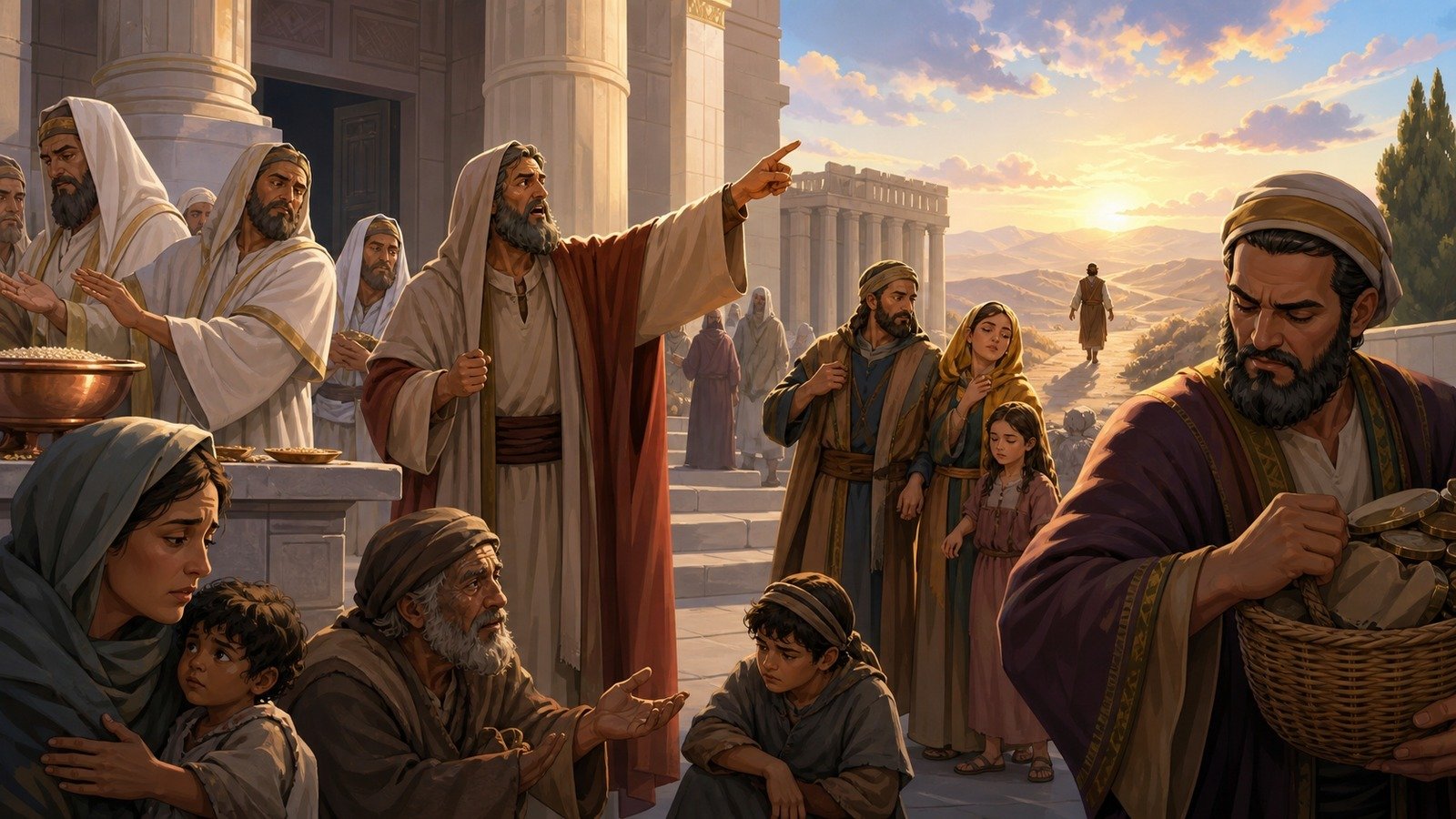
Malachi confronts a spiritually complacent post-exilic community over careless worship, unfaithful marriages and withheld tithes, and closes the Hebrew canon's prophetic voice with a promise of a coming messenger to prepare the way before "the great and dreadful day of the Lord."
Further context
3 min readThe name means my messenger, and whether it is a personal name or a title has been argued since antiquity. The book carries no date, but its concerns are the same ones Nehemiah found on his return, which places it around the same time.
Its form is unlike any other prophetic book. It is built as a series of disputes, six of them, each following the same shape: a statement, an objection quoted from the audience, and an answer. That structure is closer to a legal argument or a classroom exchange than to the oracles of the earlier prophets, and it suggests a community that had learned to answer back.
The opening exchange sets the tone. I have loved you, says the LORD. But you ask, how have you loved us? What follows is a community that is not rebellious in the old sense. Nobody is worshipping Baal. The temple is running, the sacrifices are being made and the priesthood is functioning. The problem is that all of it has become perfunctory.
The charge against the priests is precise and it turns on what is being brought to the altar. Blind, lame and diseased animals are being offered, and the challenge is one any official would understand: try offering them to your governor. Would he be pleased with you? Would he accept you? A sentence quoted back at them summarises the mood: what a burden, and you sniff at it contemptuously.
The people are accused of robbing God, and when they ask how, the answer is tithes and offerings. Then a challenge that is unusual because it invites a test: bring the whole tithe into the storehouse, and test me in this, and see if I will not throw open the floodgates of heaven.
Divorce is confronted directly, and the language is unlike anything else in these books: I hate divorce, says the LORD, and the reason given is that a wife is a partner by covenant. Marriage is described in legal and covenantal terms rather than domestic ones.
Two promises close it. A messenger will be sent to prepare the way, and the Lord you are seeking will suddenly come to his temple, but who can endure the day of his coming? And at the very end: I will send the prophet Elijah to you before that great and dreadful day of the LORD comes.
He will turn the hearts of the parents to their children, and the hearts of the children to their parents. Those are the last words of the Old Testament in the Christian arrangement, and four centuries of silence follow them.
Malachi is constructed as a series of disputes, and the form is the same each time: a statement, an objection quoted back, and an answer. I have loved you, says the LORD. But you ask, how have you loved us?
There are six of them, and the objections are the most revealing part of the book because they preserve what people were actually saying.
The complaints against the priests are specific and contemptuous. They are bringing blind, lame and diseased animals for sacrifice, and the challenge put to them is practical: try offering them to your governor! Would he be pleased with you?
The complaint about divorce is the sharpest statement on the subject in the Old Testament: the LORD is the witness between you and the wife of your youth. And I hate divorce.
The last complaint quoted is the flattest: it is futile to serve God. What do we gain by carrying out his requirements?