

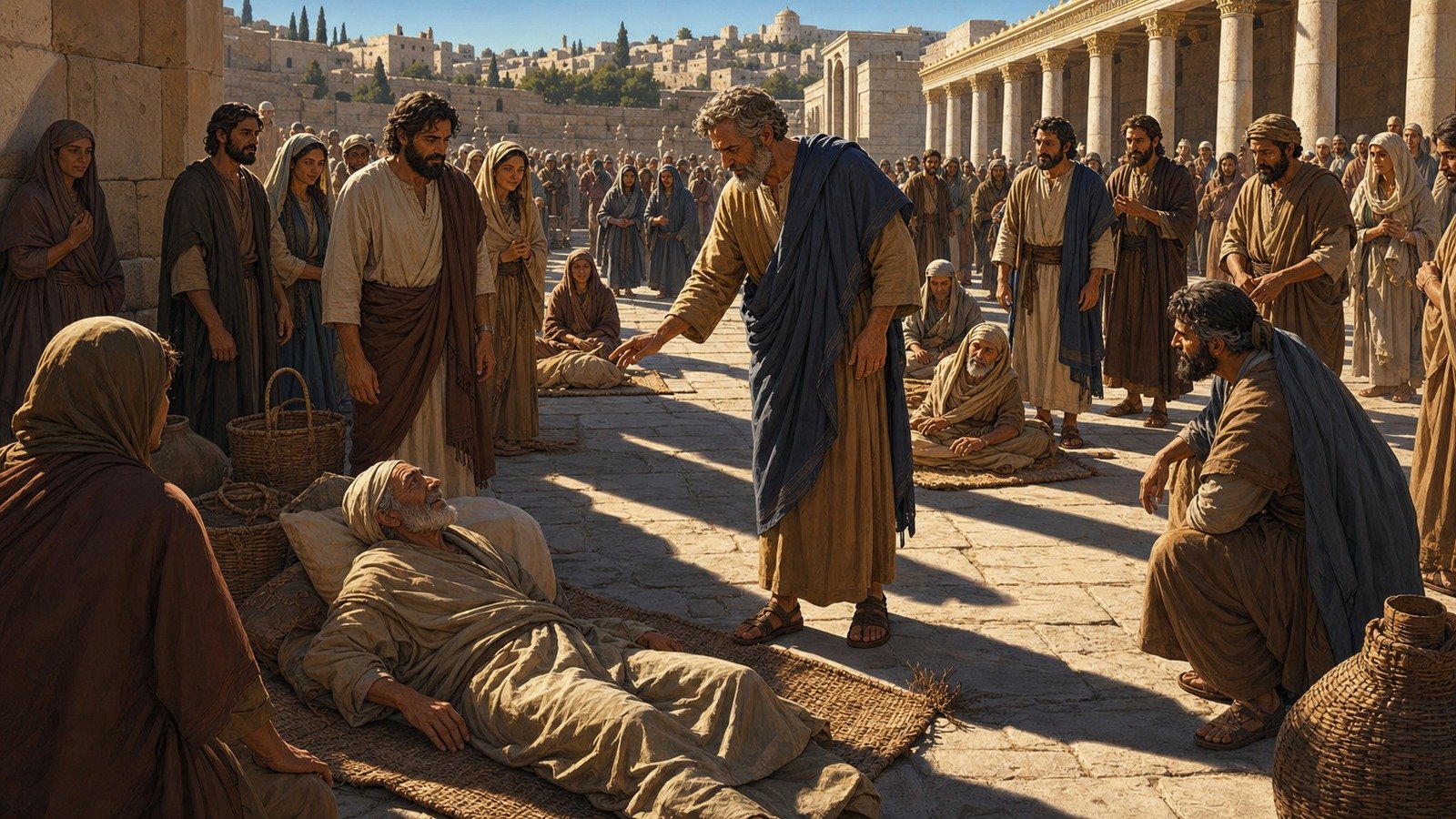
The apostles' healings grow so well known that people bring the sick into the streets hoping even Peter's shadow might fall on them, and crowds come from towns around Jerusalem bringing those who are ill or troubled by evil spirits.
Further context
2 min readThe apostles performed many signs and wonders among the people, and the community's position in the city becomes contradictory in a way that is worth stating plainly.
All the believers used to meet together in Solomon's Colonnade. No one else dared join them, even though they were highly regarded by the people. Nevertheless, more and more men and women believed in the Lord and were added to their number.
Three things at once: public admiration, a reluctance to associate too closely, and steady growth. That is exactly what a movement looks like after something like the deaths of Ananias and Sapphira has become common knowledge.
Then the detail that has caused the most discussion. People brought the sick into the streets and laid them on beds and mats so that at least Peter's shadow might fall on some of them as he passed by.
Nothing is said about whether the shadow did anything. What is described is what the crowd believed and did, and the summary that follows says only that all of them were healed.
That distinction matters, because similar behaviour is recorded around Paul, where handkerchiefs and aprons that had touched him were taken to the sick, and there the outcome is stated. Christian tradition has taken this material in very different directions: some traditions built the whole practice of relics on it, others have read it as a description of popular enthusiasm rather than an endorsement.
Crowds gathered also from the towns around Jerusalem, bringing those who were ill and those tormented by impure spirits, and all of them were healed.
Two things about the geography are worth noticing. The movement is still confined to Jerusalem and its immediate surroundings, which is where the commission said it would begin. And it is now drawing people in from outside, which is what makes the authorities move again.
The high priest and all his associates, who were members of the party of the Sadducees, were filled with jealousy. The word used describes zeal that has turned into resentment, and it is the ordinary human reaction of men watching their own courtyard fill up with people listening to somebody else.
They arrest the apostles and put them in the public jail, and that arrest produces the next confrontation.
The word translated highly regarded describes public esteem, and the reluctance to join is described with a verb meaning to dare. People admired them from a distance and were careful about getting too close, which is a recognisable social position and not a contradiction.
Solomon's Colonnade as their meeting place is the same portico where Peter had preached after the healing at the gate, and where Jesus had walked at the Feast of Dedication. The movement is still meeting in public, inside the temple precinct, in the most conspicuous place available.
Nothing in the summary claims that Peter's shadow healed anyone. It reports where the sick were laid and why, and then states that they recovered.
The phrase about the whole church appears here for the first time as a description of a single body rather than a gathering, and within a few years the same word is being used of congregations in cities hundreds of kilometres apart.