

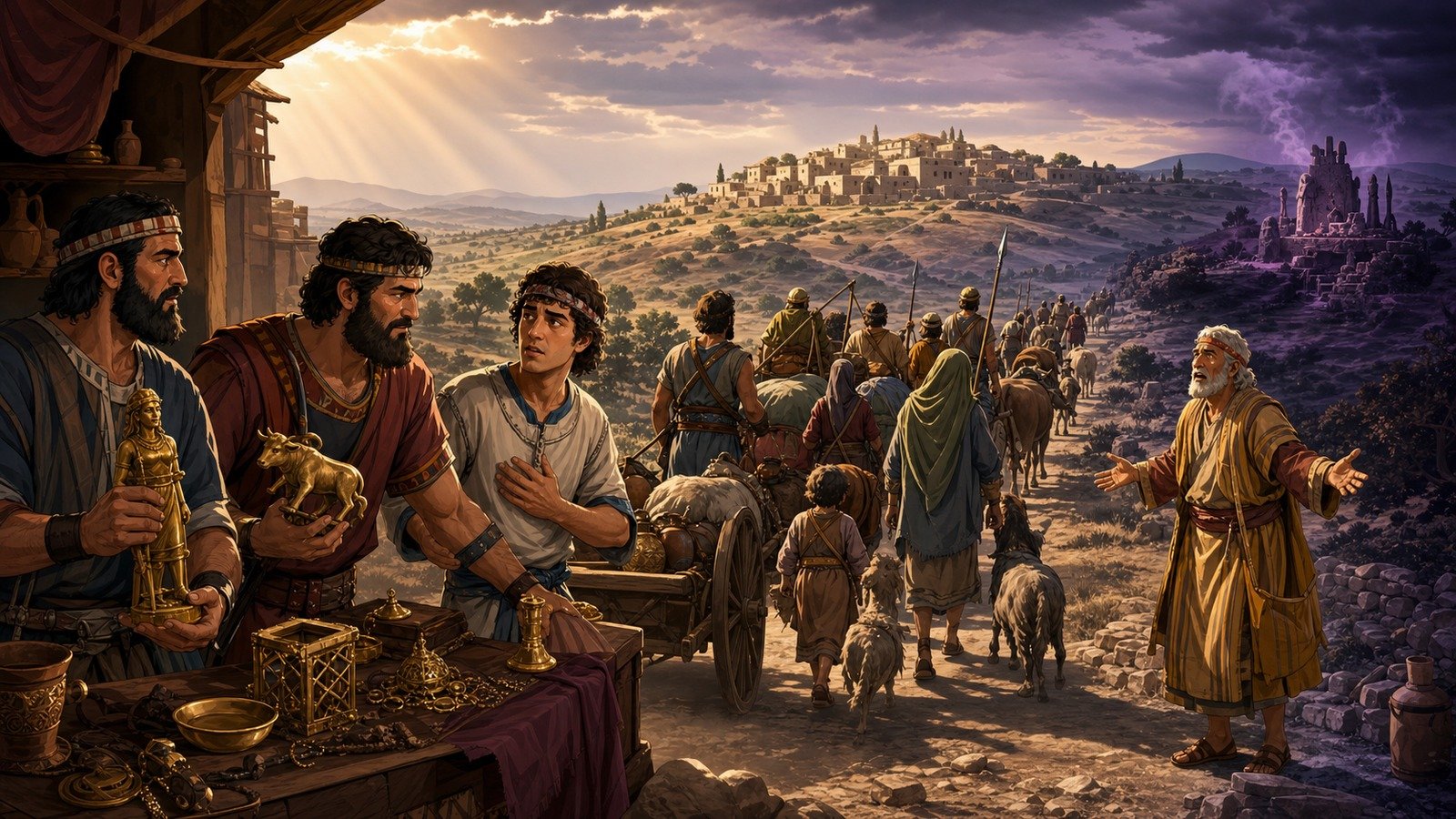
Micah sets up a private shrine with an idol and a hired Levite priest; the tribe of Dan, seeking territory, seizes both on its migration north and establishes an illegitimate rival cult at Laish (renamed Dan), illustrating the religious chaos of the period.
Further context
2 min readA man in the hill country of Ephraim called Micah admits to his mother that he stole eleven hundred shekels of silver from her. She had pronounced a curse over the theft, and when he returns it she immediately blesses him and says she is consecrating the silver to the LORD, and then has a silversmith make an image out of two hundred shekels of it. Her son installs it in his house along with an ephod and household gods, and appoints one of his own sons as priest.
A young Levite from Bethlehem then comes past looking for somewhere to live, and Micah hires him for ten shekels a year, his clothes and his food. His reaction is a piece of religious accountancy: now I know that the LORD will be good to me, since this Levite has become my priest.
Everything about that arrangement is wrong in some way, and it is presented as a perfectly ordinary household getting on with things. Stolen money is consecrated. The consecration produces an idol. A private shrine is set up. A Levite is retained as a domestic chaplain for a wage. Nobody appears to think any of it unusual.
The tribe of Dan then arrives. Their allotted territory was in the south-west and they could not hold it against the Philistines, so they send five men to scout for somewhere else. The scouts stay overnight at Micah's house, recognise the Levite's accent, ask him to enquire of God for them and are told to go in peace.
They find Laish in the far north, a prosperous and unsuspecting town living in security, far from anyone who might help it, and they come back and report. Six hundred armed men then set out, stop at Micah's house on the way, and take the image, the ephod, the household gods and the priest. When the Levite objects they tell him it is better to be priest to a whole tribe than to one household, and he is pleased with the offer and carries the gods out himself.
Micah gathers his neighbours and pursues them, and is asked what is the matter with him. He says: you took the gods I made, and my priest, and went away. What else do I have? A man complaining that his gods have been stolen is the point being made, and nothing further needs adding.
They take Laish, put its people to the sword and burn it, rebuild it and call it Dan, and set up the image there. The priest is finally named as a grandson of Moses, and the arrangement continues until the land was captured.
That town becomes the northern boundary marker of the whole country in the phrase from Dan to Beersheba, and centuries later it is one of the two places where a king of Israel sets up a golden calf.