

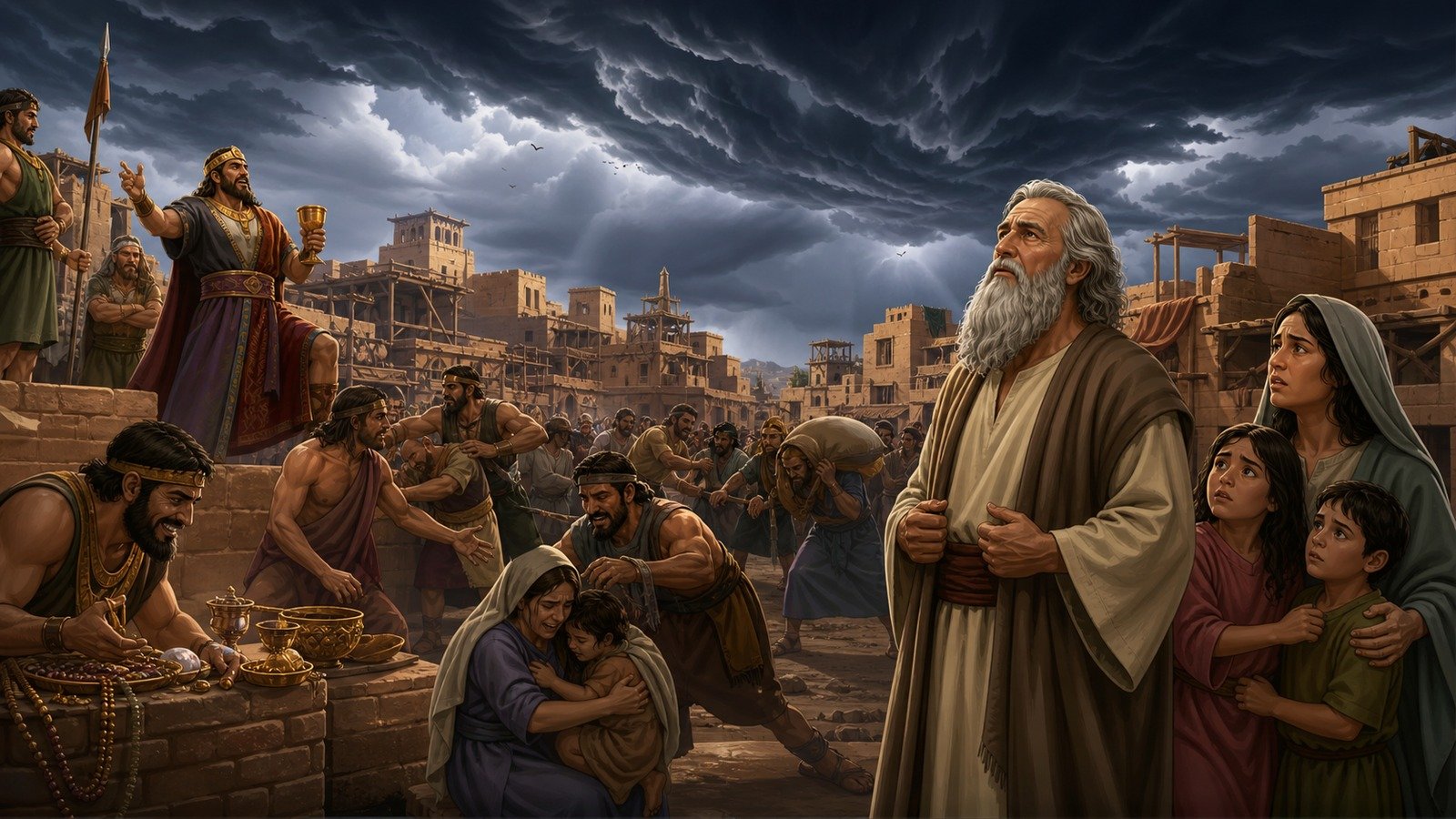
Genesis records widespread human corruption and violence, God's grief over it, and his decision to blot out life from the earth, sparing only Noah, "a righteous man, blameless among the people of his time."
Further context
2 min readThe sons of God saw that the daughters of humans were beautiful, and married any of them they chose, and the Nephilim were on the earth in those days and afterwards. Those two sentences are among the most contested in the Bible.
Three readings of "sons of God" are current and each rests on a specific argument.
The first identifies them as heavenly beings, because the same Hebrew phrase refers to members of the divine court elsewhere in the Hebrew scriptures, and because two short New Testament letters mention angels who abandoned their proper position and were held for judgement. The difficulty is that Jesus, asked about marriage after the resurrection, said that angels in heaven do not marry.
The second takes them as rulers or dynasts. Royal figures were described in divine terms across the ancient Near East, and one of the psalms addresses human judges as gods. The difficulty is that this usage is itself disputed.
The third takes them as the descendants of Seth intermarrying with the descendants of Cain, which fits the shape of the two preceding chapters neatly. The difficulty is that nobody says so, and the women are described simply as human daughters rather than as the women of one family.
The Nephilim are named and never explained. The word turns up again only in the report brought back by the men sent to scout Canaan, who say they saw them and felt like grasshoppers by comparison. Most English versions leave it untranslated because no confident rendering exists. They are called the heroes of old, men of renown, and whether they were the children of those marriages or simply people alive at the same time is left open.
A figure of a hundred and twenty years is then set, and it has been read two ways. It may be a new ceiling on human life, in which case the lifespans recorded after the Flood, which run well above that for several generations, are a gradual decline towards the limit rather than an immediate cut. Or it may be a period of delay before judgement, which fits its position immediately before the announcement of the Flood.
What follows is a diagnosis rather than a list of crimes. Every inclination of the thoughts of the human heart was only evil all the time. Then something unexpectedly direct is said about God: he regretted making human beings, and his heart was deeply troubled.
That verb has been argued over for a very long time, because the same word appears in a later declaration that God is not a human being that he should change his mind. Anyone treating one of the two as figurative and the other as literal has to explain which and why, and the question is genuinely open. What the sentence does establish is that the Flood is not presented as a cold administrative decision. Grief is attributed to the one making it.
The section turns on a single line at the end. Noah found favour in the eyes of the LORD. Nothing has been said about him before this; his name has appeared once, in a genealogy, attached to a father who hoped he would bring relief from working cursed ground.