

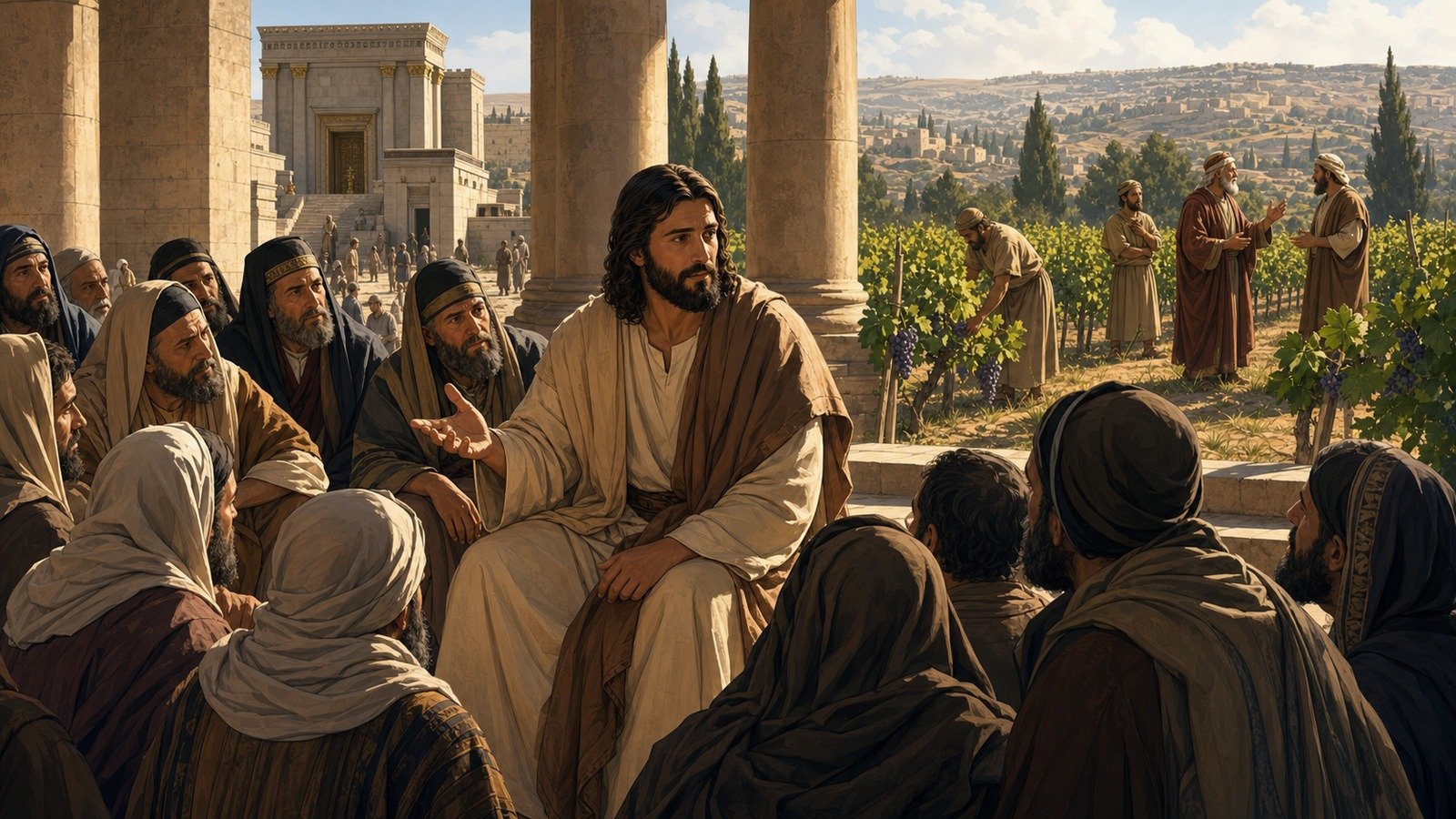
Jesus tells of two sons whose actions, not words, reveal true obedience, then of tenant farmers who kill the vineyard owner's son, a thinly veiled parable the religious leaders recognise is aimed at them.
Further context
2 min readTwo stories Jesus tells back to back to the delegation that had just refused to answer him, and the second is close to an indictment.
A man has two sons. He tells the first to go and work in the vineyard today. The son says I will not, and later changes his mind and goes. He tells the second the same thing, and that son says I will, sir, and does not go. Which of the two did what his father wanted?
They answer correctly, and are then told what the question was about: the tax collectors and the prostitutes are entering the kingdom of God ahead of you. John came showing you the way of righteousness, and you did not believe him, but the tax collectors and the prostitutes did. And even after you saw this, you did not repent and believe him.
The second story uses an image his audience knew before he opened his mouth. Isaiah had sung about a man who planted a vineyard on a fertile hillside, dug it, cleared the stones, built a watchtower and cut a winepress, and got sour grapes, and the song ends by naming the vineyard as the house of Israel.
The details in the opening sentence are lifted straight from that song: the wall, the winepress, the watchtower. Anyone in the temple courts hearing them knew what the vineyard was before the plot began.
A landowner rents it to tenants and goes away. Absentee landlords holding Galilean estates and leasing them for a share of the crop were entirely ordinary in the first century, and disputes over the rent were common enough to appear in the papyri.
At harvest he sends servants for his share. They are beaten, killed and stoned. He sends more, and the same happens. Last of all he sends his son, saying they will respect my son.
The tenants reason it out among themselves: this is the heir. Come, let us kill him and take his inheritance. There was a legal basis for that hope, since ownerless property could in some circumstances be claimed by those in possession, and tenants who believed the owner was dead might reckon the estate was theirs for the taking.
So they take him, throw him out of the vineyard and kill him.
Then the question, and they convict themselves answering it: he will bring those wretches to a wretched end, and rent the vineyard to other tenants.
He closes with a line from a psalm about the stone the builders rejected becoming the cornerstone, and the reaction is recorded without ambiguity. They looked for a way to arrest him, because they knew he had spoken the parable against them. But they were afraid of the crowd.
The vineyard image continues into the letters, where Paul uses an olive tree instead and argues at length about branches broken off and others grafted in, warning the grafted ones not to be arrogant about it. The imagery of a cultivated plant standing for a people was durable, and both writers use it to say something uncomfortable to whoever is listening.
The chief priests and the Pharisees are described leaving that conversation looking for a way to arrest him, which by that Tuesday was no longer a new thought.