
Miriam dies at Kadesh late in the wilderness period. When the people again complain of thirst, Moses strikes the rock instead of speaking to it as instructed, and God bars both Moses and Aaron from entering the promised land as a consequence.
Further context
2 min readIsrael arrives at the Desert of Zin in the first month and stays at Kadesh, and one sentence covers a death: there Miriam died and was buried.
The brevity is conspicuous. Aaron's death shortly afterwards is followed by thirty days of national mourning, and so is Moses' at the very end. The woman who watched a basket among the reeds, spoke to Pharaoh's daughter, led the singing at the sea and was the first person anywhere called a woman prophet gets nine words in Hebrew and no mourning at all, and the story moves straight on to a water shortage.
The year is the fortieth, which can be worked out by comparison with the dating of Aaron's death a few months later. Almost four decades have passed, and the people being addressed are the children of those who refused to enter.
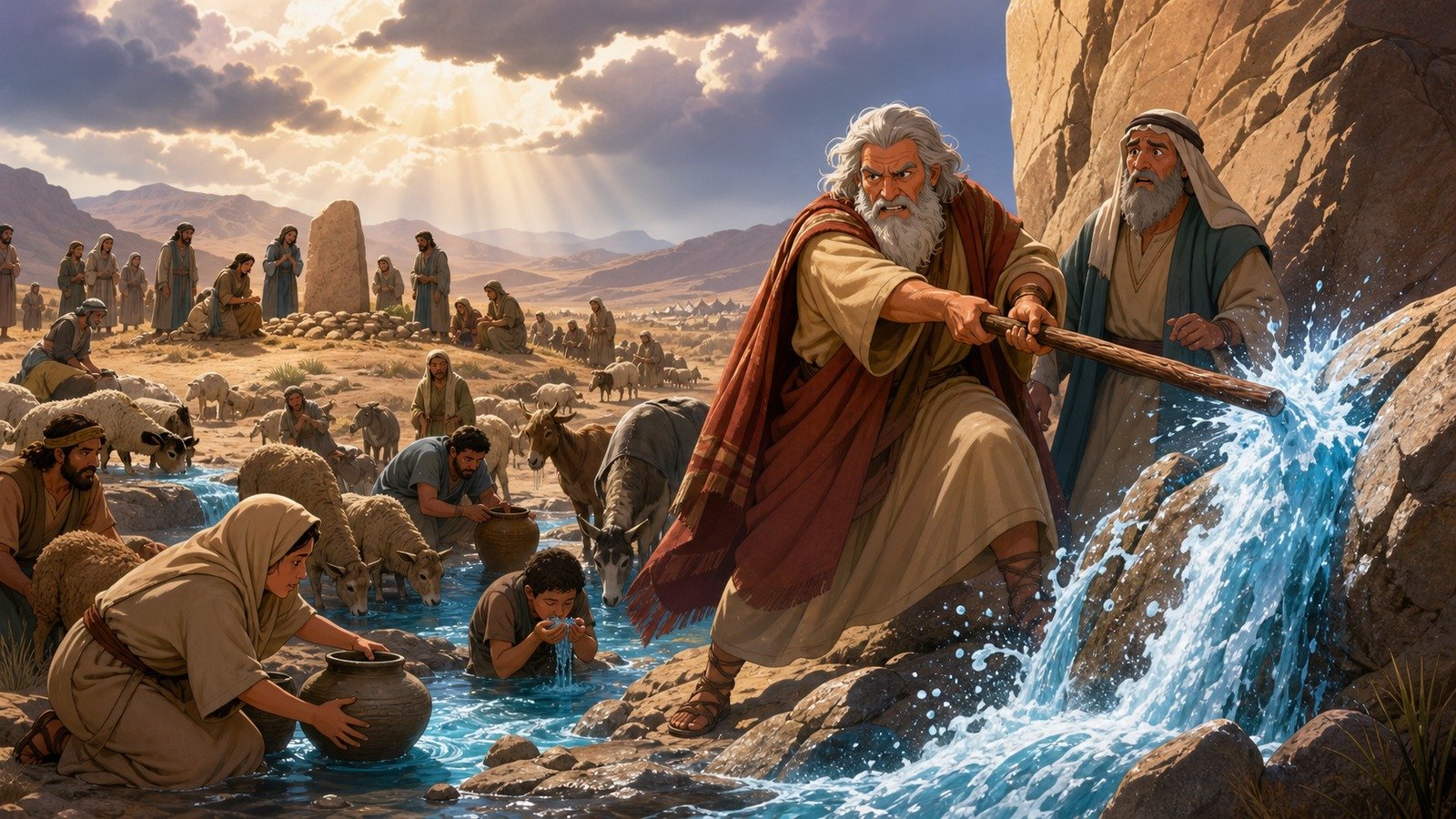
There is no water, and the community gathers in opposition with a complaint nearly identical to the one their parents made. Moses and Aaron go to the tent and fall face down, and the instruction they receive is specific: take the staff, gather the assembly, and speak to that rock before their eyes, and it will pour out its water.
What Moses does instead is why he does not enter the land. He gathers the assembly and says, listen, you rebels, must we bring you water out of this rock? Then he raises his arm and strikes the rock twice. Water comes out abundantly and the community and their livestock drink.
The verdict follows at once: because you did not trust in me enough to honour me as holy in the sight of the Israelites, you will not bring this community into the land I give them.
Exactly which element was the offence has been argued over for centuries. Candidates include striking the rock when told to speak to it, striking it twice, the anger, the word "we" in a question about who produces water, and calling the people rebels. What is named is general, a failure of trust and of treating God as holy in public, and no itemised charge is ever brought. A psalm adds a note of its own: trouble came to Moses because of the people, since they rebelled and rash words came from his lips.
That last observation is worth sitting with. Forty years earlier he argued God out of destroying this nation twice, and refused an offer to replace them with his own descendants. What finally undoes him is losing his temper in front of a crowd demanding water, for the second time, in the same kind of place, over the same thing.
This should not be confused with the water from the rock thirty-eight years earlier, where he was told to strike and did. Both places carry the same name, Meribah, meaning quarrelling, and the second is distinguished as Meribah Kadesh.