

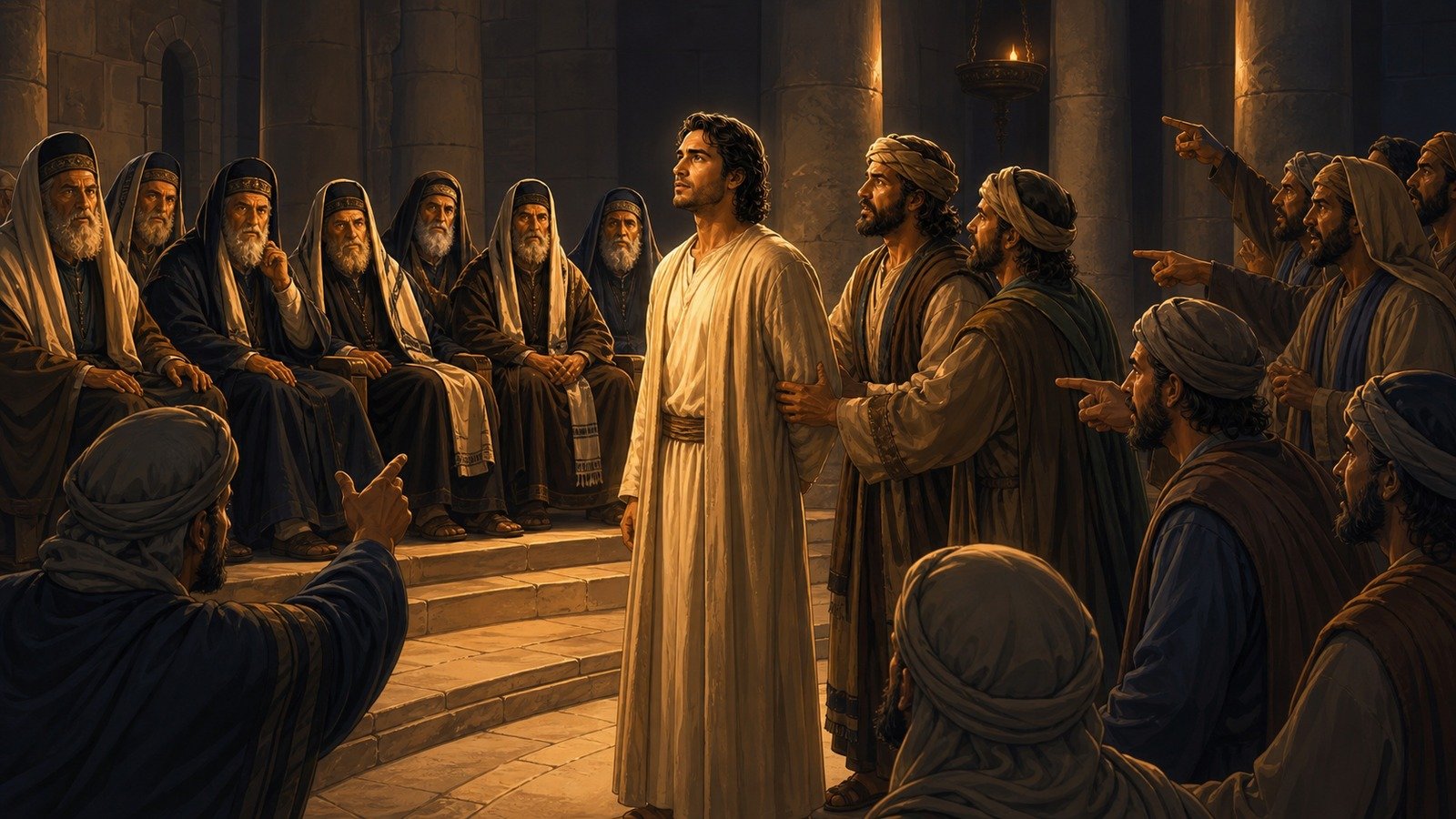
Stephen's preaching and miracles provoke opposition from a synagogue of Greek-speaking Jews, who bring false witnesses to accuse him of speaking against the Temple and the Law before the Sanhedrin.
Further context
2 min readStephen, a man full of God's grace and power, performed great wonders and signs among the people.
Opposition comes from a specific quarter: members of the Synagogue of the Freedmen, as it was called, Jews of Cyrene and Alexandria as well as the provinces of Cilicia and Asia. Freedmen most probably means descendants of Jews taken to Rome as slaves after Pompey's campaign and later freed. These are Greek-speaking Jews from the diaspora, which is to say Stephen's own community, arguing with one of their own.
Cilicia is worth noting. Tarsus was in Cilicia, and Saul of Tarsus appears at the end of this episode.
They begin by disputing with him and cannot hold their own against the wisdom the Spirit gave him as he spoke. So they change tactics, and what follows is described bluntly: they secretly persuaded some men to say, we have heard Stephen speak blasphemous words against Moses and against God.
They stir up the people, the elders and the teachers of the law, seize him and bring him before the Sanhedrin, and produce false witnesses.
The charge as stated is this: this fellow never stops speaking against this holy place and against the law. For we have heard him say that this Jesus of Nazareth will destroy this place and change the customs Moses handed down to us.
The similarity to the accusation made against Jesus a few years earlier is exact, including the detail about destroying the temple, and it is exactly the kind of charge that is easiest to build from something genuinely said and slightly turned. Jesus had spoken about the temple's destruction; what he had said about the customs is a different matter.
The charge is also a serious one in its own terms. The temple and the law were the two institutions that held Jewish identity together under foreign rule, and a man alleged to be undermining both was not accused of a technicality.
Then a sentence that stops the scene: all who were sitting in the Sanhedrin looked intently at Stephen, and they saw that his face was like the face of an angel.
The comparison is not decorative. Moses came down from the mountain with his face shining so that the people were afraid to come near him, and the court about to try a man for speaking against Moses is looking at exactly that.
Nothing else is known about the Synagogue of the Freedmen beyond this sentence, though a Greek inscription found in Jerusalem in 1913, recording the building of a synagogue with lodgings for pilgrims from abroad by a priest named Theodotus, gives a sense of what such a congregation looked like.
The pattern of the accusation is worth registering because it recurs. Argument fails, so witnesses are found, and the charge that is finally brought is not the thing that started the quarrel.
Stephen is the first person in the record apart from the apostles who is described performing signs, and he was appointed to supervise food distribution.