

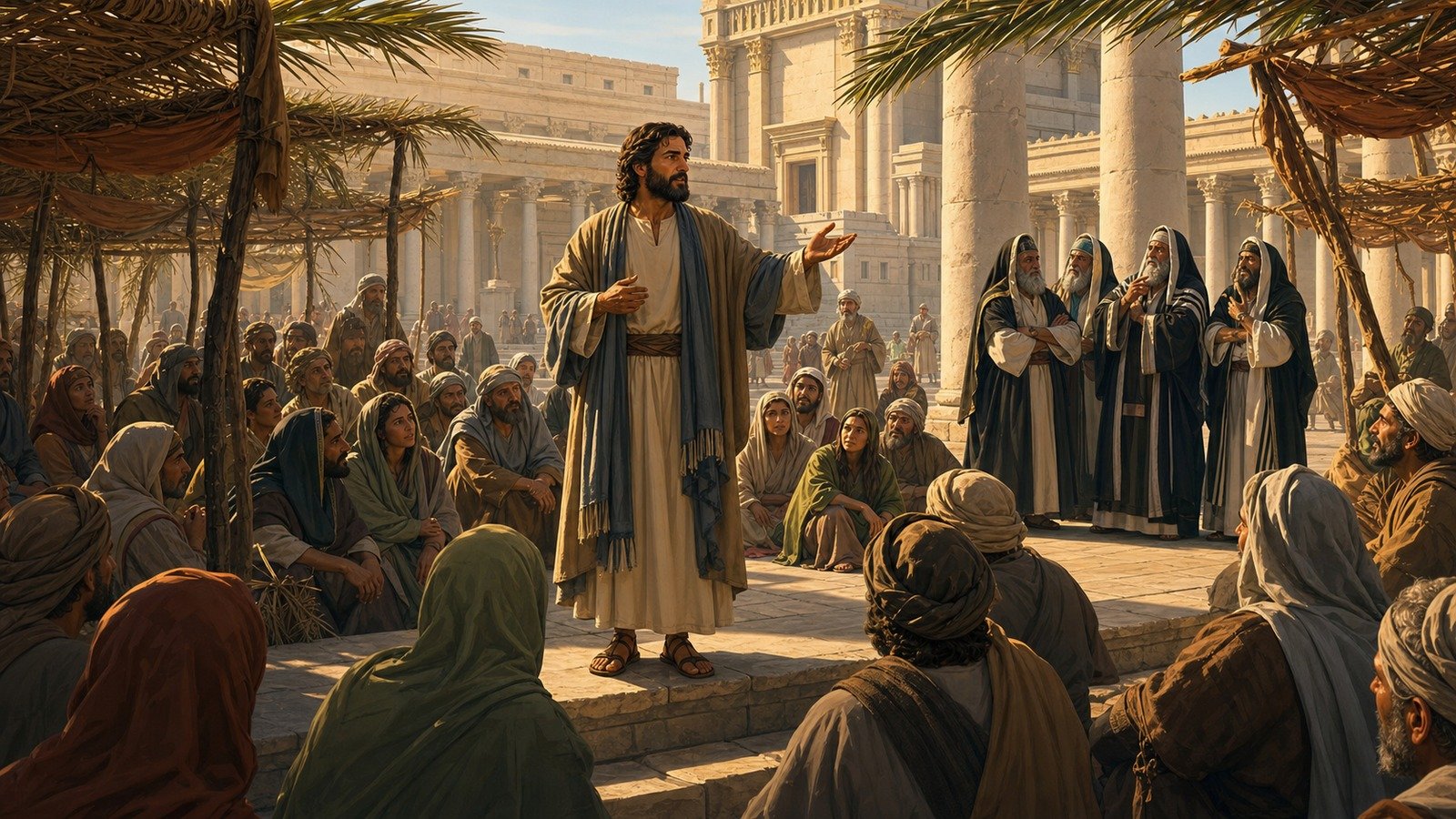
Teaching openly in the Temple during the Feast of Tabernacles despite a plot against his life, Jesus provokes division among the crowds over his identity, some calling him the Prophet or the Messiah, others dismissing the possibility because of his Galilean origin.
Further context
2 min readThe Feast of Tabernacles fell in the autumn, at the end of the harvest, and lasted a week. Families built temporary shelters of branches and lived in them, remembering the years in the wilderness, and it was the most crowded and the most festive of the three pilgrim festivals. Josephus calls it the holiest and greatest.
Two ceremonies shaped the week and both matter for what happens.
Each morning a priest carried water in a golden pitcher from the pool of Siloam up to the temple and poured it out at the altar, a prayer for the rains that had to come if there was to be a harvest at all. And on the first night the court of the women was lit by four enormous lamps whose light, according to those who remembered it, reached every courtyard in Jerusalem, with men dancing with torches until dawn.
Jesus goes up to the festival privately rather than publicly, because the authorities are looking for him and there is already an attempt on his life in the background.
Halfway through the week he begins teaching in the temple courts, and the first reaction is about his education: how did this man get such learning without having been taught? He had not studied under a recognised rabbi, and in a culture where authority came through a chain of teachers that was a real objection.
The crowd is divided all week and the divisions are recorded almost as overheard conversation. Some say he is a good man. Others say he deceives the people. Some say he is the Prophet. Some say the Messiah. Others object that the Messiah comes from Bethlehem, from David's line, and this man comes from Galilee, which is an argument defeated by a fact nobody in the crowd apparently knew.
The chief priests send temple guards to arrest him, and they come back empty-handed. Asked why, they say: no one ever spoke the way this man does.
On the last and greatest day of the festival, standing where the water had been poured out all week, he says in a loud voice: let anyone who is thirsty come to me and drink. Whoever believes in me, rivers of living water will flow from within them.
Nicodemus, who had come to him at night, raises a procedural objection at the council: does our law condemn a man without first hearing him? He is answered with sarcasm about Galilee, and everyone goes home.
The festival lasted eight days and drew the largest crowds of the year after Passover, with pilgrims sleeping in the branch shelters they had built in courtyards, on rooftops and in the streets. Its rituals were also the most theatrical of any Jewish observance, which is what makes his timing deliberate rather than incidental.
His brothers had urged him to go up publicly and show himself to the world, and the remark attached to that advice is one of the bleaker family details in the record: even his own brothers did not believe in him. He goes anyway, quietly, and waits until the week is half over before saying anything.