

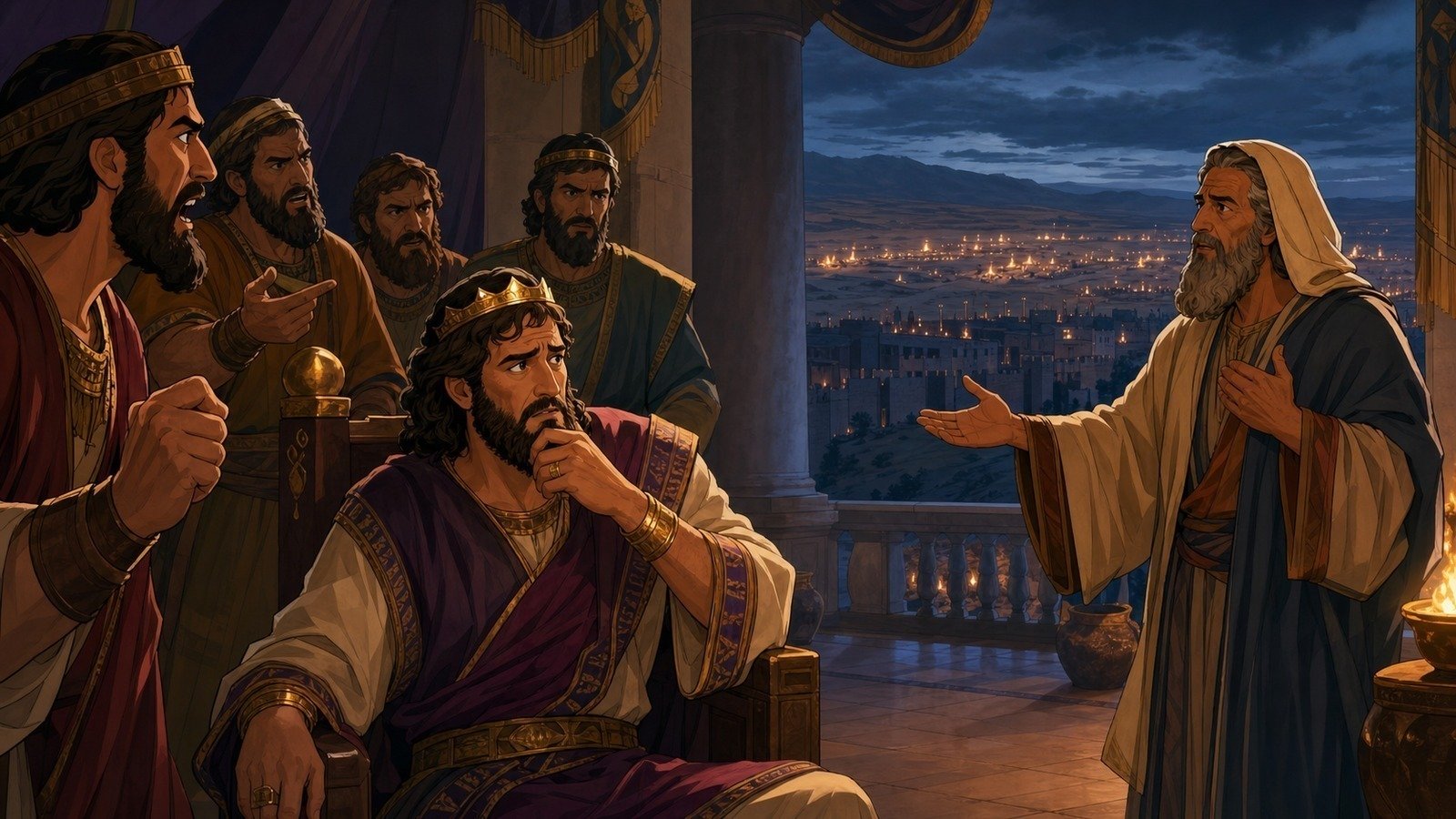
Nebuchadnezzar installs Jehoiachin's uncle Zedekiah as a puppet king; despite Jeremiah's repeated warnings to submit to Babylon, Zedekiah eventually rebels, prompting the final Babylonian siege of Jerusalem.
Further context
3 min readZedekiah is twenty-one, he is Josiah's third son to reign, and he is installed by Nebuchadnezzar after the deportation of his nephew. His name is changed from Mattaniah as part of the appointment, which is the second time in a decade a foreign king has renamed a king of Judah.
Eleven years, and the verdict is that he did evil in the eyes of the LORD, just as Jehoiakim had done.
What the position actually was is more pitiable than the verdict suggests. The country had been stripped twice. The skilled workers, the fighting men, the officials and the previous king were in Babylonia. The temple treasures were gone. The population that remained was, in a phrase used at the time, the poorest people of the land. He is a caretaker installed by an empire, ruling a wrecked province, with a predecessor still alive in Babylon whom many regarded as the legitimate king.
He is also indecisive in a way the surviving material captures precisely. He sends for Jeremiah repeatedly and in secret, asks whether there is any word from the LORD, gets the same answer every time, and does nothing with it. When officials demand the prophet's death he says, he is in your hands; the king can do nothing to oppose you. When the same prophet is sinking in a cistern he authorises a rescue. At one point he asks for a private meeting, swears an oath not to hand him over, and then instructs him to lie to the officials about what they discussed.
The rebellion comes in his ninth year. Egypt under a new pharaoh had been encouraging the small states of the Levant to revolt, and Judah, Edom, Moab, Ammon, Tyre and Sidon had already held a conference about it in his fourth year. Jeremiah had walked into that conference wearing an ox yoke and told them all to submit.
He rebels anyway, and Nebuchadnezzar comes with his whole army and lays siege to Jerusalem in January 588 BC.
The name change is worth a moment. Mattaniah means gift of the LORD; Zedekiah means the LORD is my righteousness. A Babylonian king renaming a Judaean puppet with a Hebrew theological name is not an attempt to convert him but an assertion that even his religious identity is now in imperial gift.
One episode during the siege is worth recording. With the Babylonians at the walls, the king and the people make a covenant to free all Hebrew slaves, which the law had required all along and which nobody had been doing. When an Egyptian force approaches and the siege temporarily lifts, they take them all back.
Zedekiah is the last king to sit on David's throne, and what survives of him is a study in a man who cannot decide anything.
He consults Jeremiah repeatedly and always in secret, sending officials or summoning him to a private entrance, and each time he is told the same thing: surrender to the Babylonians and the city will be spared. Each time he does nothing, and he says why: I am afraid of the Judeans who have gone over to the Babylonians, for the Babylonians may hand me over to them.
When officials demand Jeremiah's death he does not refuse them: he is in your hands. The king can do nothing to oppose you.
He breaks his oath of loyalty to Nebuchadnezzar, which had been sworn in God's name, and Ezekiel treats that broken oath as the specific ground of judgement on him.