

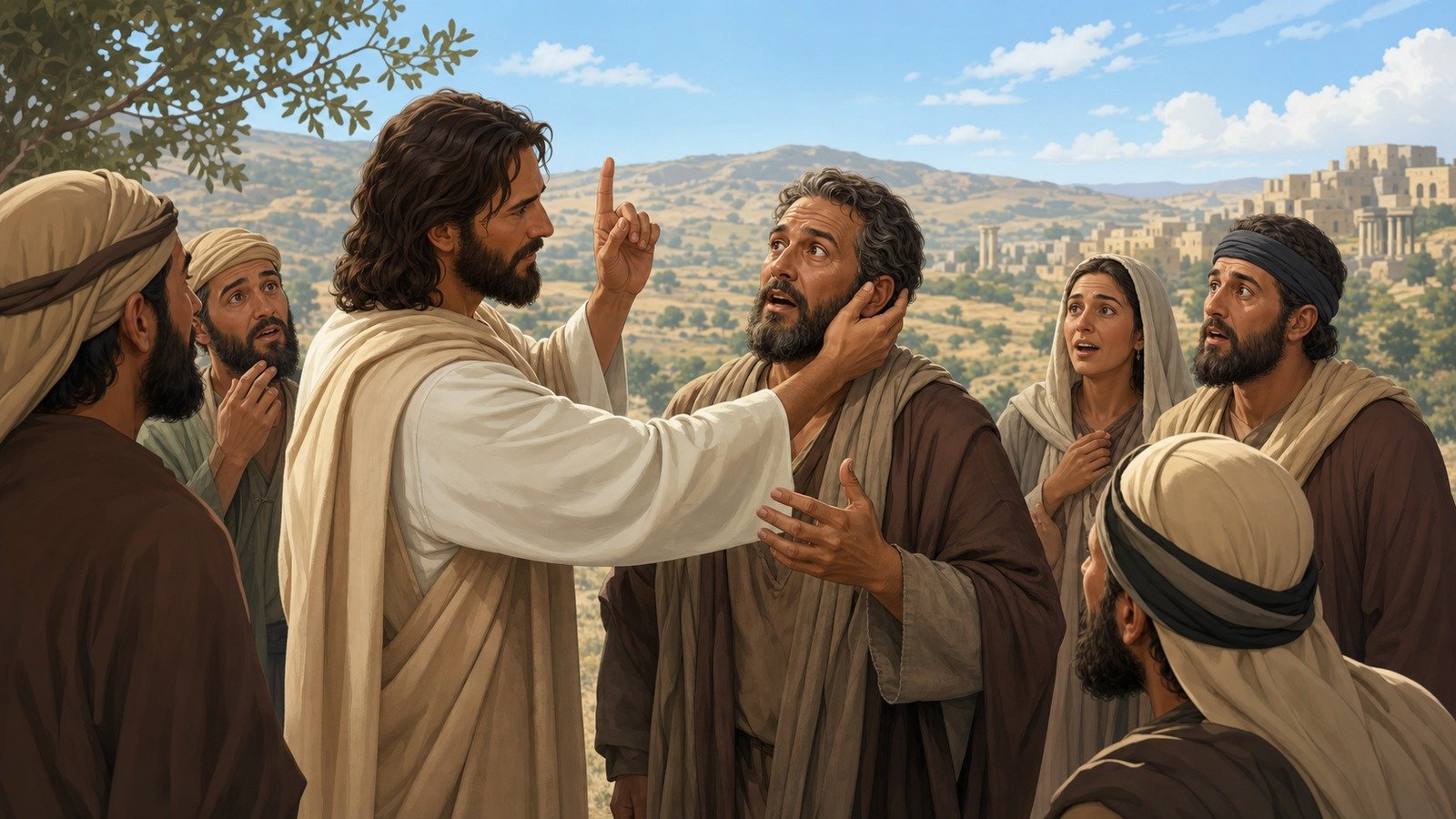
Jesus heals a deaf and mute man in the Decapolis region using physical touch and a spoken command, "Ephphatha" ("Be opened"), and the crowd is "overwhelmed with amazement."
Further context
3 min readJesus returns from the coast and comes to the Sea of Galilee through the region of the Decapolis, a league of ten Greek cities east and south-east of the lake, founded or refounded after Alexander's conquests and later organised under Roman authority. Their populations were largely Gentile, their coinage Greek, their public buildings theatres and colonnaded streets. Gerasa and Gadara and Scythopolis were among them, and their ruins are substantial.
This is the district where the man delivered from a legion of spirits had been sent home to tell what had happened to him, and the reception now is different from the earlier request that he leave.
Some people bring a man who is deaf and can hardly talk, and beg him to place his hand on him. The Greek word for the speech difficulty is rare, and its only other appearance in the Greek Old Testament is in a promise about the wilderness blooming, where the tongue of the mute shouts for joy.
What he does next is unlike almost anything else recorded of him. He takes the man aside, away from the crowd, puts his fingers into the man's ears, spits, and touches the man's tongue. Then he looks up to heaven, sighs deeply, and says to him, Ephphatha.
Every part of that is worth attention.
Taking him away from the crowd removes an audience from a man who could not hear what was being said about him. The gestures are physical signs, communicating by touch to someone who cannot receive instructions any other way: this is about your ears, and this is about your tongue. Saliva was widely credited with healing properties in the ancient world, and Roman writers discuss it seriously, so the action would have read as therapeutic rather than strange.
The deep sigh is a groan, and the same Greek root is used elsewhere of the whole creation groaning under decay.
Ephphatha is Aramaic, the everyday language of Galilee, preserved in Greek letters with its translation attached: be opened. Mark keeps a handful of these Aramaic words, and they cluster around moments of great intensity.
At once the man's ears were opened, his tongue was loosened and he began to speak plainly. The Greek says the bond of his tongue was released.
Then the usual instruction to tell no one, and the usual failure. The more he did so, the more they kept talking about it. People were overwhelmed with amazement, and said, he has done everything well. He even makes the deaf hear and the mute speak.
Those last words are close to the wording of an old promise about what would happen when God came to save his people, and a Gentile crowd says them without apparently knowing.
Why a man in Gentile territory was told to keep quiet about it, when the same district had earlier been given a man with instructions to tell everyone what had happened to him, is one of the small puzzles of the Galilean ministry. The likeliest explanation is the same one operating everywhere else: a reputation as a healer drew crowds that made teaching impossible and made the authorities nervous, and it fixed a category on him that he spent two years trying to escape.
The instruction fails here as it fails everywhere. The more he ordered them not to, the more they kept talking about it.