

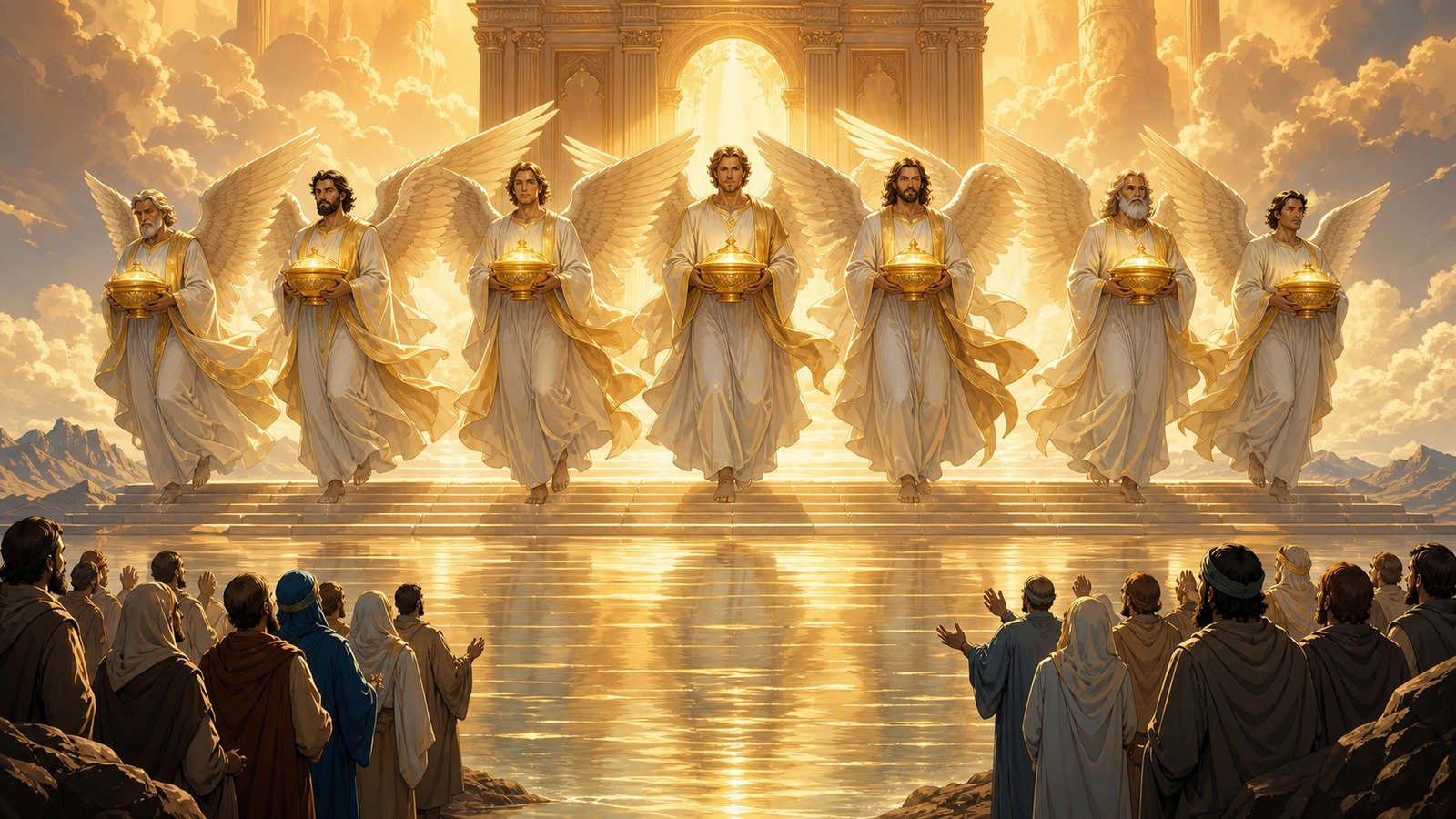
John sees seven angels given the seven last plagues, "last, because with them God's wrath is completed," while those who had triumphed over the beast sing the song of Moses and the song of the Lamb beside a sea of glass.
Further context
3 min readJohn sees another great and marvellous sign in heaven: seven angels with the seven last plagues, last because with them God's wrath is completed.
That word completed is the structural point. The seals, the trumpets and now the bowls each run in sevens, and the bowls are the only sequence described as finishing anything.
Before they are poured out, there is a scene beside what looks like a sea of glass glowing with fire, and standing beside it are those who had been victorious over the beast and its image and over the number of its name.
Being victorious in this book does not mean surviving. The people standing there are the ones who were killed for refusing, and the previous chapter has just pronounced a blessing on them.
They hold harps given them by God, and they sing two songs at once: the song of God's servant Moses and of the Lamb.
The song of Moses is the one sung on the far shore of the Red Sea after the Egyptian army drowned, the oldest surviving piece of Hebrew poetry and the first song in the Bible. Putting it in the mouths of people who have just come through the beast makes the claim as directly as possible: this is the same deliverance.
The words they sing are almost entirely quotations from the psalms and the prophets, and they are about the nations rather than about Israel: all nations will come and worship before you, for your righteous acts have been revealed.
Then the temple in heaven, the tabernacle of the covenant law, is opened, and the seven angels come out with the plagues, dressed in clean, shining linen and wearing golden sashes round their chests, which is priestly clothing.
One of the four living creatures gives them seven golden bowls filled with the wrath of God. The vessel named is the shallow dish used in temple worship for pouring out drink offerings and for holding incense, which is what makes the image so uncomfortable: the same bowls that carried the prayers of God's people are now carrying something else.
The temple fills with smoke, and no one can enter it until the seven plagues are completed.
The sea of glass appeared earlier in front of the throne, calm and clear; here it is mixed with fire, and the people standing beside it are those who came through the beast. The Israelites stood beside a sea too.
The song they sing is called both the song of Moses and the song of the Lamb, and treating the two as one song rather than two is the whole claim of the passage.
The linen and golden sashes worn by the angels are described in the same words used of the figure John saw in the opening vision, which means the ones carrying out the plagues are dressed like the one who sent them.
The seven bowls, the seven trumpets and the seven seals are the three great sequences of the book, and only this one is introduced with a statement that it completes anything.
Being victorious over the number of the beast is an odd phrase, and it means refusing to be counted among those who carried it, at the cost of not being able to trade.
The smoke filling the temple so that no one can enter repeats what happened when the tabernacle was finished and when Solomon's temple was dedicated, and in both of those the priests had to stop ministering because the presence was too much for the building.