

Twelve spies scout Canaan; ten report the inhabitants are too strong to defeat, only Joshua and Caleb urge trust in God. The people side with the majority report and refuse to enter the land, so God condemns that entire generation to die in the wilderness over the next 38 years.
Further context
2 min readTwelve men, one leader from each tribe, are sent to scout Canaan with instructions that read like a military assessment. See what the land is like, whether the people are strong or weak, few or many, whether the towns are unwalled or fortified, whether the soil is fertile, and bring back some of the fruit. They travel from the Desert of Zin as far north as Lebo Hamath, over forty days.
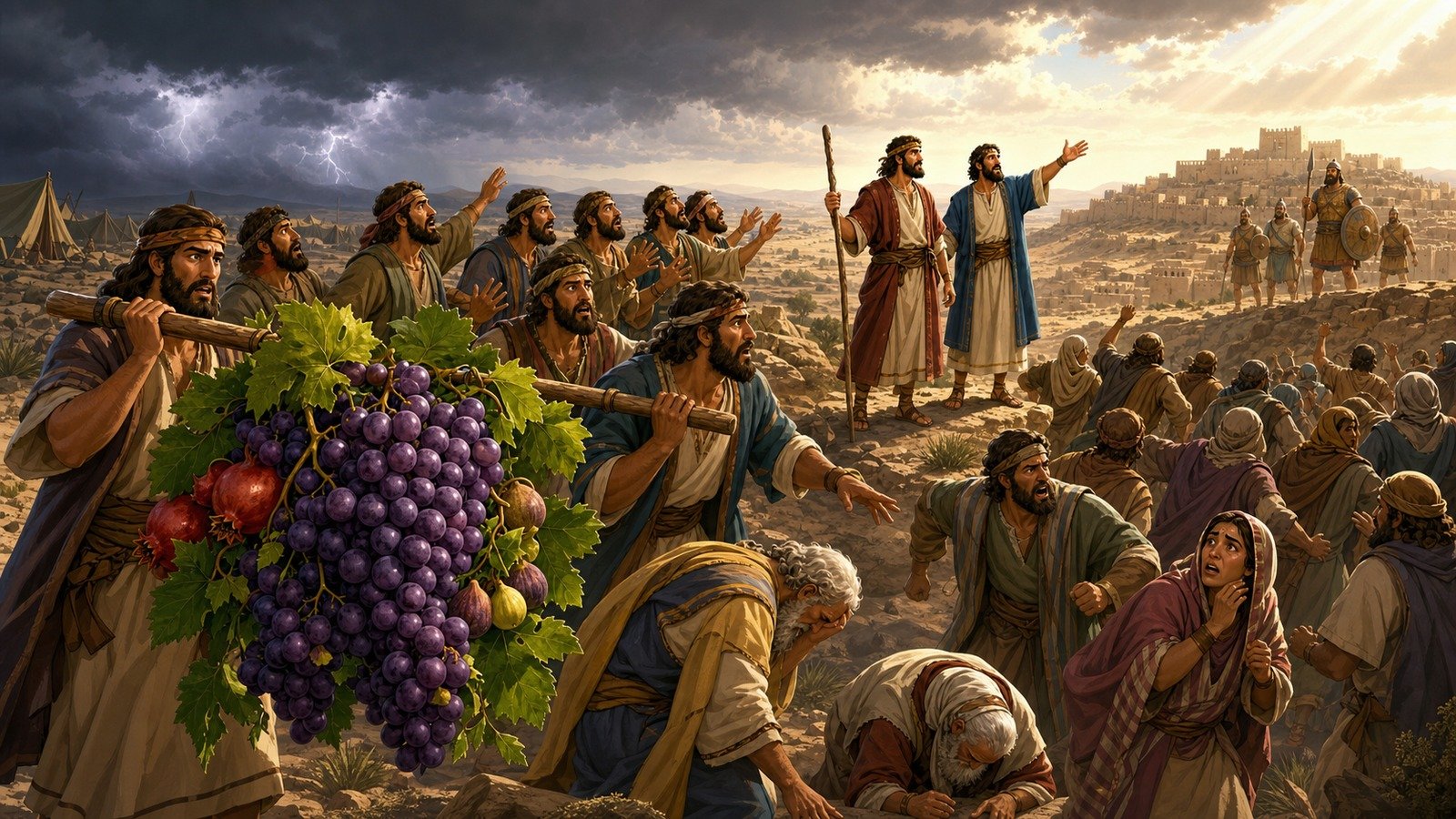
They come back carrying a single cluster of grapes on a pole between two men, along with pomegranates and figs, and on the facts they all agree. The land does flow with milk and honey, and here is its fruit. Then ten of them add the assessment that decides everything: the people who live there are powerful, the cities are fortified and very large, and the descendants of Anak are there.
Caleb quiets the crowd and says they should go up and take possession, because they can certainly do it. The other ten escalate, saying the land devours those living in it and that they seemed like grasshoppers in their own eyes and looked the same to the giants.
The response is total. The whole community weeps aloud all night and says to each other that they should have died in Egypt or in the wilderness, and asks why they are being brought to this land to fall by the sword. Then the sentence that has been building since the first complaint at the sea: we should choose a leader and go back to Egypt.
Joshua and Caleb tear their clothes and argue that the land is exceedingly good and its people defenceless, and the assembly talks about stoning them.
Moses intercedes as he did after the golden calf, and with the same argument. The Egyptians will hear of it. The nations will say that God was unable to bring these people into the land he promised, so he slaughtered them in the wilderness. He then quotes back the description of God given at Sinai, about being slow to anger and abounding in love and forgiving sin, and asks for forgiveness on that basis.
Forgiveness is granted and the consequence stands. Everyone counted in the census, aged twenty and over, will die in the wilderness, with two exceptions. The children they said would be taken as plunder will be brought into the land. The period is set at forty years, one year for each of the forty days spent scouting.
The ten who brought the bad report die of a plague. The people then change their minds, go up into the hill country without Moses and without the ark, and are beaten back.
A psalm and a New Testament letter both treat this as the definitive failure of that generation, and the diagnosis given is one line: they were not able to enter because of their unbelief. What was refused was not a battle but a border, by people who had watched an empire collapse behind them a year and a half earlier.