

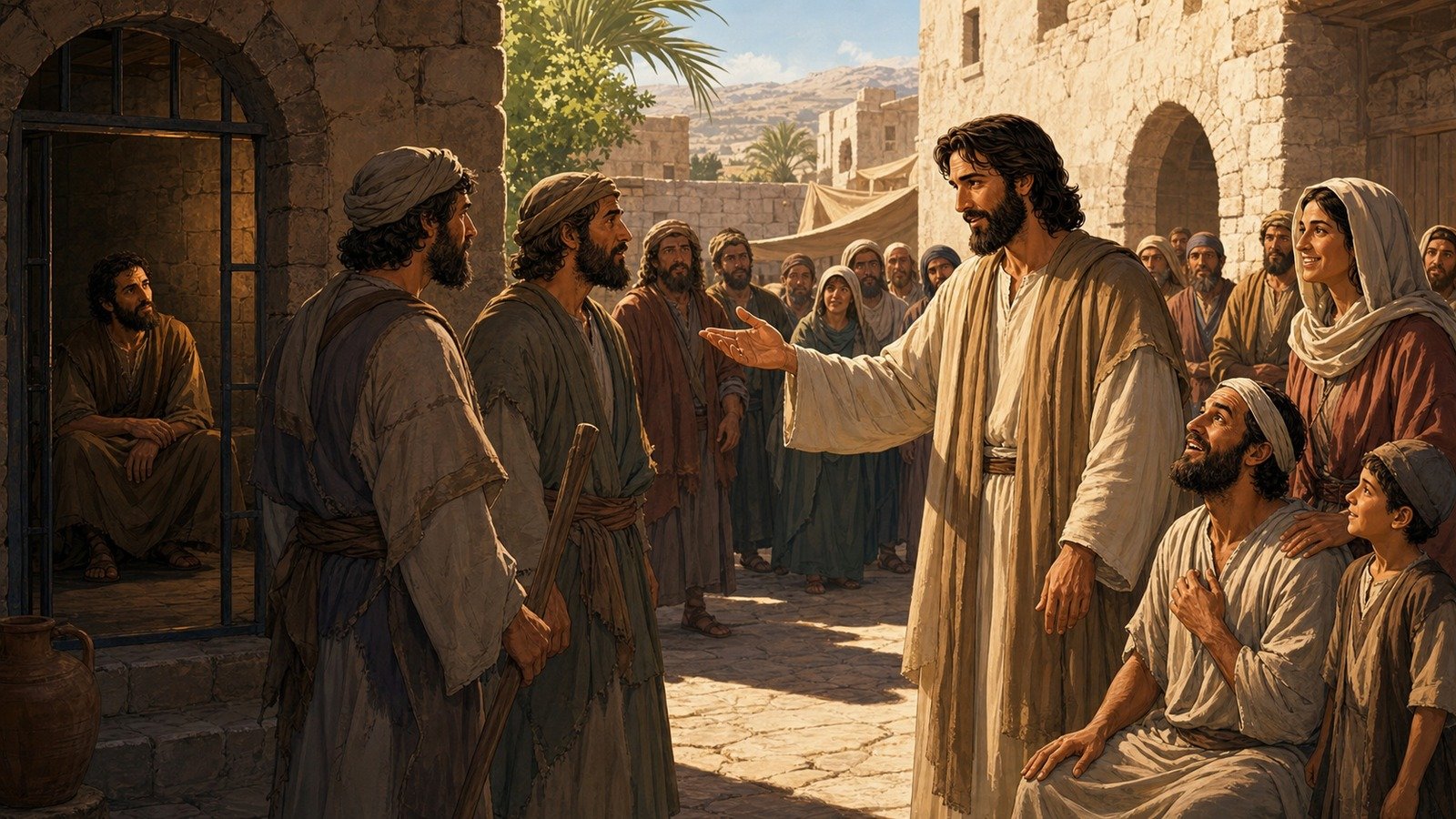
Imprisoned by Herod Antipas, John sends disciples to ask whether Jesus really is "the one who is to come." Jesus points to his miracles as evidence, then publicly praises John as the greatest of the prophets while noting even he is outranked by anyone in the coming kingdom.
Further context
3 min readJohn the Baptist is in prison at Machaerus, a fortress east of the Dead Sea, arrested by Antipas for saying publicly that the ruler's marriage to his brother's former wife was unlawful.
The question he sends by two of his disciples is the most human moment in his story: are you the one who is to come, or should we expect someone else?
That is the man who had pointed him out at the Jordan and called him the Lamb of God. What has happened in between is that he has been in a cell for months while the person he identified is having dinner with tax collectors in Galilee and not doing any of the things he had preached about. His own message had been full of axes at the root of trees and winnowing forks and burning chaff, and none of that has arrived.
The answer sent back is not a yes. It is a list of things happening, assembled out of Isaiah: the blind receive sight, the lame walk, those with leprosy are cleansed, the deaf hear, the dead are raised, and the good news is proclaimed to the poor. Anyone who knew those passages would recognise them, and would also notice what has been left out, which is the release of prisoners. That clause is in the same prophecies and is not quoted to a man in prison.
Then a sentence addressed to him personally, and it reads as an acknowledgement rather than a rebuke: blessed is anyone who does not stumble on account of me.
When the messengers leave, the crowd is addressed about him and the tone changes completely. What did you go out into the wilderness to see? A reed swayed by the wind? A man dressed in fine clothes? No, those who wear fine clothes are in kings' palaces. A prophet? Yes, and more than a prophet.
Then the assessment: among those born of women there has not risen anyone greater than John the Baptist. Followed immediately by a sentence that undercuts every hierarchy: yet whoever is least in the kingdom of heaven is greater than he.
The last thing said about him is a comment about the crowds: all the people, even the tax collectors, when they heard Jesus' words, acknowledged that God's way was right, because they had been baptised by John. But the Pharisees and the experts in the law rejected God's purpose for themselves, because they had not been baptised by him. The people who had least to lose had gone into the river; the people with a position had not.
He is never released. Antipas has him beheaded on the strength of a promise made at a birthday party.
The question John sends is the most surprising thing he says: are you the one who is to come, or should we expect someone else?
The man who had identified him at the Jordan, and who had been preaching about an axe at the root of the trees and a winnowing fork clearing the threshing floor, is asking from a cell whether he had the right person.
Nothing in the reply is a rebuke. It is a list of what is happening, assembled almost entirely out of phrases from Isaiah: the blind receive sight, the lame walk, those with leprosy are cleansed, the deaf hear, the dead are raised, and the good news is proclaimed to the poor.
What is left out of those quotations is the release of prisoners, and John was one.
The last clause is addressed to him personally: blessed is anyone who does not stumble on account of me.
Then, to the crowd, the highest assessment given to anyone: among those born of women there has not risen anyone greater than John the Baptist.