

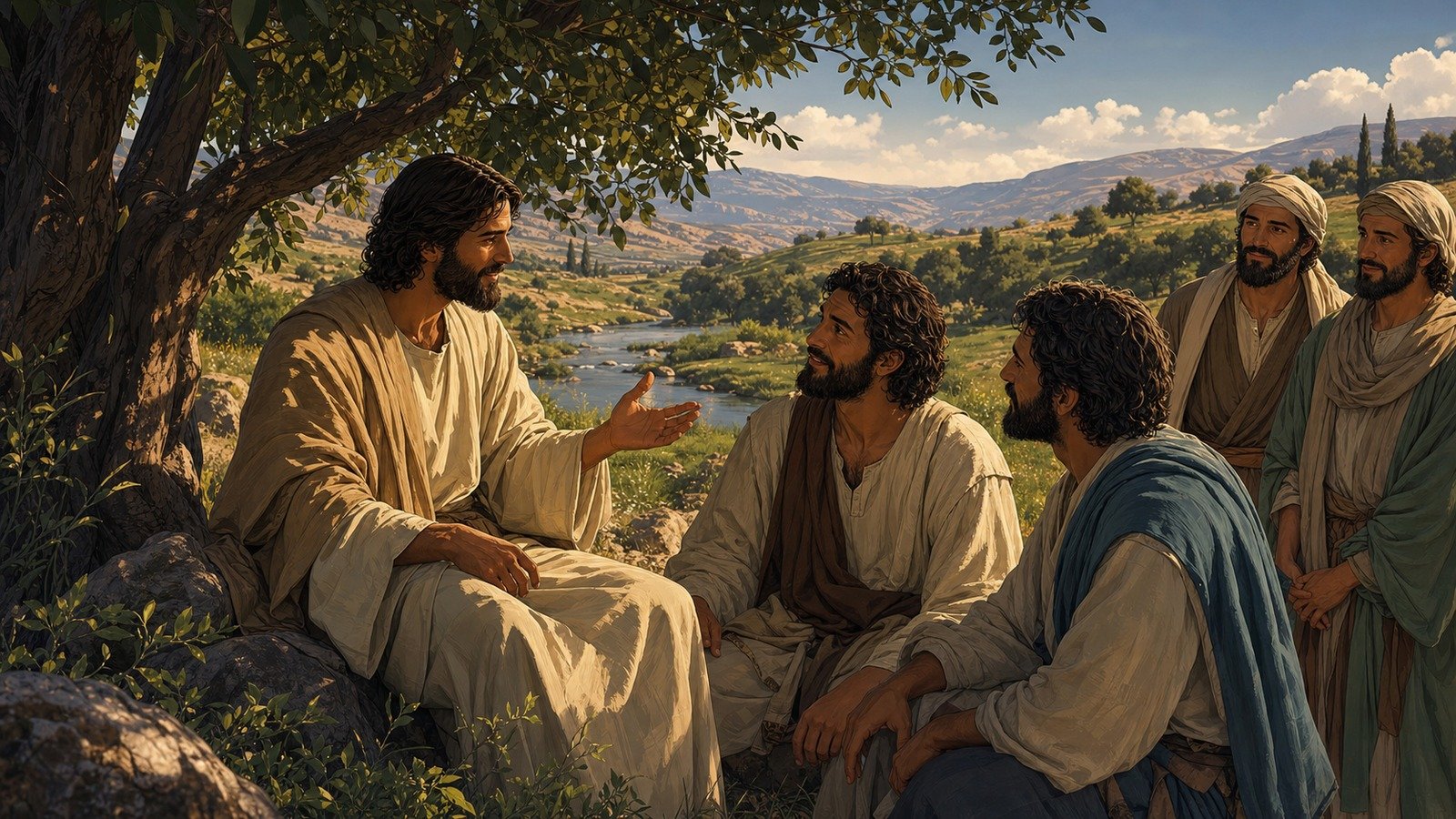
Two of John the Baptist's disciples, including Andrew, follow Jesus after John identifies him as "the Lamb of God"; Andrew brings his brother Simon Peter, and Philip and Nathanael are called soon after, an initial, informal following prior to the later formal call by the Sea of Galilee.
Further context
3 min readThe earliest following forms around John rather than around Jesus, and it forms in Judea, months before anything happens in Galilee.
John is standing with two of his own disciples when Jesus walks past, and he says, look, the Lamb of God. That phrase would have carried several associations at once: the Passover lamb, the lamb led to the slaughter in Isaiah, and the lamb offered every morning and evening at the temple. The two disciples leave him and follow.
The first words Jesus speaks in that Gospel are a question put to them over his shoulder: what do you want? Their answer is evasive and slightly awkward, which is how people actually behave: Rabbi, where are you staying? He says, come and you will see. They spend the day with him, and one of the two remembers the hour, about four in the afternoon.
One of them is Andrew. The first thing he does is find his own brother Simon and tell him they have found the Messiah, and bring him along. Jesus looks at him and renames him on the spot, Cephas in Aramaic, which translates as Peter, meaning rock. Renaming a man at the first meeting, before he has done anything, is the sort of thing that either founds a relationship or ends one.
The following day Philip is called with two words, follow me, and Philip immediately goes to find Nathanael, which is the same pattern again: everyone who is called goes and fetches somebody else.
Nathanael's reaction is the most quotable line in the sequence. Told they have found the one Moses wrote about, Jesus of Nazareth, he says, can anything good come from there? Philip does not argue and answers with the same phrase Jesus had used: come and see.
What follows is a short exchange with a great deal in it. Jesus says, here truly is an Israelite in whom there is no deceit, which is a compliment with a barb, since Israel was the name given to Jacob, whose whole early career was deceit. Nathanael asks how he knows him, and is told, I saw you while you were still under the fig tree before Philip called you. That is enough, and his answer is a confession: Rabbi, you are the Son of God; you are the king of Israel.
Andrew appears three times in that Gospel and on each occasion he is bringing somebody to Jesus: his brother here, a boy with five loaves later, and a group of Greeks who ask to see him. Nothing else is recorded of him at all, and the pattern is consistent enough to be the point.
The reply promises more: you will see heaven open, and the angels of God ascending and descending on the Son of Man. That is Jacob's staircase at Bethel, with a person where the ladder was.
The first followers come from John's circle rather than from Galilee directly. Two of his disciples are standing with him when he says, look, the Lamb of God, and they follow Jesus instead. One of them is Andrew.
The exchange that follows is almost inconsequential and it is preserved word for word. He turns and asks what they want. They ask where he is staying. He says, come and you will see. And the time is recorded: it was about four in the afternoon.
Andrew fetches his brother Simon, and the first thing said to him is a new name: you will be called Cephas, which is Aramaic for rock.
Philip fetches Nathanael, whose reaction to Nazareth is the most quoted line in the passage: can anything good come from there? Philip does not argue with him. He says, come and see.
Nathanael's own scepticism is what he is then commended for: here truly is an Israelite in whom there is no deceit.