

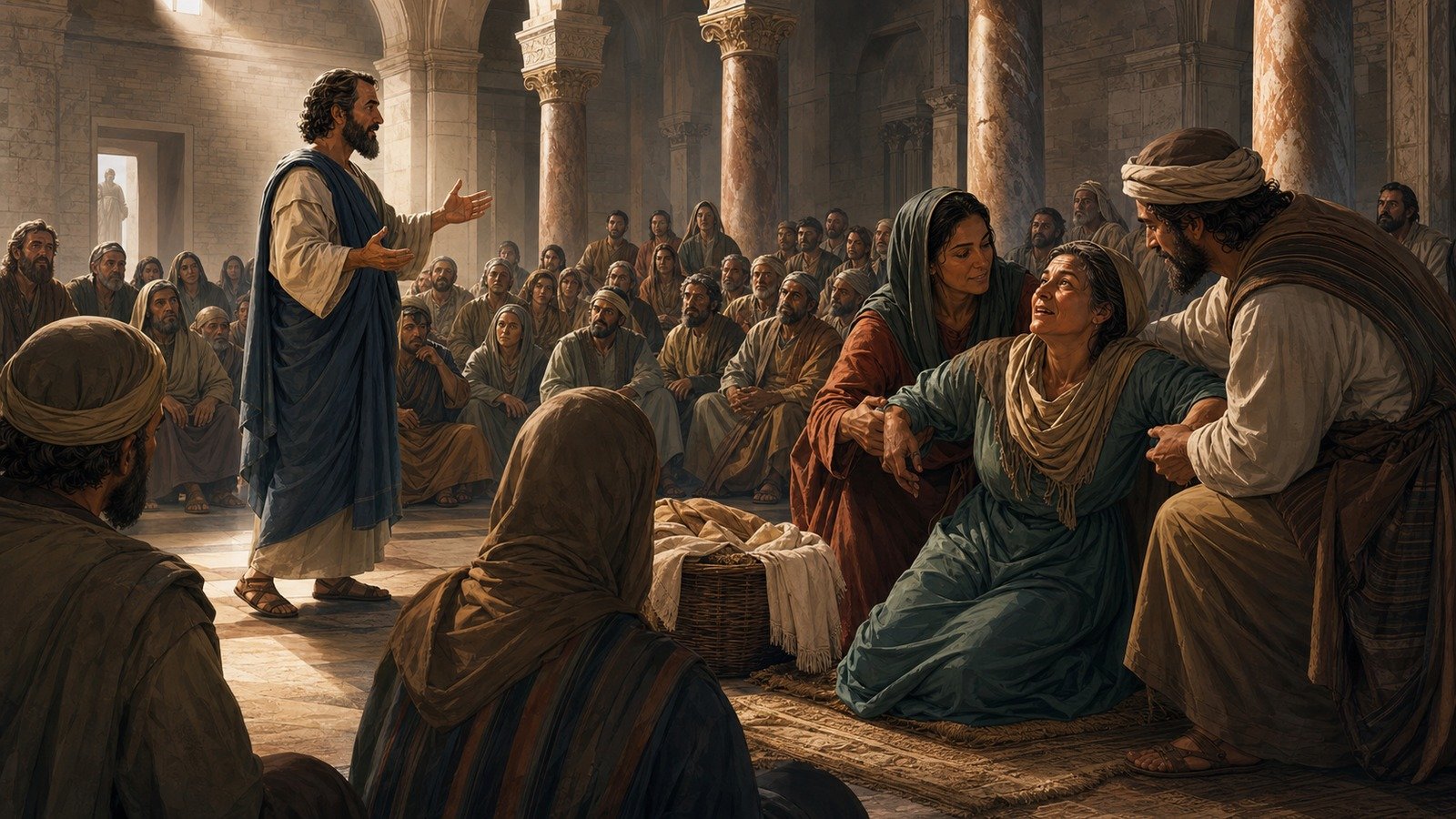
Paul teaches daily at Ephesus for roughly two years, reasoning in a lecture hall after being pushed out of the synagogue, while extraordinary healings occur through items that had merely touched him, a period Luke says spread the gospel across the entire province.
Further context
2 min readEphesus was the largest city in the province of Asia, with a population usually estimated between two and four hundred thousand, a harbour connected to the Aegean by a channel that constantly silted up, and a theatre cut into the hillside seating around twenty-four thousand. Its ruins are among the most complete of any Roman city.
Its importance rested on the temple of Artemis, one of the seven wonders of the ancient world, roughly four times the size of the Parthenon, rebuilt after an arsonist destroyed it in the fourth century BC. Pilgrims came from across the empire; the temple functioned as a bank; and the city's identity, festivals and economy were built around it.
Ephesus was also the ancient world's headquarters for magic. Written charms of a particular kind were known throughout the Greek world as Ephesian letters, and papyri of spells and binding formulas survive in quantity.
Into that city Paul spends about three years, the longest stay anywhere in his recorded work, teaching daily in a hired lecture hall.
God did extraordinary miracles through Paul, so that even handkerchiefs and aprons that had touched him were taken to the sick, and their illnesses were cured and the evil spirits left them.
The wording is careful and slightly distancing: the miracles are attributed to God and described as extraordinary, which is the writer's own term and implies they were not the usual pattern. The two items named are the sweat-cloth and the work-apron of a man labouring at a bench, which is to say the objects a leatherworker would have to hand.
What that passage established later is a large subject. The veneration of relics in the medieval church rested partly on it, and the Reformers attacked the practice partly by arguing about what it does and does not authorise.
Writing to Corinth from this city, Paul says a great door for effective work has opened to me, and there are many who oppose me. He also mentions fighting wild beasts at Ephesus, which is probably a figure of speech, and speaks of being under great pressure, far beyond his ability to endure, so that he despaired of life itself.
Three years is also long enough for the congregations at Colossae, Laodicea and elsewhere in the province to be founded by others working out from there.
The temple of Artemis was destroyed and rebuilt several times and finally abandoned; a single reassembled column stands on the site today in a marshy field.
The letter to the Ephesians, three of the letters written from prison, and the message to the church at Ephesus in Revelation are all addressed to this city or its region. Nowhere else in the New Testament receives that much attention, which reflects how central it became.
Artemis of the Ephesians was not the huntress of Greek mythology but a local mother goddess assimilated to her, represented in surviving statues with rows of ovoid objects across the chest whose identity is still argued over.
Three years in one city, against a few weeks in most others, is the exception that shaped the whole province, and Paul later writes to Corinth from Ephesus about how much of his energy it was taking.