

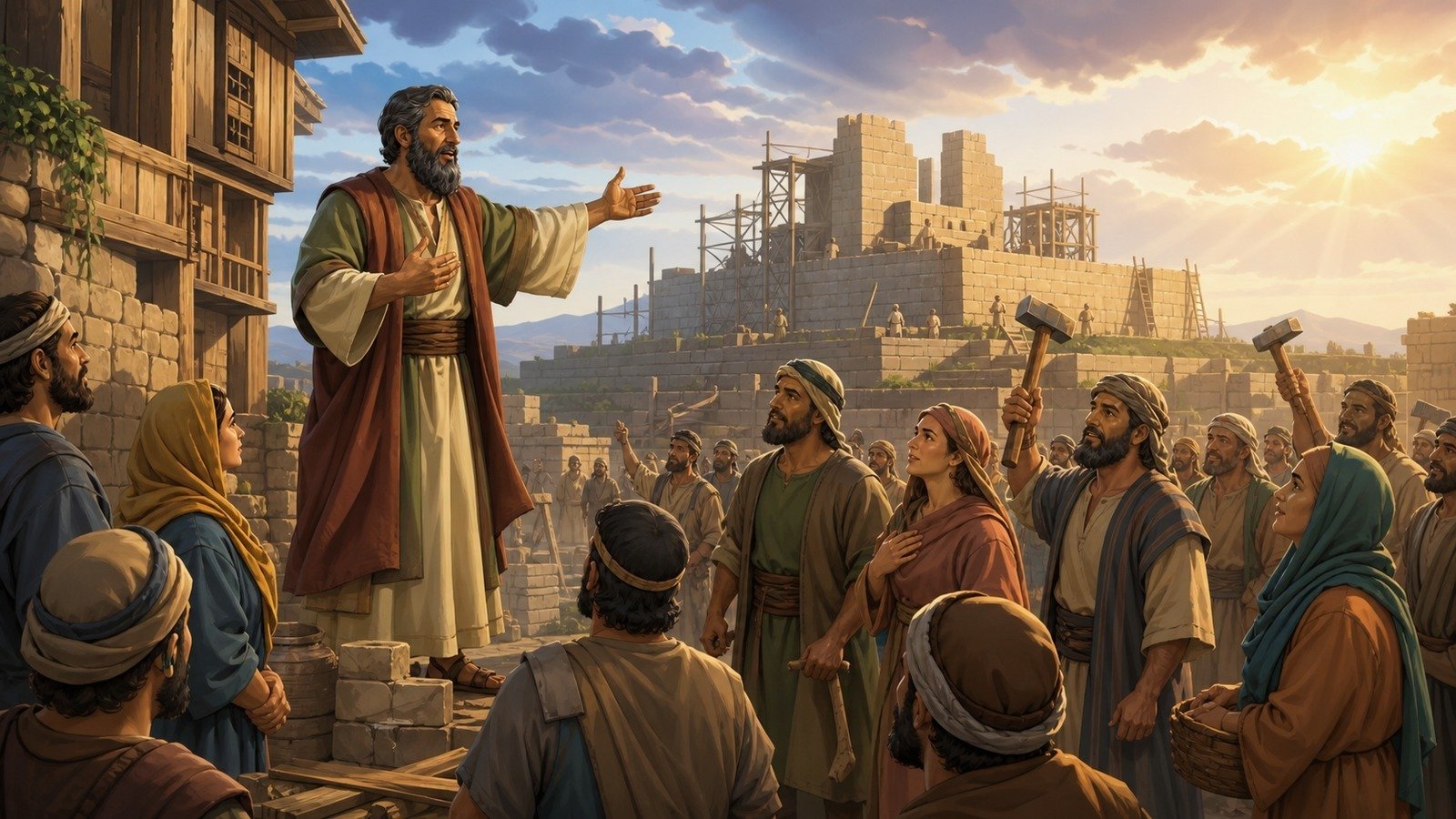
Haggai rebukes the returned community for prioritising their own houses over God's while the Temple lies unfinished, and promises this second Temple's future glory will exceed the first, spurring work to resume.
Further context
3 min readFive dated messages over about four months in 520 BC, and every one of them carries a day and a month and the regnal year of Darius, which makes this the most precisely dated prophetic material in the Hebrew scriptures.
The situation he addresses is a project abandoned sixteen years earlier and a population that has stopped thinking about it. The excuse he quotes is not defiance: these people say the time has not yet come to build the LORD's house.
His reply is a question about priorities and it lands on the domestic arrangements: is it a time for you yourselves to be living in your panelled houses while this house remains a ruin? Panelled means finished with timber, which is what the cedar shipments had been ordered for.
Then he tells them to look at their own economy. You have planted much but harvested little. You eat but never have enough. You drink but never have your fill. You put on clothes but are not warm. You earn wages only to put them in a purse with holes in it. And the diagnosis: you expected much, but see, it turned out to be little. What you brought home, I blew away. Why? Because of my house, which remains a ruin, while each of you is busy with your own house.
The response is unusual for a prophetic book and worth stating because it almost never happens. They listen. Twenty-three days after the first message, Zerubbabel, Joshua and the whole remnant of the people obey the voice of the LORD and come and begin work on the house.
The second message, a month later, addresses the comparison with the old building directly, asking who is left who saw it in its former glory and how this one looks by comparison, and answering it: be strong, all you people of the land, and work, for I am with you. The glory of this present house will be greater than the glory of the former house, and in this place I will grant peace.
The third is a technical exchange with the priests about ritual law, used to make a point about how contamination and holiness behave differently, one spreading by contact and the other not.
The last is addressed to Zerubbabel personally and uses the image of a signet ring, which is how a king authenticated documents and which had been used a century earlier of his own ancestor Jehoiachin, when Jeremiah said that even if he were a signet ring on God's right hand he would be pulled off. The image is now reversed and given back to his grandson.
The economic diagnosis he offers is not superstition about crop yields. What he is describing is a community that had reordered its priorities during sixteen years of discouragement and had stopped noticing, and the repeated instruction is to give careful thought to your ways, which appears four times.
The building is finished four years later.
Haggai's book is four messages delivered over about four months in 520 BC, and every one of them is dated to the day, which makes it the most precisely dated prophetic material in the Old Testament.
The argument of the first is economic. Is it a time for you yourselves to be living in your panelled houses, while this house remains a ruin? Then a diagnosis of the harvests: you have planted much but harvested little. You eat but never have enough. You drink but never have your fill. You earn wages only to put them in a purse with holes in it.
Panelled houses is a pointed phrase, since panelling was what Solomon had done to the temple.
The response is recorded twenty-three days later, and it is the only case in the prophetic books where an audience does what it is told immediately and without argument.