

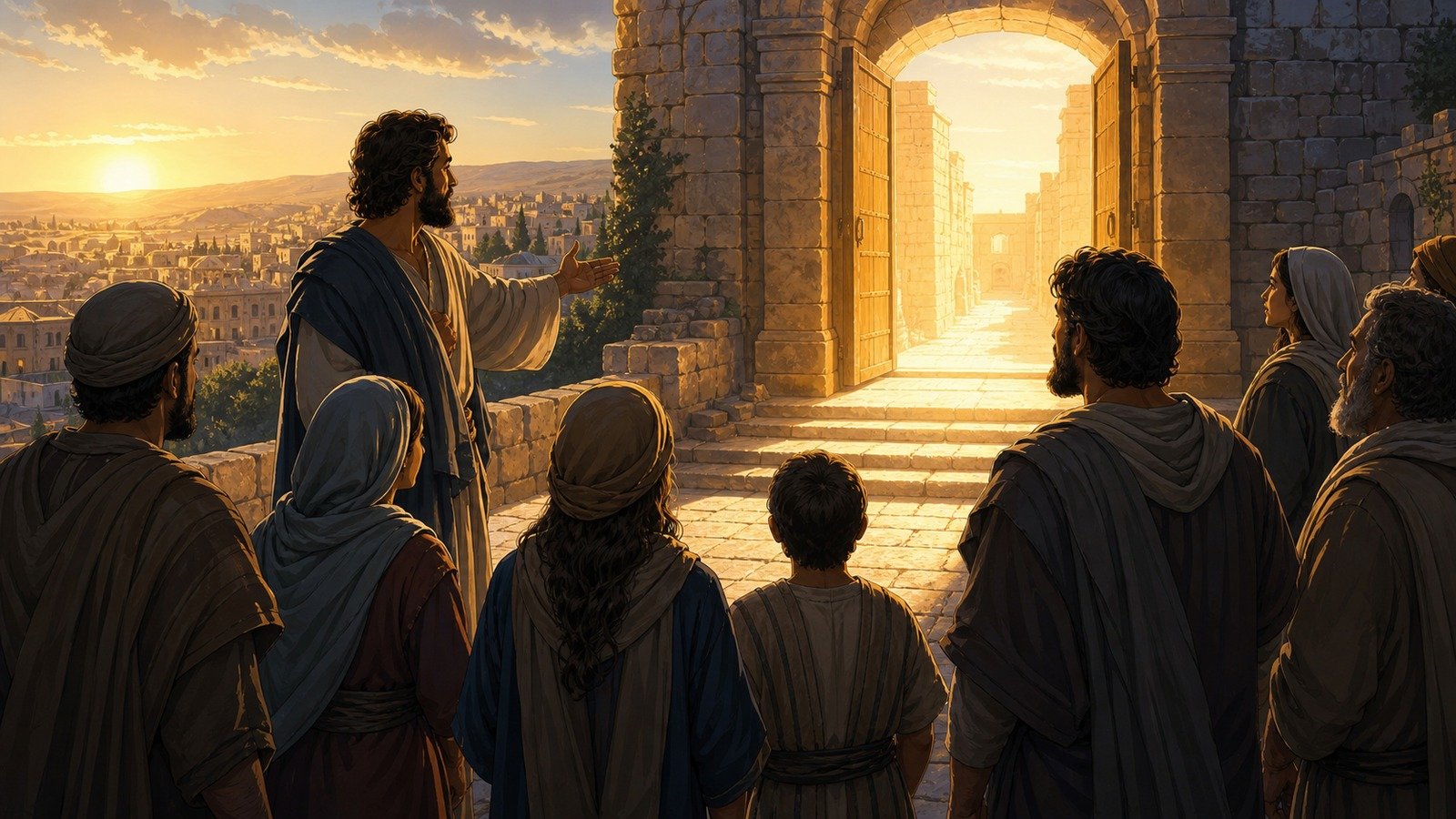
Christ commends the Philadelphian church, the only one of the seven to receive no rebuke, for keeping his word despite having "little strength," and promises to set before it an open door no one can shut.
Further context
2 min readPhiladelphia was the youngest of the seven cities, founded in the second century BC and named after the brotherly affection of a king of Pergamum for his brother. It sat on a fertile volcanic plateau at the edge of a district known as the burnt land, and it was on a major road, which made it a deliberate outpost for spreading Greek culture into the interior.
It also sat on a fault line. The great earthquake of AD 17 destroyed it along with Sardis and several other cities, and tremors continued for years afterwards, so that many of its inhabitants lived outside the walls in huts. Tiberius remitted its taxes and helped rebuild it, and in gratitude the city took a new name in his honour, and later another in honour of Vespasian.
It is the second of the two congregations that receive no criticism.
I know that you have little strength, yet you have kept my word and have not denied my name.
The promises made to it are unusually concrete and they read against the city's situation point by point.
See, I have placed before you an open door that no one can shut. For a town whose function was to be a gateway into the interior, that image is the town's own job description.
I will make those who are of the synagogue of Satan come and fall down at your feet and acknowledge that I have loved you. The same difficult phrase used at Smyrna appears here, and the same caution applies to it.
Since you have kept my command to endure patiently, I will also keep you from the hour of trial that is going to come on the whole world. That sentence is one of the main texts in the modern argument about whether believers pass through a final period of tribulation or are removed before it, and the Greek preposition can be read either way.
The one who is victorious I will make a pillar in the temple of my God. Never again will they leave it. In a city where people slept outside the walls because the buildings kept falling down, a promise of a pillar that stays put is not an abstraction.
I will write on them the name of my God and the name of the city of my God. A town that had changed its name twice to please emperors is offered a permanent one.
Philadelphia held out longer than any of the seven. It was the last Byzantine city in Asia Minor to fall to the Turks, in 1390, and a Christian community survived there into the twentieth century.
Whether the message's promise of an open door refers to opportunity, to access, or to the city's role as a gateway has been read all three ways, and the image works in each.
Philadelphia had been founded deliberately to spread Greek language and culture eastward, so a congregation there was living in a town whose original purpose was cultural transmission.