

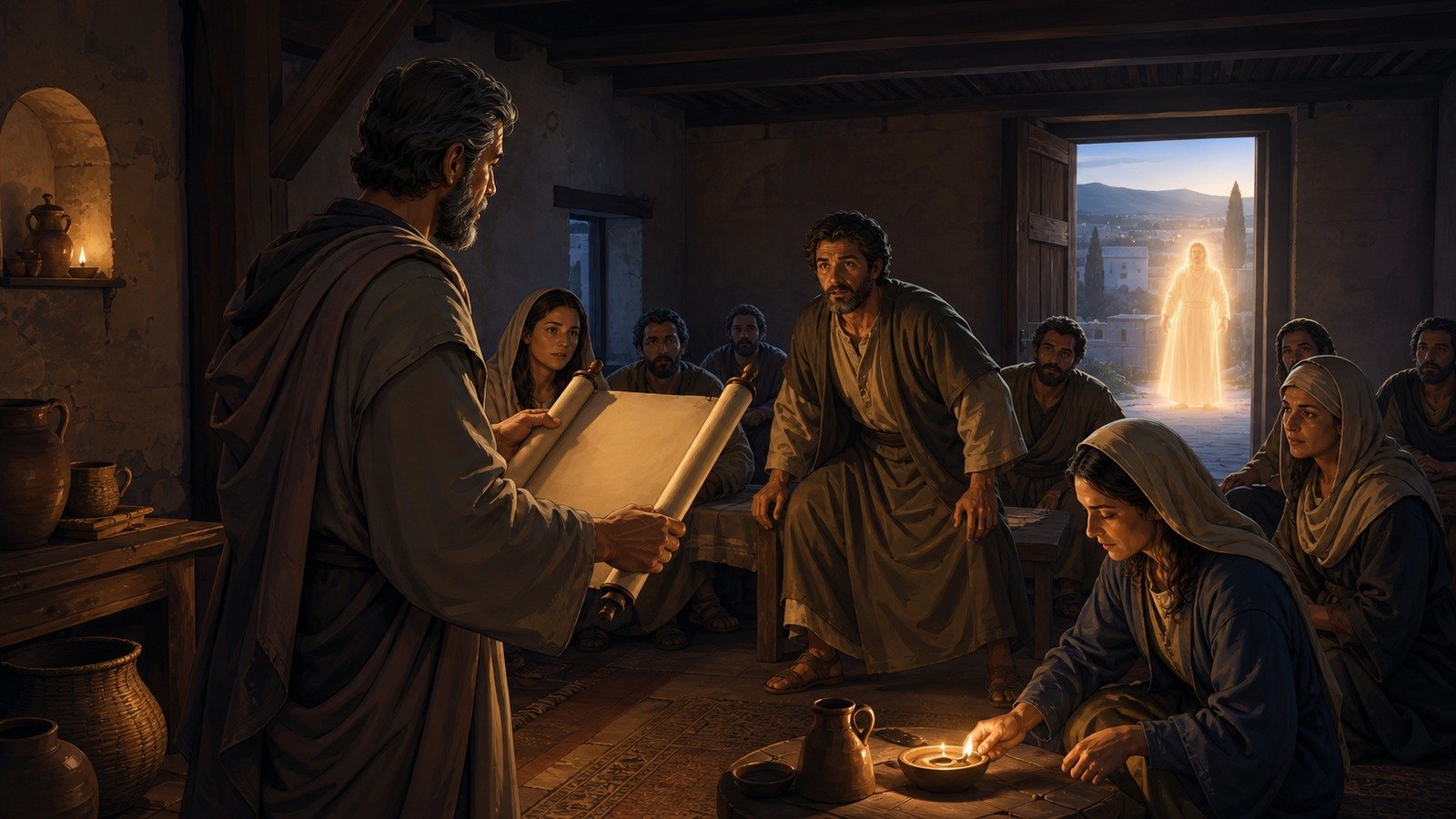
Christ tells the Sardis church that it has "a reputation of being alive, but you are dead," urging it to wake up and strengthen what remains before it is too late.
Further context
2 min readSardis had been the capital of Lydia and the seat of Croesus, whose wealth was proverbial, and the first coins in history were struck there. By the first century it was living on its past.
The city sat on a spur of rock with sheer sides, and it was considered impregnable. It had been captured twice, both times by a single climber finding a way up an unwatched face at night while the garrison slept: once by Cyrus the Persian in 546 BC and again by Antiochus III in 214 BC.
That history is worth holding in mind when the message arrives.
I know your deeds; you have a reputation of being alive, but you are dead.
No commendation is offered first, which happens only here and at Laodicea. No heresy is named, no persecution is described, no false teacher is identified, and no opposition from outside is mentioned. Nothing at all is going wrong except that the congregation has stopped.
Wake up! Strengthen what remains and is about to die, for I have found your deeds unfinished in the sight of my God.
Then the warning, and it uses the city's own history: but if you do not wake up, I will come like a thief, and you will not know at what time I will come to you.
A city taken twice by men climbing an unwatched cliff at night is being told that the same thing can happen to it again.
Yet you have a few people in Sardis who have not soiled their clothes. They will walk with me, dressed in white, for they are worthy.
The imagery of clothing runs through the message, and Sardis was a centre of the wool and dyeing trade. A local temple inscription of the period forbade worshippers to approach in soiled garments.
The one who is victorious will, like them, be dressed in white. I will never blot out the name of that person from the book of life, but will acknowledge that name before my Father and his angels.
The book of life is a register of citizens, an image drawn from municipal practice, where names were entered at birth and struck out at death or disgrace.
Sardis fell into decline after the Roman period and the site is now largely open ground, with a restored gymnasium and the remains of one of the largest synagogues known from the ancient world, seating perhaps a thousand people, which stood in the middle of the city's civic centre.
That synagogue dates from a later century, and its scale says something about how established the Jewish community there became.
Sardis is the only one of the seven congregations of which nothing good is said except that a few members are unspoiled, and it is also the only one where no external cause of the problem is identified.
The city's wealth had come partly from gold washed down from Mount Tmolus in the river Pactolus, which is where the story of Midas washing off his golden touch was set.