

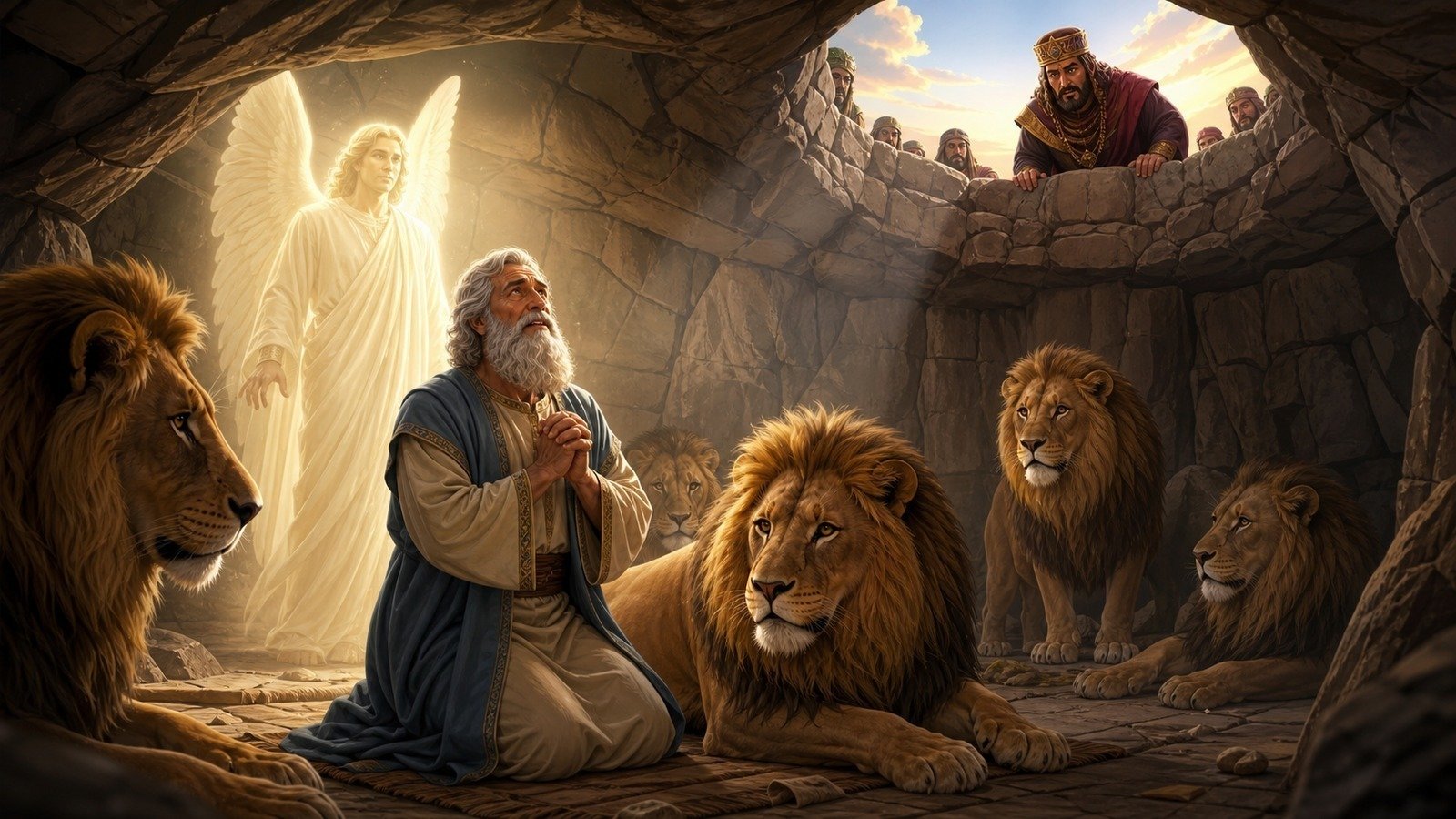
Under the new Persian administration, jealous officials trick "Darius the Mede" into a decree banning prayer to anyone but the king; Daniel continues praying openly regardless, is thrown to the lions as required by law, and survives the night unharmed.
Further context
3 min readDaniel is now around eighty and serving under a new empire, one of three administrators over a hundred and twenty satraps, and he distinguishes himself so far above the others that the king plans to set him over the whole kingdom.
The plot against him is described as a search for grounds, and the conclusion the conspirators reach is the highest compliment in the book: we will never find any basis for charges against this man Daniel unless it has something to do with the law of his God.
What they design is a trap made of protocol. They go to the king as a group, claim that all the royal administrators have agreed, and propose a decree that for thirty days anyone who prays to any god or human being except the king shall be thrown into the lions' den. The flattery is the mechanism, and the irrevocability of the law of the Medes and Persians is what makes it work.
When Daniel learns the decree has been published, he goes home to his upstairs room, where the windows opened towards Jerusalem, and three times a day he gets down on his knees and prays, just as he had done before. He changes nothing, including the open windows.
They find him at it, come to the king as a group again, and remind him of his own decree before mentioning the name. Darius is greatly distressed and spends until sunset trying to find a way out, and the conspirators come back and point out that no decree the king issues can be changed.
What he says as Daniel is thrown in is remarkable coming from a Persian monarch: may your God, whom you serve continually, rescue you. A stone is laid over the mouth of the den and sealed with his own signet ring and those of the nobles, so that the situation cannot be altered.
He goes back to his palace, spends the night without eating and without any entertainment brought to him, cannot sleep, and at the first light of dawn hurries to the den and calls out in an anguished voice.
The answer is courteous even from inside a pit: may the king live for ever. My God sent his angel, and he shut the mouths of the lions. They have not hurt me, because I was found innocent in his sight. Nor have I ever done any wrong before you.
The accusers and their families are thrown in and killed before they reach the floor, which is a piece of Persian judicial practice and is grim.
Who Darius the Mede was remains one of the harder historical questions in the book. He is not attested under that name, and proposals include a throne name for Cyrus himself, a governor called Gubaru appointed over Babylon, and an otherwise unrecorded figure. None commands agreement.
The mechanism of the plot is bureaucratic rather than religious. The administrators can find no grounds for a charge because he is trustworthy and neither corrupt nor negligent, so they conclude they will never find any basis unless it has something to do with the law of his God.
The decree they engineer is a thirty-day prohibition on praying to anyone except the king, and it is made irrevocable under the law of the Medes and Persians, which traps the king as much as anyone.
Daniel's response is described in a single sentence with everything in it: when he learned that the decree had been published, he went home to his upstairs room where the windows opened towards Jerusalem, and three times a day he got down on his knees and prayed, just as he had done before.
The king spends the night fasting without entertainment and cannot sleep, and goes to the den at first light calling out.