

Written to a church Paul had not personally founded, this letter counters a specific local teaching that mixed Christian faith with philosophical speculation and ascetic practice, insisting on Christ's supremacy over every spiritual power; its authorship is disputed on grounds similar to Ephesians, though the two letters share much material either way.
Further context
2 min readColossae was a small town in the Lycus valley in Phrygia, about a hundred and eighty kilometres inland from Ephesus, past its best commercially and overshadowed by its neighbours Laodicea and Hierapolis. It is the least important place any of Paul's letters is addressed to, and he had never been there.
The church had been founded by Epaphras, one of his converts, presumably during the three years at Ephesus when the whole province was covered by people working outward from the lecture hall.
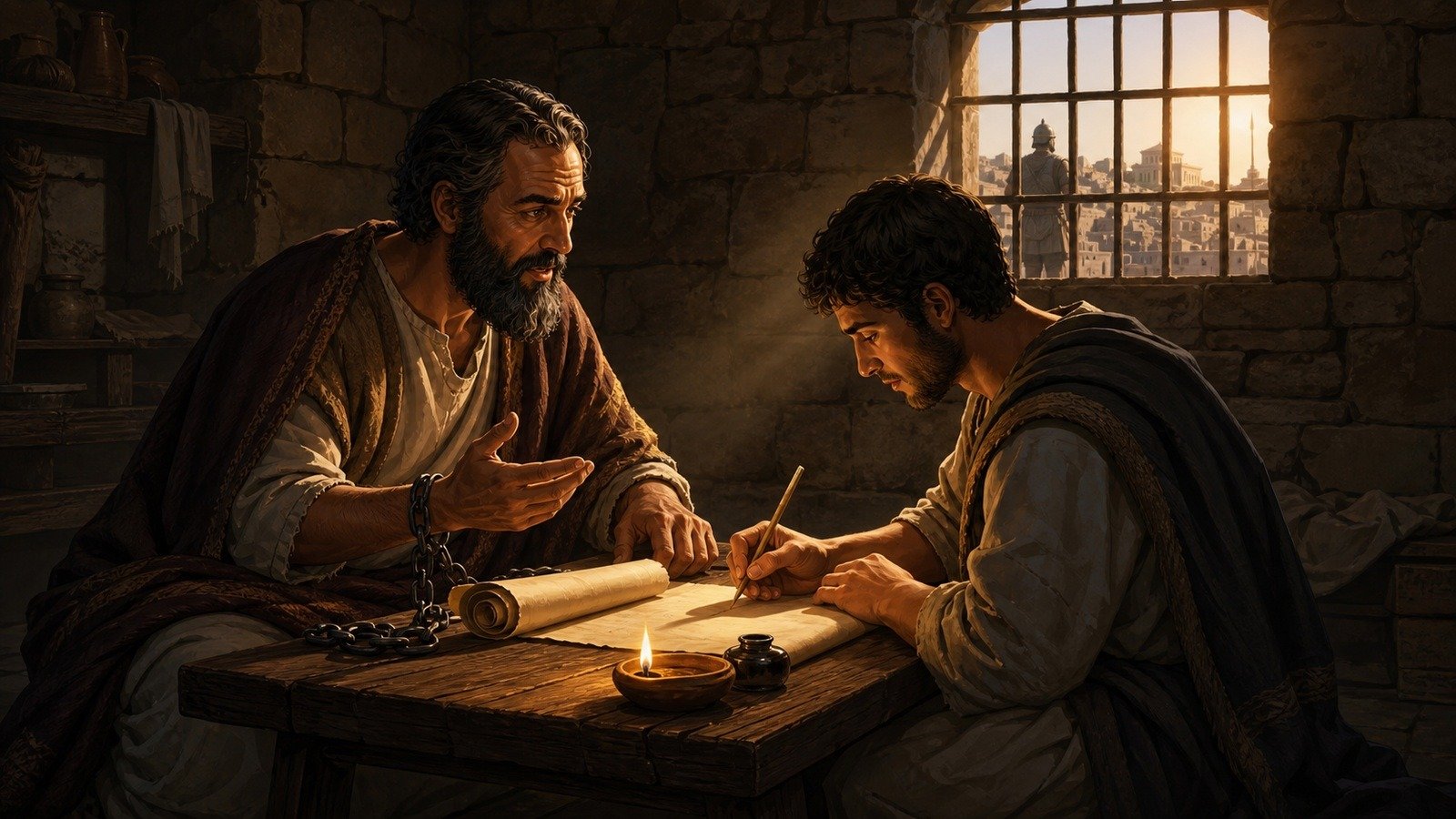
Epaphras has come to Paul in prison with a problem, and the letter is the answer to it.
Reconstructing what the Colossians were being taught has to be done from the corrections, which is like inferring a disease from a prescription. The elements that show through are these: worship of angels, rules about food and drink and festivals and new moons and Sabbaths, an emphasis on visions, harsh treatment of the body, and something called the elemental spiritual forces of this world. Do not handle! Do not taste! Do not touch! is quoted as a slogan of the teachers.
The mixture looks like Jewish practice combined with local Phrygian religion and a strain of speculation about intermediary powers between God and the world.
Paul's answer is not to argue point by point but to make one claim so large that the intermediaries become unnecessary. In Christ all the fullness of the Deity lives in bodily form. He is the image of the invisible God, the firstborn over all creation. For in him all things were created: things in heaven and on earth, visible and invisible, whether thrones or powers or rulers or authorities. He is before all things, and in him all things hold together.
Those lines, like the ones sent to Philippi, are widely regarded as an early hymn.
Its practical conclusion is that a person who has died with Christ has no further business with regulations of that kind, since they lack any value in restraining sensual indulgence.
The letter names more individuals than almost any other, including Onesimus, who is being sent back to the same town with a second, private letter in his hand.
Colossae was destroyed by an earthquake within a few years of the letter, probably around AD 60 to 64, and unlike Laodicea it was never properly rebuilt. The site has never been excavated, and it is now a mound in a field.
The letter also asks that it be read in the church at Laodicea, and that the Colossians read the letter from Laodicea, which no longer exists.
The letter also contains a household code, giving instructions to wives and husbands, children and fathers, slaves and masters, and it is the shortest of three such passages in letters attributed to Paul.
What the code does that pagan versions of the same form do not is address the subordinate party first and as a moral agent. Slaves are told what to do before masters are, which in a Greek or Roman handbook would have been unthinkable.